
You Enquire
Begin with our online form. We then connect for a detailed conversation

Nizamuddin Basti Renewal project – find out how the mystic abode of Sufi saints got a mammoth makeover while rebuilding lives in Delhi.
Named after the Sufi saint Hazrat Nizamuddin Auliya, Nizamuddin Basti is one of the oldest inhabited areas of Delhi. It gained spiritual significance in the 13th century when it became the final resting place of the famous saint and his spiritual disciple, poet Amir Khusrau. While Basti has been forever popular among saints and spirituality seekers, its appeal increased when Imtiaz Ali shot the famous ‘Kun Faya Kun’ song from Superhit Bollywood movie ‘Rockstar’ at Hazrat Nizamuddin Auliya dargah. Besides the dargah, the area is home to Delhi’s two top heritage attractions – Humayun’s tomb and Sunder Nursery.

As you enter the Basti, you are greeted into a world of colour, culture and chaos. Over seven hundred year old crammed streets and winding lanes convey history lessons. While walking the narrow alleys, you realise that the Basti is not only rich in the built heritage but is a treasure trove of living cultural heritage. A heritage represented by old traditions, delectable cuisine, soul-stirring Sufi music, and intricate handicrafts.
Unfortunately, three decades ago, Nizamuddin Basti’s image took a downward plunge – from a thriving cultural hub to a crime-ridden ghetto, discouraging visitors and encouraging criminals. But then something remarkable happened, and to everyone’s surprise, Nizamuddin Basti got a mammoth makeover that stunned everyone. History was revived, and lives were rebuilt through a Nizamuddin Basti Renewal project that achieved 15 out of 17 sustainable development goals. Besides restoring over 20 historical monuments, the basti was sustainably developed, providing a better life to the local communities. A crumbling society grappling with social issues such as unemployment, illiteracy, poverty, gender discrimination and inadequate healthcare facilities got a new lease of life.
In 2008, through an innovative People-Public-Private Partnership model, the Nizamuddin Basti Renewal project achieved the unthinkable – placing heritage at the heart of sustainable development. The project overcame significant socioeconomic challenges by working on three core areas: health, education, and environmental sanitation. The initiative included the conservation of several important monuments, cultural programming, training of guides, creating a public school and toilet facilities and skills training, particularly of youth and women. The project has become a successful template for others to follow and won hearts globally. In 2021, Delhi’s Nizamuddin Basti won two UNESCO Asia-Pacific Awards for Cultural Heritage Conservation – Award of Excellence and Special Recognition for Sustainable Development Award.
To understand how this miraculous transformation happened, Travel See Write reached out to Aga-Khan Trust for Culture (AKTC) and the locals of the Basti. Ratish Nanda, the CEO of AKTC, shared the underlying emotion behind the project.

All of us at Aga Trust for culture are working towards improving the quality of life of communities through culture. Take, for example, Nizamuddin Basti. One of the biggest assets of the Basti is their culture – both the built heritage and living heritage like music, food, traditions, beliefs etc. Yet these are poor communities.
The trust is trying to improve the community’s quality of life by restoring monuments and building toilets, health clinics, primary schools, improving houses, and a lot more. Shedding light on how the project incorporated community development into heritage conservation, Nanda said,
Through this project, we wanted to develop a historic city centre model where conservation and development including education, sanitation, employment, and urban development go hand in hand. We look at heritage as an asset, not as a burden.
Nizamuddin Basti Renewal initiative went beyond monuments restoration to the holistic and sustainable development of the basti by working on five key pillars – Livelihood generation, environment sanitisation, Education, Healthcare, and heritage appreciation.
In 2008, AKTC formed a women’s self-help group named ‘Insha-e-Noor’ to train and create employment opportunities for the women of the Basti. To date, over six hundred women have attained economic and social independence by choosing to be part of this initiative. They create beautiful, handcrafted textile and paper products inspired by Nizamuddin’s rich cultural and architectural heritage. 48-year old Zaida started learning tailoring here in 2008 and has become an essential part of the organisation since then. She feels joining Insha-e-Noor was one of the best decisions of her life. She attained financial independence, but she also gained a lot of self-confidence and respect from others. With a twinkle in her eyes, she told how proud her children are of what she has achieved,

Bacchae Bhi dusro ko kahte hai ki Hamari Ammi yeh sab karti hai.
From being one of the first members of the women’s self-help group to becoming its board member, she shared how Insha-e-Noor has made a difference in her own life and community. Local women, the actual shareholders, run the organisation, and the profits are equally shared. They collect money and help each other whenever required without charging any interest. They earn by selling their handicraft items online and participating in various exhibitions and melas like Dastakar, Diwali Mela, Basant Bazaar, etc.
Besides lack of livelihood opportunities, another big issue that the basti faced was the absence of safe and hygienic toilets. Over 25% of households in the Basti didn’t have toilets and were dependent on the two public toilets, which were terrible to use, especially for the women. 35-year-old Anisa recounts the unpleasant old days,

Diwaren bahut chotti thee jinpar ladke chaddh kar humein chedte the. Subah Shaam akele Jaane main bahut darr lagta tha. Bahut ganda rahta tha aur badboo ki to baat hi mat Karo
(The walls of the toilet were too low on which boys would climb and eve-tease us. We were scared to use it, especially during morning and evening hours. It was too dirty and too smelly”.
AKTC formed Rehmat Nigrani Samooh (RNS) to improve and maintain the condition of the community toilet. It has become South Delhi’s model toilet with thirty toilet seats and a bathing and washing area from being a dirty toilet. Usually, it remains open from 6 am to 10 pm, but it remains 24hrs open when over 10,000 people use it during festive times. The locals are trained to take care of the public toilet and educate the visitors to maintain cleanliness. Besides the toilets, the Nizamuddin Basti Renewal initiative also undertook the landscaping and beautification of Barapullah Nalaah, Nizamuddin Baoli, local parks, streets and schools.
The municipal primary school has transformed. Hyder Rizwi, who works at SDMC School, revealed that in 2007/08, the Baseline survey on Education of Delhi revealed that out of the total population of 15,000 in the Basti, only 150-200 children were enrolled in the schools. The reasons were aplenty–shabby school premises, lack of teachers, lack of midday meals, and mothers working as maids in other houses, so no one was there to drop the children at the school. AKTC revamped the school using the building as a learning aid (BALA) to make learning fun for children. The walls were coloured to depict nature, rows of low blackboards for children to scribble on, counting and tables were written on stairs, and measurement charts on the walls, among other fun learning things. New teachers were hired, and other infrastructural issues were taken care of by AKTC.


Before the project took off, the healthcare conditions in the Basti were abysmal. Unsurprisingly, pregnant women and children were found to be the most vulnerable. A path lab was set up, and fifty local women were trained as health workers called Sehat Sahelis (40) and Sehat Aapas (10). Each Saheli looks after 40 homes reaching out to 14,000 permanent population and 7000 floating population. They report to Sehat Aapas, who in turn reports to the doctor or public health specialist. 39-year-old Saira Qureshi, a single mother of six children, joined the organisation ten years back when her husband expired. She has singlehandedly raised her family. Today, her eldest daughter is in college and pursuing theatre. Qureshi’s job involves going door-to-door and ensuring that everyone gets medical and nutrition help in time. According to her, fewer maternal deaths or malnourishment cases have occurred in the last ten years.

Hazrat Nizamuddin Basti is a custodian of 700 years of living cultural heritage. And one of the main objectives of the Nizamuddin Basti Renewal project was to generate awareness about the tangible and intangible heritage of the Humayun’s Tomb – Nizamuddin Basti area amongst people especially the school children. And, thus ‘Sair-e-Nizamuddin’, a Self Help Group comprising Basti youth, was created in 2010 to promote heritage appreciation and provide employment to the young boys from Nizamuddin. Since then, the group has regularly conducted heritage walks through the Hazrat Nizamuddin Area, including the World Heritage Site of Humayun’s Tomb and Rahim’s Tomb. 35-year-old Md. Rashid Siddiqui, who has been one of the founder members of the ‘Sair-e-Nizamuddin’ self-help group, shared the success of his eleven member team. He said,
To date, we have taken over 50,000 school children on our heritage walks. We not only tell them about the monuments but also introduce them to our cultural activities like lime plaster, honey-bees, sanjhi (paper stencilling), and aari embroidery, among others.
According to Rashid, the main characteristic of these walks is to showcase the social life, tradition and customs of the Basti while giving equal importance to written history. Over the years, the heritage awareness programme has been established with many government departments, schools, hotels, and the tourism industry. Besides aiding the tourism, education and cultural sector, these walks have also provided an alternate career option to the youth from the community.
Nizamuddin Basti Renewal project has created a blueprint on how organisations can use conservation for people’s social and economic upliftment.
If you are planning to visit Nizamuddin Basti to know its history and the best things to do and see, keep in mind the following things:
Hope you liked the amazing work that the Nizamuddin Basti Urban Renewal project has done. Please let me know in the comment box below how you find the article or anything you want to know more about.
Sharing is caring. If you liked the post, please consider pinning these to your pinboards.


In this post you’ll read about the top things that to-do in Varanasi as per the locals.
Varanasi is sacred, soulful, scrumptious and spectacular but most importantly, it is the spiritual capital of India. What Mecca is to Islam and Jerusalem to Christianity, Varanasi is to Hinduism. Lord Shiva’s city has been known by many names such as Banaras, Kashi, Avimukha, Anandavana, Rudravasa, and Mahashmashana. The current name Varanasi comes from Varuna and Assi, the two tributaries of the Ganges that come together in the heart of the holy city. Here pilgrims come to wash away their sins in the sacred Ganges waters, to cremate their loved ones, or simply to die here in a hope to attain moksha (liberation from the endless cycle of rebirth and union with the divine).

Varanasi is mystical and one of the most visited cities in India. However, it is definitely not for the faint-hearted. At first glance, it will enthral you with its intensity, colours and chaos. But once you get past the initial culture shock and dig deeper, you’ll see an immensely exhilarating and captivating side of the city. Here is how not only to survive but thrive in the spiritual Capital of India
Here’s a vlog about my experience of exploring Varanasi with the locals:
As one of the oldest continuously inhabited cities in the world, Varanasi appears to be crumbling, whimsical, and eccentric. The maze of pedestrian alleys or ‘galis’ can feel claustrophobic and crowded. But this is where the heart of the city lives. Very little has changed in these tightly woven streets since the medieval ages. They have been home to more than a hundred cultures, traces of many of which can be found in the labyrinth of little lanes occupied by 3.5 million locals who call this bustling city their home. The city might not serve you the upmarket creative cocktails, however, it might teach you a few things about the cycle of life and death.

Besides the ghats, one must relish the food, architecture and weaving industry of Banaras. And, how can you forget the Banarasi paan? Here are the top things to do in Varanasi.
There is no dearth of things to do in Varanasi. From doing temple trips, attending yoga classes to witnessing prayer ceremonies on the riverbank, there’s always something or the other happening in the city. Here are the top ten things to do in Varanasi
The heart of Varanasi lies along the river, on ghats — a series of steps leading to the river’s edge—each staircase divided by history, religion, livelihood, and legends. A linear walk through the ghats is the best way to see the city’s multi-cultural fabric. From early morning till late night, the ghats are flooded by devotees, sadhus (holy men), fortune-tellers, yoga practitioners, beggars, boat operators, trinket vendors, snack-sellers, and visitors. The ghats are most atmospheric at dawn, when pilgrims gather at the riverbank for morning Puja (prayers), offering water from the sacred Ganges to the rising sun and taking a dip in the river to cleanse their souls of sins. Start walking from Assi Ghat, via Dashashwamedh and Manikarnika to Scindia Ghat, where an ancient stone Shiva temple is slowly slipping into the mire, and Panchganga Ghat, crowned by a stone mosque built by the Mughal emperor Aurangzeb. Despite the crowds, the smell of spirituality is all-encompassing. While clicking of pictures is allowed almost everywhere, show respect to devotees and avoid taking photos of funerals.

Every evening a mesmerising aarti ceremony takes place at Dashashwamedh Ghat and the air is filled with prayers, chanting, music and incense. Bells ring, drums bang, cymbals crash, oil lamps are thrust skywards and floating lights are cast into the Ganges. A festival-style atmosphere pervades and the ghat is chock-o-blocked by pilgrims and sightseers. It is the best time to capture the spiritual essence of the city. Taking a boat ride on the Ganges often provides a better vantage point. Make sure to reach early to get a better place to see the prayer ceremony.

Whether you love photography or not, a dawn boat ride on the Ganges is highly recommended. It will give you an unmatched view of the ghats and temples from a more serene vantage point than observing from crowded land. Watching the morning bathing rituals is a very surreal experience and provides a lot of good photo opportunities. Witnessing cremations taking place at Manikarnika Ghat is a poignant experience that is not everyone’s cup of tea. An evening ride for uninterrupted views of the aarti ceremony at Dashashwamedh is a must-do. And, you don’t have to go hunting for a boatman. Walk along the embankment anywhere in Varanasi and a boatman will be sure to find you. You can also ask your hotel to arrange a boat trip.

Varanasi’s twisting, turning maze of alleyways can be perplexing, but getting lost is all part of the authentic Varanasi experience, and you only need to find the nearest ghat to get your bearings. The alleys are lined with shops, food stalls, tucked-away shrines, candlelit deities in alcoves and homes painted in vivid colours, plus you’ll definitely see the revered cows jostling for space in cramped lanes. Prepare yourself for the galis’ pungent smell of incense, spicy food, cow dung, and waste – it will certainly awaken all your senses.

Although it’s not possible to visit all the hundreds of temples in the holy city, make sure to visit the gilded Vishwanath Temple. With its gold-plated spires, Vishwanath is one of India’s most revered temples. Other temples are scattered through the streets of the old city. Every few metres you’ll see the tiny shrines venerating orange boulders, worshipped as Hanuman.

Varanasi is not just limited to Hinduism. The city has been a Buddhist city for almost as long as it has been a Hindu city. Take a rickshaw 6km north through Varanasi’s busy streets to an island of calm at sacred Sarnath, where the Buddha preached his first sermon after achieving enlightenment. It’s a welcome change from the crowded streets of Varanasi. Once the centre of a huge monastic community, today the ruins of 2000-year-old religious buildings sprawl across a peaceful park, rising to the 34m-high Dhamekh Stupa.

Here’s a short video about what to see in Sarnath.
If you are a culturephile, Varanasi is a great place to learn about Indian culture as it is one of India’s most important centres of learning. Take a visit to the learned precincts of the Benares Hindu University, join a yoga class on the riverbank, or enrol on a course in Carnatic classical music at the International Music Centre Ashram. There can’t be a better place to learn Indian classical music than here since Varanasi is the home town of sitar-maestro Ravi Shankar.

There are a number of street foods in India that are famous, but nothing can beat the hot and crispy kachoris and samosas from Varanasi. The city will turn you into a foodie even if you aren’t one! Little shops line little streets with sweets of all shapes and sizes. And, there are free samples too. Varanasi is not big on sit-down restaurants. You will find those, but they are dull and ordinary in comparison to street stalls. Stick to the streets and eat like a local. The city is a paradise for vegetarians. Most delicacies are prepared in desi ghee and mustard oil, be it sweet or savoury. Walk the streets and you will find kachori sabzi—fried, flaky bread with steamy curries, tikki ke chaat—fried potato cutlets with chutneys and yoghurt, and other kinds of chaat: quick street food, usually sweet and sour concoctions of various deep fried snacks topped with onions and tomatoes. Other must-try snacks are Chena Dahi Vada, Makhan Malaiyyo or Nimish, Choora Matar, Dahi Chutney Wale Gol Gappe, Laaiya Chana, Baati Chokha, and Tamatar Chaat among others. Gulp down all these lip-smacking snacks with a glass of Banarasi Thandai or Lassi. The desserts this city offers are sinful. Some of the most delicious ones are lavang-latika, rabdi and kesar doodh (saffron flavoured milk). And, don’t forget to round off the meal with a Banarasi paan. The interesting secret that most non-paan eaters don’t know is the fact that the Banarasi paan, iconised by Amitabh Bachchan in 1978 through “khaike paan banaras Wala” song in the movie Don is not from Banaras at all. But that shouldn’t stop you from trying it. Banaras holds the highest variety of Paans and there is no gali where you couldn’t find one. Paan is a Hindi word for Betel leaves laced with areca nut and Pickling Lime. A pan can cost anywhere between INR 5 to INR 5000, depending upon the ingredients and making of paan

A trip to Varanasi is incomplete without roaming the streets of the old city to find that perfect Banarasi sari. Gold and silver brocade work and intricate designs are handwoven on pure silk, organza, georgette and other fine quality materials. Don’t forget to ask for the quintessential ‘ring test’ to affirm the quality of silk, where a whole sari is passed through a small ring. Also, look out for hand-knotted carpets and shawls from Mirzapur. The rhythmic sound of looms fill the tapered streets of Gowdowliya, Lalapura and Madanpura in Varanasi. It draws you into cosy shops, tucked into snug floors of weathered buildings. For quality products, head to Jaharlall & Pannalall, one of the oldest establishments in the busy Gowdowliya market. Other places worth checking are Pandey Sari Industries near Manikarnika Ghat, Baba Black Sheep in Bhelupura Crossing and U.P. Cottage Emporium run by Nawal Kishore in Tripura Bhairawi. The city is also a great place to buy musical instruments and brassware.

The architecture of Kashi reflects diversity in construction and detailing. Ancient buildings falling to ruins, traditional balconies, red brickwork, sturdy pillars, connected congested lanes, indiscreet modern buildings, soot-covered temples and carpets of ash are what you’ll see when you explore the Land of Spirituality. The course of the River Ganges has lent itself to the step-like constructions of the Ghats. Some ghats consist of buildings from the Rajput era – large Havelis with big domes. Some are tall buildings from the Vijayanagara Empire. Sometimes modern glass structures can be found standing next to ancient monoliths. Unlike other ancient cities, Varanasi is not preserved or UNESCO-guarded, so buildings are built on top of others, and sometimes inside other buildings.
Visiting Varanasi is no ordinary tour. It is a spiritual journey of time, emotion and transcendence. As the Beatles say: “Roll up!”

The best time to visit is between November and March.
You can travel either by plane, train or bus to Varanasi.
Sharing is caring. If you liked the post, please consider pinning these to your pinboards.


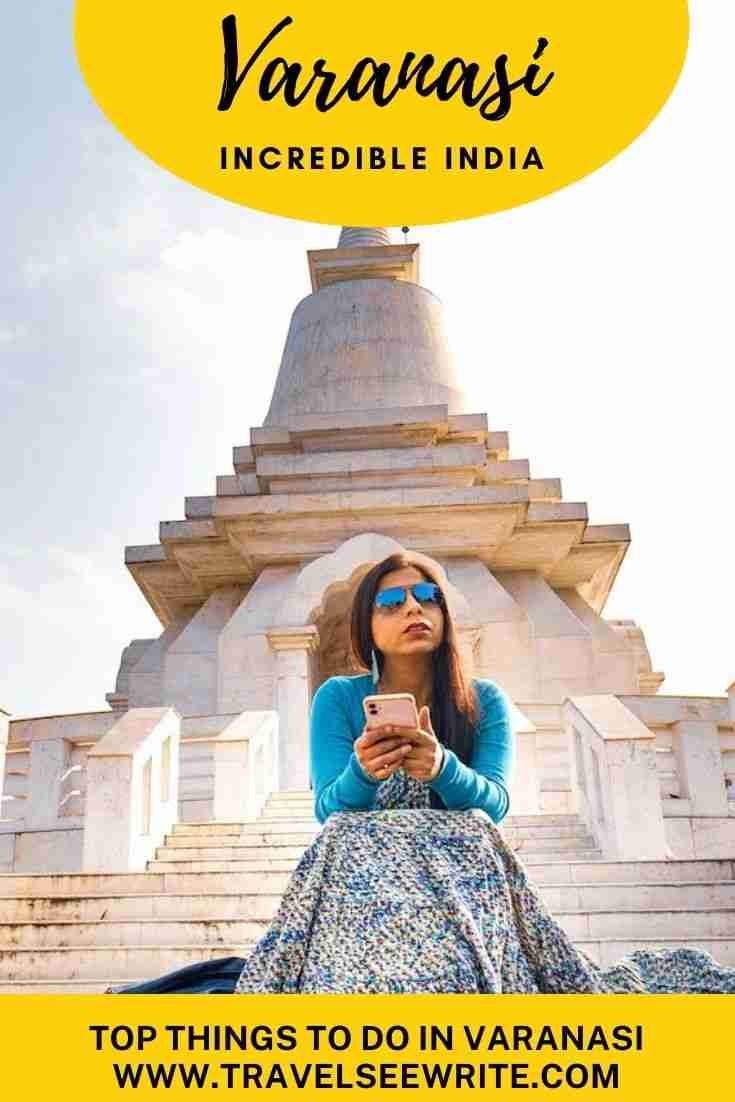

Banaras Tourism – a complete travel guide to Varanasi, including how to reach, the best time to visit, top places to visit, shop and eat, and accommodation in Varanasi, India.

After several years of planning and cancelling, I landed in Varanasi thanks to an impulsive decision. I was randomly scrolling when Varanasi popped up on my mobile phone, and the next thing I knew, I had booked my air tickets. Everything within 10 minutes. I arrived with high hopes, but Varanasi didn’t disappoint.
I’ve to admit that Varanasi is one of the most overwhelming cities in India and probably in the whole world. Everything could give me a panic attack – too noisy, too smoky, too congested, and too crowded. Yet, there is an order in the chaos. A city that has to be seen to be believed. But let me share what I experienced. Here’s a Varanasi travel guide that will answer all your questions about visiting the holy city.
Famous by monikers such as Banaras and Kashi, Varanasi is one of the world’s oldest continually inhabited cities. It is believed to date back to the 12th century BC. A sacred place for Hindus to die – it is believed that if you die in Banaras, you are liberated from the cycle of birth, death and reincarnation. My local friend and a fellow photographer, Aryan Thakur, told me that funeral pyres have burnt here nonstop for thousands of years. Irrespective of the fact whether ghats flood or an emergency arises. But death and cremation are not the only reasons millions of pilgrims come here every year. Some visit to wash away their sins in the holy waters of the Ganga and to worship the river itself. And, some people (like me) come here to capture the mystical beauty of the city and gorge on its delicious food. It’s a marvellous city where both life and death are celebrated in Kashi.
Ghats are the riverfront steps leading to the banks of the River Ganga. The soul of Varanasi lives on its ghats, which are buzzing with life 24/7. People taking early morning holy baths to wash away their sins, priests performing rituals, cremations happening round the clock and people practising meditation and yoga. While all this is happening, Banarasiyas are doing their daily chores – laundry, fixing boats and boys jumping into the river. It is incredible to see so many different worlds and activities co-exist in one place.


Out of 88 ghats, most are used for bathing and puja ceremonies; only two ghats – Manikarnika and Harishchandra – are used exclusively as cremation sites. Although the city is more than 900 years old, most Varanasi ghats were rebuilt in the 18th century under the Maratha patronage. All the 88 ghats are worth visiting, but if you are hard-pressed for time, I’d highly recommend you visit Dashashwamedh Ghat for its evening Ganga Aarti, Assi Ghat for morning Ganga Aarti, Manikarnika and Harishchandra for pyre burning, and Darbhanga Ghat for Instagram worthy pictures.
TSW Tip: the morning time is a better time to witness the complete Ghat action than during the day. Walk from Assi Ghat to Raj ghat or vice versa.
Skip anything but a sunrise boat ride in Varanasi. River Ganges is the core of Varanasi, and this is where life and death unite. And the beauty of Varanasi is best observed from a boat when the sun rises above the vast horizon, painting the sky in dazzling shades of amber and red at the crack of dawn. The river and the ghats glow in the golden light at sunrise and sunset. Not only do you get the best views of Varanasi from the River Ganges, but you also get to see the centuries-old Hindu way of life still being practised along the banks of the Ganges.


TSW Tip: If you want stunning Instagram pictures with dozens of birds flying in the background, don’t forget to buy the bird food before hiring a boat. The boatman selling bird food on boats charge double the regular price.
With approximately 3,000 temples and shrines dotting the city’s landscape, Varanasi is often touted as the City of Temples. The most famous temples are Kashi Vishwanath, Bharat Mata Mandir, Sankat Mochan Mandir, Kaal Bhairav Mandir, Durga Mandir, Mrityunjay Mahadev Mandir, Annapurna Devi Mandir, and Tulsi Manas Temple. If Varanasi is the Spiritual Capital of India, then Kashi Vishwanath Temple is its most precious jewel. And, now it has become more popular after the inauguration of the Kashi Vishwanath Corridor by Prime Minister Narendra Modi. Situated on the western banks of the River Ganga, it is one of the twelve holiest jyotirlingas or sacred centers of Shiva worship spread across India.

TSW Tip: photography (even on mobile) is banned in most big temples. So, leave your gadgets behind.
One of the main reasons I wanted to visit Banaras so badly is its food. Like the city itself, the food reflects its people and visitors. Marwari traders and people from nearby states added their regional touch to the local cuisine. The vegetarian delicacies are primarily prepared in desi ghee, and most Varanasi sweets have a milk and ghee base. The must-try food items in Varanasi are – tamatar chaat, Allu-Tikki, Dahi-chutney waale Gol Gappe, Chena Dahi vada, kachori sabzi, malaiyyo (served only for two months in winters), thandai and lassi, banarasi paan, baati chokha, Choora Matar (Benarasi twist to the Poha), chai-bun, banarasi marwadi thali, and the list continues.


Many people ask whether non-veg or alcohol is allowed in Varanasi. Well, the sale and consumption of liquor and non-vegetarian food are banned within a 250-metre radius of all temples and heritage sites in Varanasi. Therefore most Old City restaurants and hotels situated on Ghats are vegetarian and alcohol-free. However, Cantonment and other areas are less constrained.
TSW Tip: best places for Banarasi street food are Kaashi Chaat Bhandar, Vishwanath Chaat Bhandar, Ram Bhandaar (Kachori Sabzi), and Blue Lassi.
While I am not big into shopping, I also bought a Banarasi skirt and dupatta (stole). The best shopping areas are the Thatheri Bazaar (for brass), or Jnana Vapi and the Vishwanatha Gali in Godaulia with its Temple Bazaar (for Banarasi silk brocade sari and jewellery). If you are looking for souvenirs to bring home, check out Crystal and Stone Shivalinga, Gulabi Minakari, colourful glass beads, rudraksha mala, wooden toys, and flutes, among other items.


TSW Tip: Be prepared to bargain at least 50% of the quoted amount.
Contrary to the din of the Banaras city, Sarnath seems like a different world with its peaceful vibes. Located 13-km from Varanasi, it takes around 45 minutes to 1 hour to get here. Sarnath is one of the four most important pilgrimage destinations for Buddhism globally. It’s relatively small, but it has a special meaning for Buddhists worldwide because it’s the place where Buddhism was born. The must-visit places in Sarnath are –


TSW Tip: Do check out the temples and museum closing hours and days before visiting. Temples have different opening and closing times. Also, the museum is closed on Friday.
The spiritual capital of India, Varanasi, is also the “Music City.” In 2015, the city of Varanasi was chosen as the “City of Music by UNESCO. Music, indeed, is an integral part of the city. Therefore your trip would be incomplete without experiencing the musical notes of Banaras. The city is renowned for its music – both vocal and instrumental. The city has a music heritage tracing back to the Puranic literature, attributing the development of music to Shiva. But it was during the times of various Kashi Naresh (Kings of Kashi) who patronized music and helped in the growth of Banaras Gharanas. The Gharana system started shaping up 600-700 years ago in the city. The musicians who began the Banaras Gharanas came from places such as Lucknow, Azamgarh, Bhagalpur, and Samastipur. These Gharanas have given notable musicians, such as iconic sitar player Ravi Shankar, the Shehnai maestro Bismillah Khan, Pandit Kishan Maharaj, Rajan-Sajan Mishra and singer Girija Devi among many more. Music is like air in Banaras. From dawn to dusk, sitars are being tuned, sarods rehearsed, tablas mastered, and the nuances of various ragas discussed minutely and passionately. Classical music echoes everywhere in Varanasi. It is in the temples, weekly performances in the restaurants and hotels, live music played on the ghats and rooftops, large scale annual music concerts, music shops, and boats. Don’t forget to hear the melodious voice of the Bhoomi boatman.
TSW Tip: If you have time, enrol yourself at a music school or just catch a live performance at your hotel. Suryauday Haveli has daily two hours long classical music performance from 7-9 pm by legendary musicians.
Why should I visit a university in a historic city? That was precisely my expression when Aryan Yadav recommended visiting it. The reasons he gave were enough to plan a trip – incredible architecture, beautiful setting, lush greenery, and mouth-watering street food. Established in 1919, the university has given many renowned scientists, scholars and artists to the nation. Even its campus has historical and cultural significance. Inside the BHU complex, you can visit the new Viswanath temple and archaeological museum, Bharat Kala Bhavan. The university is open for Tourists between 10 am and 6 pm throughout the year. And, while you are exploring the area, don’t forget to try the street food in Lanka. Lanka is the “mall road” equivalent, situated in front of the BHU (Banaras Hindu University) gate. You would find all sorts of eateries and roadside stalls serving lip-smacking street food such as kachori, chaat, samosa, pao bhaji, burger, noodles, pizza, dosa, pakodas and everything else.

TSW Tip: Do try Chachi ki Kachori and jalebi at Lanka. A small hole in wall kind of shop became famous because of an old lady fondly called “Chachi” (aunty) by students. Although she is no more now, her sons still serve crispy kachori and piping hot jalebis.
Here’s a vlog of my experience in Varanasi:

Hope through this travel guide on Banaras I’ve been able to answer all your queries about the best things to do in Varanasi in 3 or more days. Please let me know in the comment box below how you find the article or anything you want to know more about.
Har Har Mahadev! Har Har Gange!

Sharing is caring. If you liked the post, please consider pinning these to your pinboards.


Tired of visiting touristy places and want to explore off the beaten track in Rajasthan? Visit Banswara – an oasis in a desert.

There is an area of Rajasthan that is little-known and even less visited. Deep in the southern side of the state, surrounded by the Aravalli Hills and Mahi Dam, lies the tribal district of Rajasthan – Banswara. If one was to judge the place based on pictures, Banswara could have been mistaken for the North Eastern state of Meghalaya or the Lake District of England. Until I saw it myself, I, too, couldn’t believe a city of hundred islands could exist in a desert state.
What separates Banswara from the rest of the state is the amount of rainfall it receives annually. As compared to Jaisalmer that gets an average of 146.88 mm rainfall annually, Banswara receives 900mm. As a result, when the rest of Rajasthan reels under drought conditions, Banswara stays lush green and brimming with water. Quite fittingly, Banswara has earned the nickname of ‘Cherrapunji of Rajasthan’ due to receiving the highest rain in Rajasthan and is also called the greenest city of the state. However, the nickname that stood out the best for me was the ‘City of Hundred Islands’ because of the hundred small islands on the River Mahi, which flows through the region. Let me take you on a virtual voyage of this hidden gem of Rajasthan.
Some 165 km from Udaipur lies the Banswara district. The four-hour road journey was comfortable and brought alive the joy of road trips. It would have been a crime to go on a road trip and not enjoy the kadak Dhaba chai with piping hot kachori. So, my first pit stop came relatively early, just 20 km from Udaipur, when we stopped at a local tea stall, ‘Kewada Ki Naal’. The humble tea stall has gained popularity among locals for the special tea made from locally grown herbs, mainly lemongrass. The Tea stall has been there for 15 years, and a father and son duo runs it.
https://www.instagram.com/reel/CSyIgqSCLqm/
On the way, we passed through tiny villages, gingerly flowing river tributaries, ponds blooming with water lilies, and tribal groups herding their cattle. Although I enjoyed the countryside scenery and cool breeze, I felt a bit hungry when I saw villagers gorging on freshly prepared local snacks. Gluttony took over me, and I gulped down two plates of Dahi-kachori and samosa chaat before reaching my guest house.
I was inquisitive to know why Banswara got such a unique name, so after a quick lunch, I was off to explore one of the most stunning parts of Banswara – Chachakota. As we approached our destination, my local guide shared how the district got its name. He said there are two famous legends. One says it was named after King Bansiya, the ruler of the Bheel clan, who established Banswara on the day of Makar Sankranti on 14 January 1515 AD. The other theory credits the bamboo trees (known as bans in Hindi) that once grew here in abundance. Banswara literarily means ‘Land of Bamboos’ in English.

As we drove on the serpentine road passing through rolling green hills, the pint-size villages with mud houses kept popping up here and there. Inhabited by Bhil tribals (popularly known as the bowmen of Rajasthan), this place was so remote that there was no other vehicle in sight, and it felt as if we had gone past a few centuries. Our car wasn’t driven on the road but was flying through misty cotton candy clouds.


We reached a point where you could see the panoramic view of the entire Chachakota, but the whole area was enveloped in a mist. As I walked out of the car, suddenly it started pouring heavily, and I had to take refuge in a humble tarp of a village boy. Initially, the boy was too shy to speak, but slowly he opened up. We talked about his school, family, life, and a lot more. His innocence made him look as if he was from a parallel universe, utterly oblivious to the perils of social media and PUBGs of the world. After half an hour rain stopped to let the sun take centre stage. Along with it came the hens, roosters and goats. I could finally see the beauty of the place.

A cold breeze was blowing, and clouds were hanging low. For a moment I felt as if I was at some hill station in the Himalayas. There was a huge water body around me – the backside of Mahi Dam – where some boats were docked. I was surprised how a place this beautiful was still not on the tourist map.
As I sat down to enjoy the view, my local guide shared how Banswara’s fertile plains are used to grow maize, wheat, rice, cotton, soya bean and gram. Known to be a mango hub of the state, around 46 varieties of mango are produced here. Out of which 18 are indigenous. The region is rich in teak forests, khajur (date), and mahua trees besides mango trees. The tribal area is said to be the home of wild animals like leopard, and chinkara (Indian gazelle), choosing (four-horned antelope), Sambhar (Asiatic deer), wild boar (Susscrofa cristatus) and cheetal (spotted deer). For bird lovers, there are Jungle crows (Corvus macrorhynchos), red vented bulbul (Pycnonotus (cafer), myna (Acridotheres tristis), red spurfowl and black drongo (Dicrusrus adsimilus), grey shrike, green bee-eater, parrot, house sparrow, purple sunbird (Nectarina asiastica), woodpecker, and the white-spotted fantail. I spent a few hours meeting the locals and enjoying the Bhil tribal hospitality.

As the golden hour wrapped a hundred islands in its golden glow, we returned to our guest house. While returning from Chacha Kota, we stopped near Bai Talab Lake to see the rare species of 350-year-old Kalpa Virksha trees. Usually found in a pair as male and female, this sacred pair of divine trees are revered for fulfilling people’s wishes. There are very rare, and some say there are only 10 pairs left in India.

The next day started with an adrenaline rush at Kagdi Pick up point located on Ratlam Road, 3 kilometres from the central part. While there was a lot to see and do, I was most excited to do zip lining on the calm waters of Kagdi lake at Thrill Adventure Zone. The park overlooking Kagdi Lake is part of the Mahi Bajaj Sagar project. It has many charming fountains, walkways for daily joggers, gardens, a play area for kids and leisure activities like boating.

Kagdi Fall was just a few kilometres from the park, but we decided to visit another waterfall that’s very popular among locals for picnics – Kadeliya waterfall. Usually, the water level is shallow, but in monsoon, this waterfall’s beauty increases manifold.

The rest of the day was spent chasing more waterfalls and visiting naturally gifted places like Jagmeru Hills and Singapura. With beautiful water bodies, hillocks, a forest, and greenery all around, Banswara offers a much-needed break from the regular holiday spots. It’s quite a miracle like a place – an oasis in the desert. Where else can you find so much greenery as in Banswara?
After two eventful days in Banswara (which were clearly insufficient), I started my return journey to Udaipur. However, I took a detour to follow the footsteps of Roothi Rani before arriving at the city of Lakes. Some 200 km from Banswara, I took the road to Jaisamand Lake (Dhebar Lake). The Lake is renowned for being the Second Largest Artificial Lake in Asia. Spread over an area of 36 square miles (93 square km) the lake is 102 feet deep and has three islands. On the northern end of Lake are the two summer palaces of Rana Jai Singh – Hawa Mahal and Roothi Rani ka Mahal. Legend says that the youngest queen, Kamladevi, got angry with the King and left the palace to live in a forest. In a bid to appease his angry wife, Maharana Jai Singh built this palace surrounded by a lake on all four sides. And, thus this palace came to be known as Roothi Rani Ka Mahal. The palace was in a dilatated stage, but the sweeping views of the Lake and islands took my breath away. One has to walk 2.5 km from the Jaisamand Lake entrance to reach here and cannot stay here beyond 4:30 pm as many leopards, and other wildlife animals have been spotted here.

Banswara and Jaisamand Lake make for a great escape from the bustling crowds of urban life. So when are you visiting these offbeat gems of Rajasthan?
Visiting Banswara, the greenest city of Rajasthan, is fairly easy.


Being an offbeat place whose tourist potential has not yet been realised, there are only budget accommodations available in Banswara. You can stay at hotels like Kushalbagh, Surya Palace, Amardeep Palace or a Government-run Circuit House.
Visiting Banswara, the greenest city of Rajasthan was one great experience. Along with Banswara, you can visit more places like Udaipur, Kumbhalgarh Fort and many more nearby places. Here are some posts that you may find useful in planning your trip to Udaipur and other nearby places.
The best places to visit in Udaipur in 24 hrs to 7 days
Is Ambrai worth the hype? Here are the 10 best restaurants in Udaipur
Why Tree of Life Vantara Resort is one of the Best Hotels in Udaipur?
Rethinking tourism could save Udaipur from its pressures
HOW TOURISM SAVED THE ROYALTY OF RAJASTHAN
Welcome to the Circus – Ranthambore Jungle Safari, India
Sharing is caring. If you liked the post, please consider pinning these to your pinboards.


I was invited by Rajasthan Tourism to explore the state. However, like always, all the views expressed and pictures clicked are mine. Please do not copy anything without my written permission.
Wondering where to spend a weekend in Delhi? Here are the ten best parks in Delhi for weekend picnics and outdoor photography.

As soon as the nip in the air sets in Delhi, the vibrant sweaters, jumpers, mufflers, jackets, gloves, caps, boots, and all the winter paraphernalia comes out. Healthy eating takes a break when it’s the season of gazar ka halwa, Makki ki roti and Sarson ka saag. And, how can you forget the piping hot gulab jamun and stuffed paranthas with adrakwaali chai? Besides the calorie-laden food and colourful winter wear, I like winters for one more reason. It’s the perfect time to be outdoors. And, the best place to get your fill of vitamin D while having a great time are the parks and gardens of Delhi. So whether you are looking for a picnic spot for a family or friends, couples or students or want to have a peaceful me-time amidst nature, Delhi parks are the best bet. Besides concrete buildings and heritage monuments, the capital city of Delhi is renowned for its list of gardens and parks too.

The gardens of Delhi also have a historic allure apart from their natural beauty. Some of these gardens are a product of Mughal architecture and carry forward a rich heritage like Sunder Nursery, and some are simply a delight to the eyes like the Garden of Five Senses. These parks provide a respite to city folks away from the pollution and population. Popular among people of all age groups, these parks are frequented by kids, adults and couples alike. You’ll be surprised to know more than 18000 parks and gardens in NCT spread in about 8000 hectares in various locations throughout Delhi. If you are planning to explore some of these beauties, here are the best picnic spots in Delhi:
One of the most famous gardens of Delhi, Lodhi Gardens, is my favourite park in Delhi for a weekend picnic. And I discovered it in a different light during the pandemic. Located in the heart of Delhi, this luscious garden houses the tombs of Sayyid ruler Mohammed Shah and Lodhi King Sikandar Lodhi. You can also find Shisha Gumbad and Bara Gumbad here. The contrast of bygone-era mausoleums against the lush greenery of the gardens makes it worth visiting, especially for morning and evening exercise—also a great place to hang out with friends or take your pets out for a walk. You could play sports here or jog around on well-paved walking tracks. Lodhi Garden is undoubtedly one of the best weekend picnic spots in Delhi for all age groups. The perfectly-manicured lawns are an excellent place to bask in the warmth of the winter sun before heading to nearby Khan market bistros or high-end restaurants of the Khanna Market.
Entry Fee: No charges
Lodhi Gardens Timings: 6:00 AM – 7:30 PM
Nearest Metro Station: Jor Bagh Metro Station & JLN Metro Station on Violet Line

In the Chanakyapuri diplomatic area near Ashoka Hotel, Nehru park sprawls over 85 acres. A nicely landscaped and well-maintained garden is a popular picnic spot in Delhi and a hub for recreational and professional runners. The joggers and walkers warm up in the well-manicured grass lawns and then take rounds of the jogging path. The park became the first central park in Delhi to get a synthetic jogging track that doesn’t pressure knees while running. Also, Nehru Park has ample hills suitable for strength and conditioning exercises. There was a time when Nehru Park was used as the training venue for some of the country’s best athletes, such as the legendary middle-distance runner Sriram Singh, who held the 800m national record for over four decades.
But if you want to enjoy the sunny winter afternoon, pack a picnic basket and plank yourself in any of the lawns. As the sun sets, you can enjoy the symphony of colourful water fountains. The park blooms with indigenous flowering plants and exotic species in winters to give a European look to Lutyens’ Delhi. During that time, the endless green grounds of Nehru Park double up as the popular venue for many events and festivals such as the Nehru Place Jazz Festival, ‘Morning Ragas and Evening Ragas Concerts, the annual ‘Bhakti Festival.’
Entry Fees: Free.
Timings: Open 24 Hours on Mondays and 5 AM to 9 PM on other Days
Nearest Metro Station: Lok Kalyan Marg Metro Station – 25 min walk (Yellow Line)

Although the renovated Sunder Nursery Heritage park opened in 2018, it remained one of Delhi’s best-kept secrets until the pandemic abruptly halted our fast-paced life. Dubbed as Delhi’s Central Park Sunder Nursery is famous for its gardens, water bodies, monuments, and biodiversity. Created and managed by the Agha Khan Trust for Culture (AKTC), once barren land, the park has quickly grown to become the city’s most sought after outdoor recreational place. The most fantastic thing about this 16th-century urban oasis is that it has risen from ruins to become the green lungs of Delhi. A decade of painstaking restoration work has resulted in a 90-acre (36 hectares) biodiversity park, dotted with 20 historical monuments including six UNESCO World Heritage sites, 27,000 saplings, 4,500 trees, 100 bird species, 40 butterfly species, two amphitheatres, a bonsai enclosure, a peafowl zone and plenty more.
The park has been winning hearts and awards all around the world. In 2018, the park was chosen by ‘Time Magazine’ as one of the 100 world’s greatest places to visit. Recently in 2020, it became Delhi’s first heritage complex to receive two UNESCO Asia-Pacific awards for Cultural Heritage Conversation 2020 – the ‘Award of Excellence and ‘Special Recognition for Sustainable Development. Its popularity can be gauged by the fact that despite a year of lockdowns, Sunder Nursery was visited by over 300,000 visitors in 2020. Within a short time, this 16th-century heritage park has become so popular that you could take half an hour to get inside the park on weekends. Therefore try to visit it either early morning or on weekdays. However, you’ll miss the Earth Collective farmers market that happens every weekend.
Entry Fee: Adults – INR 50/-, Children 5-12 years old & Sr. Citizens – INR 25/-
Timings of Sunder Nursery: 7:00 AM – 6:00 PM
Nearest Metro Station: Lajpat Nagar Metro Station – 14min walk. (Pink line and violet line)
If you want to know more about Sunder Nursery and its fantastic story of sustainable development, check this story out.

The Deer Park in Hauz Khas is an absolute treat not just for picnic-goers but also for joggers, walkers, couples, Instagrammers and photographers. It provides excellent opportunities to capture pretty sunsets, birds of several varieties, deer, ducks and the Hauz Khas Fort. If you are an animal lover, you would love to see many deer inside the park. Pretty gardens and simmering Hauz Khas Lake make it a perfect haunt for nature lovers. As a photographer, I’ve always liked shooting Deer Park’s historical and natural beauty. The park is green and serene and is especially pleasant towards the end of the day (during summers) and throughout the day during winters. The green cover at this park is fantastic, and it also has a skating rink for all your restless friends. It’s a vast park and can take close to two hours to explore entirely. It’s an ideal picnic spot, and if you just want to spend some alone time, then you can go with a book and sit in one of the gazebos and enjoy a quiet read. The park has four different wings, i.e. Rose Garden, Deer Park, Fountain & District Park, Old Monuments and Hauz Khas Art Market. You can reach the park from anywhere – Hauz Khas Village, Safdarjung Enclave and Delhi Lawn Tennis Associations Courts.
Interestingly, Deer Park happens to be a b-boying hub where 14-to-25-year-olds gather in the evening to practise b-boying and also show off their latest moves. There are no instructors here; the group has learnt b-boying through YouTube videos.
Entry Fee: Free
Timings of Deer Park: 5:00 AM – 8:00 PM (summers) and 5:30 AM – 7:00 PM (winters)
Nearest Metro Station: IIT Metro Station (Magenta Line)

Located in Said-ul-Ajaib village close to the Mehrauli heritage area in New Delhi, the twenty-acre park was opened in 2003, and since then, it has become one of the best picnic spots in Delhi. As the name suggests, the Garden of Five Senses is designed to stimulate your senses of touch, sight, smell, sound and taste. The park has different themed zones – Mughal Baghs, pools of water lilies, cascades of sparkling water, a solar energy park, an amphitheatre, a humongous yet charming food court, in addition to umpteen majestic sculptures, rock carvings and themed decor. About 25 different sculptures and murals have been set up in the garden, making it one of the country’s largest public art collections. Earlier, there used to be Fio restaurant, an ideal place for weekend brunches. Although Fio has moved out, you can still picnic in the Garden of Five senses with your gang.
Entry Fee: Free
Timings of Garden of Five Senses: April to Sept: 9 AM – 7 PM, Oct to March: 9 AM – 6 PM
Nearest Metro Station: Saket (Yellow Line)

Did you know that Delhi has the original Bodhi tree under which Lord Buddha had done penance and received enlightenment? Yes, our very own Buddha Jayanti Park situated in the southern part of the Delhi Ridge, which lies close to Dhaula Kuan in New Delhi, has it. Sanghamitra, Emperor Asoka’s daughter, took a sapling from the ancient original Bodhi Tree to Anuradhapura, Sri Lanka, where she used to preach Buddhism under this very tree that exists even today. A sapling of the Bodhi Tree in Sri Lanka was planted at Buddha Jayanti Park by the then Prime Minister of India Shri Lal Bahadur Shastri on 25 October 1964. Spread in over 81 acres, it is an absolute delight to walk in this scenic park. As soon as you enter, you are greeted by lush green trees of Keekar and Jamun and a lush green carpet of grass. This garden houses almost all types of trees found in Delhi NCR, such as Kelkar, Babool, Gulmohar, Amaltas and Kareel, which attracts many species of birds like Woodpeckers and Barbets Herons and Peacocks. Also, there’s an elevated platform resembling an island, right in the middle of an artificial lake with a beautiful golden statue of Lord Buddha surrounded by water and long shadows of trees, which makes it a mystical sight.
Although Buddha Jayanti Park is one of the most popular picnic spots in Delhi, it is equally popular among joggers, walkers and fitness enthusiasts. The park regularly organises Buddhism classes for people who want to know more about the religion.
Entry Fee: Free
Timings of Buddha Jayanti Park: 5 AM – 7 PM
Nearest Metro Station: Rajendra Place station (Blue Line)

This place comes alive during winters when plenty of migratory birds are seen in bulk. Roughly 4 square kilometres in size, the Okhla Bird Sanctuary (OBS) is situated at the entrance of NOIDA in Gautam Budh Nagar district of Uttar Pradesh. The Sanctuary is located at a point where the river Yamuna leaves the territory of Delhi and enters the state of Uttar Pradesh. A hit for all the Delhi and Noida-dwellers, you can chill with your picnic blankets and baskets. Remember to carry your cameras along since winter is the time of the year when you will spot plenty of migratory birds here. More than 324 bird species have been reported from Okhla Bird Sanctuary. Out of these, about 50% are migratory birds. Forty per cent of the total birds are common locally, and the rest are uncommon or rare. The complete bird list includes two Critically Endangered, nine vulnerable, seven Near Threatened and one Conservation Dependent species.
Due to the unique positioning of the Sanctuary, you can see different bird species from different habitats – thorny scrub, grassland and wetland. This wetland was formed due to the creation of the Okhla Barrage. In 1990 the Uttar Pradesh Government notified this as Sanctuary, and it is now one of India’s 466 important Bird Areas (IBAs).
Besides birds, this place is also rich in flora – more than 188 species of plants are recorded here. About ten species of mammals include nilgai, Indian mongoose, blacknaped hare, jackals, 08 species of reptiles, and 02 species of amphibians, have also been recorded here.
Wear comfortable shoes when you visit this place, and don’t forget to bring in your telephoto lens and binoculars.
Entry Fee – Free
Timings of Okhla Bird Sanctuary: April to Sep: 9 AM – 7 PM, Oct to March: 9 AM – 6 PM
Nearest Metro Station: Okhla Bird Sanctuary (Magenta Line)

Imagine coming face to face with leopards, mongoose, golden jackal and civet cat. Yes, you can see all of them in your very own city – Delhi. Asola Bhati Wildlife Sanctuary is a unique habitat reclaimed from mining activity. Even today, you can see deep gorges where mining activity once happened. With an area of 32.71 km², the Sanctuary lies on the Southern Delhi Ridge of Aravalli hill range at the tri-juncture of three cities – Southern Delhi, Faridabad and Gurugram. Asola boasts of a healthy avian life and butterflies. When it comes to wildlife, striped hyena, leopards, mongoose, golden jackal jungle cats, hog deer, Indian hare, nilgai, blackbuck and spotted deer, porcupines, and the crested Grebe (a migratory bird) have been sighted here along with reptiles. Besides the wildlife, the most feature of Asola Wildlife Sanctuary is a 1.5-kilometre lake called the blue lagoon. The Sanctuary comprises the semi-arid forest area, and the nature trail here is a must walkthrough. Still, it can get a big thorny and lonely. So, be careful when you get here. Asola Wildlife Sanctuary is worth a visit for lovers of nature and Delhi Ridge!
Entry Fee: INR 100 (approx.) for the tickets.
Timings of Asola Bird Sanctuary: April to Sep: 9 AM – 7 PM, Oct to March: 9 AM – 6 PM
Nearest Metro Station: Tughlakabad Metro Station (Violet Line)

Millennium Park, also known as Indraprastha Park, is a popular weekend picnic spot for Delhites in the heart of New Delhi. Established in 2004 by the Delhi Development Authority (DDA), the most remarkable thing about this 34 hectares park is that it was built by transforming a stinking garbage dumping landfill site into a breath-taking landscape. The eco-friendly park is well-maintained and has a children’s playground, amphitheatre, and the 30 feet high Shanti Stupa built in white marble. The statue of Buddha adds to the serenity and positivity of the place. The Japanese garden is next to the stupa, perfect for relaxing and meditating. The park is centrally located and is well connected by bus and metro to all parts of the city. Being located near the prominent tourist attractions of Delhi like Humayun’s Tomb, Akshardham Temple, India Gate, Connaught Place, and Jantar Mantar, it draws many tourists – both Indian and foreign. Several food courts around the park offer various mouth-watering snacks and local delicacies.
Entry Fee: INR 50 for adults and INR 25 for children.
Timings of Millennium Park, Delhi – 6 AM to 7:15 PM
Nearest Metro Station – Hazrat Nizamuddin station (Pink Line)

You would see some places every day, but you would never notice them. Astha Kunj Park, next to the Nehru Place Metro station, is on such a park. I discovered this park by chance when I was sitting at one of the cafés in Epicuria Mall with a friend. He asked me to take him anywhere outdoors, which is close by. And, so I took him to Astha Kunj Park. While I had seen it several times from outside, I never explored it until December 2020. And then I loved it so much that I had visited it several times. Situated in South East Delhi between the neighbourhoods of Lotus Temple, ISKCON temple and Nehru Place, Aastha Kunj Park sprawls over 200 acres of land peppered with lush green lawns, flowering shrubs and green trees. Bejewelled with huge boulders and green cover, this park is on a hillock from where you can get a panoramic view of the high rises and religious places around. There is an amphitheatre, well-paved pathways and ponds inside. The park has a vast area to maintain and could be maintained better, especially the pond. People visit the park for a morning walk and yoga and meditation. Because of the large spacious garden, this place is also the best picnic spot for families and children.
Astha Kunj Park is definitely one of the most underrated picnic spots in Delhi. You can either get your picnic basket or order in from the cafeteria inside the park, and it serves piping hot drinks along with your favourite snacks.
Entry Fee: Free
Timings: 4 AM – 9 PM
Nearest Metro Station: Kalka Ji mandir metro station (Violet and Pink line) and Nehru Place metro station (Violet line)

Besides the above ten parks, there are many more popular picnic spots in Delhi, such as Mughal Gardens, India Gate Lawns, Jahanpanah Forest, Sanjay Van, Japanese Garden, and many more. You’d be surprised to know that Delhi itself has seven biodiversity parks spread over an area of 1000 hectares in Delhi – Yamuna Biodiversity Park, Aravalli Biodiversity Park, Neela Hauz Biodiversity Park, Northern Ridge (Kamla Nehru Ridge), Tilpath Valley Biodiversity park, Tughlaqabad Biodiversity Park, and Kalindi Biodiversity Park. Nestled away from Delhi’s bumper-to-bumper traffic snarls and high-rise buildings are lush green pockets of carefully planned nature retreats that are helping maintain the ecological balance of the national capital. Moreover, they have been helping to bring back the lost fauna and flora of Delhi.
So, if you are wondering where to go this weekend, why not check out any of the above best picnic spots in Delhi?
Best Hangout Places in Delhi NCR – Is Champa Gali, Saket worth a visit?
Sunder Nursery, Delhi – from ruins to the biggest heritage park of Delhi
History of Delhi Sultanate: The two cities that rewired history
How SARAS Mela is empowering rural artisans of India


I hope you liked the post. Have you been to any of these parks? How was your experience? Please do leave your comment in the below comment box.
Wondering where to eat In Hong Kong? From Michelin-starred restaurants to the best dumpling eateries in the town, we’ve rounded up the best restaurants in Hong Kong where even celebs have been spotted dining.

The Pearl of the Orient: Hong Kong is truly the world city of Asia where you are greeted by soaring skyscrapers, streets lined with plush malls and luxury boutiques, high-end hotels and Michelin-star restaurants, and a forever bustling art and culture scene. Hong Kong’s colonial past has contributed immensely to embedding various cultures and traditions in the city’s DNA. The best way to experience the soul of the city is through its food. And, Hong Kong’s food scene is so vibrant, vast and diverse that you can dine at a different restaurant every day for a decade and still have new eateries to explore. In Hong Kong, you find restaurants to suit every palate and budget. While it’s good to choose, sometimes it becomes a daunting task to select the right restaurant. Especially if you visit the city for a few days or during the festive season, such as Hong Kong Winterfest for the Christmas-New Year holidays or Chinese New Year Celebrations. To help you navigate through this web of choices, we’ve rounded up some of the best restaurants in Hong Kong. And, sometimes you might just happen to run into some local or international celebrities here.
Go for – Their modern European cuisine.
If you are a fan of modern European cuisine, then look no further – Arcane is the place for you. Tucked discreetly in the city’s heart – Central – food here is anything but ordinary. The restaurant reached new heights of success when its Aussie Michelin-starred chef Shane Osborn appeared on reality TV as part of Netflix’s The Final Table. Since then, the popularity of the restaurant and its chef has skyrocketed. Thankfully, the food quality hasn’t dipped at all. Instead, it has gone a few notches higher.
Arcane serves modern European cuisine presented in an A la carte menu, alongside daily specials and a set lunch menu. Menus are seasonal, utilising the finest produce from Japan, France and the UK. And, if you are a vegan or vegetarian like me, don’t worry. The restaurant features the city’s first vegan and vegetarian fine dining tasting menu, whose preparation you can observe through the open kitchen.
Decorated with contemporary artworks, this 2000 square feet restaurant features an outdoor English tropical garden terrace. Book in advance to avoid last-minute hassles and check out their special and seasonal menus before booking.

For more details, check out their website: https://www.arcane.hk/
Go for – Their iconic Cantonese flavours with a French foundation
If you are an indecisive eater who can’t choose between Chinese and European cuisine, you can never go wrong with Roots. Located on Sun Street in Wan Chai, the menu at Roots creatively incorporates the city’s global view – East-meets-West cultures. You can choose from small plates or opt for sharing options. The food marries iconic Cantonese flavours with a French foundation. Roots was started by chef Stephanie Wong, who quit her banking job to pursue her culinary dreams. After training in France and then at Amber, Wong set her own restaurant. Eating at Roots is like experiencing the rich Hong Kong food culture through the lens of French culinary art.
They have launched a special Christmas and New Year menu, so don’t forget to ask for the same and book in advance as it gets filled up very soon.

Go for – their classic cocktails and excellent whisky collection.
I noticed about Hong Kong that some of the most beautiful restaurants and bars are located in some easy to miss locations. 001 is one such example. While centrally located along with the market stalls on Graham Street, 001 hides behind a featureless black door with a dim spotlight and an antique brass doorbell. As the door opens, you’ll be guided down a flight of steps into a classy vintage gentlemen’s hide-out bar in the basement. The ‘no standing allowed’ policy gives a touch of private members’ club. Wood, green leather armchairs, and velvet furnishings will circle you back to the 1920s. They have some fabulous, well-crafted classic cocktails and excellent whisky collections like its dark and stormy atmosphere. At times you can even find the elusive Pappy van Winkle bourbon in stock, provided you’re willing to pay the high price, of course. Complimenting the drinks, superior snacks, and shareable plates menu needs to be carefully watched by the people on a diet. Occasionally you can enjoy the live music played in the form of a jazz duo or chanteuse. Before you leave the bar, don’t forget to click some pictures of one of Hong Kong’s original hidden cocktail bars and let the prohibition-era vibes take over your Instagram feed.

For more details, check out their website: https://www.at001.xxx/
Go for – their beers served in traditional tea houses and Chinese temple settings.
Inspired by traditional tea houses and Chinese temples, local craft brewery Moonzen’s beer bar in Mong Kok on Shantung Street offers glimpses of the olden times. Designed by HEED Studio, the bar’s interior features large vermilion columns and emerald green colours indicative of Chinese temples. The bar serves a great selection of 12 beers on tap – local Moonzen beers and beers from other breweries. Sit by the bar for a cold pint and tasty bar bites and take tons of pictures to post on your ‘gram. The bar is exceptionally LIT and will set your Instagram feed on fire.

For more details, visit their page: https://www.facebook.com/moonkok.hk
Go for – their modern Italian cuisine with a Japanese twist.
An acronym for Asia, Modern, Museum and Original, AMMO is an Italian and Japanese fusion restaurant inspired by its botanical surroundings that hope to blend the art of food and nature. The eatery’s copper-clad and cinematic interiors take inspiration from the 1965 film noir masterpiece, Alphaville, which is also about its location on the heritage site of a former 19th-century explosives compound. AMMO’s menu exemplifies the most exemplary fashion for modern Italian cuisine with a Japanese twist. The restaurant is located in Admiralty and demonstrates the perfect balance between traditional and contemporary style.

For more details, visit their website: https://ammo.com.hk/
Go for – their innovative menus with art.
Cobo, which is a short form of the ‘Community of Bohemians’, is a restaurant meant to tantalise the senses where it feels like you are not seeing the visual artworks but having them too in the form of edible art. Hemmed by Hong Kong chef duo Ray Choi and Devon Hou, Cobo regularly surprises its guests with its innovative menus presented with an artistic flair. Their unspoken menu named “The Knife & Spoon” is a journey divided into 9 different chapters. Each chapter features an option of a six to eight-course tasting menu that changes every 6 weeks. Each chapter focuses on a single ingredient as the story’s star – the underdogs of home-grown ingredients. Cobo house has a bright and airy space fitted with floor-to-ceiling windows, marble tables, and a natural and earthy colour palette that allows the art to speak for itself.

Go for – their ‘all you can eat dim sums.’
Your visit to Hong Kong is incomplete without trying its delectable dim sums, and one of the best places to try them out is Dragon – 1. While Dragon-I is a popular Central nightclub after the sun sets, it is home to one of the town’s longest-standing all-you-can-eat dim sum feasts. You can enjoy four hours of unlimited refills of steamed, deep-fried, and baked treats that are made to order all afternoon long. Dim Sum is the main star at Dragon-I’s all you can eat menu, but you can also order Cantonese snacks such as stir-fried string beans with minced pork and deep-fried Bombay duck with salt and pepper as an add-on the dim sum treat. And, don’t worry if you are a vegetarian or vegan; they offer Dragon-I features vegan options and a few vegetarian dim sums now. The restaurant has eclectic interiors and if you are looking to try a lot of different dishes in a fun environment, try out this restaurant!

For more details, check their website: https://www.dragon-i.com.hk/
Go for – an unforgettable romantic evening.
If you want to have an unforgettable romantic evening with your loved one, go to the Peninsula’s Felix. Blessed with a magnificent panoramic view of Victoria Harbour, Felix has long been a city’s favourite restaurant for soaking in the spectacular skyline of Hong Kong. And, during the festive season, they have special menus. But book in advance. Sometimes the restaurant is booked months in advance.

For more details, check their website: https://www.peninsula.com/en/hong-kong/hotel-fine-dining/felix
Go for – all-day dining at the beachside restaurant.
Whenever I visit a big city, I make it a point to check out alternative eats away from the town. One such find is Bathers, located conveniently along Lantau’s Lower Cheung Sha Beach. Here you can enjoy all-day dining while taking in the ocean views. Bathers is perfect for sangria sunsets, early morning breakfasts, and family-friendly lunches. You can play on the beach or just relax on the restaurant’s terrace or comfy seats sprawled on the sand to enjoy the best beachside view. Make sure to book ahead to secure a spot, especially during busy, sunny weekends.

For more details, check their website: https://bathers.com.hk/
Go for – freshly baked artisanal breads, pastries, pizza and other Italian delights by the sea.
Pane e Latte serves artisanal baked goods perfect for breakfast, all-day dining, and takeaways from sunrise till sunset! Stanley is one of my favourite places in Hong Kong to enjoy the beach, and this corner bakery is the perfect stop to make before heading to the beach. The restaurant’s interiors – floor-to-ceiling windows, genuine Italian terracotta Italian flooring, pink columns, soaring drapes and antiques from Milan – reminded me of sitting in Italy and not Hong Kong. This Italian Bakery & Patisserie is a dog-friendly family place.

For more details, check their website: https://www.paneelatte.hk/.
Hong Kong is a very vibrant city, and there is never a dull moment, especially if your visit coincides with the festive season. Currently, Hong Kong Winterfest is going on – from 26 November 2021 to 2 January 2022. A special Christmas Town has been set up amidst the brand-new international art and culture hub of Hong Kong. Throughout the city, Christmas holiday events are happening. All shopping malls, shops, restaurants, hotels and outdoor spaces have brought their ‘A-game’ to showcase their best festive decorations. From gigantic cookie penguins and Disney princesses to whimsical wonderlands, there’s a dizzying array of Christmas displays for you to soak in the festivities this year. Wherever you look, there is an instagrammable spot to shoot.
Moreover, all hotels, restaurants, and bars have introduced special festive menus to celebrate Christmas and New Year. If you are looking for unique Christmas or New Year brunches or dinners, check out their individual websites or Discover Hong Kong’s website or this post.

So, what are you waiting for? Immerse yourself in a merry Hong Kong holiday season!
Ideal Hong Kong Itinerary: From 12 hours layover to 5 Days in Hong Kong
What to do in Hong Kong in 4 days: 15 fun things to do
Discovering Offbeat Hong Kong in 4 Days
12 best New Year Celebrations around the world and their strange traditions
If you liked the post, please share it on your social media channels and pin these on your pinboards.


After months of fighting the pandemic with lockdowns and vaccine rollouts, many countries have stabilised their epidemiological situation and are slowly reopening their borders once again.
The first few countries in Southeast Asia that announced plans to reopen were Singapore, Thailand, and certain provinces in Vietnam.
Now, Cambodia is joining its neighbours with a reopening plan of its own. The country is starting off with a small pilot project, which currently includes a handful of designated areas, that is designated to gauge the situation. If all goes well, the country will fully reopen in several stages.
This is great news for intrepid travellers who are planning to apply for a visa for Cambodia from the USA and want to trek through its national parks, see the majestic Angkor Wat, and enjoy the country’s rich culture.

Although Cambodia is still fairly off the beaten path compared to its neighbours, its tourism sector was greatly impacted by the pandemic.
Before the coronavirus took hold of the world, Cambodia received more than 6.5 million visitors that accounted for almost $5 billion in revenue. Out of those, 2.6 million visitors visited Cambodia’s most famous attraction, Angkor Wat! However, that number sharply dropped to only 1.3 million visitors in 2020, and revenues sunk to about $1 billion.
The country has managed to effectively fight the pandemic until March of this year, when cases began rising and hit an all-time peak of 1,130 new cases on June 30.
After a widespread vaccination rollout — 90 per cent of the population has one vaccine, and 85 per cent are fully-vaccinated — daily cases have dropped to the low 100s.

Cambodia launched its reopening program on November 30 with two seaside provinces: Sihanoukville and Koh Kong (which includes the extremely popular Dara Sakor).
Although details are scarce and the program is still in development, there is some information that is already known about Cambodia’s reopening.
To enter Cambodia under its reopening scheme, visitors must be fully vaccinated; take out appropriate travel insurance that will cover the cost of treatment for COVID-19; test negative before departure and after arrival.
Travellers will need to start their Cambodian vacation with a 5-day stay at one of the designated locations before they are allowed to visit other parts of the country. Otherwise, they will be required to quarantine.
If the program is successful, Cambodia’s Tourism Ministry stated that other destinations will be added to the approved list, with the goal of opening the entire country once the pandemic is under control.
After Sihanoukville and Koh Kong, the province of Siem Reap (home to the famous Angkor Wat temples) is expected to open to tourists in January.
If you’d like to take advantage of the reopening and see Cambodia for yourself — or simply want to do a bit of armchair travel for the time being — there are plenty of amazing sights in the country.
Perhaps the most popular attraction in the entire country is Angkor Wat. In fact, it’s so famous that its silhouette is on the national flag! As one of the biggest religious structures in the world (by land area), Angkor Wat was originally built in the 12th century and features more than a thousand buildings spread over 400 acres.

For something a little more off the beaten path, head over to northeast Cambodia and take part in the Elephant Valley Project. This program was developed by an NGO that helps rehabilitate elephants, conserve their natural habitat and support locals who are part of the program. One of the best things about the program is that travellers can walk around the complex with a local guide, who introduces each elephant and gives a little background on their story.

In the heart of the country is Phnom Penh, the capital and largest city in Cambodia. Thanks to its location, Phnom Penh’s involvement in Cambodia’s history has led to many beautiful buildings, including the Royal Palace of Phnom Penh. This magnificent complex once served as the residence of the head of state, although today some parts have been opened to the public.

After a long day of sightseeing and learning more about Cambodia, it’s time to refuel with some local cuisine.
The dishes of Cambodia can be considered a tourist attraction in their own right, especially since everything is made from local ingredients, diverse, and most importantly, delicious.
The most famous dish across all of Cambodia is amok, a type of steamed fish curry. It can be found in virtually every restaurant and cafe, and it is believed that amok was even a favourite dish of the royal Khmer family!

Most Cambodian dishes will usually include a type of meat (the most popular being chicken or fish) along with a side of rice or noodles. However, vegans and vegetarians shouldn’t worry, as the two biggest cities, Phnom Penh and Siem Reap, are very vegetarian-friendly.

To finish off their meal, Cambodians will usually opt for the most famous dishes across Southeast Asia (mango sticky rice), or enjoy a local favourite: rolled banana cake, which is also eaten during festivals.

While most Asian countries are still on the backfoot after the new omicron variant and are taking baby steps to reopen, a few are planning to do it systematically and slowly. Thailand has announced Exemption from Quarantine (TEST & GO) entry rules from 16 December 2021 which include indian tourists. Also, The Tourism Authority of Thailand (TAT) has launched the the 7 Greens Concept to promote environment friendly safe and sustainable travel for all – residents, travellers and business partners.
Post Covid19 Travel: Safest countries to visit in Asia
Why Laos is the safest country to visit in South East Asia after Coronavirus
BEYOND ANGKOR WAT, THE UNIQUE FACTS ABOUT CAMBODIA
Which countries are open for Indian Tourists in 2021-2022?
Practical guidebook for your first Vietnam visit
Sharing is caring. If you liked this post, please share it with your friends and family. Also, don’t forget to pin these to your boards.


India is renowned for festivals such as Mysore Dusshera Mela, Kolkatta Durga Puja, Pushkar Cattle Fair, Surajkund International Crafts Mela, Indian International Trade Fair and many more. But have you heard about Saras Aajeevika Mela? Read how a government initiative led by Self Help Groups is empowering India’s rural women.
It is 11 am in the morning, and Chandrakala from Chikmagalur district of Karnataka is busy selling her handmade paintings to prospective buyers at Saras Aajeevika Mela 2021. She is explaining the intricacies of painting on goat leather and how much effort goes into making one piece – from sourcing raw leather to curing, painting, dying and finally converting it into sellable handicraft items. Her entire stall is beautifully decked up with different kinds of handicraft items such as lamps, purses, puppets, wall hangings and much more. The money earned from the sale of handicraft items feeds twenty-five families part of the SRI Maruti Self Help Group.
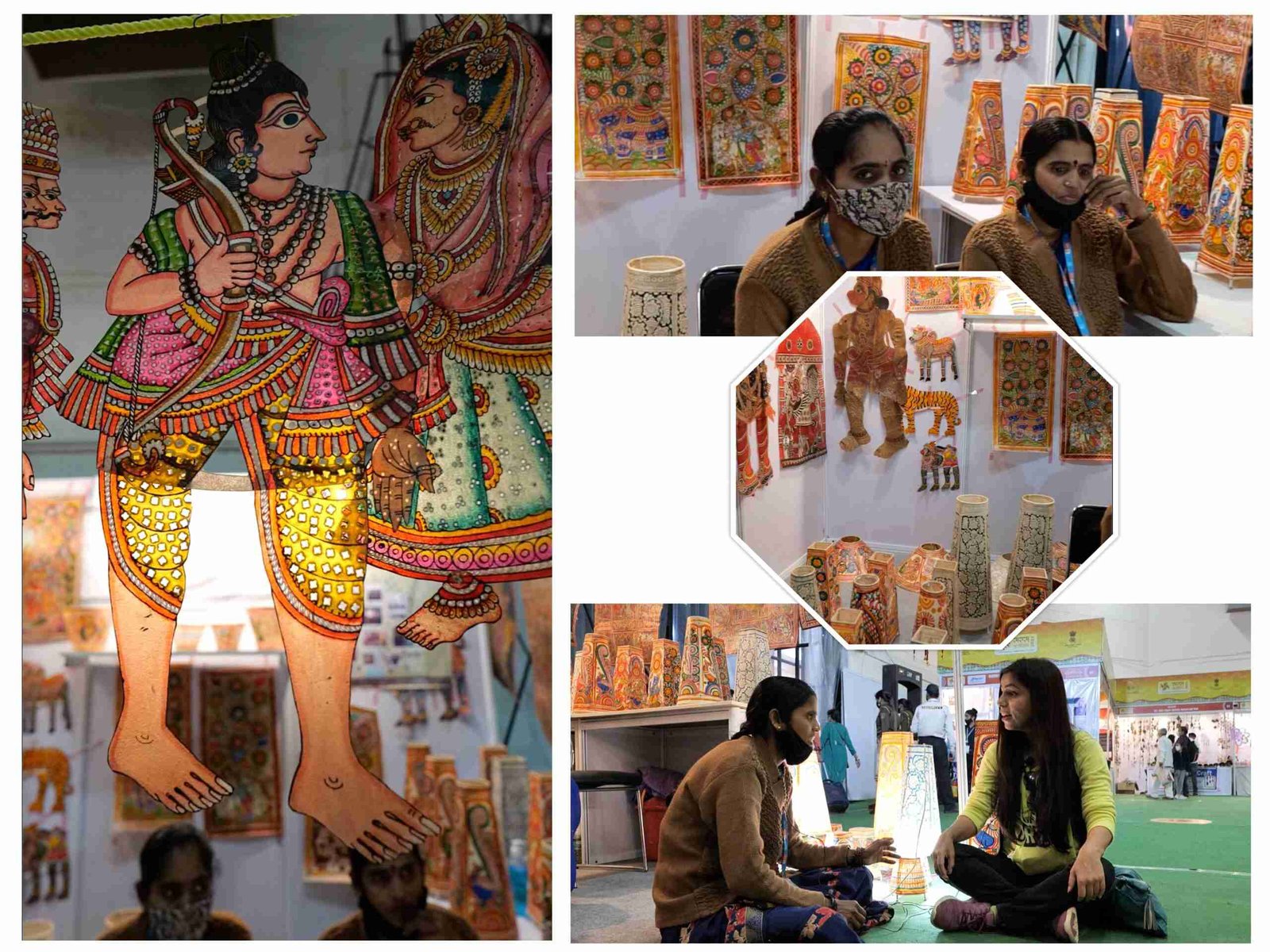
Chandrakala is a member of one of the many Self Help Groups (SHGs) that participated in the recently concluded Saras Aajeevika Mela 2021. The Mela was organised in Pragati Maidan, New Delhi, as a part of the 40th India International Trade Fair (IITF 2021) from November 14 to November 27, 2021. There were around 300 artisans at 130 stalls showcasing and selling handicrafts, handlooms, home decor items and food products from 28 states and 3 Union Territories of India.
SARAS Mela is a women empowerment initiative by the Deendayal Antyodaya Yojana National Rural Livelihoods Mission of the Ministry of Rural Development (MoRD) to bring the rural women self-help group members under one platform where they can showcase their skills, sell their products and build connections with potential market players at fair prices. The organisation trains women in different livelihood craftsmanship skills and gives them a platform to market their products. Their stalls are entirely free, and all their expenses, including their stay, is borne by the Mela organising committee. The SARAS Mela is organised by the National Institute of Rural Development and Panchayati Raj (NIRDPR).

Saras Mela comes under Aajeevika – National Rural Livelihoods Mission (NRLM) – launched by the Ministry of Rural Development (MoRD) in June 2011 to support the livelihood of rural India. In November 2015, the program was renamed Deendayal Antayodaya Yojana (DAY-NRLM). Aajeevika mission set out to improve the lives of 7 Crore rural poor households in 6 lakh villages through self-managed Self Help Groups (SHGs) within 10 years.
34-year-old Sujata hails from Sasroli (Sasrauli) village in Matanhail tahsil of Jhajjar district in Haryana. Still, she is adept in the famed Madhubani painting from Bihar. Two years back, her village self-help group hired a Madhubani artist from Bihar to train these women. And today, they have become the masters of art. They sell everything from a fifty rupees face mask to a 3,500/- INR saree.

A few lanes away from Sujata’s Stall was a Manipuri handicraft stall where Laishram Sandhya Rani Devi from Thoubal, Manipur, sold her products. The items displayed at her stall ranged from baskets to hats, mats and other things, all made from water hyacinth. She told Travel See Write that last year was very difficult for her family due to Covid19. Then this year, in February, she started a local self-help group of ten women and started creating the products currently displayed in her stall. She is hoping to earn well from Saras Mela and has also made some friends from other states.

This exhibition-cum-sale under the brand name of SARAS puts forth a grand display of products handcrafted by the artisans from across the country right from the Banarasi Sarees of UP to Sambalpuri of Odisha; Kantha stitches of West Bengal to Maheshwari Sarees of Madhya Pradesh; leatherwork of Rajasthan to Madhubani paintings of Bihar along with Natural and Chemical free spices, food produce and product from Southern, Himalayan and North Eastern regions of the country. My favourite was the mouth-watering authentic delicacies of different states that not only satiated my taste buds but also turned me into a hoarder. I just couldn’t stop tasting and shopping.

Pramila Tai from Jalgaon district in Maharashtra sold her homemade chutneys and pappads of different kinds – from spicy peanut chutney to flavourful curry leave chutney. Her products were fresh, organic, and had a unique flavour that is impossible to get anywhere else.

Saras Melas are regularly organised across India throughout the year. So, keep a tab on the Aajeevika – National Rural Livelihoods Mission website and its various social media handles. Who knows, next Mela could be near you next month itself.
Have you been to Saras Mela yet? How was your experience? Do share it in the comment below.
Here are some more postcards from the event.


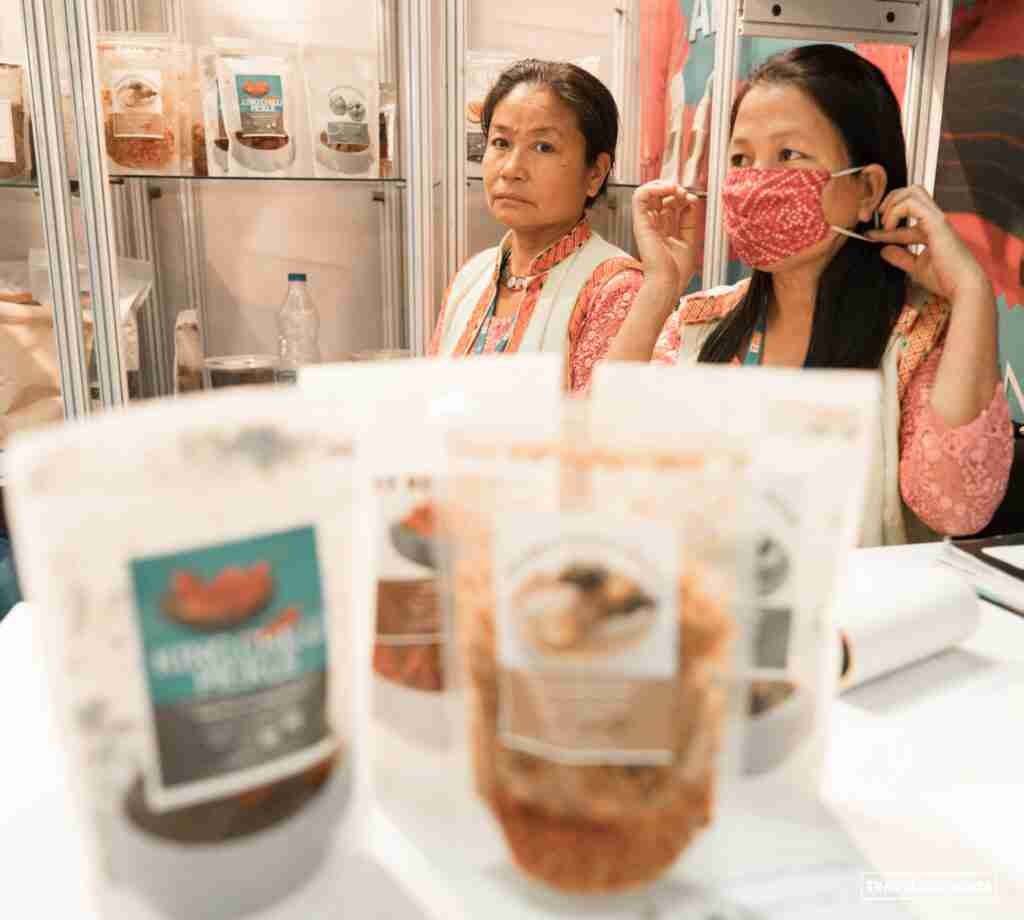

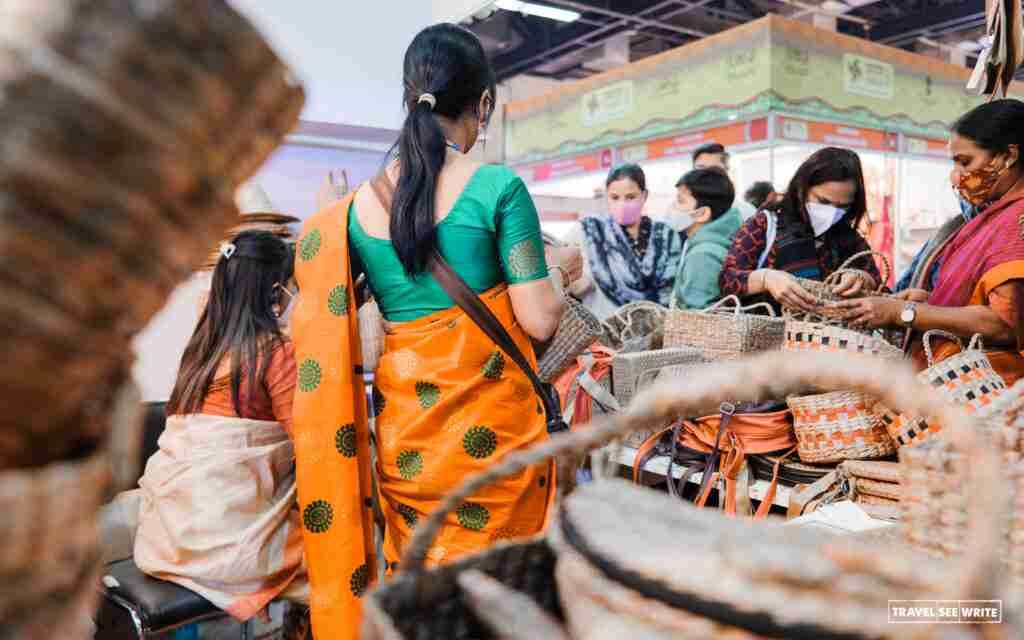
Other stalls at Indian International Trade Fair 2021
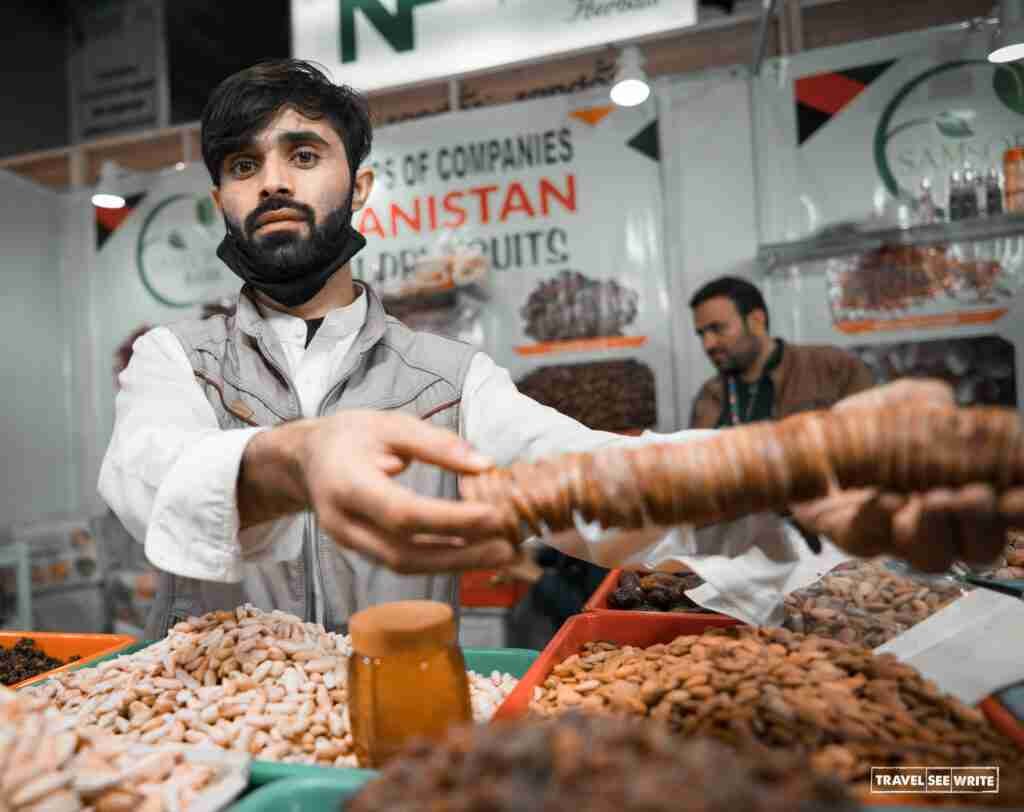
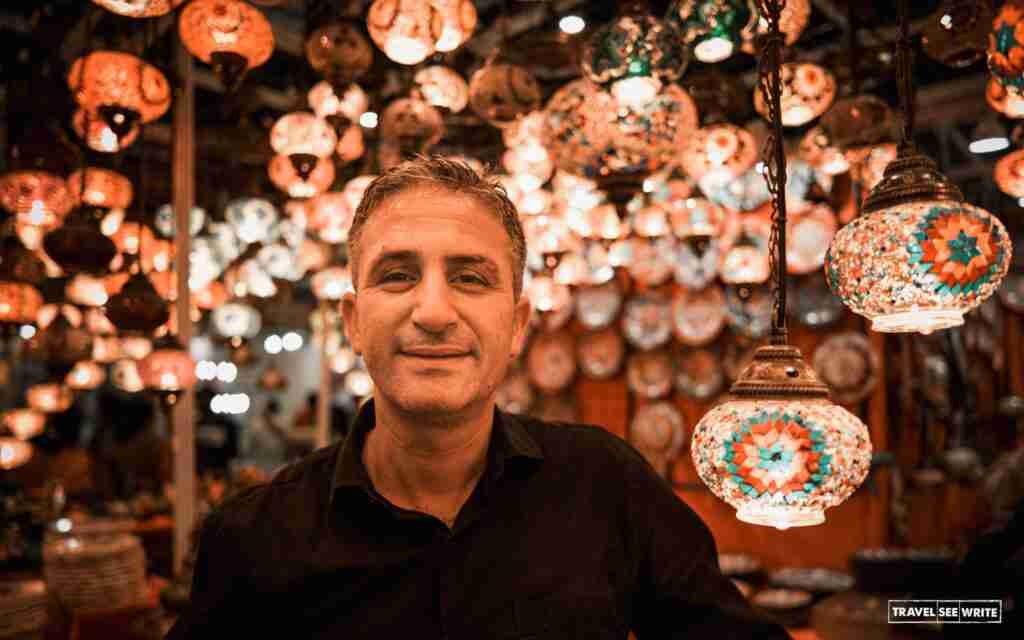
Camera – Panasonic Lumix S5 full-frame camera, Lenses – 24mm F1.8 lens and 20-60mm F3.5-5.6 Lens.
Here’s a small video on my visit to Saras Aajeevika Mela 2021:
Here are some related posts about women empowerment, and festivals of Delhi
Why women in Kolhapur are learning an ancient Indian martial art
Munsiyari’s Women of Mettle | Ecotourism and Women Empowerment Stories from Uttarakhand, India
The Women in Nepal: Meet the Women of Steel


Udaipur is a city in India where you can either dine like a maharaja relishing a multi-course feast or enjoy a simple ‘unlimited food’ thaali in a budget family restaurant. Wherever you might eat, one thing is assured – the food will always be delicious. All your taste buds will be rewarded – be it hardcore non-vegetarians looking for famous Rajasthani Laal-maans or vegetarians searching for the 800/- per kilo ‘Ker sangri’ (my favourite Rajasthani dish) along with daal baati churma. Whether you want to go on a romantic couple dinner or celebrate someone’s birthday or simply enjoy a fun meal with friends, Udaipur will have a restaurant just right for you. While circumventing the narrow lanes of Udaipur, be ready to get surprised by its culinary offering. You’ll be amazed to see how the city’s food scene go beyond Rajasthani fare. From picturesque fine dining restaurants on the lakeside to chic European-style cafes — the possibilities are endless. Here are the best restaurants and cafes of Udaipur that Travel See Write highly recommends:


Besides the above, I tried ‘Soul Bistro and Lounge’ by Sun and Moon Udaipur on a local friend’s recommendation. They claim to be one of the best rooftops café in Udaipur but, frankly, didn’t find them extraordinary. In fact, the food and drinks were pretty average, and the environment was quite loud. Maybe it’s meant more for a younger audience looking to party and not a visitor trying to soak the romantic vibe of the city.
While there is no shortage of the best fine dining restaurants in Udaipur with a great view, the city also has a rich legacy in street food. Your craving for street food items such as samosa, kachori, aloo bada, vada pav, or dabeli will get fully satiated at Sukhadia Circle, Chetak Circle or Mumbai Market. Some places worth checking out are Bohra Ghanpati Mishtan for samosas, Shri Lala Mishtan for kachoris and Bhole Nath Nashta Center for poha.
And, if you are looking for some cheap but good quality restaurants in Udaipur, you can’t go wrong with Natraj Dining Hall and Restaurant. Their thali is a must. Places like Bawarchi Restaurant, Queen Café, and Jasmin are worth visiting too.

A few Rajasthani dishes that are an absolute must-try in Udaipur are Gatte ki sabzi, Ker Sangri, Laal Maans, Mawa Kacchori, Pyaaz Kacchori, Samosa, and Mewari Styled Curries.
Have you been to Udaipur? How was your experience? Do share it in the comment below.
The best places to visit in Udaipur in 24 hrs to 7 days
Why tree of life vantara resort is one of the best hotels in Udaipur?
Banswara – the city of 100 islands
Ranthambore National Park, Rajasthan, India
Castle Kanota, Jaipur – How tourism saved the royals of Rajasthan
Rethinking tourism could save Udaipur from its pressures


Planning a trip to Udaipur? Find all your answers in this travel guide – places to visit in Udaipur, best restaurants, best hotels, best places to shop, how many days are enough, the best time to visit, how to reach Udaipur and much more.

As the mercury level falls in Northern India, the tourists start flocking Rajasthan. The land of Maharajas is famous for splendid palaces, imposing forts, vibrant culture, spicy Laal-maas daal baati churma, rich heritage and marvellous stories of bravery. Rajasthan is all this and a lot more. There are so many beautiful places in Rajasthan, each with its unique charm and appeal, that it’s almost impossible to cover all in one trip. Imagine exploring the pink city of Jaipur, the blue city of Jodhpur, the dunes of Jaisalmer, havelies of Bikaner, ghats of Pushkar, tigers of Ranthambore, and more in 7 days deeply. Hardly anything will register. You’ll just be doing touch-go at every destination that deserves at least 3-4 days per destination. Therefore choosing one place and exploring it slowly and deeply is a better idea. And that’s what I did on my last trip to Rajasthan when I decided to visit – Udaipur in monsoon season. In this travel guide you’ll find places to visit in Udaipur in 2-7 days and much more:
Here is a short video about my trip to Rajasthan in this monsoon:
Udaipur lies in Mewar, the land of bravery and chivalry, a treasure of impregnable forts and grand palaces. The saucer-shaped fertile valley, often referred to as the ‘Venice of the East, is most famous for its azure water lakes and lush green hills of Aravallis. While Udaipur has a plethora of star attractions, some of the prime sites are – Lake Palace, strategically located in the middle of Lake Pichola, which is considered one of the most romantic hotels globally. City Palace and (Monsoon Palace) add to the architectural beauty and grandeur of the city. Jaisamand Lake is claimed to be the second-largest man-made sweet water lake in Asia. The city is also known for its abundance of zinc and marble reserves.
Despite visiting Udaipur several times (staying for at least 7 days each time), I have barely scratched the surface. Here are some I would highly recommend you to visit whether you are looking for places to visit in Udaipur in a single day or 2-7 days:
Udaipur got its moniker, the city of lakes, owing to over seven fresh-water man-made lakes in and around the city. The interconnected, cascading lakes around Udaipur were primarily created by building dams to meet the city’s drinking water and irrigation needs and its neighbourhood. So, every time I visit Udaipur, I make it a point to see at least 3-4 lakes. The best lakes to visit in Udaipur are Pichola, Fateh Sagar, Udai Sagar, Doodh Talai, Jaisamand and Badi Lake.

An imposing architectural marvel towering over the Lake Pichola on a hill surrounded by crenellated walls, it is a conglomeration of courtyards, pavilions, corridors, terraces, rooms and hanging gardens. The balconies, domes, and towers of the palace give an excellent view of the lake and the surrounding city. “City Palace is the largest palace complex in Rajasthan and was built in 1559 by Raja Udai Singh II. The original palace expanded, and successive generations added 11 new palaces to the original structure”, said the Culture and heritage promotion Assistant Manager of City Palace, Poorva Bhatia. Twenty-three Royal families have lived in this 462-year old palace, including the current one who now resides in Shambhu Palace. This is now a major tourist attraction and a much sought-after wedding venue of the Haut monde.

The old complex consists of four major and several minor palaces that collectively form the magnificent City Palace. The central part of the palace is now preserved as a museum displaying artefacts.
Timings – 9:30 am to 5:30 pm on all days of the week
Entry fee – City Palace Museum fee is 300 INR for both Indian and well International guests. Children from the age of 5 up to 18 years is 100 INR and senior citizen 200 INR.
Now a hotel owned by the Taj Group, it was initially called Jag Niwas and served as a summer palace of Maharana Jagat Singh. Built between 1743 and 1746 on an island in Lake Pichola, the palace is a majestic marvel of architectural beauty. The walls of the Taj Lake palace are made of black and white marbles adorned with semi-precious stones and ornaments. Courtyards of the restored palace are lined with well-manicured Gardens, fountains, pillared terraces, and columns. Restored to its original glory, this spectacular palace became world-renowned when the James Bond film ‘Octopussy’ was filmed at it. Equipped with well-appointed 65 luxurious rooms and 18 grand suites, this heritage hotel in Udaipur is a destination in itself.

However, the Taj Lake Palace is a resident-only facility. All hotel services and facilities are solely for in-house guests. So, you can enjoy its beauty from outside only unless you are staying here.
One of the best places to see the aerial view of Udaipur without taking a helicopter ride is from the top of Karni Mata Temple. And that’s what I did. I have always visited this temple constructed from 1620 to 1628 by Maharana Karan Singh in my last three trips. But the temple never came into the public’s eye until 1997, when the Manshapurna Karni Mata Development Committee decided to redevelop the temple. A well-paved path was developed with stairs and resting areas at various spots on the way to the temple. For those who didn’t want to hike, a ropeway was installed. It takes anywhere between 20-25 minutes to reach a staircase and around 5 minutes by ropeway.

Once you reach the top of the Karni Mata Temple, you see a panoramic view of the entire Udaipur City. Starting from Dudh Talai Lake, Pichola Lake, Lake Palace, City Palace, Jagmandir, and a lot more. From the backside of the temple, you get to see an aerial view of the residential areas of Udaipur.

Situated just outside Udaipur, the 19th-century Sajjangarh Palace is built on top of Bandara hills. Used as a monsoon palace and hunting lodge, Maharana Sajjan Singh originally planned to make it an astronomical centre. The plan was abandoned with the king’s premature death. However, it is still an awe-inspiring sight on the Udaipur skyline. It offers spectacular views of the city, Sajjangarh Wildlife Sanctuary, and areas around.

Just beneath the Monsoon Palace lies Udaipur Biological Park, also known as the Sajjangarh Biological Park. The Sajjangarh Biological Park is an ecotourism site built to conserve the threatened flora and fauna within the area. While it’s open all around the year, the best time to visit this park is during the monsoon season (July to September). The biological park is home to over 60 wild animals from 21 species, making it a haven for wildlife and nature lovers. It’s a plastic-free area where you are not allowed to carry any plastic item with you.
If you love heritage architecture, you must visit Jagdish Temple, a prime example of the Indo-Aryan style of architecture. This multi-storied temple was built by Maharana Jagat Singh I in 1651; to date, it continues to be one of the most visited temples in and around Udaipur. Devoted to Lord Vishnu, the structure of Jagdish Temple is an architectural marvel with carved pillars, elegant ceilings and painted walls.
What do women do in Rajputana kingdoms to pass their time? They would visit gardens. One such garden was built by Maharana Sangram Singh II – Saheliyon-ki-Bari or the Garden of the Maidens. There is a small museum, marble elephants, fountains, kiosks, and a lotus pool within the garden.

Udaipur and nearby areas have a rich cultural heritage. One place you must visit in Udaipur is Lok Kala Mandal. Dedicated to studying folk art, culture, songs, and festivals of Rajasthan, Gujrat and Madhya Pradesh. This autonomous institution is mostly self-reliant and provides livelihood to over 40 artists from across the region. Daily there are cultural shows and puppet shows. The institution also houses a museum that exhibits a collection of folk items from Rajasthan like rural dresses, ornaments, puppets, masks, dolls, folk musical instruments, folk deities and paintings.

This place was a complete surprise package with its authentic Rajasthani food and adventure activities. Visit this place if you want to try your hand at adventure activities like Zipcycle, Zoombike, Rope course, Rocket ejector, Wall climbing, etc.

I found above the best places to visit in Udaipur in the monsoon, but you can see them in any other season. Below are some more options.
Besides the above, the other places worth visiting in Udaipur are Bagore-ki-Haveli, Shilpgram – the Rural Arts and Crafts Complex, wax museum, Ambrai ghat, and old city, Phoolon Ki Ghatti in Cheerwa, among many other places. If possible, visit Shilpgram during the ten-day Shilpgram Festival, which starts from 21 Dec to 30 Dec every year.
Udaipur has a lot of exciting places around to visit, such as Eklingji (22 km), Nagda (23 km), Nathdwara (48 km), Haldighati (50 km), Jaisamand Lake (50 km), Rajsamand Lake (66 km), Kumbhalgarh (84 km), and Banswara (160 km).
Being a tourist magnet, there’s no shortage of accommodation options in Udaipur for every budget:
When it comes to spoiling the guests with luxury, very few cities in India do better than Udaipur. Whether you are seeking a romantic plush experience in Rajasthan or wish to relish the royal hospitality, there are the best 7 star and 5-star hotels in Udaipur that will satiate your needs, whatever they may be. Almost every prominent hotel chain in India has a presence in Udaipur. While there are beautiful properties all around, the heritage hotels are the showstoppers of the city. These properties are either run by the erstwhile royals or were once their residences. One thing is common about all of them: all of them are near Lake Pichola. Once the grand homes of the Maharajas of the bygone century, these hotels now serve tourists seeking regal experience.

Here’s a list of the best luxury hotels in Udaipur with lake views- Taj Lake Palace Udaipur, the Oberoi Udai Villas, Aurika by Lemon Tree, Raffles Udaipur, Taj Aravali Resort & Spa Udaipur, Jagmandir Island Palace – Grand Heritage, The Leela Palace Udaipur, Trident Udaipur, Taj Fateh Prakash Palace Udaipur, The Ananta Udaipur Resort & Spa, RAAS Devigarh, TatSaraasa Resort and Spa, and many more. The price of high-end 5-star luxury hotels such as Taj Lake Palace Udaipur, the Oberoi Udai Villas, Leela Palace etc., starts around 50,000 INR per night. In contrast, the price for the next tier of luxury hotels can be anywhere between 12,000/- INR to 30,000 INR per night.
When people visit Udaipur, the most sought after hotels are around the lakes. There are a lot of 5-star hotels in and around the lakes, namely Taj Lake Palace Udaipur, the Oberoi Udai Villas, Jagmandir Island Palace, Jag Niwas Palace, the Leela, Udaipur. Then there are many touristy Havelis and hotels near the lake cater to all kinds of budgets like Jaiwana Haveli,
There are many good hotels in Udaipur that are worth spending a few days. Udaipur welcomes a budget traveller with as much attention and warmth as it does a luxury traveller. These budget properties are well equipped with all the essential facilities required for a smooth stay. Most of these accommodations offer fantastic views of Lake Pichola and Lake Palace from Mewar Haveli. They are close to the bus stand and the railway station. Don’t be fooled by the ‘budget’ hotels tag – they are no less than any charming haveli of the yore. But if you like to stay away from the hum-drum of city life, the properties such as Tree of Life Vantara, Udaipur are a great option to stay.
Udaipur is a city where you can dine like a royal. While navigating through the narrow lanes of Udaipur, you are bound to get surprised by its culinary offering. You’ll discover that the city’s culinary offerings go beyond Rajasthani fare. From chic European-style cafes to picturesque fine dining restaurants on the lakeside—the possibilities are endless. I’ll highly recommend some restaurants and cafes: Ambrai Restaurant, Khamma Ghani, 1559 AD restaurant, Upré by 1559 AD, Udai Kothi, Millets of Mewar, Neel Kamal Restaurant, Darikhana, Savage Garden, and Enigma.
You can know more details about the best restaurants in Udaipur here.
Apart from plush restaurants, Udaipur has a rich legacy in street food as well. You can gorge on street food items such as hot samosa, crispy kachori, delicious aloo vada, tasty vada pav, or delicious dabeli at Sukhadia Circle, Chetak Circle or Bombay Market. Some worth mentioning places are Bohra Ghanpati Mishtan for samosas, Shri Lala Mishtan for kachoris dipped in curry and Bhole Nath Nashta Center for poha. One place that you shouldn’t miss out on is Natraj Dining Hall and Restaurant. Their thali is. A must. Places like Bawarchi Restaurant, Queen Café, and Jasmin are worth visiting too.
Shopping and travelling go hand in hand. And, Udaipur doesn’t disappoint when it comes to shopping. The famous markets of Udaipur are:


Day 1 – as above
Day 2 –

Day 1 & 2 – as above
Day 3 –

Day 1, 2 – as above
Day 3, 4 & 5 – Banswara
Day 5 –
Day 6 – Visit Kumbhalgarh
Day 7 – Local sightseeing, shopping and departure

By flight
I took Vistara’s afternoon flight from Delhi, which took around 1hr 25 minutes to reach Udaipur’s Maharana Pratap Airport, about 22 km away from the city centre. By flight: Udaipur is well connected with flights from all over India. While I had a pickup arranged from the airport, you can easily hire a taxi or an auto from outside the airport to reach your destination. Pre-paid taxi costs approx. INR 700-800 and a prebooked OLA or UBER might cost around INR 400-500.
By road
Udaipur has good road connectivity. You can reach Udaipur from Delhi in 11 hrs, 13hrs27 mins from Mumbai, 6hrs 46 mins from Jaipur, 4hrs 59 mins from Ahmedabad, 7hrs 45 minutes from Indore, and 4hrs 49 mins from Kota. The roads are well maintained, and there is also an extensive network of regular bus services on these routes. Depending upon your budget and requirements, you can choose from air-conditioned coaches, luxury buses or state transport buses. The Rajasthan State Road Transport Corporation (RSRTC) buses connect Udaipur with places like Chittorgarh (115 km), Jodhpur (260 km) and Bhilwara (166 km), among others.
By train
Another easy way to reach Udaipur is via train. You can find frequent trains from Jaipur, Delhi and Mumbai. Trains such as Mewar Express, Ananya Express, Gwalior-Udaipur Express and Chetak Express run daily, connecting the city with Ahmadabad, Sealdah and Ajmer. Suppose you want to travel in a truly luxurious style. In that case, you can choose to travel in any of the luxury trains that cover Udaipur as a part of their itineraries, such as Maharaja Express, Palace on Wheels, Golden Chariot and Deccan Odyssey. Upon arrival at the Udaipur Railway Station, you can hire a cab or an auto-rickshaw to explore the city.
I hope you liked this travel guide for a trip to Udaipur.
The best restaurants in Udaipur, Rajasthan
Why Tree of Life Vantara Resort is one of the Best Hotels in Udaipur?
Banswara – the city of 100 islands
Ranthambore National Park, Rajasthan, India
Castle Kanota, Jaipur – How tourism saved the royals of Rajasthan
Rethinking tourism could save Udaipur from its pressures


I had visited Udaipur on the invitation of Rajasthan Tourism but all the views expressed above are solely based on my personal experience. All the pictures and text written above is the sole property of Travel See Write. Please don’t copy anything without prior written approval.
Hotel Review: Are you planning a holiday in the city of Lakes and looking to stay in one of the best hotels and resorts in Udaipur? In this post, you’ll read about my honest review about staying at Tree Of Life, Vantara Resort in Udaipur.

The magnetism of the exotic city of Udaipur is so intense that it lives in your mind long after you have left the place. And, one of the most important decisions to take while visiting the royal city of lakes is where to stay in Udaipur. While there are ample options to choose from the best houses and resorts in Udaipur, it could get confusing. From enjoying a royal stay at the aristocratic and illustrious Taj Lake Palace of Udaipur on Lake Pichola to finding a nature retreat in the Aravalli mountain range; Udaipur has ample options to suit every pocket. Some of the top hotels in Udaipur for couples, families and weddings are newly opened Raffles, Leela Palace, Oberoi Udai Villas, Aurika by Lemon Tree and many more. During my last visit to Udaipur, I stayed at two different hotels and resorts. One was in the city’s heart, next to Fateh Sagar Lake, and the other away from the hustle-bustle of the city, in the middle of lush Aravalli hills. If you are looking for the Best Hotels in Udaipur for couples and families, this post could help. Here are my reasons to choose Tree of Life Vantara Resort, Udaipur over any other 5-star hotels in Udaipur:

Related – the best places to visit in Udaipur in 24 hrs top 7 days
Being a nature lover, I prefer places that are peaceful and unobtrusive, where I can be one with nature. That kind of tranquillity is difficult to get in the bustling’s heart of Udaipur, therefore I stayed with Tree of Life Resorts, Udaipur. Nestled among the undulating forested Aravalli hills, the resort is strategically at Debari. A village lying midway between the airport (13.3 km, 25 mins) and Udaipur city (approx. 11 km, 25 mins). Reaching here itself was like a mini adventure—driving on a mud road with trees all around made me feel as if I was on a jungle safari. I got a grand welcome when, along with the welcome drink, the heavens opened their floodgates. Despite heavy rains, the resort looked extremely gorgeous with all the greenery and open spaces around. As I entered, I couldn’t stop myself from noticing the architecture that was built to blend in—made entirely in Jaisalmer stone. The resort reflects Rajasthan’s architectural style and design.

Travel Tip: Since the resort is in a secluded area, therefore, getting public transport or even an uber can become an issue. The best is to share your travel plans with the front office and they can arrange a taxi for you, in case you don’t have your own conveyance.
Unlike big hotels with 150+ rooms, Tree of Life Vantara Resort in Udaipur doesn’t intimidate you with its size. You feel you are staying in a nature retreat for relaxation with just 16 hideaway rooms spread over 4 serene acres of picturesque land on two floors. I stayed at one of their Superior Hideaway Rooms on the ground floor. My room had a large sit-out area with an all-encompassing view of the forested Aravalli Hills. I spent a lot of time here just marvelling at the serene beauty of the landscape. With around 400sq. ft. area, my room was very spacious, well-lit and fully equipped with all modern amenities. The bathroom had a separate closet area and individual WC and shower areas.


The resort has all the amenities that you look for in a mid-range resort starting from 24-hour security, daily housekeeping, taxi service, express check-in/check-out, luggage storage, free parking, free High-Speed Internet (Wi-Fi), outdoor swimming pool, game room, airport pick and drop, restaurant, conference facilities, dry cleaning, and Laundry service.
Also, the resort is pet friendly. So, you can travel with furry babies without worrying.


No travel experience is ever complete with good food. Thankfully, the food served at Tree of Life Resorts was freshly cooked and delicious. Made as per the guests’ liking, it provided the best of both worlds – a variety of restaurant menus and quality of home-like food. You could either eat at the buffet or order à la carte. I tried and loved both. You could order anything from the carefully selected menu of Rajasthani, Continental and Gujarati cuisine. I tried Rajasthani and continental cuisine. Both were delicious. Daal-baati-churma, Gatte Ki Sabji, ker Sangri, Laal maans, were served with great love and care. I ate so much that it became difficult to move after lunch.
The breakfast was well laid out with South Indian, continental and North Indian food to choose from. One evening, I had an outdoor dinner with my friends. The candlelight setting next to the outdoor pool was splendid.


For me, the staff in a hotel or resorts are the unsung heroes. And, I have to say, the staff at Tree of life Resorts is one of the best I have come across lately. Not only they were respectful, courteous, and mindful of my needs, but they went out of the way to arrange things that were not even part of their service. Here’s an incident I would like to narrate. While checking out, I forgot some stuff in my room, which by mistake was carried home by the guests who stayed in my room once I checked out. Kudos to the Property Manager, Mahendra Singh, for checking with the other guests and ensuring I get my stuff back. This kind of commitment is something you don’t see often. Even during my stay at the property, Mahendra Singh and his team ensured I had a comfortable stay.

The reason I thought Tree of Life Resort, is one of the best hotels in Udaipur for couples and families is because of the experiences it provides. The provided experiences are unique, sustainable and bespoke. They can be organised both inside and outside the property at a nominal extra cost. Some experiences include a soft trek in the hills, which is led by a Bhil tribal, who call the Aravalli hills their home. The trek takes you to a hilltop from where you can enjoy a panoramic view of the hills and Fateh Sagar lake.
If you are amused by temples, architecture and culture, you would enjoy ‘A day with the Gods’ day trip taking you on a temple trail of temples from 724 AD to the 17th century. Besides that, you can go on a village tour to meet the tribals or see the village life. Other than that, you can always enjoy a special high tea or cocktail by the pool.
There are different room packages available at Tree of Life Vantara Resort, Udaipur. You can choose either of these:
You can book directly on the resort’s website or through a third-party website like tripadvisor.com or booking.com. You can also book my calling up the Tree of Life Vantara Resort, Udaipur contact numbers – 9116104009 or 9015242000. For more information, either visit their website or write to them at unwind@treeofliferesorts.com


Varsha, 36, presents the sales strategy to the management on Google Meet while her dog, Whisky, sleeps on the grass nearby. Her presentation goes well, and she is excited about the new role. In January this year, the IT professional during the week and hobbyist photographer during the weekend traded off her high rise apartment in Bangalore to one of the luxury beach cottages in Goa. Out of all the things that bothered her the least was the flight charges from Bangalore to Goa. Staycation in Goa for a month amid a raging pandemic was a big decision, and initially, she was a bit apprehensive about how it will work, but eight months later, she couldn’t have been happier. While she hasn’t shifted permanently to Goa from Bangalore, the move is on her mind. The several luxurious and cheap staycations in Goa have helped her make the decision. When I asked her what prompted her to shift to Goa, she said,
The Work From Home came as a blessing in disguise. I could work from anywhere. All I wanted was a peaceful, stress-free environment, fresh air and stable Wi-Fi. An outdoor space to take my dog for walks. Goa has it all.

Varsha is not alone. After the Covid-19 Pandemic hit, the four-walled city life of metros became suffocating for many Indians, especially the ones in the corporate and creative fields. Overnight, the life of going out, parties, dinners, meetups, travel and even work became inaccessible. As the COVID numbers started going down and states started opening up, more and more people began escaping to either the hills or the beach for workcations. Susegad, the Goan concept of sense of contentment, fulfilment and relaxation became even more appealing.
Bhawna, 27, a media professional from Delhi, finally decided to take the plunge and move to Goa in January 2021 to open a Café with her partner. She loved the chill vibe of the place, and more importantly, she didn’t have to deal with Delhi’s pollution anymore. She chose South Goa to fulfil her dream of becoming an entrepreneur. She says her dream of opening a café had not taken wings if the pandemic didn’t happen. In a way, it helped her to make the big move. She was more than happy to leave her cramped 2BHK rented house behind for a spacious beach cottage in Goa with a private pool and garden.

Domnick Mendes, who owns Paloma De Goa Resort in Colva, Goa, had seen an uptick in the long-term staycation trend. He says most of his guests are from the IT industry in Delhi, Mumbai and Bangalore. They usually book a room for a month, and their number one ask is always an excellent stable Wi-Fi. They are not very fussy about the rest of the stuff. They love to work from goa for a month or less as they really enjoy the relaxed, tension-free life of the party-state of India. During the day, they’d be glued to their screens but come evening; they’d head out for long walks on the beach or chill out in beach shacks. They can take time to pursue their passions like photography, writing, reading, painting, dancing, and music.

Sam Varghese, who now runs Aspirerz Event Management company in Panaji Goa, moved to the sunshine state from Madhya Pradesh in July 2021 after visiting Goa every few months since 2008. He says,
“As a guy with a nomadic heart, roots belonging to the South but raised in Central India and having the desire to scale mountains up North, I found Goa to be a charming place. A place that has it all – to chill, to thrill, to explore, to venture into adventure, waterfalls, old relics, wildlife sanctuaries, spice plantations, local beverages and Konkani styled dishes.”

Varsha, Bhawna and Sam are not the only ones whose heart was stolen by Goa. There is a reason why Goa is a favourite of Indians. The people of Goa are non-judgemental, chilled out and laid back. Nobody will bother you unless you encroach on their private space and indulge in some socially irresponsible act. As someone once said,
Goa is not only the land of beaches or city of churches, it’s a feeling that defines thrill in the most amazing way.
But not all is great in Goa. For big-city folks, there are some trade-offs too. Chetna Chowdhary, who moved to Goa a few years back, lists the things she misses in Goa:
“I really miss the good public transportation, well-equipped hospitals, glitzy shopping malls, and easy connectivity of Delhi. Unlike Delhi, I can’t order food any time I feel like eating. Moreover, the locals are very strict about the restaurant timings, and you get the set food menu only at a set time. For example, I can’t have a samosa or momos at lunchtime. It’s easy to find local food like Goan seafood but difficult to find international cuisine in the neighbourhood.”

Being close to nature also brings unwanted guests such as spiders, lizards, frogs, mice, mosquitoes and snakes. City Dwellers used to 24*7 power back have to face frequent power cuts and sketchy internet service.
And there is another concern that many have raised – integrating into the community. Chetna shared that despite being a resident of Goa for several years now, sometimes she is made to feel like an outsider. Goa is in India, yet at times you feel like an expat here. Take for instance her last week incident when she went waterfall chasing with her family in South Goa. The locals had closed several waterfalls including the Tiger waterfall for outsiders as the tourists and other villagers leave the party waste behind at the falls. Despite knowing she is a Goan herself and her failed attempts to convince them she won’t litter, the locals didn’t relent.
The ever-escalating property prices have become another headache for the locals. Goans say the pandemic increased the demand for land, and property rates shot up astronomically. Navneet Kapoor, a builder of 12 high-end luxury villas in North Goa, says, “pandemic fuelled a high demand for luxury homes with private gardens and pools in big cities. As a result, the cost of property has gone up 20-25 per cent in Goa.”
So, if you are considering renting a house in Goa or booking a hotel for a long-term staycation, weigh in the pros and cons of Goan life before going online to check the flight.
Let’s Go, Goa!

Here are some common questions people ask when they are thinking to work from Goa for a month or less:
Depends on your interests and budget. North Goa is very different from South Goa when it comes to attractions, affordability and services. If you love the parties and touristy vibes of Goa, then Calangute or Baga are good areas to stay in Goa. If you are a peaceful and relaxed stay by the beach kinda person, then Colva and Palolem are a good choice. People often ask which part of Goa is best for activities. I would say go to Cavelossim and Mobor for Beaches, Baga for shopping and water Sports, Candolim and Calangute for other Outdoor Activities, Panaji for Sightseeing, Old Goa fort history.
Before booking any villa, apartment or homestay in Goa do read reviews and check with your friends and family. Getting villas, apartments or homestays on rent in Goa is not a problem. Also, check for the Goa WFH package. Many properties provide discounted rates to people looking for workation in Goa for a month or less.
There is a lot you can do in Goa depending on your interests. You can go for long walks, biking, hiking, bird watching, enjoying water sports, reading, boating, visiting spice plantations, attending yoga classes, participating in musical gigs and partying all night. But all this depends on the current COVID situation in the state. So read COVID guidelines before making plans.
Goa is great in every season but November to February is the best time for the party people. Usually, the weather is pleasantly cool during this time.
If you are looking to do offbeat things to do in Goa this post would be very helpful.


The real voyage of discovery consists not in seeking new landscapes, but having new eyes.
Better words couldn’t have been said than what Marcel Proust mentioned above. In contrast, everyone loves to travel; not all go beyond the star attractions, especially when going on a Leh Ladakh road trip. Travel, if done responsibly, can bring us up close to some of our planet’s most stunning natural wonders and connect us with unique cultures around the globe. Moreover, it also has the power to change places and the lives of the people who live there – for better or worse. Through our latest venture – TSW Trips – we want to change locals and travellers’ lives for the better through our specially curated sustainable trips. Let’s explore offbeat places like a local in a sustainable way.

Being a full-time traveller who has travelled to around 70 countries worldwide and 25+ states in India, I think I know a bit about our beautiful planet. People often ask me for my advice when planning their trips and often ask me if they could join me on my travels.
“Happiness is only real when shared,” said Christopher McCandless. So, here we are, sharing our joy of visiting offbeat places in search of untold stories with you.
Presenting TSW Trips exclusively curated for you that I’ve personally experienced not just once but many times. Trips that are highly personalised, completely offbeat and experiential. Most importantly, they are sustainable and would benefit the economically challenged local communities at the grassroots.
My second innings in life (aka my travel career) was a gift from Ladakh. If Ladakh had not happened, I, Archana Singh, would not have left the corporate world to make my passion (travel) my profession.
As I start a new chapter of my travel life, I thought of going back to the drawing board and starting from where I took the first step – Ladakh. Moreover, having visited Ladakh 7-8 times, I know a bit of the place. I have some outstanding local experts who are keen to show the hidden gems of their homeland.
TSW Trips to Offbeat Ladakh is an initiative to help you get in touch with the true essence of Ladakh. An essence that goes beyond star attractions to take you to the heart of “Lama Land” that lives in its villages. Allow us to take you on a journey that will show you Ladakh in a different light altogether.
Through this trip, you will get an opportunity to experience the unique cultures, artisanal cuisines, extraordinary adventures and awe-inspiring landscapes of Ladakh. You’ll get to meet and interact with the local indigenous communities that are almost on the verge of extinction, visit notable monasteries, and experience local food that hardly anyone knows. The tour will be guided by locals and your very own Archana Singh (half Ladakhi herself by now), who have full knowledge of the local terrain and sites that provide overwhelming experiences.
Here’s a sneak peek of what you’ll see in Ladakh with TSW.
15th-22nd August 2021
Day 01 –: Leh Arrival.
Traditional Ladakhi welcome followed by a full day rest to acclimatise well before exploring Ladakh. The two highlights of the day would be – firstly, a short introductory presentation about Ladakh, its history and culture to better understand the destination. Secondly, experiencing a Tibetan medicine system established during the 7th century.
Overnight in Leh.
Day 02 – Visit the Monastery, Nunnery, Market and Shanti Stupa
We will start early morning to attend the morning prayers with the monks at a 16th-century monastery, followed by a riverside breakfast on the banks of the Indus River. Later, we will visit a local nunnery to learn the secrets of spirituality from the nuns of Ladakh. In the afternoon, we will go on a heritage walk of the Leh town that was once the hub of traders and artists on the silk route. We will round off the day with a visit to Shanti Stupa, a symbol of peace sitting atop the cliff. We would witness the golden hour with soul-soothing reverberating Buddhist chants.
Overnight in Leh.
Day 3: Leh to Aryan Valley via Alchi
After breakfast, we’ll leave for Aryan Valley, ‘the Land of Aryans”. The inhabitants are believed to be the descendants of Alexander’s army. The latter is believed to have wandered on their expedition some two thousand years ago. Besides tourists, Aryan Valley has gained a lot of attention from historians, filmmakers and anthropologists. En-route the valley, we’ll pass through villages that became a household name during Kargil War. Interestingly, these villages are also considered the most fertile in the entire region and produce the best of the apricots and apples in the valley. While interacting with the locals, we’ll taste the fresh apricots straight from the orchards.
On the way, we will pass through Pather Sahib Gurudwara, Magnetic hill, Confluence of Indus and Zanskar rivers and reach Alchi, where we will visit the oldest monastery of Ladakh, which has unique architecture and rare wall paintings.
Overnight at the Homestay run by the local family to savour authentic Aryan cuisine.
Day 4: Aryan Valley Village tour and Apricot Harvesting.
After breakfast, we will go on a guided tour of the village and apricot fields to relish the fresh ripe fruit. Later we will enjoy authentic local Aryan cuisine over lunch. In the evening, we will have cultural performances by the locals while sipping the local grapevine.
Overnight in Aryan Valley.
Day 05 – Aryan Valley back to Leh.
After breakfast, we will bid goodbye to the Aryans and drive back to Leh via the same route. Reach Leh by evening as we will stop by at various places en-route. Evening you’ll be free to explore the market on your own.
Overnight at Leh.
Day 06- River Rafting in Zanskar river.
Ladakh is known for adventure, and a visit to Ladakh would be incomplete without indulging in one of the most adventurous activities – white water river rafting on Zanskar river and July-August are the best months for this activity when the river gets swollen with water. You can raft on rapids up to grade IV. Hot lunch will be served at the rafting location itself. It’s almost a full day activity.
The evening will be free to explore the Leh market or any other place you want to explore by yourself. Overnight in Leh.
Day 7: Visit PAGIR and Artisanal Alchemy.
The experiences that we will have today will stay with us for the rest of our lives simply because, with the first one, you will impact and contribute to making someone’s life better positively. The second one will leave a long-lasting impression on your taste buds by experiencing the authentic local Ladakhi cuisine that no one knows about.
We’ll start our day by visiting PAGIR (Peoples Action Group for Inclusions and Rights), a Leh based NGO run by the disabled hailing from various parts of Ladakh. The organisation has been working tirelessly for the last thirteen years to welfare of the disabled communities of Ladakh. The artisans, who are primarily differently-abled, works for preserving the environment and promote the livelihoods of communities engaged in waste management. They turn waste raw materials like paper, cloth, plastic or cd into decorative and meaningful products. They even make sustainable bricks from waste. You can not only see them working, but you’ll be able to try your hands too at making your own gift items with recycled materials.
After this life-transforming experience, we will experience a specially curated Ladakhi artisanal meal by an exceptional local expert. Overnight at Hotel
Day 08- Departure
Tour Ends but not the experiences.
July!
Or you can extend your trip by two more days to experience any of the below destinations at an extra cost.
Option 1- Khardungla Pass/ Nubra Valley (Minimum 2 PAX)
Option II- Pangong Lake (Minimum 2 PAX)
Option III- Tsomoriri (Minimum 2 PAX)
Day 09- Return to Leh
Day 10- Departure
Get early drop back to the airport for a flight back home with happy memories of Travel See Write in Ladakh.
Disclaimers – If the situation worsens because of COVID, we will cancel the trip and refund the entire fees of the trip as the safety of locals and travellers is most important for us.
Group size
Only ten people. First-come, first-serve basis.
Here is a glimpse of different experiences you’ll have in Ladakh:
The cost of the entire Trip – Rs 45,000/-
Tour Inclusions for 7N8D trip:
· Accommodation on twin sharing basis
· Meal Plan – Breakfast & Dinner
· Transfers
Tour Exclusion:
· Flight Tickets
· Lunch
· Any kind of Insurance
· Museum or Palace Tickets
· Beverages, telephone calls, items of a personal nature, and personal services.
· Anything not included in ‘Tour inclusions’
· Additional days
Cancellation
· For cancellations received up to 30 calendar days before the scheduled departure; a 25% cancellation fee will be charged.
· For cancellations received 15 -29 calendar days before the scheduled departure date; a 60% cancellation fee will be charged.
· For cancellations received 7 -14 calendar days before the scheduled departure date; an 80% cancellation fee will be charged.
· For cancellations received within 7 calendar days before the scheduled departure date, a 100% cancellation fee will be charged.
While TSW trips are open to all, I would request the following people not to join who
While you’ll make life long memories at the end of the trip, the locals will earn their livelihood from showcasing their land and culture. Our close association with local Ladakhi communities will take us beyond the majestic mountains and high passes to experience the local Ladakhi Life most authentically!
Additionally, we will ensure that we leave only footprints while making memories. We will leave no trash behind throughout our trip and will try to neutralise our carbon footprint to zero.

The flora and fauna that we discover during our travels are essential to the local people who live in the places we visit. Indigenous communities tend to have an incredibly intimate relationship with the natural world. They rely heavily on the land and its resources for their traditional ways of life.
As Responsible Travellers, we must take care to protect the local lands and ecosystems that we visit. Because while these places are destinations to us, locals call them home. Let’s not destroy others home for our pleasure.

If yes, email at archana@travelseewrite.com to book your slot. Hurry up! Limited slots.


Before the second wave, India established the Air Bubble pact with 27 countries, while flights were operational to many other countries. These included sought-after holiday destinations such as the United Kingdom, Europe, United States, Canada, United Arab Emirates, Hong Kong, Thailand, and Sri Lanka. But as India battled the massive tsunami of coronavirus cases during the second wave of COVID-19, almost all countries put a travel ban on flights originating from India.
With cases dropping steadily in India after the brutal surge in April-May and India vaccinating more of its population daily, the idea of International travel is yet again looking possible for Indians. While some countries are allowing fully vaccinated Indian travellers, others have relaxed the travel restrictions.
Vaccinated Indian travellers have started dreaming about future vacations overseas. Still, it’s essential to plan for a safe and hassle-free experience. To enable you with the correct information, here is a list of all the countries that are open to Indian tourists currently.
As per Kayak, this is the current status for International Travel Restrictions for Indian Travellers
Eight European Union countries (Austria, Germany, Greece, Slovenia, Ireland, Spain, Estonia and Netherlands) and two non-member states, Iceland and Switzerland, have confirmed that they will permit Indians inoculated with Covishield to travel to their countries. Estonia has recognised all the vaccines authorised by the Indian government, including Covaxin, that local firm Bharat Biotech has developed.
Please note that India is still on the RED LIST of most European countries because of which Indian Travellers aren’t permitted to travel freely in Europe. Only the ones having long-stay visas are allowed to enter the European countries. They require an authorisation letter from your employer or embassy to establish the legitimacy and urgency of your travel. As a result, hardly any European Embassy in India is giving tourist visas to Indians as of date. So even if you are fully vaccinated and have a long stay tourist/business visa please do check with the respective embassy and flight carrier before booking your tickets.

Find up to date and detailed information about travel restrictions in place for every country in Europe, here.
Here are the travel guidelines in brief for each country.
Switzerland was the first European country to open its doors for fully vaccinated visitors from post-second Covid wave India. Moreover, Indian travellers who have got both jabs of Covishield don’t need to quarantine on arrival.

Travel Guidelines: Travellers who have been vaccinated or recovered from covid19 will be allowed to enter Switzerland without having to be tested or quarantined. Others have to present a negative PCR test or rapid antigen test and go into quarantine on entry.
For details about Switzerland visas for Indians, click here.

Germany has lifted its ban on travellers from five countries hit by the Delta variant of COVID-19, including India, Nepal, Russia, Portugal, and the United Kingdom. On July 7, these five countries were reclassified as “high-incidence areas” instead of the “virus variant country” category.
Travel Guidelines: Earlier only the citizens and residents of Germany were permitted to enter from India and they too had to undergo a two-week quarantine, regardless of whether they were fully vaccinated or were carrying a negative Covid-19 test. By contrast, now anyone from a high-incidence country can enter Germany as long as they provide a negative Covid test on arrival. They must in principle enter a 10-day quarantine but can end it after five days with another negative test. And, if Travellers from high-incidence areas are fully vaccinated then they are exempted from quarantine.
For details about German visas for Indians, click here.
One of the most popular tourist destinations globally, Spain reopened its border to all vaccinated tourists globally on June 7.

Travel Guidelines: Fully vaccinated individuals with a WHO or EMEA-approved vaccine are allowed to enter Spain. This means only travellers who have received Covishield will be eligible to apply for visas currently. In addition to vaccination proof, travellers will also have to take RT-PCR tests before departure.
For details about Spain visas for Indians, click here.
Russia is among the few countries allowing Indians to travel on tourist visas. Still, they have to go through a tedious process. Firstly, to enter Russia, one has to have an invitation from a government-mandated tourist agency and providing mere hotel reservations doesn’t suffice. Also, the so-called ‘vaccine holidays’ are turning out to be false because Russian authorities have confirmed that the country isn’t inoculating tourists.

Travel Guidelines: One has to produce an RT-PCR test within 72 hours before arrival and an on-spot test at arrival. If the test result comes negative, you can enter Russia. If positive, you will be transferred to a COVID treatment facility. Most travellers, vaccinated or unvaccinated, are not expected to live in quarantine, except for those who opt for an on-arrival test. They are required to wait for the results at a designated location for 24 or 48 hours. Also, since there are very few flights from India to Russia, the flight tickets are at least 2.5 times higher than regular airfare.
For details about Russian visas for Indians, click here.
Another popular destination for international travellers could be Serbia.

Travel Guidelines: The country allows travellers from all nations with a negative RT-PCR test 48-hours before taking the flight. In the absence of an RT-PCR test, one has to undergo a 10-day self-quarantine. Unlike most countries, Serbia accepts one dose of Covishield (Oxford-AstraZeneca) as proof of vaccination for travellers.
Lufthansa and KLM Royal Dutch operate only limited flights from India to Belgrade, Serbia. The prices are not exponentially high as compared to Russia.
For details about Serbia visas for Indians, click here. Indians are eligible for visa-on-arrival in Belgrade, making travel far more effortless.
Ukraine is yet another European country that has opened its borders to Indian tourists.
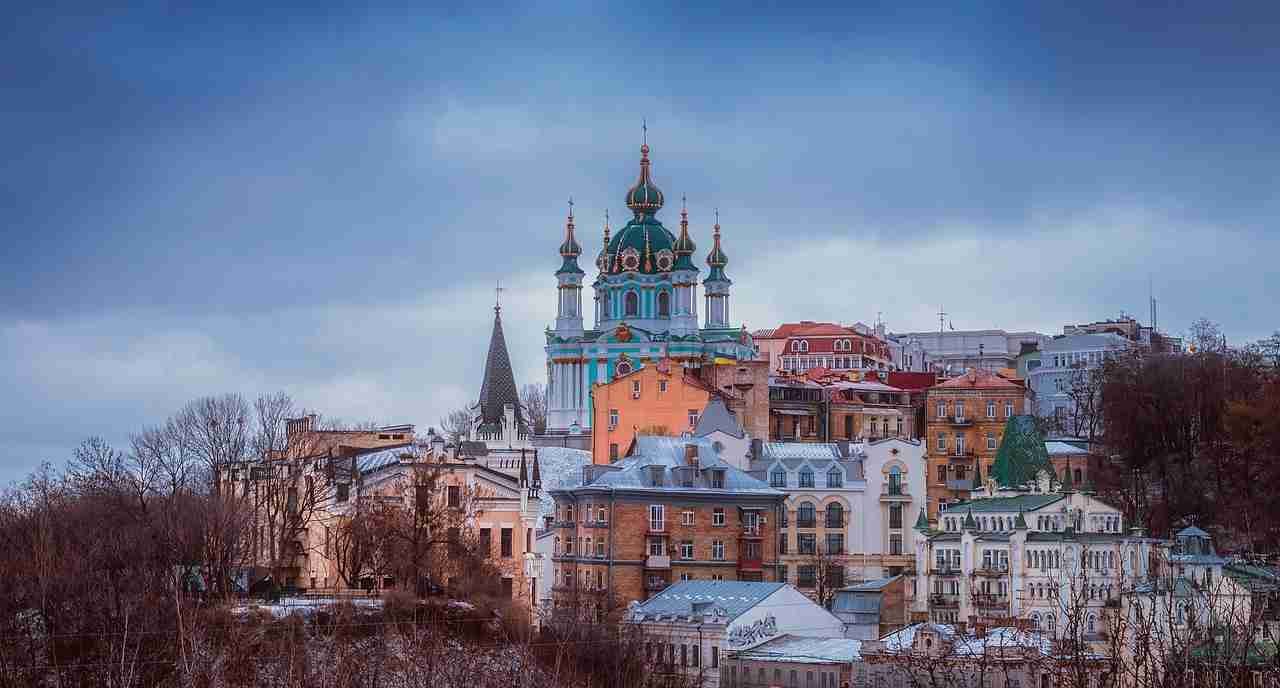
Travel Guidelines: Travellers visiting the nation will have to furnish a negative RT-PCR test, as well as a negative Antigen test. Moreover, they must have received both doses of a WHO-approved vaccine and should, without fail, carry a vaccination certificate of the same. Also, they might be subject to rapid-antigen tests across all state borders and check-posts in the country.
For details about Ukraine visas for Indians, click here.
All travellers’ regardless of their origin’ can now visit Iceland. The only requirement is that they have to be fully vaccinated with the approved vaccinations by the EU, including Covishield by AstraZeneca.

Travel Guidelines: Travellers will have to present a valid vaccination certificate and a negative PCR test upon arrival. They will be exempted from quarantine if the test comes negative.
Pure Luxe by KFT provides private charters and land packages since India doesn’t have an Air Bubble pact with Iceland.
For details about Iceland visas for Indians, click here.
While the UK has not lifted the ban on Indian travellers, you can still visit the nation if you have stayed in Iceland for more than ten days. In other words, it means that if you have to enter the UK on a Tourist Visa, you need to fly to Iceland first, stay there for 10-days and then you can enter the UK border.

For details about the United Kingdom visa for Indians, click here.
The land of kimchi, K-pop, K-dramas, Samsung, LG, Hyundai, the 12-step skincare routine, and of course, Gangnam Style is now open for Indian travellers.

Travel Guidelines: South Korea has lifted the travel ban on Indian Travellers and done away with the mandatory 14-day quarantine for those vaccinated with both the doses of Covishield vaccine. However, those vaccinated with Covaxin, which is yet to be approved by the World Health Organization, will have to remain in quarantine.
For details about South Korean visas for Indians, click here.
Sri Lanka is the only Indian subcontinent country that is open for Indian travellers currently.

Travel Guidelines: While Indian travellers can enter Sri Lanka, a 14-day quarantine is mandatory at hotels termed ‘Safe and Secure’. Also, they will be tested on the first, 11th and 14th day of their visit, regardless of them being vaccinated or not. Once they finish the mandatory quarantine, they can leave the hotel premises and explore the country.
For details about Sri Lanka visas for Indians, click here.
As per the official reports, the Maldives welcomed over 400,000 tourists since the beginning of January 2021. Russian travellers topped the chart, followed by Indians. However, Maldives put a ban on Indian Travellers when the second wave hit India. But now the Maldives has again opened its doors for Indian travellers resuming its visa-on-arrival for Indian travellers starting July 15

Travel Guidelines: As per a tweet from the Maldives tourism ministry, international passengers must carry a negative RT-PCR test. Travellers must take the COVID test within 96 hours from the scheduled time of departure. Also, they’ll need to fill in the health declaration form on the Maldives immigration portal 24 hours prior to the departure. There won’t be any mandatory quarantine or test on arrival. However, if someone shows COVID-19 symptoms, they will have to undergo a PCR test.
For details about Maldives visas for Indians, click here.
After staying closed for tourists for a long time, Mauritius is opening to welcome all vaccinated guests from July 15 onwards.

Travel Guidelines: However, international travellers still need to show a negative RT-PCR test report. Upon arrival in Mauritius, they will also need to undergo a Covid test followed by 14 days mandatory quarantine at an establishment approved by the authorities. After a negative COVID test result on the 14th day, travellers are free to explore the island nation.
For details about Mauritius visas for Indians, click here.
Armenia has been open for international travellers for a while, but the once sought after travel destination became a quarantine hub for hundreds of Indians returning to the UAE when the UAE suspended flights to India. While the restrictions are still in place, Indian tourists can plan a future trip to the country rich in cultural heritage and delicious food.

Travel Guidelines: Indian travellers entering Armenia need to either provide a negative RT-PCR test from a maximum of 72 hours before departure or provide a vaccination certificate.
For details about Armenia visas for Indians, click here.
The central Asian country is home to some of the Silk Road’s most iconic sights, including the three great Silk Road cities of Khiva, Bukhara and Samarkand. The country is now open for travellers, including Indian tourists.
Other Asian countries that are expected to allow Indians soon – United Arab Emirates, Saudi Arabia, Thailand, Hong Kong and Taiwan

Travel Guidelines To visit Uzbekistan this year, you’ll need a negative RT-PCR test report not older than 72 hours before arrival, followed by 14 days of mandatory quarantine.
For details about Uzbekistan visas for Indians, click here.
Kyrgyzstan, a Central Asian country boasting of grand architecture, heritage sites and cultural lessons, is now open for Indian travellers.

Travel Guidelines: Travellers who are not vaccinated will need to carry a negative RT-PCR test taken within 72 hours before boarding a flight to Kyrgyzstan. Also, upon arrival, they will need to self-quarantine. Those who can give internationally recognised vaccination certificates are exempted from all forms of tests.
For details about Kyrgyzstan visas for Indians, click here.
Although Afghanistan is not considered a safe destination by most travellers, this landlocked nation is open to Indian tourists.

Travel Guidelines: Indians will need to produce a negative RT-PCR test report that should not be older than 72 hours before arrival in Afghanistan. However, it is advised that travellers avoid travelling to Kabul for the next few weeks, owing to the rise of COVID cases in the capital city.
For details about Afghanistan visas for Indians, click here.
A popular destination among Indian travellers, Turkey, is now allowing tourists.

Travel Guidelines: While travellers can plan a trip to Turkey, they’ll have to undergo mandatory 14-day institutional quarantine. Travellers must take an RT-PCR test on the fourteenth day. Only on testing negative will they be allowed to leave the quarantine facility. Another demotivating factor is the ticket prices – at least twice higher than regular airfare and flights operated by carriers such as Air India, Emirates and KLM Royal Dutch.
For details about Turkey visas for Indians, click here.
South Africa hasn’t imposed any travel restrictions on Indian tourists since the beginning of the pandemic. Still, flight options remain limited, as do ports of entry.

Travel Guidelines: All you need to visit this destination is an RT-PCR test report, which should not be older than 72 hours before taking the flight. As per the reports, if those arriving in South Africa fail to present their negative PCR test as the certificate of proof, they will need to self-quarantine at their own expense.
For details about South Africa visas for Indians, click here.
Egypt, the land of Pyramids, has opened its borders to Indian travellers.

Travel Guidelines: Like other countries, travellers have to furnish a negative RT-PCR test for a maximum of 72 hours before flying to Egypt. Also, they’ll have to undergo a rapid DNA test on arrival. If the test result comes positive, either they’ll be quarantined for 15 days or be sent back to their point of departure.
For details about Egypt visas for Indians, click here.
Indian travellers with valid visas can now visit the African nations with limited restrictions in place.

Travel Guidelines: If not vaccinated, Indian travellers will need to carry a negative RT-PCR test taken no less than five days before the date of departure and will be required to self-isolate for seven days.
For details about Ethiopia visas for Indians, click here.
While Rwanda has opened to tourism, it has placed stringent COVID-19 measures for all international tourists.

Travel Guidelines: Like most countries, travellers visiting Rwanda have to present a negative RT-PCR test taken at least 72 hours before taking the flight. Upon arrival, they’ll need to take a PCR test costing $60 and must quarantine for 24 hours at a designated hotel. A rapid antigen test is required to visit most tourist places in Rwanda. Moreover, some tourist places such as the famous volcanos and national parks require a negative RT-PCR test (72-hour period) for admission.
For details about Rwanda visas for Indians, click here.
The first country in North America post-COVID19 second wave to allow Indian tourists without too many travel restrictions.

Travel Guidelines: The country does not require any vaccine or pre-flight testing. While the Mexican Embassy is currently not issuing tourist visas, those with valid US, UK, Schengen, or Japanese visas and permanent residents can enter visa-free.
Currently, Emirates, Qatar Airways, Air France, Lufthansa, and United serve several locations in Mexico with one-stop.
After keeping its borders closed for Indian tourists for a while, Canada has also brought in a slew of travel relaxations and has exempted fully vaccinated people from mandatory quarantine from July 5th onwards. The move is aimed at facilitating international students, relatives of permanent residents, and temporary workers with valid work permits. Here are the details you must know before booking your tickets:
Travel Guidelines: All travellers have to mandatorily provide a negative Covid-19 test report taken within 72 hours before their entry to Canada. Those entering the country must be vaccinated with both doses of a Covid-19 vaccine. At the moment, the Canadian government accepts Pfizer-BioNTech, Moderna, AstraZeneca/Covishield, and Johnson and Johnson vaccines. People who have taken the Bharat Biotech vaccine or Russian-made Sputnik will have to undergo mandatory quarantine upon entering Canada. Those who are travelling without taking the approved vaccine jabs will have to quarantine at a hotel for three days, take a second test on the eighth day of their arrival, and complete 14-days in self-isolation, as per the reports. Travellers must upload their proof of vaccination in the ArriveCAN portal. One important thing to note is that direct flights from India will remain prohibited till July 21 until further notice.
For details about Canada visas for Indians, click here.
Indians can now travel to Costa Rica.

Travel Guidelines: Travellers neither need a vaccination certificate nor an RT-PCR test report. However, travellers will have to fill out a health pass form upon arrival at the rainforested Central American country.
For details about Costa Rica visa for Indians, click here.
In the end, all I can say is while the world is slowly coming back to normal, remember that your vaccine is not your ticket to international travel. Your vaccine AND global vaccine equity is our collective ticket to the meaningful return of international travel. Let’s limit our travel until the pandemic is under control, and if we must travel, let’s travel responsibly.
Disclaimer: The travel guidelines and restrictions mentioned for each country are as of July 2, 2021. These might change, as per the rules and regulations of each country, depending on the coronavirus situation in India. Before planning your trip please do check with the respective embassy and flight carrier.
If you liked this article, please comment below and share it with your friends and families.


Ladakh, the northernmost union territory of India, is at high altitudes ranging from 8,780 ft to 25,170 ft height in the Karakoram Range. Most of the year, the region has to bear long, cold, harsh wind-swept winters where temperatures fall as low as – 40 °F. Because of such harsh living conditions, Ladakh is mostly barren, with few green patches here and there. Covering an area of 59,146 km², it supports 2.74 lakhs residents, most of whom make their living through subsistence agriculture. However, the population becomes more than double in summers when over three lakh tourists descend in this extremely picturesque land of high passes. Ever since Amir Khan’s Three Idiots hit the cinemas, Ladakh became the most loved destination for Indian tourists. The exponential rise in tourist footfall (from 16,449 tourists in 1994 to 2,79 lakhs in 2019) definitely brought in money and employment opportunities in the jobs-scarce Ladakh, but it also brought in an unwarranted tax on its precious natural resources. Soon there were mountains of plastic waste everywhere and the region started grappling with other over-tourism led issues.
Sajad Nabi Dar, a climate expert with M. Phil and PhD degrees in Sustainable Mountain Tourism Development in Ladakh, sheds light on tourists’ callousness. He told Travel See Write,

Ladakh has two types of toilets–traditional dry compost toilets and modern flush toilets. While the locals, especially farmers, prefer the conventional dry toilets, as they not only save water but are great for farming lands as well; but tourists prefer flush toilets. As a result, each tourist wastes around 7-8 buckets of precious water daily on a toilet, which is entirely unnecessary in a region where water is most precious.
Fe further continues that before the tourism boom, the glacial meltwater and springs were enough to supply water to the entire Leh town. But over the years, the water demand skyrocketed so much that they were not enough and the hotels and guesthouses had to dig bore wells to extract the groundwater, which further depleted the water table. Unfortunately, today almost all the springs in the town have dried up, and they require thousands of water tankers daily to fulfil the needs of the tourists. The worst part is the water shortage is forcing locals to leave their generational homes and give up their agrarian-based economy. Many villages in the valley, including villages such as Kulum near Leh and Kumik in Zanskar, were abandoned due to water shortage. While attempts are being made to rehabilitate ghost villages by solving the water crisis through artificial glaciers (Ice Stupas) the problem won’t get solved until they take concrete steps to reduce the unregulated tourism-led pressure on Ladakh.
While the tourist boom has undeniably created employment opportunities in the trans-Himalayan region of India, it has brought along severe after-effects, namely on the environment, culture and socio-economic divide of Ladakh.
The tourism industry has created a massive garbage and plastic problem in the region. Unfortunately, infrastructure in terms of waste disposal and management is still lacking, and the fragile ecosystem of Ladakh is being destroyed beyond repair. In a mindless race to lure tourists, hotels and guest houses try to match the western standards, undue pressuring scarce natural resources beyond what the local community usually requires. For example, instead of consuming the indigenously produced food items such as potatoes and barley (requiring lesser water to grow), tourists demand to eat tomatoes and peppers imported from other states where there is no water issue. Not just that, they litter non-biodegradable waste in the most pristine lands that are hard to clean.
As per Aparajita Goswami of Zero Waste Ladakh, “Ladakh has always been a Zero Waste society. However, with the opening of Ladakh to the outside world, the contents of the local waste changed, comprising a large portion of inorganic materials such as plastics, cement, glass, metals, ceramics, polyester, rubber and much more. Although dearly paid for by the locals, such waste materials hold little or no value for them. Thus, waste proliferation and pollution of the pristine environment have become the most pressing concerns in Ladakh.”
Konchok Norgay, who works with SECMOL (Students’ Educational and Cultural Movement of Ladakh and HIAL (Himalayan Institute Alternative Ladakh), founded by Sonam Wangchuk for Sustainable Development of Ladakh, told shared how Ladakh is loved to Death by tourists.

In tourist season every day 300-600 cars visit Pangong Lake carrying approximately four persons per car and each passenger buying at least four single-use plastic bottles. All these 5000 – 10,000 bottles are recklessly littered in the valley without thinking about who will clean up their mess once their trip ends. Since there is no proper waste management system in Ladakh, the plastic waste remains discarded forever in the open area, sometimes reaching inaccessible lands where tourists can’t reach it.
A sentiment further echoed by Sajjad, “Locals are more responsible for managing waste, but tourists don’t act responsibly. They have this mentality that because they are spending money on their trip, they have bought the hotel, and it’s their right to do whatever they want.”
He points out a simple solution to control plastic bottle waste that already exists but is not followed. There are water refilling stations everywhere in Leh, and locals always use them, but tourists don’t. They still buy single-use plastic bottles and contribute to ever-increasing mountains of rubbish in Leh.
Sharing the grim picture of an almost non-existent waste management system in Leh, Vilayat Ali of Pristine Ladakh says,
Every single day in the Tourist season, Leh generates over 50,000 single-use plastic bottles and approximately 16 tonnes of waste generated per day during tourist season. All this waste goes to an open landfill area called Bombguard that lies just outside Leh. Once a livestock pasture is now a large landfill and a breeding ground for 5000 Feral Dogs. These dogs have become a big menace–they attack locals, kill local wildlife and even mate with foxes. Thus bringing a permanent change in the wildlife of Ladakh.
Ladakh had no waste problems until two decades back; locals could recycle everything back to the land. Konchok Norgay explained Leh had no landfills until the two roads opened–Leh-Srinagar highway and Leh-Manali road. Once the roads opened, it brought hordes of tourists keen to get clicked on pristine landscapes but showed no respect and responsibility for managing their waste. The large volume of waste produced by them is polluting land, air, and water. While the plastic waste degrades the soil fertility and chokes water bodies, the poisonous fumes from open landfills make the already thin air non-breathable. Adding to the misery, the faulty sewage systems put up by hotel owners mix the contaminated water with spring water used by the local communities. To appease temporary tourists, they create permanent health hazards for locals.
Tourists also demand city like services such as air conditioning, heating, lighting, and transportation needs primarily run on fossil fuels. They add harmful diesel fumes and smoke to the list of Ladakh’s environmental woes. This unplanned tourism growth has been playing havoc on Ladakh’s fragile ecosystem for a while and irrevocably changing Ladakh’s climate. Temperatures are rising, glaciers are melting, and snow and ice sheet are becoming thinner by the day. The Zanskar river, which used to freeze for three months, hardly freezes for a month. As a result, they cut short the Chadar trek on frozen Zanskar this year for less than a month. Vilayat reminisces about his childhood when the temperature dropped as low as -35°C in winters, but in 2021, the lowest recorded temperature was just – 18°C. That shows the severity of the issue that no one is discussing.
From being primarily an agricultural economy, Ladakh’s economy now depends heavily on tourism-related activities, such as running hotels and restaurants, operating travel agencies, trekking and guiding companies, offering taxi and flight booking services, having souvenir shops, and so on. An uncountable number of people, especially the young, draw their income from these activities, thus making tourism almost the lifeline of Ladakhi economy and society. Because of the shift to tourism, locals are gradually giving up farming – their traditional source of livelihood. Thus, tourism has posed a direct threat to the conventional, agriculture-based economy of Ladakh. Not just that, the ancient Buddhist culture and ancient trans-Himalayan traditions are in danger too. Tourists look at locals as mere props of the pre-industrialised Tibetan era and don’t understand the local culture and cuisine of the place. Take, for example, how tourists objectify the unique Aran Valley culture. Dolkar, a resident of one of the last remaining villages of the claimed Pure Aryan race in the world, said how tourists are just interested in getting clicked with them wearing their elaborate headgear and sheep’s wool kaftans. Nobody wants to know how this over-commercialisation of culture is hurting the younger generations.

Tourism, Ladakh’s major cash cow, has brought clear economic benefits, but only to a minority of the population employed in this industry. Leh is the hub of Ladakh’s tourism economy, and very little of the economic benefit of tourism reach over 90 per cent of Ladakhis who live outside this area. Within Leh also, it’s the handful of Ladakhis owning large hotels that benefit disproportionately. Much of the money spent in Leh go to tour operators and merchants who come to Ladakh just for the tourist season.
According to the President of All Ladakh Tour Operators Association (ALTOA), Daleks Namgyal, 90% of the domestic tourists who visit Ladakh definitely keep Leh-Nubra-Pangong on their itinerary but explore little beyond that. Kargil, the other district in Ladakh, is similar in size and attractions as Leh gets only 15-20% tourists. And, they too mostly spend a day in the town to visit the war memorial or use it as a transit night halt destination when travelling on Leh-Srinagar highway.
The only way to save Ladakh’s fragile environment from unregulated tourism is through Sustainable Development. And, tourists can make a lot of difference in preventing damage to the environment of Ladakh by making wise choices.

You can avoid undue pressuring Ladakh and its people by travelling in the off-season and by visiting lesser-visited places. Look for unique experiences beyond visiting star attractions. Choose locally grown vegetables and fruits to support the local farmers. Waste less water and use dry compost toilets wherever possible. Choose homestays over swanky hotels. Have freshly cooked meals and locally made snacks instead of pre-packaged junk foods like chips, biscuits, and soft drinks.
The only way to reduce plastic is not to use it. You can do that by not buying single-use plastic bottles, plastic straws, single-use toiletries, and processed food and drinks that come in non-biodegradable packaging. Instead, opt for a reusable water bottle that you can refill from anywhere. Carry eco-friendly wooden or steel cutlery, and a reusable thermos flask. Relish freshly prepared food and drinks by the locals instead of eating packaged junk food. Most importantly, ensure that you don’t leave your trash behind when you travel and dispose of it properly at designated waste collection centres. Never litter on streets, in water bodies and scenic spots.
NGOs like PAGIR (People’s Action Group for Inclusion and Rights) are providing garbage solutions in Ladakh. Under their zero waste program, they collect waste from different parts of the city, bring it to their campus, segregate it and, according to the usability of the trash, recycle each item and use tailoring and various other techniques to make handcrafts that anyone can purchase from them. They even make sustainable bricks from rubbish. The best part is, besides solving the waste problem of Leh, PAGIR trains and provides employment to differently-abled Ladakhis who are otherwise considered as a burden by society.


As a responsible traveller, include adventure and nature activities in your itinerary, such as hiking or biking. It will keep you fit, reduce your carbon footprint, and help you build deeper connections with the locals.


If there’s one best road trip destination In India that needs no introduction, it’s Ladakh. Everyone dreams of either doing a motorbike expedition in Ladakh or simply a road trip in its pristine landscapes. The ₹600 crores (US$84 million) tourism industry in Ladakh was booming until the COVID19 pandemic changed our world forever. Vilayat Ali, the founder of Pristine Ladakh, shared how tourism has been unpredictable in the last one and a half years.
We completely lost the 2020 summer season, but 2021 looked promising with bookings done until Aug 2021. But then the second wave arrived, and everything vanished overnight, again. We somehow managed to survive in 2020 but don’t know how we can do it for one more year.
This is a common issue for most tour operators in Ladakh, and now survival has become an issue for them. While the situation won’t change overnight and needs an intervention of the government, the popularity of Ladakh gives a ray of hope to the people whose livelihood depends entirely on tourism. Just before the second wave hit India, I took a trip to Ladakh. It was my seventh trip to the valley, so I was not looking at the best places to visit in Ladakh or undertake a Ladakh bike trip as I had already done that before. This time my objective was to go wholly offbeat and create awareness about the issues that no one talks about. I am releasing a series of articles and videos on my experience in the land of high passes.
I chose to visit Ladakh in Feb-March for two main reasons. Firstly, I wanted to explore Ladakh without the invasion of pesky tourists, pushing their selfie-sticks in my face and photobombing each and every picture I click. I am sure many would have faced a similar situation. Secondly, I wanted to understand the environmental and cultural issues plaguing Ladakh’s fragile ecosystem. Unregulated tourism is creating more long-term problems than short-term economic gains. Unfortunately, not many are paying attention to climate change, waste management and cultural erosion of Ladakh. So, I decided to use this trip to dig deeper and give a voice to locals’ struggles.

The first decision I had to make was choosing the Delhi to Leh flight. Usually, the flights from Delhi to Leh are early morning which messes up your previous night’s sleep. Thankfully IndiGo’s flight to Leh was leaving at 10:45 am, so I quickly booked it. The icing on the cake was that it was the airline’s inaugural flight to Leh. So, there were a lot of surprises waiting for passengers. As I entered the Indira Gandhi Airport’s Terminal 2, I was greeted with a decorated check-in counter where the IndiGo staff distributed candies amongst the travellers. Also, there was a special certificate created for the occasion. The best part was that instead of one captain, there were three veteran captains on this flight. Upon arrival, a Ladakhi musical performance was organised at the Leh airport.
Here’s a video of my experience on IndiGo’s first flight to Leh.
Due to fewer guest arrivals, very few hotels and guesthouses remain opened in winters. Moreover, harsh winters and sub-zero temperature make it impossible for mid to small size properties to provide central heating and 24/7 hot and cold water to their guests. Thankfully Grand Dragon Ladakh is well equipped. And that’s why I made it my base. Being one of the oldest and grandest hotels in Ladakh, it is a destination to explore in itself. I was told in the summers, the room rent reaches 16,000 INR per night. The plush property is well designed, keeping the local Buddhist art and culture in mind but fully equipped with modern-day fittings. And, that explains why despite the tourist off-season, the hotel was completely sold out. Upon arrival, I discovered that my trip had coincided with the Winter Conclave, Ladakh. Thankfully I got a good room with a beautiful view of the mountains. The three-floored property has 75 rooms and 12 suites with six luxury suites and six heritage. You can read a full review of Grand Dragon Hotel here: Luxury Stay in Leh Ladakh.

Being a bucket list destination, Ladakh ranks very high on Indian tourist’s to-do list. And, there is no shortage of experiences that one can have in Ladakh. But out of the 2.79 lakh tourists that visited Ladakh in 2019, very few went on the non-touristy trail.
Instead of tick marking the places wanted to understand the people, their culture, struggles and food. So, I asked my local counterpart to prepare a completely offbeat itinerary.
Day 1 & 2 – Arrival, Acclimatisation and Shanti Stupa
Day 3 – Thiksey Monastery, Nyerma Nunnery and Ladakhi artisanal meal experience at Stoke Palace
Day 4 – SECMOL School, Chilling, PAGIR, and Bombguard waste dump yard site
Day 5 & 6 – Aryan Valley via Khaltse
Day 7 – Leh sightseeing (Hemis Monastery, Chuchot Village Double Humped Camel Farm, Central Asian Museum, Heritage town and Leh market)
Day 8 – Return to Delhi
So, in the upcoming #OffbeatLadakhWithTSW series, I’ll share in detail some of my ‘Ladakh in Winters’ experiences with you. Here’s a trailer of the series.
Until 14th June, the Leh district administration had imposed a weekend curfew across the district from Friday 9pm till 5am on Monday to curtail the rising number of Covid-19 cases. But some relaxations have been given like the odd-even non-essential vehicular movement is allowed with 50% of seating capacity. Public transport and non-essential shops are closed on all days. Restaurants can only provide home delivery, and hotels can open dine-in restaurants with their 30% capacity. Tourists are required to arrive with a negative RT-PCR report.
In the coming weeks, all restrictions are expected to be waived off.

By road
Riding a Royal Enfield in Ladakh is every biker’s dream, but that opportunity is only available for a limited window. There are two ways to get into the Union Territory of Ladakh – the Zoji-La Pass Kargil route from Srinagar District in the Kashmir Valley and the high altitude Manali-Leh Highway from Himachal Pradesh. The Manali-Leh road is open only from May/June to October/November when high mountain passes are safe to travel with no snow on the road. The Srinagar-Leh road is open from April/May to November/December.

By flight

Direct flights from Delhi Airport to military-operated Kushok Bakula Rimpochee Airport at Leh year-round on Air India, Vistara, Spicejet, GoAir, and Feb 2021 launched IndiGo. Air India also operates weekly flights to Jammu and Srinagar.
By train
The nearest railway station is Udhampur, where you need to take a taxi, bus or a flight to reach Leh Ladakh.
Ladakh is well served by local buses plying from Leh to Kargil towns. And, if you find them a tad too slow for your liking, you can always find taxis in Leh and Kargil as well as in block headquarters like Diskit, Tangtse, and Khalsa. In addition, you can save money by hopping into shared taxis going to Nubra, Kargil, Srinagar, and Zanskar. They usually leave Leh in the early morning.
Roads within Ladakh, except to Zanskar, are open all year round. But before planning to visit Ladakh in winters, check the weather report as the Khardung-La Pass to Nubra and Chang-La pass to Pangong Lake can get closed due to heavy snowfall in winters or spring. For example, I couldn’t visit Pangong in Feb 2021 because there was heavy snowfall at Chang-La.
If it’s your first time in Ladakh, most likely you would want to visit Pangong Tso Lake, Khardung-La Pass, Nubra, Thiksey Monastery, Tso Moriri lake, Hemis National Park, Diskit Monastery or Lamayuru.


However, I would strongly urge you to go off the beaten space and explore places such as Aryan Valley, Zanskar, Changthang, Sham Valley, and Markha Valley, among many more regions that hardly get the benefits tourism. Instead, 90% of the tourists visit the usual touristy spots – Leh, Khardungla, Nubra, and Pangong.

The best month to visit Ladakh is anytime around the year. However, if you want to see Ladakh in full bloom then June to Sept is a great time. Days are crisp, long and the weather is pleasant. However, you’ll find lots of summer holiday crowd in the months of May and June. Often I get asked questions such as “can we go to Ladakh in winters” or “how cold is Ladakh in winters” or “is it safe to visit Ladakh in December or January”. The answer is Yes. After all, there is no such thing as bad weather, only inappropriate clothing. Ladakh looks gorgeous in winters and you can explore the wintery beauty of Ladakh from January to March. But pack winterwear appropriately as the Ladakh temperature in winters can go up to -30 degree Celsius.
If you liked this article, please comment below and share it with your friends and families.


In this article, you’ll read how migration has become the biggest issue for Uttarakhand. And, how the mountain women of Munsiyari are fighting against this battle through their ecotourism initiatives such as the Sarmoli Homestay Program and Maati Sangathan (women self-help group). Not only they are winning but they have also started a quiet revolution — for empowerment, employment and the environment. They are truly the SHEroes. Also, find information on how to plan a trip to Munsiyari
When the scorching summer heat starts beating down on us, we start looking for colder places to take respite from the unbearable heat. We can’t stop singing praises about how good it is to sit and relax in mountain lodges situated in lush green surroundings. The continuous supply of clean air, clear blue skies, pleasant weather and healthy fresh food, makes us forget our troubles and worries.

Mountains look stunning from a distance but remove your rose-tinted glasses, and you see a grim reality hiding behind them.
Uttarakhand became an independent state in 2000. Since then, around 3.3 million people — more than one-third of Uttarakhand’s population — have migrated from rural areas. The result: ghost villages with zero to ten inhabitants. Uttarakhand had 1,700 ghost villages, according to a 2018 report from the state Migration Commission. There are around 1,000 villages where less than 100 people reside. The flow of people has become constant in about 4000 villages of rural Uttarakhand.

Migration is one of the biggest issues of a state popularly referred to as Devbhoomi (The land of Gods). The situation became so critical that the Uttarakhand government had to form the Rural Development and Migration Commission in 2017 to examine all aspects of the problem and evolve a roadmap for developing the rural areas.
Primarily for better employment opportunities, education and medical facilities. More than 3/4th of the population of Uttarakhand is still rural and dependent on agriculture and natural resource-based employment. Both these livelihoods options are in a state of crisis because of low or no investment in making them viable. With greater integration with a marketised economy and aspiration engineered to suit market forces, rural populations migrate to cities to earn cash through menial labour. It is rural unemployment that is in crisis.
There is a famous local saying,
Pahad ka paani aur pahad ki jawani pahad mein nahi rukti
(The water and youth of mountains never stay permanently in the mountains)

I found the clues hidden in the tiny hamlets of Munsiyari, a picturesque hill station in the Pithoragarh district of Uttarakhand.
My first point of contact was Malika Virdi. Three decades ago, she left Delhi to settle in the small village of Sarmoli to empower the women of the mountains. She not only fought for their rights but also trained them to earn an alternate source of income. In 2004, the Himalayan Ark Homestay program started, where mountain people opened their homes to tourists who didn’t just come for sightseeing but wanted to become a part of their culture. From simple mountain women, they became Munsiyari’s Women of Mettle.
Despite leading a simple mountain life, they are enterprising, strong and multi-taskers managing several jobs in the same 24 hours that we have. These women grow their own food; they also knit clothes and run homestays. Their homestay programme gives travellers a glimpse into high-altitude village life. Treks and birding hikes are organised with experienced local guides. Here, you can slow down, breathe in the fresh mountain air, watch colourful butterflies and birds, and go for scenic hikes to sacred forest ponds through oak and rhododendron lined trails. You can sleep in rustic rooms in the local villagers’ homes and wake up to the view of majestic snow-capped peaks.

My favourite part of staying there was relishing the simple but delicious local Kumaoni food of my host. Saraswati Thakuni and her granddaughter, Bhanu, would cook a lavish spread – Madua ki roti (ragi known as finger millet), home-grown pahadi red rice, Bhatt ka soup (kumaoni black bean), Timur ka saag (a medicinal Himalayan plant), Bhang ki chutney (wild hemp) and many more. The food was cooked on chulha (mud stove) and served on the kitchen floor to give an authentic homestay experience and prevent the food from getting cold. Traditionally, food was served in kanse/ bronze utensils. Home Stays try and maintain that practice with visiting tourists.
While relishing Sarmoli Homestay’s hospitality, I learnt that this homestay program provides the locals’ livelihood and a unique experience to the incoming travellers. Still, it also plays an active role in the region’s sustainable development, which is highly vulnerable to climate change. Malika Virdi, the Himalayan Ark Homestay program’s founder, shared the background story –
This women-led enterprise was founded in 2004 through village Forest Commons known as Van Panchayats. Before 2004, nature-based and community centred tourism was almost a non-extractive livelihood option.
Through the focussed and dedicated approach, they incentivised conservation efforts of the Himalayan Ecosystem and included the restoration of high altitude lakes, forests and communities. As a result, Sarmoli Homestay program has become a successful template for ecotourism in Uttarakhand. Through this program, not only Munsiyari’s Women created nature-compatible livelihoods for themselves and others, but they also helped to arrest people’s out-migration from their villages. The best part is they did this despite all odds, such as illiteracy, poverty, gender inequality, and lack of finances.
Sarmoli, under the guidance of Van Panchayat Sarpanch Virdi, has become a poster child of ecotourism in Uttarakhand. The mountain women have also brought down migration to the cities by involving villagers in their work. Before the pandemic, Sarmoli homestay owners were earning at least ₹1.5 lakh a year.
And, it isn’t just the homestay program that’s empowering women. Some 7-km away from Sarmoli in a 100-year-old Darkot village, women have turned the local tradition of knitting and weaving into a livelihood opportunity. A few years back, the villagers here got Angora rabbits to rear and use under a government scheme, making it a small and cruelty-free local industry. Today, every woman in Darkot knits and sell their product through local women-run cooperative setups such as Saras and Maati Sangathan.

Besides Darkot, there are about 12-13 villages where around 50-60 women make different woollen clothing types. Instead of selling it individually, they sell it through Women Sangathan (collective), where the sale happens after quality checks. Stocks are either sold through the local cooperative market store or sent directly to the buyers in different locations. This program’s unique thing is that each product carries a unique label of its creator, and she gets the maximum profit.


I learnt a big lesson after visiting the villages of Munsiyari. If migration from mountains needs to be stopped, infrastructure development won’t be enough. Upskilling of the locals and the creation of nature-compatible livelihoods is required. Maybe Uttarakhand’s Women of Mettle can provide some inspiration.
If you’re planning to visit Munsiyari, I highly recommend staying at Sarmoli Homestays. Run by local women, these are real Uttarakhand village homestays that offer a taste of rural life. The money directly supports and empowers female entrepreneurs. And indirectly supports the environmental causes they advocate for.
Here’s a documentary video I made on Munsiyari’s Women of Mettle

Due to its low population density and remote location, it is a safe destination to visit. There have been almost no or very few cases of COVID-19 here. Plus, a chance to experience a unique community development project entirely run by local women who had no education or formal training in running a business.
By road: The total distance from Delhi to Munsiyari is roughly 580 km long and takes about 17 hours to reach if driven nonstop. However, I would highly recommend a night halt at Almora or Nainital. Buses are available to Champavat, Almora and Tanakpur from ISBT Anand Vihar, Delhi.
By train: You can take a train to Tanakpur or Kathgodam; both are approximately 200 km from Munsiyari. From here, hire a cab.
By air: You can fly to Pantnagar (336 km from Munsiyari) or Pithoragarh airports (125 km from Munsiyari) and then take a taxi.
March to June or September to October.
March to June or Sept to Oct
The edited version of this story was published in
Hindu Businessline – Munsiyari’s women of mettle
Curiosity Saves Travel: How Ecotourism Helped Stop Domestic Violence in this Indian Village
If you liked this article, please comment below and share it with your friends and families.


Are you looking for offbeat places to visit in Uttarakhand for your next holiday? If yes, check out Munsiyari but remember one thing – Munsiyari is not really for everyone. There are no shopping malls, no fancy restaurants, no large markets, no five-star hotels. Even getting here is not easy. Suppose your idea of a vacation is visiting famous tourist places in Uttarakhand like Mussoorie or Nainital. In that case, this sleepy little town might disappoint you. But if you love to visit offbeat destinations and not so crowded places, then Munsiyari will suit you just fine. Surrounded by mighty snow-capped peaks and dense forest, Munsiyari offers natural beauty at its best without asking its visitors to go too remote.
Does it seem like you still want to go to Munsiyari?
Well, if that’s the case, let me share my experience of visiting this quaint tiny hamlet tucked in the hills of Kumaon.
Let’s start with its location.
VO: Munsiyari is located at a distance of 135 kilometres from Pithoragarh, 200 kilometres from Almora and about 600 kilometres from Delhi. It is considered the gateway to the Johar valley of the inner Himalayas. It sits at an ancient trade route between India and Tibet.
It is so close to Nepal and Tibet that, at times, my phone caught their network signal.
You can take different routes to reach Munsiyari. Most people travel via Nanital and Almora, which is about 620 kilometres from Delhi and easily takes around 16-18 hours to cover if driven non-stop. A night halt is a must on this arduous route.
Delhi – Ghaziabad – Amroha – Bazpur – Nainital – Almora – Binsar – Kapkot – Chaukori – Thal – Munsiyari

I took a different route as we spent a few days at our friend’s home in Champawat.
Delhi – Ghaziabad – Moradabad – Sitarganj – Tanakpur – Champawat – Pithoragarh – Thal – Munsiyari

The road was in excellent condition up to Champawat. Still, after that, it became a narrow winding road with too many hairpin bends. But I was not alone on this journey. Mighty rivers such as Kali, Ramganga and Gauri Ganga kept flowing along the route, cutting through towering lush green mountains on both sides. There were not many dhabas or toilet places on the way, so we took breaks at Pithoragarh and Thal.
Munsiyari maybe just a tiny hamlet, but there are plenty of places for sightseeing here. Ideally, a week should be enough if you are not going on any long trek.
Here are the must-visit places in Munsiyari:
Before you reach Munsiyari, you’ll come across a place that’s hard to miss and should not be missed at all. Birthi Falls is a huge waterfall located about 35 kilometres from Munsiyari on Munsiyari – Thal road. To reach the waterfall, you will have to leave your vehicle near the KMVN Tourist lodge before the village of Birthi and walk a short and easy trek. The waterfall is surrounded by thick forest and is a popular tourist spot. I took a night halt here.

Tip: Best time to visit is right after the rains – from September to October. I was told it freezes in winters.
As soon as you start nearing Munsiyari, a series of five snow-capped high mountains welcome you. The altitude of the peaks ranges from 6,334 meters (20,781 ft) to 6,904 meters (22,651 ft) and are visible from everywhere in Munsiyari. The word ‘Chuli’ here means Chulha, a cooking hearth. So Panchchuli translates as ‘Panch Chulha’. It is said that this is where the Pandavas cooked their last meal before reaching heaven and hence the name. The imposing peaks are a sight to behold and the greatest attraction of Munsiyari.
Tip: The best view is when the sun comes up from behind the peaks at the time of sunrise.
Nanda Devi Temple is dedicated to Goddess Nanda or Parvati and can be reached after an easy trek of 3 kilometres, or you can drive down. Considered one of the oldest and most important Hindu religious sites, it also provides a great view of the peaks. Built on the edge of a cliff, Nanda Devi offers a great panoramic view of the slopes and surrounding mountains. The towering Panchachulli peaks appear even closer from here. The temple area has well-manicured gardens, a small snack shop and an observation tower for obstruction-free views of the valley and Panchachuli peaks.

Tip: Sunset or sunrise is a perfect time to visit Nanda Devi Temple.
Established in 2000 by an esteemed local historian and author, Sher Singh Pangtey, Tribal Heritage Museum is a small cultural private museum. It showcases the history, culture, traditions and lifestyle of the Bhotia people, who are an ethnolinguistic group of people residing in the upper Himalayan valleys of the Kumaon and Garhwal divisions of Uttarakhand.

There are life-like images in the museum throwing light on different aspects of local life and culture like old photos, maps, coins, documents, local utensils, wooden bottles, native dresses and attires and many more.
The story of how this museum was started is as interesting as the artefacts showcased here. In the late 20th century, Dr SS Pangtey noticed that the illiterate village women were taken on a ride by the local hawkers, who would buy expensive brass and copper utensils at throwaway prices. He started collecting those utensils and other artefacts from them and single handily made this museum preserve the local culture and heritage of the region.
Khaliya Top is a mix of many things in Munsiyari. It is an easy trek, viewpoint, a camping ground, a beautiful meadow, and a sunrise point. The meadow is surrounded by snowy peaks and provides a stunning view of the majestic Panchachuli, Rajrambha, Hardeol and Nanda Kot peaks. It is a six kilometres long trail that starts from Balanti Farm and climbs gradually.

Tip: Make sure to carry loads of water and some food to munch. Start as early as possible.
Thamrin Kund, also known as Thamri Tal, is another small lake located about a 3 kilometres long trail from Munsiyari. It is not much of a lake, to be honest, but more of a small pond. The trek, however, is a very scenic one and is worth trying if you had the time. The small lake and the nearby areas are also famous as a natural habitat of Musk deer which can be of interest to wildlife enthusiasts. I was low on time so, I didn’t do the trek.
Tip: If possible, visit it during Sep-oct or May-June for better views.
Saras market is a local women-led Sangathan that sells woollen products, herbs, agricultural products and souvenir items made by the local mountain women from around 10-12 villages. Each product carries the MRP and the name of the person who has made it.
And, if you want to see how those woollies are made, then a quick trip to Darkot is a must. As you enter this tiny hamlet, idyllically situated on Market road, about 6 km from Munsiyari, you are welcomed by a large yellow gate and a long flight of steps descending into the bowels of the mountain.

Handwoven Angora rabbit woollens and pashmina shawls are the specialities of this village. Almost the entire village is engaged in this trade.
Despite spending a week in Munsiyari, I felt it was too little. And, I will return to ski or trek, for which it is renowned.
Kumaun Vikas Mandal’s Guest House was the first hotel I checked into but found it below average for its service, facilities and even views. That’s why I shifted to Hotel Bala Paradise, which was not only cheaper than the KMVN guest house but had better amenities and a more welcoming staff.
Other good places to stay are Hotel Milam Inn and Ark Homestays at Sarmoli Village.
Munsiyari is relatively small in size, and the accommodations are limited, so please book in advance, especially during the long weekends or holiday season.
Munsiyari looks pretty in every season, but if you crave clear skies and pleasant sunny days with cooler nights, then the months of March-June and mid-September-October are perfect for visiting Munsiyari. This is also an ideal period for trekking in the nearby mountains.
So, what’s your verdict – should you go to Munsiyari or not? Are there any other offbeat places in Uttarakhand that you would recommend to visit?
If you liked this article, please comment below and share it with your friends and families.


Looking to explore Incredible India but want to avoid crowded tourist destinations? Choose the vibrant state of Gujarat for its incredible heritage, handlooms, handicrafts, culture, food and wildlife. Here are the 10 best places to visit in Gujarat in 2021 and beyond.

The majority of 2020 and almost half of 2021 was spent being locked up inside our homes. Thankfully COVID cases have gone down and vaccination up. Perhaps it is safe to venture out and explore our very own backyard. One state has it all to give you a memorable trip. Gujarat. Gujarat is easy to explore and presents a potpourri of many histories, cultures, food and landscapes. While the Ahmedabad Heritage City dazzled me with its stunning architecture and ancient culture, it was the countryside that took my heart away with its many treasures. I am no artist, but I couldn’t help appreciating the art found in tribal Kutchi villages. And, of course, the excellent national parks that are home to some really unique wildlife, including Asiatic lions, migratory birds, and wild asses. Through this post, you’ll get to know about famous places in Gujarat. Here’s a sneak peek of what to see in Gujarat and how much I miss the state.
But before you start dreaming about “Khusboo Gujarat Ki”, let me help you with the best places to visit in Gujarat. In this post, I’ll share unexplored places to visit in Gujarat, along with famous attractions. If you are a foodie or a culturephile like me, then you’d love the festivals and food markets of Vibrant Gujarat. But first, let me tell you some good news.
In January 2021, Gujarat CM Vijay Rupani released the new tourism policy for the state for the next five years (Jan 2021- Dec 2025). The core vision of the new policy is to develop Tourism in a responsible, inclusive and sustainable manner in Gujarat. The state will promote as well as incentivise the adoption of e-vehicles and sustainability projects. Encouraging the vision of “Vocal for Local”, the state would increase the visibility of unique products made in India and demonstrate Gujarat’s native art and culture. Moreover, the tourist-centric infrastructure will be developed in both offbeat and tourist spots in Gujarat.
Gujarat Government is working towards one key project – making the Modhera Sun Temple and the Modhera village powered by solar energy. It will be the first of its kind in India.
So, you can definitely add this heritage site to your list of the famous places to visit in 2021 and beyond. If you wonder which tourist places are open now in Gujarat, then here is a list of some of the best places to visit in Gujarat with friends, family or couples.

When somebody asks me a question about which is the coolest place in Gujarat, my answer is Kutch. The Indian version of Bolivia’s “Mirror of the Sky.” (Uyuni Salt Flats). A geographic phenomenon that takes your breath away every time you see it. The Rann of Kutch is named after the Kutch district where it is situated. The word Rann means “salt marsh”. The flat, tortoise-shaped land is a seasonal island. Except for the monsoon season, the Ranns (Greater Rann of Kutch and Little Rann of Kutch) remain as vast expanses of blinding-white salt and dried mud. The barrenness for miles is weirdly spectacular, with small oases of water bodies and shrubland attracting pink flamingos. Come the monsoon, these vast barren lands get flooded first by seawater, then by fresh river water.
Travel Tip: The best time to visit the Great Rann of Kutch is in winter (November to February) as the weather is pleasant at that time. The famous Rann Utsav takes place at Dhordo from 1st November to 20th February every year.
Also, if allowed, don’t forget to visit the tribal villages, where you’ll see some of India’s finest handicrafts and textiles dazzling with exquisite embroidery and mirror work. The region is the epicentre for Kutchi embroidery, tie and dye, leatherwork, pottery, bell metal craft and the famous Rogan painting.

Approximately 200km east of the Great Rann of Kutch lies the Little Rann of Kutch. Unlike its elder sibling, it doesn’t get as many tourists as the former. However, I highly recommend you visit it, but if for nothing, then at least for its 4953sq m Wild Ass Sanctuary. The salt mudflats of the Little Rann of Kutch is the only place on earth where the endangered Indian Wild Ass still lives. Besides the wild asses, the Sanctuary is home to 32 species of mammals, two species of desert fox, jackals, caracals, nilgais, Indian wolves, blackbucks, and striped hyenas.

The pride of Gujarat – the Gir National Park – is the last refuge of the Asiatic lions. Been a few years since I last visited this forested hilly Sanctuary. Once the restrictions are fully lifted, and the park is open for tourists, I’ll definitely visit it and enjoy the Gir Jungle Safari experience. Apart from 600 Asiatic Lions, the National Park is also home to 37 other mammal species, including spotted deer, large deer, large antelopes, four-horned antelopes, gazelles, jaguars, striped hyena, foxes, marsh Crocodiles, rarely seen leopards and more than 300 bird species.
Tip: The best time to visit Gir National Park is from 16th October to 15th June every year.

Satpura has been on my wish list for a long, and I definitely plan to visit it in 2021. Located at the height of 875 metres above sea level and nestled in the Sahyadris, Saputara is the only hill station of Gujarat. The surprising thing is that it is hardly known outside of the state. By seeing the pictures of Saputara, I have fallen in love with it and can’t wait to explore it soon. Imagine lush green forests, rolling green hills, gurgling waterfalls, serpentine mountain roads, livid landscapes and plenty of charming hideouts to spend time with your loved ones or even with oneself; the town is definitely worth a visit. The focal point of this hill station is its lake, which has several recreational activities, including boating.
Tip: Satpura looks highly gorgeous in monsoon but the best time to visit Saputara is between October to February. Make sure you carry a jacket as the temperature can dip to as low as 8 degrees Celsius.

The unmatched architectural legacy of the 11th–century Sun Temple of the Solanki dynasty at Modhera in northwest Gujarat can make even the non-architecture lovers fall in love with this architectural majesty. The sacred and stunning Sun Temple is a declared monument of national importance and a living testimony of the golden era of the Solanki dynasty. The exterior is intricately carved with mythological stories of demons and deities. You have to walk through a pillared pavilion to reach the main hall and shrine. It is quite a miracle that centuries of invasions and climatic weathering have not diminished the temple’s astounding grandeur.
This UNESCO World Heritage Site will be adding one more feather to its cap – the Sun Temple and the Modhera village will get 24X7 solar power.

Located on the banks of the Saraswati River, Rani ki Vav or the Queen’s stepwell at Patan is one of the oldest and finest stepwells in Gujarat and is very well preserved. The seven-story structure is designed in the form of an inverted temple, and the levels are lined with carved pillars and more than 800 sculptures. It showcases superior craftsmanship of the era and the unique Maru-Gurjara architectural style and houses sculptures similar to the Sun temple at Modhera and the Vimalavasahi temple in Mount Abu. The stepwell has been listed as one of UNESCO’s World Heritage Sites since 2014.
Note: You can book tickets using https://asi.payumoney.com/
Tip: If allowed, visit the nearby 11th-century village of Salvivad to meet the master weavers of “Double Ikat.”

A UNESCO World Heritage site of Champaner is often explored with Pavagadh, which unfortunately I couldn’t cover last time due to paucity of time. Pavagadh stands atop a hill overlooking Champaner at its base. The duo makes a rich heritage site lined with forts, monuments, mosques, tombs, temples, stepwells and fortresses from the 8th to 14th century. The Islamic-Mughal city of Champaner seems frozen in time, offering a wholesome architectural taste of that era. Juxtaposed to this is the Kalika Mata Temple on Pavagadh Hill, where thousands congregate during Navratri.

Since its inauguration, the world’s tallest Statue – Statue of Unity – has been the talk of the town. It recently crossed the landmark of 50 lakh visitors. While star attraction still remains the Statue itself, the area around the iconic Statue is further developed to add more attractions in its portfolio, such as the seaplane service from Ahmedabad to Kevadia, River Rafting on River Narmada, and Night Trekking in the wooded environs of Kevadia. Last year, PM Narendra Modi inaugurated Arogya Van (‘health forest’ with a wide range of medicinal plants), Children Nutrition Park (world’s first technology-driven theme park developed to make children understand the importance of nutritious food), and Ekta Mall (to buy handloom and handicraft products from various states)
I would really love to see these new attractions around the Statue of Unity soon.
Tip: Don’t forget to visit the Cactus Garden with 6 lacs plants of 450 species.

When somebody asks me which is the most beautiful city in Gujarat, I say Ahmedabad. The capital of Gujarat is India’s first UNESCO World Heritage city with 2700 listed UNESCO buildings. I really loved the town for its centuries-old heritage, culture and superb food scene. Once it’s safe to travel freely, I highly recommend doing the Heritage Walk in Ahmedabad to showcase some of the most exquisite Hindu and Jain temples standing along with the finest Islamic monuments. The carved wooden houses are another architectural marvel in the heritage city.
Route: The Ahmedabad Heritage City walk starts daily from Kalupur Swaminarayan Temple at 07:45 am and culminates at Jumma Masjid at 10.30 am. For more updates or booking, visit https://heritagewalkahmedabad.com/

And, if you are a foodie or want to see Ahmedabad’s version of nightlife, you just can’t miss Manek Chowk. Located in the heart of the old city of Ahmedabad with iconic structures all around, it will surely satiate all your tastebuds. In less than Rs 200, you’ll have a full stomach. Interestingly, the market is a vegetable hub in the morning, a bullion market at noon and a street food hotspot at night.

Gujarat and Gandhi are inseparable, and your trip to Gujarat will be incomplete without visiting Dandi Kutir – India’s largest & only museum dedicated to the life and teachings of the father of the nation – Mahatma Gandhi. This is the historical place where Gandhi started the Satyagraha Movement. The museum showcases snippets from India’s freedom movement and captures other significant milestones from Gandhi’s life.
Besides the above places, you could also visit Bet Dwarka, ‘the City of Lord Krishna’ for its Dwarkadhish temple, Souvenir hunting, boating, marine life, sea excursions, camping and picnics. Besides that, Vadodara is an excellent place to visit street food and Navratri celebrations (if allowed this year), and Rajkot for the Jubliee garden.
So, these are my 10 must-visit places in Gujarat in 2021 and beyond. Needless to say, there are many more incredible tourist attractions in Gujarat. Still, these places are safe and good enough to give you a real taste of khusboo Gujarat ki (fragrance of Gujarat). Whether you are looking for places to visit in Gujarat for 7 days, 4 days or a 2-days weekend trip, there’s a lot here to keep you busy. So, ready to book your tickets?
Looking for more inspiration, read these:
10 must-visit places in Gujarat during winters
What happens during Navratri in Gujarat
The best time to visit Gujarat is when the temperature averages between 25 to 35 degrees Celsius from October to March. However, bear in mind that during this period you can expect more tourists at popular hotspots.
You can fly to Ahmedabad, Vadodara, Bhavnagar or any other operational airport to reach Gujarat. Alternatively, you can also arrive using trains (check train availability and schedule on the IRCTC website before booking.), or you can simply travel to Gujarat by road.
Is Gujarat Open for Tourists in 2021? Yes, it is. However, the state Government is following specific COVID protocols to avoid the second wave like situation.
For more information, check out: COVID State-wise Status & COVID Information Portal, Gujarat.


Are you looking for the best hangout places in Delhi? Visit Dilli Haat, INA, where the culture, crafts and cuisine of all 29 states of India come under one roof. Attend unique events such as Aadi Mahotsav to buy rare handicrafts and try out unusual dishes like Red Ant Chutney.

Rameshwar Munda is an award-winning artist and flag bearer of Saura art from Odisha’s Munda tribe in India’s eastern state. The life of Munda is all about painting and travelling to showcase the rare art forms – Palm leaf Carving, Saura art and Patachitra. These art forms have been practised long before the discovery of the pen. In his entire life, he never encountered a situation where he couldn’t travel to present his art or even teach his students in his village. But 2020 was a challenging year not just for Munda but thousands and thousands of tribal artists who get their livelihood by selling their handicrafts. The pandemic has hit artisans quite adversely.
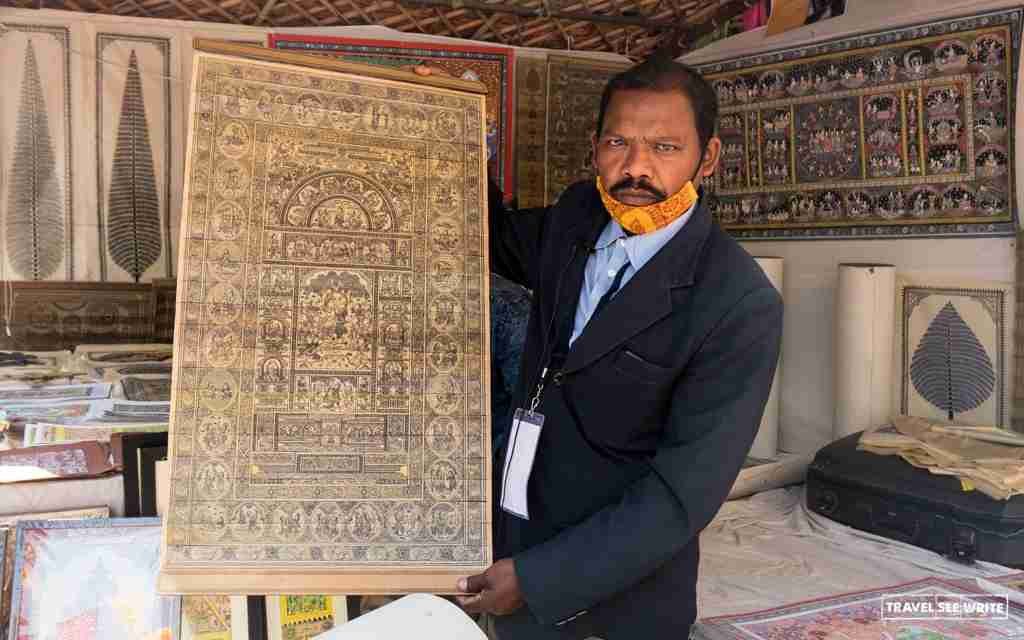
But things are looking to change now. The first big national tribal festival – Aadi Mahotsav – was organised at Dilli Haat, INA, after the pandemic. Through festivals like these, tribal artists get access to large markets where they can sell their goods, earn their livelihood and live well. The sale they get here sustains them for a whole year, and it’s heart-warming to see their enthusiasm. So, if you want to spend an action-packed day with your friends, family or someone else, do drop in at Dilli Haat, one of the best hangout places in Delhi. But first, let me share more about Aadi Mahotsav and Dilli Haat.
In 2020, our Prime Minister Narendra Modi led government gave many slogans such as
#Vocal4Local, #EkBharatShresthaBharat, #AatmanirbharBharat #DekhoApnaDesh to become self-reliant economy. And Aadi Mahotsav was one such great initiative held from 1st Feb 2021 to 15th Feb 2021 at Dilli Haat, INA.
The concept of organising the National Tribal Festival titled “Aadi Mahotsav” was introduced in 2017 to showcase Tribal Art, Craft, Culture, Cuisine and Commerce holistically. These events provide an excellent opportunity for tribal artisans to interact directly with art and craft buyers while getting their feedback about their taste and preferences. This direct interaction helps them aesthetically improve their product designs and creations. Over 1000 artisans and artists came together to set up around 200 stalls in the Aadi Mohtsav 2021. The rich art and craft showcase included tribal handicrafts, paintings, jewellery, fabric, handmade soaps, woollen shawls and stoles, hand-woven cotton, silk fabrics, wool, metal craft, terracotta, bead-work and many more products from across the country.
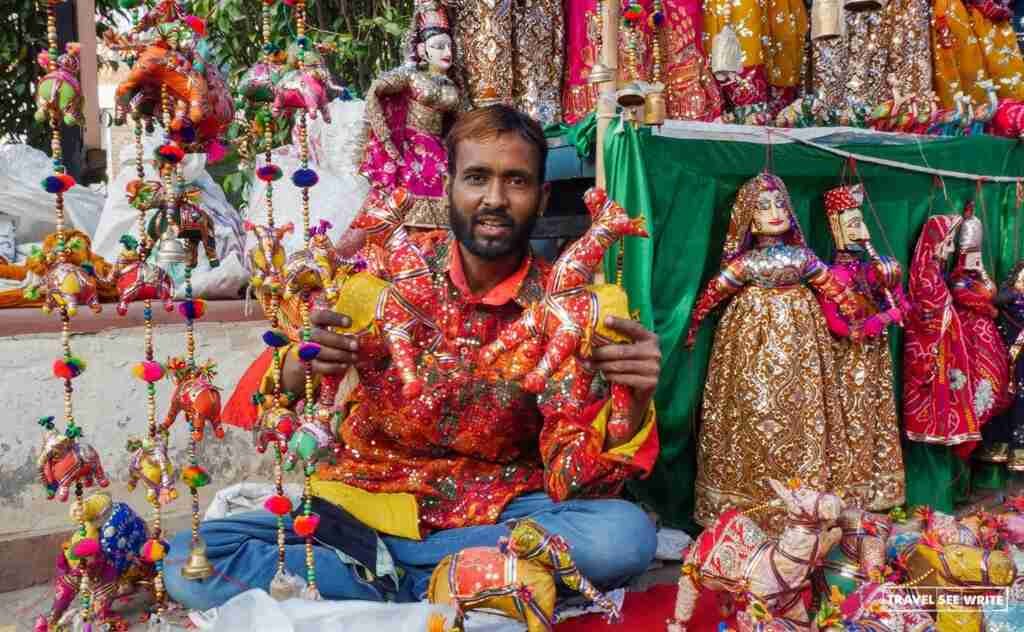
The event also included tribal cultural performances and cuisines, which attempts to preserve tribal art and culture. Additionally, there was a delectable spread of tribal dishes, including Dal Pitha, Mahua laddoos, Telangana’s spicy biryani, Jharkhand’s Chilka roti, etc., something to please every palate.

While there was lip-smacking food from everywhere, the RED ANT CHUTNEY made by mixing red ant and green chillies from Bastar district of Chattishgarh was a clear winner. Highly rich in proteins and minerals with excellent anti-bacterial properties, the red ant chutney is consumed by tribals in Chhattisgarh and Orissa as a local remedy against cold, shortness of breath, fatigue, and other diseases. The dish even made its way to celebrity Chef Gordon Ramsey’s menu. Recently, the Odisha High Court asked the Union Ministry of AYUSH and the CSIR to take a call on a proposal to use red ant chutney to treat Covid-19 within three months.
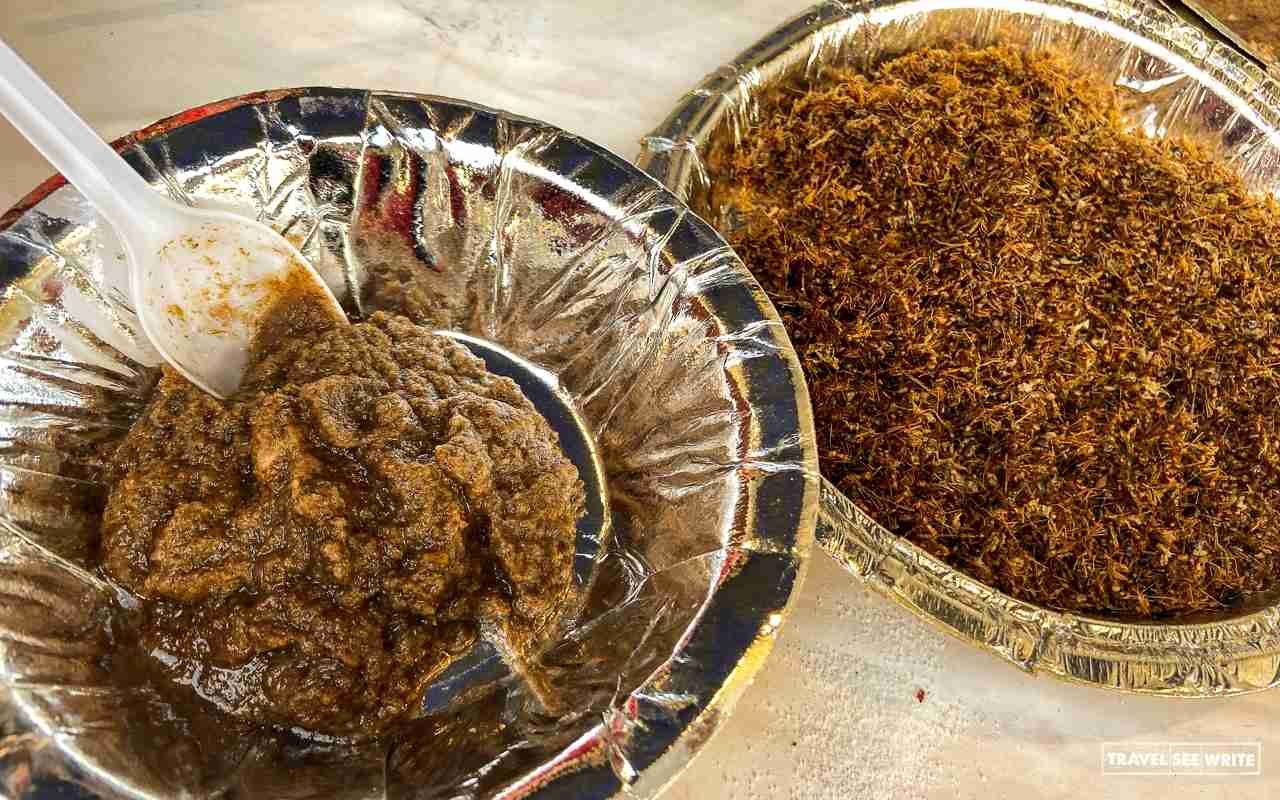
Besides the food, there was no shortage of entertainment with enthralling live performances by tribal musicians and dancers at different breakout zones, including a tribal fashion show, fire dance, kathputli dance and regional dances from all over India.

Although Aadi Mahotsav is over, you can still visit Dilli Haat. Always buzzing with cultural events throughout the year, D to glimpse the visitors about the diversity in the celebrations in various parts of India. The events range from special seasonal festivals and events such as the prized Mango festival in the summers, Teej Festival in August, Baisakhi Festival in April, Gujarat’s Dandiya in Navratri, Diwali bazaar in October to the fun festival of Delhi-Comic Con.
One of the best hangout places in Delhi, Dilli Haat, was constructed in 1994 by the Delhi Tourism Department’s joint efforts with the Ministry of Textiles and Ministry of Tourism – Government of India. One of the rare government initiatives that have stood the test of time and become a favourite of the people – both locals and tourists. The best part is the 6-acre of land on which the complex stands was reclaimed and transformed into a plaza. As you walk inside Dilli Haat, you feel like you have entered a village haat. A village set up using thatched-roof cottages with red stone and bricks gives the area a village-haat-like atmosphere. Unlike the traditional weekly market, Dilli Haat is permanent.

You can find the crafts, culture, and cuisine of all 29 states under one roof, where you can buy rare state handicraft items at reasonable prices. Here local artisans and craftsmen can present, market and sell their handicraft items. Besides retail therapy, you are spoilt for gastronomy too at Dilli Haat, INA – there is a massive food court with counters from 20 different country states. From Rajasthan’s Gatte ki sabzi to Bengal’s Fish, you will get everything here. Not just that, you also get to experience some high energy and colourful cultural activities that happen here now and then.

Located in South Delhi, opposite the INA market, Dilli Haat is an open-air market with a vast food plaza and craft bazaar. It’s super easy to get here. You can take a metro, uber, public transport or simply drive down. The nearest metro station is INA that is connected through Delhi Metro’s yellow and pink lines. Tickets to Dilli Haat cost 30 per person for Adults, 20 per person for Children and 100 per person for Foreign Tourists. You can either buy tickets online or at the counter, near the main entrance gate.

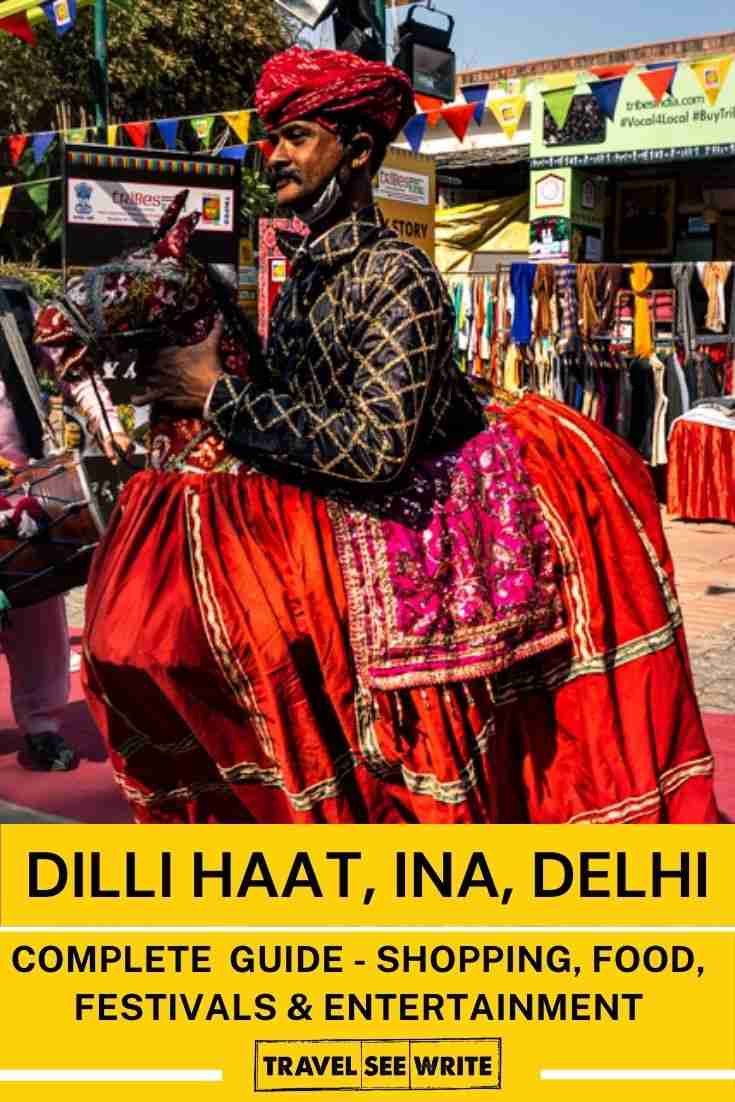



I have explored Spain, Kenya, Sri Lanka, and Switzerland with Travel See Write. Every experience was customised as per my family’s requirements, and each trip was fully customised.
Vaibbhav Sud
Delhi
I travelled with my family to Finland using Travel See Write. The team went above and beyond to make our stay enjoyable. They were even available at 3 am for services beyond their usual duties. ”
Gautam Kriplani
Jakarta, Indonesia
This is not a typical luxury travel agency — this is travel with soul. They take care of the minutest details and customise the tiniest things for us. I have travelled with them to Japan, Finland, Costa Rica, Russia and the Philippines.
Vineet Nanda
Delhi
I have explored Spain, Kenya, Sri Lanka, and Mongolia with Travel See Write. Every experience was customised for my family, and each trip was special
Sunil Sharma
Delhi
This is not a typical luxury travel agency — this is travel with soul. They take care of the minutest details and customise the tiniest things for us. I have travelled with them to Japan, Finland, Costa Rica, Russia and the Philippines.
Aman
Mumbai

Lorem Ipsum is simply dummy text of the printing and typesetting industry. Lorem Ipsum has been the industry's standard dummy text ever since
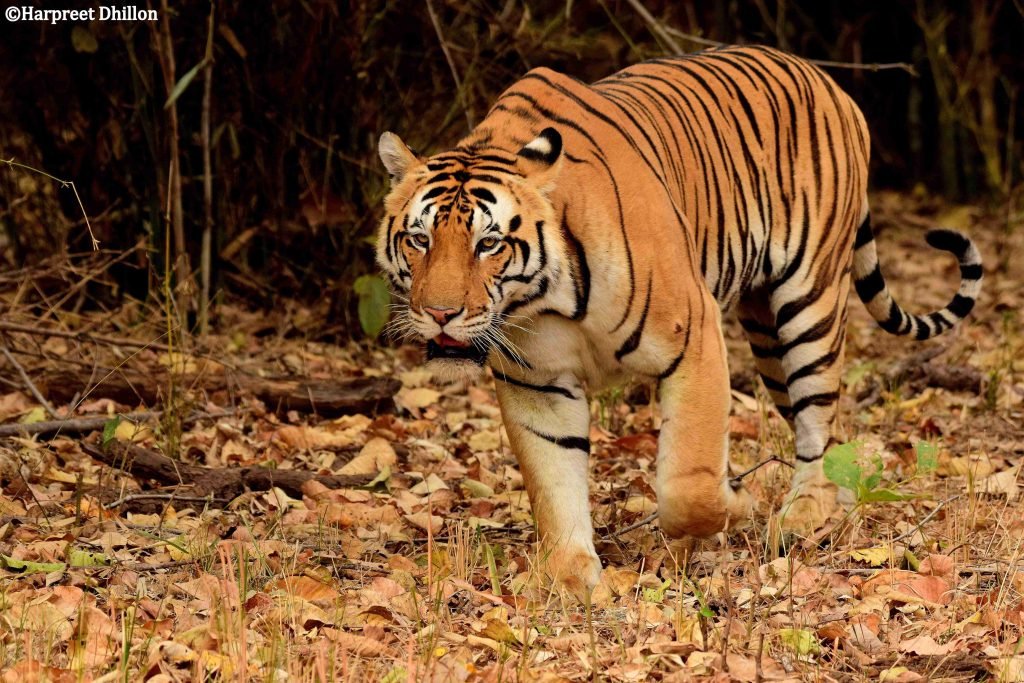


Luxury travel should feel seamless from start to finish.

Begin with our online form. We then connect for a detailed conversation
No booking fees. Ever.
We fine-tune your bespoke itinerary until it feels perfect.
With confidence, care, and 24/7 on-ground support throughout your journey.