


You Enquire
Begin with our online form. We then connect for a detailed conversation
Wherever you travel, there are guaranteed to be compelling sceneries and natural sites and attractions for you to discover. From rolling green hills to open seas, lush forests to bustling city scapes, and mountains that reach the clouds to oceans deeper than infinity and even the Northern Lights, the world is just waiting to be explored by you. Your editing and composing skills should be working to capture and accentuate that beauty, especially if you want to create compelling travel vlogs and establish yourself as a travel blogger with a unique voice and vision.
In this article, I share some of the best tips and tricks on how to shoot and edit travel vlogs. This will help you up your vlogging game and create compelling travel videos that engage your audience and boost your viewership.
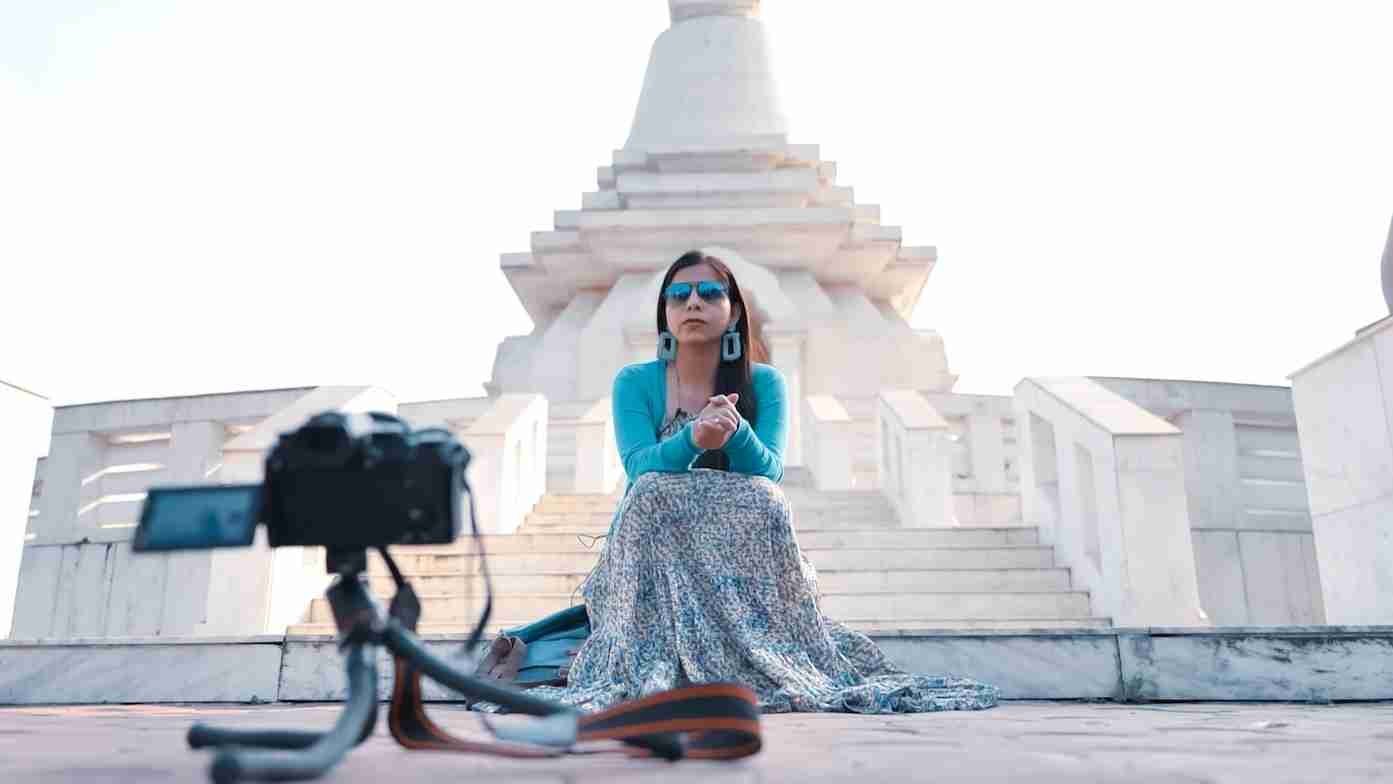
When it comes to video editing, oftentimes, you don’t know what’s possible until you see what else has been done. So, do some ‘market research’ by watching videos produced by established travel vloggers before you set off on your own. Doing this will provide inspiration not only for how and what you want to shoot but also get you thinking about how you can mix and match your clips together with an online video editor to create visual content that is unique, interesting and in line with the styles of travel vlog people are already watching.
As you get more discerning, you’ll be able to break down how vloggers do it all – what they capture, how they edit, and why it works. Alongside YouTube, you can find endless great travel videos on Vimeo Travel and other smaller, more niche platforms. Besides the content itself, you’ll benefit from an active community that can help you with any questions.
When you’re on your travels, you want to focus on shooting footage, not fiddling with settings, checking your SD card, or finding a place to charge your battery. So before you leave for the day, turn on your camera, look through the settings, and double-check that you have all your equipment charged and ready.
If you have extra vlogging equipment like a gimbal or microphone, set that up in advance, too. If you’re not well-versed in your camera settings, sit down and experiment with the different modes before you embark on your trip. See what you like the look of and what’s comfortable… you might even find some new tools to inspire your videos.
Shooting tons of video gives you plenty of wiggle room in the edit, but it also means your SD cards will fill faster, and you’ll have more to sort through. Rather than shooting endlessly and figuring out what you need later, make a shot list. Even if you’re not sure how many vlogs you want to make from the trip, or what they’ll cover, you can figure out what each video needs.
Usually, that means taking some b-roll and filler content. Establish your essential checklist: some close-up shots, action shots, and some long takes of you talking, having fun, or participating in something. You can always veer away from your itinerary as your travel plans naturally unfold, but having a backup will ensure you film some usable content, whatever happens.
If you’ve been shooting smart and capturing things throughout the day, you might find a story through luck – a surprise storm that derailed your plan, a new friend you made while waiting for the same train, or a rare sighting that brought your tour group together. But you can’t always rely on organic narratives to structure your vlog.
As you plan your trip, consider what will look exciting on camera and how you can build stories around the focal points. Research the area and events ahead of time to scout something that would make a perfect story, like a local parade or festival. With some inspiration and creative editing, you can weave a little story together that’ll keep your audience eagerly following along.
The appeal of travel vlogs for an audience tends to be virtually ‘visiting’ a new place with someone they’ve formed a digital connection with. That’s you – the vlogger. But even though you’re a key ingredient in the mix for a successful travel vlog, and travel can indefinitely help foster connections, you’re not really the focus. In this case, you’re the companion and guide.
Focus on what stands out in the destination you’re visiting, whether it’s the people, the food, the landscape or the unique experiences. Share the experience of visiting a new place or trying a new activity for the first time, alongside your own take on your time there. Your audience wants to feel like they’re right there with you, so be descriptive, use close-ups, and show them as much as possible.
It’s easy to get into a pattern when filming. When eating out for lunch, you might get into the habit of shooting the street, the restaurant or cafe, and the food that arrives on your plate. But that gets monotonous, and it doesn’t give you room to play in the editing room. Instead, capture the basics as well as whatever else catches your attention, like signs, sights, and details. These are all part of the travel experience, and if they interest you, they’ll likely hook your audience too.
If nothing out of the ordinary catches your attention, experiment. Try shooting at low angles and looking up for a dramatic, towering effect. Or take a moment to record the everyday, and play it back in slow motion. Maybe you could pick a stationary spot, and watch it change as different subjects enter and exit the frame.
With travel vlogging, you can’t get away with just setting up a tripod in front of a beautiful building. You have to walk through the building and show what it’s like from different angles, or people have to be bustling about it to convey a sense of local life and energy. Essentially, there needs to be motion.
You can make the motion, or you can capture it, but don’t let your video stay static or your audience will get restless. A travel vlog should be exciting. Even if you’re relaxing, people want to see the full experience… from sipping drinks to swimming to watching a gorgeous sunset. Try setting up a timelapse, which will allow you to show the whole sunset in a few seconds so your vlog doesn’t lose momentum.
Watching people feel emotionally moved by an experience naturally makes us feel sympathetic to what they’re going through. But if you’re on screen talking to your audience at a distance, it feels much more impersonal than if you’re tightly shot. So, you want to get close-ups of you and the people around you feeling things, looking at the camera, experiencing the sights and sounds of travel for the audience to take in almost as much as you.
It might be intimidating at first to get your camera so close to your subjects, but that’s exactly why it’s so impactful. Be brave and share a little intimacy with your audience, and they’ll connect more strongly with the authenticity coming from your vlog.
Of course, the best advice is just practise. Shoot and shoot some more, then edit and finetune your edits. Over time you’ll learn what works, what’s engaging, what you love, and how to share it with your audience.
Effort goes a long way in making something compelling, alongside these pro tips:
These guidelines will help you understand how to shoot and edit travel vlogs while discovering your key interests and developing your filming style. Be creative and experimental, and keep your vlogs exciting. By ticking off all these boxes, you’ll be well on your way to creating more compelling content for your audience.
Interested in reading more on the topic of how to shoot and edit travel vlogs? You may find these articles interesting:
Want to travel like celebs for free? Learn how to become a travel influencer on Instagram?
Wondering if a 40-minute layover at Oslo Airport with Qatar Airways is enough? Here’s my experience navigating a tight connection and essential tips for travellers.

Visiting Iceland and Greenland had always been a dream. These two bucket-list destinations promised landscapes and experiences like nowhere else on Earth. From the otherworldly beauty of Iceland’s geysers, waterfalls, and volcanic landscapes to Greenland’s vast, untouched wilderness, every moment in these countries felt like stepping into a natural wonder. The journey to Iceland was not just a thrill but an adventure in itself. However, my return journey introduced a new kind of excitement: a risky 40-minute layover at Oslo Airport with Qatar Airways.
Booking through Yatra, I hadn’t initially realised just how tight this connection was until I reviewed my itinerary later. With multiple carriers involved, I’d assumed a seamless transfer. Little did I know that I was in for a whirlwind of airport navigation, flight re-checks, and a lot of lessons about managing short layovers. Here’s how it all unfolded — and what I’d recommend to anyone contemplating a tight connection like mine. These lessons, though learned the hard way, are invaluable for anyone planning a similar journey.
My journey was booked as a single itinerary on Yatra, involving several carriers and tight connections, especially on my return route. Here’s how it looked:

Outbound Journey: New Delhi to Reykjavik
Return Journey: Reykjavik to New Delhi
While the outbound journey allowed ample time for each connection, it was the return leg that posed a significant challenge with a 40-minute layover at Oslo Airport. I’ll be honest — the 40-minute layover at Oslo was a gamble, especially given it was for an international transfer. Can you make a flight with a 40-minute layover? For a well-organized airport like Oslo, I was hoping it might work. But as the trip unfolded, there were surprises that could have easily derailed my journey.

When I flew to Iceland, I had a more comfortable 2-hour layover in Oslo and got a firsthand look at the airport’s immigration process. With only one immigration counter open, lines moved slowly. A concerned staff member warned me that tight connections frequently led to missed flights at Oslo Airport. Suddenly, that 40-minute layover on my return route began to feel like a major gamble.
Nervously, I contacted Yatra, Qatar Airways, and Icelandair to explore options. Unfortunately, each company directed me elsewhere, unable to adjust my ticket or offer solutions. The only option given was to rebook at my own expense — but the alternative meant missing all my connections home. This experience taught me the importance of keeping realistic expectations when dealing with multiple carriers. Ultimately, I decided to trust Oslo’s reputation for efficiency and take the chance.
To complicate matters, the Indigo staff at Delhi Airport told me I’d need to retrieve my luggage in Oslo and re-check it before continuing to Reykjavik. This made me even more anxious about tight connections, and I prepared to collect my bags in Oslo.
However, upon landing in Oslo, after waiting nearly 40 minutes in the baggage claim area, I was informed by airport staff that my luggage was actually checked through to Reykjavik. I could have skipped this delay entirely if I’d double-checked the information myself. The luggage tag attached to my boarding pass showed my final destination — a detail I’d overlooked in my rush to follow verbal instructions.


Tip: Always check the luggage tag printed on your ticket. Airport staff can occasionally misguide you, especially when dealing with multiple carriers. This simple step can save valuable time and frustration.

When the time came to fly back from Reykjavik, I knew I’d be walking a fine line with just 40 minutes to spare. My Icelandair flight from Reykjavik arrived punctually, and I immediately set off for immigration. To my relief, the Oslo Airport was running smoothly, with multiple immigration counters open this time. I cleared immigration faster than expected and hurried to security with only a small carry-on.
Oslo’s well-designed layout and signage were immensely helpful. I reached the gate with just 15 minutes to spare, anxious but relieved. The risk paid off, thanks to Oslo’s efficiency and my quick movements. Still, I wouldn’t want to repeat it under less optimal conditions.
Once I boarded, the stress diminished, allowing me to unwind finally. Qatar Airways ensured a pleasant journey with spacious seating, an attentive cabin crew, and outstanding in-flight dining. The transfer process at Hamad International Airport, Doha, was effortless, and the lounge amenities provided a touch of luxury.

Since I had an extensive layover between my Doha to Oslo flight, I took advantage of the Sleep ‘n Fly’ Power Nap Therapy Pods located in the North Node, opposite Gates C30 and C31 at Doha International Airport. My pod included a low-frequency vibration mattress designed to stimulate relaxation in the body tissues, and I utilised noise-cancelling headsets to block out noise. These pods are available for walk-in use only, so prior reservations were unnecessary. Sleep ‘n Fly is a distinctive lounge brand situated within Hamad International Airport in Doha. The company operates two lounges within the airport: one in the Duty-Free Plaza South and another in the North Node near Gates C30 and C31.
Sleep ‘n Fly provides sleeping pods that offer travellers a quality space to rest and rejuvenate. There are seven types of sleeping pods available for reservation at Sleep ‘n Fly in Doha: FlexiSuite Pods, YAWN Double Cabins, YAWN Bunk Cabins, YAWN Family Bunk Cabins, Power Nap Therapy Pods, and Economy Pods.
Qatar Airways had a clear baggage allowance and check-in procedures, contributing to my overall positive experience, which included the food and inflight entertainment. It marked a satisfying conclusion to a journey that occasionally felt intense.
Here are the main insights I took from this journey, especially for travellers navigating short international layovers like mine:
For those wondering, what is the minimum connection time at Oslo Airport? or Is 40 minutes enough time for an international layover? The answer is that it depends. Oslo Airport’s efficiency saved me, but I’d advise anyone to approach short layovers with caution. Even the best-organized airports can’t guarantee a seamless connection every time. I recently spent four and a half hours standing in obnoxiously long queues at New York Newark Airport despite having a single journey ticket with United Airlines from Panama City to New Delhi. Everything seemed to move at a snail’s pace. Therefore, I recommend not booking a connecting flight with less than 3-4 hours layover at busy airports such as New York, Doha, Dubai, Singapore, Bangkok, Istanbul, etc. It should be avoided.
Despite the stress, I’m glad the risk I took with Qatar Airways 40-minute Layover at Oslo Airport didn’t go south —and the entire trip was more than worth it. Iceland and Greenland fulfilled my dreams, and while the layover was a lesson in tight connections, it also reinforced my love for exploring the world.

Discover the breathtaking beauty of East Greenland and Sermilik Fjords, where enormous icebergs, stunning landscapes, and towering glaciers create an awe-inspiring natural wonder. Don’t miss the chance to explore these steep-sided fjords that promise unforgettable adventures.
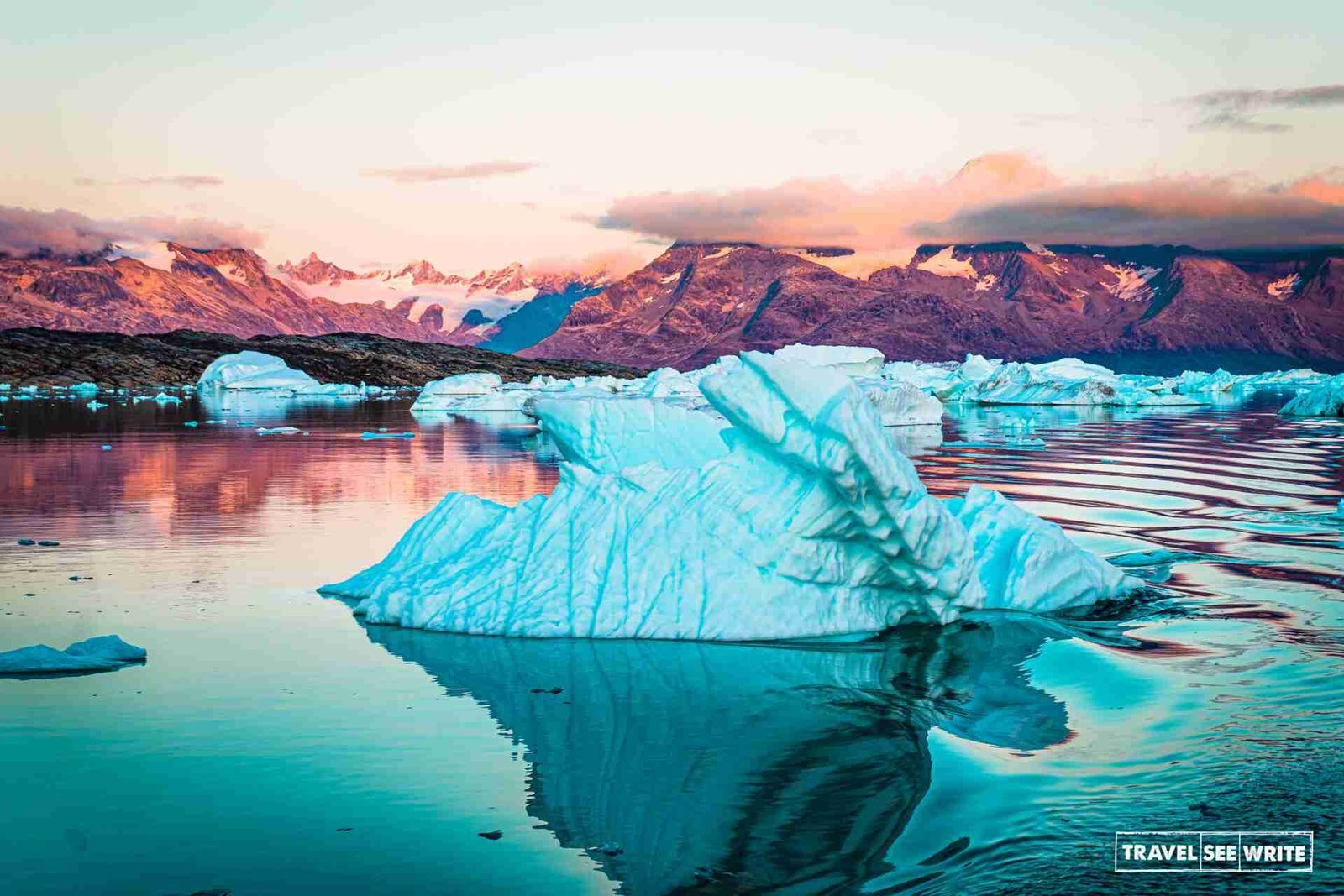
I must have been in school when I first saw pictures of Greenland’s towering icebergs and glaciers. Ever since then, it has become a bucket list destination for me to visit. Finally, Greenland became a reality this year – as a jump-off point for my Artic To Antarctica Expedition. So, when I got an invitation from Polar Quest to join them on this EPIC journey to one of the last remaining truly unexplored places on Earth, I jumped at the opportunity. But Before I share details about my 7-day adventure in Greenland, let me start by briefly introducing this Arctic nation.
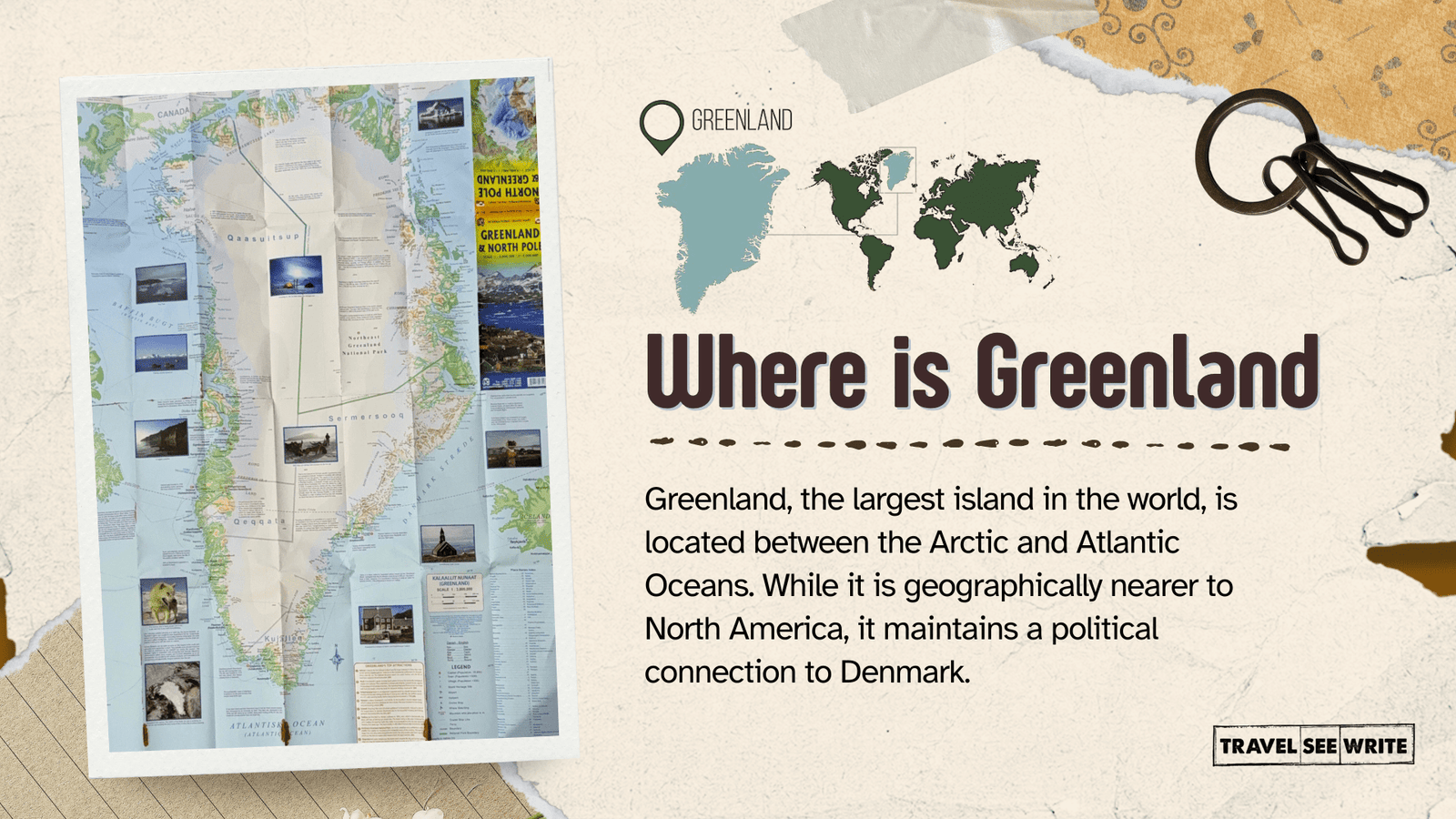
Greenland, the world’s largest island, sits between the Arctic and Atlantic Oceans, geographically closer to North America but politically tied to Denmark. Roughly equivalent to Western Europe or about one-third the size of the US or Australia, it should come as no surprise that its landscapes and ecosystems vary significantly. When I first set foot in East Greenland, it felt like stepping into another world—one defined by towering icebergs, sweeping glaciers, and a vast, quiet wilderness.
What made Greenland stand out for me was its sheer remoteness. It wasn’t just the dramatic landscapes that made me freeze in awe, but the feeling of isolation, where nature reigns supreme and modern life feels a million miles away. From witnessing the Northern Lights dance over the Sermilik Fjord to learning about the rich traditions of the Inuit people, Greenland offered an experience that was both raw and deeply humbling.
In this Greenland Travelogue, I’ll chronicle my journey through East Greenland and Sermilik Fjords with Polar Quest, highlighting my daily itinerary and observations. Don’t forget to read my detailed Greenland Travel Guide to plan your trip to Greenland.
After an extensive journey of 7,574 kilometres, which included three flights totalling 27 hours, I finally arrived in Reykjavík, Iceland’s capital, at 10:40 am. The airport check-in was impressively fast. Exiting the airport, I found the Flybus kiosk, where a helpful attendant provided me with information on getting to the city. I purchased a return ticket to the City Centre for 56 euros and boarded the bus. After reaching the Flybus station, I transferred to another bus that took me close to my hotel. Arriving two hours before the official check-in time, I was relieved when the receptionist kindly permitted me an early check-in. Feeling the effects of sleep deprivation and jet lag, I spent the rest of the day relaxing and recharging for the adventures that awaited me.
The next day, after breakfast, I had free time until 1:15 pm, so I quickly visited the famous Hallgrímskirkja, which was just 10 minutes from my hotel. Along with nine co-travellers, I left for the Keflavik Airport at around 1:30 PM, having enough time to check in comfortably, have a quick lunch and do some duty-free shopping. After a half-hour delay, we boarded our flight to Kulusuk. Due to Greenland’s abundance of fjords and rugged peaks, there isn’t sufficient flat terrain to accommodate large runways. As a result, the planes operating here are specialised and smaller in size. For this route, Iceland Air employs a De Havilland Canada DHC-8-200, commonly known as the ‘Dash 8,’ which has a seating capacity of 37 passengers, features additional fuel tanks for extended range, and is capable of taking off fully loaded from runways as brief as 800 meters (approximately 2,625 feet). Additionally, it is designed to endure stronger crosswinds.
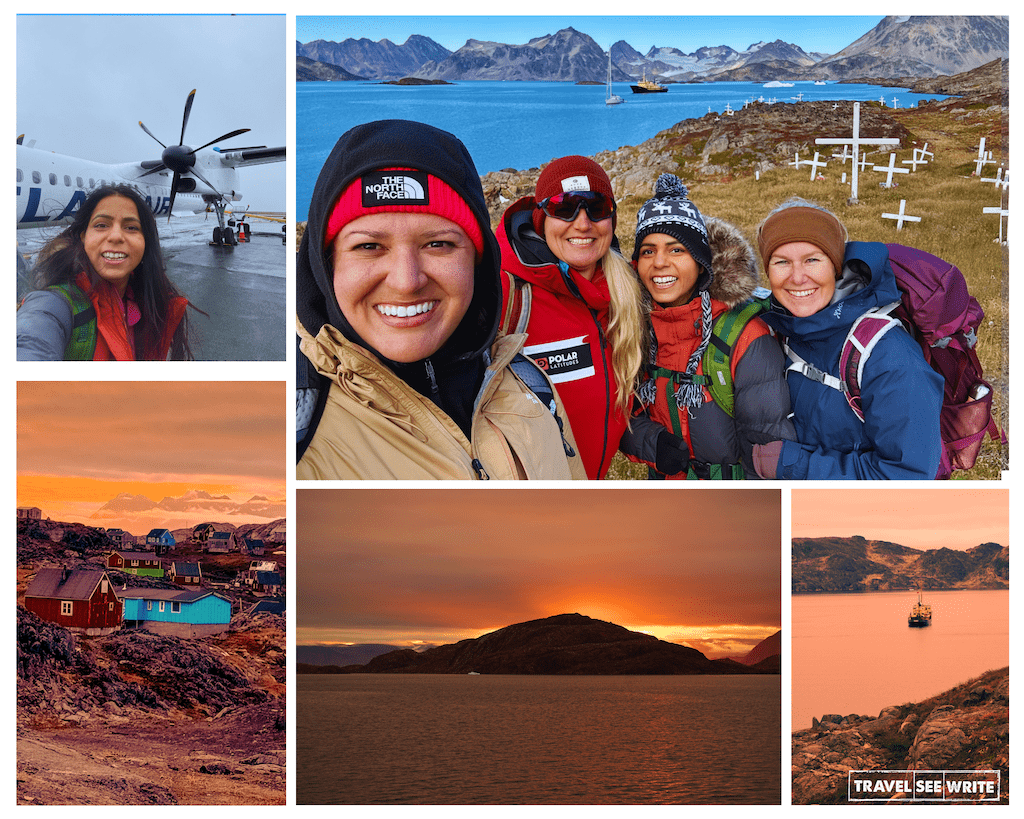
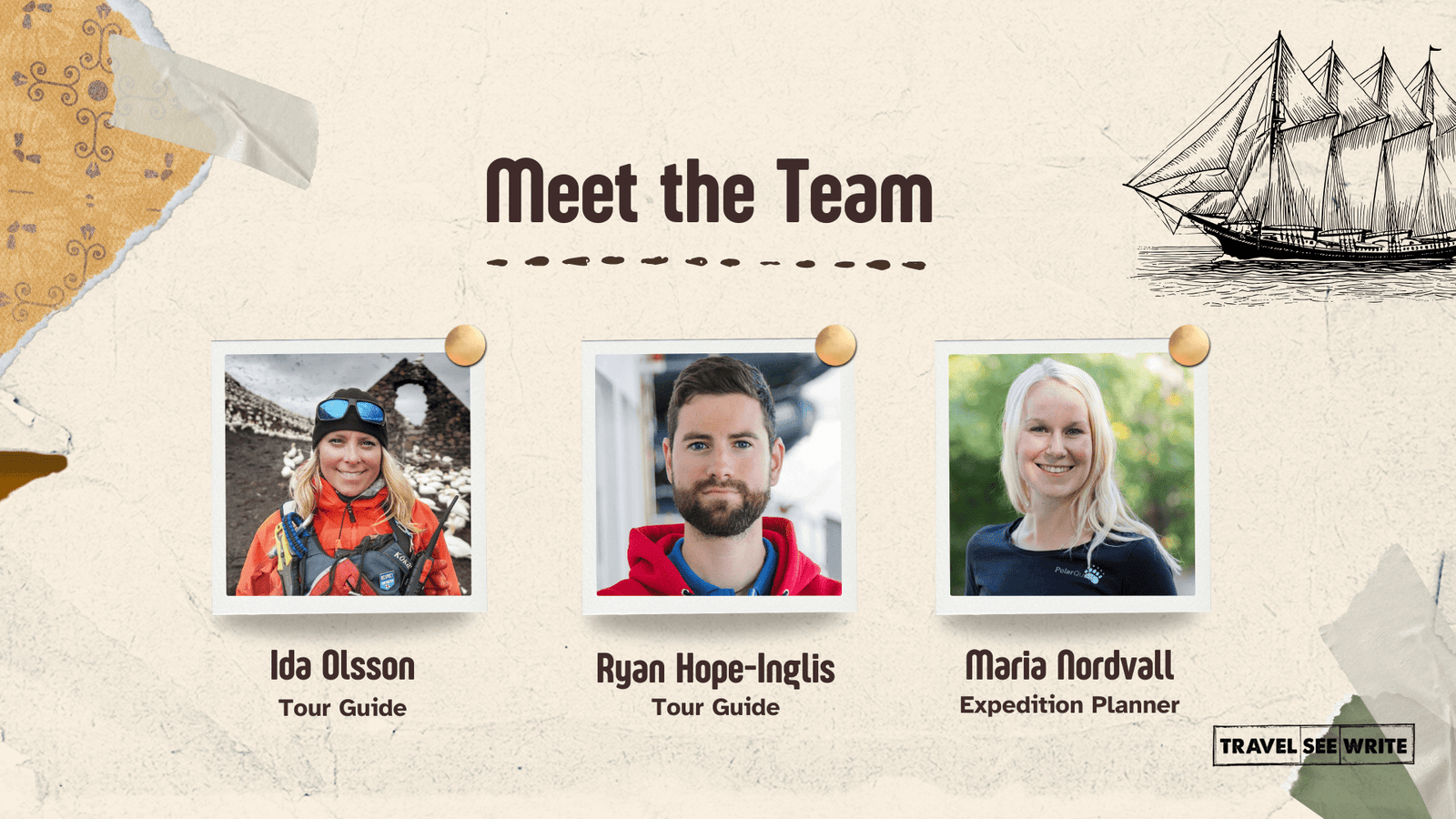
As we started descending, I couldn’t peel my eyes off the window. No cities or motorways were visible, and there were no obvious signs of a metropolis that you would find if you flew towards any big city. Instead, I started seeing Icebergs the size of high-rise buildings, and the sunset painted the horizon in shades of red, orange and ember, making the whole landscape a treat for my eyes. At 7:30 p.m., our plane landed at the Kulusuk Airport, one of the smallest international airports in the world with only a gravel landing strip. There was no conveyor belt and no long immigration lines. In the arrival-departure hall, we were welcomed by our travel guides, Ida Olsson and Ryan Hope-Inglis. This highly knowledgeable couple has been guiding in the Arctic and Antarctica for the past ten years. Ida even participated in the illustrious Women’s Euro-Arabian North Pole Expedition 2018, and in 2019, she led a group of women across Spitsbergen.
After exchanging initial greetings, we set off on a 3-kilometre trek to Kulusuk, where our zodiac awaited to take us to the cruise ship—the golden hour transformed the sky into a canvas of orange, red, and amber, enhancing the beauty of the craggy peaks, the vibrant red and blue houses, and the ocean alongside us. As we neared the zodiac in Kulusuk village, we were welcomed by the heart-melting chorus of howling Greenlandic dogs.
We were given safety jackets and, for the first time, I learned the sailor’s technique for boarding a boat using a forearm grip instead of a palm hold. Our expedition ship was a beautifully crafted classic vessel that combined timeless charm with modern amenities. Inside, it embraced the warm simplicity of Scandinavian design, creating an inviting and stylish atmosphere. The ship featured excellent communal areas, including an upper deck observation area and a stylish restaurant below, both boasting panoramic windows. Additionally, there was a jacuzzi and sauna on board. My ensuite cabin featured contemporary amenities, such as a table, chair, cosy bed, cupboard, window, and heated flooring in the bathroom, all contributing to a more comfortable experience.
After quickly freshening up, the group gathered for dinner at 8:30 pm. Chef Alan had prepared a delicious three-course dinner and a glass of champagne to welcome us onboard. The menu featured a delicious vegetable soup, mashed potatoes, green beans, and chickpea potato curry, culminating in a delightful strawberry pastry for dessert. A comprehensive briefing at 9:30 pm preceded a well-deserved rest. The curtains were drawn on the day by a colourful sunset.
Around 6 am, we set sail for Kaporniagkat Kangertivat Fjord in the morning, renowned for its breathtaking glaciers and icebergs. Captain Kim demonstrated remarkable navigation skills as he adeptly manoeuvred through a narrow, frozen path reminiscent of an Ice Age landscape. As I stood captivated by the stunning icy fjord, a powerful realisation struck me for the first time: reality can be even more breathtaking than the most vivid dreams. But this was just the beginning; the best was yet to come. After breakfast, around 9 am, we boarded our Zodiac to land at Kaporniagkat Kangertivat Fjord.
It was quite surreal to meander through giant icebergs and ancient mountains, estimated to have stood here for at least 2.8 billion years. To put it in perspective, humans have been around for approximately 300,000 years, which is only 0.007% of the planet’s 4.5 billion-year history.
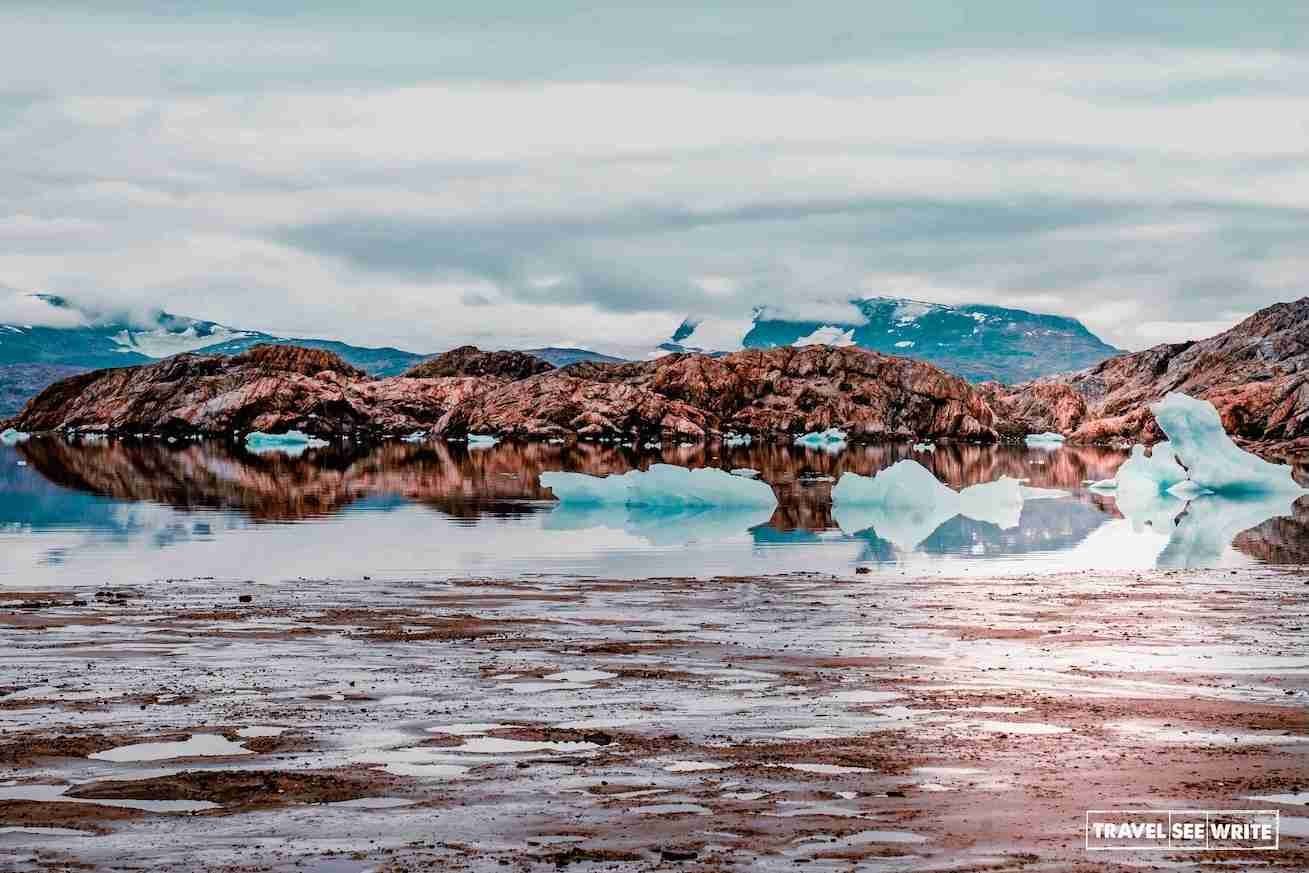
We spent some time hiking through mossy marshland, gazing at nature’s masterpieces – a glacier glimmered in the golden glow of the sun. Its melting water created a small waterfall and a stream that gently tumbled into the ocean. Having appreciated the splendour of nature, we were ready to head back to our Zodiac, but the tide had shifted to a low level, requiring us to exert all our combined effort to launch our Zodiac into the sea. It evolved into a true expedition characterized by teamwork. We reached our expedition ship just in time for lunch at 1 pm. The lunch consisted of a satisfying three-course meal.
After a brief rest in the afternoon, we visited Umittuartiit, a traditional Inuit settlement and shelter bay. We discovered remains and graves of Inuit, with panoramic views of the bay area. Various mosses and some sparsely growing flowers, including vibrant purple bell flowers, dotted the landscape. Ryan provided insightful explanations about the topography of the rocks and ancient Thule and Norse ruins nearby.
After dinner, Ida and Ryan briefed us about the program for the next day.
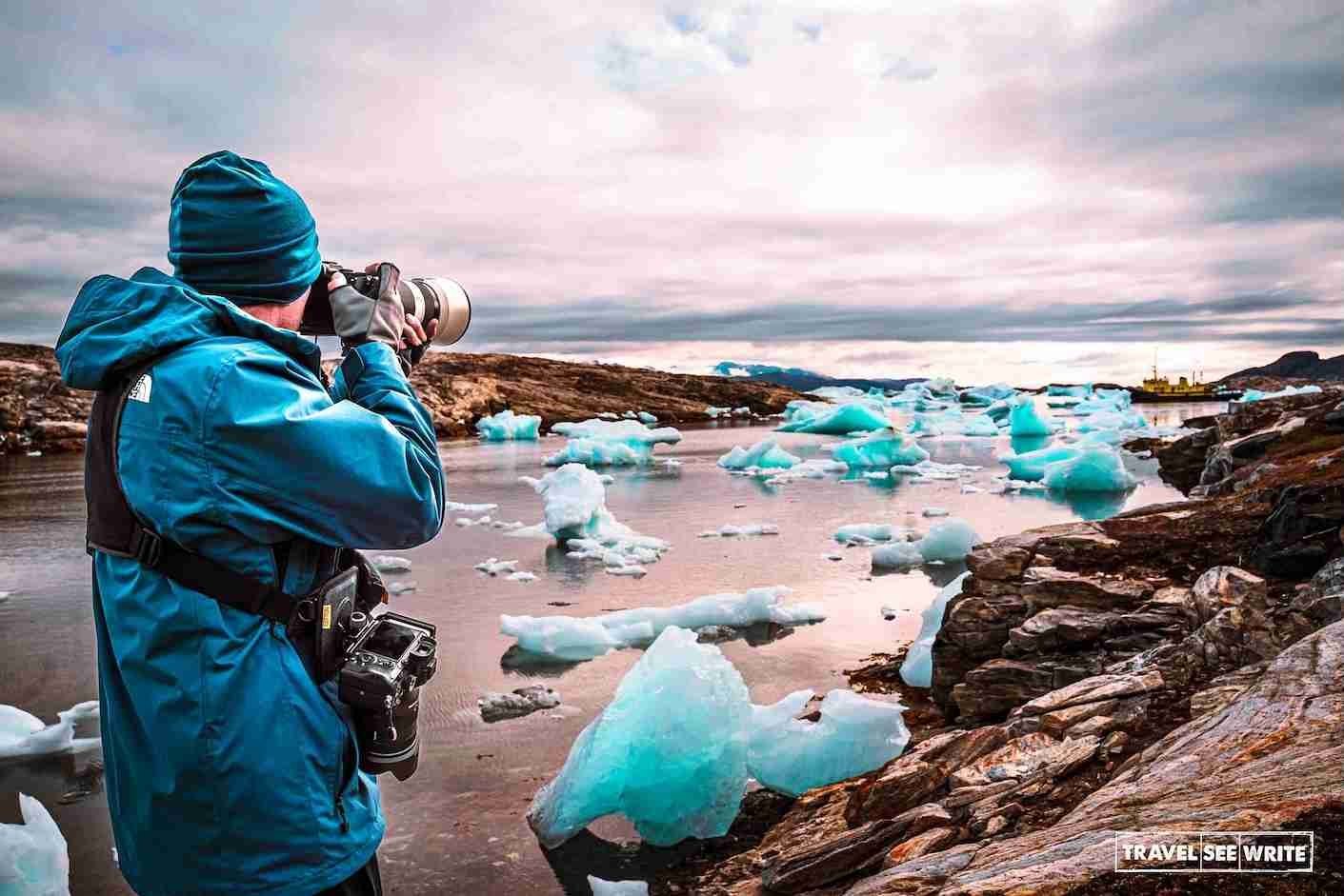
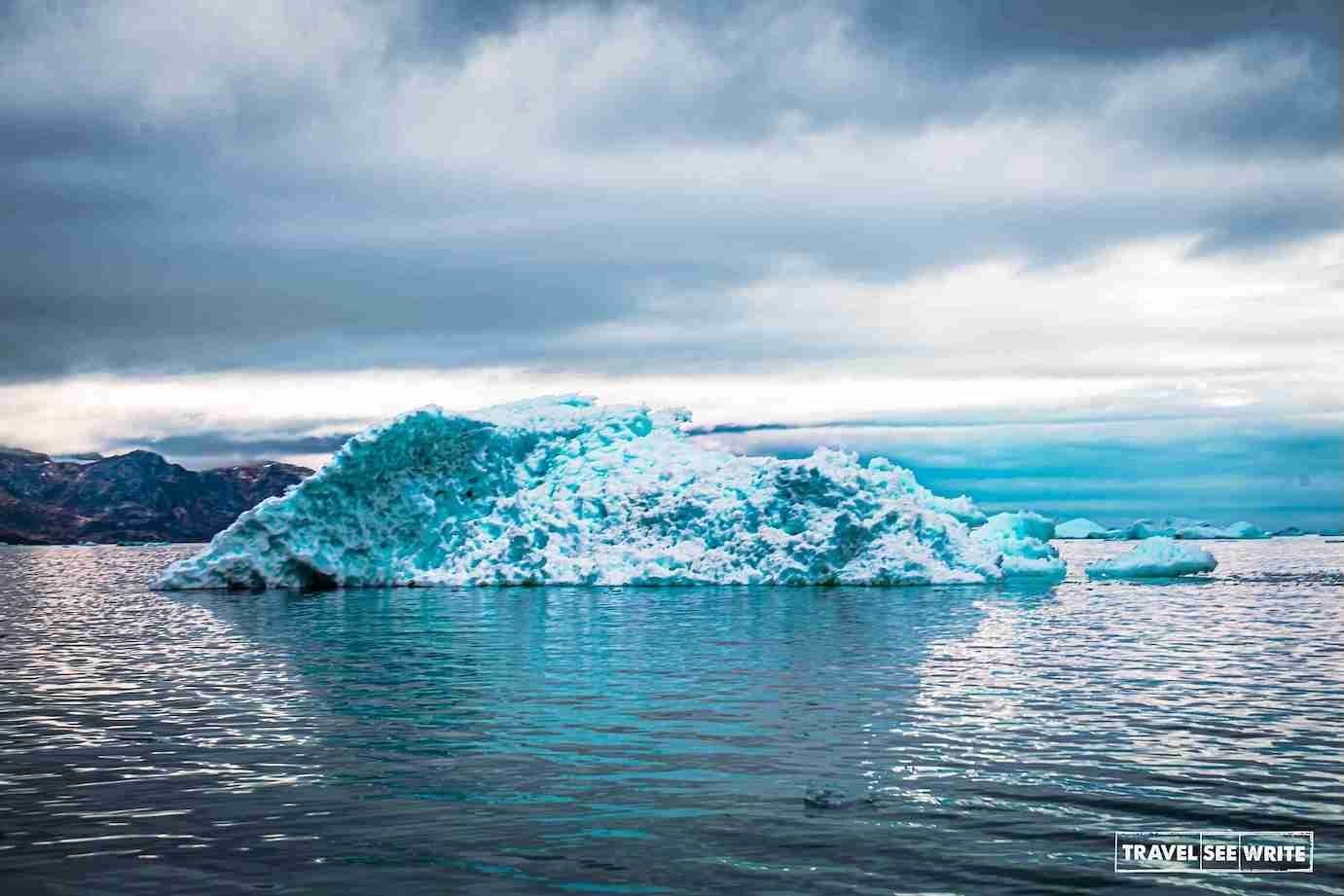
The day began with a spectacular view of the mighty glacier front, surrounded by icebergs of all sizes gently floating by that looked more like floating sculptures. Our captain informed us that we had ventured into the colossal Sermilik Fjords and were witnessing the majesty of towering icebergs and untouched landscapes as we sailed through steep-sided fjords.
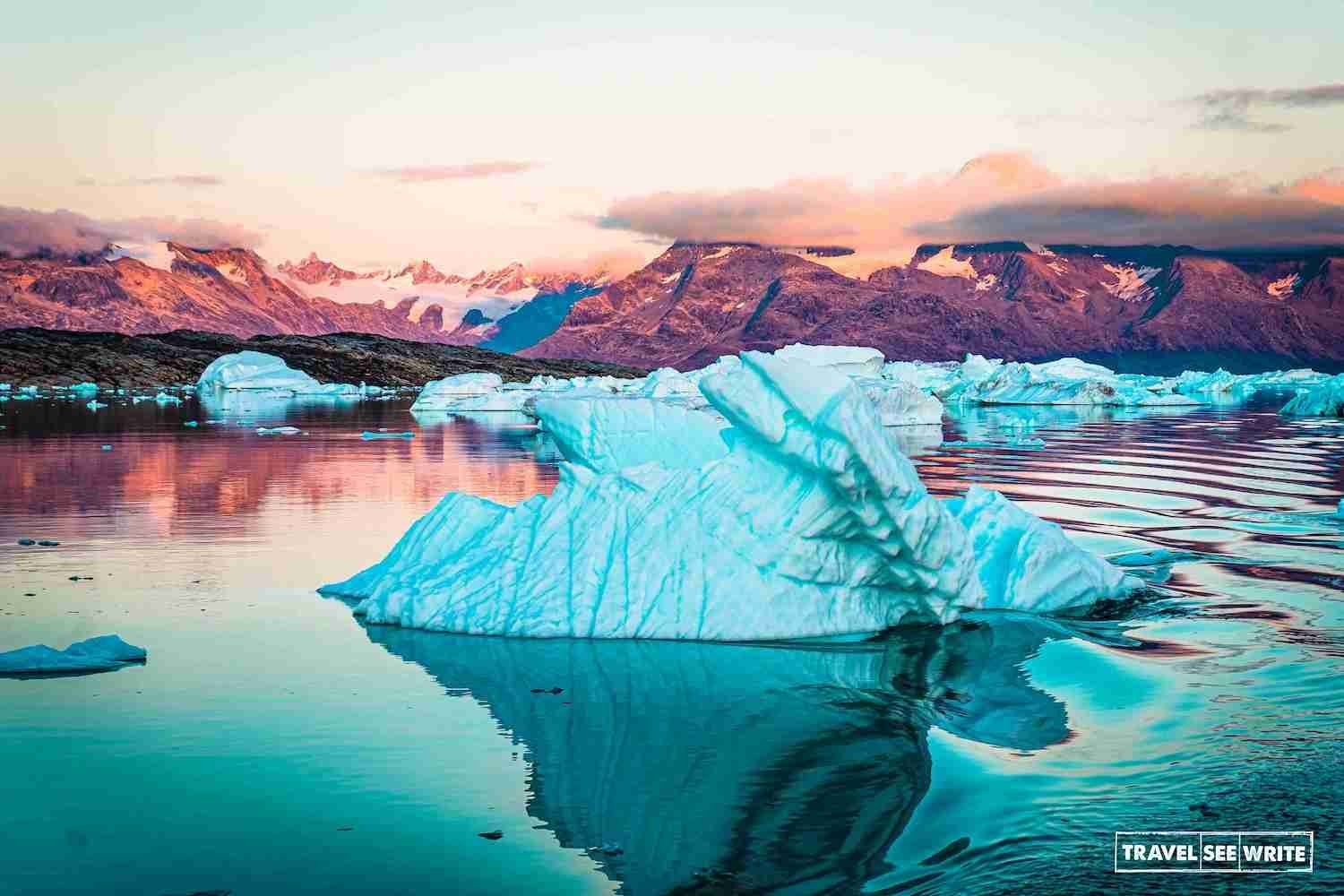
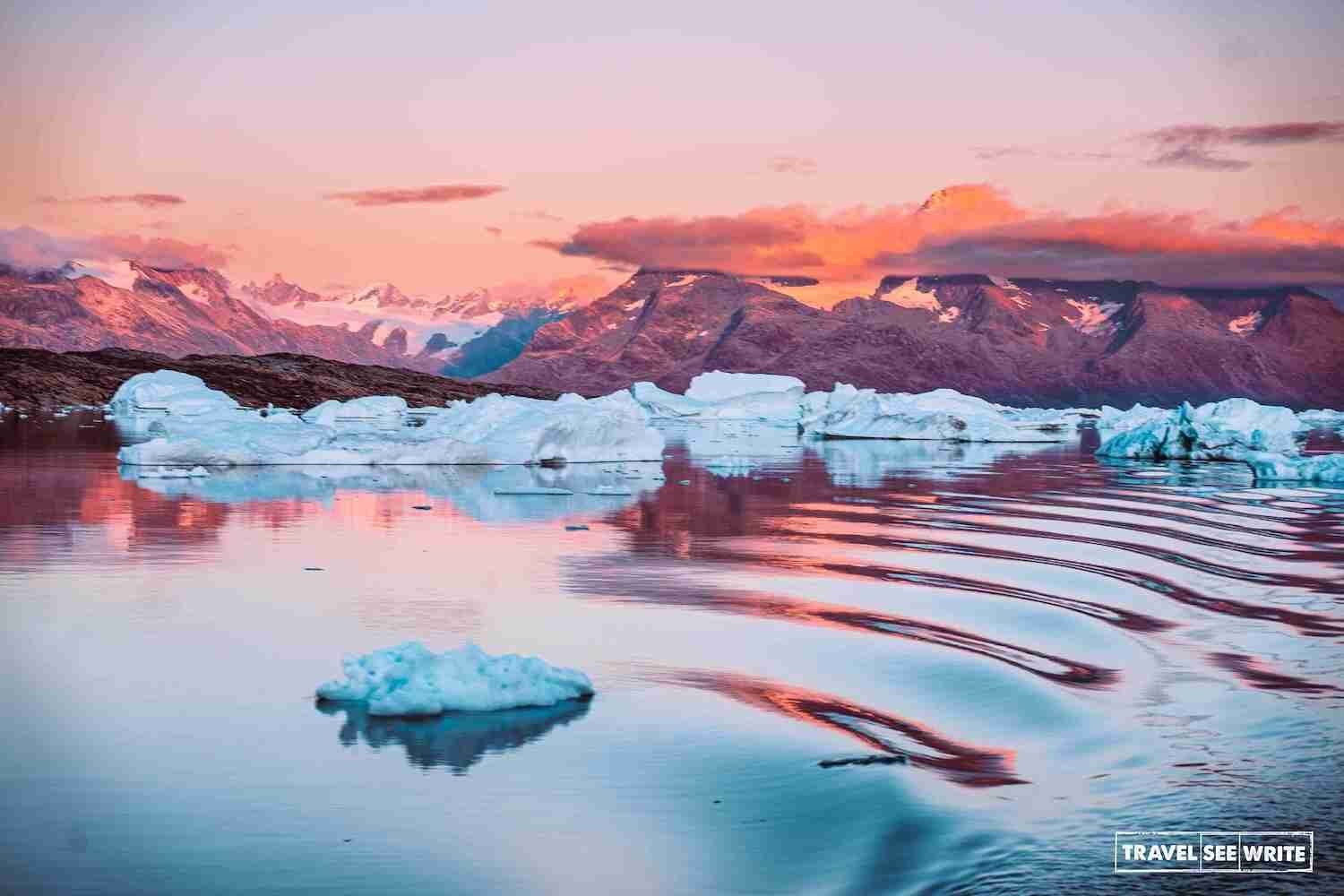
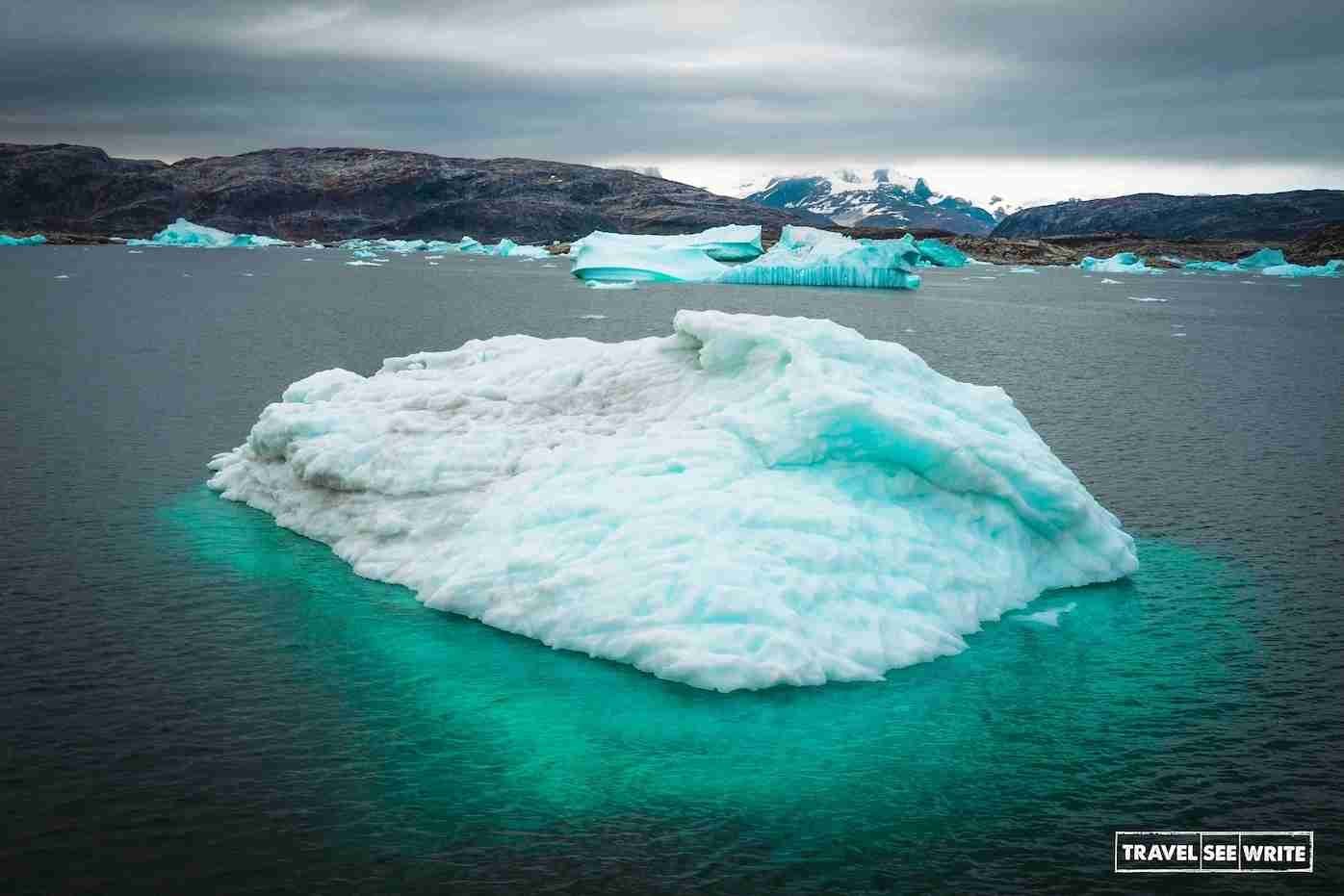
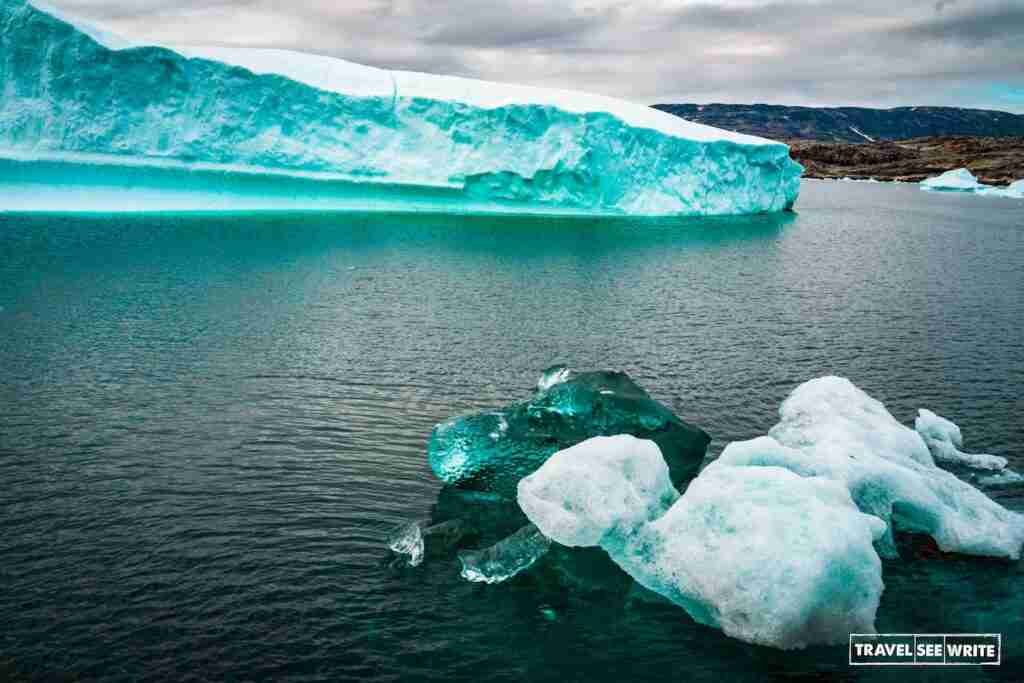
After breakfast, we hurried up to avoid being late for our date with the ancient legend of the Apuseerajik Glacier, estimated at least 50,000 years old. Navigating icebergs in our zodiac like a seal, we came face to face with the Giant Glacier. The grey skies had started gently showering on us, but that didn’t stop us from exploring the surrounding icebergs. Each iceberg was a piece of art crafted by nature. Ida explained to us the logic behind different colours of icebergs. She said,
Only 10% area of an iceberg is visible above the water surface, and their colour – white, blue or green – depends on the air bubbles they have inside them. Blue icebergs contain very few air bubbles, while white icebergs have many. Dark stripes on icebergs come from dirt that glaciers pick up as they move from land to sea.
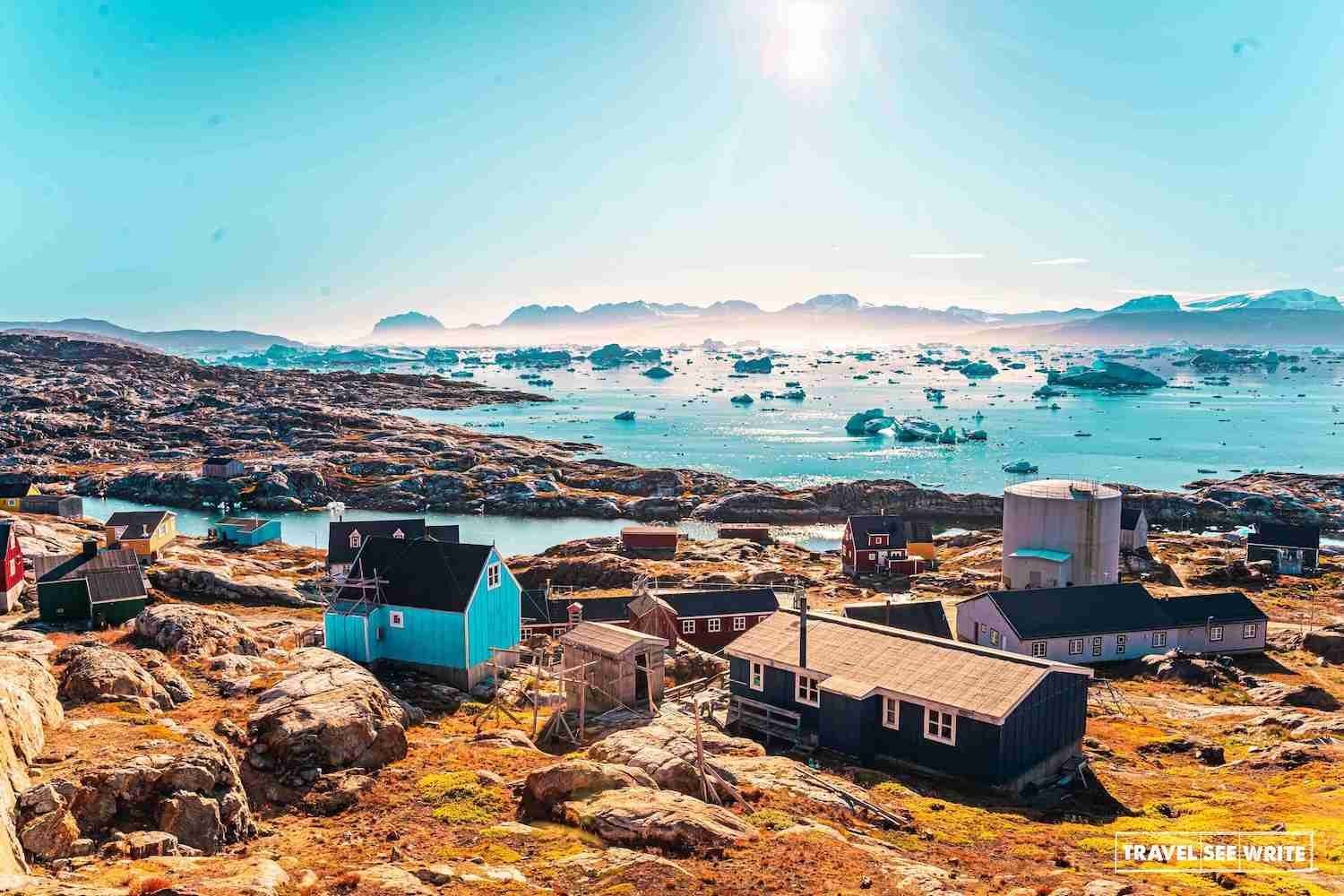
In the afternoon, we sailed approximately 40-50 kilometres south to Tiniteqilaaq. Earlier, with a population of 200, it had shrunk to below 93 today. This tiny village with bright red and blue houses and a stunning view faces significant challenges. Ida shared valuable insights into the village’s history and struggles:
People move to Tasiilaq for better work opportunities and living conditions. There is only one department store, one primary school for 12 children in the village and no doctor. The doctor only visits for a few days in the summer. For anything serious, people are forced to go to Tasiilaq or Nuuk (the capital of Greenland).
After the village tour, we went to the harbour to catch our zodiac. As we waited, I noticed freshly hunted seals were stored in ocean water, as cold water is a natural refrigerator. En route, I saw dozens of small Greendanic puppies left alone on an island. Ryan explained,
It is an important practice for training them as working dogs, building the muscle for transportation and racing. They don’t like water, so they’d not jump into the ocean and in 2-5 days, their owner will visit them to feed them.
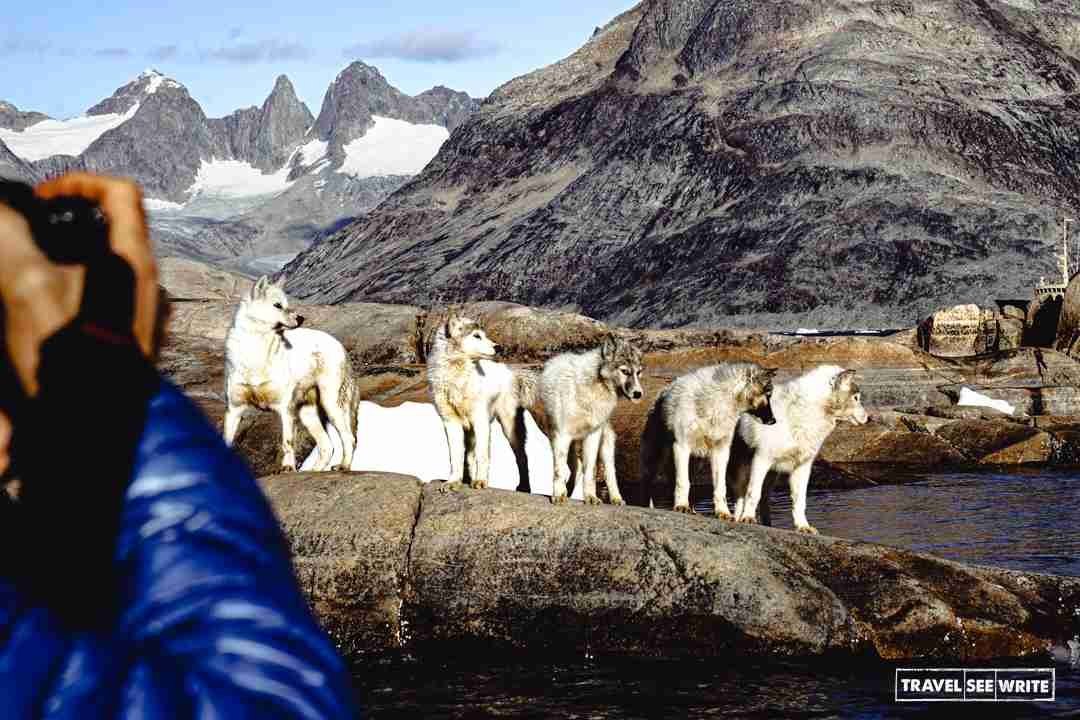
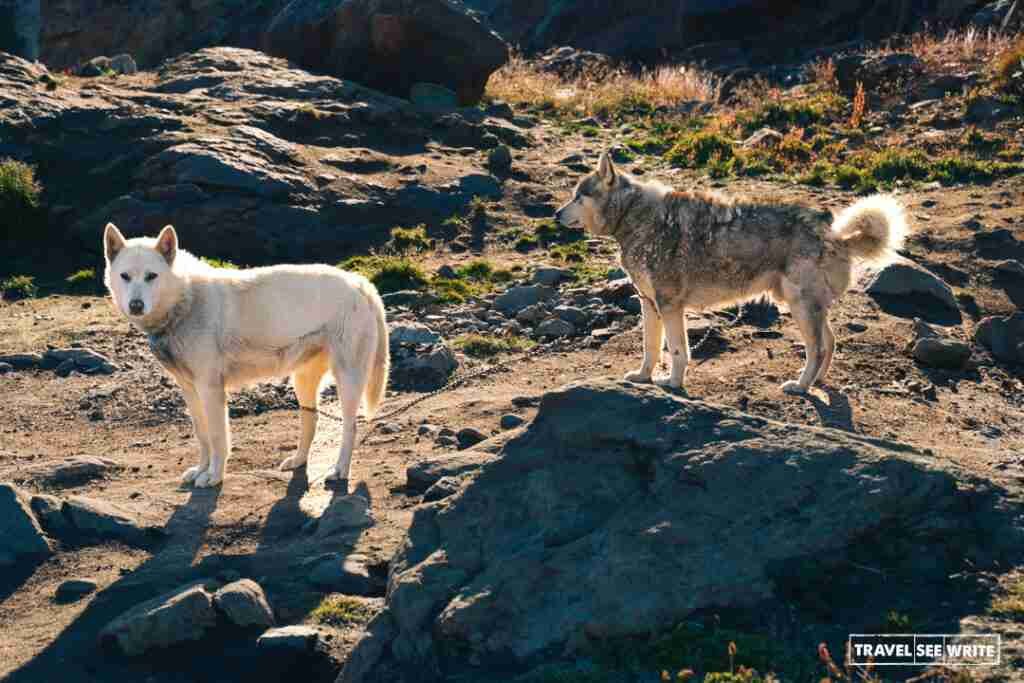
Another interesting fact about Greenland dogs is that they don’t bark but do howl. They are a pure breed closer to foxes than other dog breeds like Labrador or Chihuahua that were bred to become pets. Being a dog lover, I felt a little sad for Greenland Dogs, who are either working or kept chained. I wish I could bring them all home and pamper them like I do mine. But I shouldn’t judge them as they have different life situations and cultures than mine.
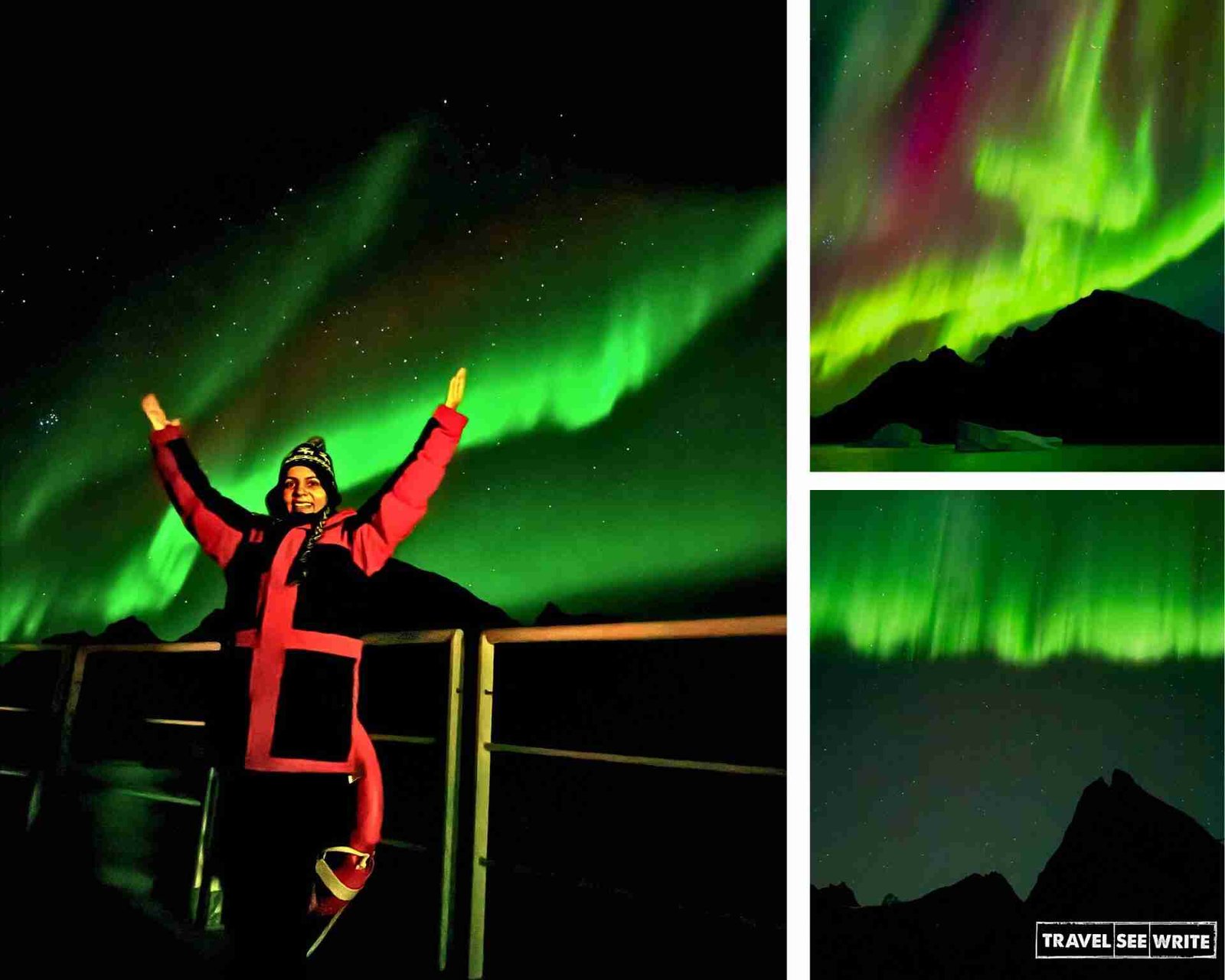
The day was wrapped up with another delicious meal and Ida’s engaging presentation on glaciers. Being still jetlagged, I called it a night at 9:30 p.m., only to be awakened at 10:30 p.m. by excited Emily as the crew spotted the Northern lights. They were pretty feeble and pinkish in the shade initially, as there was still light in the sky, but as the night matured, so did the ballet of Aurora Borealis. Hypnotised by their celestial dance, I kept chasing them until 2 am. After several failed attempts in the past (Finland, Sweden, and Norway), I had finally broken the jinx. My happiness knew no boundaries.
Read More: Chasing the Northern Lights: Your Ultimate Guide to Aurora Adventures in 2024-25
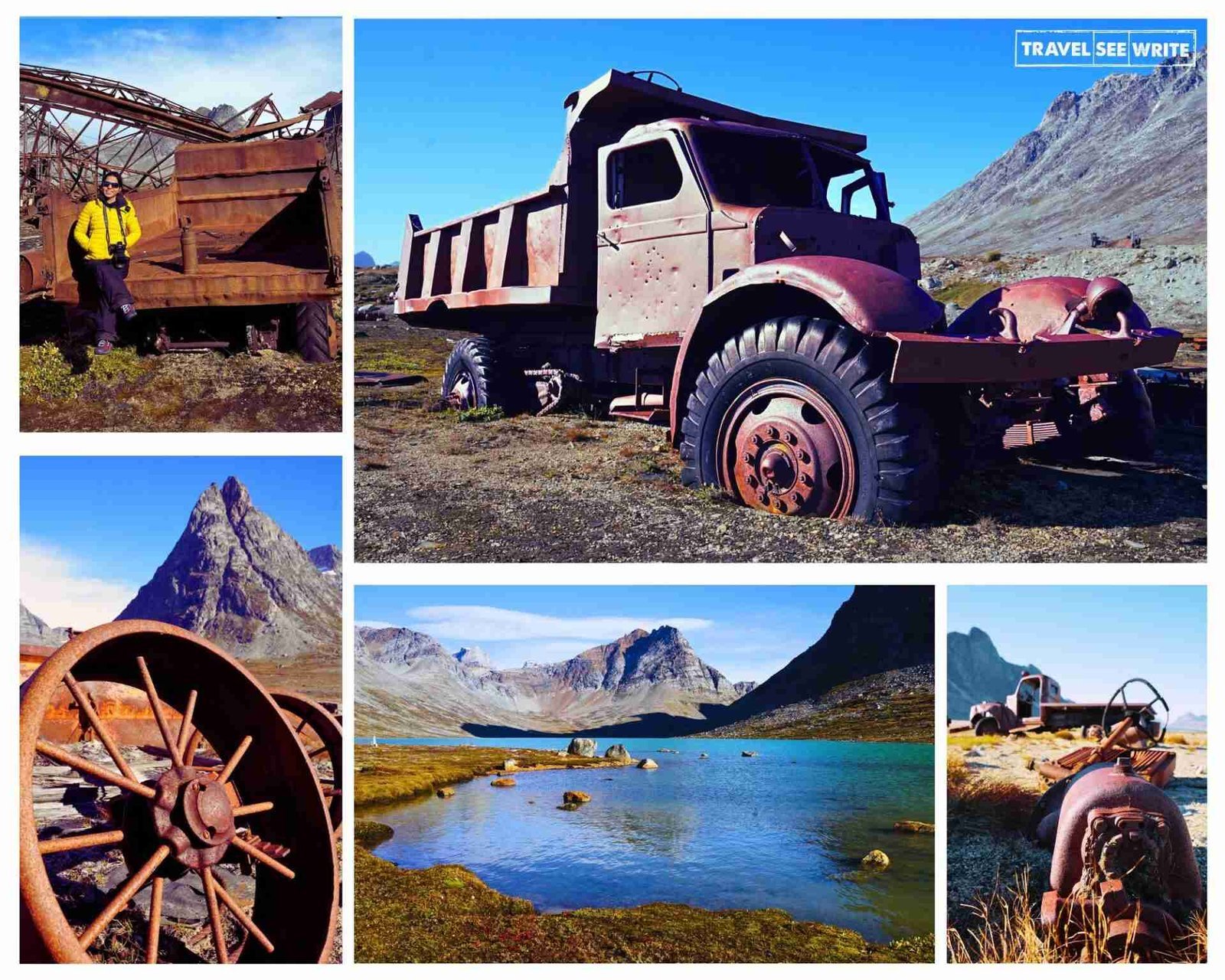
Contrary to what I had seen so far in Greenland, the next day was a big surprise. We visited Ikaasattivaq, which means “the place with many remains” in Greenlandic.
At 10:20 a.m., we landed on an abandoned American Airbase with a 5000-square-foot runway, exploring remnants of the Bluie East Two military base, which played a crucial role in World War II and was operational from 1942 to 1947. Visiting this historic site felt like entering a backdrop for a Hollywood thriller, but then I realised it was a real place. Travelling through this area of rusty air barrels, decaying airfields, and lots of scrap metal, I grappled with why such a fragile place has been left with such a vast stock of metal trash. Shouldn’t the USA have cleaned their mess before abandoning ‘Ikateq’?
With difficult questions hovering in my mind, I returned to the comfort of my makeshift home—a piping hot lunch consisting of egg soup, fried rice, grilled veggies, and pita pockets awaited me.
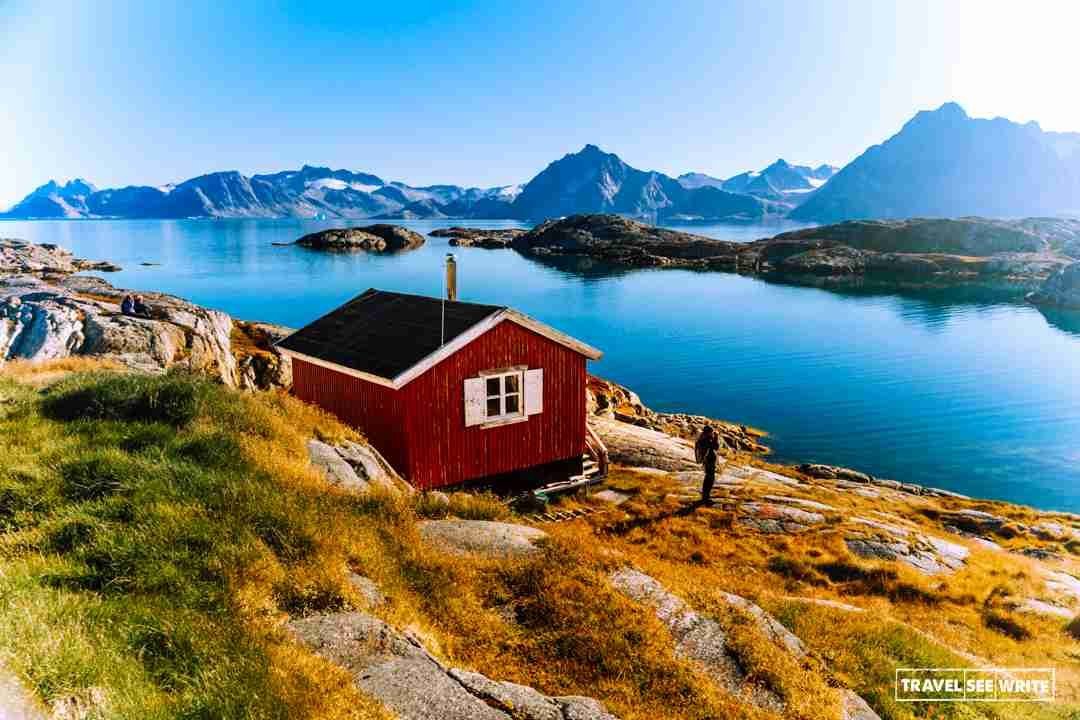
Post lunch, we sailed for 2-3 hours, covering 30-45 kilometres, to Aliasitoq (Pikkefjeld). High tide and strong winds greeted us on the island. Ida and Ryan introduced us to a local hunting hut, which was surprisingly in perfect condition, with intricate drawings, a Jesus photo, and wooden beds. Ida told us that one needed to be a part of a hunting/fishing community to stay there. Outside, we found 1000-year-old Inuit remains. Ryan explained the Inuits’ clever use of narrow openings to keep cold winds out. A hike up the hill revealed breathtaking views of the fjord.
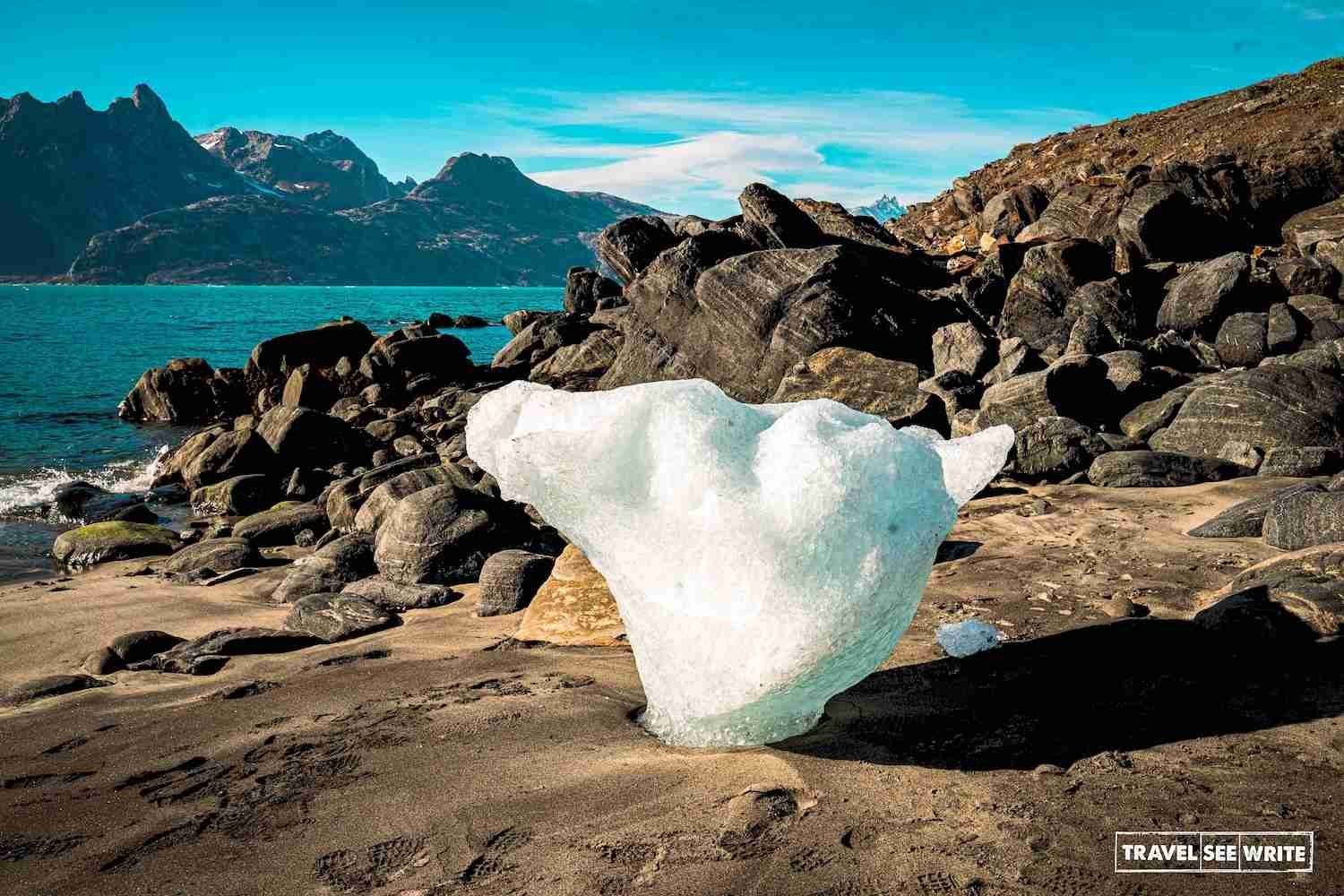
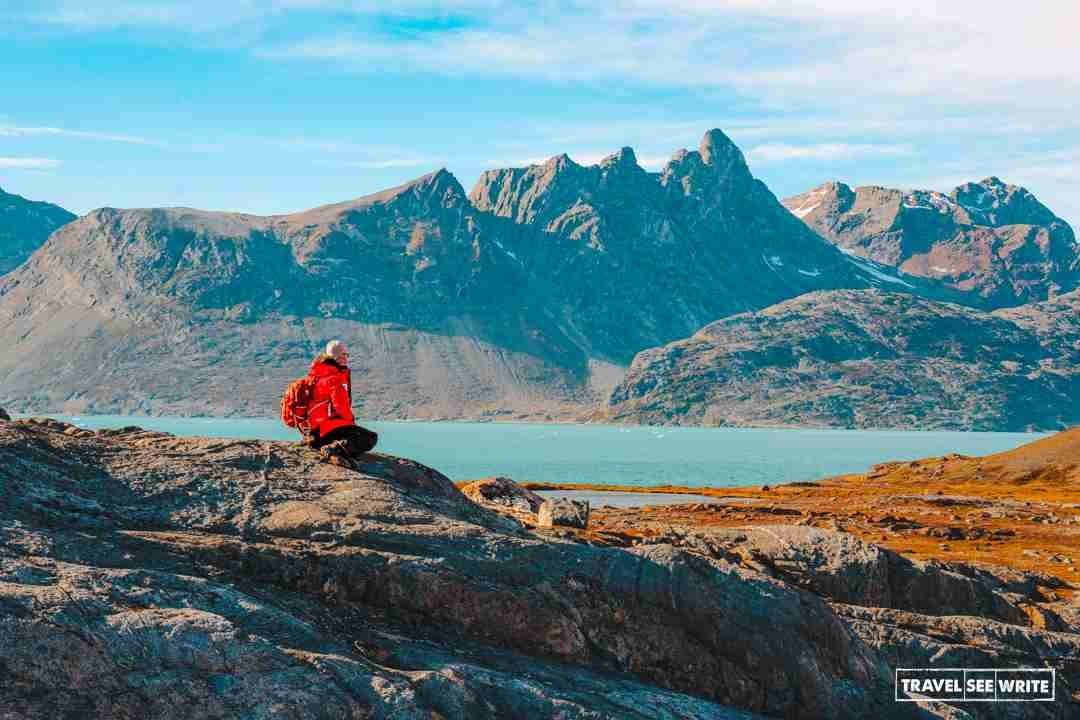
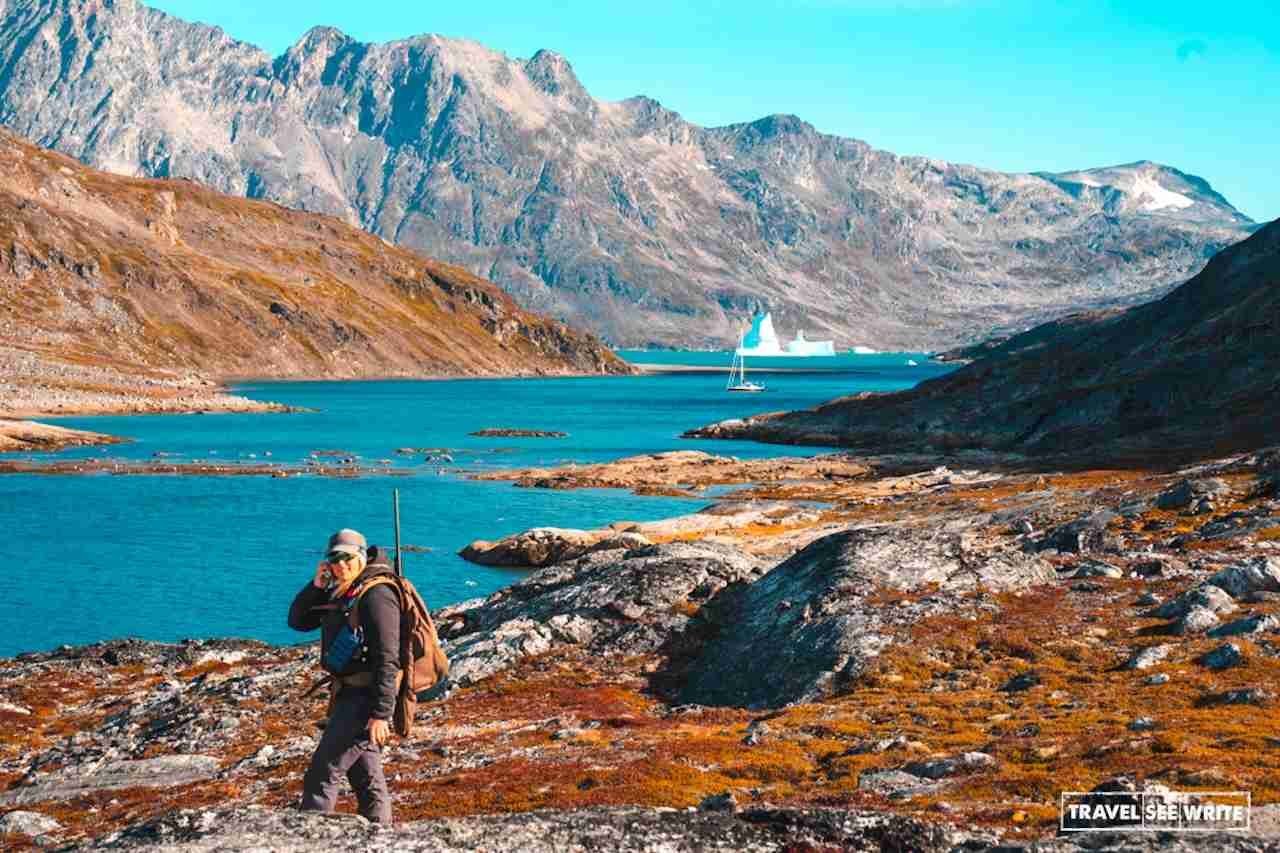
As we trekked up the hill to a breathtaking vantage point, we encountered massive boulders adorned with vibrant red, green, and black lichen. The fjord to our right glistened with mesmerising blue waters under the perfect weather – a blend of sunshine and a gentle, invigorating breeze. Our surroundings were alive with the calls of White-fronted Geese, Guillemots, and Great Northern Divers while a majestic sailboat graced the fjord.
Both sites boasted azure waters, unobstructed skies, and rugged fjords, evidence of mountains untouched by glacial forces. The snow-dusted peaks added to the majestic landscape.
As the clock struck 5 p.m., we made our way back to our expedition ship, eager for the next leg of our adventure. The ship set sail toward Kaarali Glacier, a breathtaking spectacle boasting not one, not two, but five glaciers in one panoramic view. Our captain, with a glint of excitement in his eyes, shared that reaching this far was a remarkable achievement, often hindered by unpredictable weather. It was a historic milestone for our cruise, marking an unprecedented journey into the heart of natural wonder.
Karali Gletscher, also known as Karale Glacier, is located right next to Knud Rasmussen glacier, close to Sermiligaaq. Nestled among rugged terrains, this sprawling ice mass unfurls like a vast white tapestry, weaving a tale of nature’s timelessness and power. As with many of East Greenland’s glaciers, Karali Glacier is a dynamic entity, constantly shifting, expanding, and retreating in response to the region’s intricate climatic dance.
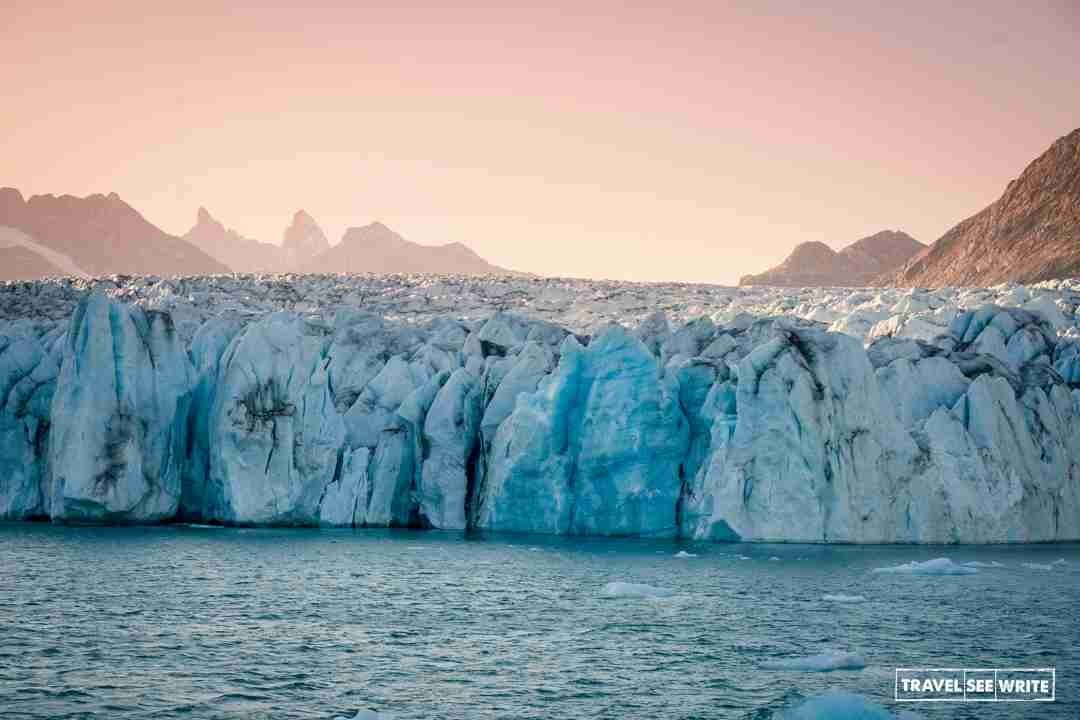
East Greenland, a land of untamed beauty, is home to some of the Arctic’s most extraordinary and expansive glaciers. These colossal ice formations stand as timeless storytellers, offering us a glimpse into the Earth’s climatic history. Carved over millennia, these majestic rivers of ice persistently shape the rugged terrain, a testament to the relentless forces of nature.
Like every day, a presentation preceded dinner before goodnight sleep. Ryan shared his love and knowledge of geology and rocks.
The next morning brought a big surprise—the Fjord where we were docked had turned into a dynamic landscape, with hundreds of icebergs in complex shapes and sizes floating around us.
Glacier calving from the Karali Gletscher created this white spectacle early in the morning. Surprisingly, I didn’t hear anything which speaks volumes about the soundproofing in the cabins.
Around 9 a.m., we started hiking to the glacier’s start point, navigating slippery, fine gravel. We stayed there for a while before descending to the beach, where the glacier was almost touching the Fjord. Mesmerised by its ethereal beauty, I walked inside the glacier ice. The sheer scale and beauty of the glacier left an indelible mark on my mind.
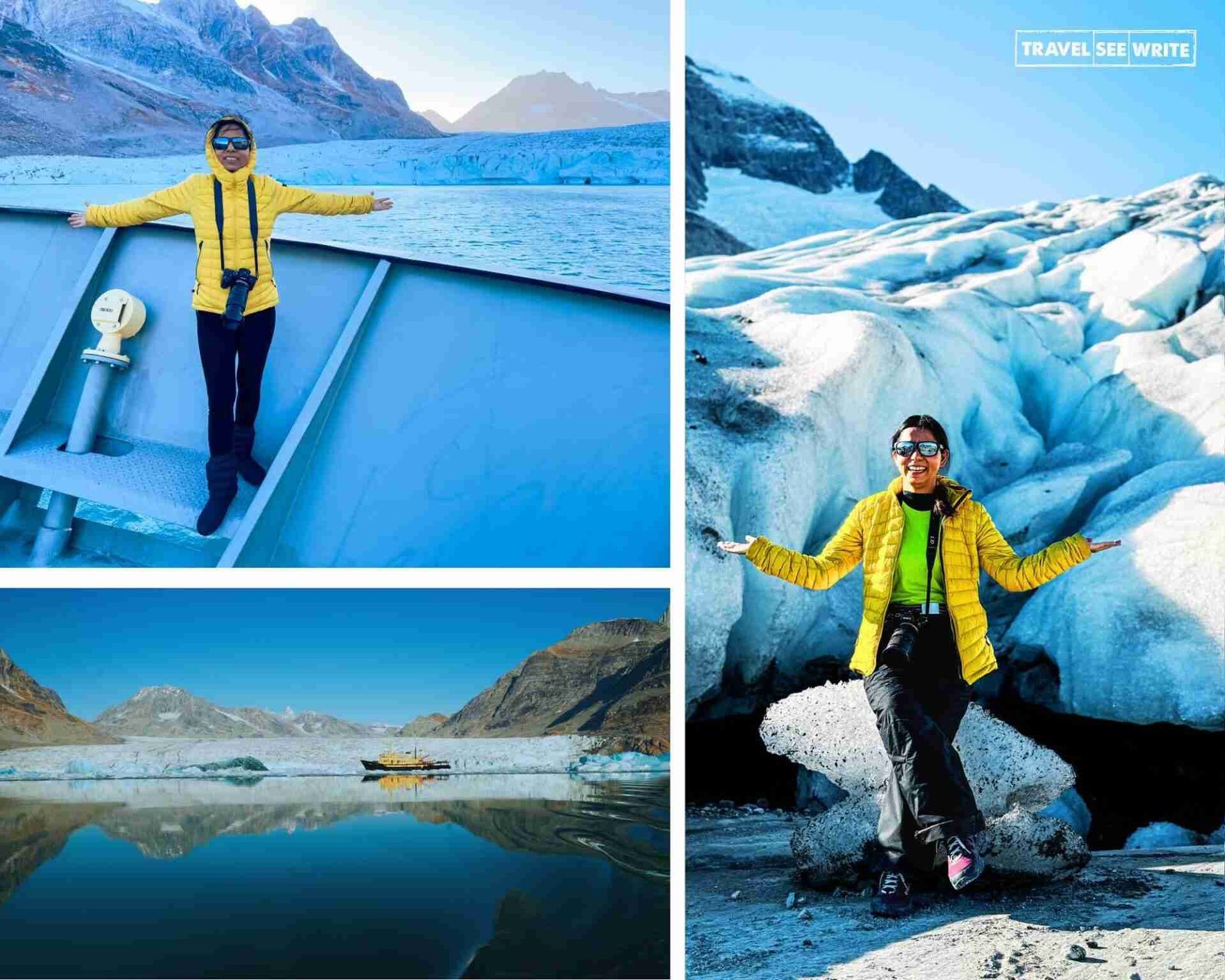
Following our exhilarating glacier hike, we made a seamless transition to a captivating 5km tundra trek in the picturesque Nuuaartik Valley during the afternoon. Traversing a sprawling sandy beach, we embraced the challenge of finding our balance atop colossal moss mounds. Unlike any other destination on our journey, this valley embraced an unrivalled verdant expanse reminiscent of the tundra. Delicate streams of glacial melt meandered through the landscape, nourishing vibrant crowberries and late-blooming blueberries. A stunning array of lichen, boasting hues of red, purple, green, and black, adorned the surroundings. Encircled by imposing granite peaks, the valley was perpetually bathed in the flow of glacial waters, nurturing the lush moss and giving rise to an enchanting alpine lake.
The day began with an exhilarating surprise—the sighting of fin whales in Arctic waters. These majestic creatures, with their distinctive fins and remarkable agility, captured our attention as they gracefully glided through the ocean, disappearing and reappearing in the distance.
After this breathtaking encounter, we set foot on Qernertivartiit island, affectionately nicknamed Q-Town by Ida. Once a vibrant village, it now lay abandoned, its dilapidated houses holding remnants of a bygone era. As we explored the deserted dwellings, we were struck by the poignant traces of the families who had once called this place home. An altar for Jesus, abandoned furniture, and a poignant photograph depicting the village in its heyday all spoke of the lives that had been lived here.
Our journey continued with an afternoon hike at Sangmileq, leading us to a mesmerizing multi-tier waterfall area. The symphony of rushing water and wind surrounded us as we paused to take in the breath-taking sight. The vibrant green hue of the water, a result of glacial sediments, painted a surreal scene unlike anything I had witnessed before.
As the day drew its curtains, we embraced the daring challenge of a polar plunge. Following a brief 10-minute sauna session, we braved the icy waters of the Arctic, feeling an exhilarating rush like no other. The contrast of extreme temperatures was both invigorating and unforgettable. The day ended with a celebratory vodka shot to mark the unique experience. Additionally, we had another surprise waiting for us – a BBQ during the golden hour with a drink of our choice. It was a delightful experience for everyone, and the day couldn’t have ended on a better note.
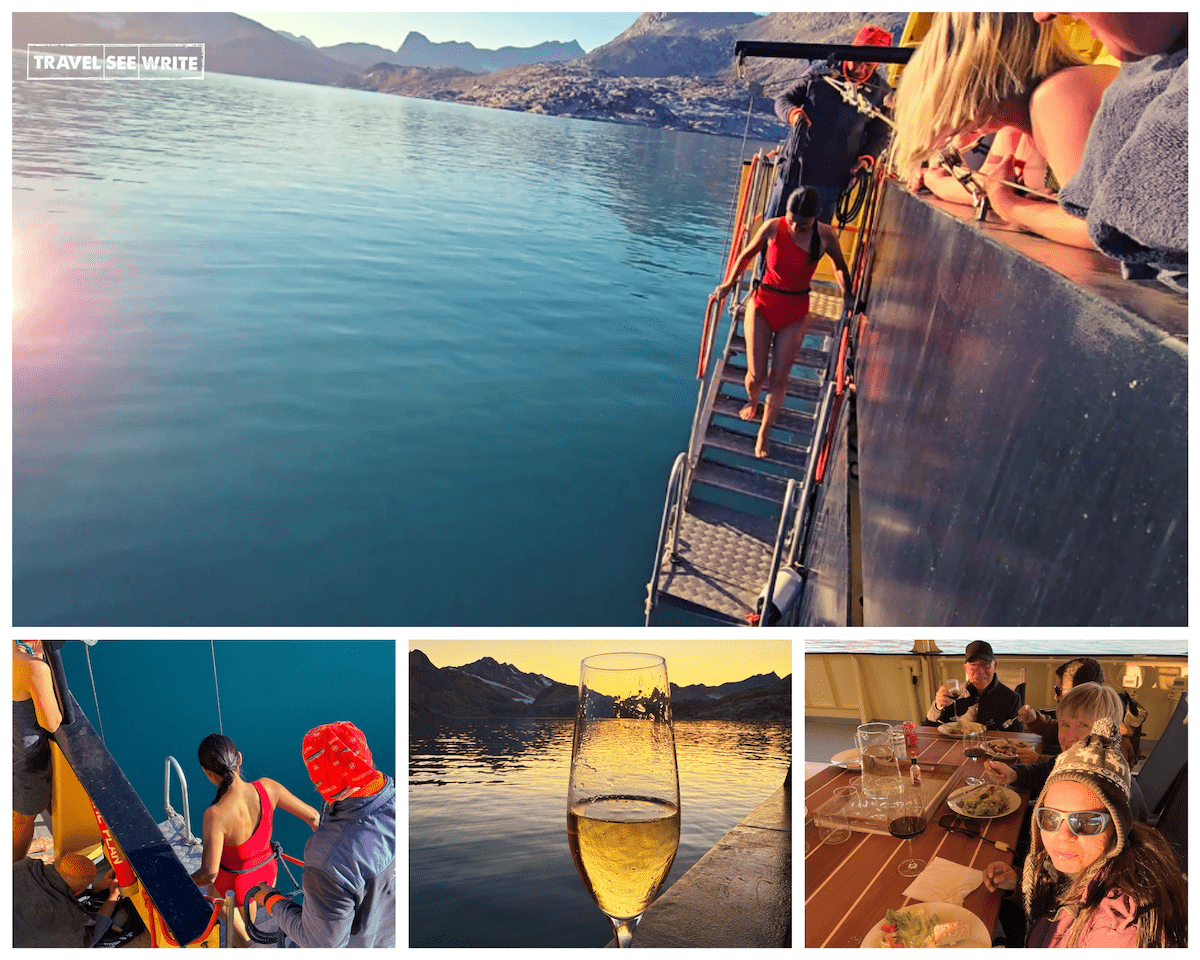
Each moment of our day in Greenland unfolded as a captivating chapter in a visual odyssey, leaving an indelible impression of this extraordinary land’s raw beauty and untamed spirit.
On the second-to-last day of our trip, we started early at 8 AM for breakfast before embarking on our final hike of the expedition in the enchanting Flower Valley (Naasuliardarpi) of Tasiilaq. While there were not many flowers, we did see a variety of arctic flora, picturesque lakes and a waterfall. Along the way, we strolled through a charming village and passed through a quaint cemetery. It was a delightful walk under the warm sun.
That afternoon, we enjoyed an early lunch in preparation for our 1 PM guided tour with a local named Rasmus in Tasiilaq village. After a quick bite, we visited the historic Tasiilaq Church, built in 1906, which has since been converted into a museum. Rasmus shared fascinating insights into the town’s history, culture, and traditions, highlighting the challenges of life in Greenland and the significance of the Greenlandic dog. The museum beautifully showcased the local Inuit culture, providing us with a deeper understanding of the town’s isolation and its unique logistical challenges.
Rasmus also discussed the town’s industries and the meaning behind the vibrant colours of the houses in Greenland. He touched on the topic of education and the phenomenon of “brain drain” in East Greenland. One of the most heartwarming moments came when we met his 19 sled dogs, ranging from just one month to several years old. As soon as they heard Rasmus approaching, they began howling for his attention.
Towards the end of our visit, we were treated to a surprise: a traditional Inuit performance featuring deep-throat singing and the playing of the traditional Inuit drum.
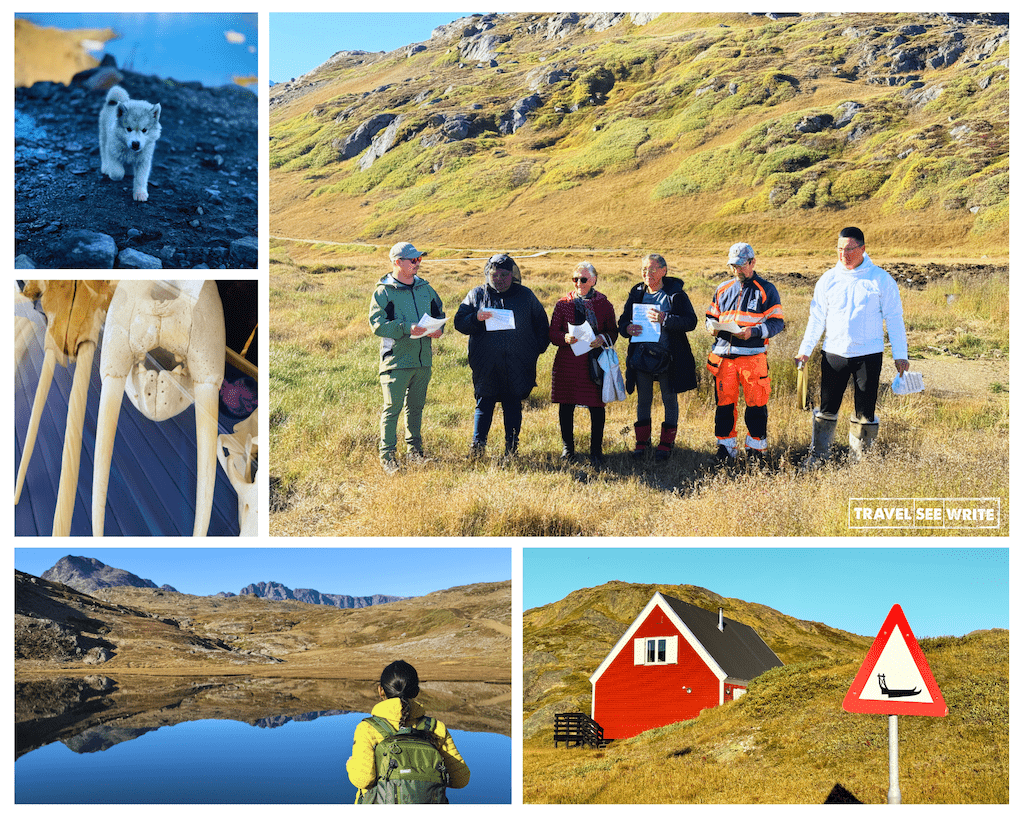
On the morning of my Apusiaajik Glacier Cave tour, I had an early check-out, ready for the adventure ahead. The day began with a thrilling speedboat ride from Tasiilaq to the Apusiaajik Glacier, one of East Greenland’s enchanting wonders. The name “Apusiaajik” fittingly means “small glacier,” though witnessing it up close, it felt anything but small.
Once we arrived, I strapped on crampons and followed our guide, Peter, up a slippery gravel path, using a rope to steady myself as we navigated the rugged terrain. At one point, we crossed a spot where a massive boulder was precariously perched. Here, Peter shared expert insights about the glacier’s dynamics and the impact of climate change. He pointed out a massive boulder, around 20 feet tall, that was buried under snow a year ago but is now entirely free of snow—a striking indication of the effects of climate change in this isolated area. He highlighted the alarming rate of glacier retreat, with Apusiaajik Glacier losing approximately 30% of its area since the 1990s.
As I entered the glacier cave, I felt like a child in a candy store. There was too much beauty around me, and I didn’t know where to look. The cave stretched endlessly in shades of deep and dramatic glacial blue, with water dripping from above, creating a mesmerizing sound that echoed through the space. A glacier stream flowed gently inside, and the light filtering from the top gave the whole place a heavenly glow. It was a powerful, almost otherworldly experience that left me in awe of nature’s fragile beauty. After spending a few hours inside the cave, we returned to the base of the glacier and took a five-minute break to silently gaze at Nature’s last remaining relics from the previous Ice Age that coming generations may not see in the next hundred years.
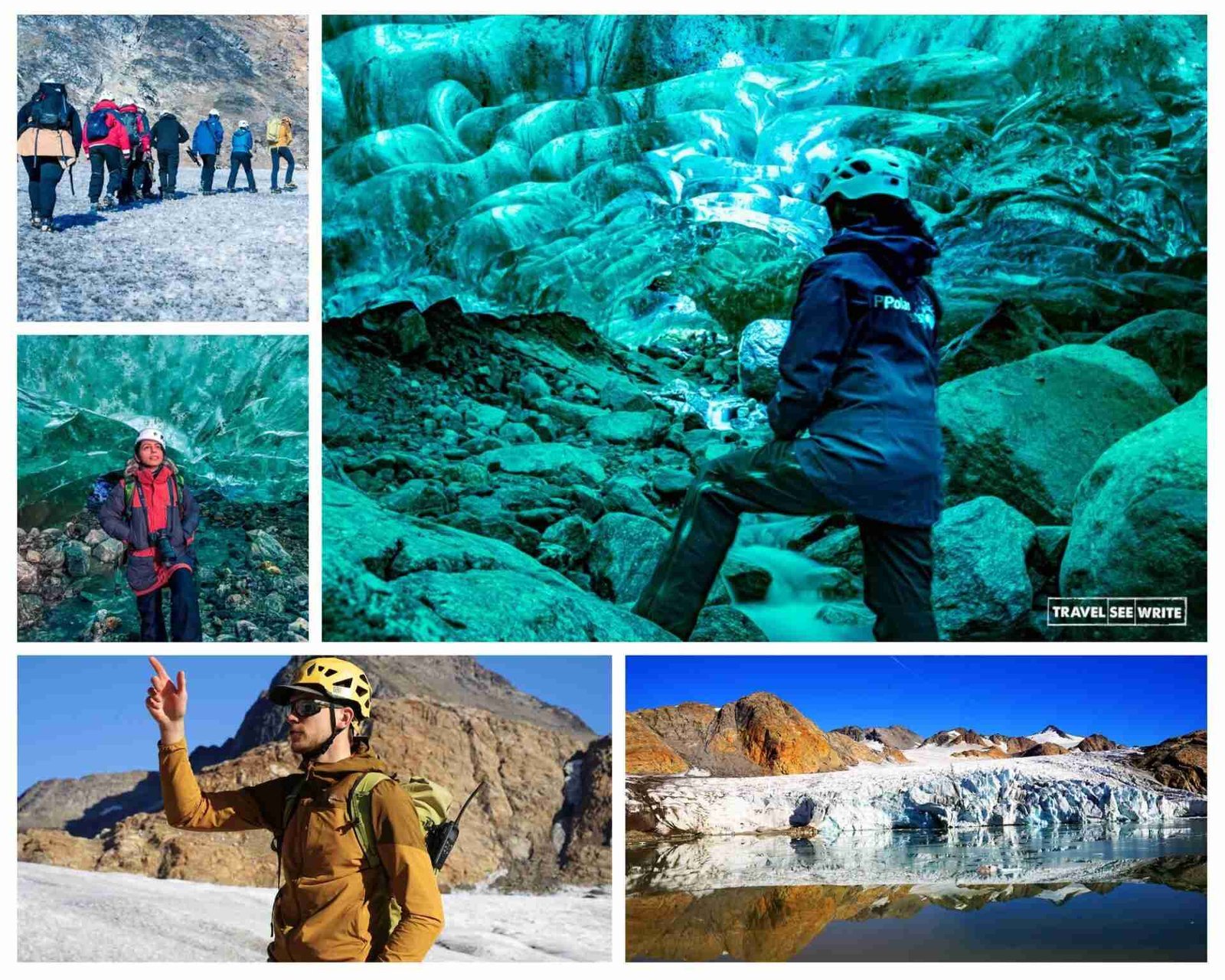
After a moment of retrospection, we enjoyed a picnic lunch prepared by Peter himself. Following the tour, we returned to Kulusuk and spent the afternoon exploring the village. At 6:51 p.m., we departed for Reykjavik, Iceland, reflecting on our unforgettable journey.
Late at night, we made our way back to Reykjavik. The following day, the majority of the group members went home to their respective countries, while I remained behind for an additional seven nights to relish the stunning landscape of the land of Fire and Ice – Iceland. Stay tuned for my account of my experiences in Iceland in the upcoming post.
Exploring the stunning landscapes of East Greenland and Sermilik Fjords was undoubtedly one of the best experiences of my life. The gigantic icebergs and dramatic fjords gave me my best memories. Yet, as I stood before the receding ice, I felt a deep sense of loss. The visible effects of climate change were unmistakable, not only threatening these majestic formations but also impacting the local Inuit communities that depend on them.
This journey reminded me of our profound connection to nature and the urgent need to protect it. Leaving East Greenland and Sermilik Fjords, I carried with me a renewed sense of responsibility. We must all act to safeguard these incredible places, ensuring that future generations can witness their beauty and understand their significance. Our planet’s wonders are at stake, and it’s up to us to preserve them.
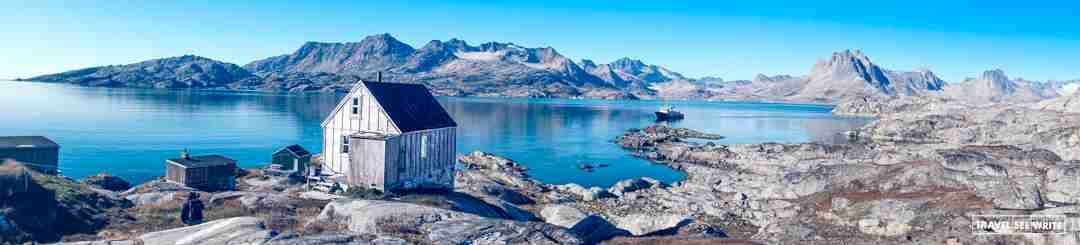
I visited East Greenland and Sermilik Fjords thanks to an invitation from Polar Quest. My insights come from personal experiences and conversations during my trip. All images included are my own. Please do not copy or use them without written permission from Travel See Write.
Ready to embark on an unforgettable adventure to Greenland, Iceland, Finland, Sweden, the Arctic, or Antarctica? Whether you’re planning your own journey or eager to follow my #ArcticToAntarctica experience, check out these engaging blog posts:
Polar Connections: A Journey from the Arctic to Antarctica
Chasing the Northern Lights: Your Ultimate Guide to Aurora Adventures in 2024-25
Is Qatar Airways’ 40-minute Layover enough?
An Epic 10-day Iceland Roadtrip through spectacular landscapes
Visiting Finland for the First Time? Don’t forget these 15 Practical Tips
Sweden’s Incredible Journey of Transforming Trash to Treasure
What You Must Know Before Visiting Russia: An Insider’s Guide
After years of chasing the elusive Northern Lights across Finland, Norway, and Sweden, I finally experienced the magic of the aurora borealis in Eastern Greenland. This unexpected encounter was unlike anything I had imagined—remote, breathtaking, and utterly surreal. I also had the opportunity to witness the Northern Lights in Iceland, but the experience was different. While I could see them from my hostel window in Reykjavik, the lights weren’t as vibrant due to the city’s light pollution. Nonetheless, the thrill of finally capturing this natural phenomenon after years of anticipation was indescribable.
If you’re planning a trip to capture the aurora borealis, September and October are prime months to go. Let me take you through the best places to see the Northern Lights, how to photograph them, and everything else you need to know to make your Northern Lights adventure unforgettable.

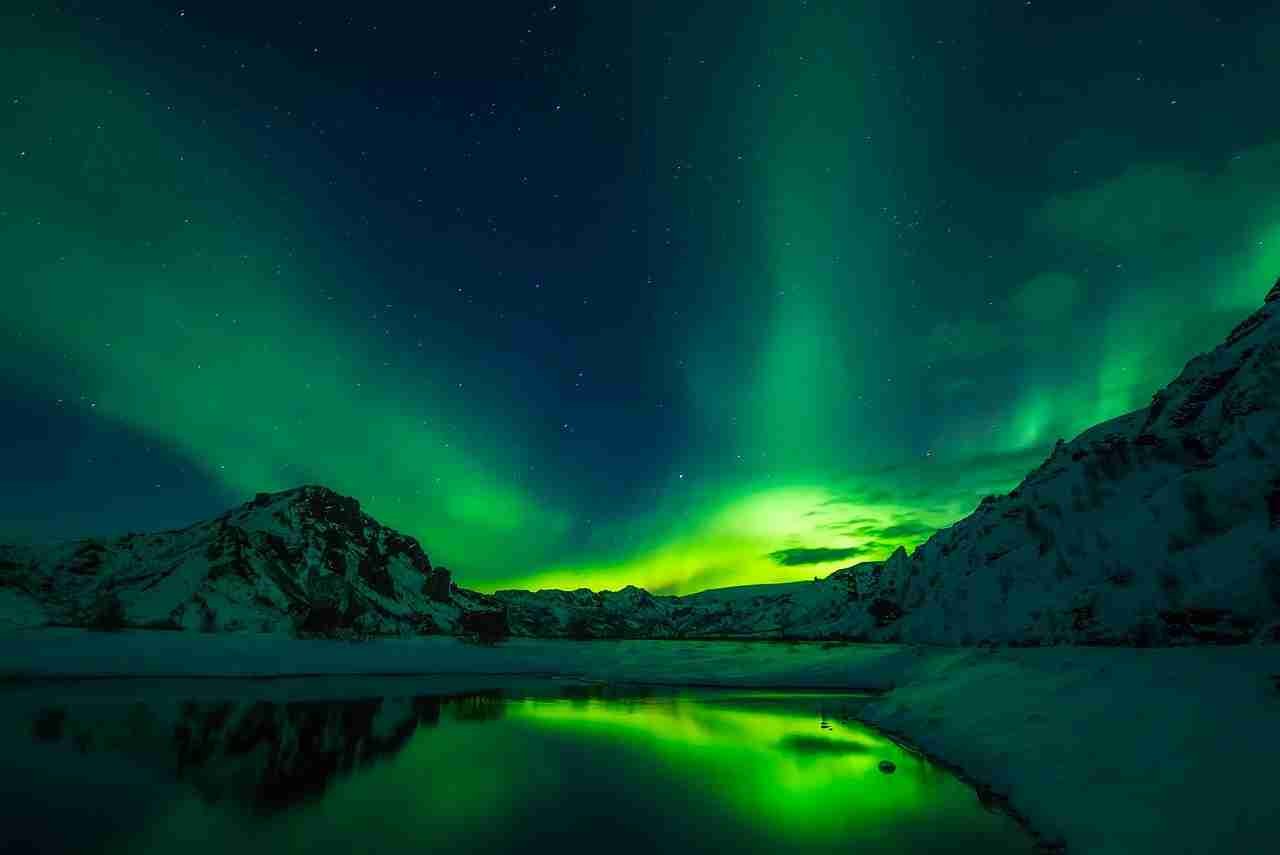
The Northern Lights, or aurora borealis, are formed when charged particles from the sun collide with atoms in Earth’s atmosphere. These particles are carried toward Earth by the solar wind, and when they interact with gases like oxygen and nitrogen, they create stunning lights that dance across the sky. The colour of the lights depends on which gas is being excited: oxygen produces green and red lights, while nitrogen creates blue and purple hues.
Solar storms increase the intensity and frequency of these lights, which is why it’s important to track the Kp index (a measure of geomagnetic activity) when planning your aurora adventure. The higher the Kp index, the more vibrant and widespread the Northern Lights will be.
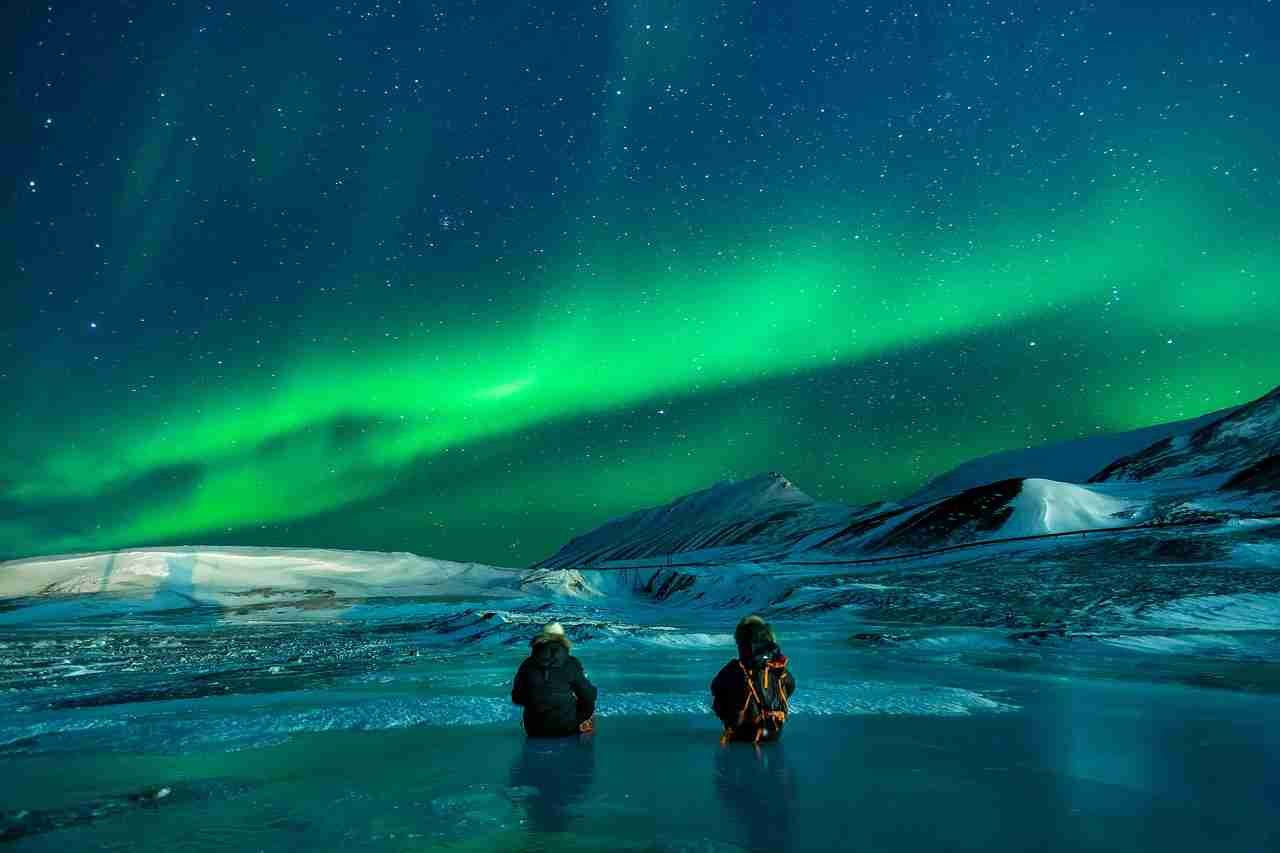
The best time to see the Northern Lights is between September and April when the nights are long and the skies are dark. September and October are particularly ideal because the weather is not as harsh as in the winter months, and solar activity is still high after the summer solstice.
From personal experience, I saw the Northern Lights five times during these months in both Greenland and Iceland. In Greenland, the skies were much darker, making the lights appear brighter and more vivid. In Iceland, while I could spot them from Reykjavik, it wasn’t as intense due to the light pollution. For the best view, head out of urban areas to more isolated spots with minimal artificial light.
Here are the top destinations for witnessing the aurora borealis during the autumn months:
To maximize your chances of seeing the Northern Lights, consider these tips:
View this post on Instagram
Witnessing the Northern Lights in Eastern Greenland was unlike anything I had ever experienced. The lights illuminated the glaciers and fjords, creating a landscape that felt almost otherworldly. I used a wide-angle lens and manual settings to capture the full extent of the aurora’s movement across the sky.
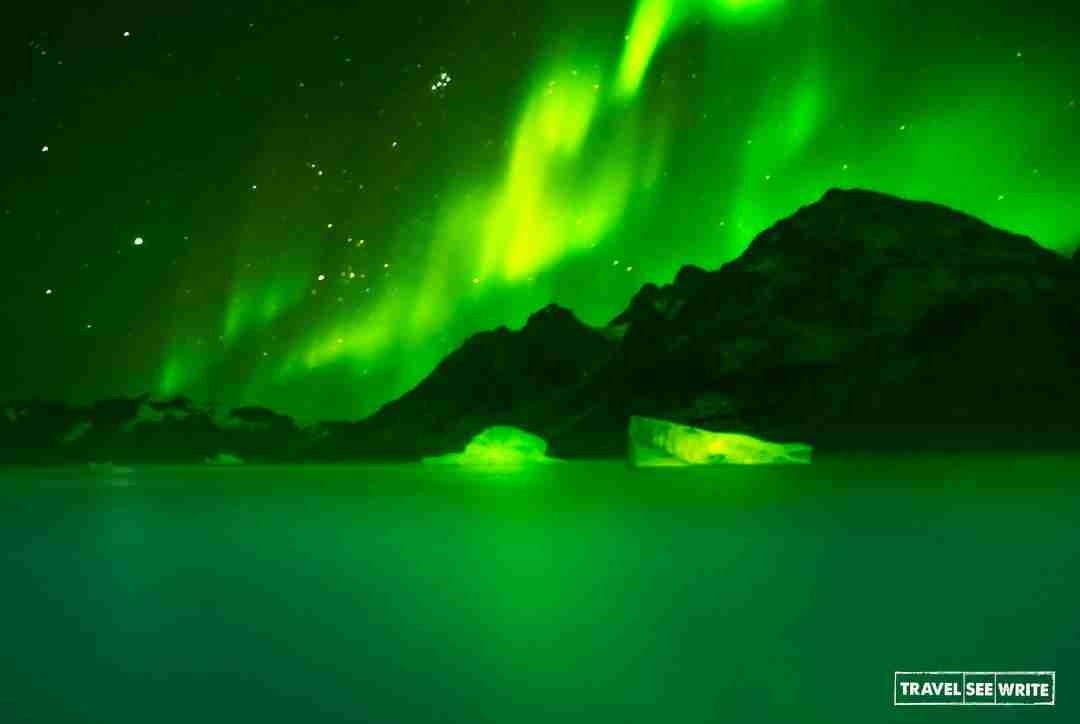

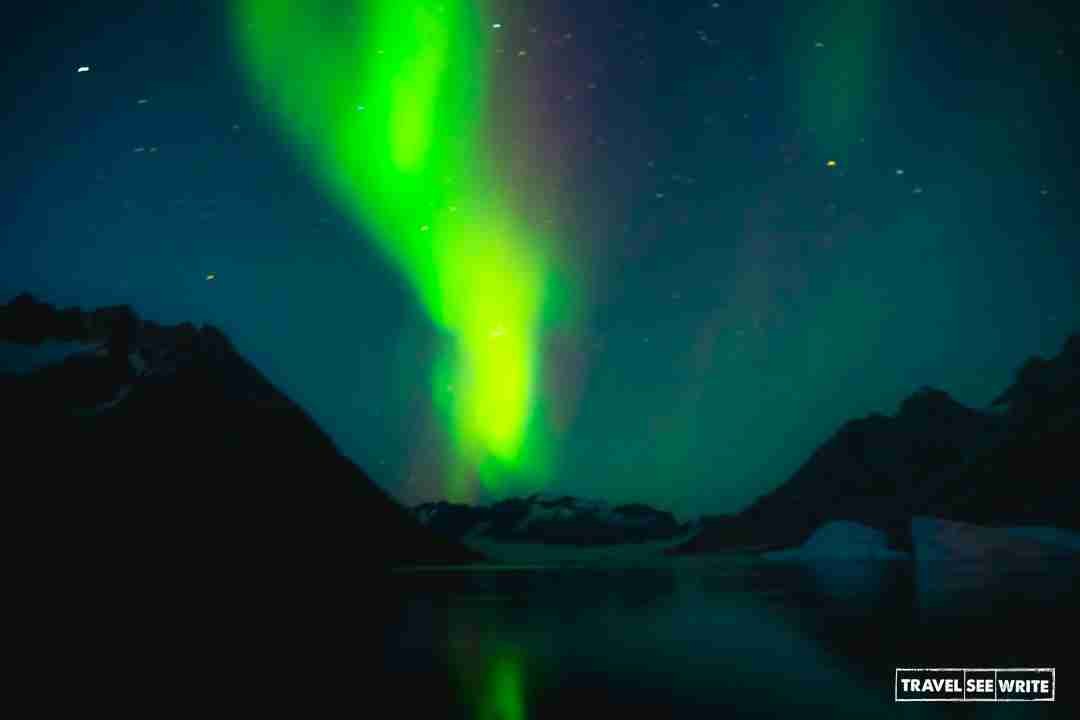
In Iceland, I saw the Northern Lights from my room window in Reykjavik, but the experience was not as dark and dramatic due to the city lights. However, when I travelled to the more remote areas like the Golden Circle, the Northern Lights were much more vibrant.
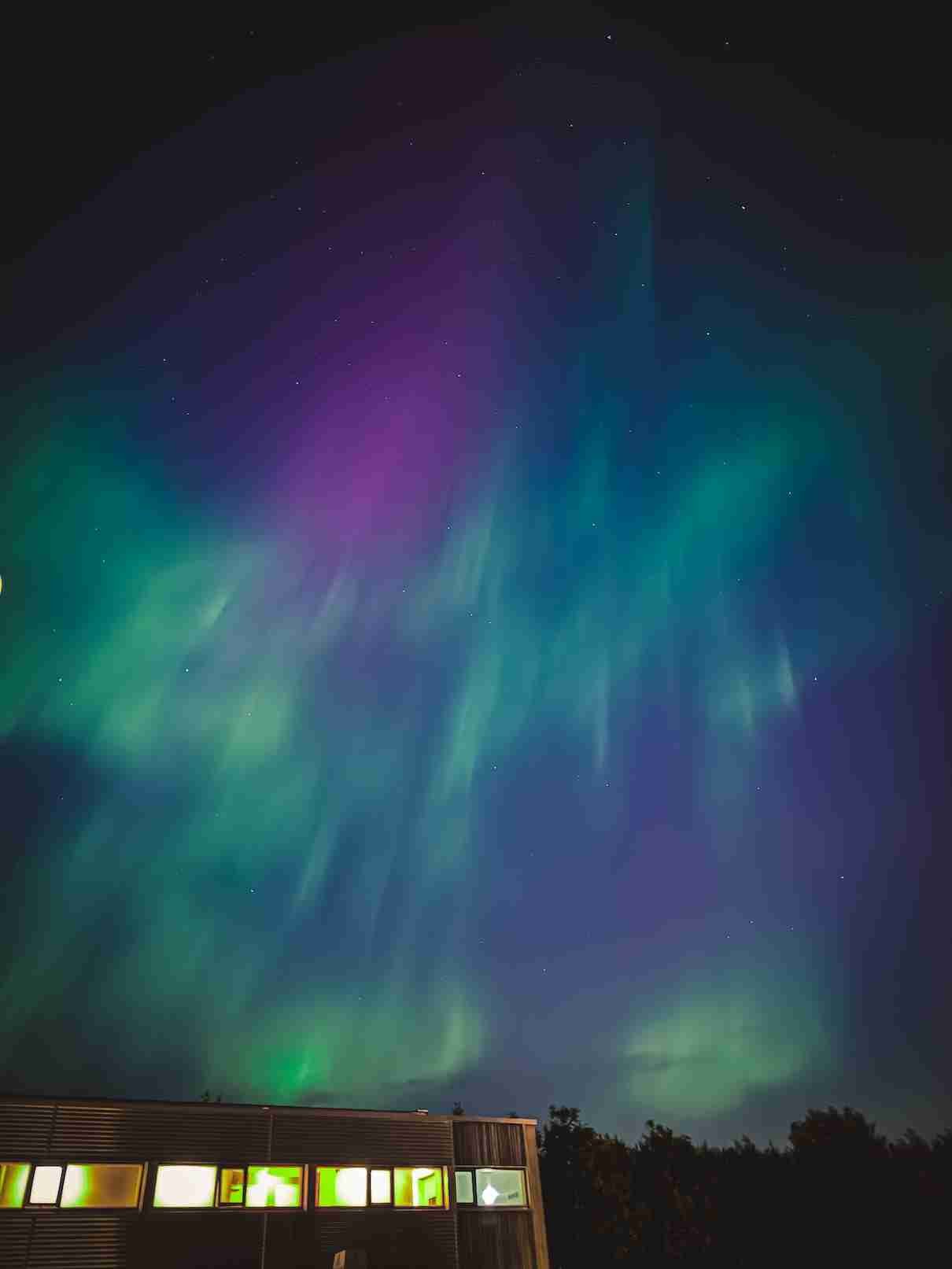
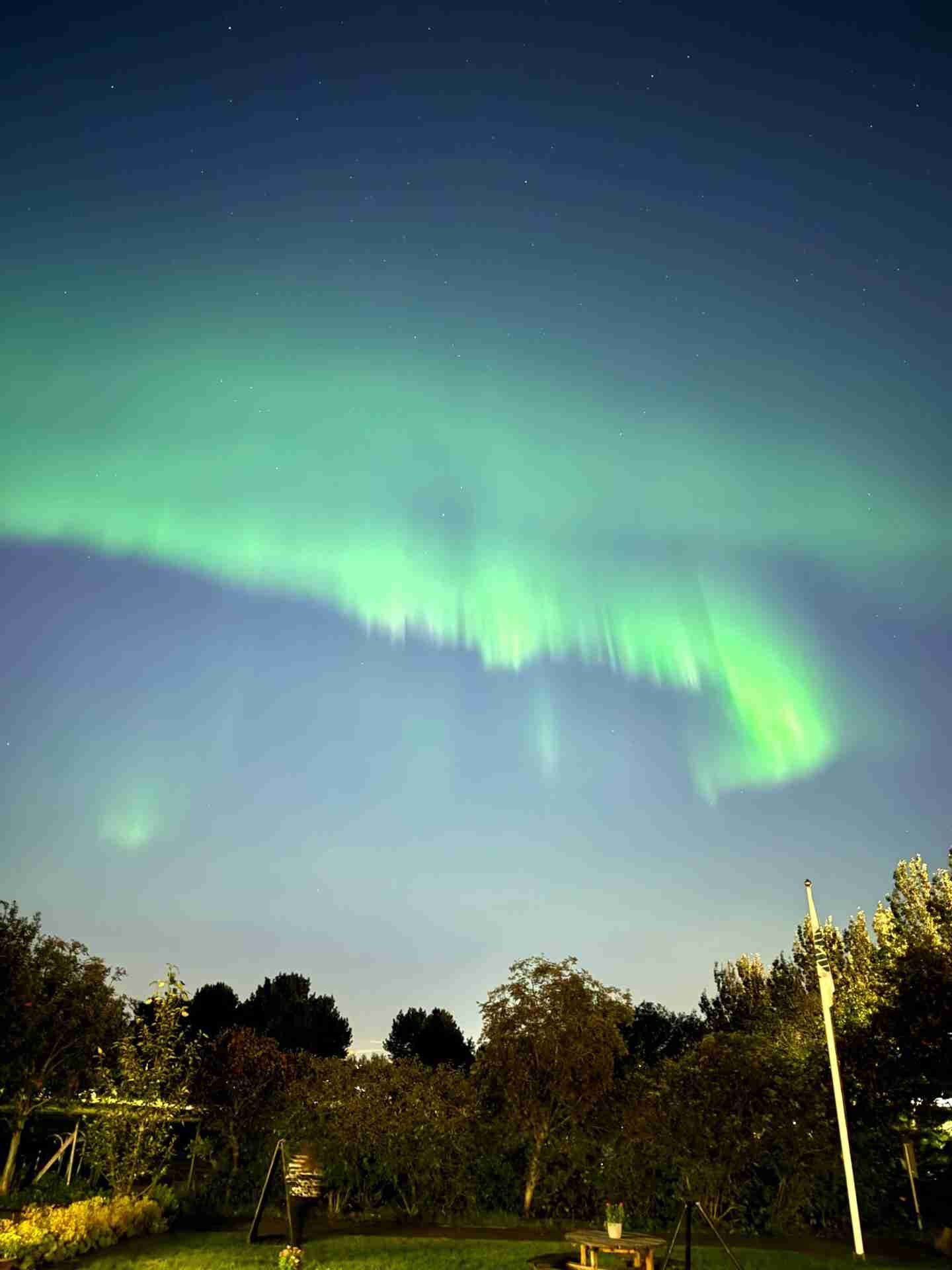

Northern Lights tours vary in cost, ranging from $100 to $2,000 per person, depending on the location and duration. In Greenland and Iceland, multi-day tours often include accommodation, meals, and guided aurora hunts. While it may seem pricey, the experience of seeing the Northern Lights in some of the world’s most remote and beautiful locations is well worth the cost. If you are staying in the Icelandic capital, Northern Lights Tours in Reykjavik, Iceland, can cost between $58 and $503, depending on the type of tour. Some of the companies that you can use are Icelandia, Hidden Iceland, and Reykjavik Excursions. I took a few small group tours with Icelandia (Thorsmork Jeep Tour) and Hidden Iceland (Enchanting Snæfellsnes Peninsula Tour, Golden Circle, and Jökulsárlón Glacier Lagoon 2-Day Tour), and I was really impressed by them. Detailed blogs about my experience travelling with them coming soon.
While you can do a stand-alone Northern Lights tour in any of the above countries, I would highly recommend doing a more immersive trip like visiting East Greenland and Sermilik Fjords with PolarQuest. Not only will you get to see the best Northern lights of your life, but you’ll also get to experience the best trip of your life. I can vouch for this from my personal experience.
Witnessing the Northern Lights in both Greenland and Iceland was an unforgettable adventure. Whether you’re a seasoned photographer or simply want to experience the magic of the aurora, September and October offer the perfect conditions for a Northern Lights trip. With the right planning, gear, and a bit of luck, you too can capture one of nature’s most stunning phenomena.
Polar Connections: A Journey from the Arctic to Antarctica
Journey Through East Greenland’s Sermilik Fjords: A Once-in-a-Lifetime Adventure
Greenland Travel Guide: Everything You Need to Know for an Unforgettable Adventure

As World Tourism Day 2024 approaches, I find myself reflecting on the significance of travel in my life and the lives of so many I’ve met on my journeys. Travel isn’t just about moving from one place to another—it’s about transformation. Every trip, every new experience, and every interaction enriches us in ways we don’t fully comprehend until much later. This year’s theme, Tourism and Peace, resonates deeply with me, and through my travels, I’ve witnessed firsthand how travel has the power to break down barriers, promote understanding, and foster global harmony.
World Tourism Day is celebrated every year on September 27 to raise awareness of the role tourism plays in fostering social, cultural, political, and economic harmony across the globe. It is a day to highlight the potential of travel to unite people from different walks of life, and this year’s World Tourism Day 2024 theme, Tourism and Peace, takes on special importance as we focus on how travel can bridge divides and foster mutual respect.
Sanjay Sethi, CEO and Managing Director of Chalet Hotels Limited, encapsulates the power of tourism in his words:
“We are proud to be part of an industry that not only showcases the cultural richness of India but also contributes to the social and economic upliftment of communities. The Government of India’s proactive initiatives, such as the e-Visa facility, the Swadesh Darshan scheme, and the PRASHAD program, are driving remarkable growth in the tourism sector.”

Sethi’s insight underscores the dual role of tourism—not only as an economic driver but also as a catalyst for peace, inclusivity, and mutual understanding.
The “Father of World Tourism Day” is Ignacio Rafael Rojas, who played a significant role in the establishment of the event. World Tourism Day was first celebrated on September 27, 1980, under the initiative of the United Nations World Tourism Organization (UNWTO). This date was chosen to coincide with a key milestone in global tourism—the anniversary of the adoption of the UNWTO Statutes in 1970. The goal of World Tourism Day is to raise awareness about the importance of tourism and its social, cultural, and economic impact worldwide.
In 2024, Georgia will proudly host World Tourism Day, showcasing its rich history, diverse culture, and breathtaking landscapes. Situated at the crossroads of Eastern Europe and Western Asia, Georgia is known for its ancient churches, renowned wine regions, and stunning mountain vistas. The UNWTO World Tourism Day logo for 2024 will reflect the theme “Tourism and Peace,” symbolizing how tourism fosters global unity. As part of the celebrations, various World Tourism Day activities will take place, promoting sustainable tourism practices and cultural exchange. This momentous event, first established in Spain in 1980, serves as a reminder of the profound impact of tourism on peace and prosperity worldwide. Whether preparing a World Tourism Day essay or giving a World Tourism Day speech, Georgia’s role as the host country makes 2024 a special year for the tourism industry.


During my travels, I’ve had the privilege of meeting incredible solo travellers—particularly women of all ages, backgrounds, and cultures—who have inspired me with their stories of resilience, freedom, and courage. Their personal journeys reflect the true essence of World Tourism Day 2024, highlighting the transformative power of travel.
Fani Simon, a 77-year-old Jewish woman born in Germany, educated in the USA, and now living in Israel, travels solo even at her age. I’ll never forget her words:
“My only regret is that I waited too long. I waited for my husband, my kids, my friends to come along. Now, I just go. No more waiting.”

Fani’s story is a testament to the idea that age should never be a barrier to travel. Her fearlessness and her realization that life is too short to wait for others embody the spirit of World Tourism Day and its message of embracing freedom and adventure.
Then there’s Vivi Israel, a 40-year-old mother of four from Mexico, who ensures she fulfills her different needs through separate trips:
“Once a year I take a girls trip with my girlfriends (without kids and husband) to recharge, disconnect from the daily routine and reconnect with myself.”

Vivi’s approach to travel reminds us that sometimes, travel is necessary not just to explore the world but to reconnect with ourselves and our loved ones. Her balance of family life and solo travel is a powerful example of how tourism can nourish the soul, helping us grow and maintain our personal well-being.
Another remarkable woman I met was Lina, a 65-year-old American citizen who juggles travel with managing her responsibilities:
“I take care of my ailing mother, but I travel to fulfill my own dreams—dreams that neither my kids nor my husband cared for.”
Lina’s story reflects a common theme among many solo travellers—using travel as an escape, a way to regain autonomy and rediscover a sense of purpose. Travel gives her the space to pursue unfulfilled dreams, and like so many others, she finds joy in exploration even in later life.
And then, I crossed paths with a 67-year-old couple from the USA, who, despite their age, make it a point to take two big trips a year:
“We love adventure and photography, and we make sure to visit places like Svalbard, Greenland, or Alaska to indulge in our passion.”
Their story highlights how travel keeps our passions alive, offering new experiences even in the later stages of life. They remind me that travel is not just for the young—it’s for the curious, the passionate, and the adventurous at heart.
As we celebrate World Tourism Day 2024, it’s vital to recognize how travel shapes not just individuals but entire industries. Naresh Rawal, Senior Vice President of Sales & Marketing at Resorts World Cruises, captures the magic of travel beautifully:
“Travel provides us with stories, memories, and an expanded horizon of what is possible. Cruising adds another layer to the experience, where adventure and peace intertwine on open seas.”
Rawal’s words speak to the broader experience of travel—the connection to both the world and ourselves. Whether it’s through solo exploration, family trips, or romantic escapes, travel is a journey toward greater understanding and peace.
Dharamveer Singh Chouhan, Co-Founder and CEO of Zo World, also reflects on the power of travel:
“At Zo World, we believe in creating spaces where every journey is not just an escape, but an opportunity to grow, learn, and build lasting connections. Travel transcends borders, fostering deeper human connections.”
His vision emphasizes how travel can transcend the boundaries of geography, culture, and language, helping to build a global community united by shared experiences.
The World Tourism Day 2024 theme, Tourism and Peace, calls attention to how tourism can promote global harmony. Through my personal journeys, I’ve seen firsthand how travel can dissolve preconceived notions, foster empathy, and create a sense of shared humanity. From the bustling cities of Southeast Asia to the remote wilderness of Greenland, every place I’ve visited has taught me that despite our differences, we are more alike than we realize.
Tourism allows us to break down barriers, and in doing so, it helps cultivate a world that is more understanding, inclusive, and peaceful.
In celebration of World Tourism Day, companies like The Visa House are making travel more accessible. They’re offering a 50% discount on all visa services, a move that aligns perfectly with the World Tourism Day 2024 theme of inclusivity and accessibility. By making it easier for people to explore the world, initiatives like these help bridge the gap between cultures and open doors for meaningful connections.
As I reflect on World Tourism Day 2024, I can’t help but feel optimistic about the future of travel. With governments and businesses working together to promote tourism, foster sustainability, and make travel more inclusive, we are on the cusp of a new era of exploration.
India, for example, is poised to become the fifth-largest travel and tourism market by 2027. As Sanjay Sethi mentioned:
“India’s proactive initiatives are enabling a more seamless and enriching travel experience while promoting sustainable and inclusive development.”
This growth, driven by initiatives like the e-Visa facility, the Swadesh Darshan scheme, and the PRASHAD program, will allow even more people to experience the beauty and richness of the world.
As we celebrate World Tourism Day 2024, let’s remember that travel is about more than just visiting new places. It’s about the stories we gather, the connections we make, and the peace we promote. Whether it’s the solo female traveler, the adventure-loving couple, or the intrepid senior explorer, travel has the power to transform us all.
This year, let’s celebrate World Tourism Day by reflecting on how travel can help build a more peaceful, inclusive, and connected world.

Exploring the Arctic and Antarctica – cruising through extreme regions, connecting the dots and inspiring action for a changing planet.

Imagine having the worst year of your life and then having one of your biggest dreams come true. Yes, fate can surprise you in so many different ways. On the one hand, I am still grieving the loss of my dad, and on the other hand, I am embarking on the most important journey of my life – from the Arctic to Antarctica. While nothing can fill the gap he left behind, I am slowly trying to move on by living the life my dad would be proud of. My dad was an explorer and supported all my decisions to travel. This is my first trip ever since he left us. I am sure he would be watching me from heaven and hoping this trip will be a success. This trip is dedicated to you, Dad. But before I go on this voyage, I wanted to share with you (my readers) a bit about this incredible journey and what I intend to do. Let’s start with why this expedition is so important.
Many of us often dream of tropical vacations, but we seldom consider the polar regions. However, it’s important to pay attention to the melting polar ice. This is a serious issue because what happens in the polar areas directly affects the rest of the planet. According to NASA, these areas play a crucial role in regulating the global temperature, as the thick polar ice sheet reflects 50-70% of incoming sunlight. As the polar ice melts, the oceans absorb 90% of the sunlight instead of reflecting it, leading to planetary warming. This contributes to more heatwaves, flooding, bushfires, tsunamis, and other weather abnormalities. In summary, the future of the polar regions impacts all of us, and we need to take action now.
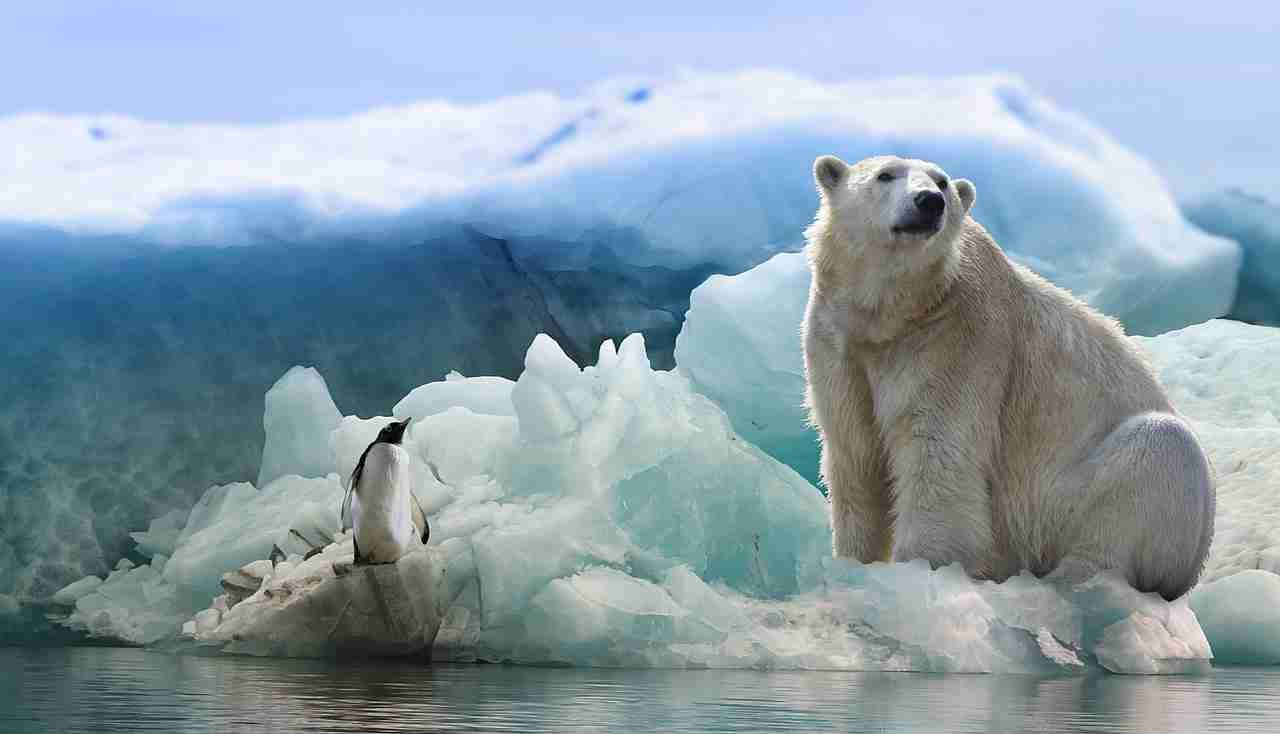
I am deeply concerned about global warming and how it negatively impacts our polar regions. My Arctic to Antarctica journey is not just an adventure, but a mission to generate awareness and initiate dialogue about climate change. Through my expedition, I will document, explore, and raise awareness about the environmental challenges facing these fragile ecosystems. From Greenland’s icy fjords to Antarctica’s pristine wilderness, I aim to inspire action for our changing planet. This journey will serve as a call to action. While my key objective is to raise awareness about climate change, I will also address some basic but very important questions such as “How much would a trip to the Arctic cost?”, “Arctic to Antarctica trip itinerary?”, Arctic to Antarctica distance, and essential things to consider before booking a trip to the Arctic or Antarctica.
Arctic to Antarctica is a 6 months project wherein I’ll travel from the artic region to Antarctica while exploring a few key countries of Latin America. The objective is to talk to locals, and scientists at ground zero to understand the impact of climate change on our world.
My journey begins in East Greenland, a region renowned for its towering icebergs and majestic fjords around the Sermilik area with Polar Quest. This is one of the most remote and pristine parts of the Arctic, where the raw power of nature is on full display. Sailing through these fjords, I’ll be surrounded by dramatic landscapes of steep mountains and massive glaciers that plunge into the icy waters below.
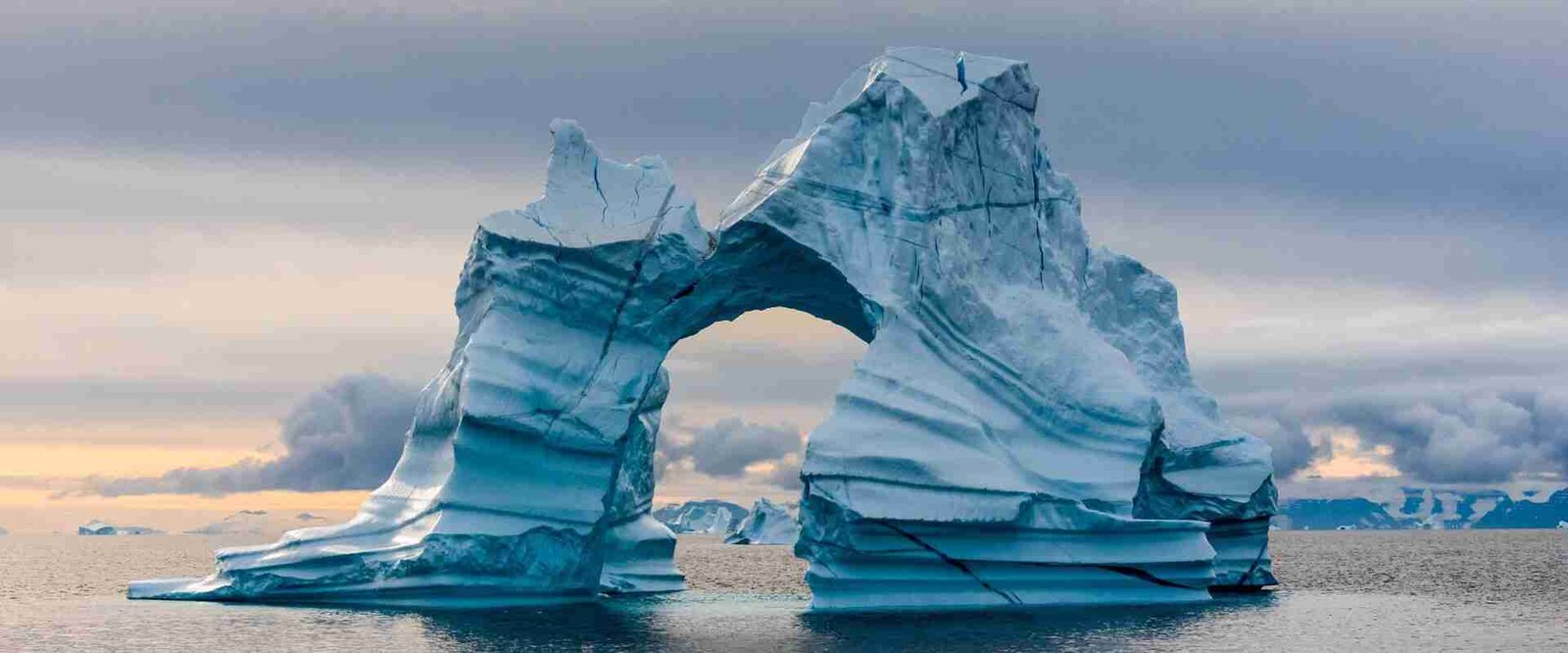
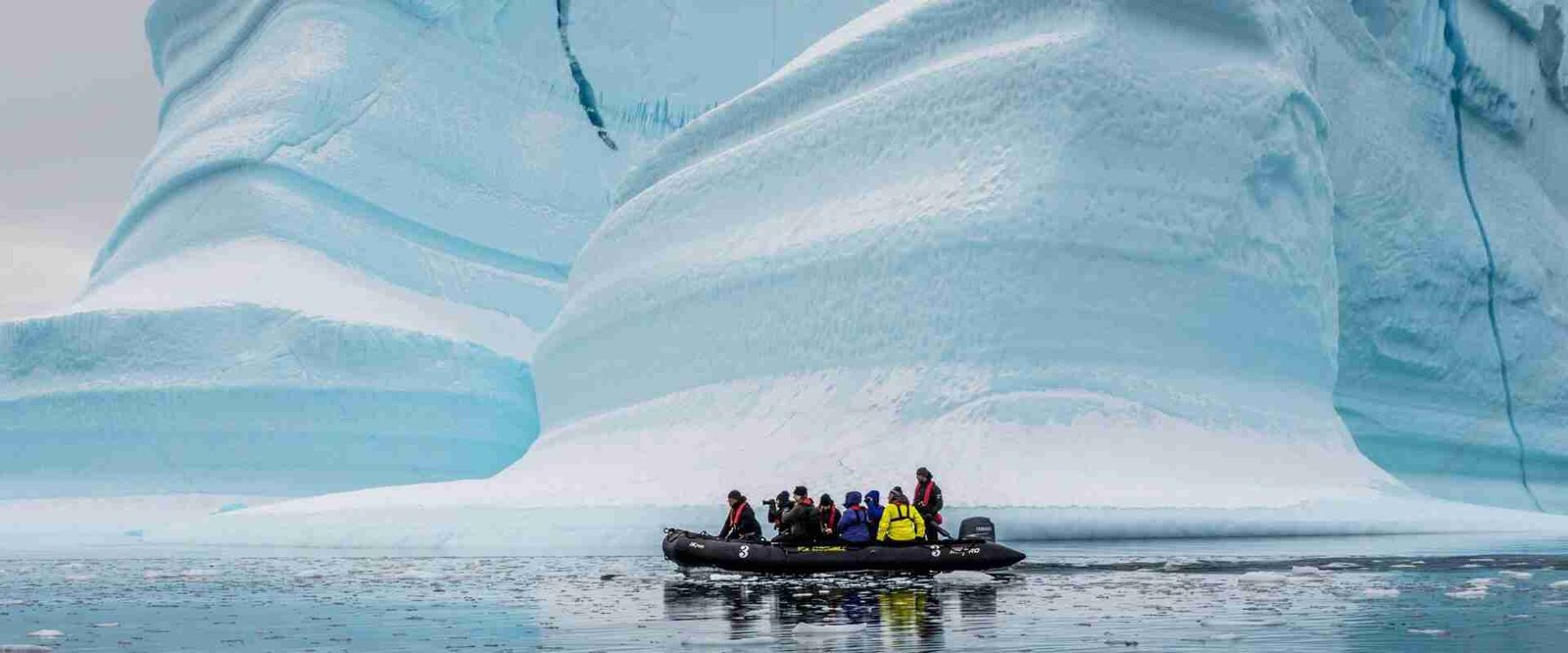
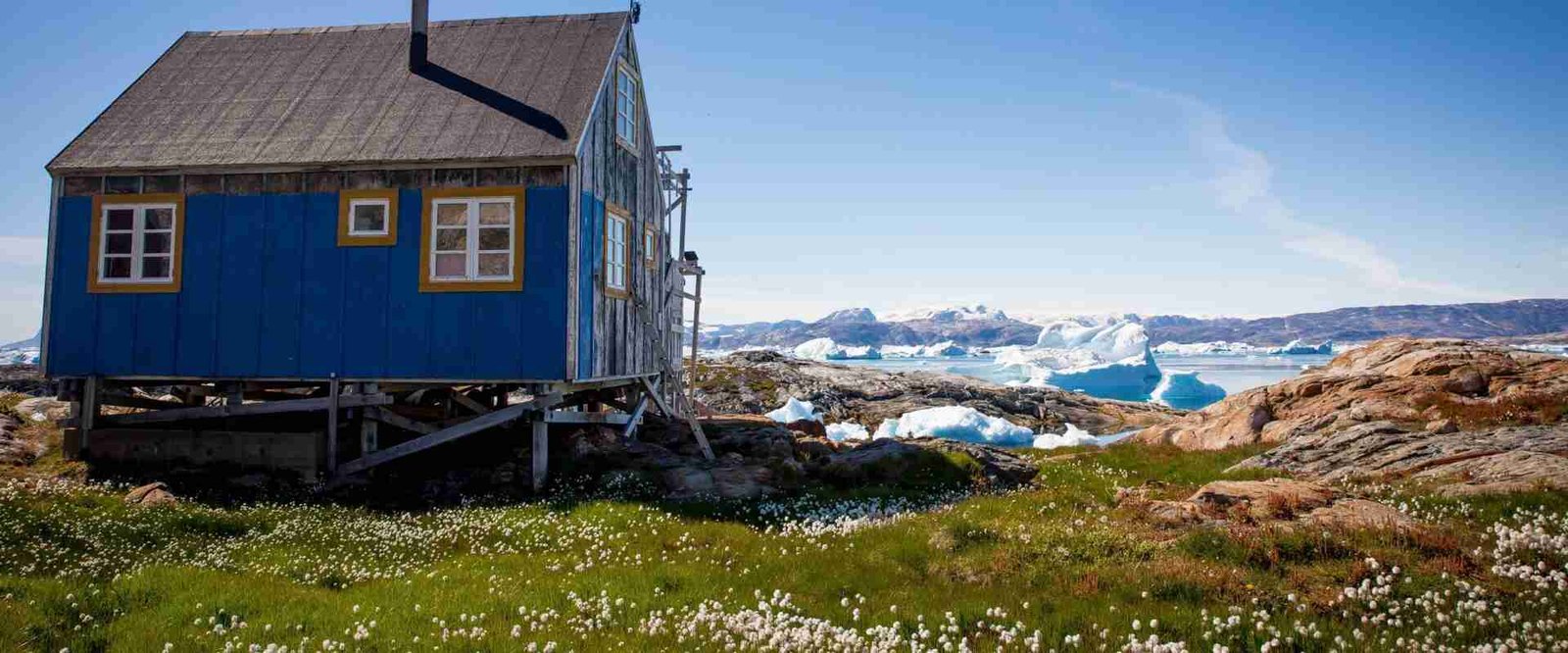
My East Greenland trip itinerary includes visits to isolated Inuit communities, where I will immerse myself in the rich cultural heritage of Greenland’s indigenous people. The Inuit have lived in harmony with this harsh environment for centuries, and their traditions and way of life offer invaluable insights into sustainable living. The wildlife here is equally impressive, with opportunities to see polar bears, seals, and a variety of bird species that thrive in these extreme conditions.
I have been told that September is the best time to visit Greenland, as the weather is relatively mild, and the landscape is painted with vibrant autumn hues. This time of year also offers the chance to witness the Northern Lights, adding another layer of magic to the Greenland trip itinerary. Greenland trip packages often highlight the incredible natural beauty of this region, but my focus will also be on the lesser-known cultural and environmental stories that need to be told.
After Greenland, I’ll travel to Iceland, a country that perfectly embodies the concept of fire and ice. My exploration will begin on the Snæfellsnes Peninsula, often called “Iceland in Miniature” because it encapsulates everything that makes Iceland unique. The peninsula is home to majestic glaciers, rugged mountains, and dramatic coastlines. I’ll explore black sand beaches, volcanic craters, and picturesque fishing villages, capturing this region’s awe-inspiring views and hidden gems.
Next, I’ll embark on the iconic Golden Circle tour of Iceland, which takes me through some of the country’s most famous natural landmarks. Þingvellir National Park, where the North American and Eurasian tectonic plates meet, offers a unique geological experience. The Geysir geothermal area is home to the Strokkur geyser, which erupts every few minutes, and the Gullfoss waterfall, where glacial waters cascade down a dramatic canyon.
My journey through Iceland will also include a two-day tour of the Jökulsárlón Glacier Lagoon, a place where massive icebergs float serenely in a crystal-clear glacial lagoon. This is one of the most stunning natural wonders of Iceland, offering a surreal and tranquil experience. I’ll also visit Vatnajökull glacier, Europe’s largest ice cap, which is a powerful reminder of the forces shaping our planet.
In October, I’ll leave the Arctic behind and journey into the tropical regions of Panama, Colombia, and Ecuador. These countries, rich in biodiversity and cultural heritage, present a stark contrast to the polar regions. In Panama, I’ll delve into dense jungles, exploring the unique flora and fauna that thrive in these tropical rainforests. Panama is also home to indigenous communities that have preserved their traditional ways of life for centuries, offering insights into sustainable living in a tropical environment.
In Colombia, I’ll traverse the Amazon and Pacific Coast, two of the most biodiverse regions in the world. The Amazon rainforest, often called the “lungs of the Earth,” is a crucial ecosystem that plays a vital role in regulating the planet’s climate. I’ll witness the incredible diversity of life here, from vibrant bird species to elusive jaguars.
Ecuador will be my final stop in this phase, where I’ll visit the Amazon and the Galápagos Islands. The Galápagos, a UNESCO World Heritage site, is famous for its unique species and the role it played in Charles Darwin’s theory of evolution. The biodiversity of these islands is unmatched, and I’ll have the opportunity to explore its volcanic landscapes and pristine beaches, observing species that are found nowhere else on Earth.

November marks the pivotal part of my journey as I reach the southernmost continent—Antarctica. The stark, otherworldly beauty of this frozen land is unparalleled. I’ll document the incredible wildlife that calls Antarctica home, from penguins and seals to the majestic whales that roam the Southern Ocean. The trip to Antarctica is not just about observing; it’s about understanding the delicate balance of life in this extreme environment and the impact of climate change on these fragile ecosystems.
The cost of a trip to Antarctica is often a topic of interest, and while it can be expensive, I am hoping the experience is going to be priceless. My tour organiser said the distance from Ushuaia to Antarctica may seem daunting, but the journey across the Drake Passage is an adventure in itself. The best time to visit Antarctica is in November when the ice starts to break up, and the wildlife is most active.
The final leg of my journey takes me through the stunning landscapes of southern Argentina and Chile. In Argentina, I’ll explore Ushuaia, the southernmost city in the world, and El Calafate, known for its proximity to the massive Perito Moreno Glacier. Chile’s Torres del Paine National Park offers some of the most breathtaking scenery in the world, with towering peaks, azure lakes, and vast expanses of untouched wilderness. The vibrant city of Santiago will provide a fitting contrast to the remote and wild places I’ve visited as I conclude my journey with urban exploration and cultural immersion. And, of course, wine tourism is on the cards.
This Arctic to Antarctica expedition is more than just a trip; it’s a journey that I hope will transform me inside and out. I aim to return as a better human being after traversing the extremes of our planet, connecting the dots between diverse ecosystems, cultures, and climates. It’s about understanding the interconnectedness of these regions and the global impact on their health. As I cover this incredible distance, my objective is not to answer the question “Which is better to visit, Antarctica or the Arctic?” but to inspire others to care, take action, and join the conversation about the future of our planet. And if I can inspire even one person to start living more sustainably, I’ll feel I have done something right. Something that my dad could be proud of. Here’s wishing myself a Bon Voyage from my Dad’s side.
Discover the truth about travelling to Russia and debunk popular myths. Explore the safety, ease of obtaining a Russia visa for Indians, affordability, and friendliness, highlighting why Russia is a top destination for 2024 and 2025.

On September 21, 1995, a devotee in Delhi sparked a frenzy by claiming a Ganesha statue miraculously drank offered milk. The phenomenon spread globally, triggering debates between science and belief. Rationalists attributed it to “surface tension” and “capillary attraction,” while then Central Minister Sitaram Kesari accused Hindu right-wing groups of exploiting the rumour for electoral gains. This incident, predating today’s social media age, exemplifies how fake news spreads faster than truth.
A 2018 study revealed fake news spreads six times faster than real news, amplified by the illusory truth effect. In the digital age, platforms like Facebook, Google, and Twitter inadvertently become conduits for misinformation, shaping public perception. Amid the cacophony of an America-centric narrative, Russia is often shrouded in conspiracy theories and portrayed as a perilous haven. To challenge these myths, as an Indian traveller, I travelled to Russia to distinguish fact from fiction and unveil the truth behind common misconceptions, all while navigating the process of obtaining a Russian visa for Indians.
Long before the Russia-Ukraine War, there was a prevalent belief that travelling in Russia was unsafe for tourists. Contrary to this misconception, my personal experiences challenged this myth. I utilised public transport, journeyed through big and small cities via overnight trains and buses, lodged in both five-star and budget hotels, explored local and luxury markets, dined in international and traditional cuisine restaurants, and even celebrated New Year with strangers in St. Petersburg. Throughout these experiences, not once did I feel unsafe.

Travelling in Russia mirrors the safety standards found in any European destination. While there might be a heightened presence of security personnel compared to Western countries, it paradoxically contributed to a sense of safety rather than the opposite.
Before I landed in Russia, I was made to believe that sailing through Russian waters would be challenging. But guess what? It was the quiet opposite. An easy Russia Visa for Indians through an e-visa process made it simple for Indians like me to make our Russian travel plans a reality. It took all it took to submit my passport copy, a $54 fee, and some straightforward documentation. In four days, I had the Russia e-visa in my inbox. Even a friend with a UK visa got his business visa within two days of submitting his application at VFS Delhi.
The ease of travelling continued with the visa. Booking hotels in cities like Moscow and St. Petersburg using my credit card through websites such as Ostrovok.ru and Booking.com was seamless.
The Aeroflot direct flight from Delhi to Moscow ensured I didn’t waste any precious time in layovers. I didn’t even have to bring Rubles with me. Exchanging my US dollars to Rubles was easy everywhere – hotels, markets, pubs, and restaurants. I could use the local cab service, Yandex, without any issue. Google Maps and Google Translate helped me navigate the Russian cities with ease. I had English-speaking guides, Daria, Timur, and Olga, who ensured I faced zero issues in the country.
While international credit cards currently don’t work in Russia, the country is working on introducing a prepaid tourist card that tourists could preload before arriving and use freely throughout the country. Hopefully, it will be launched in the first quarter of 2024.
Following the 2022 Ukraine-Russia war, more than 30 nations imposed sanctions on Russia in an attempt to cripple its economy and coerce a halt to the conflict. Despite these measures and ongoing inflation, the Russian economy displayed resilience, registering a robust 3.5% growth in 2023, with manufacturing seeing a substantial 7.4% increase. Profits from oil and gas exports continued to bolster Moscow’s economic stability, fostering the viability of ordinary life in Russia amid the conflict.
Despite the withdrawal of top global brands from Russia, goods remain accessible through the “parallel imports” scheme, covering electronics, Apple smartphones, furniture, watches, cars, ships, heating equipment, weapons, ammunition, and nuclear reactors. Notably, 1.1 million iPhones were imported into Russia during the first two quarters of 2023, a 15% increase from 2022.
To fill the void, look-alike brands emerged—Vkusno & Tochka succeeded McDonald’s, Krunchy Dream replaced Krispy Kreme, and Stars Coffee stepped in for Starbucks.
Contrary to expectations, life in Russia has persisted almost unchanged since February 24, 2022. I saw Christmas markets, malls, hotels, and airlines bustling with people. Restaurants were filled with patrons, and the streets were adorned with festive lights. Despite concerns about inflation, life remains relatively normal for Russians, as observed in the altered holiday plans of locals like Olga, who now chooses destinations like South Africa and Sri Lanka over Italy due to soaring flight costs – a consequence felt globally. Thus, aside from the universal impact of inflation, life in Russia stands resilient amid challenging circumstances.
Hollywood and Western press have consistently and overtly demonised the Russians as villains since the days of the Cold War. A myth, if widely accepted enough, can become real. Unfortunately, that has happened with Russians. As a result, most foreigners perceive Russians to be cold and unfriendly. Although I would say, it’s a difference in cultures. Upon arriving in Moscow, I noticed that Russians never smile back at you. At first, I thought they were rude by not responding to my smile. Later, my tour guide, Timur explained the reason behind this non-smiling culture,
People are not rude or unfriendly here; they are just being Russians. In Russian culture, showing a lot of emotion or smiling at strangers is considered odd and even impolite.
Over the next two weeks, I realised that not smiling at strangers doesn’t mean Russians are not helpful or kind. On the contrary, I saw the opposite. Russians are mostly warm, friendly, and quite funny once you break the ice! My local friend said Russians are like coconuts — hard on the outside but soft inside. Once you break the hard shell, you get everything! This is definitely accurate. Whether it was a salesperson at Izmailovsky Market in Moscow or a receptionist at a hotel in St. Petersburg, people were generally helpful. On an overnight sleeper train, an old couple who didn’t understand English even offered their chocolates to me. When I was short of the local currency, and the banks were closed due to New Year’s, my guide Olga helped me with the cash.

I agree. Russia is one of the coldest countries in the world, but it’s ‘never too cold’ if you’re appropriately dressed. I easily withstood the extreme temperature fluctuations from 4 degrees Celsius to -30 degrees Celsius without falling sick. Far from a nightmare, the Russian winter unfolded as a breathtaking spectacle. Clad in layers of warm clothing and armed with a cup of piping hot Christmas Drink and an explorer’s attitude, the freezing cold was easily manageable. And trust me, it was all worth it in the end! I had been to many Western Christmas markets but had never seen a more beautiful and bigger Christmas celebration than Moscow Season’s Journey to Christmas. The celebrations were not limited to bigger cities like Moscow or St. Petersburg; even small towns like Novgorod were decked up in festive spirit. The snowy landscapes with the colourful festive lighting looked even more surreal.
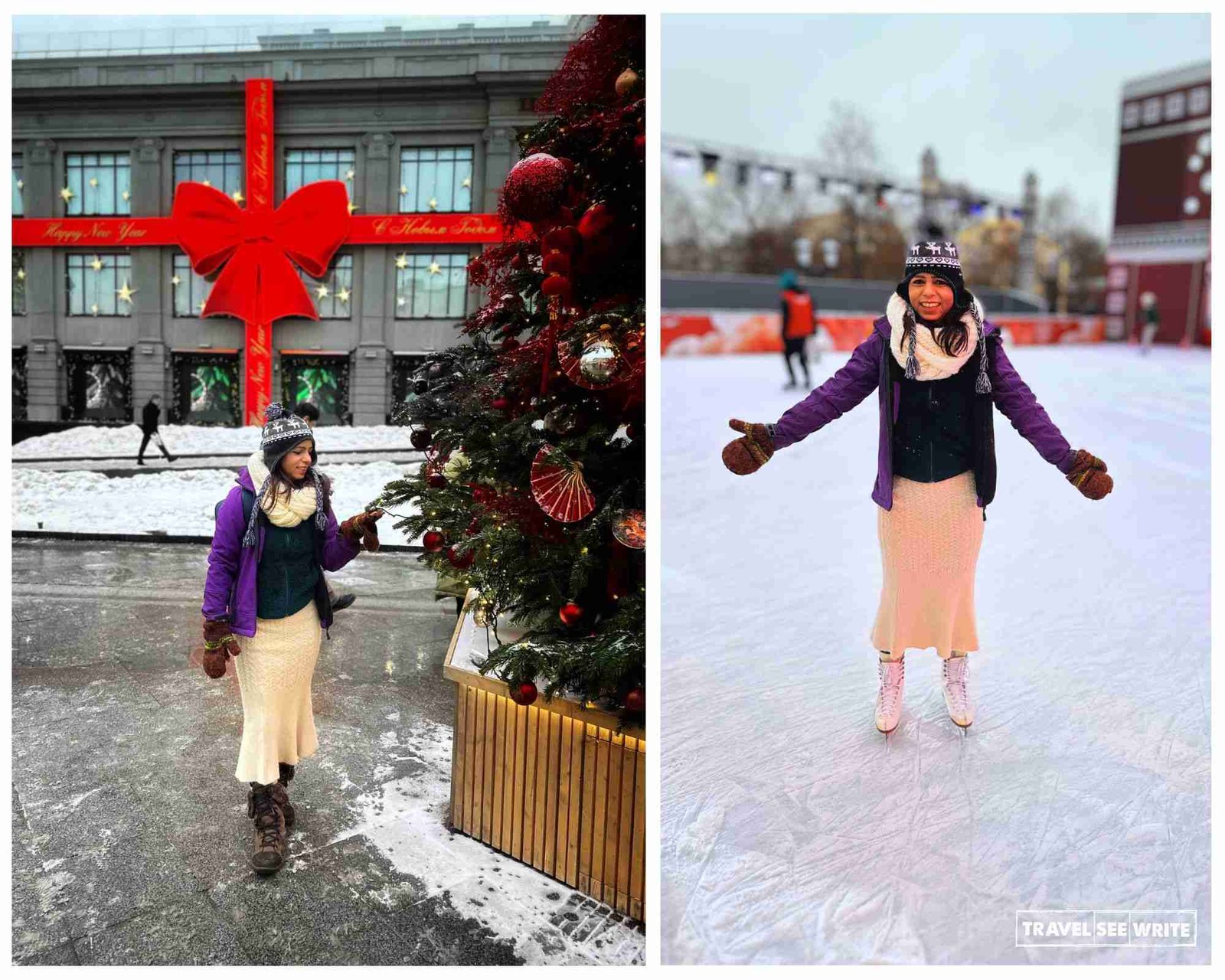
Russia and Vodka are often associated with each other, but a deeper truth lies beneath the stories of Vodka freely flowing during the Russian winter. While tradition may connect Russia with Vodka, tea is actually the de-facto national drink and the real antidote to the cold. Russian tea is also very healthy, with a rich history of traditions and variations. Many tea varieties exist in Russia, from traditional Samovar-served tea to modern fruit-based herbal teas. As a tea lover, I enjoyed trying every new flavour I could find and even had the opportunity to learn about authentic Russian tea traditions by attending the Moscow Tea Party at Tverskaya Square. Based on my experience, the culture of drinking Vodka in Russia is less prevalent than many believe.

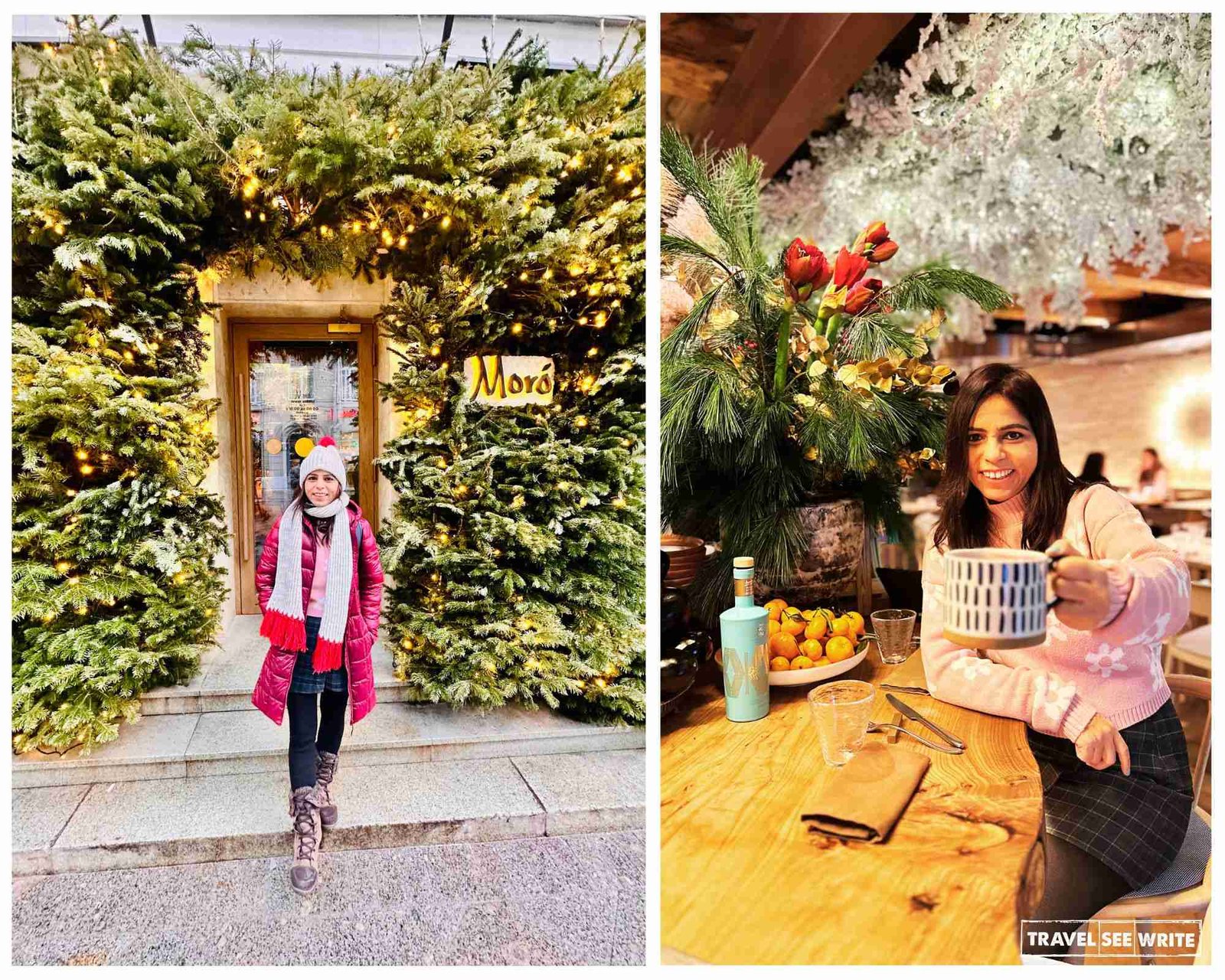
As a vegetarian, I was worried about finding enough food options in Russia. However, after exploring the culinary scene, I discovered that there are plenty of international and local restaurants that serve a variety of vegetarian dishes. For example, I enjoyed delicious Mediterranean cuisine at Moro, and I also tried meatless dumplings and pies at the Soviet retro cafe called “Varenichnaya № 1”. I even enjoyed a hot plate of Palak Paneer while wandering the streets of St. Petersburg. In reality, being a vegetarian in Russia is not as difficult as some may think.
Russia is often perceived to be expensive due to its cold climate and proximity to Nordic and Japanese countries. However, I was surprised to discover that everything in Russia is actually great value for money. For example, a glass of wine costs less than $3, and a three-course meal is rarely more than $15. The subway and metro fares are also very affordable, costing around 50 cents. Five-star hotels, like the Moscow Hilton Leningrad, offer rooms for as little as $80 in December. If you need to travel between Moscow and St. Petersburg, an overnight train journey costs only $95. Taxi fares are also reasonable and in line with global standards. Despite its initially cold appearance, Russia is actually a fantastic destination for budget-conscious travellers.

Russia is often misrepresented as a backward and impoverished country that is disconnected from the West. However, this image needs to be corrected. Russia has a robust technological infrastructure that has dispelled this stereotype. The public transport system and communication networks in Russia are highly efficient. The Moscow Metro is both a symbol of efficiency and heritage design. Similar to India’s Paytm and China’s WeChat, digital payments are thriving in Russia through Yandex.Money.
Although English may not be widely spoken, English music and culture are quite popular. Despite the bans on Instagram and Facebook, trends continue to flourish on various platforms that use VPNs. Interestingly, younger generations and cool kids prefer Telegram, while WhatsApp is an app for older people who connect with their grandparents.
Moreover, cities like Moscow and St. Petersburg have a European-like cityscape and function similarly to European cities.
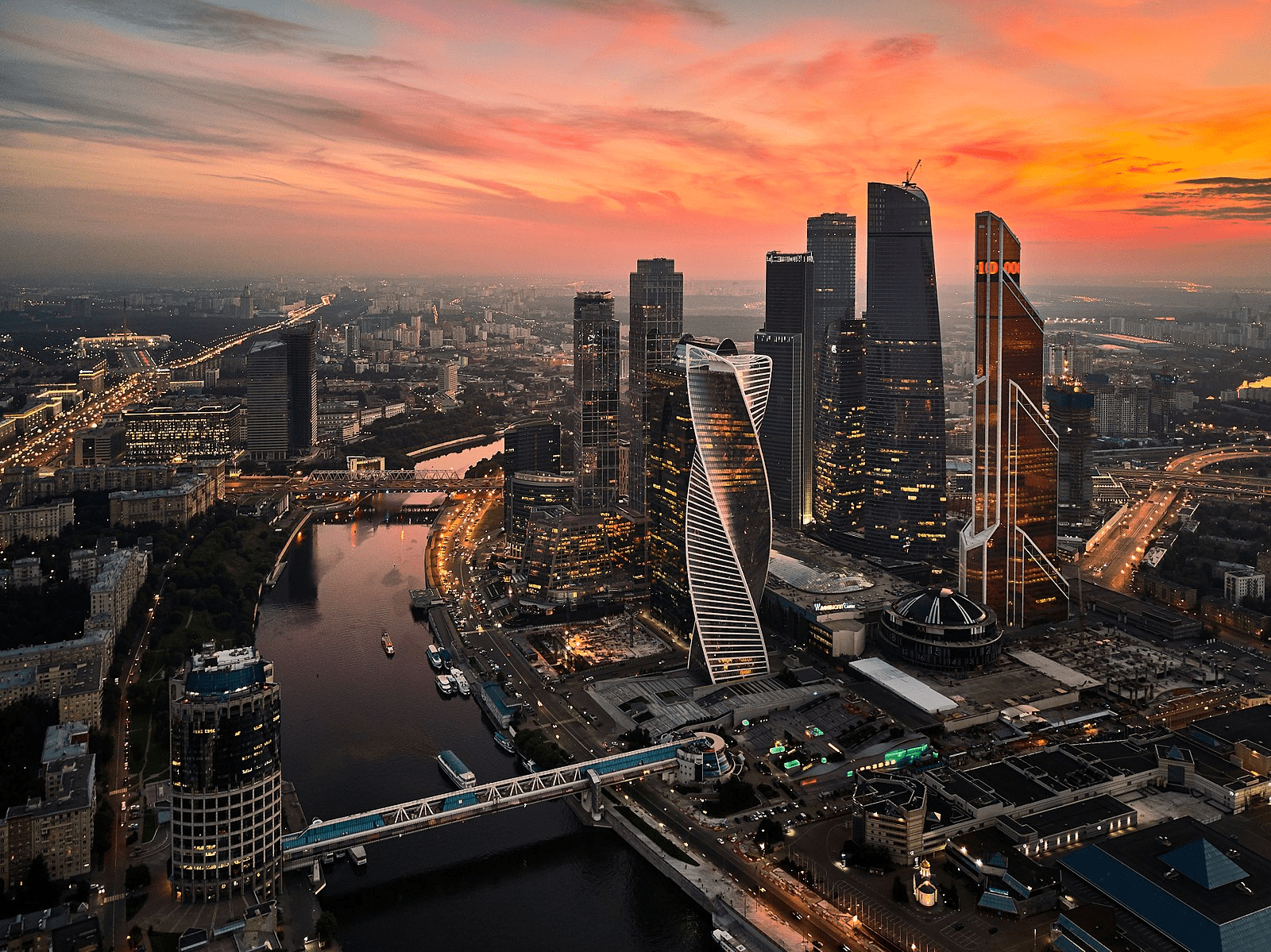
After spending two weeks in Russia, I realised that many of my preconceptions were false. The country is much more diverse and welcoming than I had expected. Russia is often misunderstood and reduced to stereotypes, but I discovered a multifaceted nation that invites exploration beyond cliches. As I separated fact from fiction, I came to see Russia as a captivating destination that can rewrite narratives and redefine perceptions.
Understanding Cultural Nuances
Don’t be too quick to judge people. Before travelling to the country, try to get acquainted with the Russian culture and people. Try to blend in. Don’t expect the people to change for you. As they say, behave like a Roman when in Rome. Russians are mostly warm, friendly, and quite funny once you break the ice!
Russia is also the cheapest destination for seeing the Northern Lights in 2024. In the far north, Murmansk offers an affordable alternative to expensive Scandinavian destinations. With lower travel costs, easy visa options, and incredible Arctic landscapes, Russia has become a top choice for Northern Lights enthusiasts seeking a budget-friendly adventure. Whether you choose a Russia tour package or travel independently, witnessing the Aurora Borealis in Russia offers an unforgettable experience without breaking the bank. Travelling to Russia is more economical than visiting any Scandinavian country such as Norway, Finland, Sweden, or Iceland due to the lower cost of living, accommodation, transportation, and Russian visa fees For Indians.
Yes, Russia is generally safe for tourists, with many experiencing safety on par with other European destinations. When considering Russian travel, safety is often the first concern. The question, “Is Russia safe for tourists?” lingers on many travellers’ minds. Despite common misconceptions, Russia remains generally safe for tourists who follow basic precautions, similar to any other large country. Following standard travel precautions, like avoiding isolated areas at night, will help ensure a smooth trip. And, I must say I felt the Russian tourist safety standards were relatively higher than in most European cities, especially in major cities like Moscow and St. Petersburg, where the police presence is more and crime rates are low.
While it’s true that Russia is dangerous in some regions, particularly near conflict zones, most tourist destinations are far from these areas. Tourists are advised to stay informed about current events and avoid regions with ongoing tensions. So, if you’re wondering, “Is it safe to travel to Russia now?” the answer is yes, provided you stay aware and prepared.
Looking ahead to 2024 and 2025, the travel landscape is expected to be much more inviting, with efforts from the Russian government to boost tourism, including launching a proposed Russia prepaid tourist card to simplify tourist transactions. While uncertainties can never be wholly eliminated, the country continues to work on improving its safety measures, making it a promising destination for travellers.
Obtaining a Russia Visa for Indians is straightforward, with Russia e-visa options available for many countries. The application process typically takes just a few days, making Russia an accessible destination for many travellers. While Indians do require a visa to enter Russia, if you live in any of the countries in the following list of countries, you are allowed to travel to Russia visa-free.

Contrary to popular belief, Russia is not as expensive as it is often perceived. Accommodation, food, and transportation are reasonably priced, making it an excellent destination for budget travellers. Even the cost of a Russia Visa For Indians is far cheaper than getting a Schengen Visa. And who can forget the torturous process of applying and living in fear of getting your Schengen visa rejected? On the contrary, getting a Russia e-visa is a far easier and peaceful process.
Moscow, the capital city, is often the first stop for many tourists. In terms of safety, Moscow ranks relatively well compared to other large cities worldwide. The question, “Is Moscow safe for tourists?” can generally be answered with a yes. Stick to well-lit areas at night, avoid protests or demonstrations, and always be aware of your surroundings.
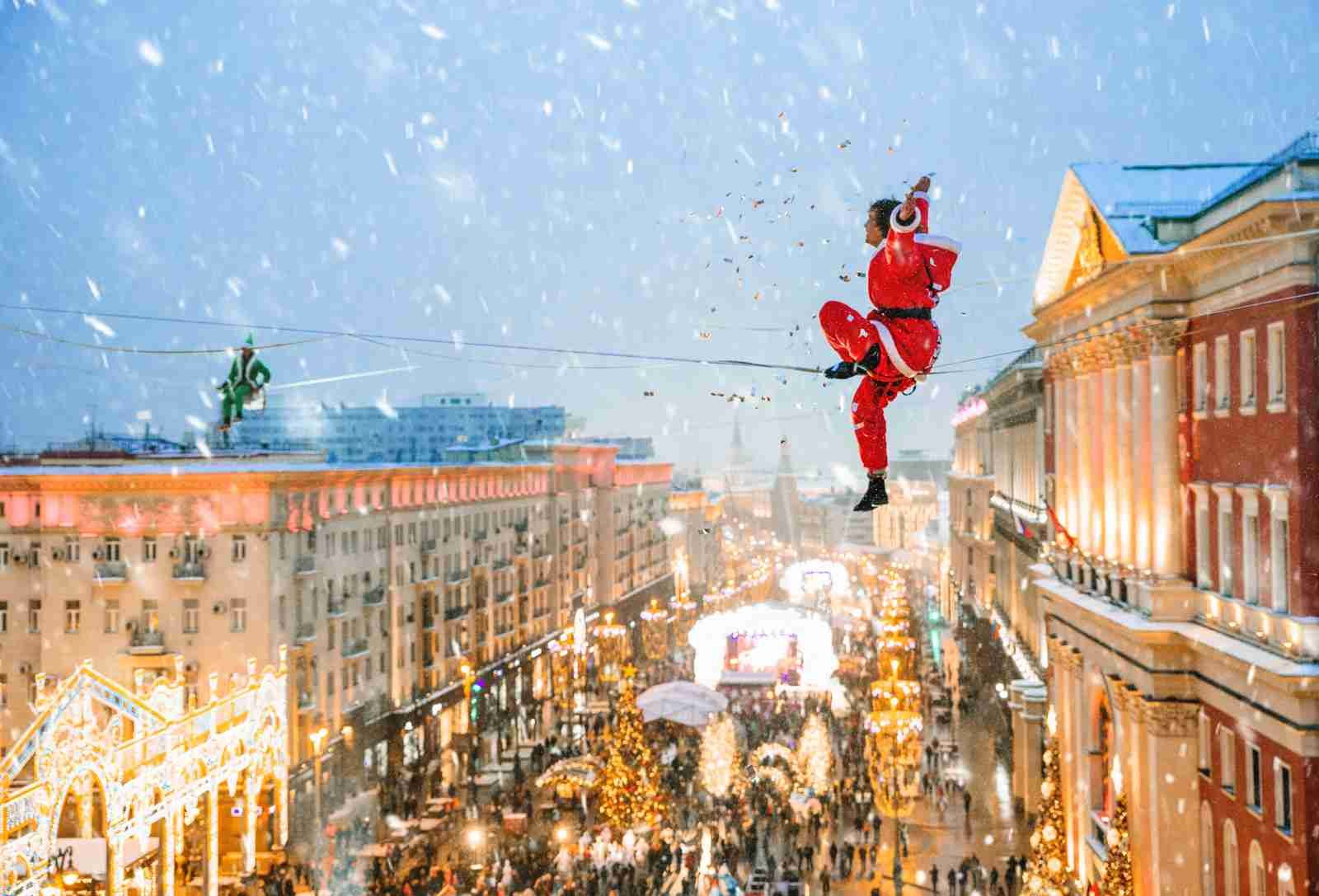
As you get ready for your Russia travel in 2024 – 2025, here are a few tips to keep in mind to ensure a memorable trip:
Looking to enjoy Onam Sadhya in Delhi? Discover the best places to experience this traditional Kerala feast with a variety of authentic dishes served on a banana leaf. From Padmanabham to Mahabelly, explore top spots and delivery options to celebrate Onam 2024 in Delhi NCR.
I am a North Indian, but I have started appreciating festivals from different parts of the country over the years. After all, there is no other country in the world as diverse as India, particularly regarding the multitude of religions and spirituality that compose the social fabric of our great nation. After Rakshabandhan and Janmashtami, another great festival is coming soon – ONAM. This festival celebrates the homecoming of the legendary King Mahabali and the appearance of the Vamana avatar of Lord Vishnu. While the epicentre for the 10-day Onam festival has traditionally been Kerala, it has now expanded to other regions. Also known as Thiru-Onam or Thiruvonam, it usually occurs between August and September in the Gregorian calendar. In 2024, Onam will be celebrated from September 6 to September 17. The main celebration, Thiruvonam, will take place on September 15, 2024.

As Onam 2024 approaches, I can’t help but fondly remember the Onam Sadhya I experienced in Kerala—a feast that made my tastebuds reach a food coma due to the diversity of flavours, textures, and colours. If you want to read more
Celebrated during the 10 days of Onam, this traditional meal on a banana leaf features a complex meal of 12 to 30 dishes, beautiful flavours, and meticulously prepared dishes. It is a joy everyone should experience. Luckily, you don’t need to travel to Kerala to enjoy the Onam Sadhya in Delhi NCR. Here’s a detailed guide to the best places to indulge in this festive feast, with options for delivery and what else to try while you’re there.
Onam Sadhya is a traditional and elaborate vegetarian feast consisting of a variety of dishes served on a banana leaf. This culinary extravaganza is a significant part of the Onam festival in Kerala, symbolising unity and diversity. The feast typically includes a host of flavoursome dishes like Avial, Thoran, Sambar, and Payasam, meticulously prepared to offer a burst of authentic tastes and textures. What makes Onam Sadhya special is not only its mouthwatering dishes but also the cultural significance attached to the feast, bringing people together in celebration and fostering a sense of belongingness. Experiencing Onam Sadhya is not just about the food; it’s a journey into Kerala’s rich heritage and traditions that leaves a lasting impression on your taste buds and soul.

My first Onam Sadhya in Kerala was a revelation. I was in Kumarakom that time and I had it on a Kerala backwaters houseboat on Lake Vembanad. The harmony of spices, the freshness of ingredients, and the careful preparation of each dish created an unforgettable experience. Every dish told a story—from the tangy Pulissery (a spiced buttermilk curry with a coconut base) to the sweet, comforting Payasam (a delicious South Indian pudding made with vermicelli, sugar, ghee, milk, nuts and raisins.) The experience was not just about food but about community, culture, and history. This spirit of Onam is what I find reflected in the best Onam Sadhya near me. Since not everyone can fly to Kerala to enjoy the Onam Sadhya, there are cheaper but equally good options in your own city.

Over the years, I have tried Onam Sadhyas at several restaurants in Delhi NCR. Here are the best places to enjoy Onam Sadhya in Delhi NCR in 2024.
Address: 54 Janpath Road, Connaught Place, New Delhi
Price: ₹1,100 per person


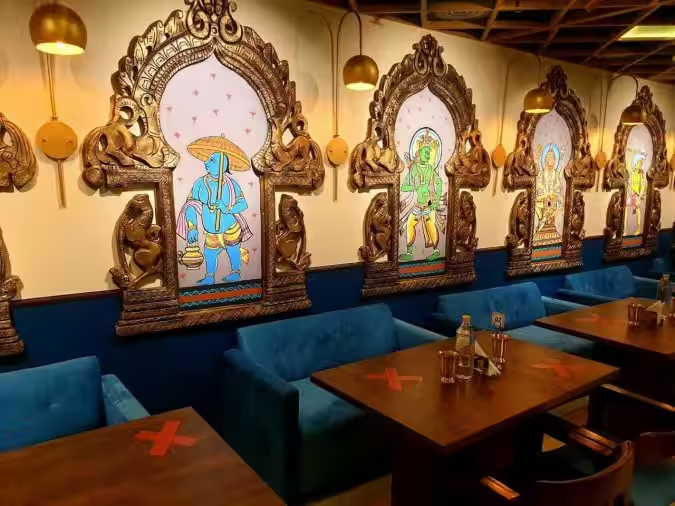
What Makes It Great: Padmanabham is known for its dedication to authenticity. The Onam Sadhya here offers 26 traditional items that capture Kerala’s festive spirit. The Avial and Thoran are prepared with meticulous detail, just like in a Kerala household. The variety of Payasams, especially the Parippu Payasam, is a must-try, providing a sweet and comforting end to this elaborate feast.
Can I Get Delivery?: Yes, through Zomato and Swiggy.
What Else to Try: Along with Onam Sadhya, try their signature Kerala Parotta with Egg Roast and the crispy Banana Chips with tea.
Address: MA-03, Ground Floor, The Relan House, DLF Place Mall, Saket, New Delhi
Price: ₹1,300 per person

What Makes It Great: Mahabelly offers a vibrant atmosphere and an authentic Onam Sadhya experience. The Sambar is rich, and the Kalan—a creamy, tangy dish made with raw banana and yoghurt—is particularly noteworthy. The staff is eager to explain each dish, making the experience both educational and delicious.
Can I Get Delivery?: Yes, delivery is available through Swiggy and Zomato.
What Else to Try: Don’t miss the Fish Moilee and Kerala-style Prawns, both of which are fan favourites.
Address: 3rd Floor, Ambience Mall, National Highway 8, DLF Phase 3, Gurugram
Price: ₹1,200 per person
What Makes It Great: Zambar’s Onam Sadhya is a grand affair with over 20 dishes, including standout items like Inji Puli and Rasam. The restaurant’s coastal-inspired interiors and serene ambience make it a delightful dining spot.
Can I Get Delivery?: Yes, Zambar offers delivery through food delivery platforms.
What Else to Try: Their Malabar Paratha with Mutton Curry is a must-try for meat lovers.
Address: 19, Block M, Greater Kailash 2, New Delhi
Price: ₹900 per person
What Makes It Great: Carnatic Cafe’s Onam Sadhya is more intimate but equally delightful. The Pachadi, a yoghurt-based side dish, stands out for its refreshing taste. The freshly fried Banana Chips add a lovely crunch to the meal, making it a cosy yet authentic experience.
Can I Get Delivery?: Yes, delivery is available through Swiggy and Zomato.
What Else to Try: The Rava Idli and Filter Coffee here are exceptional and should not be missed.
Address: 3, Jantar Mantar Road, Connaught Place, New Delhi
Price: ₹500 per person
Can I Get Delivery?: Delivery is unavailable, but the experience is worth visiting.
What Else to Try: If you’re visiting Kerala House on another occasion, try their traditional Kerala fish curry and steamed rice.
What Makes It Great: Kerala House is the go-to spot for a no-frills, authentic Onam Sadhya. The Olan, made with white pumpkin and coconut milk, is delicate and flavorful. Despite its modest setting, Kerala House serves one of the most authentic Onam Sadhyas in the city, offering a genuine taste of Kerala.
Address: ITC Sheraton, District Centre, Saket, New Delhi
Price: ₹2,500 per person
What Makes It Great: Dakshin at ITC Sheraton offers a luxurious take on the traditional Onam Sadhya. The Elaneer Payasam, made from tender coconut, is a highlight, offering a smooth texture and subtle sweetness that’s unforgettable. The elegant ambience and impeccable service make Dakshin a top choice for a refined dining experience.
Can I Get Delivery?: No, but the dining experience is well worth the visit.
What Else to Try: Along with the Sadhya, the Chettinad Chicken and Appam are exceptional here.

These restaurants stand out for their dedication to authenticity and ability to create an immersive experience reflecting Kerala’s cultural richness. From the careful preparation of each dish to the thoughtful presentation and ambience, these establishments bring the spirit of Onam to Delhi NCR. Their attention to detail, quality of ingredients, and passion for preserving tradition make these Onam Sadhyas truly special.
दिल्ली में ओणम कैसे मनाते हैं? Even if you’re miles away from Kerala, you can still celebrate Onam with the same enthusiasm in Delhi NCR. Start your day with Pookalam (flower rangoli) designs, attend cultural programs, if any are being organised, and indulge in a traditional Onam Sadhya at one of the recommended restaurants. The city’s diverse culinary scene ensures you can enjoy this festive meal in an environment that feels like home.

Given the popularity of Onam Sadhya, especially among those craving a taste of Kerala, it’s wise to book your table in advance. Whether you’re looking for an intimate setting, a family-friendly atmosphere, or a luxurious dining experience, Delhi NCR offers a variety of options to suit your preferences. Celebrate Onam 2024 in style, savouring the rich, traditional flavours of Onam Sadhya at these top spots in Delhi NCR.

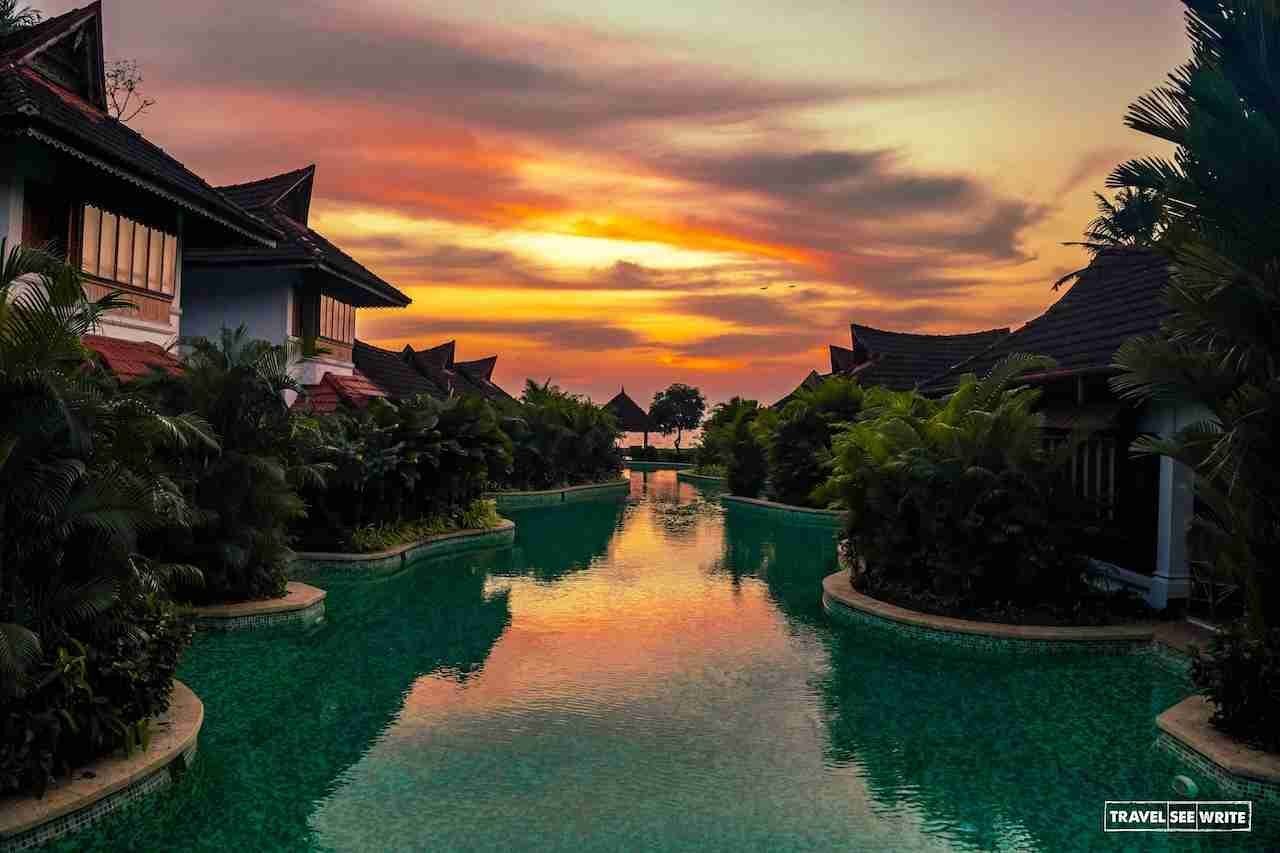
Explore the Kumarakom Backwaters in Kerala and the luxurious Kumarakom Lake Resort. In our ultimate Kerala guide, discover serene landscapes, vibrant culture, and must-see attractions.
Often, the promotional material of a destination appears a few notches more attractive than it looks in real life. But Kumarakom is an aberration. Instead, no amount of photoshopping and editing can make it look as pretty as it is in real. Being a globe trotter who has visited approximately a hundred countries and 25 states in India, I have seen my share of awe-inspiring natural beauty, unique indigenous cultures, luxurious stays, and locals that melt your heart away. But Kumarakom set gold standards of hospitality, and I have returned as a converted Malayali who can’t stop raving about God’s own country.
Imagine spending your vacation at a resort where King Charles of England celebrated his birthday or at a destination that the BBC has named “One of the Most Luxurious Holiday Destinations in the World.” Welcome to Kumarakom Lake Resort in Kerala, a place where luxury meets tradition amidst the serene backwaters of Lake Vembanad.
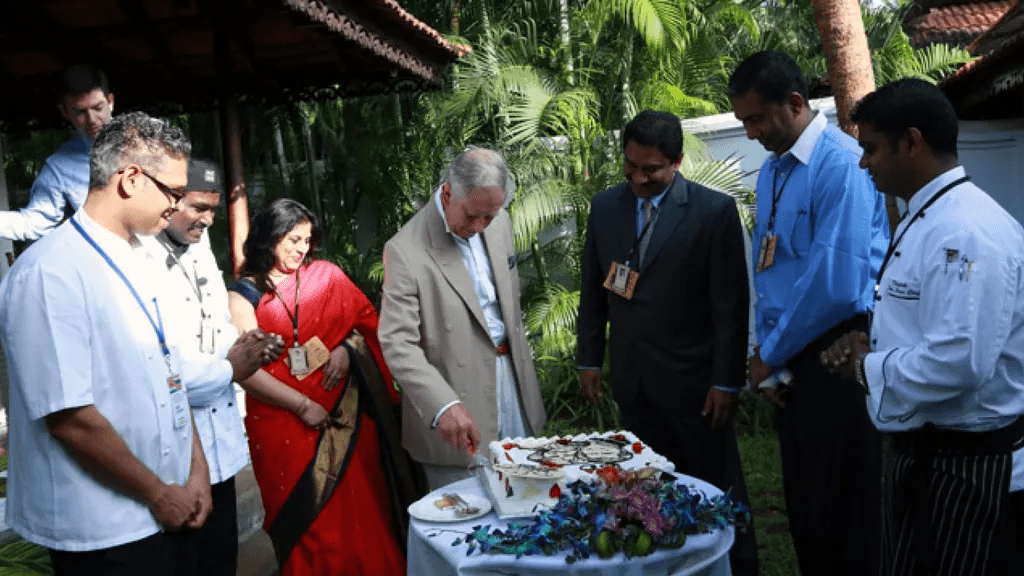
Kumarakom was the final stop on my South India journey, and it truly saved the best for last. After exploring Kochi’s vibrant culture and heritage and staying at another gem from the Paul John Hotels portfolio, I arrived at Kumarakom Lake Resort. This five-star luxury hotel in Kerala promised an unforgettable experience and delivered beyond my expectations.

Absolutely! Kumarakom is one of Kerala’s most enchanting destinations, offering a perfect blend of natural beauty, cultural richness, and luxury. The serene backwaters, lush greenery, and vibrant birdlife make it a must-visit for anyone seeking a tranquil escape from the hustle and bustle of city life. The experience at Kumarakom Lake Resort alone is worth the visit, but the village’s charm extends far beyond its luxurious accommodations. More information about visiting Kumarakom is available on the Kerala Tourism Website.
The best time to visit Kumarakom is from September to March. During these months, the weather is pleasant, with cool breezes and comfortable temperatures, making it ideal for exploring the backwaters and enjoying outdoor activities. The monsoon season (June to August) also has its own charm, with the rain enhancing the greenery and creating a serene atmosphere, though it might limit some outdoor activities.
Two to three days are perfect for soaking in the beauty and luxury of Kumarakom. This duration allows you to enjoy the tranquil backwaters, explore the local culture, indulge in the resort’s amenities, and relax without feeling rushed. Extending your stay to four days would be ideal if you want to include more activities like bird watching, houseboat rides, or nearby excursions.
Kumarakom offers a variety of activities that cater to both adventure seekers and those looking for relaxation. Here are my reasons why Kumarakom backwaters should be on your bucket list
The houseboat cruises on Kumarakom’s backwaters are legendary. Drifting along the tranquil waters in a traditional Kettuvallam (houseboat), surrounded by the beauty of Lake Vembanad, is an experience like no other. This is a must-do activity that provides a unique perspective of the region’s natural beauty. Whether it’s a day cruise or an overnight stay, the houseboat experience offers a unique way to explore the scenic waterways while enjoying the comfort of a floating home.
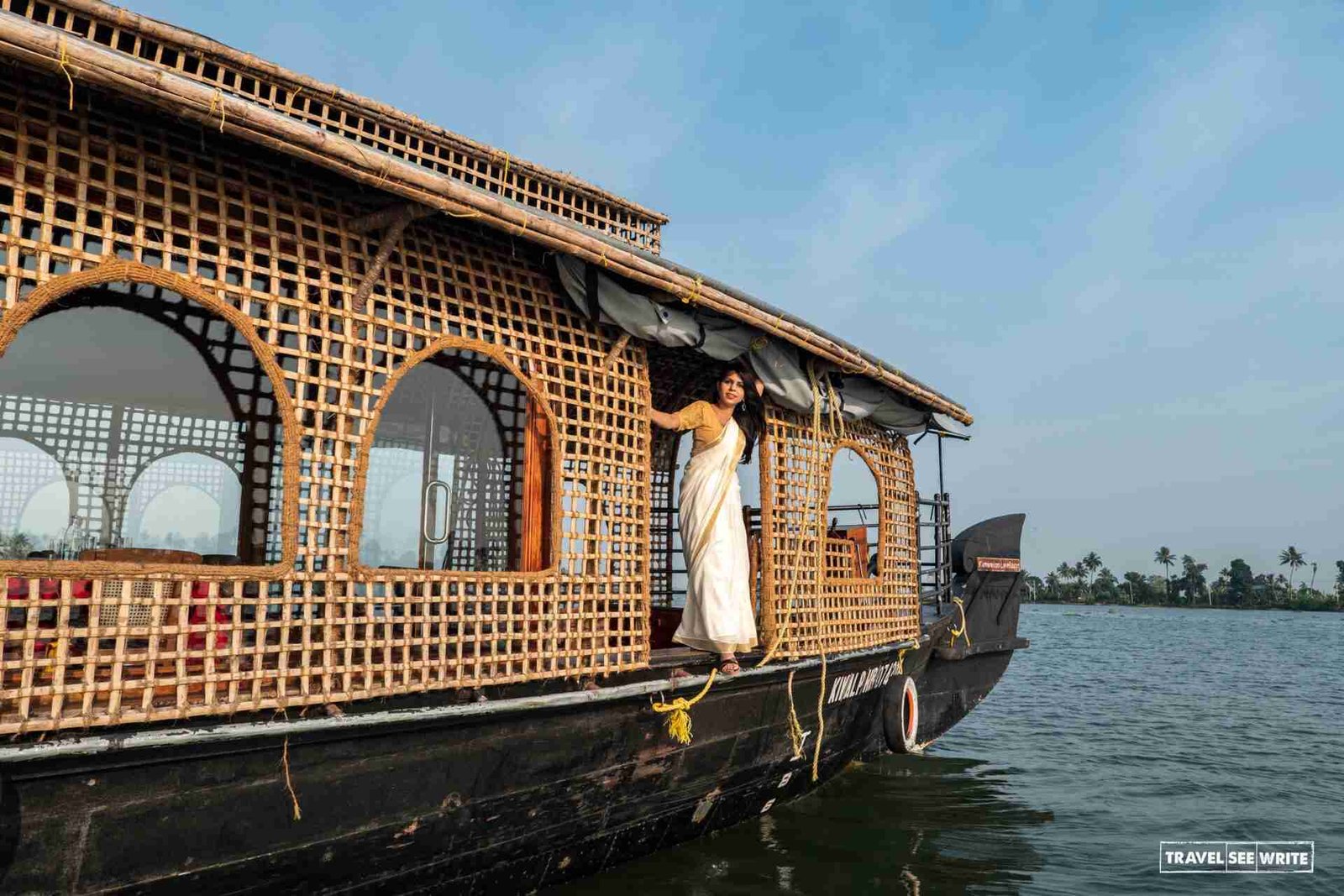
I’ve witnessed stunning sunsets worldwide, but the Kumarakom sunset views rank among the best. As the sun dips below the horizon, the sky is painted in hues of orange, pink, and purple, reflecting off the calm waters of Lake Vembanad. You won’t want to miss a moment of pure magic. You can enjoy it from the resort’s sunset cruise or the lake’s shore.
Kumarakom is also a place where you can learn and experience the traditional fishing techniques used by the local fishermen. You can join them on a fishing expedition in the backwaters, where they will teach you the methods passed down through generations. This experience not only connects you with the local culture but also offers a unique way to enjoy the backwaters.
A short drive from Kumarakom, the Thazhathangady Juma Masjid is one of the oldest mosques in India, dating back over a thousand years. The mosque is renowned for its wooden carvings and traditional Kerala-style architecture. It’s a fascinating place to visit to appreciate the region’s rich cultural and religious heritage.
If you’re a nature lover, a visit to the Kumarakom Bird Sanctuary is a must. Spread over 14 acres, the sanctuary is home to a variety of local and migratory birds. Walking through the sanctuary’s lush greenery while spotting birds like herons, egrets, and kingfishers is a delightful experience.
For those craving a bit of adventure, Kumarakom offers plenty of options. Engage in activities like kayaking, canoeing, and fishing in the backwaters. The region is also a haven for bird watchers, especially at the Kumarakom Bird Sanctuary, where you can spot a variety of migratory and native birds. These activities allow you to immerse yourself in Kumarakom’s natural beauty while getting your adrenaline fix.
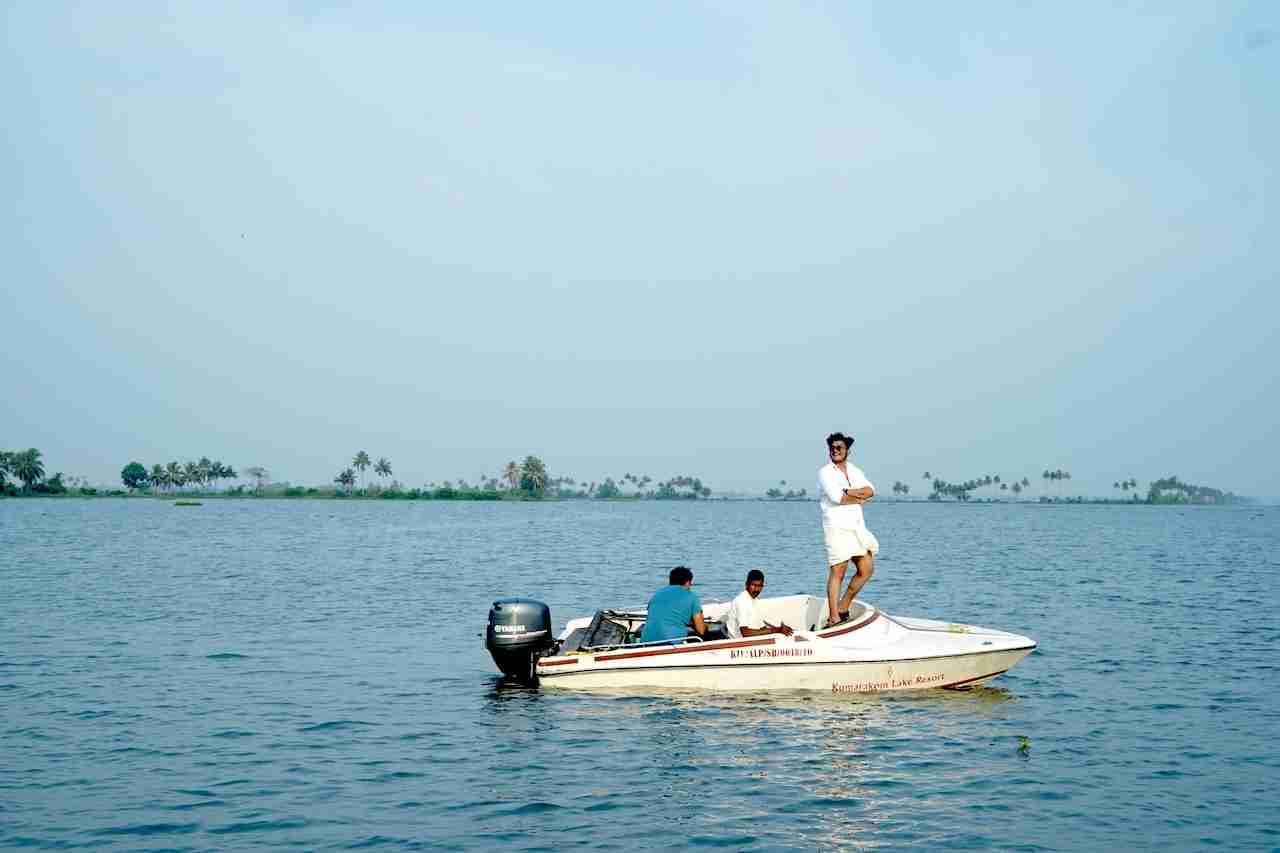
Engage in local activities such as pottery, weaving, and traditional Kerala dance performances offered by the resort.
No trip to Kumarakom is complete without indulging in a traditional Kerala Ayurvedic massage. Rooted in ancient practices and using natural ingredients, the massages here rejuvenate both body and mind. Relax and rejuvenate with a traditional Ayurvedic massage at the resort’s Ayurmana. The treatments here are designed to soothe the body and mind, using ancient techniques and natural ingredients. Whether you’re staying at a luxury resort or visiting a local Ayurvedic center, this experience in Kumarakom is deeply restorative.
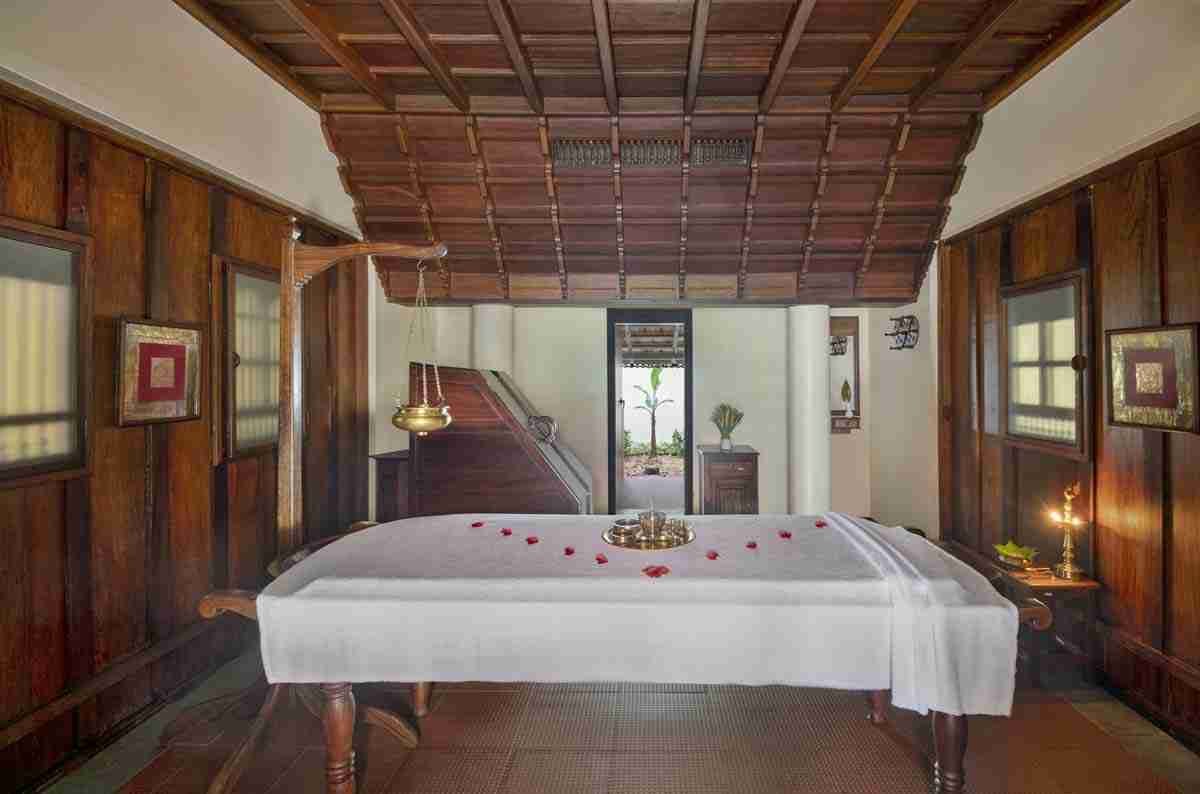
Kumarakom is a haven for food lovers, especially those with a penchant for seafood. The local cuisine, rich in flavours and spices, offers an authentic taste of Kerala. From the traditional Kerala Sadhya served on a banana leaf to freshly caught fish cooked in coconut milk, every meal is a culinary delight that reflects the region’s rich heritage. One of my favourite experiences was enjoying a traditional Sadhya meal prepared and served on the houseboat itself.
The Kumarakom Lake Resort is the top choice for an unforgettable stay in Kumarakom. Here’s why:
Located on the serene banks of Lake Vembanad, the resort offers stunning views of the backwaters and is surrounded by lush greenery. It’s the perfect place to unwind and experience the natural beauty of Kerala.
The resort is a heritage property that beautifully blends Kerala’s traditional architectural charm with modern luxury. The attention to detail in preserving the cultural elements while offering top-notch amenities makes it a unique destination. Wondering what is the history of Kumarakom Lake Resort? It’s a tale of tradition blended with luxury, a journey through time in the heart of Kerala.
The resort offers various accommodation options, each reflecting the traditional Kerala architecture with modern comforts. From Heritage Villas to Meandering Pool Villas, every room is designed to provide the utmost luxury and relaxation.
The resort is equipped with world-class facilities, including an infinity pool, a well-equipped gym, and an Ayurvedic spa. The lush gardens, tranquil backwaters, and luxurious amenities create a perfect relaxing environment.

The resort offers several dining options, including Ettukettu and Vembanad Seafood Bar, where you can enjoy a variety of cuisines in a serene setting. The resort also has a pool pavilion and a thattukada (traditional tea shop) for lighter fare.
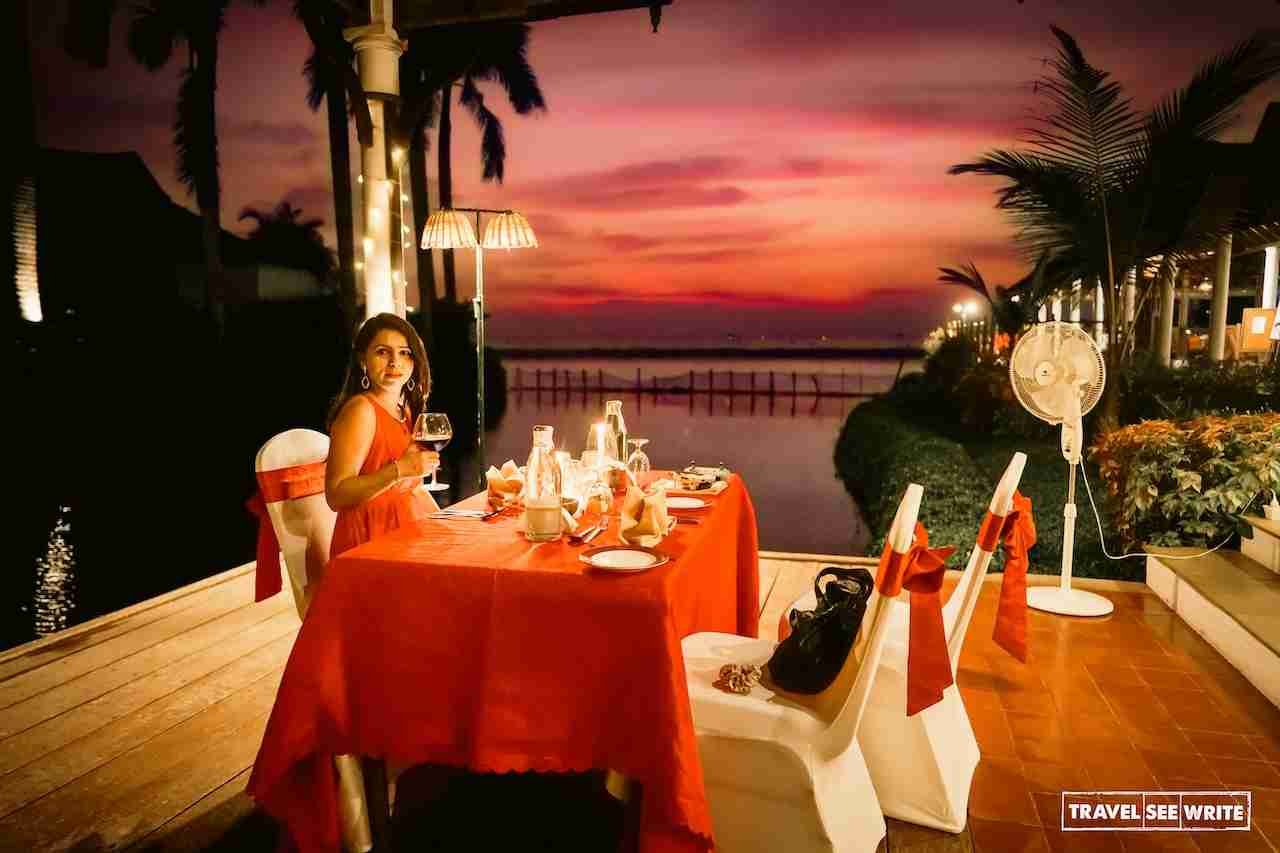
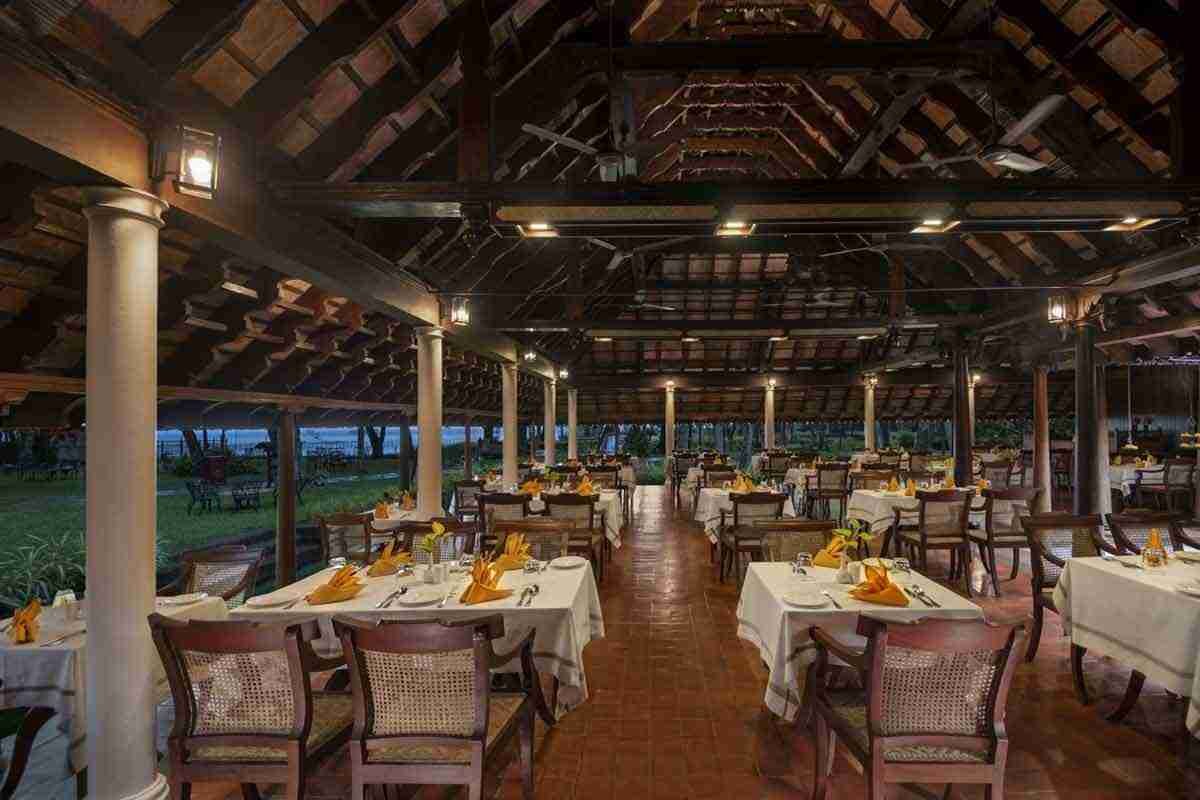


The Kumarakom Lake Resort price list varies depending on the type of accommodation and the time of year. Typically, a stay can range from moderate to high-end pricing, reflecting the luxury and unique experience offered.
Here’s a video about my experience of staying at Kumarakom Lake Resort in Kerala: I stayed at one of the most Luxurious resorts in Kerala Backwaters, and this is what I found
If you’re looking for other stay options, Kumarakom Resorts offers a variety of accommodations, from budget-friendly homestays to mid-range resorts. Each stay promises warm hospitality and a memorable experience. If you are looking for the best resorts in Kumarakom, besides Kumarakom Lake Resort, you could try Taj Kumarakom Resort & Spa, Kerala, Rhythm Kumarakom, Niraamaya Retreats Backwaters And Beyond, Coconut Lagoon, CGH Earth, Lakesong Resort, and Gokulam Grand Resort & Spa, Kumarakom.
The Kumarakom trip cost from Delhi can vary depending on the type of accommodation and the activities you choose. On average, a luxurious stay at Kumarakom Lake Resort, including flights and activities, can range from ₹60,000 to ₹1,00,000 per person for a 3-4 day trip. Budget travellers can also find more affordable options, but experiencing the luxury of Kumarakom Lake Resort is truly worth the splurge.
Apart from dining at the resort, you can explore local eateries in Kumarakom. Grannery Restaurant and Baker’s Gourmet House offer a taste of authentic Kerala cuisine, especially their seafood dishes. Don’t miss trying the traditional Kerala Sadhya, a vegetarian feast served on a banana leaf.
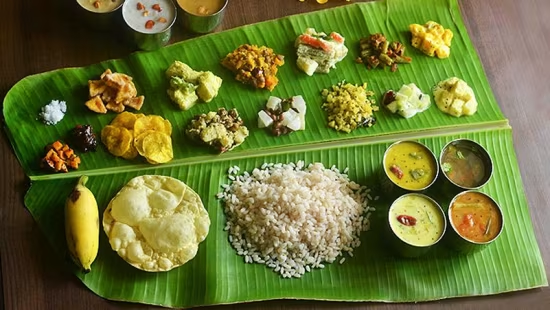
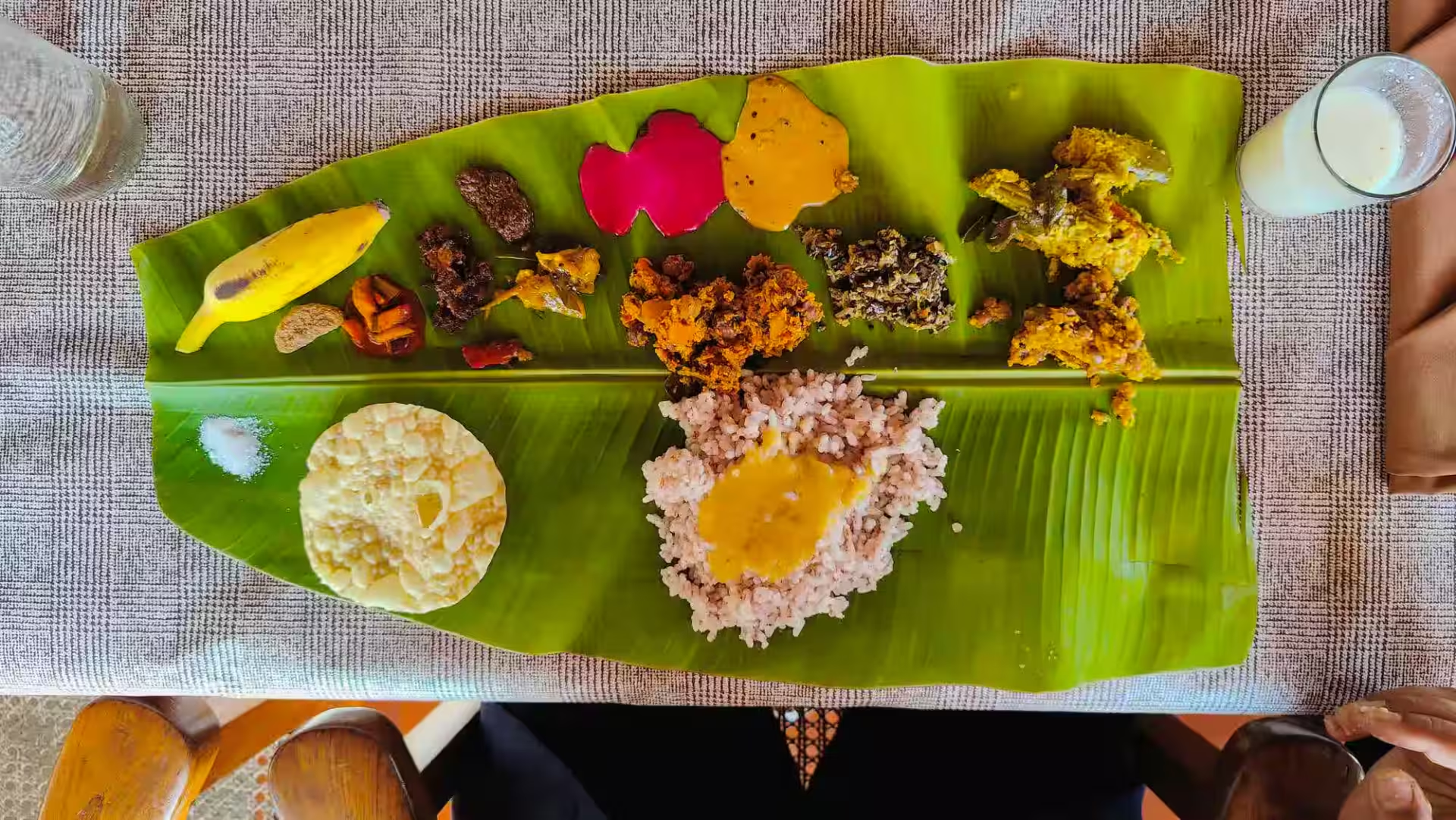
How to reach Kumarakom? Kumarakom is well-connected to major cities in Kerala, and there are multiple ways to reach here.
Getting Around Kumarakom is easy, with local taxis, auto-rickshaws, and boats available to explore the area.
Kumarakom Lake Resort has received numerous accolades for its hospitality, luxury, and unique experiences. The resort has garnered positive reviews on various platforms for its excellent service, beautiful location, and attention to detail. You can check Kumarakom Lake Resort reviews on TripAdvisor, Google, or other travel platforms to get a better idea of what to expect during your stay.
For a visual feast, don’t forget to browse through Kumarakom Lake Resort photos, which showcase the stunning architecture, serene backwaters, and luxurious amenities that await you.
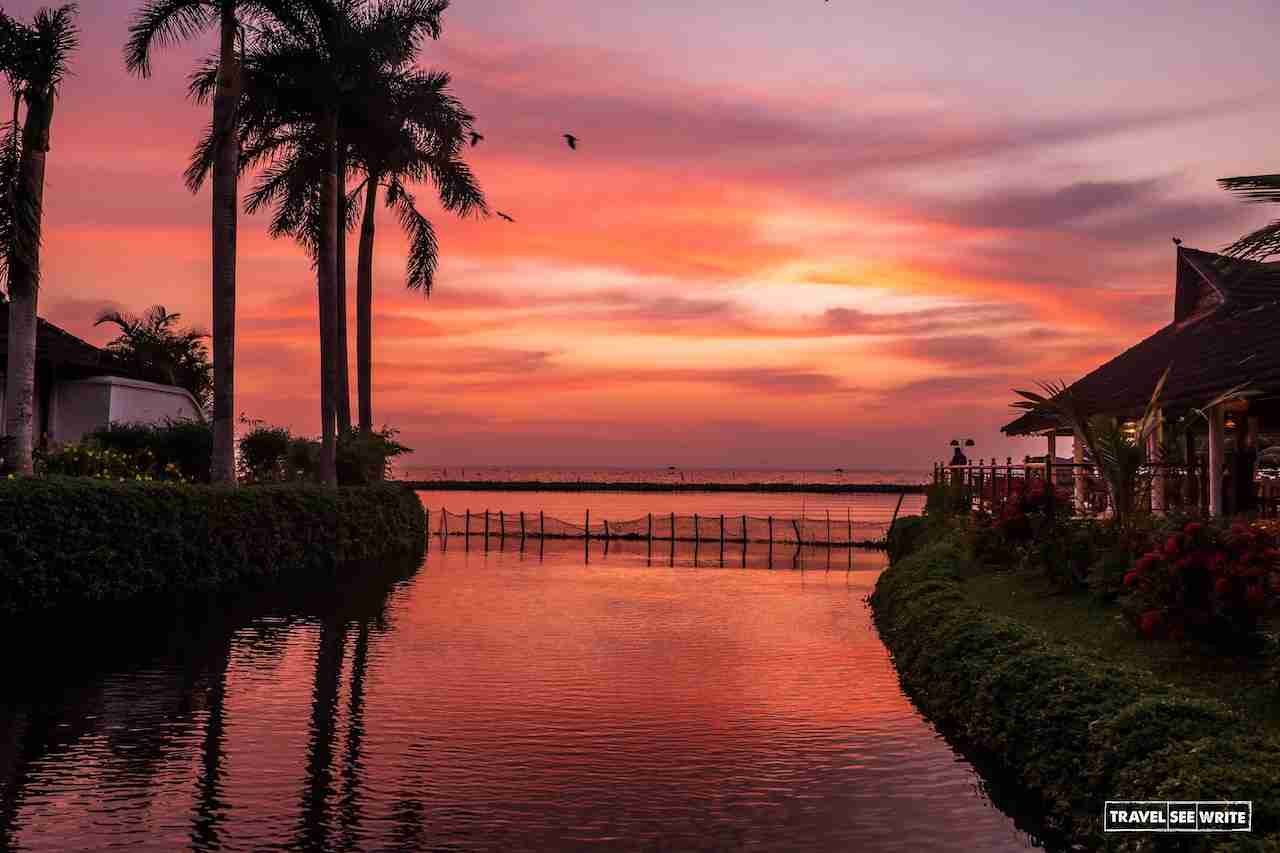
For inquiries and bookings, you can reach the resort at their Kumarakom Lake Resort contact number: +91-481-2524900 or visit their website. The resort is owned by Paul John Resorts and Hotels, a group known for its luxurious properties and exceptional service.
If you’re curious about who owns Kumarakom Hotel, it’s part of the prestigious Paul John Resorts and Hotels group. This group owns and manages luxury properties across India, such as Paul John Bangalore, Coorg Wilderness Resort, and Kochi.

If you have more time, consider exploring nearby destinations such as Alleppey, famous for its houseboat cruises, or Thekkady, known for its wildlife sanctuary. These destinations offer even more of Kerala’s natural beauty and cultural richness.
If you found this guide helpful, don’t forget to save it for later or share it with someone planning a trip to Kerala. Kumarakom is a destination that offers a perfect blend of luxury, culture, and natural beauty—a true paradise in God’s Own Country.
Discover Buranskhanda, a hidden gem in Uttarakhand, perfect for a serene weekend getaway from Delhi, which is ideal for couples and families. Explore nature, stay in luxury accommodation, and visit nearby attractions.
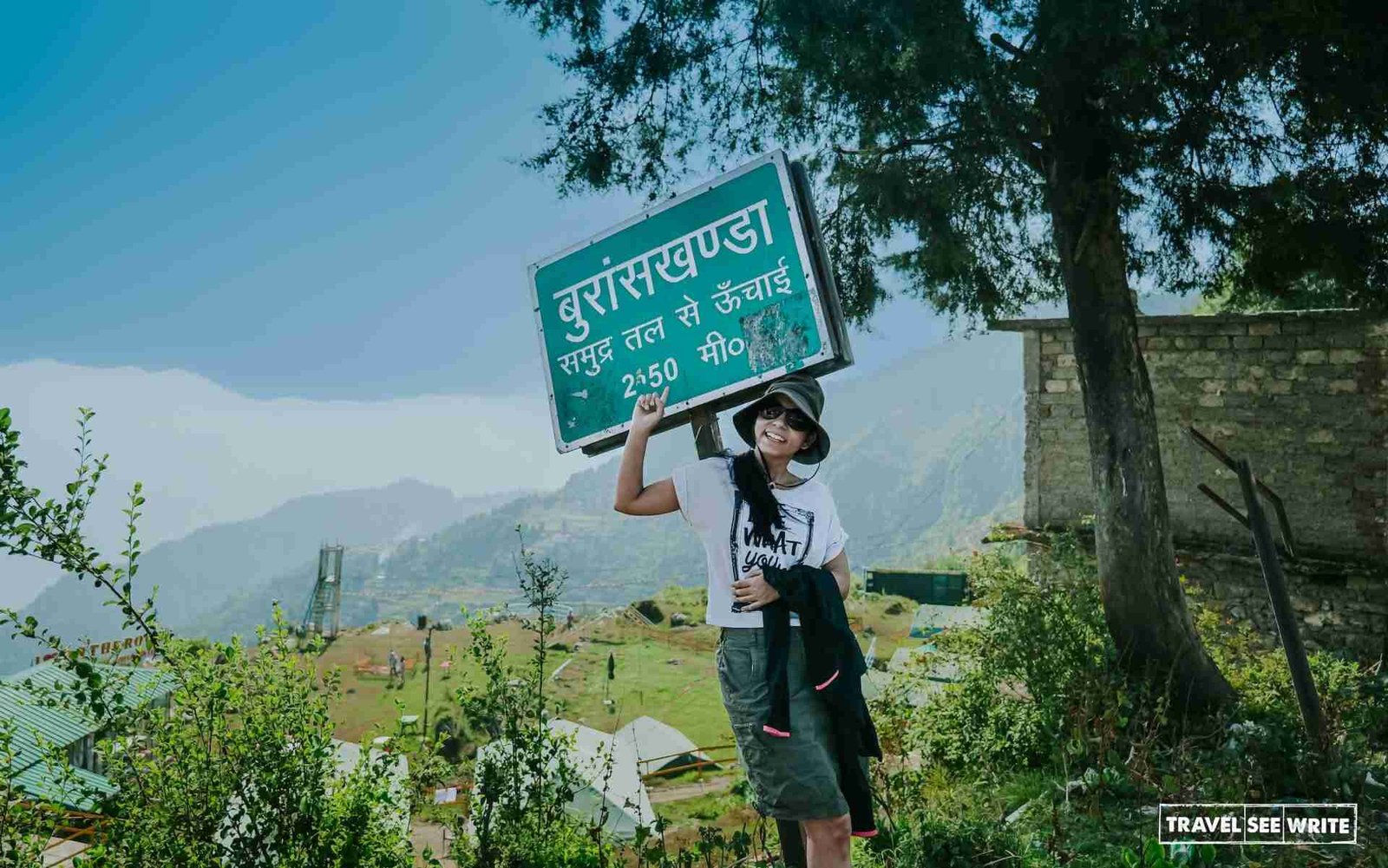
If you’re someone like me who has been overwhelmed by the chaos of big city life and is looking for a quick escape from Delhi for a weekend getaway, you have reached the right place. On the one hand, I wouldn’t say I like staying in Delhi because of the terrible weather, pollution, traffic, and the general arrogance of people. Still, on the other hand, I feel blessed to stay in a city close to many beautiful and unique destinations that are ideal for perfect weekend getaways from Delhi. While I have visited most of the hill stations near Delhi, such as Shimla, Thanedar, Kasauli, Chail, McLeodGanj, Dalhousie, Mussoorie, Dehradun, Kanatal, Lansdowne, Nainital, Bhimtal, and many more, I recently stumbled upon Buranskhanda, a hidden gem nestled in the serene hills of Uttarakhand.
Just 5 km before Dhanaulti, 26 km from Mussoorie, 60km from Dehradun and 300 km from Delhi, this place promised a peaceful retreat away from the crowds—a promise it more than delivered. In this article, I’ll share my weekend getaway journey from Delhi, my reasons why Buranskhanda is an ideal destination for a quick weekend trip, a property review of where I stayed – Barefoot Bungalow, what to see in and around Buranskhanda, where to go next and practical tips you need to keep in mind while planning short weekend trips from Delhi to nearby weekend getaways.
I started my journey from Delhi early, around 7 AM, hoping to avoid the usual traffic snarl-ups. I took the following route from Delhi to Buranskhanda:
Delhi – Meerut – Muzaffarnagar – Roorkee – Haridwar – Dehradun – Mussoorie – Buranskhanda.
While Google Maps estimated it would take 7 hours and 26 minutes to cover the 348 km from my home to Burans Khanda, I took over 12 hours due to two pitstops and colossal traffic jams. I wasn’t in a rush, so I drove at a relaxed pace.
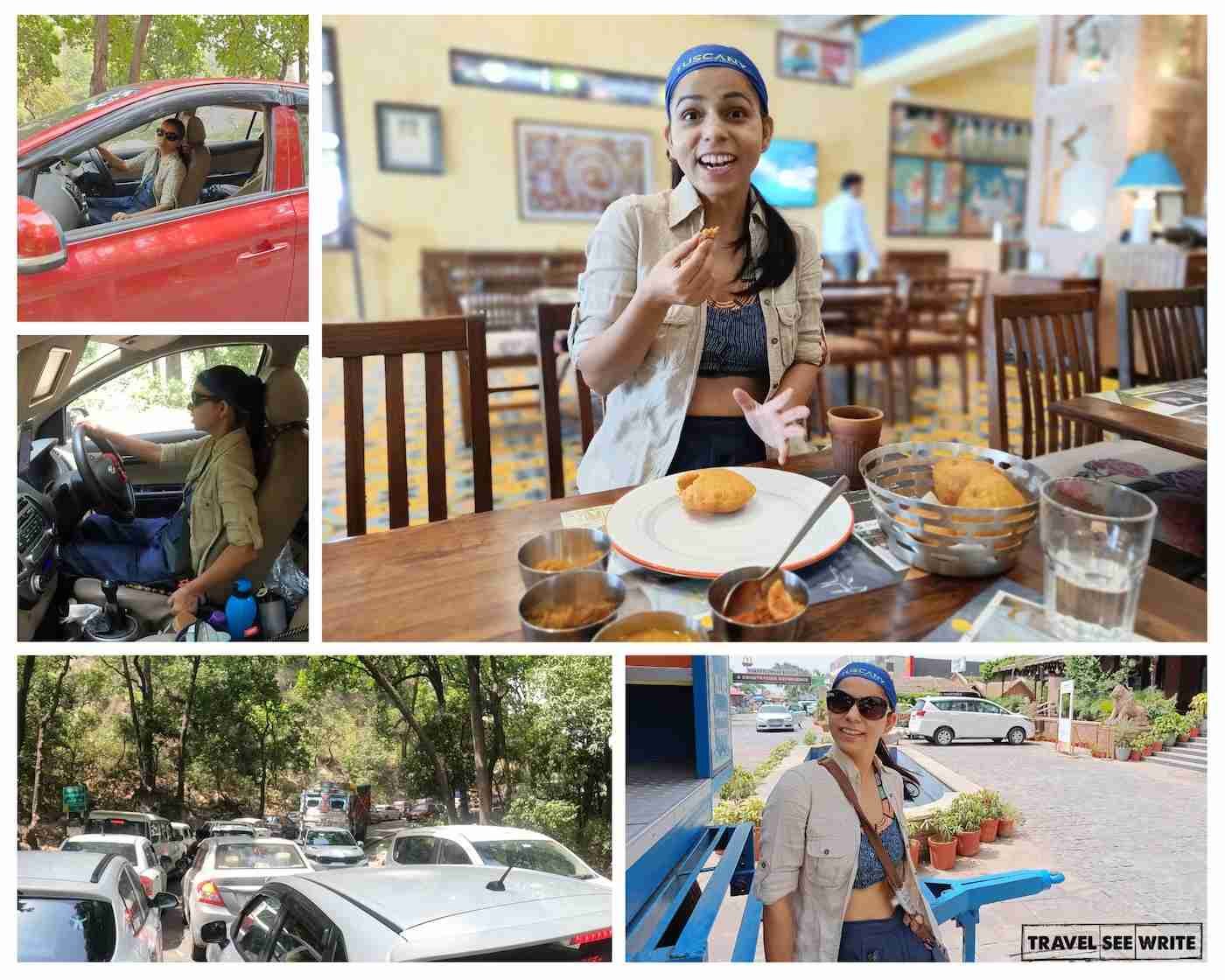
The roads were in decent condition, but I encountered congestion near Dehradun, including a 5 km traffic jam near Rajaji National Park that ate up all the time I saved by starting early. The last stretch of the drive, winding through the hills, was absolutely breathtaking, though it got darker, and the roads narrowed after Mussoorie. The air turned cooler, and the views more spectacular. By the time I reached Buranskhanda, it had started raining. It was pitch dark, and I was a bit tired from driving in the rain. But as soon as I stepped out of the car, the crisp, cool air and a refreshing AQI of 23 instantly revived me.
Upon arriving at Barefoot Bungalow at Buranskhanda, I knew I had made the right choice. This luxury villa in Mussoorie offered a perfect blend of comfort and adventure, making it an ideal place for weekend getaways from Delhi. Whether you’re looking for budget-friendly or luxurious escapes, Barefoot Bungalow has something for everyone.
The bungalow’s location in Buranskhanda was simply unbeatable. It’s close enough to Dhanaulti and Mussoorie yet far enough to offer complete peace and seclusion. If you’re seeking a mix of adventure and relaxation for the weekend near Delhi, this is it. Tucked away from the hustle and bustle of Mussoorie, this place feels like a nature retreat, with stunning valley views on both sides. The air was fresh, and I was told the place is wonderful to visit year-round, whether to escape the summer heat or enjoy winter snowfall.
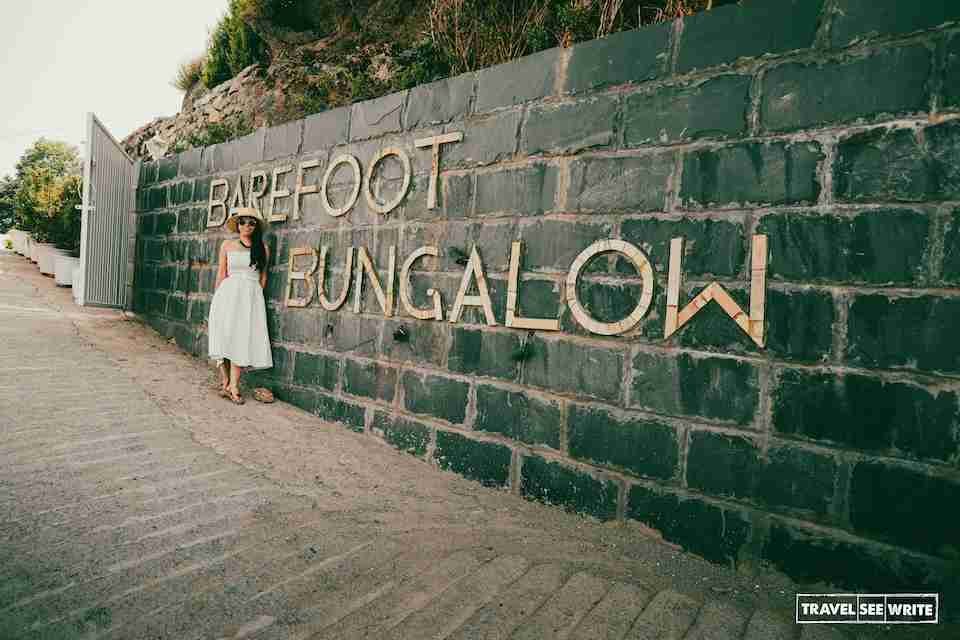
As I entered the bungalow, I was greeted with a warm Himalayan Welcome Drink in a glasshouse with a live kitchen, dining area, and a cosy library. The Bungalow’s wood-accented interiors exude warmth and cosines. The tall French windows provide stunning views of the surrounding Deodar forests and distant snow-capped peaks. Unlike hotels, where privacy is often lacking, here you can book the entire villa exclusively for a family or group of 6-8 friends for ₹55,000 INR plus GST, which gives you full access to all facilities. Alternatively, you can book single rooms at ₹19,999 INR or double rooms at ₹36,000 INR. The 25,000 sq. ft. Bungalow offered a luxury homestay experience in Mussoorie, comparable to the best hotels in Mussoorie with five-star facilities.
It featured three bedrooms, three bathrooms, and a spacious living-cum-dining hall. The MP teak wood interiors and modern white-beige furnishings gave it a regal touch. The bathrooms were equipped with premium toiletries and separate shower cubicles. Modern amenities included a generator, fireplace, heating, Wi-Fi, indoor games, a lawn, a gazebo, and secure parking. It was also wheelchair-friendly, making it accessible for all.

Outside my room was a 14,000 sq. ft. manicured garden with water features and fruit trees, including apricots and apples. I spent hours in this garden, both during the day and at night. A sunny breakfast in the morning and cosy evenings by the bonfire, barbecue, and live music were highlights of my stay.
After the long drive, I settled into my room, took a deep breath of the crisp mountain air, and felt all the stress of city life melt away. That evening, I enjoyed a quiet dinner prepared by Chef Arjun. The food was delicious—simple yet hearty—just what I needed after a long day. As I sat in the cosy dining room, savouring my meal, the warmth of the place enveloped me, making me feel right at home. The food at Barefoot Bungalow was the highlight of my stay. Each meal was freshly prepared with local ingredients, and the flavours were both comforting and exciting. Whether it was the homely dinner on the first night or the elaborate lunch on Day 2, the food was consistently excellent.


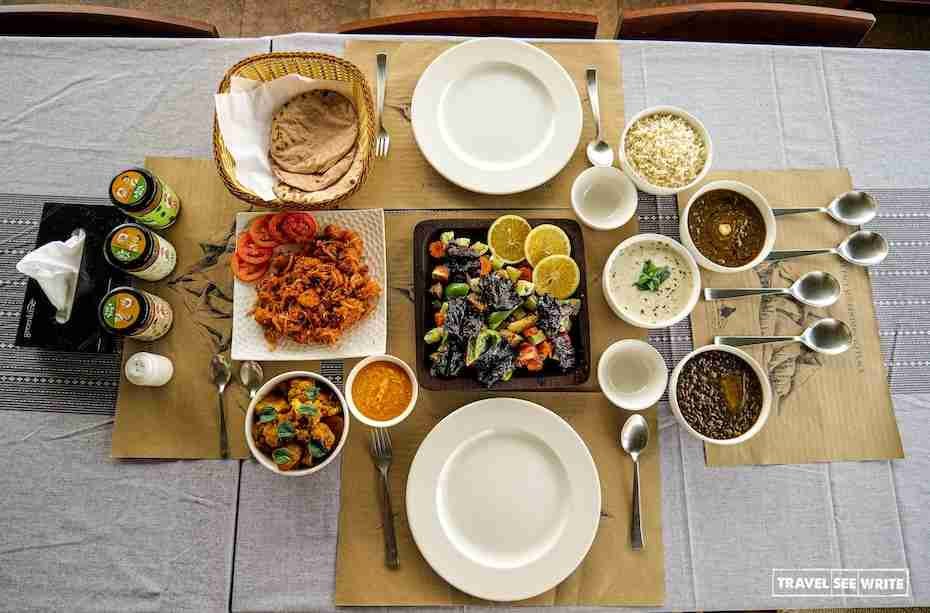
The staff at Barefoot Bungalow were exceptional. They went out of their way to ensure I had a comfortable stay. Chef Arjun’s culinary skills were particularly impressive, and the warm, personalised service made me feel more like a guest in a friend’s home than a customer.
While there was plenty to do inside the Bungalow, the surrounding area offered numerous activities, such as hiking in the nearby hills, indulging in adventure sports at High Fly Adventures, visiting the Eco-Park at Dhanaulti, or exploring the Sarkhunda Devi Temple at Kanatal and the Tehri Dam. And that’s exactly what I did over the next two days.
The next morning, I woke up to the sound of birds chirping and the sight of mist rolling over the hills. After a hearty breakfast, I decided to take a village walk, one of the activities offered by the bungalow. Walking through the village was like stepping back in time. The simplicity of life, the villagers’ warmth, and the landscape’s beauty were humbling. I even met a few school kids who gifted me Himalayan apricots.

After the walk, I returned to the bungalow for a sumptuous lunch. Chef Arjun outdid himself again with a spread that featured local ingredients and flavours. The meal was not just about eating; it was an experience, a connection to the land and its people.
In the evening, I took a stroll around Buranskhanda. I encountered several budget properties like Snow Adventure Camp and Cottages, and On The Rocks Camps and Café. They offered a small zipline and Burma Bridge, though I got stuck midway on the zipline. I’m unsure if they have the proper equipment, staff, and licenses for these adventure activities. However, the owners, who hail from larger cities, seemed laid-back, having set up these properties to fulfil their passion for adventure.
As night fell, I returned to Barefoot Buranskhanda for a delicious barbecue dinner.


The next day, I visited the Surkanda Devi temple near Dhanaulti. As per the legend, the Surkanda Devi temple is a Shaktipeeth where Goddess Sati’s head fell after her body, carried by Lord Shiva, was cut into pieces by Lord Vishnu. This temple is highly revered by followers of the Shaktipeeth. To visit, one must trek 1.5 km to reach the hilltop.

After visiting the temple, I returned to Dhanaulti, just a short drive from the bungalow. You might wonder, “What is special in Dhanaulti?” The answer lies in its untouched beauty and serene environment. Dhanaulti is known for its Eco Park, a peaceful spot with dense forests of Deodar and Oak. The park is perfect for a leisurely stroll, and the views from here are mesmerizing. As the day drew close, I found a quiet spot to watch the sunset, and I was not disappointed. The sky turned shades of orange and pink, and the entire valley was bathed in a golden glow—a sight that will stay with me for a long time.
Is Dhanaulti worth staying? Absolutely. If you’re looking for a quiet, peaceful retreat away from the hustle and bustle of Mussoorie, Dhanaulti is a perfect choice for a short weekend getaway from Delhi. Unlike other popular hill stations, Dhanaulti is less commercialized, allowing visitors to truly connect with nature. I spent some time here before heading back to the Bungalow.
On the final day, I reluctantly packed my bags, not quite ready to leave this little piece of paradise. This weekend getaway from Delhi had been everything I had hoped for—peaceful, rejuvenating, and full of memorable experiences. After breakfast, I bid farewell to the Bungalow and its warm hospitality.
The drive back to Delhi started smoothly, but as I approached Dehradun, I again got caught in some heavy traffic, compounded by torrential rain. The weather made the journey a bit challenging, but the memories of my stay at Barefoot Bungalow kept me in good spirits.
In conclusion, if you’re searching for a weekend getaway from Delhi that offers a perfect blend of adventure, relaxation, and stunning natural beauty, I highly recommend Barefoot Bungalow in Buranskhanda. It’s not just a place to stay; it’s an experience that will leave you with lasting memories.
If you’re staying at Barefoot Bungalow, there are plenty of attractions nearby to explore. Dhanaulti’s Eco Park is a must-visit for nature lovers, offering serene walks amidst dense forests. You might wonder, “Which is better, Mussoorie or Dhanaulti?” While Mussoorie is more commercialized with its bustling Mall Road and popular attractions like Kempty Falls, Dhanaulti offers a quieter, more peaceful alternative. Each has its own charm, and your preference would depend on the kind of experience you’re seeking.
With its vibrant energy and more tourist-oriented spots, Mussoorie is just a short drive away. Kanatal, another nearby gem, offers breathtaking views and is perfect for a day of relaxation or light trekking. For those seeking more adventure, Tehri Lake is a fantastic spot for water sports, where you can indulge in activities like jet skiing and boating. Additionally, the historic town of Landour, with its colonial architecture and quaint cafes, is well worth a visit for a taste of local history and culture. There are many luxury rental villas near Delhi that are available in all these destinations, like Kaudia Estate in Kanatal and the Ridge House By Himalayan Eco Lodges in Landour.
If you’re looking for weekend trip options near Delhi, consider planning a trip to Buranskhanda and Barefoot Bungalow. Here are some practical tips to help you plan your next weekend getaways from Delhi:
For more ideas on weekend getaways from Delhi, be sure to check out my other travel guides and luxury villa reviews. Whether you’re looking for a quick escape or a longer adventure, a destination awaits your weekend getaways from Delhi.

As August approaches, with its long weekend beckoning, it’s time to think about a quick escape from the city to the best places to visit in August near Delhi. From serene hill stations to cultural havens, there are plenty of destinations within a few hours of Delhi that promise a refreshing break. So if you are wondering where to go in North India in August, here’s my personally curated guide to help you choose some of the best places to visit in August near Delhi, perfect for your Independence Day long weekend getaway.
Distance from Delhi: 45 km
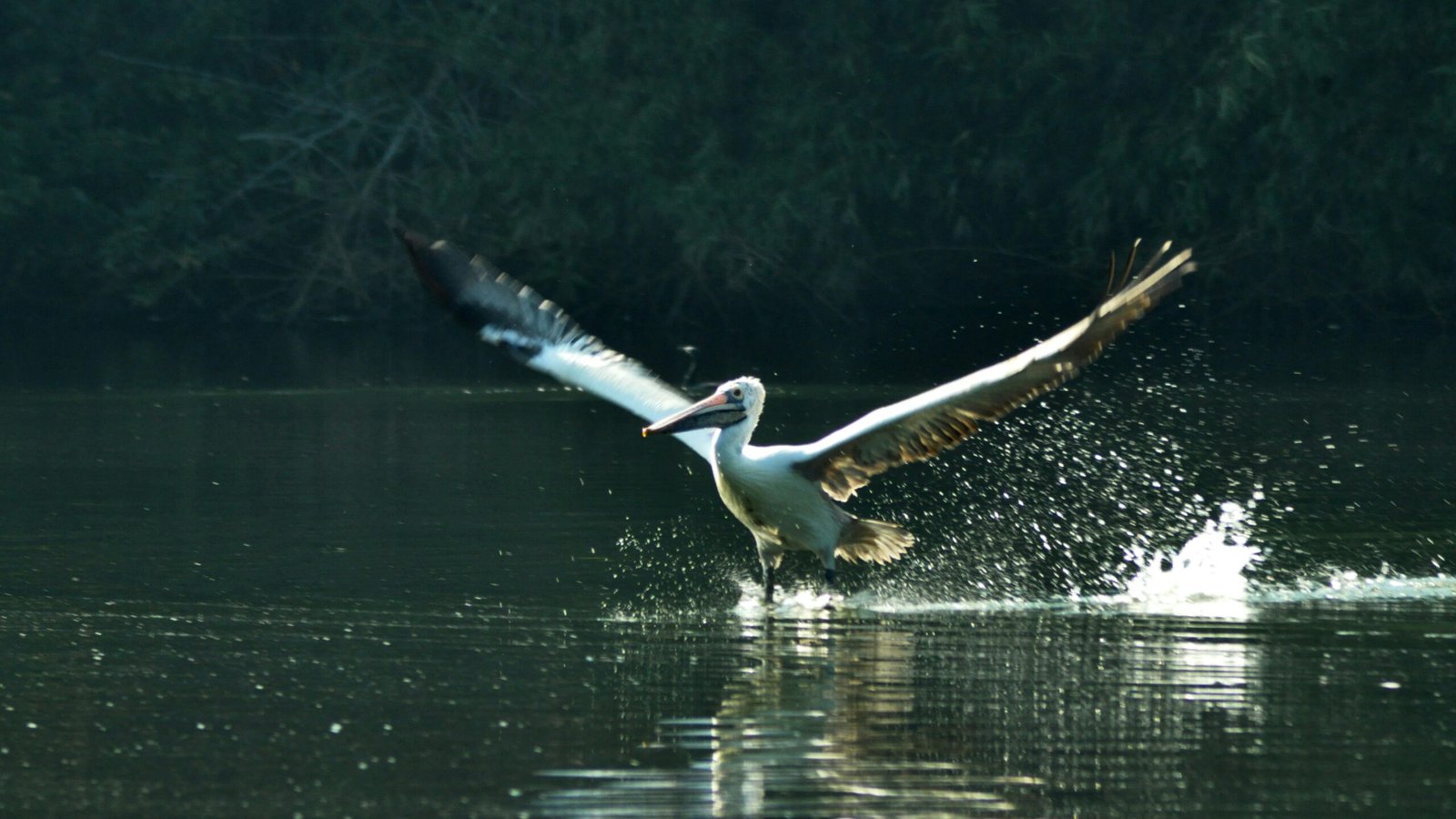
I recently visited Sultanpur Bird Sanctuary, which is a hidden gem for nature lovers. Just a short drive from Delhi, it’s a tranquil escape where the cacophony of the city feels miles away. The sanctuary, renowned for its bird-watching opportunities, is home to over 200 species of birds, including migratory ones that flock here during the monsoon season. I spent a day there, marvelling at the vibrant plumage of the birds and enjoying peaceful walks through the wetland trails.
Ideal for: Bird watchers and nature enthusiasts looking for a peaceful retreat close to the city.
Stay at: The nearby town of Gurgaon offers several comfortable accommodations, such as the Treehouse Hotel or the Westin, just a short drive from the sanctuary.
Distance from Delhi: 50 km
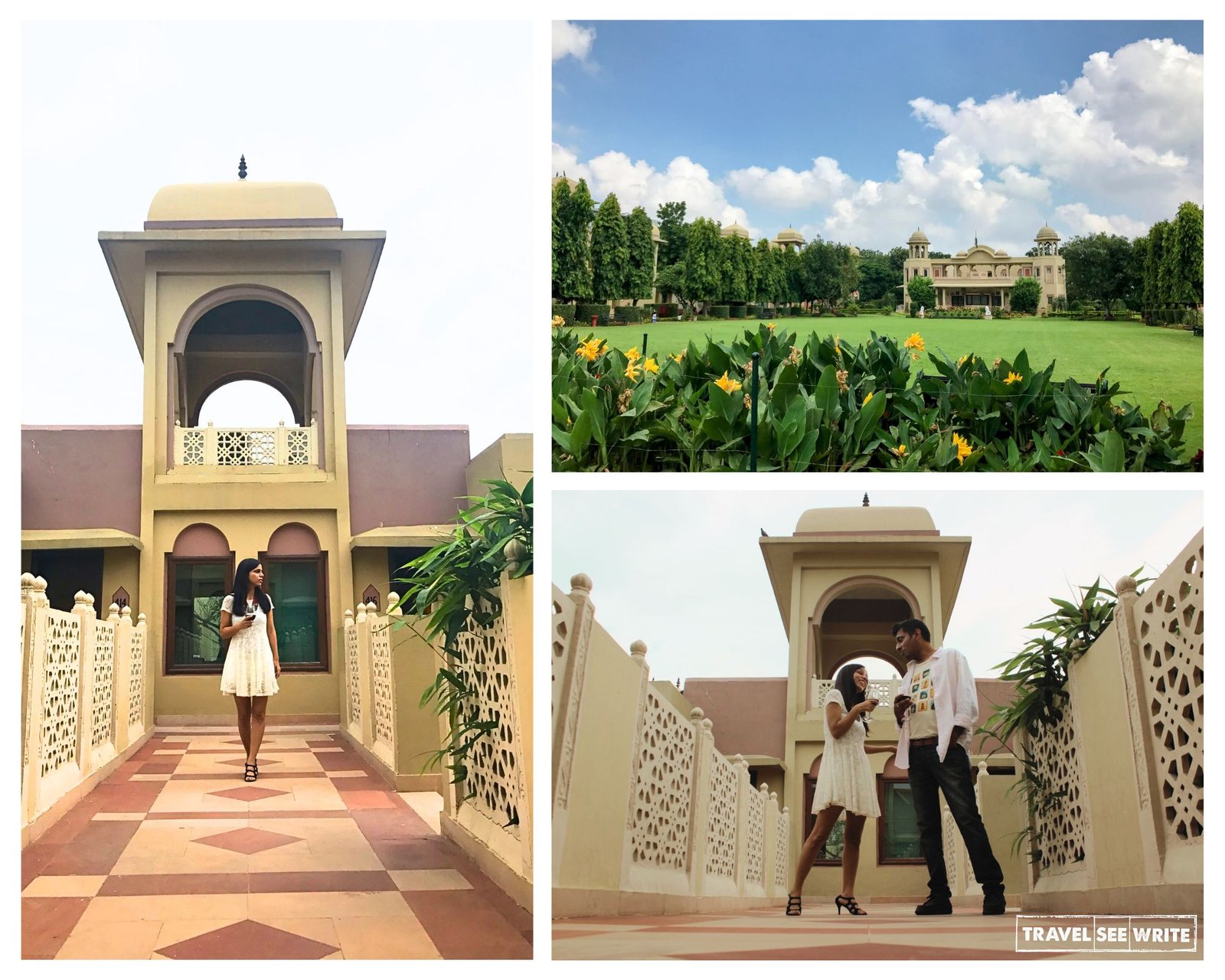
Manesar was a delightful surprise. This quaint town offers a blend of rural charm and luxury. I stayed at a cozy resort where the serene environment provided the perfect backdrop for relaxation. The area is dotted with traditional villages, and a visit here feels like stepping back in time. I enjoyed exploring local markets and sampling regional delicacies, which added a delightful touch to my stay.
Ideal for: Delhi people seeking a staycation that combines a mix of relaxation and rural exploration without venturing too far from Delhi.
Stay at: The ITC Grand Bharat offers luxurious accommodations with a blend of traditional and modern amenities. For a more rustic experience, consider staying at the Manesar Heritage Village Resort & Spa.
Distance from Delhi: 100 km
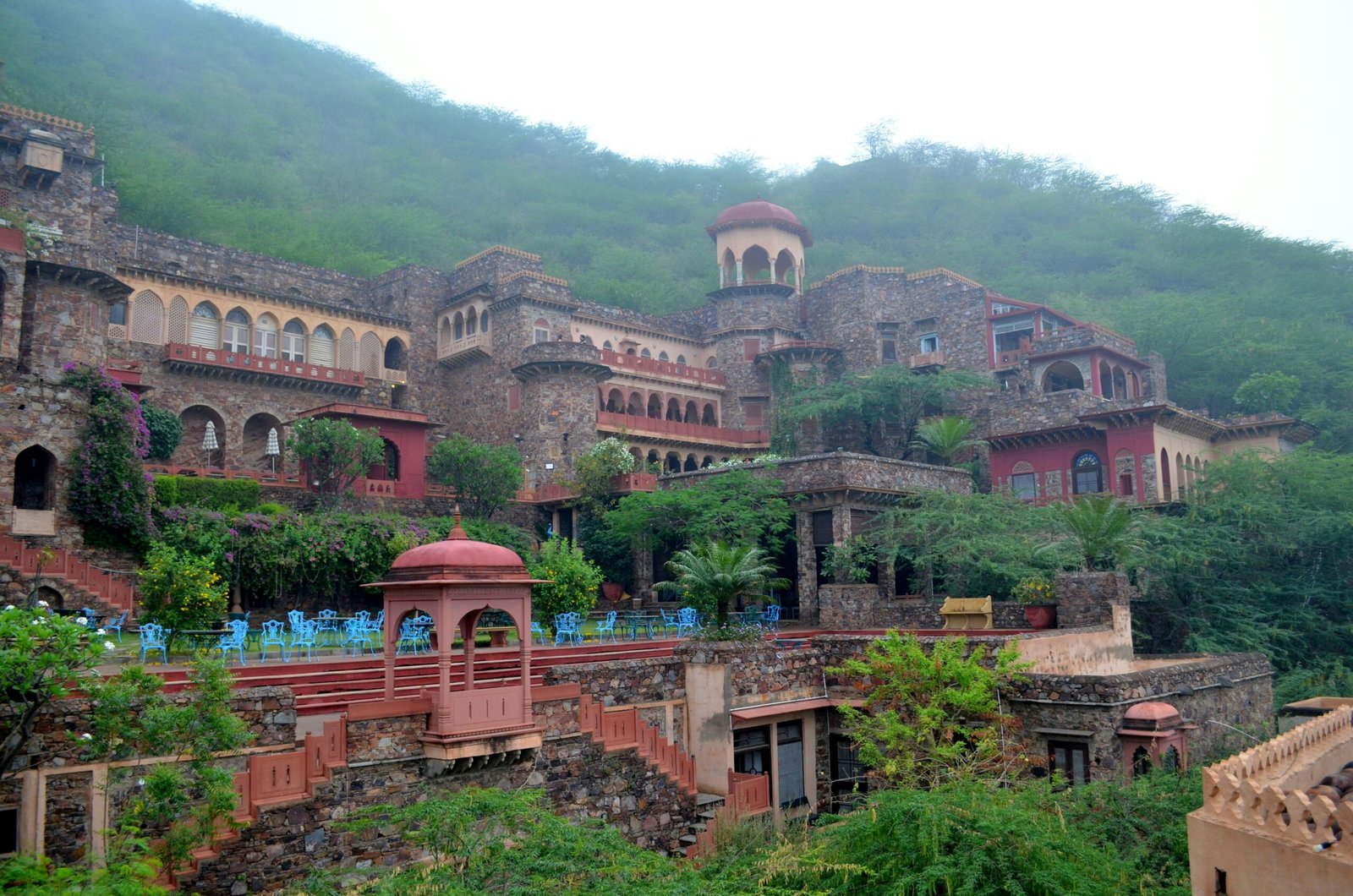
Neemrana Fort Palace is a step into history. The moment I arrived, the grandeur of this 15th-century fort took my breath away. Staying here felt like living in a historical saga, with the fort’s majestic architecture and panoramic views of the surrounding landscape. I indulged in the royal treatment, from dining in the fort’s exquisite dining rooms to taking a leisurely dip in the pool overlooking the fort’s expansive grounds.
Ideal for: History buffs and those looking to immerse themselves in royal heritage and luxury.
Stay at: Neemrana Fort Palace itself is the perfect place to stay for an authentic experience. Alternatively, consider nearby options like the Hill Fort Kesroli for a similar historical charm.
Distance from Delhi: 160 km
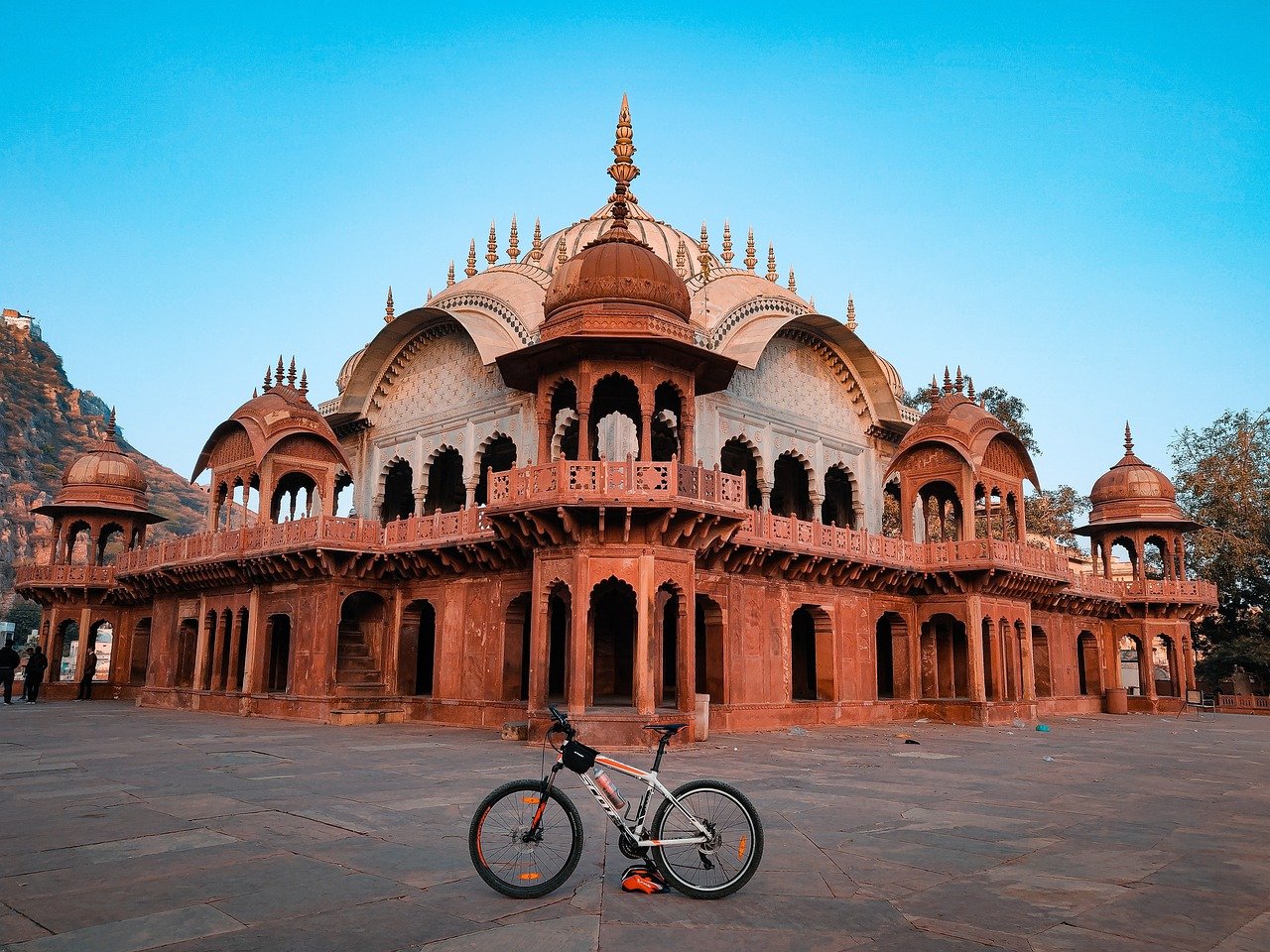
Alwar is a charming city with a rich historical tapestry. During my visit, I explored the impressive Bala Quila (Alwar Fort) with its panoramic views and the City Palace with its exquisite architecture. A boat ride on Siliserh Lake offered a serene escape and a chance to enjoy the tranquil beauty of the surroundings. The highlight was a visit to Sariska Tiger Reserve, where I had the thrilling opportunity to spot wildlife in its natural habitat.
Ideal for: History enthusiasts and wildlife lovers seeking a mix of cultural and natural experiences.
Stay at: The Alwar Bagh by Aamod offers a comfortable stay with traditional decor. For a more luxurious experience, consider the Neemrana Fort Palace, which is a bit further away but worth the visit.
Distance from Delhi: 220 km
Bharatpur, home to Keoladeo National Park, is a paradise for bird enthusiasts. I visited during the monsoon, and the park was alive with migratory birds. Walking through the park’s lush wetlands and observing the diverse avian species was an unforgettable experience. The nearby Deeg Palace, with its ornate gardens and historic architecture, added a touch of royalty to my visit.
Ideal for: Bird watchers and history lovers interested in exploring one of India’s most renowned bird sanctuaries and historical sites.
Stay at: The Bharatpur Ashok is a comfortable option with easy access to the park. For a more luxurious stay, the Laxmi Vilas Palace offers a regal experience.
Distance from Delhi: 260 km

Rishikesh was a perfect blend of adventure and spirituality. I started my visit with a thrilling river rafting experience on the Ganges, which was both exhilarating and refreshing. The serene environment and the multitude of yoga retreats made it an ideal spot for both relaxation and self-discovery. Strolling through Laxman Jhula and Ram Jhula and soaking in the vibrant spiritual atmosphere was a highlight. And, if you are someone like me who lives for adventure, you have to try Bungee Jumping at Rishikesh. Read about my experience at Jumpin Heights Bungee Jump.
Ideal for: Adventure seekers and spiritual enthusiasts looking for a mix of adrenaline and tranquility.
Stay at: The Ganga Kinare offers a riverside retreat with yoga and meditation facilities. For a more budget-friendly option, try the Parmarth Niketan Ashram.
Distance from Delhi: 272 km
Lansdowne, with its pristine landscapes and colonial charm, was a serene getaway. I have been here multiple times and everytime i have loved wandering through the pine forests and visiting the War Memorial for its historical significance. The peaceful environment, combined with the charming local cafes, made it an ideal place for relaxation and rejuvenation.
Ideal for: Nature lovers and those seeking a peaceful retreat with a touch of colonial history.
Stay at: The Fairhaven Hotel offers charming colonial-style rooms with beautiful views. For a more rustic experience, consider staying at the Hotel Hillside.
Distance from Delhi: 280 km
Jaipur, the vibrant capital of Rajasthan, offers a kaleidoscope of experiences. I immersed myself in the city’s rich cultural heritage, exploring the magnificent Amer Fort and Jaigarh Fort. The bustling markets and colorful bazaars were perfect for shopping, and the local cuisine was a treat for the taste buds. If you are a foodie like me, you can’t leave Jaipur without trying the famous mirchi bada, and different varieties of Rajasthani Kacchori. I would recommend to visit Sodhani Sweets for an authentic Rajsthani flavour.

Ideal for: Culture enthusiasts and those looking to explore the royal heritage and vibrant markets of Rajasthan.
Stay at: The Rambagh Palace offers a luxurious stay with a royal ambience. For a more affordable option, try the well-located and comfortable Hotel Pearl Palace.
Distance from Delhi: 302 km
Buranshkhanda, near Mussoorie, was a delightful find. The apple orchards and the blooming Burans flowers created a picturesque setting. The peaceful environment was a welcome retreat from the city’s noise, and I enjoyed sipping on the refreshing Buransh ka Sharbat.
Ideal for: Nature enthusiasts and those looking for a tranquil retreat with beautiful natural scenery.
Stay at: Barefoot Bungalow for a mid-scale luxurious experience. Another option is the Rustic Vibes, which offers a cosy stay amidst the apple orchards. For a more upscale experience, try the JW Marriott Mussoorie Walnut Grove Resort & Spa.
Distance from Delhi: 320 km
Dhanaulti, a quiet hill station near Mussoorie, offered a serene escape from the city. I loved the lush green surroundings and the cool, crisp air. Exploring the Eco Park and trekking through the scenic trails provided a perfect blend of relaxation and adventure.
Ideal for: Travelers seeking a quiet hill station experience with opportunities for nature walks and trekking.
Stay at: The Club Mahindra Resort offers a comfortable stay with stunning views. For a more budget-friendly option, consider the Apple Orchard Resort.
Distance from Delhi: 332 km
Kanatal, with its stunning Himalayan views, was a tranquil retreat. The nearby Surkanda Devi Temple offered a spiritual experience, and the serene environment was perfect for unwinding. The local scenery, combined with a Jeep Safari, made the visit memorable.
Ideal for: Those looking for a peaceful retreat with breathtaking mountain views and spiritual experiences.
Stay at: The Kanatal Resort & Spa provides luxurious accommodations with stunning views. For a more rustic experience, try the Apple Orchard Resort.
Distance from Delhi: 338 km
Very close to Kanatal lies Tehri Dam and Lake, located in the foothills of the Himalayas. Tehri Lake is the largest man-made lake in Asia and spreads over an area of 42 sq. km, with a depth of 200 m. Recently, Tehri has been gaining popularity for adventure sports, especially water sports. From high-speed jet skiing to sailing in a Hot-Air Balloon near Tehri Lake, this place is no less than a paradise for adventure enthusiasts. The lake, surrounded by hills, is a fantastic spot for water sports such as Angling, Canoeing, Rowing, Boating, Water scootering, speed Boating, Rafting, and Kayaking. I spent my time kayaking and boating on the lake, and the experience was exhilarating. Other adventure sports are available as well, like paramotoring, paragliding, or an ATV ride.The Tehri Dam, with its impressive structure, was also worth a visit.
Tehri Water Sports Cost: The cost of water sports in Tehri starts from Rs 300 – 1500 per person. You can always get a better deal if you strike a combo deal at Tehri Lake.
| Activity Name | Price Per Person | Duration |
| Jet-Ski | Rs 1000 | 5 min |
| Motor Boating | Rs 300 | 30 min |
| Speed Boating | Rs 600 | 15 min |
| Surfing | Rs 700 | 5 rounds |
| Parasailing | Rs 2500 | 2-5 min |
| Combo (Banana Ride + Jet-Ski + Motor Boating) | Rs 2000 | 1 hr 15 min |
| Combo (Banana Ride + Jet-Ski + Speed Boating) | Rs 2500 | 1 hr 15 min |
| Combo (Speed Boating + Jet-Ski + Surfing) | Rs 3000 | 1 hr |
Ideal for: Adventure seekers interested in water sports and those looking to explore impressive engineering feats.
Stay at: The Tehri Lake View Resort offers beautiful lake views and comfortable accommodations. For a more budget-friendly option, consider the Hotel Devbhoomi.
Distance from Delhi: 340 km
Nag Tibba offered an adventurous escape into the Himalayas. The trek to the summit was challenging but rewarding, with panoramic views that made the effort worthwhile. The experience of hiking through dense forests and reaching the top was exhilarating.
Ideal for: Adventure enthusiasts and trekkers looking for a rewarding hiking experience with spectacular views.
Stay at: The Nag Tibba Base Camp offers basic but comfortable accommodations for trekkers. For more amenities, you might need to stay in nearby Mussoorie or Dehradun.
Distance from Delhi: 350 km
Shimla, the capital of Himachal Pradesh, was a delightful retreat with its cool climate and colonial architecture. I enjoyed strolling along Mall Road, exploring the Ridge, and taking a scenic toy train ride to Kalka. The picturesque views of the surrounding mountains added to the city’s charm.
Ideal for: Those looking for a classic hill station experience with a mix of colonial charm and modern amenities.
Stay at: The Oberoi Cecil offers luxurious accommodations with stunning views. For a more budget-friendly option, consider the Hotel Willow Banks.
Distance from Delhi: 300 km
Kasauli, a charming hill station, offered a peaceful escape with its cool climate and colonial-era architecture. I loved the leisurely walks through the pine forests and the stunning views from Sunset Point. The small-town atmosphere made it a relaxing getaway.
Ideal for: Travelers seeking a quiet hill station experience with opportunities for nature walks and relaxing.
Stay at: The Kasauli Resort offers comfortable accommodations with beautiful views. For a more rustic experience, try the Hotel Ros Common.
Distance from Delhi: 320 km
Solan, known for its apple orchards and pleasant weather, was a delightful stop and is definitely one of the best places to visit in August near Delhi. I explored the local markets, enjoyed the scenic beauty of the surrounding hills, and visited the Kuthar Fort. The peaceful environment made it a great place to unwind.
Ideal for: Those looking for a blend of natural beauty and local culture with a peaceful atmosphere.
Stay at: The Pinewood Hotel offers a comfortable stay with beautiful views. For a more budget-friendly option, consider the Hotel Himalayan.
Distance from Delhi: 350 km
Pauri, known for its panoramic views of the Himalayas, offered a peaceful retreat. The serene environment and picturesque landscapes were perfect for relaxation. I enjoyed visiting the local temples and taking in the stunning mountain views. If you have time, I’d highly recommend you to visit Pathaal Homestay at Rawatgaon.
Ideal for: Travelers seeking tranquillity and breathtaking Himalayan views in a peaceful setting.
Stay at: Pathaal Homestay offers comfortable accommodations with beautiful views. Even Uttarakhand Chief Minister Pushkar Singh Dhami stayed here. For a more rustic experience, try the Hotel Hill View.
Distance from Delhi: 450 km
Chamba, with its ancient temples and traditional architecture, was a serene destination. The visit to the Lakshmi Narayan Temple and the Chamba Museum provided a glimpse into the region’s rich heritage. The peaceful environment made it a perfect getaway from the hustle and bustle of city life. Near Chamba, I highly recommend that you visit Chamera Lake, Dalhousie, and Khajjiar.
Ideal for: History enthusiasts and those interested in exploring traditional architecture and local culture.
Stay at: The Hotel Chamba View offers comfortable accommodations with lovely views. For a more luxurious option, consider the Lakeview Hotel.
Related: Monsoon Magic in Himachal: Exploring Dalhousie and Khajjiar in 4 Days
Distance from Delhi: 450 km

Palampur, with its tea gardens and scenic beauty, was a refreshing escape. I enjoyed strolling through the tea plantations, visiting the Tibetan monastery, and taking in the views of the Dhauladhar range. The cool climate and lush surroundings added to the charm of my visit.
Ideal for: Travelers seeking a serene hill station experience with opportunities to explore tea gardens and Tibetan culture.
Stay at: The Taragarh Palace offers luxurious accommodations with beautiful views. For a more budget-friendly option, try the Hotel Palampur Heights.
Distance from Delhi: 480 km

While McLeodganj and Dharamshala are not your typical weekend getaways from Delhi, they definitely make a good option for a long weekend destination near Delhi. I have always loved visiting it, be it for its Tibetan culture or beautiful mountain scenery. I have explored most of the popular places in Dharamshala, like the Dalai Lama Temple and Bhagsu Nag Waterfall, along with some offbeat hidden gems such as Barnet village, Dal Lake, Himalayan Brew Tea Gardens McLeod Ganj. I have also trekked to Triund and done paragliding in Bir-Biling. Every time, the peaceful atmosphere and stunning views here made it a memorable trip. And I would recommend going here in any season.
Ideal for: Those interested in Tibetan culture and spiritual experiences, with opportunities for trekking and exploring beautiful landscapes.
Stay at: The Tibetan Institute of Performing Arts offers a unique stay with cultural experiences. For a more luxurious option, consider the Hotel Norbu House.
Related: How to Find the Best Places to Visit in McLeod Ganj, Honest review of staying at Fortune Park Moksha McLeod Ganj
These destinations offer diverse experiences, from peaceful retreats to adventurous escapades. Whether you’re seeking tranquillity, cultural exploration, or outdoor adventures, each place near Delhi has something unique to offer. Pack your bags and get ready for an unforgettable trip to some of the best places to visit in August near Delhi!
Let’s know a little bit about the indigenous cultures globally on World Tribal Day 2024. Discover traditions of Native Indians, Ainu, Sami, Māori, and more in this insightful journey.

Did you know there are approximately 476 million Indigenous Peoples in the world living across 90 countries? They make up less than 6 per cent of the world’s population, but account for at least 15 per cent of the poorest. They speak an overwhelming majority of the world’s estimated 7,000 languages and represent 5,000 different cultures. They are guardians of most of the world’s remaining biodiversity? As today, August 9th, is the World Tribal Day, I find myself reflecting on the incredible journeys I’ve taken and the remarkable Indigenous communities I’ve had the privilege to meet. This day, also known as the International Day of the World’s Indigenous Peoples 2024, is a time to honour the traditions, wisdom, and resilience of Indigenous cultures worldwide. For me, it’s more than just a day of recognition—it’s a celebration of the lessons learned and the deep connections formed with these communities during my travels.
The World Tribal Day 2024 theme is “Preserving the Legacy: Protecting Indigenous Knowledge for Future Generations.” This resonates deeply with me, as many of the indigenous cultures I’ve encountered are actively working to preserve their traditional knowledge, languages, and customs. As a traveller, I’ve witnessed firsthand the importance of this preservation—not just for the communities themselves but for the enrichment of global cultural diversity.
August 9th was designated as World Tribal Day by the United Nations General Assembly in 1994 to commemorate the first meeting of the UN Working Group on Indigenous Populations on this date in 1982. This day, also referred to as International Adivasi Day, aims to raise awareness about the unique challenges faced by indigenous communities and to promote their rights. My experiences with these communities have shown me that their struggles are as diverse as their cultures, but so are their triumphs.
In India, August 9th is celebrated as Adivasi Day to honour the tribal communities that contribute so richly to the nation’s cultural tapestry. The term “Adivasi” refers to the original inhabitants of the land. My travels through India have allowed me to meet many Adivasi people, and I’ve been deeply moved by their stories, traditions, and the deep connection they share with their land.

स्वदेशी दिवस 2024 का विषय है “विरासत की रक्षा: भावी पीढ़ियों के लिए स्वदेशी ज्ञान की सुरक्षा।” इस विषय का महत्व मुझे तब समझ में आया जब मैंने विभिन्न स्वदेशी समुदायों के साथ समय बिताया। उनकी परंपराओं और ज्ञान को संरक्षित करने की उनकी कोशिशें हमारी सांस्कृतिक विविधता को बनाए रखने के लिए बहुत महत्वपूर्ण हैं।
As a traveller and storyteller, I’ve had the incredible opportunity to immerse myself in the cultures of Indigenous peoples around the world. Each experience has left a lasting impression on me, shaping my perspective on life, nature, and the importance of cultural preservation. Here are some of the communities that have profoundly impacted me:


Experience: Attending the POW WOW festival in Albuquerque was an unforgettable experience. This gathering, the largest of its kind, brings together Native Americans from across the globe. The festival is a vibrant celebration of culture featuring traditional dances, music, and regalia. Standing amidst this rich display of heritage, I felt a deep respect for the resilience of Native American cultures.
Cultural Insights: The POW WOW festival taught me about the strength of cultural traditions in the face of adversity. The intricate beadwork, feathered headdresses, and rhythmic drumming all tell stories of survival, resistance, and identity. It was a powerful reminder of the importance of keeping these traditions alive.
Related: Perfect Travel Guide for Santa Fe, New Mexico Points of Interest
Experience: My journey to Hokkaido, Japan, led me to the Ainu people, whose connection to nature is truly inspiring. I spent time in Ainu villages, learning about their unique traditions, from wood carving to intricate embroidery. Their art is not just decorative—it’s a way of telling stories and preserving their cultural memory.
Cultural Insights: The Ainu’s deep respect for nature is evident in their rituals, which honor the spirits of the animals, trees, and waters around them. Despite facing historical oppression, the Ainu are working to revive their language and customs, a testament to their resilience and pride in their identity.
Related: Resilience and Renewal: The Survival Story of Japan’s Indigenous Ainu People


Experience: The Sami people of the Arctic regions have a lifestyle that’s deeply intertwined with the natural world. During my visit to their homeland, I was struck by their strong bond with the environment, particularly through reindeer herding, which is central to their way of life. Witnessing their day-to-day activities in such harsh climates was awe-inspiring.
Cultural Insights: The Sami’s traditional music, known as joik, and their vibrant clothing, gákti, are powerful expressions of their cultural identity. These traditions have been passed down through generations, each one a link to their ancestors and their way of life.
Related: Visiting Finland for the First Time? Don’t forget these 15 Practical Tips, Sweden’s incredible journey of Transforming Trash to Treasure


Experience: In the misty mountains of Sa Pa, Vietnam, I had the pleasure of meeting the Hmong people. I participated in their New Year celebrations, which were filled with music, dance, and traditional games. The Hmong’s textiles, with their intricate patterns and vibrant colours, were particularly striking.
Cultural Insights: The Hmong’s deep connection to their land is evident in their agricultural practices, as they skillfully cultivate crops on steep mountain slopes. Their textiles are not just beautiful; they are a form of storytelling, each pattern reflecting a piece of their history and beliefs.
Related: Read more about the Hmong Tribe of Vietnam here – The Untold Story of Sapa, Vietnam
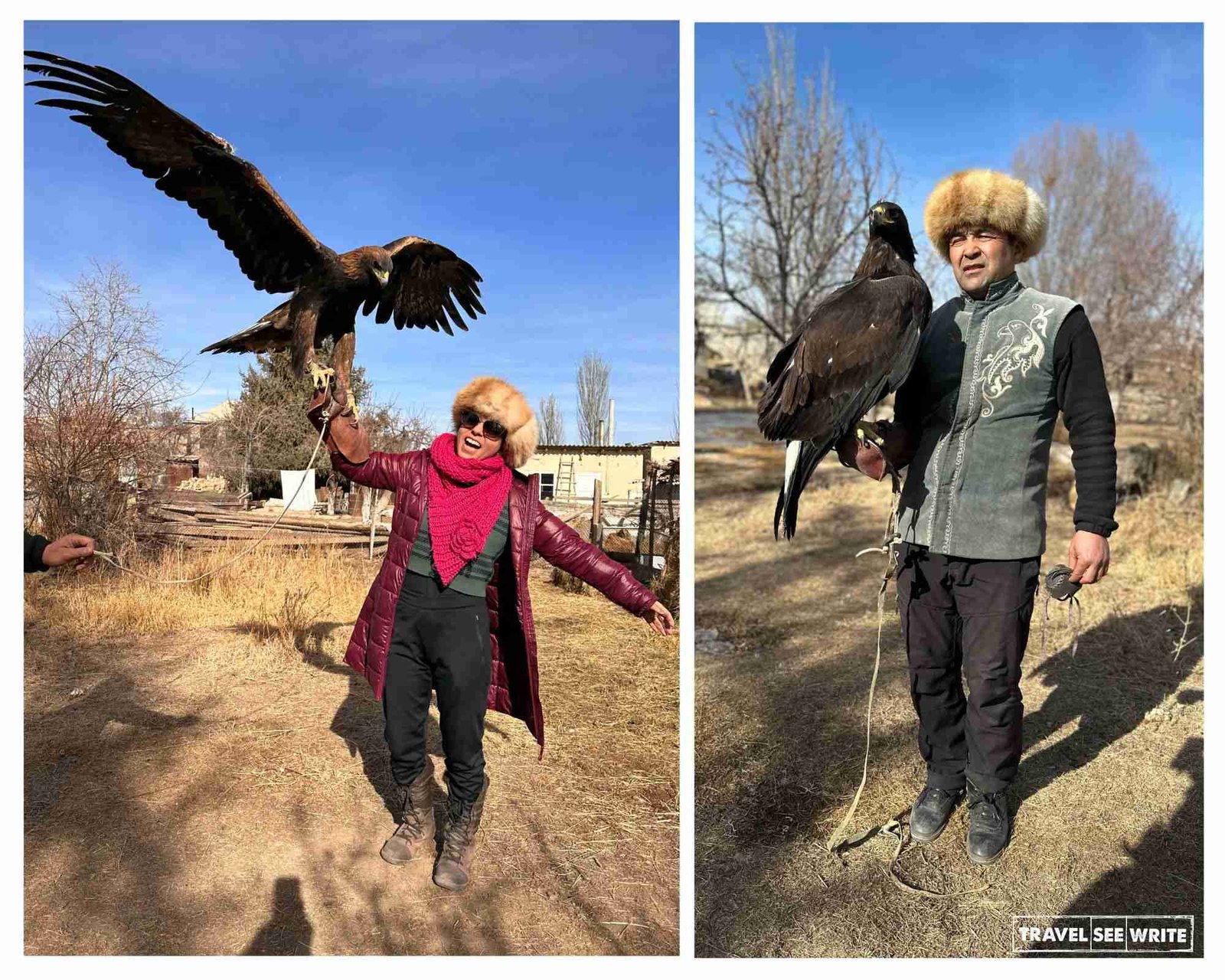
Experience: In the remote steppes of Mongolia and Kazakhstan, I encountered the ancient art of eagle hunting. The eagle hunters, known as berkutchi, train golden eagles to hunt prey—a practice that requires immense skill and patience. Witnessing this partnership between humans and birds was a profound experience.
Cultural Insights: Eagle hunting is more than a sport; it’s a deep-rooted tradition that embodies respect for nature and wildlife. The relationship between the hunter and the eagle is one of mutual trust and respect, a bond that has been nurtured over centuries.
Related: Embark on an Epic 8-Day Journey: Kyrgyzstan Winter Travel Guide from India.
Experience: The Māori, the indigenous people of New Zealand, have a culture that is both rich and deeply spiritual. My time spent with the Māori was incredibly enlightening—I was particularly moved by their powerful haka (war dance) and the intricate art of traditional weaving and carving.
Cultural Insights: The Māori’s concept of whakapapa (genealogy) underscores their belief in the interconnectedness of all living things, reflecting their deep respect for the environment. Their marae (communal meeting grounds) serve as the heart of Māori social life, where traditions are kept alive through song, dance, and storytelling.
India is a world in kitself when it comes to tribes. Over 730 Scheduled Tribes have been notified under Article 342 of the Indian Constitution. Bhills are considered as one of the oldest tribe in India. Once they were the ruler in parts of Rajasthan, Gujarat, Malwa, Madhya Pradesh and Bihar. They are a cross section of great Munda race and a wild tribe of India. Below are some of the tribes of India that I met personally during my travels.
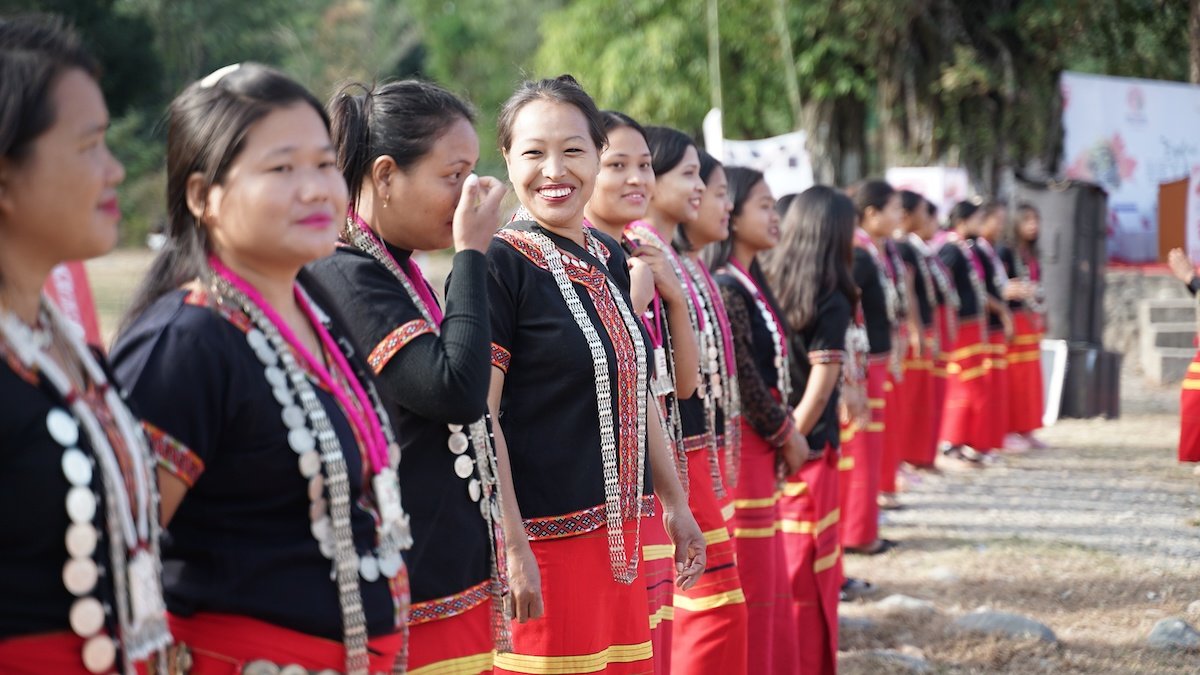
Experience: Arunachal Pradesh, with its rich tapestry of cultures, has always fascinated me. The state is home to 26 major tribes and over 100 sub-tribes, each with its own unique language, customs, and traditions. I was particularly moved by the sustainable agricultural practices of the Apatani tribe in the Ziro Valley.
Cultural Insights: The Apatani people’s Ziro Valley agricultural system is a testament to their deep understanding of the environment. Their techniques are not only sustainable but also incredibly innovative, blending traditional knowledge with practical solutions to environmental challenges.
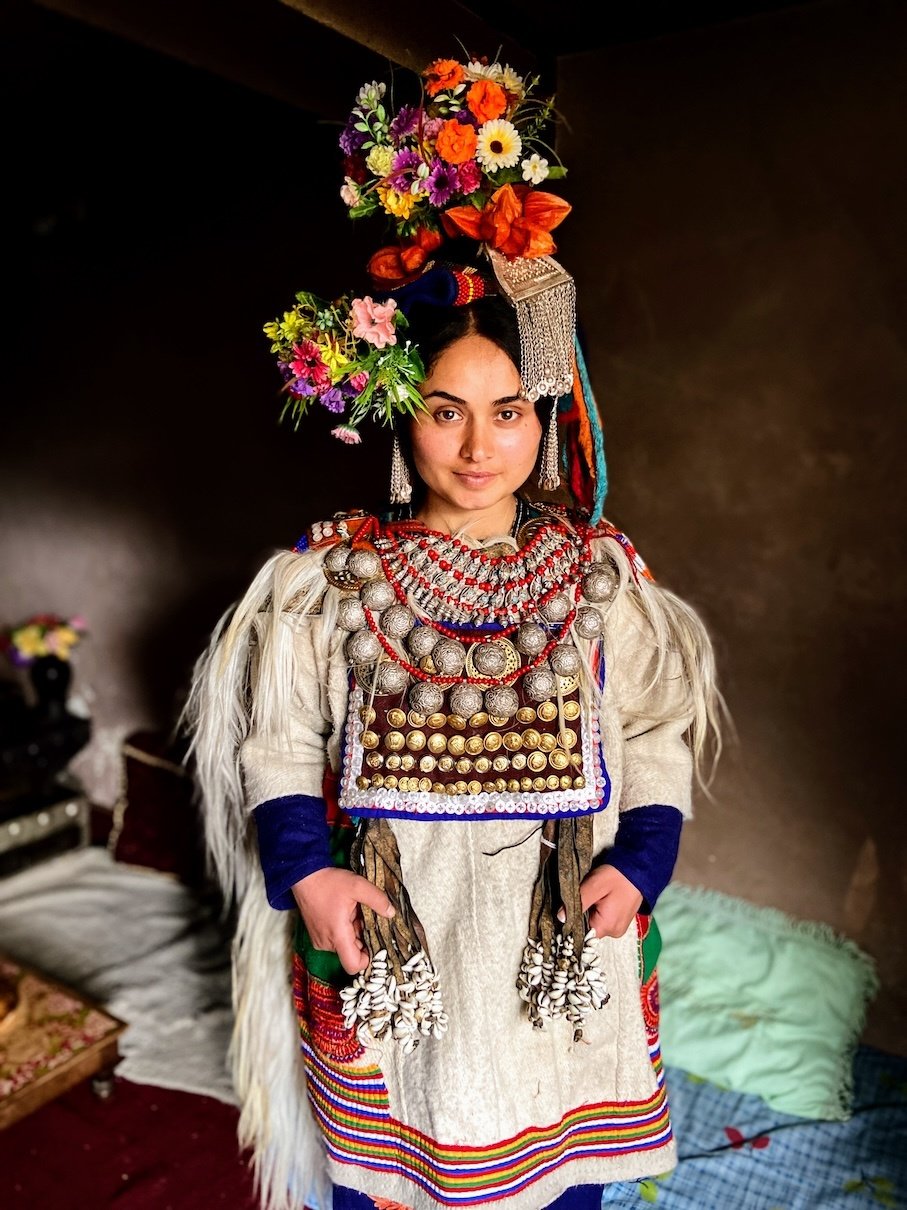
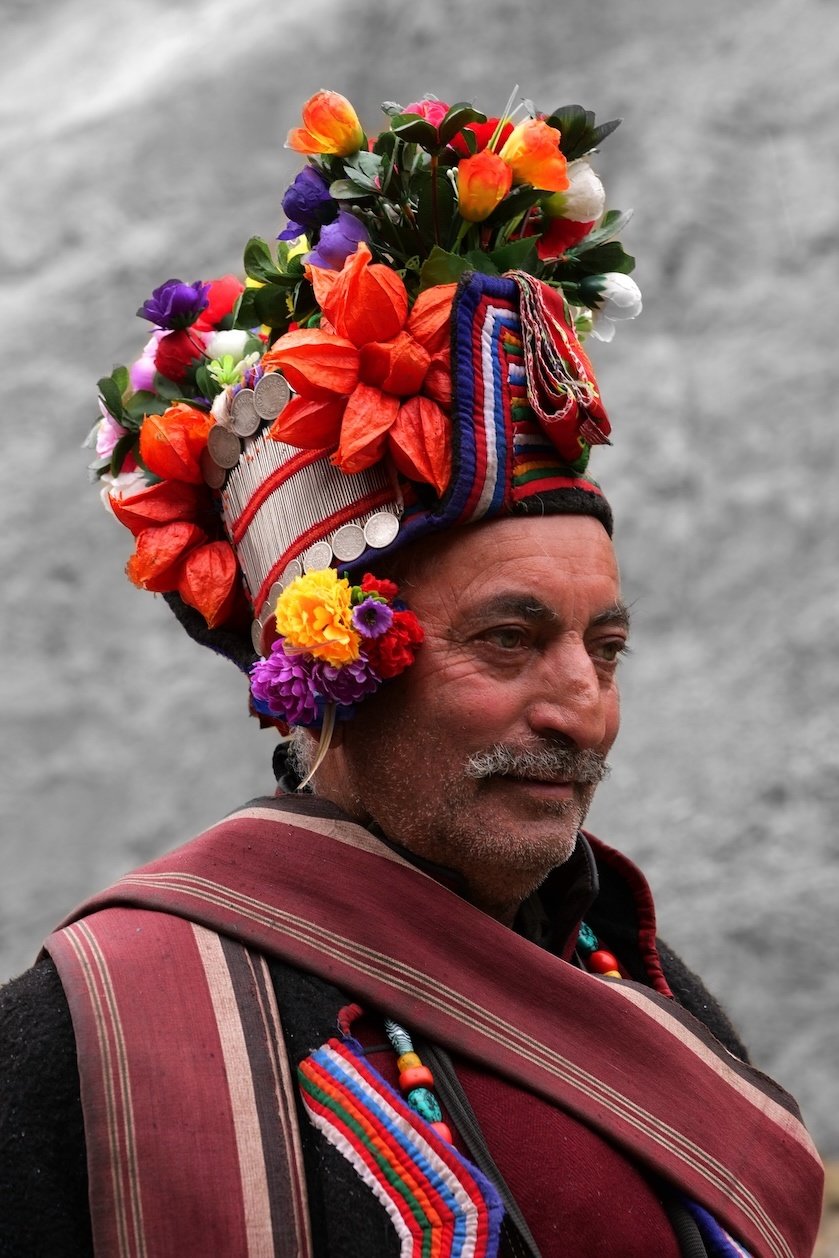
Experience: Ladakh’s tribal communities, including the Balti, Bot, Brokpa, Changpa, and others, offer a glimpse into a way of life that’s both ancient and enduring. During my travels, I spent time with the Changpa nomads, who are known for their production of Pashmina wool, a luxury material prized around the world.
Cultural Insights: The Changpa nomads’ ability to thrive in such a harsh environment is a testament to their resilience. Their lifestyle, centred around the rearing of goats for Pashmina wool, is a delicate balance of tradition and survival in one of the world’s most challenging climates.
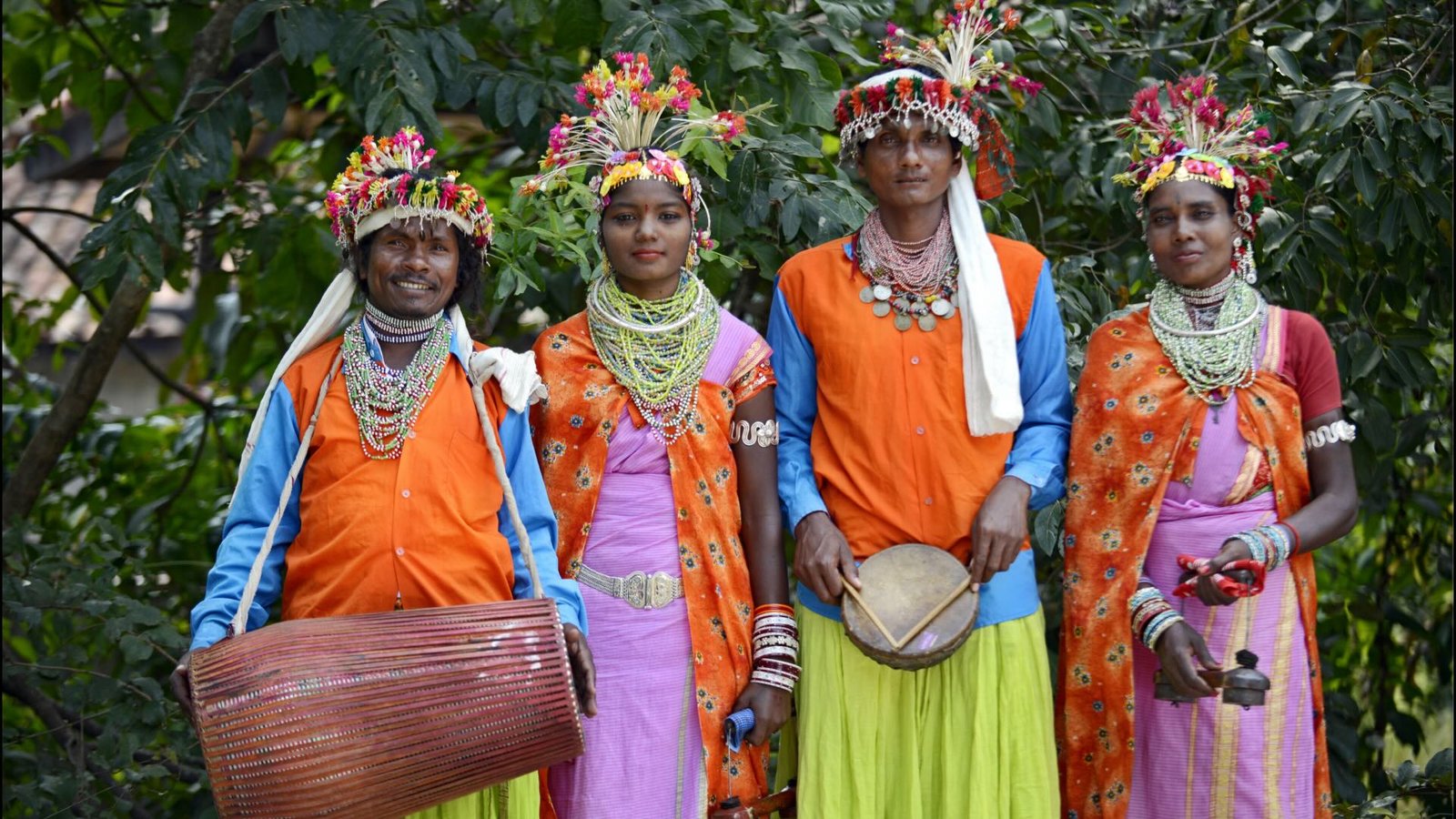
Experience: Madhya Pradesh, often referred to as the heart of India, is home to a diverse array of tribal communities, including the Gond, Bhil, Baiga, Korku, and Sahariya tribes. During my visits, I was captivated by their art forms, particularly Gond painting, which is rich in symbolism and folklore.
Cultural Insights: The Gond people, one of India’s largest tribal groups, have a vibrant cultural history that is beautifully depicted through their art, dance, and music. The Baiga, known as the “guardians of the forest,” possess deep knowledge of herbal medicine and sustainable living, reflecting their close relationship with nature.
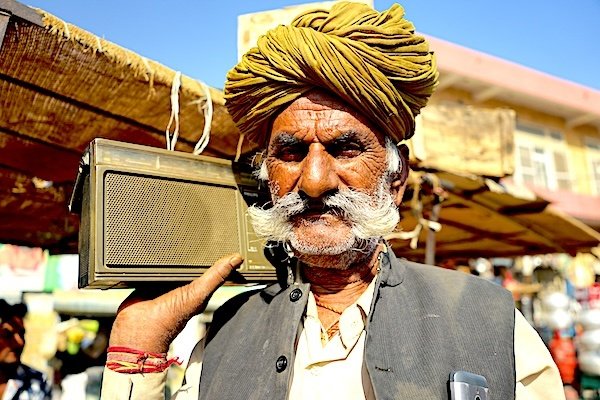


Experience: Rajasthan’s tribal communities, including the Bhils, Minas, Garasias, Sahariyas, and Gadiya Lohars, contribute to the state’s rich cultural fabric. I was particularly impressed by the Bhil’s Ghoomar dance, a traditional folk dance that’s as vibrant as it is meaningful.
Cultural Insights: The Gadiya Lohars, a nomadic tribe of blacksmiths, have a unique way of life that has been passed down through generations. The Sahariyas, one of the oldest tribes in India, are known for their deep knowledge of herbal medicine, which they use to treat various ailments.

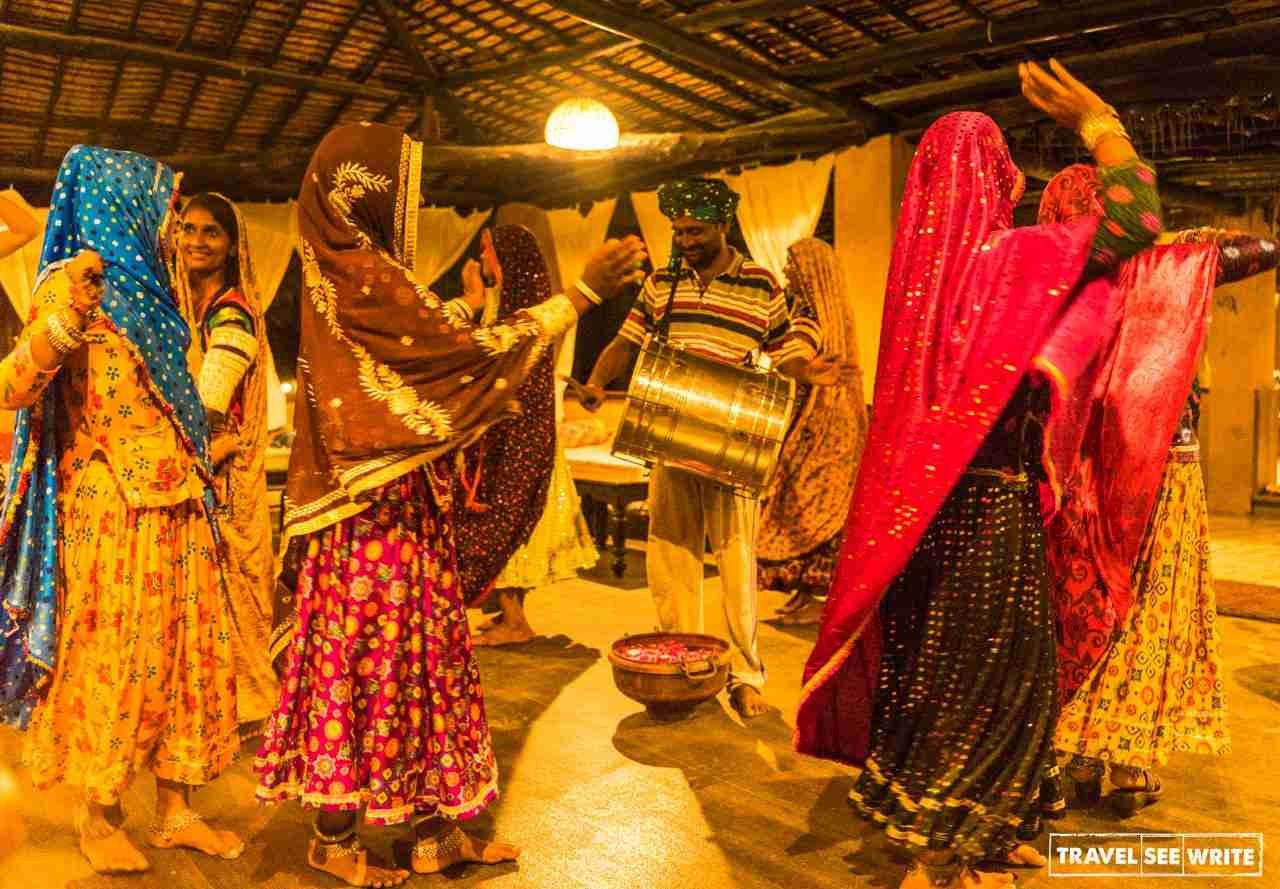
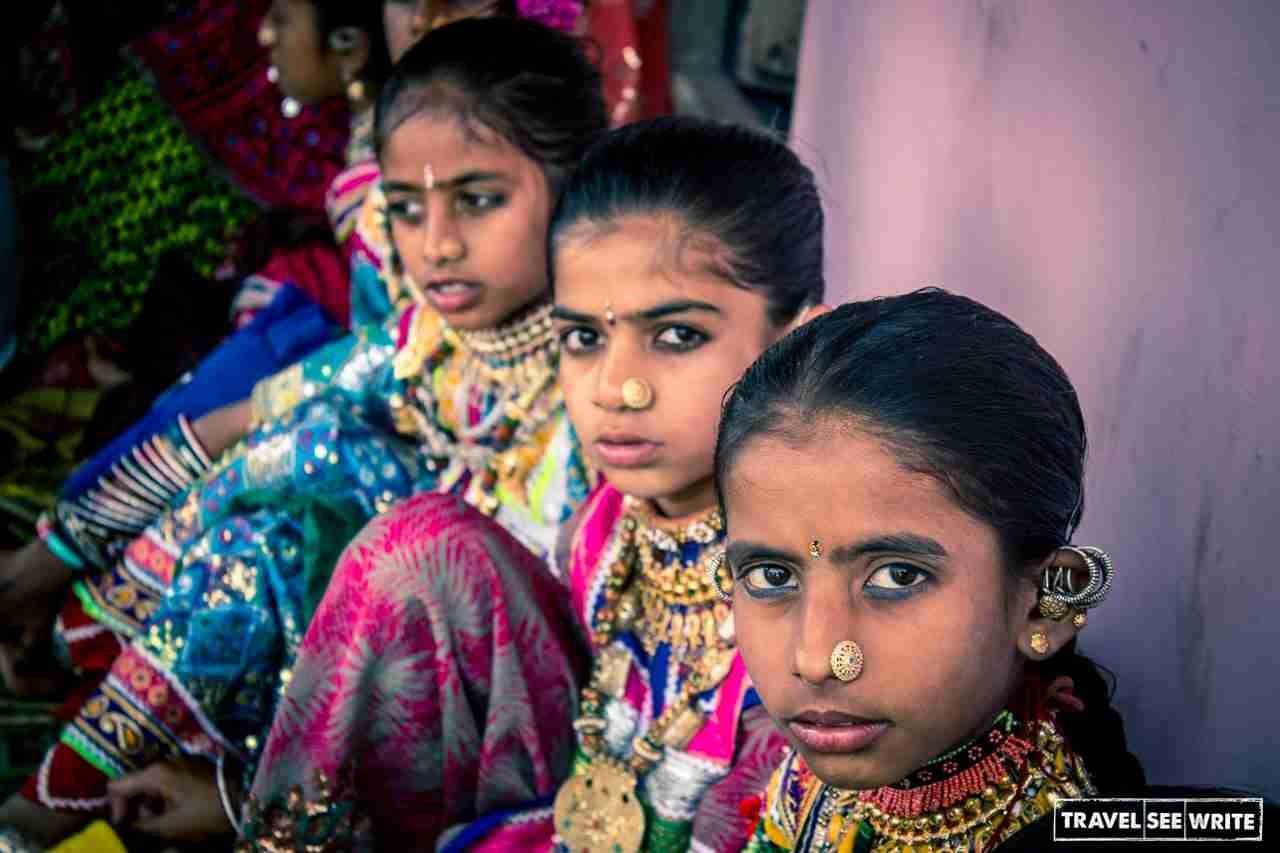
Experience: During my travels in Gujarat, I had the privilege of immersing myself in the daily lives of various tribal communities. Spending time with the Bhils, I witnessed the vibrant energy of their festivals, particularly the lively Bhagoria festival, which is a celebration of love and unity. The Garasia tribe welcomed me with open arms, their colorful attire and rhythmic dance forms filling the air with joy and tradition. Visiting the Rathwas, I was captivated by the intricate Pithora paintings adorning their homes, each mural telling stories of their gods and ancestors.
Cultural Insight: The tribes of Gujarat, such as the Bhils, Garasias, and Rathwas, are custodians of rich cultural traditions that have been passed down through generations. The Bhils, one of the largest tribes in India, maintain their unique customs and vibrant celebrations that reflect their deep connection to the land and their community. The Garasia tribe’s distinct dance forms and colorful attire offer a glimpse into their cultural heritage, while the Rathwas are renowned for their Pithora paintings—sacred art that embodies their spiritual beliefs and ancestral stories. These communities, with their resilience and cultural pride, highlight the significance of Indigenous knowledge preservation in our rapidly changing world.
As we celebrate World Tribal Day 2024, let’s take a moment to honor the rich cultural heritage of indigenous peoples around the world. Their traditions, wisdom, and resilience offer valuable lessons for us all. My journeys have shown me that these communities are not just surviving—they are thriving, adapting, and sharing their knowledge with the world.
Let’s make a commitment to support and protect indigenous cultures, ensuring that their voices are heard and their legacies preserved for future generations.
Discover the best places to visit in McLeod Ganj and Dharamshala with this 3-day itinerary. Explore hidden gems, serene landscapes, and vibrant culture in this enchanting destination.
I have had the pleasure of visiting Dharamshala and McLeod Ganj multiple times in the past two decades, and each time, my experience has been unforgettable. From hiking the Triund peak to paragliding in Bir Billing, I have always been able to explore the best places to visit in McLeod Ganj and Dharamshala, stumbling upon hidden gems along the way. However, my recent trip offered a fresh perspective – the monsoon magic of McLeod Ganj.
During my three-day adventure, I uncovered the top places to visit in McLeod Ganj, immersing myself in the region’s serene beauty, vibrant culture, and spiritual essence. With every step, my senses came alive, and I knew that this enchanting destination would forever hold a piece of my heart. Join me as I share my intimate journey and uncover the secrets of McLeod Ganj and Dharamshala.
If you want to explore the best things to do in McLeod Ganj and Dharmshala in just three days. You just need to plan efficiently, like I did. Here is my 3 to 5 days Itinerary to visit the best places in McLeod Ganj and Dharamshala.

I took the morning Indigo flight from Delhi to Dharamshala, then an hour-long journey from Kangra Gaggal Airport to my hotel – Fortune Park Moksha McLeod Ganj– in a private taxi. Upon my arrival in McLeod Ganj, I embarked on a journey of exploration, beginning with a visit to the tranquil Dal Lake, where the still waters mirrored the verdant surroundings. The cultural charm of Barnet Village unfolded before me, offering a glimpse into the traditional way of life in the mountains. As the day drew to a close, I ascended to Naddi Point, where the setting sun painted the sky in hues of gold and crimson, casting a mesmerizing glow over the Himalayan panorama.

The second day dawned with a visit to the historic St. John’s Baptist Church, a colonial-era gem nestled amidst lush greenery. A trek to the Bhagsu Temple and the cascading Bhagsu Waterfall immersed me in the region’s natural beauty, while a leisurely stroll through the bustling lanes of McLeod Ganj market offered a glimpse into the vibrant local life. The day culminated in a tranquil evening at the Himalayan Brew Tea Gardens, where the aroma of freshly brewed tea mingled with the mountain air, creating a sensory delight.
The third day of my journey was marked by visits to the serene Dalai Lama Temple. This spiritual oasis radiated peace and tranquillity. A 12-minute ride on the Dharamshala Ropeway provided panoramic views of the surrounding mountains. At the same time, visiting the Dharamshala Stadium offered a glimpse into the region’s sporting spirit. Each stop along the way added a layer to the rich tapestry of culture and spirituality that defines McLeod Ganj and Dharamshala.
The Dharamshala Cricket Stadium, also known as the HPCA Stadium, is in the picturesque town of Dharamshala, surrounded by the Dhauladhar mountains. It’s one of the most scenic cricket stadiums in India. The stadium has hosted several international and domestic cricket matches, including IPL matches, ODIs, and Test matches.
If you have additional days, you can plan your next days according to the suggestions below.
I recommend starting early if you want to enjoy the Triund Trek to its fullest, minus the crowds. Don’t try to do a day trek. Instead, camp at the peak under a blanket of stars, surrounded by the majestic mountains. It’s a surreal experience that will definitely leave you spellbound.
Before bidding adieu to this enchanting land, it’s a good idea to seize the opportunity to engage in Paragliding at Bir Billing, which is 70 km from McLeod Ganj and takes around 2-3 hours in a private Taxi and costs anywhere between ₹1,500 – ₹2,000. You can also take a bus from McLeod Ganj to Bir Road and then hire a taxi or walk to Bir Billing. The bus fare costs around ₹50 – ₹100 and takes around 3-4 hours. I had done Paragliding in Bir Billing in 2018, so I skipped this time.

You can read more about my Adventure Travel in India: Paragliding at Bir-Billing here.
In the three days I spent in McLeod Ganj, I explored almost all the region’s highlights, from the cultural enchantment of Barnet Village to the serene mystique of Dal Lake. Naddi Point’s sweeping panorama and the captivating Bhagsu Waterfall immersed me in the stunning beauty of the Himalayas. My curiosity led me to a rich and vibrant cultural experience, from the Bhagsu Temple to the McLeod Ganj market, St. John’s Baptist Church, Dharamshala Temple, Dharamshala Ropeway, Himalayan Brew Tea Gardens, and the Dharamshala Stadium, each contributing to a rich and vibrant cultural experience.
For those planning to explore McLeod Ganj and Dharamshala, consider setting aside 3-5 days to truly immerse yourself in the magic of this region. Let the Himalayas whisper their secrets to you as you embark on a journey of discovery and renewal amidst nature’s grandeur and spiritual grace.
As you plan your adventure to these enchanting destinations, here are some practical tips to help you make the most of your journey:
To fully experience the beauty and experiences of McLeod Ganj and Dharamshala, I recommend dedicating at least three days. This will allow you to explore the main attractions, savour the local culture, and engage in adventure activities.
The ideal time to visit McLeod Ganj and Dharamshala is during the spring (April-May) and autumn (September-October) seasons. The weather during these months is pleasant and perfect for outdoor activities and sightseeing. The monsoon season (July to September) offers a unique charm with lush green landscapes. However, both destinations have unique charms during all seasons, so the best time to visit depends on your preferences.
Dharamshala McLeod Ganj is well connected to the rest of India through road, rail networks and flights. Here are different ways to reach here:

By road: McLeod Ganj and Dharamshala are well-connected by road, and reaching these destinations by private car or public transport is convenient.
By Air: The nearest airports are Kangra-Gaggal Airport, Dharamshala (15 km from McLeod Ganj) and Amritsar (about 220 km from McLeod Ganj).

By train: The nearest railway station to McLeod Ganj is Pathankot, around 90 km away. From there, you need to hire a taxi or a bus to McLeod Ganj. The fastest train to Pathankot from Delhi is 22439 VANDE BHARAT EXPRESS. From Delhi, the train takes 5hr 10min hours to reach Pathankot. The train starts at 06:00:00 from Delhi NDLS and reaches Pathankot PTKC at 11:10:00.
McLeod Ganj and Dharamshala offer a range of accommodations to suit various budgets and preferences. While I stayed at Fortune Park Moksha McLeod Ganj, other options exist. Here is a list of the best places to stay in McLeod Ganj and Dharamshala:
Homestays and Guesthouses: For a more authentic experience, consider staying in homestays or guesthouses in McLeod Ganj. You can find options through websites like Airbnb and OYO Rooms.
Remember to research and book in advance, especially during peak season (June to September).
McLeod Ganj and Dharamshala in the Indian Himalayas mix culture, spirituality and adventure. Although I have shared my personal experiences of must-visit places and activities to indulge in McLeod Ganj and Dharamshala, ensure that you visit other areas too, such as Tsuglagkhang Complex, which is the home to Dalai Lama and Namgyal Monastery in McLeod Ganj; HPCA Stadium and Kangra Art Museum in Dharamshala. Go for scenic treks to Triund or Kareri Lake; check out local markets to buy handicrafts and souvenirs; and visit historical landmarks like St. John’s Church and War Memorial. Participate in cooking classes, workshops, yoga, and meditation retreats to experience Tibetan culture firsthand. Take part in volunteering projects, sample local dishes, or participate in cultural activities such as the Losar Festival or Diwali Celebrations. Whether you want spiritual growth, adventures or cultural assimilation, there is something for everyone at McLeod Ganj and Dharamshala.
Located in the Kangra Valley of Himachal Pradesh, McLeod Ganj and Dharamshala offer child-friendly activities and attractions.
At McLeod Ganj, families with older children can embark on a scenic trip to Triund while younger ones can enjoy picnics and playtime at the Bhagsu Nag waterfall. The Tsuglagkhang Complex, with the Dalai Lama’s home, is another must-visit, where children can learn about Tibetan culture and history. McLeod Ganj Market is a great place to introduce kids to local handicrafts, souvenirs, and street food.
In Dharamshala, kids can enjoy a scenic train ride through the Kangra Valley, while cricket enthusiasts can catch a game or take a guided tour of the HPCA Stadium. The Kangra Art Museum is another great place to explore local art, culture, and history. For an adventure, head to Yole Adventure Camp, which has activities like zip-lining, rock climbing, and rappelling. Families can also visit Lake Kareri, which is suitable for older children.
Both McLeod Ganj and Dharamshala offer children the opportunity to learn about Tibetan culture, with Tibetan cooking classes and yoga and meditation available. Families can also visit local schools to interact with students and learn about their culture. Nature walks and picnics are another great way to explore the mountains, forests and waterfalls found around these towns. McLeod Ganj and Dharamshala offer a mix of adventure, culture and leisure, making it an excellent destination for families with kids.
Although McLeod Ganj is not your stereotypical honeymoon or romantic destination, it is still very popular among couples and newlyweds. In McLeod Ganj, couples can witness the majestic sunset at Triund, take a romantic walk to Bhagsunag Waterfall, and explore the Tibetan Monasteries, including the Tsuglagkhang Complex and Namgyal Monastery. A stroll through the McLeod Ganj Market, trying local street food and shopping for souvenirs, is another delightful experience. Dharamkot Village, with its picturesque views of the Dhauladhar range, is also a must-visit. In Dharamshala, couples can enjoy a scenic train ride through the Kangra Valley, watch a cricket match, take in the panoramic views at the Dharamshala Cricket Stadium View Point, and explore the Kangra Art Museum. A romantic trek to Kareri Lake, surrounded by lush green forests, and a leisurely walk through Naddi Village, offering stunning views of the Dhauladhar range, are also highly recommended. Couples can also indulge in yoga and meditation sessions, Tibetan cooking classes, and romantic dinners at rooftop restaurants, making McLeod Ganj and Dharamshala an ideal getaway for a romantic escape.
Here’s a suggested itinerary for exploring McLeod Ganj and Dharamshala in 3 to 5 days:
Day 1: Arrive in McLeod Ganj on Day 1 and start by visiting the Tsuglagkhang Complex, the residence of the Dalai Lama. Afterwards, explore the McLeod Ganj Market, where you can try local street food and shop for souvenirs. If you’re feeling adventurous, trek to Bhagsunag Waterfall, a scenic spot surrounded by lush green forests.
Day 2: Visit the Namgyal Monastery, a beautiful Tibetan monastery that offers stunning views of the surrounding hills. Take a scenic walk to Dharamkot Village, which offers breathtaking views of the Dhauladhar range. End the day by enjoying sunset views of the hills and exploring the local cuisine and cafes.
Day 3: Take a day trip to Dharamshala, just 30 minutes away. Visit the Kangra Art Museum, which showcases local art and culture. Explore the HPCA Stadium and View Point, which offers panoramic views of the stadium and surrounding hills. Return to McLeod Ganj in the evening and enjoy a relaxing dinner.
If you have more time, consider adding Days 4 and 5 to your Itinerary.
Day 4: Trek to Triund, a scenic spot offering breathtaking views of the Dhauladhar range. Visit the Tibetan Museum, which showcases Tibetan art and culture. Explore the local shops and cafes and enjoy a relaxing evening.

Day 5: Take a scenic train ride through the Kangra Valley, which offers breathtaking views of the surrounding hills. Visit Kareri Lake, a picturesque spot surrounded by lush green forests. Depart from McLeod Ganj in the evening, bringing back memories of your wonderful trip.
This Itinerary combines culture, nature, and relaxation, giving you a well-rounded experience of McLeod Ganj and Dharamshala.
Take advantage of the opportunity to savour authentic Tibetan and Himachali Cuisine that you may not find in big cities. For Tibetan cuisine, you must try Momos, Thukpa, Tibetan Tea, Lhasa Kaleck, Momo Soup, Gundruk Soup, Bhaley, Chhurpi and Shapaley.
In Himachali cuisine, remember to try Kangri Dham, Babru and Siddu.
Remember to explore local eateries, cafes, and street food stalls to experience the authentic flavours of McLeod Ganj and Dharamshala.


And, if you love visiting small hole-in-wall eateries, I highly recommend you to visit the cafés in McLeod Ganj. From sweet treats at Crepe Pancake Hut and Woeser Bakery to coffee at Moonpeak Espresso and Asian cuisine at Common Ground Cafe and Snow Lion Restaurant. Jimmy’s Italian Kitchen serves Italian favourites, while Carpe Diem and Cafe Bogdo offer rooftop views. Shiva’s Cafe provides a cosy atmosphere, and The Other Space combines art and coffee. Each Cafe has its own unique charm, making McLeod Ganj a haven for cafe lovers.
The weather in Himachal can be unpredictable, so pack layers and be prepared for rain during the monsoon season.
Unlike other hill stations, the local culture of McLeod Ganj and Dharmshala is a unique blend of Tibetan, Indian and Himalayan influences.
The local culture is largely Tibetan, as Dharamshala is the exile home of the Dalai Lama. As a result, some of the most important Buddhist monasteries and temples can be found here. Buddhism occupies a predominant role, which is expressed in fluttering prayer flags wherever you go. You can see Buddhism in full swing during traditional events such as Losar and Navratri.
The Kangra region is well known for its warm hospitality, simple living, and respect for elders. It emphasizes community values more than individual life, encouraging residents to be spiritually conscious in all they do. You will find voices speaking in different languages, including Tibetan, Hindi, and English.
To better understand local society, I’d recommend participating in their festivals, visiting some of their monasteries, sampling various foods at nearby restaurants, or checking out multiple markets around. Also, get involved with locals by learning their customs and respecting their traditions. A true experience awaits you at McLeod Ganj/Dharamshala, as local culture is not only real but also wholesome.
If you’re someone like me who loves adventure sports, consider trying these adventure activities in McLeod Ganj and Dharamshala: trekking to Bhagsunag Waterfall (3-4 hours) and Triund (4-5 hours), paragliding in Bir Billing, visiting scenic Kareri Lake, and rock climbing and rappelling in Dharamshala.
Both McLeod Ganj and Dharamshala offer excellent hiking opportunities. Ensure you have the proper footwear and carry essentials like water and snacks.

Here’s a tentative budget breakdown for exploring McLeod Ganj and Dharamshala in 3 days:
Accommodation: Depending on your budget, season and requirements, accommodation can cost anywhere between ₹800 per night for a Budget hostel to ₹25,000 for a Luxury hotel per night.
Food: Street food and local eateries would cost anywhere between ₹200-₹500 per meal to ₹3,000 per meal at an upscale fine dining restaurant,
Transportation: Local taxis and autos could be anywhere from ₹100 per ride to ₹3,500 per day for private car rental.
Activities: From free activities such as Trekking and hiking (without a guide) to ₹2,000-₹5,000 per person for adventure activities such as Paragliding
Here is a rough estimated budget for spending 3 days in McLeod Ganj:
Budget-friendly: ₹5,000-₹8,000 (approx. $65-100 USD)
Mid-range: ₹10,000-₹15,000 (approx. $130-195 USD)
Luxury: ₹20,000-₹30,000 (approx. $260-390 USD)
Here is a breakdown of my budget:
Accommodation (3 nights at Fortune Park Moksha): ₹18,000 (approx. $234)
Flights from Delhi to Dharamshala (round-trip): ₹8,000 (approx. $104)
Private Taxi (airport transfers and local sightseeing): ₹7,500 (approx. $98)
Food and other expenses: ₹5,000 (approx. $65)
Total: ₹38,500 (approx. $503)
Note: These estimates are approximate and can vary based on individual preferences and exchange rates. A tentative budget of 30,000 INR should be sufficient for a couple to cover accommodation, meals, transportation, and activities. However, remember that prices may vary based on your preferences and choices.
Of course! As I reflect on my 3-day escapade to McLeod Ganj and Dharamshala, I’m still reeling from the unforgettable experiences that left an indelible mark on my heart. From the moment I stepped into the luxurious Fortune Park Moksha McLeod Ganj, I knew I was in for a treat. The majestic Kangra Valley unfolded its breathtaking panorama, and I was hooked.
My journey was a testament to the region’s mesmerizing beauty, warm hospitality, and endless possibilities for adventure. As I delved deeper into the local culture, I discovered hidden gems that made every moment worthwhile.
If you’re contemplating visiting these enchanting destinations, I say, ‘Go for it!’ McLeod Ganj and Dharamshala are a perfect blend of serenity and adventure waiting to be explored. Immerse yourself in the lush landscapes, soak up the vibrant culture, and create memories that will stay with you forever. Trust me, you won’t be disappointed. The beauty of Himachal Pradesh will capture your heart, and you’ll be yearning for more.
Explore the charming village of Hallstatt on a picturesque day trip from Vienna. Discover scenic views, historic sites, and local cuisine on your Hallstatt day trip.
If there is one village that best embodies Austria and whose picture is on display in every souvenir shop in Austria and elsewhere, it’s Hallstatt. Located in Austria’s mountainous Salzkammergut region within the district of Gmunden, this tiny village is considered to be one of the most beautiful and oldest inhabited settlements in Europe. When I visited Hallstatt, I realized why. This Upper Austrian town nestled on the shores of Hallstätter See (Lake Hallstatt) sits beside snow-capped towering Dachstein Alps and forests, and the houses have delightful Alpine architecture painted in bright yellows and reds. The town showcases 16th-century alpine houses, charming alleyways, aerial viewing platforms, ancient salt mines, peaceful lakes, hiking, shopping and more. It is a UNESCO World Heritage Site and a must-see day trip destination for many people visiting Salzburg, Vienna, and other major Austrian cities. Hallstatt is famous for the 7000-year-old Salzwelten, the UNESCO-recognized salt mines, which dates to prehistoric times. Here’s my account of a delightful day trip from Vienna to Hallstatt, filled with breathtaking landscapes, charming streets, and memorable experiences.
In the early morning, I boarded a bus from Vienna to Hallstatt. The meeting point was Albertinaplatz Maysedergasse, which was very close to the Hotel Bristol, where I was staying. Choosing a bus tour allowed me to relax and enjoy the beautiful scenery without the stress of dealing with transfers or finding parking. The bus journey lasted around 3.5 hours and took us through the picturesque Austrian countryside, providing stunning views of rolling hills, charming villages, and pristine lakes. Our bus made two stops – one at the Landzeit Autobahn restaurant for a quick coffee and restroom break and another at Schloss Ort, an Austrian castle supposedly built in 1080. Positioned on the artificial Traunsee Lake in Gmunden, 19 kilometres from Vocklabruck, it serves as the gateway to the Salzkammergut resort area. I crossed a wooden bridge and spent half an hour taking in the breathtaking views of the Erlakogel mountains surrounding me. The castle is popular among visitors and is often used as a location for pre-wedding photoshoots. Currently, the castle is being used as a study centre for the Federal Ministry for Land and Forestry.
After a quick break, we continued our journey to Hallstatt, a small village with a great history.
Upon arriving in Hallstatt, I was greeted by a thick veil of clouds and a thunderous downpour. However, it stopped soon, and I was able to enjoy the postcard beauty of this charming little Austrian town, which felt as if it was straight away picked from a storybook. Here’s how I spent my day exploring this enchanting village.
I started by visiting the Hallstatt Skywalk. You are required to buy a round-trip ticket for the Salzbergbahn funicular that costs €22 per person. However, it was part of my bus day tour pass. So I didn’t have to purchase it separately. The cable car opens at 9 am, and I recommend lining up prior to opening as it’s one of the most popular attractions in Hallstatt, and you don’t want to waste your time waiting in queue for long. The funicular took me from the valley station of Salzwelten Hallstatt up to an elevation of 838 meters in just a few minutes. It’s also possible to walk up the Skywalk if you’re up for the challenge and want to enjoy the breathtaking views along the way.

Once at the viewing platform, I understood why more than 10,000 visitors visit Hallstatt daily during peak season. As I reached the Skywalk Lift, clouds disappeared to reveal the stunning beauty of the Austrian Alps and Hallstatt Lake. Designated as a World Heritage Site, the Overlook Point is a popular tourist selfie spot in Hallstatt and definitely worth visiting. Perched 350 meters above the roofs of Hallstatt, the ‘World Heritage Skywalk’ unveiled a one-of-its-kind panoramic vista of Lake Hallstatt and the imposing mountain scenery.
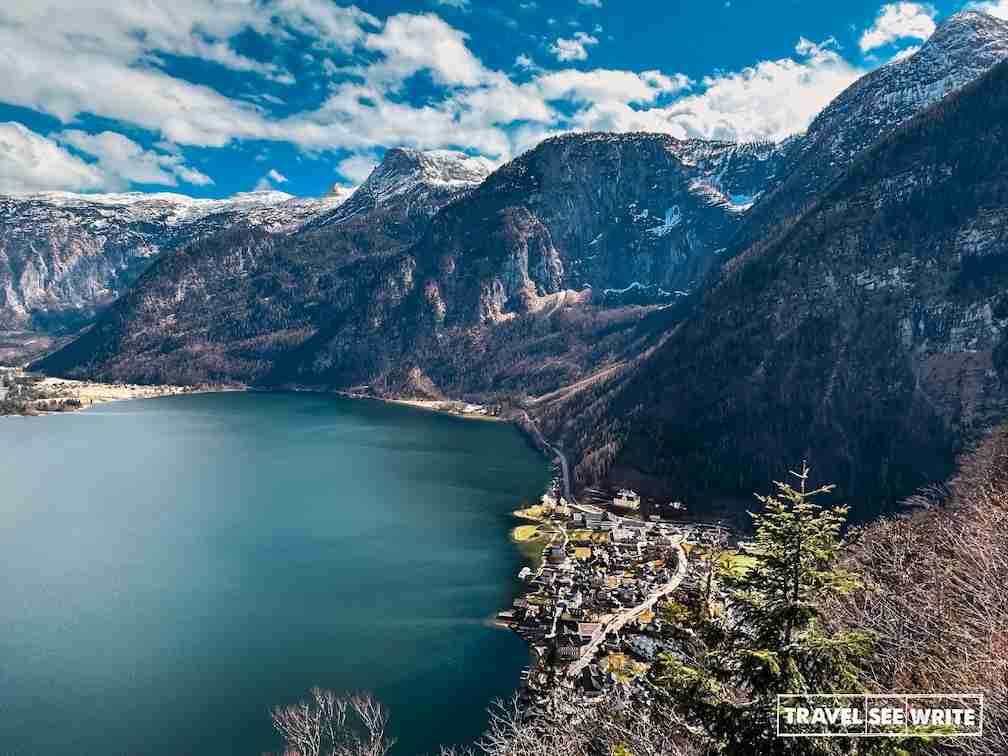
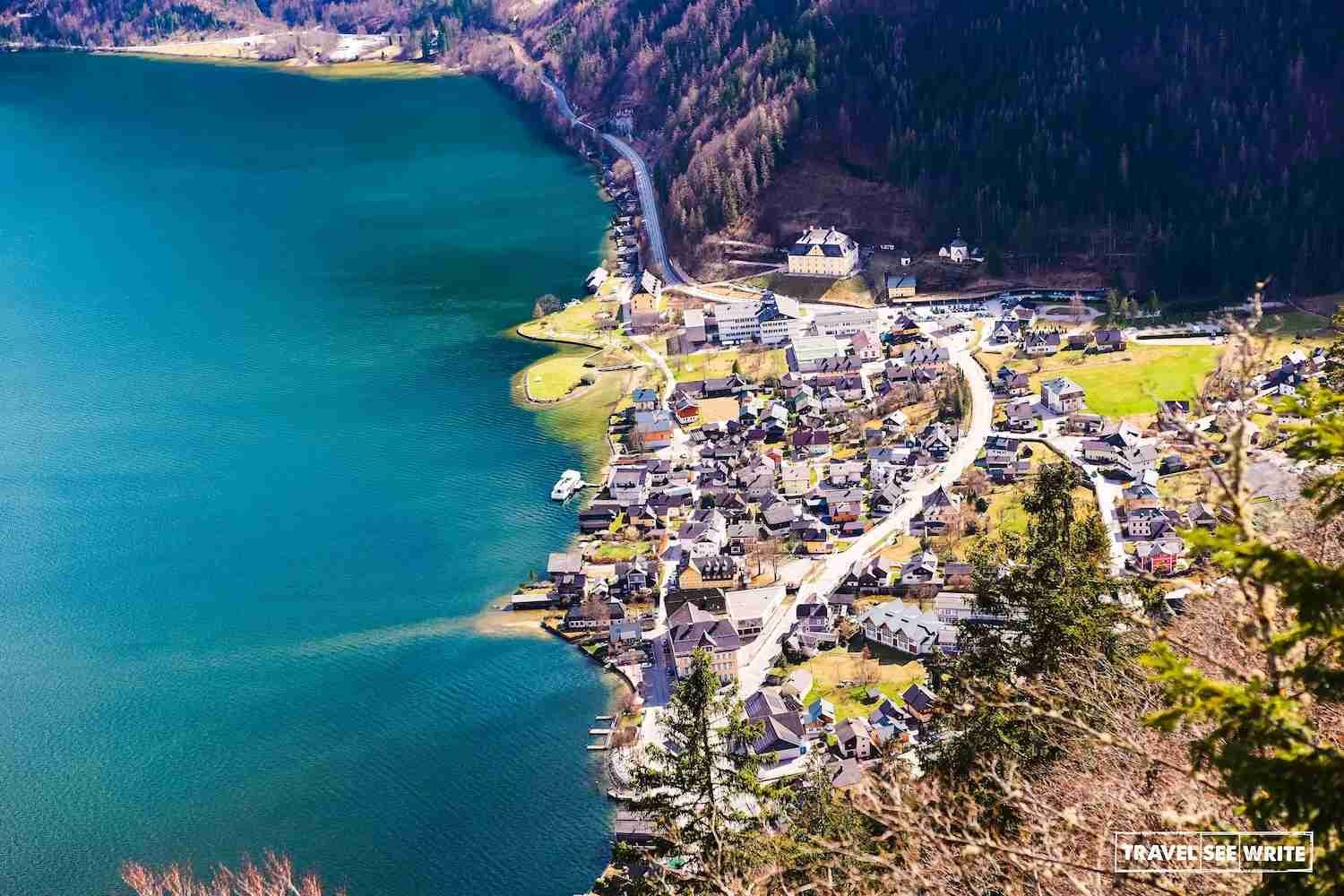
From the Skywalk, I gazed upon the expansive southern side, which is the widest and bordered by two coastal towns of Hallstatt and Obertraun. Obertraun is the place where the River Train flows into the lake. The triangular viewpoint platform was swarmed by visitors eagerly queuing up to get their selfies from the vantage viewpoint that has been showcased in so many Hollywood movies and series. Enveloping the entire scene, a vibrant tapestry of blooming wildflowers further accentuated the splendour of this cherished site. After spending close to half an hour at the top, we descended to see the rest of Hallstatt’s attractions.


Despite being small in size, Hallstatt is a culturally historic region with a history dating back to 1200 BC and tons of attractions to explore, not just a day but weeks. Here are the top things to do in Hallstatt in a day.
One of the main attractions of Hallstatt is its main square, located in the centre of the town, also known as Marktplatz. The walk from the cable car point to the main street that runs along Hallstatt Lake was an easy stroll on a pedestrian-only street. Here, I saw some very colourful and unique alpine houses, art galleries, souvenir shops, cafes, and restaurants. It felt like I was walking in a fairytale village or a film set. I was confused about what to shoot more – the beautiful swans on the lake or the artistic vine-covered bright alpine houses. I stopped more to click pictures than to walk.
Also, let me warn you, the main street is the most crowded area of Hallstatt, so during peak season, taking clean pictures is next to impossible without someone photobombing your shot. Since I visited in the offseason (first week of April), it was not too overcrowded, and I was able to shoot freely. In the main square, there was a charming Holy Trinity fountain. Hallstatt Market Square was the perfect spot to get my first taste of Hallstatt’s unique atmosphere. Since I was short on time, I didn’t spend much time here in the morning, but I did in the afternoon after I visited the two most famous churches of Hallstatt.
After I walked through the village and ascended the stone steps, I arrived at the Catholic Church of Hallstatt, situated on a small hill. The small Romanesque church in the World Heritage town of Hallstatt likely dates back to around 1181. The formidable tower from the 12th century still stands as evidence of this. Later, during the late Gothic period, they took the risk of constructing over the steeply inclining cliffs, completing the existing church in 1505. Since 1939, the church has been solely responsible for the well-being of the small parish, as well as welcoming friends and visitors. In 2002, a comprehensive renovation of the Catholic parish church was carried out.
Catholic Church in the Chapel of St. Michael, together with the famous Bonehouse and the cemetery, is undoubtedly one of the best free things to do in Hallstatt.
Beside the church, there is a small cemetery that offers beautiful views of Hallstatt Lake. It’s a tranquil spot, sitting high above the lake. What makes it interesting is the adjoining Bone House. Since Hallstatt is a tiny town sandwiched between the hillside and the lake, there wasn’t enough space for a proper cemetery, and cremation was not allowed by the Catholic church in the past. In 1720, the locals of Hallstatt came up with a unique tradition to address this issue. They temporarily buried the dead before exhuming them after 10-15 years. Their skulls were cleaned, painted with their names and lifespans, and then placed in the Bone House chapel next to the Catholic Church of Hallstatt. This practice was stopped in the 1960s, but nowadays, you can visit the Bone House for an entrance fee of €12, which is used for the restoration of the church. The small chapel houses over 1200 skulls, with more than 600 of them painted and sorted by family. It’s considered one of the must-do things in Hallstatt during a visit. If you are looking for things to do in Hallstatt in winter, this should undoubtedly top your list.

When you leave the church, you can continue along the top path of Hallstatt to experience more of this cute little town from a different perspective. But since I was getting late and was very hungry, I came back to the main square.
Next up on my one-day Vienna to Hallstatt itinerary was a treat for foodies. After searching for the best places to eat in Hallstatt, my friend Medha and I settled for a traditional Hallstatt restaurant —Café Derbl—right in the heart of the main square in Hallstatt. The service was slow but good. While my friend enjoyed the fresh fish from Hallstätter See with “Hallstatt Beer,” I relished a vegetarian salad with local wine. We couldn’t leave the place without trying their freshly baked cream rolls, Austrian Struddle. I was in heaven eating them. I haven’t eaten anything like this before.

After lunch, we continued our exploration of the village. I really wanted to go on a boat ride to see Hallstatt from a different perspective in the Hallstätter See, but we had spent too much time at the restaurant, so I did the next best thing—relishing the beauty of Hallstatt Lake from the shore. The boat ride on the lake was tranquil.

While returning to the parking lot, it started raining cats and dogs. I didn’t have an umbrella, so I had to take refuge in boutiques and souvenir shops filled with hand-crafted goods, local ceramics, and other unique items. I spent some time browsing and picked up a few souvenirs to remember my day trip from Vienna to Hallstatt.
Before heading back to Vienna, I strolled through the village’s narrow streets, each turn revealing another stunning view or hidden gem. The bus ride back to Vienna provided a chance to reflect on the incredible sights and experiences of the day.
Hallstatt, a picturesque village in Austria, boasts the world’s oldest working salt mine, which has a remarkable history spanning over 7,000 years. Nestled in the Upper Permian to Lower Triassic Haselgebirge Formation of the Northern Limestone Alps, the Hallstatt salt mine predates even the Roman era. This ancient mine is situated in the UNESCO World Heritage site of Hallstatt, perched high in the mountains above the charming village. To explore the fascinating Hallstatt Saltmine, visitors are required to take a funicular, conveniently located near the parking areas, the Hallstatt Lahn bus stop, and the boat docks.
Budget-saving tip: Hallstatt’s salt mine is touristy and twice as expensive as two other salt mines near Salzburg, Hallein, and Berchtesgaden while offering the same experience.
Nestled within Stone Mountain, the Ice Cave in Hallstatt offers a breathtaking opportunity to venture into a world of frozen waterfalls, mesmerizing ice formations, and intricate rocky caverns. Unearthed in 1910, this natural wonder stands as one of the unparalleled attractions in Hallstatt. To access this enchanting ice cave, an exhilarating gondola cable car ride through Dachstein Mountain awaits.
If you’re interested in taking a hike with stunning views of Hallstatt village, be sure to include a trek up Kalvarienberg mountain and past the Kalvatienbergkirche church on your list of things to do in Hallstatt. In the Hallstatt village periphery, overlooking the Obertraun road is a stunning Baroque-era treasure within the UNESCO World Heritage Region of Hallstatt Dachstein Obertraun: the Kalvarienberg Kirche or Calvary Church. Don’t just stop at the church, but continue upwards along the hiking trail. While on this path, you’ll be situated across from the village of Hallstatt, except when you’re on the Skywalk. As a result, you’ll enjoy magnificent views and capture photos of Hallstatt’s unique architecture. The initial viewpoint on that hike is even named “schöne Aussicht,” which means beautiful view.
Hallstatt is a small village in Austria known for its picturesque setting amidst the Salzkammergut Mountains and its charming old houses along the Alpine Lakes. It was designated as a UNESCO World Heritage site in 1997 and gained popularity in Asia after being featured in a South Korean romantic drama in 2006. A replica of the town was even constructed in China. However, due to its fame, the village faces issues with over-tourism, with over 3 million visitors annually, which is around 10,000 visitors per day during peak season, despite having only 750 residents. In 2023, locals protested against over-tourism by briefly erecting a wooden fence at a popular selfie spot to block the view of the lake and Alps. They advocated for limits on daily tourists and a ban on tour buses after 5 PM. This is part of a wider issue; according to McKinsey, 80% of travellers visit only 10% of the world’s tourist destinations, leading to infrastructure problems and local frustration.
If you plan to visit Hallstatt, consider AVOIDING a day trip and spending a few days exploring nearby attractions and visiting during the off-season.
Absolutely! A day trip from Vienna to Hallstatt offers a perfect blend of natural beauty, historical intrigue, and culinary delight. It’s a journey that enriches your Austrian adventure and leaves you with memories of a place that feels almost magical in its charm and tranquillity. Whether you travel by bus, car, or train, Hallstatt is a destination that should not be missed.

By thoughtfully planning your Hallstatt day trip from Vienna, you can make the most of your time and experience all that this enchanting village has to offer. So, pack your bags, book your tickets, and get ready for an unforgettable adventure in one of Austria’s most beautiful destinations.
This reflects a wider issue; according to McKinsey, 80% of travellers visit only 10% of the world’s tourist destinations, leading to infrastructure problems and local frustration. If you plan to visit Hallstatt, don’t just be a daytripper; consider staying for a few days, exploring nearby attractions, and visiting during the off-season.
Discover the ultimate guide to family road trips in Europe with an Electric Vehicle. Explore top destinations, rental tips, and the best EVs for a fun, eco-friendly adventure!

In 2009, I went on my first family road trip in Europe from Milton Keynes to a Caravan and holiday park in Snowdonia, Wales, UK. Since then, I have taken numerous road trips alone and with family and friends in the UK and Europe. With the increasing availability of charging stations and the rise of electric vehicles (EVs), EVs have become a popular choice for travellers. Recent trends in electric car sales show that over one in every five new car registrations is now an EV, reaching nearly 3.2 million in 2023 and increasing by almost 20% relative to 2022. Thus, Family road trips in Europe using an EV are now more attractive than ever. Whether it’s enjoying the scenic beauty of Switzerland, the historic charm of France, or exploring the vibrant cities of Germany, travelling in an electric vehicle is the way to go. Now is the perfect time to embark on a European car tour with your family and explore the continent using the best available travel vehicle.
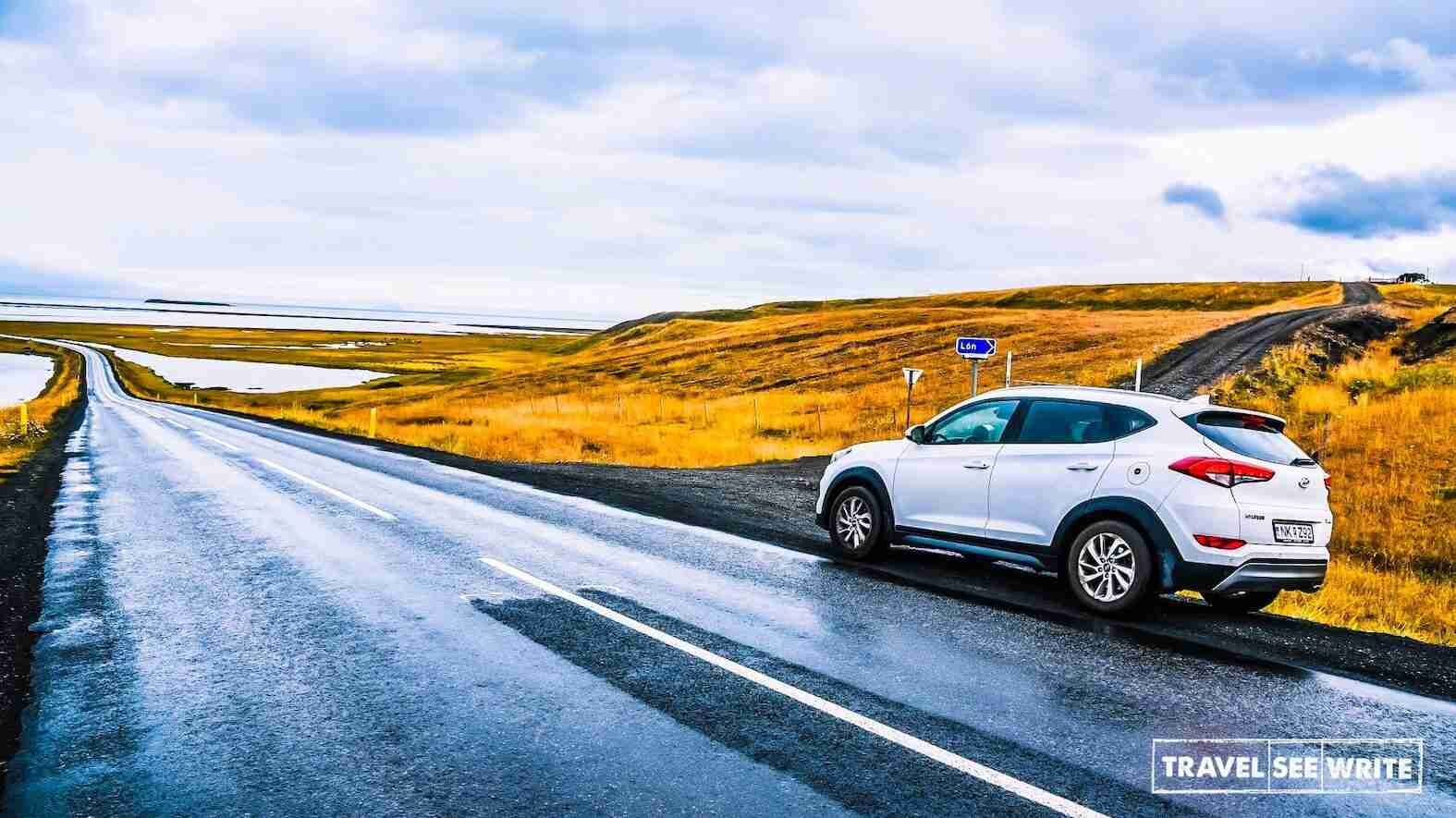
With the rising cost of flights and the lingering impacts of the pandemic, many families are opting for road trips. Electric car road trips offer an eco-friendly, budget-friendly, and adventurous way to explore Europe. Here’s why an EV road trip across Europe is the best choice:

According to new research by ATS Euromaster, staycations in the UK are more popular than ever, with over half of the UK population (56%) planning or already taking a trip within the UK this year. The UK offers numerous scenic routes and historic sites, from the charming countryside of Devon and Cornwall to the bustling city life of London. It’s also perfect for family road trips in Europe, especially with an electric vehicle (EV), as there is an extensive network of charging points, including rapid chargers, making it easy to explore the UK without worrying about running out of power. As per Electromaps, there are 20,771 charging stations for electric cars in the United Kingdom. It’s a good idea to check your EV charging route map beforehand and the average number of EVs per charging station. The full list of top UK staycation destinations, ranked by their suitability for EV drivers, can be found below:
| Rank | Destination | EV chargers | EVs in six-week holiday | EVs per charger | Potential wait time (hours) | Weighted ranking |
| 1. | Devon | 528 | 328,911 | 623 | 2 | 9.94 |
| 2. | Cornwall | 408 | 288,518 | 707 | 2 | 9.94 |
| 3. | North Wales | 97 | 213,503 | 2,201 | 6 | 9.80 |
| 4. | Scottish Highlands | 100 | 230,814 | 2,308 | 6 | 9.79 |
| 5. | Isle of Wight | 53 | 150,029 | 2,831 | 7 | 9.75 |
| 6. | Northumberland | 100 | 583,960 | 5,840 | 15 | 9.48 |
| 7. | Whitby | 9 | 57,704 | 6,412 | 17 | 9.43 |
| 8. | Lake District | 79 | 1,044,435 | 13,221 | 34 | 8.82 |
| 9. | Blackpool | 37 | 1,173,114 | 31,706 | 83 | 7.16 |
| 10. | The Cotswolds | 44 | 2,019,626 | 45,901 | 120 | 5.89 |
Offbeat Destinations: Head to the Scottish Highlands and the Lake District for stunning natural beauty and quaint villages. Don’t miss the coastal paths of Northumberland for a quieter, more serene experience.
France is a top destination for European car tours, offering everything from romantic cities to picturesque countryside. Paris, the French Riviera, and the Loire Valley are must-visit spots. As per Electromaps, there are 52,334 charging stations for electric cars in France. Do download their app before starting your road trip for real-time information. The Electric Car Charging France Map and real-time updates ensure you’ll find plenty of charging stations, making your journey stress-free. Paris is the city with the most charging stations in France.


Offbeat Destinations: Explore the lavender fields of Provence, the rugged coastline of Brittany, the drop-dead gorgeous towns of Lille and Le Touquet, or the historical treasures in the Dordogne region.
Related: 10 hidden gems of France you have not heard about, Beyond Paris: Sights and Bites of Northern France Cities, 10 reasons to look beyond Paris and visit Northern France

Germany is renowned for its efficiency and technological advancements, making it an excellent destination for electric vehicle (EV) road trips. You can explore Berlin, Munich, and the picturesque Black Forest with good preparation and a fully charged smartphone or tablet, giving you the confidence to start your electric car tour. Convenient charging stations are available at many locations, allowing you to blend necessity with leisure seamlessly. Aside from its sustainability, one of the best things about e-mobility is the opportunity to slow down and enjoy the journey. The required stops to recharge your car’s battery provide perfect opportunities to take breaks for sightseeing and enjoy a nice coffee and cake. You can enjoy a seamless journey across the country with a robust charging infrastructure. As per Electromaps, there are 75,308 charging stations for electric cars in Germany.
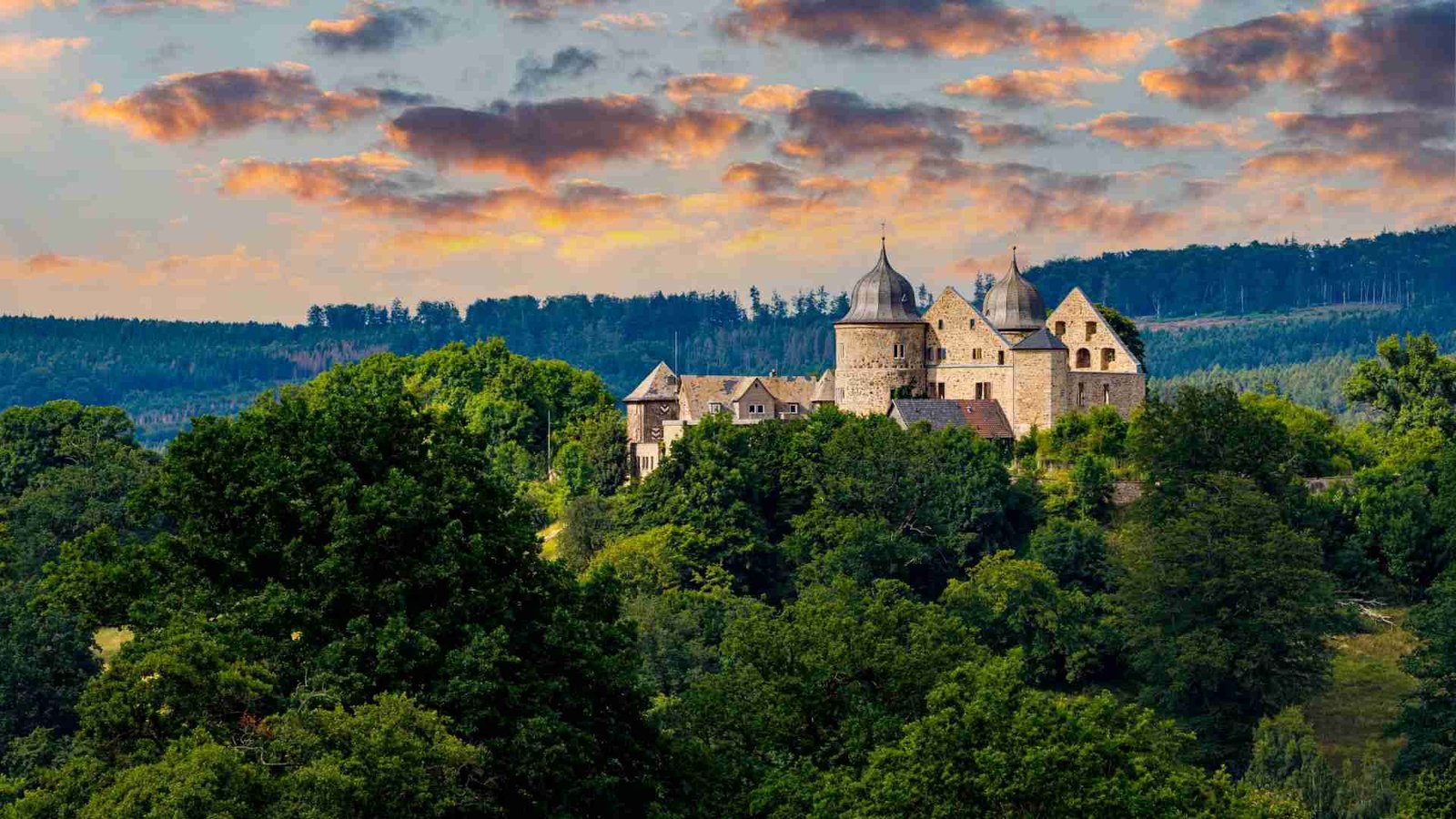
Offbeat Destinations: Venture to the Harz Mountains for medieval towns and hiking trails or the picturesque Moselle Valley for vineyards and quaint villages. Here are some slow travel ideas for Germany.

Although Switzerland is best explored by its unmatched Swiss train system (SBB), doing a Swiss Road Trip on an EV would be a great way to see Switzerland’s stunning landscapes and well-maintained roads, making it perfect for an electric car road trip. Visit the Swiss Alps, Lake Geneva, and Zurich. Switzerland offers numerous EV charging points, ensuring a smooth and picturesque journey. As per Electromaps, there are 7,009 charging stations for electric cars in Switzerland. In fact, Switzerland has come up with the E-Grand Tour of Switzerland, the world’s first road trip done in electric vehicles, covering over 1,600km through the whole of Switzerland, passing by all the country’s highlights. Discover the most beautiful lakes, Alpine passes and all the UNESCO World Heritage sites.
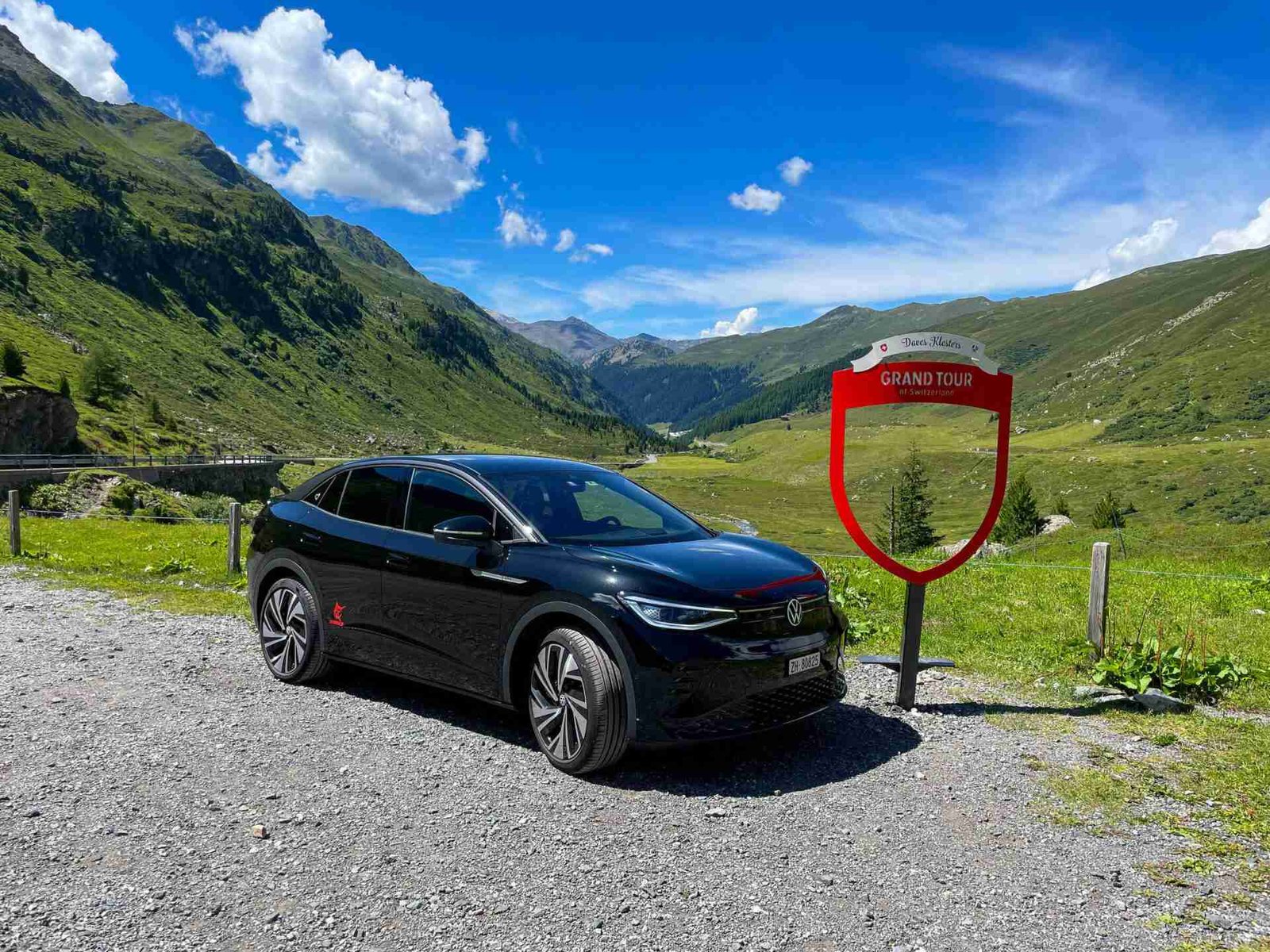
Offbeat Destinations: Discover the hidden gems of the Jura Mountains or the serene beauty of Lake Lucerne and its surrounding villages.
Related: Snow, Skiing and Stopover Switzerland in winters, Discover the best day trips from Interlaken: A 3-Day itinerary in Switzerland’s Alpine Paradise, Glacier Express – Is Switzerland’s most expensive train journey worth the price, Zermatt Travel Guide: From Hating to Falling in Love with the Majestic Matterhorn
Thanks to its dramatic alpine scenery and well-maintained roads, Austria is a paradise for electric vehicle (EV) drivers. While Vienna, Salzburg, Hallstatt, Zellamsee and Innsbruck are popular destinations, there are lesser-known areas that offer equally stunning views and experiences. I highly recommend taking the picturesque route from Salzburg to Lienz, which will lead you through Austria’s breathtaking Alpine scenery, passing charming villages, crystal-clear lakes, and majestic mountain vistas. Make sure to stop at the Grossglockner High Alpine Road for panoramic views of the surrounding peaks and glaciers.
Charging station availability in Austria is virtually non-existent. According to Electromaps, there are 16,251 charging stations for electric cars in Austria.
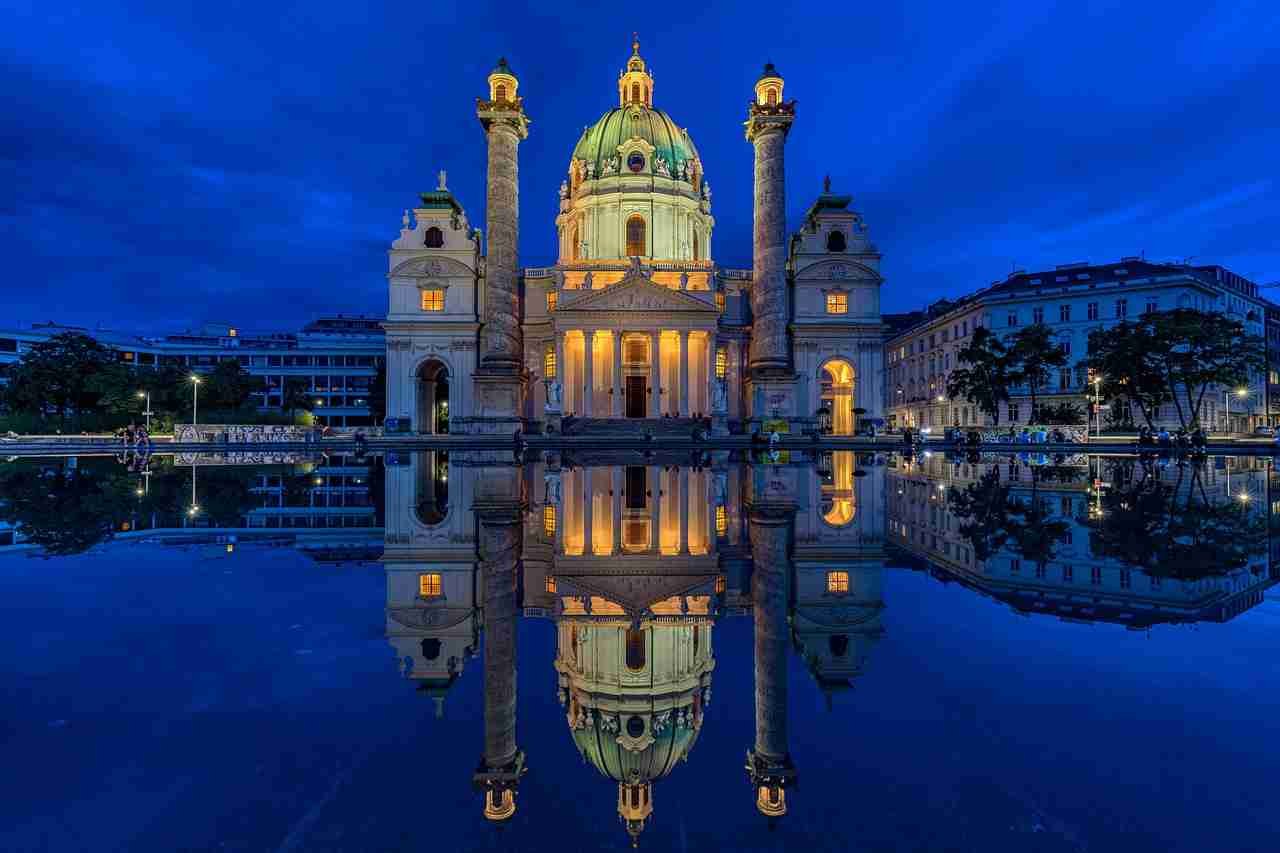
Offbeat Destinations: Drive through the Wachau Valley for its vineyards and historic towns, or explore the Salzkammergut region for its lakes and mountains.
Related: 5 Places To Visit In Austria – A First Timer’s Travel Guide, 48 hours in Vienna, a detailed Travel Guide for first-time visitors to the Austrian Capital
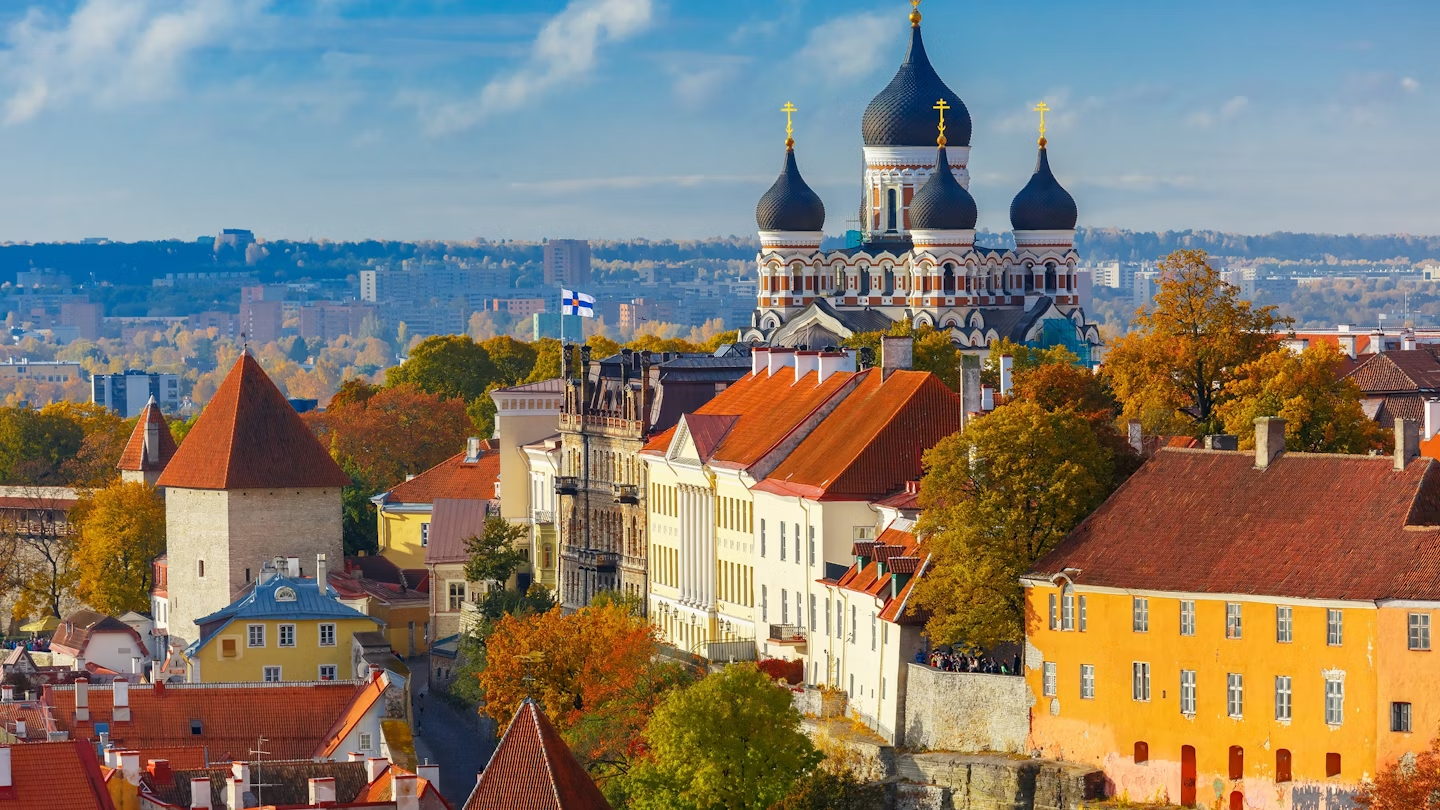
The Baltic States—Estonia, Latvia, and Lithuania—are becoming increasingly popular for road trips. Electric vehicle charging infrastructure is growing at a lightning pace. These countries offer a mix of medieval towns, pristine nature, and modern cities. As per Electromaps, there are 1,357 charging stations for electric cars in the Baltics region, with Lativa leading the pack.

Offbeat Destinations: Explore the national parks in Estonia, the coastal beauty of Latvia’s Kurzeme region, or the lakes and forests of Lithuania’s Aukštaitija National Park.
The Balkans offer a diverse range of landscapes and cultures. Croatia, Montenegro, and Bosnia & Herzegovina are particularly great for EV road trips, thanks to their growing charging infrastructure. In a significant push towards sustainable transportation, Croatia aims to install electric vehicle (EV) charging stations every 60 kilometres on all major roads by 2025.
Offbeat Destinations: Discover the stunning Plitvice Lakes in Croatia, the Bay of Kotor in Montenegro, or the historical charm of Mostar in Bosnia & Herzegovina.
Related: Exploring the Jewel of Croatia: Ultimate Guide to Visiting Plitvice Lakes National Park, Complete Travel Guide: From Zagreb to Plitvice Lakes, Croatia

Central and Eastern Europe’s captivating blend of diverse cultures and fascinating yet tumultuous history offers travellers a unique and immersive experience. From the medieval charm of the Czech Republic’s Prague to the remarkable natural beauty of Slovakia’s High Tatras mountains and the historic architecture of Poland’s Krakow, this region is a treasure trove waiting to be explored. Embarking on an electric vehicle road trip through these countries allows travellers to not only appreciate the scenic drives but also to embrace sustainable and environmentally friendly travel.

Offbeat Destinations: Visit the Tatra Mountains in Slovakia and Poland, Hungary’s Tokaj wine region, or the Czech Republic’s Moravia wine region.

Charging Infrastructure: While Western Europe has a well-established charging point network, Eastern Europe and some rural areas might pose a challenge. Always plan your route and charging stops in advance using tools like the Electric Car Trip Planner.
Language Barriers: In non-English speaking countries, you might encounter language barriers at charging stations or in rural areas. A translation app can be a lifesaver.
Pre-Plan Your Route: Use EV trip planners to map your journey and charging stops.
Keep Your Charge Between 20% and 80%: This ensures faster charging times and prevents you from getting stranded.
Opt for Rapid Charging: Choose charging stations with higher power ratings for quicker stops.
Avoid Tourist Spots: Charge your vehicle away from crowded areas to minimize wait times.
If you don’t own an EV, you can still enjoy the benefits of an electric road trip by renting one. Here are some of the best car rental companies and EV models suitable for family trips:



EVs can make family road trips more feasible on a budget. With lower running costs and the ability to avoid fuel expenses, you can allocate more of your budget to experiences and accommodations. Plan to find cost-effective charging options and consider staying at accommodations offering free EV charging.
Family road trips in Europe in an EV redefine eco-friendly travel. With the increasing availability of charging points and the numerous benefits of electric vehicles, there’s never been a better time to explore Europe on an EV road trip. Whether driving through the UK, France, Germany, Switzerland, Austria, the Baltics, the Balkans, or Eastern Europe, an electric vehicle ensures a cost-effective, environmentally friendly, and unforgettable journey for the whole family.
Plan your Family EV Road Trip in Europe today and discover the best travel vehicle for your adventures!

I Am a Frequent Flyer, and This is the Reason Why I Would Never Fly Air India Express and Alliance Air.

As a frequent traveller, I have a few basic expectations from any airline I fly— reliability, comfort, and safety. Unfortunately, my experience with Air India Express has consistently fallen short. Even after Tata’s takeover, my hopes for improvement were shattered. In this blog post, I’ll share my harrowing experiences flying Alliance Air (formerly Air India Regional) from Delhi to Gorakhpur and Air India Express from Delhi to Dubai.
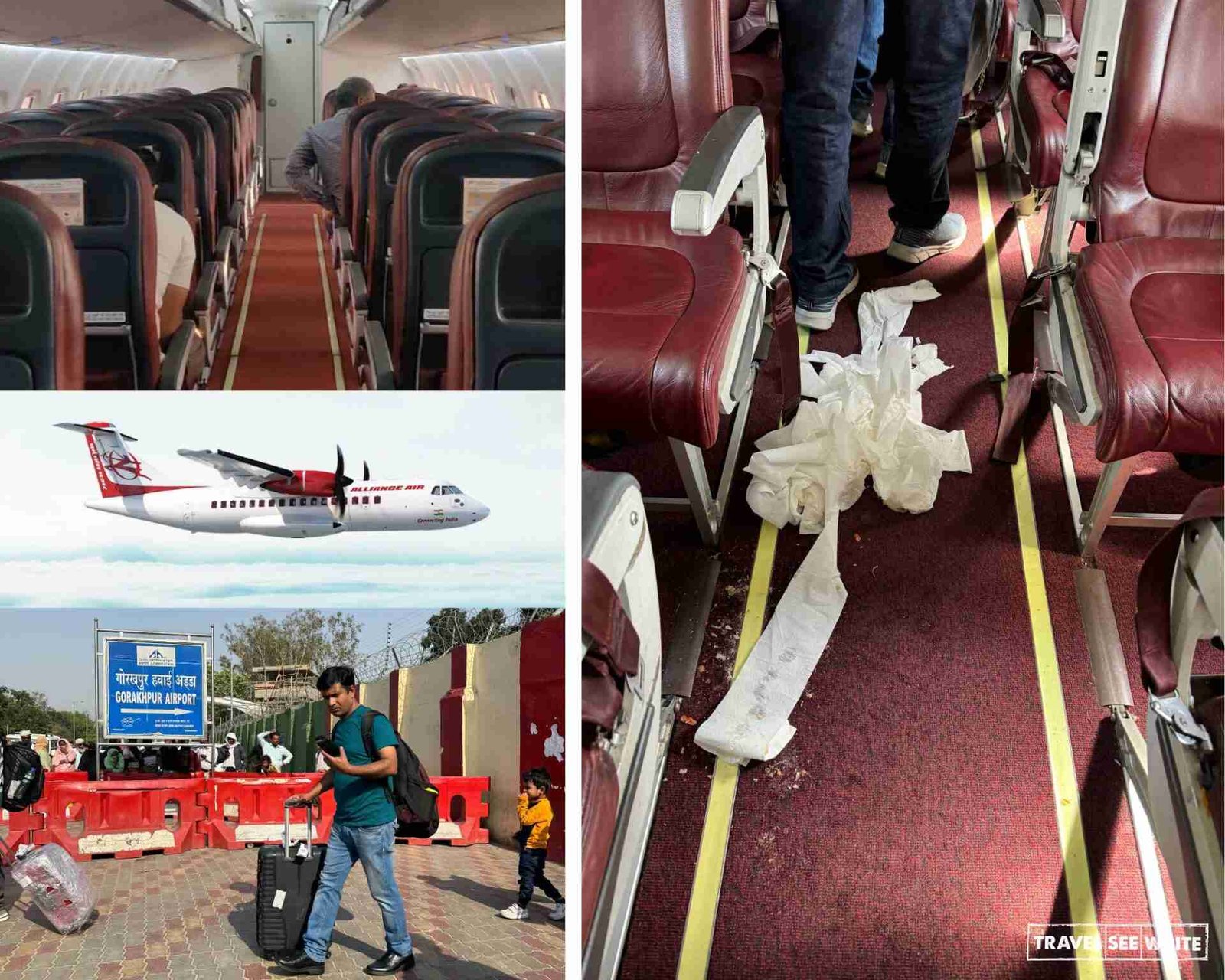
I originally booked a flight with Alliance Air, mistakenly thinking it was still operated by Air India. However, I later discovered that Alliance Air, previously known as Air India Regional, is now owned by the Government of India. The ticket booking process was smooth, web check-in with PNR went well, and I could easily check the flight status using PNR. But the actual flight experience was dreadful. You can find more information about Alliance Air route maps, schedule, destinations, fleet and other details on their official website.
From the moment the plane took off, it was clear this flight would be anything but smooth. The takeoff was one of the roughest I’ve ever experienced, with the plane shaking and rattling violently. Mid-air, the turbulence was relentless, causing widespread panic among passengers. The landing was no better—a hard, jarring thud that left many of us breathless.
Adding to the misery was the appalling cabin condition. The temperature inside the plane was a sweltering 45 degrees Celsius, making the environment almost unbearable. There were no sickness bags or tissues available. The severe turbulence led to many passengers becoming ill, and the lack of basic amenities meant the cabin was soon filled with vomit. Although the pilot did inform us that the mid-air turbulence was staff was polite, they were clearly untrained in handling a mid-air crisis.
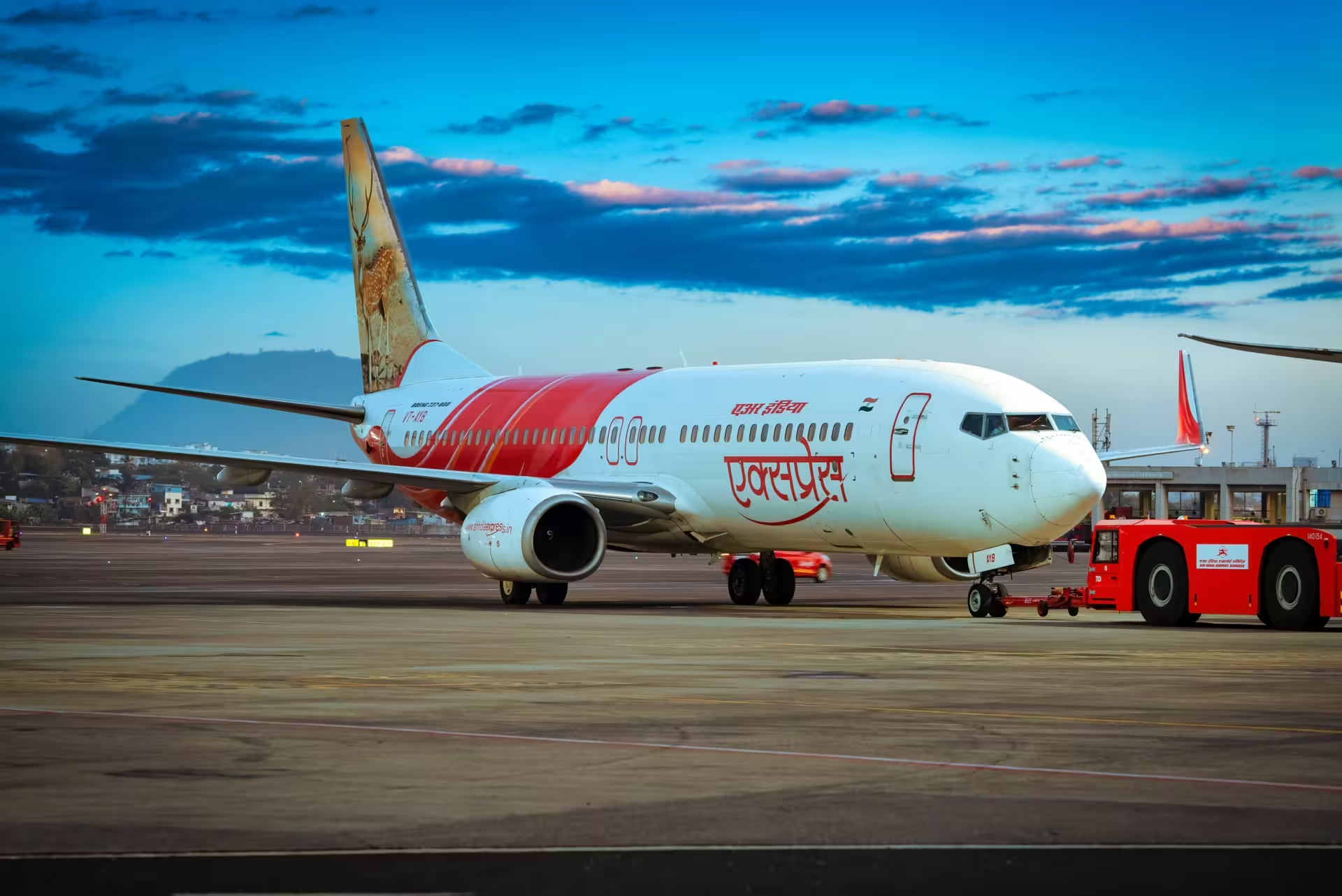
This wasn’t my first bad experience flying with Alliance Air or Air India Express. On a previous flight from Delhi to Dubai, I encountered similar issues. The flight was delayed by several hours without any communication to the passengers. No refreshments or water was provided. And, the misery didn’t end at the New Delhi Indira Gandhi Airport. The mid-air service was subpar, with indifferent flight attendants. The food served was a stale sandwich, and even for water, I had to beg the airline staff several times. One of the reasons why the crew behaved so abysmally rude could be related to the kind of travellers using it – most were labourers probably travelling for the first time in an aircraft and didn’t know the basic flying etiquette. Therefore, the airline crew could be a little indifferent towards them.
I have consistently been disappointed every time I have flown with Air India Express domestically, whether it’s from Chennai to Mumbai, Delhi to Ranchi, Gwalior to Guwahati, or any other route. When comparing my past experiences with Air India Express, it is evident that the issues are not isolated incidents but are systemic.
While the booking process, web check-in, and PNR status checks with Air India Express are relatively straightforward, the actual flight experience leaves much to be desired. Managing bookings can be cumbersome and frustrating, with confusing seat maps and disorganized processes. Changes in seat selection are rarely smooth, adding to the overall frustration.
It is important to understand the difference between Air India and Air India Express. While Air India is a full-service carrier offering a higher standard of comfort and service, Air India Express is a budget airline that does not provide the frills of a full-service carrier. It is a subsidiary of Air India and part of the Tata group.
Air India has over 150 direct nonstop Air India international flights to various destinations.
Air India, with its non-stop flights, connects to over 40 destinations globally. You can make use of seamless connections to over 710 destinations globally with multiple alliance partners through codeshare, interline and intermodal connections.
Air India flies direct nonstop to around 127 destinations worldwide (40 international and 87 domestic) and over 710 destinations globally with multiple alliance partners through codeshare, interline, and intermodal connections. As of date, Air India operates a fleet of both narrow-body and wide-body Airbus (A319, A320, A320neo, A321, A321neo, A350) and Boeing (777 and 787) aircraft that fly passengers and transport cargo worldwide.

Air India has introduced in-flight Wi-Fi services, becoming the first airline in India to offer internet connectivity on domestic flights. The service is available on domestic and international flights operated by Airbus A350, Boeing 787-9, and select Airbus A321neo aircraft, allowing passengers to stay connected during their journey. The best part is that Wi-Fi is offered complimentary for an introductory period.

On the other hand, Air India Express operates over 2,500 flights weekly across 31 domestic and 14 international airports, with a fleet of over 70 Boeing 737s and Airbus A320s. Despite being budget-friendly, Air India Express often falls short of even basic expectations, sometimes leading to a less favourable experience.

When it comes to flight status updates and reliability, Air India generally fares better. My experiences with Air India have been far more positive, with timely updates and a sense of professionalism. On the other hand, Air India Express often leaves passengers in the dark with delayed flights and poor communication.
Booking a flight with Air India Express can be a headache. While the initial process of flight booking and web check-in with PNR is not overly complicated, managing your booking afterwards can be a tedious task. Issues often arise with seat selection and changes, adding to the overall frustration.
Checking the PNR status and real-time flight status should be straightforward, but with Air India Express, it often turns into a waiting game. The information provided is not always accurate, leading to uncertainty and anxiety among passengers.
Air India Express is set to operate 28 weekly flights from Ghaziabad’s Hindon airport starting in August. Additionally, the new Noida International Airport at Jewar in Western Uttar Pradesh is expected to handle a significant portion of Air India Express flights. While these expansions may seem promising, they raise concerns about whether the airline can maintain or improve its service quality.
As a frequent flyer, the most critical factors are reliability, comfort, and safety. Unfortunately, Air India Express falls short in all these areas. From the lack of basic amenities to the poor condition of the aircraft, the airline fails to provide a satisfactory flying experience. My advice to fellow travellers is to be cautious when choosing Air India Express, especially for long or important journeys.
Flying should be a stress-free and even enjoyable experience. However, my experiences with Air India Express have been anything but. The constant anxiety caused by unpredictable turbulence, poor service, and inadequate facilities takes a toll on one’s mental well-being. It’s crucial to find an airline that provides peace of mind, not one that exacerbates flight anxiety.
For those seeking better flying experiences, there are plenty of alternatives to consider. Exploring other airlines that prioritize customer service and comfort is essential. While premium airlines might come at a higher cost, the difference in service quality can make the extra expense worthwhile. Planning ahead and choosing the right airline can significantly enhance your travel experience.

My experiences are not unique. Many other passengers have shared similar stories of discontent with Air India Express. Collecting testimonials and case studies reveals a pattern of dissatisfaction. These shared experiences highlight the widespread issues and reinforce the need for significant improvements.


While it’s challenging to find positive stories about Air India Express, they do exist. Some passengers have had decent experiences, albeit rarely. These exceptions, however, do not outweigh the overwhelming number of negative reviews. When compared to other budget airlines, Air India Express often falls short in delivering a satisfactory service.

If you find yourself needing to fly with Air India Express, there are ways to mitigate potential issues. Pre-flight preparations, such as packing necessary items and mentally preparing for possible turbulence, can help. Managing your expectations and staying informed about flight status can also make the experience slightly more bearable.
Coping with turbulence and dealing with motion sickness are vital skills when flying with Air India Express. Bringing your own remedies and staying hydrated can help manage these challenges. Additionally, dressing in layers can help you stay comfortable in fluctuating cabin temperatures.
Once you’ve survived a rough flight, it’s essential to focus on recovery. Filing complaints and seeking compensation for your troubles can provide some relief. Knowing your rights as a passenger empowers you to demand better service and accountability from the airline.

Air India Express needs to significantly overhaul its service standards. Training staff to be more professional and responsive is crucial. Improving in-flight amenities, such as providing sickness bags and maintaining a comfortable cabin temperature, is a basic necessity that should not be overlooked. Building trust with passengers through accountability and transparency can go a long way in restoring the airline’s reputation.
The airline must prioritize aircraft maintenance to address technical and safety issues. Ensuring that planes are in good condition and that cabin environments are comfortable is vital. Maintaining hygiene and cleanliness is also crucial in providing a sanitary and pleasant travel experience.
In summary, Air India Express falls short of providing a reliable, comfortable, and safe flying experience. As a frequent flyer, it’s essential to make informed travel decisions based on past experiences and available alternatives. Empowering travellers with knowledge can help them avoid similar disappointments.
For now, I’ve decided I would never fly Air India Express and would prefer flying on other airlines that prioritize quality service and passenger comfort. While I hope that Air India Express will learn from its mistakes and improve, my commitment is to choosing better travel options. Here’s to safe travels and better flights for all.

Explore the best places for chocolate lovers in the world! From the Swiss Chocolate Train to Belgium’s chocolate factories and Japan’s innovative Kit Kat Chocolatory, discover the ultimate chocolate travel experiences. Plan your sweet adventure today!

On July 7th, World Chocolate Day, a global celebration of the sweet pleasure we all love, presents the perfect opportunity to not just indulge in chocolate but embark on a journey to the best places for chocolate lovers in the world. This day, dedicated to the appreciation of chocolate, is a perfect starting point for your chocolate travel adventure. Whether it’s exploring the picturesque Swiss Alps or venturing into the lush cocoa plantations of Central America, these locations afford chocolate aficionados the chance to delve deeply into the rich history and diverse flavours of this beloved confection.
Here, I’ve compiled a collection of must-visit, best places for chocolate lovers in the world. As you plan your chocolate adventure, I encourage you to consider sustainability when choosing a chocolate destination. These locations are best experienced during the summer, winter, or at any time of the year.
Known as one of the best destinations for chocolate lovers, Switzerland is renowned for its high-quality chocolate and is often considered the best country for chocolate. In 1875, Daniel Peter, with the assistance of Henri Nestle, invented milk chocolate in this picturesque country. Switzerland’s chocolate legacy can be credited to pioneering visionaries like François-Louis Cailler, who established Switzerland’s first chocolate factory in 1819, and Jean Tobler, the creator of the iconic Toblerone bar, in 1908. These innovators laid the foundation for Switzerland’s reputation as a chocolate powerhouse, and the Swiss Alps region is a famous place for chocolate enthusiasts.

The Swiss are known for their exceptional craftsmanship and the unique flavour of their chocolates, thanks to the secret ingredient—Swiss Alpine milk. Switzerland truly offers some of the best chocolate in the world. When I visited Switzerland, I was blown away by the chocolates’ sheer variety and quality. The secret ingredient, Swiss Alpine milk, is a key factor in Swiss chocolates’ unparalleled creaminess and flavour. This milk, sourced from cows grazing in the pristine Swiss Alps, is known for its rich and creamy texture, which adds a unique dimension to Swiss chocolates. It’s no wonder Swiss chocolates are so revered worldwide and considered a top contender among the best places for chocolate lovers in the world.


Best time to visit: The Swiss Chocolate Train runs from May to October, and the rest of the attractions, including Lindt Home of Chocolate and Jungfraujoch “Top of Europe”, are open year-round.
Belgium is undeniably one of the best chocolate destinations in Europe and has earned the title of the Chocolate Capital of the World. The country is famous for its pralines, truffles, and high-quality chocolate bars. Belgian chocolatiers have perfected the art of creating delicate and delicious confections that are enjoyed worldwide.
During my trip to Belgium, I discovered why it’s known as the chocolate capital of the world. Belgian chocolates blend tradition and innovation, creating a unique experience with every bite.

Best time to visit: Spring and autumn are ideal for avoiding the summer crowds while still enjoying Belgium’s mild weather.
France is renowned for its gourmet chocolate creations, with Paris being the epicentre of artisanal chocolate shops. French chocolatiers are celebrated for their creativity and attention to detaiGouchocolatier’se of the world’s most elegant and flavorful chocolates.
Paris is a chocolate lover’s utopia. Each shop is an adventure, and the chocolatiers here are true artists.

Best time to visit: Paris is a year-round destination, but spring and fall offer pleasant weather and fewer tourists.
Mexico, the birthplace of chocolate, has a rich history dating back to the ancient Mayans and Aztecs, who revered cacao as a sacred food. The unique flavours of Mexican chocolate, often infused with spices such as cinnamon and chilli, will give you a taste of this rich history.

Exploring Mexico’s chocolate country was a revelation. The flavours are rich and varied, and the history is deeply intertwined with the culture.
Best time to visit: The dry season, from November to April, is the best time to visit.
Ecuador is one of the world’s top producers of fine-flavor cacao beans. The country’s diverse climate and fertile soil produce some of the best-quality chocolate, known for its complex flavours and rich aroma.

Ecuador’s chocolate scene is vibrant and exciting. The focus on sustainability and quality is evident in every bar.
Best time to visit: The dry season from June to September is ideal for exploring cacao farms.
Japan may not be the first place that comes to mind when you think of chocolate, but it’s home to some of the most innovative and unique chocolate experiences in the world. Japanese chocolatiers are known for their creativity, blending traditional techniques with modern flavours.

Japan’s chocolate scene is unlike any other. The blend of tradition and innovation creates a truly unique chocolate experience.

Best time to visit: Spring (March to May) and autumn (September to November) are the best times to visit Japan for pleasant weather and beautiful scenery.
These are just a few of the world’s best destinations for chocolate lovers, and there are many more places for chocolate enthusiasts to explore. No matter where you choose, the best gifts for chocolate lovers can often be found as unique and delectable chocolates from these renowned destinations.
As a chocolate lover, incorporating sustainability into your chocolate adventure is important. Look for chocolatiers and brands that practice ethical sourcing and fair trade. Many destinations mentioned above, such as Pacari in Ecuador and Swiss chocolate brands, are committed to sustainability. Supporting these brands ensures that your chocolate indulgence is both delicious and responsible.

If you love chocolates or want to give the best gift to a chocolate lover, then do plan a trip to any of the best places for chocolate lovers in the world, but do consider the following tips before booking a trip:
So, pack your bags and get ready to indulge in the world’s finest chocolates!

Chocolate lovers, take note! These destinations offer more than just delicious treats. They provide a deep dive into the history, culture, and craftsmanship behind some of the world’s best chocolates. From the lush cacao plantations of Ecuador to the innovative chocolate shops of Japan, each destination offers a unique and unforgettable experience. Immerse yourself in chocolate’s rich history and craftsmanship by visiting the chocolate factories in Belgium, experiencing the enchanting Chocolate Train in Switzerland, and exploring the best chocolate shops in the world. Whether you’re seeking the perfect gift for chocolate lovers or simply looking for an unforgettable chocolate travel experience, these destinations will surely provide an indulgent and memorable journey into the world of chocolate.

What to see in Kushinagar? Our travel guide traces Buddha’s steps to liberation and highlights must-visit Kushinagar temples.
Is it possible to be spiritual without being religious?
Yes, while religion and spirituality are interrelated, they are different from each other. Spirituality is an individual practice and belief in some form of superpower. In contrast, religion is centred on a set of organised practices that a larger group shares. Although born in a Hindu family, I see myself as more spiritual than religious. I don’t believe in the rituals or following any particular religious practices but in the power of supreme power. And I keep looking for the spiritual connection in that divine power through nature and acts of kindness. I do not differentiate between religions or their places of worship. I am not even averse to visiting them as there is always something to learn from them. Recently, I had the opportunity to visit several religious sites in Uttar Pradesh, such as Gorakhnath Temple in Gorakhpur, the newly built Ram Mandir in Ayodhya, and the final resting place of Lord Buddha in Kushinagar.
My spiritual journey to the last place was wholly unplanned and serendipitous. In the last week of April, I visited Gorakhpur to attend the UPTM 2024. An impromptu trip to Kushinagar was made in a jiffy, and the following day, I was on the road to Kushinagar. Frankly, before visiting Gorakhpur, I had not heard about Kushinagar and why one should see it.

Kushinagar is a district in the eastern part of Uttar Pradesh, India, located on National Highway 28, about 53 kilometres east of Gorakhpur. It’s a holy place of pilgrimage for Buddhists because it’s where Lord Buddha is said to have died and attained nirvana, breaking free from the cycle of rebirths.
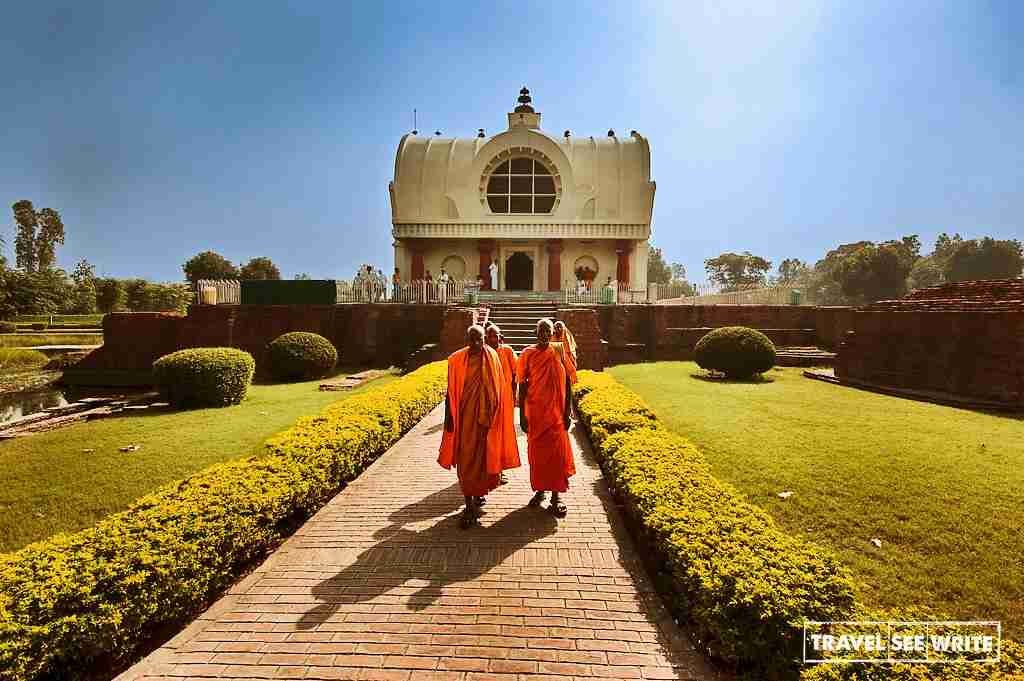
Now, Kushinagar may not be as well-known as Lumbini or Bodhgaya, but let me tell you, it’s a hidden gem of Buddhist heritage. This holy place of pilgrimage for Buddhists holds immense religious and historical significance as it is the sacred site where Lord Buddha is said to have taken his last breath and achieved ‘Mahaparinirvana’, breaking free from the cycle of rebirths. Culturally, Kushinagar is a living testament to Buddhist traditions, attracting monks, scholars, and pilgrims from worldwide. What sets this town apart is its peaceful atmosphere and profound spiritual heritage. Despite not being in the spotlight, the charm of Kushinagar lies in its simplicity and deep spiritual resonance.
While exploring the sleepy town, I was intrigued to learn the old name Kushinagar. I met an old Buddhist who stayed in the monk’s quarters and was patient enough to talk to me. He explained,
Kushinagar, in the olden days, was known as Kushavati and later as Kusinara.
While talking to him and exploring the old sites, I realised that these ancient names reflect the town’s deep-rooted importance in Buddhist lore and its long-standing spiritual legacy.
I reached my destination around 11 am. It was blistering hot, and the mercury was touching 45 degrees Celsius. Despite the heat, I could cover the city’s major attractions. Here is a list of must-visit places in Kushinagar.
Kushinagar is home to several sacred sites that are visually stunning and spiritually enriching. The monuments here are clustered in three groups: 1) the Mahaprinirvana site, the central Stupa, and the surrounding monasteries, 2) Mathakuar Kot, and 3) the Ramabhar Stupa.
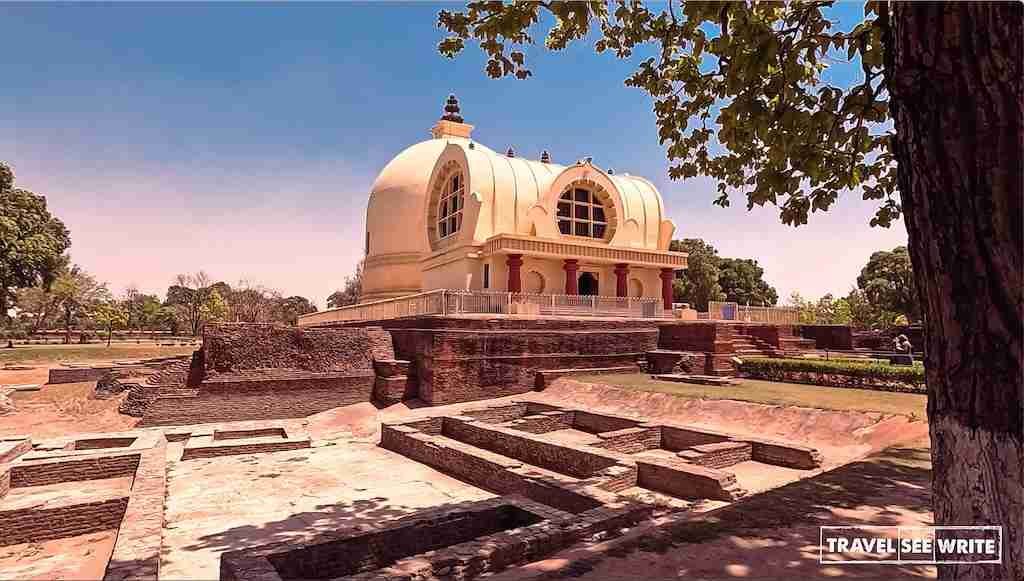
Walking through a Buddhist monastery, I arrived at one of Kushinagar’s biggest draws—the Parinirvana Stupa or Mahaparinirvana Temple. This ancient temple is revered by Buddhists worldwide because historical records indicate that Gautam Buddha attained liberation from the cycle of birth and death at the age of 80 at this location.
Barring a few locals, there were few tourists around. A tiled path snaking through manicured lawns, shaded green trees and scattered ruins of various monasteries brought me to the beige-coloured, revered sacred site of Kushinagar Temple.
Outside the Mahaparinirvana temple were several plaques in different languages with information about the temple. Archaeological evidence from the 3rd century BCE suggests that Kushinagar was an ancient pilgrimage site where King Ashoka built a stupa and placed a pillar to mark Buddha’s attained Mahaparinirvana.
Later, in 1866- 1877, British archaeologist Alexander Cunningham excavated the remains of the main Mahaparinirvana Stupa and the 6.1m reclining Buddha statue dating back to around 637 AD. The reclining statue of Buddha symbolises his peaceful passage into nirvana. The present-day Parinirvana Stupa was reconstructed by the Indian Government in 1956 to mark the 2,500th year of the Mahaparinirvana. The Parinirvana Stupa’s height is 65 feet (19.8 meters). Surrounding the Stupa, visitors can meditate or explore the compound’s numerous historical artefacts and sculptures.
When you look closely at the Parinirvana Temple, you’ll realise it is built in a traditional Buddhist style. Walking up the brick stairs, you enter a room with a 6.1m long reclining Buddha statue carved from a single sandstone block. The statue displays Lord Buddha reclining on his right side, looking towards the west, in a meditation pose, symbolising his state as he entered Mahaparinirvana. Daily, followers come together to present their prayers and meditate, particularly those travelling the Buddhist Pilgrimage Circuit. The site is vivacious during Buddha Purnima, or Buddha’s birthday celebration in May.
The Mahaparinirvana temple is a place of spiritual and religious significance. Still, it also holds immense archaeological value, showcasing ancient artefacts and remnants of Buddhism’s rich cultural heritage. However, it was only sometimes this way. Initially, the temple lay in complete ruins, with the Buddha sculpture and the entire structure shattered. Thanks to the efforts of the Indian Government, it was restored to its former glory in 1956. Even today, the main temple is surrounded by the remnants of ancient stupas.
After spending half an hour at the Stupa, I walked to the nearby Burmese Japanese Golden Stupa.

Popularly known as the Burmese Temple or Golden Stupa by the locals, this Japanese temple is one of the unique structures and is among the most-visited tourist destinations in Kushinagar. The temple is a marvel of Buddhist architectural grandeur of modern times and is the tallest Buddhist structure in Kushinagar. The Atago Isshin World Buddhist Cultural Association built this Kushinagar temple, which was generously funded by the Japanese monarchy.
The statue was originally brought from Japan in a dismantled form and was finally given shape here. Life-size statues of monks and religious luminaries add to the temple complex’s overall spiritual atmosphere. Unfortunately, the circular chamber of the Golden Stupa was closed, so I couldn’t see it from inside. Still, I did my parikrama around the Stupa. The 13-year-old kid who runs a snacks-cum-souvenir shop outside the temple said,
Didi aap Janauary mein aana yahan. Tab bahut bada mela lagta hai.
Sri Lanka Japanese Temple is another Buddhist Temple designed and built by the Atago Isshin World Buddhist Cultural Association in Kushinagar. Like the Burmese Temple, the Japanese monarchy bore the cost. As you enter the gate and cross the lawn, a flight of stairs leads to the main shrine, a brick dome structure.
Although the Indo-Japanese-Srilankan Temple apparently indicates the cooperation of the Buddhist devotees from the three countries in the construction, the fact, however, is that the famous Ashta Dhatu, or an eight-metal alloy idol of the Buddha installed in it, was imported from Japan. It was in two pieces when it was brought to Kushinagar and assembled into its present form at the temple.
The ash of the Buddha’s idol has been placed in a magnificent circular chamber in the temple. Soft light filtering from the stained glass windows falls upon the idol, giving it a unique spiritual radiance and peaceful ambience. The Buddha’s statue is flanked by portraits of his ten main bhikus crafted in Japanese style.

Another must-see Kushinagar temple is the Wat Thai Kushinara Chalermaraj Temple, also known as Wat Thai Temple by Buddhists. It was constructed to honour the fiftieth anniversary of King Bhumibol Adulyadej’s ascension to the throne of Thailand. Somdej Phra Yansangvara, the highest Patriarch of Thailand, started building the temple on 21 February 1999. It was finished and made accessible to the public in 2001. The funds for its creation were mainly collected through donations from Thai Buddhists.
The temple was initially conceived as a forest monastery located amongst dense growth of various trees, shrubs, and plants. Built in the Thai-Buddhist architectural style, it is located in a vast complex sprawling over ten acres with serene gardens, providing a peaceful retreat for meditation and reflection.
Besides the temple, the complex also houses a monastery, garden, health centre, school, and library. It is one of Kushinagar’s most beautiful tourist destinations and is visited particularly by thousands of pilgrims from Thailand annually. Its massive structure can be seen from all parts of the city. When I visited, photography wasn’t allowed inside the main temple, and the main temple and garden were closed to visitors.
The ancient Ramabhar Stupa marks Buddha’s cremation site and is a monumental testament to his life and teachings. Its peaceful surroundings make it the perfect place for contemplation and reverence.
Also known as Mukutbandhan-Chaitya or Mukta-Bandhan Vihar in ancient Buddhist texts, Ramabhar Stupa is situated around 1.5 km to the southeast of the Nirvana Temple. The location of the Stupa holds excellent significance for Buddhist pilgrims globally. Buddha was believed to be cremated at this very spot after his passing in 483 BC. According to Buddhist scriptures, the Malla Kings, the rulers of Kushinagar during Buddha’s lifetime, were responsible for constructing the Stupa. The structure’s architectural style serves as evidence of its ancient historical importance. The Stupa is situated on a raised platform facing the Kushinagar-Deoria road and is constructed using bricks. With a circular base measuring 47.24 m, the Stupa stands at a height of 14.9 m. Its drum-shaped upper part has a diameter of 34.14 m. The Stupa is surrounded by agricultural land featuring rice, sugarcane, and wheat fields. Additionally, a pond-like body of water is close to it.
Other Notable Sites in Kushinagar
Also referred to as the Buddhist Museum, it is a must-visit attraction in Kushinagar, especially for those interested in exploring the Buddhist heritage and archaeology of the area. Situated near the Tibetan Temple, it is among the most ancient museums in Kushinagar. With a remarkable assortment of ancient artefacts, relics related to Buddha’s teachings, sculptures, and informative displays, the Buddhist Museum provides a comprehensive overview of Buddha’s life and his travels in India, offering a glimpse into the spiritual ambience of Kushinagar and the state of Uttar Pradesh. The museum remains open daily from 10 am to 5 pm, except for Mondays when it remains closed.
This peaceful park serves as a sanctuary for locals and tourists to meditate and find inner peace. Lush trees, still ponds, and well-kept lawns provide the ideal environment for offering prayers and contemplating Buddha’s wisdom. Often known as the Japanese Meditation Park, this area was developed in the early 1990s as part of a collaborative effort between India and Japan. The park welcomes visitors from 6 am to 6 pm every day.
It is a relatively simple and unassuming structure compared to some of the larger Buddhist monuments in Kushinagar. Conveniently located just a short walk from Parinirvana Stupa, this shrine marks where Buddha delivered his final teachings and performed his last human acts, such as drinking water. Inside the shrine is a stone image of Buddha positioned under the Bodhi tree in the Bhumi Sparsha Mudra, also known as the earth-touching position. Despite its smaller size, the site holds great significance for Buddhists travelling on the Buddhist circuit and devotees who wish to contemplate the Buddha’s final teachings.
The Temple is a well-known Hindu temple, one of the most recent spiritual sites in the Buddhist pilgrimage town of Kushinagar. It is associated with the Birla Foundation, an organisation committed to promoting literature, especially Hindi literature, and the arts and education. Within the modern and intricately designed temple, visitors will find a marble statue of Lord Shiva in an upright seated position. The temple offers high-quality accommodations and amenities at affordable prices and is open to visitors from all backgrounds. Many devotees from around the globe journey to the Birla Shiva Temple to seek blessings from Lord Shiva.
An exquisite temple reflecting Chinese Buddhist architecture.
When planning your activities in Kushinagar, allocate time to explore the above significant sites. Each Kushinagar Temple and Stupa offers a unique glimpse into Buddhist traditions and architecture. Also, remember to engage with locals, such as hearing stories and experiences from the residents.
कुशीनगर अपने अद्वितीय बौद्ध धरोहर के लिए प्रसिद्ध है। भगवान बुद्ध ने यहां अपना अंतिम उपदेश दिया और परिनिर्वाण प्राप्त किया। यह स्थल उन अनगिनत तीर्थयात्रियों के लिए एक महत्वपूर्ण स्थान है जो शांति और मोक्ष की खोज में यहां आते हैं।
Getting to Kushinagar is an adventure, with multiple routes leading to this serene town.

Although Prime Minister Narendra Modi inaugurated Kushinagar International Airport on 20 October 2021, currently, it doesn’t offer regular local or international flights.
The nearest airport is Gorakhpur Airport, which is well-connected to major Indian cities. From Gorakhpur, it’s a comfortable hour-and-a-half drive to Kushinagar. Other nearby airports to Kushinagar are Lal Bahadur Shastri Babatpur Airport, Varanasi (286 km from Kushinagar) and Chaudhary Charan Singh Airport, Lucknow (352 km from Kushinagar).
If you prefer the train route, Gorakhpur Junction is the closest major railway station, serving as a hub for trains from all over India. You can hail a local cab or board a bus directly from Kushinagar.
Now, for all you road trip enthusiasts, let me tell you that Kushinagar is easily accessible via well-maintained roads. Situated on National Highway No. 28, with frequent bus services, it is well connected with other parts of the state. I took a cab from Gorakhpur.
If you’re travelling from Delhi, you can fly directly to Gorakhpur or to Lucknow and then by road to Kushinagar. Alternatively, trains and buses offer convenient journey options.
For those starting their journey from Lucknow, regular trains and buses run to Gorakhpur. From there, it’s just a short drive to Kushinagar.
Some major road distances from Kushinagar are:
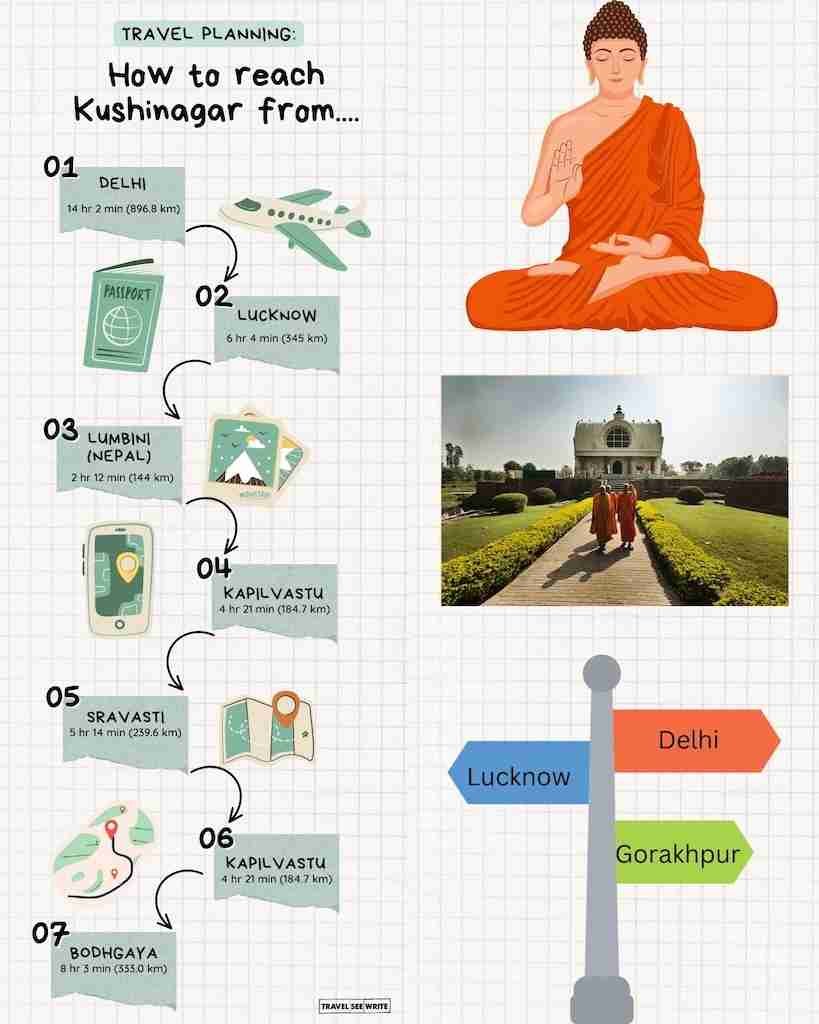
So, the main language spoken in Kushinagar is Hindi, the go-to language in Northern India. However, due to the large influx of international pilgrims, you’ll likely hear Pali, English, and other languages spoken in the temples and monasteries.
Accommodation in Kushinagar ranges from budget hotels to more comfortable lodgings. Here are some options:
You can find more details about Kushinagar’s food and cuisine and the hotels you should stay at here.
Kushinagar offers a variety of local and traditional foods that will tantalise your taste buds
The best time to visit Kushinagar is during the cooler months, from October to April. Key festivals to experience include:
One of the highlights of my visit was engaging with the locals. Their stories, deeply rooted in generations of living amidst such spiritual richness, added a profound depth to my experience. I remember a shopkeeper near the Mahaparinirvana Temple who shared tales of pilgrims finding solace and transformation.
If you’re looking to extend your pilgrimage, several nearby attractions are definitely worth a visit.
A short drive will take you to Kapilavastu and Shravasti. Crossing the border into Nepal will take you to Lumbini, the birthplace of Buddha. And if you want to continue your spiritual journey, Bodhgaya, where Buddha attained enlightenment, is also accessible.
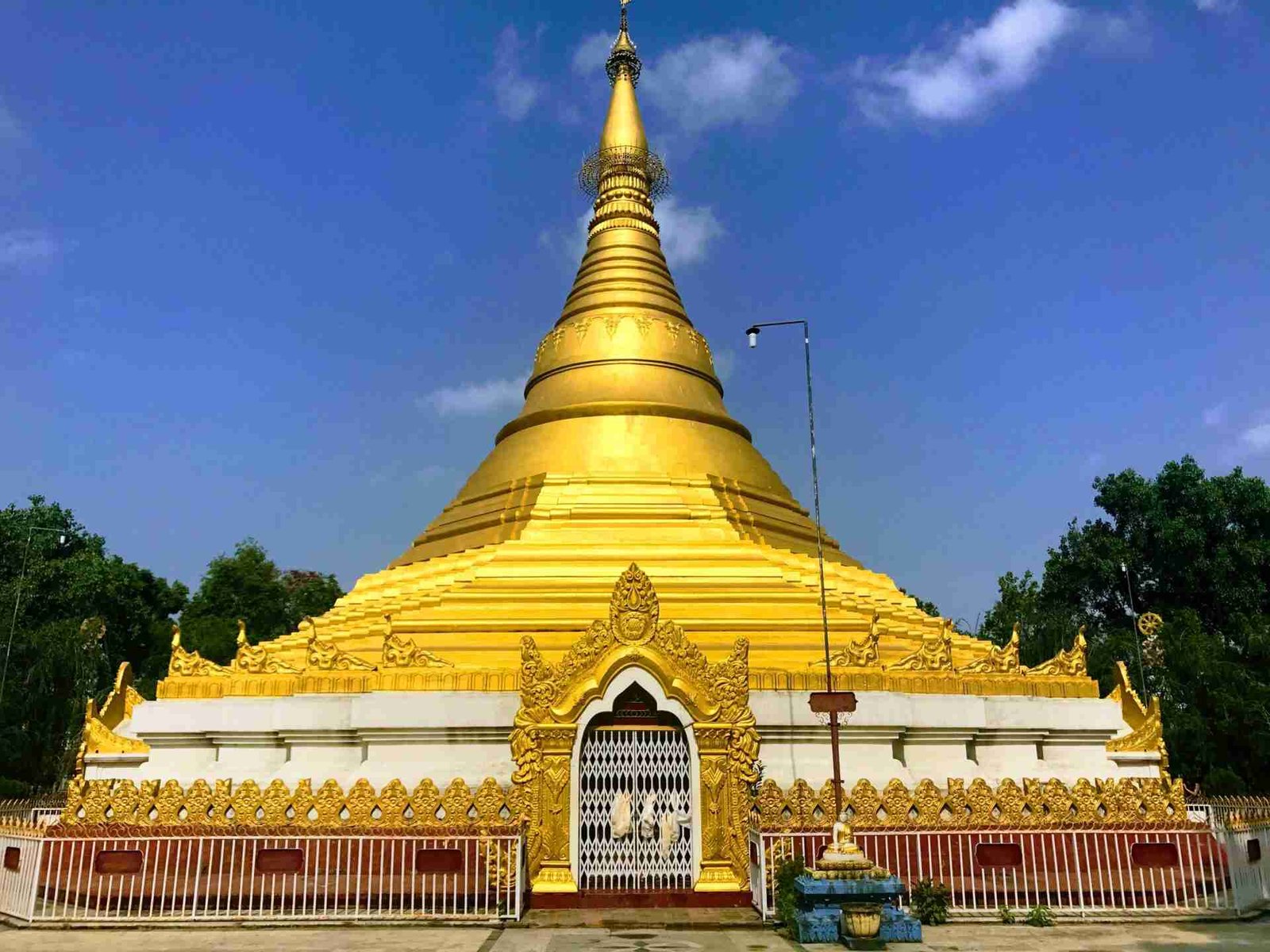
If you’re up for it, a typical itinerary could include visiting Varanasi, Sarnath, and Bodhgaya. This way, you’ll explore and experience the significant Buddhist sites in India, creating a comprehensive Buddhist Pilgrimage Circuit.
Let me virtually take you on the Journey of Enlightenment, following in Lord Buddha’s footsteps and discovering the profound spiritual heritage of each destination.
Seven of these sacred Buddhist Pilgrimage Circuit sites are located in Uttar Pradesh, India, adding to the state’s spiritual richness. I still have three more destinations to explore, and then my pilgrimage will be complete. How many of these sacred destinations have you had the opportunity to visit? Share your experiences with us!
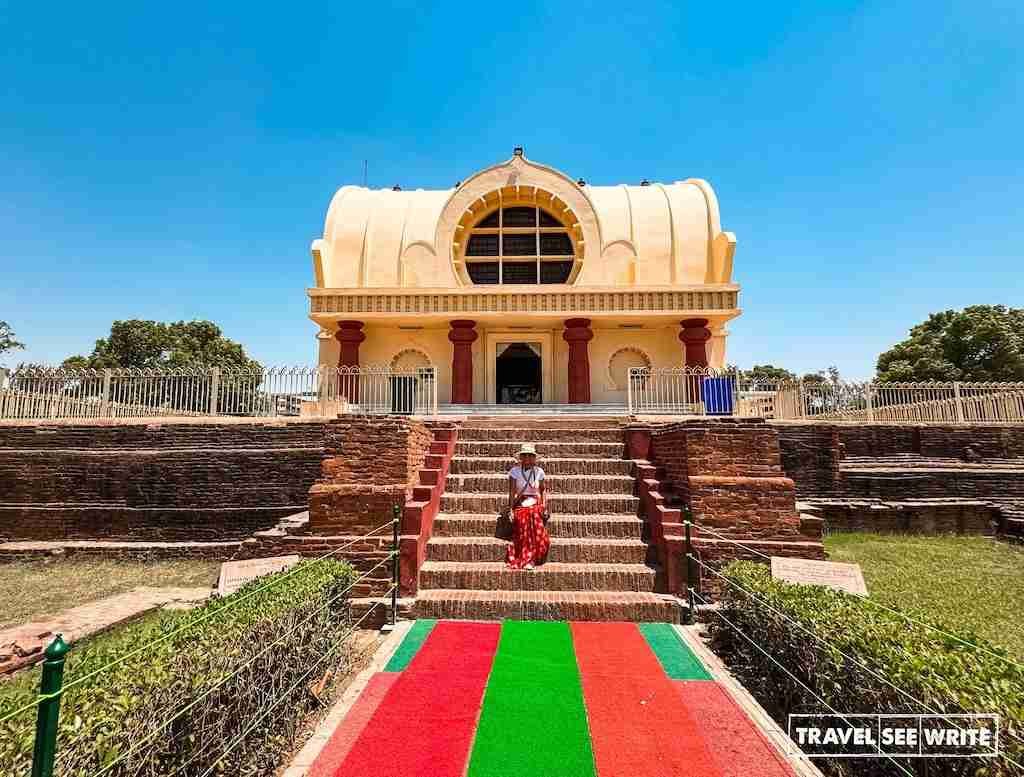
My visit to Kushinagar was more than just a regular trip; it was a pilgrimage that intertwined personal reflection with historical exploration. The town’s serene landscapes and profound spiritual heritage left a lasting impression on me. As I walked the paths once trodden by Buddha, I couldn’t help but feel a deep connection to the timeless quest for liberation and peace. Kushinagar may not be as famous as other Buddhist sites. Still, its quiet charm and profound significance make it a destination every seeker should experience.
Do let me know how you find this Kushinagar Travel Guide and which temples and sights you would be keen to explore on your next visit to this sleepy town of Purvanchal, Uttar Pradesh.
Sharing unique experiences in Vrindavan beyond temples. Explore hidden gems, iconic landmarks, and the best things to do in Vrindavan in 3 days. Find out if it’s worth visiting during Holi!

Whether you believe in religion or not, a few spiritual and cultural destinations are so rich that people from different faiths of life become attracted to them. One such destination is the Braj region of Uttar Pradesh. Having spent a significant part of my childhood in Mathura-Vrindavan, where Krishna spent his childhood, I felt a deep personal connection. This spring, after decades, I decided to return to Braj. I invite you to join me on a unique journey through the sacred streets of Vrindavan, where my childhood memories came alive with spirituality. In this article, I’ll share how I explored the heart of Vrindavan in just three days, discovering hidden gems and timeless charm that resonated with the soul. From majestic temples to vibrant markets, every corner had a story to tell. In Vrindavan, the labyrinthine lanes are not just a mish-mash of tiny lanes but a place where history and mythology blend to create a magical atmosphere of reverence and wonder. Let’s explore the best Vrindavan places together, from the iconic ISKCON Temple to the serene Seva Kunj, and discover the unique things to do in Vrindavan in 3 days. But first, let’s talk about the timing of my trip.
While the Braj region is packed with visitors throughout the year, it becomes extra busy during Holi – the festival of colours. As Holi approaches, photographers from around the world congregate here to capture the unique Holi traditions of Vrindavan, Gokul, Nandgaon and Barsana ki Lathmaar Holi. It’s a spectacle like no other, where the air is filled with laughter, and the streets come alive with the hues of joy and celebration. The weather, too, adds to the festive atmosphere, with its pleasantness inviting exploration. So, I timed my Vrindavan trip to coincide with Holi, a decision that filled me with anticipation and excitement.
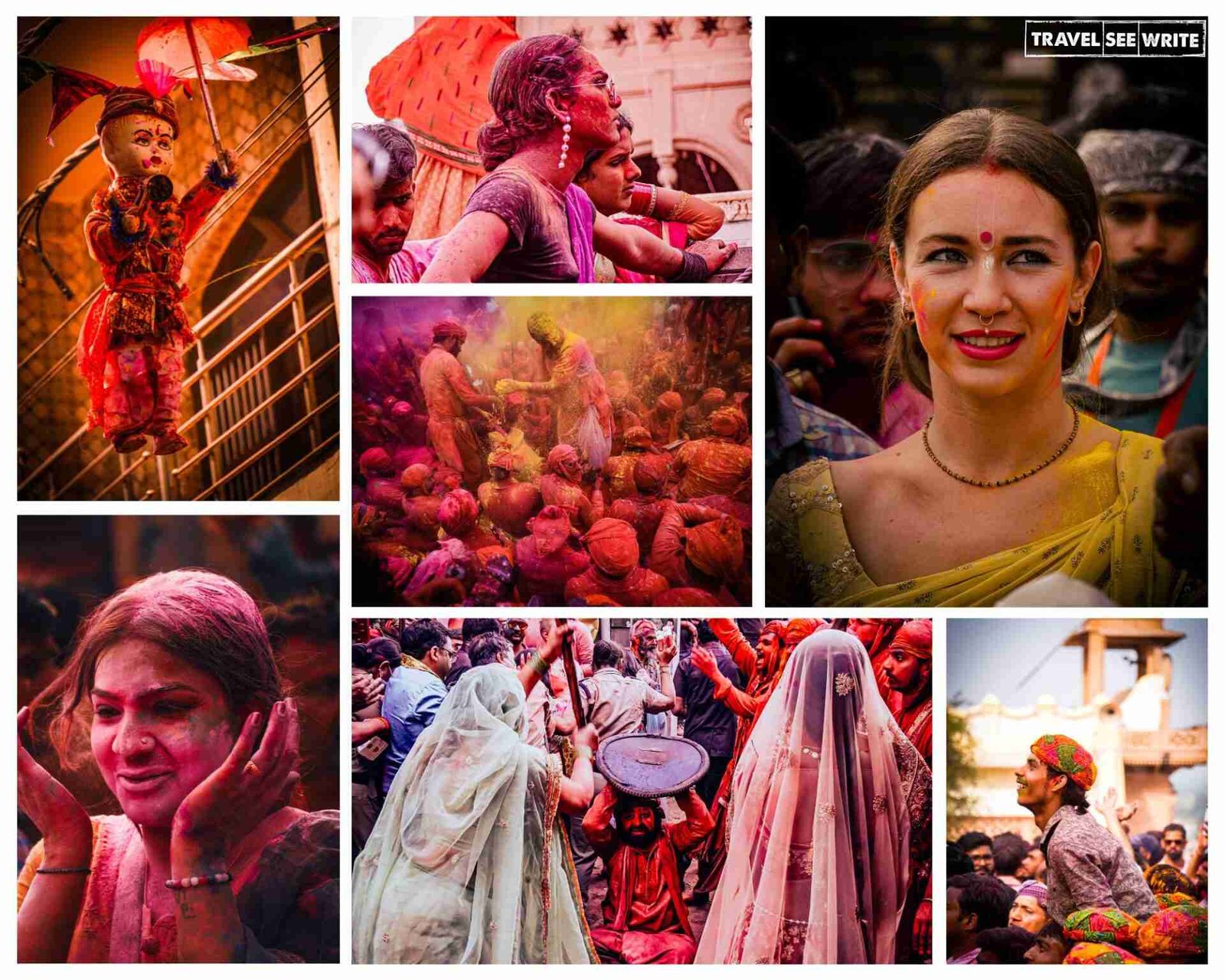
But beyond the colourful festivities, Vrindavan offered a unique perspective into the soul of India—a land where spirituality permeates every aspect of life. Thanks to my local hosts and dosts at Vrindavan Heritage Tower (more about them later in the post), I was able to delve deeper into our heritage and culture, gaining insights that are rarely known. This unique journey allowed me to see Vrindavan in a new light, and I’m excited to share these discoveries with you.
The icing on the cake was trying out Braj’s delicious food (more about that later in the post).
So, without further ado, join me for three days to uncover the ancient land’s hidden treasures and sacred traditions and learn the unique things to do in Vrindavan in 3 days.
To save time and traffic, we started off from South Delhi early, around 7 am. The drive from Delhi to Vrindavan was smooth, with no traffic jams. Despite taking a half-hour break at Gulshan Dhaba, we reached Vrindavan by 10 am. Thanks to the Delhi to Agra highway via Faridabad, which was in prime condition with no bottlenecks.
Since we had booked our stay at the Vrindavan Heritage Tower, we didn’t even have to go through the city’s bumper-to-bumper traffic jam. The complex is conveniently located on Bhaktivedanta Swami Marg, which makes it ideal for travellers like us who have limited time.
As I entered the 62-acre complex, I was pleasantly surprised by its cleanliness and scale. Passing through the main temple on my left and Akshay Patra Foundation on my right, we reached the residential facility where we had booked a two-bedroom duplex villa. The villa had a calm and soothing environment with ample parking, sunlight, an open-air balcony, and a porch. There was basic furniture for a family to stay comfortable, such as double beds, a chair table, clean towels, and a tea coffee maker with respective pouches. All the rooms were airconditioned and had hot-and-cold bath service. I was told that these villas are bought mainly by families who wish to make Vrindavan their home and want to stay in a pious environment of Krishna Bhakti, and many times when they are away, they give these villas to the complex whenever they have outside, guests.
After a quick freshening up, we were ready to explore the divine grandeur of Vrindavan Heritage Tower. There, I met a 32-year-old extraordinary woman called Ritika, who worked at Vrindavan Heritage Tower, but what impressed me the most was her divine aura reflected through her personality, words, and actions. She had such a beautiful smile and personality that she could infuse life even in a rock and could make a non-believer a believer of Krishna Bhakti. Despite staying in bigger cities such as Mumbai, Pune, and Jaipur, Ritika chose Vrindavan as her abode because of her deep connection with Krishna. She truly loves what she does, and that’s why she is brilliant at her job. She is solely responsible for making our trip a memorable trip. Another person worth mentioning is Toshika. She ensured we were well taken care of and enjoyed our trip to Vrindavan to the max.
We started our Vrindavan exploration trip by walking through the Vrindavan Heritage Complex, where Ritika shared essential information about the grand temple complex being built. Frankly, before visiting the complex, I had no idea about the significance of this architectural marvel, which is destined to become the tallest cultural heritage monument globally. Within half an hour of my discussion with Ritika, I got an answer: “What is the 700 crore temple in Vrindavan?” and why is it so special?
Also known as the Vrindavan Chandrodaya Mandir, the complex under construction in Vrindavan, India, is set to become the world’s tallest religious monument. Planned by ISKCON Bangalore, the temple’s estimated cost of ₹700 crore makes it one of the most expensive temples globally. I looked in awe at the temple’s foundation, which is said to be deeper than the height of Burj Khalifa, with a height of about 700 feet (210 meters) consisting of 70 floors. Starting in 2016, this monumental project is expected to be completed within 5-6 years. The south wing of the temple was officially inaugurated in 2024.
As we entered the Grand Temple hall in South Wing, our eardrums started reverberating with the sound of melodious Krishna bhajans, and we saw a miniature of the complex on the left-hand side. Seeing my eyes light up with curiosity, Ritika explained the thought behind the construction of Vrindavan Heritage Tower,
The reason why the Hare Krishna Movement decided to construct the Vrindavan Heritage Tower project in Vrindavan is primarily to facilitate the regional development of the Braj region by leveraging its cultural heritage. Not only will the complex promote the Krishna philosophy, but it will also act as a driver in creating a vibrant cultural economy and bring about inclusive development of the local community.
She took us through the complex, explaining everything patiently and in detail. I especially loved the afternoon at Aarti and Swami Prabhupada’s office.
Witnessing the Raj Bhog Aarti, a divine ritual steeped in reverence and devotion, left an indelible mark on my soul. The harmonious blend of chants and incense filled the air with an aura of spirituality, transporting me to a realm where divinity danced amidst mortals.
After the aarti, it was time to relish the Raj Bhog prasadam, specially prepared for the Raj Bhog Aarti. We were lucky to taste it. It was delicious and quite filling. While enjoying our prasadam, we were introduced to the wonder kid – Nirvi. With beautiful big eyes, hare Krishna tulsi tilak on her forehead and a smile that can melt anyone’s heart, she is a modern-day avatar of Radha. She is charming, bubbly, and, above all, brilliant for her age. I haven’t seen a kid so intelligent and dedicated to Krishna Bhakti. You could ask her anything, and she would have an answer for it. Her innocence and cuteness won our hearts.
After lunch and a quick power nap, we explored the temple grounds, akin to traversing a sacred sanctuary, each corner steeped in divine significance. Following this spiritual immersion, I was privileged to visit the mega Akshaya Patra Kitchen, where selfless volunteers prepared nutritious meals for the underprivileged. The organisation feeds 1,16,642 children of 2,032 Government schools, anganwadis, and thousands of widows and sadhus through the Akshaya Patra program. The tour opened my eyes to the professionalism and cleanliness by which the whole program is handled efficiently. The sight of compassion and service in action underscored the essence of humanity’s collective responsibility towards each other.
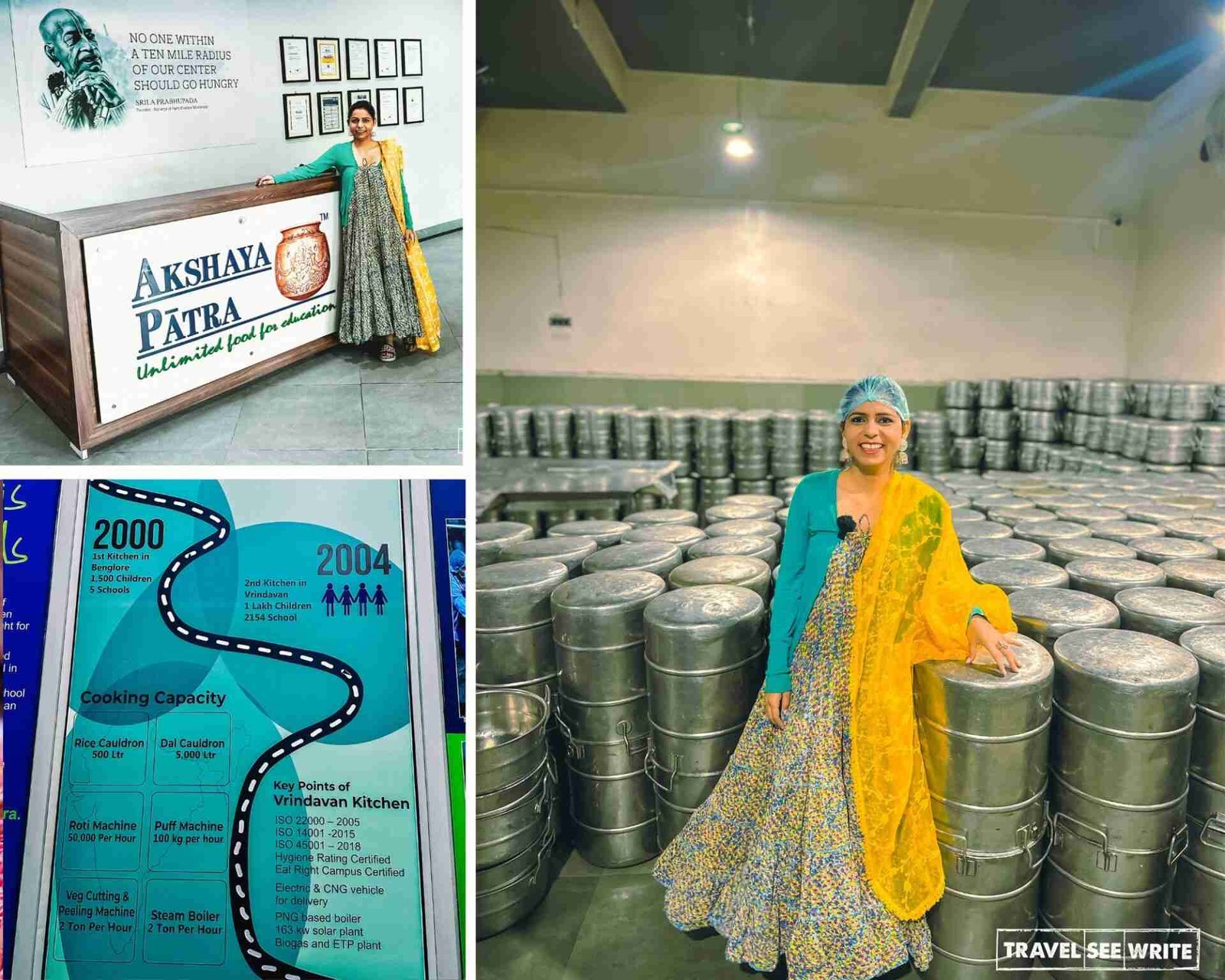
After Akshay Patra, it was time to visit the Gaushala, where over 300 cows, calves, and bulls were lovingly cared for, reaffirming the sacred bond between man and animal in the heart of Vrindavan.
Gauging my interest in offbeat and hidden gems, Ritika surprised me by taking me to the historical sites of Jait Kund and Garuda Govind Mandir, where I learned about the rich tapestry of legends and myths woven into the fabric of the land. Both these places are hidden gems in Vrindavan. They are popular among locals, but travellers aren’t very aware of them.

As dusk descended, I retreated to the Krishnamrit restaurant in Vrindavan Heritage Tower, savouring the flavours of satvik cuisine. The sumptuous thali prasadam had one sabji, daal, rice, chapati and a sweet. My last meal was served with love and devotion, providing a fitting conclusion to a day filled with spiritual revelations and cultural immersion.
After the first day of exploring the 62-acre haven, it was time to explore some offbeat and hidden gems of the Braj region. Our day started early, and my first destination was Rawal, the hallowed birthplace of Srimati Radharani. Rawal is the only place in the world where Shrimati Radha Rani is worshipped in her Lalan (child) Swarup.
Standing amidst the tranquil surroundings, I felt a profound connection to the divine energy that permeated the air, enveloping me in grace and tranquillity. Ritika and Nirvi passionately explained the legend of how Radha Rani was incarnated in a holy atmosphere at Nikunj on the banks of Yamuna. Shri Vrishbhanu Maharaj and his wife Kirtida struggled to have a baby. On the 8th day of Bhadramas (Aug-Sept), Vrishbhanu Maharaj took a bath in Yamuna as usual. He noticed a golden lotus flower shining brilliantly in the middle of the river. In the centre of the lotus was baby Srimati Radharani. I spent approximately an hour taking in the divine energy of the temple.

From there, I made my way to the 5000-year-old Baldeo-Dauji Maharaj Mandir, a temple dedicated to the revered elder brother of Lord Krishna. The walking path from car parking to the temple was tightly hugged by colourful local snack shops, souvenir shops, and temple offering shops on both sides. As I entered the temple premise, the ancient walls echoed with the chants of devotees, their voices rising in homage to the divine presence that resided within.
On our way out from the temple, we couldn’t resist the waft of the freshly made sabji-kacchori, samosa and other local Vrindavan delicacies. We rounded off the breakfast with a glass full of lassi.
Next on my itinerary was Raman Reti, the sacred sands where Lord Krishna once frolicked with his friends. This temple is famous for phoolwali Holi, where devotees play Holi with flowers. Since only a week was left for Holi, they had started playing with gulal. The main hall was echoing with the Krishna bhajans, music and dances. They were no strangers. Only gulal covered the bhakts of Krishna. From the main hall, we exited the playgrounds where Krishna used to play with his friends. From young to old, rich to power, male to female, everyone had become a kid here. Throwing sand on each other and rolling in it. Even I couldn’t stop myself. It was an experience that’s hard to explain in words.
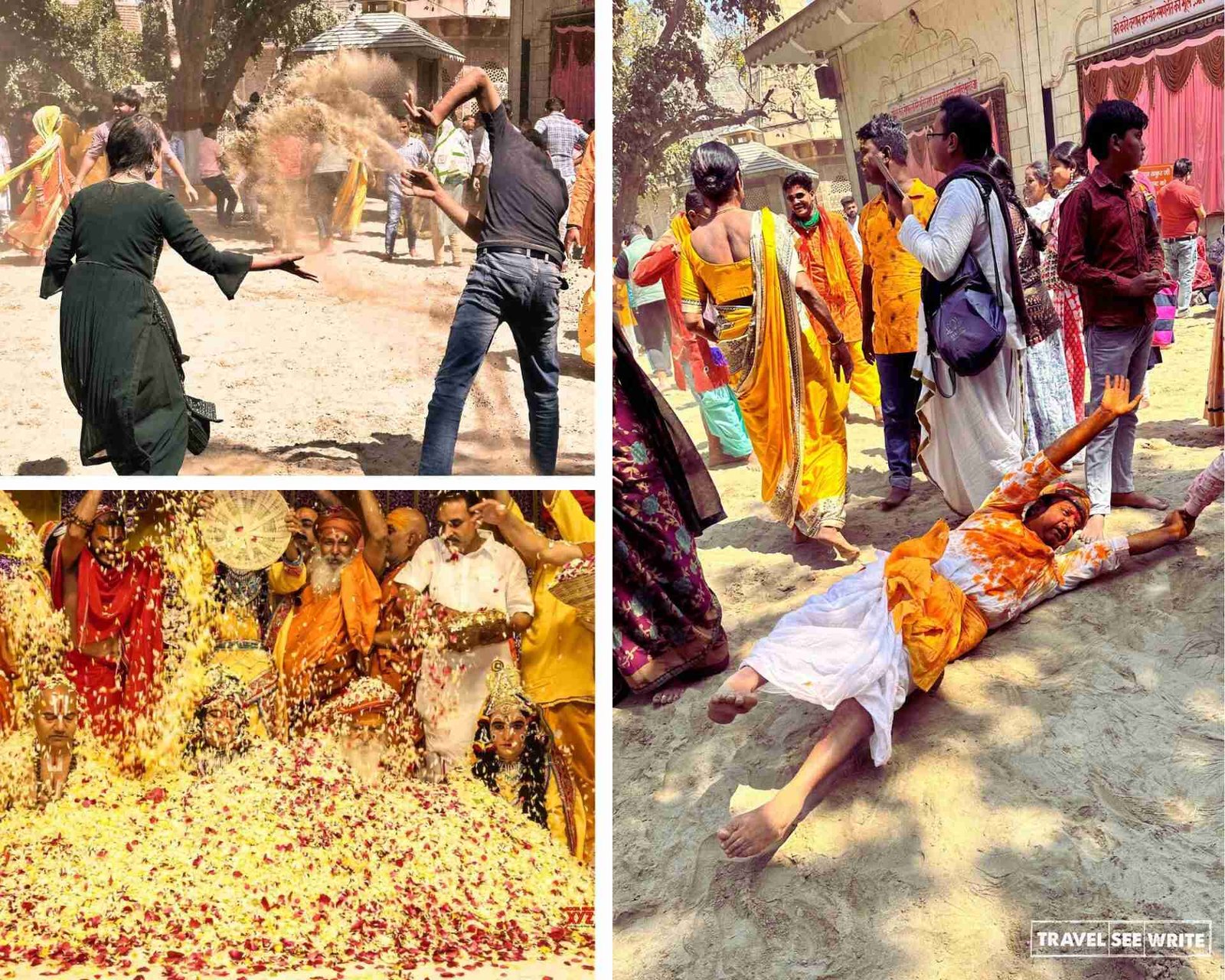
The playful laughter of families and the rustle of leaves echoed the timeless bond between the divine and the mortal, reminding me of the eternal play of creation.
As the day unfolded, I found myself drawn to the banks of Brahmand Ghat, where Lord Krishna once revealed the universe in his mouth to Mother Yashoda. This place is also famous for serving mitti wala laddoo (clay sweet), which Lord Krishna used to eat as a kid. The sacred waters of the Yamuna shimmered with divine light, reflecting the cosmic dance of creation and destruction.
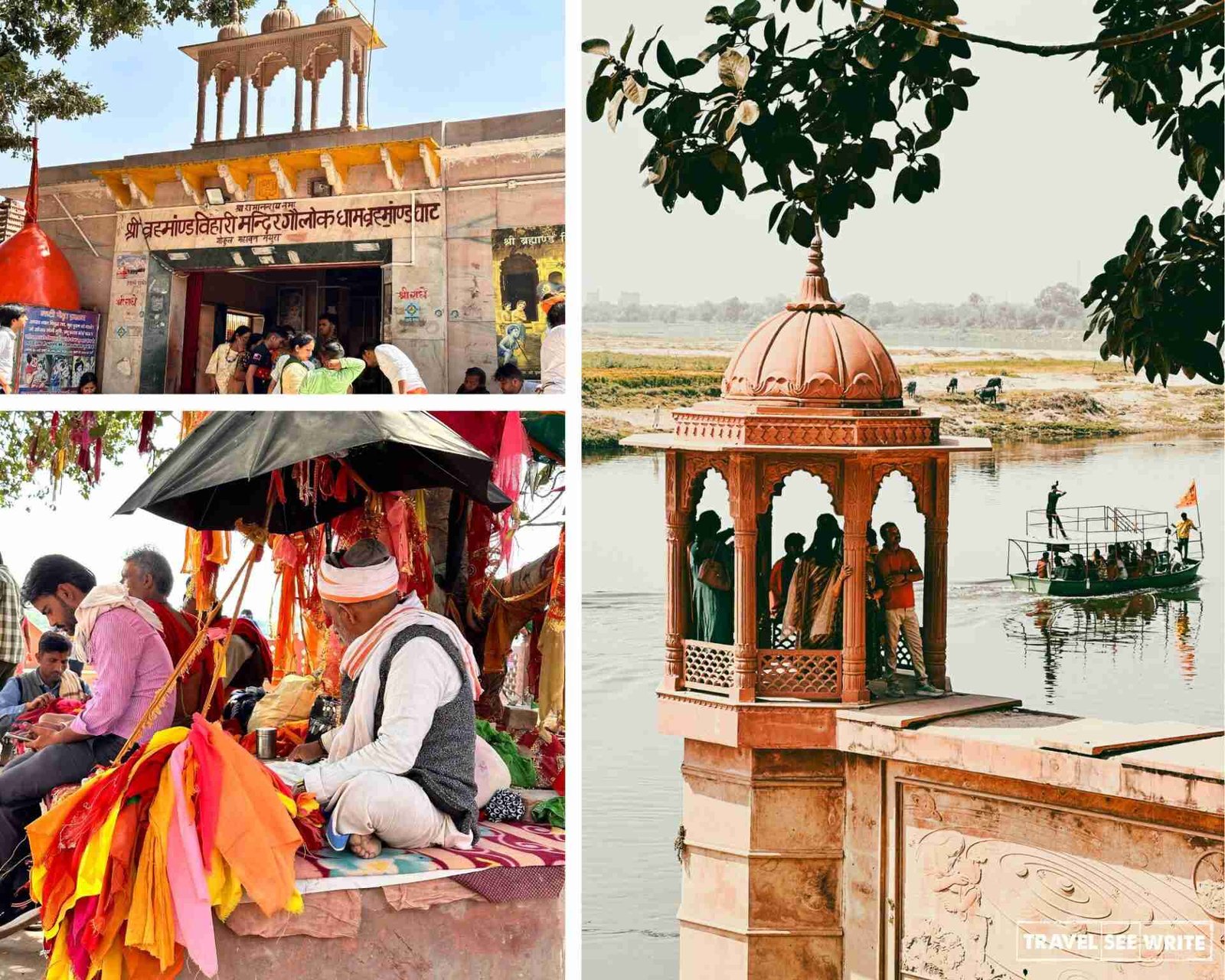
My journey culminated with a visit to Ukhal Bandhan, where Mother Yashoda lovingly tied Lord Krishna with a Ukhal (mortar and pestle), symbolising the eternal bond between mother and child. As I stood amidst the ancient trees, I felt a sense of peace and harmony wash over me, a reminder of the timeless love and devotion that defines the essence of Vrindavan. Small in size but grand in its historical relevance, it is definitely one of the hidden places to visit in Vrindavan.
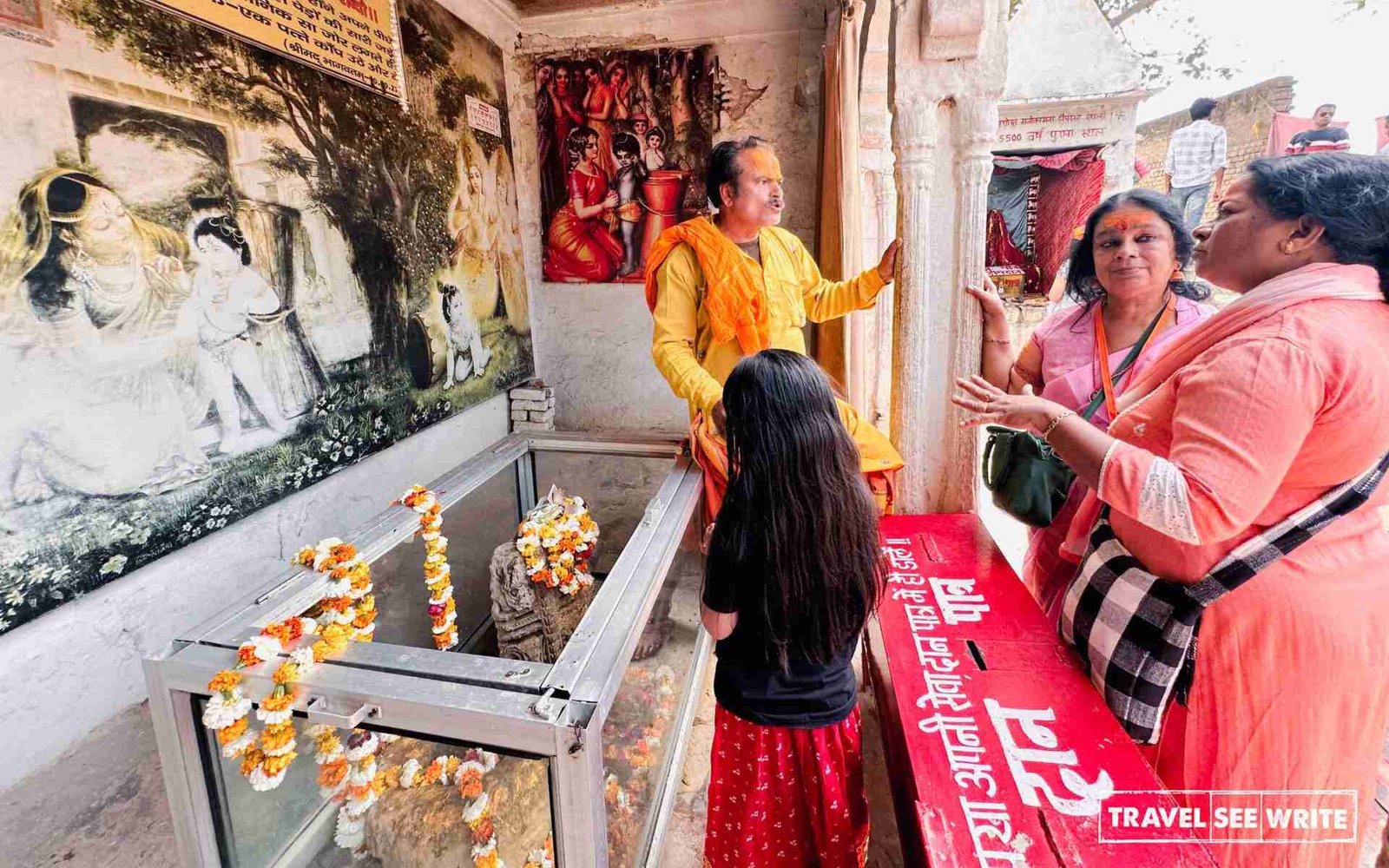
In the evening, we decided to visit the heart of Vrindavan, which is uber popular with tourists. Narrow alleys and too many vehicle movements make it a traffic bottleneck. Thus, to avoid getting stuck in a traffic jam, we hired a Vikram (Tuk-Tuk) instead of taking our big car.
Our first stop was Keshi Ghat, the last standing ghat in Vrindavan, where we attended the enchanting evening of Yamuna Aarti. Keshi Ghat, the last standing ghat in Vrindavan, is steeped in history and mythology. This holy spot is known for stories of Lord Krishna’s bravery. According to legend, Krishna conquered the powerful horse demon Keshi at this very place. While there are a lot of activities to do here, like boating and bathing, the star attraction is the evening aarti, which attracts both worshippers and visitors.
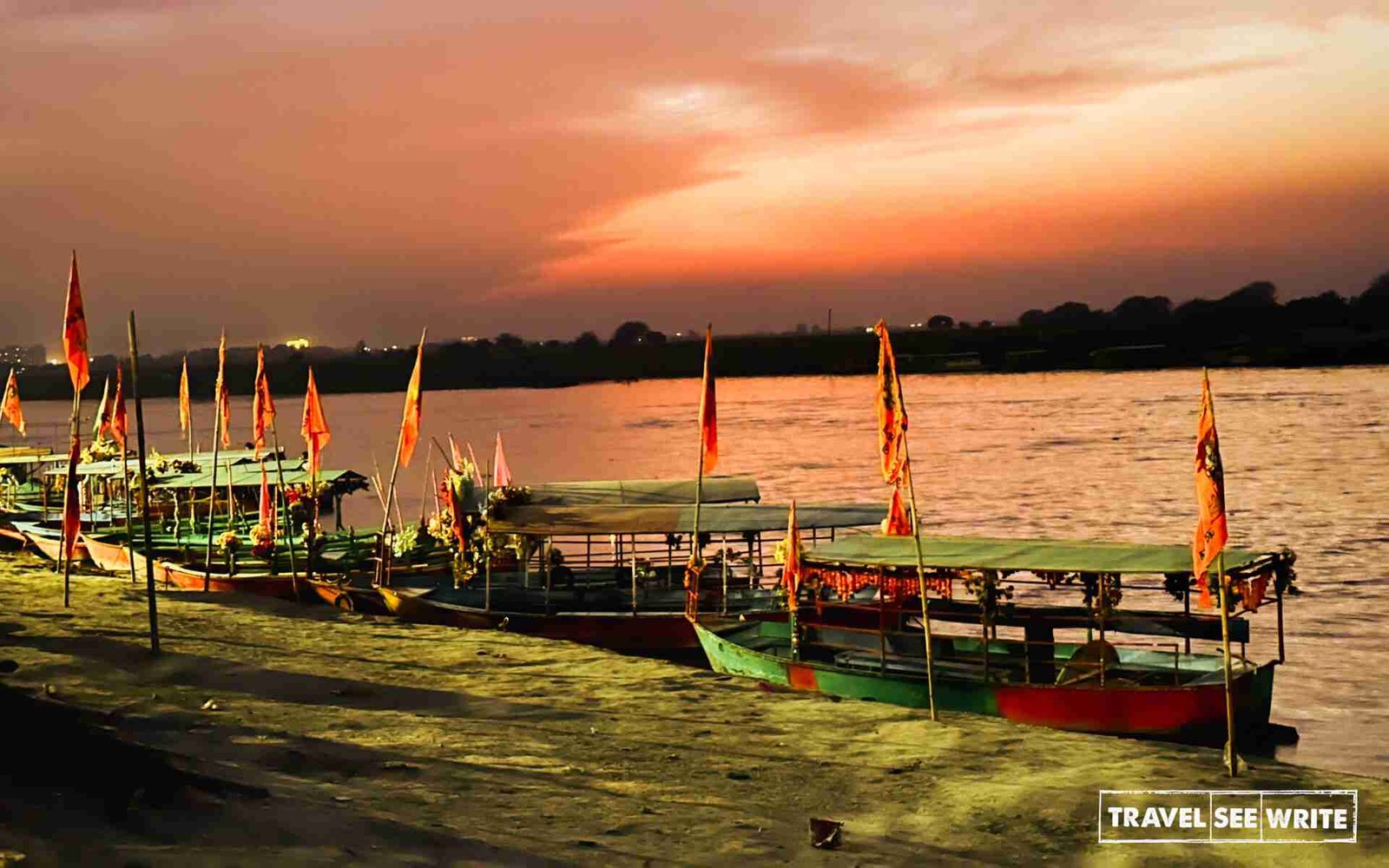
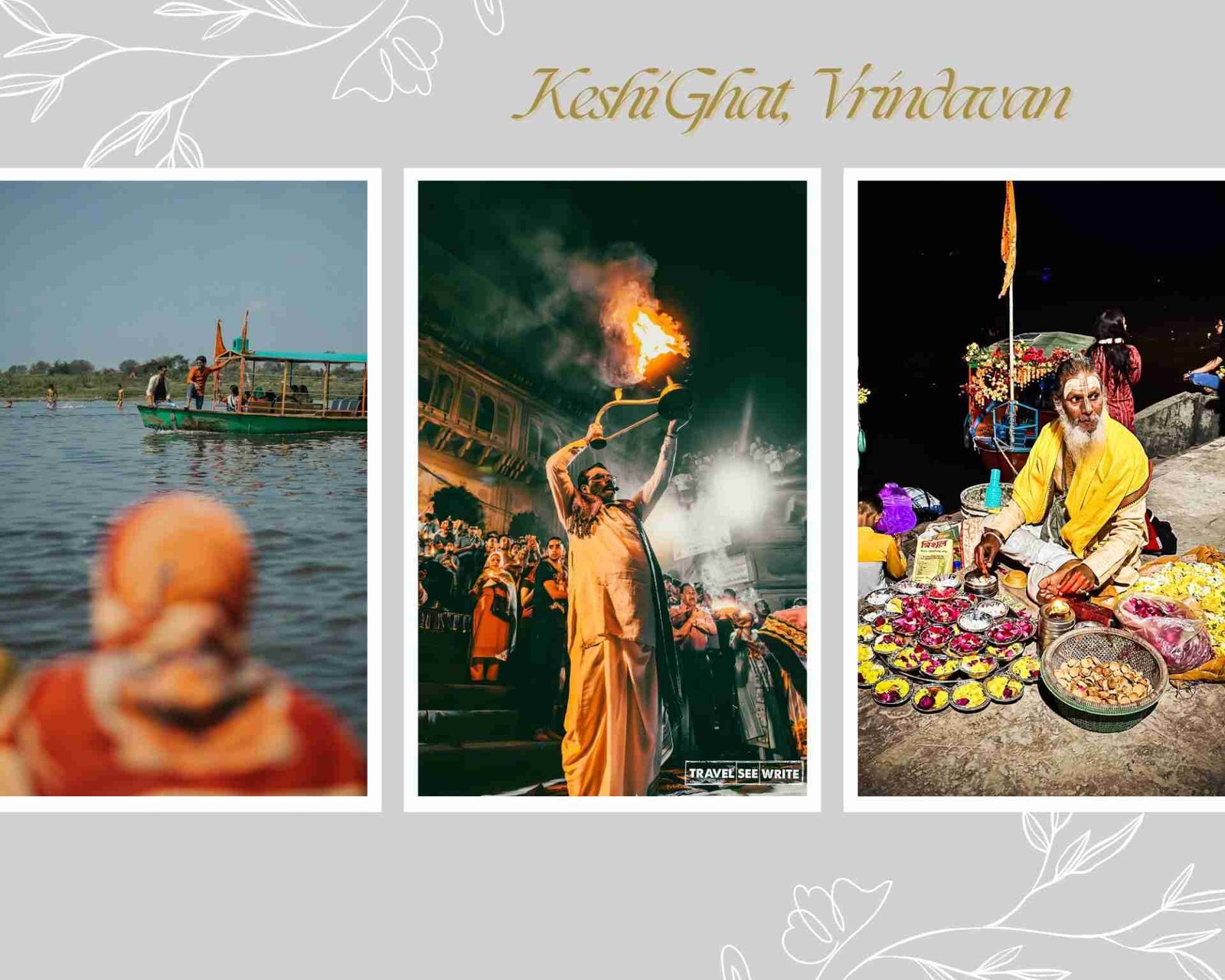
Having witnessed aartis in Varanasi and Rishikesh, Keshi Ghat aarti was a very different experience that was devoid of any dhakka-mukki (jostling and elbowing). Instead, there was ample space for visitors to participate in the aarti peacefully, and the melodious chants filled the air. The mesmerising lamps created a genuinely spiritual and enchanting atmosphere. What made this experience even more exciting for visitors was that everyone got to participate in the holy ritual – unlike other places, individual aarti thalis were offered to visitors. A train of hundreds of huge diyas (earthen lamps) floating in River Yamuna made it an exceptional and hypnotising experience. The serenity, the organisation, and the absence of chaos made it an unforgettable experience. Keshighat evening aarti takes place at 6 pm and lasts approximately half an hour.
After blissful Yamuna aarti, we visited the nearby Radha Raman Temple. The temple is situated near Nidhivan and is considered one of the top seven prominent temples of Vrindavan. The deity Radharaman is almost 500 years old, and Lord Krishna is worshipped as Radha Raman (lover of Radha Rani). Every day in the evening, the temple courtyard is filled with Folk Songs, Kirtan. When I went there, it was very crowded but wonderful too. It is said the stove in the kitchen at Radha Raman Mandir has been burning since the temple was established 500 years ago.
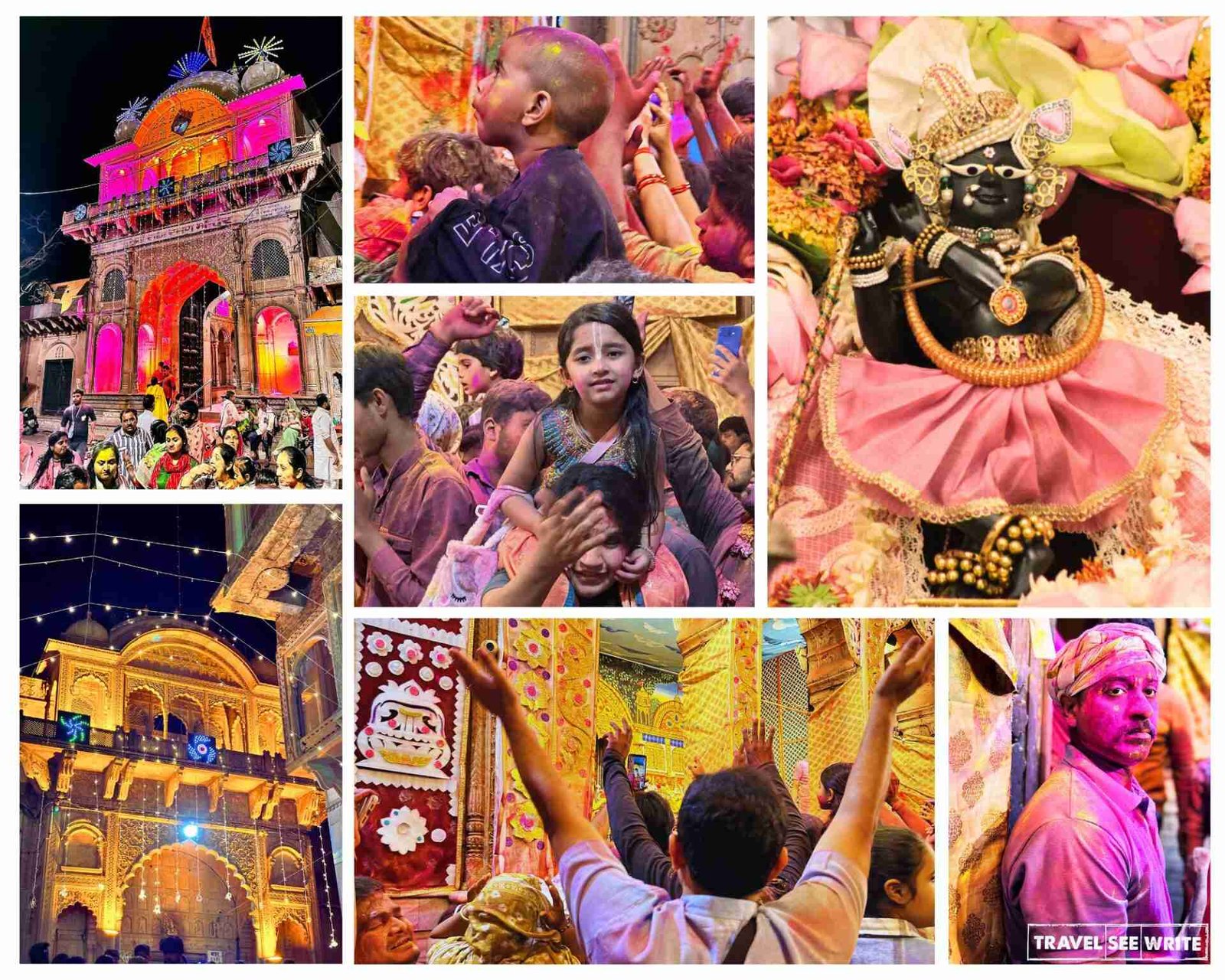
In the first two days of our trip, we were able to explore quite a lot of unique things to do in Vrindavan in three Days.
As the last day of my journey dawned, I felt grateful and reverent for the profound experiences and insights I had gained in Vrindavan. With a heart filled with devotion, I prepared to immerse myself once more in the spiritual essence of this sacred land.

The day began with the uplifting yagna within the Vrindavan Heritage Tower complex, a sacred ritual that filled my heart with divine grace and reverence. Surrounded by fellow devotees, I felt a sense of unity and oneness that transcended all barriers, a testament to the universal power of love and devotion.
From there, I made my way to the sacred grounds of Radha Damodara Mandir, the spiritual heart of Vrindavan. In the temple, Krishna is worshipped as Damodar with his consort Radha. It is one of the seven main Goswami temples in Vrindavan. The other seven significant temples of Vrindavan include Radha Madan Mohan temple, Radha Gokulnanda temple, Radha Raman temple, Radha Govinda temple, Radha Gopinath temple and Radha Shyamsundar temple.

During Holi, colours blend with culture, creating a spectacle unlike any other. Many devotees visit this temple to do parikrama every day to take blessings. Inside this temple premises are situated the samadhis of various prominent people who contributed exclusively to this temple and Vrindavan and devoted their lives to the lord’s services. After completing the parikrama, I couldn’t stop dancing with other devotees at hare Krishna bhakti bhajans.
Next, I ventured to Seva Kunj, the hallowed grounds where Lord Krishna once performed his divine pastimes with his beloved Radharani and the gopis (female guardians). The serene beauty of the surroundings filled me with a sense of peace and tranquillity as I reflected on the eternal love and devotion that defines the essence of Vrindavan.
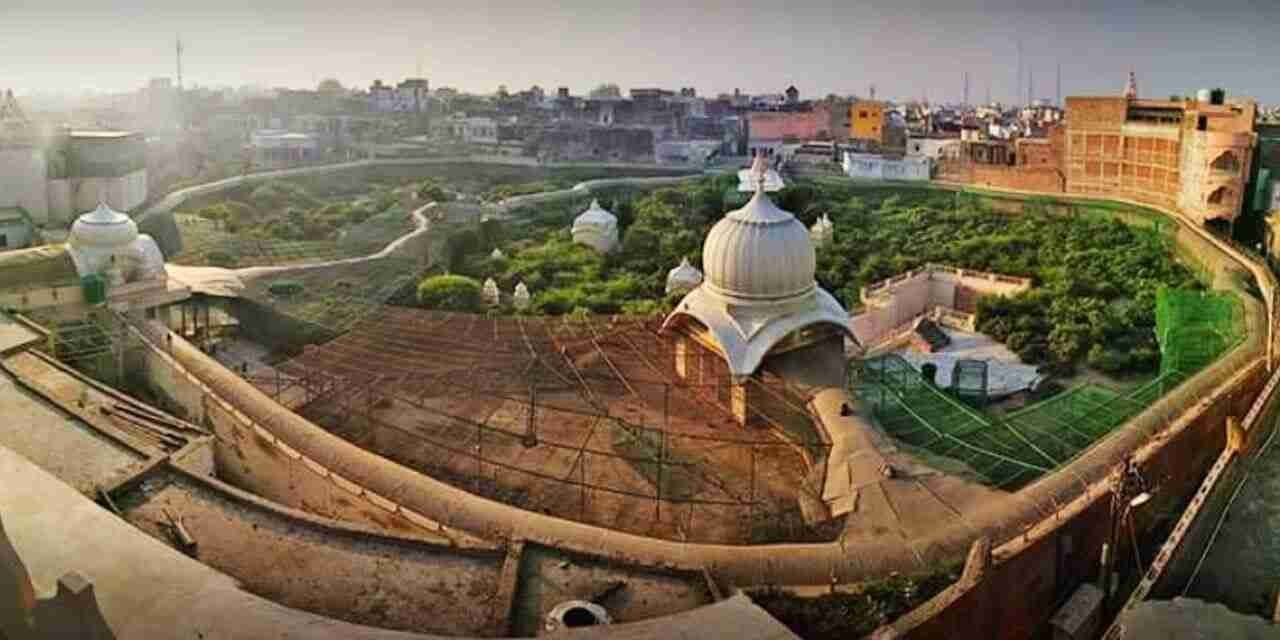
As the day drew to a close, I took a leisurely stroll through Loi Bazar, the bustling marketplace where everyday life’s vibrant colours and sounds mingled with the spiritual energy that permeated the air. Amidst the hustle and bustle of the market, I felt a profound sense of connection to the rich tapestry of life that defines the essence of Vrindavan.
With a heart filled with gratitude and reverence, I bid farewell to this sacred land, carrying the memories and lessons learned during my journey of experiencing unique things to do in Vrindavan in 3 days. Though my time in Vrindavan had ended, the spiritual insights and divine experiences gained will continue to inspire and guide me on my journey through life.
No trip to Vrindavan is complete without tasting its local cuisine. And Vrindavan is good in that department. During my brief stay in Vrindavan, I got to taste most of the food items for which Vrindavan is famous, such as sabji-kachori, bedai kachori subji, lassi malaiwaali, samosas, Mathura-Vrindavan ka famous peda, rabri and the traditional makhan mishri. Although Mathura-Vrindavan has high-end restaurants and hotels serving authentic Braj cuisine, eating from vibrant street food stalls is an absolute joy. Various street shops in front of the temple gates offer reasonably priced food. Some of the best places to visit in Vrindavan for food are:

Due to a lack of time, I didn’t get to eat at some of these places, but I have carefully marked them for my next visit to Vrindavan. Do read my detailed post on the best places to eat in Vrindavan.
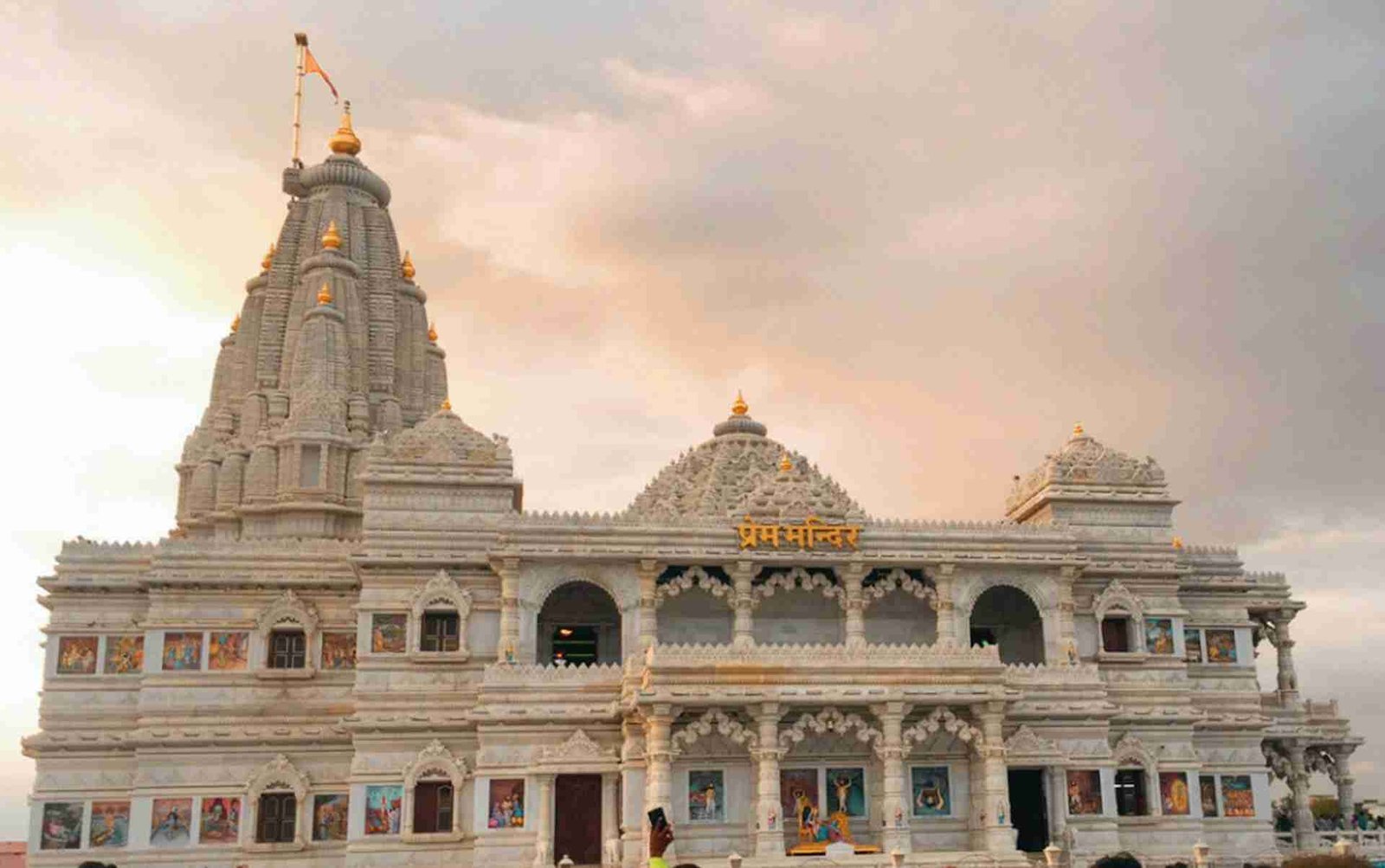
1. Best Time to Visit: Plan your trip to Vrindavan from February to March, especially during Holi, to experience the vibrant festivities and cultural celebrations.
2. How to Reach: Vrindavan is well-connected by road and rail. The nearest airport is in Agra, approximately 67 kilometres away. From Delhi, you can drive, hire a taxi, or take a bus to reach Vrindavan.
3. Where to Stay: If you are looking for a spacious and peaceful location, opt for Vrindavan Heritage Tower guesthouses and villas. There are ample budget-friendly and comfortable stay options throughout the city.
4. What to Pack: Pack lightweight and comfortable clothing (preferably Indian wear) suitable for temple visits and outdoor exploration. Remember to carry sunscreen, a hat, comfortable footwear, and a water bottle.
5. Be careful about monkeys: Be cautious of the mischievous monkeys in the city. They can be unpredictable and suddenly cause trouble. They are known for snatching personal belongings, so be careful with your wallet, glasses, mobile phone, and other valuables. Interestingly, they can often be appeased with a Mango-Fruity drink and may even return your belongings if you offer one. However, their actions can still damage your belongings and potentially harm you, so it’s best to avoid them whenever possible.
6. Vrindavan famous things to buy: If you are looking for where to shop in Vrindavan, exploring the local markets is a good idea for souvenirs such as Radha-Krishna idols, traditional attire, handicrafts, and spiritual literature. Vrindavan is a pilgrimage place, and you will find treasures of the region’s antiques, woodwork, and brass items at reasonable prices.
7. Famous Temples to visit in Mathura Vrindavan: Prem mandir, Bankey Bihari Temple, Shree Krishna Janmbhoomi Temple, Dwarkadeesh Temple, Radha Raman Temple, Rangaji Temple, Nidhivan, Isckon Temple, Sewa Kunj, Bhuteshwar Mahadev Temple, Birla Mandir, Chamunda Devi Temple, Garud Govind Temple, Goverdhan Hill, Govind Dev Ji Temple, Keshav Dev Temple, Madan Mohan Temple, Shri Dauji Maharaj Mandir, and Shri Radha Shyam Sundar Temple.
8. Places to visit in Mathura Vrindavan: Vrindavan, Nandgaon, Barsana, Rawal, Dauji, Gokul, Goverdhan, Mathura, Chandrawali, Mahavan
9. Hidden places to visit in Vrindavan: Some unique things to do in Vrindavan in 3 days include visiting Jait, Seva Kunj, Nidhivan, Imli Tal, and Gopeshwar Mahadev Temple. And, if you are looking at things to do in Vrindavan except for temples, then you can spend a calm evening near the Jait Kund, enjoy a boat ride at Vishram Ghat, participate in the evening aarti at Keshighat, take a holy dip in Kusum Sarovar, visit Mathura Museum, explore the ruins of Kansa Qila and shop at local markets like Loi Bazaar, Chhata Bazaar, Tilak Dwar and Krishna Nagar Market.
10. Budget: Vrindavan offers a range of accommodation and dining options to suit every budget. Plan your expenses accordingly and prioritise experiences that resonate with your interests.
In conclusion, Vrindavan should be on every traveller’s bucket list, especially those seeking spirituality and culture. Vrindavan has something for everyone, from its vibrant festivals to its ancient temples and beautiful lakes. Even with just three days at hand, you can immerse yourself in the essence of this sacred city by discovering the unique things to do in Vrindavan in 3 days outlined in this itinerary. Reflecting on my unforgettable journey, I find myself enamoured not only by Vrindavan’s culinary delights, cultural richness, and intricate crafts but also by the warmth and hospitality extended by the Vrindavan Heritage Tower and its dedicated staff, who contributed significantly to making my trip truly remarkable.
if you liked this article, you might enjoy these destination articles, too:

Living in Delhi is an excellent advantage for mountain lovers. One can get transported to paradise – the Himalayas, within hours. Though the Himalayas are a single mountain range, their character and culture change every hundred kilometres. Uttarakhand Hills are bestowed with extraordinary beauty, and most of it is unseen by the outside world. Known as “Dev Bhoomi”, meaning “Land of Gods”, Uttarakhand is the land of spirituality and enthralling beauty. It is the only state in India with an equal mix of alluring natural beauty and spirituality. There are so many amazing hill stations that make a great weekend getaway from Delhi.
Many hill stations, mountain peaks, waterfalls, ancient temples, forest reserves, national parks, wildlife and bird-watching places, and adventure destinations are not very popular despite being drop-dead gorgeous. The infrastructure is constantly under repair, but there is light at the end of the tunnel.
Here is my list of must-visit Five ‘Un Touristy’ Weekend getaways from Delhi in Uttarakhand:
If you want a quick break to rejuvenate without involving too much time and effort, then Lansdowne is the place for you. Take a stroll in the majestic oak & pine forests, reclaim freedom from deadlines by trekking into the wild, hear the sweet symphony of wind, trees, and birds, pluck mangoes or simply do nothing here! A pure, alluring, refreshing, quiet, and clean environment makes Lansdowne a preferred destination to experience the serenity and take you away from the humdrum city life. There is not much to “sightsee” here, but aren’t short breaks meant to connect you with your inner self other than collecting images for your FB picture gallery?
Major Attractions in Lansdowne: Garhwali Mess, Regimental Museum, Bhulla Tal, Tip-n-Top, Tarkeshwar Mahadev Ashram, The War Memorial, St. Mary’s Church

‘Virginity’ is an overrated word, but not when you use it to describe the fascinating beauty of Chopta Valley. Located at an elevation of 2680m, the Chopta Valley trek is one of the most stunning and easiest treks in Garhwal Himalaya. With the splendid Himalayan view accompanying you throughout the trail, you’ll come across the ancient and magnificent valleys of the Ganges to the crystal clear Lake of Deoria Tal. You’ll visit the renowned Panch Kedar temple “Tungnath” on the way. You can use the mountain bike through the dense alpine forest with blooming Rhododendrons. If solitude with a touch of divinity is your idea of a perfect holiday, this is the place for you. It is accessible annually – blooming with flowers and lush verdant greenery during summers and snow-quilted during winters. In monsoons, greenery takes a whole new meaning here.
Major Attractions in Chopta: Tungnath Mandir, Chandrashila, Gopeshwar, Kanchula Korak Musk Deer Sanctuary, Ukhimath, and Deoria Tal.
Whether you are an adventure freak or a spirituality seeker, Harsil will not disappoint you. Known as the camper’s bay of Uttarakhand, Harsil is a small cantonment area located on the banks of Bhagirathi River on the way to Gangotri. Besides lying on the spiritual path of Uttarkashi, Harsil is admirable for its non-touristy, celestial, unrivaled, tranquil and exquisite beauty. For a change, get woken up by the chirping of birds, treat your lungs to the aroma of fresh air, watch the magnificent rays of the sun turn everything into gold, let the gushing sound of River Bhagirathi rejuvenate your tired soul, get amazed by admiring the tall peaks of Bhagirathi, Trishul, and Shivaling. And if you are the one who likes to explore and indulge in small talk, then try talking to Jadhs – an ethnic group of the Bhotiyas with their language resembling Tibetan. Or get lost in nature’s best web – explore trekking destinations like Sattal, Kedartal, Dodi Tal, Gaumukh Glacier, Dayara Bugyal, etc.
Major attractions in Harshil: Gangotri, Uttarkashi, and Maneri. For trekking, Harsil can be the base camp for different trekking excursions like Dayara Bugyal, Kedartal, Dodi Tal, Gaumukh Glacier, Sattal.
Do you remember Subhash Ghai’s musical extravaganza ‘Taal’? It had the setting of Chamba in Himachal, but the Chamba I am talking about is different and relatively lesser known than its namesake. As you move further north of uber-popular Mussori and Dhanaulti, you embark on an uncharted, untouched and flawless serene destination at a height of 1676m, which provides a spectacular panoramic beauty of Himalayan peaks and Bhagirathi River. During the monsoon season, you literally walk through clouds and seasonal waterfalls. This quiet, charming and enchanting village amidst the apple orchards will definitely leave you spellbound. It’s a great weekend getaway from Delhi.
Major attractions in Chamba: Mussourie, Dhanaulti, Surkanda Devi Temple, Ranichauri, New Tehri, Kanatal
I fell in love with Chakrata on my first trip there. It was love at first sight, but the office arranged it. Chakrata is situated between tons and Yamuna River, surrounded by rhododendrons and oak trees, and is 92 km away from Dehradun and 73 km from Mussoorie. Like many other hill stations, it is a cantonment. Food and stay facilities are basic, but what makes this place special is the incredible Himalayan views it offers. During the night, don’t be surprised if you find a visitor in the form of a bear or any other wild animal. It is the perfect hideout for writers or people who want to connect with nature. The fantastic contrast of green hills, blue sky, and snow-clad mountains will leave you mesmerized. Tiger Falls is a good picnic and photography spot.
Major Attractions in Chakrata: Tiger Fall, Chilmiri Neck, Dehradun via Mussoorie, Mahasu Devta Temple, Skiing at Mundali in winters
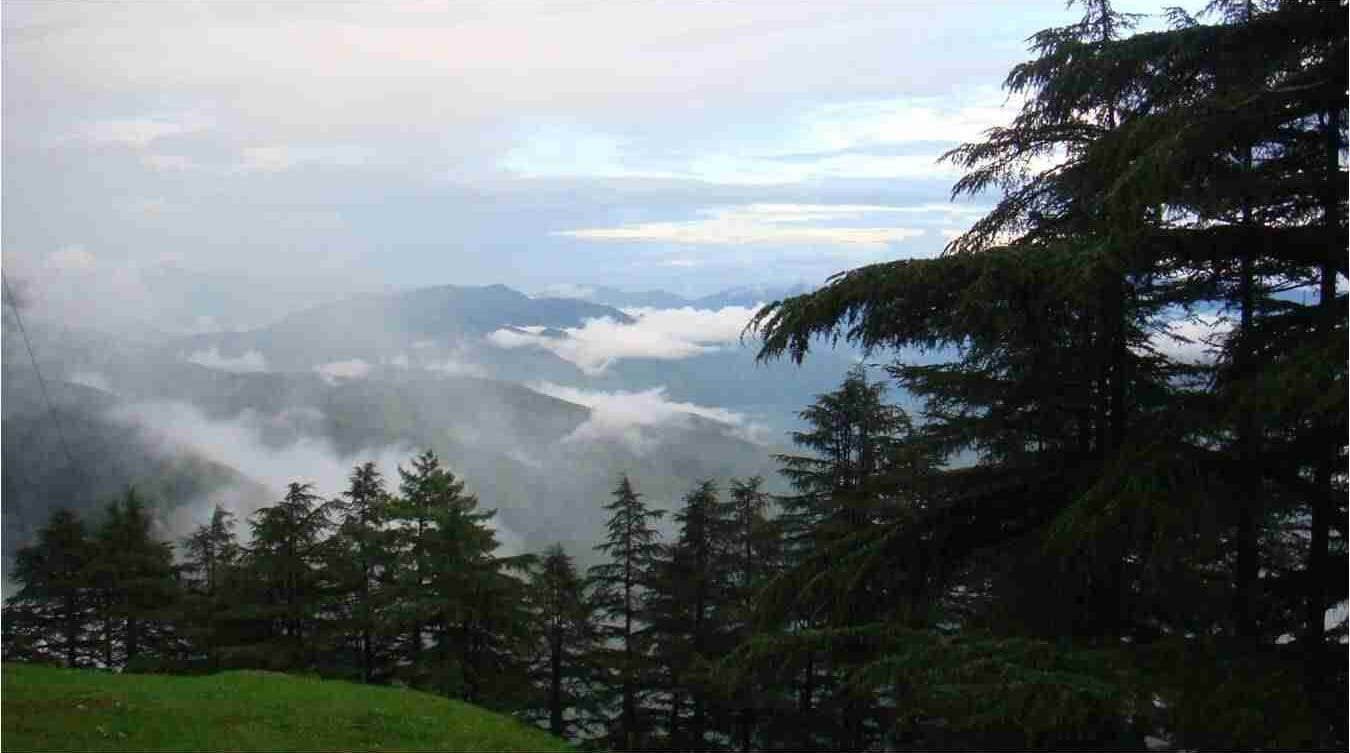
These are the quick 5 Weekend Getaways in Uttarakhand that don’t pinch your pocket but leave your soul washed in splendour, allowing you to marvel at the creation called the Himalayas.
Have you been to Uttarakhand? If so, I would love to know about your experience and recommendations for a weekend getaway from Delhi.
I have explored Spain, Kenya, Sri Lanka, and Switzerland with Travel See Write. Every experience was customised as per my family’s requirements, and each trip was fully customised.
Vaibbhav Sud
Delhi
I travelled with my family to Finland using Travel See Write. The team went above and beyond to make our stay enjoyable. They were even available at 3 am for services beyond their usual duties. ”
Gautam Kriplani
Jakarta, Indonesia
This is not a typical luxury travel agency — this is travel with soul. They take care of the minutest details and customise the tiniest things for us. I have travelled with them to Japan, Finland, Costa Rica, Russia and the Philippines.
Vineet Nanda
Delhi
I have explored Spain, Kenya, Sri Lanka, and Mongolia with Travel See Write. Every experience was customised for my family, and each trip was special
Sunil Sharma
Delhi
This is not a typical luxury travel agency — this is travel with soul. They take care of the minutest details and customise the tiniest things for us. I have travelled with them to Japan, Finland, Costa Rica, Russia and the Philippines.
Aman
Mumbai

Lorem Ipsum is simply dummy text of the printing and typesetting industry. Lorem Ipsum has been the industry's standard dummy text ever since
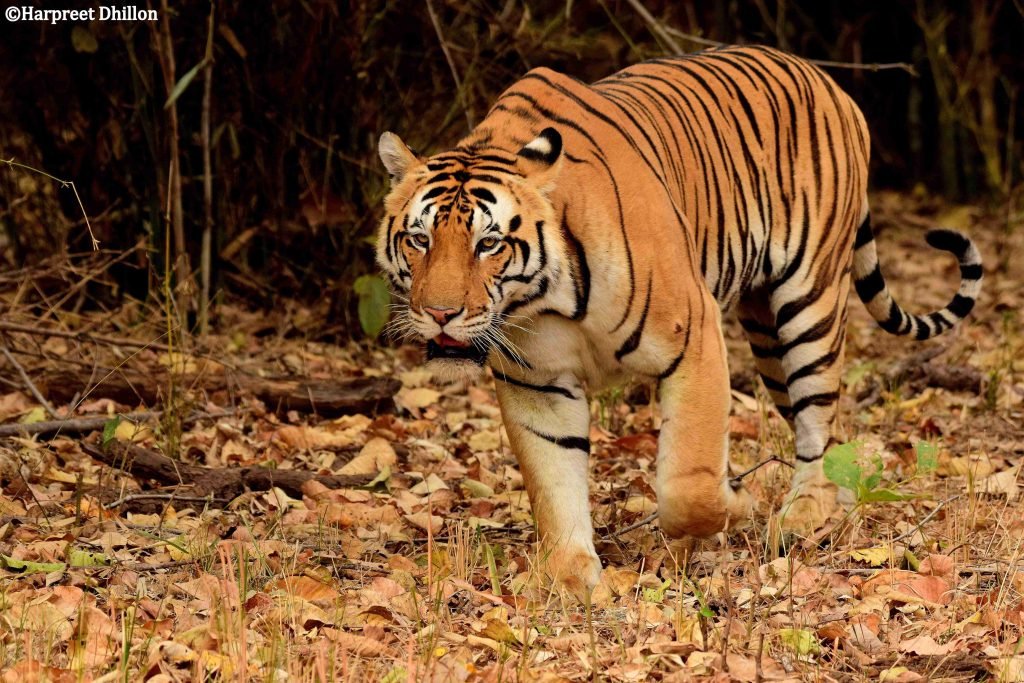

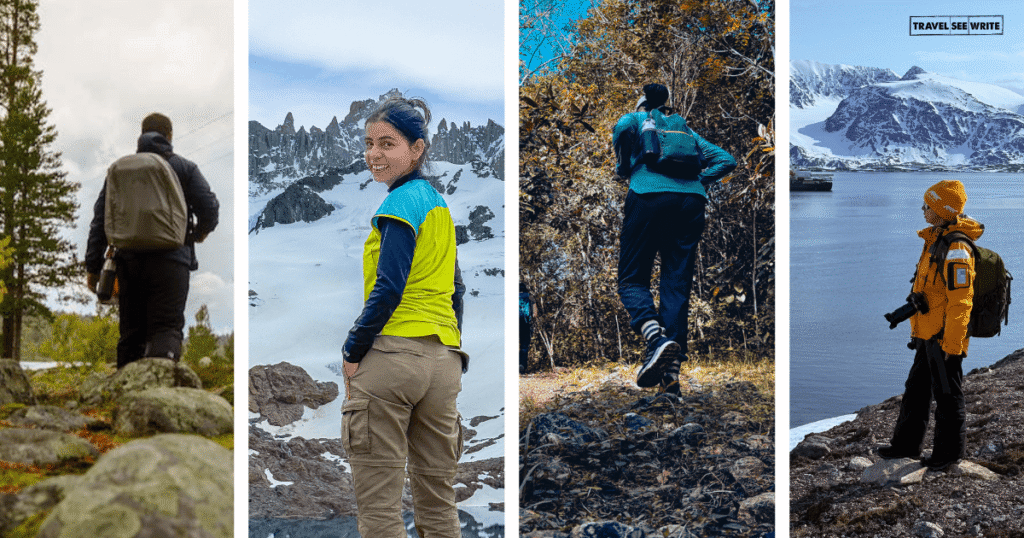
Luxury travel should feel seamless from start to finish.

Begin with our online form. We then connect for a detailed conversation
No booking fees. Ever.
We fine-tune your bespoke itinerary until it feels perfect.
With confidence, care, and 24/7 on-ground support throughout your journey.