Best Time to See the Great Migration in the Masai Mara, Month by Month
Last updated: October 2026
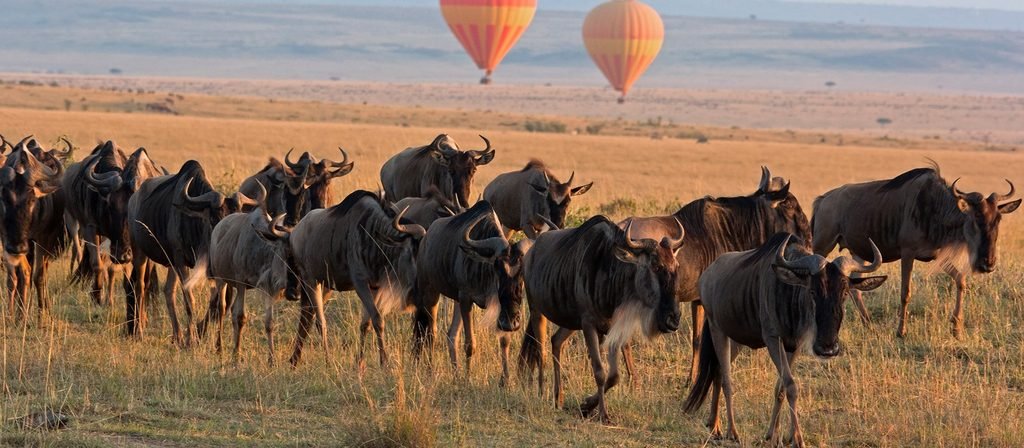
Every year, more than a million wildebeest, along with zebras and gazelles, walk in a huge loop between Tanzania’s Serengeti and Kenya’s Masai Mara. They do it because the grass tells them to. That is the Great Migration, and the moment everyone wants is the river crossing, when a herd stands on the bank of the Mara River, hesitates and then pours into the water.
The tricky part is that the herds do not follow a calendar. They follow the rain. So the honest answer to “When is the best time?” is a window, not a date. This guide gives you the window month by month, so you can choose the trip that suits your budget and your patience.
As with my guide on a Kenya safari from India, this is built from park and operator research. Dates and fees change, so check them with your operator before you book.
The short answer
- River crossings in the Masai Mara: late July to October, with August and September most often named the best.
- Calving in the southern Serengeti: roughly January to March, with February as the peak.
- Fewer crowds and lower prices: January to March, and the short-rains months of November and December.

How the Great Migration works
The herds circle the Serengeti-Mara ecosystem through the year. In the first months of the year, they are in the southern Serengeti, where the calves are born. In the dry months they move north and west, and between about July and October they reach the Masai Mara, where they must cross the Mara River. In late October and November they turn south again.
Crossings depend on rainfall, river levels and the behaviour of the herds, so no operator can guarantee one. Wildebeest are famously indecisive. A herd can stand on the bank for hours and then turn around.
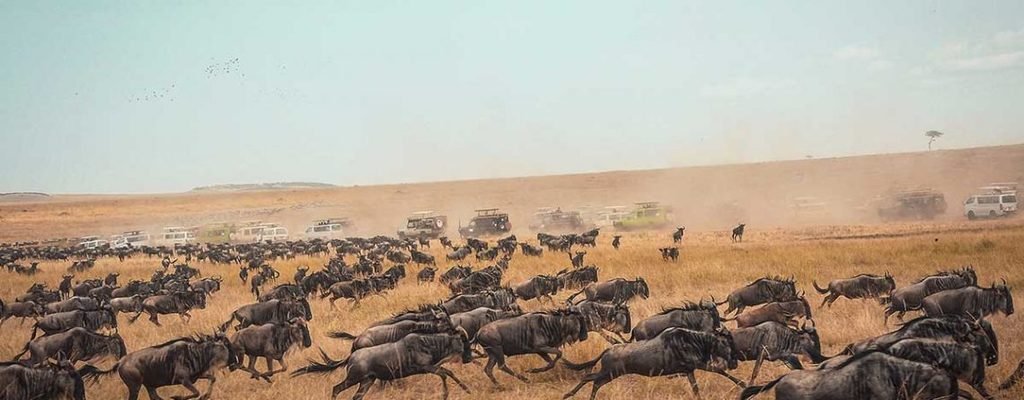
The Great Migration, month by month


January to March: calving season
The herds are in the southern Serengeti in Tanzania. Calves are born in huge numbers, with February often cited as the peak. Predators follow, so this is also a good time for lions and cheetahs. If you are planning from Kenya, this is the Mara’s quiet period, with good wildlife viewing and fewer vehicles.
April and May: the long rains
The herds move north and west. The long rains bring heavy weather, and roads can be hard to use. Some camps close and others drop their prices. This is the budget season, but not the best one for a first safari.
June: the herds head north
The animals gather and move toward the western corridor of the Serengeti, where they face their first river crossings, at the Grumeti River. They are not yet in the Mara.
July: the herds arrive
From mid or late July the first herds begin to reach the northern Serengeti and the Masai Mara. Crossings of the Mara River begin. This is when prices and demand climb.
August and September: peak crossings
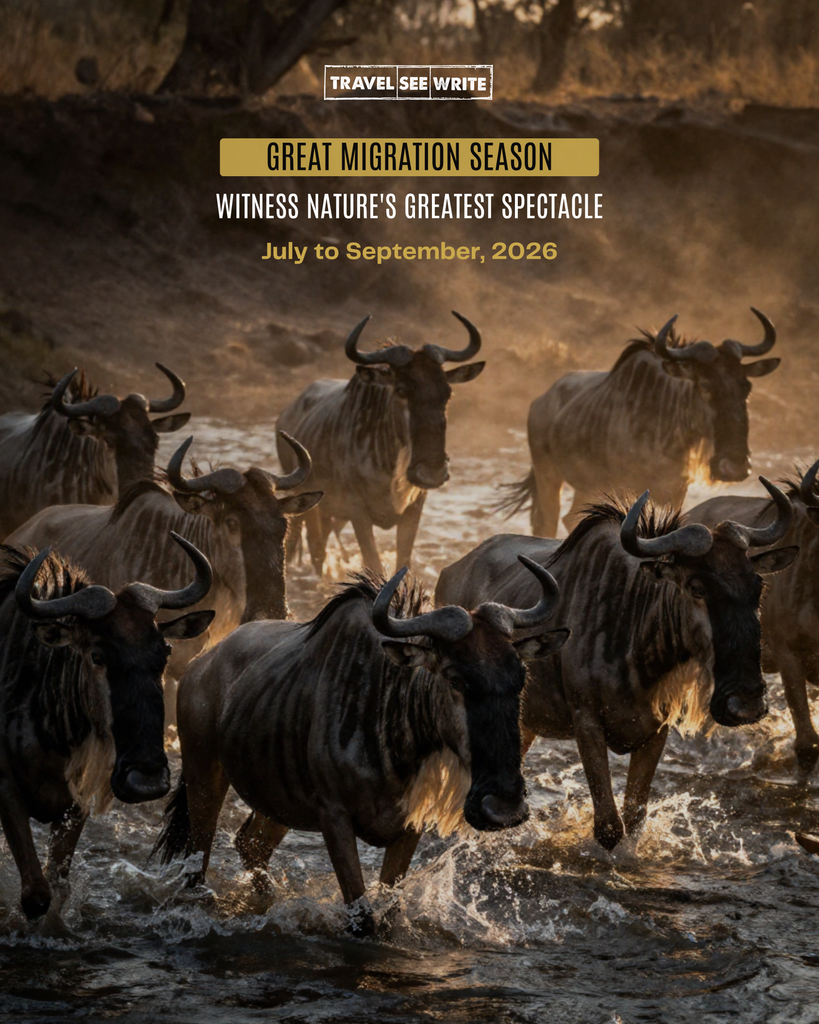
These are the months most operators call the best for river crossings. The herds are spread across the Mara, and you have a good chance of seeing at least one crossing on a multi-day stay. They are also the busiest months, with the highest prices and the most vehicles at the crossing points.
October: the herds turn south
Crossings continue in October, but the movement is more dispersed than in August, and crossings can be less predictable. It can be a good compromise, with a little less crowding.
November and December: the short rains
The herds return south to Tanzania. Kenya turns green, and the crowds thin out. It is a quiet, scenic time, with good prices, but you will not see the migration in the Mara.
Which month is right for you?
- You want river crossings: August or September. Book at least six months ahead.
- You want fewer people: January to March, or November.
- You want baby animals: February, though you will be in Tanzania’s southern Serengeti and not in the Mara.
- You are on a budget: April to May, or November to December, but check the weather.
What it costs: park fees and packages
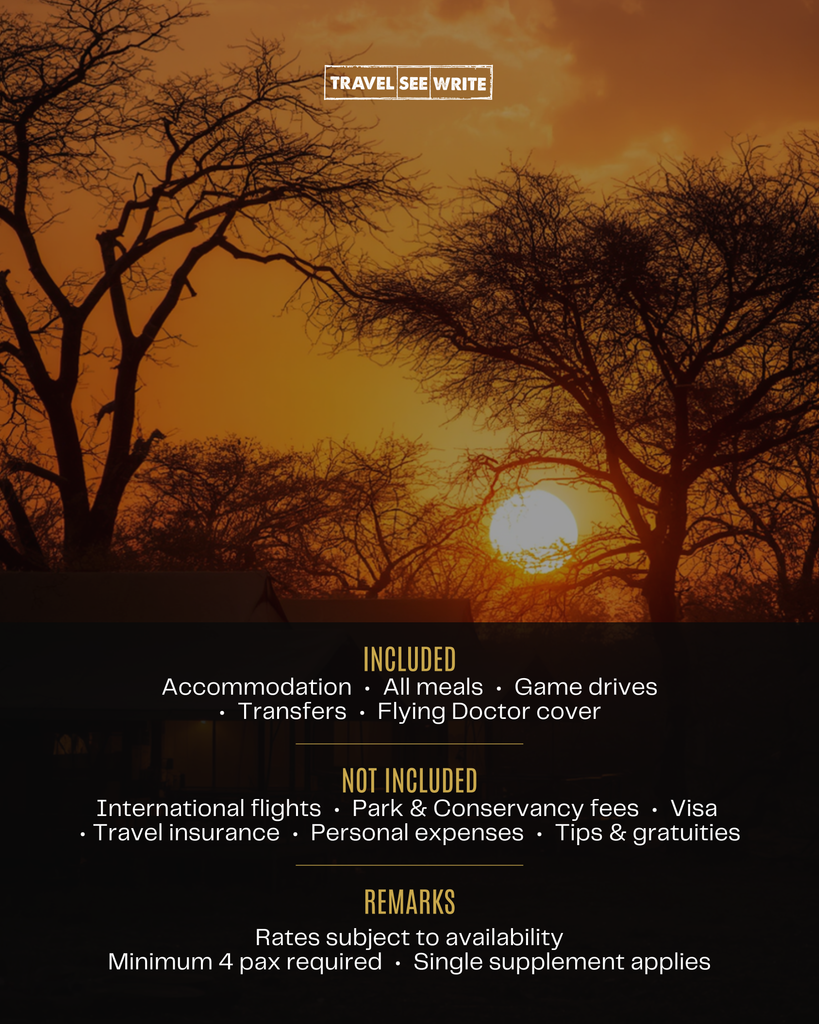
The Masai Mara charges non-resident adults a daily entry fee. Most sources I found put it at US$100 per day from January to June and US$200 per day from July to December, which means the migration months are also the most expensive. Children aged 9 to 17 pay about US$50, and younger children enter free. Sources disagree on when the current tariff began, so confirm it with your operator.
Package prices from Indian operators in October 2026 ranged from about ₹1,35,000 for five days to about ₹2,53,000 for eight days. I go into the numbers in the Kenya safari cost from India guide.
Reserve or conservancy?
The Masai Mara National Reserve is the famous part, and the river crossing points on the Mara River are inside it. Around it are private conservancies, where the number of camps and vehicles is limited. A conservancy stay gives you quieter game drives, and some allow night drives and walking safaris. Many travellers split their stay, with a few nights in a conservancy for wildlife and a few nights near the river for crossings.
What to pack for migration season
- Neutral clothing and a warm layer for open-vehicle mornings
- A hat, sunglasses and sunscreen, since the savannah sun is strong
- Binoculars, which help at a distance when the herds are across the river
- A camera with a long lens, spare batteries and plenty of storage
- A beanbag or small support for steady photographs from the vehicle
How to see a river crossing
- Stay at least three nights in the Mara. A crossing can happen at any time of day, and it often takes patience.
- Choose your camp with care. Camps close to the river save time, and conservancies outside the reserve limit the number of vehicles.
- Hire a good guide. A guide who reads the herd’s behaviour will position you well.
- Be patient. Bring a book, snacks and a sense of humour.
- Respect the animals. Do not crowd the crossing point, and follow your guide’s instructions.
Great Migration: common questions
When is the best time to see the Great Migration in the Masai Mara?
Late July to October, with August and September most often cited as the best months for river crossings.
Can I see the migration in Kenya in January?
Not the herds. In January they are in the southern Serengeti in Tanzania. The Mara still has excellent wildlife viewing.
Is the Great Migration guaranteed?
The herds will be somewhere in the ecosystem, but a river crossing cannot be guaranteed on any day. Plan for several nights.
Should I choose Kenya or Tanzania?
In the Mara months, Kenya gives you the river crossings. For calving, choose Tanzania. Many travellers combine both. See our Kenya and Tanzania grand safari, 11 days.
How far ahead should I book?
For August and September, six months or more.
Is the Great Migration good for children?
Children can enjoy it if they are old enough for long drives. A crossing can be intense, so prepare younger children for what they may see.
Plan your Great Migration safari with Travel See Write
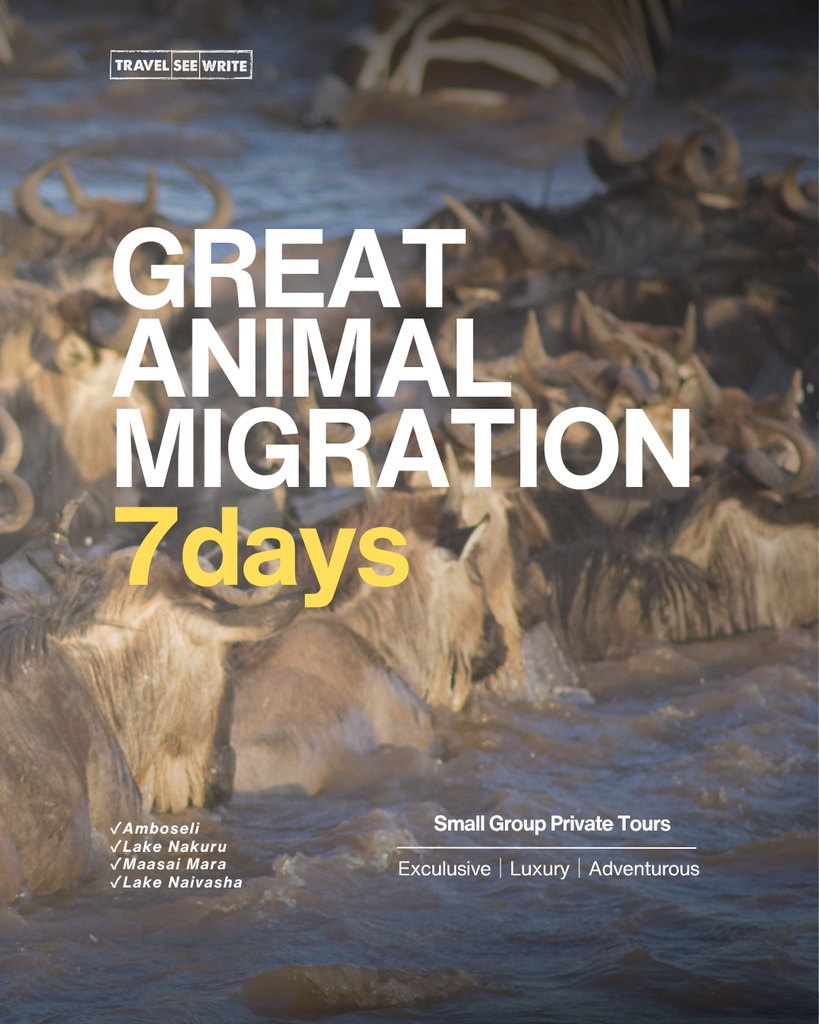
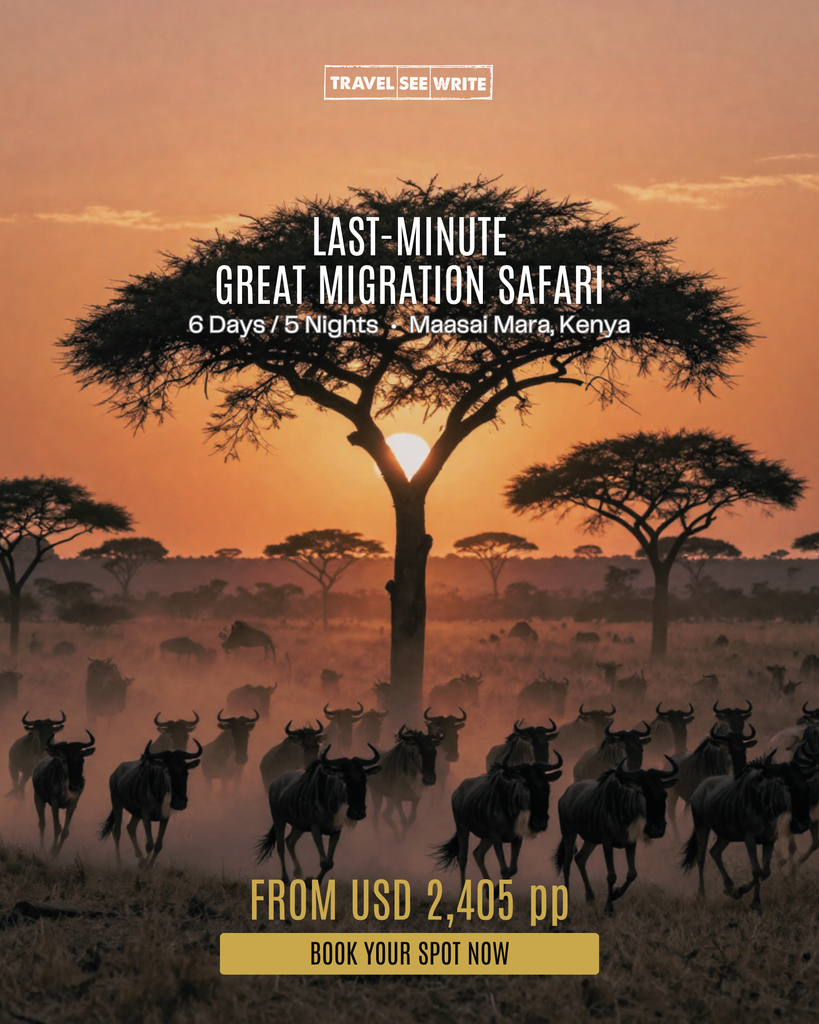
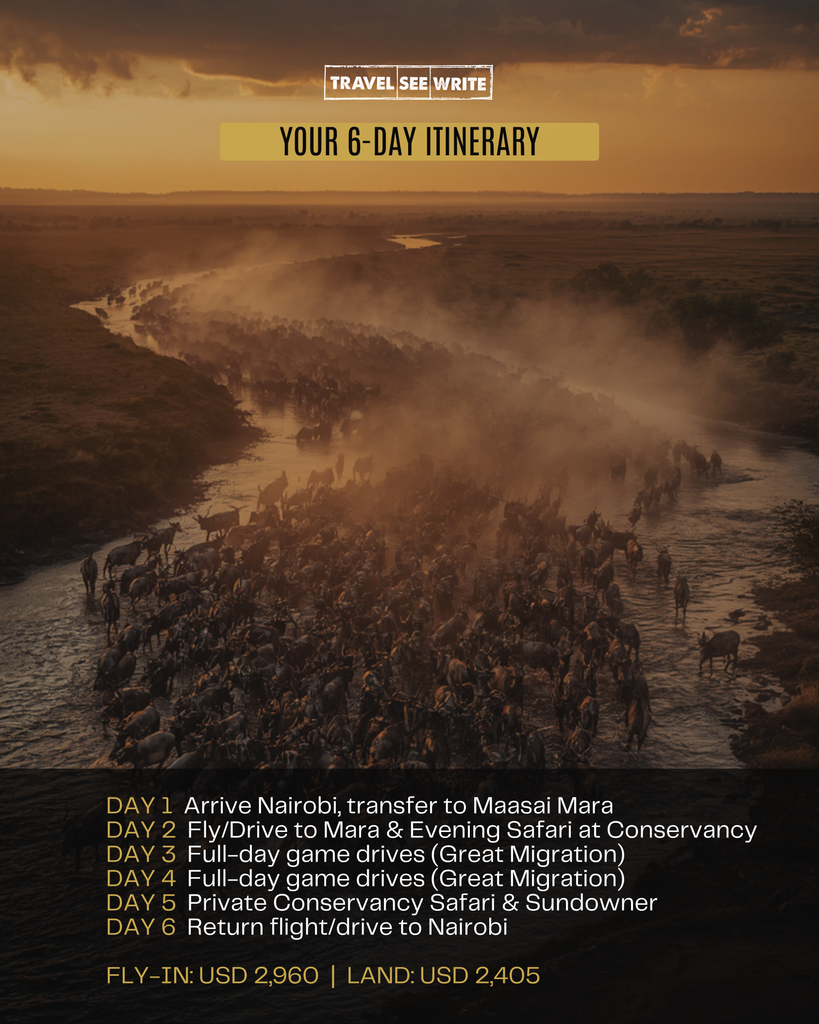
See our Kenya Great Migration safari, 7 days, browse all Kenya safari packages or send your dates through the Plan Your Trip form.
Offbeat Places. Untold Human Stories.

leave a comment