


You Enquire
Begin with our online form. We then connect for a detailed conversation
Sitting at a beach-side bar. Live band playing. Adele, the undisputed queen of melody, is rocking the scene. Sometimes it hurts.
The lyrics remind me of Ranthambore National Park. Baffled by the link between a sad love song and a National park? Well, the link is what gave birth to this article.
It is what I felt when I saw how Ranthambore National Park is slowly transforming into a circus. Though circuses have long gone out of business in India, National Parks are trying to take their place. Don’t believe me? Here’s my personal account on the plight of poor wild animals. Let’s rewind.

On 18th March 2016, when the world was sleeping, I was wondering if my jungle Safari vehicle would show up. It’s already 6:30 am. My call time was 5:30 am. Why hasn’t it arrived yet? Was there some accident? Was my booking canceled at the last moment? All kinds of weird thoughts were crossing my mind.
Finally at 7 am our Tiger Safari canter arrived. No apologies were given. All seats were taken. Mostly foreigners except for two Indian families. One family had a 2-3 months old baby. Other family had a toddler and a 2 years old kid. I had no place to sit. So I had to involuntarily endure the bumpy ride while getting sun-baked. The sun was in punishing mood even though it was only mid-March.
Sanju, our safari guide, tried his best to make up for the time lost. But today was not a day for me. Some more waiting since our guide had to register passengers’ details at the park entrance Gate. In the meantime, some hawkers tried to make a quick buck by trying to sell a cap worth Rs. 250/- for 1100 to a foreigner. The deal was finally sealed at Rs. 700/- Both parties were happy as both thought they made a good bargain.
After 15 minutes of wait, we finally entered the park but again we had to wait at the Jogi Mahal Gate. We were probably amongst the last ones to arrive. And at last, after Sherlock-ing for some time, I found the culprit responsible for our delay. It was the Indian families onboard (no points for guessing). One family couldn’t get ready on time and therefore everyone had to suffer.

Birds saying Hi to us at Jogi Mahal Gate, Ranthambore National Park
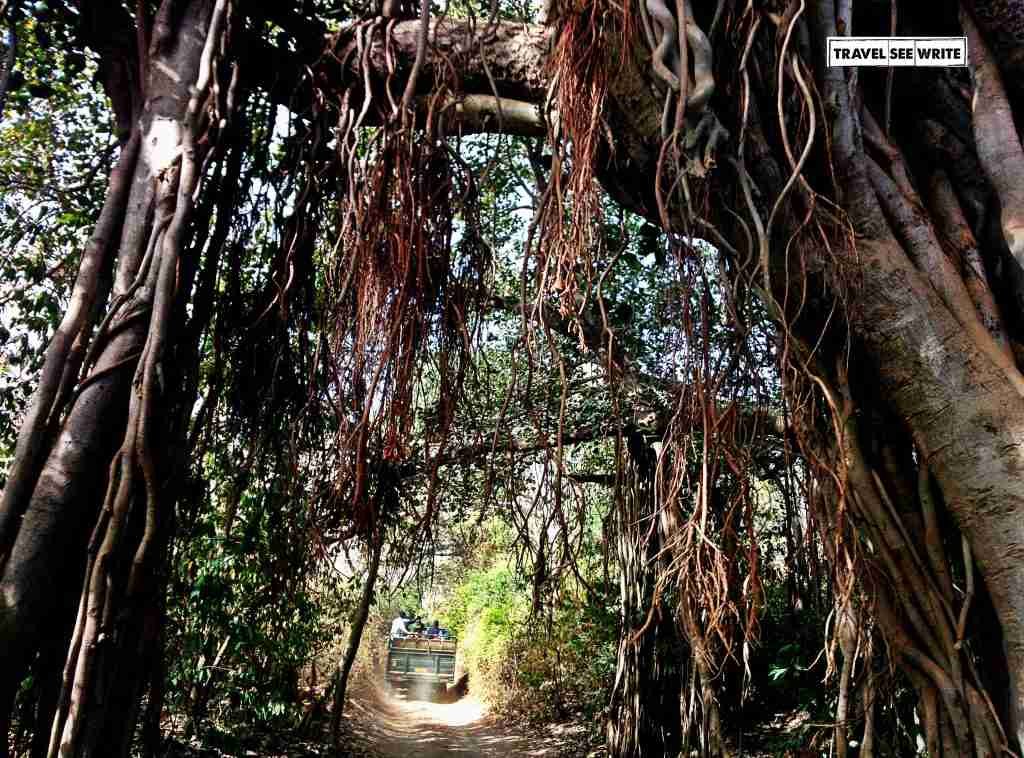
Zone 3 Jungle Safari Route, Ranthamore National Park
Sanju started telling us about the park and giving instructions on how to behave when we spot a tiger. Little did he know that adults become worse than kids when they see a Tiger. We cross other vehicles loaded with enthu cutlet ‘tiger lovers’ telling us they saw the tiger here…there…everywhere. We have been roaming in the park for almost an hour now but no luck so far. Everywhere same story is replayed. “Arrey aap late hogaye. Abhi toh yahin dikha tha Tiger.” (Oh!You are late. We just saw a tiger here!)
Finally, Sanju asked the driver to kill the engine near a water body in Zone 3 where tiger sightings are the most. There were already a few canters and gypsies waiting. Karol Bagh aunties were busy sharing success stories of Tiger sighting in full volume. Either the person that they are talking to was deaf or probably they were deriving sadistic pleasure by teasing lesser mortals like us who still haven’t had Tiger darshan.
Our guide Sanju was an intelligent person and thankfully didn’t get swayed by countless suggestions given by our co-passengers. Giving into their suggestion would have meant that we roamed like headless chickens in the park without any success. After waiting for half an hour we decided to move towards the grass. And as we were moving, Sanju told our driver to stop and park the canter on a side. The excitement was building and the tension was palpable.
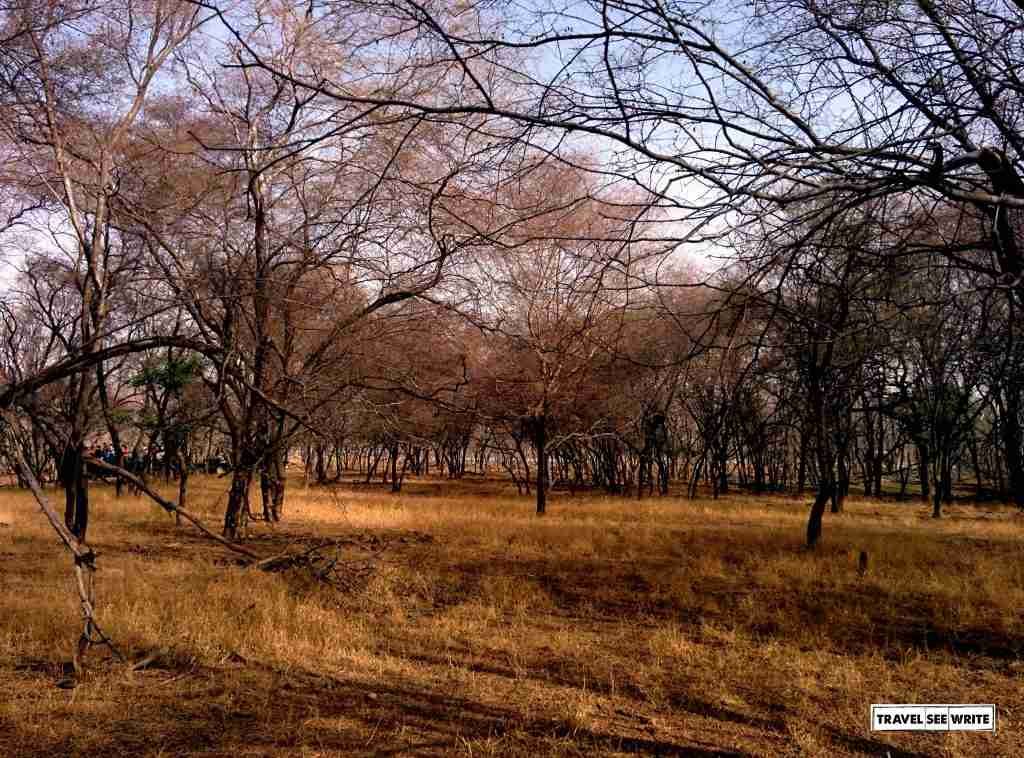
Zone 3 Jungle Safari Route, Ranthamore National Park
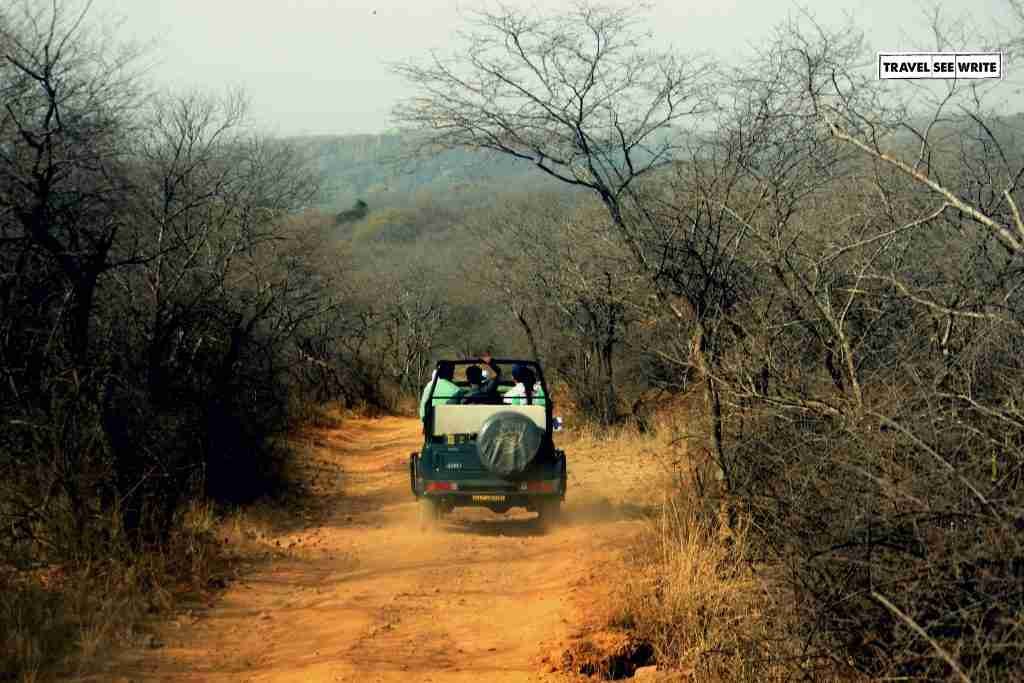
Still in search of the elusive Tiger. Ranthambore National Park
Voila! There’s a Tiger. It’s patiently waiting for the right moment to pounce on its prey. However, little did it know it’s not going to be its day. Everyone starts jumping with the excitement of sighting a Tiger. Seeing the excitement in our canter the other vehicles get the hint. Everyone came rushing in. 8 Gypsies and 5 canters. The Tiger is being pursued by dozens of Gypsies and Canters carrying camera-toting wildlife enthusiasts. All kind of cameras in action- from point and shoot to DSLR’s, from mobile phones to iPads. People were about to get down from the Gypsy and vehicles were encroaching Tiger’s territory.
And the icing on the cake was the kids squealing and shouting. Not just in our canter but in others too. Now the whole Jungle Safari experience looked like Jurassic Park meets Disney World. I wonder how the Tigers cope with this continual harassment and intrusion.
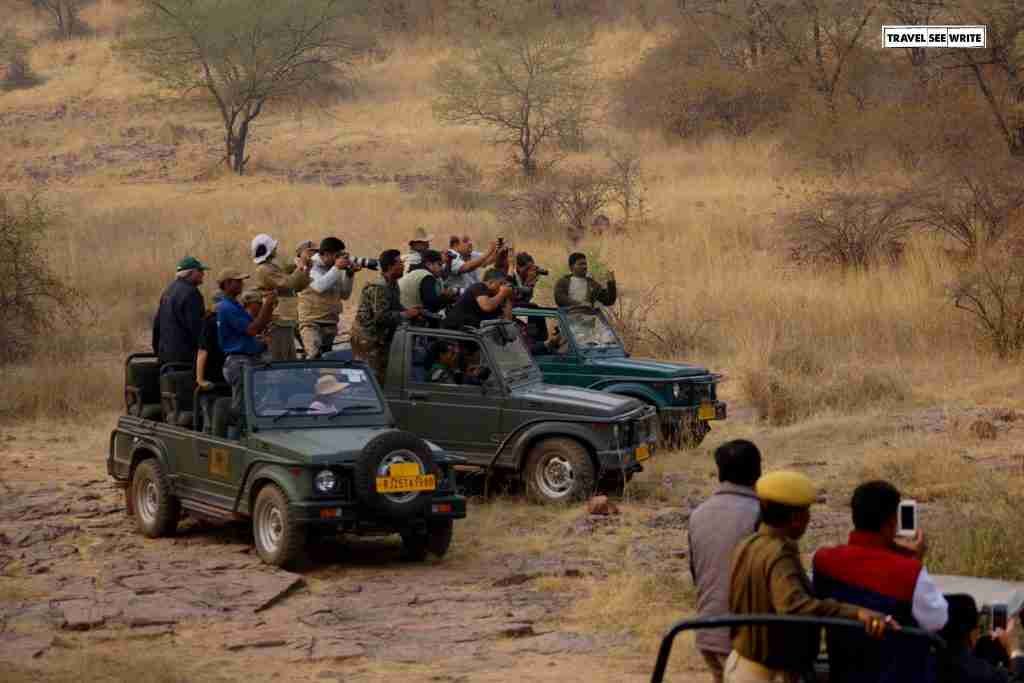
Tourists going picture crazy during Tiger Safari, Ranthambore National Park
Our noise had frightened the prey and the predator. I was heartbroken to not experience the safari the way I had imagined. Our guide Sanju probably read my mind. He asked us to sit quietly if we wanted to see the Big cat in full glory. His strict tone put the kids and the parents (who were worse than kids) to their place. Now without making any noise, we were all waiting.
After some more waiting, we finally saw the Tiger in full glory. He was preparing for the kill. For approximately one hour I saw him following his prey patiently. If there’s one thing we can learn from Tigers is their patience. In spite of being so powerful and strong, they have to play the waiting and the patience game.
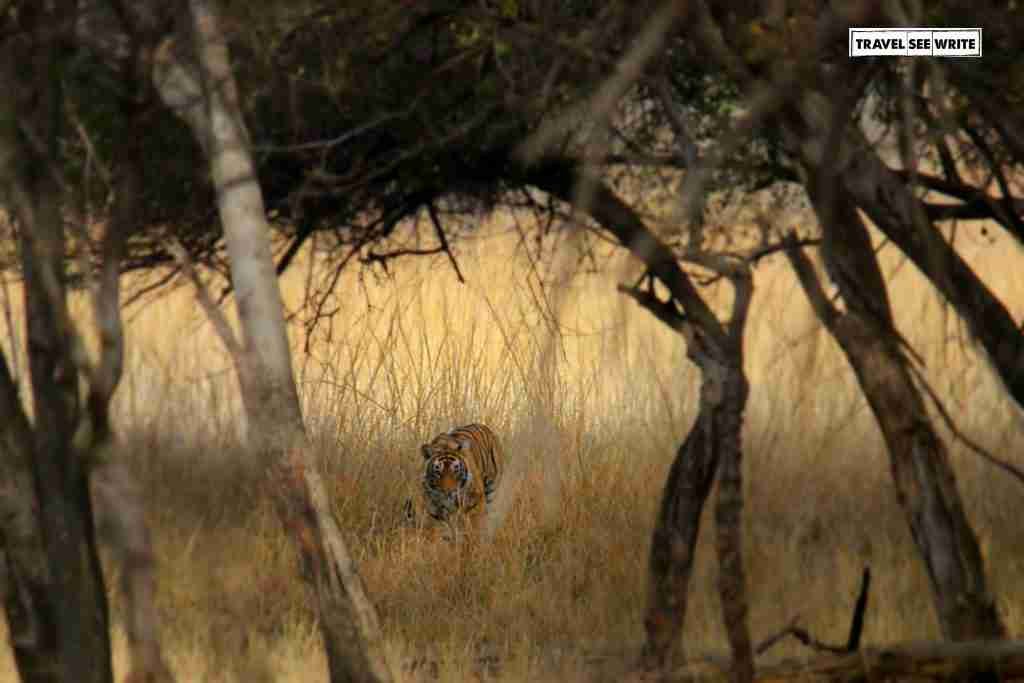
Finally Tiger Darshan, Ranthambore National Park
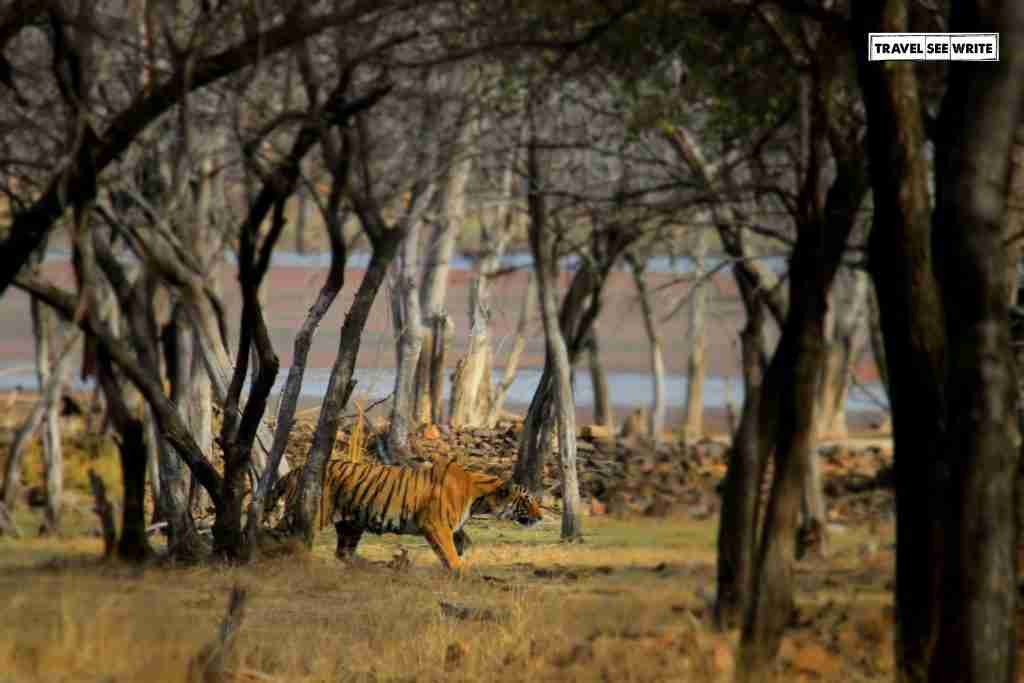
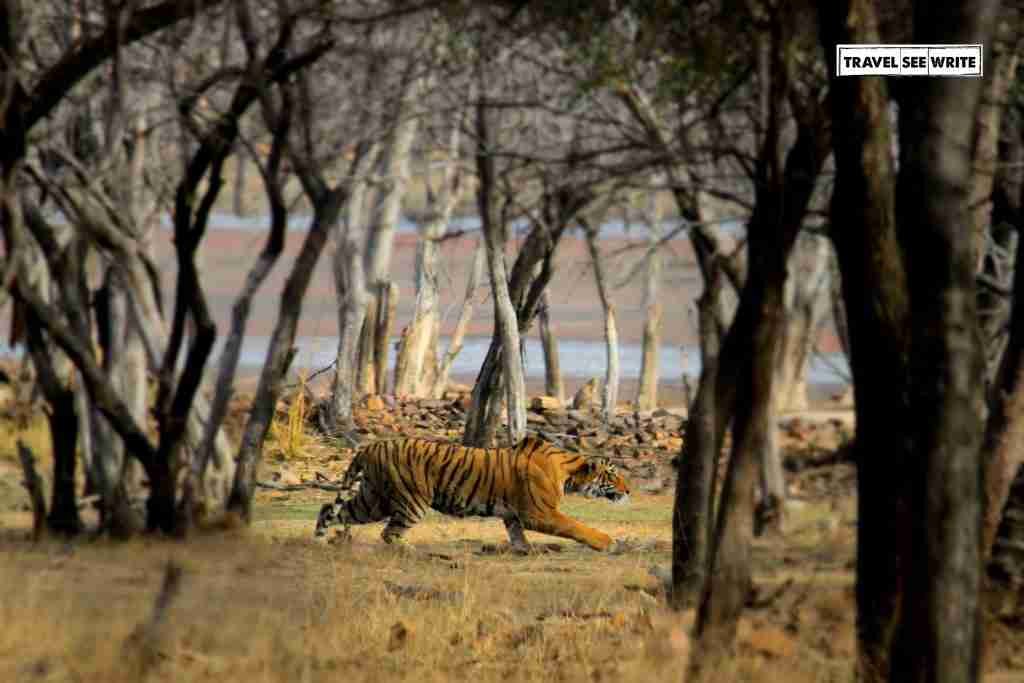
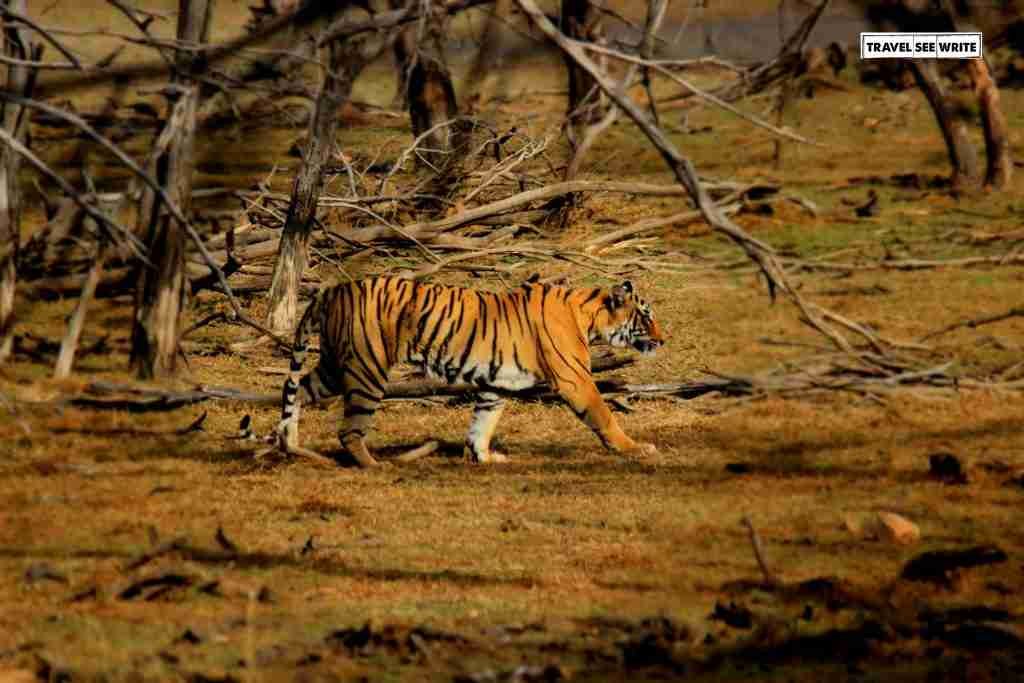
Hunt mode on for the king of the Jungle, Ranthambore National Park
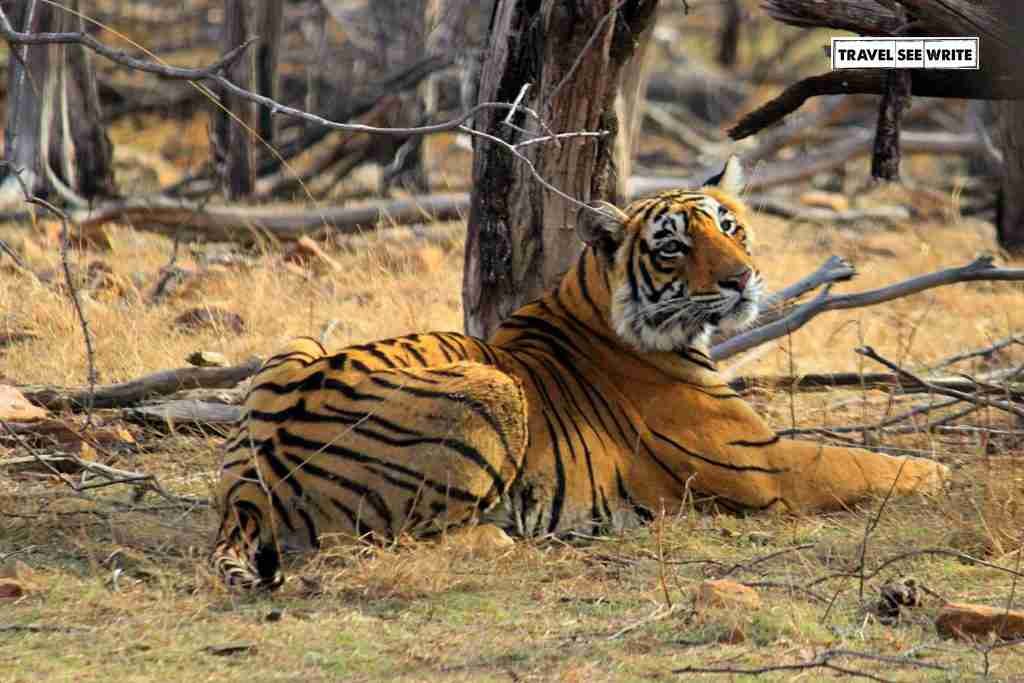
Tiger patiently waiting for its prey, Ranthambore National Park

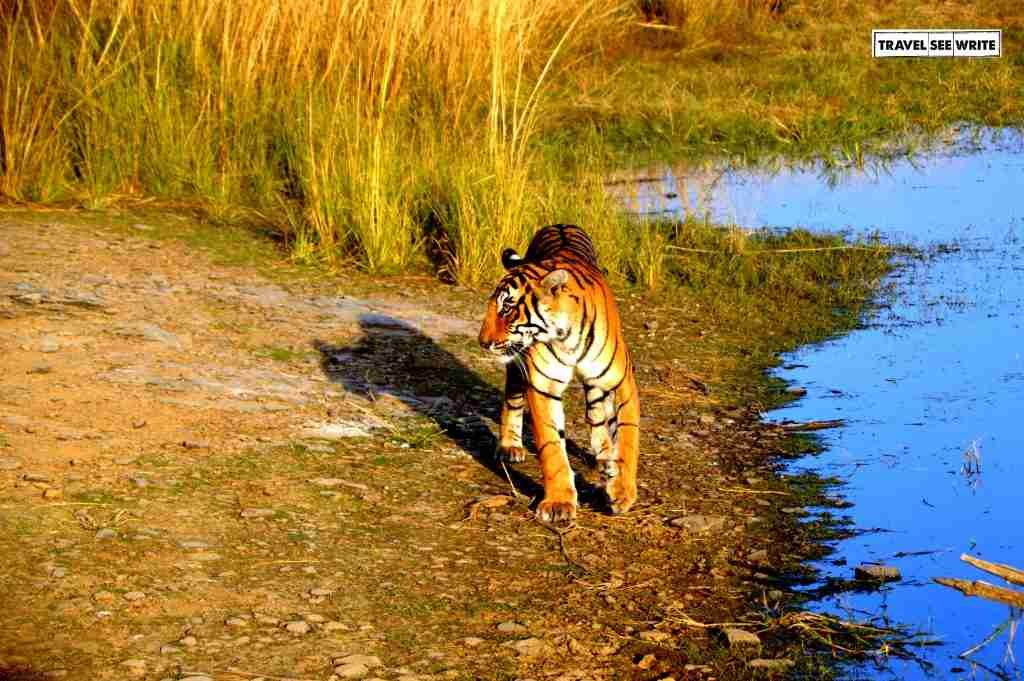
Another Tiger near Padam Lake, Ranthambore National Park
Picture crazy wildlife enthusiasts hounding the Tiger, Ranthambore National Park
I was happy because in spite of lousy co-passengers I saw the majestic Tiger. But I really wish that the Government can step in to stop this circusisation of our National Parks. Strict penalties should be imposed on travelers who become a nuisance for the Jungle or maybe just feed them to the tiger!
Related: How many Tigers are left in the world
Ranthambore National Park is best enjoyed with as little ambient noise as possible. For better or worse, it turns into a circus during long weekends or holiday season. So visit it during weekdays. March-May is the best time to spot the Tiger. When the park reopens in mid-October, the jungle becomes lusher after the monsoon, but tall grass makes it harder to spot the big cat.
Only park-approved vehicles are allowed inside the Jungle. There are a limited number of vehicles allowed into the park, a maximum of 40 vehicles, 17 Gypsies for tourist and 3 Gypsies for VIP and 20 Canters at any one time. Only 8 Gypsies are allowed on a track. You can either choose an uncovered Gypsy, which seats six people, or a Canter that seats up to 20. You can book per seat. The Gypsy costs approximately 6000 and is ideal because it allows you more freedom to go explore the park’s many nooks and corners. The Canter costs 800 per person. Gypsies are in high demand, so book early. You can reserve one through the park’s official website. You can also book through a travel agent or your hotel, though they’ll add their service charge.
Ranthambhore park is divided into ten zones. Visitors are assigned their Jungle Safari zone by lottery. If possible, insist on getting Zone 3 and 4. These are VIP zones and are the best bet to sight a Tiger. If you can pull some strings, try for the Freezone Gypsy which comes with a satellite phone. It has a freedom to go in any zone of the park.
There are two safaris a day – morning safari starts at 6.30 a.m. and evening safari starts at 3 p.m. Usually, morning safari is better. However, starting April 2016 five gypsies will be allowed for a full day Safari in the park only on the tourist zones (1-5). The full-day ticket would be Rs. 30,000 for Indians and Rs. 40,000 for foreigners.
Reaching Ranthambore is not difficult. You can either fly to Jaipur, take a three-hour road journey or you can take a train to Sawai Madhopur. There are direct trains from Delhi and Mumbai, but make sure to book way in advance.
As per the locals, there are 62 Tigers in Ranthambore right now. The stories of Fateh, the largest Tiger, and Machali are world famous. Do talk to locals to get scoop on Jungle tales
Ranthambore National park contains rich flora and fauna. If you are a nature lover you are in for a treat. You can see Tigers, Leopards, Striped Hyenas, Sambar deer, Chital, Nilgai, langurs, Macaques, Jackals, Jungle cats, Caracals, Sloth bears, Black bucks, Rufoustailed Hare, Indian Wild Boar, Chinkara, Common Palm Civets or Toddy cat, Coomon Yellow Bats, Desert Cats, Fivestriped Palm Squirrels, Indian False Vampires, Indian Flying Foxes, Indian Foxes, Indian Gerbilles, Indian Mole Rats, Indian Porcupines, Longeared Hedgehogs, Ratels, Small Indian Mongoose, Small Indian Civets and Common mongoose. You can also see marsh reptiles near the water bodies.
Ranthambore is also counted as the famous heritage site because of the pictorial ruins that dot the wildlife park. You can visit the Ranthambore Fort and Raj Bagh Ruins. These ruins are located between the Padam Lake and the Raj Bagh Lake. Padam Lake is the largest lake in the park and the beautiful Jogi Mahal is located on its edge. Jogi Mahal is the place where apparently Bill Clinton stayed. And if you are game for a walk, do climb up the Ranthambore Fort, which stands majestically atop a hill overlooking the entire park.
You can club your Ranthambore Jungle Safari with a tour to Jaipur, Agra or Bharatpur. Or if you want to explore the lesser explored places then do visit Chand Baoli at Abhaneri or Samode.
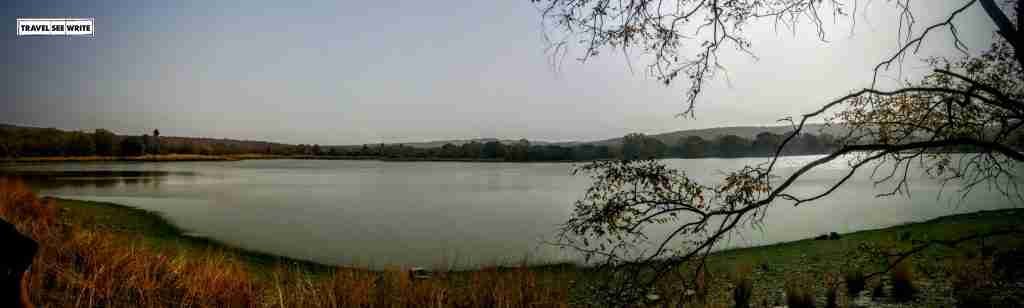
Padam Lake, one of the favourite spot for Tiger Spotting, Zone 3, Ranthambore Jungle Safari
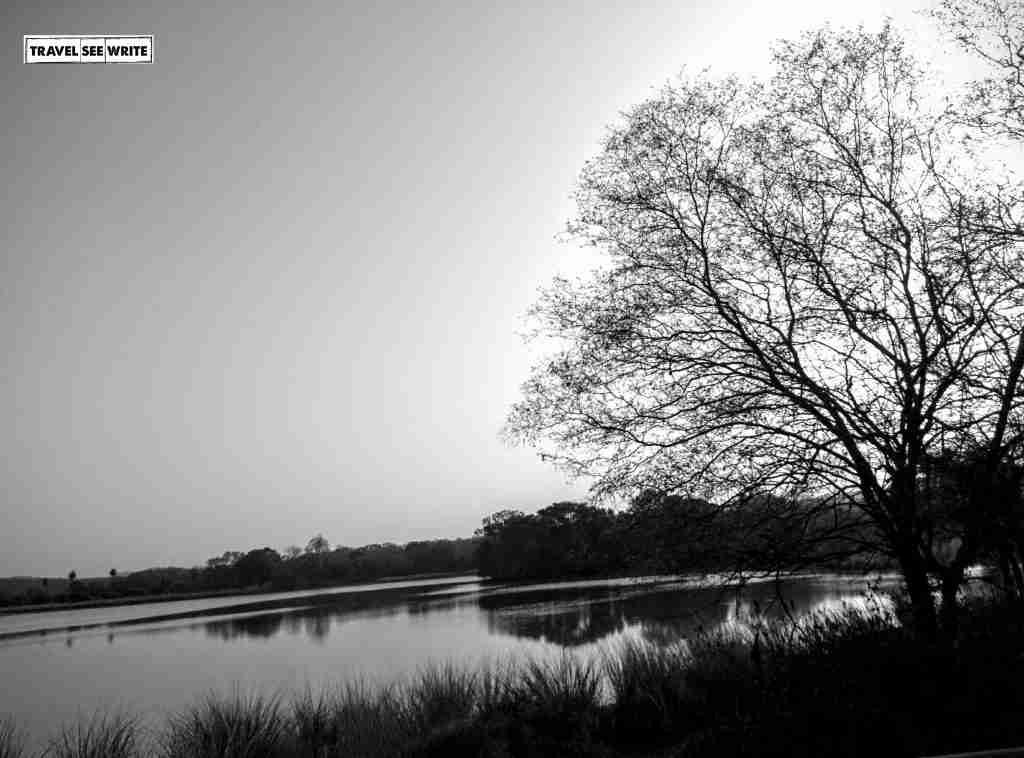
Padam Talab, Zone 3, Ranthambore Jungle Safari

The prey of the Tiger – Sambar Deer, Ranthambore National Park
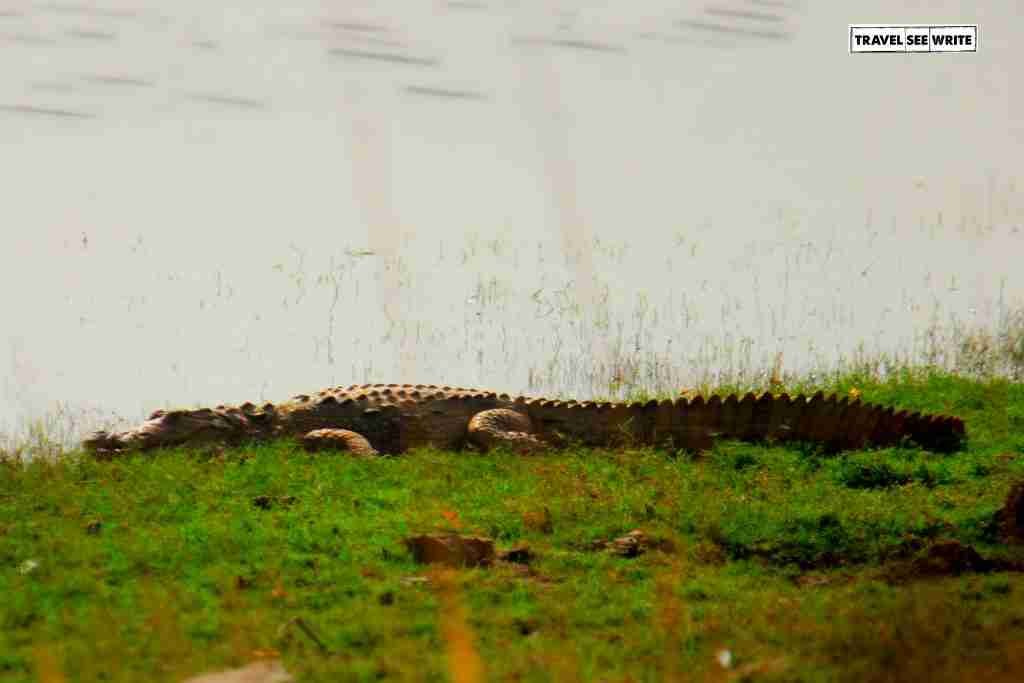
Crocodile resting at Padam Lake, Ranthambore National Park
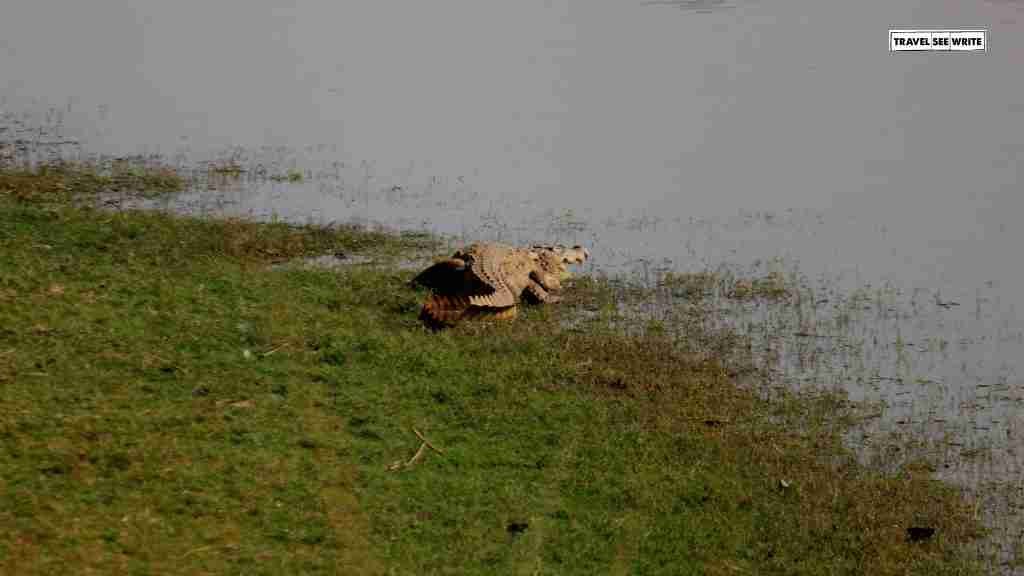
Crocodile at Ranthambore National Park

Birds at Ranthambore National Park

Beautiful Fauna at Ranthambore National Park

Are you looking at me? Ranthambore National Park
Jogi Mahal, Ranthambore National Park
PS: Special thanks to Manish Sharma for making this trip and article happen.
“Hey, are you from India? The land of colours, cows and Taj Mahal.”
“I can’t believe it snows in India. I always thought it’s a hot country.”
“Adventure travel in India? You gotta be kidding me. I guess the biggest adventure would be to get into a train.”
“Is it safe for girls to travel in India? I keep reading and hearing about so many rape cases.”
“I always thought traveling in India would just be for visiting temples or doing Yoga.”
These are the usual questions I get asked whenever I travel abroad or meet any foreigner. India is still considered to be a poor country where travel means just visiting temples and clicking pictures of cows and also the land where the concept of adventure and solo travel still seems alien. Where girls are still suppressed by men. Where Indians are still considered to be timid and low on self-confidence.
However, with time, Indians too are trying to change this perception of what the world at large thinks about us. I am trying my one cent as well. Every time I meet a foreigner I wear my Indian ambassador hat and try to share the Incredible India picture. Travel becomes the centre of my discussions. Travel See Write becomes my tool to bring that change.
In my earlier post, I shared the motivations of adventure enthusiasts from different walks of life on what motivates the people to choose adventure travel. Taking that story further, I am going to share some offbeat adventure activities that you might not have heard of before. Activities like desert safari, skiing down the snowy mountainous slopes or hiking the toughest terrains have become the norm for millions of travellers. Some countries like Nepal have based their entire GDP on adventures that form the core component of their tourism industry. Despite this being the era of internet and communication, there are several adventure activities that are still offbeat and remain true to their raw essence.
Here are few of them. Maybe next time you can try one of them if you haven’t tried yet:
Bolivia’s North Yungus Road Aka Road of Death is the biggest tourist drawcard of this South American country. Every year hundreds of cyclists attempt to travel downhill the Road of Death assisted by gravity and compounded by hair-raising hairpin turns, narrow tracks and occasionally mud gravel instead of proper tarmac. Each year 300 people die while travelling down the road and yet it remains the hottest cycling adventure in the world. The rewards are amazing; with beautiful views of valleys, thick forest ridges and misty clouds, with streams of water and rains being your constant companions.
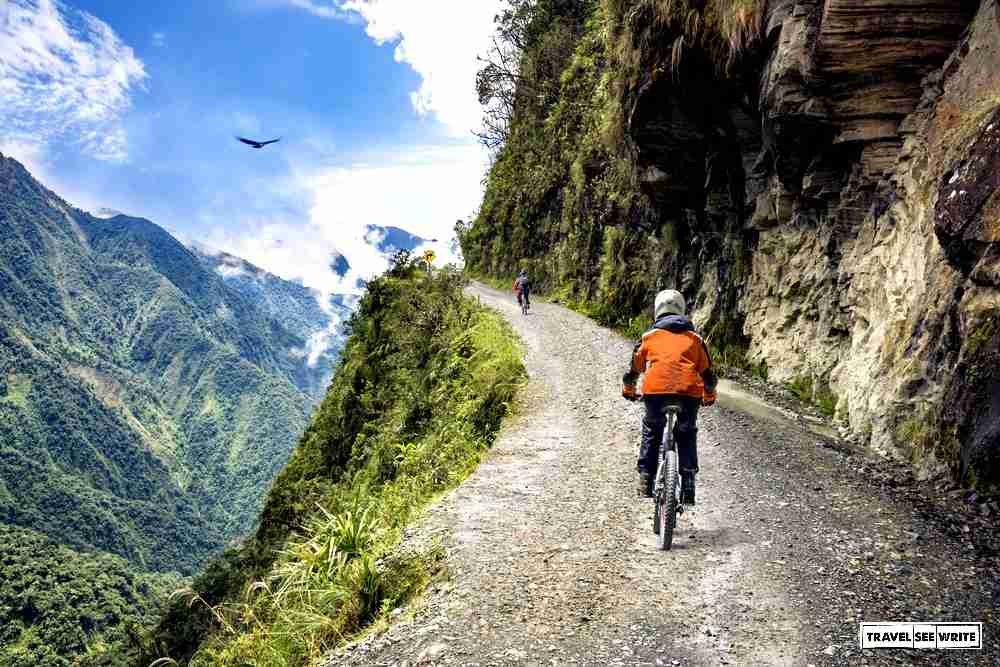
Mountain Biking in Road of Death, Bolivia
Antarctica is one of the last few wildernesses of our planet; still free from touristy commercialization. This continent is rough, harsh and is a test of human surviving skills. The continent is now base for several research labs set-up by various countries. However, its real test is the skiing expedition to the South Pole, the ultimate challenge! This trip to the South Pole takes 50-60 days and requires a higher degree of physical fitness, strength, stamina, and endurance coupled with sound mental strength and indomitable spirit. A general day involves 7-8 hours of skiing over the ice caps filled with intense solitude and tranquillity. No plants and animals are seen in this part of the continent. Frozen rocks, endless stretches of snow and blue skies are your constant companion along with 24-hour daylight.
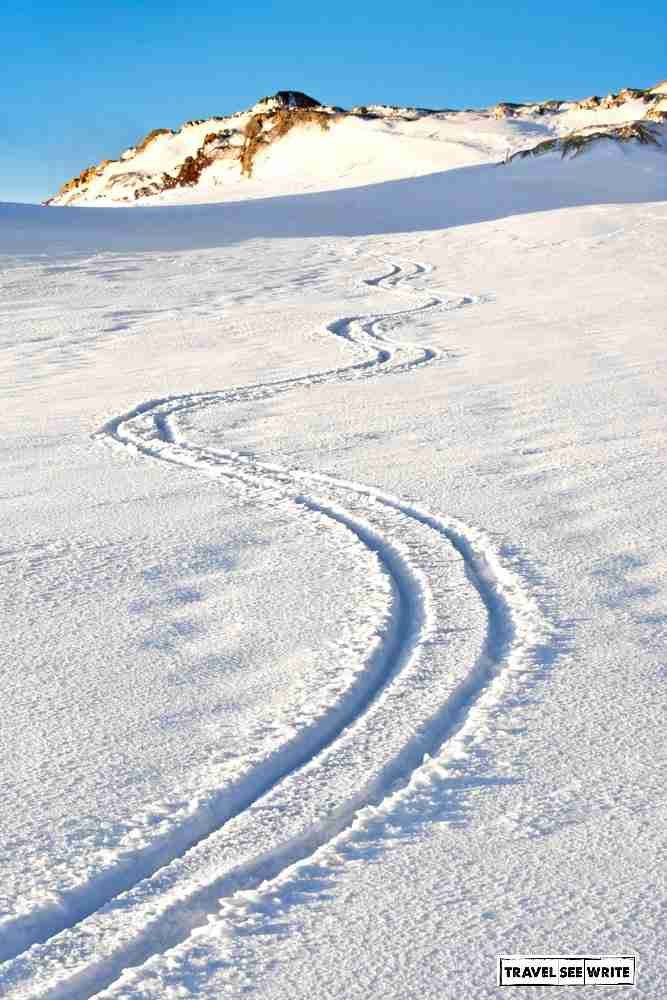
Peru is renowned for its mysterious sites associated with the lost Inca Civilizations and high altitude cities and villages. However, the country is also known for sand dunes. Peru has the world’s highest sand dunes, Cerro Blanco which is a highly popular sandboarding destination in the world. Cerro Blanco sand dunes have an elevation of 2070 meters and are located in Nasca, Peru. Enjoy the adrenaline rush as you glide down the desert while enjoying the views of the vast sprawling desert.

Sandboarding at Cerro Blanco, Peru
Kamchatka, Russia is one place where life is harsh and conditions are extreme. Punishing low temperatures, heavy snow and a lack of oxygen makes it one of the most difficult places on earth to travel. Imagine skydiving in these conditions and all you have is an unbeatable and dangerous adventure which is only available for highly certified and accomplished skydivers. One needs to know how to operate radios, use parachutes and many more technicalities to accomplish the daring adventure. The views are sensational: from a volcano to hot springs and vast acres of wilderness – you get to see it all.

Skydiving in Kamchatka, Russia
Every year heavy snowfall and sub-zero temperature turn the mighty River Zanskar, a tributary of Indus River into a solid mass of ice sheet. The river is the only lifeline and mode of communication in Ladakh, located in the north of Indian State of Jammu and Kashmir. The setting is close to -20 degrees as you trample the frozen river, camp on ice slabs and spend the night in your tent. Windy conditions and unstable ice sheet add extreme challenge to the trek that requires high physical fitness and mental strength. There are a lot of other exciting things to try in Kashmir, do check Kashmir Tour Packages for more information.

Chadar Trek on frozen Zanskar River, India
Cerro Negro is an active volcano located outside of Leon, Nicaragua. The volcano is also the most exciting place for adventure seekers as they can enjoy volcano boarding, an extreme sport. The adrenaline rush is great for enthusiasts but it comes at a cost. The volcanic gravels create a great deal of friction at high speed and a slight movement can change the course of the wooden board leaving you sliding across the steep slope of Cerro Negro giving you several bruises and injuries. Even the crash protection suits won’t be able to save you from the skin peel offs and bloody cuts and bruises.
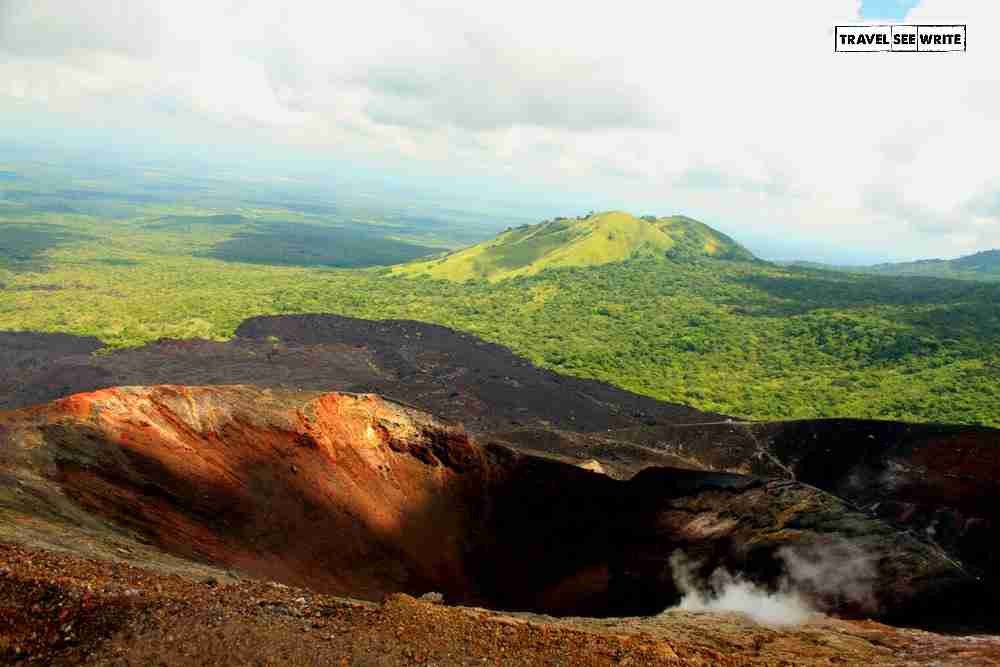
Volcano Boarding at Cerro Negro, Nicaragua
Victoria Falls in Zambia is one of the most spectacular sights on earth amongst the seven natural wonders of the world. The cascading waterfalls from a dramatic height look sensational. The waterfall looks at its very best from the air as you skydive over the vast falls and its surrounding areas. As you glide down, see the beautiful waterfall, rainbows, mist of waterfalls and endless stretches of African horizon.

Sky Diving over Victoria Falls, Zambia
So aren’t you excited already?
What are you waiting for?
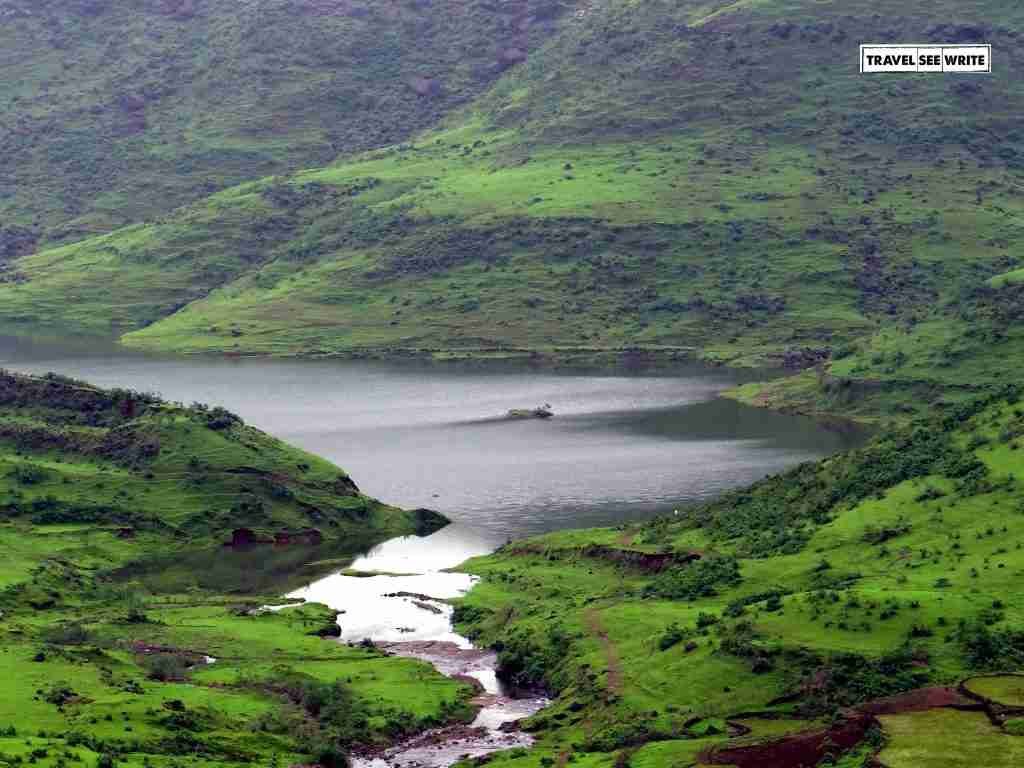
“Mam, kya aap kabhi Mumbai-Pune highway se uttar kar aas paas ke gaanv mein gaye ho?”
(Mam, have you ever visited the villages on the Mumbai-Pune highway?”)
Sometimes a question as simple as this can spark your travel plans. During one of my Mumbai-Pune business trips my driver became my inspiration for exploring the Maharashtrian Ecotourism. He was from Kamshet village and the way he described his place was so vivid and inviting that no travel guide could have explained it better. It took me an year to firm up my plan. But thanks to him, I got to see what wasn’t even in my consideration. Unfortunately he wasn’t free so I chose to opt for one of the car rentals in Mumbai. So let’s start my Maharashtrian Ecotourism journey:
I started my journey by going back to the roads of AH-47. It might not be as famous as Mumbai-Pune Expressway is, but it’s got the beauty of the ghats and the rustic charm of rural India. A short drive away from the expressway lies this hidden quaint pollution free village of Matheran. Matheran is a place where it seems like time has taken a pause to rejuvenate. I couldn’t help myself from inhaling lungs full of fresh air, which is so rare in city life. While walking around, I felt Mathetran was whispering in my ears. Perhaps complaining why it took me so long to come here. Silent apologies were exchanged and peace was made. Matheran was lovingly showing me around it’s abundant beauty. I felt like a VIP as there were hardly any person in sight.
During my exploration by foot I discovered this hill spot is declared an eco-sensitive area by the Ministry of Environment. And I am glad for that decision, it’s high time we preserve such rare gems. Matheran showed me how life can be lead devoid of vehicles and pollution, like how the world was many years ago. Matheran Trek is something that one must do even if you are not a trekker. The views are breathtaking and you wouldn’t mind the hard work when you see the valley views.

Matheran Trek
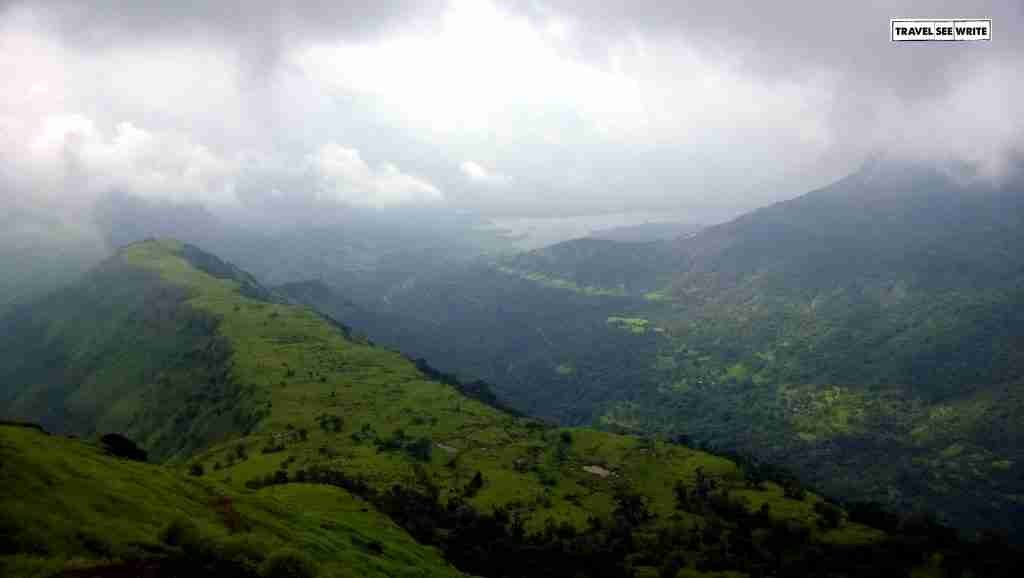
Garbett Point, Matheran
Let me be candid with you. When I plan my travels I don’t put everything on paper. I plan a very rough itinerary. Usually the time I have in hand and my to and fro places. Rest I leave it to the actual moment, nature and locals. Before I started my Maharashtrian Ecotourism Journey I had not heard about Saguna Baug. I just planned to visit Matheran but a casual chat with a local in Matheran gave me an idea to continue my journey to Saguna Baug, which is about 40 km from the Expressway. Why I fell in love with this place is because here sustainable Ecotourism is not just meant for books but is practised in real life. I’d say this is a perfect place for all those with green thumbs. Here I saw a complete model agricultural garden with ideas and methods to enhance my own garden back home. This baug, or garden, which is about 50 acres, has been encouraging agro-tourism by setting up examples of forestry and agriculture in limited spaces. I took a tour of the farm and took part in village activities from fish farming to fishing to horse-riding.
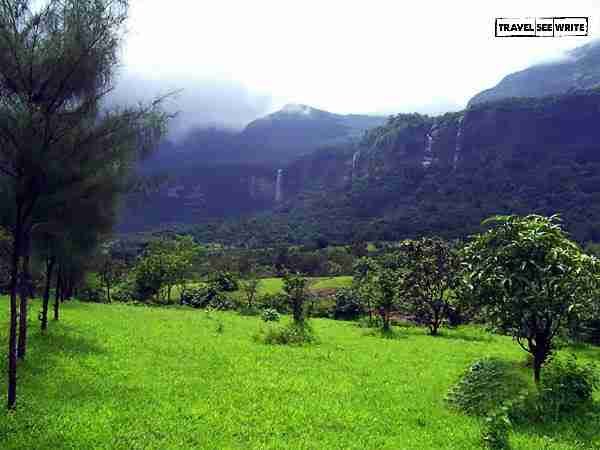
Saguna Baug, Maharashtra, Pic by around-pune.com
My next pit-stop was Kamshet, which is now famous for paragliding. Since I wasn’t too keen on paragliding, I decided to explore the mud-brick-lined villages surrounded by scenic beauty. Bullock carts and cycles are the common modes of transportation here and people are most often found walking to the farms or their dairy farms. Raikar farm is a beautiful farm where I could first-hand experience farming and village life. And guess what. I even tried my hand at milking cows. Obviously I failed miserably at it 😛 My respect for the people who gets food and dairy on your plates increased by several notches.
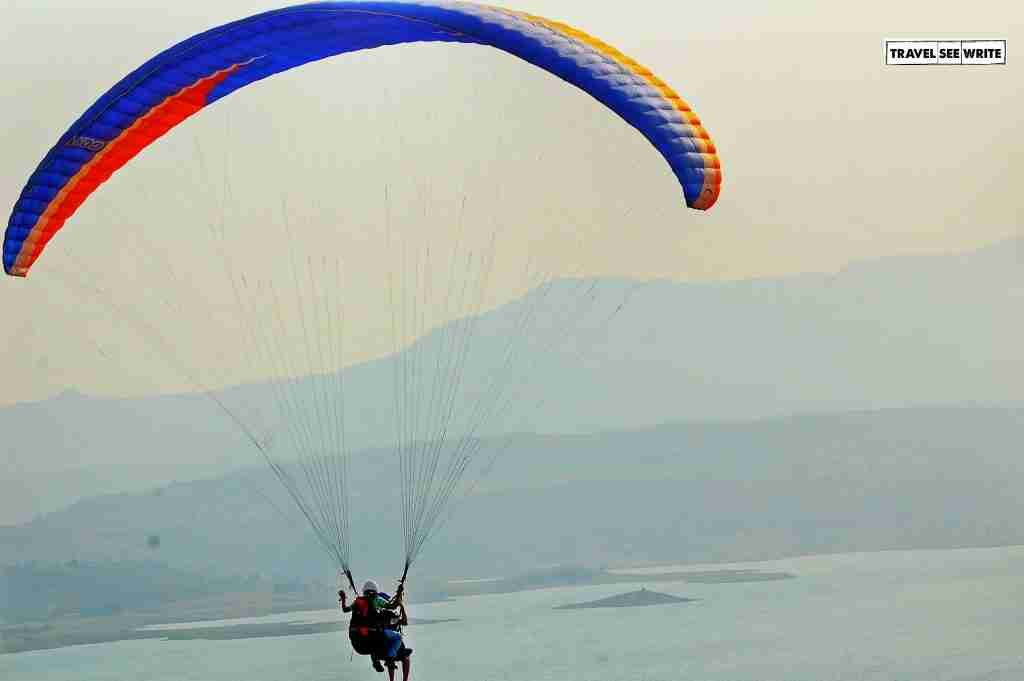
Paragliding at Kamshet, Kamshet, Pic by Mehul Pithadiya
After exploring the beauty of Kamshet, I decided to return to a place where I had been earlier as well but decided to do something that I had not done before. The spectacular Karla Caves is well-known to an avid traveler. What I didn’t explore earlier were the villages around it. Once I toured and witnessed the magnificence of the rock-cut caves, I took short drives around and discovered the villages, the names of which I have forgotten but their unique identity is firmly etched in my mind. These hamlets came as a treat for me since I was yearning for some typical Maharashtrian Ecotourism experience.
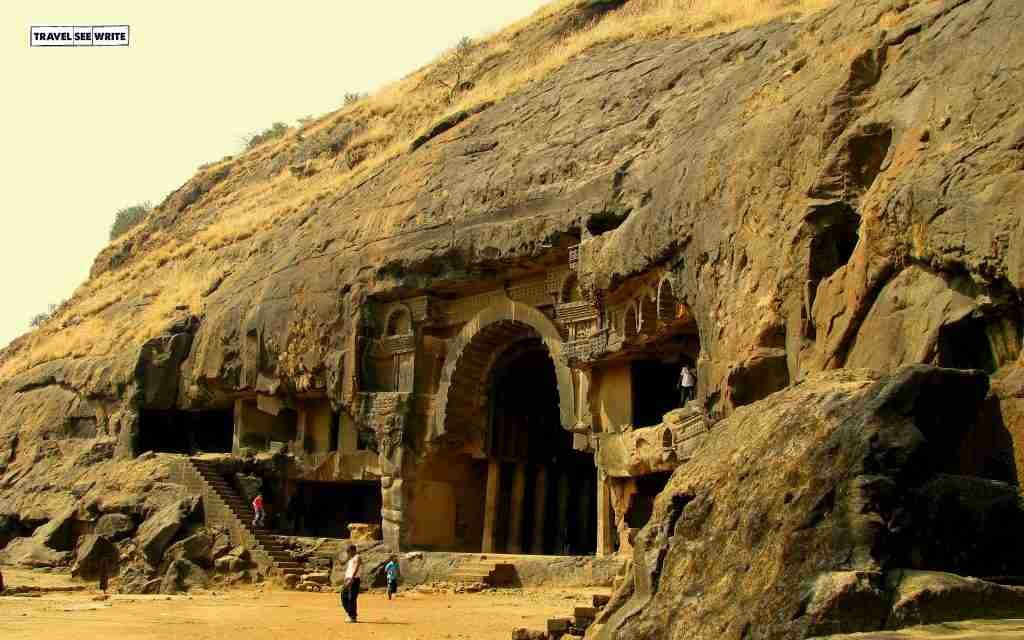
Karla Caves, Lonavala, Maharashtra by Soham Banerjee
Morachi Chincholi is a paradise for nature lovers like me. Although it is situated quite a distance away from the highway but still I chose to visit it because the farther you go away from the concrete jungle better are the chances of exploring hidden jewels of natural jungle. It is a small village which encourages living close to nature and is predominantly filled with peacocks. Located in the heart of Maharashtra, this place offered me a wide range of rural Ecotourism activities to both view and participate in. The locals were bemused by my presence and were actively showing me around.
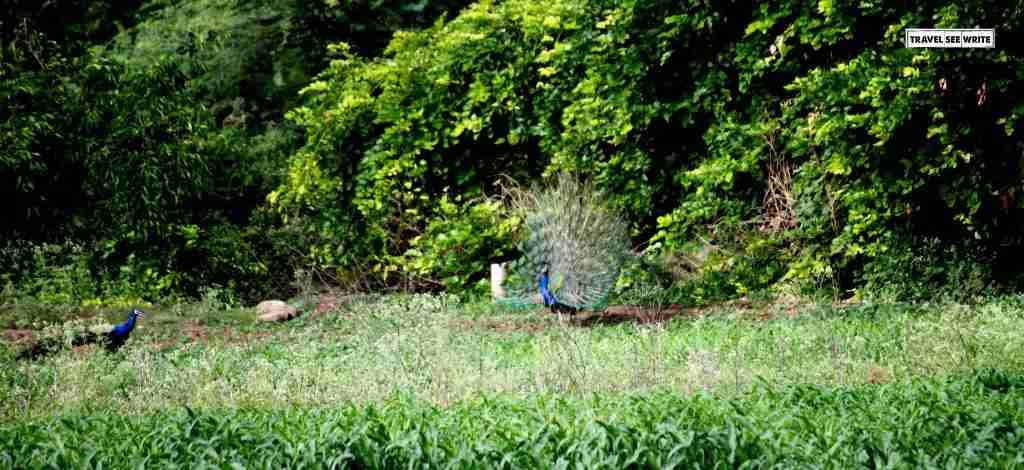
Morachi Chincholi, Pune, Maharashtra, Pic by Santosh Bhagade
The two days I spent exploring the Maharashtrian Ecotourism was truly enriching for my eyes as well as for my lungs. A great weekend getaway from the hustle bustle of Mumbai. But I would have not been able to explore so much if I would have not had a good transport service and driving in one of the Mumbai-to-Pune cabs was an ideal way to explore the beauty of the refreshing highway connecting the two epic cities.
So when are you going to travel see and write about the Maharashtrian Ecotourism?

Books are the unique portable magic, which transport you to lands unknown and unexplored.
The magic which transports you into a new world that is so different from yours, and yet somehow you identify with it. Some books lead you on a fascinating journey that might change your life and open up your mind. And, in the process instill a burning desire in you to explore the place visualized in the book.
One such book was Eat, Pray, Love. Elizabeth Gilbert’s journey firmly put Bali on my travel list. After roaming around the world for years, finally, Bali happened in February 2016. Supposedly the off-season in Bali when it pours like cats and dogs. A season when tourists are advised to stay away from the island. But for a person like me who is a sucker for challenges off-season is actually the best season to explore a place. So in spite of all negative feedback Bali trip was booked. Without much planning, I landed on the island on February 23rd, 2016.
I’m not the only one fascinated by Gilbert’s description of the lush green generous island that heals everyone. Many tourists come to Bali seeking sunshine, spirituality and sweetheart. So, yes I too was in Bali to heal myself and find love. Love not from someone else but from within. In a life full of deadlines I had forgotten to love myself. I had forgotten to smile. I had forgotten to appreciate smaller things. Basically, I needed to connect to the nature to reconnect with myself. So unknowingly I was in Bali to heal myself. Unknowingly because I had not planned anything.
I wanted to go with the flow and explore new things. I went empty handed to Bali but the island had so much to offer. If there is one place I would recommend anyone to go to rejuvenate or to heal oneself it would be Bali (after Ladakh). It’s one of the best places to relax and unwind, aided by beautifully cheerful people and strikingly vivid landscapes in an environment that is fast-paced yet laid-back.
So without much ado let me share my first impressions and things to do in Bali Indonesia where I discovered love in offseason:
When I first arrived in Bali, I was actually confused if it was the peak season or the lean season. Seminyak, Kuta, Nusa Dua and other parts of South Bali were buzzing with the crowd. However, I soon realized Bali gives you back what you ask for. I asked for peace and I was suitably rewarded. In no time, I was experiencing the mighty waterfalls roaring at thunderous sound, rice paddies cascading down rolling hills, crystal clear water kissing the white and black sand beaches, volcanoes piercing the clouds, landscapes dotted with temple ruins, lush green valleys veiled with monsoon clouds, mist-covered lakes playing hide n seek with clouds, tropical forests buzzing with wildlife and exotic fruits of Bali. Unfortunately, I am a nonswimmer otherwise diving in Indonesia would have been epic.
Most of the times I was the lone traveler. I was relishing the dreamlike views. One such view was the Lake Batur view from the Lakeview hotel at Kintamani Volcano. The hotel that would normally refuse guests had no guests except me. The only sound I could hear was either of the hushing trees, chirping birds or perhaps the sound in my mind. Listening to such sounds is probably the best time to talk to oneself. Solitude in the company of nature answers questions which you wouldn’t have found answers before.
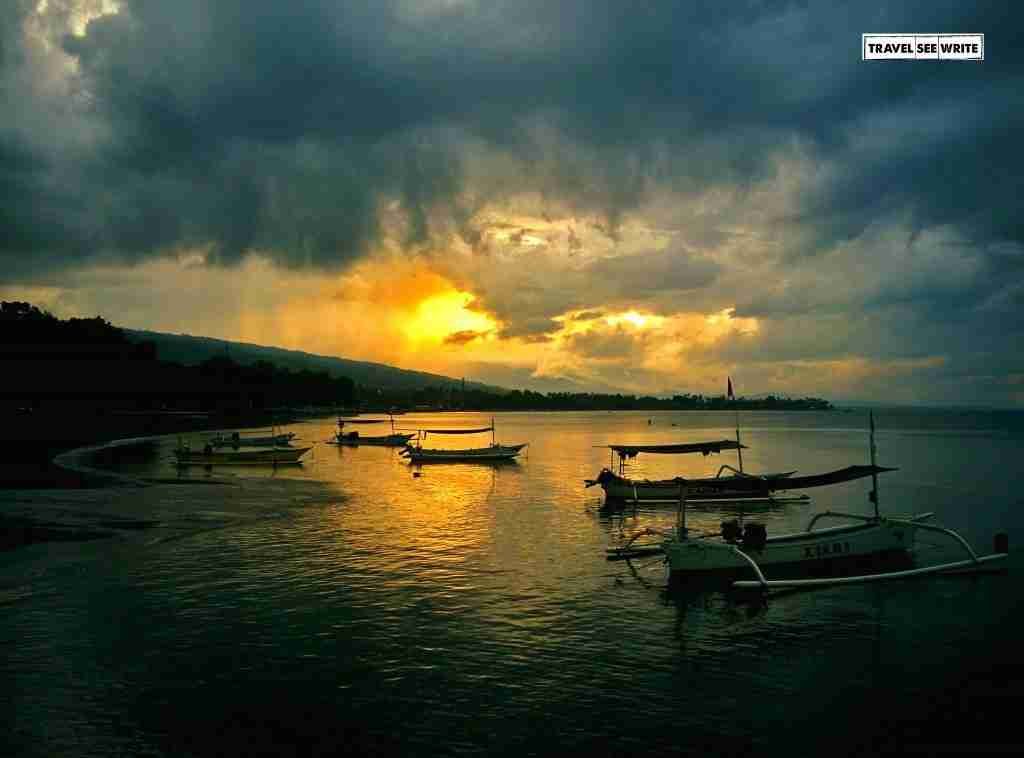
Lovina Beach, Just before the Storm, North Bali
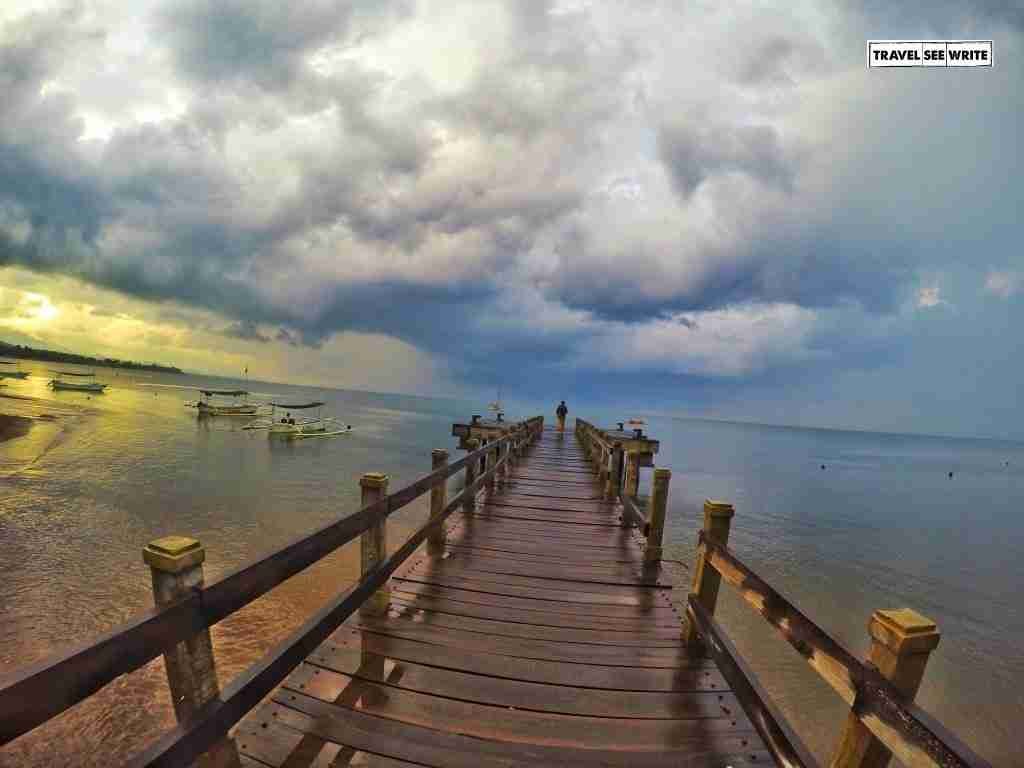
Wooden walkway on Lovina Beach, famous for Dolphin watching, Bali
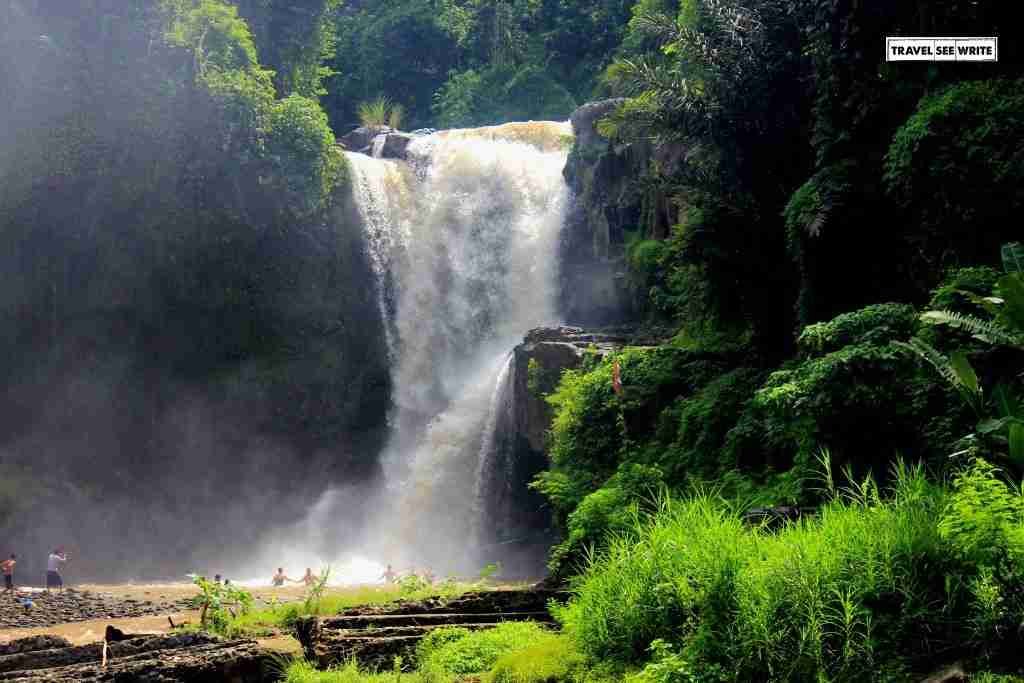
Tegenungan Waterfalls, the only waterfall on River Tegenungan, 10 kms from Ubud, Bali
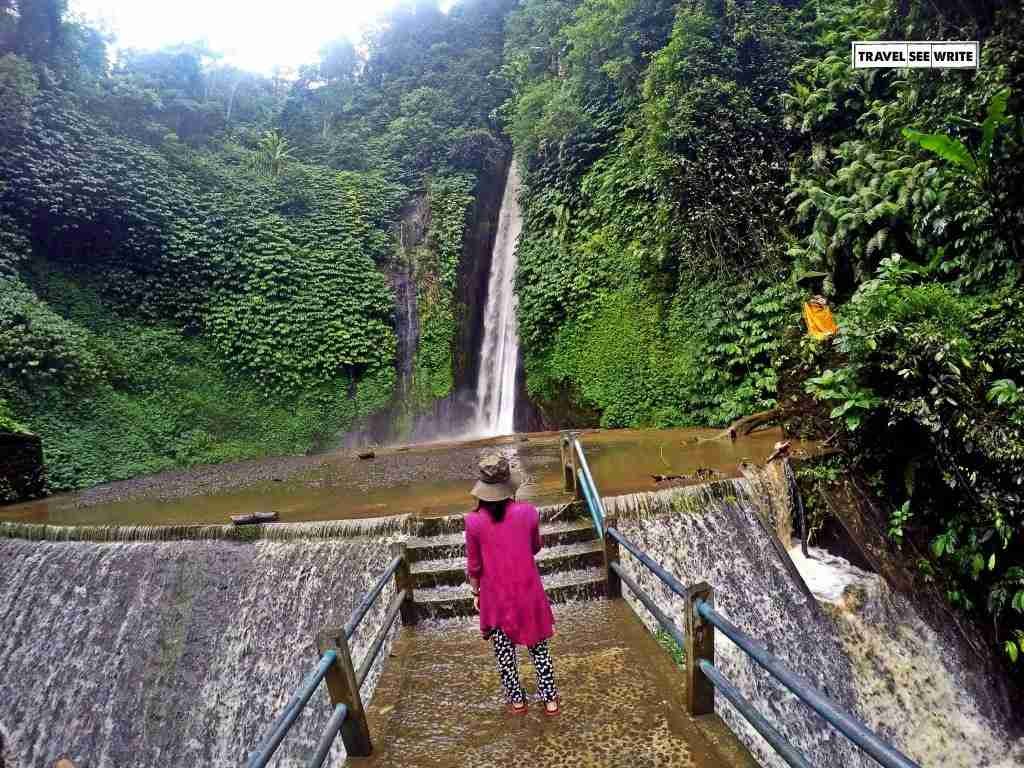
Munduk Waterfall, North Bali where I was the only person present
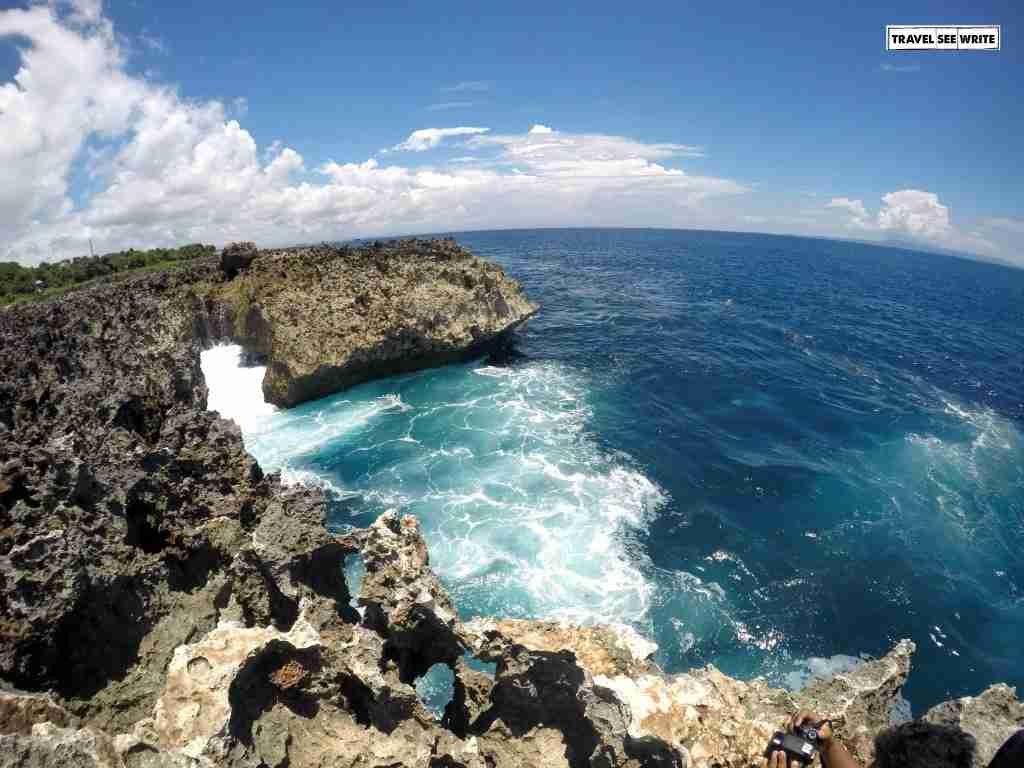
Nusa Dua, South Bali is the go-to place for any famous or ordinary tourist arriving in Bali
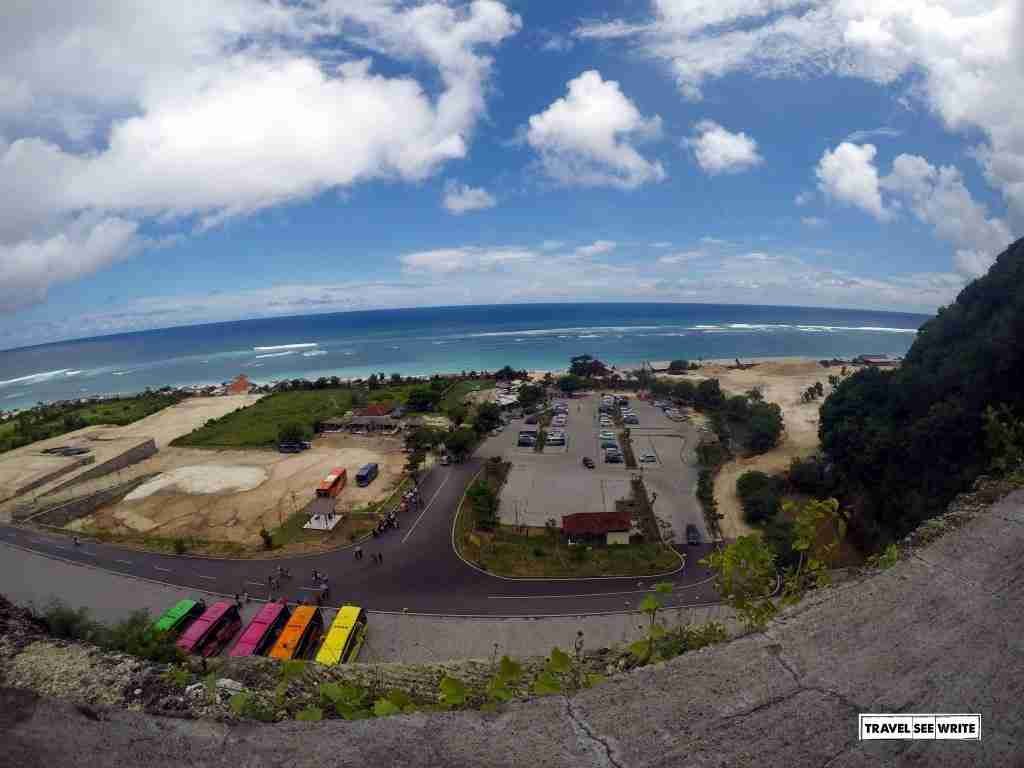
Pantai Pandava, a famous beach for locals and tourists in South Bali
I must confess I am not a foodie and being a Vegetarian comes with its own challenges. Most of the times my bags have more food packets than anything else. So either I depend on packaged food or on fruits. But Bali is the best place one can ask for when it comes to exotic organic food worth to die for. I didn’t have a single bad meal in Bali until I tried an Indian restaurant in Kuta. Indonesian cuisine is loaded with a multitude of vegetarian and vegan dishes, making it easy for vegan travelers. Even hardcore meat serving restaurants had an extensive vegetarian menu. And the best part was the presentation – droolicious. The new organic cafes experiment a lot with food.
There was one particular place, Cemara Guest House, that I completely fell in love with. While coming back from Tamblingan Lake it started to rain and the temperature dropped drastically. My driver stopped at a home-based small restaurant run by a husband and wife. I was the only guest there. Till date, I have not had a tea better than Bali Jahe (Ginger Tea). I had a soup and a Balinese dish called Cap Cay and Balinese Urab. I must say I still miss that taste.
I tried a lot of cuisines from Mexican food to Mediterranean food to Thai Food to American food to fresh-from-farm Organic food, Vietnamese food and local Balinese food like Tempeh, Nasi Campur. And everything tasted fresh and juicy with distinct flavours. Probably I’ll go back to Bali just for food.
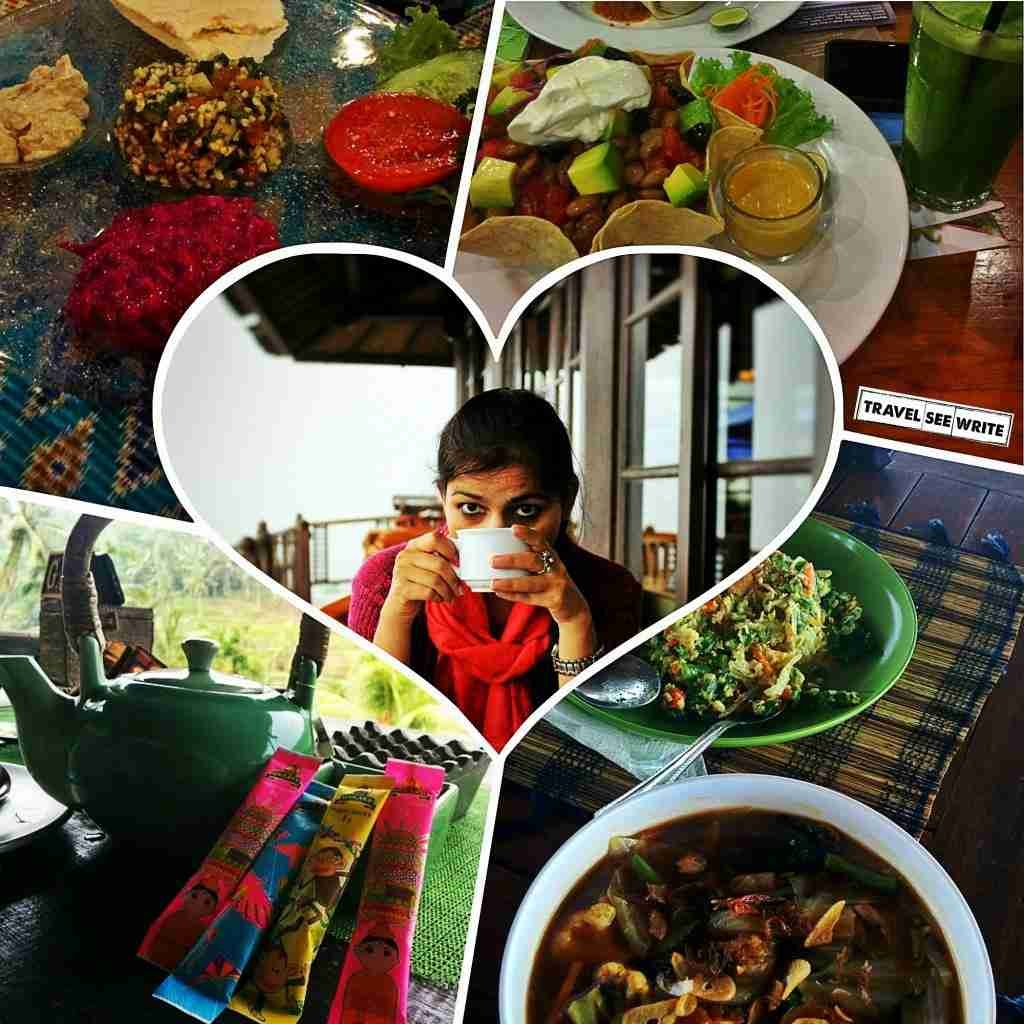
Exotic Organic Vegetarian Food in Bali is the reason why I would go back to Bali
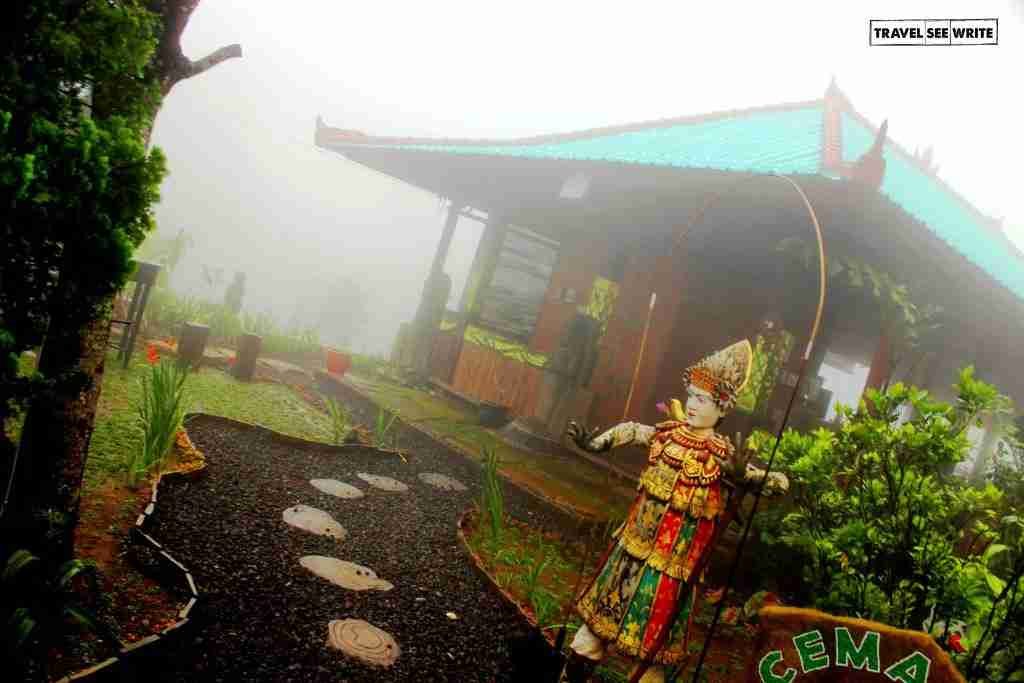
Cemara Guest House, Near Tamblingan Lake, North Bali where I had the most amazing meal
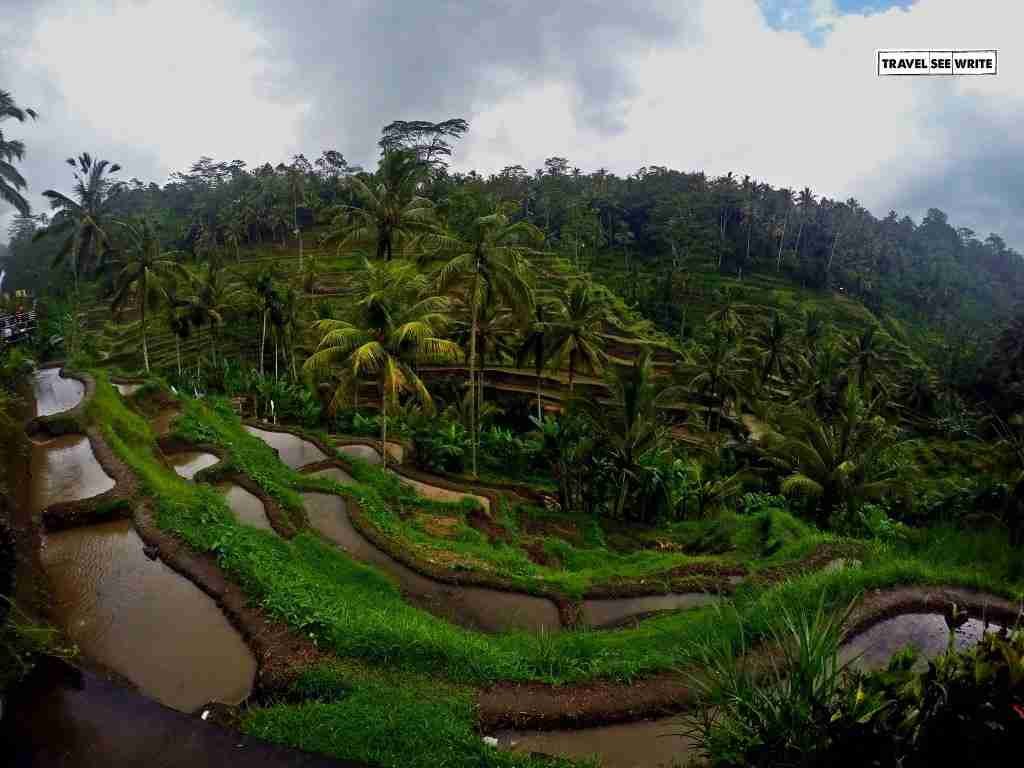
Having a meal while overlooking these beautiful Rice Terraces of Tegalalang, Bali, can make anyone hungry
Bali being a tropical island is usually hot and humid throughout the year, which makes exploring Bali on foot a bit taxing. However, during monsoon, it’s a different scene altogether. If you love rain then there’s nothing like walking through the paddy fields for hours being entertained by the rain dance. I was cranky when I started walking through Ubud to eat at the much famed Sari Organik Café, 2 kms from the main road situated amongst the lush green paddy fields. Sun was playing the spoilsport. And suddenly the rain gods smiled on me. I started enjoying the walk like a dancing peacock. I was absorbing everything and appreciating the beauty around me.
This was followed by the Campuhan ridge walk, an unusually romantic short trek through rice fields, bejeweled with quaint Indonesian huts and a gurgling river giving you company alongside. It was a walk to remember. And that’s not it, if you get tired walking then there is Karsa Kafe and Spa to rejuvenate you.

Sari Organik Cafe with the view of Paddy fields, Ubud, Bali (please enlarge the pic and see)

View from the Campuhan Ridge Walk Trek, Ubud, Bali
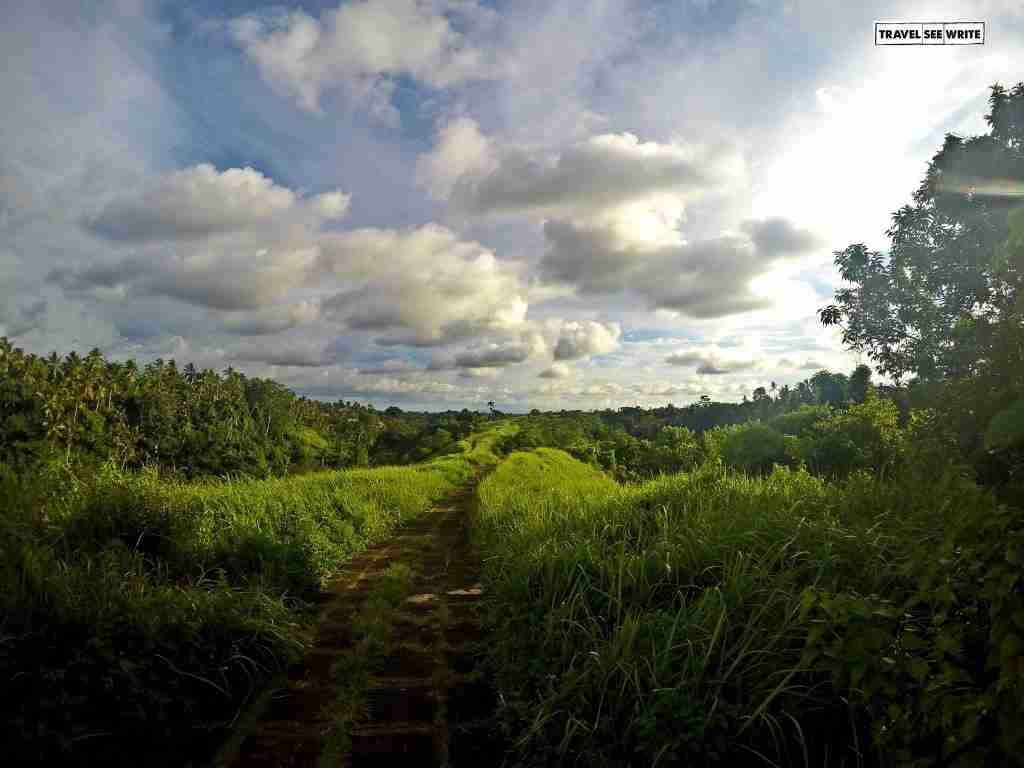
The Campuhan Ridge Walk Trek, Ubud, Bali
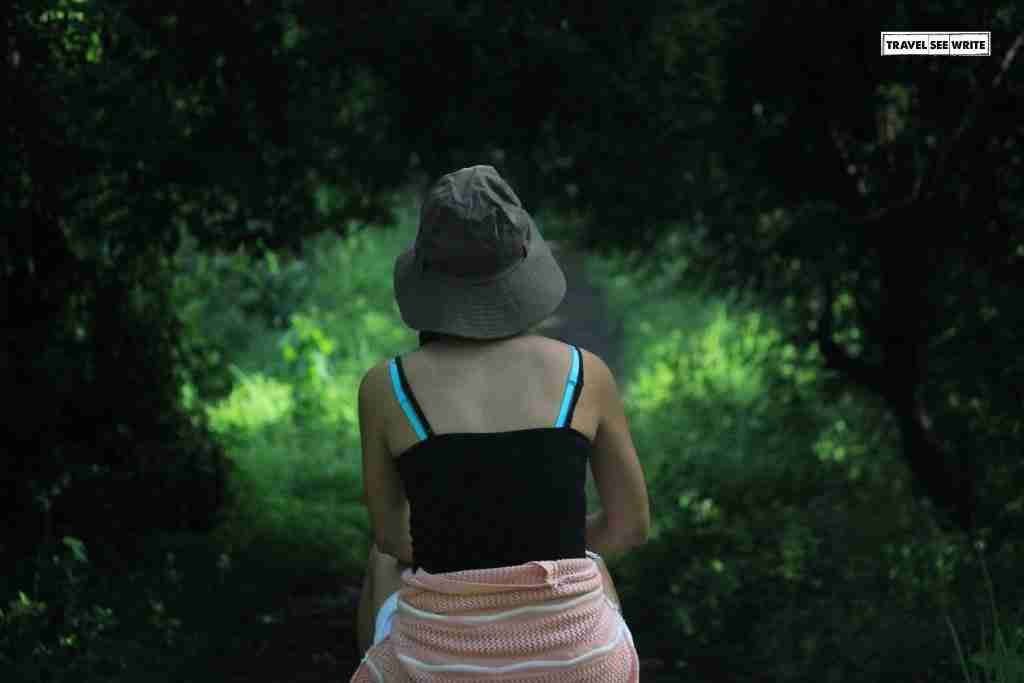
Soaking the view on the Campuhan Ridge Walk, Ubud, Bali

Trek to Gitgit waterfalls, North Bali where I spoke to the rain
Bali is like one big art gallery which offers the most unique shopping experiences, where you can discover a treasure trove of artworks and handicrafts by talented local craftsmen, all at bargain prices! The Balinese are born with a talent to absorb different cultures, blending them with their own, to produce dynamic new artistic hybrids. Across the years, Bali has soaked up Chinese, Buddhist, Indian, Hindu, Javanese and Western influences, which can be seen in their art.
There are dedicated Handicraft Villages where Bali’s talented artisans live. Some of the artistic villages worth exploring are Batubulan for stone carving, Celuk for silver and gold jewellery, Mas for wood carving, and Pengosekan for painting. If you are an art lover and looking for interesting things to do in Bali then don’t forget to visit these markets to get a glimpse into the wonderful artistry and creativity of the island’s craftsmen – Ubud Art Market, Sukawati Art Market, Guwang Art Market, Kumbasari Art Market and Kuta Art Market.
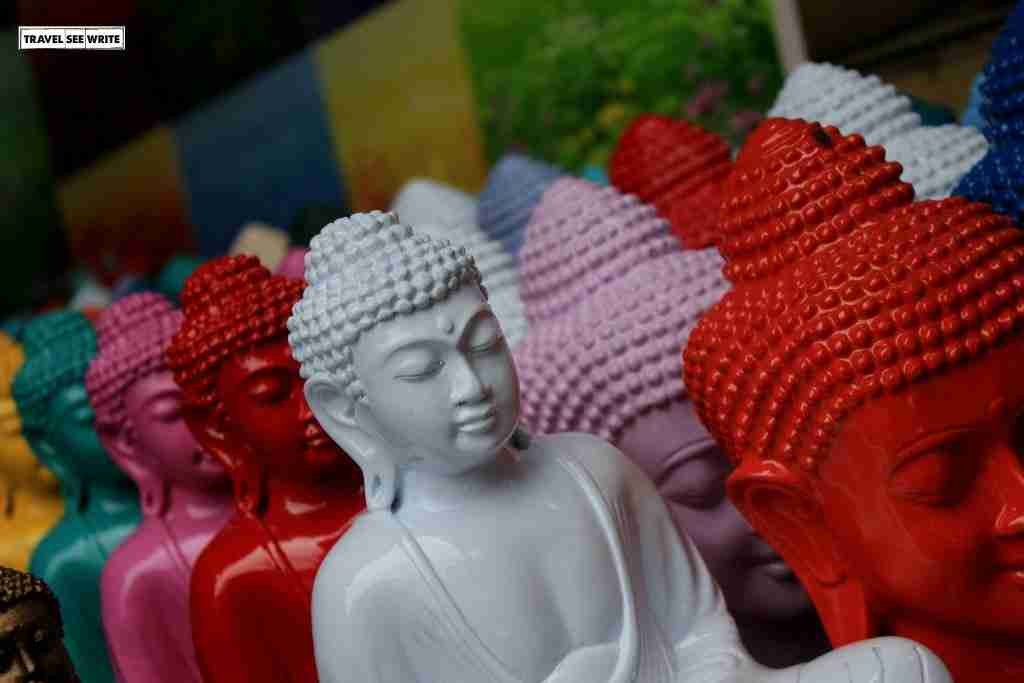
Bali Handicrafts Market

An artist busy crafting his artwork, Bali
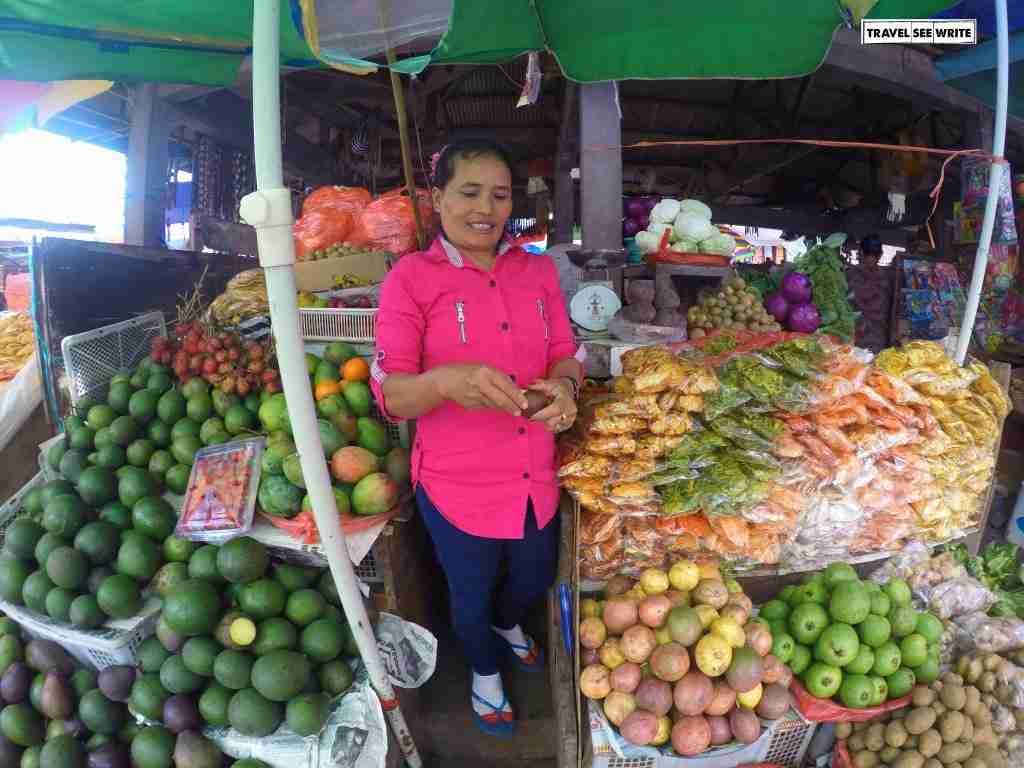
Bedugul Market famous for fresh fruit, spices, Balinese foods and artifacts
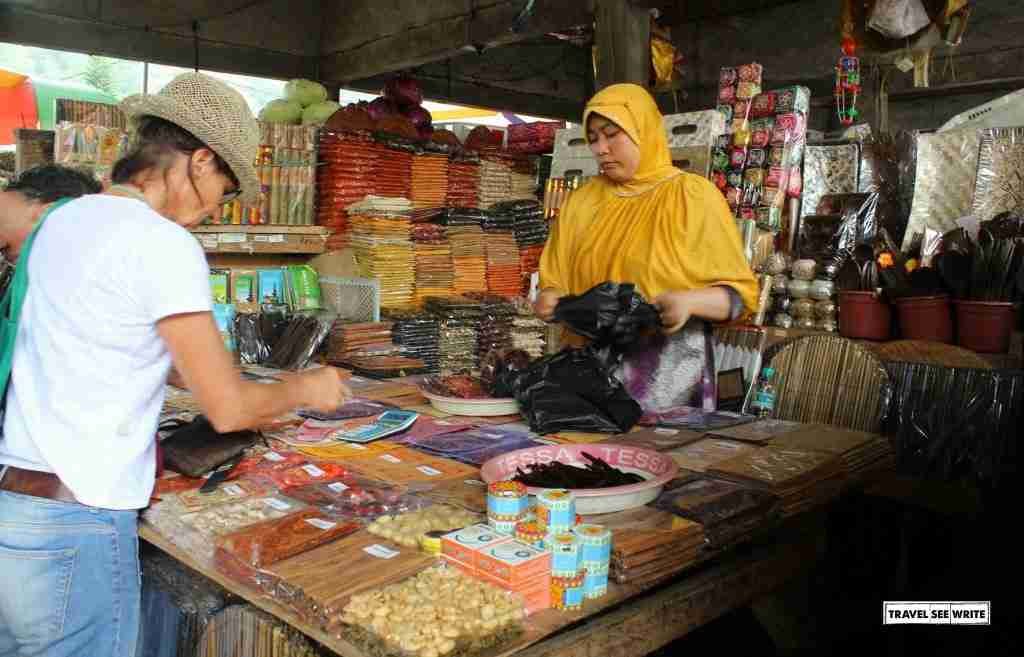
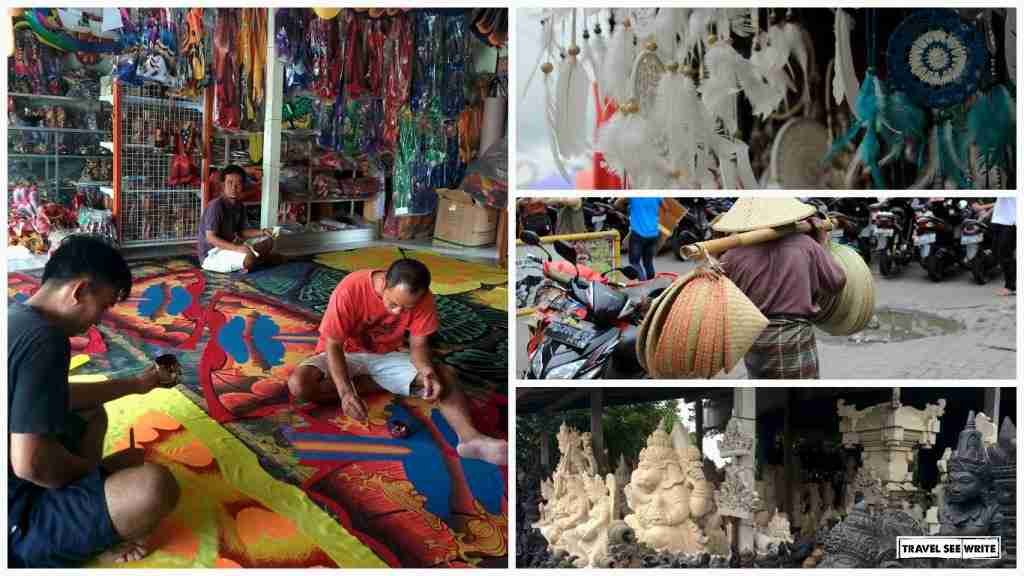
One striking feature about Bali is its people and their ever smiling faces. Ever after uber commercialization love is still the universal currency in Bali. Where people still go out of their way to help you. Had it not been the staff of Villa Bunga or my driver Kumang I would have probably never seen the soul of Bali.
All the people I met in Bali are now friends for life. Balinese are simple god fearing and peace-loving people. Everyone you meet will greet you with a smile. People are happy, for no apparent reason. They are content with themselves. They are joyful. Their minds are peaceful and they are grateful to be able to work every day. They are proud of their traditions but at the same time are not closed to embrace the good elements from other cultures. It is really interesting to know their folk stories and a peek into their lives.

My ever smiling driver cum guide, Kumang, who made my Bali trip so special
These were just a few off-the-mind First Impressions of the Balinese island. There are a lot of things to do in Bali Indonesia that are worth sharing. I would be happy to share that. Do keep looking for more Bali stories coming your way.
In the meantime, do check these posts and let me know if they helped you put Bali, Indonesia on your travel list?
Related: Where to stay in Uluwatu Bali
Related: What to Do in Bali in 10 Days or Less
Have you ever been to Bali, if yes, please do share your feedback in the comment section below?

The travel industry has changed immensely in the last five years or so; one moment, we’re buying travel books at subway stations and asking the front desk for itinerary ideas, and the next moment, we’re booking flights and meeting travel companions with the help of smartphone apps. It’s obviously still possible to trek across the globe without our devices, but the majority of us have come to know that Free Travel Apps make it miles easier to explore different parts of the globe. We all have our app preferences, but everyone can probably agree that among these smartphone travel essentials include XE Currency, Google Translate, TimeOut and many others, in addition to location specific apps in order to make life easier on the road.
To think that something as small as your phone can contain a wealth of information to replace physical guidebooks and maps is something that we probably wouldn’t have really expected in this industry, especially with bloggers arguing whether technology has cheapened the travel experience or not. But statistics demonstrate that travel is rising above other popular app types and catching up with top categories such as games, which is currently dominating the market with mobile friendly interactive puzzle games. While travel apps may never see similar download rates like Candy Crush, explorers like you and I are continually experimenting with a myriad of smartphone tools to discover the best apps that satisfy their wanderlust.
One of the most rewarding trips that I’ve ever embarked on by far was my tour through SE Asia, and that wouldn’t have been possible without the assistance of my iPhone. If you’re thinking about heading to the region in the near future, make sure you have these handy apps on your gadget:

Narrow down your flight and hotel searches to SE Asia with this app. With no hidden costs and “Smart Combo” options that grant you up to 40% in savings, Traveloka is your ticket to cheap travel around the globe’s top backpacking destination.

See what people had to say about the restaurants in your current city with Foody. Most of the eateries listed in the app are in Vietnam but there are plenty of reviews of food places in neighboring countries.

Grivy is the first app in the region to offer bids on amazing deals, from concert tickets to day trips and spa treatments to dining packages. Bidding can start as low as $1.
So these were some of my favourite travel apps. What are yours?

It’s been almost five years since I started my travel writing journey. I gave up my well-settled job and a stable life to travel the world. To be frank, it wasn’t easy to earn money while travelling. Moreover, travel blogging itself changed so much in the last few years and with new challenges like Instagrammers, YouTubers and anyone who has got a phone camera suddenly became a Social Media Influencer.
But Travel Blogging or content creation is not an easy job. It requires a lot of hardwork and patience. Most importantly, before becoming a successful travel blogger you have to become a super traveler by acing all the travel hacks that enables you to get good travel deals and create content that is unique. Every time I upload a picture on Instagram or share my travel story on Travel See Write I am bombarded with questions such as how do I get paid to travel the world, how much money do bloggers make, what are the different ways to make money while traveling or how to raise money for a trip. Unfortunately, the harsh reality is there are no free lunches – no one will pay you to work and travel unless you offer something that others aren’t. Travel blogging for beginners is a classic case of chicken-egg. The key to monetise your blog or just to support yourself while traveling is by becoming a SUPER TRAVELER. Here are 10 travel hacks I used when I started my travel blogging career:

Most of us work till the last minute on Friday, only to enjoy the weekend travel. Most weeks do not have any holidays during the week and hence most of our travel ends up on weekends. Leave as soon as you can on a Friday evening, even if it means getting your luggage to office/workplace. Avoid all chit chat, coffee and have a quick lunch to get most work done quickly and leave asap so that you can make most of the weekend. Reach your holiday destination early on a Saturday to leave you with at least two full days to enjoy!

Most of us forget but there are such things. You collect frequent flier miles every time you fly (except low cost). Use them regularly to save money on your flight tickets. I recently booked a Chennai – Singapore ticket on Malaysian airlines for less than INR 5,000. Yes, I flew a full-service airline. It is important to note that miles have an expiry date and even more important to keep checking your account statement regularly for details. Many airlines run offers on air miles and some offer extra perks to frequent fliers like additional baggage, quick check in etc.

The holiday calendar is out at the beginning of the year yet most of us plan only a week in advance. We then balk at the prices and push our travel plans to a later date, only to repeat the exercise of not planning later. Plan early for your travel. Plan your travels in the off season. Not only it burns a smaller hole in your pocket but also provides you an opportunity to explore the place peacefully without people peeping into all your pictures. Planning early gets you the best deals, best places and more importantly, hassle free approval from the boss. Once you have shown that you can plan early, a promotion is easy at your workplace 🙂

Sometimes all the best-laid plans go for a toss. But worry not, if one plan goes for a toss, make another. Keep checking travel websites, coupon sites for various deals that come along. If you had planned for a 3-day holiday and the boss had to cancel your Monday holiday, worry not. A 2-day holiday close by can also be as rejuvenating and enjoyable as a 3-day one. If not for anything, check into a spa or a wellness resort for a 2 day stay to be one with yourself and give your body some well-needed rest.

The last thing you want to do when you travel is to go to all the places that are a part of a tourists’ guide. You are better than this. You are a traveler. Check offbeat places near your destination, do some research online and at the hotel/hostel/resort for information. Travel to places where the locals would go. I have a golden rule – If there is an entry charge at a spot, it surely is going to be crowded and also a perfect tourist spot, that a traveler can well avoid.

Do read about your destination. It is very important! You don’t want to land up in Bali without having any semblance of the exchange rate or the local culture or something as simple as the name of the capital city! Reading up about the place helps you avoid asking stupid questions and then getting taken for a ride. I ended up paying $ 5 for a taxi trip from the Bali airport to the hotel instead of $15 asked by several cab drivers at the airport because I did my reading. Reading does help keep you sharp and also saves you a lot of money 🙂

Blend in with the local culture. Do not be loud when the natural demeanor of the locals is being soft spoken, do not wear beach wear where the norm is to cover up, do not bargain if you do not intend to buy and most importantly, do not intend to travel if you don’t want to align with the culture there. I have been to several countries across the world and the one thing that makes travelers endearing to the locals is their investment in understanding them and viewing the country through the lens of their culture. Don’t try being a round peg in a square hole. Enjoy the country for what it is, through their eyes and ears.

Yup. I said it. Take a vacation like a boss. Forget all the worries behind. Turn off that data connection, put your phone in the airplane mode and use your eyes to see, ears to hear and the mouth to ask for directions. Wander around on your feet, discovering places and smells that many might have missed in the fervor to see everything. Thinking about your office emails or your friends will only make your vacation suck. Make friends there, talk to the locals, immerse in their lives and rituals. 9

Unless you figure in the Forbes billionaire list, this is not about money! Be limitless when it comes to energy and passion on a travel vacation. Sometimes, a travel vacation is very intense. You immerse yourself in the culture, stories, and people, only to come out as a different person. Be limitless when it comes to experiences, be limitless when it comes to interacting with people, be limitless when it comes to asking around, be limitless when it comes to smelling the food and hearing the music. What is a travel if you have not inhaled and walked!

During every moment of your travel, reflect on what you see. Everything that you see has a reason and always ask for it. Most of my learnings have come from reflecting during a travel to an unknown destination. Every destination teaches you something, Vietnam taught me patience, Kota Kinabalu showed me that climbing mountains is not enough, Ladakh showed me what true love is. This is an endless list but I will stop here.
Now are you ready to know the secret of becoming a successful travel blogger? Well, the truth is there’s no secret.
Do you have any Super Traveler tips or other ideas on how to support yourself while traveling?
If yes, please do share in the comment box below.

Food is a melting pot, a universal experience. A experience that no one can refuse. Everyone loves good food. While Marketers may say Millennials or Centennials or Generation Z or XYZ are technophiles. The universal truth is that food was, is and will always be more important than anything else. In fact, in today’s world it has gained even more importance because technology addiction has stolen the sensory stimulation from our physical world. Thereby leaving a void to fill, which makes us latch on to food as something that engages all the senses and brings people together in physical space.
It is no surprise that travel habits have shifted from “What do I see?” to “What do I eat?” A bad food experience can ruin your perfect holiday. If food is on your mind, Mumbai is the perfect city to plan your days around food and still consume art, culture and history. Mumbai is like my second home. I have a love and hate relationship with Mumbai. The City of dreams has both stolen my heart and broken it too. But one thing that has always been constant is my love for the the non-nonsense attitude of the Mumbai Manush and its food.
So let me take you on a quick virtual tour of Mumbai through the Lens of a Foodie.
PLACE TO SEE: CHHATRAPATI SHIVAJI TERMINUS

Of all the places to visit in Mumbai, CST truly shows travelers the life and soul of the city. Marked as a UNESCO World Heritage site, it serves as the headquarters of the Central Railways. With the stunning architecture influenced from Victorian Italianate Gothic Revival to traditional Mughal buildings, this busy station sees people from all walks of life.
Food in the area: Cannon Pav Bhaji
For a quick and cheap bite, go straight to Cannon Pav Bhaji. Managed by ladies for over forty years, they closely guard the recipe for their incredible pav bhaji that has made them a legend in South Bombay. It is located right outside CST and draws crowds from all over the city.
PLACE TO SEE: FORT (MUMBAI PRECINCT)
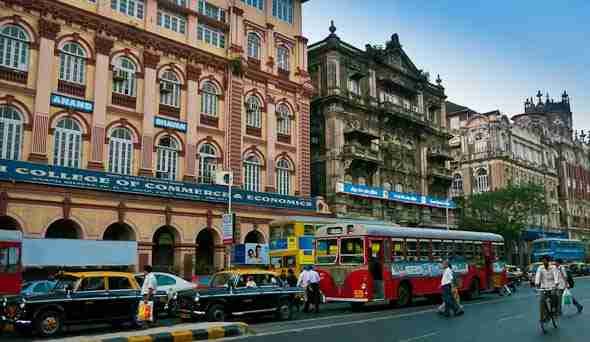
After seeing CST, stepping out and taking a stroll around Fort area is another effortless way to absorb the architecture of Old Mumbai. Step back in time in the old business district of Mumbai that was once the heart of Mumbai in the 18th century, while checking out the small arts and craft stores and bookstores like Kitab Khana and Wayward and Wise.
Food in the area: Jimmy Boy, Mahesh Lunch Home, 145 Kala Ghoda, The Nutcracker
Fort is any foodie’s’ ultimate dream. The range of food is unprecedented. Starting from simple yet delicious Parsi fare at Jimmy Boy to a high end, sophisticated European experience at The Nutcracker, Fort has it all.
Jimmy Boy is a classic Irani cafe that embodies authentic Parsi cuisine in all its dishes. People keep coming back for delicacies like their Mutton Berry Biryani (made with cranberries imported from Iran!), Jardaloo/Apricot Salli Chicken and Lagan Nu Custard. Jimmy Boy’s antique decor and seating arrangements take their guests back in time and makes each meal there a multisensory experience.
Another favourite in Fort is Mahesh Lunch Home. Founded in 1977, this original location of the small chain restaurants produces some of the most coveted Mangalorean specialties. It has built its customer base for decades and they come back for the Surmai Curry, Crab Masala and Lobster Chilli Garlic.
145 Kala Ghoda is perfect for people looking for a great ambience along with delicious food. This all day cafe and bar has a relaxed atmosphere with a pool table, free Wi-Fi and a DJ booth. The decor contains installations from common things you would find around Mumbai: aluminium kettles, umbrellas, small buckets, etc. The dishes pique the interest of foodies who love the unique presentation of food. Their Spicy Pav Bhaji cones are becoming increasingly popular, and the filling in their Chicken Tikka Cigar is mouth-watering.
Finally, for visitors looking for a more intimate, sophisticated experience with food, The Nutcracker is a quaint little cafe in a picturesque setting. The exposed brick walls, art pieces and patterned tiling gives an old school, homely feeling to visitors. Their culinary triumphs include a zesty black bean burger, pesto pasta and the famous seven layer chocolate cake.
PLACE TO SEE: BANDRA-WORLI SEA LINK
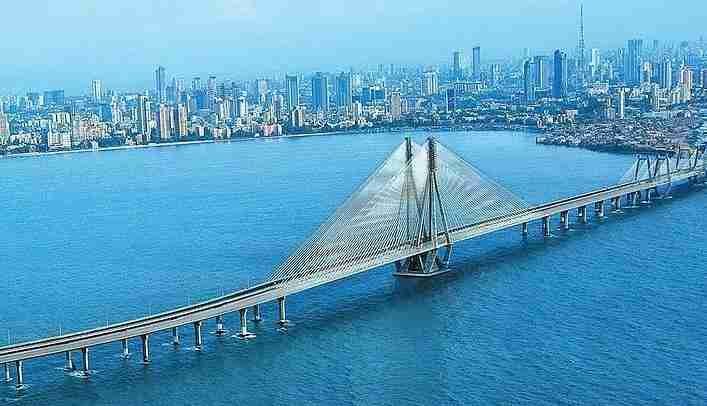
Less crowded than the popular Marine Drive, Bandra-Worli Sea Link offers visitors a similar experience of beautiful sunsets against the sea and city lights in the distance. This unique piece of engineering effectively connects the suburbs of West Mumbai (Bandra) to South Bombay (Worli). Being the first cable-stayed bridge in India, the bridge is an architectural marvel and must-see spot for first-time visitors of Mumbai.
Food in the area: Candies, Pali Village Cafe, Kalpana
Like South Bombay, the options for food in Bandra are endless. The difference is that the restaurants here can be more experimental, global fusionesque and truly a unique experience for foodies.
Candies is a bohemian cafe with an eclectic interior design that makes for a relaxed and fun vibe. The food is light and simple, the bite-sized desserts allow for foodies to try a variety of items and the food is well presented (perfect for your #foodstagram).
Pali Village Cafe is all about ambience and food creating the perfect experience for you. This rustic joint has minimalistic lighting, comfortable balcony seating and exquisite fine dining. Some of their highlights are Red Snapper with Strawberry Risotto and the Stuffed Chicken with Hash Potatoes and Apple.
Kalpana’s a unique Bandra local culinary experience. It’s a small roadside stall on Chapel Road but is popular for its fresh burgers, chicken lollipops, pastries and rolls. However, this small family-run establishment is most popular for their fugias. This East Indian sweet bread is at a bargain price of 10 for Rs. 12 and are a delicious snack.
PLACE TO SEE: LONAVALA
While taking one of the many flights to Mumbai and exploring the city life is fun, taking a break and checking into resorts near Mumbai can be equally rejuvenating. Only an hour outside of the city, Lonavala is the right choice to make during monsoon with stunning views from the Western Ghats and the gorgeous waterfalls that form every season.
Food in the area: Chikki and Fudge
As soon as you enter Lonavla, there is no way you can miss out on the numerous shops selling the famous chikki and chocolate fudge. The groundnut chikki and the special dried fruit chikki are out of this world, and coupled with the unique chocolate fudge, they make the perfect snack while relaxing and taking in the beauty of the hills around.
Another food that is very basic but my alltime favourite is Khichdi. I have driven from Colaba to Juhu at 4 am just to have Dal Khichdi and Palak Khichdi at Ramada. I have never left Mumbai without having my fill 🙂
Next time when you are in the town do try out the places mentioned above.
I hope you enjoyed this food trail with me. Please do share your feedback.

There are no right or wrong ways in life. Wrong and right are two sides of the same coin. It is all about perceptions. What might be normal for me might be too risky for someone. People who dare to walk on unusual paths are either termed as mad or adventurers, a more glorified term for the former. So what is it that keeps them going? Is it in their DNA or is it something acquired? Is it escapism or trying to establish one’s superiority over others? Is it self-improvement or is it just unplanned fun gone extreme?
Reasons could be aplenty. Some people are turned on by the thrill of exploring the unexplored. Some people love the adrenaline rush and they gravitate toward activities that give them that feeling. For some it’s taming the untamed waves of rivers, for others it is jumping out of airplanes, for others its climbing Mt. Everest, and for others, it’s the Ironman. When they find that sport or activity that gives them that feeling, they say there is nothing better. It becomes their go-to partner whenever they are in a need of some push or are just plain bored. But what exactly are the motivations behind this ever-growing craze for adventure activities or sports?
This article is an attempt to understand what motivates people to choose adventure. Although I am myself a huge adventure buff and could have written this article purely on my own experiences, I chose to interact with fellow thrill seekers to delve deeper and find out more about this animal called adventure seekers.
Here are the 11 motivations of adventure seekers that drive their adventure plans:
Adventure travel is an addiction. First time, you walk into it unknowingly usually with your friends but once you have tasted the blood there’s no going back. Nothing excites you more than the kick of adventure. First time is serendipity. Thereafter you become a slave of adventure travel.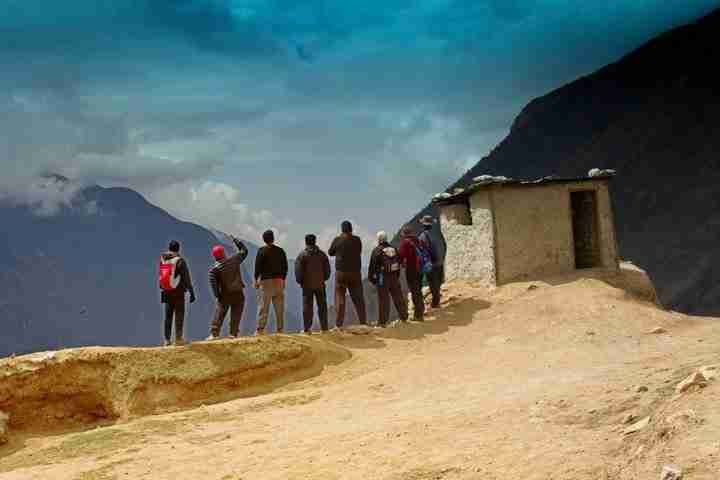 Neil an amateur trekker and Jungle enthusiast recounts his experience of how unknowingly he ended up trekking the Mt. Everest Base camp,
Without knowing what Everest is, I planned a trip with 10 of my friends to Everest base camp. We went there just like any other random trip without any preparation. Most of us did not even have basic woolens. We bought everything at Thamel. Kathmandu. Call it our youthful arrogance or careless attitude we didn’t even take insurance.
While trekking we realised that this time we stretched the envelope a bit farther. Most of us were sportsmen at earlier part of life; hence we managed to trek up to two camps. But just below the base camp one of us fell sick. He turned blue and black, started vomiting. The guide told us if he does not lose altitude immediately he will die. It was 12 in the night. We were all dead tired. Had no strength and this guy was in real bad shape. Somehow we managed to get a horse for which we paid 10k for 1.5 km trek down at night. The sick friend and was accompanied by another friend to go down. Next day he had to be airliftedfted for which he paid 5 lakh rupees. Wish we had taken the insurance.
We did complete our trek but that incident taught me an important lesson – never to take things for granted. However, it did not quench my thirst for adventure sports. Rather it inflated it. I love adventure sports because Allows me to to stay outdoors.
Probably one of the most important motivation behind love for adventure travel. The adrenaline rush you get from putting your life on the line and coming victorious after winning over your fear is incomparable. It’s a feeling that can’t be duplicated in any other activity, and for many it’s a true sense of feeling alive. The emotion that the adrenaline feeds into is a heightened sense of being alive.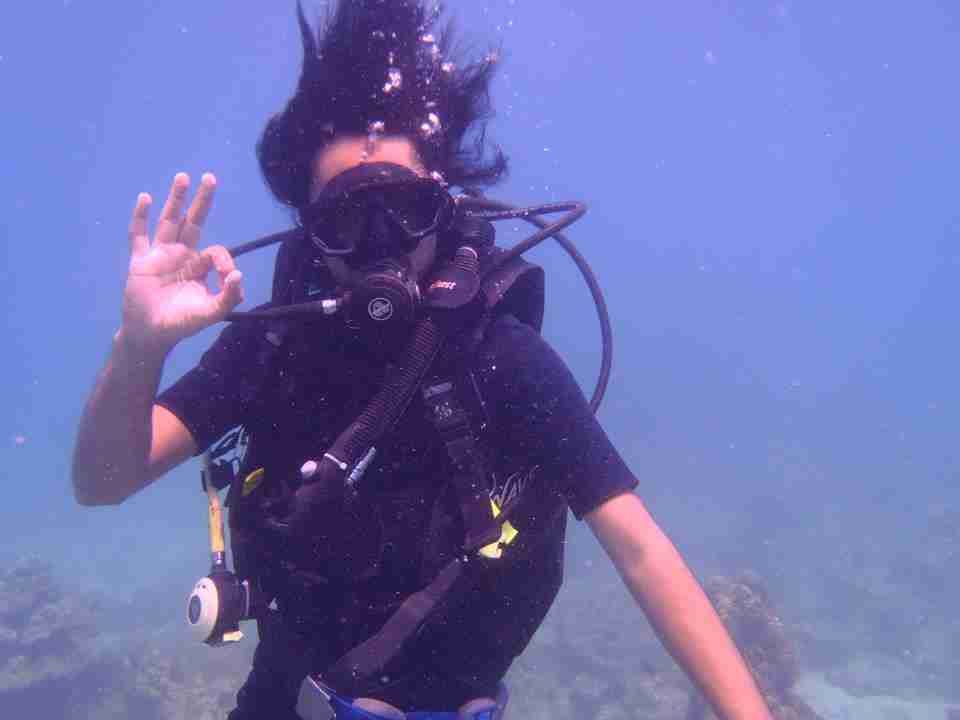 Sudeep, a social media specialist by profession and a traveler by passion says,
I can’t swim but always wanted to explore sea and do scuba diving. So one day without thinking too much about my fear for the sea I let my adrenaline rush take over me and booked my Andaman trip. It was one of the best lifetime experiences I ever had, where I went up to 50 feet under the sea and saw the beautiful underwater world. Initially I was scared of putting my life in danger but once I was deep inside the sea it was all totally worth it.
Adventure sport is not everyone’s cup of tea. Only the ones who are physically and mentally strong can take up the challenge. Once you complete the seemingly impossible task, everyone looks up to you. It gives a sense of accomplishment. A sense of identity.
Norman, an ironman who completed the triathlon says,
Adventure sports is not a sport full of people. There are only a handful of people who have the ability to train for and accomplish this feat. While competing in a group of elite athletes may bring money, fame, and glory, most importantly it brings a healthy dose of respect. The key motivation for me is rediscovering one’s self over and over Sometimes you outdo yourself, sometimes not, but every time you discover your new YOU!
Sometimes adventure travel gives you a fresh and a different perspective to look at things. It opens a new horizon for you from where things appear how you have always visualised them to be. Not everyone is an adventure junkie who goes about doing death defying stunts every now and then. 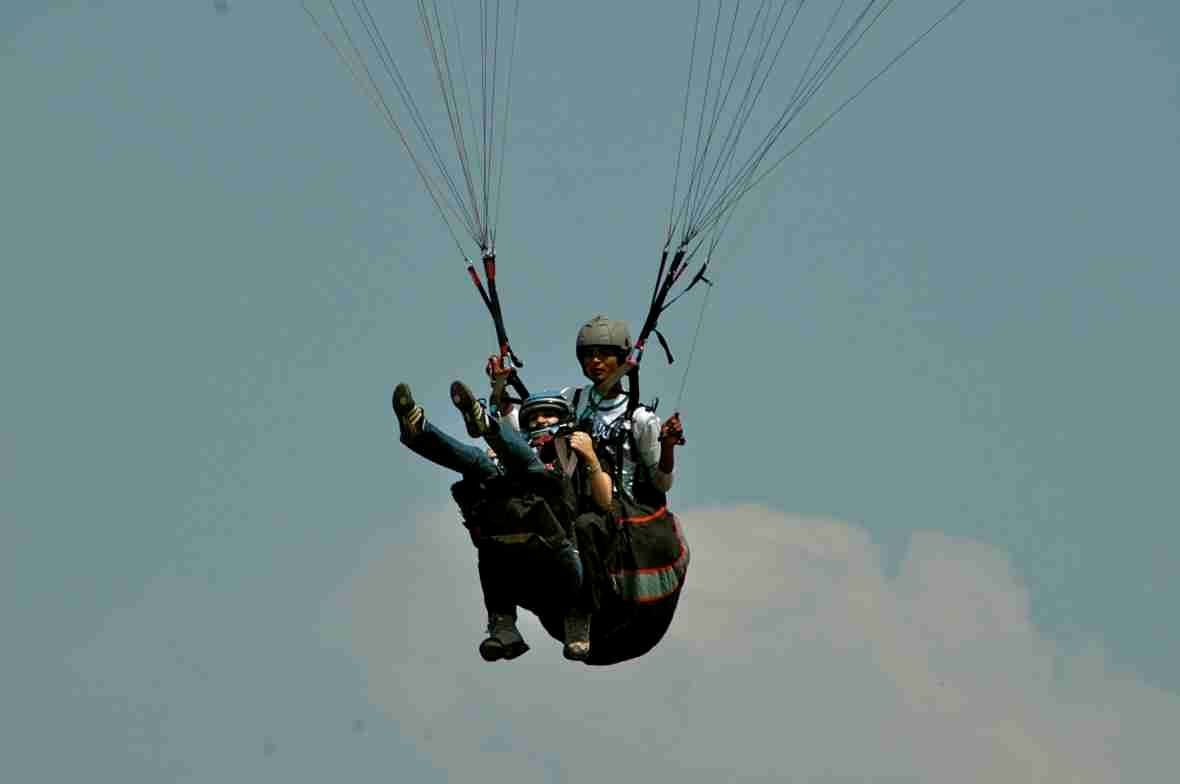 Shivya Nath, country’s leading travel blogger who quit her corporate job at age 23 to travel the world says,
Shawna Grapentin wrote: “An adventurous life does not necessarily mean climbing mountains, swimming with sharks, or jumping off cliffs. It means risking yourself by leaving a little piece of you behind in all those you meet along the way.” I completely agree. But sometimes jumping off cliffs can be fun too. So above the terraced valleys of Bir and Billing in Himachal Pradesh, I went paragliding for the first time, flying over the Himalayas with my parachute and getting an aerial view of this country I love so much. Now is a great time to try it, for it is not as popular (and hence crowded), and you could be alone above the mountains and monasteries of these charming villages!
Adventure to escape is something that allows you to leave everything behind and interact with your deepest desires and fears. Sometimes escaping from routine can open up new doors of clarity and opportunity that you had not even dreamt of in your weirdest dreams. Siddarth, 30 year old cyclist and a high risk taking professional who dreams of making a big mark through a startup says,
Choosing to trek chadar despite multiple warnings from my family has been a high point. I have always lived a comfortable life and it was time that I challenged it by going to the rooftop of the world, at -30 degrees, walking on frozen rivers, trekking the mountains and being one. Every adventure not only leaves you spellbound but also leaves you with lingering memories of the place and the people that you meet. Meeting new people and sharing their experiences is an adventure itself. The clean crisp air does help flush unwanted memories and leaves you rejuvenated.
Adventure travel is the greatest boredom killer. It helps you get away from the usual vagaries of life and try out something which is more fun and you like doing again and again without getting bored.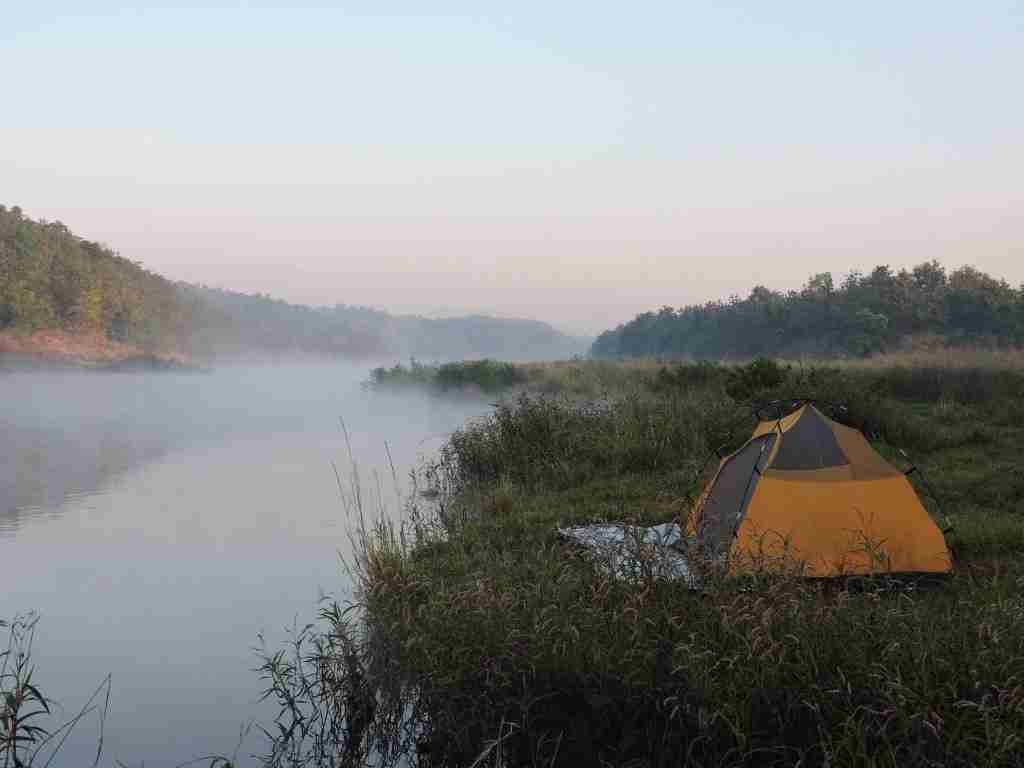 The 23 years old Devang Says,
I love adventure sports because there’s nobody between you and the nature. And secondly you can set your own limits. But it wasn’t I was an adventure enthusiast. It was a coincidence borne out of a motivation to kill boredom. My hostel was surrounded by three mountains in Nashik and there wasn’t much to explore around that’s when I started exploring the mountains and the rest is history. Now adventure travel is a part of me.
Adventure travel is your passport to test your limits. It’s the ability to say I’ve done it. It’s pushing your body and mind to absolute limits. It is the competition of the highest grade. It’s about self-competition and how far you can stretch yourself.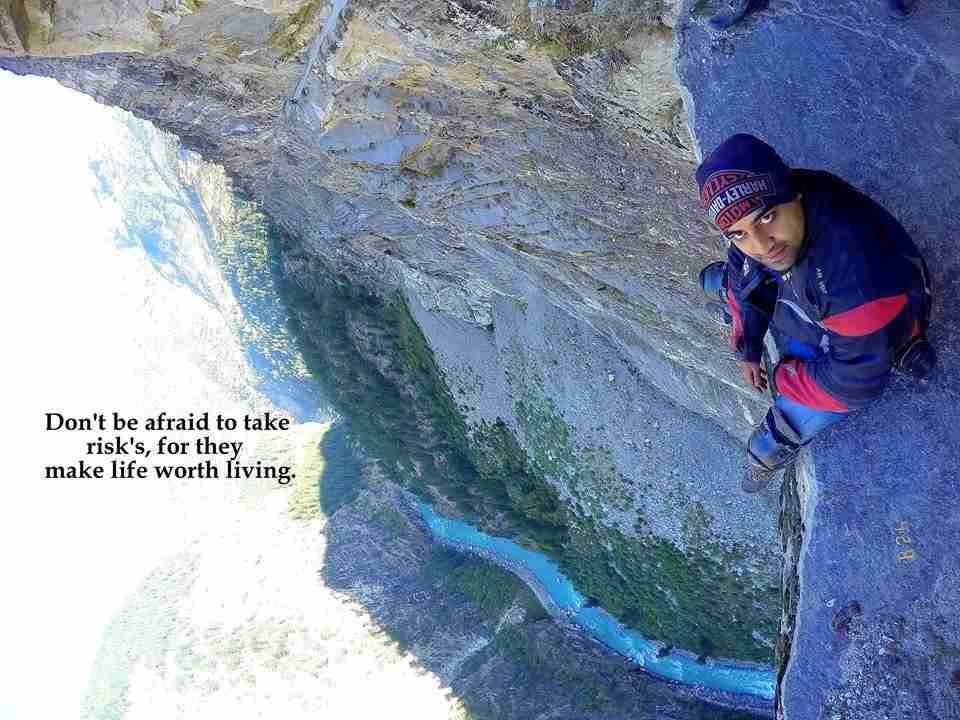 Charanpreet Singh, a renowned travel photographer, explorer and consummate adventure chaser says,
I want to devote my whole life (whatever is left) in the exploration of Himalayas. Mountains cleanse my mind while civilization again corrupts it. Nothing has made me stronger than adventure travel. It has made me challenge and achieve lofty goals. Thanks to adventure travel, I now accept challenges with a smile and make friends wherever I go. It has made me accept changes and discard my old self and wounds.
Adventure is not all about oneself. Sometimes it leads you to do lot of selfless acts which you would have otherwise not thought about. Many adventure enthusiasts push the envelope further by associating a cause with their adventure. Thereby not improving their lives but others too.  Take for example Rahul Kumawat, who works as a diagnostic designer at Renault Nissan India in Chennai and who undertook a cycling journey from Chennai to New Delhi to champion a social cause. He says,
Initially I took up cycling as a hobby but later on I got in touch with many cycling enthusiasts who marry their passion with social causes. During a cycling event I met a professional cyclist who told me about RAAMS (Race Across American States) where they cover 5000 km in 12 days. blood donation, palliative care for cancer patients and a rare condition called the Hunter syndrome. I wanted to do something similar here in India so i decided to cycle for a cause – to create awareness for blood donation, palliative care for cancer patients and a rare condition called the Hunter syndrome.
Nature is the biggest detoxifier. It cleanses mind, heart and soul. The clouds of confusion vanish as soon as you are in the lap of nature. You are able to think clearly and take decisions mindfully. Some people can spend years and years in the company of nature without asking for anything else. The deeper they go better are the rewards. There is an eternal connection which sooner or later they find out.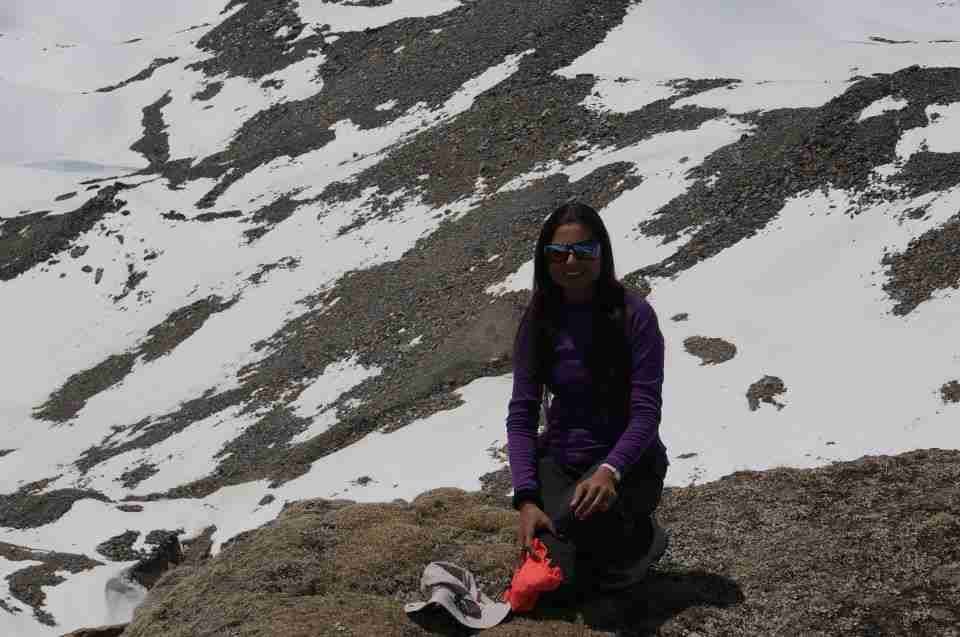 As it happened with Vishi Bansal, A Himalayan enthusiast. She says,
I love mountains and I got into trekking accidentally. I had always felt something pulling me whenever I was in Mountains. But never quite understood. However my great Lakes trek was a turning point. I suddenly had the realization that this was where I belonged. I broke down and cried when the trek got over. Adventure travel makes me push my limits, helping me to understand myself better. And in real life when faced with difficult situations I try to draw parallel from my trek experiences.
While some indulge into adventure sports for internal reasons others are driven by external factors like meeting like minded people who share the same passion as you do.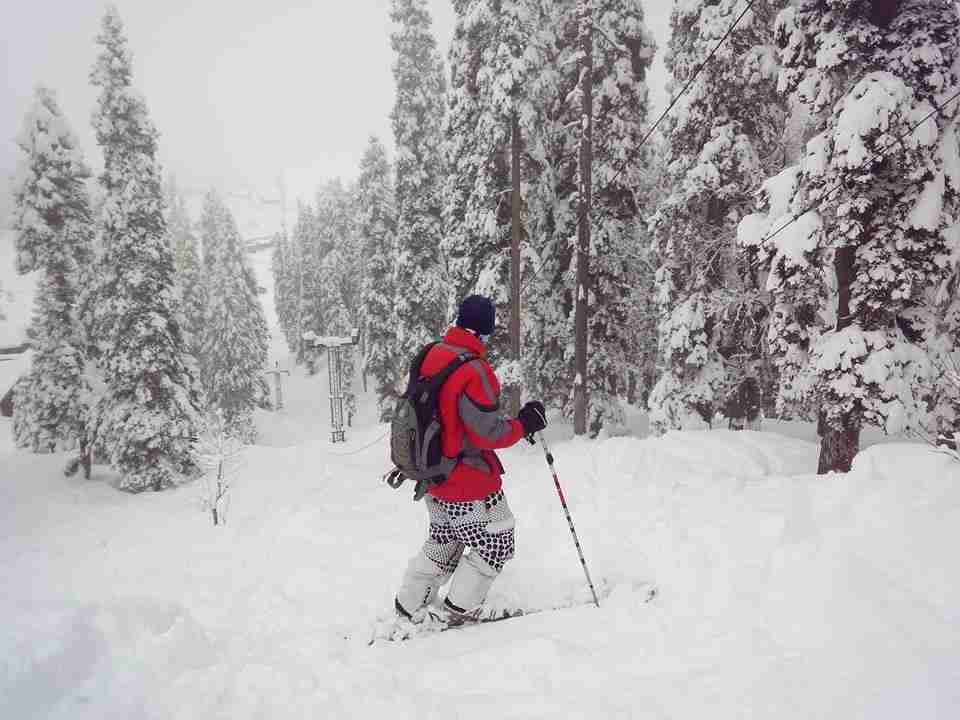 Nayeem, who is a Ski instructor at Gulmarg says,
I love skiing because it gives me an opportunity to meet interesting people from different parts of the world, which I would have not met if I was in some other field. Recently I trained Bollywood personalities like Sharman Joshi. It was fun seeing them in the real life.
Some have a good fortune of being born in a family where Adventure runs in their veins. From the very beginning the kids are taught to be fearless and challenging. Where parents feel that the real education is not in books but in experiences and by being close to the nature.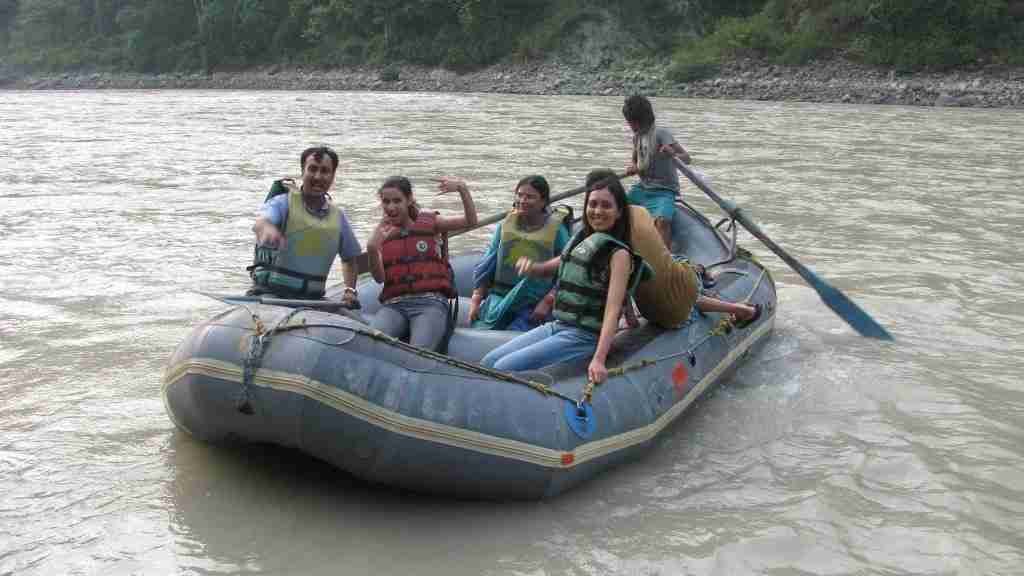 Astha, a student who is a big travel enthusiast echoes the same thoughts. She says,
I always loved adventure travel since I was a kid. My dad loves adventure travel and he would encourage us to be not afraid of and he made me tough. Whether it was swimming in the river or going on a road trip he was always game for it. Whenever I wanted to travel he always made it happen. There were lot of times when I would share my desire to travel at night and next morning we would be on the road.
These was my humble attempt to find out an answer to what motivates the adventure enthusiasts. What is your motivation? Why do people keep pushing the envelope to more extremes, never feeling satisfied with their last conquest? Looking forward to hearing from you.
 India, the moment people hear this name – they start imagining Holi, colours, bindi, saree, ghats, Sadhus, Yoga, Taj Mahal and everything cliched about India. Everytime I meet or speak to any foreigner I try to tell them that there’s more than this glorified cliched image of India that West is so obsessed with. So when Insight Guides contacted me to contribute to their story about ’10 tips for your first time in India’ I tried to share some insider tips which can make your first India trip truly memorable.
Here’s the story. Hope you’ll enjoy it.
India famously has a reputation for initiating culture shock on a first visit, especially for travellers journeying in the north of the country. Contemporary India can be bewildering, a place of extremes shot through with contradictions. Visitors seeking to negotiate this phenomenally complex country will likely experience juxtapositions of wealth and poverty alongside a liberated young middle class. In many ways, experiencing this is all part of a trip here. However, a few helpful practises can ensure you feel prepared when arriving after a long-haul flight, or when facing a culture most unlike that at home.
“India is a big and incredibly diverse country. When you visit India it’s like visiting many countries within a country,” says Archana Singh of Travel See Write. “From the mighty Himalayas in the North to the serene backwaters of Kerela to the Coastal countryside of East to the Thar desert of West; India has a lot to offer. Instead of cramming everything in a single trip take it slow.”
With that in mind, our India editor has prepared an essential run-down of tried and tested tips to ensure you can get on with enjoying your trip as quickly as possible.
Take the hassle out of planning and discover our Essential Golden Triangle trip here.

1. It’s best to use a pre-paid taxi from airports. Black city taxis should be metered, but get an estimation of the fare before you set off. Better yet, pre-arrange your hotel transfer to ensure a smooth start to your time in India.
“Book in advance to avoid last minute hassles,” adds Singh. “For within city travel, you can always opt for a taxi or an auto. But make sure to bargain with autowallahs.”
2. The Golden Triangle is India’s most popular tourism area and for a lot of locals, Westerners are seen as rich simply because they’re there. Therefore, you can expect a lot of both hustling for business and begging in certain places. If you don’t want what someone is selling, it’s easier not to get drawn into conversation – politely say no and walk away. Responses to begging are a very personal choice – although many people consider it best not to give any money as a means of discouraging the practise, especially with children.
3. When travelling by autorickshaw, it is essential to agree a fare beforehand to avoid arguments later on. In particular, it’s helpful to confirm that you want a price with “no shopping,” ie. without unrequested stops at shops operated by pals of the driver, where they can anticipate a kick-back on all sales made. That is, of course, unless you would like to go shopping!
4. Don’t let autorickshaw or taxi drivers take you to a hotel you don’t want to go to – insist that you have a reservation at your specified hotel. Don’t be put off by claims that the hotel has burnt down, is booked up or suffering an infestation of some sort. Be polite and insistent about where you want to go.

5. With regards to your health, two attitudes almost guarantee a miserable time: carelessness and hypochondria. Take elementary precautions by sticking to bottled drinks, no ice and freshly cooked hot food, and you should be fine. Note that even decent hotels’ buffets, left out all day, can be a risk, so order a la carte or even from a street food stall, where you can see food cooked in front of you. If you’re especially concerned, India is an excellent place to go vegetarian, as many people don’t eat meat and the choice of veggie options is excellent.
6. Beware of credit card fraud, and don’t let your credit card out of your sight when paying by plastic.
7. Carry valuables on your person at all times if possible, or leave them in your hotel safe, rather than unsecured in your room. When taking internal flights or overnight trains, padlock your bags and carry anything especially valuable on you.
8. The sun is strong in the Golden Triangle, even in the winter. Keep hydrated (with sealed, bottled water), protect your head with a hat and try to do your outdoor sightseeing in the morning or late afternoon.
9. India’s respect for red tape and bureaucracy can be maddening, but use it to your advantage – vouchers, passes, letters of introduction and official business cards can all work wonders for you.
10. In all senses of the word, stay cool. India has been described as a “functioning anarchy” and this remains true in the face of encroaching globalisation. Don’t get cross and remember that a smile and small tip can be more effective than anything else.
Source: Insight Guides
Ever since I shared my travelogue on Sapa, a lot of people have shown immense interest in visiting Vietnam and have sought my help in planning their trip. So this post and few upcoming posts are dedicated to helping you plan your first trip to the incomprehensibly exotic and utterly compelling, Vietnam.
Vietnam is abundant with breathtaking natural beauty, unique heritage and culture. Travel becomes addictive in this country which is brimming with infectious energy and warmth. Once you visit Vietnam, you can’t stop but prolong your trip or return again. Vietnam is a living example of resilience. A War trodden country until 1975, Vietnam has bounced back remarkably to make up for the time lost to the ravages of the war and a government that kept the outside world at bay until the 1990s. Vietnam does have its task cut out when it comes to attracting tourists from across the world, in comparison with its more open and developed south Asian neighbours. But thanks to cheap currency and unique cultural experiences, it is slowly and steadily becoming the darling of tourists.
So without further ado let me help you plan your maiden trip to Vietnam. Here is my personally experienced and curated recommendations – a practical guidebook for your first Vietnam visit.
Vietnam is a long, snake-like narrow country sandwiched between the South China Sea and the border between Laos and Cambodia. Vietnam is unrivaled for its diversity of landscapes – from the lush rice terraces and majestic mountains in the far north to the picturesque valleys of the Central Highlands and the fertile delta to the beautiful white sand beaches and turquoise waters of the south. And that’s not all. Vietnam offers a unique mix of booming modern cities, colonial towns, traditional villages, UNESCO heritage sites, archaeological marvels and otherworldly islands. Vietnam has a lot to offer. Perhaps even few months are not enough to see all, forget admiring the beauty! Here are some recommendations.
The geography of Vietnam is as follows

North Western Mountains, Sapa, Vietnam
I explored only North and North Western Vietnam and hence I am going to share what I experienced
The capital city is famous for its thousands of colonial-era buildings and over two dozen exotic lakes. Known as the “Paris of Asia”, Hanoi exudes grace and grandeur through its appearance and architecture amidst the chaos of modern day living. Hanoi is a melting pot of the historic charm and the expansion of modern realms. A place still preserving grand old boulevards and ancient pagodas where locals practice their tai chi moves beside tree-fringed lakes. There is not a dull moment while walking the narrow congested streets of the Old Quarter. During the day it a thriving hub for commerce selling everything under the sun at throwaway prices. In the evening it transforms into one giant street food market. The transformation is so quick that I almost got lost. Hanoi is renowned for its street food, especially the Old Quarter and around Hoan Kiem Lake area. Other attractions that one must see are Hoan Kiem Lake, the Ngoc Son Temple, the French Quarter and the Hanoi Hilton, Temple of Literature, the Vietnam Army Museum, and the Ho Chi Minh Mausoleum and Nha Tho Cathedral among other attractions. To know more how to make your Hanoi Trip awesome do check out 10 Tips For Hanoi Budget Travel

Visit Vietnam for Hoan Kiem Lake at Hanoi

Visit Vietnam for its Street food at Old Quarter in Hanoi
The UNESCO World Heritage site is one of the most romantic and beautiful seascapes. Sailing in the calm emerald sea of Halong Bay dotted with thousands of spiky limestone pinnacles is an unworldly experience. The sunsets are to die for. There is no better way to experience the bay but on a cruise. There are different kinds of cruise available – luxury to mid-range to cheap Bai Chay tourist boats. Safety is a big concern so it’s advisable to go for a mid-range overnight or two nights cruise. I booked Imperial Classic Cruise and I was overwhelmed with their hospitality and their guide’s knowledge.
I had a private luxury hotel like a cabin with attached bathroom and I was spoiled with exotic and tasty multi-course meals and drinks. One interesting thing that I noticed in North Vietnam was the influence of Chinese culture – right from their food to their folk stories to their celebrations. One prime example is how they name their places and objects. The word “Halong” translates to “where the dragon descends into the sea” and they have interesting names for even the rocks in the bay and the caves. The activities during the cruise include visiting:
Halong Bay is one of the star attraction of Vietnam and definitely worth the hype. Halong Bay is best explored with a partner, whom I was badly missing 🙁

Visit Vietnam for Halong Bay, Vietnam (pls enlarge and see)

Visit Vietnam to see Sunset at Halong Bay

Visit Vietnam to see Pearl Farming at Halong Bay
Being a mountain person this was the most cherished part of my trip. Hikers and adventure seekers cannot afford to miss this beautiful hill station. Sa Pa is located in Lao Cai Province, north-west Vietnam, and 350 km north-west of Hanoi. Sapa lies near the Chinese border in northwestern Vietnam, known as “the Tonkinese Alps” and is famous both for its unspoiled rugged scenery and for its rich cultural diversity. The entire Sapa region is a sightseeing place in itself. Trekking is an ideal way to explore its enchanting beauty.
If you have time on hand then you can see Tha Bac (Silver) waterfall, Ham Rong Mountain, Rattan Bridge, Bamboo Forest and Ta Phin Cave among others. To reach Sapa, you can either take a 5-hour private sleeper bus leaving at night or early morning from any of the travel agents in Hanoi or take a 9-hour overnight train from Hanoi to Lao Chai, and then 45 minutes more from Lao Chai City by bus. In Sapa, I discovered the soul of Vietnam. Do read the untold story of Sapa.

Visit Vietnam for its Terrace Farming at Sapa
Vietnam is a place for all seasons. There is no right or wrong season to visit Vietnam. Like its South East Asian counterparts, Vietnam is typically warm and humid. However, like India, weather can vary drastically from one region to another due to the length of the country. So you can experience snowfall in the far north and at the same time basking in the 32 °C sunshine in the South.
The climate in Vietnam can be divided into three different zones – North, South and Central.
Remember one thing, there is no such thing as bad weather. Only just bad clothing. If you are well prepared Vietnam is a country for every season.

When to visit Vietnam
Vietnam has long been the darling of backpackers who spend months in the country and no prizes for guessing why. If you want the best value for money then there is no better place than Vietnam. However, for people who are into full-time jobs and cannot take a mega travel break, begin with 8 days itinerary for the Northern part. If you want to cover the key places in Northern, Central and Southern part then 14 days itinerary is good and if you are not time-starved and want to explore all the key attractions, 21 days itinerary is good. However, if you are really time-starved, 5 days are good for a start. Do keep in mind the time spent reaching these places.
Here are few examples of possible itineraries for your first Vietnam visit.
A ‘Miniskirt’ break: To refresh you with the natural beauty of Northern Vietnam

Visit Vietnam: Visit Sapa Town Plaza
A ‘Cocktail skirt’ break: I would add three more days to the above itinerary and explore Halong Bay and Sapa. Or I would visit Mai Chau or North East Vietnam. But in case you don’t want to trek and want to cover the other important city of Vietnam then this itinerary should work for you:
Visit Vietnam for glorious sunsets at Halong Bay
A ‘Midi skirt” break: Personally, I would spend 8-10 days exploring Hanoi, Halong Bay, Sapa, Ha Giang, Bac Ha and spend the rest exploring Hue, Hoi An, and Nha Trang. But for others who want to explore all the three regions, this itinerary should work fine:

Floating Market, Mekong Delta, Vietnam
A ‘Gown” break: This is the ideal break and will be ideal to discover the heart and soul of Vietnam where you’ll not be rushing into places.

Ho Chi Minh, Vietnam.
Hoping this practical Guidebook for your first Vietnam visit will be useful to you. Do share your feedback.

Hanoi at Night

View from Hoan Lake, Hanoi

Sailing Through Halong Bay, Vietnam

Can’t get enough of Halong Bay Sunset, Vietnam

Another one capturing the Sunset at Halong Bay, Vietnam

Hanoi City at night, Vietnam

Hoan Kiem Lake temple, Hanoi, Vietnam

Hoan Kiem Lake, Hanoi, Vietnam

Hmong Tribe Woman with kid, Sapa, Vietnam

My last post was about why Kota Kinabalu is the best place for Unplanned Travel in South East Asia and my first day at the very place. This one is about my Day 2, an enthralling experience – when scaling the heights of Mount Kinabalu was not enough adventure. Let’s get straight to the action!
Day 2 was about Mount Kinabalu. I love mountains more than the sea. The excitement to meet my beloved mountains woke me up before time. At sharp 5:30 am I was ready with my other hostel mates to drive to Mount Kinabalu, the highest Mountain peak in South East Asia. The Masada Backpackers hostel staff was helpful in arranging a cab for us. It was pitch dark when we left, the sun still snoozing.
Our thoughtful driver stopped the car at a point which offered the most amazing sunrise view. The sunrise was a sight to behold. It was a surreal sight, like what we used to draw in our nursery drawing books– the sun rising behind the mountain peaks, its shadow creating drama in the river flowing just below the mountains. Birds were flying out of their nests. The sky was like a painting. No camera could do justice to this site yet we clicked away to glory!

Sunrise at Mount Kinabalu, Sabah, Malaysia

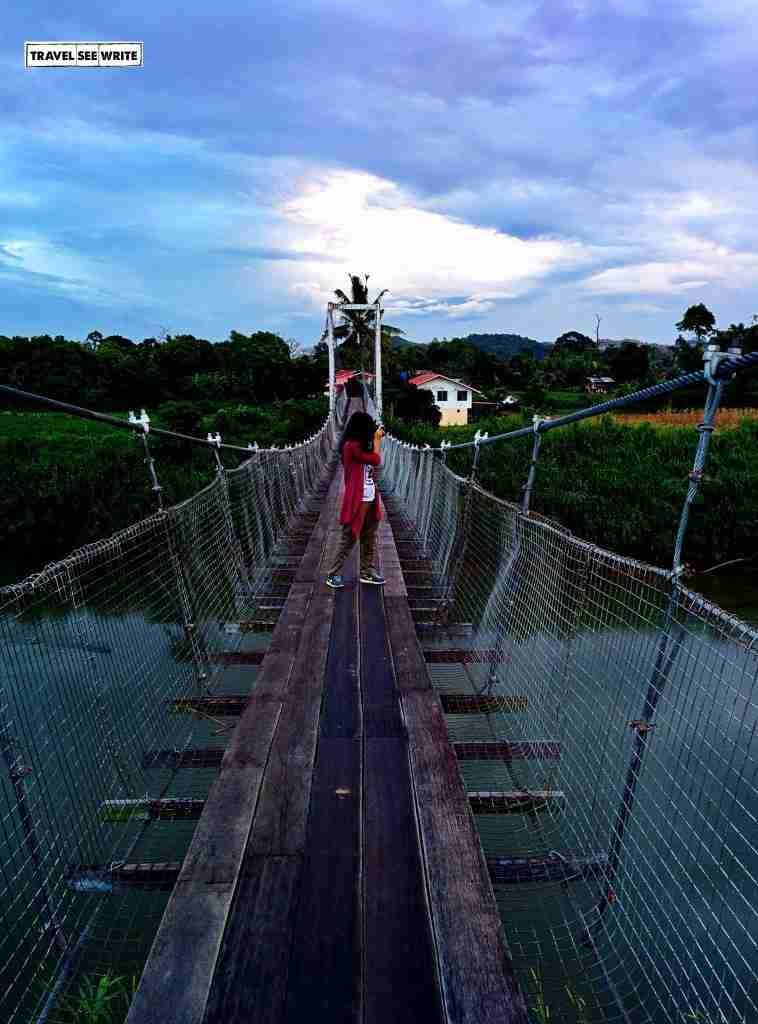
Sunrise while on the way to Mount Kinabalu, Sabah, Malaysia
We were driving through the lush green valley that was engulfed by white clouds. It seemed that we were driving our way through one of the heavenly highways!. I was smitten by the majestic beauty of Mount Kinabalu, which dwarfs its neighbours with its elevation of 4095 metres. Per Peaklist.org it is the 20th most prominent peak in the world due to its characteristic topography. I felt like I was home and all I could think of was this song – Raindrops keep falling on my head. I had waited for nine months to be with the mountains and I couldn’t stop gushing at the feeling of being united with my love.
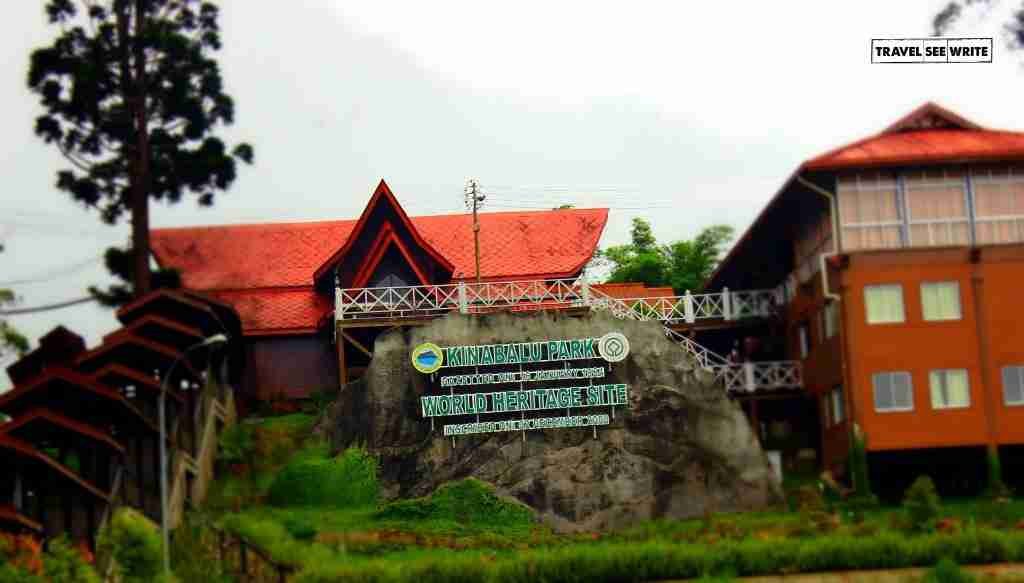
Entrance of Mt. Kinabalu Park, Sabah, Malaysia
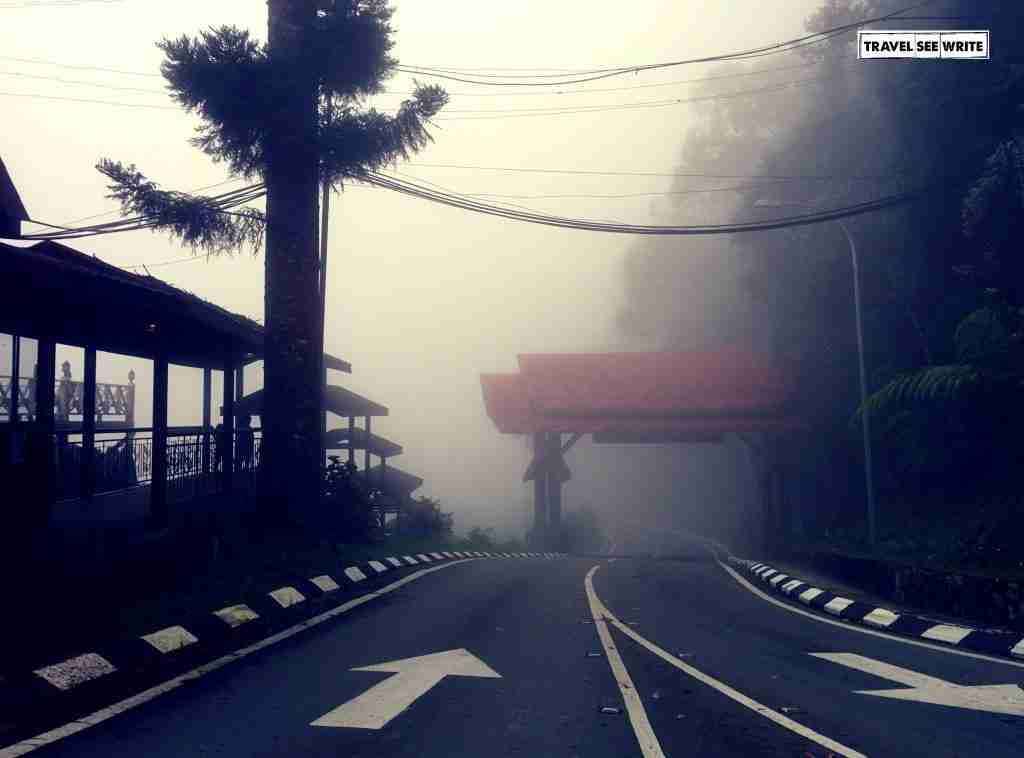
Mount Kinabalu Park Entrance, Sabah, Malaysia
And the wait was over. I was at the base of Mount Kinabalu at 7:30 am. Unfortunately, I could not climb Mt. Kinabalu because the park had already reached the limit of allowing 135 climbers per day to hike and I could not spare three more days as work beckoned at Manila. So I settled to do the next best thing – explore the Botanical Garden and hike around the other trails from the base.
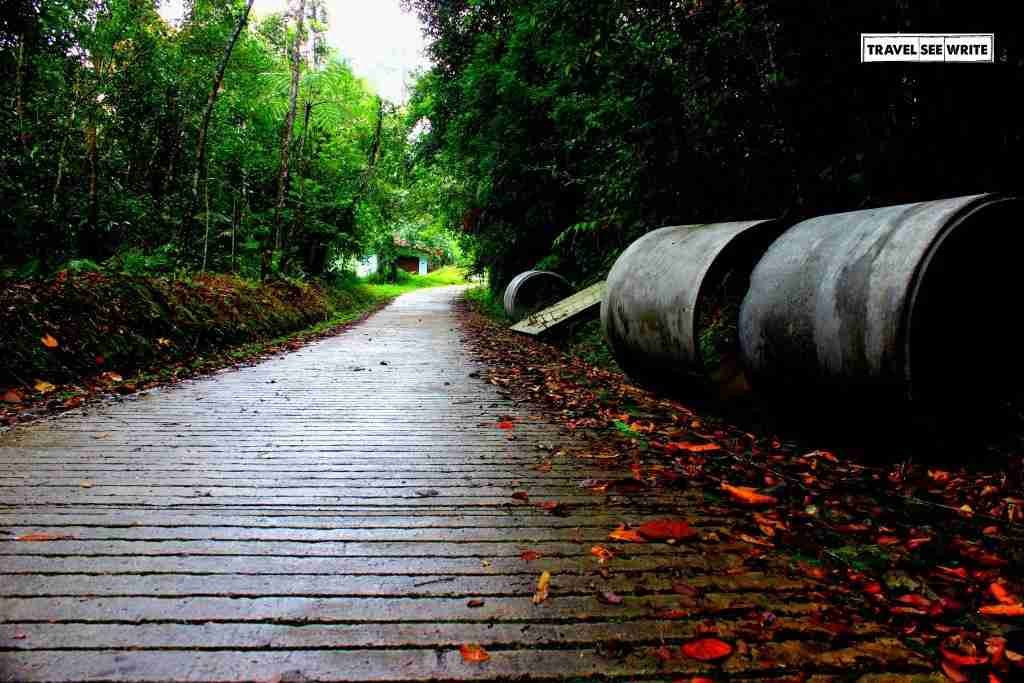
Mount Kinabalu Base Park, Sabah, Malaysia
There are nine trails around the park headquarters:
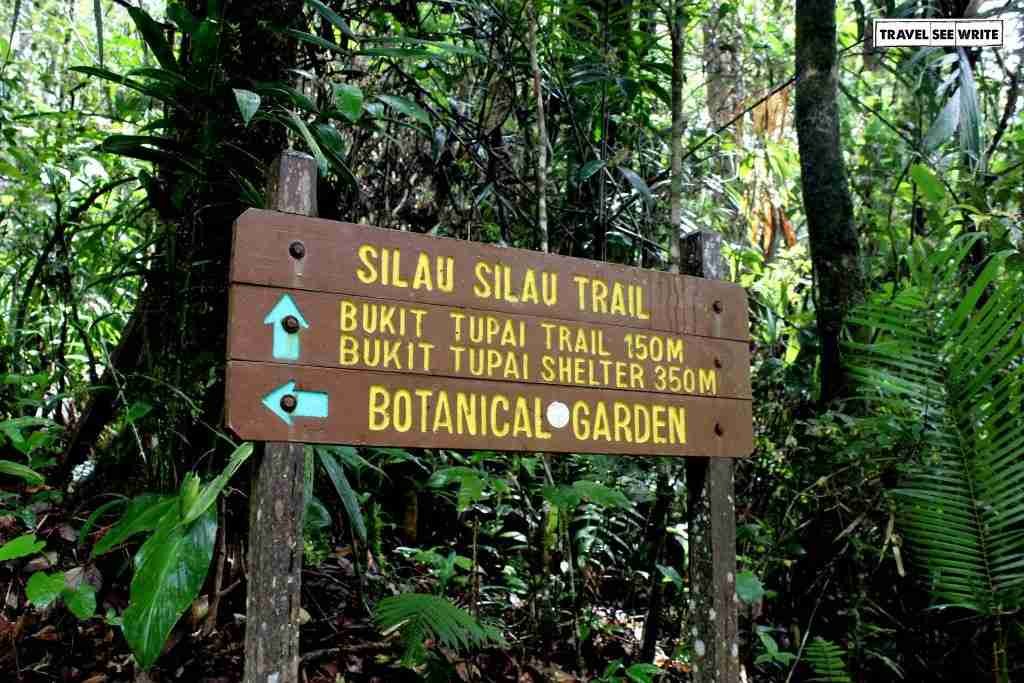
One of the trails at Base, Mount Kinabalu, Sabah, Malaysia
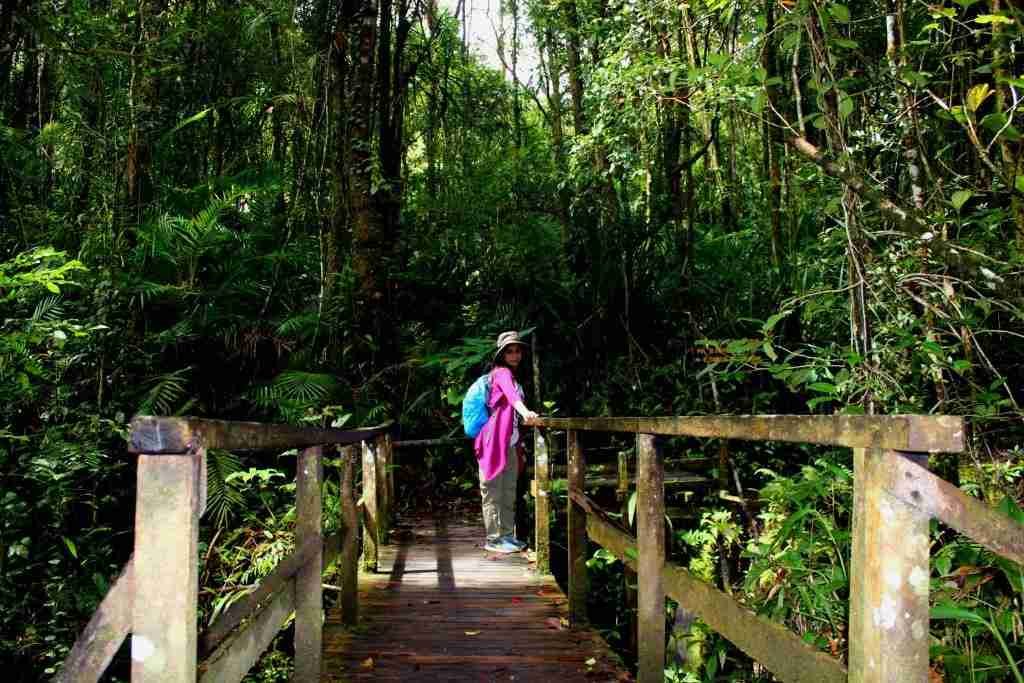
Base Trail, Mount Kinabalu Park, Sabah, Malaysia
These trails are fairly easy trails and can all be done in two days. Apart from the stunning views, what makes Mount Kinabalu park even more remarkable is the outstanding biodiversity. This is the very reason why it is in the UNESCO World Heritage List. It is also a tropical rainforest park that offers visitors a great opportunity to see rare species of flora and fauna. The park is well maintained, well-marked and has knowledgeable staff.
During my conversation with Lisa, the lady manning the Botanical Gardens’ reception, I got to know that the Mt. Kinabalu Park is very stringent when it comes to employing people. All its employees have Environment Science background and have the desired skill and passion for the environment. Lisa herself was a Bachelors in Environmental Science and as part of her job she is required to be a jack of all trades – some days she handles the reception and somedays she’s part of the Research team. No wonder the guides, receptionist and everyone involved knew so much about the biodiversity of the park.

The Mount Kinabalu Botanical Garden Staff, Sabah, Malaysia
I took a guided tour of two trails and the Botanical Park. The trails were easy and well-marked enough to be walked without a guide. It was the beginning of the monsoon season in Malaysia, therefore, it rained pretty hard for two hours. But after that it was clear. Hiking around the base was easy, the temperature was around 25 degrees and the humidity rather low. I was totally mesmerized by the park and its diversity.
The park was a treasure house for nature and wildlife lovers. Different kinds of trees, birds, animals, insects, smallest orchids in the world, endangered orchids, heartbreak leaves, laughing mushroom, red ginger, contraceptive plant, mickey mouse plant, tallest moss in the world, prey trapping pitcher plants and what not. The park had plants of all kinds – rare, native, and endemic.
My guide added that Mt. Kinabalu was considered sacred by the local Dusun people, who named it ‘Akinabalu’ (the place of the dead), as they believed it to be the place where the souls of the departed gathered. Visitors are told not to carry anything from the mountain as it brings bad luck to the person. I was so engrossed in her conversation that I lost track of time and didn’t notice when my guided tour ended.
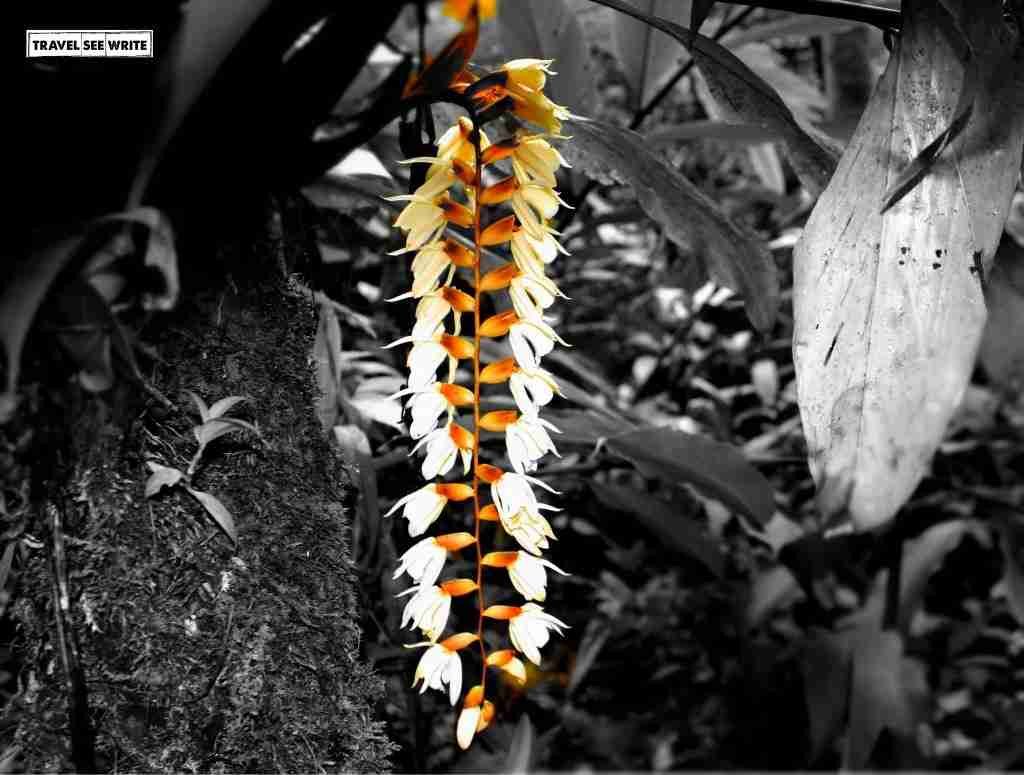

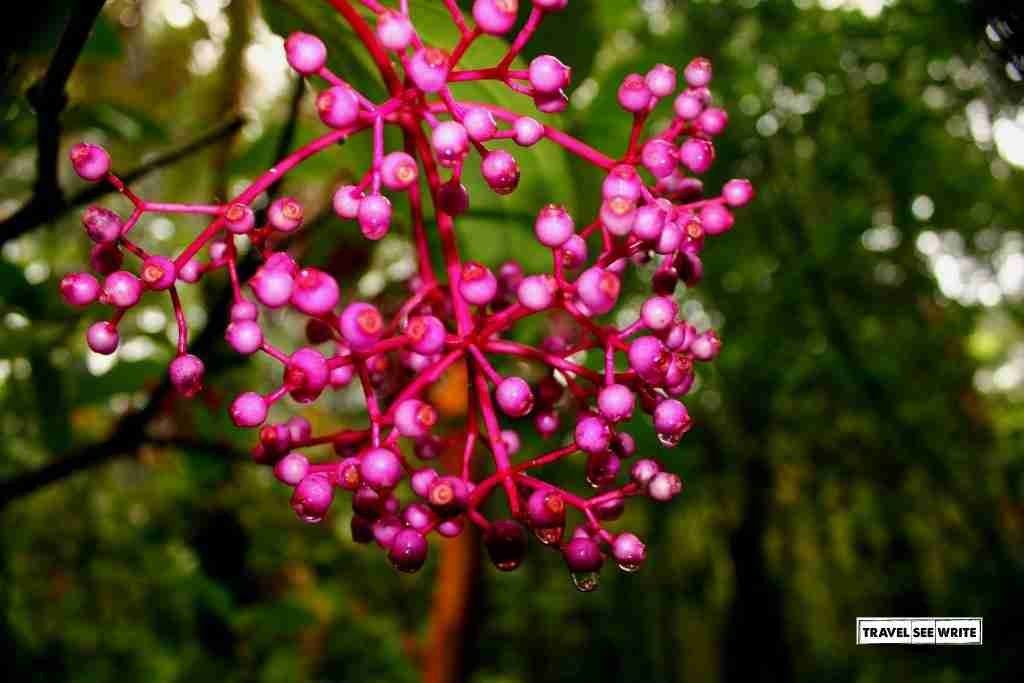
During my guided tour of the park, an Australian couple suggested visiting the Canopy Walk of the Poring Hotsprings. I had not planned anything after my park visit so it sounded like a good idea. And I was lucky to find my hostel mate strolling in the park too. It didn’t take me much time to convince him to join me on that spur-of-the-moment decision.
While we were waiting for the bus, two Europeans enquired us about the park. They had their own car but no plan. Anyway, I did not waste my time thinking about them. After waiting for around 20 minutes we got a bus going to Sandakan. We alighted at the forked road from where we had to fetch another transport vehicle to take to our destination. There was no public transport in sight going to Poring Hot springs.

We were under the impression that from that point our destination would be 1-2 kms away so we started walking. But as soon as we saw the direction sign saying 15 km we were taken aback. Now the face which was glowing with the excitement of seeing a new place had turned pale with a bit of worry. After a lot of failed attempts, we finally got a hitch in a local commercial purpose van. There was another guy sitting in the van. After bargaining for a while, we decided to pay him 10R per person to take us to our destination. When the driver drove into smaller deserted kind of area we got bit worried. But thankfully my imagination’s wild horses were put to rest.
With just 10 minutes for the CANOPY WALK to close we reached the Poring Hot springs at 3:50. You need 20 minutes and a good stamina to climb up slippery mud track, traversing through tree stubs, roots and boulders to reach the Canopy Walk Treetop platform. But hard-pressed for the time we took less than 10 minutes. I was huffing and puffing like I ran a marathon. However, the fatigue just vanished as soon as I stood in the middle of the Canopy Walkway. Let me warn you beforehand. Poring Canopy Walkway is not for those who have acrophobia, hypertension or heart problem.
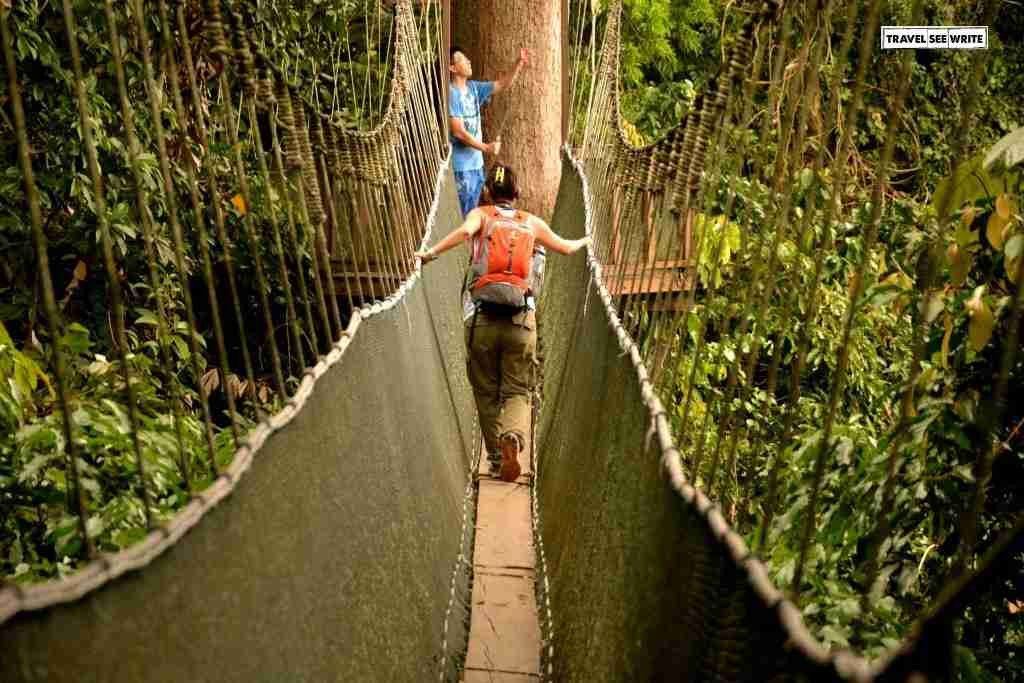
Poring Canopy Walkway , Sabah, Malaysia.
The canopy is over 175 Meters long and 41-43 Meters in height, which is higher than 8-floor building. It is a suspension bridge constructed with ropes, steel cables and a series of aluminum ladders bolted together. The walkway is an elastic suspended wobbling structure, so it will bounce and swing when you walk on it. But don’t worry it has net enclosed on both sides for additional security.
The three bridges are held between 3 super-big trees of the Borneo rainforest. The canopy walkway is narrow and can only take the 6-people load at a time. 75% of rainforest animals spend their time on forest canopy. Some of them never come to the ground, so canopy walkway is great for observing these animals and is a good spot for bird watching too. The view of the valley from the canopy was too scary but an adventure junkie never frets. We spent some time exploring the rest of the area like Butter Fly Farm, butterfly farm, the Poring Orchid Conservation Centre, the tropical garden, the Rafflesia flower site and Sulphur Hot springs for which the place is renowned.
After the canopy walk, I thought I got my adrenaline dose for the day. Little did I know that the real adventure was about to begin.
At around 5 pm we were out of the Poring hotsprings and thus started our struggle for fetching the transport to get back to Kota Kinabalu. Ranau is a small place with hardly any public transport. So while we were waiting for the taxi, the European guys that we met at Mt. Kinabalu Park arrived. They indulged in a small talk with us and asked if we could wait for them then they can drop us back or we could also join them for the party. The over-friendliness of the guys sent an alarming signal in my head. So very politely we decided to give it a pass. Later we regretted not accepting their offer.
Now we were left with only one option – an old guy offering us to drop to Ranau (the nearby town to get a bus) at triple the price of a taxi fare. I felt the guy was drunk and shared my concern with Yu. Yu thought I was unnecessarily getting paranoid and he dismissed my concern saying he was just an old guy. Anyway, we were now in his car. His car was a truck used for the farming purpose. It was dingy with soiled eats and a foul smell. One of the windows was broken and there was no air-conditioning. And the worst part- he didn’t have the ignition key to start the car. Somehow he managed to start the car. And boy his driving scared the shit out of us. Even Michael Schumacher would be scared to be his co-passenger.
Basically, we were in for an adventure ride of our life. The old man was pissed drunk and was constantly chattering nonsense. I decided to ignore him. After driving for 15 minutes at insane rough speed, in the middle of the road he stopped the car and said,
Mam, this is my house and I have a magic plant that cures cancer. If you don’t mind I would like to show you that.

Our insane driver, who almost killed us, with his so called cancer curing fruit
I was already mad at him and I just asked him to stick to our original plan. On the way he said, we had missed the minivan and he would charge us extra to take us to the town centre. My harsh reply dispelled his attempt to extort more money out of us. Finally, we reached Ranau and he stopped the car at a very quiet place and went away somewhere without telling us where he was going.
We got down from the car and Yu went ahead to inquire from the locals about the transportation options. In Yu’s absence the drunk old man returned and started saying you pay me 300R and I’ll drop you to Kota Kinabalu. While talking he tried to get physical. I blasted him and warned him not to touch me or come near me. After paying his fare I went straight to the police guys. One look at the old guy and they said we were lucky to reach alive as the guy was pissed drunk and not in his senses.
We were in a really bad state. It was Sunday evening and there was no transport service available to take us to Kota Kinabalu. We were told that at 7:30 pm there could be a bus going to KK but they were not sure if that service was available on weekends. It had got dark and was raining hard. We were tired. Frustrated. Hungry. Wet.
Above all, we didn’t know what to do. Our phones were not working. Our folks didn’t have a clue where we were. We knew nobody in this sleepy ghost town. No eateries or hotels in sight. Didn’t have enough cash or card in hand. We had no choice but to return to KK as we would miss our next day flight to Manila if we didn’t return that night. My excitement to explore the unexplored was proving costly today.
Shivering in the cold night weighed down by the weight of by backpack we waited silently for our bus to arrive. At 7:30 pm a bus arrived at the bus stop and our faces glowed with unsurmountable happiness only to find that it was a College trip bus and the kids had just stopped over to buy their fill of snacks. We pleaded the students and the driver to give us lift till wherever they were going. We played the sympathy card and asked if we could sit on the bus floor. Basically, we did everything to convince them. However, the kids and the driver didn’t have the authority to take such decision.
We had lost all hope to get back to Kota Kinabalu that night but it is when you lose all your hope that miracles do happen. We saw a bus approaching towards us. It had Kota Kinabalu written over it. Without much ado, we got onto the bus and thanked our stars for saving us that day. Never ever have I felt so much happiness at the sight of public transport as I did that night.
We survived one more night to enjoy more adventurous rides in life.
However, I learned a valuable lesson that day. Follow your gut but be sensible enough to look into details. Sometimes being impulsive can get you into big trouble.
Related: One place that I would NEVER recommend you to visit in Malaysia in Selangor. Wanna know why? Read here my 10 reasons to not visit Selangor Malaysia

Mount Kinabalu at sunrise, Sabah, Malaysia
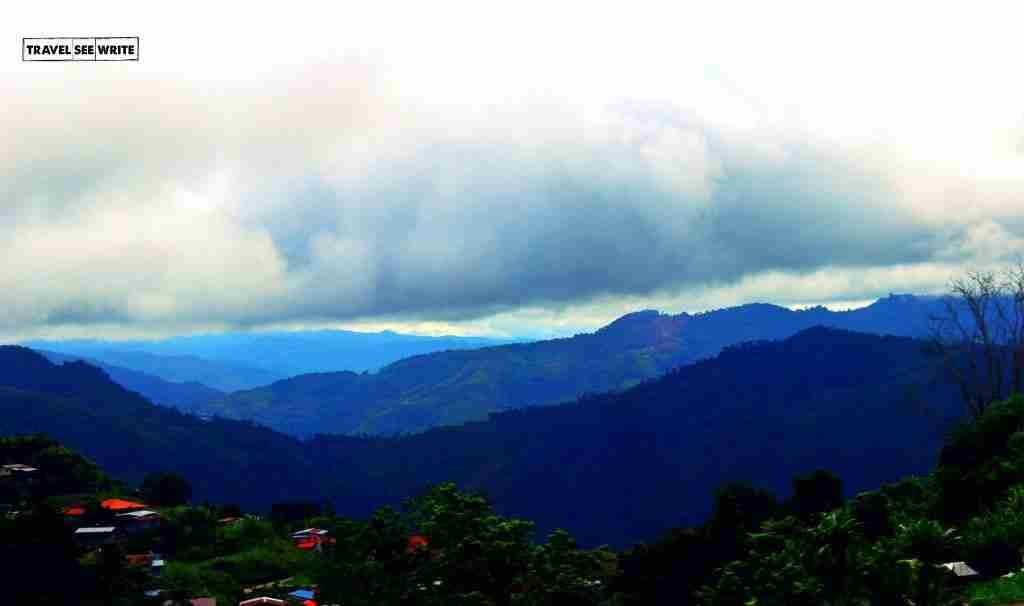
Valley View from Mount Kinabalu area, Sabah, Malaysia

Inside Mount Kinabalu Park, Sabah, Malaysia

Pitcher Plant, Mount Kinabalu, Sabah, Malaysia

Indigenous Orchid, Mount Kinabalu Botanical Garden, Sabah, Malaysia

Red Ginger, Mount Kinabalu Botanical Garden, Sabah, Malaysia
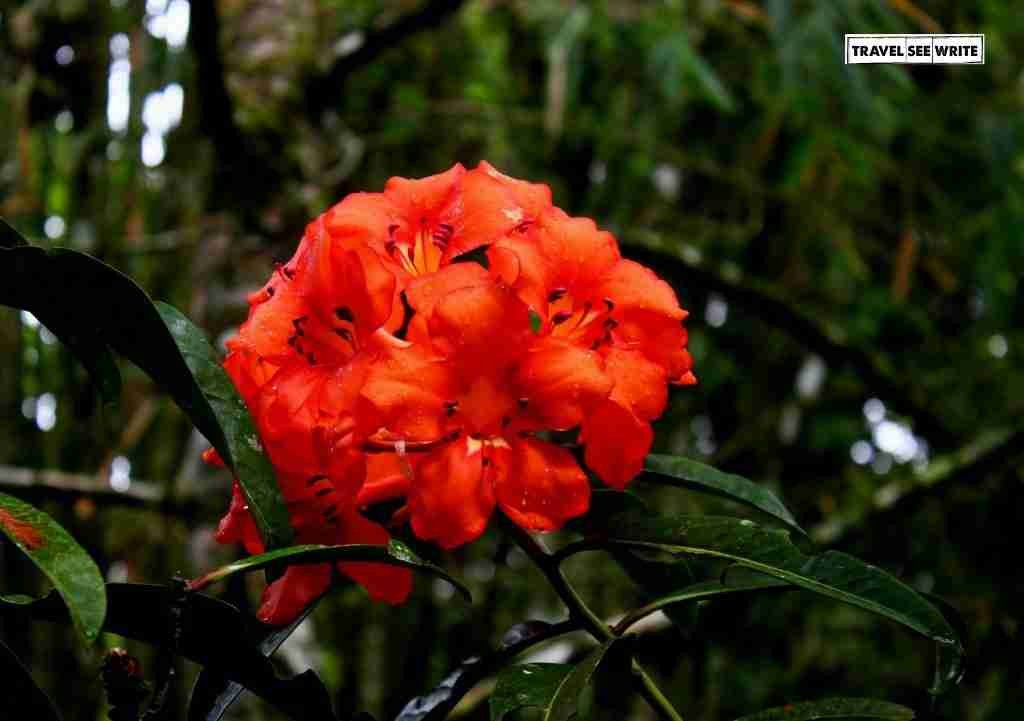
Flora, Mount Kinabalu Botanical Garden, Sabah, Malaysia
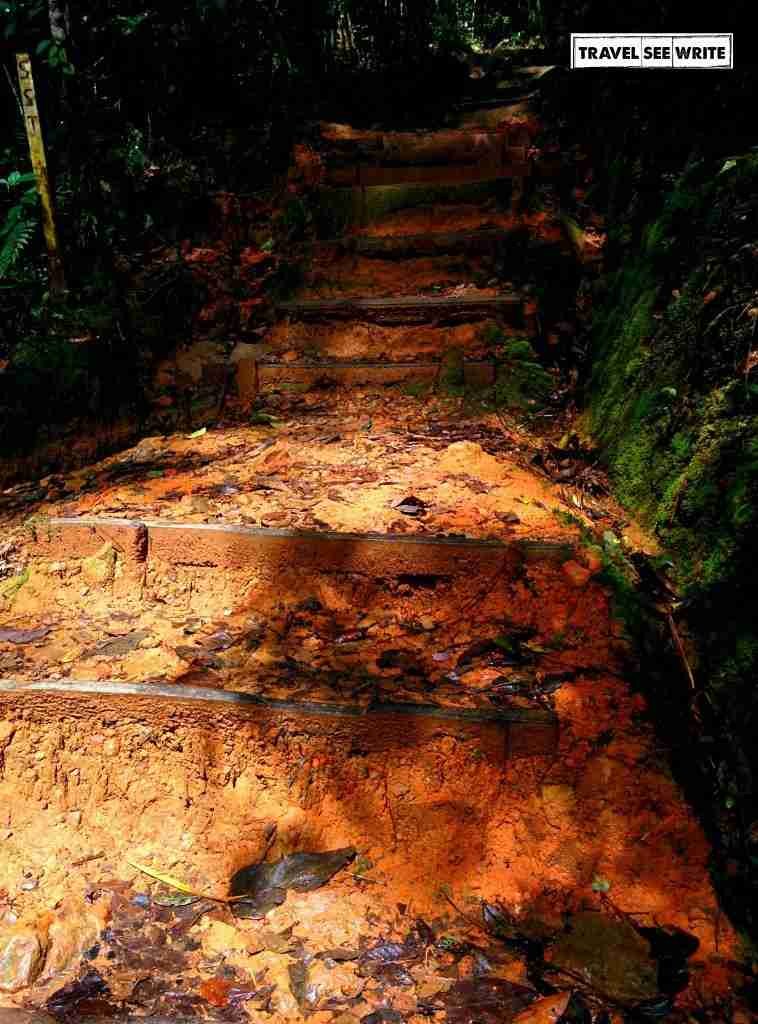
Two colours of soil – orange and yellow seen during Base Camp Trail, Mt. Kinabalu
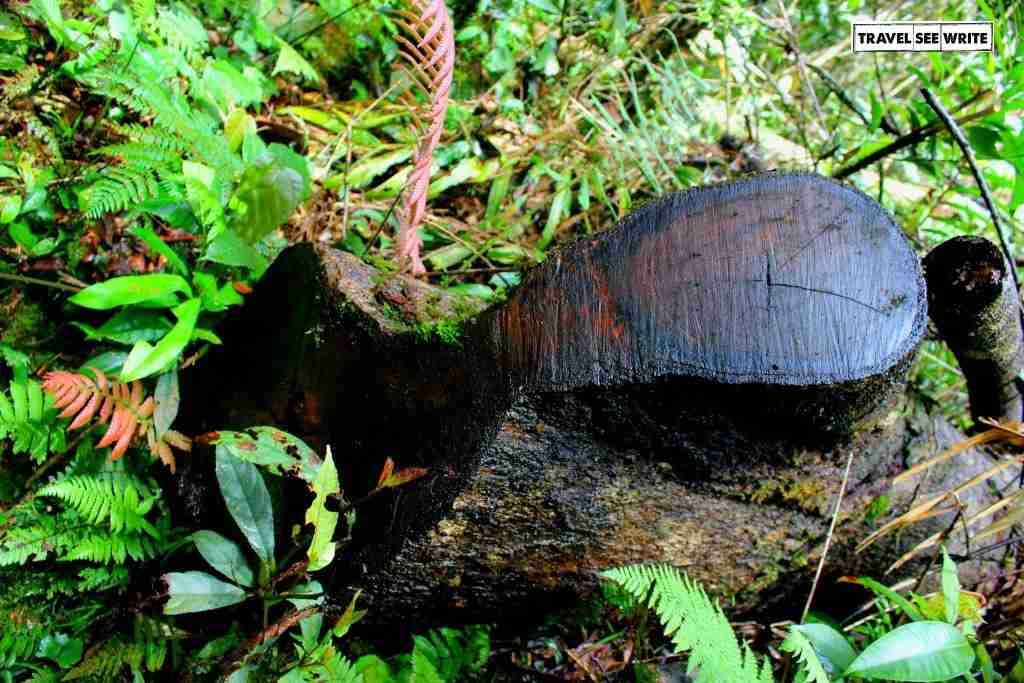
Tropical Rainforest Tree without any rings for changing seasons, Mount Kinabalu, Sabah, Malaysia

Other attractions at Poring Hot Springs, Sabah, Malaysia

Explore the untold story of Sapa, Vietnam, where vibrant ethnic tribes, breathtaking terraced rice fields, and a rich cultural tapestry await. Embark on a Sapa adventure, discover hidden gems, and immerse yourself in the unique charm of this mountainous paradise. Uncover the beauty of Vietnam with our travel guide and essential tips.
It’s been two weeks since I returned from Sapa, Vietnam but the “the Tonkinese Alps” has got under my skin so bad that not even a day passes by when I don’t think about untold story of Sapa, Vietnam that I uncovered during my fiirst visit to the region. The dreamlike landscapes of Vietnam is not the only reason behind this feeling but it’s the enchanting culture of Sapa and its people. I love exploring the untold human stories so on my last trip to Sapa I tried to sneak a peek into the lives of ethnic tribes of Sapa. This post is an attempt to look beyond the surface and discover the true beauty of Vietnam. A beauty that is not perfect. A beauty that lives with a smile on the outside and a raging fire in the inside. Here is my hhonest attempt to share the untold story of Sapa, Vietnam with you.
Sometime in August 2015, while I was channel surfing I saw the first glimpse of Sapa in a NatGeo program and the idea to visit Vietnam got incepted in my mind. Come Nov 19, 2015 and here I was in the quaint land of mist and mountains. It was 4:30 am and I was half asleep when my lux bus (great legroom, reclining seats, and toilet on board among other amenities) reached the Sapa bus stand after a comfortable 5 hours Hanoi-Sapa journey. I had barely slept last night so I conveniently snoozed the conductor’s announcement to retreat to the warmth of my blanket.
At 5:30 am when I alighted from the bus I noticed a flock of short Hmong women dressed in vibrant traditional outfits smiling and asking if I need a guide. Politely refusing them I took a taxi to reach the famous landmark – the Holy Rosary Church, aka the Stone Church. As I hailed from the taxi I felt I had been transported into Shimla. The centre of the town was dwarfed by the nearby mountain ranges, and especially the peak of Phan-Xi-Pang (Vietnam’s highest mountain at 3,100 m). The Stone Church built in late 19th century by the French was standing tall in this orient-meets-the-alps retreat. Just across the Church lay the town’s main marketplace and plaza, which made me wonder if I was in Vietnam or somewhere in Europe. The call time for my guide was 6:30 and at sharp 6:30 she was there. After a hearty buffet breakfast at Cinnamon Restaurant I started my trek at 7:30 am.
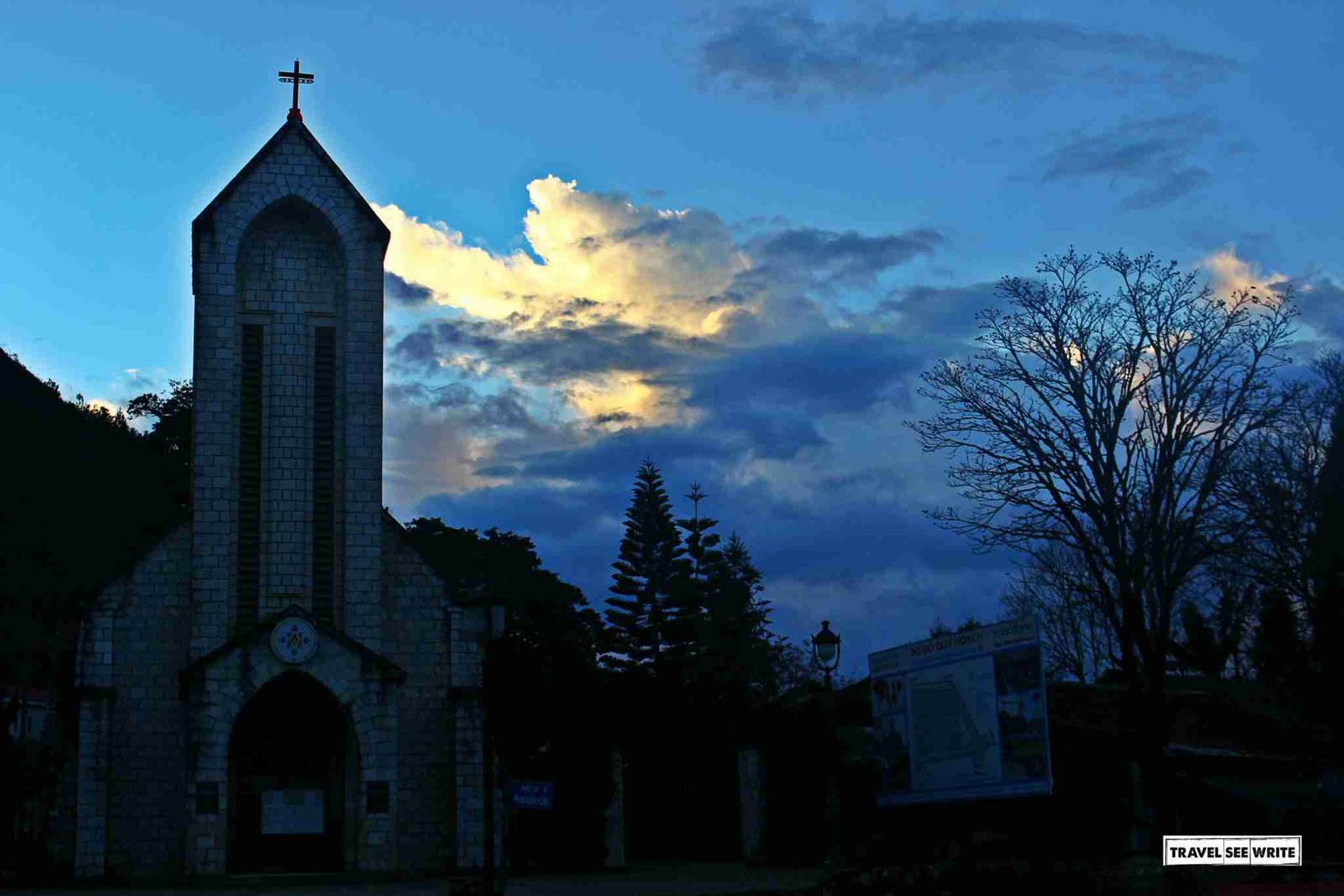
The Stone Church, Sapa, Vietnam
During the trek the soft spoken, ever smiling, traditionally clad Si told me that Sapa has numerous ethnic minority groups (Hmong, Dao, Giay and Tay) and majority (approx. 80%) of the population is into agriculture. I was trying to pay attention to Si’s words while my mind was playfully lost in the jaw-dropping stunning panoramas of the valley. The patchwork rice terraces cascaded down the mist-shrouded emerald lofty slopes. The sun was playing hide and seek through the clouds offering teasing glimpses of even more spectacular soaring peaks farther off. Bathed in morning sunlight, the misty vistas looked giant water colour paintings of the greatest painter, the almighty. We were walking through terraced rice paddies, Indigo fields, Bamboo forests, rivulets and small waterfalls. Water buffaloes and pigs stared at us from rice fields. My muddy slip-and-slide adventure trek was both rewarding and tiring. It got extremely sweaty despite the cool breeze. But the view made it up for all the hard work.
Terrace Rice Fields of Sapa, Vietnam
While trekking we were greeted by tiny Hmong women trying to sell everything they had in their traditional woven baskets: embroidered hemp skirts, bags, belts, purses, silver bracelets, earrings and traditional necklaces. I learnt from these innocent looking English speaking shrewd traders that looks can be deceptive. They seem to have promptly embraced capitalism. Talking means buying their stuff. If you don’t, be prepared to get nasty looks. And taking their picture. Just forget it. For them it’s simple. “No money. No picture.” Initially I perceived them to be rude and the new slaves of capitalism but later on my heart-to-heart conversations with them revealed a harsh reality.

The excruciating five hours trek had completely left me drained. Huffing and puffing I finally reached the Lao Chai Village where our first pitstop was the local restaurant. Buzzing with tourists its air was full of beef and pork smell. The waitresses were delivering orders at the speed of light. My legs were cramped and I was super hungry but unfortunately my vegetarian meal requirement was lost in the translation. So I was left with no choice but to have fruit. I desperately wanted to get out of the restaurant which now resembled a fish market. However, the army of Hmong women and kids wouldn’t get it and continue doggedly selling their wares. I had no option but to sulk and wait for my guide.
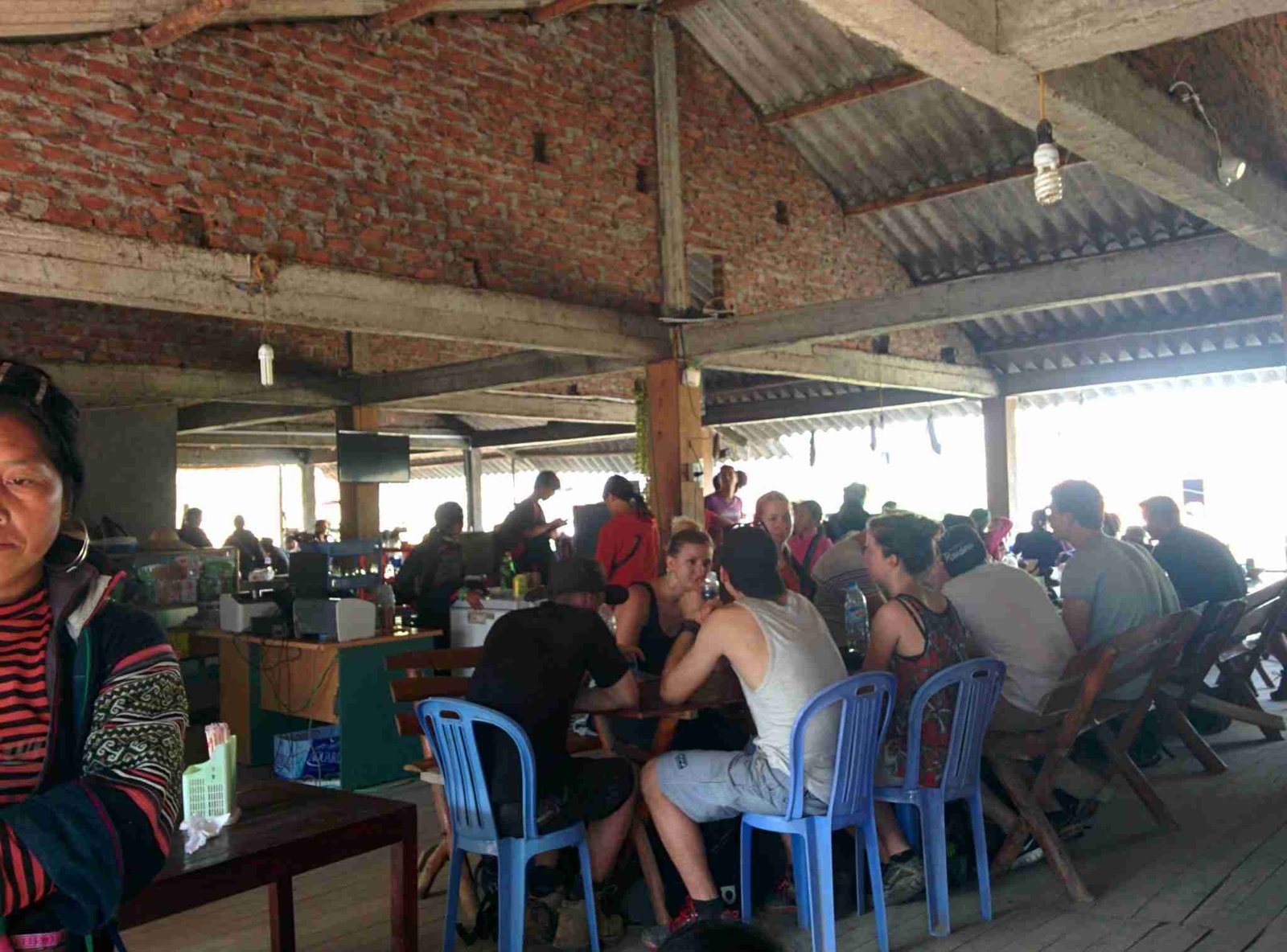
Lao Chai Restaurant, Sapa, Vietnam
Finally after 45 minutes my guide returned and we proceeded to my Homestay at Lao Chai village. It was a simple single story wooden house surrounded by paddy fields and dramatic lush valleys. It had a kitchen garden from where came all my veggies and fruit. From the inside, the homestay looked simple but was well equipped with all necessary things you require for a comfortable stay. A large dining cum living area was reserved for tourists that doubled up as a bedroom. There were other rooms tucked away for their family members. While my guide went to the local market to fetch some vegetarian food for me I indulged in what I would call the biggest luxury at that time – a hot shower. It was nirvanic. My foul mood was washed away and I was ready to explore Sapa once again. Not in a mad rush to see everything but to get a real glimpse of the soul of Sapa. After a quick-fix lunch I was out with Si discovering the little hamlet.
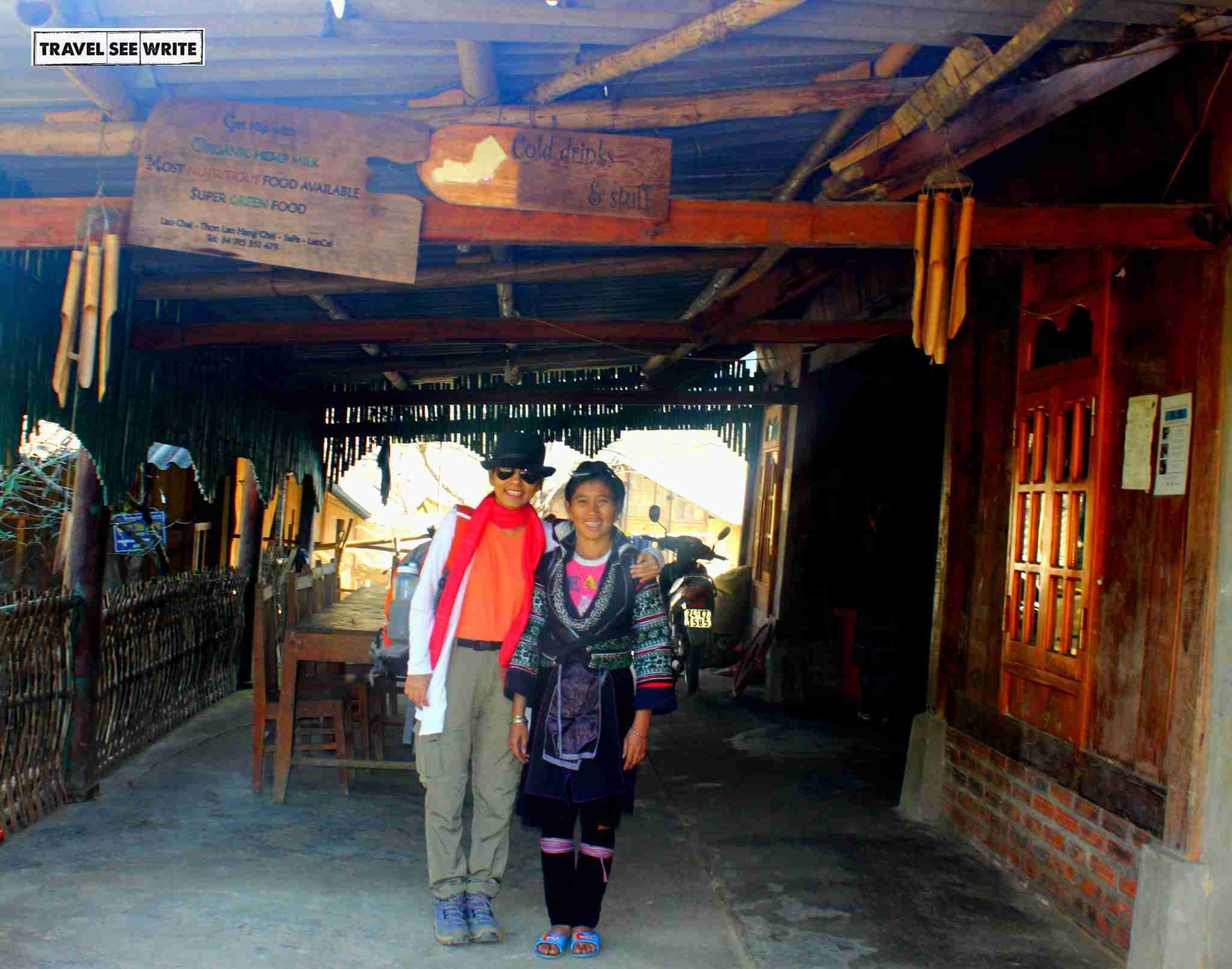
This part of my journey unraveled the untold story of Sapa, Vietnam that is unfortunately a painful side of Sapa that not many would know. As I stepped out of the homestay I was again drowned by the sea of local kids trying to sell their stuff. I asked Si why kids work when they should be studying at this age. She replied:
Kids do go to school but during tourist season most of them try to support their parents by having more feeding hands. Their education lasts till 9th class only because firstly after 9th class they have to go to Sapa Town instead of the village school traversing miles every day in a weather that remains misty for more than 162 days a year and secondly education becomes paid after 9th class. For a region where 70% of the population is below poverty line, paid education is a luxury which very few can enjoy.
This was heartbreaking but got me interested in knowing more about their lives. I probed Si further. I was taken aback when I learnt that school girl looking Si was actually married. She works as a Guide while her husband takes care of the house and animals at home. She is the main bread earner. In Sapa, most girls get married in the age of 14-18 years. By 16 they have their first child. Usually everyone has at least 3-4 children.
Marriage traditions are very interesting in Sapa. ‘Love Market’ or ‘Cho Tinh’ organized every Saturday at Plaza in the main Sapa town used to be a genuine way of finding a groom but now it’s turn into a staged drama to attract tourists and earn some quick bucks. Historically, on Saturday nights, members of the Red Dao tribe would make their way to Sapa’s main square where young girls would be singing, hidden away in the dark. If any boy liked that voice, he would find the young girl out, court her and follow it up with a romp to the forest for three days. If the match was on, these trips would usually end in marriage.
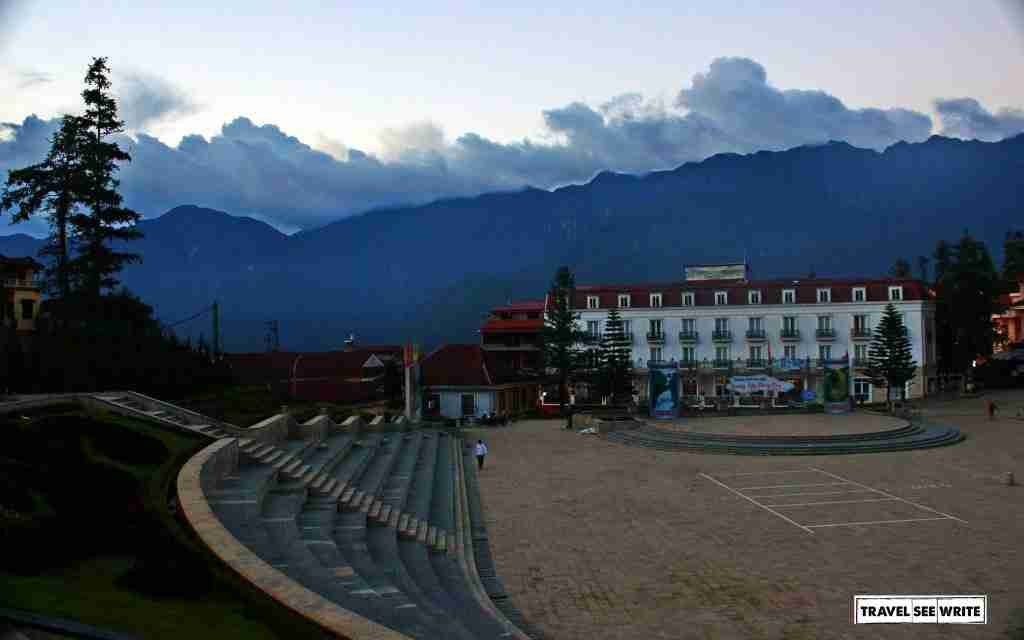
Sapa Plaza where Saturday ‘Love Market’ takes place, Vietnam
Another interesting tradition is Marriage by Kidnapping: a young man kidnaps a young woman with the help of his friends and family. He informs his new in-laws only two days after the kidnap. However, the kidnapping is symbolic only. The girl usually knows that she’ll be kidnapped as she is given a gift two days in advance by the boy suggesting his motive. If she doesn’t like the match she can always refuse it and return to her parents’ home with any family member that comes to save her. And if she is OK with the match then the boy’s family pay the Bride price either in cash or by livestock such as buffalo to support the bride’s family from whom an earning member is taken away.
Listening about such incredible traditions I was witnessing the local life first-hand. The local school was getting decked up for a function. Shops were selling everything under the sun – from succulent meat to rice to mounds of fresh herbs to fresh vegetables to exotic fruits to sugarcane to clothes to firewood to kerosene to what not. I had seen many women with three circular marks on their forehead. I asked Si why so many of them have these huge marks. Apparently they get these marks when they cure their headache in a traditional way – heating cardamom in a buffalo horn and pressing the hot horn onto one’s forehead. This cure is said to be highly effective but leaves behind a circular burn like mark on their forehead.
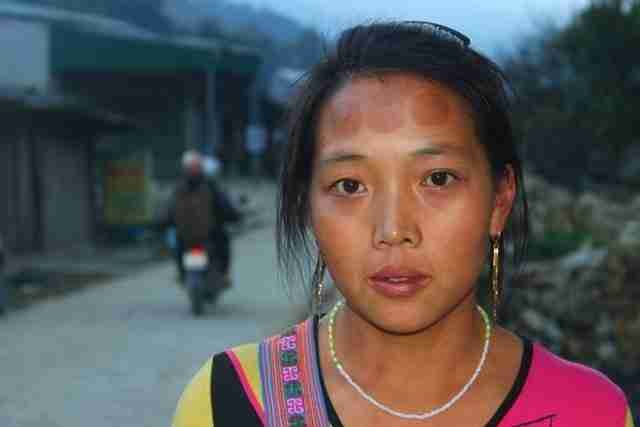
She had no clue about her annual household income. She like thousands of other Sapa Tribes live a hand-to-mouth life and their dinner menu depends on what they earn that day. Sapa’s difficult climate allows only a single rice crop per year and food shortages are a constant concern. They have never had enough money to think how much they earn per year. She had heard about Hanoi and Halong Bay but never had money to go to those places. She has three sisters and two brothers. From the age of 9 years she has been housekeeping as it is an unsaid rule in Sapa for young girls to take care of the house, young siblings and prepare lunch before their parents arrive from the fields. Every girl in Sapa does cloth weaving from childhood. They make their own clothes and jewelry.
While gossiping and strolling through the village I didn’t realise when the day turned into dusk. As we returned to our homestay our lovely host Ki was waiting for us with a lovely smile and a childlike exuberance. She was highly concerned that I didn’t have proper lunch so she cooked everything she could to make me feel at home. While she was cooking I decided to give her company around the open-pit fire (Indian chullah version). It is during that time she opened up to me.
She is 20 something widow left with three children. She works as a guide and offers her house as a homestay to take care of her children. As a guide she earns around 10-15 dollars per day and her homestay fetches her 10 dollars more. Food items are not stocked as she buys them on daily basis depending on how much she earns that day. She doesn’t want to remarry because she doesn’t have the means to take care of 10 kids – she’ll get to marry someone who would already be having 3-4 kids and would expect to have more kids with her.
In spite of all life struggles Ki is an optimist. She has good communication skills and is full of love and warmth. Staying at her place was the best experience I could have asked for. After an early dinner I slipped into dreamland realizing in one single day I had experienced all four seasons in Sapa: a cool spring morning, a warm and sunny summer afternoon, a cloudy autumn evening, and a cold winter night.
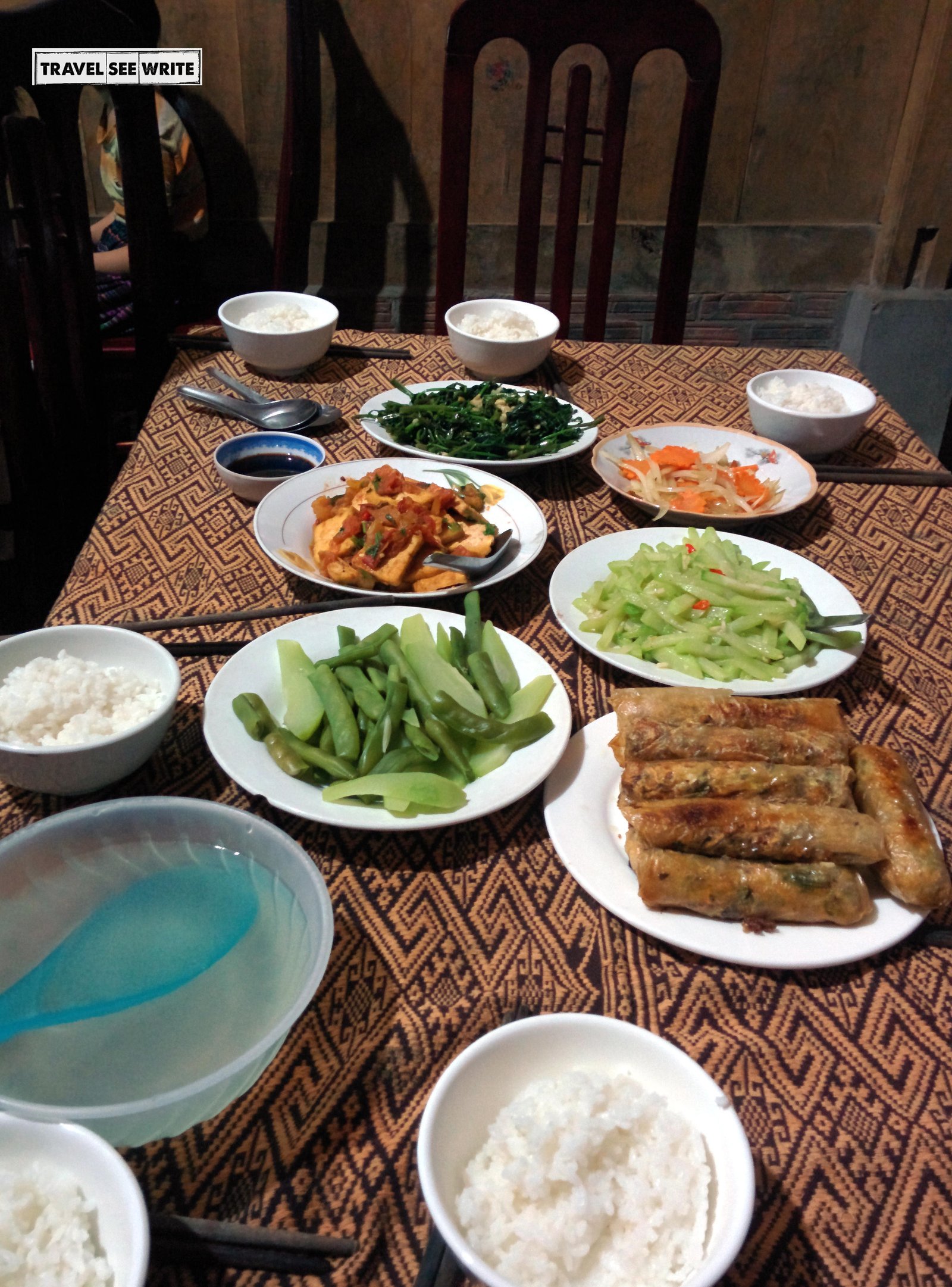
100% natural and organic Dinner, Sapa, Vietnam
Next day before I woke up Si had already arrived. After a bounty full of breakfast I bid adieu to my wonderful host with a promise to return someday. We started our 3 hour trek through villages, streams, rivers, bamboo forests and muddy pathways. Soaring mountains and deep valleys dwarfed the bamboo villages, dirt roads and terraced rice fields. I was enjoying the view more today. Perhaps I was no more a tourist. I understood the locals a bit more today. I no more got irritated by their pesky behavior.
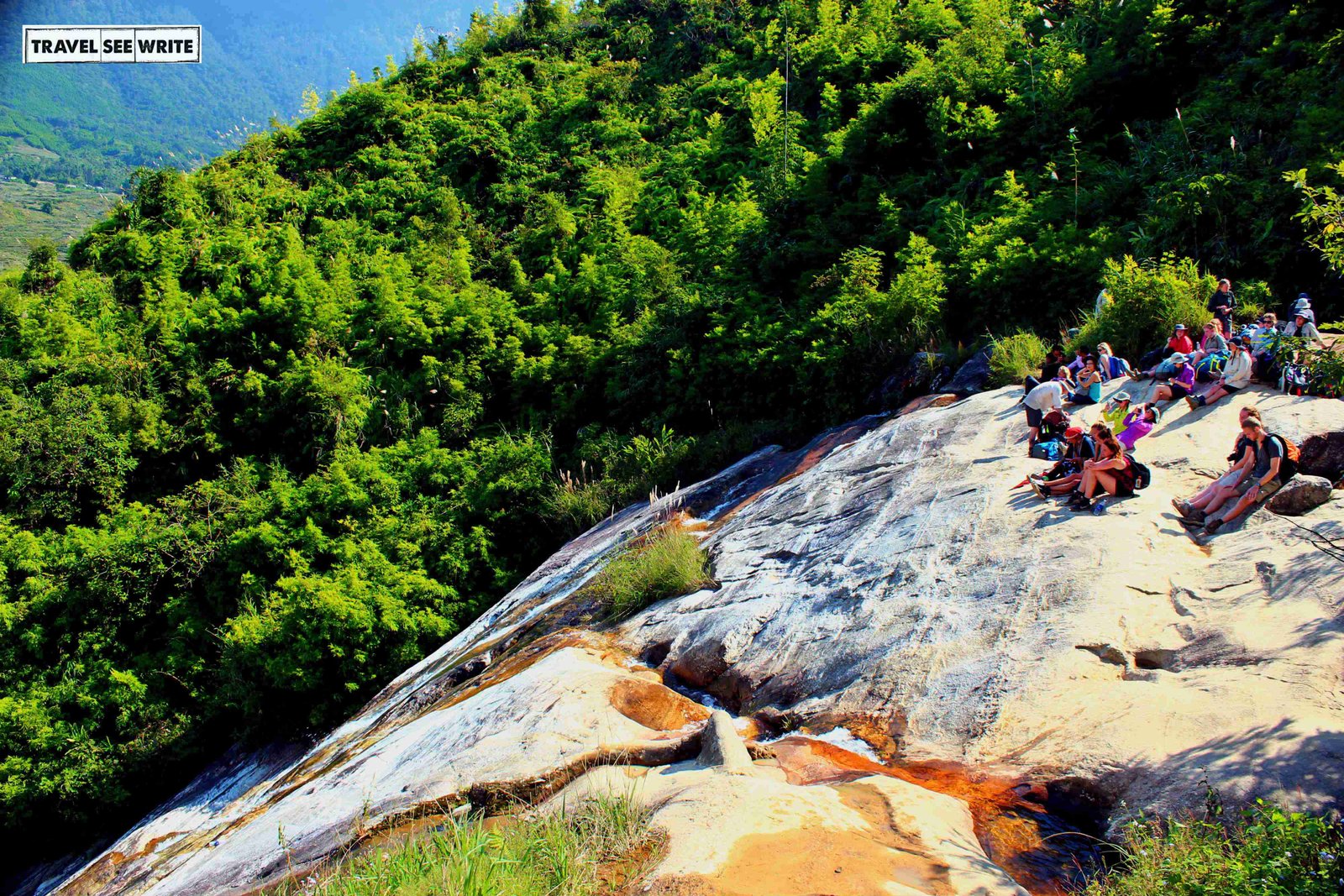
The soaring mountains of Northern Vietnam have long preserved the unique cultures of ethnic hill tribes but today this strength has become their weakness. While the rest of the Vietnam has started enjoying the benefit of globalisation, Sapa has remained the poor cousin being marginalized and forgotten. Although in the last 10 years Sapa has become a darling of Tourists arriving in Vietnam but the local tribes have hardly benefited from this travel boom. It is the rich tour operators from Hanoi and Ho Chin Minh who have gained.
Time will only tell if these tribes will persevere or, like the mountains, disappear into the thin air. I really hope that someday the effervescent smiles of these beautiful people will emanate from a happy prosperous life and not a life full of poverty, struggles and compromises. Till that day all I can do is – HOPE. Also, I really hope that you like my honest attempt to document the untold story of Sapa, Vietnam. Do let me know what you think in the comments section below.
PICTURE GALLERY THAT BRINGS TO LIFE THE UNTOLD STORY OF SAPA, VIETNAM
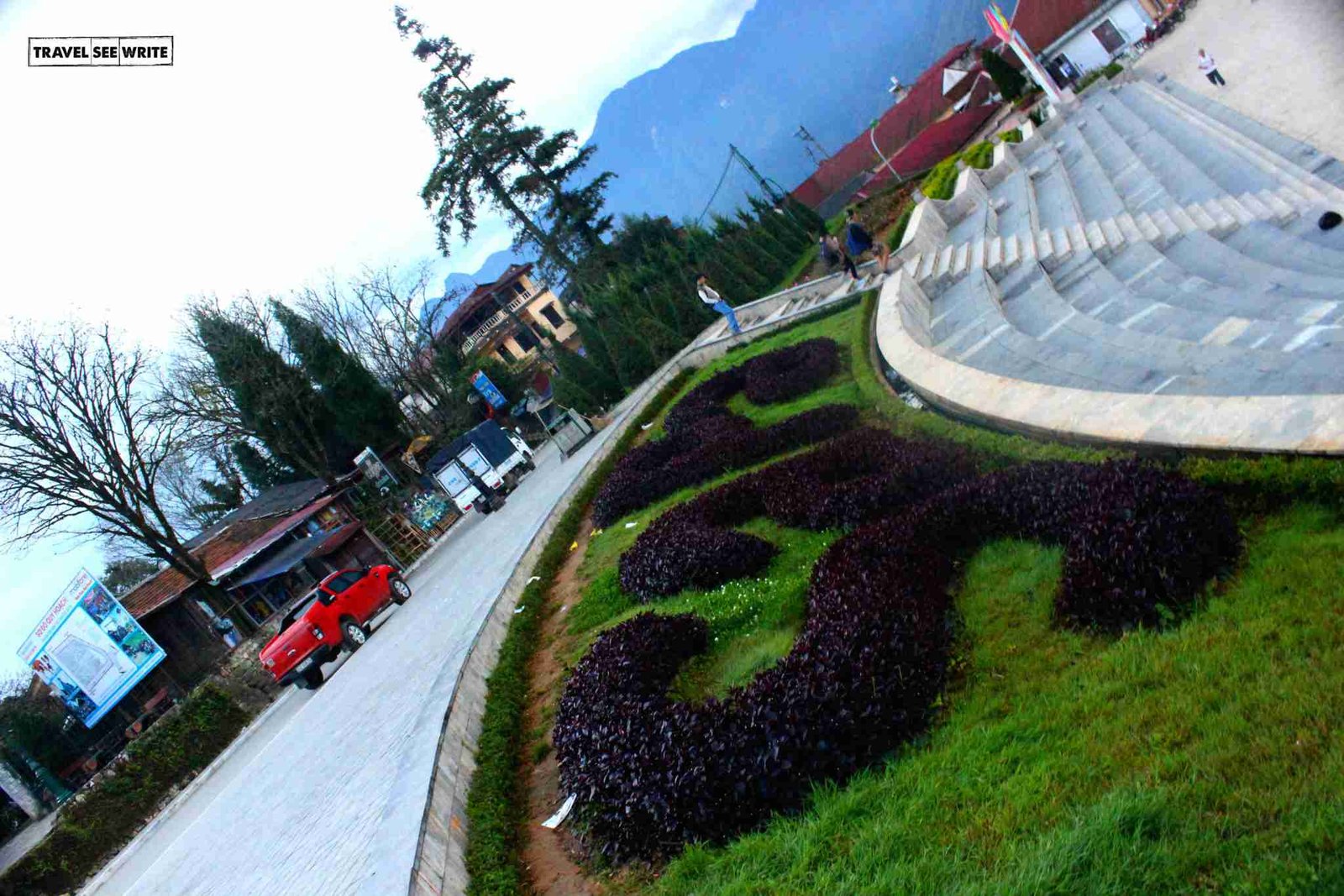
Sapa town centre facing the plaza and marketplace with Himalayan Range in the background, Vietnam
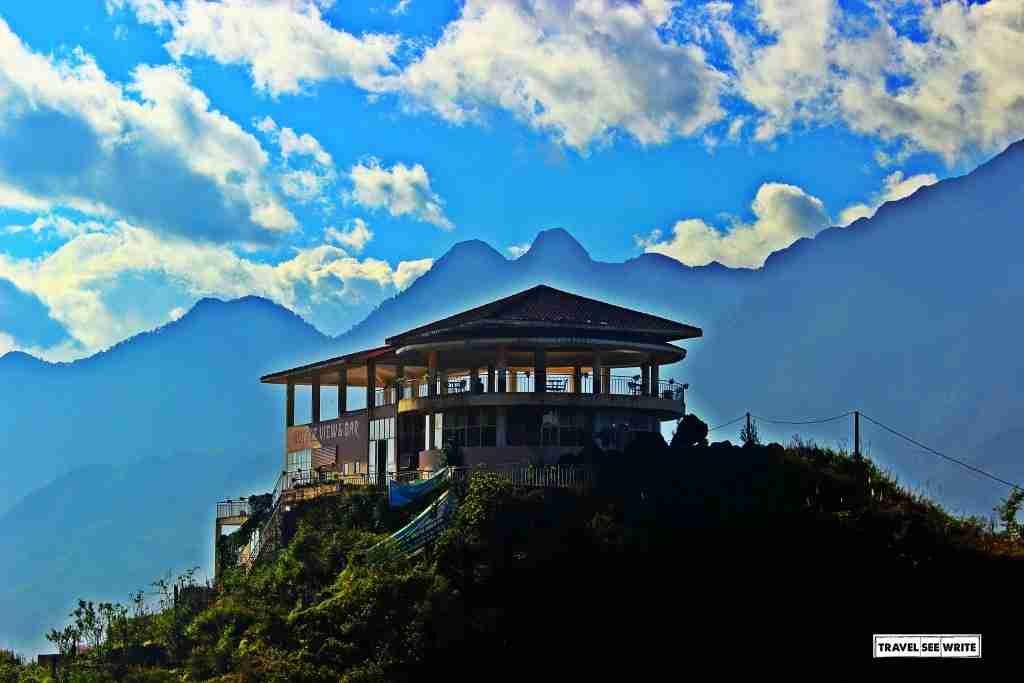
Coffee View Bar, Trek start point, Sapa, Vietnam
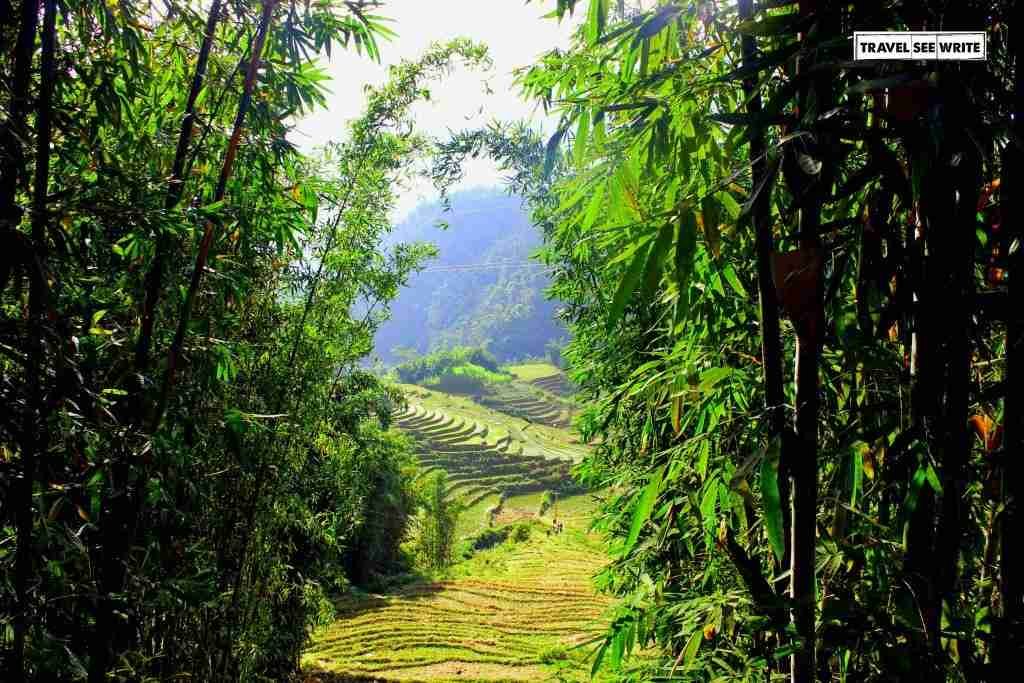
Valley View from Bamboo Forest, Vietnam
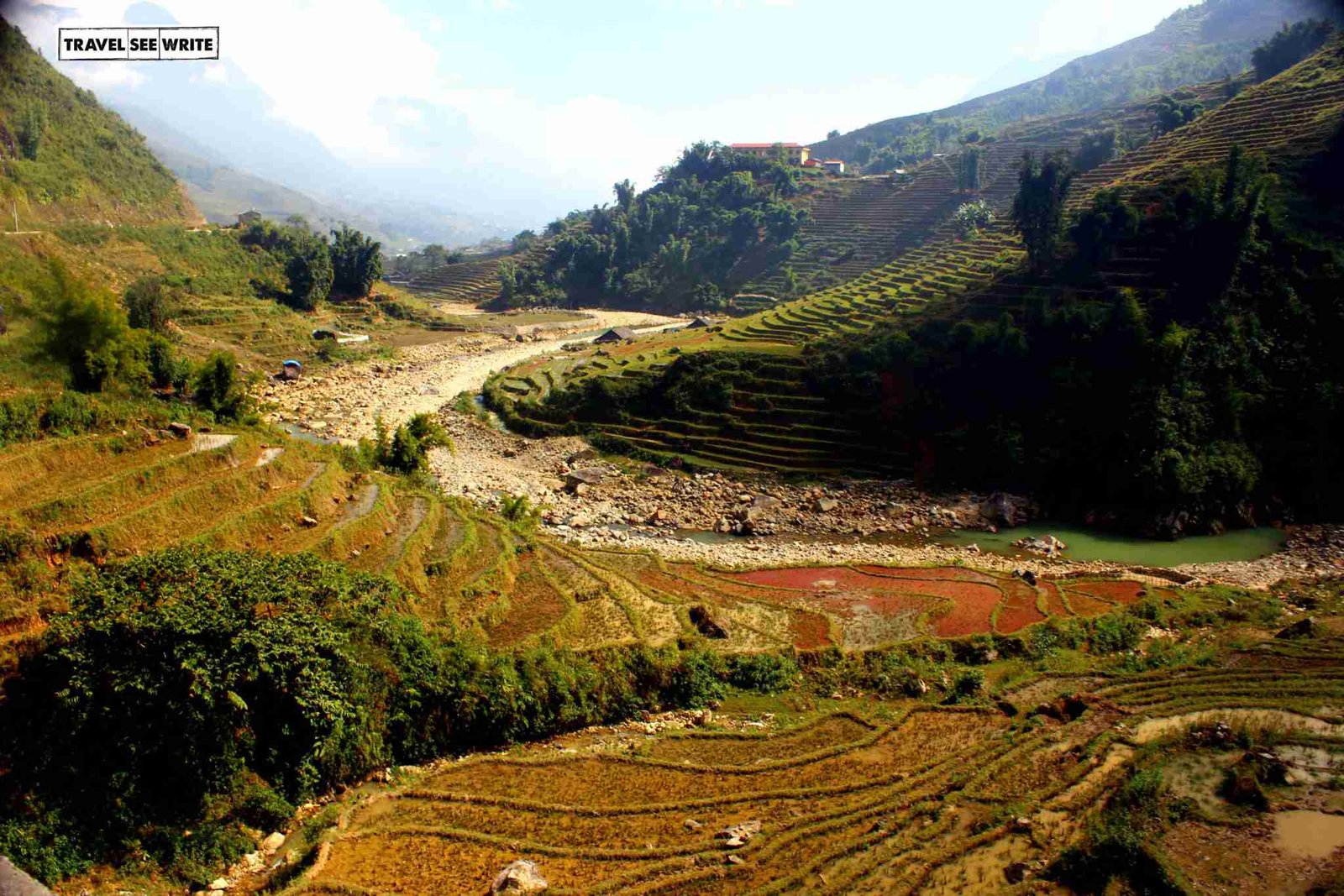
Terrace Ricefields, Sapa, Vietnam

River, Sapa Trekking, Vietnam

Waterfall, Sapa Trekking, Vietnam
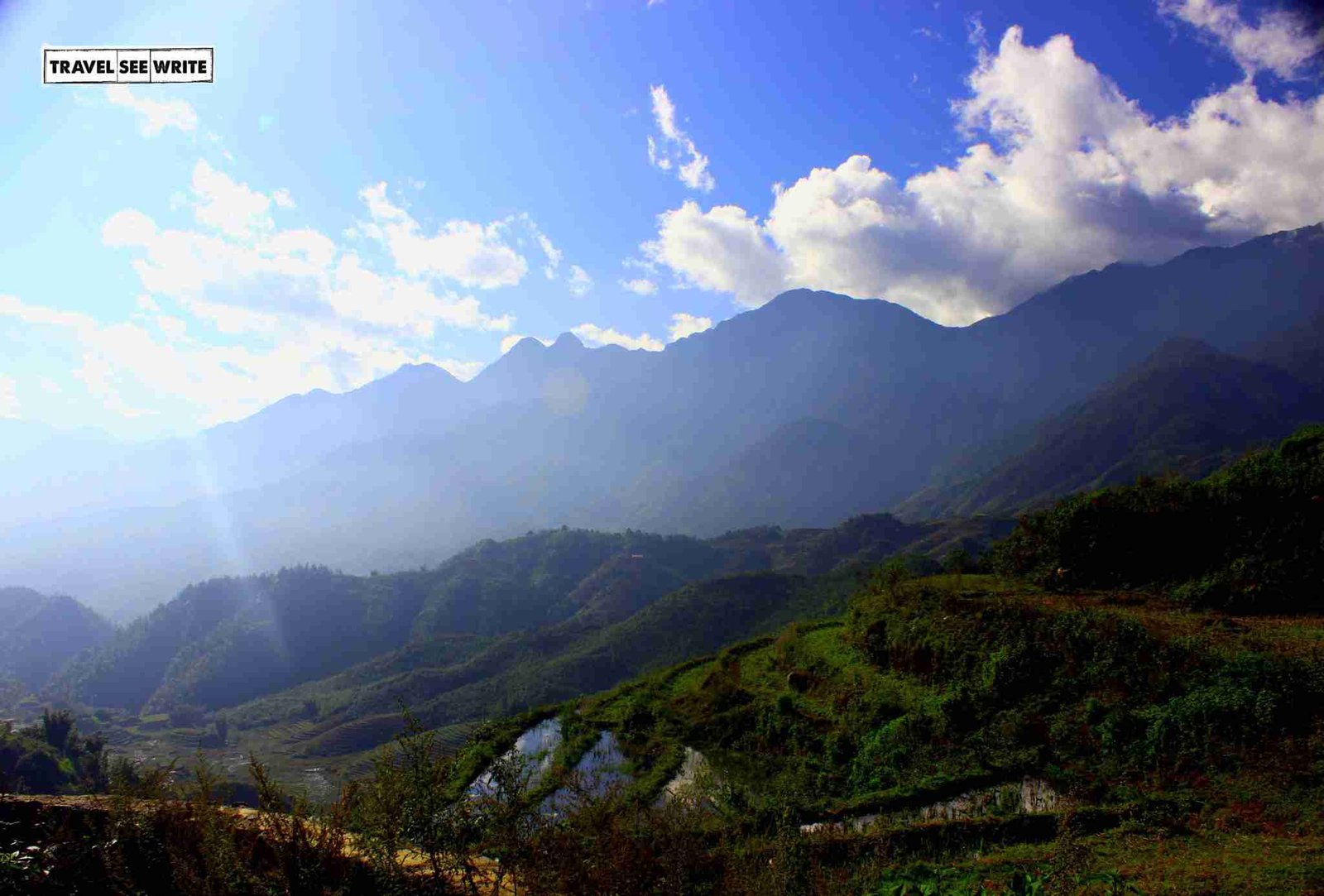
Sapa Valley View, Vietnam
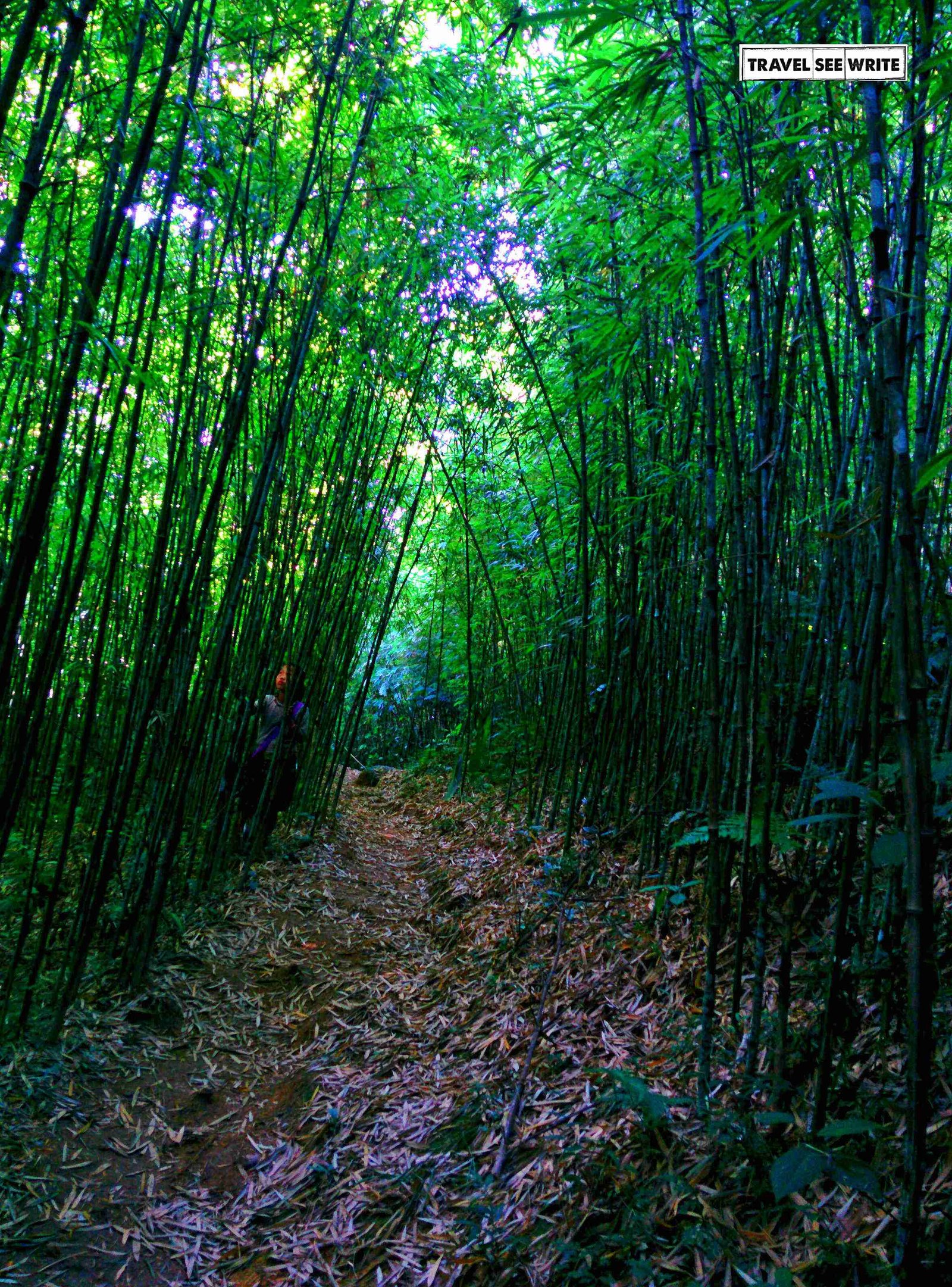
Trekking through Bamboo Forest, Sapa, Vietnam
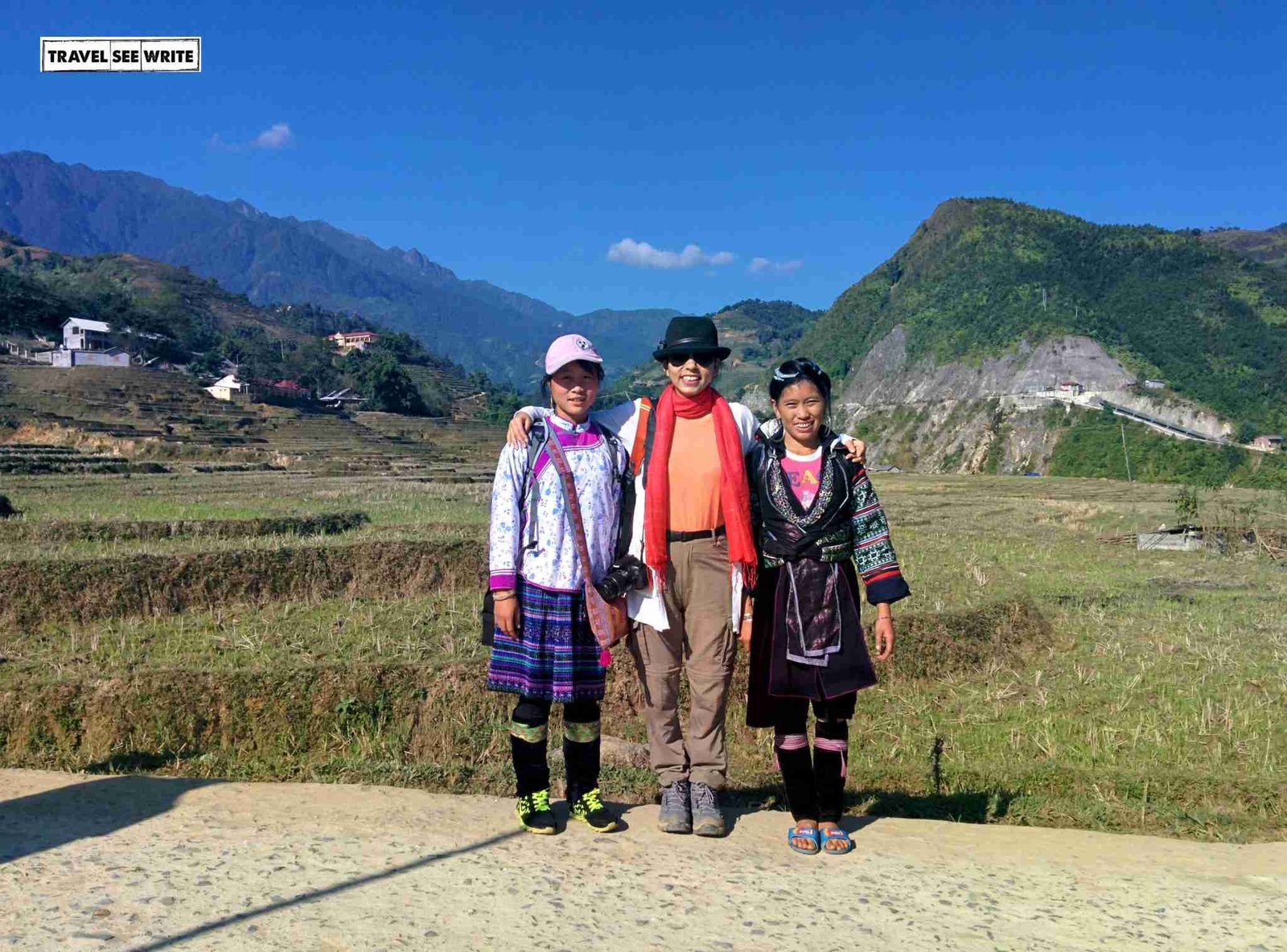
My trek Guide and Homestay Host, Lao Chai Village, Sapa, Vietnam
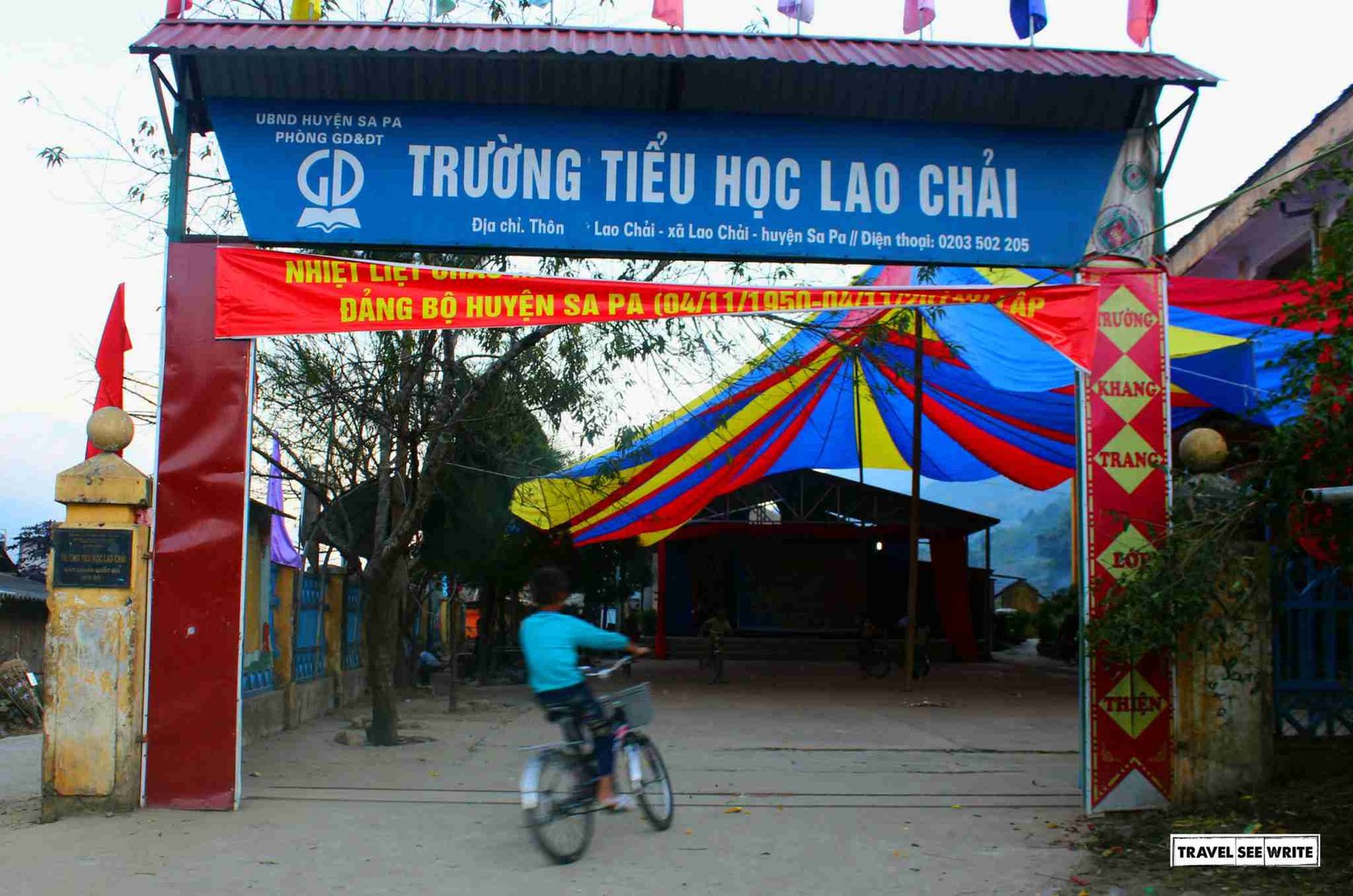
Lao Chai School, Sapa, Vietnam
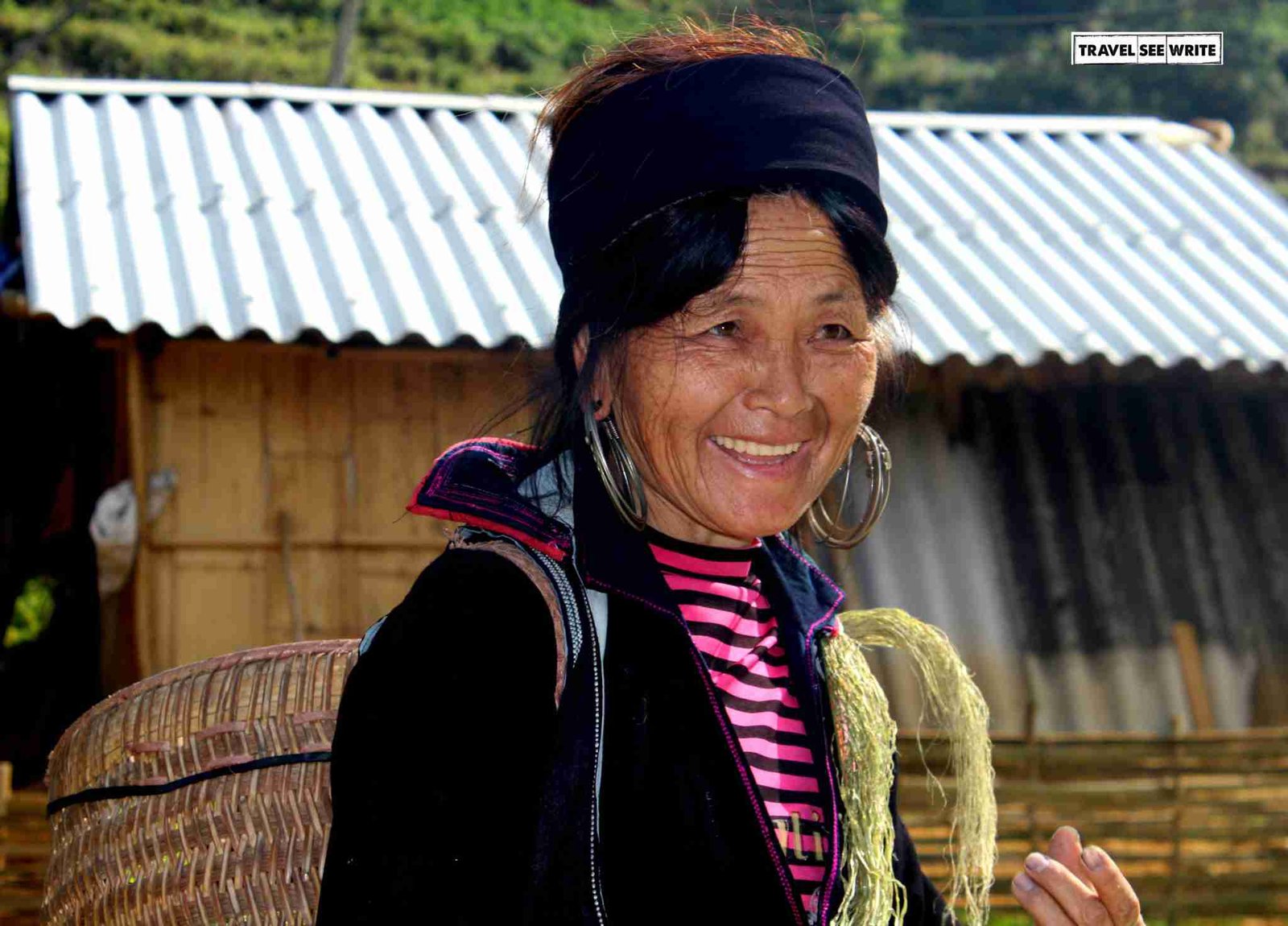
Hmong Tribe Woman, Sapa, Vietnam

Minority Crafts Centre, Sapa, Vietnam

Local Souvenier Shop, Lao Chai, Sapa, Vietnam
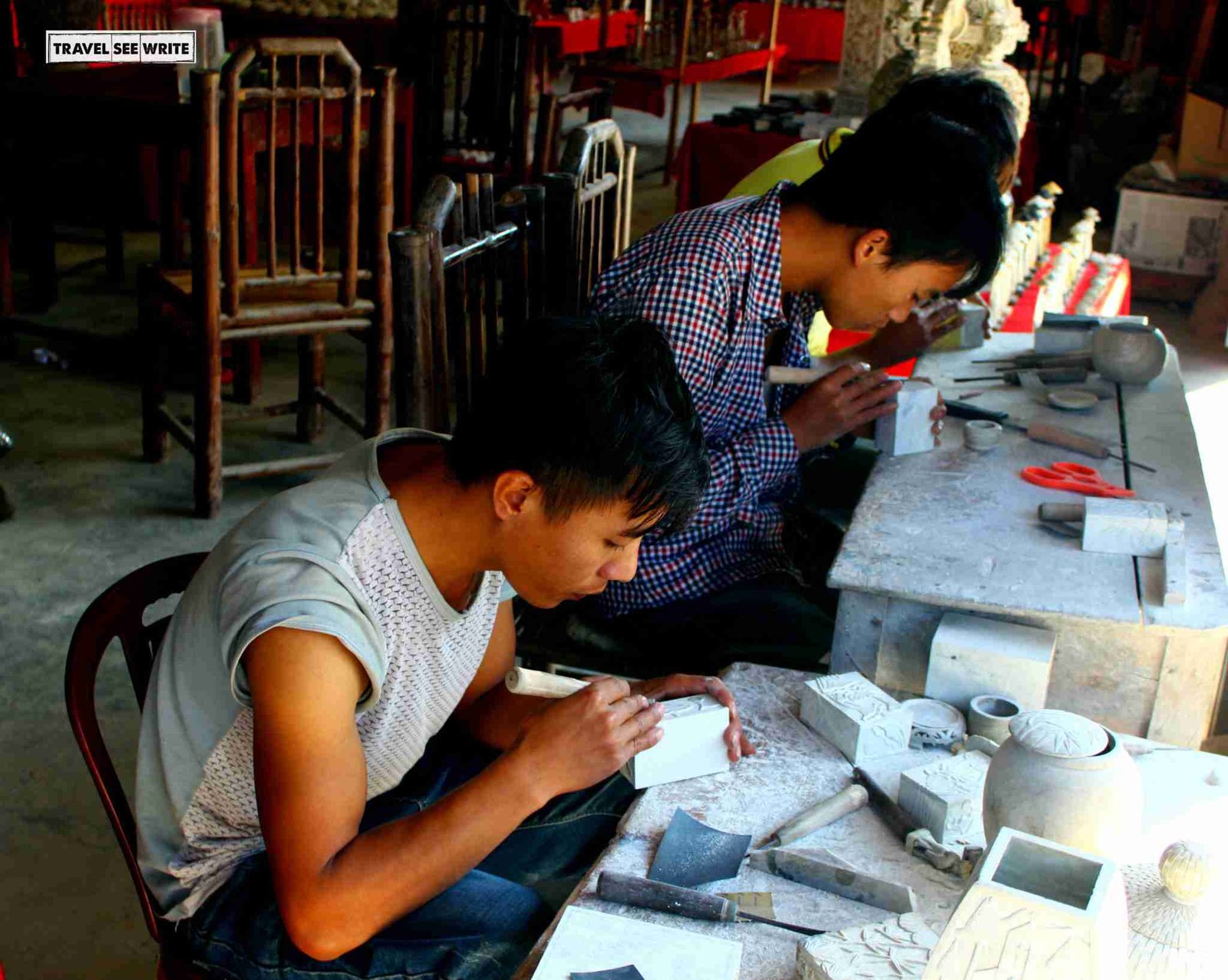
Tribal boys working, Sapa, Vietnam
PS: Here is my first attempt to video document my untold story of Sapa, Vietnam.
Australia might be the smallest continent but it is one of the most loved continent. I must confess among all the countries I have been too I have developed a soft spot for Australia. Not that I have not been to bigger or better countries. But Australia has something really charming about it which makes everyone fall for it. No wonder everyone chooses it over any other country be it the laid-backers, backpackers, luxury travelers, nature lovers, party animals, sports aficionados, romantics, students, families or just anyone. True, there’s nothing like Australia.
If you want to express your love to the special someone then there’s no better place than Great Ocean Road. No wonder some of the most romantic songs have been shot here. 12 Apostle is a sight which stays with you long after you have left it.

12 Apostles, Great Ocean Road, Victoria, Australia
After a long day, there’s no better place to hang out than Darling Harbour. Great location. Lip smacking food. Good music. All you need is a good company. And if you don’t have one don’t worry you’ll easily find it here. If you don’t want to party then you can always watch a movie at the world’s biggest iMAX Screen

Darling Harbour, Sydney, Australia
For a cricket aficionado it can’t get bigger than this. Watching a Boxing Day Match at the Melbourne Cricket Ground is every cricket fan’s dream. And the action is not just within the ground but in the stands and lawns too. And I would recommend you to stay at nearby Serviced Apartments Melbourne so that you don’t miss out on morning sessions.

Melbourne Cricket Ground, Melbourne, Australia
Related: If you are planning to visit Melbourne soon then you must check out Melbourne on Budget by Claires Footsteps.
You will never complain about public transport when in Australia. All you need is one card and all your transportation worries will be sorted. If you are the one who can’t keep quiet then please make sure you don’t sit in the silent compartment of the train.

The Public Transport in Melbourne, Australia
The biggest new year party happens at Sydney Harbour. And you know what. The invitation is open to all and is absolutely free. All you have to do is reach Opera House before 12 noon as the gates close after that. And don’t forget to bring your food supplies, umbrella and sunscreen lotion.

The Famous Sydney Harbour New Year’s Eve Fireworks, Sydney, Australia
Australia is the only country where more animals are found than humans, which makes life more adorable here. A country where animals live in their natural habitat and not so much in caged pigeon holes. In fact there are places which have been vacated for animals from humans. How thoughtful is that!

Koala, New South Wales, Australia
Australian beaches are considered to be amongst the best surf beaches in the world. No wonder you’ll see toddlers learning to surf before they even learn to speak. Australia’s surf beaches are born from the Pacific Ocean in the east, the Indian Ocean in the west and the Southern Ocean in the south .

Manly Beach, Sydney, Australia
As much as I love Australia’s coastline and cities, I could not escape falling in love with its National parks. When in Australia do explore the Great Walks in some of the country’s best-known national parks – Kakadu, Uluru-Kata Tjuta National Park or the Great Sandy National Park, home to Fraser Island. Having an active lifestyle is perhaps the reason why most Australians are fit in spite of guzzling tons of beer.

Blue Mountains, New South Wales, Australia
Every night at sunset you can see the penguins waddling up the beach after a day’s fishing. With an estimated 32,000 little penguins living on Phillip Island this is possibly the largest known colony of little penguins. Important things to consider before you go to the Philip Island – ensure pindrop silence, don’t use your camera flashlight and carry woolen clothes even in summers as it gets too cold and windy at night.

Philip Island, Victoria, Australia
This is very special and personal reason. Australia, particularly Melbourne, is super special to me because it is here where the current World No.1 Tennis player, Novak Djokovic, found his midas touch and ever since he’s been setting higher benchmarks. Also, the tournament is chronologically the first of the four Grand Slam tennis events of the year

Melbourne Park, Australian Open, Melbourne, Australia
These are just a few of the reasons why Australia tops my list. I am sure you’ll have much more to share. What is your reason to fall in love with Australia?
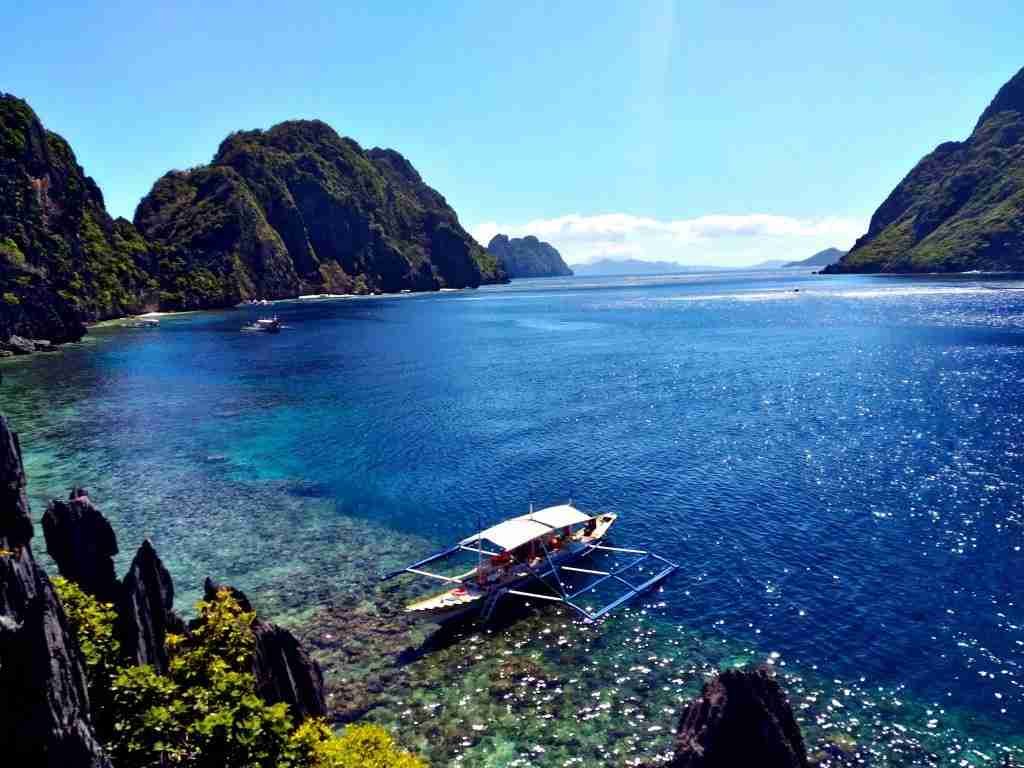
El Nido, world’s most beautiful island picture clicked by Asus Zenfone 2 Laser
The dirty little secret about travel writing is that something has to go wrong. And God forbid if it is do with your virtual eyes then you would never forgive yourself. Being a Travel blogger I believe prevention is better than cure so I carry not just one camera but 2-3 cameras 🙂
Recently I got a chance to use Asus Zenfone 2 Laser during my most awaited year-end trip to the world’s most beautiful islands – El Nido and Boracay. I am a purist so I am very skeptical about mobile phone cameras. For me, the most important asset is my DSLR camera but sometimes it is not feasible to carry it everywhere. At such times my mobile phone camera comes handy. I am a Google Nexus and Apple loyalist so loving Asus Zenfone 2 Laser didn’t come easy.
Now let me stop talking about myself and share my Asus Zenfone experience with you:
Here are the five reasons for my new found love:
Selfie Taken by Asus Zenfone 2 Laser under a cloudy sky
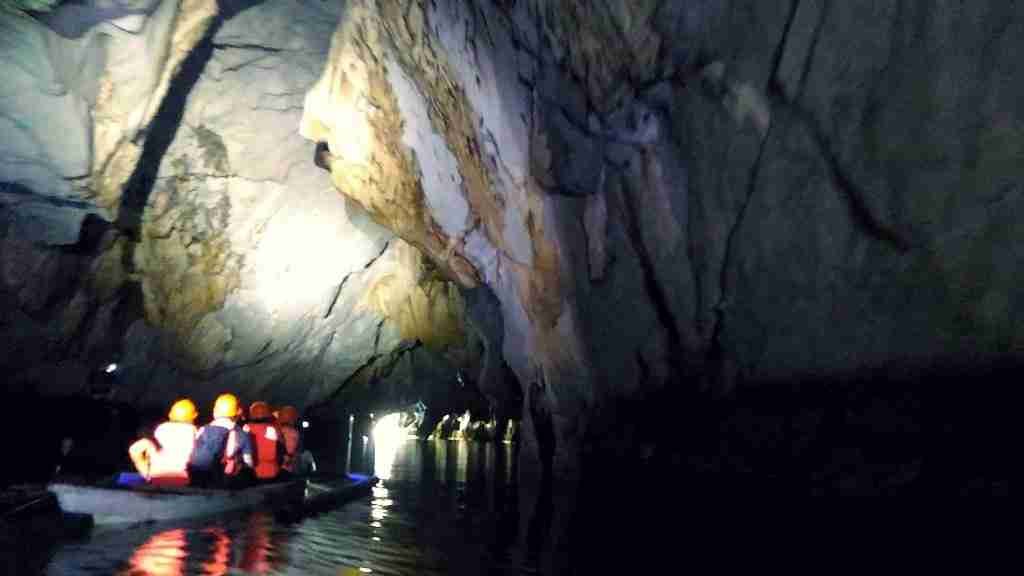
Picture taken in dark at World’s largest underground river with Asus Zenfone 2 Laser

Photography options of Asus Zenfone 2 Laser

Panoramic shot taken by Asus Zenfone 2 Laser (please enlarge the picture and see)
Super Efficient Multitasking Asus Zenfone 2 Laser Phone

Stylish ergonomic design of Asus Zenfone 2 Laser

3000mAh battery of Asus Zenfone 2 Laser
Lastly, all I can say is that I am very happy with Asus Zenphone 2 Laser. The size is perfect. The camera is amazing. You can do so much more with this phone. I am still exploring more amazing features of this phone and I am sure I will have a lot to say later. If you are looking to buy a new phone I recommend to check it out.
HAVE A LOOK AT SOME MORE PICTURES



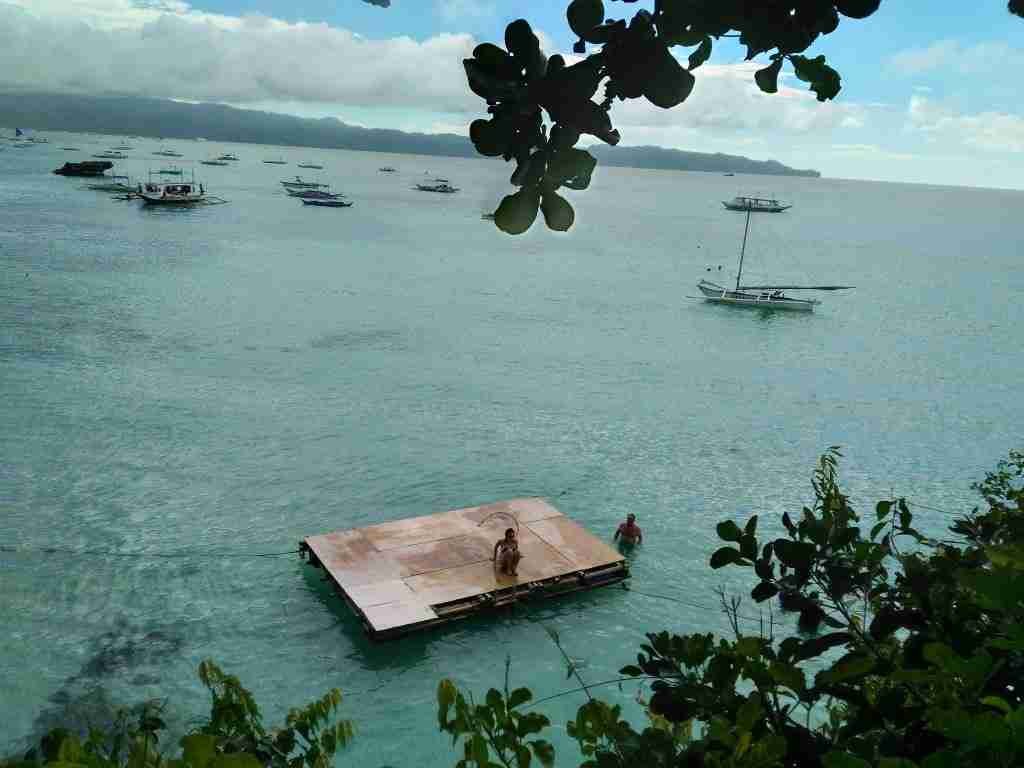


9-year-old terrified Kim Phuc is running naked along the road after tearing off her burning clothes and the American soldiers are following her.
It’s been 44 years since that fateful Vietnamese aerial napalm attack happened but that picture still remains one of the most iconic picture of Vietnam War. I wasn’t even born when that picture was taken but that became my first memory of Vietnam. A lot has changed since then. Vietnam is no more war trodden. It has moved on and so has the world. Now Vietnam is one of the most sought after destination in the world for all kinds of travelers. And it deserves all the attention. If you too are planning to visit Vietnam and have only eight days or less in hand then this Vietnam itinerary is perfect for you:

Street Food, Hanoi, Vietnam
Known as the “Paris of Asia”, Hanoi is a melting pot of the historic charm and the expansion of modern realms. Start your day by taking a full day or half day tour with Hanoi Kids, a student-run organisation offering free city tours in Hanoi. You can choose destinations as per your liking – Ho Chi Minh Complex, Temple of Literature, Old Quarter, Long Bien Bridge, West lake area, Hoa Lo prison, and Museum of Ethnology and Bat Trang pottery village. End your day by gorging on the amazing street food. And don’t forget to have the world’s cheapest draft beer – ‘bia hoi’. Once you are done sightseeing you can indulge in some retail therapy. Vietnam is a paradise for thrift shoppers.

Sunset at Halong Bay, Vietnam
After two days of enjoying the charm of Hanoi, visit the site where James Bond said ‘tomorrow never dies’. Sailing in the calm emerald sea of Halong Bay dotted with thousands of spiky limestone pinnacles is an indescribable experience. The sunsets are to die for. There is no better way to experience the bay but on Halong Bay Cruises. I recommend taking 3D2N Luxury Pelican Cruise or Imperial Classic Cruise. The food and the services on the cruise are top notch. The route taken is not too touristy and you get to explore lot of activities like caving, kayaking, swimming, visiting the pearl farm, fishing and floating villages, taking Vietnamese cooking class among other things. However, if you are tight on budget and time then you can opt for a 2D1N cruise. But don’t take a day only trip. That’s plain waste of money.
For more details check: Practical Guidebook for your first Vietnam visit
Terrace Farms of Sapa, Vietnam
Hikers and adventure seekers cannot afford to miss this beautiful hill station, Sapa, which lies near the Chinese border in northwestern Vietnam, known as “the Tonkinese Alps”. It is famous both for its unspoiled rugged scenery and for its rich cultural diversity. Trekking is an ideal way to explore its enchanting beauty. If you have time in hand then you can see Tha Bac (Silver) waterfall, Ham Rong Mountain, Rattan Bridge, Bamboo Forest and Ta Phin Cave among others. To reach Sapa, you can either take a 5 hour private sleeper bus leaving at night or early morning from any of the travel agents in Hanoi or take a 9 hour overnight train from Hanoi to Lao Chai, and then 45 minutes more from Lao Chai City by bus.
After filling your lungs with the fresh oxygen of mountains and stomach with Vietnamese cuisine return to Hanoi to fly back to your destination.
Realted: The Untold story of Sapa, Vietnam

Halong Bay, Vietnam
October – November or February-April. Do keep a tab on international flights sales.
get the approval letter beforehand to procure your Visa on arrival at the Airport
Cotton comfortable clothes with one light jacket and sneakers. Pack light as Vietnam is a shopping heaven. You will end up buying lot of stuff
I prefer staying at old quarters. Book through websites like booking.com, agoda.com or a reliable travel agent
Be careful with the currency. 15000 Vietnamese Dong note looks similar to 50,000 Vietnamese Dong. Also, US dollars are accepted almost everywhere
Don’t ask for a price from hawkers until you want to buy it. Asking price is equal to buying. Bargain. Bargain. Bargain. I cannot stress enough
Be careful with the street food. Eat at places that have a huge number of guests to ensure fresh food quality. Never drink tap water. Always buy bottled water
The normal way of addressing tourists is, “My lady” for women and “Sir/Mr.” for men. Lying is a part of the Vietnamese culture. Get used to it. The first answer you will hear will always be NO until it has some benefit for the locals. Never raise your voice.
Not everyone speaks English. It’s best to learn few local language words like xin chao (Hello), phai yes), khong (no), toi muon mot ve di (I would like a tiket to)
Avoid taxi frauds. Use reputable cab companies like Hanoi Taxi, Taxi CP and Mai Linh Taxi. Buses and Scooter taxis are a cheaper way to explore Hanoi. For out of station use buses and trains. Tickets are fairly easy to get
Be careful of bikes when crossing the streets as maximum accidents are caused by motorbikes. Lately, Vietnam has earned a bad reputation for travel scams. Always book through reputed agencies only. Read reviews. Never pay 100% advance
I hope this ‘8 days in Vietnam: Your complete Vietnam itinerary!’ is useful to you and it inspires you to explore Vietnam.
Looking forward to hearing from you.

The Pride of Sabah – The Mount Kinabalu is the highest peak in South East Asia
Sometimes the best adventures in life are unplanned. Multiple experiences have reinforced this belief in me and the Kota Kinabalu experience was no exception. Thanks to a busy work life, I had no time to read about Kota Kinabalu and also plan for it. Additionally, I wasn’t too kicked about this trip because of the hangover of my splendid Vietnam trip. I was mentally reliving my Vietnam moments. Also, to tell you the truth I was kind of forced into booking this trip because a friend desperately wanted to travel out of Philippines and wanted me to accompany her but she chickened out at the last moment and this ended up becoming yet another solo trip.
I had two options. Either to cancel my trip or venture into the unexplored. I chose the latter, like I always do! A few adjustments were made- a luxury hotel was swapped for a hostel, budget was doubled and more importantly, I became the pilot rather than a mere co-passenger.
It is natural for you to wonder when I say that Kota Kinabalu is the best place for unplanned travel. It is not without reasons and here are three of them:
Kota Kinabalu is well connected with frequent low cost flights (at attractive prices) from all major cities in South East Asia. You can reach Kota Kinabalu in 2-2.5 hrs from most of them and within 15 minutes, the city centre. Most hotspots in the city are within walking distance and the distant ones can be covered with the pretty good public transport. You can either choose a city bus or a minivan or a taxi to get around. For traveling out of KK there are long distance buses or taxis available quite easily.

Public Transport, Kota Kinabalu
Kota Kinabalu is a ‘Nature Resort City’ located on the tropical island of Borneo, Malaysia, which possesses the natural treasure of unique ethnic cultures, endearing hospitality of friendly and English speaking locals, sumptuous cuisine from around the world, breathtaking marine and exotic preservations. And if you go a little further from KK you’ll find incredible landscape variety.
It is a living Biodiversity island comprising of a complex ecosystem with mangroves stretching till the eyes can see, tropical rain-forests with great trails, majestic Mount Kinabalu with crisp air and marvelous view, marshlands with astounding natural beauty, unending rivers with abundant wildlife, pristine long sandy beaches, paradise islands and virgin coral reefs among other natural wonders. I’ve never come across such rich variety!
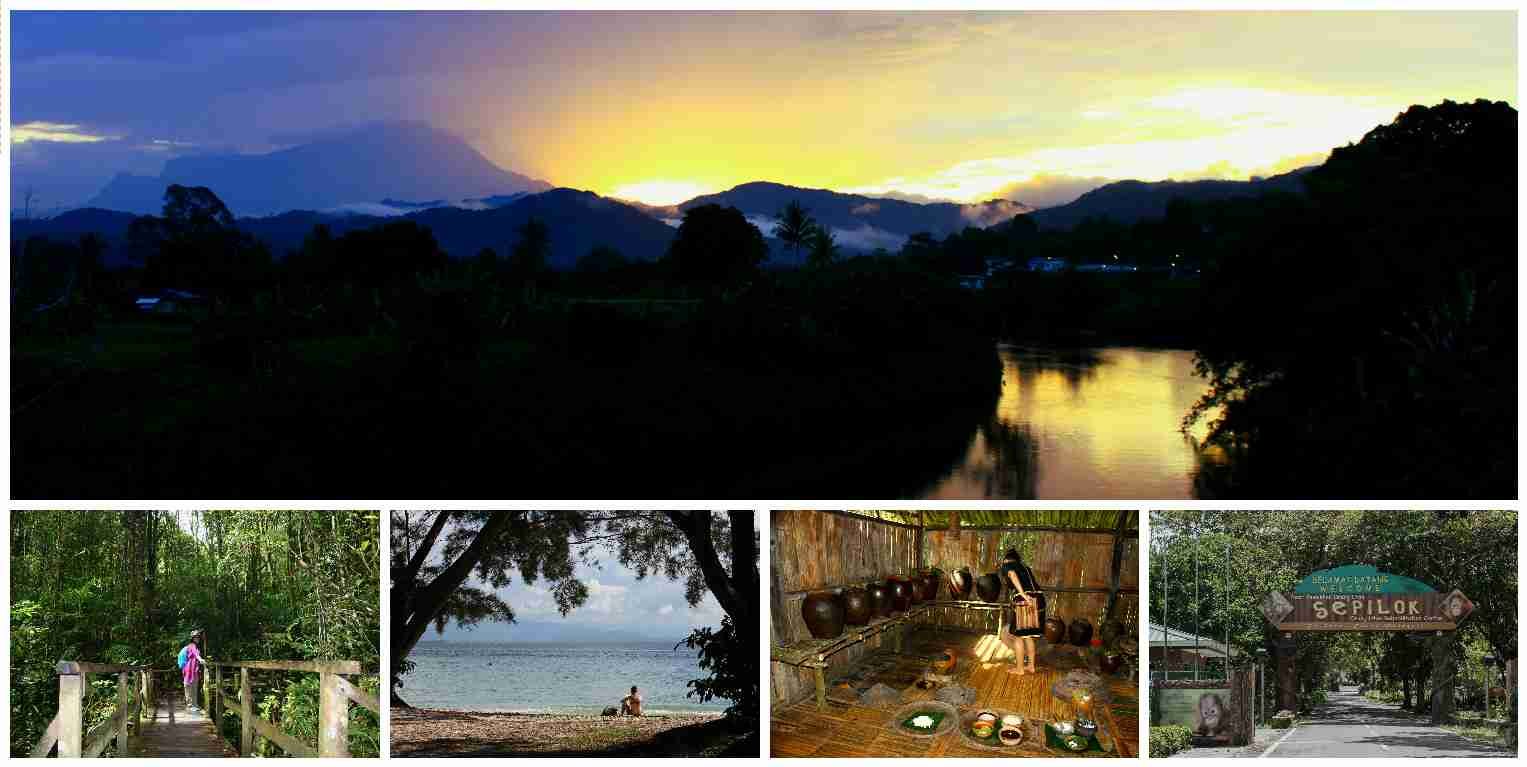
Kota Kinabalu offers wide variety of experiences to choose from
Kota Kinabalu is one place which caters to all kind of travelers. Basis your pocket you can choose your accommodation and tours. While the best place to stay at Kota Kinabalu is Shangri-la’ Rasa Ria Resort you can always have your pick from a wide variety of hotels, Hostels, Motels, B&B or house apartments to suit any budget.

Accommodation options for every budget at Kota Kinabalu
I hope the above mentioned reasons have convinced you to come on board with me to virtually relive those beautiful moments again. I am breaking this adventure into three parts.
Here is the first installment:
On 27th Nov, 2015 I boarded the as usual delayed Cebu Pacific flight to reach Kota Kinabalu. Even at wee hours, the Masada Backpacker hostel staff welcomed me with great smile and open arms. The hostel was neat and clean with travelers from across the world. The breakfast was not bad. I inquired about things to do around Kota Kinabalu. The friendly hostel staff suggested lot of DIY trips and group tours. I was still kind of exhausted from not having slept last night so I decided to opt for a seemingly comfortable fully planned half day tour to Mari Mari Cultural Village. At sharp 1.30 pm a van arrived at the hostel to pick me up.
Now let me tell you why I chose Mari Mari cultural village over a wildlife river cruise or Sepilok Orang Utan Centaury or North Borneo Railway tour.
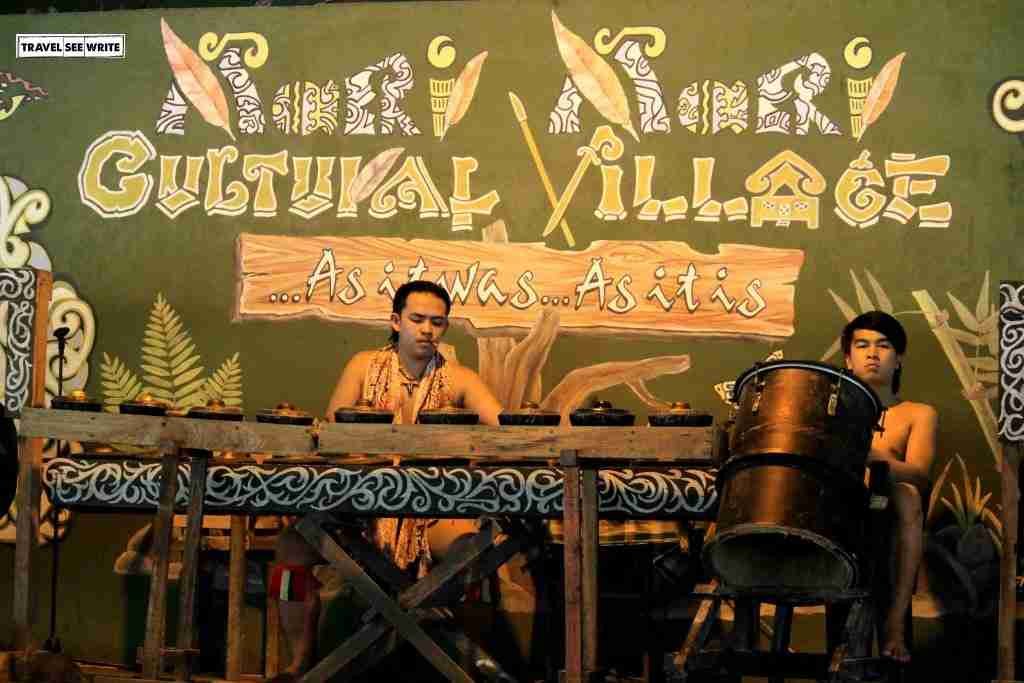
Mari Mari Cultural Village is located deep in the countryside away from the hustle bustle of the Kota Kinabalu city. The village operates as a museum that preserves Borneo ethnic culture. It aims to share the knowledge, history, culture, and tradition of Borneo with the world at large so that it is not forgotten. Thanks to this tour I got an opportunity to see and experience the culture and lifestyle of how the indigenous ethnic groups of Borneo used to live in the olden days when they were oblivious to electricity and other modern day comforts.
The village features 5 different ethnic tribes in one village. They are the rice farmer Kadazan – Dusun, the longhouse resident Rungus, the hunters and fisherman Lundayeh, the cowboy and sea gypsy Bajau, and the famously feared headhunting tribe Murut. It was the headhunting tribe that caught my attention and instead of opting for a scenic sea or land tour I opted for this cultural tour. And I am so glad I took it. It was very insightful tour and got to taste some great local freshly made food and wine. However, the icing on the cake was at the end – the Bamboo Musical Orchestra and ethnic Dance performance. Even today when I close my eyes and think about that day I can still hear the musical notes playing in my ears. Yes, it was that magnificent.

Mari Mari Village Tribal way of cooking, Kota Kinabalu
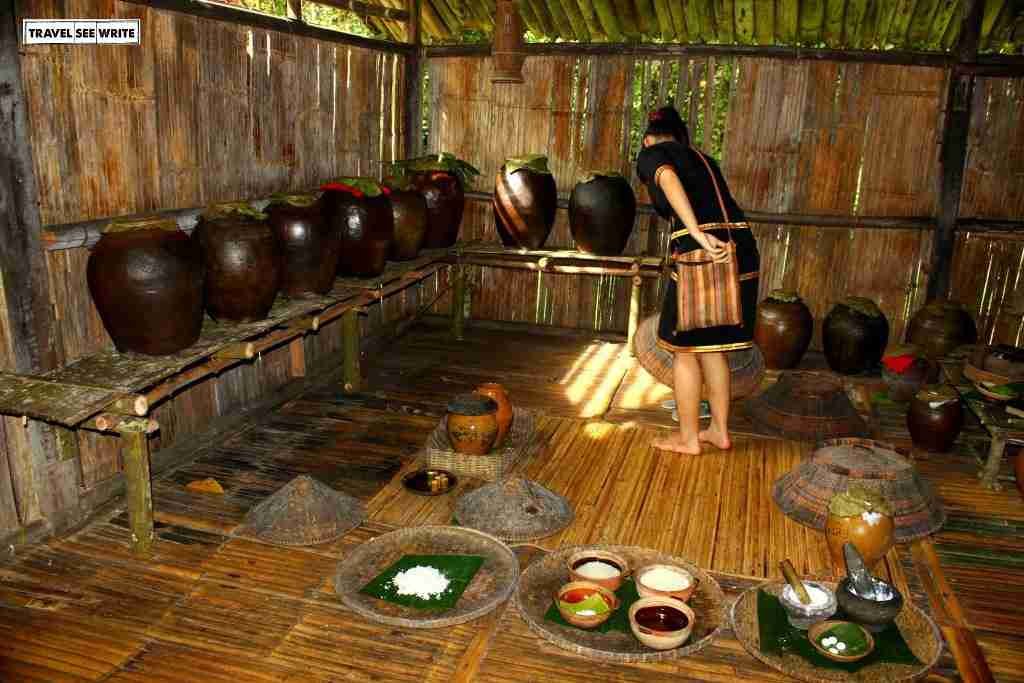
Mari Mari Village Ethnic Tribal way of Making Wine

The wedding ceremony hut of the Bajau Tribe, Mari Mari Village, Kota Kinabalu

Dusun – the Head Hunting Tribe, used to cut the head of thieves and display it at their entrance
While returning from the Mari Mari Village I decided to catch the sunset at Signal Hill, the highest point in the city, which is one of the best places to get a good view of Kota Kinabalu at that golden hour. And when the day transformed into night instead of taking the longer path running parallel to road I took the shorter walkway trail from the jungle. In 5 minutes I was at the base. Though I was the only one walking on that trail, it was well lit

Kota Kinabalu City Top View from the Signal Hill
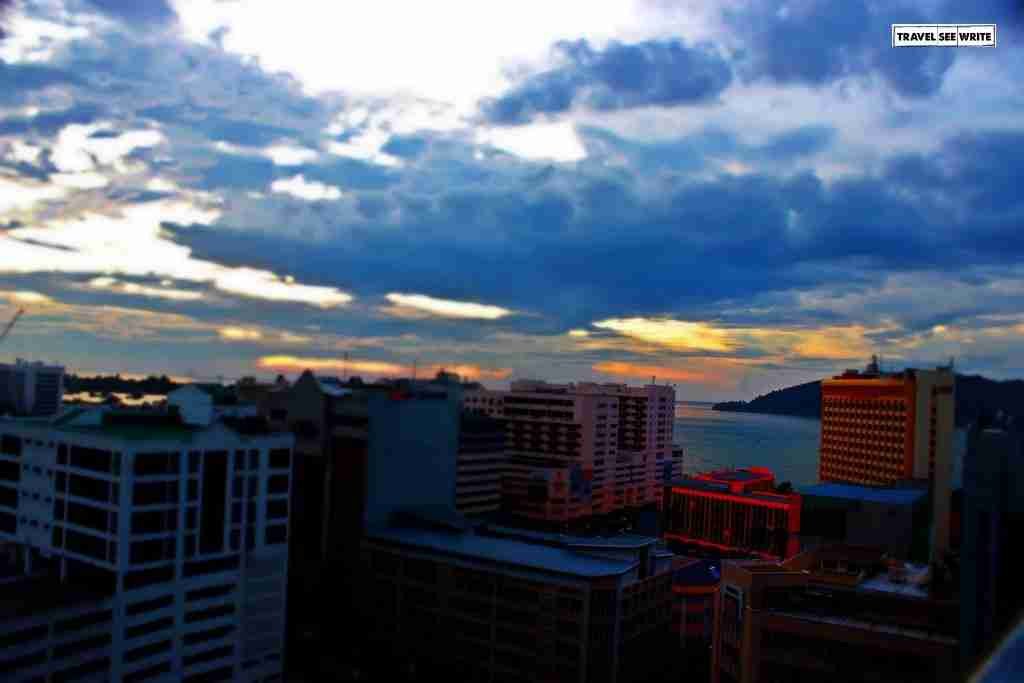
Sunset seen from the Signal Hill, Kota Kinabalu
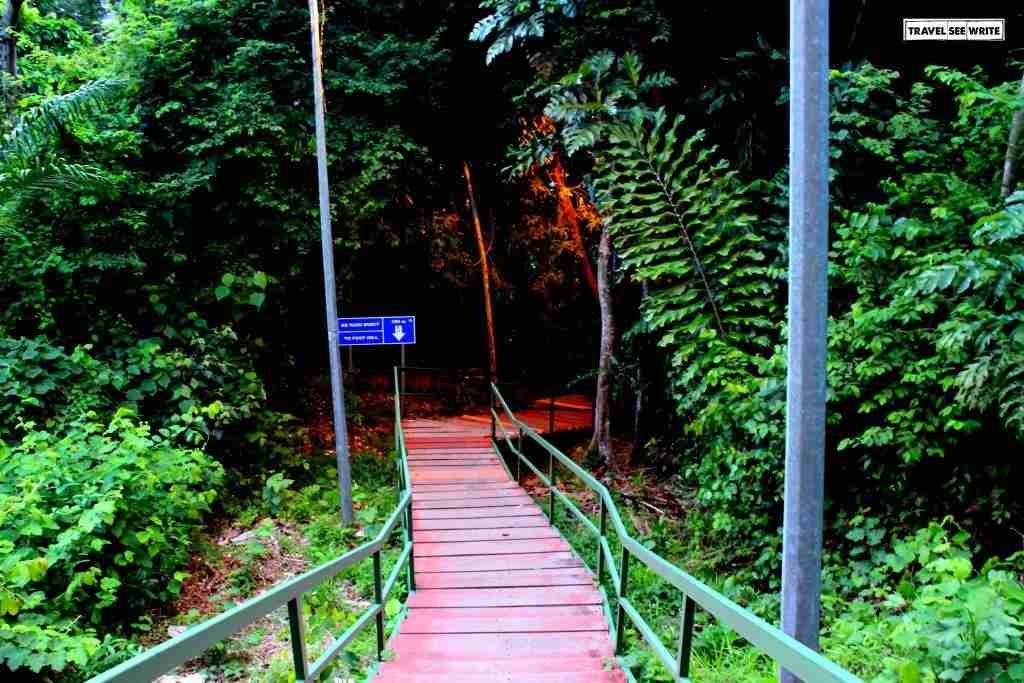
Jungle Trail from Signal Hill to Kota Kinabalu City
Despite the sumptuous high tea at the Mari Mari Cultural Village , hunger pangs were awake. I decided to visit the “foodies and romantics” one-stop dining and entertainment destination – the Waterfront. It has plenty of food options to choose from – from fresh South East Asian style Seafood to the Indian cuisine to authentic Chinese food to Spanish food to Mexican food to fusion food to local Malay food. You name it and The Waterfront has it. The place comes alive at night, as besides being a good wining and dining place, it is a great place to watch the sun set over the South China Sea. The craving to have a piping hot gulab jamun made me choose Kohinoor Restaurant over others. But my craving wasn’t satisfied as they ran out of Gulab jamuns. So I ordered the next best thing on the menu – Gajar ka halwa 🙂 The food was OK. I found it spicy but not tasty. The manager and staff were friendly.
Kohinoor, The North Indian Cuisine Restaurant at Kota Kinabalu
The Waterfront View seen from the Kohinoor, Kota Kinabalu
For people who don’t want to spend too much on food and view there are always cheaper options available. Being a cosmopolitan city you can enjoy on an array of culinary delights from all over South East Asia when you dine at the Kota Kinabalu Night Market popularly known as “Pasar malam”.
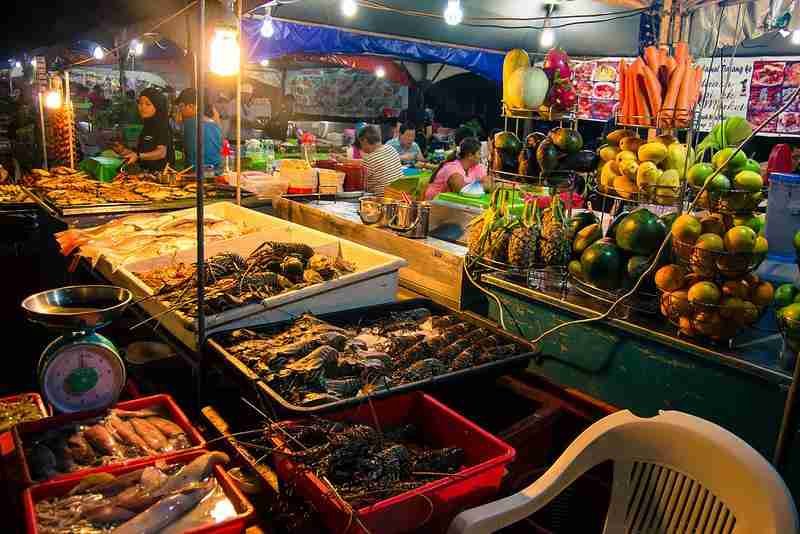
Night market at Kota Kinabalu
Malaysia is popular among Indians and Pakistani immigrants therefore you can easily spot Indian subcontinent restaurants and departmental stores in by lanes selling every kind of spice you require to make your famous Indian curry. One piece of advice – when you relish your Idli sambhar vada don’t be Grammar Nazi 😛
Indian Restaurant at Kota Kinabalu Market
And if after a sumptuous meal you are in a mood to shop, there is always the night market waiting for you.
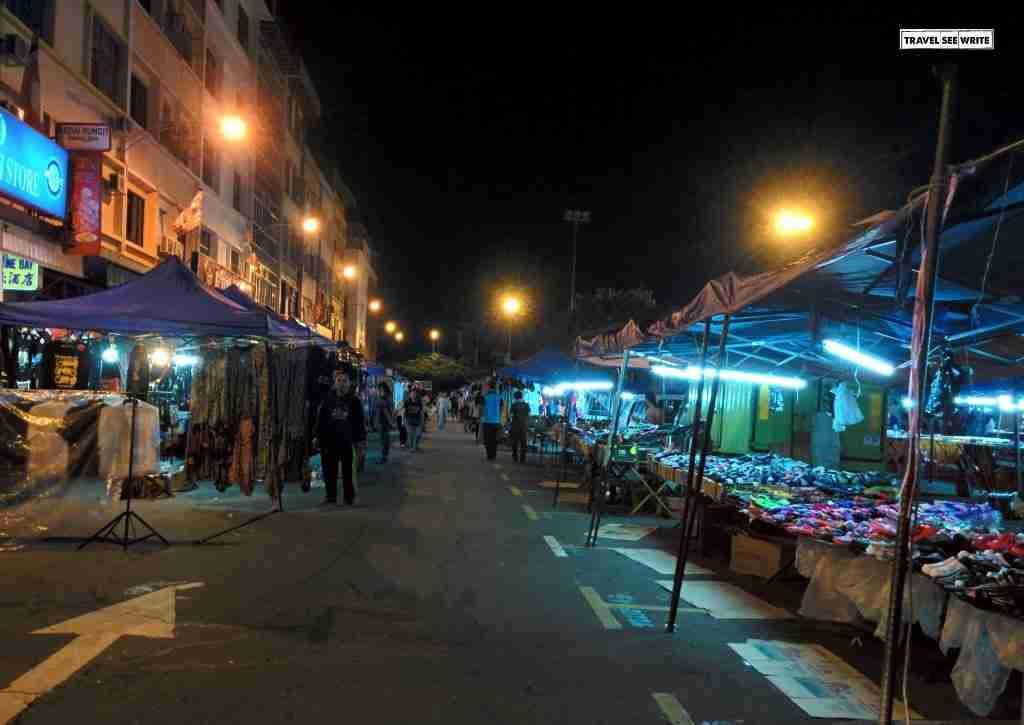
Night Shopping Market at Kota Kinabalu
So that was a much relaxed Day-1 for me.
The next two days were far more adventurous. Day 2 has been etched in my memory for FOREVER. Super fun. Super adventurous. Super scary too.
Do wait for the next chapter in this series that combines adventure, fun and some scary moments!


Singapore has been on my travel list for a long time but somehow I always chose the more alluring Europe or Australia over it. So when finally I got a chance to explore it I was happy but wasn’t going gaga over the impending experience. I had heard a lot, seen a lot and read a lot about Singapore and I knew there was hardly anything offbeat to be explored here. But boy was I so wrong! Einstein had said imagination is more important than knowledge and so I set out to Singapore, applying what he said. This travelogue summarizes why Einstein is mostly right 🙂
So hop on the time machine and travel back in time with me, to Singapore or Singa Pura, as it was called back then.
The day I landed in Singapore I knew it was going to be one heck of a trip when after one and a half hours of leaving the airport I realised that I was missing one bag. I was stressed and I called up the Changi airport helpline. Changi Airport is not renowned for being one of the world’s best airports for no reason. Their staff’s prompt response made me a fan of theirs for life. And by the way, it is such a beautiful airport that you can spend days exploring it and still not get bored. Anyway, we’ll talk about this topic in detail sometime later. Let’s get back to our story.
After exploring all the touristy spots like Santosa Island, Marina Bay, The Merlion, Garden by the Bay, Botanical Gardens, Night Safari, Little India, Clarke Quay and other attractions I wanted to see something which not many people had seen so I kept probing my hostel guys about the offbeat places in Singapore. And thanks to them and some help from Google Guruji I zeroed in on exploring Pulau Ubin.

Pulau Ubin Island Entrance, Singapore
Pulau Ubin tucked away far from the glitzy malls and swanky city life of the mainland Singapore is an island off eastern Singapore and often considered the last ‘kampung’ (village) in Singapore. The name Pulau Ubin means “Granite Island” in Malay. Until the 1960s it was used for quarrying granite. But thanks to a decline in quarrying since the 1970s, a slice of ancient Singapore has remained preserved – a retreat for nature lovers and adventure seekers. It is a treasure trove of biodiversity, where six or more major habitats meet and mix. An overgrown and rugged landscape with a small number of wooden, old-style Malay and Chinese kampongs (villages) where around 100 residents live who speak only Chinese and don’t understand even basic English, Pulau Ubin seems to have somehow missed the detriments of time, aging.
My Pulau Ubin journey didn’t start on a good note. The Chinese driver of the bus, who didn’t understand English, dropped me at a wrong Ferry terminal. It was a military area and there was nobody in sight so I walked up to the ferry terminal and asked the army personnel to let me in. Singapore’s founding father Lee Kuan Yew had passed away that day and perhaps that was the reason he was in such a foul mood. He told me it wasn’t the ferry terminal for civilians. When I asked him where the right one was he got really worked up and said he’s not Google. I should use my smartphone. I didn’t expect that coming from a government servant. Being the hothead I gave him my piece of mind,
“I am sorry if you are having a bad day. But being an army personnel it is your duty to protect the pride of your country. By talking rudely with a foreigner you are leaving a very bad impression about your country. I am not asking you to do me a big favour. Being nice to strangers is the smallest act of kindness anyone can do.”
I said that and rushed back to the road without even waiting for his response. Though I showed immense courage to utter those words I was shit scared from within. There was no soul visible on the road. What if he abducts me? Kills me? Throws me in the ocean? Nobody would get a whiff about me. But those were, of course, devilish thoughts, inspired by the countless hours spent watching murder drama on tv and youtube. (Un)Luckily, nothing of that kind drama happened.
After waiting for some time in the open that was turning out to be a hot furnace of a day, a taxi came to my rescue. After a wait of an hour, I took the ferry to the Pulau Ubin terminal.
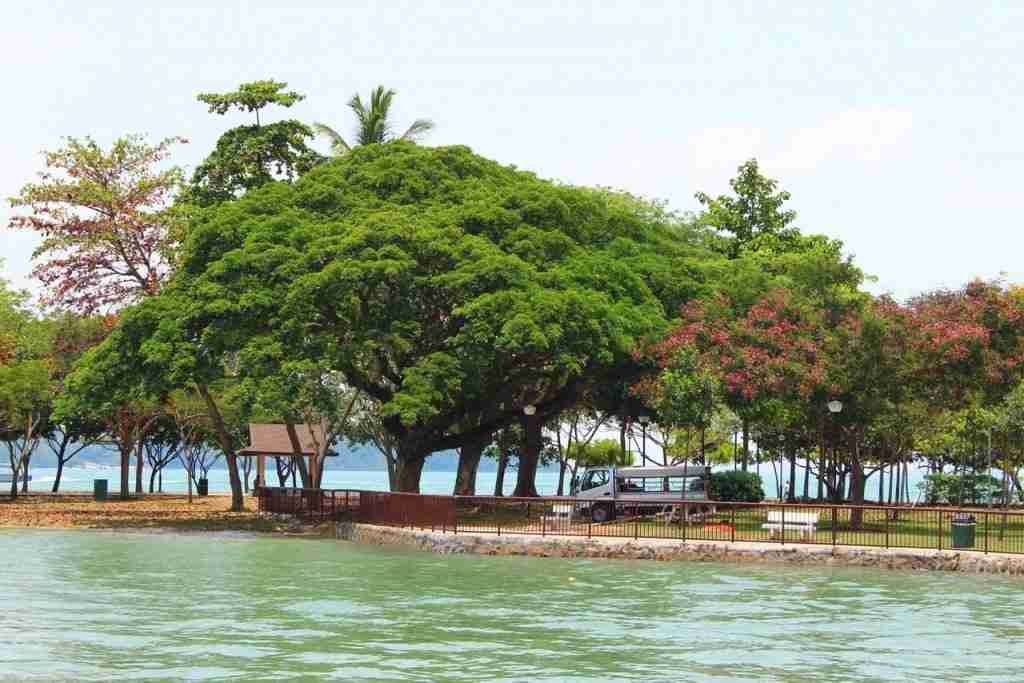
Changi Terminal from where ferry goes to Pulau Ubin, Singapore
Getting off the “bumboat” ferry onto Pulau Ubin’s narrow wooden jetty was a welcome change from the hustle bustle of a city life. A signboard was placed right at the entrance for visitors’ guidance.
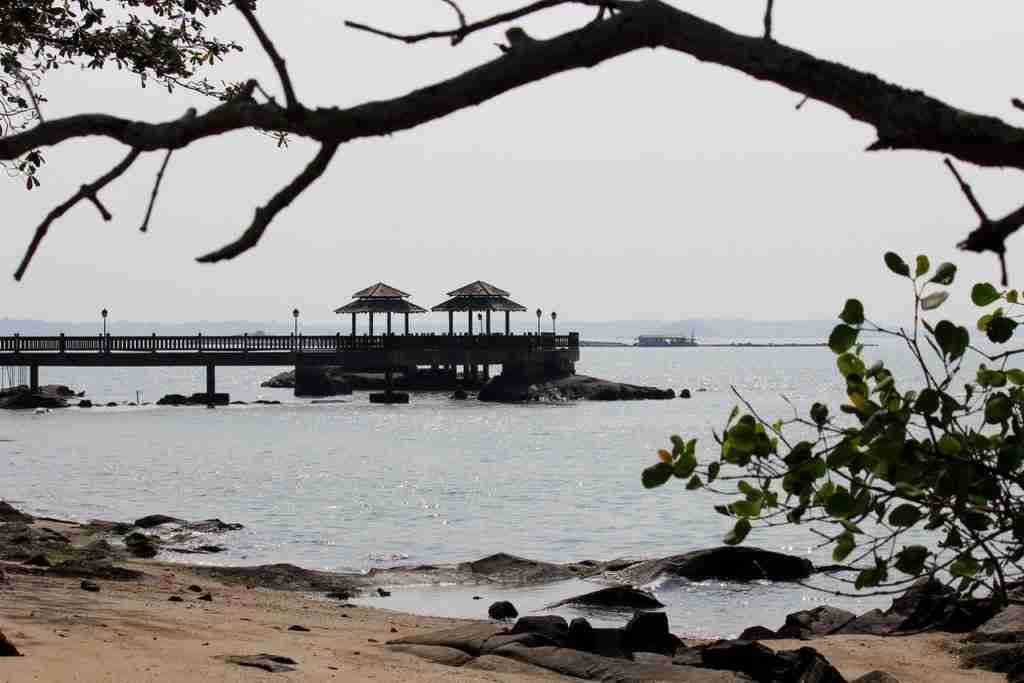
Sea View from Pulau Ubin, Singapore
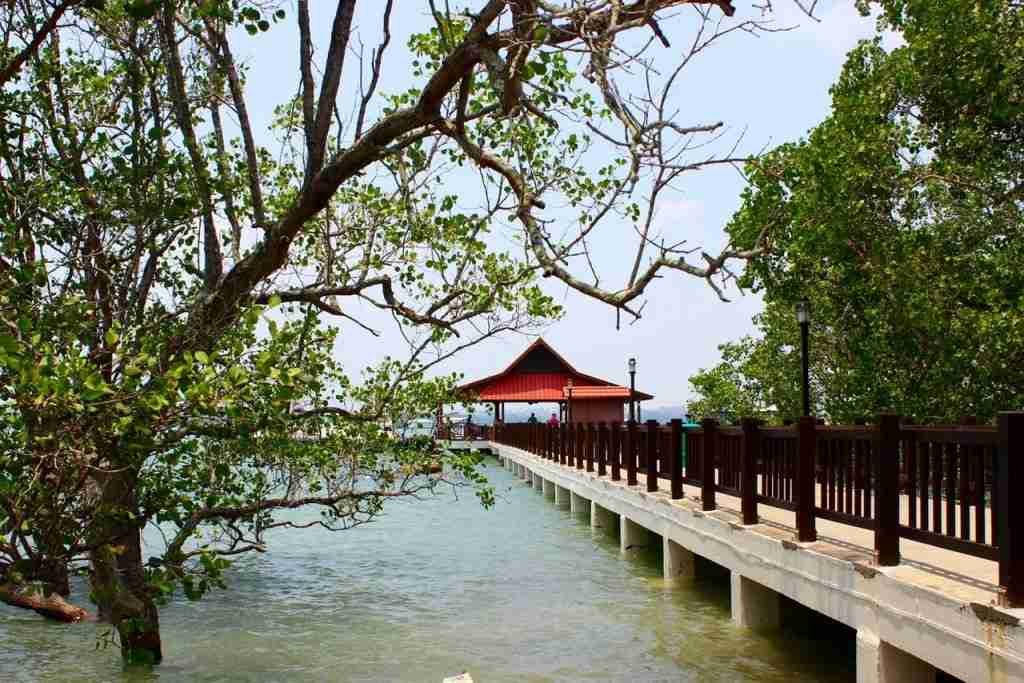
Pulau Ubin Ferry Station, Singapore
Just a few metres away from the shore a tiny village with a few single-storey wooden restaurants decked up in traditional Chinese décor and bike rental shops welcomed you.
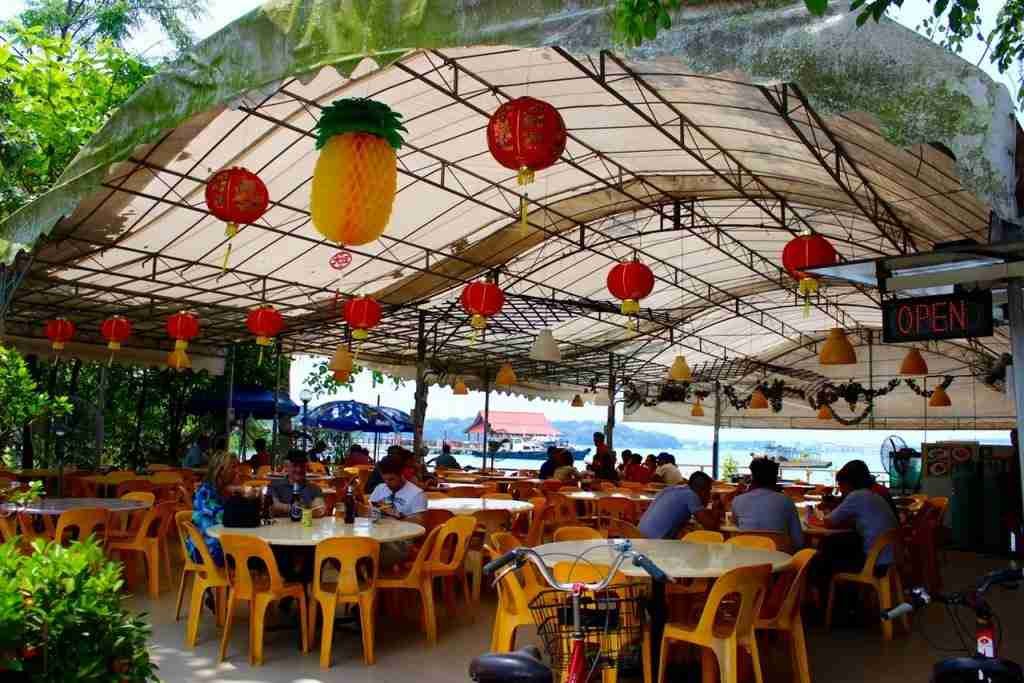
The lone restuarant, Pulau Ubin, Singapore
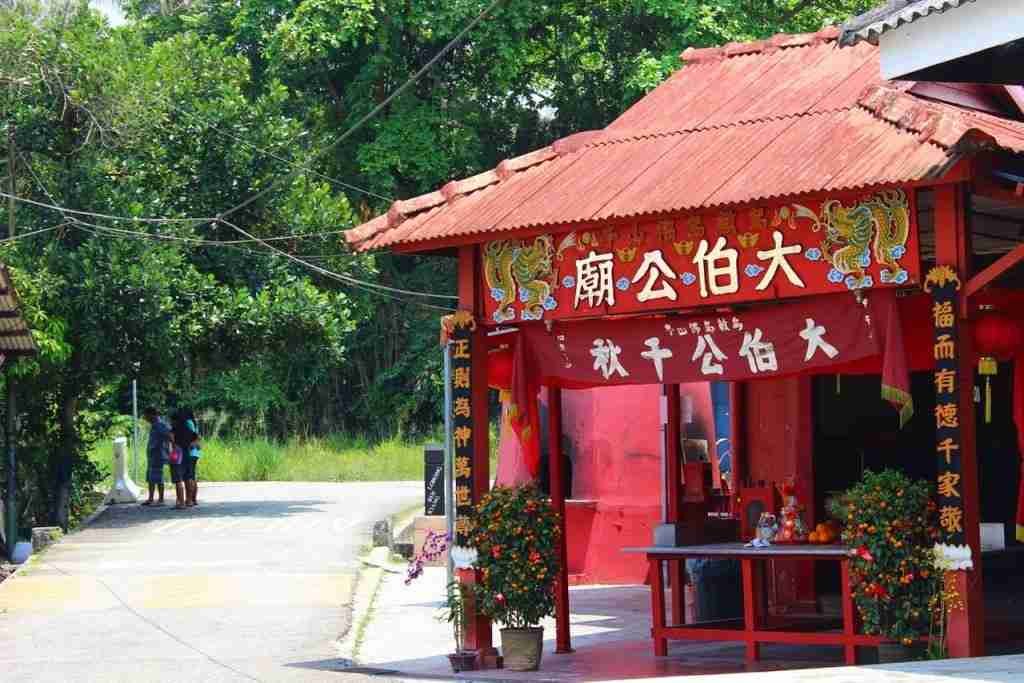
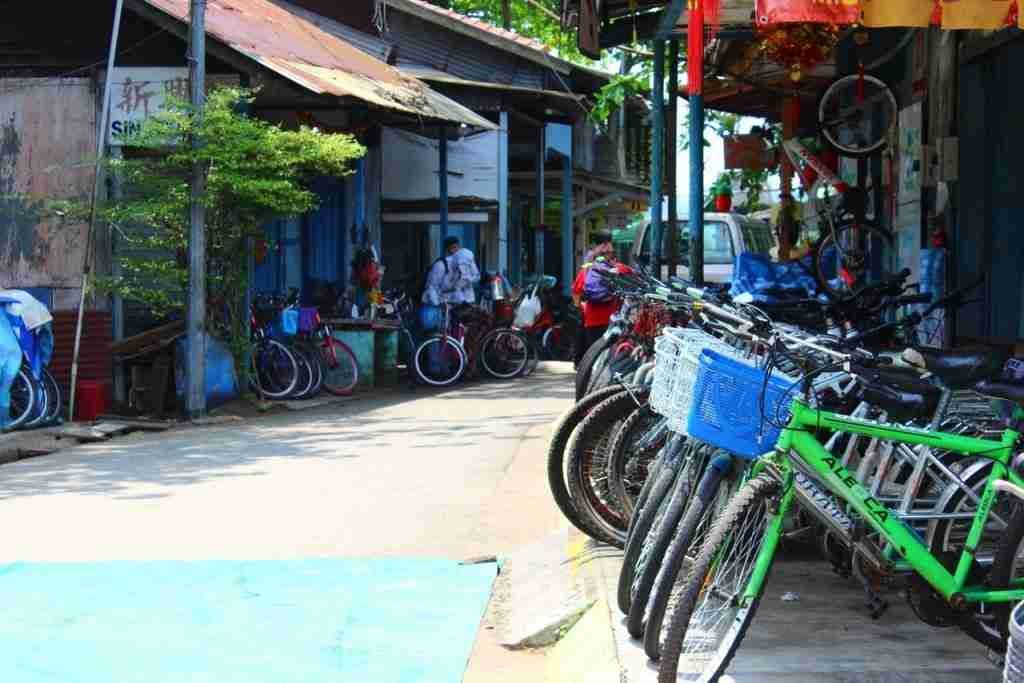
Cycle renting shops, Pulau Ubin, Singapore
When you visit Pulau Ubin make sure you don’t forget to carry a good pair of healthy lungs and strong legs. Bicycles or walking are the ways to get around on the island. There are hardly any motorized vehicles to be found on the island. Off late Pulau Ubin has become popular with mountain bikers, thanks to the 10 km all weather mountain biking trail in the 45-hectare Ketam Mountain Bike Park, which has solidified the island’s unofficial title of “Bicycle Island”.
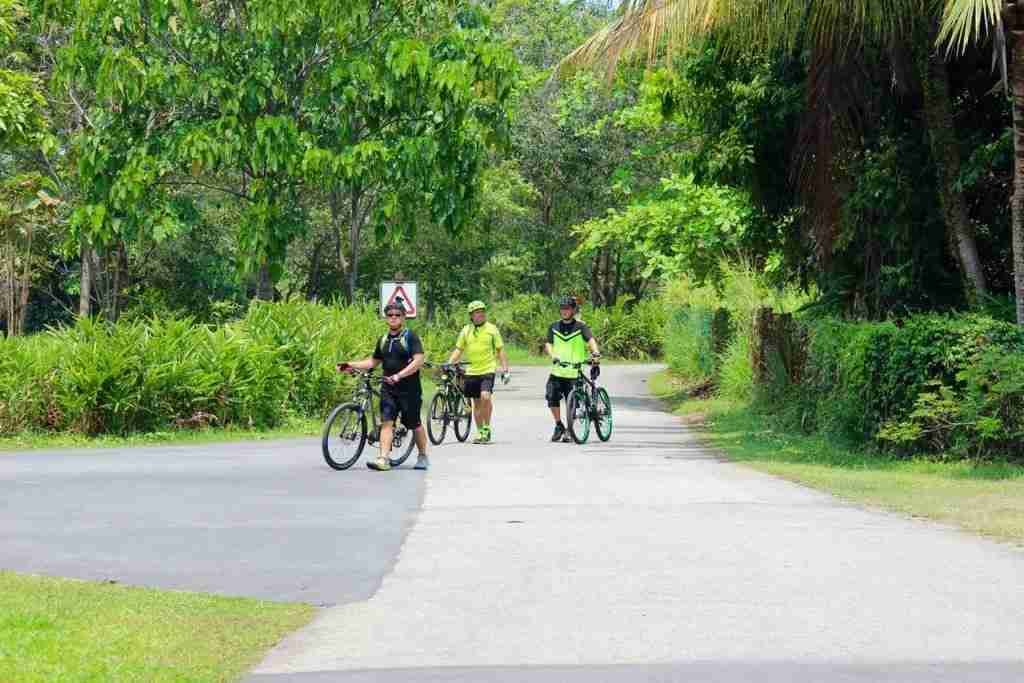
Ketam Mountain Bike Park, Pulau Ubin, Singapore
Pulau Ubin Cycle Park, Singapore
I was not in a mood to walk or ride so I opted for a van rental for 20$ for a pickup and drop at Chek Jawa Wetlands. Unfortunately, the guy didn’t even understand simple numbers. So my pick up time was completely messed up.
Like Alice, I was walking all alone in the wonderland when I heard a feeble chatter. The chatter became audible and the best part-it was in English. I followed my ear and they led me to a handsome English model and fashion photographer. I asked them for directions and they offered me to accompany them. I was sorted! From feeling lost on the island, I was now on a guided tour of the 100-hectare Chek Jawa wetland. We walked through the 1.1-kilometer board walkway getting amazed by the corals’ reef and rich marine life. The end of the walkway leads us to the 21-meter tall viewing tower from where we not only got to see a 360 degree top view of the entire park but also saw some interesting species of birds.
Chek Jawa Wetlands, Pulau Ubin, Singapore
Chek Jawa Wetlands, Pulau Ubin, Singapore
Viewing Deck at Chek Jawa Wetlands, Pulau Ubin, Singapore
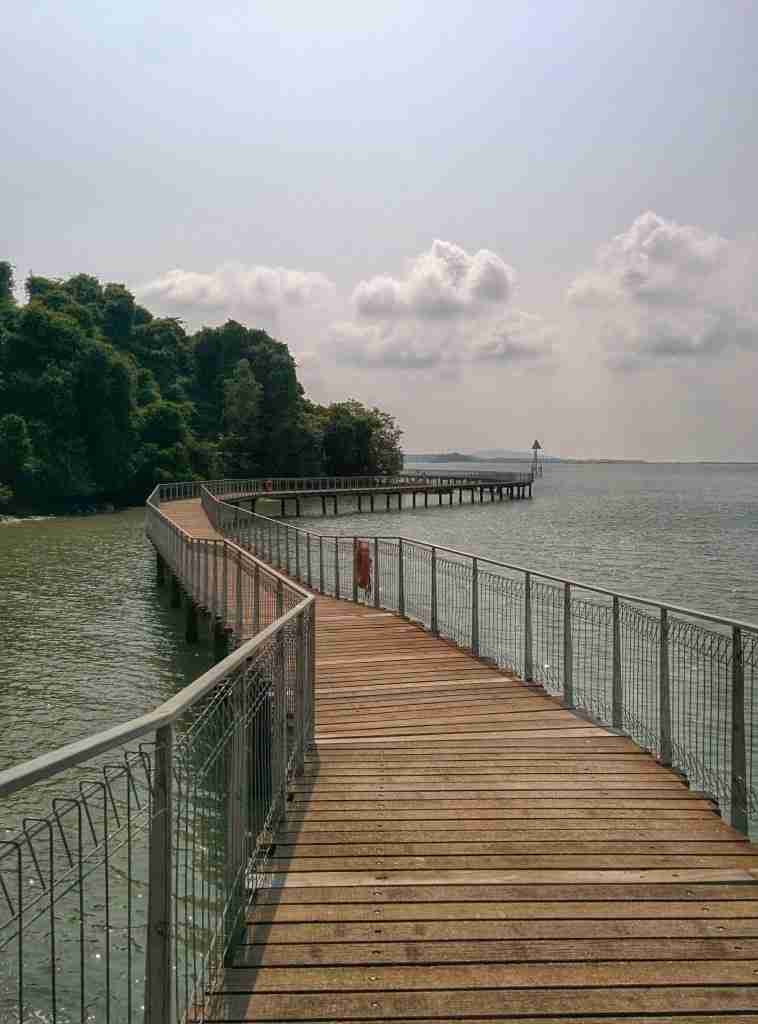
Wooden Pathway, Chek Jawa Wetlands, Pulau Ubin, Singapore

On top of the Viewing deck, Chek Jawa Wetlands, Pulau Ubin, Singapore
After one and a half hour of walk, we reached the van drop-off point but my driver was nowhere in sight and I didn’t even have a working phone so I decided to hitch with the boys. We alighted at the old quarry. While the boys were busy shooting, I shared my pleasantries and went circumnavigating the island on my own.
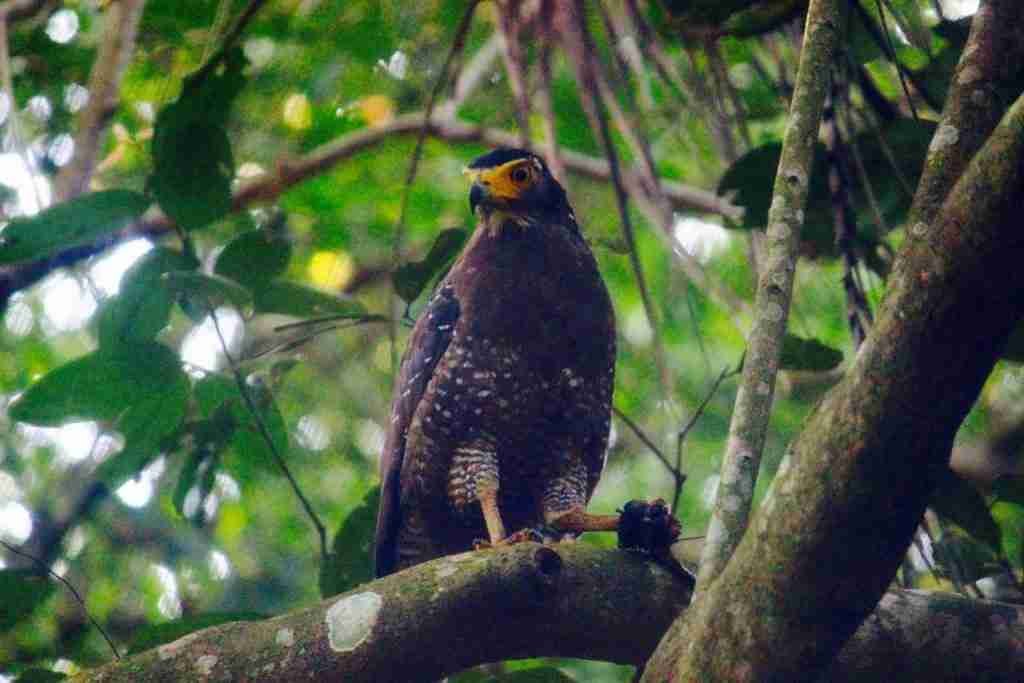
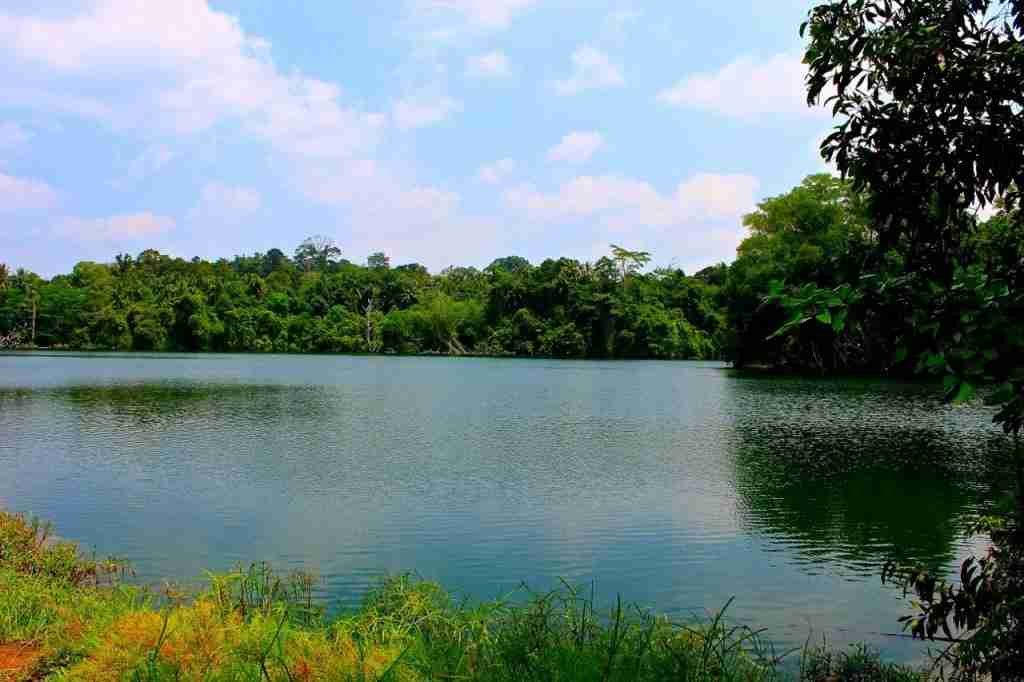
Old Quarry, Pulau Ubin, Singapore
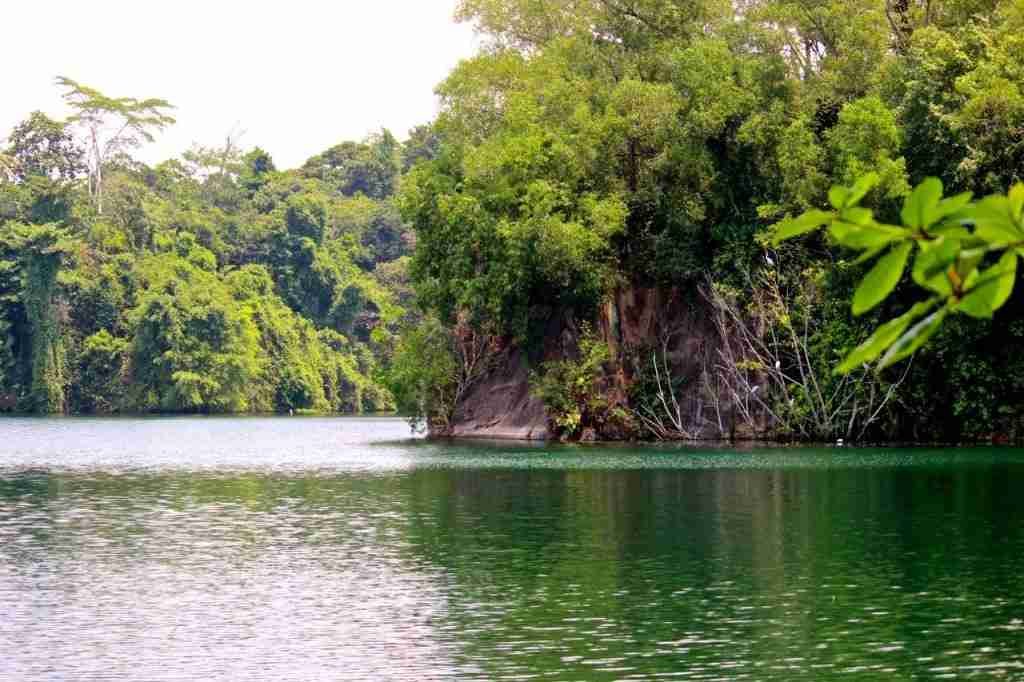
Old Quarry, Pulau Ubin, Singapore

Old Quarry, Pulau Ubin, Singapore
While walking through the island I felt as if i was back in Sixties Singapore. No high rise buildings. No traffic jam. No rush to reach anywhere. It was a much needed welcome break to walk on the rustic roads under swaying coconut palms, exploring shady trails in overgrown rubber plantations, checking out secluded beaches and flourishing mangroves. Since I was kind of alien in this hidden paradise i decided to do what was best – soak into the sensorial pleasure of the Pulau Ubin. I wandered around the Singapore’s last kampongs and admired the rustic beauty and simplicity of a bygone era. There was a playing area for the kids and a place to worship.
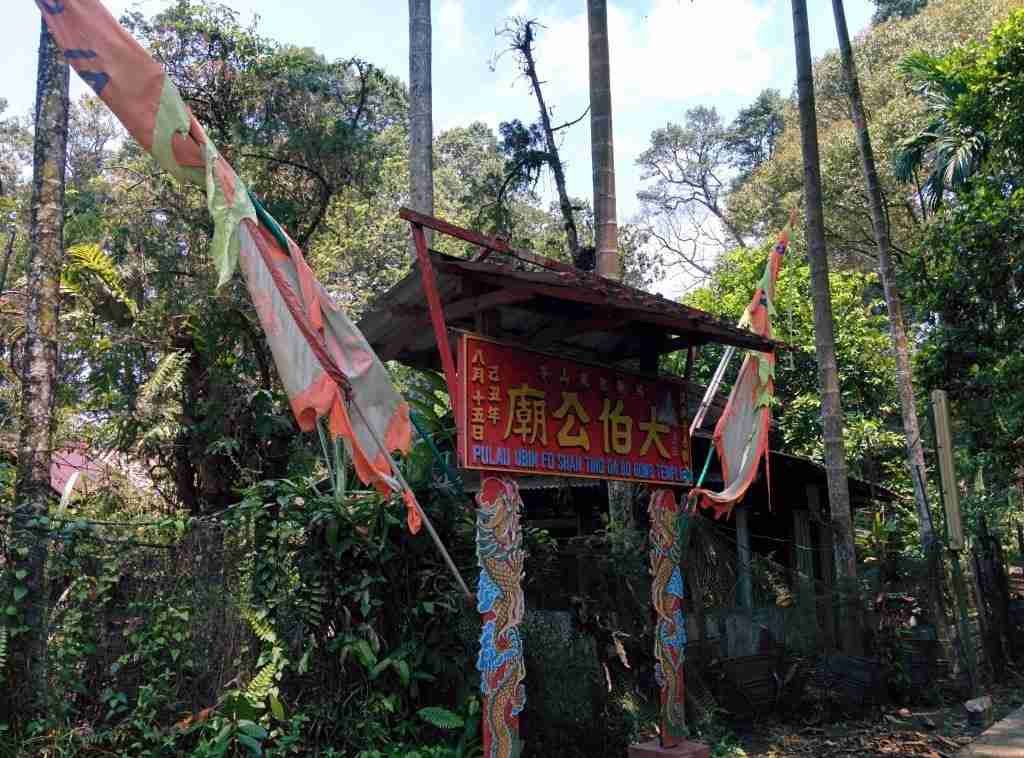
It was the world out of the world. Very calm. Very peaceful. All I could hear were birds chirping. No sound of any human or roaring engine. I looked around with the curious eyes of a lost child. I wanted to spend a night at the island but I wasn’t carrying any camping gear so I decided to catch the last ferry back to Singapore.
I was a happy person. Pulau Ubin reinstated my belief that being authentic, unspoiled and rustic is being beautiful not just in the NOW but in FOREVER.
Taking this valuable lesson I walked out of the wild with a strong desire to travel soon into the unknown because it’s usually the unknown that reveals you with yourself.
So can I expect you to explore the ancient part of Singapore when you visit this South East Asian Lion country?
TRAVEL TIPS

New Zealand, the home of middle earth, made popular by the Lord of the Rings Trilogy and Hobbit series is a stunning country that lives up to its hype and turns out to be better than what can be seen on the iMax cinema screen or your mobile screen. The country of landscapes, active volcanoes, island sanctuaries is the adventure capital of the world and will enthrall you with its awe-inspiring myriad experiences. Exploring it in a week is an injustice to the unmatched beauty of this Kiwi land but as they say, something is better nothing. So if you have only a week on hand to explore New Zealand then go on an unforgettable Road Trip for a 100% Pure New Zealand Experience.
Let’s get started on understanding the geography of New Zealand.

New Zealand is divided into two islands – North and South Island. If you are hard pressed on time and want to explore different kinds of experiences within a week, then opt for a self-drive trip from the Northern tip (Auckland) to the southern tip (Wellington) or vice versa in the North Island of New Zealand. And if you have time in hand then you should cover the entire mainland.
If you can, spend a month in New Zealand. For an ultimate one month travel do refer to this New Zealand Itinerary
Here is the itinerary for a 7 days 100% Pure New Zealand Road Trip. Hop on to relive the moments.
The Coolest little capital of the world
Like millions of travelers, Lonely planet too got smitten by the charm of this beautiful capital city of New Zealand when they gave this title to Wellington. Situated at the southern end of the North Island, Wellington has a lot to offer and in fact you can spend an entire month exploring it and still find new reasons to fall in love with it every single day. From watching the surreal golden and blue hour at the top of Mount Victoria to riding the historical cable car to getting behind-the-scenes glimpse of larger than life LOTR movie making at Weta Workshop to taking a walk at Oriental Bay.
Phew. I could go on and on. Wellington is a city unlike a city where natural beauty is still unspoiled and where people always greet you with warm smiles. Though two days are not enough for this quaint little mystic land but it gives you enough time to cover the popular spots before the epic road trip begins.

New Zealand Trip: Bird’s eye view of Wellington from Mt. Victoria, New Zealand

New Zealand Trip: View of Wellington from Mt Victoria Matairangi, New Zealand
The first condition of understanding a foreign country is to smell it
Had Rudyard Kipling heard about Rotorua he would have never made this statement. Because sometimes judging a book by its cover (in this case the smell) can be truly misleading. If one were to go by the smell then no one would ever visit Rotorua. But sometimes your biggest weakness can be your biggest strength. Rotorua is renowned for its geothermal activity – bubbling mud pools, shooting geysers, natural hot springs and buried village. The geothermal activity gives off an odor unique to Rotorua. Besides explosive geysers, Rotorua has crystal-clear streams, magnificent forests and epic biking trails.
If you are an adventure-seeker then Rotorua will offer you plenty of adventure. White water rafting is so yesterday. How about doing black water rafting and if that’s not enough be spellbound by glowworm caves at Waitomo. And if you like water rafting then go rafting in the Kaituna River which boasts of the Highest Commercially Rafted Waterfall (7m) in the World. Before you attack the big boy you’ll get to practice by maneuvering through 2 smaller waterfalls among the 14 rapids. It is one heck of an adrenaline activity that you’ll never forget. You would want to stay more in this little wonderland but the smell would play a spoilsport. And you’ll probably be back on the road to your final destination.
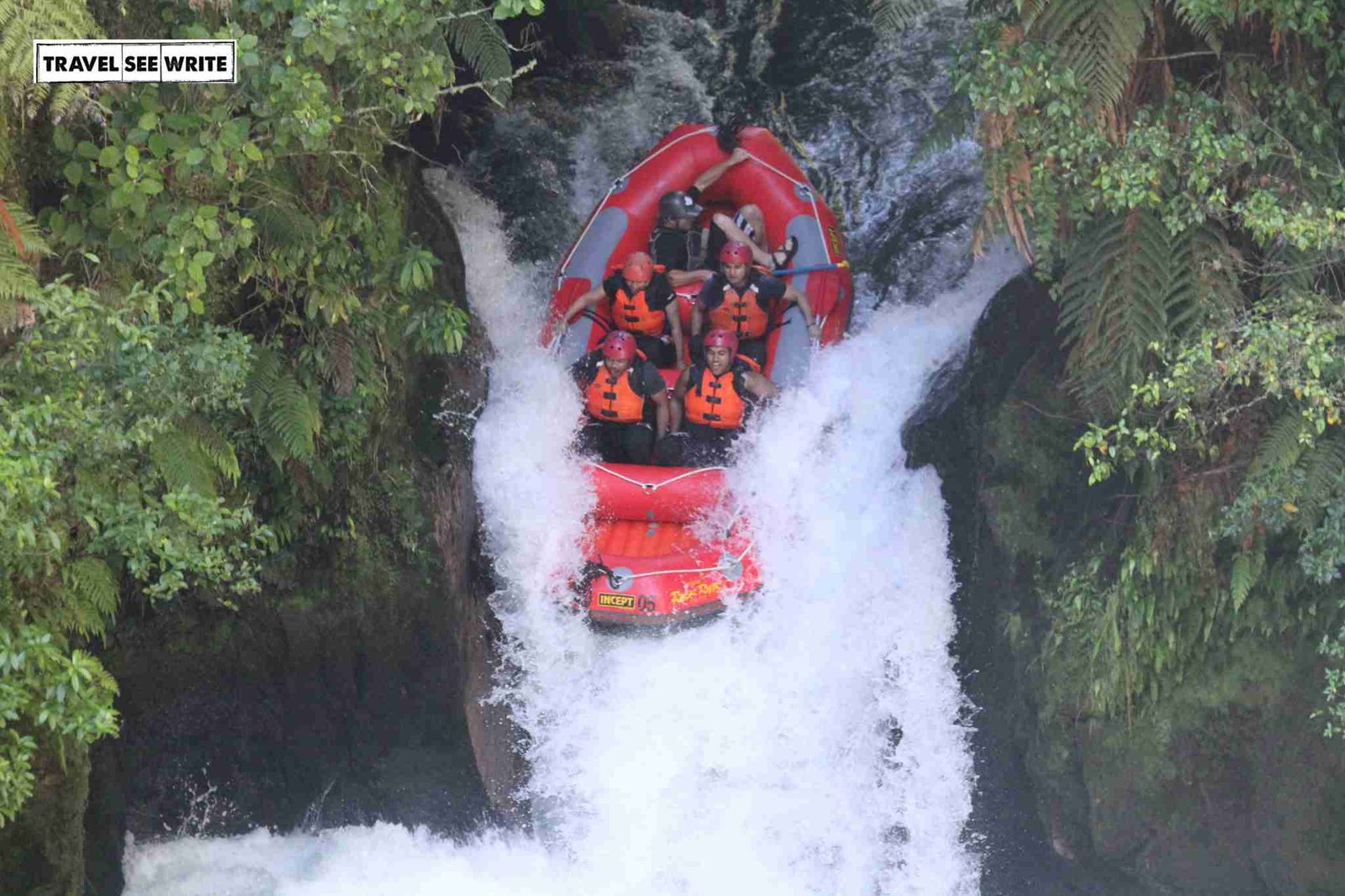
New Zealand Trip: Kaituna River rafting which has world’s tallest commercially rafted waterfall


New Zealand Trip: Natural Geysers, Rotorua

Rotorua Natural Geysers, New Zealand
Waitomo Glowworm caves. Ideal for black water rafting as well, New Zealand.
The city of sails – One city. Plethora of experiences.
Imagine living in a city of where everyone lives within half an hour of beautiful beaches, never ending hiking trails and enchanting islands. Where instead of showing off your big toys people carry their impressive yachts and sailboats. Where people live with harmony and have great taste for food, wine and shopping. No wonder Auckland is becoming a migration magnet. If you are an adventure freak like me then instead of just climbing the Auckland Sky Tower for the view and food (yes they too have a restaurant at the top), jump off from it.
Auckland Harbour Bridge is another great option for bungee jumping. You cannot not miss doing bungee jumping in New Zealand – the birthplace of the adventure sport. Spending the New Year’s Eve watching the fireworks at Auckland Tower is a great experience to welcome the New Year. If you are an art lover and want to know more about the Kiwi culture don’t miss the Auckland Art Gallery.

City view from Auckland Sky Tower, New Zealand

Auckland City View, New Zealand
 So what are you waiting for? It’s’ going to be summer time in New Zealand and is the perfect time to explore the land of blackcaps. So go ahead and do yourself a favour.
 It has been fifteen months since I returned from my adventurous trek to the Bashal Peak but the memory of that adrenaline pumping but frightening journey is very vivid in my memory. It was one of my most satisfying backpacking journey. It is time to re-live the journey along with you, my dear reader.
On the night of 26th June 2014, Thursday, five strangers and I took an HPTDC bus to Shimla, from where we took a local bus to Rampur. The whole journey was quite arduous since we had booked ourselves in a local HPTDC bus. But in spite of the peak season of summers it wasn’t hot but pleasant. We were enjoying the journey. The only complainants were the road humps. After reaching Rampur, our bus took an hour long halt where we gorged on the local snacks. We reached Jeori at lunch time and proceeded towards Sarahan. The best thing about traveling in Himachal is that you are always accompanied by gorgeous rivers. In this case it was River Sutlej.
Let me be honest here, I had not heard about Sarahan before and that’s probably the reason why I enjoyed this trip so much. Sarahan is one of the lesser known non touristy places in Himachal Pradesh. It is the gateway to Kinnaur and the base for numerous treks. It is a place where spirituality, tranquility and natural beauty meet. Sarahan is an ideal destination for a long weekend break. It being non popular ads to its idyllic charm. And thank god for that. Mostly a transit destination on the Shimla – Sangla – Kinnaur – Spiti Valley Route, Sarahan is well connected by road and is surrounded by beautiful snow clad Himalayan Peaks.
The lone hotel at Sarahan, Hotel Shrikhand (HPTDC owned Guesthouse) was completely sold out so we had no other option but to stay at a local homestay, which wasn’t bad. The room was basic but neat and clean. Super tired after our 16 hours of journey, we hogged onto lunch at Hotel Shrikhand as if we had not had a meal in ages. The simple dal-roti seemed the tastiest meal in the world.
We then summoned our shutterbugs and mobile cameras to capture the scintillating beauty of this sleepy town. Our first pitstop was the revered Bhimakali temple, one of the Fifty One sacred Shakti peeths. The temple’s unusual architecture and unique carvings have made it a resplendent example of the 800 years old Indo-Tibetan art.

800 years old Bhimakali Temple, Sarahan
After marveling at the temple’s architecture for a while, we strolled on the Indo-Tibetan road for few hours. Once we were dead tired, we returned to our base and after an early dinner of thupka and veg thalli at a local dhaba, we called it a night to start early for our morning trek. We were waiting for the beautiful trek to reveal itself.
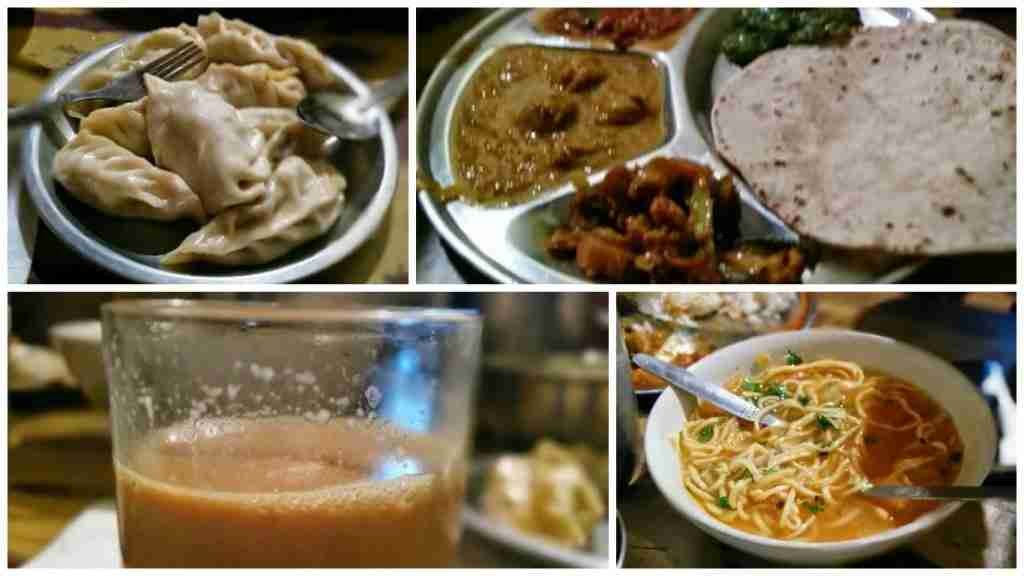
Dhabba Food at Sarahan
With stomach full with various kinds of paranthas, made with freshly plucked vegetables from the farm and packed lunches, we started our Bashal peak trek with two local guides at 6 am. As we ascended the Apple and Apricot Orchards gave way to slopes ridden with the deodhar trees. There were few huts of Gaddi Sherpas with their Shepherd dogs guarding their cattles. There was no marked trek route. During the trek our Guides told us that very few people trek this peak as it is not an easy trek and has many wild animals. It was an uphill trek and was becoming too taxing for many of our group members to continue. However, Prachi, the leader of our pack kept us motivated with her words. And as if the physical strain wasn’t enough, we got the first taste of fear when we saw few people carrying a dead body of a person who was killed by a bear last night. We shivered with fear but no one was ready to turn back. We continued our onward journey. During the trek we heard lot of wild animals. We were shit scared and tired as hell but determined not to give it up. At the midpoint of the trek, we reached “baba jee ki kutiya”. As If the wild animals weren’t a threat enough, the weather turned truant and cold. Baba jee was generous enough to treat us with hot tea and entertained us with his mystical stories for which Baba Jees are known.
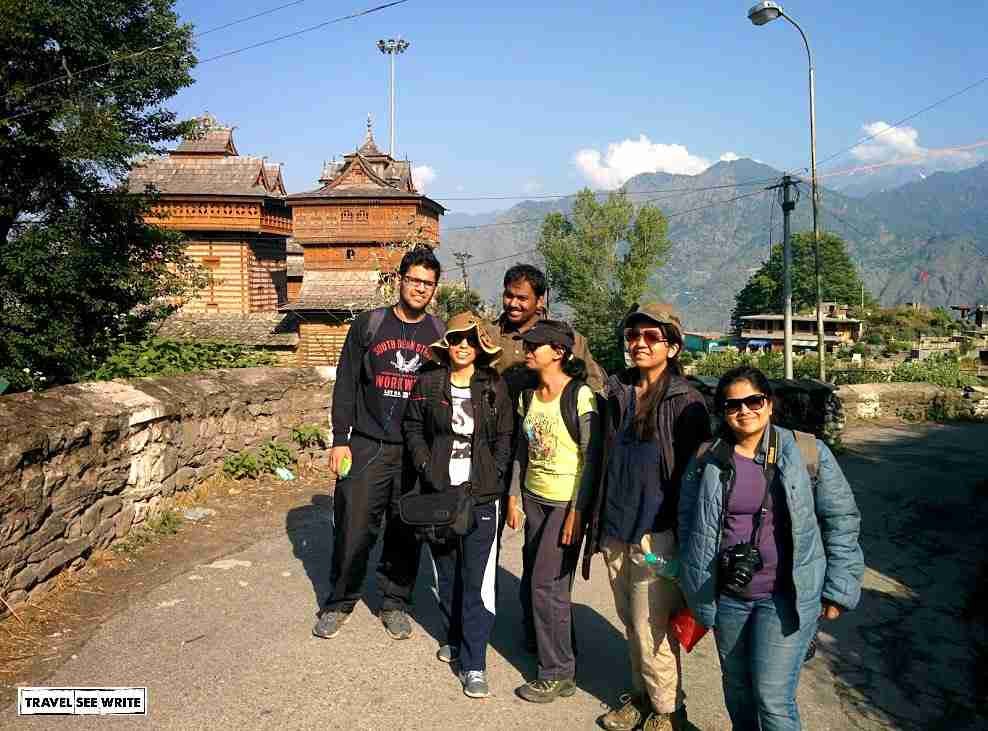
Start of the Bashal Peak trek from Sarahan
After an hours’ break, we continued our trek as we wanted to be back before night. Finally around 5 pm we reached the Bashal Peak. We were tired but the view was breathtaking. On the Bashal peak there were trees of smooth birch and variety of wild flowers and rare medicinal herbs. The top of the peak was submerged in clouds and we were actually walking through giant clouds. While most of you were busy watching the Keanau Reeves starrer “walk in the clouds”, I was busy walking through them 🙂 Visibility was very low – not even 100 metres and it was getting darker.
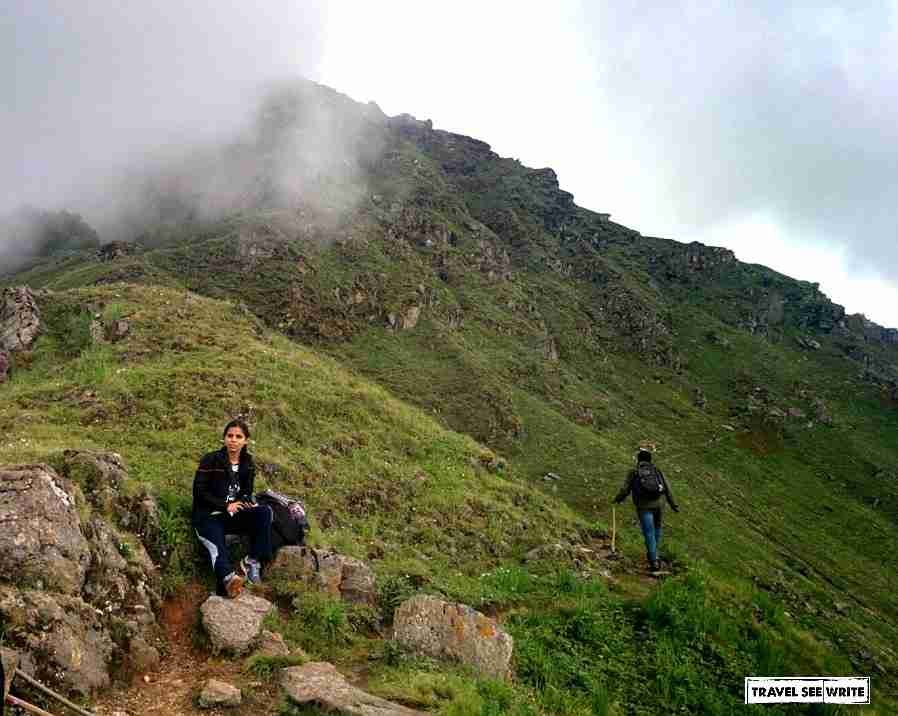
Finally at the Bashal Peak, Sarahan

Wild herbs, Bashal Peak, Sarahan

Kinnaur Valley View from Bashal Peak, Sarahan
Dark clouds started descending upon us. Even though we wanted to stay there for longer, we had no option but to descend. Since it was an area abound with wild animals we decided to stay together, irrespective of the individual speeds we were trekking with. As we were descending, it started pouring like cats and dogs. It was pitch dark and we were completely drenched, super tired because of the hike. There was no shelter and the slope became too slippery. Every one of us started falling one by one. Our torch lights died. We were breathless and our water had finished. There was a strong chance of encountering wild animals, snakes and leeches. In a nutshell we were in a soup. This wasn’t the kind of adventure we had imagined. On top of that some of the group members started getting too hyper and scared. We were all praying to reach home safely. There was absolutely no mobile connectivity so we could not even contact anyone for help. Thankfully our guides thought of a plan. They took a detour via their village, a cluster of 2-3 houses in the middle of nowhere. Although it increased our journey time by few hours, this path was relatively safer than the path we took during our ascent. We rested for a while at the village. We had water, much needed to pacify our fears and parched throats and then continued our downward journey. Our bodies had given up. Our feet were not ready to march ahead but we didn’t want to spend a night in the Jungle becoming the dinner of wild animals so we kept walking.
Around 10:30 pm we reached the upper part of the Sarahan town. Again, our guides came to our rescue, they called cars to fetch us and had woken up their family members to cook dinner for us. I am a big fan of Himachali people as they go out of their way to make you feel comfortable. And this incident wasn’t an exception. We would have not been able to have this amazing experience had these local guides not been there.
Next day, we were so tired with the day before adventure that instead of traveling back through local HPTDC bus, we decided to splurge and hire a Jeep to go to Shimla. As a token of gesture, our guides gave us loads of freshly plucked apricots (khumani). We enjoyed our trip stopping at multiple picturesque locations, clicking lot of pictures and buying local cherries and fruit.
We reached Shimla at around 5 pm and we had almost two hours to spend. Hence we decided to stroll on the Mall Road. But what a bad idea it turned out to be. There was a long queue at the lift that takes you to the Mall Road and then it started pouring. We took respite in an Italian place, Wake and Bake café, and had amazing pasta and Espresso Coffee. The long queue at the lift delayed our plans to catch our bus from the new bus stand. We were running against the time. We ran like Milka Singh to catch a local city bus, which would drop us to the new bus stand. We almost missed our bus. But God bless the driver who saw us running haplessly and he stopped the bus. We took a sigh of breath after catching it. We were just in time to catch our Volvo to Delhi!
This trip was one heck of an adventurous trip that I would never forget and what made it interesting was coming together of a very diverse group, a group of solo travelers traveling together for the first and (hopefully not) the last time.
PICTURE GALLERY

Bashal Peak Trek starts through Apple orchards, Sarahan

Lower part of the trek, Bashal Peak, Sarahan

Taking a Break, Bashal Peak Trek, Sarahan
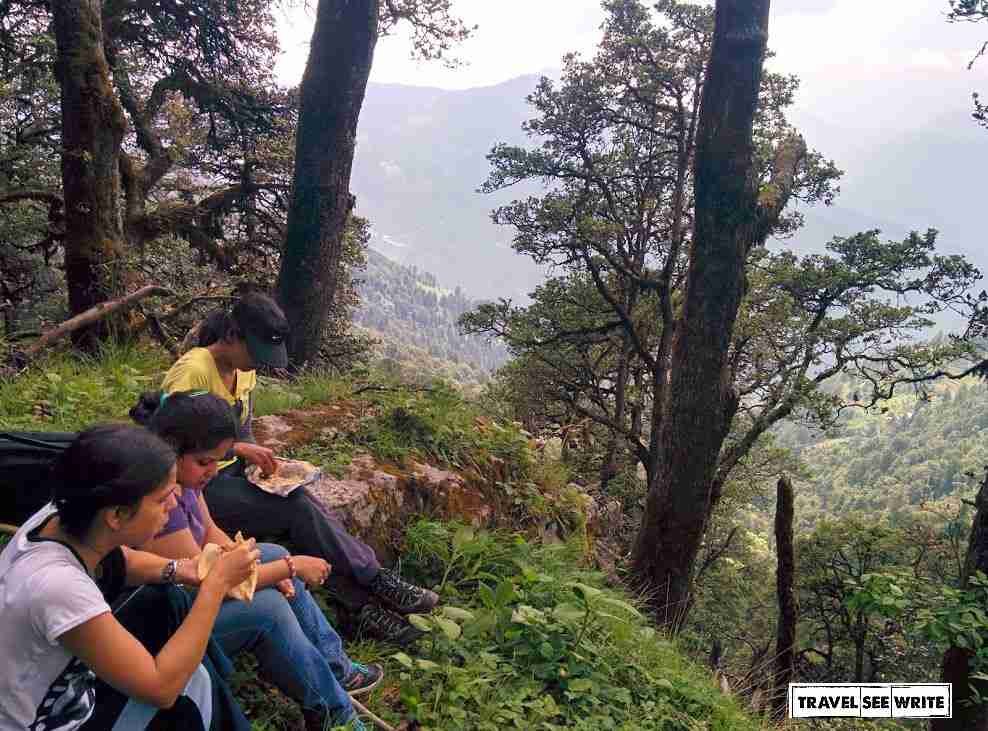
Lunch Break, Bashal Peak Trek, Sarahan

Wild Herbs, Bashal Peak, Sarahan
View during our Bashal Peak Trek, Sarahan

Panaromic View, Bashal Peak, Sarahan

Our Guide -Bittu

Shepherd dogs giving us Company during the Bashal Peak trek, Sarahan

Bhimakali Temple, Sarahan

Colourful houses at Sarahan
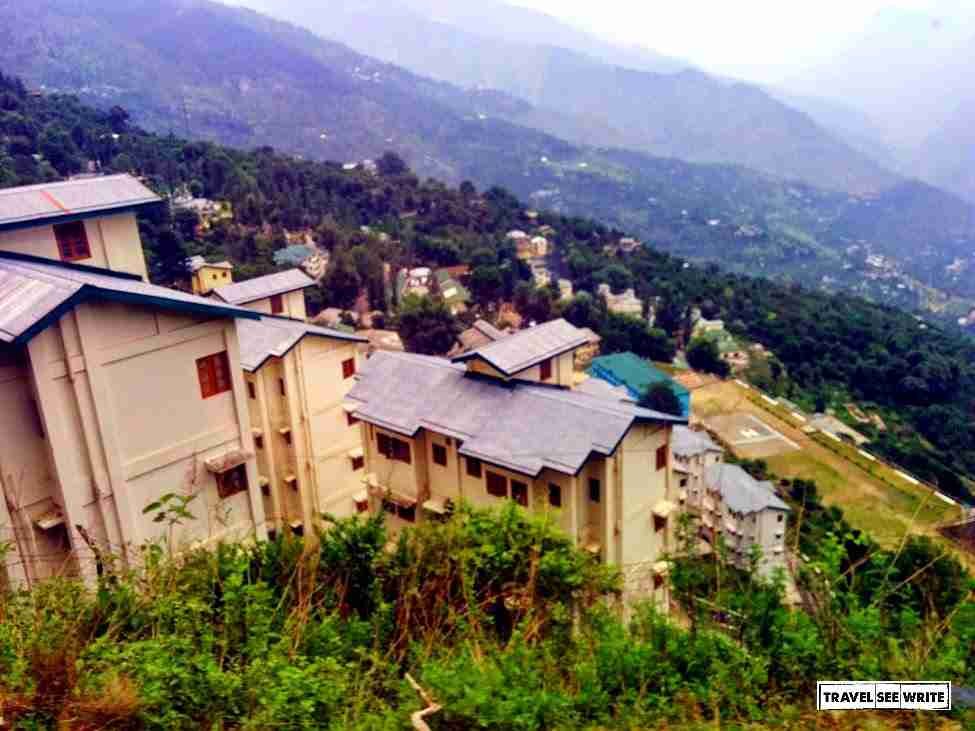
Sarahan to Shimla Highway

Monsoon Clouds on Sarahan-Shimla way

Somewhere on Shimla-Sangla-Kinnaur Highway, River Sutlej Flowing in the Bcakground
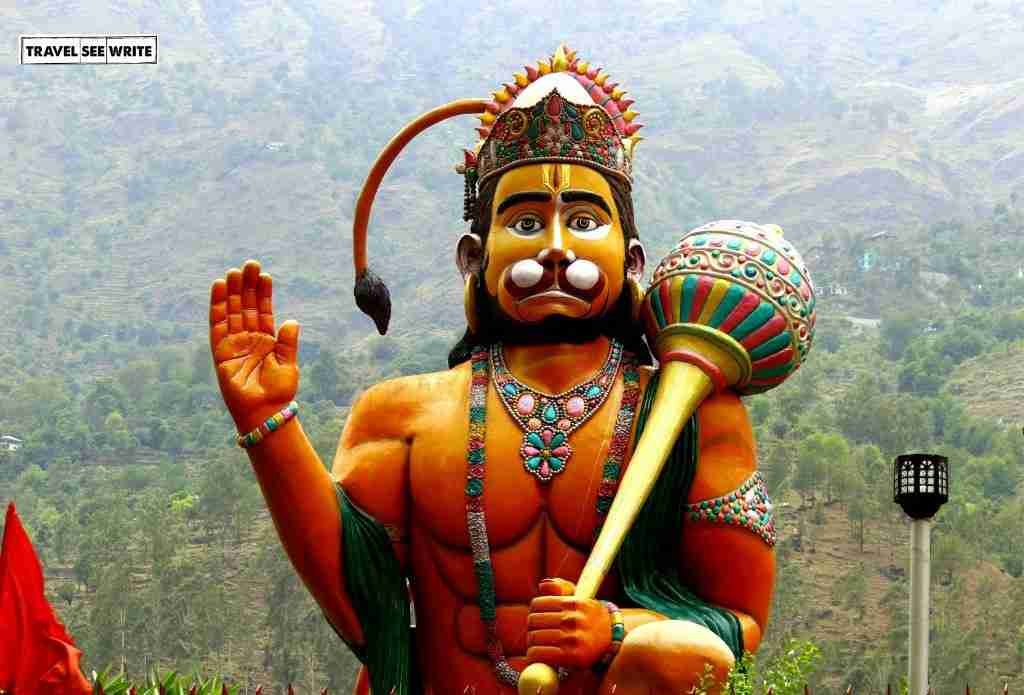
Bajrang Balli, Rampur-Sarahan Highway

Food Tripping at Shimla Mall Road

Solo Travel is no longer a taboo. Some travel out of compulsion and some out of curiosity. Whatever may be the reason, the fact is solo travel is in vogue. Travel communities, groups, meet-ups, and the ocean of digital resources have made it easier than ever before to hit the road solo. From the Great Blue Hole of Belize to the stunning landscapes of Queenstown, many destinations are friendly to solo travel. And you’ll find tons of articles on Google. However, we Indians have many issues when it comes to solo travel:
I am sure you’ll have a lot more to add to this list. In my last post, I wrote about how to plan your first solo travel. This post is dedicated to helping you choose your solo travel destination. The top solo travel-friendly destinations mentioned below have been handpicked on the basis of my personal experience, safety, food, cost, ease of travel, stay options, attractions, language and people you get to interact with. So Get Set Go!
My solo travel journey in India began with Ladakh, so it holds a special place in my heart. If I were to pick a destination to get lost I would always choose Ladakh. It’s never-ending mountain desert, rugged terrain, heavenly lakes, colourful festivals, serene monasteries and a wide variety of flora and fauna; was specially created by God when he must be in a very good mood. Probably it was a place hand-crafted by God for himself. And the people what do I say about them. They have a heart of gold. For more info do read 11 Soulful reasons to travel to Ladakh.

Rafting endpoint – the confluence of Indus & Zanskar in Ladakh, India
After a horrible experience in Tamil Nadu, I was pretty scared to explore Karnataka. But the experiences I had in Bangalore, Mysore, Gokarna, Hampi, Badami, Chikmagular, Coorg and other places were mind-blowing. Karnataka has a memorable mix of nature, history, beach and spiritual destinations. I felt genuinely welcomed. People didn’t try to take advantage, were helpful and admired my solo travel spirit than looking with condescendence.

Maravanthe Beach, Karnataka
This is one of my favourite and most explored state. Though lately, it has become bit touristy but still has a charm like your first crush. Himachal is synonymous with scenic beauty, serene landscape and adventure sports besides preferred for spirituality too. I did my hitchhiking trip here. Strangers would invite you to lunch and share apples just like that. It is the best place to start your love affair with mountains. Plenty of options to choose from – Kullu Valley, Parvati valley, Teerthan Valley, Sangla Valley, Dalhousie–Khajjiar- Chamba belt, Dharamshala –Mcleodganj, Palampur among others. Well connected with roads and no accommodation issue, this place is hit among solo travelers from India and abroad. Though Lahaul-Spiti is my favourite in Himachal but perhaps not ideal for your first solo trip. Do check Explore the hidden beauty around Manali, Malana and Lahaul

Sisu on the way to Lahaul, Himachal Pradesh, India
A treasure trove for history buffs, Rajasthan is on the list of every foreign and Indian traveler. And, rightly so. The close proximity to the capital makes it an ideal weekend destination for history, architecture, heritage, culture, tradition, art and food lovers. But there is much to explore in Rajasthan then doing a weekend trip there. There is no place as culturally and historically rich as Rajasthan is. Whether you are taking a desert safari in Jaisalmer or doing a Chudail in Kuldhara or brunching at Neemrana or attending the world’s largest cattle fair at Pushkar or revisiting history in Chittorgarh; Rajasthan will colour you in its vibrant colours.

Golden hour at Udaipur, Rajasthan, India
Contrary to the image seven sisters are the safest places for solo travelers. The matriarchal society means women are treated with utmost respect here. The unspoiled majestic beauty of the Himalayas makes it a breathtakingly beautiful place to travel to. The treks and homestays give you an authentic taste of India often ignored. From the mysterious Mawsmai Caves to Double Decker Living Root Bridge, a UNESCO World Heritage Site to the vast expanse of greenery, forests and mountains; North East will mesmerize you beyond imagination.

Voted as the best country to travel, Singapore is not only a multicultural city, always celebrating something but is also the safest island in the world. Beautiful like a dream and well managed like an orchestra, Singapore is poetry in motion. An ideal place to start your Solo Travel journey. From endless urban attractions to grand heritage buildings to chaotic hawker street centers to the serenity of green spaces to hip nightlife to glitzy high street malls to infinity pools to offbeat islands; Singapore has everything you would expect from a world-class city. Boasting of having one of the strictest laws, the crime rate is almost zero here. Thanks to MRT, moving around is a piece of a cakewalk. And the most defining pleasure of Singapore is its food. You’ll be spoiled for choice.

Singapore
Highly commercial but very safe and comfortable for solo travelers, London has attractions of all kinds – Wimbledon, Lords, Wembley stadium for sports aficionados, British Library and Shakespeare Globe Centre for literature fanatics, London Eye, Buckingham Palace, Big Ben, London Bridge and many other buildings for heritage admirers, Southall for authentic Indian food lovers, Harrods and Oxford Street for fashionistas, Design Museum and art galleries for art devotees among others. You name it and London has it. Also known as the birthplace of the Metro or London Tube as they call it, Public transport here is impeccable. Climate is slightly grey and cold but the warmth of people will melt your heart. Huge Indian diaspora presence makes you feel at home. Global cuisine restaurants and cafes are everywhere. The only thing that makes it slightly unattractive is the cost on your wallet.

London Eye on Thames River
If Singapore stands for efficiency, London for heritage, Sydney is the epitome of youthful exuberance. Perhaps, because half the population is not Australian and the average age of the citizens’ ranges between 20 and 40 years old. Sydney captivates you with its great variety of beaches, world-famous monuments and building, eco-friendly parks, enchanting landscapes and a never-ending variety of restaurants and cafes to suit every pocket. From spending a day at Manly beach to Sydney Harbour Bridge climbing to partying till wee hours at Ivy to having a romantic dinner date at Darling Harbour; Sydney will ensure you have an action-packed day with an equally alluring nightlife. On your night out, if you get too sloshed then there are special ‘Plan B Buses’ to drop you home safely and cheaply. Weather, language, travel, food are non-issues. Lastly, if you have not witnessed the world’s greatest New Year Party at Sydney Harbour then you have missed a lot in your life. If you are planning to go to Australia then do check out Practical Tips for your first trip to Australia.
The Famous Sydney Harbour Fireworks

The city of tall skyscrapers and the indoor ski range is probably the first place a solo traveller should go to. The language is familiar (more than 50% of the population is Indian), the food is familiar- you get idli-vada-sambar to Sanjeev Kapoor’s cooked Paneer Butter Masala and it is very safe. The people out there are very helpful as most of them are migrants and there is a lot to do in the city/state. You can head out to Yas Marina that hosts the Abu Dhabi Grand Prix, try the Torro Rosso-the fastest roller coaster in the world, get a glimpse of the world from the observation deck on the Burj Khalifa and enjoy dune bashing. All in all, a good starting point to get accustomed to solo travels and then move to some challenging ones. And don’t forget to check Offbeat Dubai: Beyond Burj Khalifa and Desert Safari.

Inside Manila Cathedral, Philippines
This place would have never made it to my list had I not lived here. The most underrated city in South East Asia. The Makati part of the city is like any First World city. Intramurous is your gateway to the Spanish era. The glitzy Glorietas, Greenbelts, Mall of Asia would confuse you if you were in the USA or in the Philippines. Unlike its South East Asian counterparts, everybody speaks English. Filipinos are the most humble and courteous people in the world. Music and basketball run in the veins of Filipinos. The old part of Manila is chaotic like any other developing country city but the beauty of the place lies once you hit the highway. The close proximity to beaches and having over 7000 islands make it a must visit place. The only negative about the city is its traffic and no direct flight from India. Do check out my articles on the Philippines, Bohol, Fortune Island, Puerto Galera for more information.
Hope this top solo travel-friendly destinations post inspires you to take that leap of faith and move on with your Solo Travel. Happy solo travels!
I have explored Spain, Kenya, Sri Lanka, and Switzerland with Travel See Write. Every experience was customised as per my family’s requirements, and each trip was fully customised.
Vaibbhav Sud
Delhi
I travelled with my family to Finland using Travel See Write. The team went above and beyond to make our stay enjoyable. They were even available at 3 am for services beyond their usual duties. ”
Gautam Kriplani
Jakarta, Indonesia
This is not a typical luxury travel agency — this is travel with soul. They take care of the minutest details and customise the tiniest things for us. I have travelled with them to Japan, Finland, Costa Rica, Russia and the Philippines.
Vineet Nanda
Delhi
I have explored Spain, Kenya, Sri Lanka, and Mongolia with Travel See Write. Every experience was customised for my family, and each trip was special
Sunil Sharma
Delhi
This is not a typical luxury travel agency — this is travel with soul. They take care of the minutest details and customise the tiniest things for us. I have travelled with them to Japan, Finland, Costa Rica, Russia and the Philippines.
Aman
Mumbai

Lorem Ipsum is simply dummy text of the printing and typesetting industry. Lorem Ipsum has been the industry's standard dummy text ever since
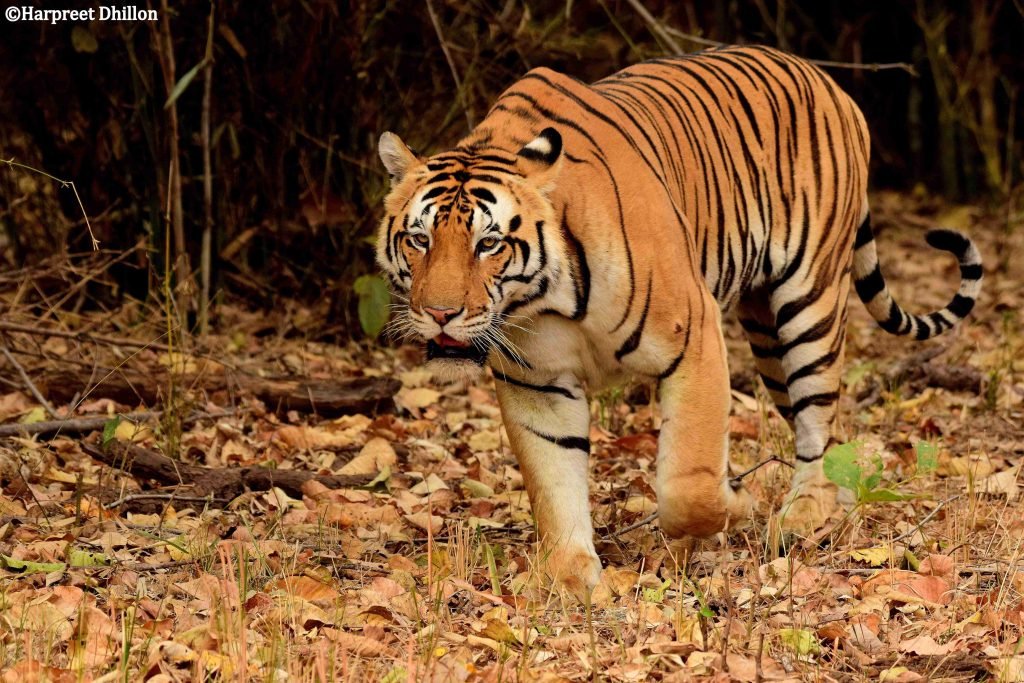
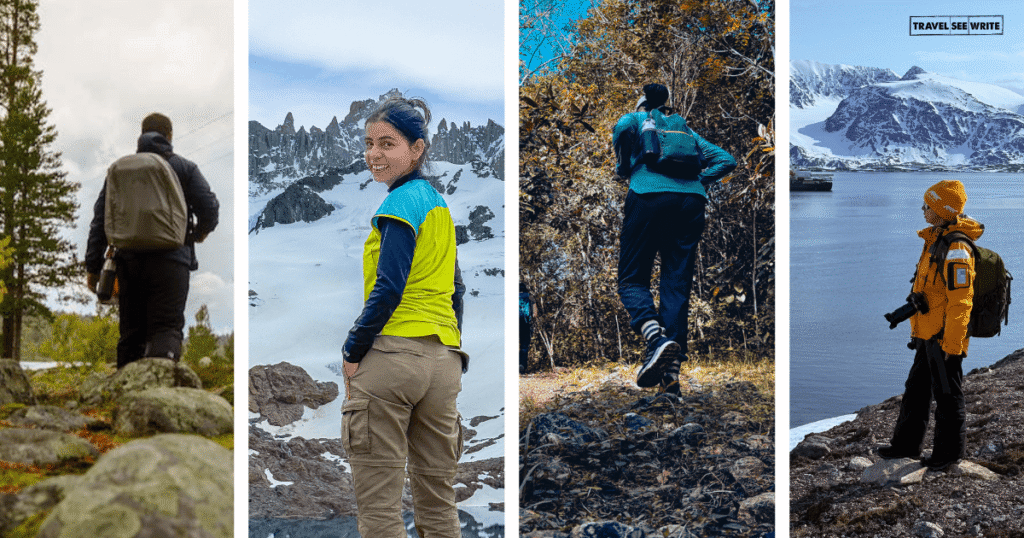
Luxury travel should feel seamless from start to finish.

Begin with our online form. We then connect for a detailed conversation
No booking fees. Ever.
We fine-tune your bespoke itinerary until it feels perfect.
With confidence, care, and 24/7 on-ground support throughout your journey.