
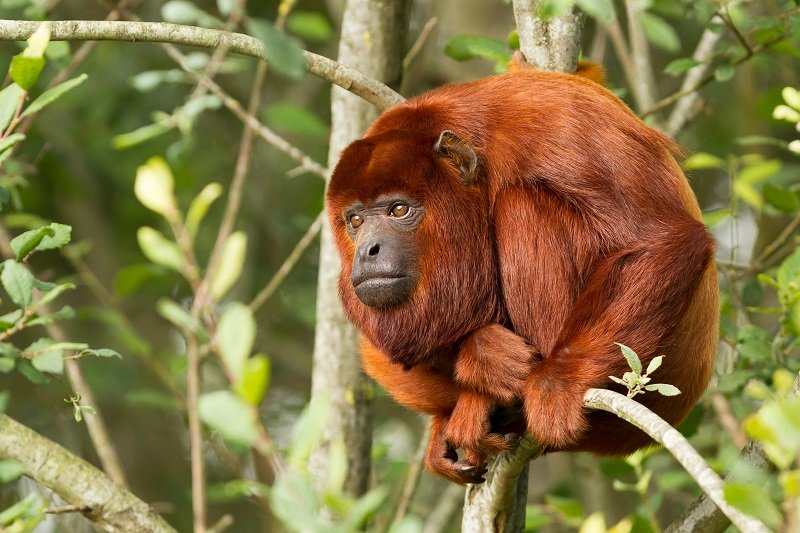
I am not a bucket list traveller, but Peru is one destination that I have always dreamt of visiting. Therefore, in 2024, when I was planning my six-month expedition from the Arctic to Antarctica, it was a no-brainer to include Peru. After all, from the Andes to the Amazon, Machu Picchu to Lake Titicaca, what does Peru not offer? Peru is one of the most geographically gifted places in the world, with 11 diverse ecological regions divided into three distinct areas: the coast, highlands, and Amazon, each with unique ecosystems and climates. I wanted to explore all of them within the short duration of time I had.
During an event, I was introduced to Mountain Lodges of Peru (MLP), and I instantly fell in love with their philosophy of promoting sustainable, active tourism in the underdeveloped Andes region of Peru. They are a locally owned company that redefines adventure — blending luxury, culture, and heart. Their journeys aren’t about rushing from one landmark to another. They’re about slowing down, walking the old trails, meeting people who still live the Inca way, and sleeping in lodges where mountains watch over you like old friends.
Mountain Lodges of Peru not only showed me the best places to visit in Peru that are very popular, but also introduced me to the hidden gems of Peru that showcased the soul of this Latin American jewel. More about that in my upcoming stories. Right now back to Amazon.
While I spent more than three weeks in Peru, I was most excited to visit the Peruvian Amazon because I was going to stay in the Tambopata Research Centre, arguably one of the remotest wildlife lodges in South America. In this blog post, I’ll be sharing my experience of staying at the Tambopata Research Centre in Peru and a complete travel guide for people who are interested in visiting this incredible place.
First, let’s start with the basics.
What makes the Peruvian Amazon unique?
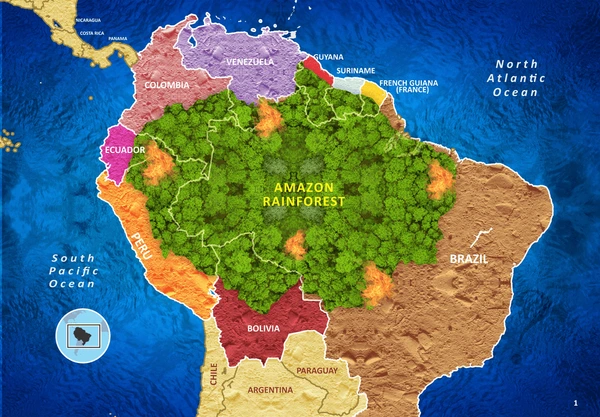
The Amazon in Peru spans an extensive area of 782,880.55 km² east of the Andes, representing more than 60% of the country’s territory. What sets the Peruvian Amazon apart is its remarkable biodiversity, which includes more than 25,000 plant species (approximately 10% of the world’s total), 1,815 bird species (the second highest globally), over 2,000 fish species, more than 30 amphibian species (ranked third in the world), over 450 mammal species (also third in classification), and more than 350 reptile species (fifth in classification). Many of these species are endemic to the Amazon, and to safeguard this unique flora and fauna, Peru has established protected forest areas known as reserves. I wanted to experience this Biodiversity hotspot, so I planned a trip to the Peruvian Amazon.
People often ask, “Is the Amazon in Peru dangerous?” With proper planning and guides, it is quite safe. Numerous tour companies, such as Mountain Lodges Peru, offer Amazon tours from Cusco and Lima. You can join from anywhere.
Where is the Amazon Rainforest located in Peru?
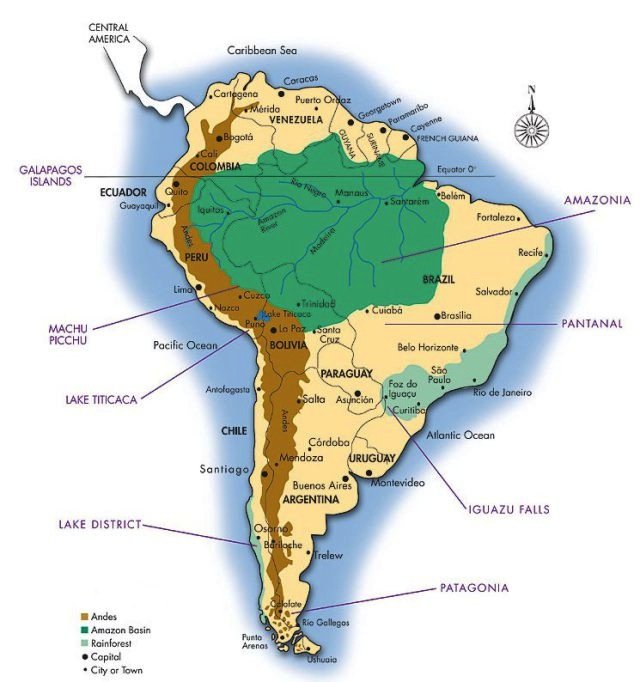
Peru is situated along the western coast of South America, adjacent to the Pacific Ocean. It shares borders with Ecuador, Colombia, Brazil, and Bolivia, and, except for Chile, also shares the Amazon rainforests with these countries. Here is the Amazon Rainforest Map.
The Peruvian Amazon Rainforest is situated east of the Andes Mountains in the northeastern and southeastern parts of the country. The best places to visit are Iquitos in the north and Puerto Maldonado in the south. I visited the Tambopata Research Centre in Puerto Maldonado. Here is my detailed itinerary broken down day-wise:
Day 1: Lima to Puerto Maldonado – The Gateway to the Amazon (October 17, 2024)
My Amazonian adventure began in Lima. After a restful stay at the plush B Hotel in Lima, known for its impeccable service and comfortable accommodations, I enjoyed a leisurely breakfast before heading to the airport. The hotel staff had been incredibly helpful, ensuring a seamless start to my journey. A pre-booked cab conveyed me to the airport for $25 (a bit more than a direct airport transfer, but the convenience was welcome). Check-in was smooth, and soon I was airborne, watching the snow-covered Andes morph into the verdant expanse of the Amazon rainforest. The flight to Puerto Maldonado was brief, just 1 hour and 45 minutes.
Upon arrival at the small Puerto Maldonado airport, I was greeted by a representative from Rainforest Expeditions, who held a placard with my name. The adventure had truly begun! We boarded a bus where we were served lunch: Peruvian-Chinese rice, nuts, bananas, and orange juice. An hour’s drive brought us to the Tambopata River. Here, we transferred to a motorised wooden canoe, our vessel for the next three hours.
The river’s initial stretch was muddy, reflecting the lower altitude. As we journeyed upstream, the water gradually transformed into a vibrant green. We passed a large clay bank, a crucial spot for birds gathering minerals. The Tambopata National Reserve is a biodiversity hotspot: over 1,000 butterfly species, 100 mammal species, 600 bird species, and countless varieties of trees and plants. I was alert, hoping to catch sight of some of its famed residents. During the boat ride, we were fortunate to observe a Black Caracara and a majestic Harpy Eagle in flight.
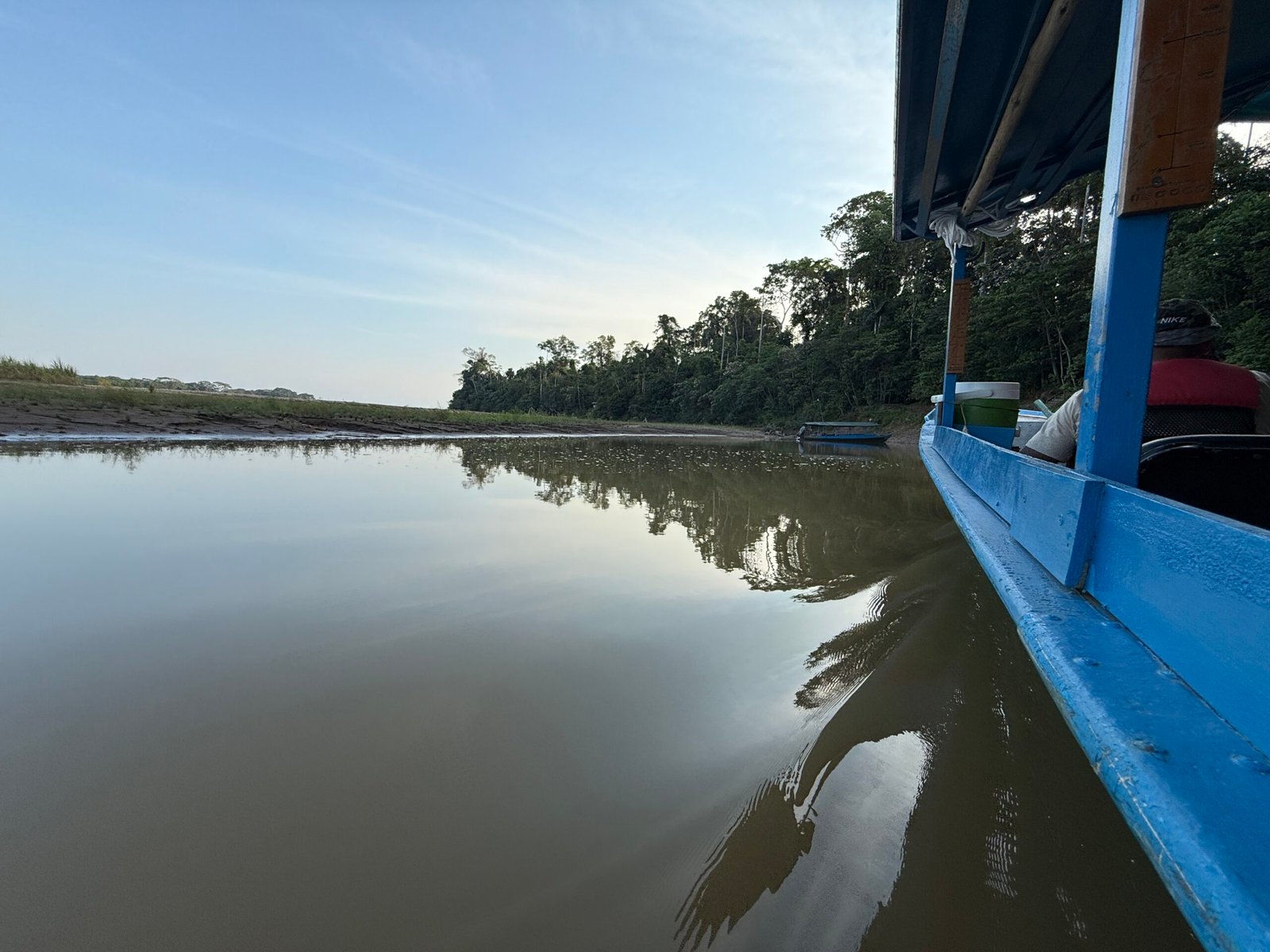
At the meeting of two rivers, the boatman expertly steered through the shallows using a long pole. At last, we arrived at the Tambopata Research Center Lodge, one of the most secluded lodges in the Amazon. We were greeted by Tania, the lodge manager, who briefed us on the research centre and the planned activities for the upcoming days.

Established in 1989, the centre originated as a research site. Tania explained the three ongoing scientific projects: macaw conservation, primate research (focusing on eight species), and the study of tiger moths (since 2016). I was thoroughly impressed by their commitment to the conservation of the Amazon.
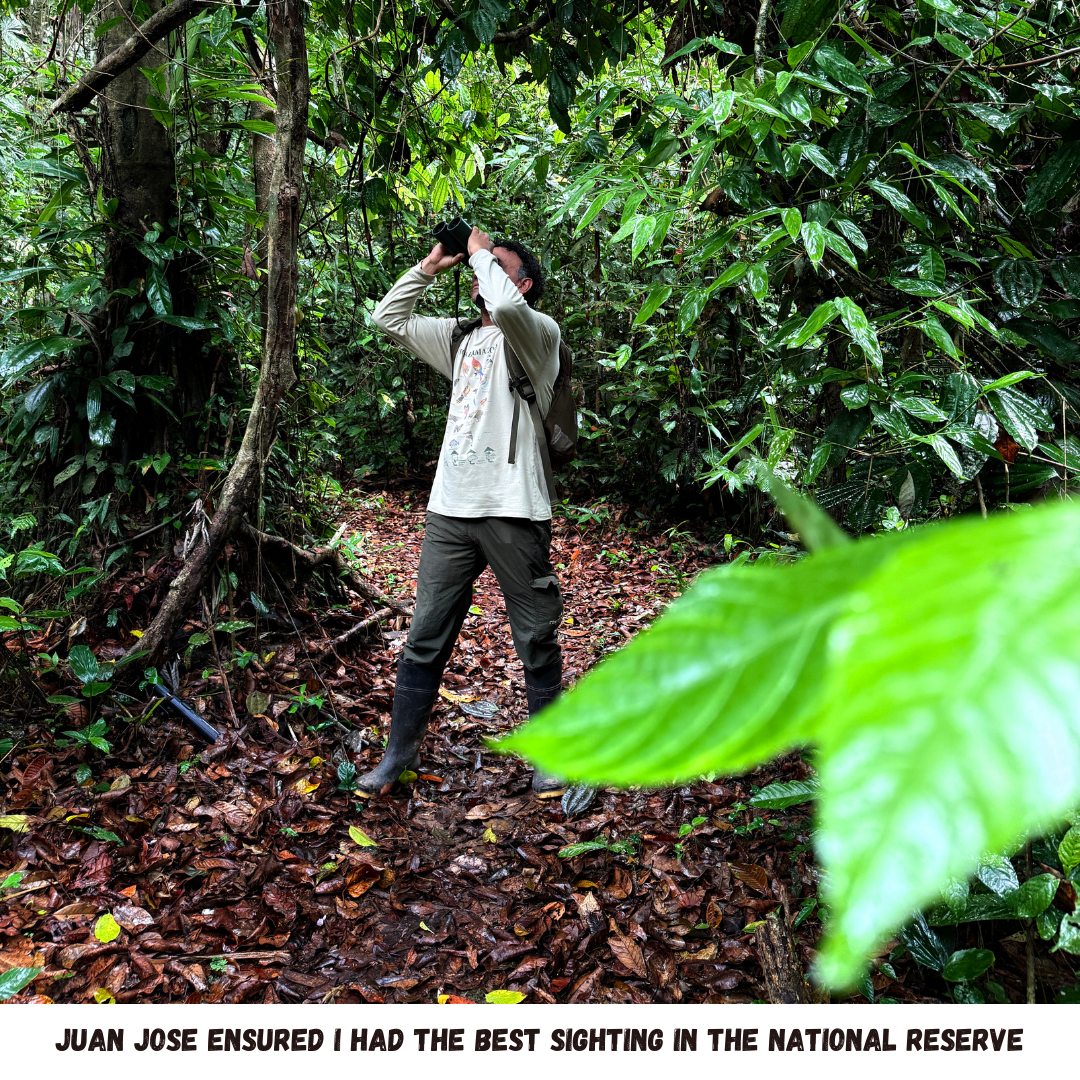
The lodge offered excellent facilities, including buffet-style meals, coffee available throughout the day and night, a bar, a hammock area, a massage room, and a gift shop. After the briefing session, I was assigned a personal Rainforests Expedition guide – Juan Jose – who would assist me in all my upcoming Amazon adventures.
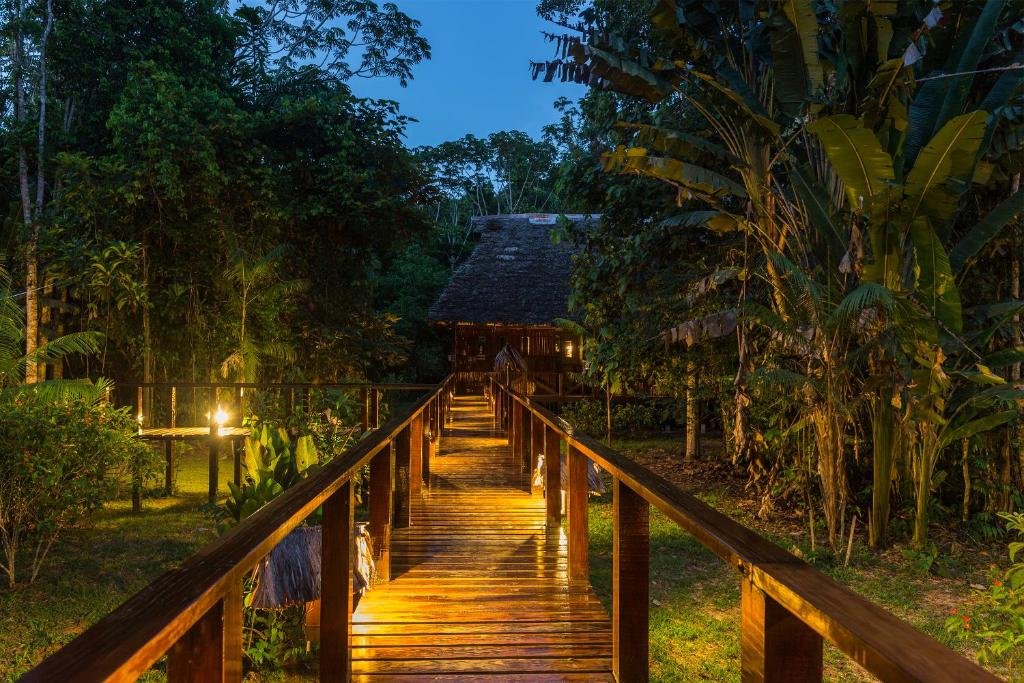
Crossing a long wooden overbridge, raised at least 10 feet above ground, I reached my room. As I unlocked my room, I was greeted by a space that had an open wall facing the Amazon rainforest. While there was a wall and door on one side to maintain privacy, on the opposite side, the room was open-air, with mosquito nets draped over the beds. There was a hammock, a reading chair-table, a lounge settee kind of sofa, and 2 double size bed with mosquito nets. There was a fully furnished private bathroom with a hot shower, eco-friendly toiletries such as biodegradable shampoo, conditioner, and liquid soap. There was also a safe deposit box. My guide had specifically advised me not to keep any eatables in the room, as primates or rodents could be attracted by their smell.
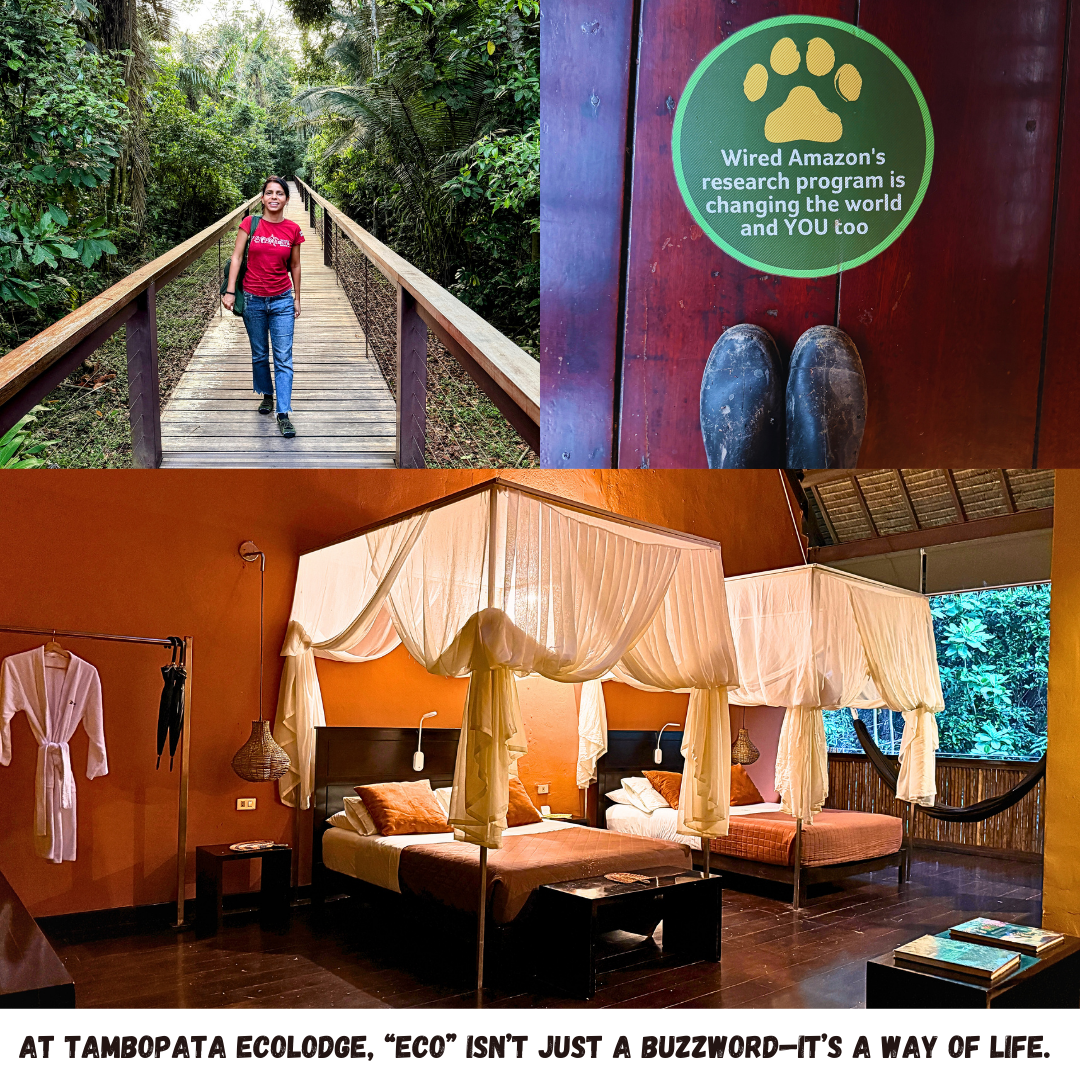
The best part about my room was having an open view of the jungle. Daily, I was woken up with a unique bird song in the morning. In the morning, you can watch the howler monkeys climb over the trees from your bed. Believe me, this is a room you don’t want to leave anymore! It is unique that you can spend the night in such a luxurious way in nature.
Over the next few days, I immersed myself in an unforgettable adventure at the Tambopata Research Centre, nestled deep within the Tambopata National Reserve. Surrounded by the vibrant wildlife and lush plant life of the Amazon jungle, I experienced nature like never before. I enjoyed personalised activities led by expert guides from Rainforest Expeditions, ensuring that every moment was filled with discovery and wonder. I was ready to embrace the magic of the rainforest!
After lunch, around 3 pm, I went for my first guided walk with my guide, Juan Jose. We saw many primates and a variety of Amazonian birds returning to their nests. After climbing an observation deck above tree line, I saw my first sunset in the Amazon.
Day 2: Macaw Clay Lick and Rainforest Exploration (October 18, 2024)

My day started at 4:00 am to observe the macaws at a clay lick. A quick 5-minute boat ride followed by a 5-minute walk through a field of bitter cane brought us to the observation point.
The landscape was intriguing. Grass and creepers dominated the foreground, transitioning into bitter cane, then the distinctive sacrotius and pikous trees. Hundreds of birds filled the air with their calls. We saw Blue-headed Parrots, Yellow-crowned Parrots, White-bellied Parrots, Orange-cheeked Parrots, Chestnut-fronted Macaws, Blue and Yellow Macaws (larger than the Chestnut-fronted), Scarlet Macaws (the largest, with vibrant red, blue, and yellow plumage), Red and Green Macaws, Blue-throated Piping Guans (related to the wild turkey), Russet-backed Oropendolas, and a Lineated Woodpecker.
Several theories exist about why macaws consume clay. Some propose it supplements their diet with essential minerals, while others suggest it aids in removing toxins. The clay lick also functions as a social gathering place for these magnificent birds.
After 1.5 hrs of watching the macaws, we relished the breakfast in the wild.
Of the world’s 16 macaw species, six are found in Peru. We saw four species this morning – three large and one small. We also encountered a family of Howler Monkeys. The macaws flew in pairs. We even spotted a Capybara and a Striped Hog-nosed Skunk.
Peru’s exceptional biodiversity stems from its unique position between the tropics, the Andes, the Amazon, and the Peruvian sea. The country has 1,200 butterfly species, ranking second globally for bird species. It also has over 100 mammal species, the third highest worldwide.
On our return, we saw a Spectacled Caiman and Six-tubercled River Turtles.
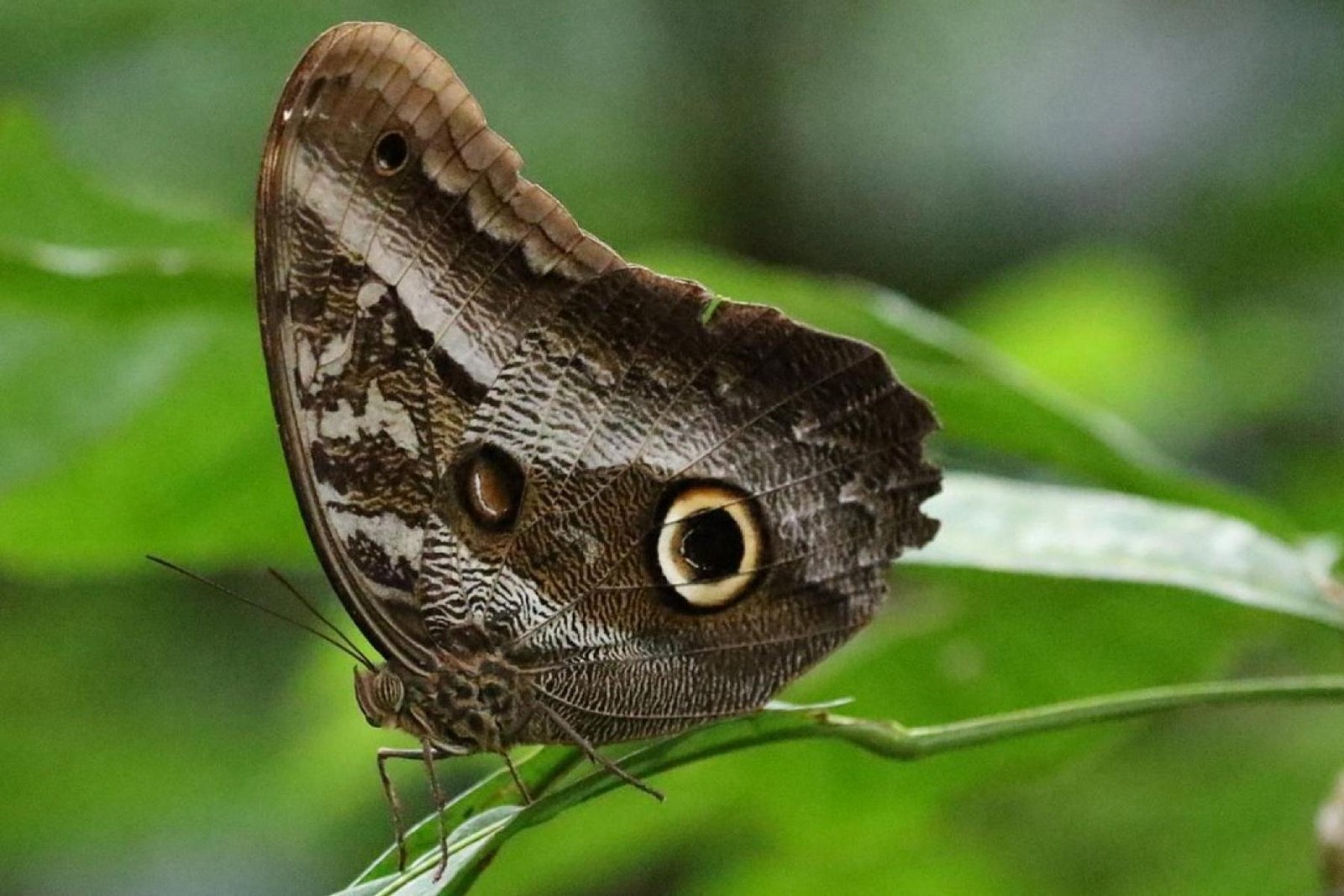
Later in the morning, my 11:00 am walk revealed more: a Hornet Eagle, a Blue Morpho butterfly, Owl butterflies, more Macaws, a huge Renacho tree covered in orchids, a Mandy Lu nest (an artificial nest for macaws), Sikeda (large Amazonian flies), and numerous Pona and Shapaja palm trees.
Amazonian tree roots often grow above ground due to the shallow nutrient layer. Vines twisted through the forest, and I saw a caterpillar preparing to become a butterfly. We also spotted a brightly colored, but poisonous, Dark Poison Frog.
An old Kapok tree stood tall above the forest. These massive trees are used to make boats. Large Turkey Tail fungi grew on the forest floor.
The Kapok tree is the second-largest tree after the Sequoia. It’s said to have inspired the “Tree of Souls” in Avatar.
Numerous mushrooms worked to decompose the vast amounts of organic matter produced by the jungle.
Day 3: Bamboo Walk and Monkey Encounters (October 19, 2024)
Despite the rain, I went on a bamboo walk. We hiked through the forest to a termite nest.
We encountered a Palosanto tree, its trunk meticulously cleaned by Fire Ants (known for their potent sting). A Golden Silk Orb-weaver spider lurked nearby. We also saw a large Ironwood tree.
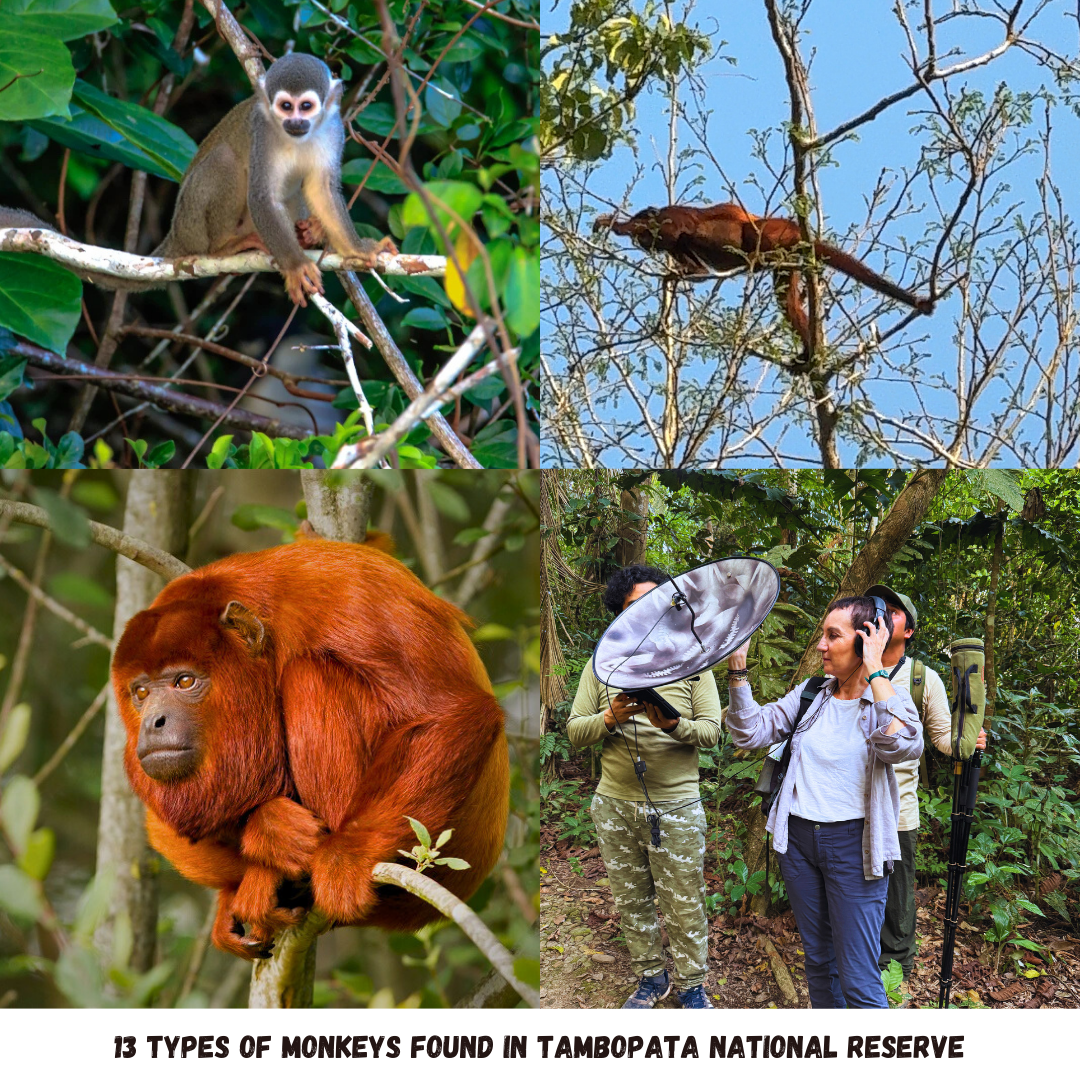
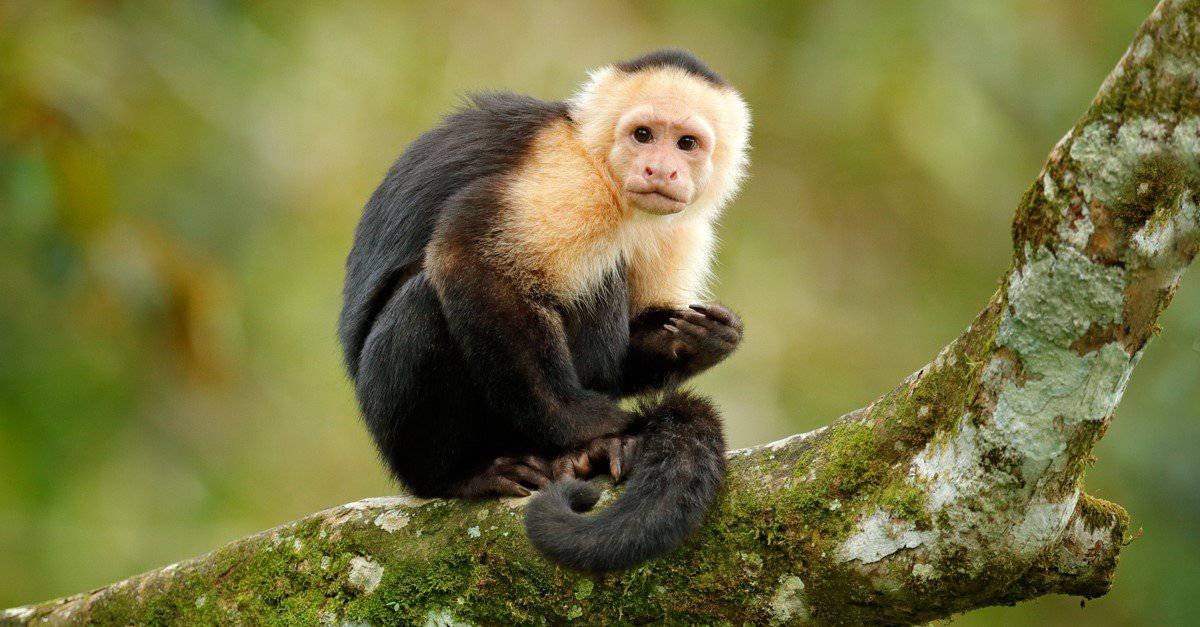
Today’s highlight was seeing three monkey species: Howler Monkeys, Squirrel Monkeys, and Capuchin Monkeys. We even saw a rare sight – two different monkey species travelling together. Squirrel Monkeys are good at spotting predators, while Capuchin Monkeys are skilled at finding food.
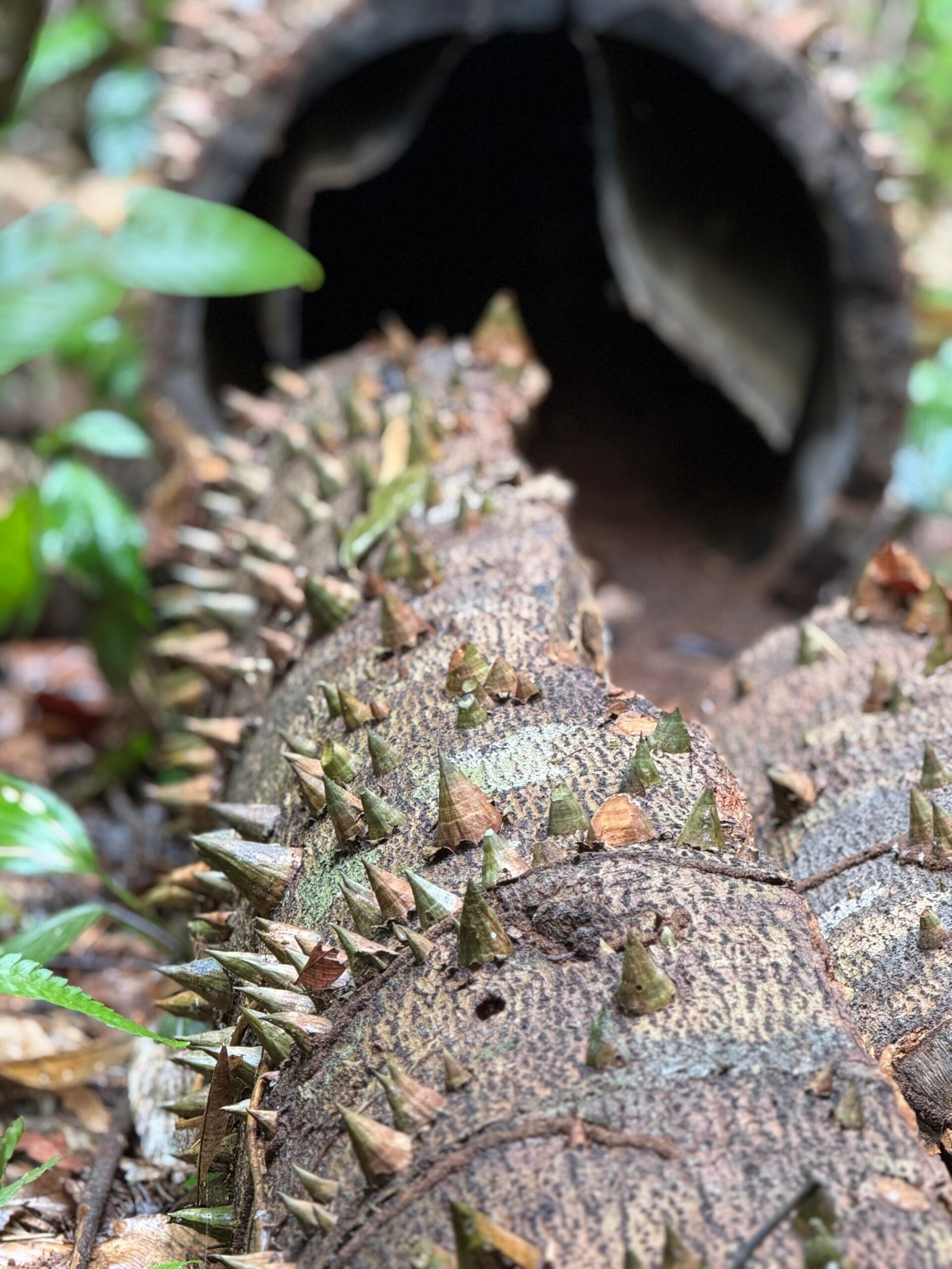
A Stick Insect, perfectly camouflaged, resembled a twig. The Wimba Tree, covered in huge spikes, displayed its defence against animals. The Porotillo tree (Erythrina velutina) also uses thorns for protection. The Ceibo or Palo Borracho tree (Eriotheca discolour) is distinctive for its green trunk, which allows it to photosynthesize.
We spotted a Pale-winged Trumpeter (a bird that walks in groups), an Oriole Blackbird (a rare sighting!), an Osprey (a seasonal bird, present from May to September), Shiny Cowbirds (black birds on the river sandbar), a Black Caracara, a Pied Plover, White-banded Swallows, and two Burrowing Owls. I used the Merlin Bird ID app to identify some species.
Day 4: Farewell to the Amazon (October 20, 2024)
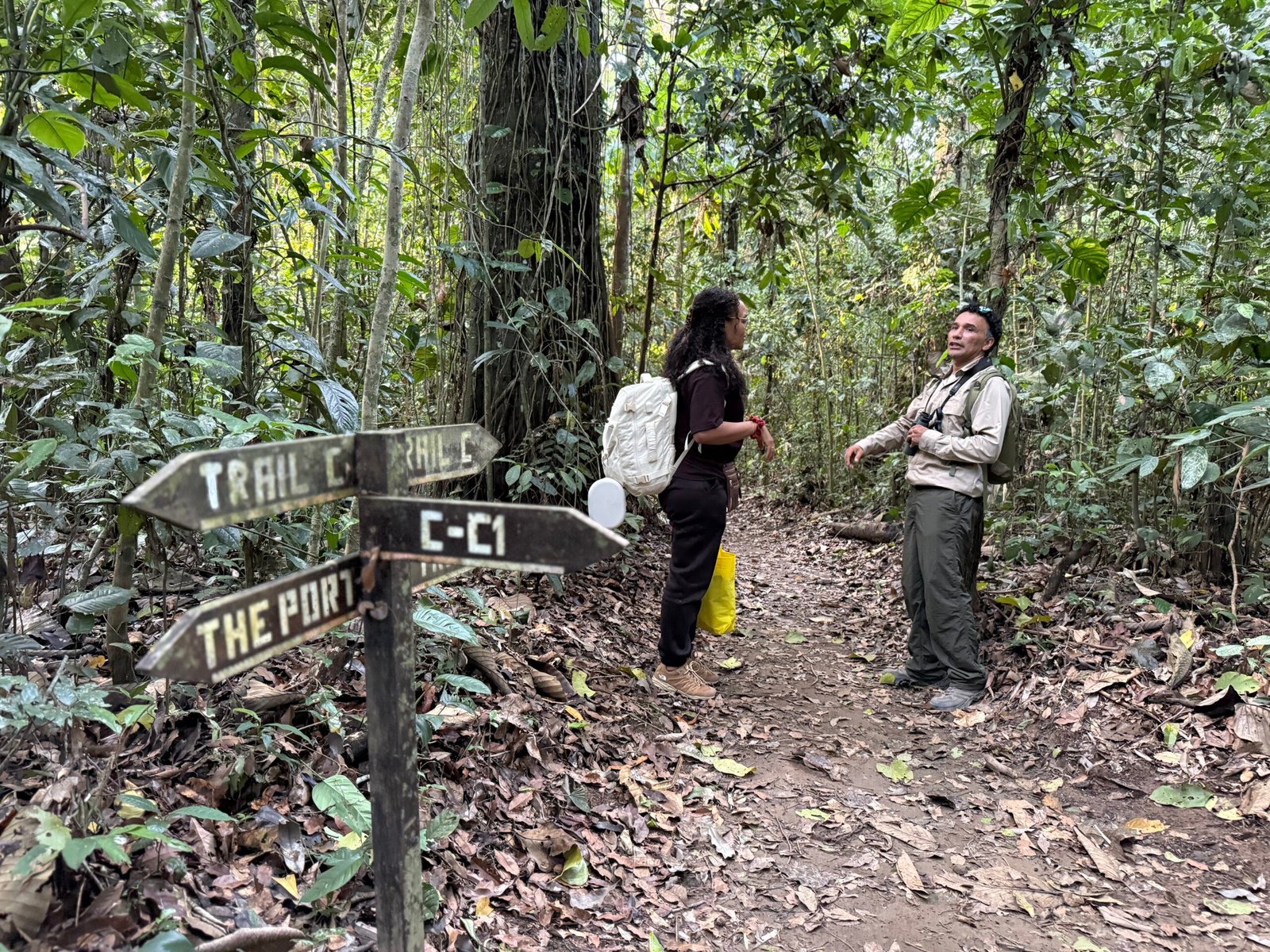
My final morning at the Tambopata Research Center was both joyful and melancholic. I enjoyed a last guided activity with Rainforest Expeditions before a scenic boat ride back to Puerto Maldonado. From there, I transferred to the airport for my flight to Cusco, the historic city in the Andes and the gateway to Machu Picchu. I planned to spend the day adjusting to the altitude before continuing my Peruvian journey. I checked into the Andenes Hotel, ready to explore Cusco.
Frequently Asked Questions about the Tambopata Research Center and the Amazon:
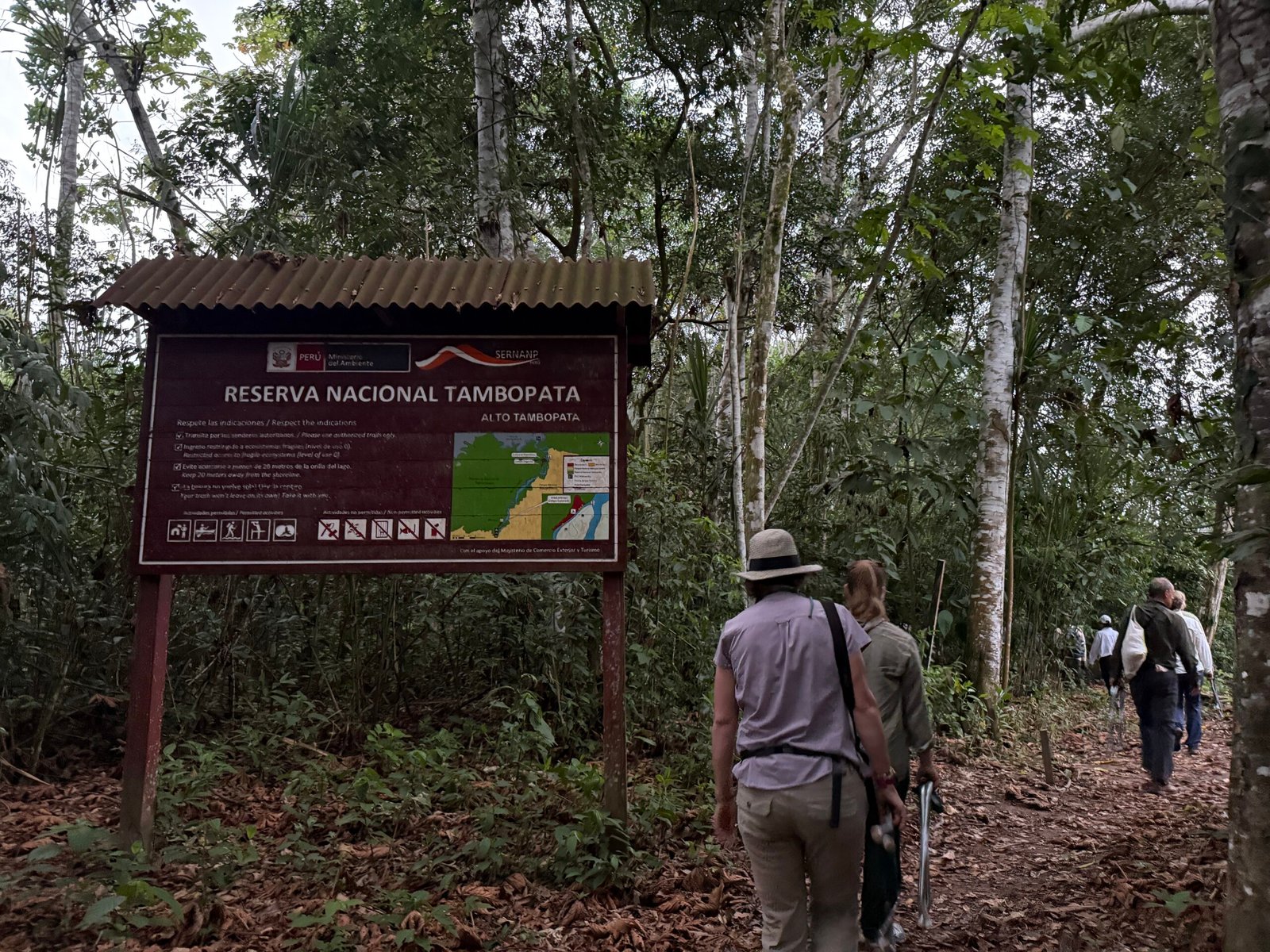
- What is the Tambopata Research Center? It’s a remote eco-lodge within the Tambopata National Reserve, providing exceptional access to the Amazon rainforest’s remarkable biodiversity. It also functions as a research facility with ongoing scientific projects.
- How do I get to Tambopata Research Center? You’ll typically fly to Puerto Maldonado and then take a combination of bus and boat transportation to the lodge. Rainforest Expeditions manages all the logistics.
- What is the best time to visit Tambopata? The dry season (April to October) is generally considered the best time for wildlife viewing, as animals gather around water sources. However, the rainy season (November to March) offers a different perspective, with vibrant landscapes and opportunities for birdwatching.
- What kind of wildlife can I see in Tambopata? The reserve is full of wildlife, including macaws, parrots, monkeys (howler, squirrel, capuchin), caiman, giant otters, tapirs, jaguars (though sightings are rare), and an incredible variety of birds, insects, and butterflies.
- What activities are available at Tambopata Research Center? Guided activities include macaw clay lick visits, rainforest walks (day and night), boat trips on the Tambopata River, canopy tower climbs, and cultural experiences with local communities.
- What should I pack for a trip to Tambopata? Pack light, breathable clothing in neutral colors, comfortable walking shoes, rain gear, a hat, sunscreen, insect repellent, a reusable water bottle, and a flashlight or headlamp. Binoculars are highly recommended for wildlife viewing.
- Is it safe to visit Tambopata? Tambopata is generally safe for tourists. However, it’s vital to follow your guide’s instructions, be aware of your surroundings, and take precautions against mosquito bites and other insect stings.
- What vaccinations are recommended for Tambopata? Consult your doctor or a travel clinic for the most up-to-date vaccination recommendations. Malaria medication may be advised.
- Is there internet access at Tambopata Research Center? Internet access is limited due to the remote location. The lodge may offer some connectivity, but it’s best to be prepared to disconnect and appreciate the quiet of the rainforest.
- What is the food like at Tambopata Research Center? The lodge offers buffet-style meals featuring a variety of Peruvian cuisine, including fresh fruits, vegetables, and local dishes. They can accommodate dietary restrictions with advance notice.
- What is the Tambopata Research Center’s approach to sustainability? The center is dedicated to sustainable tourism practices and works closely with local communities to conserve the rainforest and its biodiversity. They employ local guides, support community projects, and minimize their environmental impact.
- How can I contribute to conservation efforts in Tambopata? By visiting the Tambopata Research Center, you are directly supporting conservation efforts. You can also donate to organizations working to protect the Amazon rainforest and its wildlife.
- What other Amazonian destinations can I combine with Tambopata? Many travelers combine Tambopata with visits to other parts of the Amazon, such as the Pacaya Samiria National Reserve or the Manu National Park.
- How much does a trip to Tambopata cost? The cost of a trip to Tambopata varies depending on the length of your stay, the type of accommodation you choose, and the activities you participate in. Rainforest Expeditions offers various tour packages to suit different budgets.
- What languages are spoken in Tambopata? Spanish is the official language of Peru. English is spoken at the Tambopata Research Center, but knowing some basic Spanish phrases will enhance your experience.
- What currency is used in Peru? The official currency is the Peruvian Sol (PEN). US dollars are widely accepted in tourist areas, but it’s a good idea to have some Soles on hand for smaller purchases.
- Are credit cards accepted at Tambopata Research Center? Credit cards are generally accepted at the lodge, but it’s always a good idea to check beforehand.
- What is the tipping etiquette in Tambopata? Tipping is customary in Peru. It’s appropriate to tip your guides, boat drivers, and lodge staff for their services.
- What is the altitude in Puerto Maldonado and Tambopata? Puerto Maldonado and Tambopata are located in the lowlands of the Amazon basin, so there is no significant altitude to worry about.
- What is the weather like in Tambopata? The weather in Tambopata is hot and humid year-round, with average temperatures ranging from 80°F to 90°F (27°C to 32°C). Rainfall is common, especially during the rainy season.
- Are there mosquitoes in Tambopata? Yes, there are mosquitoes in Tambopata. It’s essential to bring insect repellent and wear long sleeves and pants, especially in the evenings.
- Is it possible to see jaguars in Tambopata? While jaguars inhabit the Tambopata National Reserve, they are elusive creatures, and sightings are rare. However, the possibility of encountering one adds to the excitement of exploring this incredible wilderness.
What’s Next:
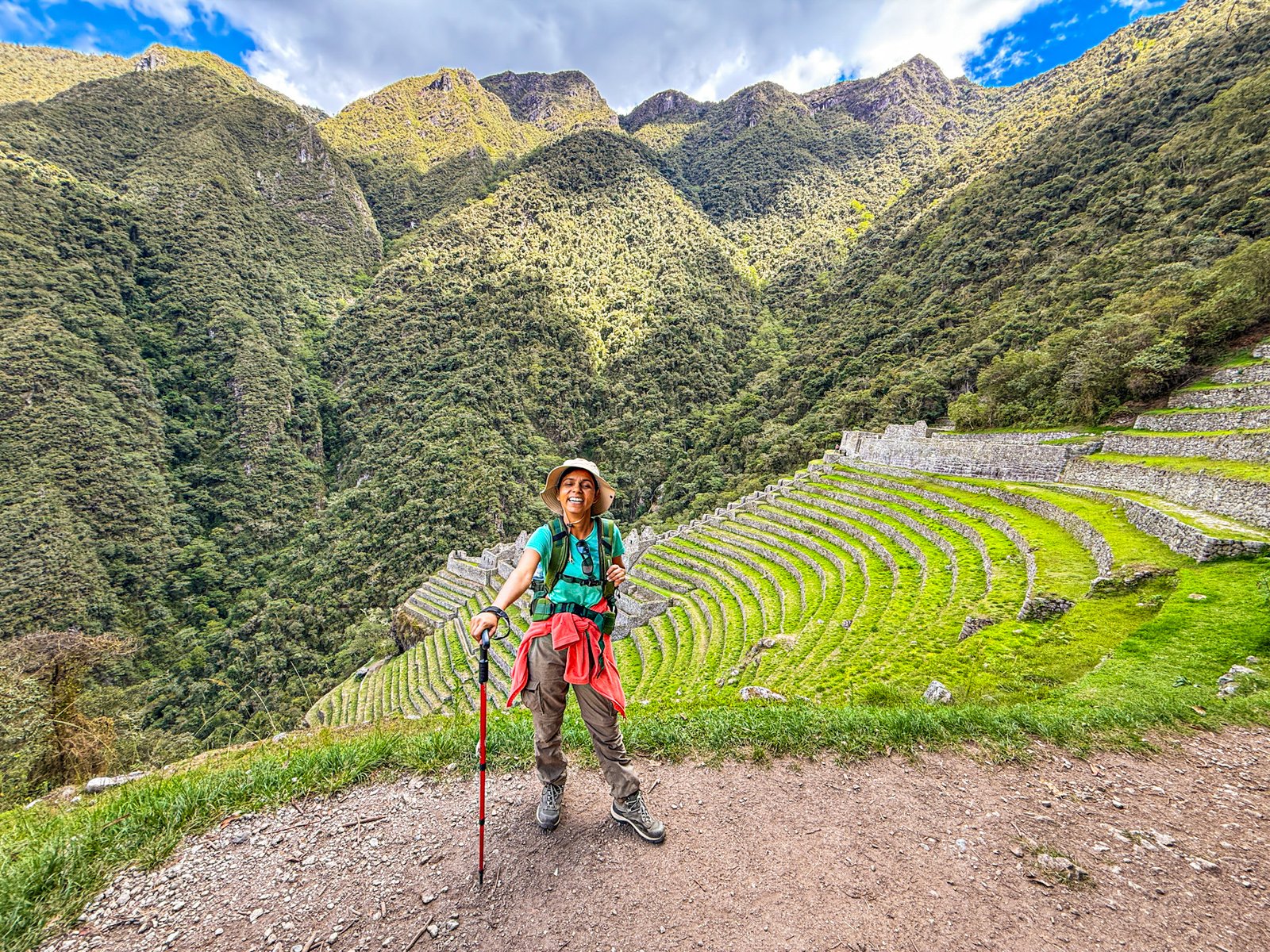
My journey to Tambopata, expertly arranged by Mountain Lodges of Peru, was more than just a trip; it was a carefully curated experience. Their attention to detail, from the seamless transfers to the knowledgeable guides, truly elevated my Amazonian adventure. They understood the nuances of the rainforest and ensured that I had the best possible opportunity to connect with this extraordinary environment. I particularly appreciated their commitment to sustainable tourism, which resonated with my own values. Mountain Lodges Peru allowed me to focus on the wonder of the Amazon, knowing that all the logistics were handled with expertise and care.
This experience with Mountain Lodges Peru has ignited a deeper passion for exploring Peru’s diverse landscapes and cultures. In my upcoming posts, I’ll be sharing my journeys through the captivating city of Cusco, the mystical Sacred Valley, the awe-inspiring Machu Picchu, and the less-travelled Lares Valley. Join me as I continue to uncover the treasures of this remarkable country, revealing the stories and experiences that make Peru such a unique and unforgettable destination. From the heights of the Andes to the depths of the Amazon, the adventures continue!


