
Goa Travel Guide 2026: Best Time to Visit, Where to Stay, Offbeat Places and the Cafés I Keep Going Back To
Goa is so much more than beaches and parties. This Goa travel guide 2026 shares my experience staying at Renaissance Goa Hotel and exploring a slower, deeper side of the state. Inside, you’ll find when to visit, how to choose between North and South Goa, which airport to fly into—Mopa or Dabolim—and tips for offbeat spots like Divar Island and standout cafés.

“Am I in Amalfi or Goa?”
That was the first thought that crossed my mind as I stepped into Casa Limone at the Renaissance Goa Hotel. Surrounded by floral balconies, cream stucco walls, and vibrant, hand-painted Italian maiolica ceramic plates, I stood beside a lush lemon tree and a vintage Vespa scooter covered in bold citrus and floral art. Bathed in soft, golden light, this hidden gem looks straight out of the Amalfi Coast—yet it’s right here in Arpora, North Goa, just minutes from the buzz of Baga.
I have been to Goa more times than I can count. For GoaFest, for film shoots, for weddings, for India Blog Train for that one New Year I still regret, and for long lazy weeks where the only plan was breakfast. And yet this trip surprised me. I came for two days at Renaissance Goa, stayed on to chase the quieter side of the state (river islands, temple ruins, a kayak at dusk, an inner tube on a hinterland river) and came home to an inbox that looked like a Goa help desk.
When is the best time to go? North or South? Is Mopa better than Dabolim? Is it safe if I go alone? Where should we eat in Anjuna?
The Goa season has officially begun, the shacks are back on the sand and those questions are not going to stop. So instead of answering each message one by one, I have put everything into this Goa travel guide.
In this post I’ll take you through my Day of Discovery at Renaissance Goa, the offbeat Goa I explored after it, three cafés and restaurants I keep sending friends to, and then the practical bit: the best time to visit Goa, how many days you need, North Goa or South Goa, where to stay, which airport to fly into, what a Goa trip costs, safety for solo women, what to pack and a quick planner you can screenshot.
But first, the one question I wish more people asked before booking.
What kind of Goa do you want?
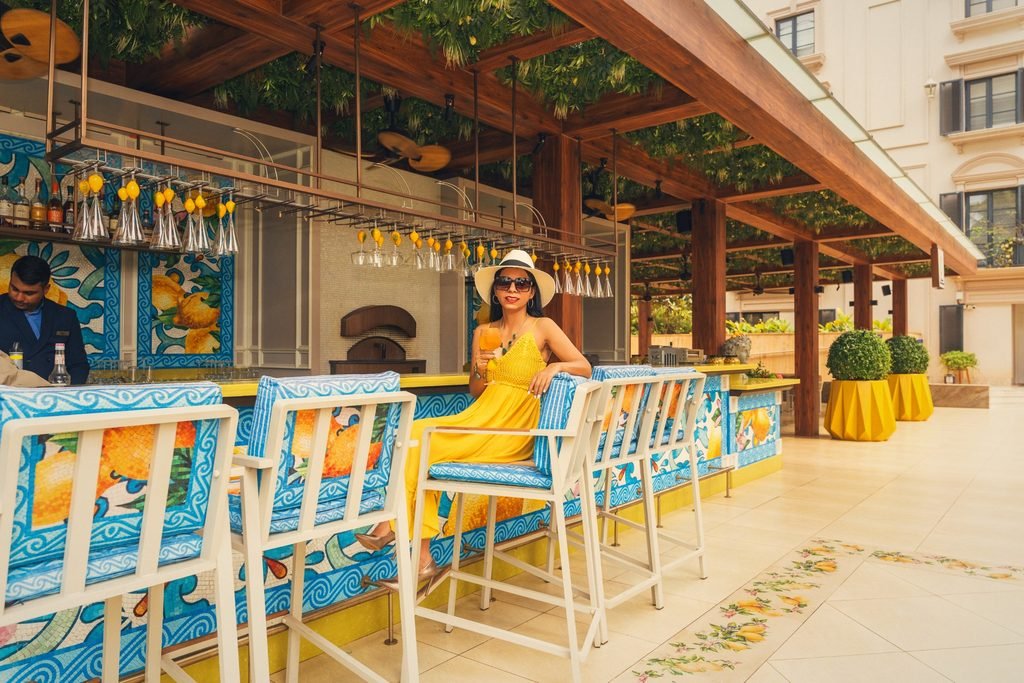
Goa is one of those places people think they know.
Beach. Beer. Baga. A shack. A sunset. Maybe a nightclub.
Then you go back a few times and realise that the Goa you knew was one tiny version of it. There is another Goa of old Portuguese homes and laterite churches, river islands you reach by ferry, forested hills, natural springs, Konkani kitchens, feni made in someone’s backyard and long afternoons where nothing at all is on the plan.
So before you search for the best places to visit in Goa, ask yourself what kind of Goa you are after. That one decision tells you when to go, where to stay, how many days you need and even which airport to fly into.
My Goa trip: two days at Renaissance Goa’s Day of Discovery
What is Renaissance Day of Discovery?
Every year, Renaissance Hotels around the world pick a few days to show guests the neighbourhood rather than the hotel. In Asia Pacific the 2026 theme was Layers of Discovery, running through October and November. At Renaissance Goa it became a two day programme on 31 October and 1 November, built around Goa’s Indo Portuguese heritage: its craft, its food and its neighbourhood traditions.
I liked the idea before I arrived. Hotels usually want you to stay inside. This one wanted to send me out.
Arriving: lobby arches and brass orchids
Renaissance Goa sits in Arpora, close to Baga but far enough from the traffic that you hear birds before you hear horns. The drive in is green. Inside, the lobby is all tall arches, carved sandstone florals and brass orchids, with a cherry blossom sculpture you walk towards as light falls through the arches. I caught myself running my hand along the carved stone like a child in a museum. As soon as I entered the lobby, I was greeted with a welcome drink in a special flower themed glass. When I checked-into my room, another surprise awaited: an intricate chocolate tree adorned with bright cherry blossoms, all crafted entirely from chocolate. From the upholstery and lamps to the main artwork on the walls, every detail quietly ties back to the property’s “bloom” concept.
Day 1, 1 PM: painting azulejo tiles at The Bloom Kitchen
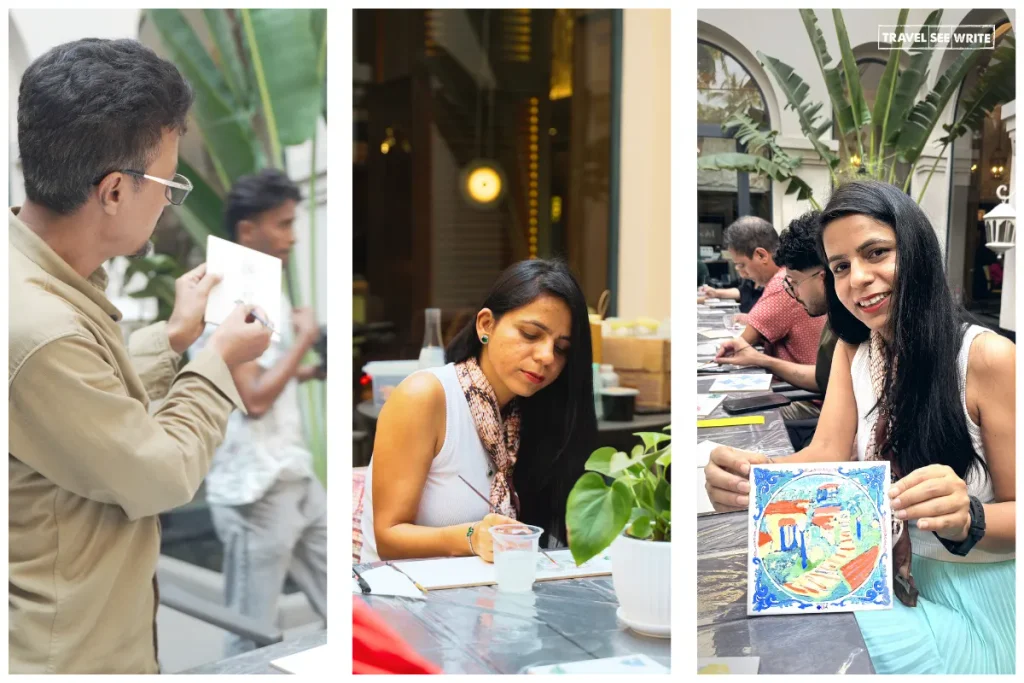
The first discovery was a sip and paint session with azulejos, the blue and white painted tiles the Portuguese brought to Goa. You see them everywhere in Panjim once you start looking: on house names, church walls, door frames.
A tile master walked us through how tiles are made, from firing to glazing to how the colours behave once they go into the kiln. A traditional azulejo is a six by six inch square, and the patterns we worked from were inspired by the colourful houses of Panjim’s Latin Quarter. There were three different sets of designs. Some were absolutely raw white glaze tiles and some had cobalt blue outline on them. I chose the later. Even in terms of designs there was choice. I decided to try my hand on pre-outlined glaze tile that showcased the famous colourful houses of Fontainhas, the historic Latin Quarter in Panjim, Goa.
I dipped my brush into cobalt and promptly wobbled. The tile master took my hand and guided the first stroke. Around the table, everyone was quietly comparing tiles the way you compare exam answers. After I finished, I wrote my name at the back and gave it to the master for air drying and glaze firing. When I finally received my glaze tile the next day I couldn’t believe what I painted. It looked like a piece of art.
Day 1, 2:30 PM: a Goan saore thali
Then came lunch, and it was the kind of meal that makes you cancel your next plan. A traditional Goan thali at The Bloom Kitchen, with poi (the Goan bread you tear with your hands) and red rice and a line of katoris I kept reaching back into. Even the platters had a story. They were commissioned specially for the hotel, with designs drawn from Goa’s Portuguese influenced visual history. My favourite dish was the Goan khatkhate and the poi.
There was a poolside sundowner lined up next, but I’ll be honest—between that hearty Goan thali and a sleepless night the day before, I couldn’t resist embracing a little susegad and sneaking off for a much-needed siesta.
Day 1, 7 PM: the punch bowl ritual at Casa Limone
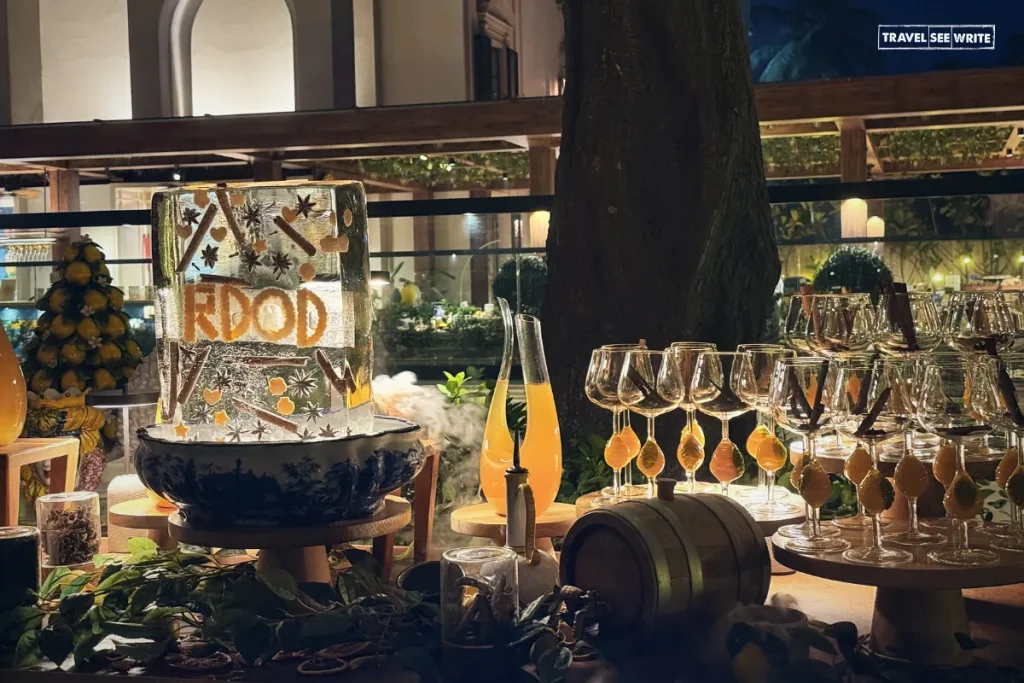
After dark, Casa Limone turned into Amalfi again. Lemons, painted tiles, a floral balcony, candlelight on glass.
This was where the Renaissance Hotel introduced its Beverage Rituals Collection 2026, which began with a Renaissance punch bowl ritual. Shruti, the PR and Marketing Head of renaissance Goa, explained the relevance of this ritual. She mentioned, that most hospitality brands have a food and drink philosophy where food is laway the hero and beverages as support cast. But at Renaissance Hotels, it’s ‘Beverage & Food’ philosophy. That’s why you’d see different beverage rituals from breakfast till dinner. And, Renaissance Punch Ritual was even more special. A spiced Ice
Right around 6:30 PM, the whole mood shifted, marking that effortless transition from a laid-back afternoon into the start of a romantic night evening. As the air started to cool down under the lemon tree at Casa Limone, everyone drifted over for the Silk Road Punch Bowl Ritual, and the setup honestly stopped you in your tracks. Right in the middle of the table sat this massive, crystal-clear block of ice with star anise, cinnamon sticks, citrus slices, and bold orange “RDOD” letters frozen straight inside it, resting in a gorgeous blue-and-white ceramic bowl with dry-ice mist curling around the greenery.
It was theatrical, yes. But it was the good kind of theatrical, where the drink is still the point. After the Punch Bowl Ritual, there was another performance awaiting. A fire dancer literally lit up the already LIT scene of the area.
Dinner was Italian inspired and served on handcrafted ceramics. And, the stand out food item was the orange chocolate cake. My mouth still waters thinking about that.
Day 2: breakfast, wellness and Goa’s makers at Fiore
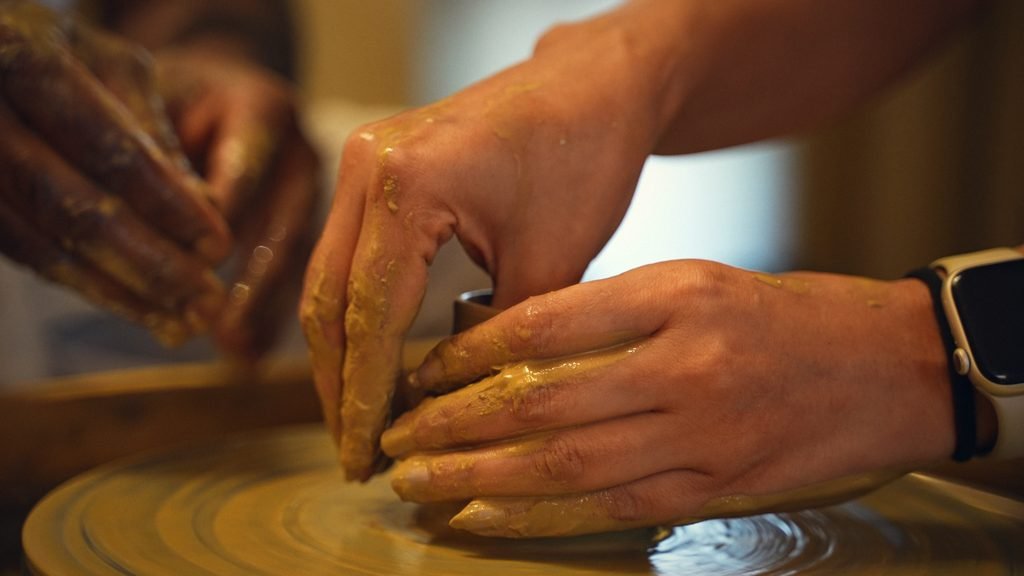
Day two began with a Yoga session on the roof and then breakfast in the courtyard at The Bloom Kitchen, built around local flavours. Multi-cuisine buffet spread, fresh fruit, bread being broken, a Goan breakfast plate I had no intention of sharing.
At 11 AM the Makers Market at Fiore brought Goa’s makers into the hotel, under a glass ceiling. Small brands, handmade pieces and the people who made them, happy to talk. All of them let me try their products. I found handicrafts, things to take home, games, a pottery workshop and a special massage I hadn’t expected. Although I am not a shopaholic but I couldn’t stop myself from picking a few jewellery pieces. They were extraordinary.
Day 2, 4:30 PM: Fontainhas with a Renaissance Navigator, and feni at a Goan home
This was the part of the Day of Discovery I had been waiting for.
Renaissance hotels have a Navigator, a local who knows the neighbourhood the way you know your own street. The team works with local hosts and organised a heritage walk through Fontainhas with a visit to a Goan home.
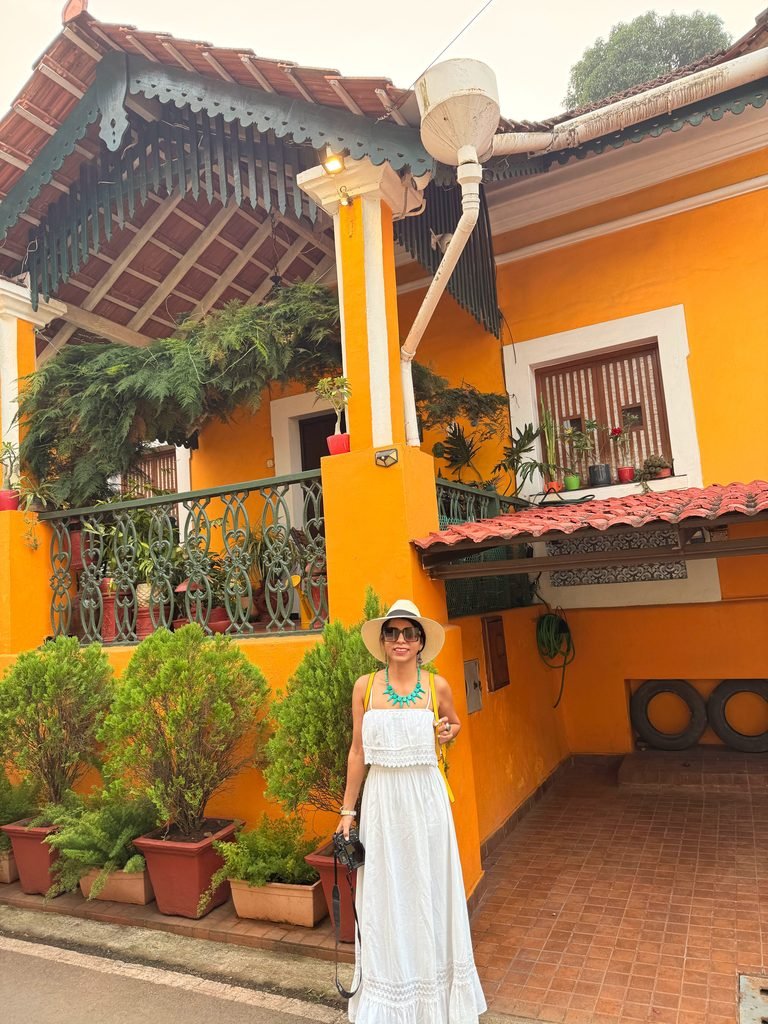
Fontainhas is Panjim’s old Latin Quarter, and it rewards slow walking. Yellow, blue and ochre houses. Oyster shell windows. The balcão, the porch seat outside so many Goan homes, where people still sit in the evening and watch the lane. Wooden shutters, painted nameplates and, of course, a cat asleep on a step.
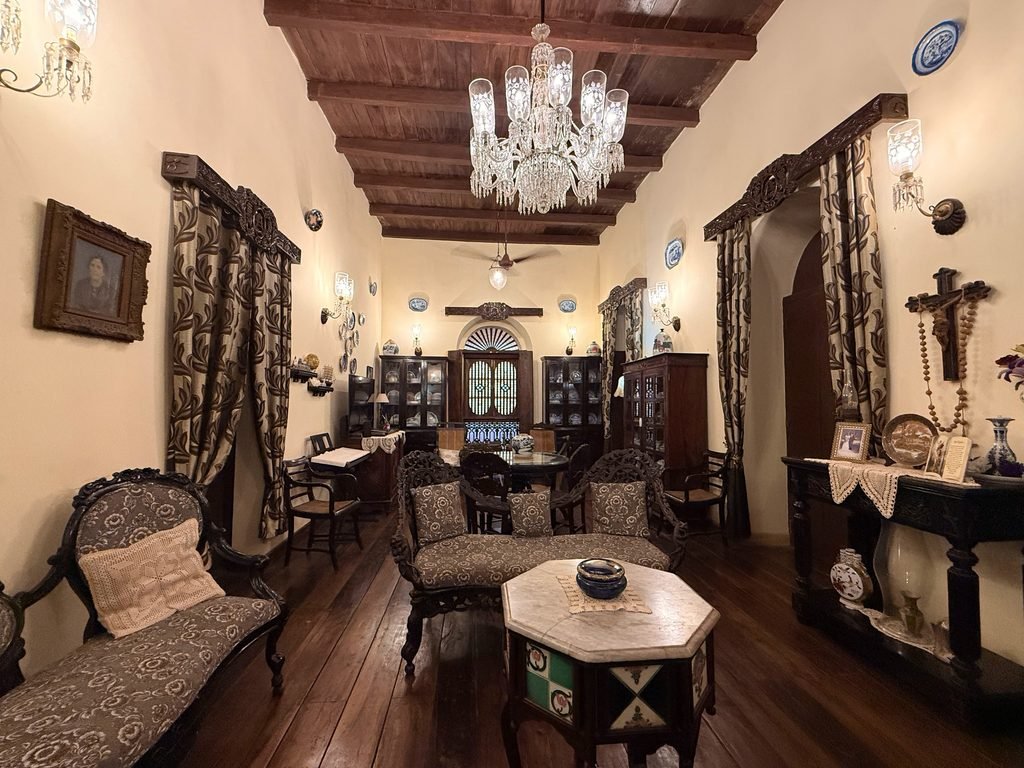
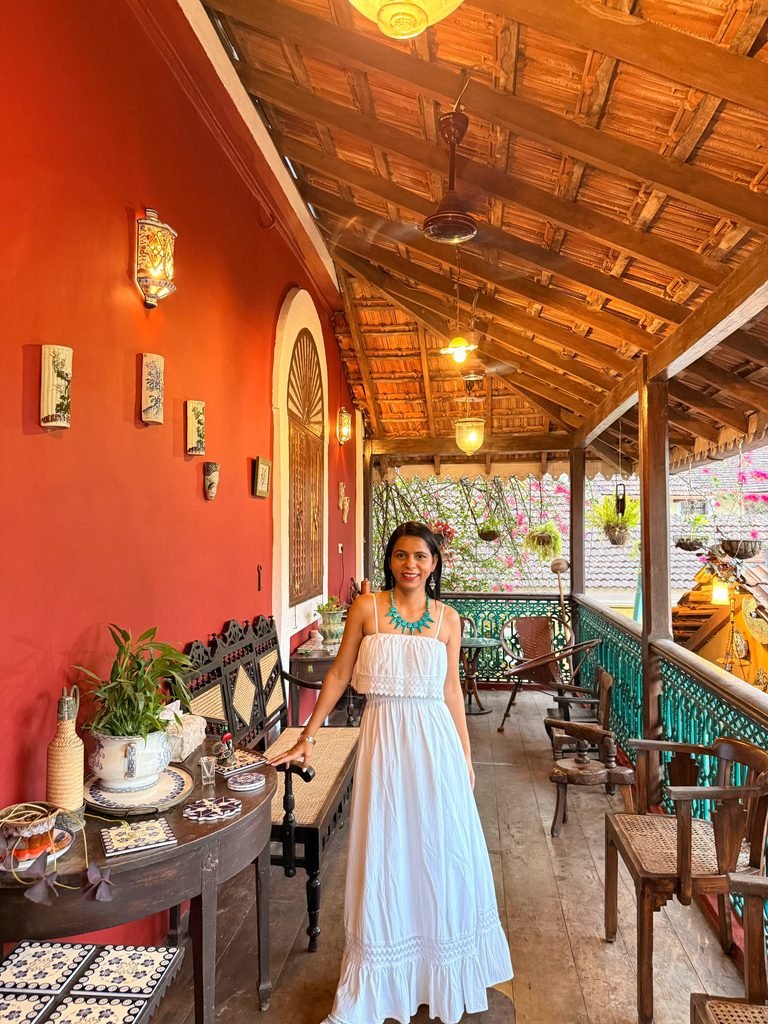
The walk ended at the home of Iris Antonio, the seventh generation of his family to live in a house that is nearly a hundred years old. Red walls, a carved wooden bench, a ceiling of old timber, azulejo tiles on the side table and a veranda full of chairs that had clearly heard a century of gossip. And then the feni. Not poured from a bar shelf but made by Iris himself.
We were supposed to have only tea here but Iris being such a great host, he made us try several flavours of Feni and Goan wine.
Shruti had shared that Renaissance hotel is also looking at adding the ‘Museum of Goa’ to its regular Navigator experiences, which some of us got to visit when I was enjoying my siesta in my room the day prior.
One thing I realised during my stay at Renaissance Goa Hotel is that they seem to understand that guests who come back to Goa want more than another pool day. And, that is why they are giving so many unique experiences be it the painting azulejo tiles, enjoying a Goan saore thali, partaking in the Punch Bowl Ritual, or going on heritage walks in old Goa.
Day 2, 7:30 PM: shaking my own cocktail at R Lounge
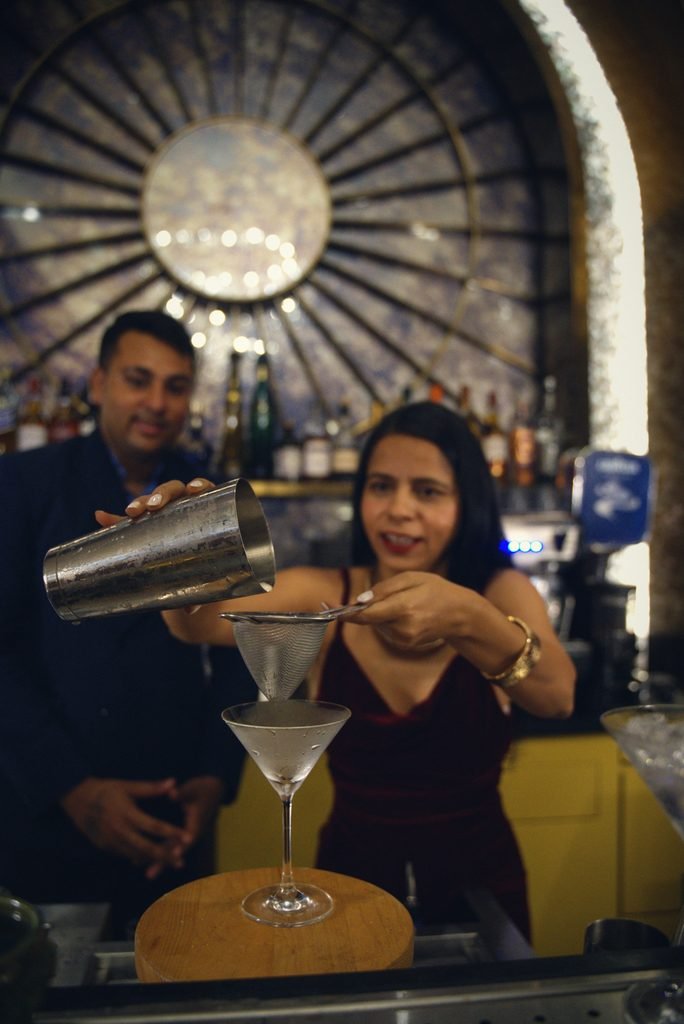
The last discovery was at R Lounge, where the bartender walked me through a cocktail step by step. Ice into the shaker, a hard shake, a garnish placed with tweezers like surgery. When I got it right he gave me a nod, and I was ridiculously proud of myself.
Is Renaissance Goa worth it? My honest take


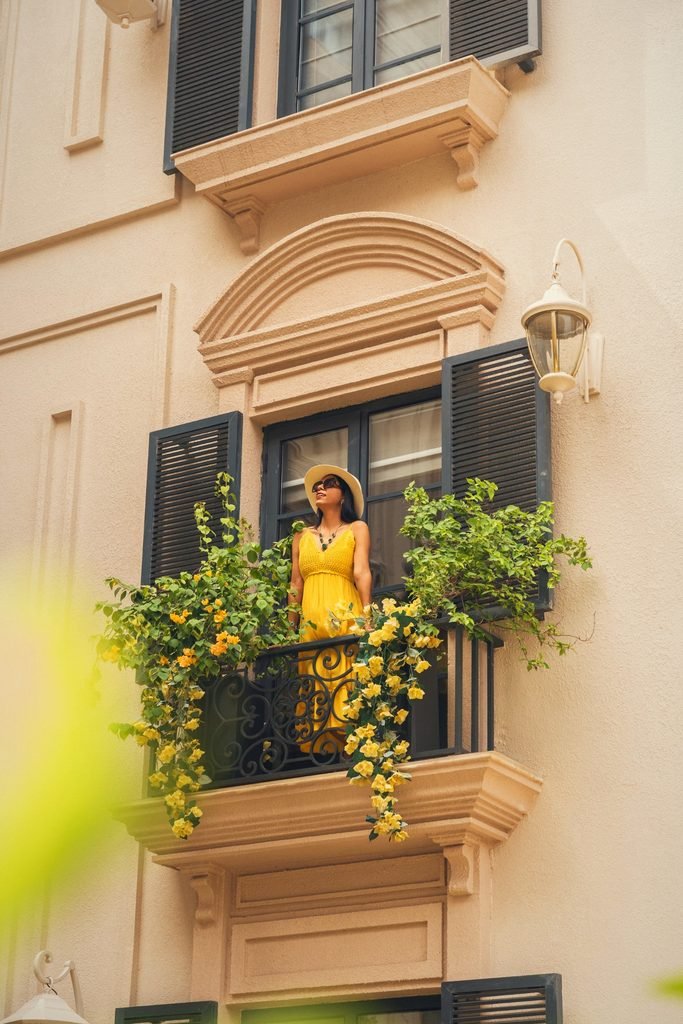
If you are trying to figure out where to stay in North Goa and want the best 5 star hotel in North Goa that keeps you close to Baga, Calangute, Anjuna, and Vagator without being stuck right in the middle of the crowds, yes. Tucked away in Arpora, Renaissance Goa offers a stylish, boutique style stay with gorgeous design, great dining, and curated local Navigator experiences you rarely see at other luxury hotels in Goa.
However, if you are specifically searching for a beachfront hotel in Goa where you can wake up right on the sand, keep in mind that this is an inland property, so plan accordingly. Also, if you are visiting during peak season, factor North Goa traffic into your itinerary when heading out to the beaches, cafes, or nightlife.
While it isn’t a sprawling, ultra-opulent luxury resort, it is one of the most welcoming 5-star properties in North Goa that ranks among the best hotels in North Goa because of how much heart and character it has. Between the unique local experiences and the genuinely kind staff, you might find yourself not even wanting to leave the property.
Beyond the hotel: the offbeat side of Goa I went looking for
After the Day of Discovery I extended my trip. I wanted the Goa that doesn’t show up in the first ten results on Google.
Sunset kayaking on Sai Island at dusk

If you are looking for offbeat things to do in North Goa, sunset kayaking on Sai Island along the Chapora River is an unforgettable escape from the usual beach crowds. Starting with a 45 to 50 minute scenic drive from Anjuna to the Arabo Jetty (or Tuem Jetty) followed by a quick 10 minute boat ride across the river, this beginner friendly guided experience includes life jackets, safety gear, and a quick paddling briefing from your guide before you glide past lush mangroves under a golden sky. During my November trip, an unexpected downpour caught us mid paddle, leaving us completely drenched from head to toe as it suddenly felt like the Goa monsoon had returned, only to be welcomed back on the private island with hot chai and local snacks that never tasted better. Just remember to pack a towel, a full change of dry clothes, a light rain layer, and a waterproof phone pouch, and book your sunset slot in advance directly through the Soul Travelling Private Island Kayaking Page.
Divar Island and the Saptakoteshwar temple ruins
Across the Mandovi River sits Divar Island Goa, a quiet slice of the state that feels worlds apart from the busy coastal belt. To really understand the history here, I booked a guided Divar Island tour with Soul Travelling, and it turned out to be one of my favourite cultural experiences on the trip. My guide, Atul Kulkarni, picked me up from Misu Restaurant, and we rode a scooty over to the Ribandar ferry point near Old Goa. The moment the ferry pushed off with zero traffic in sight, I could immediately feel Goa slow down. Once we landed, we explored the island on the scooty along narrow village roads where lush paddy fields open up on both sides and old Portuguese heritage houses sit quietly under the trees.
Riding around with Atul felt like watching a live documentary unfold. He brought every corner of the island to life with stories that most visitors never hear. Divar was once home to some of Goa’s most important temples, including the 900 year old Saptakoteshwar temple, the family deity of the Kadamba dynasty. What remains today at the original site is a protected archaeological monument, including the ancient rock cut water tank known as Koti Tirtha Tali. The temple itself was later rebuilt across the river at Narve. Standing there, I realised just how many layers of history sit beneath this one quiet island.
From ancient ruins, we rode up to the 500 year old Church of Our Lady of Piety (Piedade Church) perched on a hilltop, one of the most peaceful places to visit in Divar Island. At sunset, I sat on the whitewashed church steps while the sky turned shades of pink, with nobody else around.
I wrapped up the evening with some of the best things to do in Divar Island, starting with a sunset boat ride gliding past dense mangroves (Divar alone is home to 14 of Goa’s 16 mangrove species). Afterward, we stopped for warm chai and snacks at a local home while unexpected rain poured outside, and even though we ran well past schedule, Atul never once rushed me. My final stop was a traditional local tavern for an authentic feni tasting in Goa, where I confidently tried to guess the flavours after one sip and got every single answer wrong.
River tubing in the Goa hinterland
The next day, I traded the coast for the Goa hinterland, driving about two hours inland from Anjuna and Siolim to Nhoi in Valpoi for a private experience organized by Mack from The Local Beat. Goa’s interior stays lush and green well into November, feeling like a completely different world from the beach belt. Surrounded by dense forest on both sides, a crystal clear river, warm sunshine, and an inner tube, I lay back, stretched my arms out, and simply floated. It was easily the most carefree and relaxed I felt on the entire trip. The day also came with a fun adrenaline rush: a 15 foot river jump that took me four hesitant attempts before I finally took the leap on the fifth try, feeling like I had conquered the world when I hit the water. Afterward came the ultimate susegad reward: a home cooked Goan meal made by a local kaki, served at a lunch table set right inside the cool natural spring water with my feet dipped in and a glass of feni in hand.
Good to Know Before You Go: Make sure to book this river tubing in Goa experience in advance directly through The Local Beat. Safety gear including life jackets is provided, and Mack and his experienced team stay with you in the water throughout the float and jump, making it safe and comfortable even if you are not a confident swimmer.
Vagator beach, early
And yes, I did go to the beach. But I went early, when Vagator is all red cliffs, wet sand and fishermen, before the day crowd arrives. The same beach looks like a different country at 6:30 AM.
Must visit cafés and restaurants in North Goa
Everyone asks me where to eat in Goa. These three are the ones I keep recommending, and each one for a different reason.
- Bean Me Up, Vagator: It is my answer when someone says “I want to eat well and feel good”. It is a vegan restaurant in a leafy garden in Vagator, near the Anjuna petrol pump, and every dish has a gluten free option too. It is the kind of place where you plan a quick breakfast and leave at lunch. Expect around ₹1,400 for two without alcohol
- . Kiki by the Sea, Siolim: Kiki is for the long, lazy lunch that turns into a sunset. Sit as close to the water as you can, order the garlic fried fish and don’t look at your watch. Go between 4 and 7 PM for the light.
- Purple Martini, Anjuna: For a sundowner on the cliff, Purple Martini is still one of the best seats in North Goa. Get there before sunset, take a table facing the sea and order a martini, obviously. There is live music most evenings and the crowd gets lively after dark. It sits on the cliff between Anjuna and Vagator.
Want more local favourites? I shared a few more in Offbeat Goa: secret things that only locals know.
When is the best time to visit Goa?
For most travellers, October to March is the best time to visit Goa. Skies are clearer, the weather is pleasant and the sea is calmer for beach days. Goa Tourism calls October to March the pleasant tourist period, with December to February the peak.
But the best time to visit Goa really depends on the Goa you want.
- Goa in November to February: beaches, nightlife and classic Goa. This is the Goa most people picture. Comfortable weather, shacks open, restaurants full and nightlife at its busiest. If your holiday is about swimming, sunsets, beach hopping, water sports and parties, this is your safest window.
- Goa in November is my favourite month. The season has just begun, the hinterland is still green from the rains and the December rush hasn’t arrived yet. That is exactly when I went.
- Christmas and New Year in Goa: If you want Christmas or New Year in Goa, book early. Very early. Expect packed beaches, heavy traffic, busy restaurants and prices that can double. If you love that energy, go for it. If your idea of Goa is a book under a coconut tree, choose another week.
- Is October a good time to visit Goa?: Yes. The monsoon has eased and the landscape is still beautifully green, which makes it a lovely month for villages, forests and waterfalls. Early October can still bring rain, so check the forecast close to your trip.
- Is March a good time to visit Goa?: Yes, but it gets warmer and more humid. You get fewer crowds than in winter. If you don’t handle heat well, stick to November to February.
- April and May: Goa on a budget?: These months can work if you are fine with heat. Hotels and flights can be easier on the pocket, and a relaxed resort holiday still works. A full day of outdoor exploring is harder.
- Is Goa worth visiting in the monsoon (June to September)?: I don’t think monsoon Goa is “bad”. It is different. Goa gets most of its rain between June and September and turns intensely green. Waterfalls come alive, rivers swell and the countryside looks spectacular. For photography, road trips, food, heritage and slow travel, monsoon Goa can be fantastic. Goa Tourism suggests September as a particularly good month for driving around after the heavier rains of July and August. But don’t come for swimming or beach parties. Goa Tourism warns that swimming in the sea during the monsoon is dangerous because of strong currents. Go for the Goa beyond the beach.
How many days are enough for Goa?
Three nights is enough for a focused trip. Five to seven nights is much better if you want more than one side of Goa.
| Trip length | What I’d do |
|---|---|
| 2 nights, 3 days | Pick one area only. North Goa for cafés and nightlife, or South Goa for a quiet beach and long lunches. |
| 3 nights, 4 days | My minimum for a first visit. Beaches plus one or two local experiences, like Fontainhas or a Goan home lunch. |
| 5 days | Now Goa becomes a holiday, not a checklist. Your base, a beach day, heritage, good food and a day in the hinterland. |
| 7 days | Two sides of Goa. North and South, or one region plus Divar Island, villages and nature. |
| 10 days | Please don’t make a ten day list of attractions. Split your stay between the coast and somewhere quiet inland. Go back to the same restaurant. Sit by a river. Let Goa happen. |
A 5 day Goa itinerary you can copy
- Day 1: Arrive, check in, sunset at Purple Martini.
- Day 2: Breakfast at Bean Me Up, a slow morning at Vagator or Anjuna, a long lunch at Kiki.
- Day 3: Fontainhas on foot in the morning, the Museum of Goa or a Goan home lunch, dinner in Panjim.
- Day 4: Ferry to Divar Island, the Saptakoteshwar temple ruins, kayaking at dusk.
- Day 5: The hinterland: river tubing or a spice farm, then home.
North Goa or South Goa: which is better?
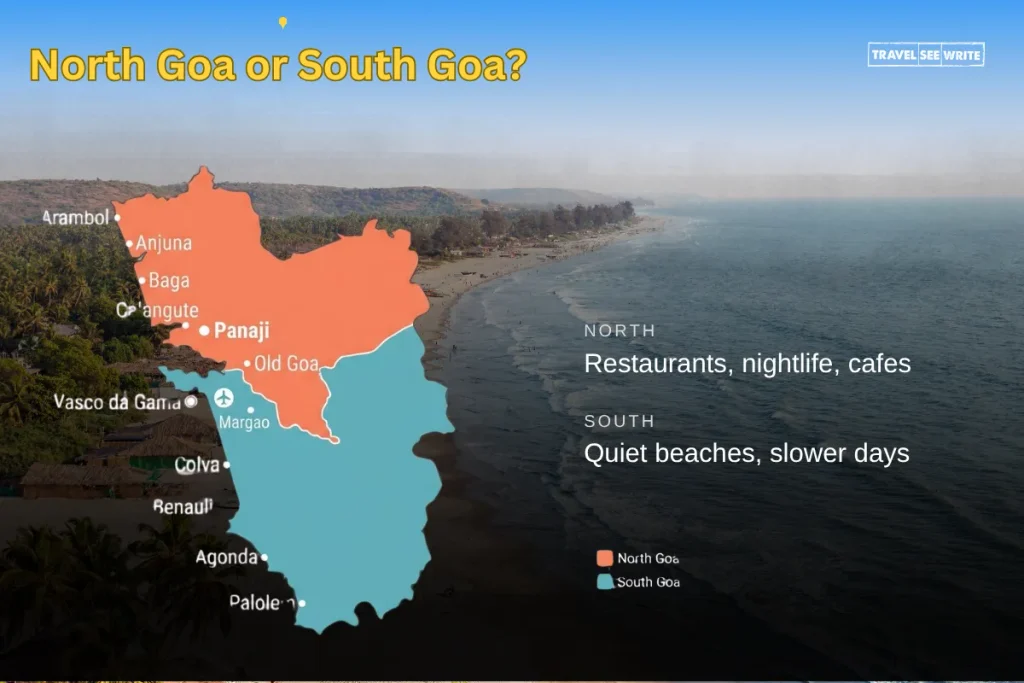
There’s no universal answer. It depends on your holiday.
Choose North Goa for nightlife, cafés, restaurants, beach shacks, water sports, shopping and more going on. But remember that North Goa is not one place. Baga is not Anjuna. Anjuna is not Ashwem. Don’t just book “North Goa” and assume you know what it will feel like.
Choose South Goa for quieter beaches, slower mornings, long walks, resorts and a peaceful holiday. Palolem, Patnem, Agonda, Cavelossim and Mobor each have their own mood.
- For couples: South Goa for romance and quiet. Anjuna or Vagator if you want restaurants and evenings out.
- For families: a quieter part of North Goa, or South Goa. Don’t pick Baga just because it is famous.
- For nightlife: North Goa. No debate.
- For a peaceful beach holiday: South Goa, especially the quieter stretches.
- For first timers: with three days, pick one side. With five or more, you can try both.
Where to stay in Goa
I always choose the location before the hotel. A beautiful hotel in the wrong part of Goa can make your holiday frustrating.
- Baga and Calangute: first timers, nightlife, shopping and convenience. Not for solitude.
- Arpora and Candolim: a good middle ground with easy access to the rest of North Goa, without being in the thick of Baga. This is where Renaissance Goa is.
- Anjuna and Vagator: cafés, music, boutique stays and a social, younger crowd.
- Morjim and Ashwem: North Goa with the volume turned down.
- Palolem, Patnem and Agonda: beach walks, yoga, books and sunsets.
- Assagao and the hinterland: for anyone who says “I’ve already done Goa”. You probably haven’t.
Best area to stay in Goa for couples
For a quiet romantic holiday, South Goa. For food and nightlife, Anjuna or Vagator. For luxury and convenience, Arpora or Candolim. The best romantic Goa holiday isn’t the one with the most expensive hotel. It’s the one where you don’t spend two hours a day stuck in a car.
Mopa or Dabolim: which Goa airport should you fly into?
Goa has two airports: Manohar International Airport at Mopa (GOX) in North Goa and Dabolim Airport (GOI) near Vasco da Gama.
The simple rule: staying in North Goa, check Mopa first. Staying in South Goa, check Dabolim first.
Don’t choose only on the cheaper fare. Saving ₹1,000 on a flight is no saving if you then spend hours and more money getting to your hotel. Check the driving time before you book, and prebook your airport transfer.
How much does a Goa trip cost?
Goa works for every budget. Your hotel, the season, transport and where you eat decide the bill. Here’s a rough guide per person for 4 days, excluding flights :
| Travel style | Approximate cost for 4 days (per person) | What it looks like |
|---|---|---|
| Budget | ₹10,000 to ₹15,000 | Hostels or guesthouses, local restaurants, buses |
| Mid range | ₹15,000 to ₹25,000 | Boutique hotel, good restaurants, scooter or taxis, a few paid experiences |
| Luxury | ₹50,000 and above | Five star or boutique luxury hotel, private transfers, fine dining, private experiences |
Peak weeks (Christmas and New Year) can easily double these numbers. Spending more doesn’t automatically mean a better Goa.
How do you get around Goa?
- Scooter: flexible and fun for confident riders, solo or as a couple. Wear a helmet; Goa Police requires it for riders.
- Car: better for families, groups, long distances, camera gear and the hinterland.
- Taxi: good for airport transfers and evenings out.
- Public transport: it exists and works for budget travellers, but don’t build a tight itinerary around it.
Best offbeat places in Goa
If you are searching for offbeat places in Goa, don’t look for another “secret beach”. Go deeper.
- Divar Island: ferry ride, paddy fields, old houses and the Saptakoteshwar temple ruins.
- Chorao Island: mangroves and the Dr Salim Ali Bird Sanctuary for nature lovers.
- Fontainhas: not hidden, but worth walking slowly rather than treating as a photo stop.
- A Goan home visit: lunch or feni with a local family is worth more than another club night.
- The hinterland: villages, rivers, spice farms, natural springs and the Western Ghats.
- Old Goa: churches and history, best early in the morning.
This is exactly why I think “Goa beyond beaches” is the most interesting way to plan the state.
Is Goa safe for solo female travellers?
Goa is popular with solo women, and I have travelled here alone many times. But I would never tell anyone to switch off their common sense because they are in Goa.
- Stay somewhere reputable and know your route back.
- Use reliable transport at night.
- Don’t leave your drink unattended, and don’t get very drunk when you are alone.
- Avoid deserted beaches and empty roads late at night.
- Trust your instincts. Being friendly doesn’t mean you owe anyone your time.
Goa has tourist police and a 24 hour tourism helpline. Travel confidently, just travel smart. More of my tips are in 11 tips for solo travelers and how to plan your first solo trip.
What to pack for Goa
- Winter: light cottons, swimwear, sunscreen, a hat, sunglasses, sandals and one light layer for air conditioned rooms.
- Summer: loose cottons, sunscreen, a reusable water bottle and comfortable shoes.
- Monsoon: quick dry clothes, a rain jacket, a waterproof phone pouch, dry bags and shoes with grip.
- Scooter riders: your driving licence, a helmet and proper footwear.
If you carry a camera, protect it. Goa’s humidity is not kind to expensive equipment.
My biggest Goa travel advice
Don’t try to “complete” Goa. You can’t, and you don’t need to.
Three days? Pick one part. Five days? Slow down. Seven days? Go beyond the beach belt. Ten days? Stop behaving like a tourist with a checklist.
Stay somewhere beautiful. Eat well. Wake up early at least once. Watch one sunset without filming all of it. Take the road into the hinterland. Talk to someone who actually lives there, and let them pour you their feni.
Because the Goa I love is not the Goa in the first ten results on Google. It’s the Goa you find once you stop following the obvious itinerary.
Quick Goa trip planner
| Question | Short answer |
|---|---|
| Best time to visit Goa | October to March |
| Best months for beaches | November to February |
| Christmas and New Year | Fun, but crowded and expensive. Book very early. |
| Quieter months | October, March and parts of the monsoon |
| Monsoon landscapes | July to September |
| Minimum trip | 3 days for one region |
| Ideal first trip | 4 to 7 days |
| North Goa | Nightlife, restaurants, cafés, activity |
| South Goa | Quiet beaches and slow travel |
| Airport | Mopa for North Goa, Dabolim for South Goa |
| Best way around | Scooter if you ride confidently; car or taxi for comfort and longer trips |
Goa travel FAQs
What is the best time to visit Goa?
October to March, with November to February best for beaches and nightlife. December to New Year is peak season and gets crowded.
Is November a good time to visit Goa?
Yes, it is one of the best. The season has started, the weather is pleasant, the hinterland is still green and prices are lower than in late December.
How many days are enough for Goa?
Three days for one area. Four to seven days if you want to see more without rushing.
Is North Goa or South Goa better?
North Goa for nightlife, cafés and activity. South Goa for quiet beaches and a slower holiday.
Where should couples stay in Goa?
South Goa for a peaceful romantic break, Anjuna or Vagator for restaurants and nightlife, and Arpora or Candolim for convenience and luxury.
Which airport is better for Goa, Mopa or Dabolim?
Mopa is usually more convenient for North Goa and Dabolim for South Goa. Always check the drive to your hotel before booking.
What are the best offbeat places in Goa?
Divar Island, Chorao Island, Fontainhas, a Goan home visit, Old Goa early in the morning and the hinterland’s rivers and villages.
What are the best cafés in Vagator and Anjuna?
My picks are Bean Me Up in Vagator for vegan food, Kiki for a long lunch by the water, and Purple Martini on the cliff for sundowners.
Is Goa safe for solo female travellers?
Generally yes, with sensible precautions, especially at night and in isolated areas.
What is Renaissance Day of Discovery?
An annual event at Renaissance Hotels where guests explore the local neighbourhood with a Navigator. At Renaissance Goa in 2026 it included azulejo tile painting, a Goan thali, a punch bowl ritual at Casa Limone, a makers market and a Fontainhas walk ending with feni at a Goan home.
Plan your Goa trip with Travel See Write
Goa rewards the traveller who slows down: the ferry to Divar, one more cup of chai on a balcão, a feni poured by the person who made it. If you would like a Goa trip shaped around your dates and your pace, with stays we’ve slept in and local hosts we’ve spent time with, write to us at Travel See Write and we’ll plan it with you.
Planning a longer break? You might also like one week holiday or a month long staycation in Goa, Gokarna’s quiet beaches or my Kerala travel guide.
Offbeat Places. Untold Human Stories.
Disclaimer
I was invited by Renaissance Goa to experience its Day of Discovery. The days after that were my own trip, planned and paid for by me. Opinions, as always, are mine.

leave a comment