


You Enquire
Begin with our online form. We then connect for a detailed conversation
Whenever I visit an offbeat place I am always fraught with an anxiety whether I should tell people about that place or not. In the garb of tourism we are destroying the ecological balance. You’ll hear lot of people use ‘Ecotourism’ in their sales pitch. But very few understand it. One such place where it is a reality and not just a fancy word is Lanzarote
Lanzarote is an island that offers varied vistas to its visitors. The avenues on offer are so much that even quite a few locals might have not seen the place in its full glory. Lovely beaches and tranquil coastal regions stand side by side with stark black lava mountains and deep green forests. This special island is the world has recognised its unique topography by declaring it a UNESCO Biosphere Reserve, so as to preserve the flora and fauna of this region. The residents of Lanzarote take pride in its unique environment and today, ecotourism is not just a buzzword, but is something that is practiced by the residents and the visitors alike.
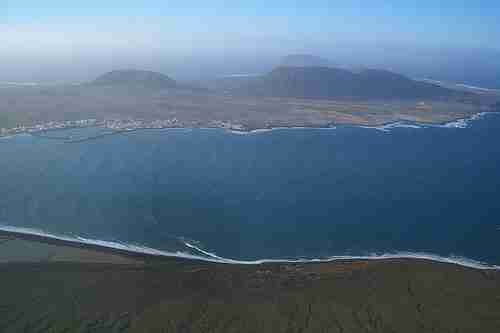
Image by MarcVeraart, used under Creative Commons licence 2.0
Spain’s lovely beaches and delicious food are just one of the many reasons why Lanzarote is such a popular destination. Spain’s holiday deals that include Lanzarote emphasize the differential aspects of this hauntingly beautiful island. Tourism is confined to only three regions in the island, and this ensures that the special ecology of the island is not harmed by swarming tourists. Travel here on a mountain bike, or just walk through the mountain trails, taking in the special malpais- the black lava fields which came up in the 18th century. Also, travel through the Fire Mountains in the National Park in Timanfaya, where the ground still retains higher temperature. You can also walk through the Monumento Natural de los Ajaches, a 3000-hectare park with landscape varying from secluded beaches to volcanoes.
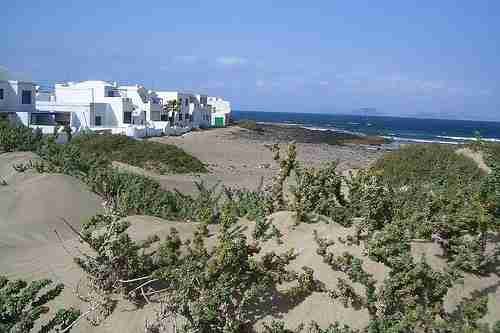
Image by MarcVeraart, used under Creative Commons licence 2.0
Eco-tourism here is defined by the fact that the hotel industry in this place has formed the Biosphere Group of hotels, where the visitor’s impact on the environment is minimised by the use of solar and wind energy, waste recycling and water resource management. Even the local accommodation is built around sustainable, eco-friendly resources with every effort being made to preserve the natural beauty around them. Ranging from self-catering rooms to the fascinating Mongolian yurts, from luxury resorts to fancy villas, all the staying places boast of excellent eco-preservation measures.
A walk through one of the centres of art Jameos del Agua, culture and tourism, established by Cesar Manrique, will take you through open lakes or clear water pathways that house the rare species of crabs, and the special plants of this region. The southeast coast of Lanzarote is the most popular tourist area in the island, but the hiking paths, quaint villages, volcanoes and lava regions are never too far away. Spain’s lovely beaches and delicious food can be found everywhere, and the visitors come away with new respect for the environment and with a new belief in mankind’s ability to preserve its precious ecology.

Anton Diaz at TBEX Speaker Session, Philippines
If you are reading this post I am assuming you have already made up your mind to attend the TBEX conference. If not, then read Why TBEX is a must for Travel Bloggers.
By signing up for the TBEX Event you have just unlocked an opportunity door. Now is the time to make the best of that opportunity by preparing right.
Here are the 10 tips for attending TBEX:
Although it’s an informal conference but you end up meeting lots of people from the travel industry. While they might remember you during the conference but as they say out of sight out of mind. You don’t want a golden opportunity to go waste, right? Bring minimum 250 business cards. Trust me, you don’t want to run out of cards. Don’t experiment too much with the shape and font. Keep it simple but play with the images. Giving your audience a chance to pick up a card of their choice from multiple images clicked by you is both engaging as well as distinguishing from the rest. Also, it’s good to carry your media kit and portfolio. As they say seeing is believing.
I am guilty of missing out on the key note session, thanks to over partying the previous night and staying far away from the conference venue. Try and stay as close to the venue as possible. You save lot of time from getting stuck in the traffic. Even if you don’t want to attend any session, being present at the venue offers great opportunity for networking.
Speaker sessions are diverse and designed to cater to different needs of different segments. Read about the speakers and their topic beforehand so you can choose which session to attend and which to miss. Sometimes a topic might appear interesting on paper but might not be great in person. Walk out and attend any other session at any time. I personally preferred attending those sessions which helped me upskill my professional skills like the Facebook session by Eden Ruden and the Hyperlapse session by Scott Herder.
At TBEX, early bird gets the worm. Not only do you get to save money on registration fee but you also get to attend the PREBEX tour and post FAMTRIPS of your choice. So earlier you book more choices you have. While registering, do ask for discounts from other people who might have already registered. You can easily save up to 20%.
TBEX social assets are full with loads of useful information. Don’t forget to join the closed community group of TBEX on Facebook. Do check their feeds regularly. TBEX organising committee has a lot on its plate therefore not everything gets communicated through their website or newsletter. You need to follow all their assets to be in know how. If you don’t follow them, you could be missing out on great opportunities.
Keep your introvert personality at home when you come to the TBEX. Take the first lead and meet as many people as you can. Exchange cards, ask questions, understand their businesses, their problems and then pitch yourself. Never oversell yourself. Remember, its spotting opportunities not selling.
TBEX is an informal conference but still dress to impress. First impression is the last impression and you don’t want to get it wrong. If you are a luxury blogger then your style should reflect the same, if you are a budget traveler then casuals work just fine. Another most important thing, keep the itinerary in mind when packing for your FAM Trip and please pack in advance. Don’t keep it for the last moment. I did a blunder of not packing a swimsuit when our trip was a beach holiday.
There will be lot of bloggers traveling with you on the Pre and Post FAM tours, who would be equally excited as you are to click pictures. So don’t waste too much time in clicking pictures. Wait for your turn and move on quickly. Be courteous to others. Instead of going on a click-spree frame the shot in your mind and execute it quickly. Most important, don’t get too busy clicking the pictures that you forget to enjoy the moment.
A thriving community is an outcome of engaged members. Participate in conversations, share your feelings, doubts, pictures, videos and everything you want to communicate. The best way to get compliments is by giving one 🙂
It’s one of the biggest event in Travel Industry therefore the scale of preparations is huge. And when the scale is huge minor hiccups are bound to happen. During those times its best to keep your calm and not aggravate the issue. Trust me, organisers would do their best to make you feel comfortable. My luggage got misplaced during one of the tours but the Philippines Tourism Board and the hotel staff more than made it up for the oversight.
Hope these 10 tips help you get the best out of TBEX Events.
Do look out for my detailed posts on the trips I took with TBEX.

TBEX Conference Venue, PICC, Manila, Philippines
Diamond, the most precious stone in the world, is merely a piece of rock until it gets polished. The transformation from a rough stone to a precious stone requires specialized knowledge, tools, equipment, and techniques. That’s what Travel Blog Exchange (TBEX) does in the field of travel blogging. Albeit, in Hyperlapse mode.
Travel blogging is both an art as well as science. You might have a talent and passion for it but you won’t get noticed until you are at the right place at the right time with the right people. TBEX is the world’s largest gathering of travel bloggers, writers, new media content creators, travel brands and industry professionals. Every year, TBEX partners with amazing destinations in North America, Europe and Asia Pacific to bring the travel industry’s most creative minds together to learn, network and do business.
Two things spiked my interest for TBEX Philippines – inspiration from the past attendees and Philippines being the host destination. Registering four months in advance saved me some precious dollars.
Here are the five reasons Why TBEX is a must for Travel Bloggers:
TBEX is a treasure chest for knowledge seekers. Especially the Speaker Sessions, where topics were as diverse as ‘Accomplishing Great Things: Productivity Tips and Trick for Bloggers’ to How to Create Eye-Catching Hyperlapse Videos Today Using Your Smart Phone’. Speaker sessions were informative, practical and engaging. Like a sponge, I was absorbing the pearls of wisdom shared by our speakers. My only complaint was the simultaneous timing of the sessions. However, we found a smart solution – divided our group as per sessions. Each one of us took notes and shared our learning with each other. Isn’t that a cool idea? Try it next time. Also, the learning wasn’t restricted to the Speaker Sessions but it was free flowing through the PREBEX tours, Parties and FAM trips where we could discuss anything and everything with fellow participants.
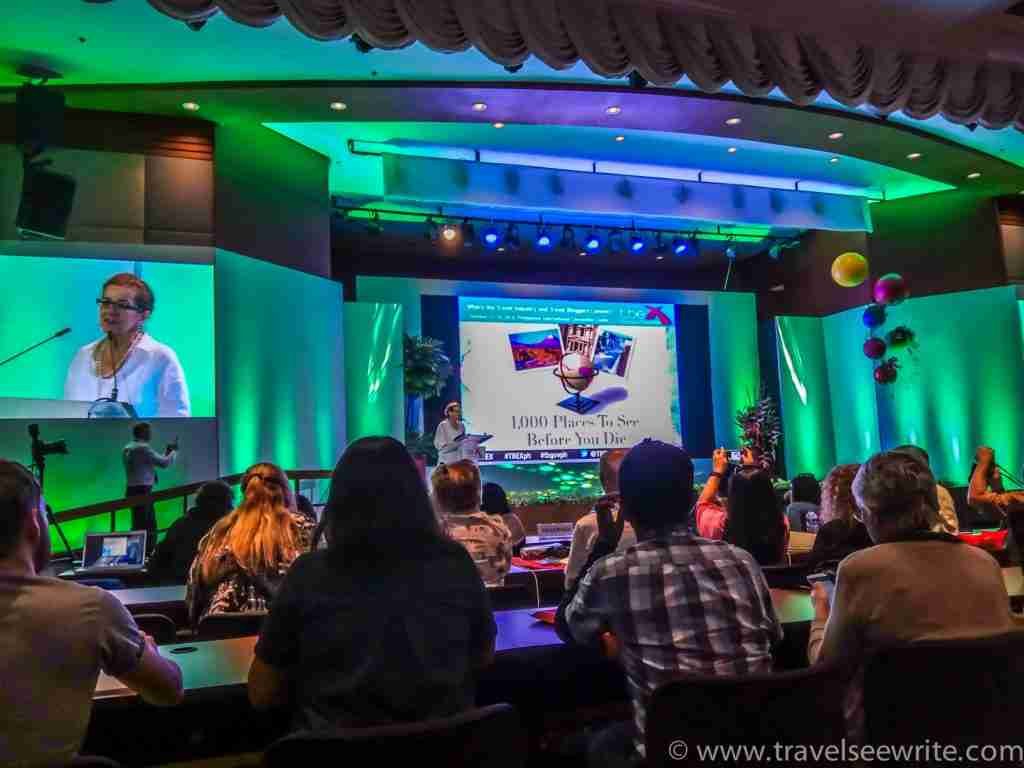
TBEX End Keynote Address by Patricia Shultz
Networking is not selling but spotting opportunities. Most of the times opportunities are not advertised but are discussed behind the closed doors over drinks or coffee. TBEX was a great place to make connections with the brands and fellow bloggers. During Speed Networking I met lot of potential Clients that I could be working for in the near future. Though I had fixed appointment with a handful of Clients but I ended up talking to almost all the sponsors. The key is to be proactive and approach the sponsors and bloggers. No other place offers you an opportunity to network with so many travel professionals like TBEX does.
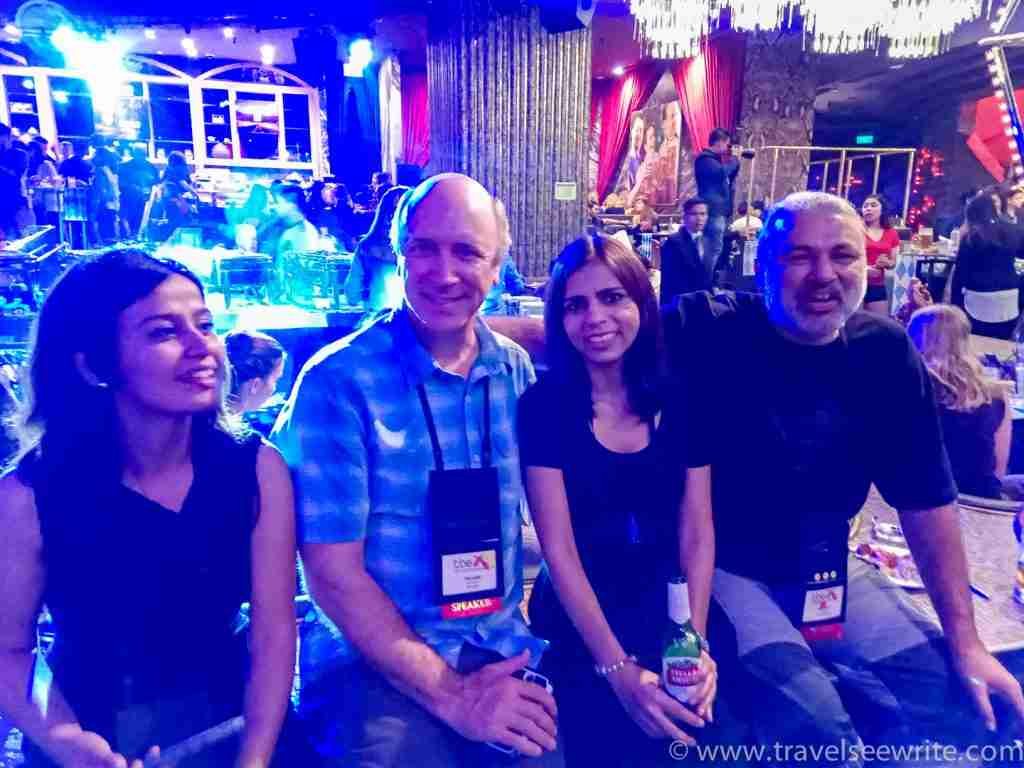
With TBEX Speakers Ajay Sood and Tim Leffel, and Reshma Narasing
TBEX Community is a very vibrant and engaging community, where interactions are rich, prompt, helpful and all encompassing. Everyone is eager to showcase their common passion of travel in the best possible way – pictures, vlogs, blogs etc. There is a bonhomie among members, who support and promote each other. It’s the best platform to share the proof of whatever you have learnt in the conference and get a real time feedback from the experts. For example Scott Herder was extremely helpful when I needed to know about Hyperlapse.

‘All Work And No Play Makes Jack A Dull Boy.’ Thankfully the promoters of TBEX share the same sentiment and therefore they ensured there was never a dull moment during TBEX. Right from the start of PREBEX tours until the end FAM trips. There were grand parties every night followed by even wilder after parties. During the conference I realised our happiest moments always seem to come when we stumble upon one thing while in pursuit of something else. I had registered for the learning aspect of TBEX. Fun turned out to be a Bonus. And boy what a hefty bonus it was.
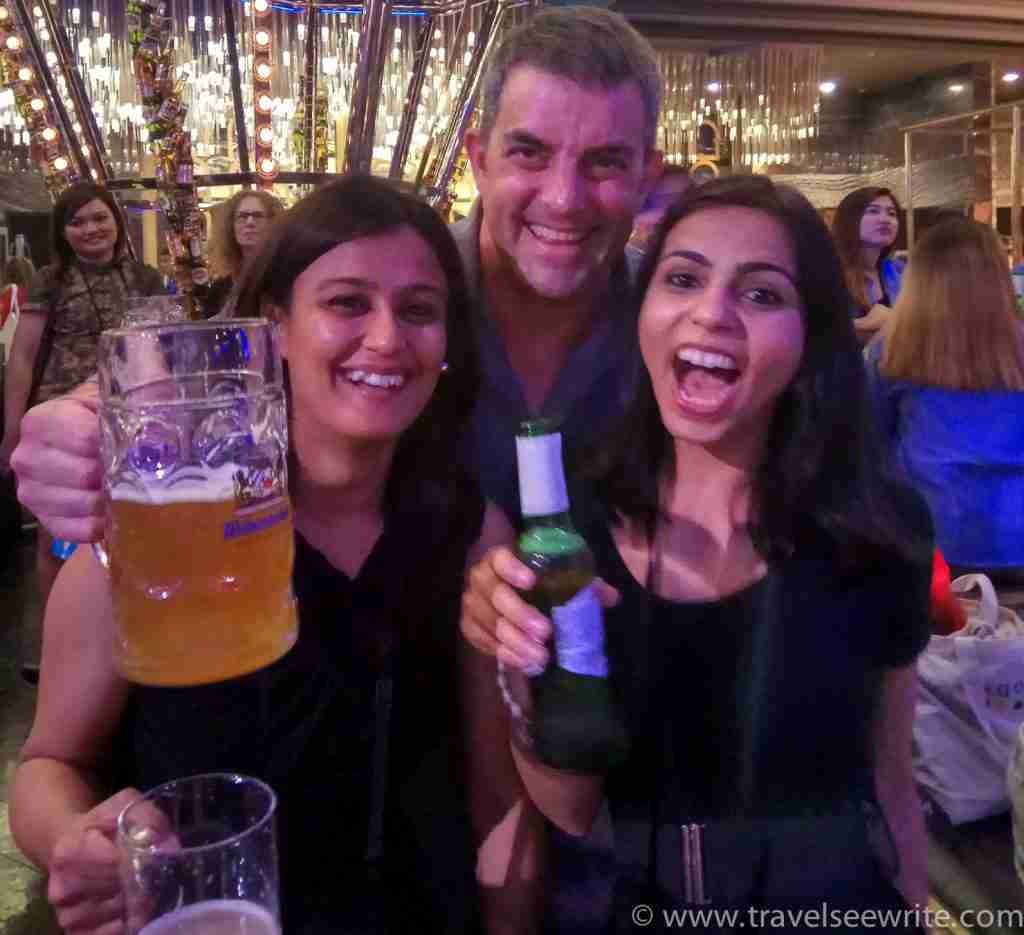
Oktoberfest Party with Bill Fink
It is very rare that travel bloggers and influencers from around the world gather at the same place at the same time. TBEX offers a great opportunity to the host country to showcase their country to the world and get the best value their moolah can ever buy – free word of mouth publicity. Therefore the Tourism Board and the organising committee leaves no stone unturned to impress you. You are made to experience the best attractions in the country, fed the yummiest food, put up in the most luxurious properties and bestowed A VIP treatment. You’ll be thanking your stars for signing up for the conference. Philippines Tourism Board set a new benchmark in hospitality with their service. Mike Shubic, a seasoned vlogger, who had attended 5 TBEX events prior to Philippines said this was the best conference in terms of management.

The personal security we were provided during our entire stay
So these were my top reasons why TBEX is a must for travel bloggers. Convinced?
Wait no more. Sign up for the upcoming TBEX Events NOW!
Do look out for many more posts coming your way for TBEX Philippines
Disclaimers:

Iconic Skyline. Financial Hub. Shoppers Delight. Culinary Paradise.
Adjectives are often used for Hong Kong but it is a city that defies any definition. Being a borderless and limitless city it not only attracts the best from the world but also grooms the local talent. Its mysticism peels off like an onion. Underneath the glitz and glamour of a global city lies the strong roots of Chinese culture and colonial heritage. There’s nothing foreign here. There’s nothing that doesn’t belong here. I would have been myopic in my views had I not chosen a different path – exploring the offbeat Hong Kong in 4 days. Without further ado let’s get on board.
The first day in Hong Kong taught an important lesson – never step in a foreign land without carrying the local currency. Call it my overconfidence or ignorance, I arrived with just 150 HKD in my pocket. My heart sank when the two ATMs frowned at me. The fear of being stranded in a foreign land looked real. To add to my misery, my friend too was in the same boat. We were laughing at our rotten break. Our first foreign trip together was on the verge of crashing before takeoff.
But thankfully it turned out to be just a nightmare, not a reality. The ATM at Shim Sha Sui brought a big smile to our faces. We had never been so happy to withdraw money from an ATM as we were at that time.
After the clouds of tension disappeared, we strolled in the Victoria and Shim Sha Sui areas chatting and exploring the nightlife of Hong Kong. Finally at around 4:30 am we decided to call it a night with the hope of waking up at 6 am for our Sai Kung Peninsula adventure.

Nocturnals like me shouldn’t dream of morning sojourns. Instead of 6.30 am we left at 9:30 am 😛 Our travel was still going OK until we reached Sai Kung Bus Terminus. We were supposed to take Bus #29R to Sai Wai Ting. Unfortunately, the Chinese pronunciation tricked us. We confused the word “Mateno” (or whatever the locals were referring to) with McDonald’s. For two hours we were roaming in the same area making desperate pleas to strangers to guide us to Bus #29R. Some were handicapped by the language, some were as clueless as us and some simply ignored us. The funny part was, the bus station was right opposite where we were.
After two and a half hours of futile legwork in the scorching sun, we decided to forgo our hiking plan in favour of a speed boat island tour. A bus ride that would have cost just 20 HKD was now cutting a deep hole – 150 HKD. But beggars are not choosers. So we had no option but to oblige. However, the boat ride proved to be one of the most thrilling rides of our trip. The sea was doing jumping-jhapang and the waves were fighting with each other to give us free hugs. Everyone in the boat was shouting their lungs out with excitement and fear.
Amidst this enthralling ride, the jaw-dropping landscapes of Hong Kong UNESCO Global Geopark kept amazing us with their Volcanic and Sedimentary rock structures, which have been the crowning glory of China from the Era of Dinosaurs. I wanted to capture those amazing landforms but the probability of falling into the ocean was too high. So I let my eyes savour it.

We reached Sai Wan Beach after 40 minutes of a heart-in-mouth ride. It was probably one of the most beautiful areas in Hong Kong. It had sandy white beaches for camping, waterfalls for cliff jumping, lagoons to kick back in, peaks to climb and cows to watch out for.

Unknowingly we had arrived at our destination. We were lucky to run into a lovely girl called Summer, who runs a restaurant as well as takes bookings for speed boat to Tai Long and Sai Wan. She guided us about nearby attractions and transportation.
Unfortunately, we missed the path going to Sheung Luk Streams and ended up hiking the MacLehose Trail on the opposite side. A supposedly 20 minutes’ walk turned into over an hour hike and still we couldn’t see a trace of Sheung Luk Streams. When asked other hikers, they gave an expression like a Junior high school student has been asked a PhD level question. We realised it was time to tread back.


Thankfully on our way back we found the Sheung Luk Streams. There were no signboards. We just followed the direction from where some people were coming. The stream was zen like and young kids were jumping off from the 25 feet cliff.


At around 4:30 pm we started our onward trek to Sai Wan Pavilion from the Sai Wan Beach. It was a beautiful fully paved trail with breathtaking views of High Island Reservoir. Finally, the lady luck smiled on us. In spite of being late for 45 minutes, we were able to catch the last bus to the Sai Kung Bus Terminus.


After a day full of adventure, it was time to enjoy the cultural side of the city – the Hong Kong Mid-Autumn Festival. We reached the front of Hong Kong Space Museum at Tsim Sha Sui to see the Thematic Lantern Exhibition, which was on its last day. The theme of the exhibition was, “Fly Me to the Moon”.

It was time to explore the authentic and simple life of Hong Kong islets, where time has stood still and local culture has remained untouched from the claws of modernisation. We started our trip from the quaint little Peng Chau Island, which has a population of 5000 people and where the cycle is the only mode of transport. Finger Hill was the highest point on the island from where you could see the amazing panoramic view. Temples tucked away in alleys and Fisherman’s Rock were other attractions we explored. The strange thing was almost 70% of the people we saw on the island were senior citizens. In a city where everything runs at breakneck speed this was an island moving in slo-mo.

The ‘Venice of Hong Kong’ aka Tai O, the fishing village of Lantau Island was our next pitstop. Apparently this is the only remaining fishing village in Hong Kong. We took a 20 minutes boat tour (25 HKD), which I felt was a waste of money because neither we saw the interiors of the fishing village nor the Chinese/Pink Dolphins for which the tour was famous for. It’s better to walk around the village, observe the locals, relish the seafood snacks, and have a meal at stilt restaurants than waste money on it.


Visit the Cheung Chau Island wrapped in our island hopping tour. It was bustling with tourists. Seemed like entire Hong Kong has landed on the small islet. Most were weekend hoppers enjoying surfing or swimming. Walking around the island, we finally settled for Cheung Chau Windsurfing Centre & Outdoor Café, a great place to eat with an enchanting ocean view. Taking a slightly longer route we arrived at the famous Pak Tai Temple.

On our way back, the iconic skyline of Hong Kong was decked up like a new bride. We had already seen the bedazzling ‘Symphony of Lights show at Victoria harbour from at Tshim Sha Sui promenade, so we decided to see a different light show from a relatively unknown place. At 9 pm from the IFC Rooftop Garden, we saw the light show of the ICC building.
With an image of a global financial hub with a skyscraper-studded skyline, it’s hard to imagine Hong Kong could still be hiding over 800 years old walled villages in its countryside. There are 5 walled villages in Hong Kong – Kat Hing Wai, Fanling Wai, Tsang Tai Uk, Sheung Shui Wai and Nga Tsin Wai Tsuen. These villages were built in a rectangular style and were surrounded by thick walls to hide from the pirates and Chinese dynastic attacks. Though over time the walled villages have mostly been demolished and modern structures have come in their place but it was interesting to see how old Chinese people used to live in a community and how the walled village customs were passed down through generations and adapted to a more modern way of life.
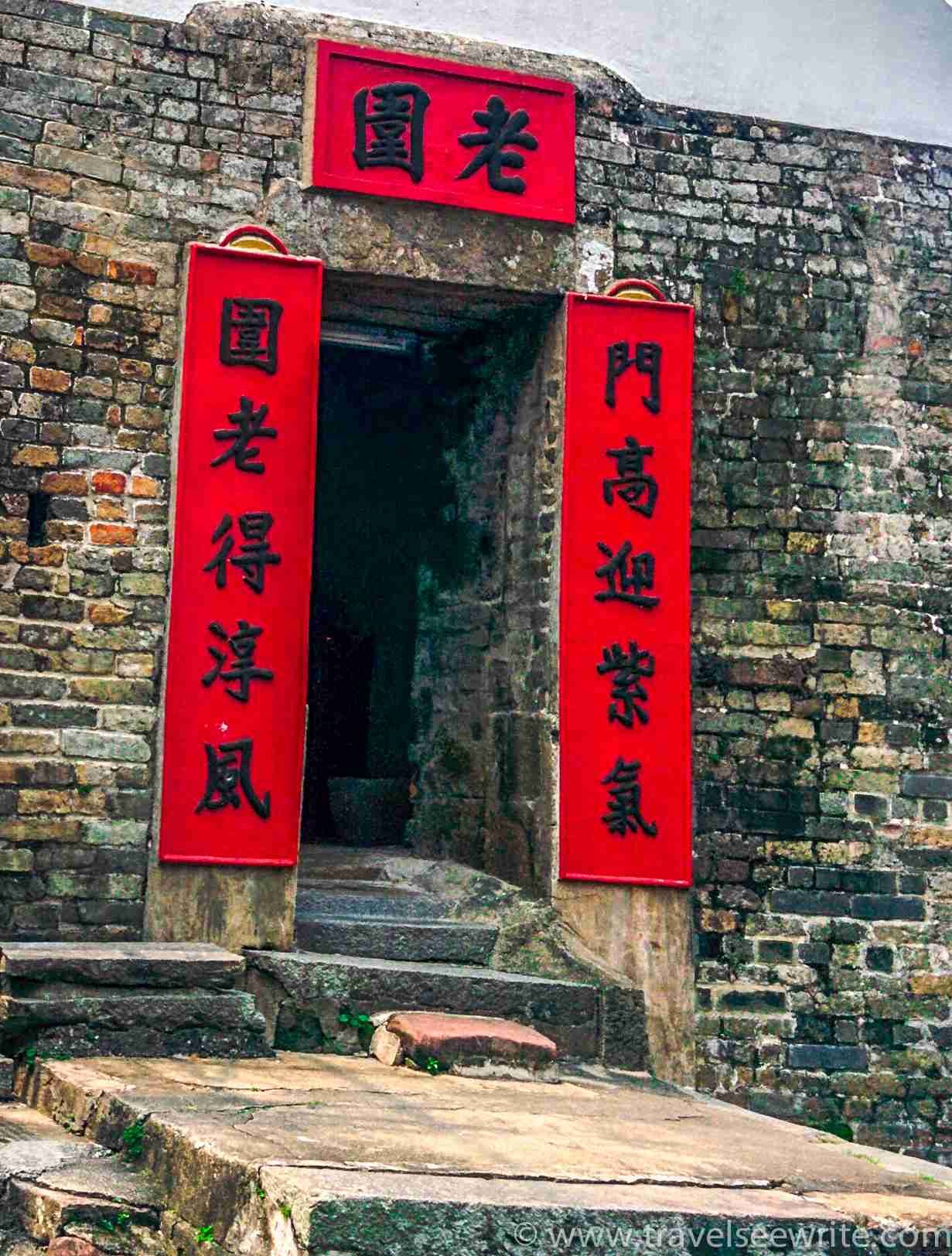
To be honest, it wasn’t as awe-inspiring as I imagined it to be. But exploring an offbeat trail is always a 50-50 game. Sometimes you could get a jackpot sometimes you could return empty-handed.
A visit to Hong Kong is incomplete without experiencing its incredible shopping and food culture. We ended our day by visiting the local markets – Temple Street Night Market, Ladies Market, Sneakers Market, Victoria Market and Kowloon Market among others. The best part about shopping in Hong Kong is it caters to every budget, need and whim. Also, the city has no sales tax so prices are attractive.
Hong Kong’s love affair with food is world-renowned and so broad is its culinary repertoire, that whatever your tummy desires, Hong Kong will find a yummy way to satiate it. I particularly enjoyed eating the authentic Cantonese vegetarian meal at Bodhisattva Vegetarian Restaurant.
So this was my short and sweet experience of Discovering Offbeat Hong Kong in 4 Days. How was your experience or are you still planning? Go Discover Hong Kong! If you are going to Hong Kong from India, don’t forget to apply for the Hong Kong pre-arrival registration for Indians!
PS: Hong Kong as of 12th October 2021 is still not open to tourists but will most likely open up in 2022. Please do check their travel advisory before booking your trip.
For more details on which airline to fly, where to go, what to see, the best time to visit, best places to stay and ideal Hong Kong Itineraries for 1-5 days, check out the following articles:
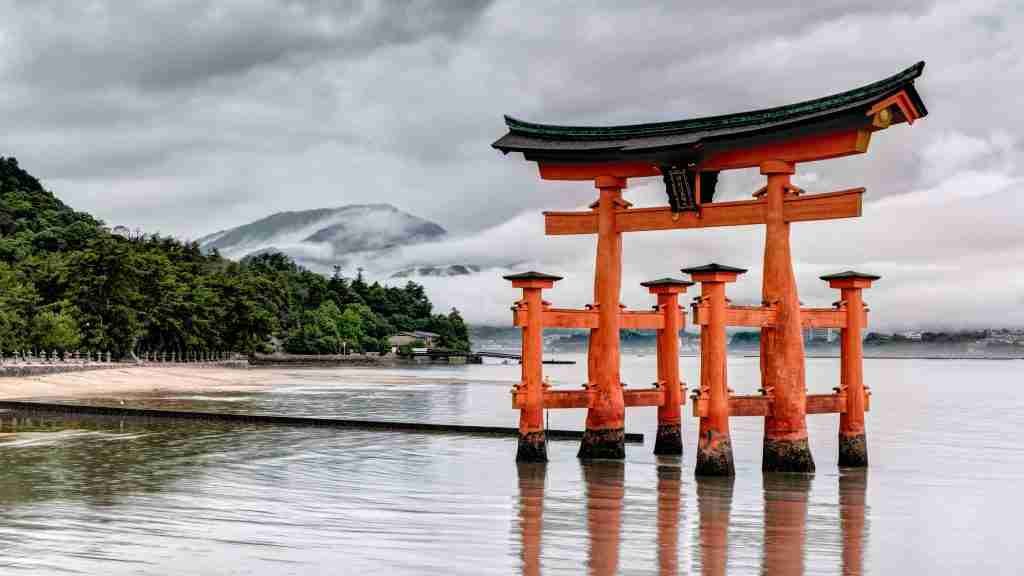
A step-by-step guide for multi visit Japan Visa
My Facebook Timeline is overtaken by the country of ‘Pokemon’. For the last few years, everyone is either visiting Japan or is in planning mode. Japan has suddenly become the ‘IT’ place for tourists. From the slopes of Mount Fuji to the temple streets of Kyoto, tourists are flocking Japan’s tourist spots, using their JR Passes to map out the length and breadth of the country, getting blown away by Sakura and swiping their credit cards on cosmetics, sushi and high-tech gadgets.
Whatever might be the reason, Japan is swiftly climbing in the preferred destination list. The cheap yen, easier visas and Government initiatives like “cool Japan”, “Omotenashi” seem to be working its magic to lure tourists to Japan. So if you too are thinking to visit Japan but is puzzled how to go about the visa process then this post is for you.

Residents from 67 Countries and regions can enter Japan without a visa for short term stay. If your country didn’t make it to the list then you are required to apply for the Japan Visa. Start your process by visiting the website of Embassy of Japan in your country and download the Application Form and Checklist based on your purpose of travel. If applying from India visit VFS website. If applying from any other country visit the website of Japan Embassy in that country, for example, I used Philippines website.

Getting a Japan visa is no big deal if you have following documents in place:
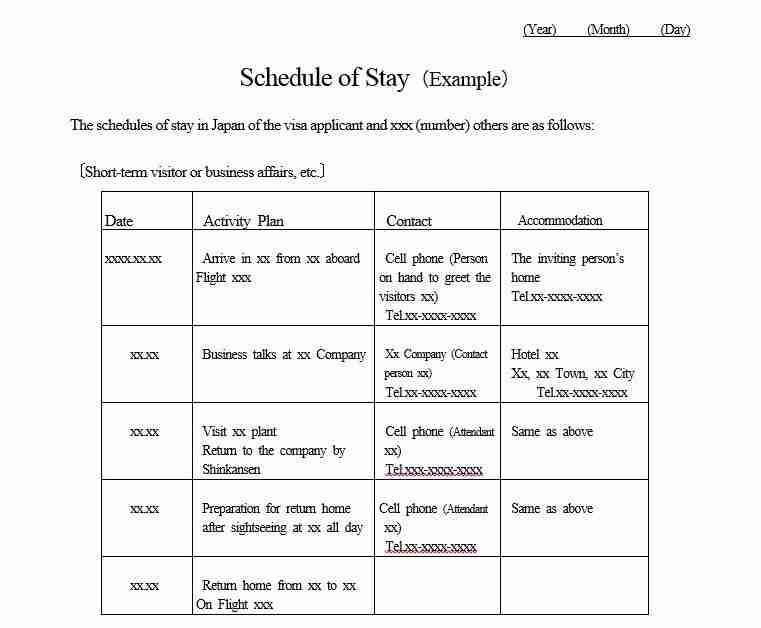
Japan Embassy has accredited travel partners in each country it functions. In India, it has empaneled VFS and in the Philippines, it has 6 accredited agencies. Visit the accredited agency’s office and submit the required documents along with the visa fee (cash only). The visa fees are 1090 INR in India and 1200 Php for Foreigners (1000 Php for locals) in the Philippines.
Since I was applying from the Philippines I used Discovery Tours. They were very efficient and helpful. They went out of their way to help. They even agreed to check my documents and guide me before final document submission, which was not even included in their services.
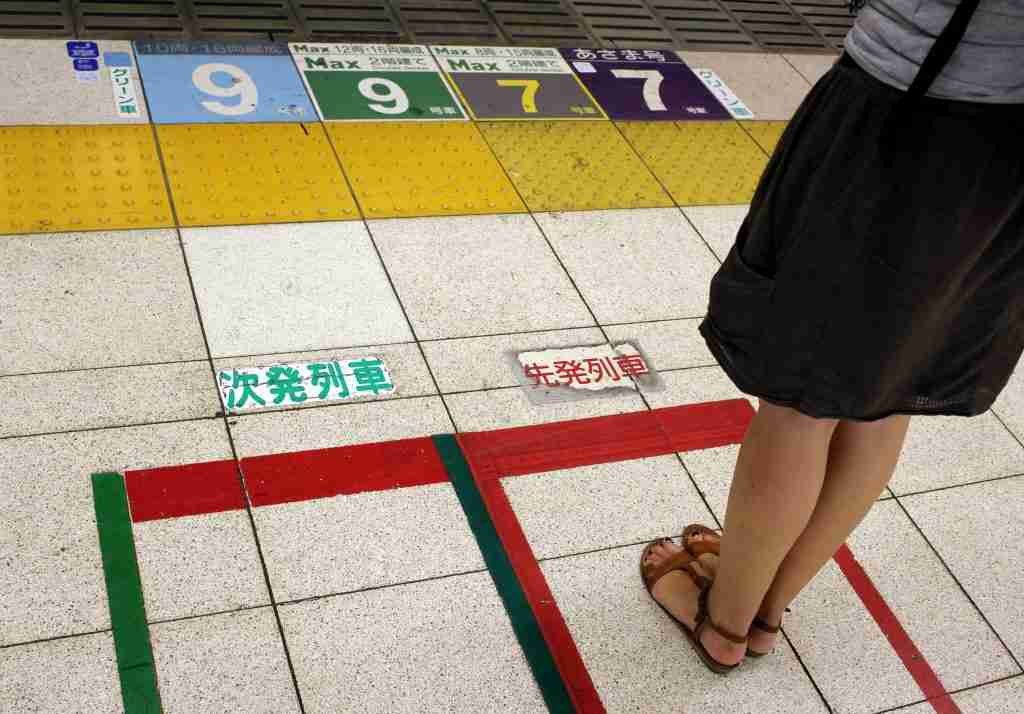
Photo credits: Carlos ZGZ, Flicker, Public Domain
Japan visa, like their bullet trains, is very fast when it comes to visa processing. After three days of documents submission, you can collect your passport. I submitted the application on Saturday and got my visa on Tuesday. The icing on the cake was getting a Multi Visit 5 Year Visitor Visa. Frankly, I wasn’t expecting it since I was applying for the first time and usually first timers only get single visit visa up to 90 days of stay but I guess having traveled to many G7 countries in the past three years, travel blogger credentials and having sufficient financial capacity to fund my trip convinced them to change their mind 🙂
There are three options to collect your passport:
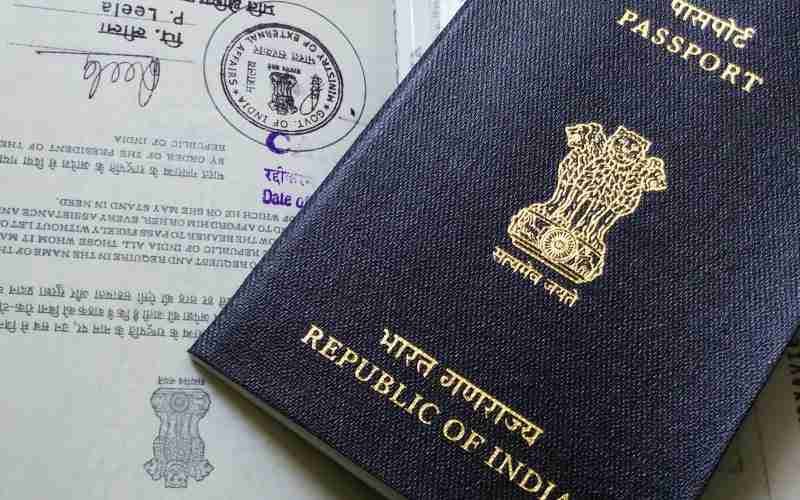
Even after traveling frequently around the world, visas still scare me. But I am so glad Japan Visa process was a cakewalk. Hope it is the same for you!
日本であなたを参照してください
(Nihon de anata o sanshō shite kudasai – see you in Japan)
Related: Budget Guide on Japan Travel
Always do what you are afraid to do.
Ralph Waldo Emerson’s words have been my guiding principle in life. But this time when I visited Sagada I pushed the envelope a bit more. Being an impulsive traveler who hates micro planning, I had not bothered to check what I was getting into and how prepared was I. All I knew was it has Rice Terraces, Hanging coffins, Whang Od and a cool weather. And these reasons were good enough for me to book a trip to Sagada, Philippines. However, Sagada Sagada Tourist Spots surpassed my expectations.
Come on board and experience the thrill of mountain adventure in a tropical paradise:
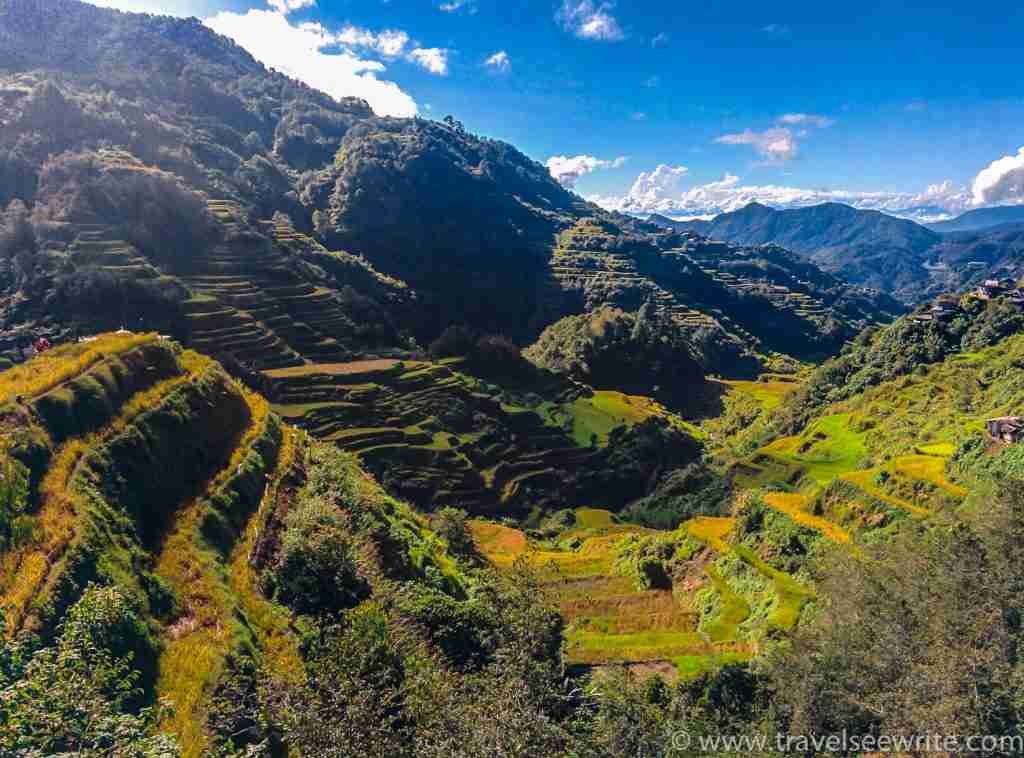
The 2000-year-old Banaue Rice Terraces, a UNESCO world heritage site
On 9th Sep 2016 night, I along with my friend Pari, started our journey to Sagada. Our first pit stop was the stunning 2000-year-old Banaue Rice Terraces, a UNESCO world heritage site. The Rice Terraces are commonly referred to as the “Eighth Wonder of the World”. It was the first ever landscape to be included in the cultural landscape category of the UNESCO world heritage site.
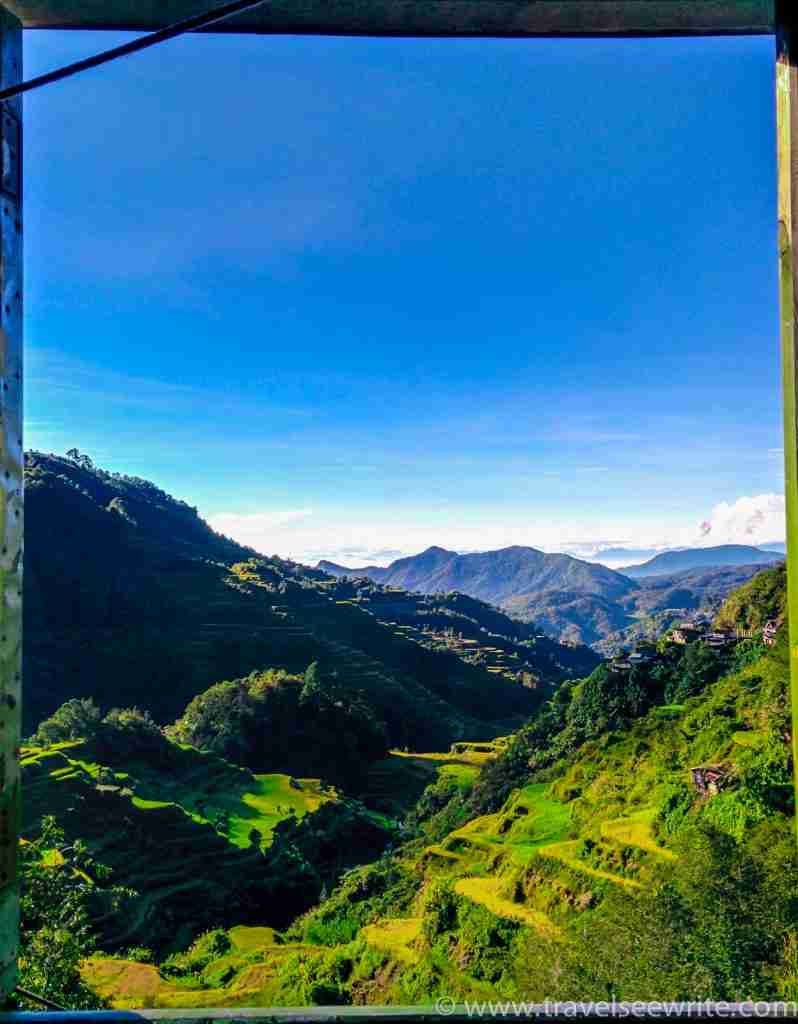
Banaue Rice Terrace view from a local house, Philippines
Another interesting trivia is, in a country colonized for more than 400 years; this mountain province was never colonized, as the tribes here were too strong for any kind of foreign invasion.
After quick check-in and lunch at Sagada, we started our adventure ride. On the behest of our driver, we opted for Cave Connection, an extreme spelunking adventure. I had no clue what I was in for. My past caving experiences left me with a misconception that caving is pretty easy. Turned out I was foolhardy.
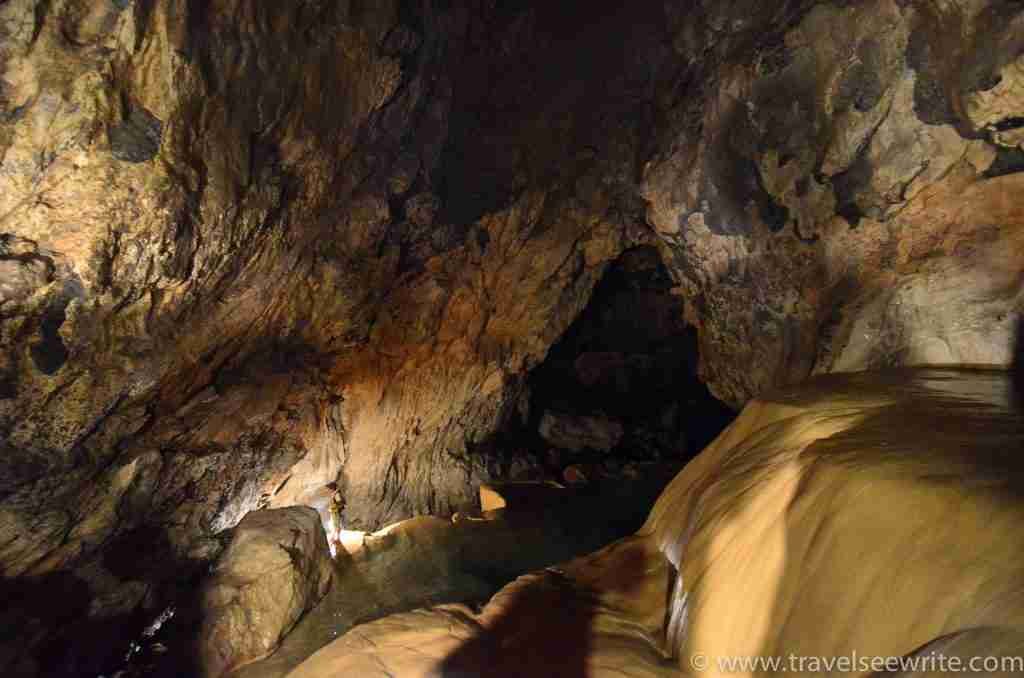
Cave Connection, Sagada. Pic cc: jojo nicdao
We started our Cave Connection Tour from Lumiang Cave, a burial site where hundreds of coffins are stacked as part of the local tradition. These coffins have been there for more than 400 years and in some of the coffins, you could see the bones. A strenuous adventure began with an eerie start.
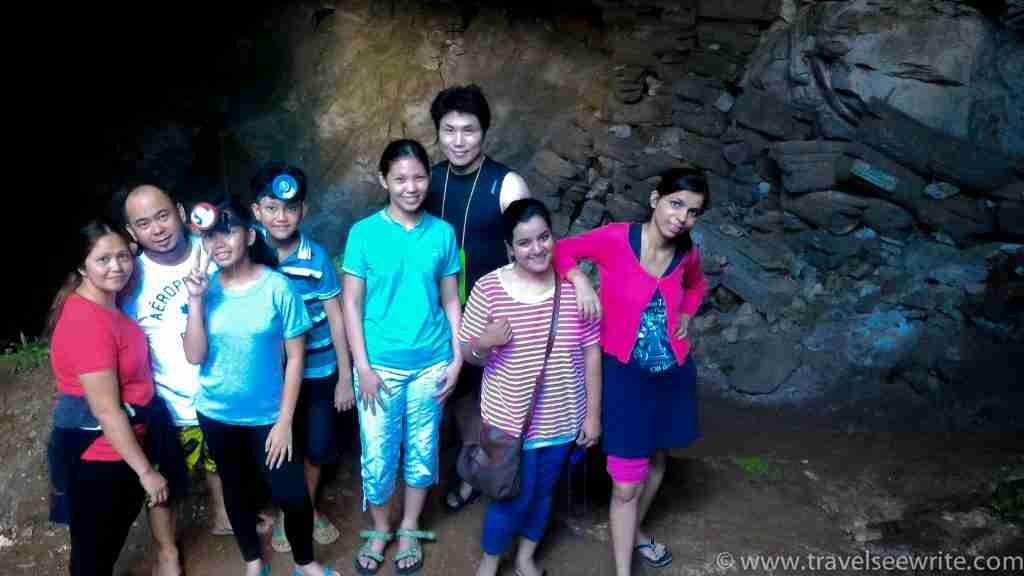
The coffins behind us have been in the Burial Cave for more than 400 years
The only light in the pitch-darkness came from the lamp our guide was carrying. Our guides were experienced and caring. One of the guides had Salman Khan’s ‘Tere naam’ hairdo.

Cave Connection, Sagada. Pic cc: jojo nicdao
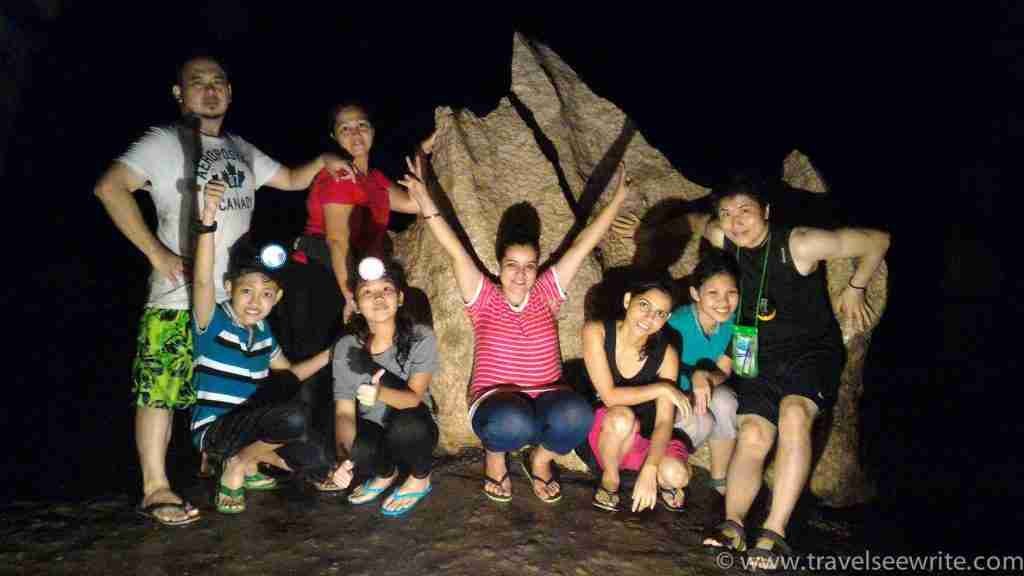
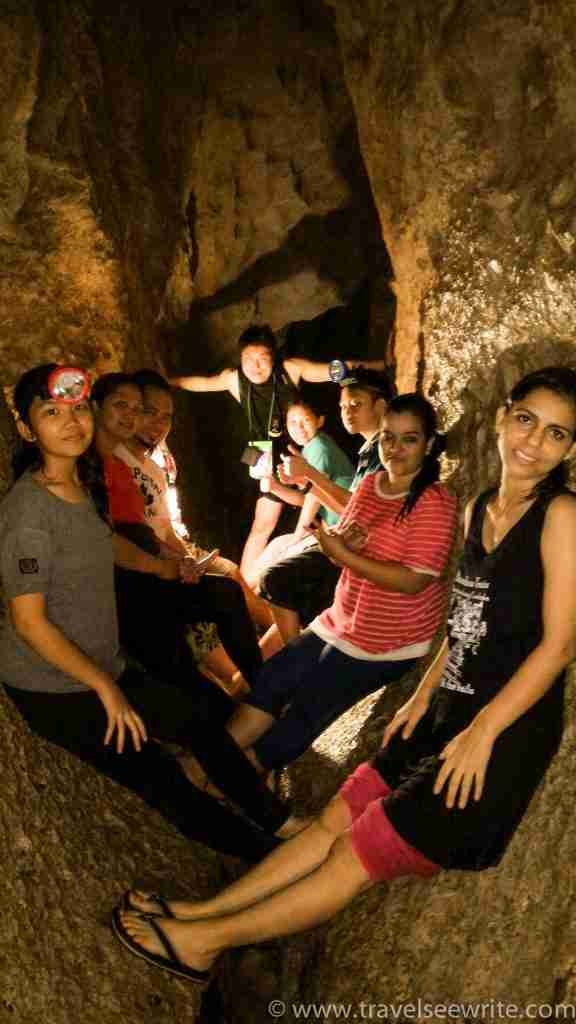
Our Group taking a photo op break in the Sumaguing Cave, Sagada
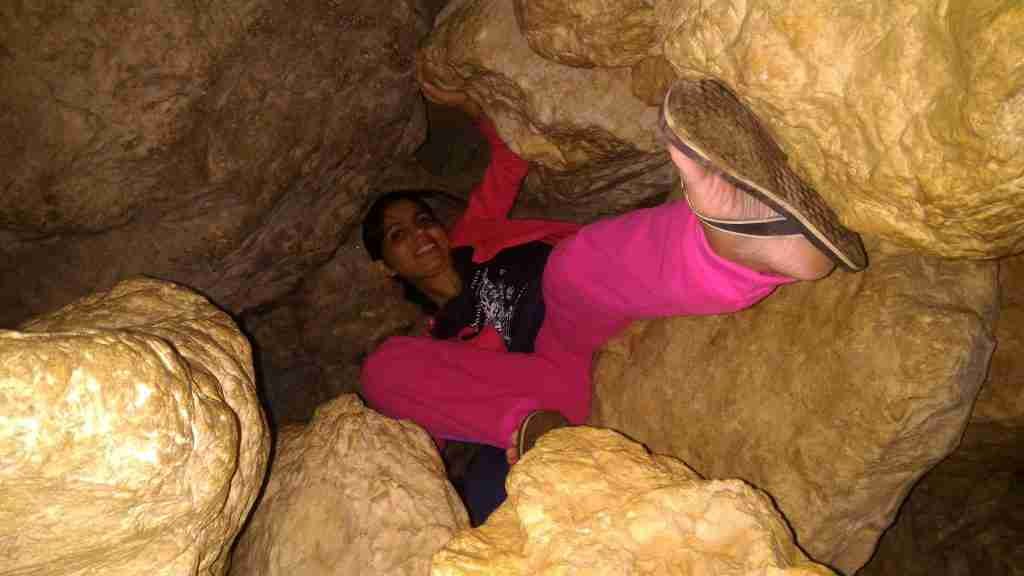
Cave Connection was an awe-inspiring experience that not only amazed us with the magnificent rock formations but also tested our endurance and flexibility. The 5 hours of spelunking had a number of descents and ascents, climbing, and rappelling, swimming and soaking, crawling and scooting, gripping the shoulder of our guide and stepping on his knee, cursing and praying, and more!
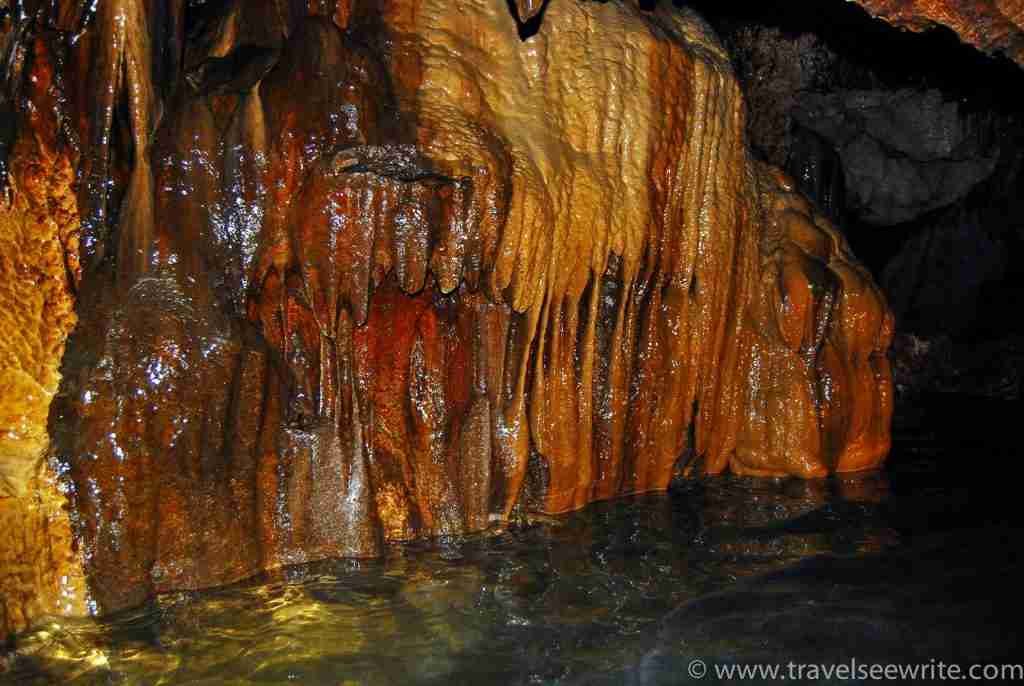
The 10 feet deep icy cold water pool that we had to cross, Pic CC jojo nicdao
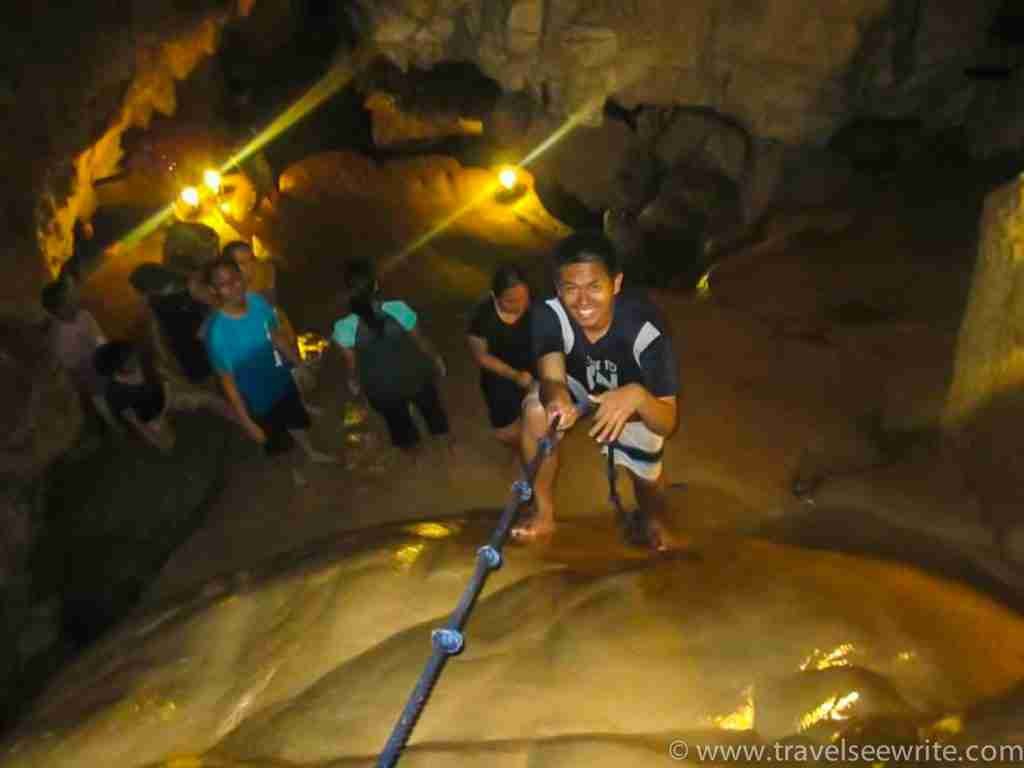
Rappelling inside the Cave, Sagada
The rocks were dangerous, slippery and sharp. Capable of causing bongsho-dhongsho to any guy 😛 (Ask your Bengali friend what it means). One slip could have resulted in a slip-disk. The most frightening part was when we had to pass through the freezing cold waterfall and 10 feet deep pool filled with icy COLD water. Every inch of my body was hurting and I was super cold.
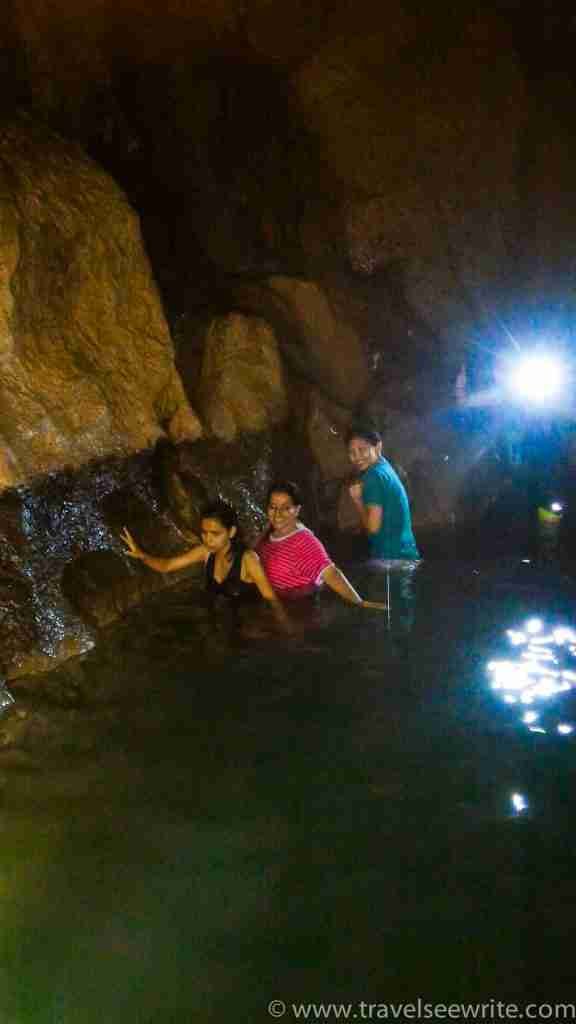
Crossing the icy cold 10 feet deep water pool, Sagada
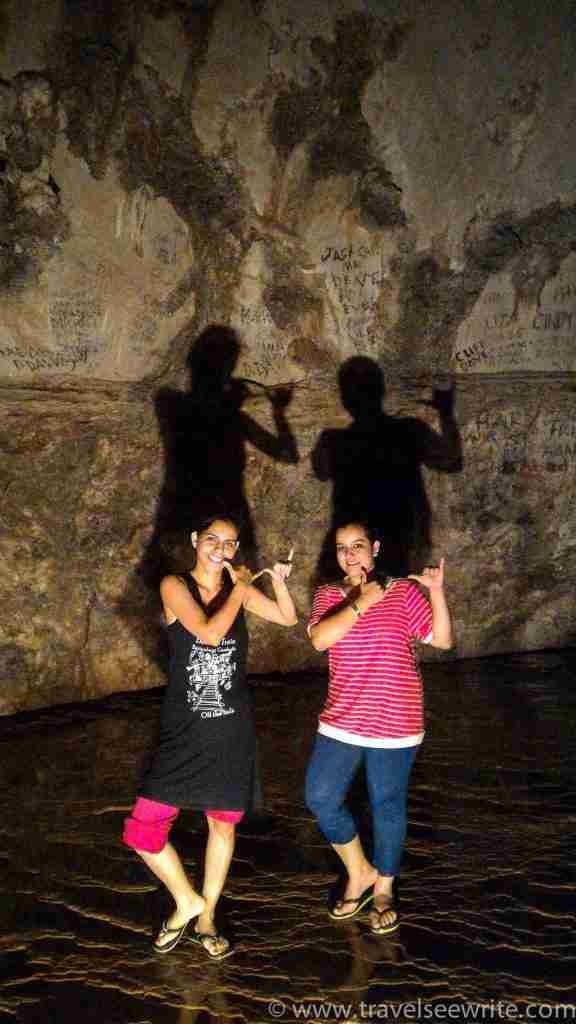
What kept me going was I didn’t want to die in a dark scary cave. So I had no option but to keep walking. However, the Braveheart was my friend, who in spite of not being an adventure junkie finished it successfully. She could be the next model for Fear Factor or Whisper.
One key takeaway from this extreme adventure was – Sometimes the best strategy to get over your fear is to not know the extent of the danger.
After a day of thrilling action, it was time to relax and what better place than Yogurt House, a cozy restaurant with a fireplace, delicious food, and charming staff. All it took to gulp down our tiredness was a hot cup of ginger lemon Tea, Kadhi Chawal (thanks to Haldiram’s RTE) and a veg sub.
A day full of adventure had come to an end. That day after long I slept like a log and woke up fresh.

Sagada Tourist Spots: Trek to Bomod ok Waterfalls
A one-hour trek through the villages, rice terraces and steps took us to the Bomod-OK waterfalls. The downhill and uphill trek was pretty tiring in the scorching sun but the waterfall was worth the effort and the sun tan.

Sagada Tourist Spots: Bomod ok Waterfalls, Sagada
Sagada is renowned for its hanging coffins. Though I had heard about them I didn’t know about their history. Our guide told us that there are two kinds of funeral processes practiced in Sagada – cemetery coffins placed 6 feet above the ground and hanging coffins on the cliffs.

Sagada Tourist Spots: Echo Valley, Sagada
We hiked for 15-20 minutes from the St. Mary’s Church to the cemetery to eventually make way down to the Echo Valley and Hanging Coffins. It is named echo valley for the obvious reason.
Here is the back-story narrated by my Igorot Tribe guide:
Hanging Coffins is a 2000 year old funeral custom of ours. It is an expensive process and only the person who is considered to be the ‘legitimate elder’ by us has a right to be placed in a hanging coffin. When the person dies, he/she is placed in the coffin in a fetal position because a person should exit the world in the same position that he/she entered.
We wrap the body in blankets and tie with rattan leaves and then carry the corpse to the hanging coffins site. Our tribe members arrive from far away places to participate in the procession. Getting smeared with the blood or sweat of the deceased brings good luck. After reaching the site for the burial, the corpse is placed in the coffin and tied or nailed to the side of the cliff. We believe placing the coffin on the side of a cliff, the deceased would be closer to heaven.” Bewildered by the unique traditions of the locals, we returned to the marketplace.

Sagada Tourist Spots: The Hanging Coffins
The evening was spent experimenting with food – some gluttonous some worth forgetting.
Next day we woke up at 3 am to catch the glorious sunrise at Mt. Kiltepan. While we were waiting for the break of dawn, the cold gusts of wind made sure we didn’t feel sleepy. The sea of cottony clouds, the crack of sunlight passing through and the shivers we got from the cold breeze made this place heavenly! Although the sun had taken a day off that day still the sight was mesmerizing and magical.

Sagada Tourist Spots: Sunrise View from Mt. Kiltepan, Sagada

Mt. Kiltepan – One of the most popular Sagada Tourist Spots
After basking in the glory of the gorgeous sunrise, we started our onward journey to Manila taking pit stops in between for photo-ops, loo breaks, and pet puja. En-route we visited Baguio strawberry farms and Burnham Park.
It is one of those places whose mystique and allure cannot be captured through pictures or words. With its unique culture, rugged beauty, cool weather, pine trees, fresh food and air, the slow pace of life and rich traditions, it felt like I’ve been transported to a different part of the world. A part where I lost my heart to my beloved Himalayas. I never imagined finding love in an archipelago. But as they say, never say never.
So when are you visiting this sleepy beautiful town?
The Bat Cave where flowing water has carved waves on the rocks, Sagada
From November to February. The weather is cool and dry. From November onwards there are local festivals like Begnas di Yabyab (Nov), annual bonfire festival (Dec), and town fiesta (Feb).
The 12-13 hours journey can be done either through a bus or car/vans. There are no direct buses to Sagada so you’ll have to go via Banaue or Baguio. Many tour operators have 3D4N tours to Sagada with vans leaving on Thursday night around 9 PM from Trinoma or from Centris Mall, Quezon Avenue.
Though I could stay there for weeks but for most people 3D4N are enough to explore the key attractions.
There are no swanky hotels in Sagada only basic hotels and homestays. I stayed at an amazing property called the Glasshouse with a great view and good facilities. Other options are Canaway Guesthouse, George’s Guesthouse, Deavey’s inn, Masferre Inn, Rock Inn, Treasure Rock Inn among others.
I took a package tour so my entire trip inclusive of my stay, transportation, guide fees, meals, and some light shopping cost around 6000 pesos (less than 125 USD). If you decide to do on your own than a budget of the 1.5k peso (31 USD) per day should be good.
I couldn’t experiment a lot with the food, thanks to being a vegetarian. Although I tried many restaurants my favourite was Yogurt House. Other options are Salt & Pepper, Masferre, Sagada Brew, Gaia Café and Bana’s. Lemon Pie House, which is highly recommended was a big disappointment. Neither they had variety nor taste. The staff was rude. And please don’t try their mountain tea. You will be scarred for life.
If you enjoyed reading this article, do read Why Philippines is the best-kept secret of South East Asia.
Sean O’Connell: Sometimes I don’t. If I like a moment, for me, personally, I don’t like to have the distraction of the camera. I just want to stay in it.
Walter Mitty: Stay in it?
Sean O’Connell: Yeah. Right there. Right here.
If I were to sum up my Cambodia Trip then this would be the description.

Angkor Wat enamored me for long but not enough to make me book my tickets. However, a low-cost airline and a long weekend did the job. A flight to Cambodia was booked without any expectations. No expectations often lead to pleasant surprises. And Cambodia turned to be a mega one.
On 25th Aug 2016, I was in Cambodia but the trip didn’t start on a good note. After scooting through the frenzied traffic and torrential rains I somehow managed to reach the Airport on time. But my wait was in for a long wait tonight. Although Cebu Pacific enjoys a notorious image of flight delays this time it wasn’t the culprit. A powerful cyclone was. One thing that Philippines has taught me what India couldn’t is PATIENCE. I patiently waited for my flight to take off. After a delay of 6 hours and a bumpy flight I finally landed in Siem Reap at 3:50 am instead of 9:50 pm. But as they say, all’s well that ends well. I was happy to have reached my destination safely.
Cambodia wasn’t love at first sight. It was chaotic, hot and humid but a treasure trove where disappointment turned into amazement. An unforgettable trip worthy of many posts. So in my first post I am going to share the unique facts about Cambodia that left me awestruck. So hop on and relive the Cambodian Charm with me.

BEYOND ANGKOR WAT, THE UNIQUE FACTS ABOUT CAMBODIA
One passport size photo, thirty dollars and five minutes are all it takes to get you a visa in Cambodia. No unnecessary paperwork. No long queues. No difficult questions. Getting a visa in Cambodia is a cakewalk.
As soon as you come out of the airport, there are prepaid taxis, tuk-tuks, and mopeds waiting to take you to your destination. A tuk-tuk to the city centre costs 11$, a taxi 12$. I hired a taxi and unfortunately got stuck with it. The Lexus taxi was comfy but the driver was super clingy. He didn’t misbehave, he was just a narcissistic salesman. I did a mistake of asking him about the offbeat places around Siem Reap and he stationed himself at my hotel. I didn’t want to hire a taxi for my sightseeing because you don’t get to travel like a local but because he had waited for me for four hours (voluntarily. I didn’t ask him to) I felt compelled to hire him. Thankfully I hired him only for a day. One day trip that could have been done in 60-80 $, ended up over 150$. Getting bored with his self-obsessive talks was a bonus that I could have happily traded off.
Tip: Don’t reveal your travel plans to your driver. Instead, seek your hotel/hostel’s help
To know more, don’t forget to read the Complete Guide on Cambodia Visa

Taxi in which I got stuck at Siem Reap, Cambodia
Unlike its neighbours, Cambodia is still unexplored and uncrowded therefore it’s fairly easy to find accommodation in and around popular areas at attractive prices. Most of the properties are owned by foreigners and serviced by locals. The staff is ever smiling and at your service 24*7. And the best part is you don’t need to book your entire stay in advance. You can keep your plans flexible and decide your accommodation according to the mood of your wanderlust. I managed to get accommodations in offbeat places like Sen Monorom, Batambang and Kampot without any prior booking.
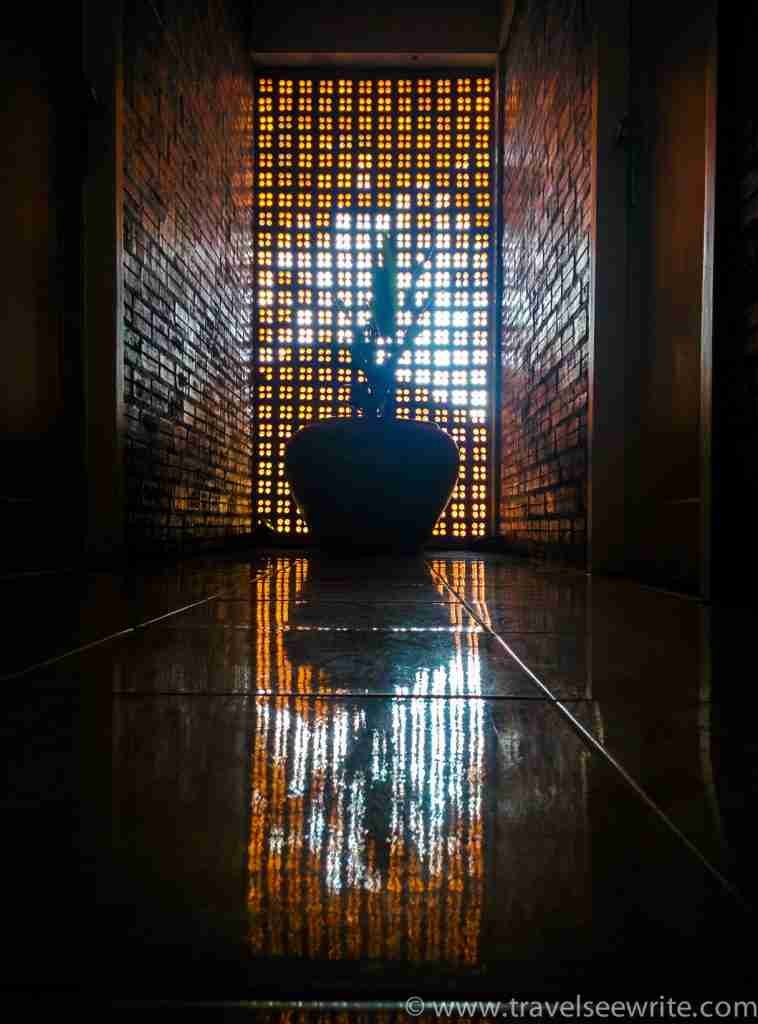
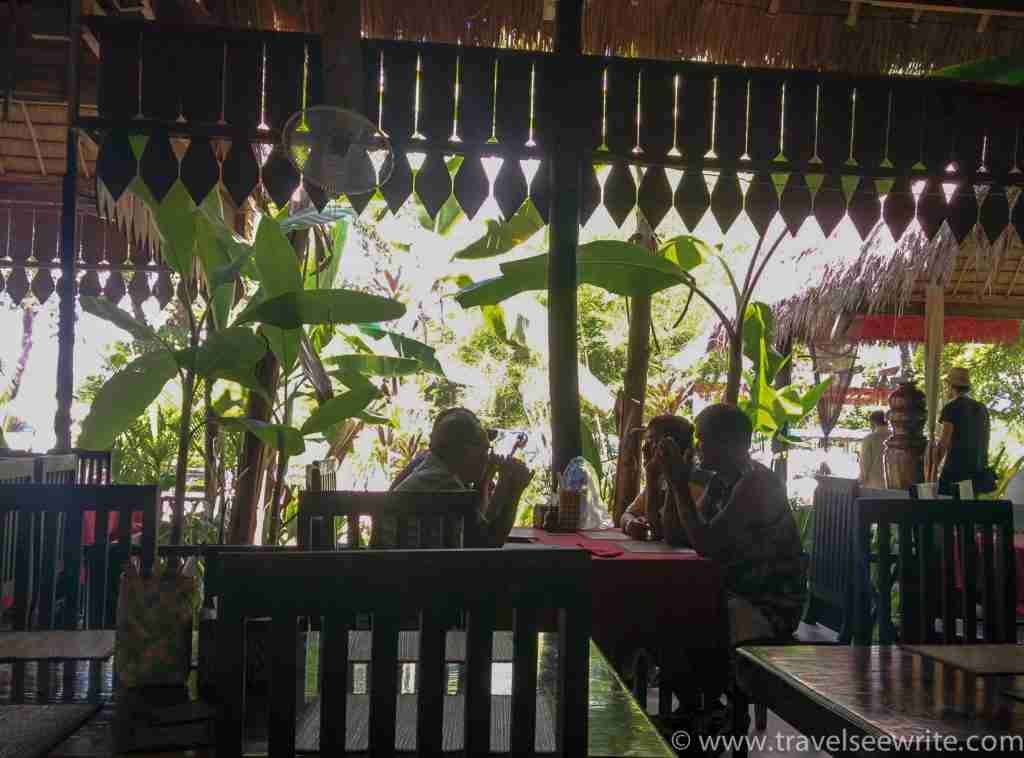
In Siem Reap, I had booked myself at Naga Angkor Hotel of Mad Monkey Hostels. A budget hotel, just five minutes away from the Pub Street. Steve, the owner of the property, was very helpful. In spite of being on a different continent he always responded to my queries. My room was small but clean with all the basic amenities. The staff was very courteous. Thanks to them, I ended up exploring a lot of offbeat places. I usually don’t eat at the hotel I stay in but the food and drinks served at the restaurant of Naga Hotel was wonderful.
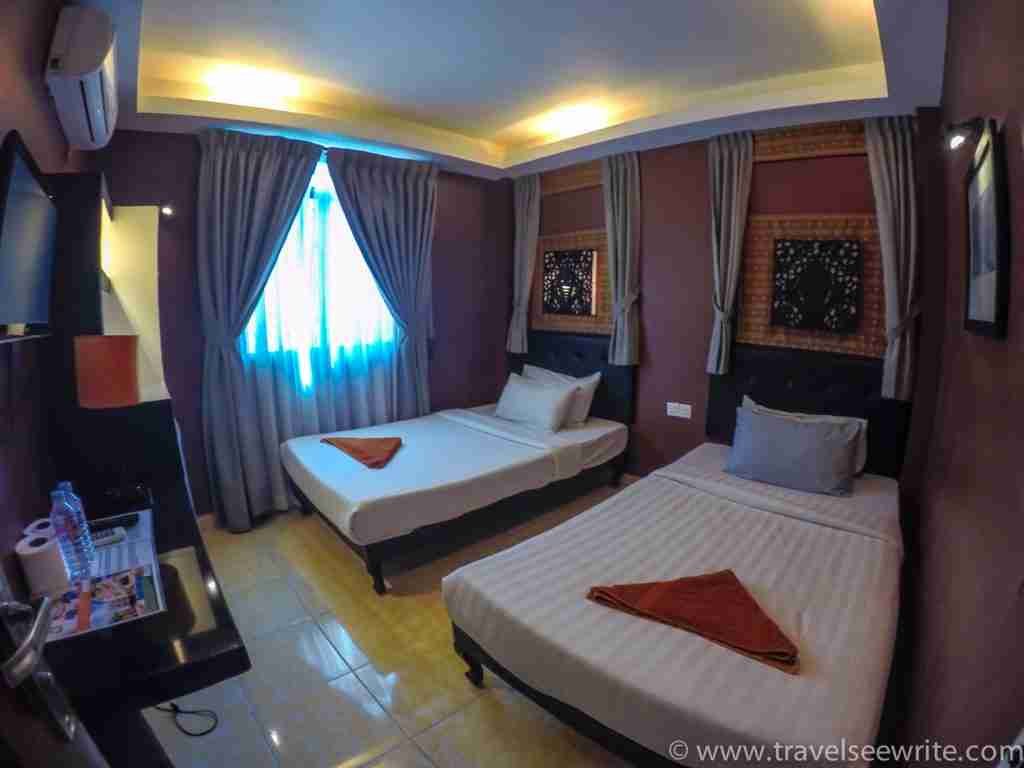
Bedroom of Naga Angkor Hotel, Siem Reap, Cambodia
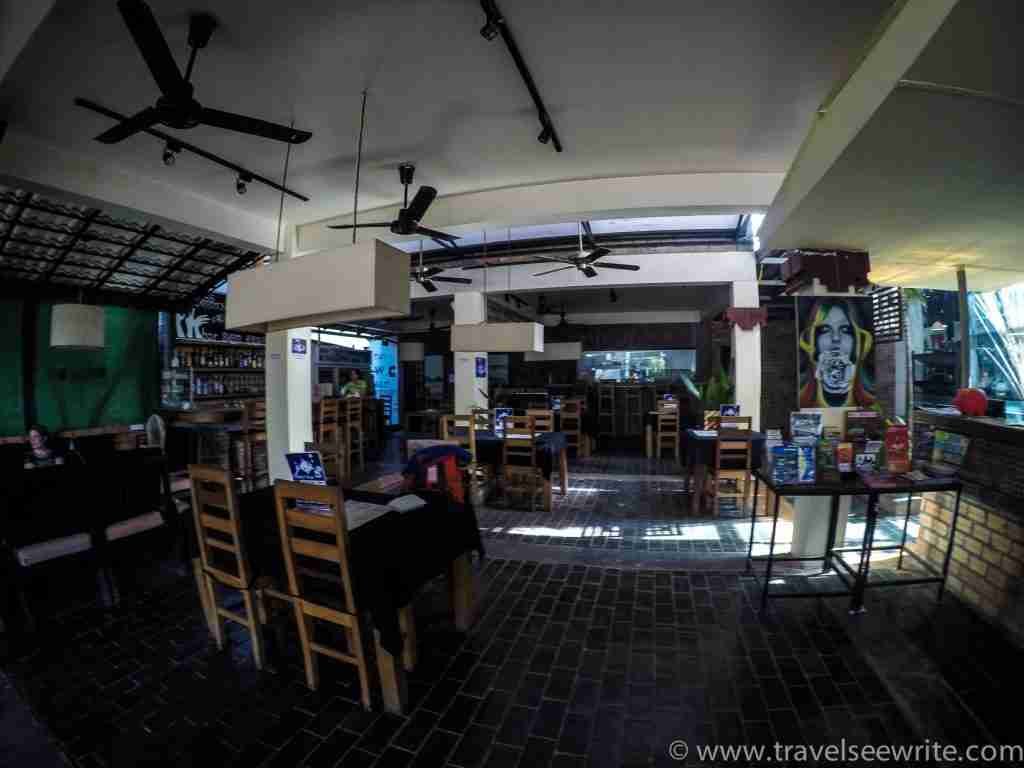
Restaurant & Bar of Naga Angkor Hotel, Siem Reap, Cambodia
Tip: Do carry your toilet paper and water. It’s not a common practice to provide the same.
It was the first time I didn’t exchange my currency for a local currency and I am glad I didn’t. Cambodia is a country where dollar is the de-facto local currency. You can relish your dinner or hire a tuk-tuk or go sightseeing or do souvenir shopping; everything can be paid in dollar. Locals are happier to accept dollar than Riel since it gives them better value than their local currency. One dollar is equal to 4000 Riels so it’s a win-win situation for travelers as well as the locals. The interesting fact is that even locals have to pay in dollars for big ticket items like a bike or a car.
Tip: Keep lots of small bills of 1s, 2s, 5s and 10s.

Everyone accepts a dollar in Cambodia, even your tuk-tuk driver
While Hinduism and Buddhism influence can be seen everywhere in Cambodia, there is one more thing that has India written all over it – the Cambodian Names. Just like in ancient India the caste system reflected our occupation, similarly in Cambodia the number of syllables in a person’s name reflect the level of his/her parents’ education and family’s social status.
My guide told me if you have a name like Borun which has two syllables (o & u) then it means you are from a farmer family. If you have three syllables then one of your parent comes from a blue collar job like a doctor, engineer, teacher or a government servant. The King has seven syllables and the Prime Minister has the highest number of syllables – 14 (Samdech Akeak Moha Sena Padey Techo Hun Sen; meaning “Lord Prime Minister, Supreme Military Commander Hun Sen). And if you are a Chinese-Khmer businessmen with a business empire and connections with Hun Sen or Royal Family, you can buy the title of “Okhna”, or Lord. Also, Cambodians traditionally have only a last name and a first name, with middle names common only among royalty and the elite.

Borun’s name have two syllables
Tip: While addressing a person do note that the Cambodian name is always spoken and written in the order of last name then first name

Koh Ker, the offbeat part of Cambodia
Cambodia has a lot more to offer than its headline sights – Angkor Wat. What won me over was the friendliness of the people, the yummy vegetarian Khmer cuisine, the sublime beauty of the countryside and its pristine tropical rain-forests. Places like Koh Kher, Sen Monorom, Koh Kong, Battambang, Ban Lung, which you wouldn’t find in guidebooks, are actually the places where the heart of Cambodia lies.
Being an offbeat traveler I keep my plans fluid and trust the advice of locals and fellow travelers. One such gem of an advice was given by the Austrian friends – Daniel and Julia – I met in Battambang. They introduced me to Sen Monorom, Mondulkiri, which lies in North East of Cambodia near the border of Vietnam. It is a must visit place for nature and animal lovers. The Elephant Valley Project is an NGO working towards rehabilitating the captive elephants in Jungle, conserving their natural habitat and supporting the local people who work with these magnificent creatures. For 52$ you can watch the elephants for half a day and do voluntary work for the other half.

Elephant Valley Project, Sen Monorom, Cambodia
The elephant watching is very special. You walk around the jungle with a guide listening to the real life stories of the elephants – how they were treated before, how they acted when they came to the project, how they adapted to the other elephants. One such story was about an elephant who was treated very badly by her owner. She had a hard time adapting to the free environment of the project. She was afraid to do even simple things like eating or bathing without human orders. While other elephants would enjoy being themselves she would stand in a corner like a scared puppy.
Then one day an elephant, who had been there for a longer time, ‘showed’ her what Freedom is and encouraged her to do anything she liked. He took some mud and put it on her. The timid girl was like ‘hmmm okay. This is fun and looks like nobody is going to hurt me’ and she carefully put little mud on herself. She waited for some time and since no one hurt her she put way more mud onto herself and you could see how much fun she was having. It was a sight to behold where an Elephant was learning how to be an elephant again.
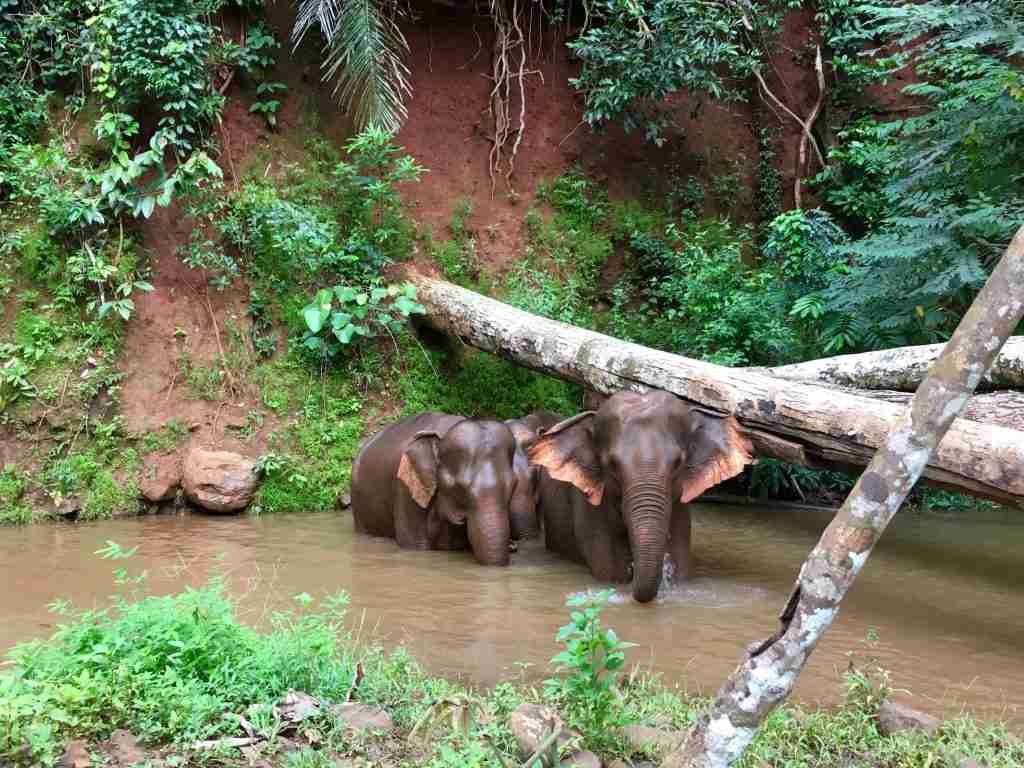
Elephant Valley Project, Sen Monorom, Cambodia
Tip: If there is one thing I would recommend you to do in Cambodia it would be to visit the Elephant Valley Project. And along with it you can do a side trip to the magnificent Bousra waterfall in Mondulkiri.
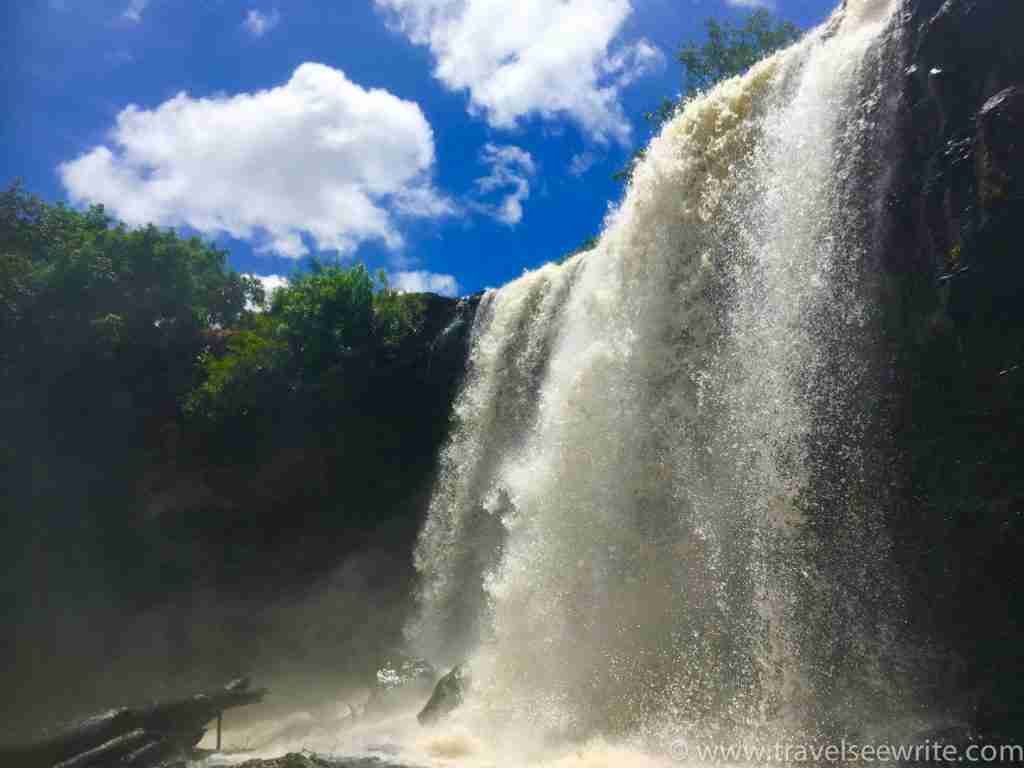
Bousra waterfall, Mondulkiri, Cambodia
Most hotels and hostels have a tie-up with travel agencies and drivers, who can take you out on day tours. They are economical and saves you the hassle of doing everything on your own but I am not a big fan of pre-planned tours. I took a National Kulen Park day Tour for 35$, which was an OK deal. The best part of the tour was the interesting conversations I had with my guide and fellow travelers.
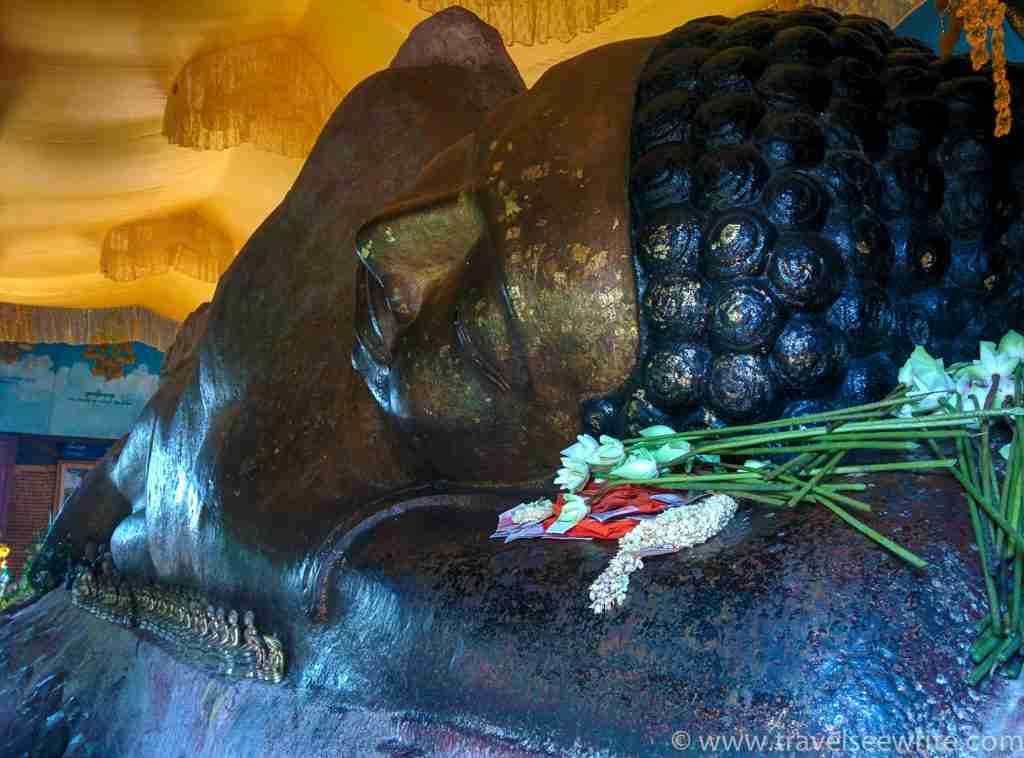
The reclining Budha of Phnom Kulen, Kulen National Park, Cambodia
I met a group of four friends from Kolkata, all above 65 years of age. For the last 40 years they have a ritual of traveling together once a year. No wife. No kids. No distractions. Just four best friends. Isn’t it cool to travel with your best buddies?
The four friends from india that I met on the day tour
Cambodia has a strong culture and history. When in Cambodia you should not miss an Apsara dance and Circus. Both are unique to Cambodia and through art form they show both the glorious as well as the horrific past of Cambodia.
Tip: Avoid back seats in the tour van. Carry water, sun shades and a hat. Book your tours at least a day in advance to avoid last minute cancellations.
Julius Caesar said, “You can control people if you give them two things – something to eat and something to enjoy.” Guess that’s the philosophy of Hun Sen. From North to South to East to West to big cities to countryside there are only two things ubiquitous in Cambodia– the outdoors of People’s Party of Cambodia (PPC) and Beer. Beer is cheaper than water in Cambodia. Even in a tourist hub like a Pub street you can buy a beer for 50 cents.
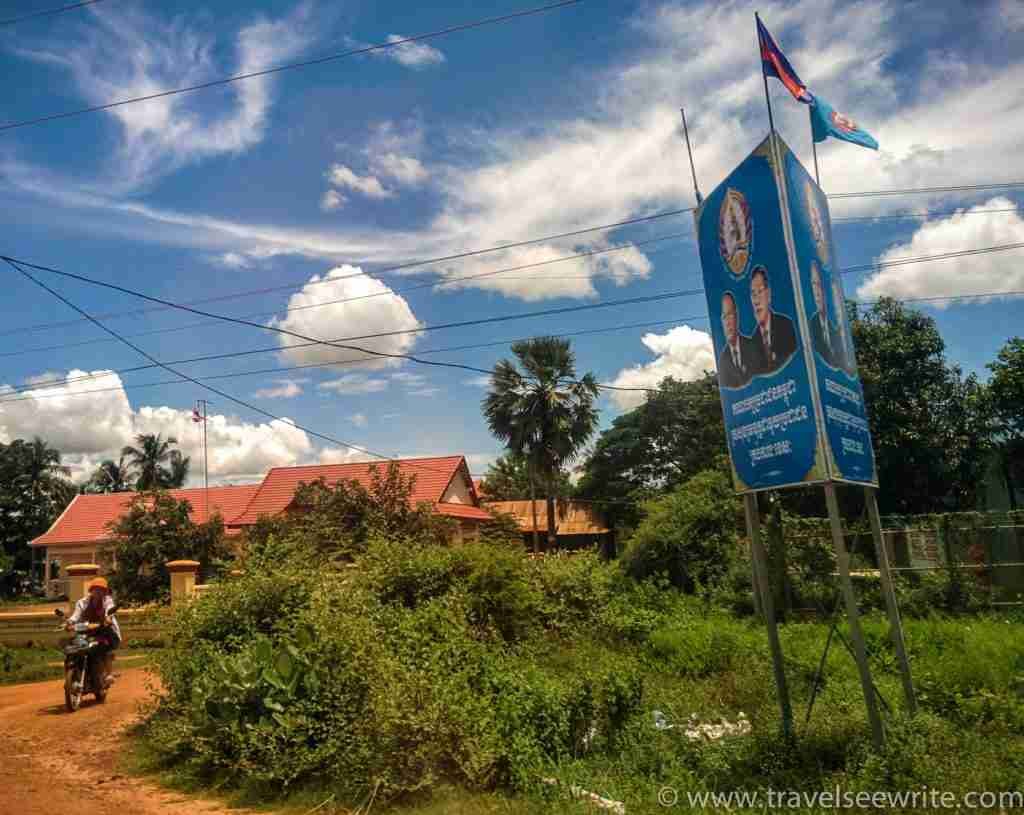
In the words of my local guide, “I know Hun Sen is the most corrupt leader and he does nothing for the poor. We have no roads, no electricity, no schools, no hospitals, no good source of money but I still vote for him every five years because he had made beer cheap in Cambodia. We Cambodians don’t drink beer like you guys (having 2-3 pints) but we drink until we get completely drunk. Also, beer can make us win prizes like Villas, cars, bikes, iPhone etc. which we can only dream about.”
Tip: Try Angor beer or Draft Beer with local dishes like Khmer Curry or Amok

Cambodia is a unique place where both the destruction as well as the construction is credited to foreigners. While countries like Vietnam, US, China and Russia have played a hand in the Cambodian Genocide and Civil war, it is also the foreigners who are relentlessly working for the welfare of the Cambodians. Tourism is the second largest industry after Agriculture. The conservation and restoration of Ta Prohm (the famous Tomb Raider Temple) is being handled by the Archaeological Survey of India. Education and health is mostly on the mercy of foreign aids and NGOs run by foreigners. China owns 10% land in Cambodia and most of the factories are owned by Chinese businessmen. Most schools are setup and run by countries like South Korea and Japan.
The most revered person in Cambodia is Dr. Beat Richner, a Swiss pediatrician who founded the children’s hospitals in Cambodia, where kids up to the age of 14 are treated free of cost.
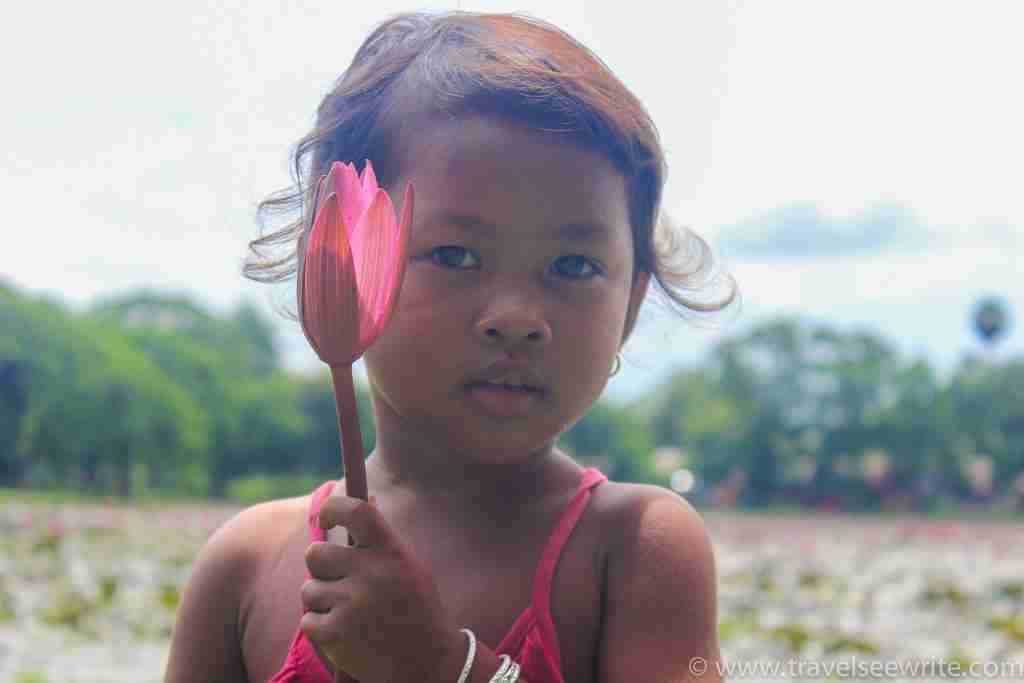
Tip: Hiring a local guide is a small way to help locals. Not only do they get to earn money but they also get to learn a foreign language. English is not taught in any Government school. Foreigners are their only way to learn English or any other foreign language
Nobody loves a hammock as much as the Cambodians do. They love to lounge and nap in a hammock almost anywhere and everywhere. I saw hammocks slung between trees, on the side of a road, behind souvenir stands, in a tuk-tuk, on a boat, in the kitchen of a small restaurant, under a small Khmer hut among other places.
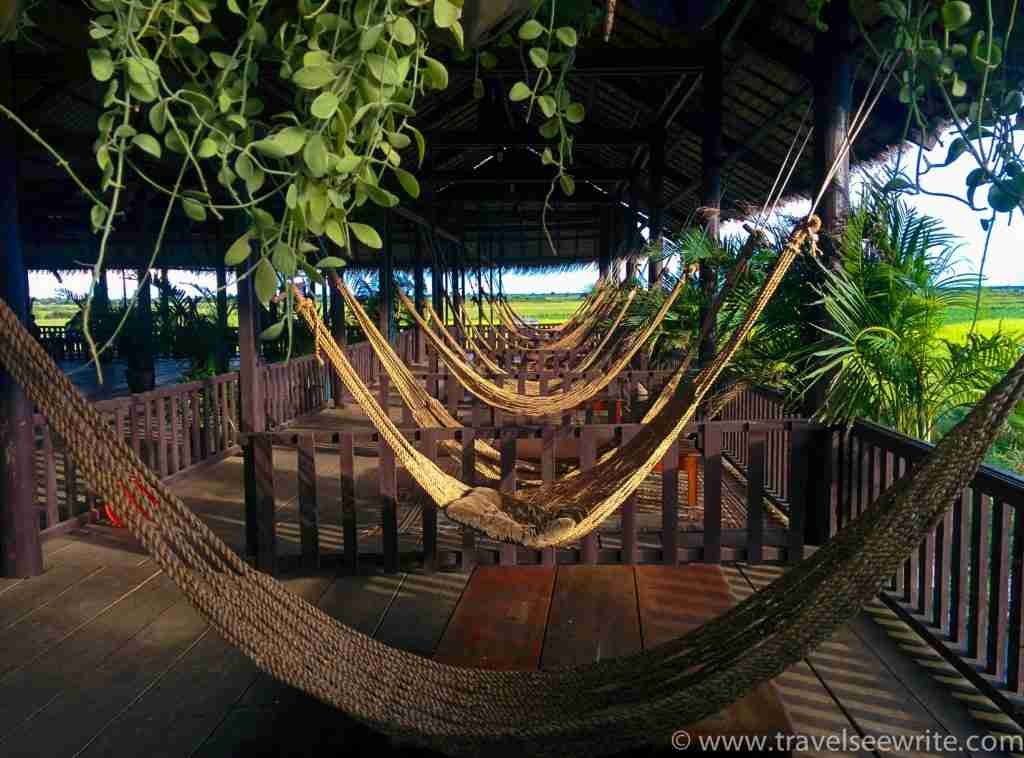
And Cambodians love to enjoy socializing and dining in hammocks too. No wonder many of Cambodia’s scenic natural resorts feature dozens of open-air, thatched roof ‘gazebos’ with hammocks full of locals dining, drinking, and dozing the day away. Away from the humdrum and noisy cities you see an array of hammock bars in the countryside. There is a hammock-resort near the Kratie dolphin pools overlooking the Mekong River. In Kep, locals dine on fresh crab at seaside hammock shacks, and at the base of Udong Mountain, just outside Phnom Penh, there must be 500 hammocks, nearly all of which are full on a busy holiday weekend.
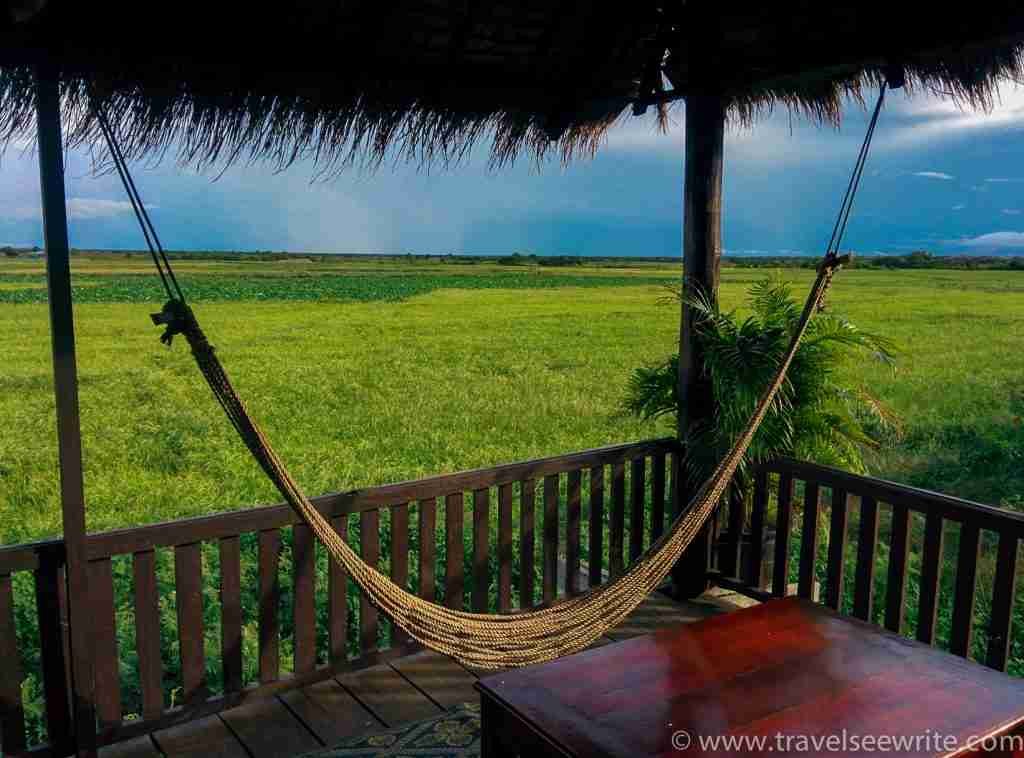
Tip: Buying a hammock in Cambodia can save you lots of dollars
With new power comes a new name. Cambodia has been changing its name whenever a new government came into power over the past 63 years. Interestingly they started and ended with “The Kingdom of Cambodia”:
Tip: You’ll appreciate the Cambodian history and culture more if you do some pre-reading

These were just few unique things I discovered about Cambodia. Do keep a watch on more soul stirring stories from Travel See Write.
After a gap of almost two years, India will be celebrating Ganesh Chaturthi or Vinayaka Chaturthi with the same fervour as it used to celebrate pre-pandemic. And, the best place to enjoy the Ganesh Chaturthi festivities is undoubtedly Mumbai. So, if you are wondering which are the best pandals for Ganesh Chaturti in Mumbai, this post is for you. But before that let me share the backstory of how and why we celebrate Ganesh Chaturthi in Mumbai.
Ganesh Chaturthi is a 10-day festival that celebrates the birth of Lord Ganesha, the god of wisdom and prosperity. This year, celebrations for Ganesh Chaturthi start on August 31 and will end on September 9 when the Ganesh Visarjan will take place.
The monsoon season had brought relief from the sweltering heat of Mumbai but there was no respite from the raging fire in a 37-year-old’s mind. Sitting at Girgaon Chowpaty every day he would wonder how can he make people rise above the shackles of caste, class and religion; and unite them. If ‘divide and rule’ could hand over the reins of sone ki chhidiya to the British then there has to be some idea which can motivate them to reclaim their swarajya from the clutches of ‘non-paying’ guests. Ideas and self-doubts kept flowing in and out of his mind while he kept making clay idols at Girgaon Chowpaty. Meanwhile, the spectators would stand there for hours admiring his idols.
Eureka! His idea was right in front of him. Unlike political rallies, the collective movement for religious purposes was not banned by the British. And thus the idea of Sarvajanik Ganesh Utsav was born in 1893 – from a private affair to a public movement. The man who gave birth to the biggest festival of Mumbai, Ganesh Chaturthi, was none other than Bal Gangadhar Tilak. A masterstroke by Tilak to use Ganesha Chaturthi as a platform to unite Indians without breaking the law. The Police (under British rule) couldn’t see the larger picture and unknowingly aided the nationalistic movement for Freedom. A clay idol of Ganesha would be installed at key public places in Mumbai, 11 days of festivities would become a breeding ground for nationalism, leaders of all castes and cadres would deliver patriotic speeches during cultural programs and finally, the Lord Ganesha idols would be immersed in the Arabian Sea. This festival fostered the feeling of unity and togetherness in Indians which helped in the revival of their patriotic spirit. Rest is history.
Today even after 129 years, the cosmopolitan Mumbai becomes one of its favourite God’s celebrations. Good vibes can be felt all around. Hindu, Muslim, Christian, Parsi, Sikh and everyone else forgo their religious biases and brings home the Ganesha idols as per their individual preferences – 3 days, 5 days, 7 days or 10 days. Mumbaikars have a firm belief in their Vighnaharta as Darshan Joshi says, “Jab tak Ganpati hai na Mumbai mei, tab tak Mumbai ko kuch nahi hoga”.
If you are planning a visit to Mumbai then what better time than Ganesh Chaturthi? However, keep in mind, ‘NO PAIN NO GAIN’. So brace yourself up to get stuck in hours-long traffic jams and sometimes rowdy crowds. I have personally experienced the pain and the gain of this mega festival in Mumbai. But trust me the happy atmosphere makes up pretty well for that little inconvenience.

Ganesh Chaturthi, Pic CC: Sushant Anaokar
The King of Lalbaug is undoubtedly the most famous and iconic Ganesh Utsav pandal in Mumbai, where more than 1.5 million devotees wait from 3 hrs to more than 24 hours to get a glimpse of their beloved God. I remember how insanely difficult it was for me (a person who can’t stand crowds) to convince myself to see the glory of Lalbaugcha Raja. With “Ganapati Bappa Morya! Mangalmoorti Morya!” reverberating all around me it was an atmosphere which could send goosebumps to anyone in the world. The feeling is unexplainable in words. It can only be felt by the heart and the eyes.
There were 2 Darshan lines – Navas Darshan, wherein after waiting up to 24 hours you can touch the feet of the Lord, and the Mukh Darshan, where you wait for 2-6 hours to see the Lord but can’t touch him. One thing that struck me the most was the spark in the eyes of Bappa. Seems like a 3D vision was communicating with you, wherever you might be in the pandal. Besides Bappa’s darshan, don’t forget to attend the most revered Ganpati Visarjan ceremony in the town. The less than 10 km journey that starts at 2 pm ends after 5 am the next day.
Nearest Railway Station: Lower Parel, Curry Road, Chinchpokli
Mumbai cha Raja in Ganesh Gali is one of the oldest pandals in Mumbai. Over the years, with its lavish Pandals replicating some of the most famous places of India like the Tirupathi temple has become a big crowd puller. This year it is going to be 22 feet tall and will be a replica of an ancient temple.
Nearest Railway Station: Chinchpokli, Curry Road, and Lower Parel
If there was an award for the most creative Ganesha Pandal then it would have gone to the Khetawadicha Ganraj in South Mumbai. Its major claim to fame was in 2000 when it created the highest Ganpati idol ever – 40 feet tall. Just like we love to adorn gold jewellery during important functions, similarly, The Khetawadi Ganraj is bejewelled with real gold jewellery studded with diamonds during Ganesh Chaturthi. What makes this experience truly unique is that there are Ganesha idols in every lane.
Nearest Railway Station: Charni Road and Sandhurst Road
If there was an award for the most eco-friendly and traditional Ganesha idol then it would go to The GSB Seva Ganesh Mandal, which is also known as Mumbai’s gold Ganesh. Yes, just like Khetawadicha Ganjar it is too adorned with pure gold. The idol is always made out of eco-friendly clay and instead of blaring recorded music traditional Indian musical instruments are played. Isn’t that cool?
Nearest Railway Station: Kings Circle on the Harbour Line and Matunga on the Central Line.
What Lalbaghcha Raja is to South and Central Mumbai Andhericha Raja is to the suburbs of Mumbai. The youngest amongst the most famous Ganesha idols in Mumbai, this idol is often visited by celebrities. On its golden Jubilee in 2015, its clothes were designed by an internationally acclaimed fashion designer, mukut was of a whopping of 1.25 crores value and it was the biggest Pandal in the city.
Nearest Railway Station: Andheri
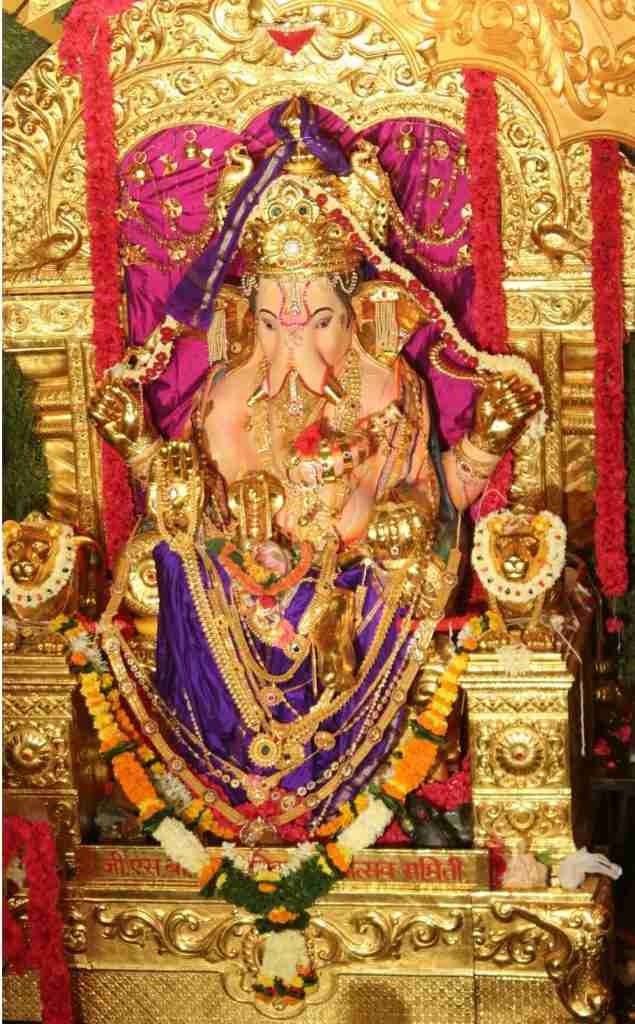
A well-decked-up Ganesha Idol, Pic CC: Sushant Anaokar
Besides the above 5 most famous Ganpatis in Mumbai, there are a lot of other Ganpati Pandals that are worth visiting like Chinchpoklicha Chintamani, Kamatipuracha Chintamani, Tulsiwadicha Raja, Dongricha Raja, Chandanwari Ganapati among others.
Ganpati Visarjan (Immersion): Immersion is the most important ceremony during Ganesh Chaturthi. If you want to see the largest and most famous Ganesha statues, go to Girgaon Chowpaty on Marine Drive. Other options are Juhu Beach and Versova beach.

Ganpati Visarjan, Pic CC Mohak Marwah
In a world where religion is routinely used to divide people, Ganesh Chaturthi is a festival that unites people. So when are you going to attend the Ganesh Chaturthi in Mumbai? How about this year itself?
I would love to hear your stories.
It was the second test match of Ind-Aus Border Gavaskar Trophy in December 2003. Australia had piled on a massive 556 score on the board, thanks to Ricky Ponting’s superb 242 knock. Follow-on fear was looming on India with 85/4 score. And then a miracle partnership of 303 runs between the magic duo of Dravid-Laxman happened. And rest is a history written in golden words. This was the match where ‘THE WALL’ scored a double century and 72, giving India it’s one of the most illustrious win overseas on green tops. It was a start of a new era, whose foundation was laid at Oval, Adelaide, Australia.
That win etched Adelaide strongly in Indian Cricket fans mind. Adelaide became the home ground for Team India. Though cricket is one of the major draw for Indian travelers but there are lot of unexplored things waiting to be explored in Adelaide, a city nestled between the River Torrens and the Adelaide Hills.
Adelaide is a perfect place for slow travel for its elegant colonial heritage, colourful culture and mouthwatering cuisines. And the best way to explore this city is on foot because half of it is covered with gorgeous parks.

Adelaide CBD. Pic courtesy: Siddarth Dudhera
If you are looking for a place to express your love and don’t want a no for an answer then Adelaide has many stunning sunset and sunrise points to choose from – Windy Point Lookout, Glenelg Jetty and Henley beach are just few of them. And if you want complete privacy then visit the Largs Bay where tourists are extremely rare.
Travel Tip: Don’t forget to take a bottle of wine and fresh farm cheese when you express your love.
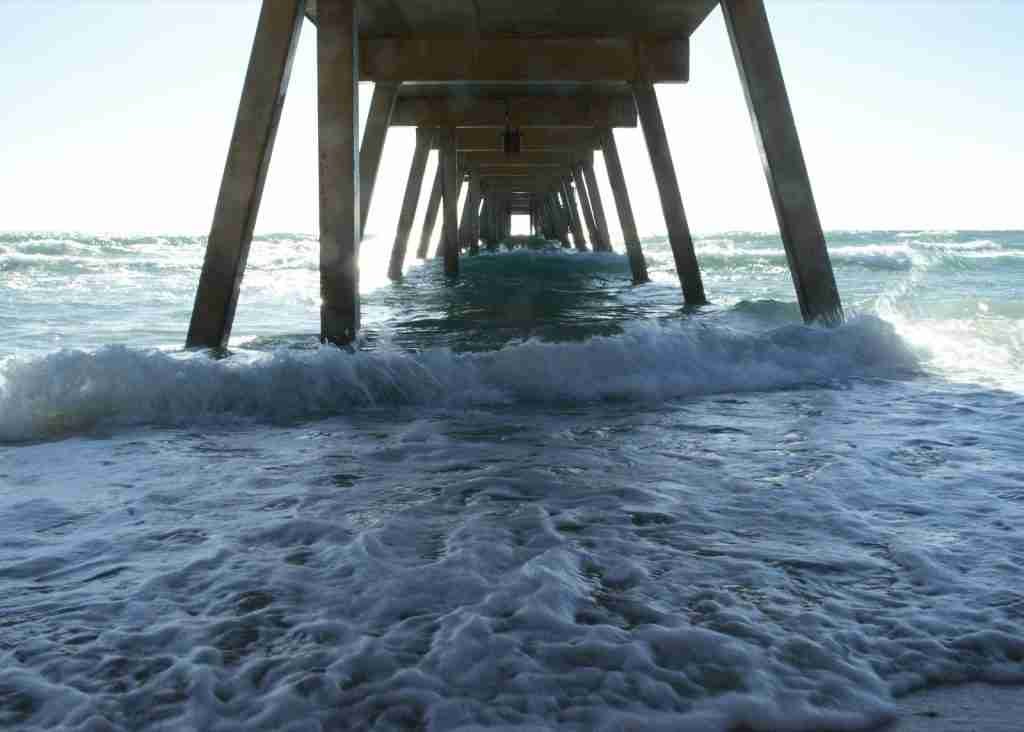
Under the pier at Glenelg Beach. Pic CC Nathan, Flicker. License to share and modify
When you are in the south side of Australia then you do things with a twist. So while you can see Dolphins in other parts of the country. Here you can swim with them. There are many companies that offer 3.5-4 hours of Dolphin tours. But one word of caution. No one can predict how playful the dolphins would be when you are in the water. Many factors dictate their mood. Even the most playful dolphins at Baird Bay can be moody. So don’t go with sky high hopes. And the best thing is even if you don’t know swimming or snorkeling you can enjoy this experience.
Travel tip: Before heading out on your adventure take some lessons from experienced yachtsmen and learn to operate a sailboat.

Swim with the dolphins. Pic CC Greg Scales, Flicker. License to share and modify
Every 3rd traveler I met in Australia happened to be a German. Half of the Germans utilize their compulsory one month off in southern hemisphere, especially Australia, when their country is freezing to death. No wonder there is an authentic German village in Australia. When in Adelaide, you cannot miss the picturesque town of Hahndorf, settled in 1840 by German immigrants. Besides marveling the rustic heritage charm, you get to eat mouthwatering gourmet food in this quaint little town.
Travel tip: Don’t forget to grab a slice of chocolate cake, hot chocolate at Chocolate No. 5 and local goat cheese at Udder Delights

The heritage German town of Hahndorf, Adelaide. Pic CC Master man, Flicker. License to share and modify
One reason why I love Australia so much is because of its wildlife. While you can see them in abundance everywhere in Australia, the Cleland Wildlife Park at Adelaide is one of the only places where you can actually cuddle a koala, a practice banned in other Australian states. Besides Koalas, there are 130 species of animals including kangaroos, emus and marsupials.
Travel Tip: Buy a packet of animal food at the entrance to feed the animals

Get up close with Koalas
Australia is a paradise for art lovers and Adelaide is no different. Here street art is in pink of health. With new and exciting works appearing all the time, you are in for a treat when you go on a street-art trail. You see staggering pieces of work not just in CBD or suburbs but even in unconventional places like Pizza Delivery corner, barber shop, industrial buildings, Adelaide Zoo fencing, and fence hidings of the construction sides. Basically Adelaide knows how to turn ugly into beautiful.
Travel Tip: Visit the Adelaide Festival Centre to explore a treasure of visual art

Adelaide Street art, Image CC Jocelyn Kinghorn Flicker. License to share and modify.
Adelaide is famously known as the ‘City of Festivals’ because of an active festive season. ‘Mad March’ starts from 12th Feb and continues until March when it hosts many world renowned festivals. The most famous being Adelaide Fringe (Feb 12 – March 14), which is second largest annual arts festival in the world. Other famous festivals are Adelaide Festival (Feb 26-March 14) and WOMADelaide (March 11-14)
Travel Tip: Visit the Adelaide Festival Centre to explore a treasure of visual art

Adelaide Festival Centre. Pic courtesy : Siddarth Dudheria
No other place offers a wine trail experience like Adelaide. You can either visit the neighboring Barossa Valley, where you can taste some of the Oldest Wines on earth or some of the best New World Wines or you can start on an easier note with the Adelaide Hills wineries, which is not as celebrated as the former but still worth it.
Travel Tip: The ideal way to go on a wine trail is to drive around the beautiful crater-shaped area and stop at vineyard restaurants for good wine and food.
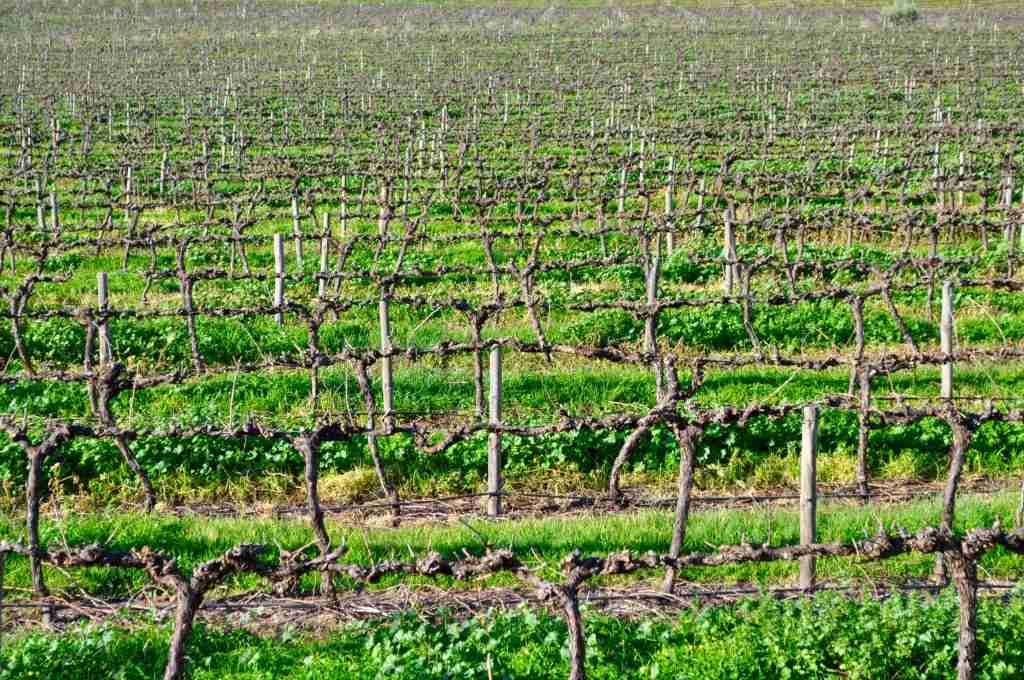
Go on a Wine trail at Barossa Valley, near Adelaide
The beauty of Adelaide lies in its suburbs. One such stunning suburb is Semaphore, where Semaphore Kite Festival is held every year. It’s a great site to see adults and kids chase the brightly colored, uniquely shaped gigantic kites. For kids there is no dearth of fun. There are many fun activities to participate in and every hour candies are dropped from gigantic kites. The Kite festival is held every year during Easter long weekend.
Travel Tip: The entry to the festival and parking is free. But do check their Facebook page and signs at the venue for more details.

Semaphore Kite Festival – Image CC Michael Coghlan flicker. License to share and modify.
Australia is a country of museums and usually they are free to enter. Adelaide has one very interesting museum – the Museum of Migration. Here you can see how various cultures and communities have come together over decades to form the diverse fabric of Australia. Well curated, easy to understand and not overloaded with info. To make it less taxing for the visitors it has lots of simple illustrations and anecdotes from various communities and individuals who migrated to Australia from world over.
Travel Tip: The Freedom photo exhibition is a must visit and most importantly keep in hand a couple of hours to explore the entire museum.
Museum of Migration. Pic courtesy : Siddarth Dudheria
Last but not the least, you cannot leave Adelaide without paying homage to the cricket ground, where Sir Donald Bradman lived and died. Adelaide Oval welcomes you with a statue of the greatest cricketer ever born. The stadium houses the Bradman Collection – Sir Don’s illustrious History and memorabilia. If possible time your trip around the cricketing session in Australia.
Travel Tip: Drive by the home of Sir Bradman, where both the little masters, Gavaskar and Tendulkar, were invited by the great himself.

Oval Stadium, Adelaide. Image CC eosdude flicker. License to share and modify.
So when are you booking your ticket to Adelaide, Australia?
If you are planning a trip to Australia, you must check out
“Beta, abhi kitni der aur hai?” (Sweetheart, how long will it take?”)
“Shayad aadha ghanta aur, ma” (maybe half an hour, mom)
“Aadha ghanta aur…baap re itni der kaise control hoga” (OMG how am I going to control for half an hour more)
“Arrey yahan nahi aage kar lengey.” (Not here. I’ll do it at the next station)
“Par kyun ma, aapne toh pale bola tha aap se control nahi ho raha…to phir ab jab yahan uttre hain to aap kyun nahi ja rahe” (But why mom? You earlier said you are unable to control then why are you not going here?)
The reason of a sudden change of heart is not because Indian mom’s urinary bladder mystically became XXL from XS but because she saw a paid Toilet signboard. Her Brahmanical upbringing will never approve 1.5 € expense on a WC. That’s utter waste of money. So instead of relieving her pressure, she decides to show restraint. She’ll not spend more than 50 cents and when it’s FREE she would use it even if she doesn’t need to. Her mantra – anything FREE must not be missed and anything that costs should be avoided.

Indians traveling abroad aka Traveling Mathematicians
I am sure you would have encountered many such incidents where people traveling abroad become Traveling Mathematicians as soon as they set foot on foreign shores. Here are few unique behaviours I noticed during my travels:
Whether it is pleading for extra luggage allowance or becoming risky after drinking too much whisky or regularly pressing the flight attendant call button or sneakily pocketing the blanket, headphones, socks or anything that we can lay our hands on; we love to derive the best value for money even if it comes at a cost of providing free in-flight entertainment to others. Why care about image. After all we have spent so much money on flight booking. We are taking what’s rightfully ours. The ‘dhania mentality’ is not to be left home but carried along.
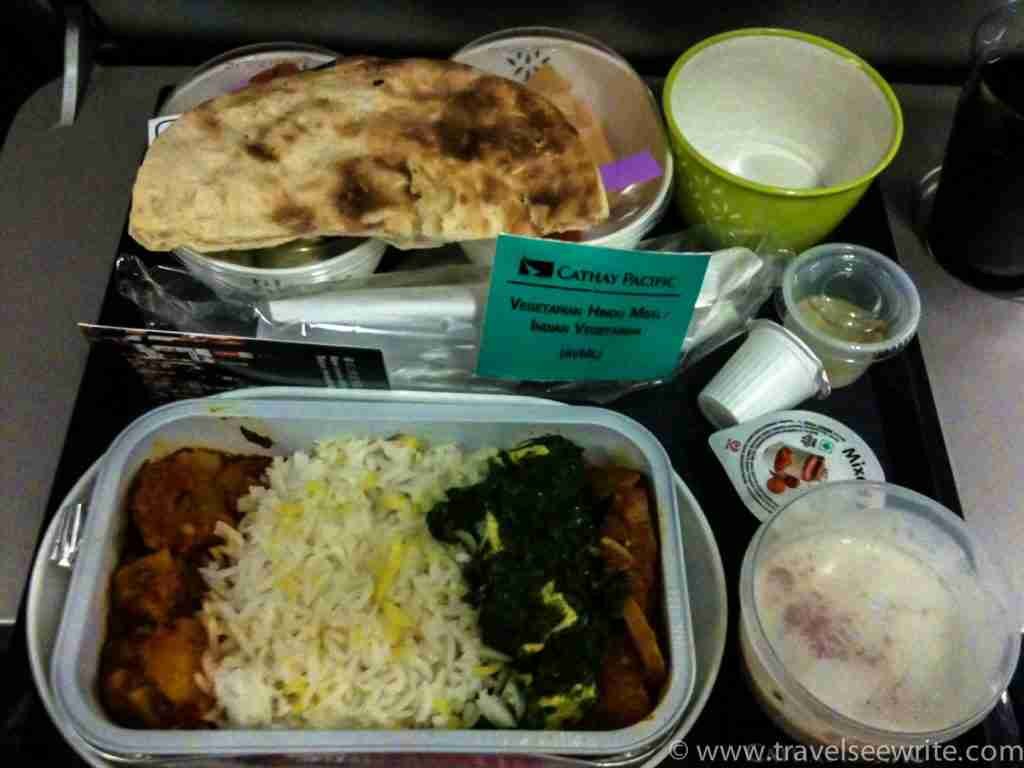
People traveling abroad never ending demands provide free in-flight entertainment
Shopping without calculating how much it will cost in INR is just not our cup of tea. Foreign yatra up skills our Mental Maths. Conversions are done in seconds without any calculator aid. For a great retail therapy session, the global price has to match the Indian price. Only when we are sure we won’t find a better deal in India, will that crisp note come out of our wallet. I still remember in 2009 I so wanted to buy a pair of Nike sneakers, which were exclusively available at Oxford Street store, London but the price tag of 88 pounds made it look less attractive. I was reluctantly convinced by my mental maths that it was overpriced and not worth it. Till date I rue for not buying that pair 🙁 Sometimes you should just let go of your mental maths and follow your heart.
People traveling abroad become adept in Mental Maths
In India, we won’t even walk to the nearby Kirana store to buy a packet of bread but in videshi dharti (foreign land) walking for miles becomes a cakewalk. And it’s not because weather Gods are in good mood there or suddenly health becomes a priority. It’s the fear of losing dollar count that decides our mode of travel. And dare we take a taxi from the airport on arrival. After all NRI relatives have some duties to fulfill.
Walking becomes the favourite mode of transport for people traveling abroad
We love to eat but our love starts and ends with Indian cuisine. We will not travel abroad without our bags full of thepla, khakhra, bhujia, ready to eat Indian dishes, kaju katli, aam ka acchar, besan ke ladu and everything that we can carry through immigration. We rarely explore the local cuisines. If we are forced to eat outside then we will go searching for Indian restaurants and the selection criteria are based on price, not reviews. We order the cheapest dishes on the menu and share our food, even if sharing is not allowed.
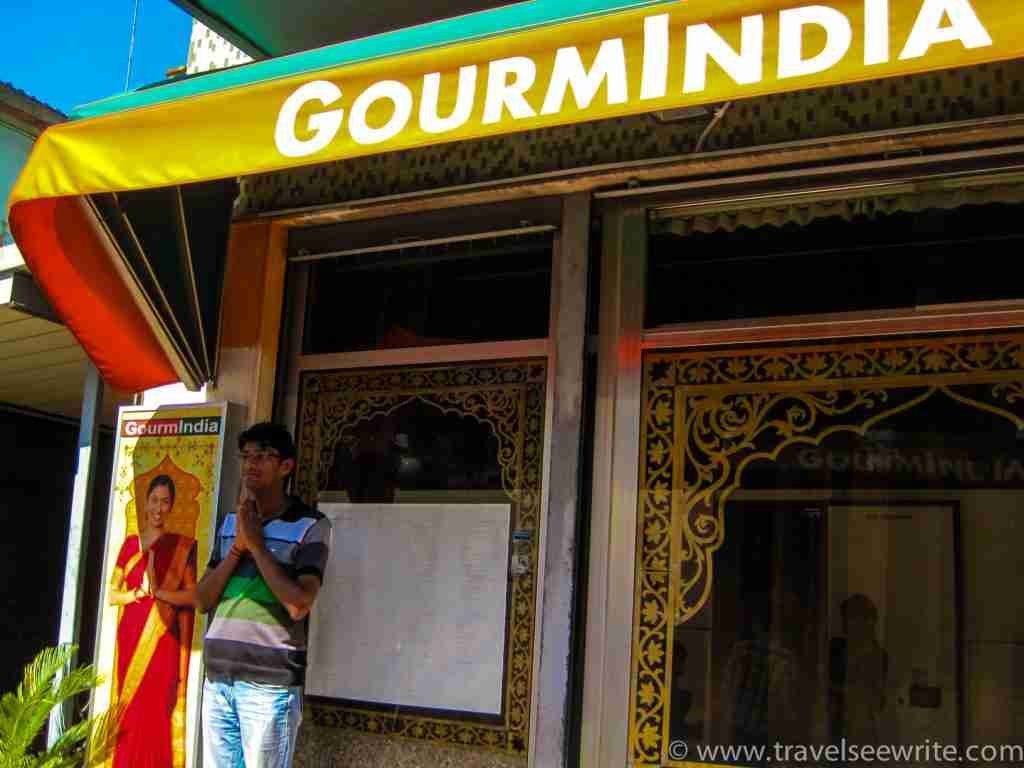
People traveling abroad can discover India out of India
I am guilty of not experimenting much with local cuisines. However, in my case, it’s not the Indian cuisine love but my limitation of being a vegetarian. On the contrary, I rarely eat at Indian restaurants because I don’t want to destroy my taste buds for forever. What irks me the most is when I see newlywed chudah-clad couples asking for bhalla-papdies at places like Halong Bay. Yes, it actually happened 🙂
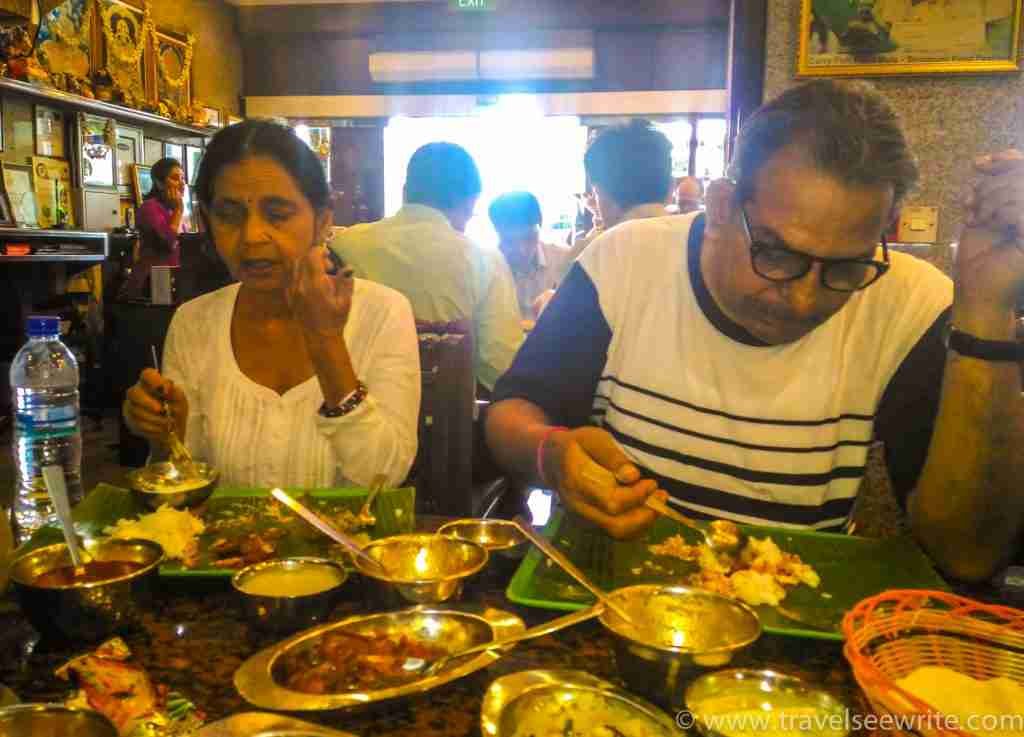
people traveling abroad cannot stay without their Indian meals anywhere in the world
Flea markets are the treasure troves which we, the Traveling Mathematicians, love to hunt. The artifacts which will later grace our living rooms are bought from these flea markets. And stores like Primark, Dollar store, Japan Store, Landmark are our BFF. Their attraction overweighs any sightseeing attraction. And once we arrive at the flea market, we would not think twice before using our brahmastra – bargain. Bargaining runs in our blood. Being a true bred Indian, I have bargained from Nottinghill to Greenhills. There is a certain joy in thrift shopping, which only we Indians can appreciate 😛
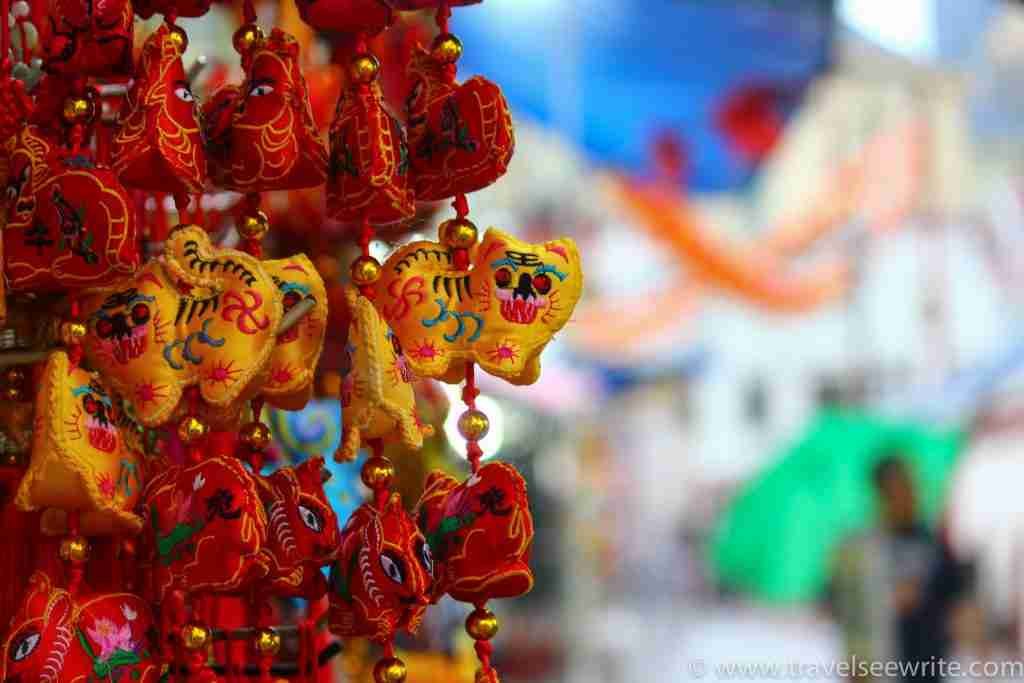
People traveling abroad are the champs of Flea Market Shopping
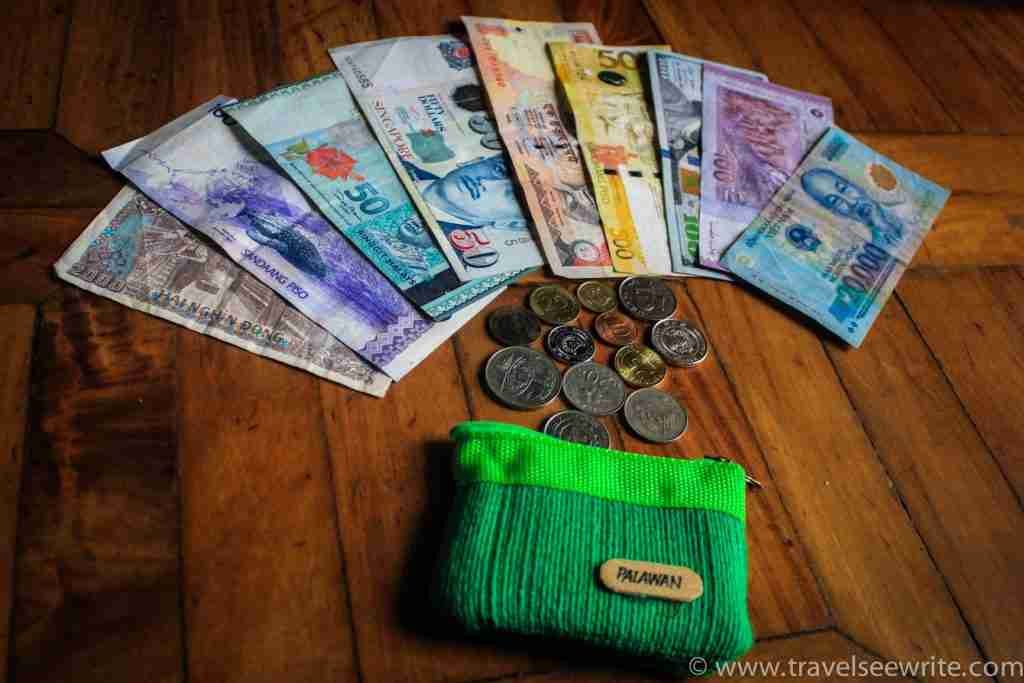
Coins drive us crazy. We can’t figure out for our life which one is a 50 cents and which one is a 5 cents. The queue will keep getting longer behind us while we struggle to find the right coins. Nobody likes to carry weight, so wherever there’s an opportunity we will try to get rid of them. And we absolutely love to mix our currencies. We would mix our francs with cents, yens with piso and every other currency we would have collected from our first trip onwards. But crazy coin syndrome is a real problem. Imagine having a coin for 10,000 yen (equal to 500 INR) and 1 cents in the same purse. Anybody would get confused. And lesser said about currencies like Vietnamese Dong and Indonesian Rupiah better it is. My mental maths takes a long vacation when I travel to these countries. Spending 5 lacs on a meal? That could drive anyone crazy when in actual sense it is less than 1000 INR. Best is to spend using your credit card or globally accepted currencies like the dollar. Less headache more time for fun.
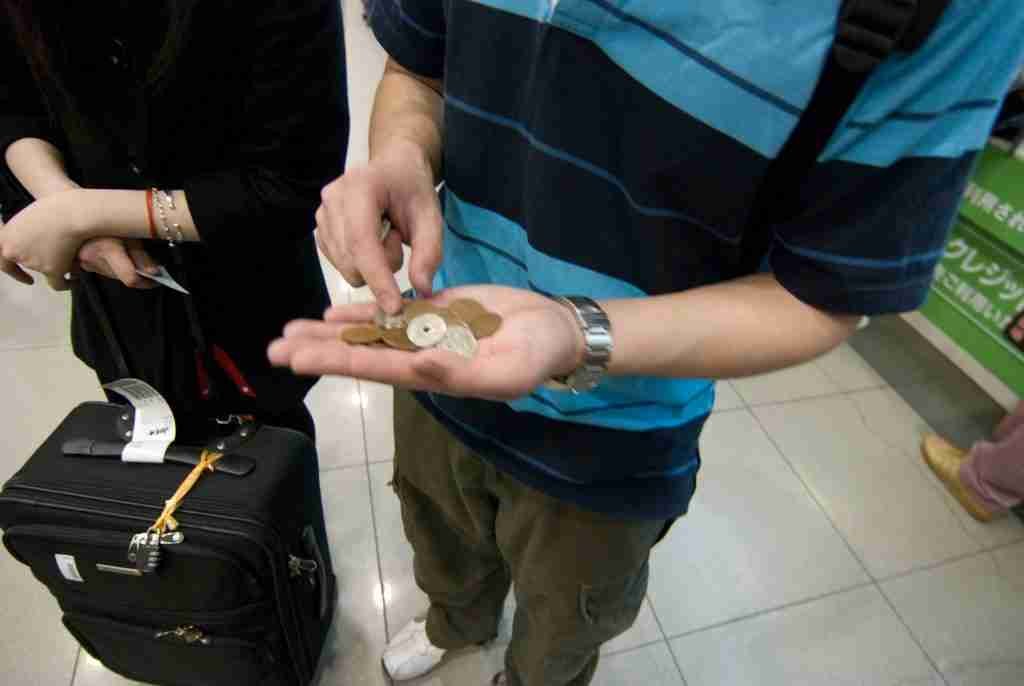
Crazy Coin Syndrome drive people traveling abroad mad
I was marveling the beauty of Brussels Atomium when I saw an Indian woman throwing up. I asked her if she needed any help. Suddenly her friends burst into a laughter. I was flabbergasted. Apparently, they couldn’t read the menu right as it was in Dutch and she ended up ordering a dish which was a complete food disaster. But being brought up in an environment where wasting food is anndevta ka apman (wasting food is a sin), she gulped it completely only to throw it up later.
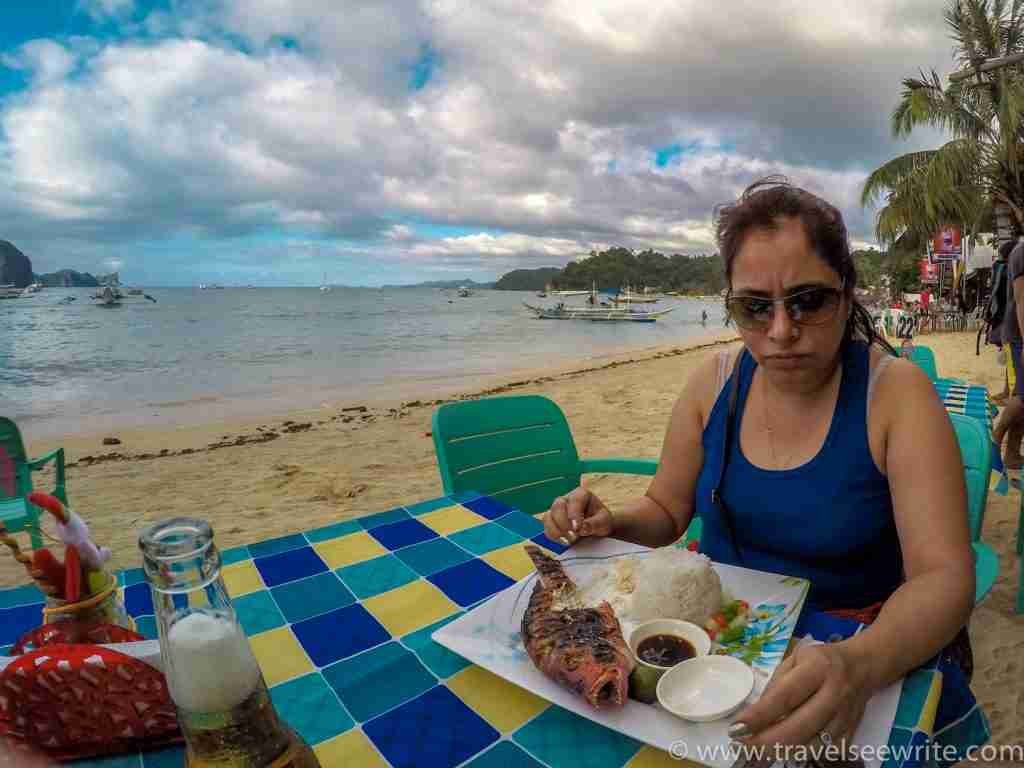
The expression clearly shows how much she’s enjoying her meal but wasting food is not an option
Breakfast becomes the most important meal for us because usually, breakfast comes complimentary with room booking. We would greedily pick everything from the buffet bar to quench the hunger of our eyes. In the process, we forget that there is a limit to how much our stomach can accommodate. And if we can’t gulp it down, we will get it parceled to be eaten later. It will serve as our lunch and sometimes even dinner. I used to do that as well because many times it was more convenient to carry a fruit than go vegan food hunting in the middle of nowhere.
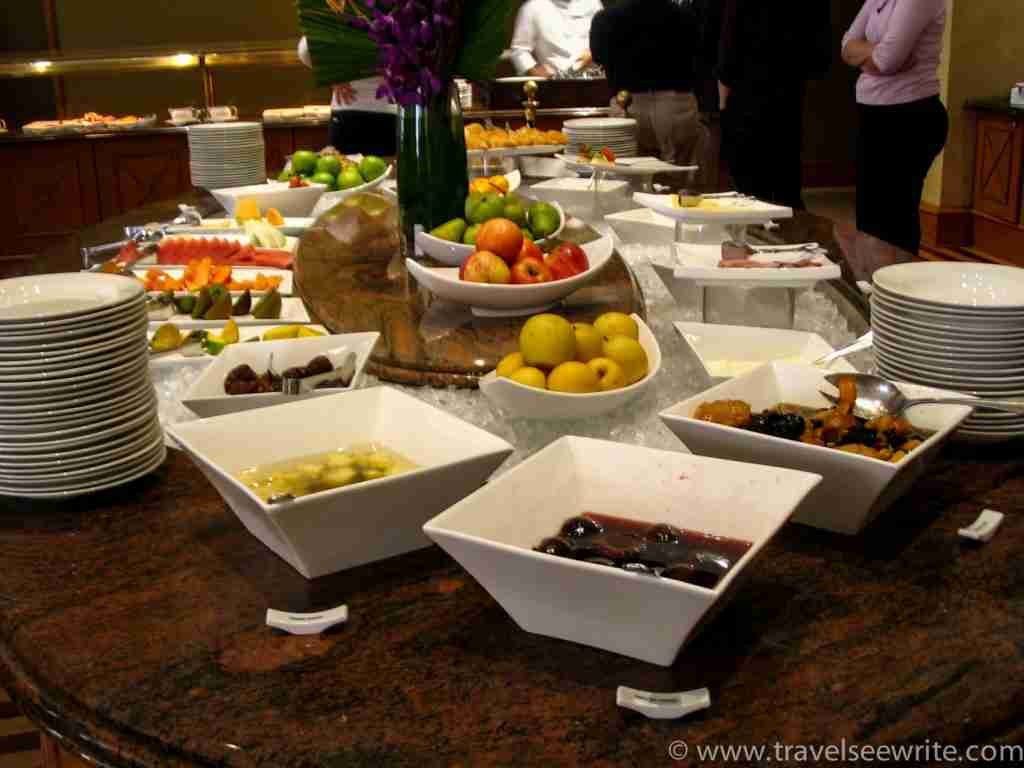
‘All-you-can-eat’ Buffets are saviour for Traveling Mathematicians
There was a time when I used to hate the idea of meeting anyone returning from foreign trips because I knew what my return gift would be – either a key chain or a fridge magnet. Later when I started traveling myself I realised the economic reason behind that love for those souvenirs. Fridge magnets and key chains are the cheapest souvenir items and they don’t take much space in the luggage. For your friends, it acts as an image building device – more the number of fridge magnets better your ‘Global Traveler’ image is. So what if all those fridge magnets are gifted 😛 A win-win situation for Traveling Mathematicians and their friends 🙂 However, I am not a big fan of these souvenirs so my friends don’t get them. I usually buy something unique which they can cherish for life 😛
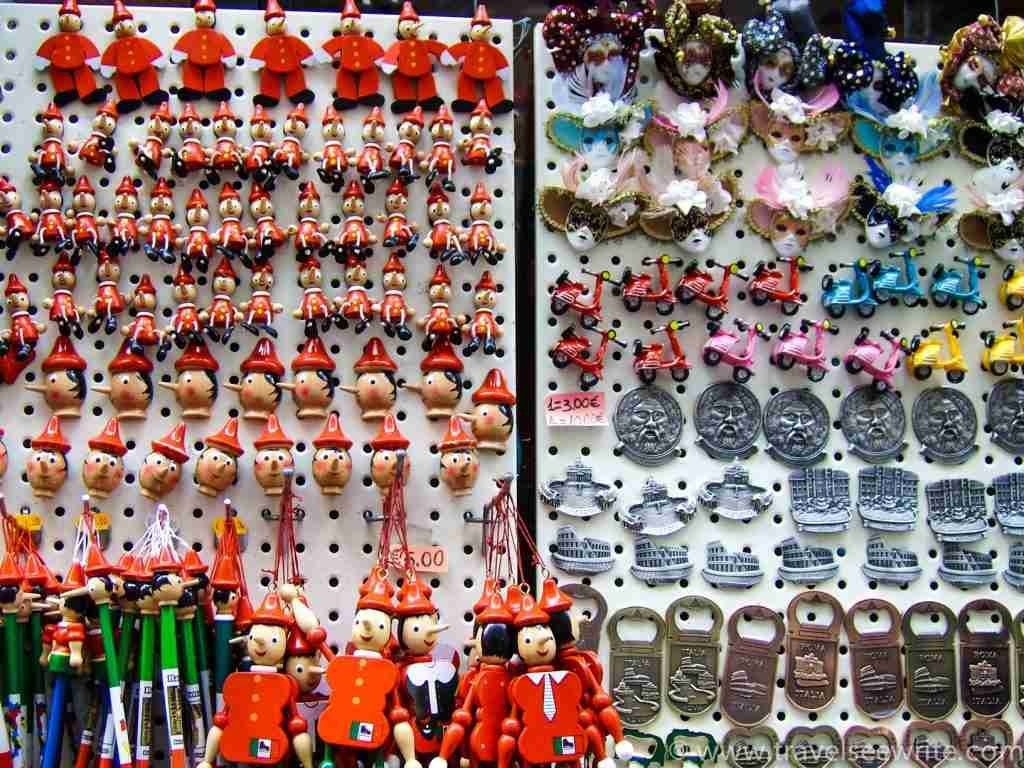
Traveling Mathematicians favourite souvenirs – Fridge Magnets & Key chains
In the quest of excelling mental maths and setting thrift shopping benchmarks, we – the Traveling Mathematicians – fail to realise that our trip has come to an end and we haven’t shopped anything yet. More than 50% of the foreign currency we carried at the start of the trip is still intact. And then the mad rush of last minute duty-free shopping kicks in. We would spend hours checking chocolates, liquor, perfume, makeup and everything that our eyes can scan in duty free zone. It’s a do or die situation. We have to spend all the cash in hand. Who knows kal ho na ho.

Duty Free Shopping is the most important pit stop for Traveling Mathematicians
So these were some of the things I noticed about Traveling Mathematicians. Did you notice the same or something that you recall even today?
PS:

If you’ll ask someone in India about their favourite place, most likely you’ll hear the word Goa. However, after visiting the land of sun, sand and sea, people often want to discover the newer side of the state – offbeat Goa. They are always curious about the secret things that only locals know. Instead of asking ‘things to do in Goa’ they ask ‘what are the most offbeat places in Goa’. And instead for rushing to the famous beaches of Goa they search for places to see in Goa other than beaches”. So, here is a different way to explore the most famous state of India – going off road to discover offbeat goa.
A hectic sightseeing day had come to an end. I had cosily retreated to the softness of my bed. Suddenly I heard some murmurs. The first thought that came to my mind was about someone trying to break in our villa. But the accompanying laughter put that theory to rest. I nudged Chetna to find out what was going on outside. Chetna, who was already in her dream-trail, tried to shrug me off but I wasn’t the one to give up. Pestering never fails. Finally, she conceded. With irritation written all over her face, she said, “So jao na. Jyada kuch khaas nahi hai. Ladke frog hunting par ja rahe hain.” (Go back to sleep. There’s nothing much. The boys are going out on Frog Hunting)
That was the first time I heard about midnight Frog Hunting. During my numerous trips to Goa, I discovered many unique things that define the essence of Offbeat Goa. An essence which thrives in the secret things that only locals know.
So wear your seatbelts and come along to explore the Offbeat Goa with Travel See Write.
During monsoon season when the paddy fields are lush green and brimming with rainwater there’s one species that is overpowered with lust. Monsoon is a mating season and as the saying goes Sawan ke andhe ko sab hara hi hara nazar aata hai (One who goes blind in spring, sees the only greenery all around) likewise the only thing that matters to frogs in this season is their sky-high libido. Putting aside the fear of their life they come out bouncing and croaking at midnight to find the right someone to cosy up with for the night or for whatever time they can coax their partners. While many fulfil their desire, others become a delicacy on someone’s plate.

When the world sleeps the local boys go out on their midnight adventure. But to master the art of Midnight Frog Hunting they have to patiently play the wait-n-watch game and pounce like a tiger when the right time arrives. To kill time they organize bonfires singing local Goan songs and guzzling downloads of beer and feni. Secrets are shared and bro bonding is strengthened during these midnight adventures. And once the frogs are out the group hunts them down in unison.
PS: Frog hunting is banned and Travel See Write doesn’t recommend this activity at all.
Although Frog Hunting has been banned in Goa under the Wildlife Protection Act of 1972, the midnight adventure essence is still intact. The boys still venture out at midnight but they no more hunt down the frogs. They have developed other interests.
Even an offseason proof place like Goa witnesses tourist lag in monsoon season. However, I would say it’s the best time to visit Goa. This is when Goa looks mind-blowingly spectacular than the rest of the year. You see greenery all around and many ‘limited period only’ seasonal waterfalls give darshan. They aren’t as giant as a Dudhsagar waterfall is but are a great sight to soak in the monsoon magic. All you have to do is ride a scooter or a bike and go chasing the monsoon.


Also, one should definitely visit Dudhsagar Falls in monsoon namely for two reasons – less crowded and more swelled up.


Imagine a place set in the most stunning geography but having a dark history. A place which is a house to angels as well as demons. A place where both good and bad resides. The “Three Kings Church” at Cansaulim village represents such paradox. A place infamous for being the most haunted place in Goa. Legend says the bodies of the three Kings lie in this church and their ghosts can often be seen roaming in the church at night. However, I wasn’t lucky enough to meet them in person. Probably they weren’t up for a challenge 😛

Besides the paranormal allure of the Three Kings Church I would recommend to visit it for the stunning panoramic view it offers from the hilltop. Reach here before sunset and you’ll be treated to the spellbinding views of Goa at golden hour. This Church makes one believe that there are many places to see in Goa other than beaches

When you think of Indian weddings, Big Fat North Indian weddings come to mind but my favourite wedding is Goan Wedding because not only it follows the customs and traditions but it lets the elder people take center stage. Right from making special marriage delicacies like dosh, samarachi koddi, Sorpotel, Patoleo, Soji, Vonn to ‘Roas’ ceremony (bathing of the bride and groom with coconut milk and water) to participating in the wedding dance to adorning the bride with the Saddo and other Goan rituals it’s the elders who are at the forefront of everything. Isn’t that a really cool way to show our gratitude towards our golden generation? Goans don’t forget them in their most important days but instead, they turn the limelight on the elders. Thanks to my Goan friend, I could get to know about the rich Goan wedding culture.

The first step to getting what you want in life is to know what you don’t want. When I went to the sunshine state last time I did not crave for golden sandy beaches of Goa and it’s wild trance parties so I went around exploring the offbeat Goa. A Goa, which is so different from the Goa clichés we see around. There is a Goa which is tucked away in its secluded islands and forest trails. All I had to do was take a ferry ride and reach these hidden islands. I was warmly welcomed by old Portuguese-style houses dotted with lush green vegetation and quaint environment where both humans and wildlife lived at peace. The icing on the cake was the authentic Goan cuisines and delicious bakery items I got to taste.


The only thing I wish I had done was to plan my trip during the Bonderam festival organized on the last Saturday of August at Divar Island. Now that will be my reason to go back to Goa in monsoon 🙂
If bird-watching is your hobby then you cannot miss Goa’s only bird century – Salim Ali Bird Sanctuary near Chorao Island. In spite of not being a morning person, I woke up early to catch the sunrise from the ferry en-route to Chorao Island via Mondovi River. Silently rowing through the Goan backwaters lined with Mangrove trees was a surreal and hard to imagine the experience in the tropical paradise. A therapeutic bird watching experience often missed in favor of touristy trails. I am glad I didn’t. If you are a nature lover like me and prefers to be woken up by the birds chirping then do check out Jungle retreat in Goa.


Besides bird watching, I loved kayaking in the Sal backwaters and boating in the Mayem Lake. It was after my few visits to Goa that I discovered little gems like Divar Island, Netravali, Agonda Beach, Morjim Beach, Hollant Beach, Palolem Beach and Galgibaga Beach. One place that I loved visiting in the Offbeat Goa was the Loutolim village. A village set in the scenic countryside where the architectural relics of ancient Goan architecture are still well preserved. When I started missing a bit of spice in my life I visited the nearby Spice plantations. These are the kinds of experiences in Goa I love.

Your discovery about most offbeat places in Goa is directly proportional to your curiosity. I hope this post can spark your curiosity.
So when are you going to Travel See and Write about the secret things that only locals know in Offbeat Goa?


I have often been asked this question. Both have their own charm. But if I were to pick one then it will surely be mountains because firstly they remind me just how small and insignificant I am in the scheme of larger things and secondly they understand my silence like no other. They always have an answer to my troubled mind. Whenever I have no way to go, mountains are my go-to partner.
A very close friend of mine once gave a great insight – we all look for the locus of control. Some have an internal locus of control while others have an outer locus of control. When imbalance strikes some prefer solitude some a shoulder to lean on. For me, mountains seem to provide that locus of control. They seem to stabilize my unstable mind.
I still remember when I was a kid and my dad took me to Dehradun for the first time. I was so mesmerized by the sheer beauty and magnanimity of the mountains. I watched them without batting an eyelid. I didn’t want that journey to end. I just wanted to marvel at them as long as possible. That curiosity and happiness are still so vivid in my memory. In fact, every time I travel to mountains that feeling rekindles. If mountains were a boy then I would happily marry him

Besides being a source of beauty and happiness, mountains prepare you for the fights of the life. They not only challenge your physical stamina but mental strength too. Sometimes abstract can teach you more than living beings. The treacherous windings of treks, the struggle for basics in life, the sheer pleasure of having Maggi and adrak walli chai on top of a mountain, the sweet symphony of wind, the chirping of the birds, the steep dives of valleys, the moodiness of clouds, the dew like freshness of air that purifies even the impure, everything has a message for you. In that emptiness, you can completely lose yourself to find a new you. That’s why these small little breaks are so important for my survival. When the world and its selfishness gets too much to handle I take shelter in mountains.
And this behaviour isn’t unique to me. Many people like me have found themselves by getting lost in mountains. Just a few days back, I finished reading Wild: From Lost to Found on the Pacific Crest Trail, written by Cheryl Strayed.
The book isn’t a masterpiece but definitely a good read. It is based on a true story and somewhere I connected with the protagonist. Our life conditions are different but mindsets seem to be the same. Let me give you a brief synopsis of the book.
Cheryl Strayed thought she had lost everything. Her mother died of cancer, her family scattered and she was divorced. At a stage where she thought she had nothing more to lose, she made the most impulsive decision of her life. With no experience or training, driven only by blind will, she would hike more than a thousand miles of the Pacific Crest Trail from the Mojave Desert through California and Oregon to Washington State—and she would do it alone. Well, she did it. And how! When she completed the journey she was a different person. She wasn’t weak anymore. She took life in her control. Today, in personal life she’s is well settled. Professionally, she is one of the best selling authors in the US. A Hollywood flick was made on her book.
Why I loved Wild so much was because of the sheer honesty and simplicity with which it was narrated. It had nuggets of suspense, style, warm, and humor. It powerfully captured the terrors and pleasures of one young woman forging ahead against all odds on a journey that maddened, strengthened, and ultimately healed her.
Somewhere all of us, at some part of the time are broken inside. And we all look for that healing source. As they say everything heals with time. But what you do in that healing period decides the healing process duration and pain you endure.
Whether you travel to heal yourself or just for pleasure isn’t important. The important thing is you should travel. Travel not to check box but to discover yourself.
And lastly, if you really want to know yourself – TRAVEL ALONE.
But be rest assured you’ll never be lonely because your BFF, mountains, will always be with you.
Ending this post with favorite quote from none other than Edmund Hillary
It’s not the mountain we conquer but ourselves.
PS: In case you are a classics fan you’ll love this Denver’s song

(I kept giving life a company, I blew every worry into a mist of smoke)
In 1961, Dev Anand’s name got permanently marked with this evergreen song and today after 55 years it still inspires generation after generation. Abhay Sharma, took this inspiration a step ahead by doing something which most people won’t even dream. He along with his partner decided to put ‘Eco’ in the Ecotourism without having any formal training or resources. All they had was an idea and their strong conviction to make it happen. But before I narrate their story, let me start with the basics.
Ecotourism is perhaps the most over-used and misused word in the travel industry. But do we really understand its meaning or do we just randomly throw it to sound cool?
A background research revealed that Ecotourism is defined by The International Ecotourism Society as, “Responsible Travel to natural areas that conserves the environment and improves the welfare of local people.” If a hotel, resort or a travel company is slacking on any of the two then they are cheating. Businesses sometimes use Ecotourism dishonestly either to get subsidies or to appeal to a fast growing breed of conscientious travelers. Usually they would invest in a property but do nothing to protect and uplift the local economy, biodiversity, culture and heritage. But Pahadi House is following the Ecotourism principles to the T.
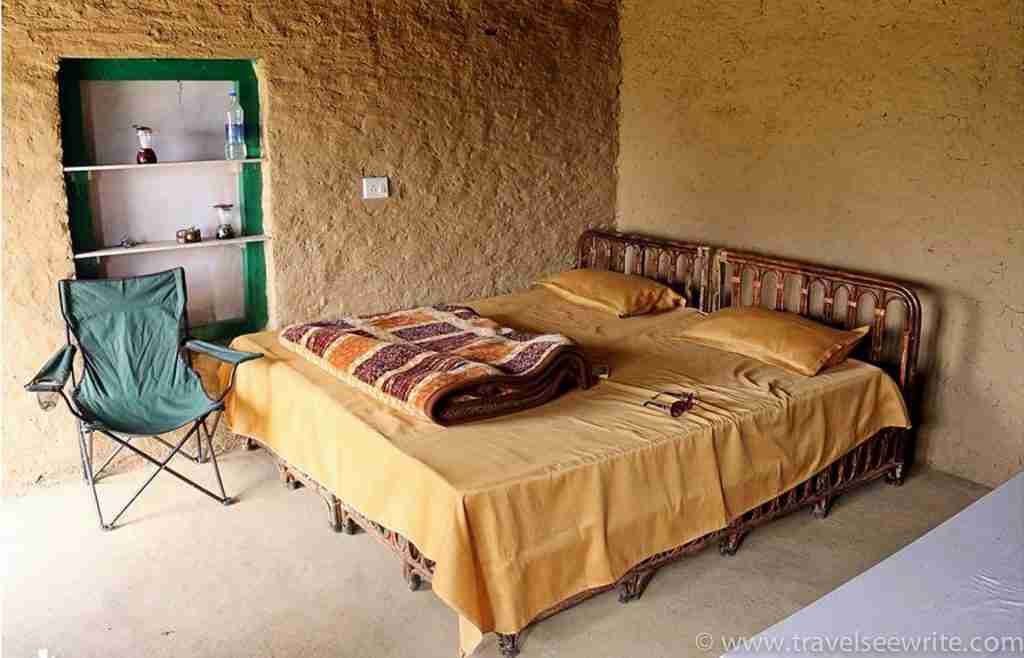
Two Pahadi (mountain) boys, Abhay Sharma and Yash Bhandari saw a dream of spreading the Pahadi culture beyond the mountains. Unlike most of the youth they did not get attracted by the glitz and glamour of the Metros. They decided to stay put in their backyard, Uttarakhand, to turn the tide around and reverse the migration of village youth to towns. Through their ‘Pahadi House’ Homestay venture they are not only spreading the genuine taste of Pahadi hospitality but are also providing employment opportunities to the locals.
The duo restores the old, abandoned or damaged houses and converts them into comfortable Homestays, which provides the real taste of ECOTOURISM to its guests. And in the process they are solving an ever-growing need of today’s city dwellers – satiate the craving for unadulterated raw experiences. At Pahadi House, the unadulterated Pahadi culture is served through mouth-watering food delicacies, local handcrafts and handpicked adventure activities.
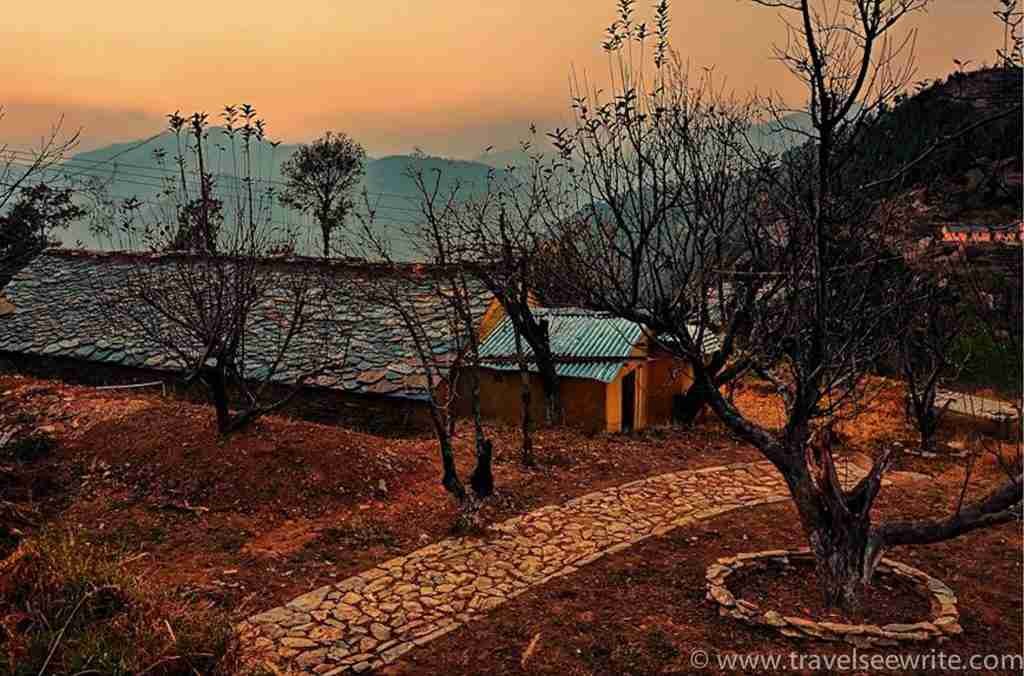
Pahadi House is situated at Kanatal amidst the mountain viewing glaciers and greenery all around. You can walk through the clouds, view the Tehri Lake and inhale lungs full of fresh air.

Homegrown organic farm at Pahadi House
Pahadi house is like a retreat. The melodious sound of the chirping birds work as your alarm. Freshly plucked farm fresh organic food keeps your tummy happy. Pollution free crisp air detoxifies your lungs. Dreamy landscapes infuse a new life in your groggy eyes. Yoga cleanses your body and soul. And not just that, Pahadi House in-house chef ensures you feel at-home by preparing food as you prefer. However, sone pe suhaga would be if you take over the Kitchen and show your culinary skills. At least I would do that. Although I have no culinary talent to boast of :p
So what are you waiting for? Book your next holiday at any of the Pahadi Houses.
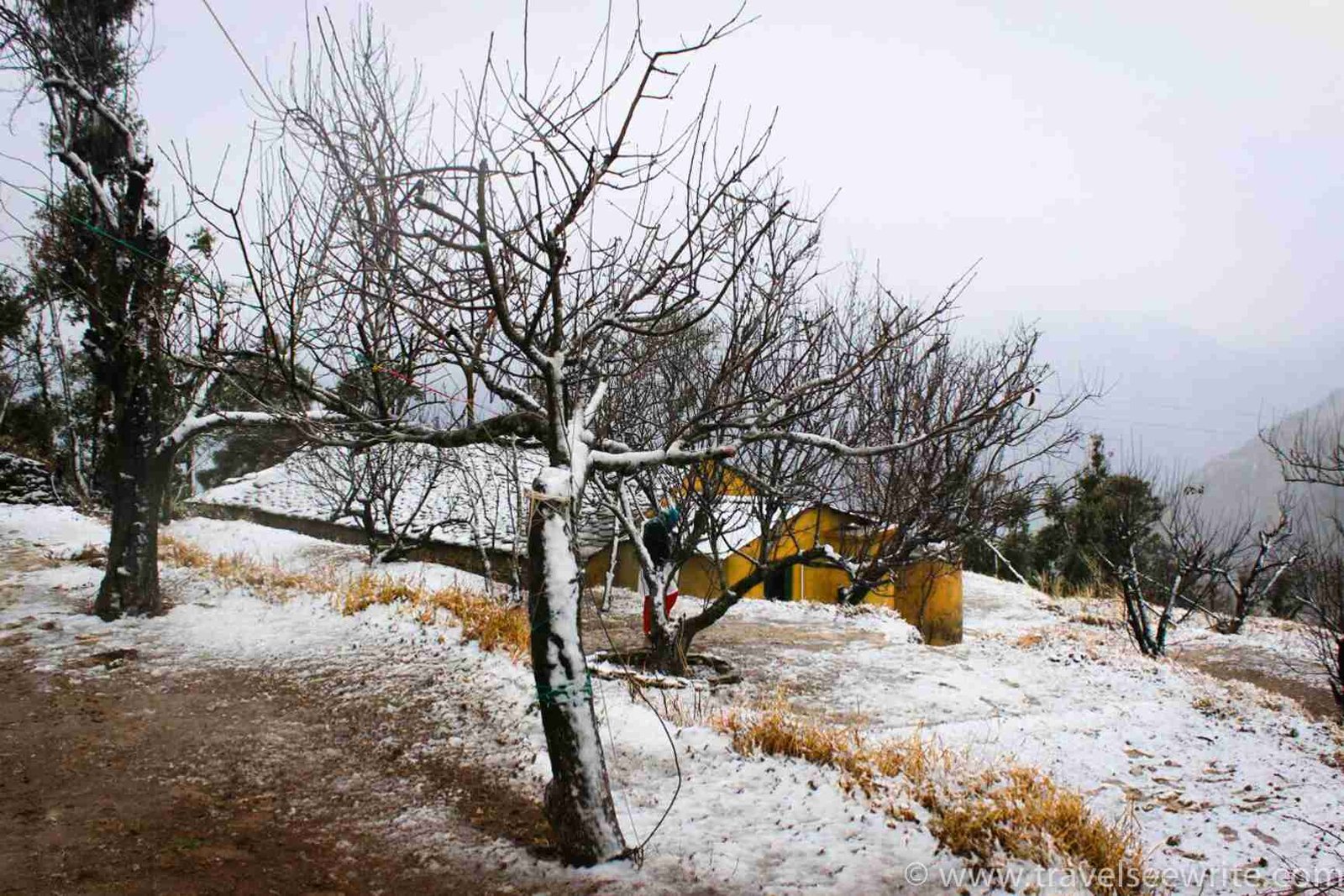
Mob: # 9997306041, 9897669074.
Website : www.pahadihouse.com
Facebook : www.facebook.com/stayinvillage
(more…)
At wee hours when the world around me is lost in dreams, I am writing a presentation. After procrastinating for days my thoughts had finally started to flow. Suddenly my concentration gets broken by the sound of my mobile phone. I hear a familiar voice on the other side asking me a familiar question,
We are planning a 5-6 days holiday out of India. Please suggest some place, which is good for a family and yet has some unique charm to it.
I suggested Dubai but it was shot down instantly.
Reason – There is nothing much to explore in Dubai except for the Malls, Skyscrapers, Desert Safari, and Shopping. No novelty or offbeat charm left in Dubai to explore. And that conversation became my inspiration for this article.
Here are some places to explore in the Offbeat Dubai: Beyond the Burj Khallifa and Desert Safari.
Being an offbeat traveler, I believe offbeat doesn’t mean just going to far-flung places but also rediscovering the forgotten by lanes of a city. One such experience for me was visiting the Bastakiya quarter. Dubai’s oldest neighbourhood somehow got forgotten amidst the skyscrapers and grand malls.
Bastak is the ancient name used for the Iranian traders in the late 18th century. Located amidst the cultural location of Bur Dubai and Dubai Creek, the place is a true reminiscence of the bygone era. The most intriguing part of the place is its calm atmosphere. It’s a refreshing change from the hustle bustle of Dubai. The charming area is flanked by wind towers, small cafeterias, and the exclusive Majlis gallery showcasing the Middle Eastern art work. Sit at any of the road side cafeterias and soak in the old- age charm of the place.

Bastakiya Quarter, Offbeat Dubai
Solo travel across the world has taught me one important lesson – if you want to know the pulse of a place, use its public transport. So I experienced the traditional Abra boat ride at the Dubai creek. To those who don’t know, the city of Dubai is divided into two halves by the Dubai creek and the Abras (water taxis) are the most ancient mode of transportation from one side to another. Although I have traveled by faster and more convenient means of transport to the other side of the city, the traditional Abra ride was the best way to cross the creek. And guess what. It cost me just DHS1. While the Abra ride brought a smile on my wallet’s face, it also helped me to connect with the locals and gave me an insight into the lives of the not-so-affluent locals for whom this Abra ride is the best and only way of transportation.

Traditional Abra, Offbeat Dubai
The true character of a place is not plastered on its walls but hidden in culture gullies. Dubai is no different. To know more deeply about Dubai, I tried to dig into its history and traditions. I started my exploration by visiting the Dubai Sheikh Mohammed Centre for Cultural Understanding. The charming wind tower house situated in the historical district of Bur Dubai was a perfect potpourri of interesting conversations, delectable food and a walking tour of the famous Al Fahidi district. By the end of the tour, I had become richer with the knowledge of the Arabian culture, traditions, and beliefs.
You can enjoy this heritage cum culture tour either by direct booking or you can take a package from tour operators like Rayna tours, who offer it as a part of their itinerary if requested.

Sheikh Mohammed Centre for Cultural Understanding, Offbeat Dubai
Being brought up in a family where all religions are treated equal, I have always been curious to know about different religions. And what better place to know about them than their place of worship. Being a Muslim dominated country, only a handful of mosques are open to non-Muslims and fortunately, one of the most beautiful mosques in the country – The Jumeirah Mosque is one of them. Beaming with pride in snow-white colour, the Jumeirah Mosque is a melting pot of magnificent architecture and alluring culture. The colossal area can hold over 12000 people at a time. I was pleasantly surprised to notice that in spite of being so crowded you can still feel the calmness in the area. People are not in hurry and are more than happy to have a conversation with you.
Walking tours are available for understanding the Islamic culture, heritage, and architecture.

Jumeirah Mosque, Offbeat Dubai
Being a fan of slow travel and a sucker for stories, my favourite way of exploring the city is on foot. And what better combination than a walking + food tour. Dubai food tours offer a culinary and photography experience like no other. I am not a foodie but Dubai made me one. I thoroughly enjoyed my lime infused Emirati dishes and the melt-in-mouth-falafels along with other authentic Mediterranean dishes during my gastronomic trail in the old Dubai. The best part about the food trail was listening to the fascinating historical stories associated with the cuisines.
Shisha has earned its loyal fan base across the world. I too have tried it at lot of places. The last time I visited Dubai, I tried Shisha at one of the premium outlets at Sheikh Zayed Road of the city. However, this time, it was all about connecting to the roots and therefore, I hit the most densely populated area of the city- the Karama market, the hub for 3S – Shishas, Shawls, and Souvenirs.
While the spice and textile souks are almost always flooded with tourists, I was surprised to see mostly locals at Karama market. The neon-lit, noisy street was too much of an authentic busy bazaar experience. I satiated my craving for the hot spicy biryani at the Karachi Darbar and mint shisha at the Time Café. For a person like me who loves observing people, Al Karama market was a delight.
Like any other Global city, there’s more to Dubai than what meets the eye. After exploring the by lanes of offbeat Dubai I felt more connected with the soul of the city. Dubai an ideal place for solo travelers as well as families.
If you are a budget traveler like me, do check how to travel in Dubai on a budget.
Have you explored the offbeat Dubai yet? If not, then do it now.
The 4X4 SUV was cruising at breakneck speed on the Delhi-Agra highway. My smartphone battery was still at 70% even after three days of use. I was relishing the sights and sounds of the fascinating Rajasthan. But all this happened because of my digital detoxification drive. Without thinking much I packed my bags and left for an impromptu road-trip. Rajasthan, the land of Maharajas, where you see the colourful melange of massive forts, stunning palaces, delectable cuisines and royal hospitality was my companion in my quest to travel, see and write about unique experiences. The trip turned out to be gold for my wanderlust. I had the luxury to be with the Maharaja of the Jungle for hours in Ranthambore. The Chand Baori at Abhaneri village left me awestruck with its architectural wonder. But there was more to the trip than only the above two.
I was flipping through the pages of history in my mind when I noticed my friend had taken a left on the East of Jaipur-Agra highway. Did he forget his way? But how could a local forget his own backyard?
What I didn’t know was that my friend had secretly planned a Royal Holiday for me. Bewildered but in awe, we passed through the crowded narrow lanes of Kanota, crossing the impregnable castle gate to finally park at the edge of a perfectly manicured lawn. As soon as I got down, the manager of the Castle greeted me with Khamaghani and a big smile. This was the beginning of the conversation that led to some startling discoveries on how travel and tourism saved Rajasthan and the Royals. So come on board to unravel the mystery.
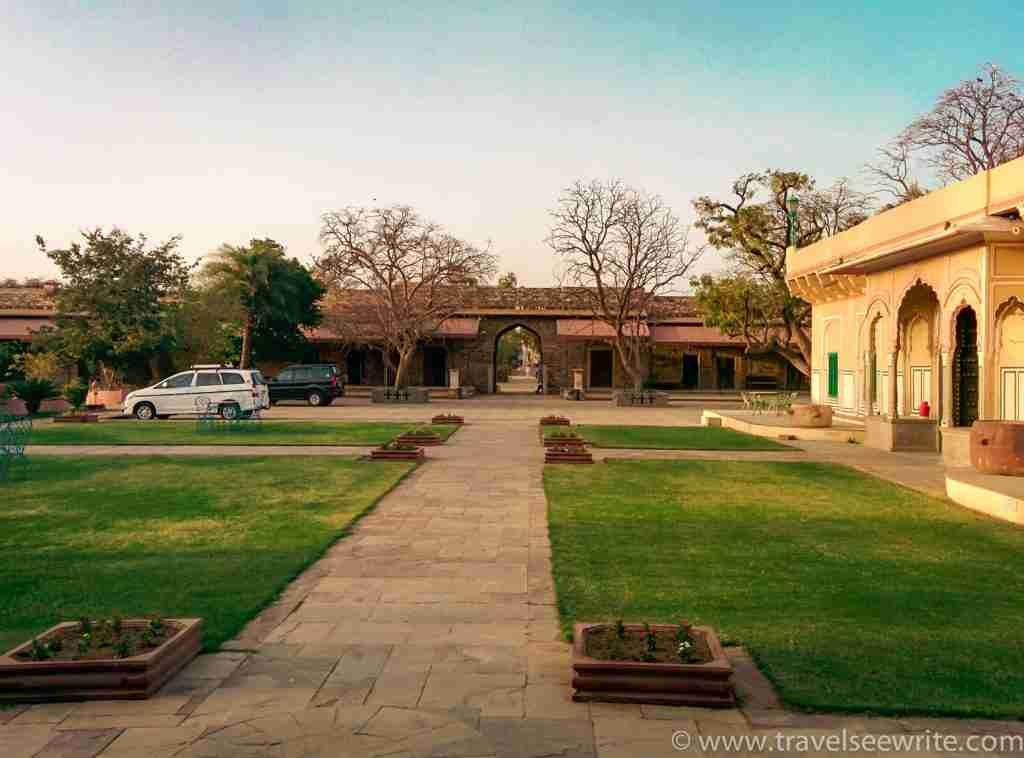
The second entrance gate of the 9 acre Castle Kanota built in 1872
Luxury is always subtle and timeless. Castle Kanota, built in 1872, is a testament of this fact. On the left side, stood the Haveli where the current scion of Kanota, Thakur Man Singh, stays with his family. On the right side, lay the family temple and the museum. In between, there were the sprawling lawns where peacocks, roosters, geese, hens, and dogs were having a gala time. Camels, horses, and ponies were waiting to be ridden. I was checked into an elegant suite next to the Durbar Hall. It was spacious and tastefully designed, devoid of modern-day distractions like TV or phone. The walls of the room were painted with delicate frescoes. The room was palatial and royal. The period furniture across the property gave it a unique character.
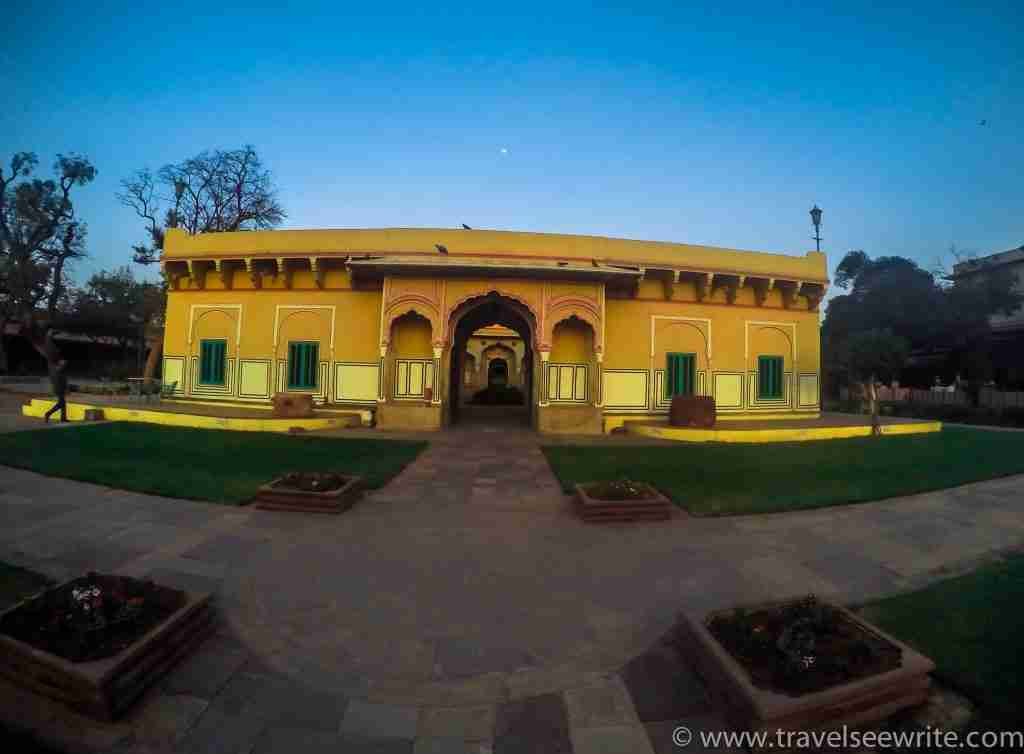
The Haveli – current residence of the Royal Family of Kanota Thikana

Courtyard of Castle Kanota, Rajasthan
The Family Temple of the Royal Family of Kanota

Servant rooms converted into garden facing suites at Castle Kanota, Rajasthan
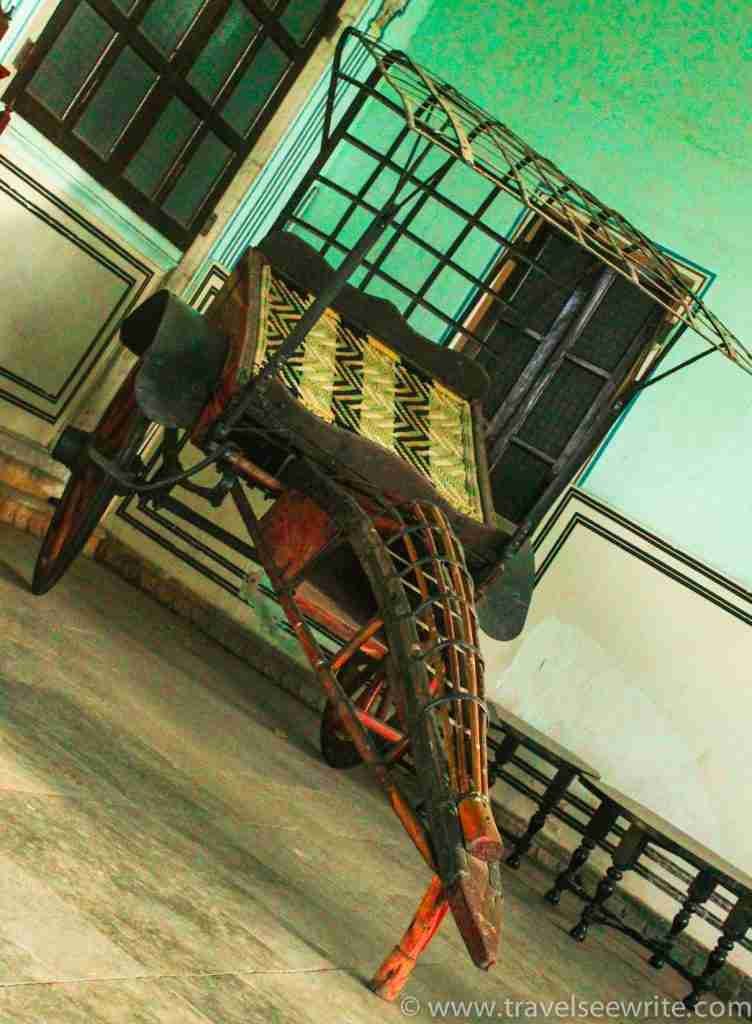
Antique Furniture can be seen in abundance at Castle Kanota
Being a believer of, “pahle pet puja phir kaam duja” I gave priority to lunch over other things. Food didn’t disappoint for two reasons – firstly in Rajasthan, it’s impossible to find a bad meal and secondly, I was the guest of the Royal Family of Kanota, which is world famous for its hospitality and passion for cooking. In fact, Thakur Man Singh is an accomplished cook himself. The service was a bit slow but the food was fingerliciously tasty. Everything was freshly cooked with distinct aromas and a striking presentation. Nothing precooked, everything made to order.
After a hearty lunch, I decided to explore the Castle. The Manager of the property was more than happy to be my guide. I started with the majestic Durbar Hall, which was the setting of the Viceroy Club in the Hollywood flick The Best Exotic Marigold Hotel. It was the grandest room in the castle, decked with portraits, antique furniture, priceless artifacts, books collected over generations and a huge hand-swung pankah.

Inside the Durbar Hall at Castle Kanota, Rajasthan
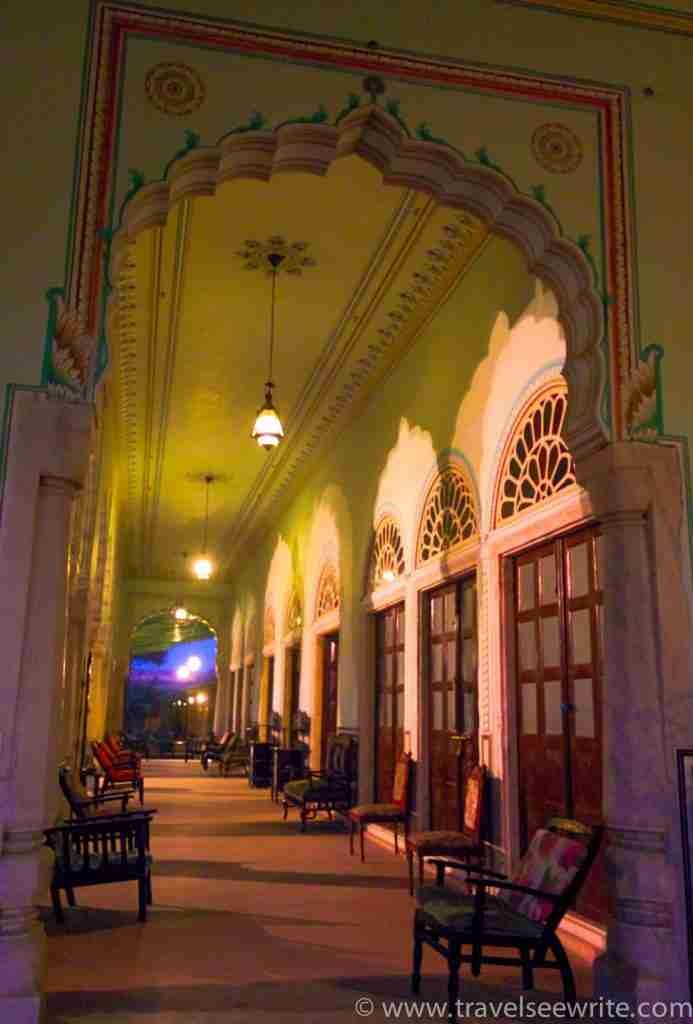
Outside the Durbar Hall, Castle Kanota, Rajasthan
The earthy lighting was creating a romantic atmosphere. A thought crossed my mind. Could my great grandparents imagine that one day the Royals of Rajasthan would serve their grandchildren? Probably not. Unfortunately, they were not born in the era of globalization.
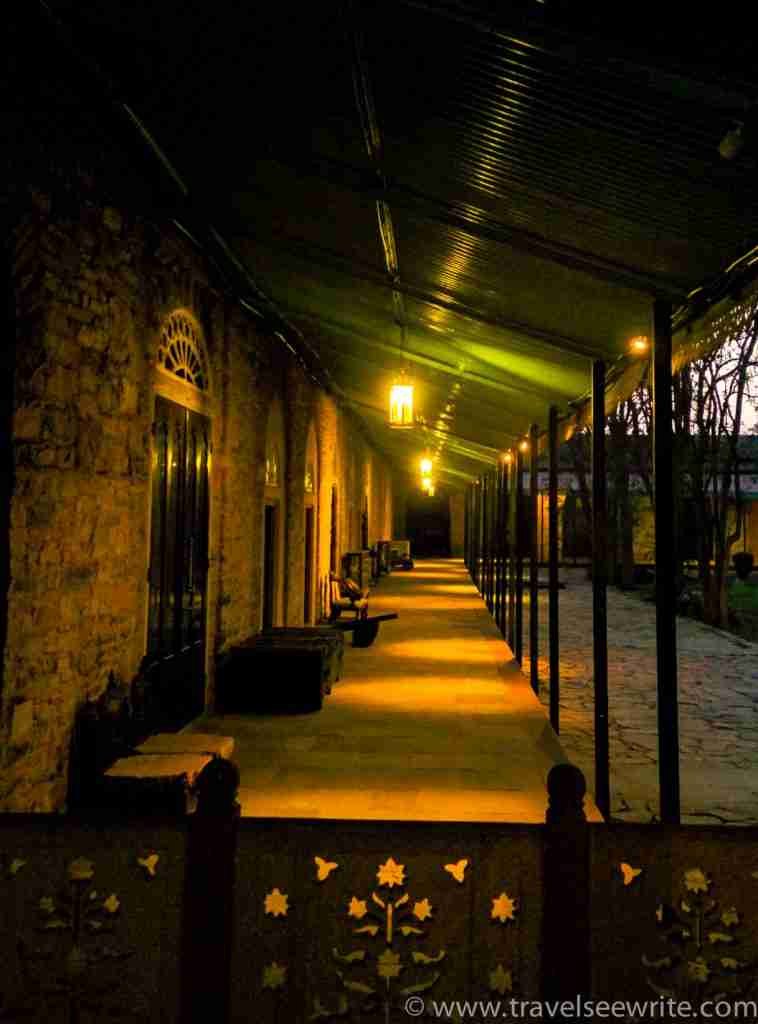
Next, I moved to the Castle Library known as Pothi Khana. It had gold work, a unique collection of over 10,000 rare books, manuscripts, miniatures, 16th-century armory and a museum that chronicled the life and times of the most famous scion of Kanota, Maj-General Amar Singh. He served in both the British and Indian Armies. He was a multi-talented man – a brave soldier, an adept administrator, a renowned chef and a sturdy sportsman.
But he is most acclaimed for his diary. A diary which he wrote for 44 years from 1898 to 1942, without missing a single day, except for one day when he met with an accident and was not in a condition to write. His diary running into 89 volumes with 800 pages per volume is claimed to be the longest diary ever written by somebody. It is a prized possession, which provides an insight into the lives of the Royal Families of Rajasthan.
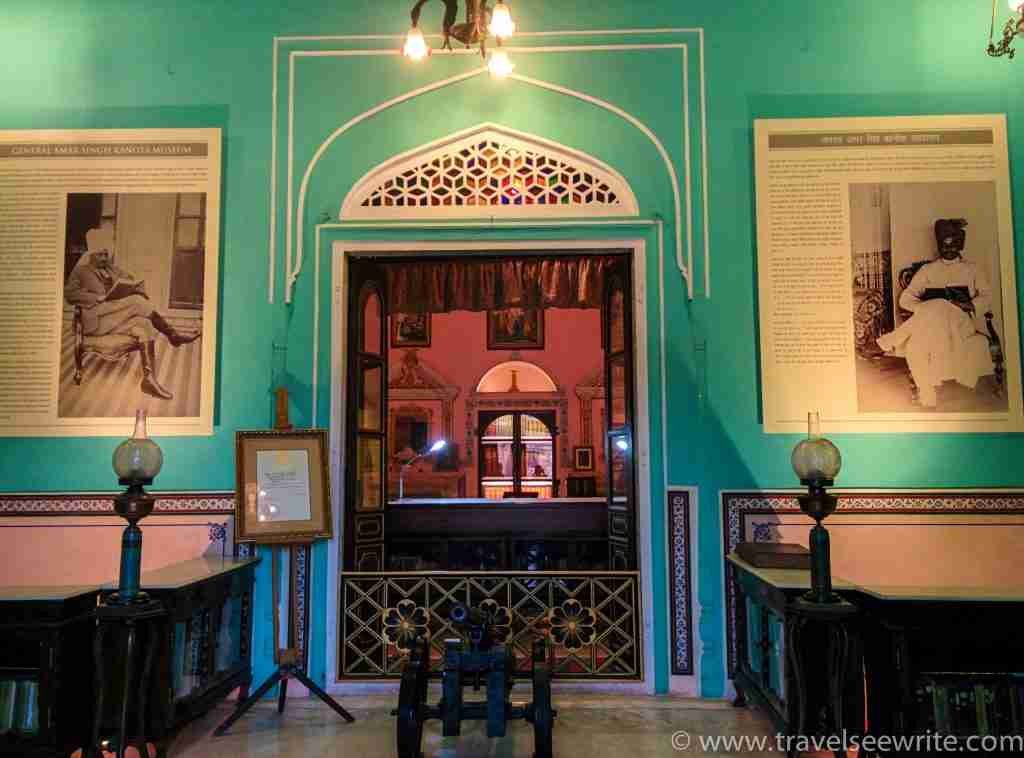
Thakur Amar Singh Museum at Castle Kanota, Rajasthan
I read a few pages from his diary to know what kind of a person he was. He seemed to be an intellectual and quite different from other Royals. Unlike others, he was neither a philander nor polygamous. He was only married to Thakurani Rasal Kanwar. He believed in intellectual development and therefore forced his wife to study and explore things beyond chaar diwari. Things he used are still intact in his museum, where he often spent nights writing his diary. He was the man of 21st Century who paved the way for future generations. The benefits of his foresightedness can be seen in the thriving hospitality business of the Kanotas.

Thakur Amar Singh Museum where he used to write his Diary
They say walls have ears and shoes have tongues. The ears and tongues for me were the housekeepers. So here’s behind the scene story from the horse’s mouth.
Thakur Man Singh has two kids – daughter Padmini Singh married to Karni Singh of Amarkot in Pakistan and son Pratap Singh, a professional golf player. The royal family owns three heritage properties – Castle Kanota at Kanota village (25 staff), Narayan Nivas at Jaipur (250 staff) and Raj Mahal at Tonk.
These properties provide an unforgettable experience of the princely Rajput and Rajasthani culture. But luxury comes with a huge price tag. I was intrigued to know how these white elephants are maintained in an era where even maintaining a 2BHK is difficult. So here is the secret. The old money earns the new money. Man Singh owns 200 commercial shops in Jaipur, 250 in Kanota and hundreds of commercial and residential properties in other parts of Rajasthan. All these properties are prime properties and fetch millions in rent per month. But that’s not his main source of income. His main source of income comes from his Heritage Hotels.
The picture wasn’t as rosy at it looks now. Necessity is the mother of invention. In the 1990’s, foreign tourists got smitten by the exotic Rajasthan. The tourists were craving for the legendary Rajputana hospitality but the government-run hotels were only offering “red-tape facilities”. There was a huge expectation mismatch. Then the Eureka moment happened to the Tourism Ministry of India. The idea of “heritage hotel” scheme was born. Under it, the owners of old forts, palaces, castles, aristocratic homes, and havelis were encouraged to renovate and convert them into heritage hotels. This was a win-win situation. The Government of India found a new way to earn dollars and the financially constrained Royals got a new lease of life. Suddenly, the erstwhile Royals transformed into hoteliers. Traditional graciousness got transformed into paid-for hospitality.
The scheme not only revived the heritage properties but the entire economy of Rajasthan. Many employment avenues were created. Local art and craft flourished. Folk dances, music, and handicrafts saw a revival. The commercial success of heritage hotels gave their Royal owners greater financial security.
After heritage properties, heritage food is now the carrot to attract tourists to Rajasthan. Thakurs are now digging up ancient royal recipes to serve their guests. The Kanota Royal Family uses their ancestral recipes to sell special royal thallies (set meals) and heritage drinks like Chandrahas at their heritage hotels Narain Niwas and Castle Kanota.
This was the story of how Tourism saved the Royalty of Rajasthan.
So are you inspired enough to experience the Royalty at Castle Kanota? Do check out Rajasthan tour packages for more details.

I had barely settled in Manila when a friend threw an invitation to visit Hanoi. Just the kind of words I wanted to hear. Hanoi had been on my list forever but it was going to become real soon. But God had other plans. My visa got stuck and I could not travel with my friend. I had to take a rain-check, only to return to my promise 5 months later.
After 5 months the day finally arrived when I was in Hanoi. I landed in the wee hours when the entire city was sleeping except for the Quang Ba Flower Market. It was an explosion of colours, fragrances, and beauty. Flowers of every type being sold from stalls, two-wheelers, and hawkers. Quang Ba Flower market gave me a glimpse into how important flowers are in people’s daily life here. Visiting this market was quite an experience. I was told by my driver that the best time to visit this market is during Tết or Vietnamese New Year, which is celebrated on the same day as Chinese New Year.
The next 5 days which I spent in Hanoi were days when I realized howsoever meticulously you might plan your trip, the best moments come unannounced. So if you are the kind who spends a lot of time procrastinating, I would urge you to ditch procrastination because Hanoi is best discovered when left to serendipity except for knowing few key things.
Related: Confused where to visit first in Vietnam. Read Hanoi and Ho Chi Minh City
10 TIPS FOR HANOI BUDGET TRAVEL:
Getting a Vietnamese Visa is a cakewalk. Either you can get a visa before you travel (which is more expensive and takes around 2-3 days for processing) or you can get Visa on arrival (pre-approved visa). But before traveling ensure you have an approval letter to check in at the departure airport and to pick up the visa when you arrive. Your waiting time at the airport can vary between 10 minutes to 90 minutes depending on the rush. I used Vietnam Visa Easy to get my approval letter.

Visa Approval letter sample
A friend of mine who works with an airline gave me an insider tip about booking tickets – neither book flights too soon nor leave them for the last moment. It is a myth that booking your flights six months in advance will get you the best deal (unless it’s a sale). Best time to book flights is 3-4 weeks before travel. Also, off season can get you great flight deals. June to September will fetch you the best deals but it gets very hot and humid in the rainy season.

Best time to book international flights. Source: elitedaily.com
One of the reasons for visiting Vietnam was its currency. You can do a lot without spending much. But Vietnamese currency confused the hell out of me. 22,000 Vietnamese dong is equal to one U.S. dollar. However, the good thing is U.S. dollars are widely accepted. Even in a smaller town like Sapa. So don’t bother to carry too much of the Vietnamese Dong. Also, ATMs are everywhere. Credit cards are accepted in major outlets.
I went in November when it was very pleasant to walk around. If possible avoid June-August as that is the time for intolerable heat and humidity. March-May offers a pleasant shower-splashed spring and December- February is cold and humid.

When is the best time to visit Vietnam
Before arriving in Hanoi I was shit scared of traveling alone because of the reputation that precedes the capital. Travel scams are aplenty and Taxis are one of the most ranted about. Thankfully I didn’t have to go through the ordeal.


Overnight bus from Hanoi to Sapa, Vietnam

Cycle Tour rickshaws waiting near the Hoan Lake, Hanoi, Vietnam
While strolling through the by-lanes of Hanoi I wanted to customize my food but I ended up eating what was displayed. Reason. Communication barrier. Unlike the Philippines or even Thailand, Vietnam has a huge language barrier. Most locals understand and speak a few phrases in English, but don’t count on it. While English can get you through the markets and Hanoi, do hire a local English speaking guide for outstation trips to Halong Bay, Mai Chau or Sapa. If you plan to go offbeat then buy a local SIM, easily available at all retail outlets. Google maps, Google translator, and mobile apps to locate restaurants and sightseeing would come handy during your Hanoi budget travel

Foody App is very handy during Hanoi Budget Travel
Hanoi is a wonderland of cheap eats and drinks, offering an endless variety of soups, fresh rolls, vegetable salads, noodle soups, hotpot and sandwiches paired with plenty of fresh herbs — and fresh beer, too. All at a very reasonable price. You could spend a week eating your way through the hectic, motorbike-clogged streets of Hanoi’s Old Quarter and never eat the same meal twice. And guess what. There are plenty of vegetarian and vegan options too. I tried lot of roadside stalls but my top 5 vegetarian places would be

Vegetarian Delight, Hanoi, Vietnam

Street Food Markert, Old Quarters, Hanoi, Vietnam

Street Food, Hanoi, Vietnam

Chestnuts being roasted on Hanoi Streets, Vietnam

‘Bia Hoi’ – The Cheapest beer in the world, Hanoi, Vietnam
Food is incomplete without a drink. And it is sone pe suhaga if it happens to be the cheapest fresh beer in the world – ‘bia hoi’ or draft beer. It costs just 8,000 Vietnamese Dong or under 40 US cents a glass. Best to arrive at 5 p.m. as it runs out around 8 p.m.
After trying the ‘bia hoi’ I wanted to taste the world famous Vietnamese coffee. Hanoi has coffee options from Starbucks to local cafes. I strongly recommend Café Pho Co, a café hidden behind a home hidden behind a souvenir shop, and one of the best places to get a view of Hoan Kiem Lake.
Related: Street Food in Vietnam
And if you are looking for a great place to stay, check out the Nexy Hostel, Hanoi.
I detest shopping but Hanoi converted a non-shopper into a shopper. The hard-to-imagine cheap prices would tempt anyone. I was no exception. A small stroll through the market ended up on a shopping spree. Hanoi’s Old Quarter is lined up with various fashion stores, souvenir stalls, and trinket sellers. It’s a great place to buy your backpacker items. Very cheap prices at a decent quality. But if want to escape the hustle and bustle of Hanoian streets and prefer an air-conditioned mall then head to the Vincom City Towers where you’ll find luxury brands, replicas, good eateries, multiplex and a gaming arena.

Whenever I travel to a new place I always try to get out of the concrete jungle as soon as possible to be with nature but Hanoi turned out to be an exception. A city of Parisian charm and grace with an Asian edge, Hanoi is an enthralling blend of East and West, rustic and polished, traditional and contemporary. I started my exploration by visiting the Hoan Kiem Lake and the Ngoc Son Temple, then down to the French Quarter and the Hanoi Hilton, then to Temple of Literature, then up to the Vietnam Army Museum, and finally to the Ho Chi Minh Mausoleum and Nha Tho Cathedral.
One thing that shouldn’t be missed is the night market in the Old Quarter, from 7 p.m. on Fridays and Saturday which is more about strolling around aimlessly than shopping. However, do keep your address handy. When I left Old Quarters during the day it was a shopping arcade but when I returned it had magically transformed into a bustling food market. The lanes looked totally different. In fact, I got lost and after roaming for an hour I finally found my destination. I loved Long Bien Bridge. An awesome spectacle bolted together by history. The red colour lighting and reflection in the Hoan Kiem Lake was making it look very surreal.
Being an impulsive and self-explorer I don’t like taking tours but I took one because of an innovative concept from a student-run NGO: Hanoi Kids Tours. The idea is for tourists to get a flavor of the city by being shown around by local children. HanoiKids was set up in 2006 and is a student-run organisation offering free city tours in Hanoi. The programme provides students with the opportunity to practice their English and provides visitors with a great value guide to Hanoi.

Way to Ngoc Son Temple via scarlet bridge, Hanoi, Vietnam

Scarlet bridge to Ngoc Son Temple, Hanoi, Vietnam

Thap Rua, Hoan Lake, Hanoi

Temple of Literature, Hanoi, Vietnam
I had heard a lot of travel scams about Vietnam so I had pre-booked my trips through a travel agent. He was extremely nice and accommodating. Thanks to him, I had the most amazing 3D2N Halong Bay Paradise Cruise experience. My guide was very knowledgeable and very receptive to customer feedback. He kept us entertained throughout the journey. The food and the services on the cruise were top notches like a 5 star. I did a lot of activities like caving, kayaking, swimming, visiting the pearl farm, visiting the fishing and floating villages, taking Vietnamese cooking class among other things. Besides Halong Bay, one can visit the Perfume Pagoda, Sapa or Mai Chau.

Halong Bay at Sunset, Vietnam

Trying my hand at kayaking, Halong Bay, Vietnam

I just can’t enough of the Golden Hour

View from Thien Cung Cave, Halong Bay, Vietnam

Inside of Thien Cung Cave, Halong Bay, Vietnam

Terrace Farms of Sapa, Vietnam
Hope these 10 tips for Hanoi budget travel puts your procrastination on hold and motivate you to book your trip soon.
For more detailed information on Vietnam do read Practical Guidebook for your First Vietnam Visit and The Untold Story of Sapa

Here is the full version of my ‘Quiet Flows the Indus’ story that got published in the June Issue of Rail Bandhu

A beautiful destination often results in a hangover but a trip to Ladakh leaves you with a permanent hangover! Rather, it mystically changes you from within, for the real, raw and unadulterated beauty of Ladakh and its people touches the very core of your being. Ladakh is one of those places that never leaves you, telling stories of valor and unity.
My Ladakh love has resulted in various spiritual, cultural, heritage and adventure tours. However, this time I decided to follow a journey – the Indus trail right from where it starts. Come on board to enjoy the mystic trail of the mighty Indus River through Leh-Ladakh and enjoy the gushing waters and its natural beauty along!
But before you join me in this glorious journey let me introduce you to the Indus Trail. The Indus River originates from the North of the highly revered Mt. Kailash, entering India at Demchok in Changthang valley, flowing through the remotest part of the Changthang valley for 670 km and then reaches Nimu, where it merges with Zanskar River, creating a beautiful sangam, while continuing onwards to Pakistan.
I arrived at Leh on a cold March morning. As soon as I touched down, I filled my eyes and heart with all of Himalayas, like meeting a parted lover. I had booked myself at the Zaltak guesthouse, where my mom like caretaker welcomed me. She treated me to my favourite Jasmine Kehwa, Ladakhi Roti and the routine lunch.
In the afternoon, with the help of my Ladakhi friend and an Army officer, I was able to secure the innerline permit to travel to Changthang. Acclimatization was necessary as Changthang was higher than Leh. I used the remaining time to acclimatize and revisit my favourite spots in and around Leh – Leh Palace, Hemis, Spituk, Lamayru and Alchi. These spots are also located on the banks of the majestic Indus River.
Monasteries are a constant in Leh. Visiting a monastery is a divine experience. In their tranquil and calm environments stay the most compassionate and knowledgeable people – the monks. They go out of their way to make you feel at home and are very knowledgeable. At Hemis Gompa, I ended up having a conversation with a Lama for hours on the importance of education and how technology can be used to fight global warming!
Post my monastery visit, I hitchhiked to Nimu, the spot where I fell in love with Indus. I was lost in the sight of the blue Zanskar flowing into emerald green Indus. I recalled my earlier experience of taming the wild rapids of Indus, while soaking the breathtaking views of the Ladakh and Zanskar ranges.
En-route to Leh, I decided to visit the Hall of Fame Museum, which houses many a stories about our brave soldiers. I still get goosebumps when I remember Captain Vijayant Thapar last letter to his parents’ days before he made the ultimate sacrifice. The sunset at the next pitstop on my way back was the magnificent Shanti Stupa, where the sunset carried a special message – stay majestic and gracious even in a slump.
I left for Chumangthang, a major junction in the Changthang region early morning the next day. For the entire 139 kms journey, Indus accompanied me. Somewhere frozen somewhere gushing though the canyons. I arrived at Chumathang at 3 pm, crossing several beautiful sights and sounds of Indus. Chumangthang is a small village that is at the junction of many routes and is famous for Hotsprings. My last minute call to an Army friend got me a comfortable stay at the Army Guesthouse. I was introduced to the village Sarpanch, the most respected man in a village of 50 houses and also the owner of the Lamying Hotsprings Restaurant on the banks of the mighty Indus River.
Locals are the unsung heroes who turn good trips into great ones. It was the Sarpanch and unknown locals who helped me reach the interiors of Changthang in a season when even locals fear to go. The Next two days were dedicated to visiting the most beautiful part of Changthang – The Changthang Wildlife Sanctuary. There was just one problem though – the lack of transport. It took a lot of persistence to make the Sarpanch agree!
We left early morning next day to Chumur, the disputed village on Indo-China Line of Actual Control (LAC). The Sarpanch kept me entertained with his stories. According to him, there are 18 lakes in the region, all undiscovered. The famous three are Pangong Tso, Tso Moriri and Tso Kar. We followed the following course for two days:
Chumathang – Mahe Bridge – Sumdo – Namshang La – Kiagar Tso – Korzok – Chumur – Puga – Tso Moriri – Chumathang
This journey was exhausting, dangerous but extremely beautiful and rewarding. Most of the area was deeply buried under the snow blanket. Visiting Chumur was an experience for life. Standing on the actual LAC, it was difficult to decipher where India was and where China was. Why are we humans hell bent on creating borders where none exist!
With a lot of questions in my mind I returned to Puga. Rebo Tent was my home for the night. In spite of multiple barriers, my 66 years old host treated me with utmost love and care. In a harsh barren land where nothing grows, I was offered Ladakhi Roti, Satthu, yak soup and raw yak meat, embodying the true spirit of “athitihi devo bhava”. I had a long conversation with her, thanks to Sarpanch, who was now my interpreter too. She had migrated from Tibet when she was just few months old and she hopes to return to Tibet before she dies.
After bidding goodbye to my lovely host, I went exploring the Puga Nomadic School, Puga Hotsprings and Tso Moriri.
Tso Moriri is the largest of the high altitude lakes in India. During summers you can see incredulous variety of flora and fauna. However, what I witnessed now was something else. The completely frozen white lake flanked by lofty mountains landscape looked surreal. It was difficult to believe that this snow blanket transforms itself into a mystical lake which changes six to seven colours in a day. Mother Nature’s magic knows no end!
Late at night I returned to Chumathang and next day I was ready to start my onward journey to Demchok. I followed the following route during my two day journey:
Chumathang – Nyoma – Koyul – Demchok – Chumathang
The drive from Chumathang to Demchok took me through some of the best sights I have ever seen. The paradisiacal views of the meandering semi frozen Indus River surrounded by the mighty Himalayas were a sight to behold. The last destination on my trip was Demchok, the starting point of the river Indus. Driving up to Demchok was not an easy task! It was slippery and slushy, allowing our vehicle very little grip but where there is a will, there is a way. We managed to reach the exact spot. It wasn’t the joy of reaching the destination that I was relishing but it was the joy of experiencing such an astounding journey that I had only dreamt!
The Indus River was a tiny stream here. It then mystically transforms into a mighty river that has been the bed of mighty civilizations.
Hope you enjoyed this Indus Trail with me as much as I had fun exploring it.
So when are you going to explore it?
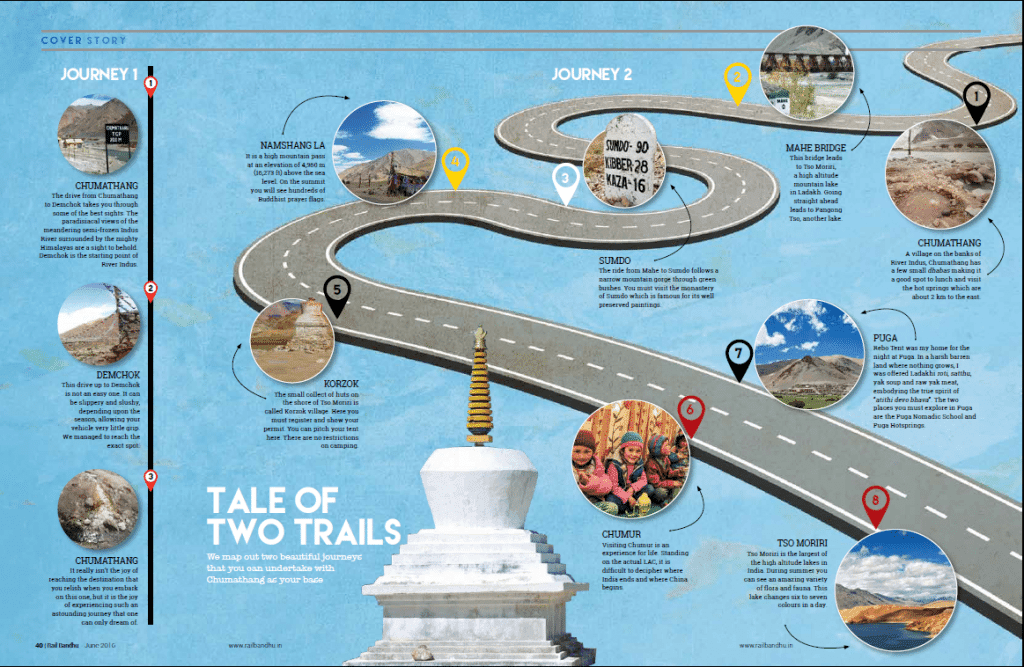

Welcome back to Extreme Road Trips in Changthang, Ladakh travelogue series 🙂
In my early extreme road trips travelogue series I threw light on how my unflinching love for the Himalayas took me to the remotest part of the world and how I traversed through the vistas of staggering snow-capped mountains and arid high-altitude plains to reach the disputed land of Changthang – Chumur.
The appeal of staying in Rebo tents of pastoral nomads and immersing in the Tibetan Chang Pa culture was the reason why I chose that semi-paved, high-altitude trail of Puga from Chumur instead of returning to Chumathang. Three hours later, I reached the Chang Pas’s (Pastoral nomads) Rebo Tent and was sipping butter tea. I accepted the offer of an old lady to be her guest and then headed out to explore the Puga Nomadic School. The child in me was awakened by the kids at school. I am not sure if Narendra Modi knows it but he was the favourite icon in that school. I took a small quiz and they all came out with flying colours. As a reward I gifted them all the chocolates I was carrying.
I let them play with my mobile and camera. Our excitement pulled all the teachers from the resident school. The headmaster, who seeded the idea of visiting this school in my head a day before at Chumathang, was very happy to see me. Visiting the Puga Nomadic Residential School was sheer joy. I was greeted with the most beautiful and innocent smiles, offered tea and invited to dinner. I could only accept the tea invitation since I had promised to have dinner at my host’s place.

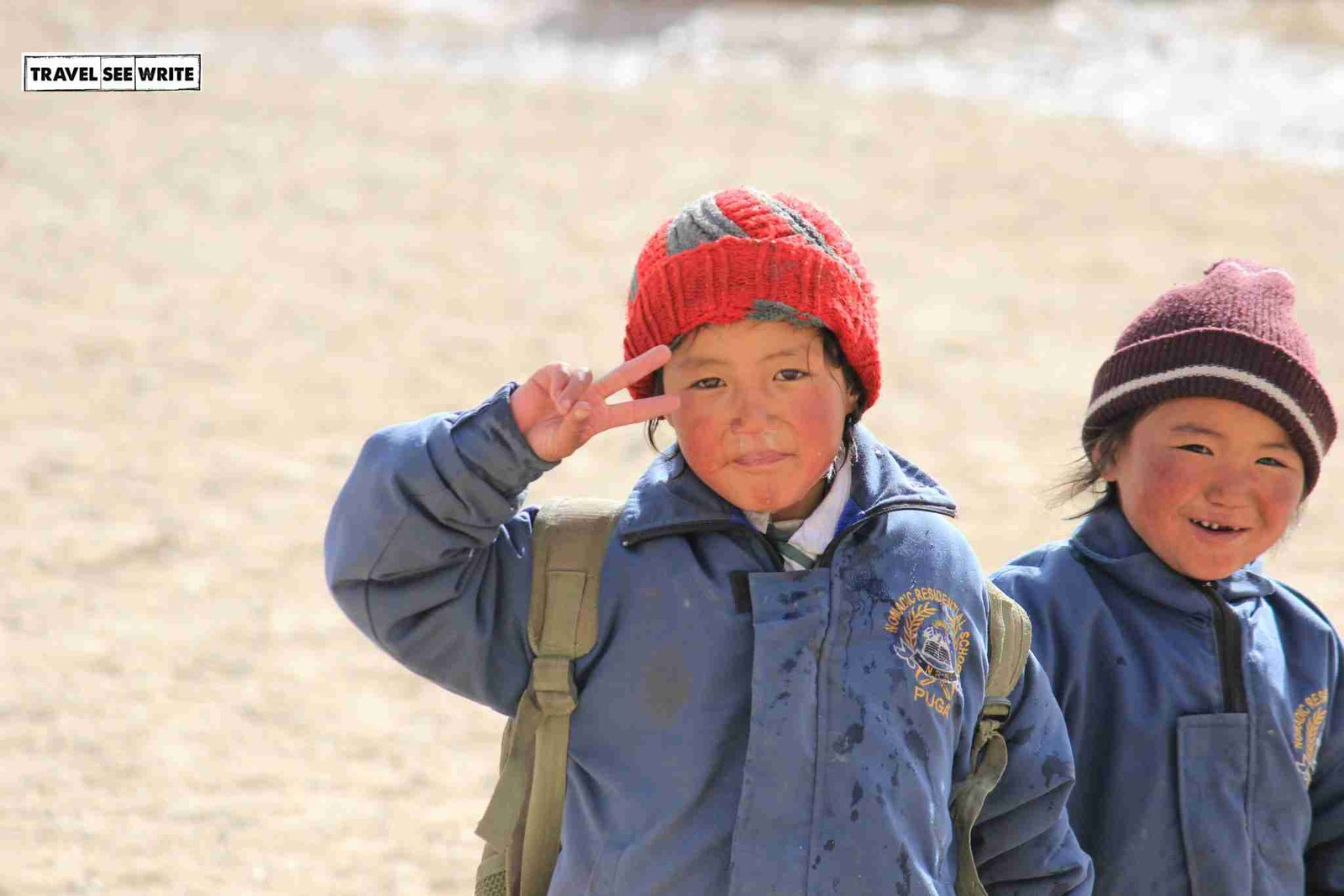
The Extreme road trips Angels: Kids at the Residential Nomadic School of Puga, Changthang

The Extreme road trips Angels: Kids at the Residential Nomadic School of Puga, Changthang
Sonam’s Rebo Tent was my home for the night. The multiple barriers didn’t stop the 66 years old host from treating me with utmost love and care. In a harsh barren land where nothing grows, I was offered Ladakhi Roti, Satthu, yak soup and raw yak meat, embodying the true spirit of “athitihi devo bhava”. Having spent a day at her place I realized how Chang Pas life revolves around their livestock. Their food, clothes, tent, livelihood; everything comes from their animals. They would usually kill one yak and use its meat for 15 days or more. Its skin is used as an overcoat and as a blanket.
Being a chatterbox I had a long conversation with Sonam, thanks to Sarpanch, who was now my interpreter too. Sonam had migrated from Tibet when she was just a few months old. Although Changthang is her home now, she dreams of returning to Tibet someday before she dies. Despite living in the harshest of conditions, she was content and the glow of contentment was radiating like the sun.
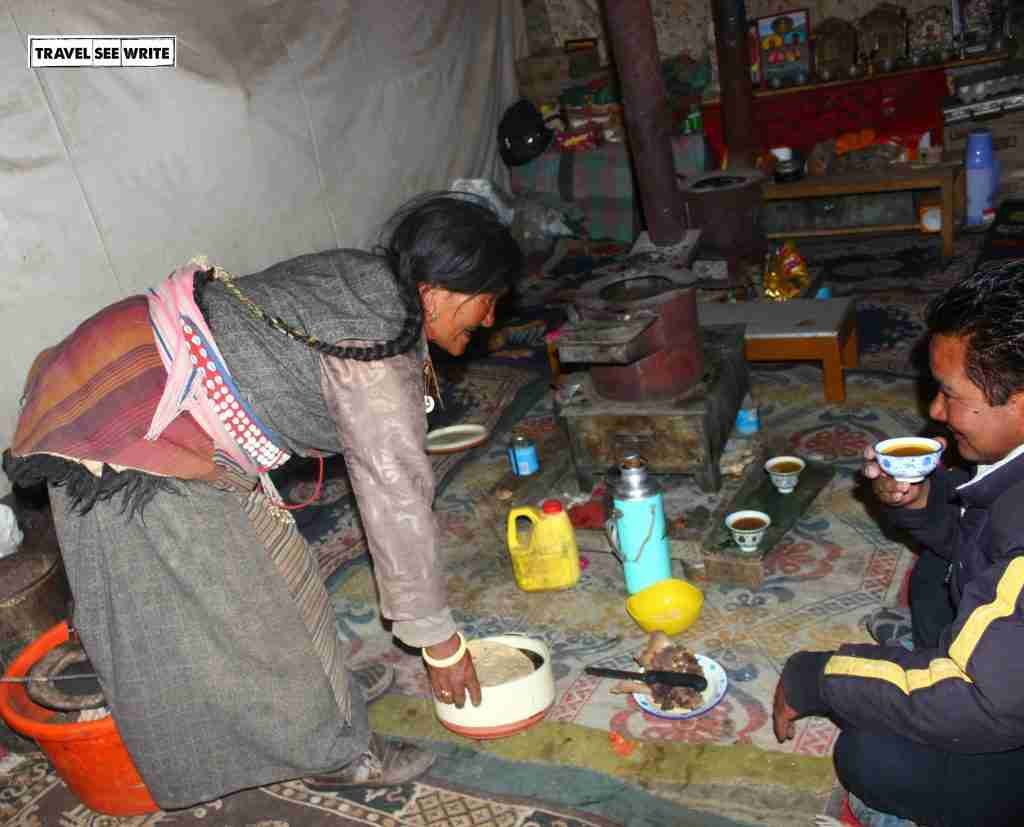

I woke up to the rising sun kissing the tall, stark peaks of the Himalayas. Some of them looked like they were on fire, the orange hues so startlingly bright. After a hearty simple breakfast and heartfelt goodbye, I was on my way to explore the Puga Hotsprings and Tso Moriri.
The Puga hot springs, located at the junction of the Indian and Tibetan plates along the Indus Suture Zone, offers a huge energy potential that can change the developmental scenario of whole Ladakh if harnessed. An amazing frozen structure created by hot springs caught my eye. The water is said to be extremely hot under the ground. At some places, it heats up to 260° Celsius. As soon as it oozes out it freezes into 6-10 feet structures due to an extremely cold temperature in the valley.
On the other side of the road, the multicolored mountains of various minerals were making the barren valley a riot of colours. Some of the mountains had so much Sulphur that a matchstick could burn the entire mountain.

Structure 1 at Puga Hotsprings, Changthang, Ladakh

Structure 2 at Puga Hot springs, Changthang, Ladakh

The Extreme road trips wonders: 6-10 feet tall structures at Puga Hotsprings, Changthang, Ladakh
Spellbound by nature’s wonder, I drove ahead, only to be wowed further by the incogitable Tso Moriri. The lake is at an altitude of 4,595 m and is the largest of the high altitude lakes in India located in secluded, breathtakingly picturesque Rupshu Valley. In summers, the road from Sumdo to the Tso Morori turns into one of the most beautiful stretches of road you’ll see in Ladakh. At Korzok Bridge, I first saw the sight of the mighty Tso Moriri. In summers, you can see an incredulous variety of flora and fauna. However, what I was witnessing now was something indescribable.
The vast, pure and frozen white sheet of the unending lake was flanked by vistas of staggering snow-capped mountains of green, red, purple, grey, brown and beige colours. The whole landscape looked dreamlike surreal. It was so beautiful that even the most beautiful wallpapers would fail in front of it. Tso Moriri is like Sita and Gita. It is unimaginable how this snow blanket transforms itself into a mystical kaleidoscopic lake in summers. It changes up to seven colours in a day. Mother Nature’s magic knows no end! It was my moment to bow my head to Chamatkar ko Namashkar

The Extreme road trips perks: The snowbound region of Changthang, Ladakh

The Extreme road trips have their own perks: frozen Tso Moriri, Changthang
We crossed the no-man-in-sight Korzok village. Korzok has a mostly nomadic population that is non-existent during winters, grazing cattle elsewhere. We wanted to drive to the top viewpoint of Tso Moriri but it was like a vertical skating ring. So we dumped the daring act. And enjoyed our little picnic on the 29 km long and 8 km wide frozen Tso Moriri picnic ground.
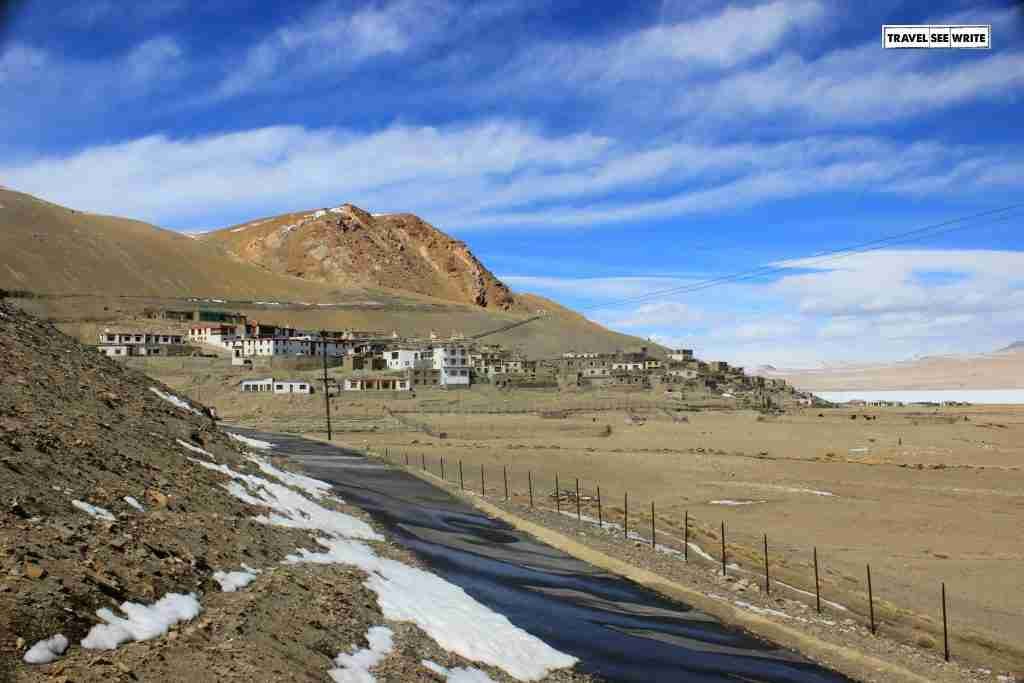
Korzok village, with backdrop of Tso Moriri, Changthang
The weather gods were in a happy mood. The sun was shining bright, the cold wind wasn’t blowing and I could see miles and miles away. Like a kid, I started jumping on the hardened snow. But not before ensuring it was tough enough to hold my jumping jack act.

Tso Moriri or the Moon land? Changthang, Ladakh
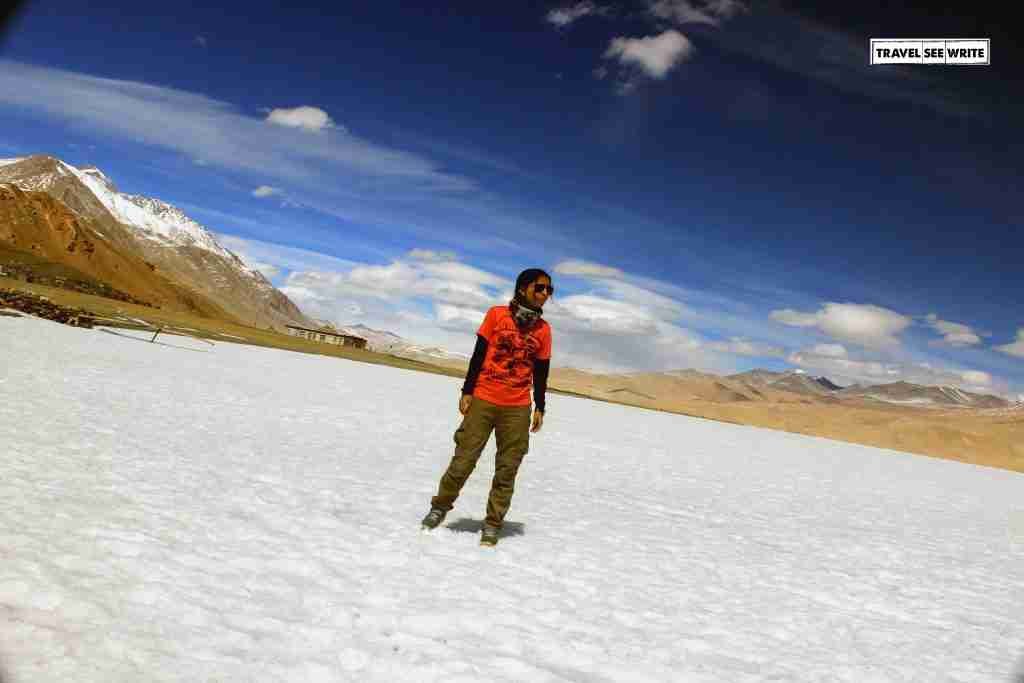
Not posing. Just a candid shot 😛
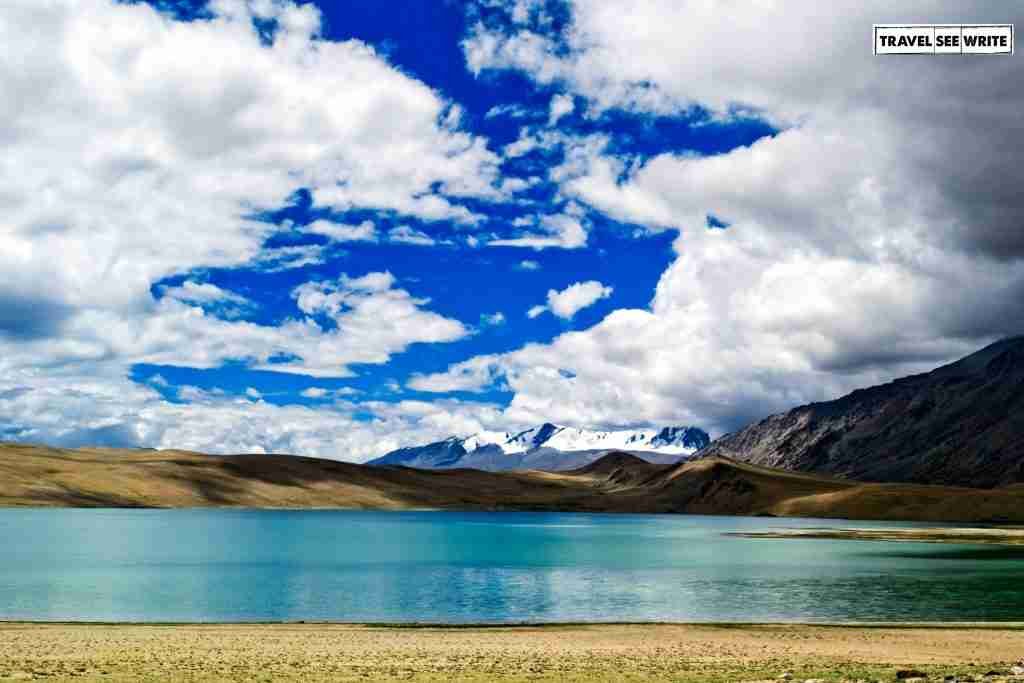
Tso Moriri Lake in Summers, Changthang, Ladakh
Suddenly the weather god had a mood swing to probably demonstrate his authority. The spine-chilling cold wave started slapping us. Sun started playing peek-a-boo. Clouds started coming from all directions. Within a moment the beautiful sight looked scary. It became extremely difficult to stand in the open. We had no option but to return.
Traveling through the snowbound route snaking across sparsely located scenic villages and high attitude plateau in the Changthang prefecture is indelibly etched in my mind. Life in Changthang is unhurried, and I took this relaxed atmosphere back with me to Chumathang as night fell.
Chumangthang whispered in my ears, “Why do you humans rush when all you have to do is stand and stare at the marvel of Mother Nature. Enjoy everything you have and do not rue about things that you don’t. Nature will give you what you need and what is rightfully yours.”
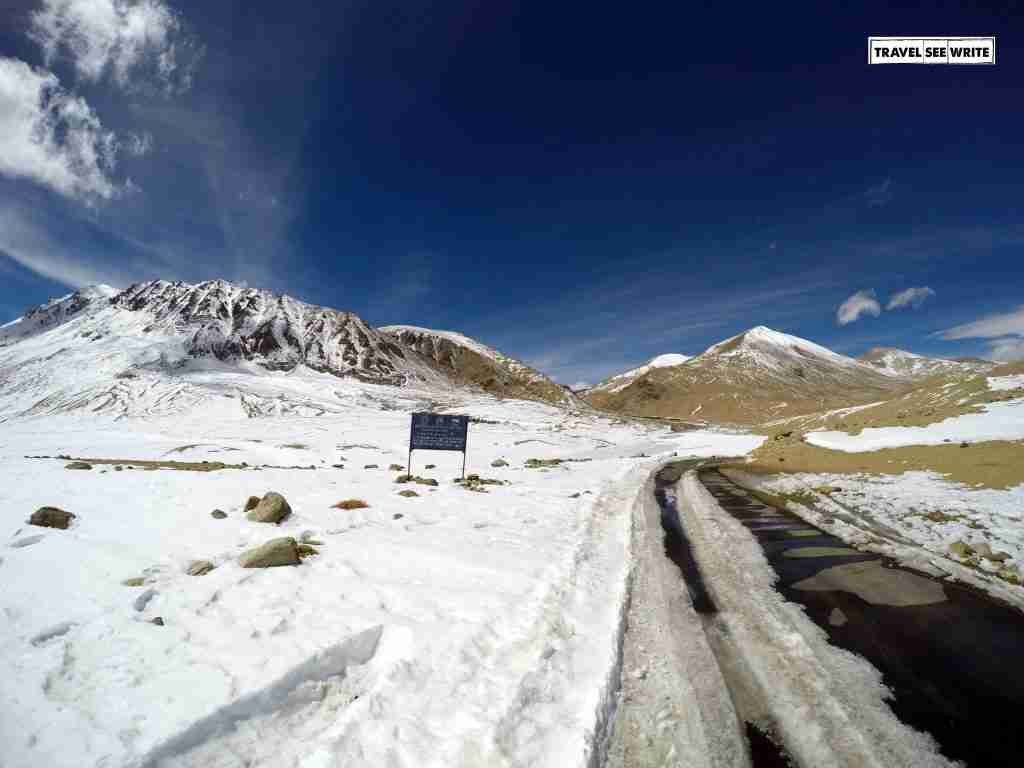
The snowbound route of Changthang, Ladakh
Related: If you are looking for tour packages, check out Leh Ladakh Tour Packages
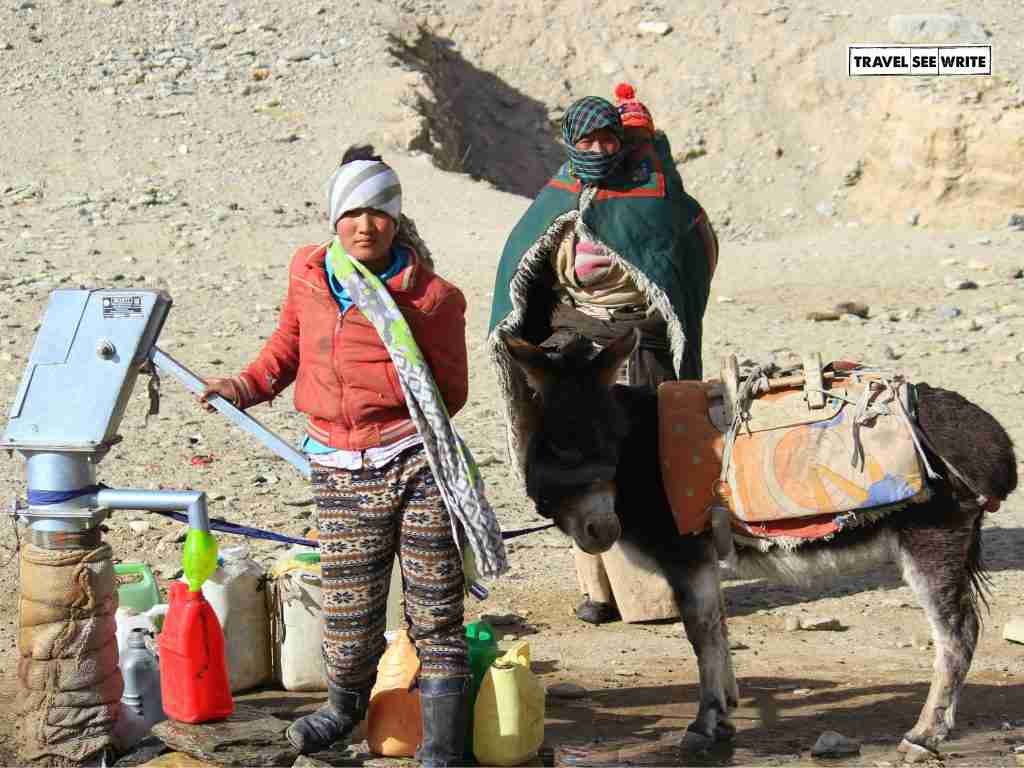
Chang Pas at Puga Hotsprings, Changthang

Even the tongue-out Lamb was happy to see me, Changthang

I didn’t long for a white-knuckle adventure, but snowbound Changthang happened to be one. In Extreme Road Tripping in Changthang, Ladakh – I of this travelogue series I shared how my unflinching love for the Himalayas took me to the remotest part of the world. This post talks about how I traversed through the vistas of staggering snow-capped mountains and arid high-altitude plains while discovering some breathtaking sights and people.
The destination is a powerful motivator for the journey but mostly, it is the journey that matters. A journey to the Changthang Plateau, the rooftop of the world, is not only a stunning salute to the power of nature but also a constant struggle to contain it. Join in to relive this treasured journey.
After I convinced the Sarpanch to be my unsuspecting partner in the trip, I set out in a 4×2 vehicle to Chumathang. Before the journey, he visited the altar room, lit the butter lamp and the incense sticks, and offered water to the great protector of Ladakh. The altar room, with its Buddhist statues and thangkas, was the most important part of his house. In Buddhism, religion is a remedy for coping with tragedies. The tragedy is explained and overcome through ritual and prayers.
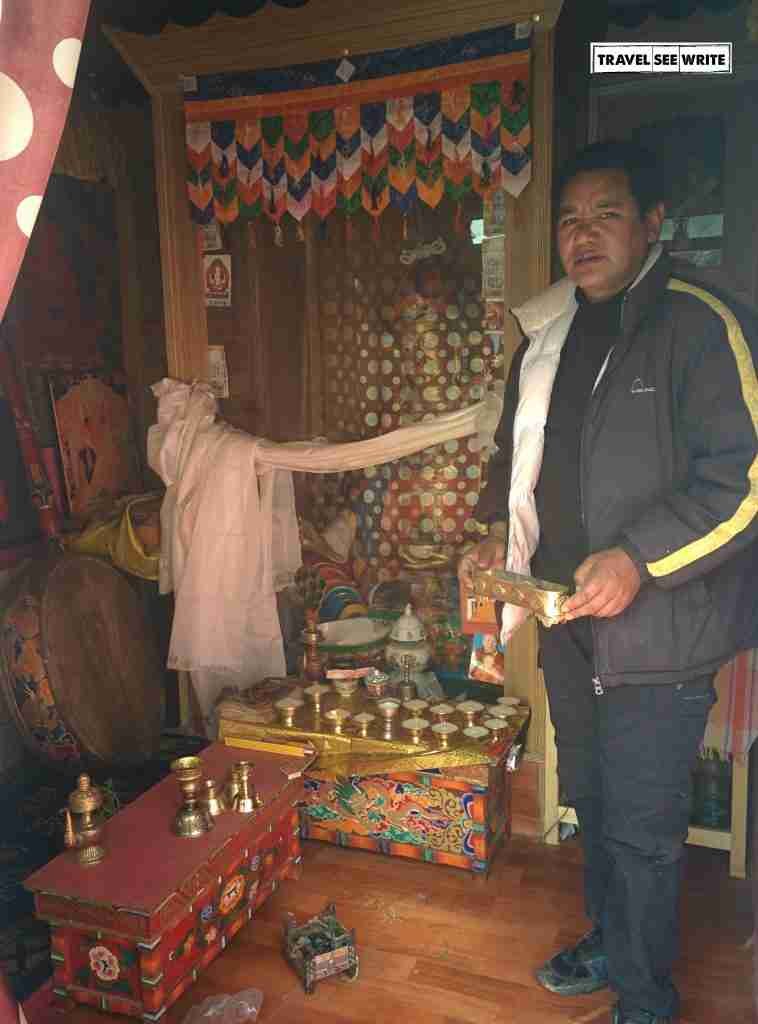
Sarpanch offering prayers at his altar room, Chumathang, Changthang
We started with a plan to visit Tso Moriri but being a sucker for unexplored trails, my plans changed midway. And the credit goes to Sarpanch. His stories about the difficult life of living in the disputed Indo-China land and live mummy at Chumur Gompa were good enough reasons to change my mind.
My route for two days of travel was:
Chumathang – Mahe Bridge – Sumdo – Namshang La – Kiagar Tso – Korzok – Chumur – Puga –Sumdo – Tso Moriri – Chumathang

We took the kaccha (unpaved) road passing through his village, where he proudly showed me a 100 years old monastery, a relatively new monastery as per Ladakhi standard. During our drive through the craggy and desolate mountains, he kept talking about the accompanying mountain peaks and what lay behind them. He spoke about the 18 lakes in the region, all of which are not yet discovered. He was particularly fond of Choku La peak (5,560m), a revered peak as per Buddhism. From Mahe Bridge, we started climbing towards the rustic Sumdo village, located downstream from the Puga Hotsprings.
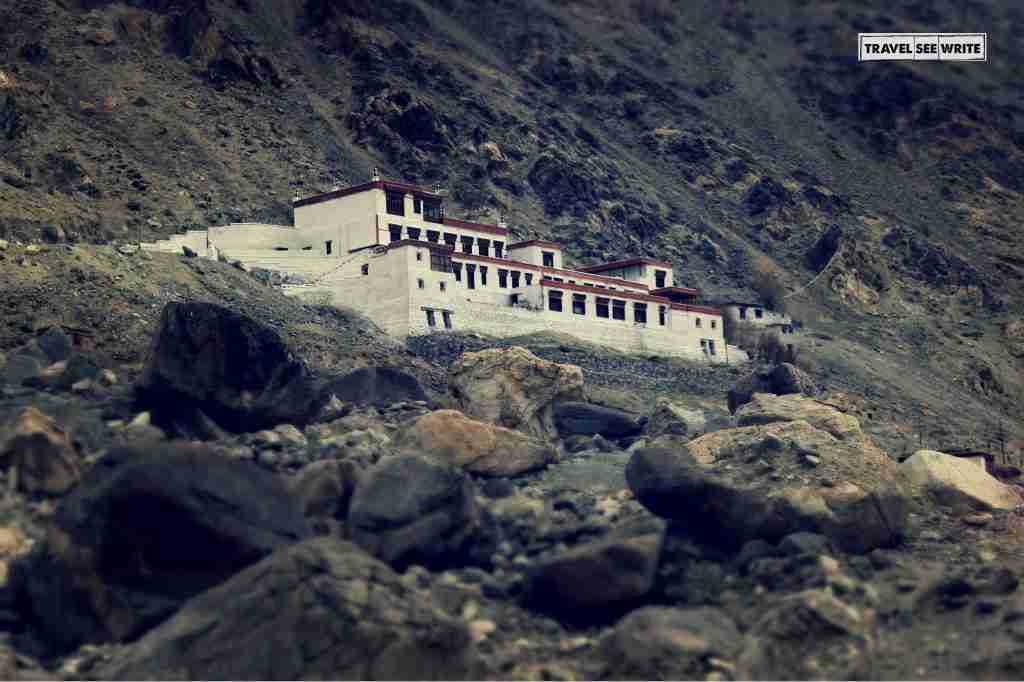
100-year-old Chumathang Village Monastery, Changthang
This village is completely inhabited by the Chang Pas (Tibetan pastoral nomads) who moved here in 1963. From Sumdo, the road climbed up to the prayer flags draped Namashang La pass (5000m). Being a steadfast devotee of the mountain god, Sarpanch offered prayers to the Namashang La. The legend says if you take a round around the pass then mountain god protects you. We did our job and the god did his. After the Namashang La, we passed through the beautiful Kiagar Tso Lake, which was completely frozen. It was impossible to tell where the lake was and where the valley lay. I was enjoying the heart-stopping artistry of the ultimate artist. I was so engrossed in the beauty that I had forgotten to click pictures. Sarpanch knew my love for pictures and reminded me. Call it living in the moment 🙂

Namshang La on the way to Chumur, Changthang
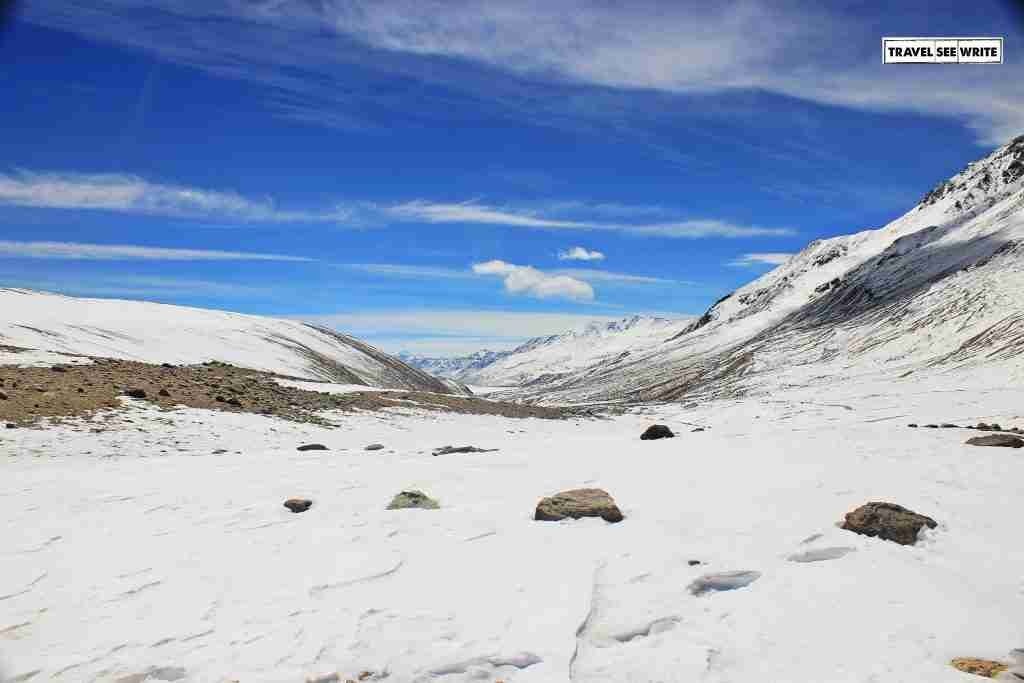
On the way to Chumur from Chumathang, Changthang
After Kiagar Tso, we finally started descending down to Korzok. Barren mountains stretched in every direction, casting shadows over the barely-there road. After reaching the Korzok Bridge, we took a left to continue our drive to Chumur. The 51 km journey from Korzok to Chumur was so awe-inspiring that I easily shrugged off the discomforts and the many heart-in-mouth moments that came as a package deal. After four hours I was finally in Chumur, the tri-junction of Ladakh, Himachal Pradesh and China. This village has been the bone of contention between India and China for the last couple of years. Earlier pastoral nomads could walk into Chinese part while grazing their livestock but now they are not allowed near the border. Standing on the actual LAC, it was difficult to decipher where India was and where China was. Why are we humans so hell-bent on creating borders where none exist!
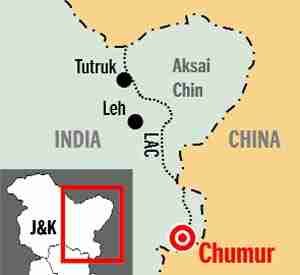
The disputed land of Chumur from where actual LAC passes, Changthang, Ladakh
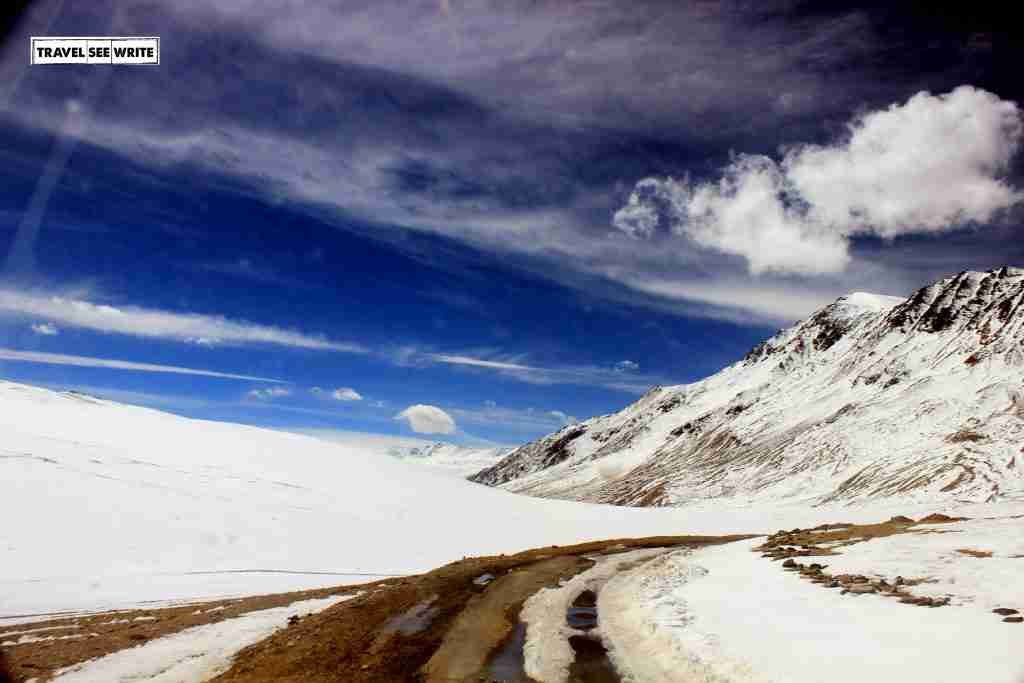
Snowbound way from Korzok to Chumur, Changthang
Next on my agenda was to visit ‘the Gompa with the live Mummy’. There are two stories about live mummy. One story says the Lama’s body was embalmed and kept inside the monastery forever because that was his only wish. Every year they have to trim his nails and beard. Another legend says a witch was punished by having her hands dismembered, embalmed and kept in the Gompa as a warning to the people to not take law in their hands. Whatever might be the real story, mountains are full of such folklores. Sometimes they create these stories just to keep the fear alive in people.

Live Mummy at Chumur Gompa, Changthang
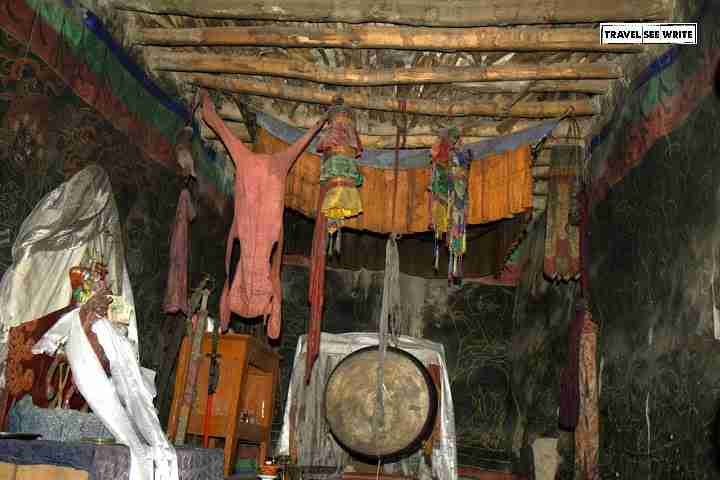
Chumur Gompa, Changthang. Pic by Sunil Kumar
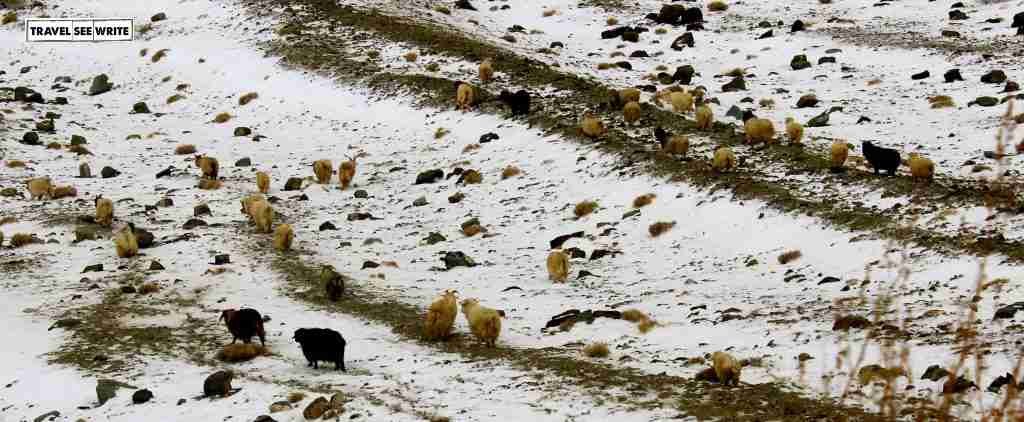
Chang Pas Livestock, Chumur, Changthang
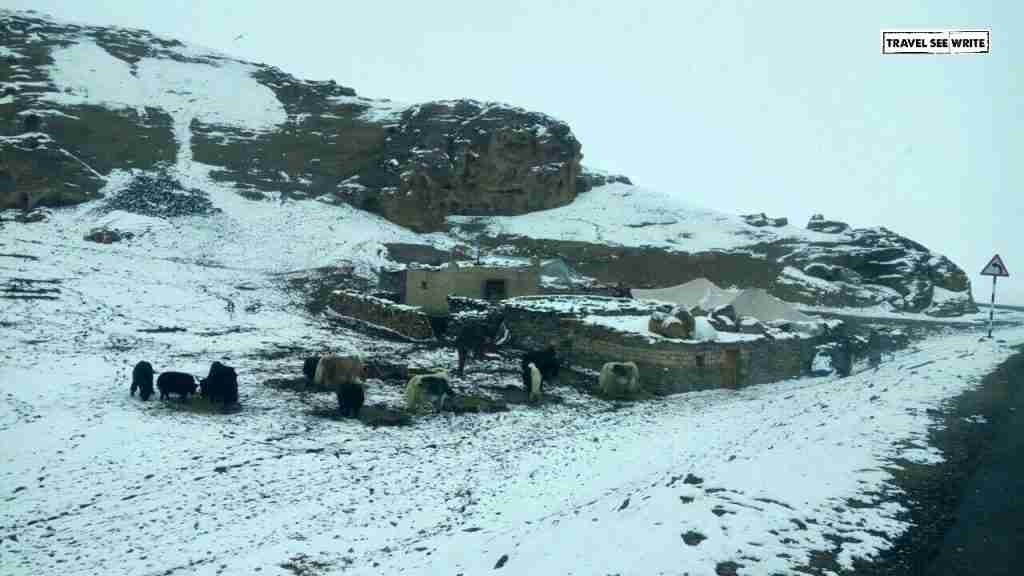
Chang Pas Livestock at Chumur, Changthang
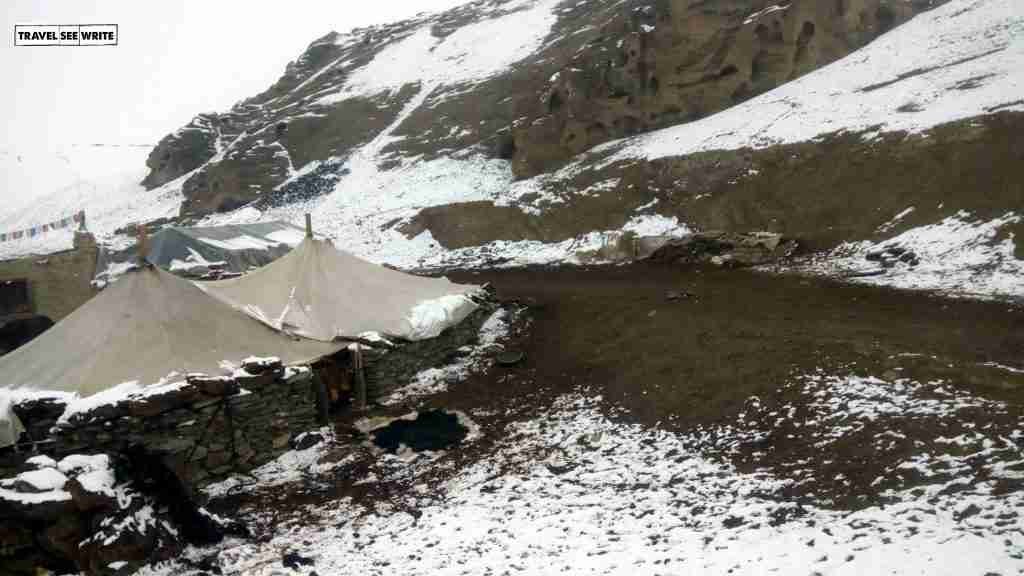
Scattered Rebo Tents of Chang Pas at Chumur, Changthang, Ladakh
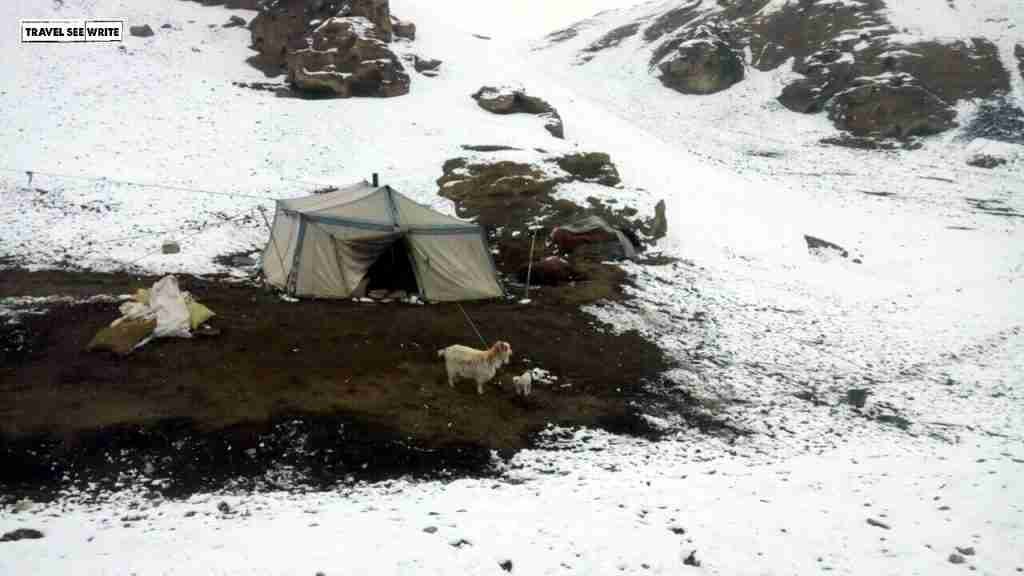
Chang Pas Rebo Tent at Chumur, Changthang
Visiting Chumur, a village of thirty houses, was an experience for life. The village seemed to belong to a bygone era, an era that we seemed to have left far behind. I wanted to spend a bit more time there but Sarpanch warned me that we might get stuck if we didn’t leave in time so we decided to return to Puga.
What happens in a Rebo Nomad’s tent always stay there. Stay tuned to this channel for more updates – Changthang Part III and Part IV 🙂
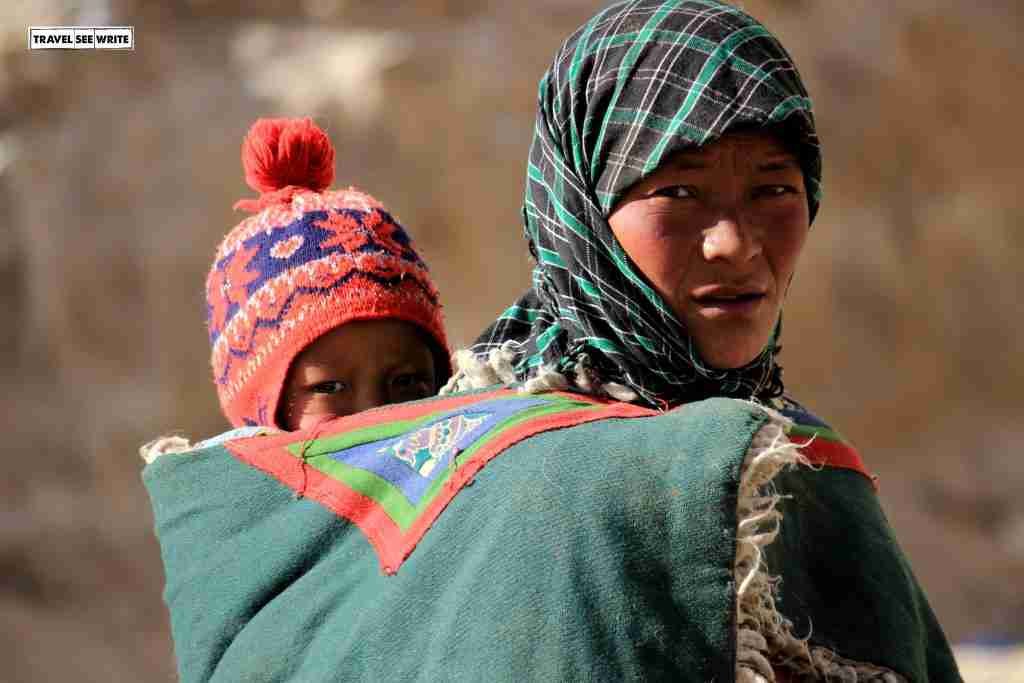
Chang Pa (Pastoral Nomad) at Puga, Changthang

Chumathang to Nyoma, Changthang
The downside of living abroad is homesickness that hits you like a ton of bricks. I have a good job and a balanced life. But I still feel homesick, not so much for my family or the food but for the Himalayas. The urge to return was so strong at the beginning of the year that I brushed aside a serious threat of losing my job. I didn’t know which home was calling but I was hearing a call – O nadaan parinde ghar aa ja! But as the cliché goes, “When mountains call, you must listen to them.” I did exactly that.
The calling this time was different. There was a different tune to it. I sensed a deeper meaning, probably more than just the travel. Too often, traveling becomes just an itinerary on paper to squeeze as much in as possible. Rushing from place to place to get the boxes ticked, to snap the picture-perfect sunset and to hit the next scenic spot. Sometimes it feels like we are acquiring experiences rather than experiencing them. I had a super crammed itinerary but this time I was determined to travel slow and relish the experiences and not just gather them. As they say, the best dishes are cooked on slow and low flames. I wanted to do something different, go offbeat and live the unique experiences, for they are not found on the beaten track. And guess what, I discovered happiness in the remotest part of the world – Changthang.
Unlike my last three trips From Delhi to Leh Ladakh, this was completely impulsive. And the credit goes to nostalgia. I was going through my picture gallery on phone (not on Facebook) when suddenly a picture clicked in the Changthang plateau in 2014 arrested my attention. Eureka! My eyes glittered with excitement. I called my Ladakhi friend right in the middle of the night. After a brief conversation, I discovered that he was posted in the very place that I wanted to be. Looks like destiny was working super hard for me!. The up-in-the-air-plan was made. But there are many slips between the making of a plan and its finalization. The plan got finalized only a day before I was to fly and I ended up paying a bomb for the flight tickets. The heart doesn’t understand the pain of a wallet. If it decides to go, it decides to go 🙂

The nostalgia invoking picture of Changthang Ladakh
My plan was limited to fly from Delhi to Leh Ladakh. I decided to leave the rest to serendipity and the local conditions. All I knew was, I was going to visit the unexplored Ladakh – the Changthang plateau. I had no clue beyond that. Locals are the unsung heroes who turn your good trip into a great one. My case was no different. The credit for an unforgettable trip goes to them – some I knew beforehand and some I made friends on the trip.
Time to buckle up folks! Hope you have your seat belts locked and have your munchies ready because this will take you through the stories of a lifetime.
From a sweltering 35 degrees to -8 degrees, Leh was a welcome change. The change in temperature had already triggered my “happiness” hormones. Before getting into my cab, I longingly gazed at the beautiful Himalayas, in the same way as long parted lovers look at each other when they meet after ages. Happiness doesn’t require words. It can only be felt by the heart and the eyes. I was relishing my share of happiness. The mountains were mountains, smiling at me and waving at me through gestures that only I could understand 🙂

Touchdown at my favourite Airport, Leh, Ladakh

The first view of Leh, Ladakh
I had booked myself at the Zaltak guesthouse, a place where I’ve lived in the past. The Didi who runs the place is one amazing person. She was preparing for my homecoming. After a lovely hug and exchange of heartfelt pleasantries, I was treated to my favorite Jasmine Kehwa and Ladakhi Roti. Memories of my previous trips hit me hard and off I went dreaming.

My mom cum sister – Didi of Zaltak Guesthouse, Leh
As a part of acclimatization, I wasn’t supposed to go out on the first day but I had no option. I had to secure my inner line permit from the DM’s office to visit the restricted areas of Ladakh. James, one of my good Ladakhi friends had done all the hard work in securing the necessary permissions, while I just signed the document.
And like clockwork, I fell sick. I was continuously throwing up, had a terrible headache and fever. When Didi saw my condition, she went out to get Diamox, a tablet that helps in acclamistisation. All the shops were already closed. But she still managed to get the medicines. She made khichdi and asked me to drink a lot of green tea. She checked on me several times during the night. And voila by morning I was back to my cheerful self 🙂
Next day early morning, I was on my way to Changthang. Around 3 pm, after a long and bumpy ride through the beautiful sights and sounds of frozen Ladakh, I arrived at Chumathang. A small village that is at the junction of many routes.

On my way to Changthang from Leh, Ladakh

Driving is so much fun when you have such a view for a company

Couldn’t stop me from getting down from the car to absorb the view, Ladakh

1962 Indo-China war memorial graves, Leh-Nyoma highway, Changthang
My last minute call to an Army friend, who was posted at Leh, got me a comfortable stay at the Army Guesthouse at Chumathang. From a bathtub to comfortable cozy bed to room heater to cable TV to hot meals and packed lunch, I had all luxuries of life in a place where even getting potable water was difficult. That’s the perk of being associated with the Indian Army. The impossible word doesn’t exist in its dictionary.

Army camp – My home during my stay at Chumathang, Changthang

My room at Chumathang Army guesthouse, Changthang
The Guest House in-charge introduced me to the village Sarpanch – Skarma. He was the most respected man in a village of 50 houses and ran Lamying Hotsprings Restaurant on the banks of the mighty Indus river on the Leh-Hanle highway. The all glass restaurant gave a greenhouse effect, amazingly warm in a cold barren land where temperatures plummet to -40 degree in winters. Almost everyone traveling on this highway stopped at his restaurant.

Lamying Hotsprings Restaurant, Chumathang, Changthang, Ladakh

Ladakh battalion soldiers posted at Demchok, taking a break at Sarpanch’s restaurant

The kitchen that feeds at least 100 people daily on Leh-Nyoma highway
In case you didn’t know, Chumathang is a place famous for Hotsprings. There is one particular hot spring that hardly anyone knows about – it stays in the riverbed for ten minutes, the water looks very calm and suddenly it oozes out with full force. And the same loop continues. I would have been contended by seeing the usual hot spring site and would have never known something like this exists had Sarpanch not showed it to me.

The water vapour steam that you see in the middle is caused by Hotsprings at Chumathang

The Chumathang Hot Springs, Changthang, Ladakh

They say mountain life is not easy. I experienced that first hand. Though the water is so hot here that you can boil eggs in 5 minutes, it leaves a pungent smell and taste to the food. That’s why the Sarpanch’s staff walks for four km uphill to the Chumathang village to fetch water for cooking, every single day. And it’s not a few liters. He gets water to cook for at least 100 people every day.
I spent a lot of time talking to villagers, army personnel, Ladakhi Scouts, and locals taking a break at Sarpanch’s restaurant. I was listening to all kind of unheard of stories, like a child glued to her grandparent’s bedtime stories. One of them I spoke to was the headmaster at the Puga Nomadic School. His stories about the school and the difficult life lived by the pastoral nomads inspired me to visit the place, which had nearby not-to-miss-at-any-cost attractions like Tso Morori Lake, Sumdo and Karzok Tibetan nomadic villages, Puga hot springs, and Chumur.
The only problem at hand was finding a cab. There were only two personal cars – one of a government servant working in Nyoma and other of the Sarpanch. Both were busy with their own schedules. Despite being out of bounds, I had to try! Nobody was ready to accompany me on this daredevil stunt. Even money failed to lure them. Reason – the area was completely frozen and cars would often skid. No connectivity. No help. But where there is a will there’s a way.
Curiosity takes you to places where no map or app can take. Are you curious enough to find out what happened next? How did I manage to witness the frozen wonders of Tso Moriri and the beautiful villages?
Stay curious and stay happy.
Don’t be foolhardy like me. Book your flights early. Money saved is money earned. Last minute flight are very expensive in March-April because it is the time when outside workers and locals return to Ladakh to prepare for the upcoming tourist season
Give yourself ample time to acclimatize – at least two days. Changthang is at a greater height than Leh, therefore, it poses serious health issues. Carry Diamox for sure and if you encounter any health problem, visit the hospital at Nyoma
Don’t skip your meals even if you don’t feel like eating. Drink lots of green tea/butter tea and water
Changtang Wildlife Sanctuary is home to many rare species of flora and fauna. Even when on road, keep an eye on the mountains and plains. I saw a Tibetan wolf hunting cows, Kaing (Tibetan Wild Ass), wild dogs, wild Yak and Ibex
Secure your inner line permits before visiting places like Hanle, Chusul or Chumur. No permit no access
Leave Leh early so that you can reach well in time and look for accommodation, in case you have not booked in advance
If you plan to visit Hanle, Tso Moriri and Puga then you can either stay at Chumathang or at Nyoma. At Chumathang, Sarpanch has a good guesthouse that accommodates 4-6 people and comes with all basic facilities like hot water, heater, cozy bed etc. There is a PWD Guesthouse too. Nyoma has a PWD Guesthouse and many homestays
You have to hire your own cab as there is only once a week bus (leaves at 12 PM every alternate Sunday). And don’t forget to tank up and carry extra fuel for your return journey. There’s no petrol pump in the region.
I have explored Spain, Kenya, Sri Lanka, and Switzerland with Travel See Write. Every experience was customised as per my family’s requirements, and each trip was fully customised.
Vaibbhav Sud
Delhi
I travelled with my family to Finland using Travel See Write. The team went above and beyond to make our stay enjoyable. They were even available at 3 am for services beyond their usual duties. ”
Gautam Kriplani
Jakarta, Indonesia
This is not a typical luxury travel agency — this is travel with soul. They take care of the minutest details and customise the tiniest things for us. I have travelled with them to Japan, Finland, Costa Rica, Russia and the Philippines.
Vineet Nanda
Delhi
I have explored Spain, Kenya, Sri Lanka, and Mongolia with Travel See Write. Every experience was customised for my family, and each trip was special
Sunil Sharma
Delhi
This is not a typical luxury travel agency — this is travel with soul. They take care of the minutest details and customise the tiniest things for us. I have travelled with them to Japan, Finland, Costa Rica, Russia and the Philippines.
Aman
Mumbai

Lorem Ipsum is simply dummy text of the printing and typesetting industry. Lorem Ipsum has been the industry's standard dummy text ever since
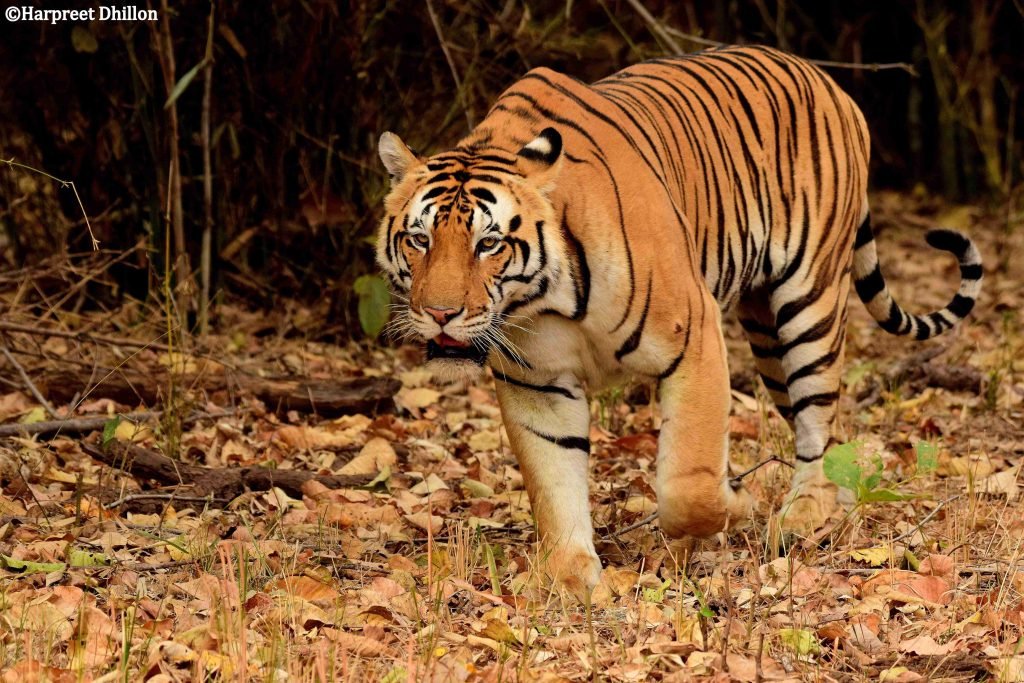
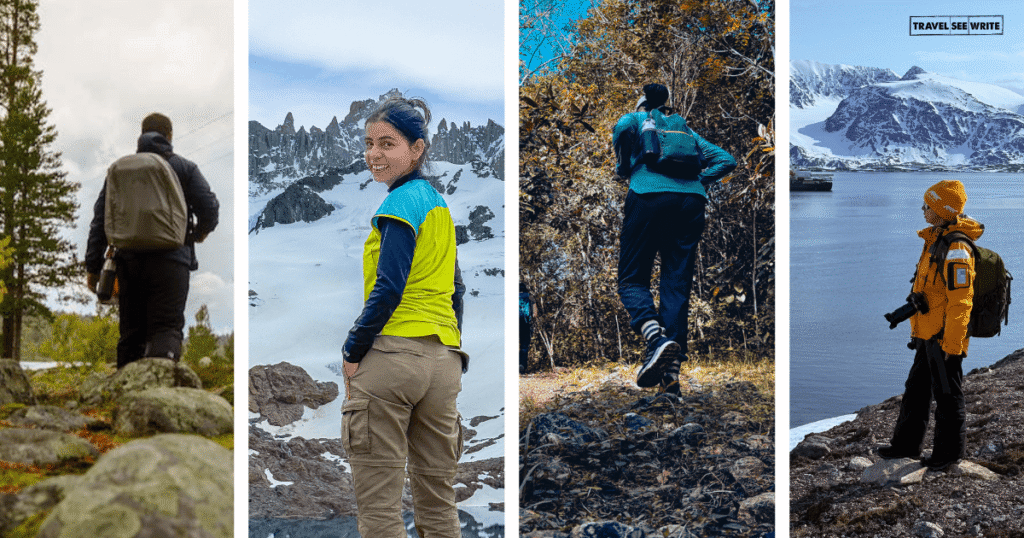
Luxury travel should feel seamless from start to finish.

Begin with our online form. We then connect for a detailed conversation
No booking fees. Ever.
We fine-tune your bespoke itinerary until it feels perfect.
With confidence, care, and 24/7 on-ground support throughout your journey.