





You Enquire
Begin with our online form. We then connect for a detailed conversation
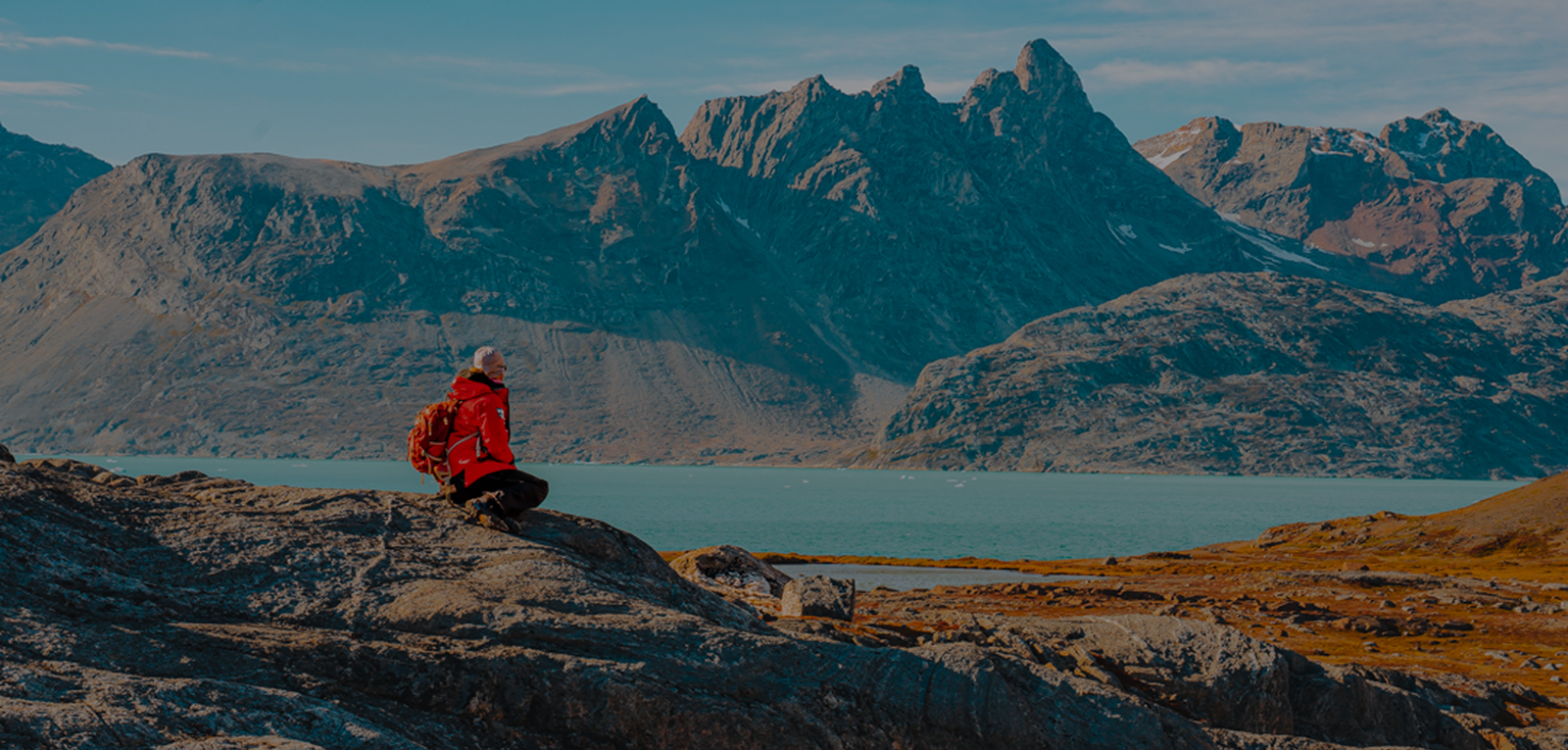
New York City and Adirondacks are just five hours away from each other but different like day and night. One is best explored by a subway other by boots and boats. As you drive down the winding road, the wilderness stretches out like a dreamscape – scenic mountain valleys hug the crystal-clear lakes and deep lush forests. The never-ending protected park takes over the reins from the city in motion. Open skies replace skyscrapers. I am the lone driver on the spectacular but sleepy highway. The five-hour drive from New York to Adirondacks has drained me but it is no ordinary journey. I’m making a pilgrimage to the Adirondack Park in upstate New York where History has been written several times.
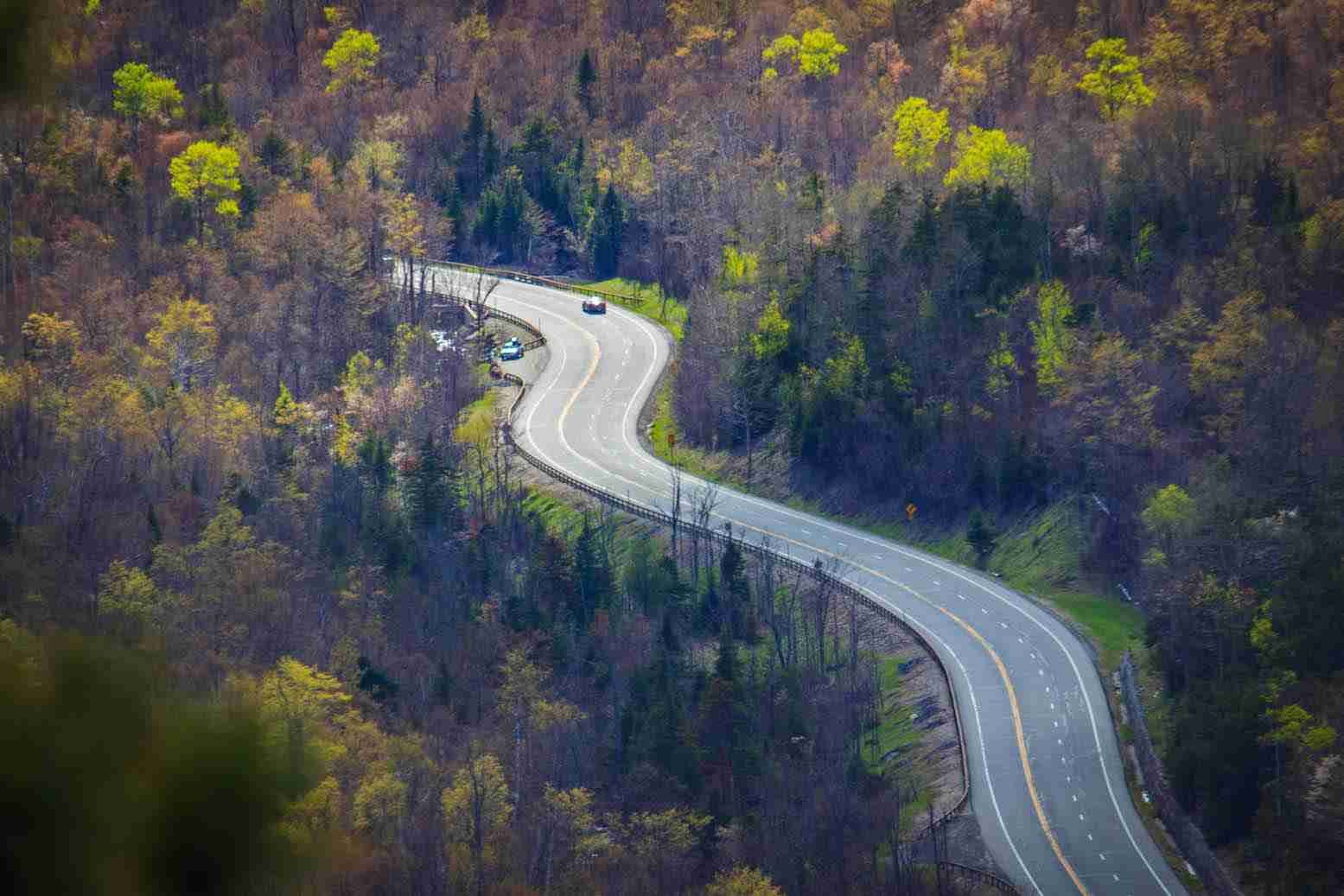
Driving through Adirondacks, New York
It was here in Adirondacks on the damp night of September 14, 1901, Vice President Theodore Roosevelt made his legendary night ride from the Adirondack Mountains to the Presidency of the United States of America. The word “vacation” was invented in Adirondacks when the richest and most powerful men in the US started ‘vacating’ their homes in summers to spend time in the clean and soothing environs of Adirondacks. From Emerson, Thoreau, Roosevelts, Rockefellers, Carnegies, Morgans, DuPonts to Mark Twain; everyone got gripped by the spell of Adirondacks.
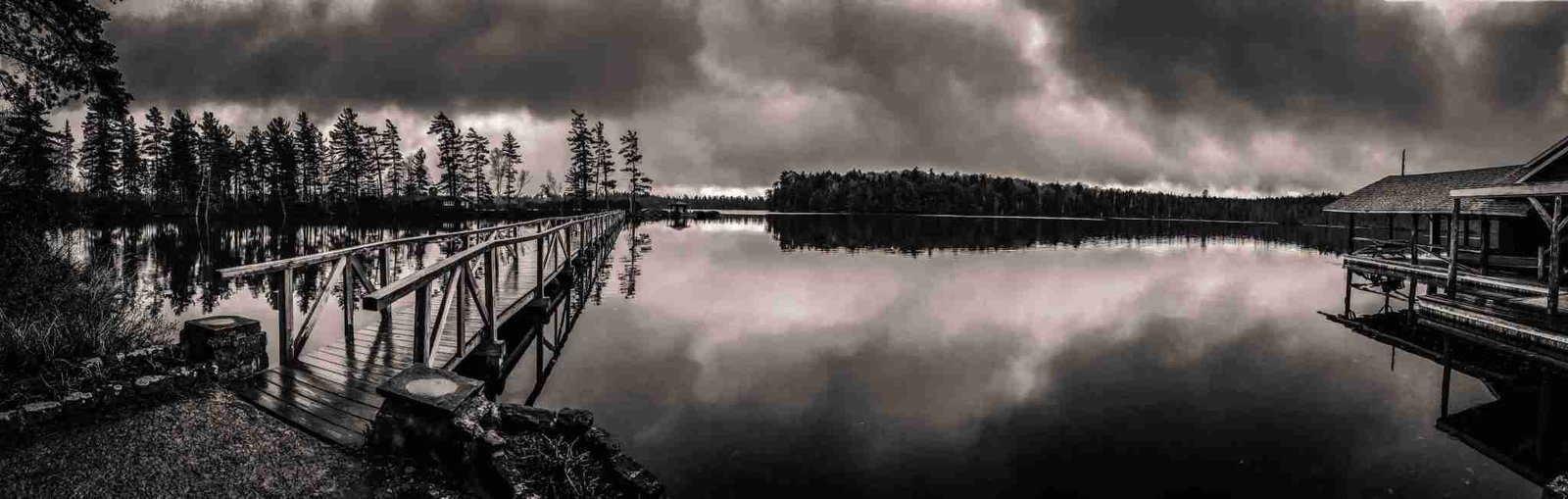
The Great Camp, Adirondacks, New York (Pls enlarge to see the pic in full frame)
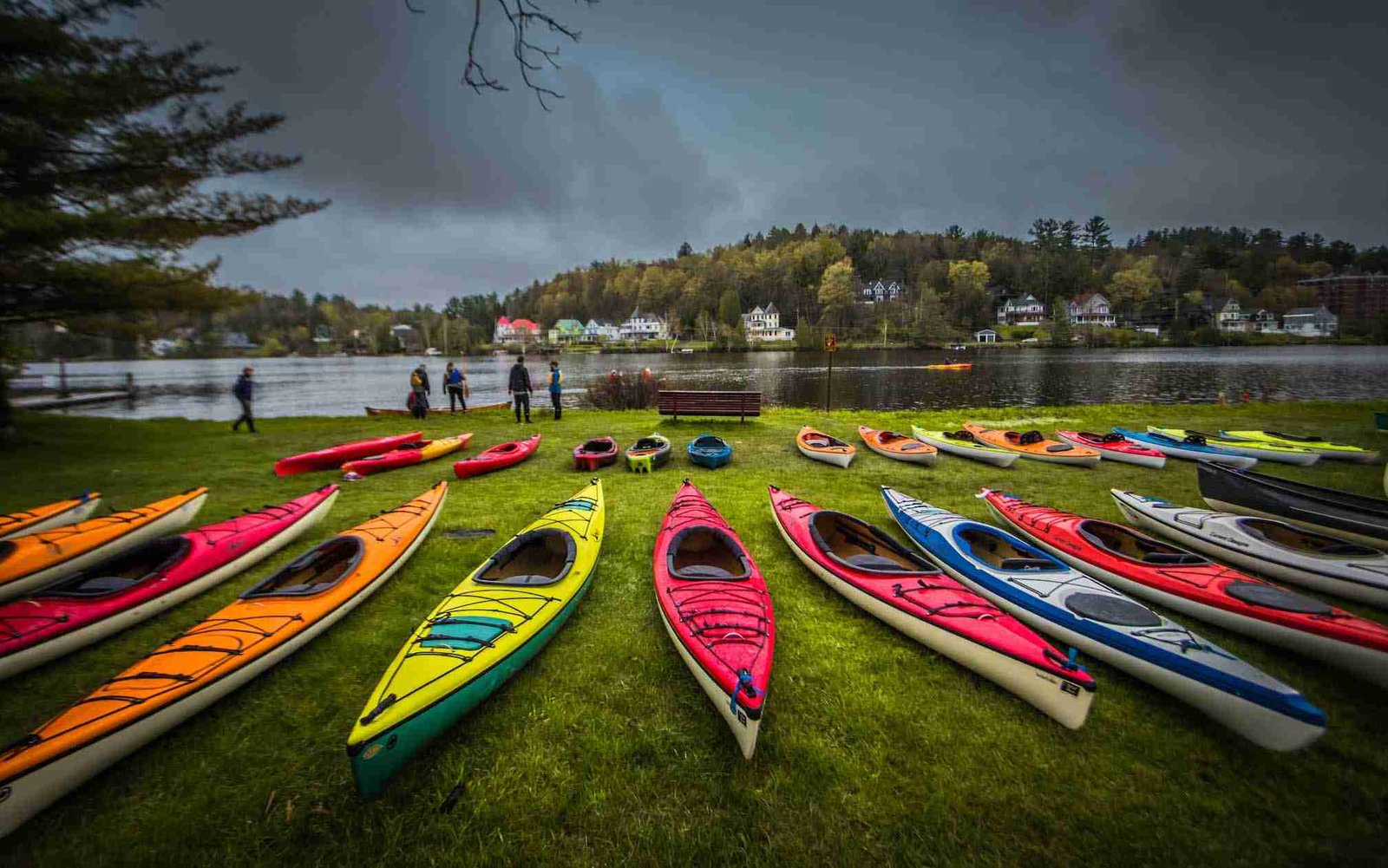
Historically the most important but least known park in the US. At 6 million acres, it’s larger than Yellowstone, Yosemite, Glacier and Everglades national parks combined. The Park is incredibly wild with 2.6 million acres of forest reserve land, 3,000 lakes, and ponds, 30,000 miles of water bodies, 2,000 miles of hiking trails, 46 peaks above 4,000 feet, 55 species of mammals and 218 species of birds.
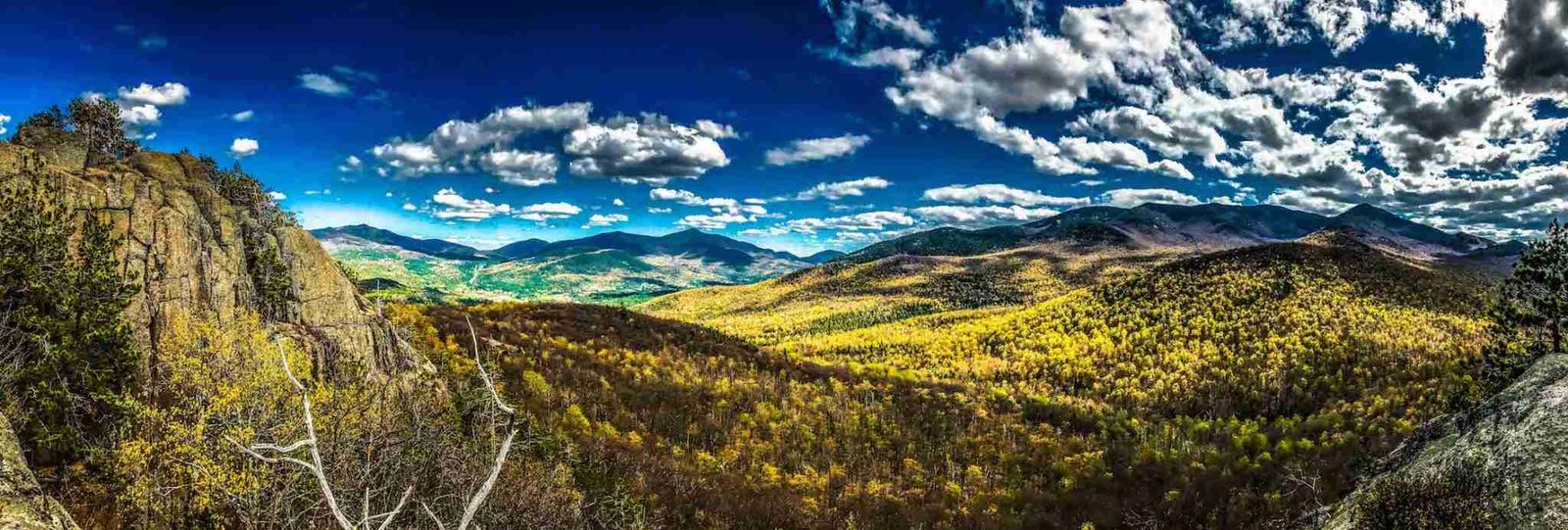
Adirondacks Park, New York
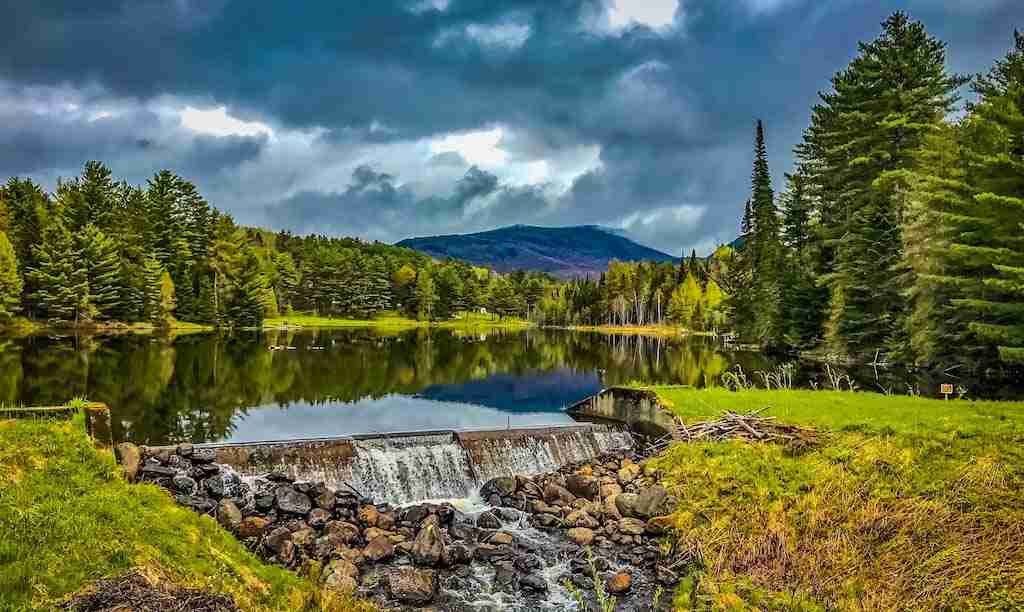
One of the many lakes of Adirondacks, New York
Unlike other Parks, there is no entrance fee, no gates, just endless natural preserve and the promise of adventure in every part. It remains the only constitutionally protected “Forever Wild” forest in America. And the locals here take full advantage of the wilderness they are gifted with.
The Adirondacks is a living playground for outdoor lovers. We don’t go to Gym, we just hike or ski in our backyard. There’s a 6-inch rule we follow – if it snows more than 6-inch, we can officially take half day off to ski.
says Kim Rielly, Director of Communication, Adirondacks USA
Adirondacks is a region where you’ll find scenic beauty and friendly folks in all Four seasons – from summer days kayaking on Saranac Lake, hiking 46 peaks ablaze with autumn foliage, cross-country skiing on powdery slopes to fly-fishing in Spring. And no matter what type of adventure you crave, Adirondacks satiates it – from Scenic hiking, mountain biking, whitewater rafting, kayaking, canoeing, horseback riding, fly fishing, snowboarding, Olympic training or just strolling through off the beaten paths.
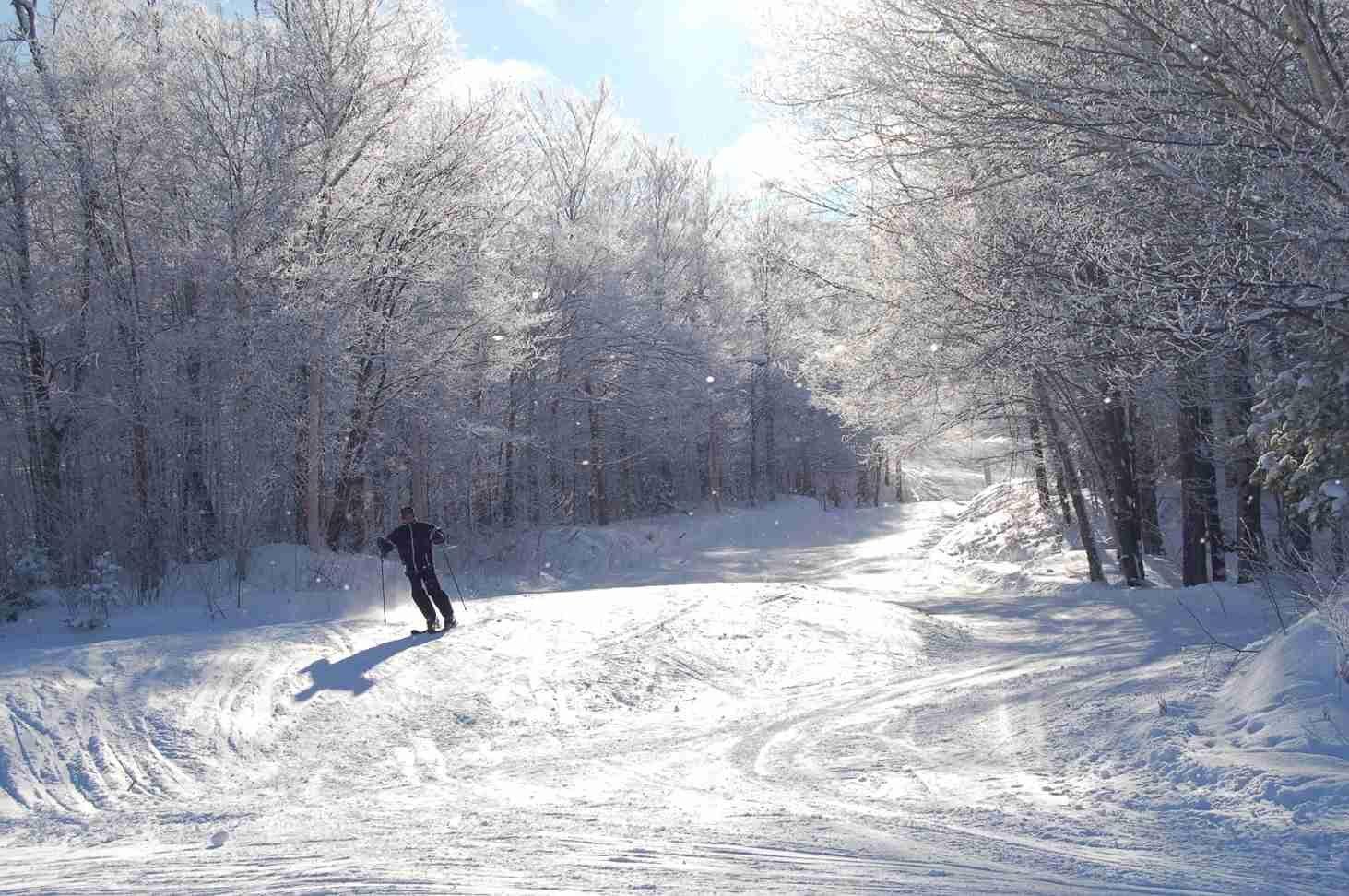
Skiing in Adirondacks, New York. Pic cc: Adirondacks USA
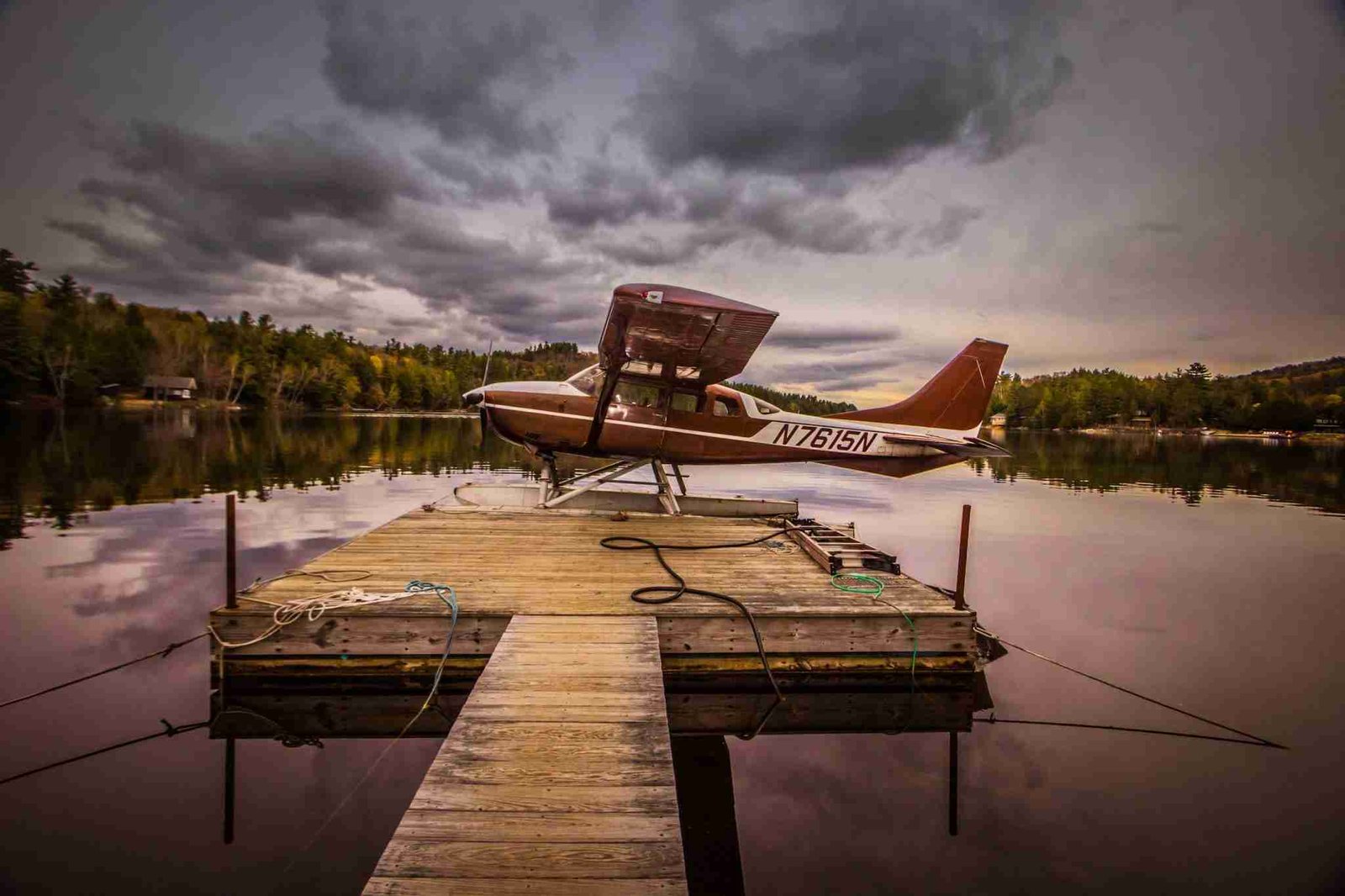
Morning at Long Lake, Adirondacks, New York
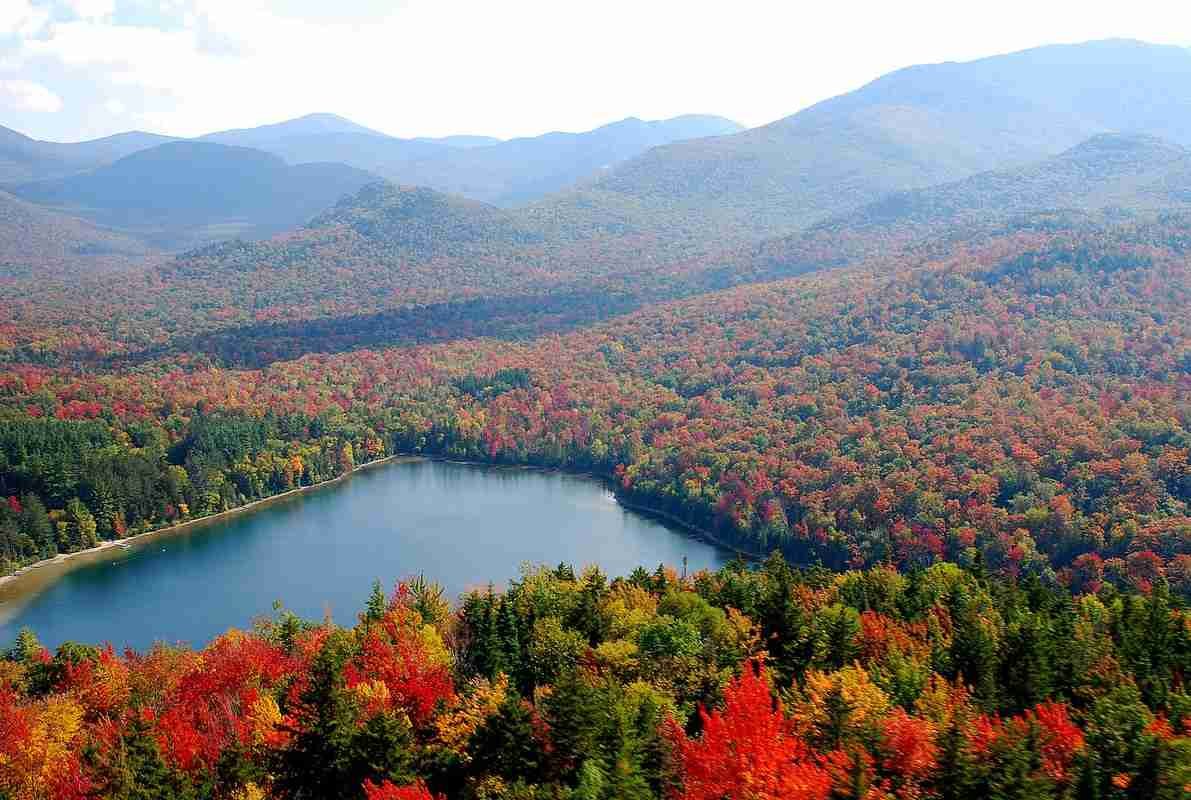
The fall beauty of Adirondacks, New York. Pic cc: Adirondacks USA
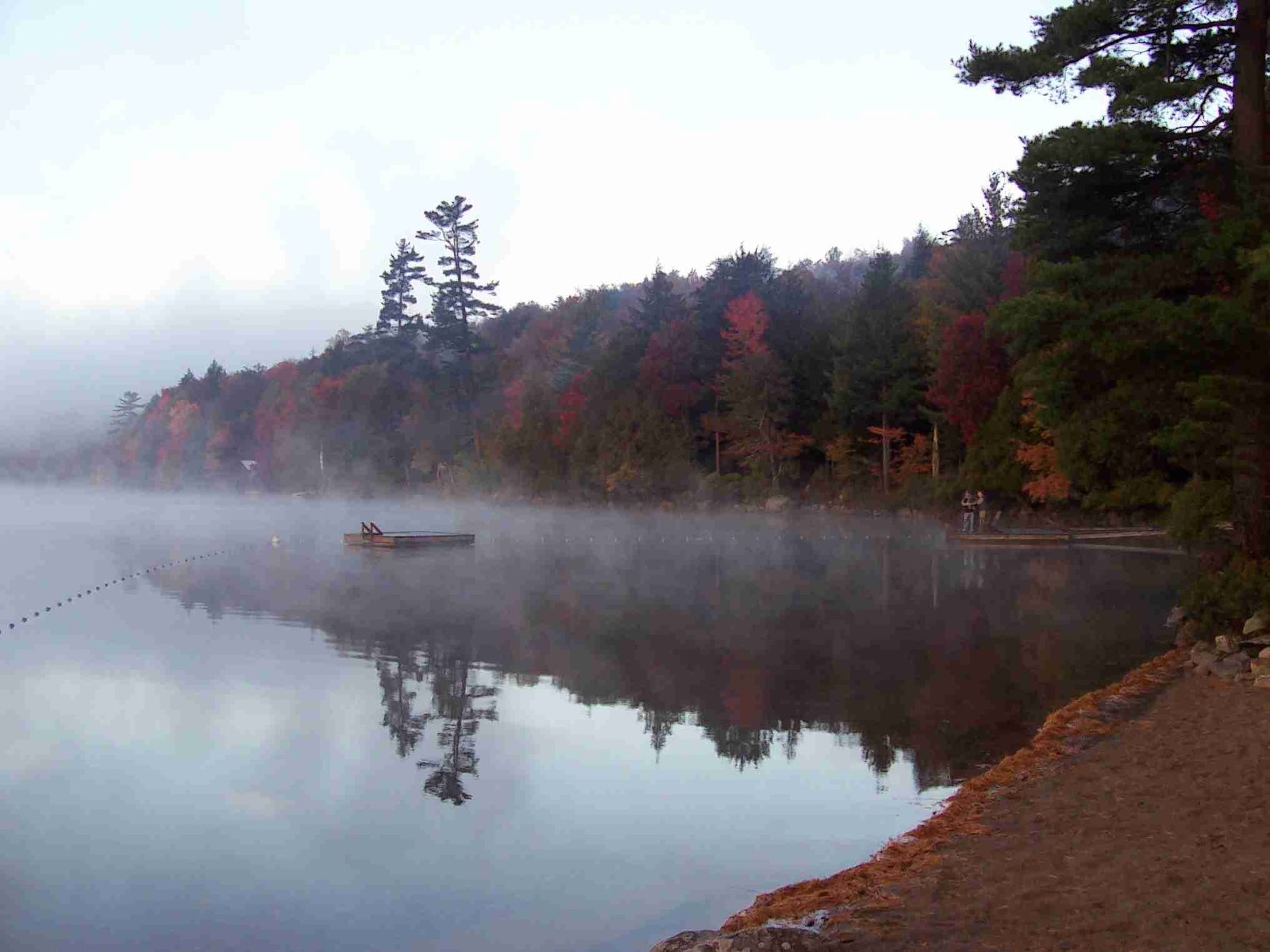
Kayaking in the Adirondacks, New York. Pic cc: Adirondacks USA
Usually, if you meet someone for the first time, you invite them for a coffee or a meal. But at Adirondacks, you invite them for a hike. My first meeting with Kim was at Owl’s Head mountain. The hike in the great outdoors rewarded me with pure air, grand scenery and a bird’s view of the region that no photoshopped catalog can match. Hiking or mountain biking is the only acceptable currency here.
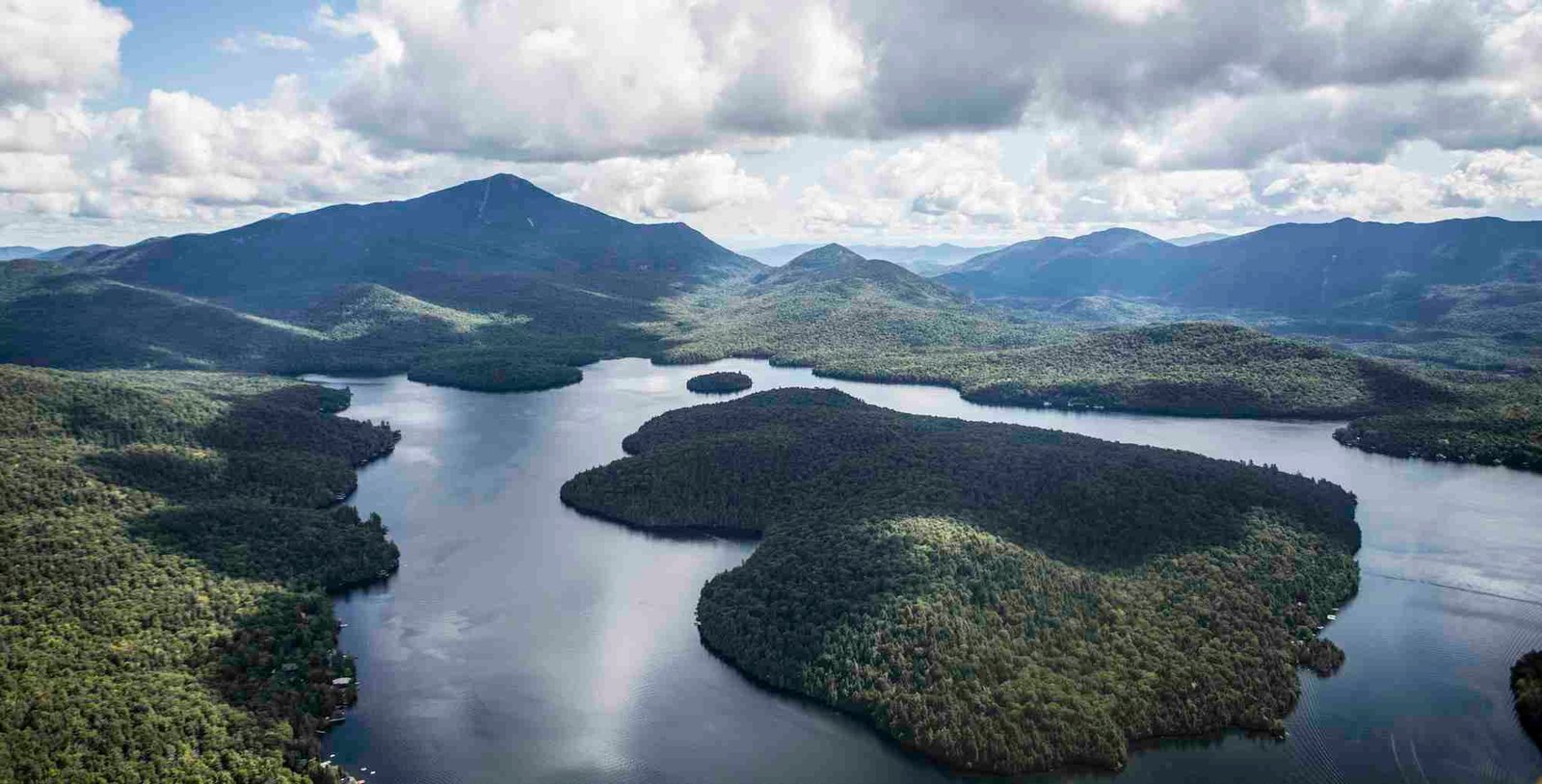
Adirondacks, New York. Pic cc: Adirondacks USA
Valleys carpeted with multicolored wildflowers in spring or the annual outfit change of autumn foliage is a sight to behold. The view from the 46 high peaks is beyond spectacular. The higher you go better the view. There is no shortage of choice of hiking trails in the Adirondacks. From easy to advance, from an hour to several days.
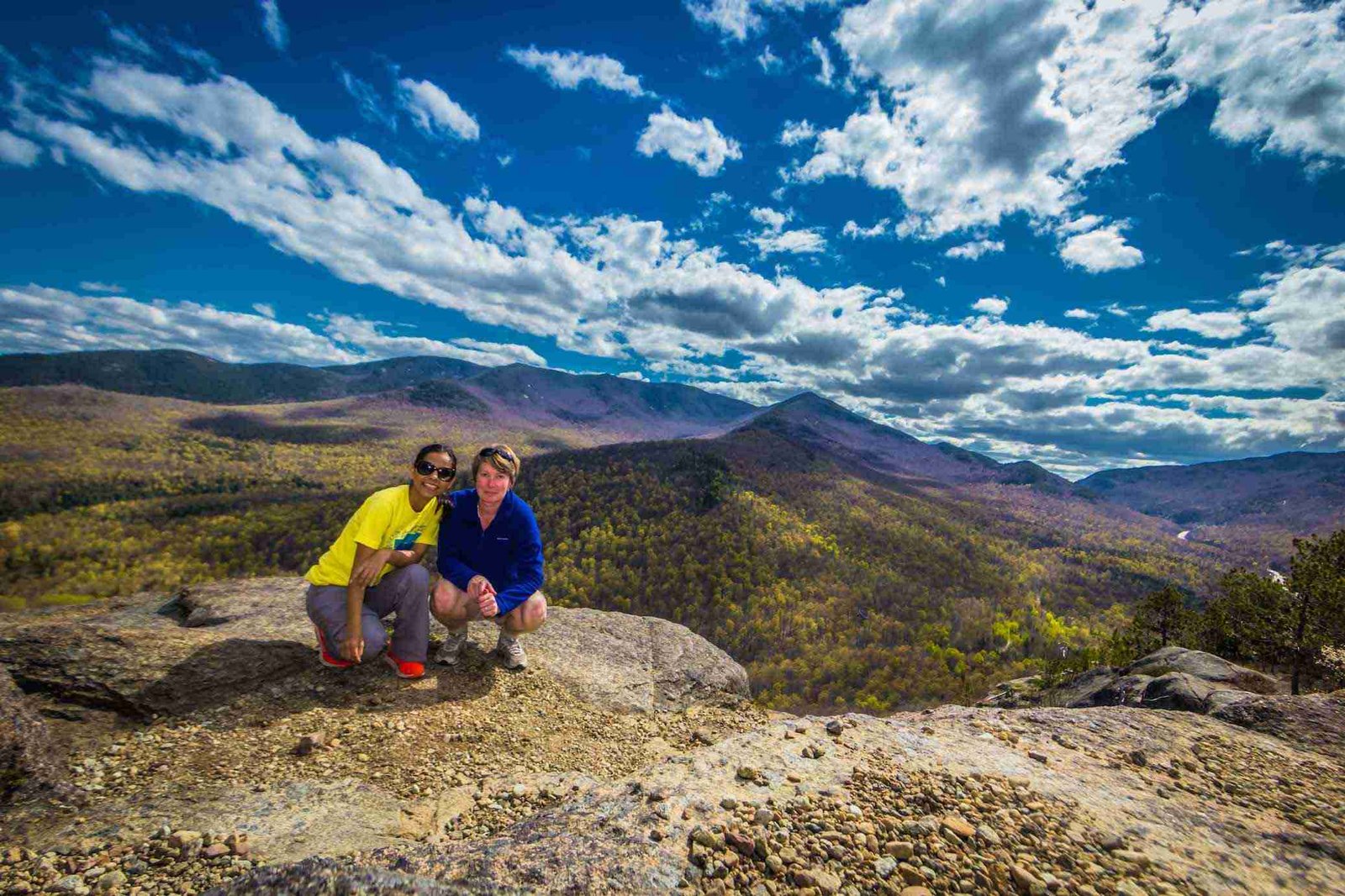
My first meeting with Kim was on top of the Owl mountain, Adirondacks, New York
When you have 3000 lakes and ponds, 30,000 miles of rivers, streams, and ponds, you can’t stay away from cruising the crystal-clear waters for hidden scenic views and exceptional wildlife. In Adirondacks, you don’t rent a boat you own it. Boating goes on irrespective of rain or shine. I kayaked recently at Scottsdale so I opted for talking to the friendly locals, shooting the golden hour and enjoying the Mirror Lake views from the classic Adirondack chairs.Walking along the shoreline of the lakes is another way to savour the indescribable rugged beauty of the scenic Lakes.
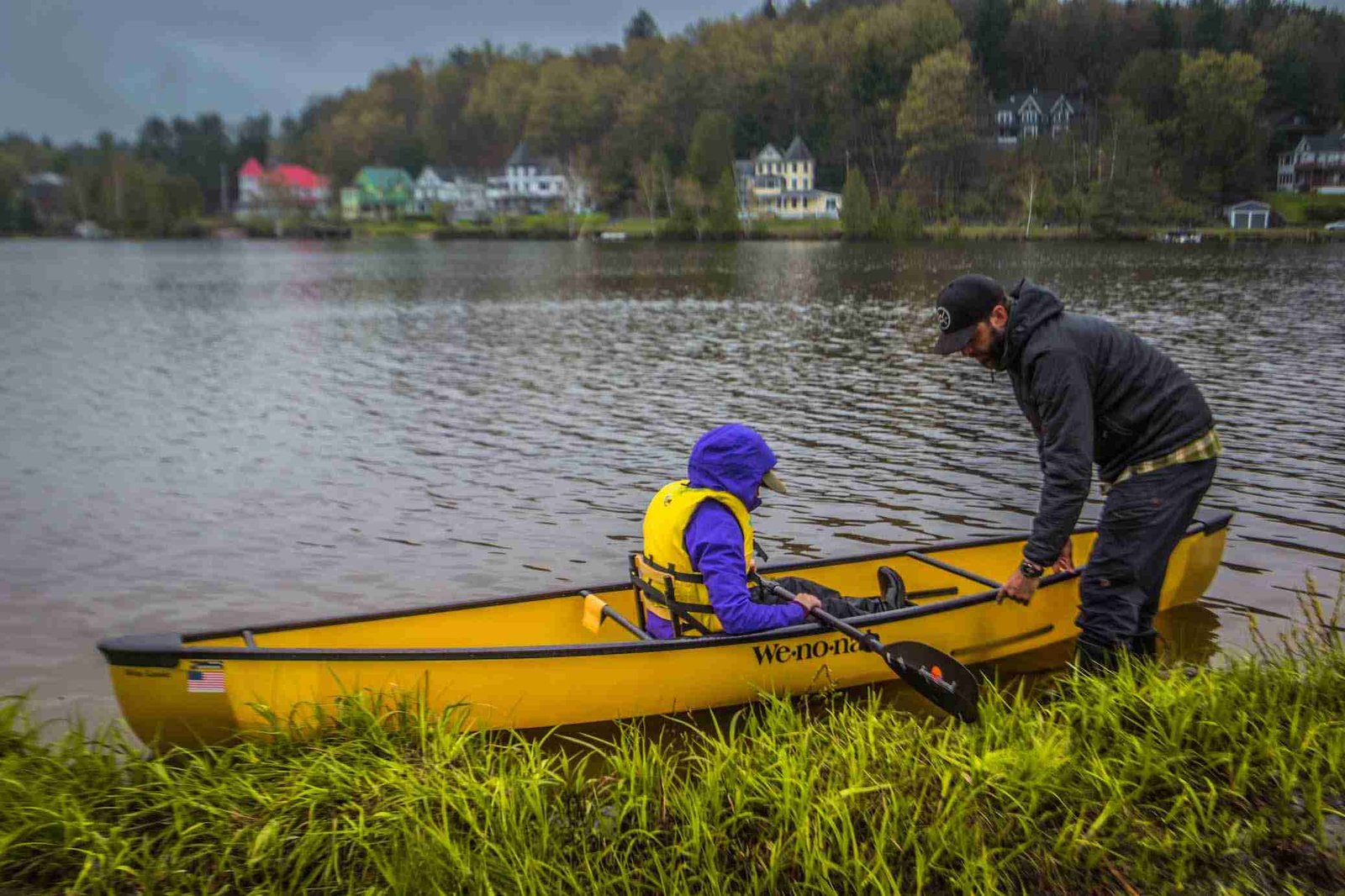
Kayaking at the Saranac Lake, Adirondacks, New York
I am most excited for my full day adventure on the Hudson River with Adirondac Rafting Company. Starting at 7:30 am from Saranac Lake, I pass through extremely scenic winding road over hills, through small villages, rivers and dozens of lakes. Very rarely I come across an oncoming car. It’s early in the morning, the sun had taken a day off. Occasional showers and gray clouds entertain me throughout my 1.5-hour journey. This is pure joy. Along the way, I drive past several crystal-clear Lakes like Indian Lake, Long Lake, and Tupper Lake. Few have seaplanes parked on them.
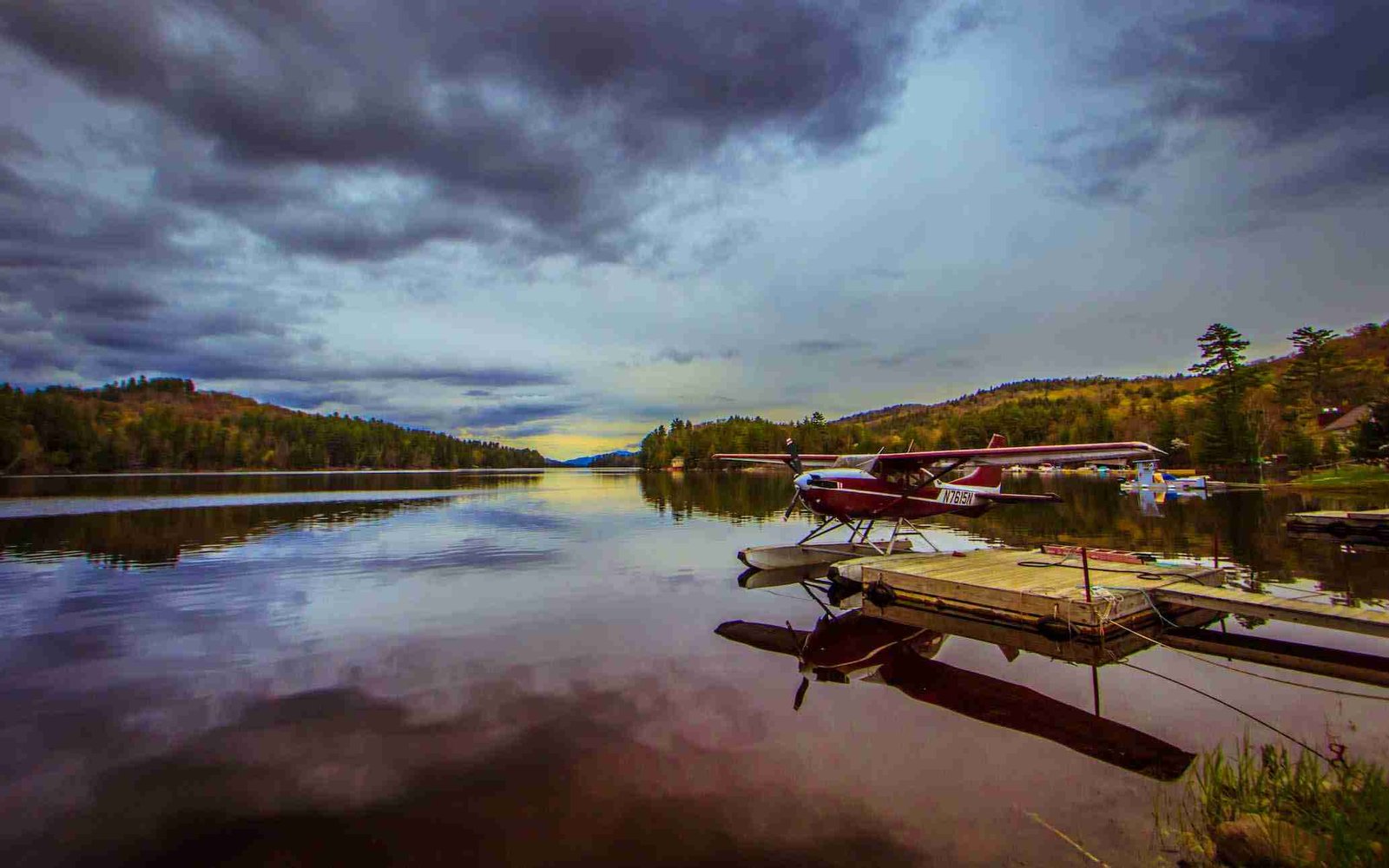
Long Lake, Adirondacks, New York
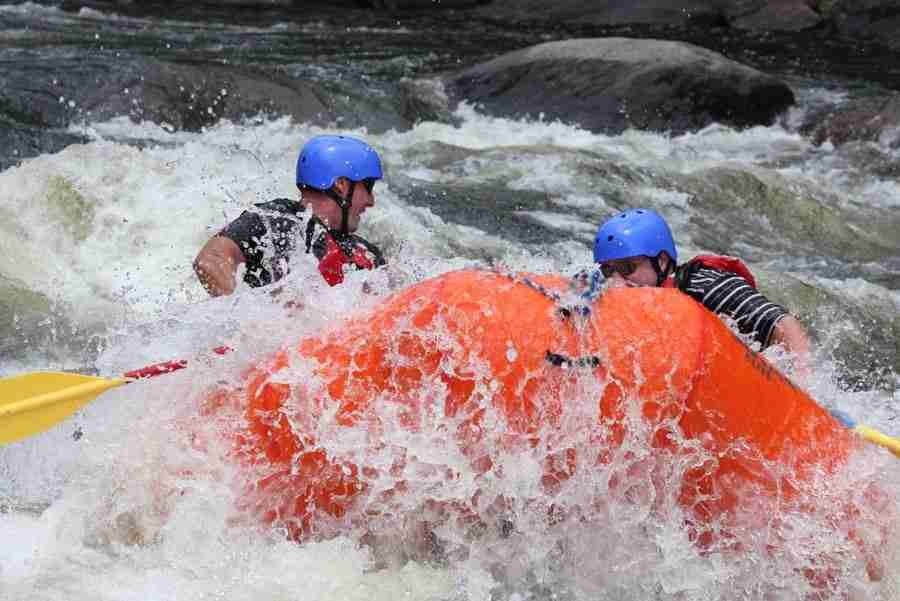
Wild Water Rafting on Hudson, Adirondacks, New York
As I reach my destination, I am given a complete rafting gear and detailed instructions by Bob and his team. I enjoy the 15 miles of torrential action and dozens of breath-taking class IV and V rapids. We stop over for an on-river snack break. After which we continue our adventurous raft journey along wooded shores, into gentle eddies surrounded by towering cliffs. This is a must do for anyone fond of adventure.
As I spend more time in Adirondack, I get more interested in knowing about the 19th century extravagant gilded age Elite. On a rain-swept day along with Carrie, my trip-organizer-turned-friend, I drive down to get a peek into the wealth and charm of Adirondack Rustic. At the end of a two-mile dirt road, White Pine Camp stand surrounded by water on three sides and towering pine trees on the fourth. Cabins painted green and black blend into the woods and there is an eerie sense of seclusion.
https://www.instagram.com/p/BUVv4YbAFyY/?hl=en&taken-by=travelseewrite
The historic Great Camp is an assertion of rustic yet luxurious retreat, fitting in with nature. The material used are shingle, stone, wood – all found in the park. Recreation has many forms here – grab a canoe, rowboat or kayak from any of the two boathouses and go boating, swim in the crystal-clear waters of Osgood Pond, hike in the Great trails just minutes away or bowl in the vintage bowling alley used by the President himself. Once called the “Summer White House” of President Calvin Coolidge is now open to the public – you can stay here at as low as $95 per night in winters and $155 in summers.
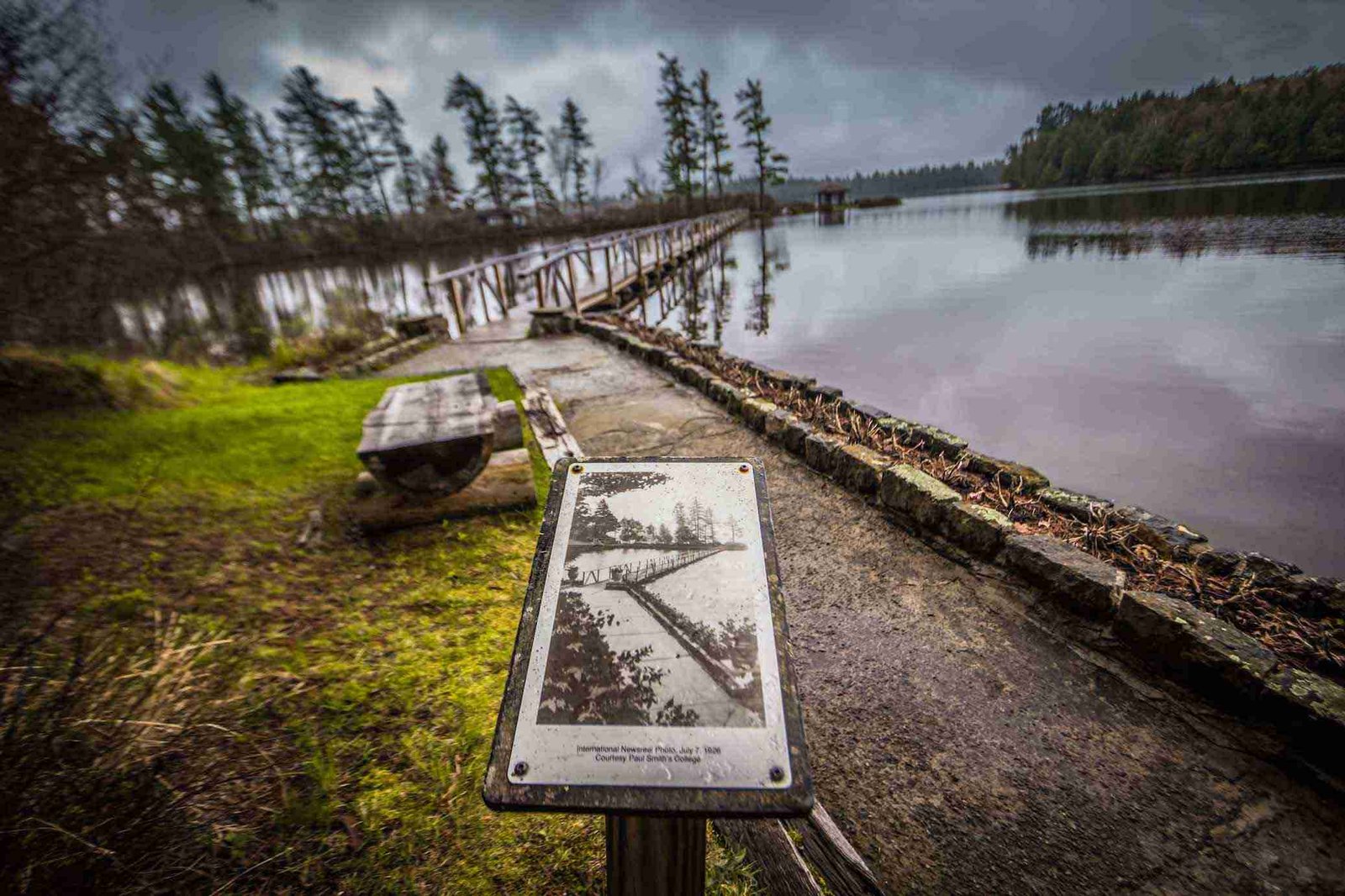
The Great Camp, Adirondacks, New York
After spending time in Adirondacks, all I can say is – once your boots and boats have got a taste of the life and wildlife of wild east – you’ll always return. That’s the spell “Forever Wild” Adirondacks cast on you.
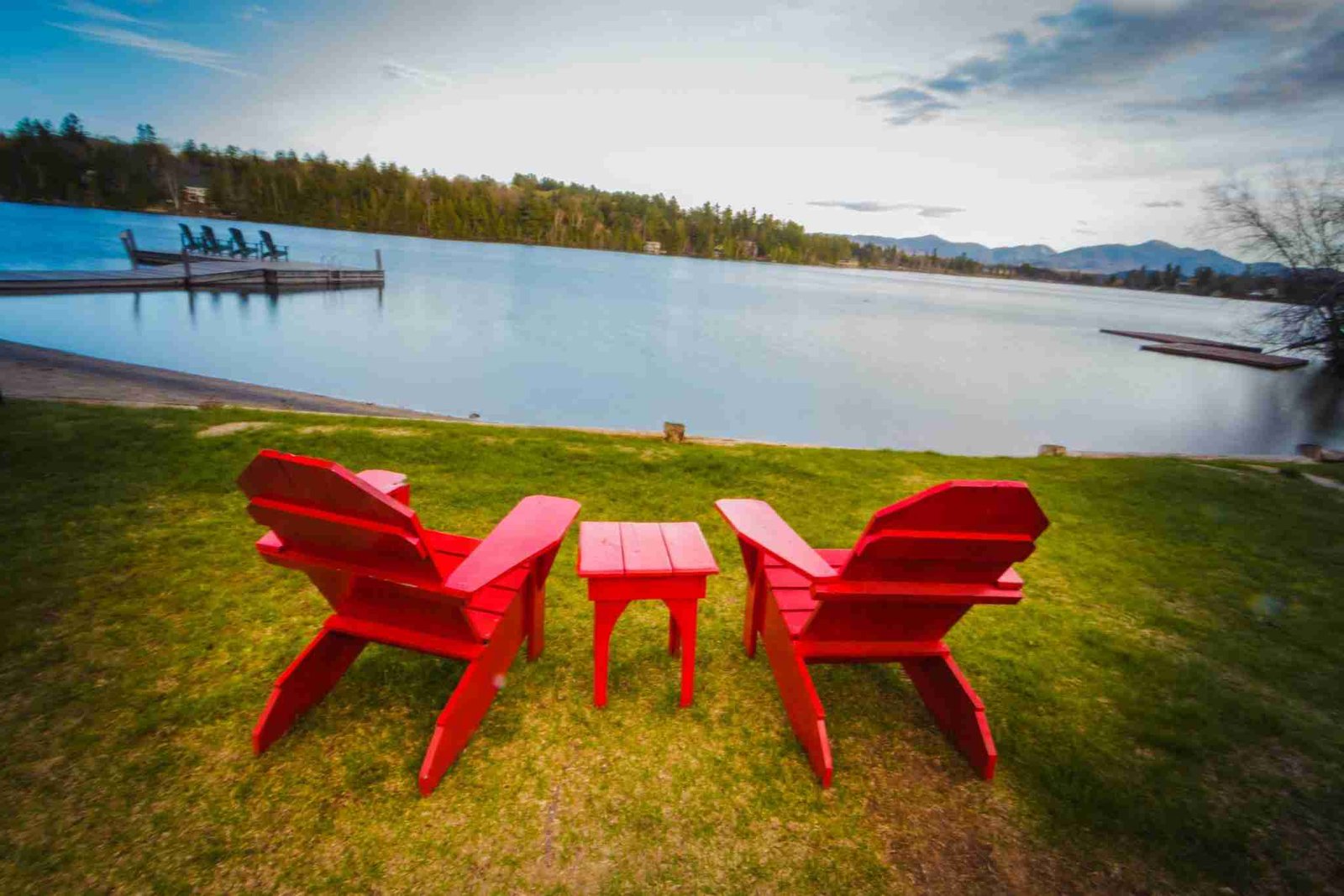
The famous Adirondack Chairs, New York
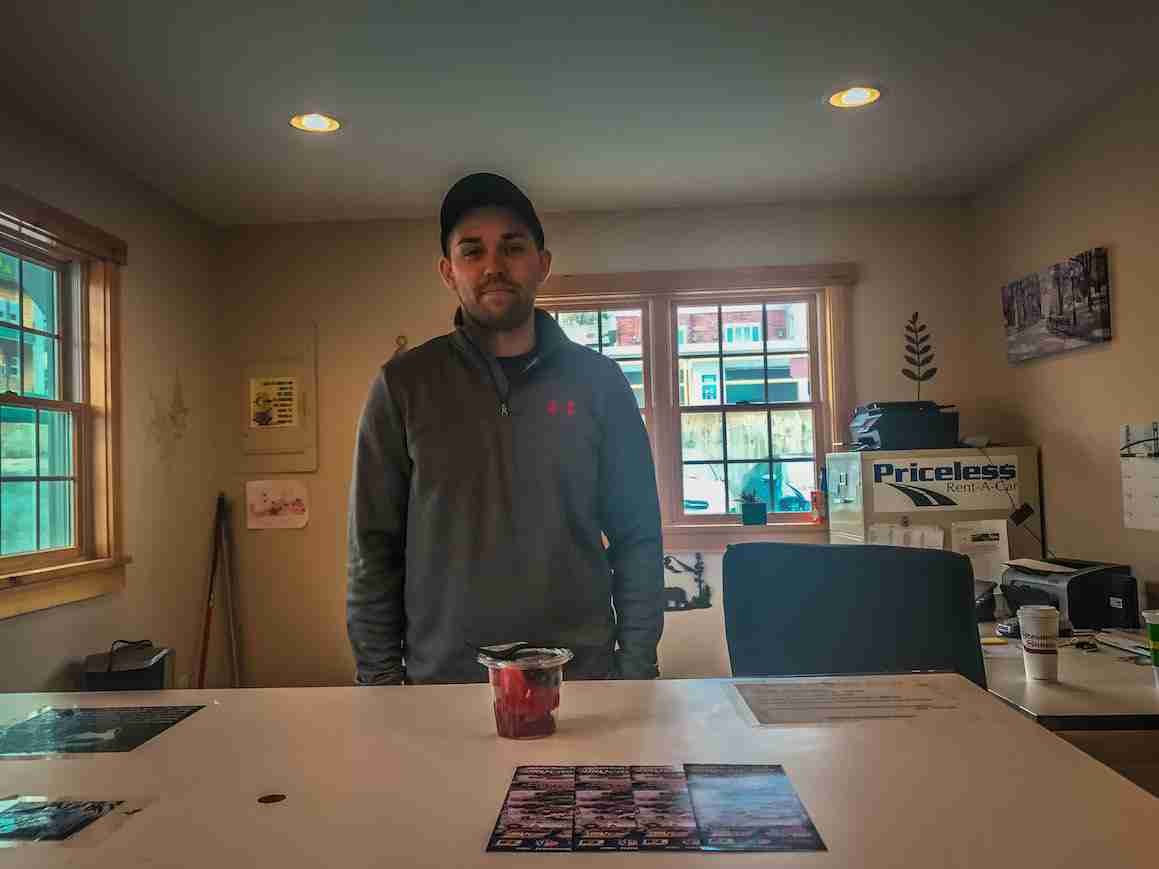
Priceless Rental Company, Lake Placid, Adirondacks, New York
Adirondacks has ample stay options from luxury resorts, independent cottages, Bed and Breakfasts to camping in the park. Few places I highly recommend:

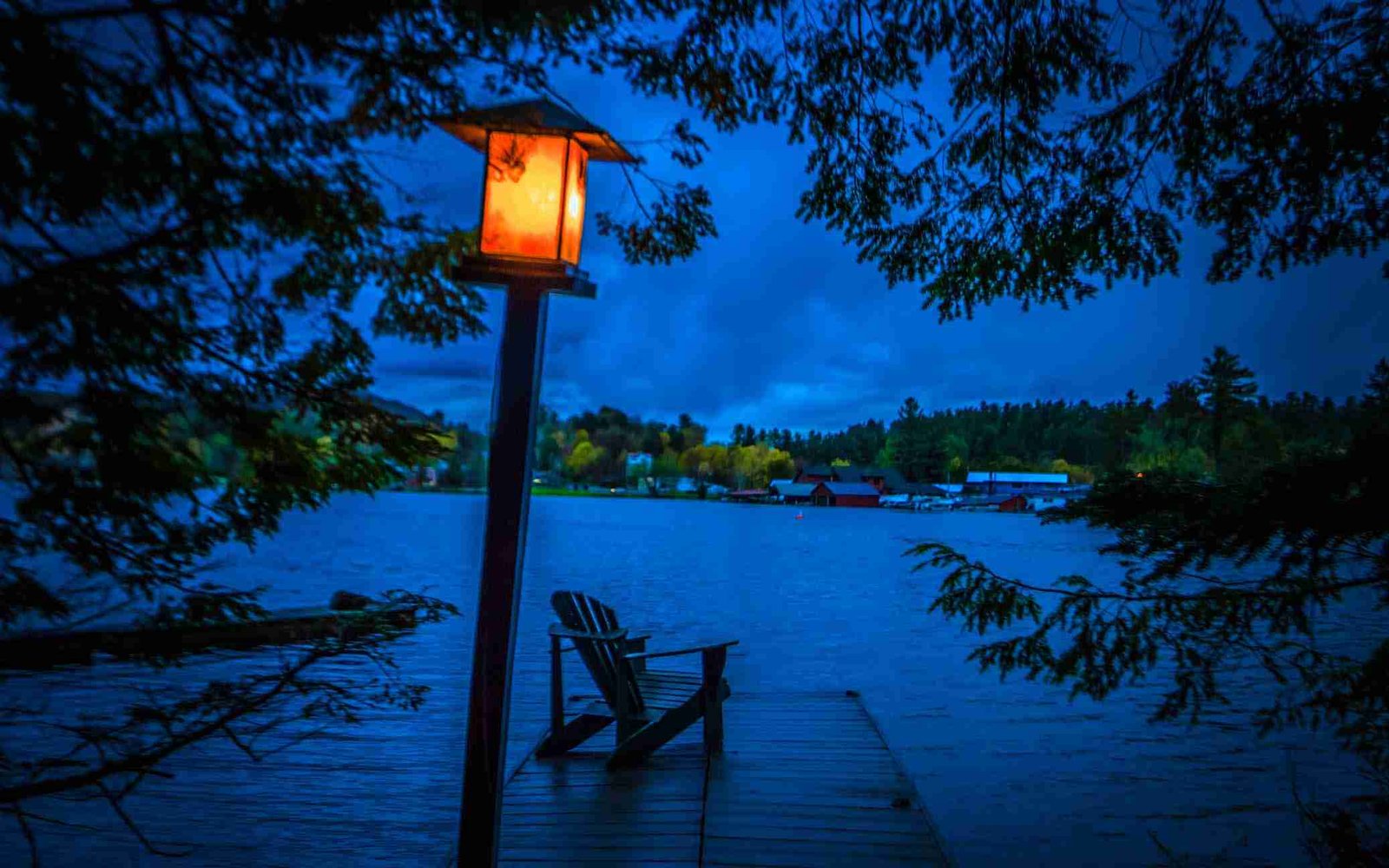
Saranac Lake view from my Cottage, Adirondacks
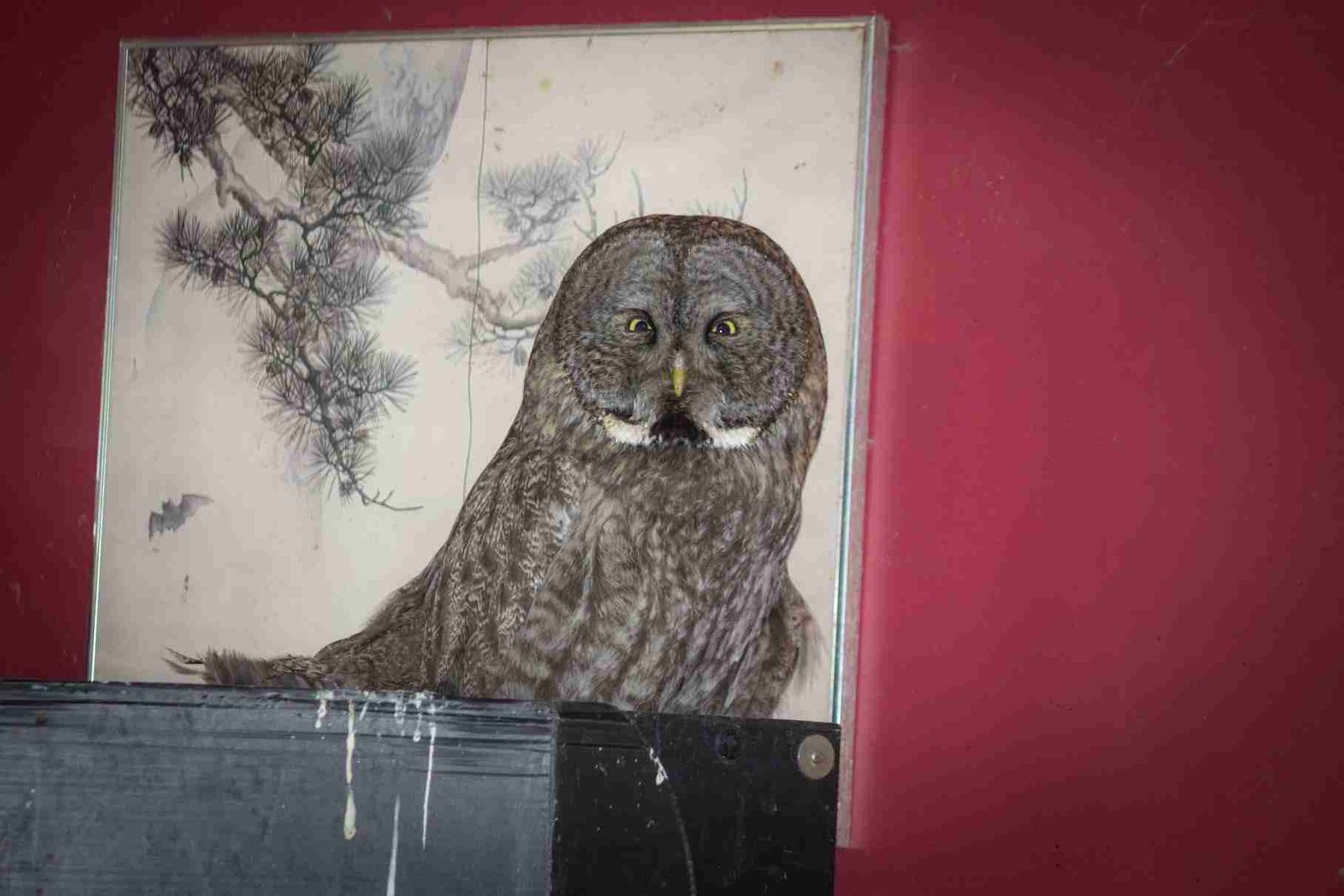
A rescued owl at the Wild refuge, Adirondacks
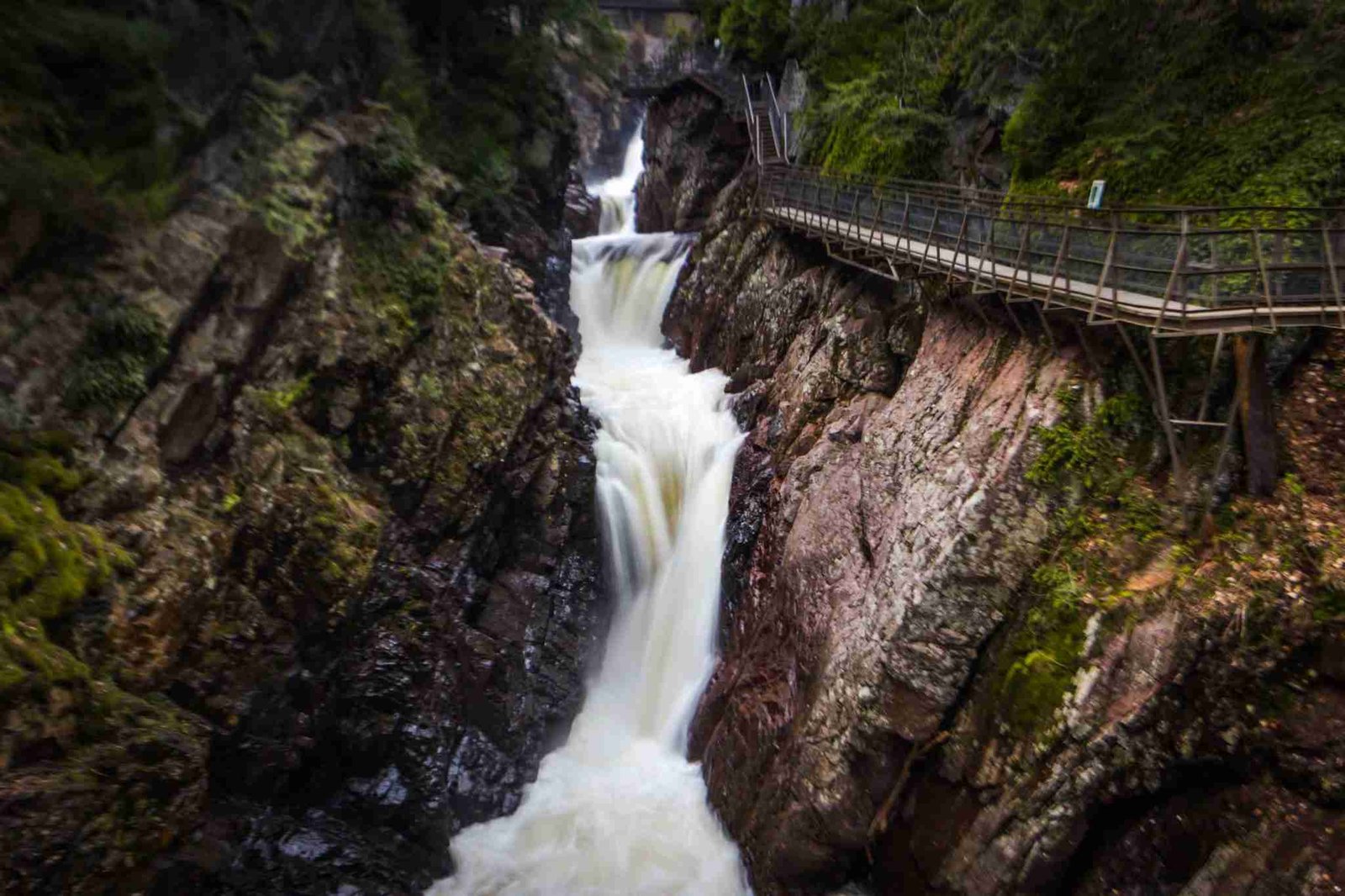

The beautiful host at Bitter and Bones
Inspired? Pin these to your Pinterest boards |
||
 |
 |
 |
Thanks a lot, Adirondacks USA for hosting me. As always, the views are mine and based on my personal experiences. The pictures used are either mine or provided by Adirondacks USA.
This edited version of this story was published in:

Travel See Write during her Arizona Road Trip, USA
I am often asked what do I like more – solo travel or group travel. I say I like both but I love traveling the world alone more than group travel. After all, solo travel means you can take your own decisions freely, and a road trip offers you more freedom than ever. However, one needs to be more alert and well prepared when traveling the world alone. A solo traveler should be hands-on and ever ready to face any challenge anytime. Here are the 10 Road trip tips for Solo Travelers
This is a point every long-term traveler swears by. Packing light is essential when traveling the world alone as any of those small inconveniences can amplify when you’re on your own. The last thing you want is your luggage becoming a blockage in your travel plans. I usually make a list of things and carry only those which are op priority. I pack and then take half of the stuff out of my luggage. Trust me you don’t need three change of clothes in a day. You can always repeat.
Related: If you are looking for an ideal purse to carry, check out this crossbody travel purse review.

Before hitting the road make sure your fuel for the vehicle and yourself is full. Keep a tab on your gas and refuel before it dries up. Also, carry light snacks, stay hydrated and rest so that you can concentrate on driving. While I love eating the highway food, I do carry munchies like chocolates, dry fruits, sandwiches, cookies etc.

When traveling the world alone, take a reliable vehicle. Whatever car you decide to take, get it professionally checked by a mechanic before getting behind the wheels. Get your vehicle inspected at least a week before you leave so that you get some time for any repairs. Get your car checked for the cooling system, steering and suspension, tranny and air conditioning system. Do not forget to change the oil. And make sure you carry all your car documents.

A road trip means you need to pack certain tools such as a multi-head screwdriver, duct tape, pair of pliers, vice grips and a couple of flares. Always carry a full-size spare tyre which is of good quality, on a road trip. Many travelers invest in winter tyres because of temperature fluctuations. The advantage of these tyres is that they will remain soft and offer a firm grip even in freezing temperatures.
Related: Travel Tips for Iceland Road Trip
In case you do find yourself with a flat tyre, there is no need to panic. Make sure you have the jack, lug wrench and a fully inflated spare tire. It is a good idea to keep vehicle owner’s manual handy.
a) Just find a safe location and turn on the hazard lights after applying the parking brake.
Now, apply wheel wedges and remove the hubcap.
b) Loosen the lug nuts and place the jack under the vehicle to raise it. Unfasten the lug nuts and remove the flat tire. Mount the spare tire and tighten the lug nuts.
c) Lower the vehicle completely and replace the hubcap. Before driving away, stow all equipment and do not forget to check the pressure in the spare tyre.

Although long-distance driving may be something you enjoy, you are sure to have your limits. Thus, take regular breaks in-between and relax. Some people can drive just for a couple of hours. If possible, avoid busy hours. Keep your eye on the clock and try to pass through major metropolitan areas in the early morning or late-night hours to avoid rush-hour congestion.

Solo Travel road trip tips: Take regular pit stops
When driving, ensure that you are wearing the seatbelts and the car doors are locked. Always park your car in a parking lot or a safe place.

Solo Travel road trip tips: Wear seat belts
Be in touch with your friends and family, and they should know where you are exactly. Share your full address and contact person details. You can always call your folks, or send a message.

Solo Travel Road trip Tips: Stay connected
A solo road trip doesn’t mean that you have to sit in the car all the time or be on the roads. Explore fun things to do on the way and get out of the car to enjoy unique experiences.

Traveling the world alone tip: Get off the road
Do not travel anywhere without insurance. Depending on the coverage you get, you can take care of any costs of medical examinations and even hotel accommodations.

Solo Travel road trip tips: Get travel insurance
This article may not address all the Road trip tips for Solo Travelers traveling the world alone but I am sure if you follow these, you would never get stranded on road. So, go TRAVEL SEE WRITE!

 If you are headed to the United States this holiday season you need to look for the best places where you can enjoy quality time with your family and friends. California is one of the best places where you can relax under the sun and enjoy the cool beaches as well. However, if you really want to get away from the sun-drenched beaches of California you can head to Palm Springs. One of the coolest spots in California to relax and unwind. Located on the western end of the Coachella Valley within the Colorado Desert, Palm Springs is somewhere between Los Angeles and San Diego on the map.

Palm Springs Windmills, California, USA
If you don’t like the rain to spoil your holiday and party plans Palm Springs is the best place to be as it receives more than 350 days of sunshine. Winter is definitely the best time of the year here when the number of residents here doubles up for partying and enjoying the best time in the desert. It is therefore recommended that you book your hotel room and villa in Palm Springs in advance. While Palm Springs offer a lot of options to spend a great time with your family and friends, here are the 5 cool things to do in Palm Springs.

Palm Springs Coachella Valley Reserve, California, USA
On the outside, it might seem like a vast stretch of barren land with desert sand and bushes, but the Coachella Valley Preserve is something that you must watch out for when you are in Palm Springs. If you are a nature lover and love to explore the nature in its untamed form this is the best place to be. Located 17 miles east of Palm Springs, it has Thousand Palms Oasis where you will find some of the rare wildlife.
It is important that you visit the visitor center at the entrance of the park. You sure don’t want to get lost hiking. You can also pick up the map of the trails and enjoy exploring nature as you come across it. The valley is home to endangered Coachella Valley fringe-toed lizard. If you don’t want to risk hiking alone you can also find guided hikes here at reasonable rates.

Palm Springs Aerial Tramway. Pic by Don Graham, California, USA
If hiking is not your cup of tea you can explore and enjoy the Palm Springs aerial tramway that allows you to take bird’s eye view of the place. This is a must visit attraction as you can see the city of Palm Springs from the top. From the tramway, you can explore the San Jacinto Mountains and snow-covered peaks of Southern California. This is one of the best ways to take some great shots of the geography as you get to view the entire landscape as you climb up the mountain in the tramway. Once you have reached the top, you can enjoy your way back down on foot. And if you are feeling lazy, you can use the same tramway to climb down the mountain and save yourself some energy.

Palm Springs Air Museum. Pic by Jay Cross, California, USA
If you are a history lover or if you are passionate about aircraft this is the place you don’t want to miss when you are in Palm Springs. This is a perfect opportunity for you to see an extensive collection of the aircraft used in the World War II. From Lockheed T-33 Shooting Star to the Grumman F7F Tigercat you can find all the aircraft lined up here for the visitors. While this place sounds like for adults only, but the museum does provide an area for the kids where they can sit in the aircraft cockpits and enjoy their own sweet time. The museum also has a parking lot, gift shop and a café and restrooms for families visiting the museum.

Joshua Tree National Park, California, USA
If you are one of the active travelers Joshua Tree National Park is one of the places that you must explore. Nestled in the Little San Bernardino Mountains this place offers a great view of the Coachella Valley. This is also an ideal place for you to take pictures of the landscape. If you are a photographer, Joshua Tree National Park can provide you with great pictures that you can add to your collection. You can cover the area by hiking or just driving through. There are various on-site facilities as well like campgrounds, bookstores and restrooms and café that you can use. You can picnic at the tables provided around the park. This allows you to have a great one-day picnic experience with your loved ones at one of the coolest places in Palm Springs.

Palm Springs, Cabazon Outlets
Is shopping an important part of your travel? Head to Cabazon Outlets. This place offers a shop and play experience where you can shop at various retail outlets. It is the best place in Palm Springs to get the best deals on popular brands in California. You can also find some great restaurants that offer you excellent food options when you are done through shopping. Cabazon Outlet also offers you other facilities like parking space for a relaxed shopping experience.
So, these were the 5 cool things to do in Palm Springs. What are your favorites?

New York City is a people magnet, attracting 60 million visitors every year. And the iconic NYC experiences are not bucket list items but a pilgrimage. From fashion, nightlife, art, food, and theater, Big Apple is the heart of the world. A throbbing heart, where every culture meets and is an active playground for all kinds of happenings. You can spend a lifetime exploring the city in motion and still not come at par with its pace.
NYC is one of the most amazing places in the world, but it is also one of the most expensive cities in the world. Basically, it is not for the faint-hearted when it comes to spending dollars. However, a city this big is bound to have some great deals, and if planned well you can actually explore the New York City on a budget. Many of the renowned historic landmarks and iconic sightseeing places can be explored for free and deals can always be found.
If you’re planning a visit to New York City on a budget, this travel guide has everything you need to know. From places to visit, things to do, tips on where to stay and eat, and how to get around, it has all the information to make your visit to New York City an absolute success!
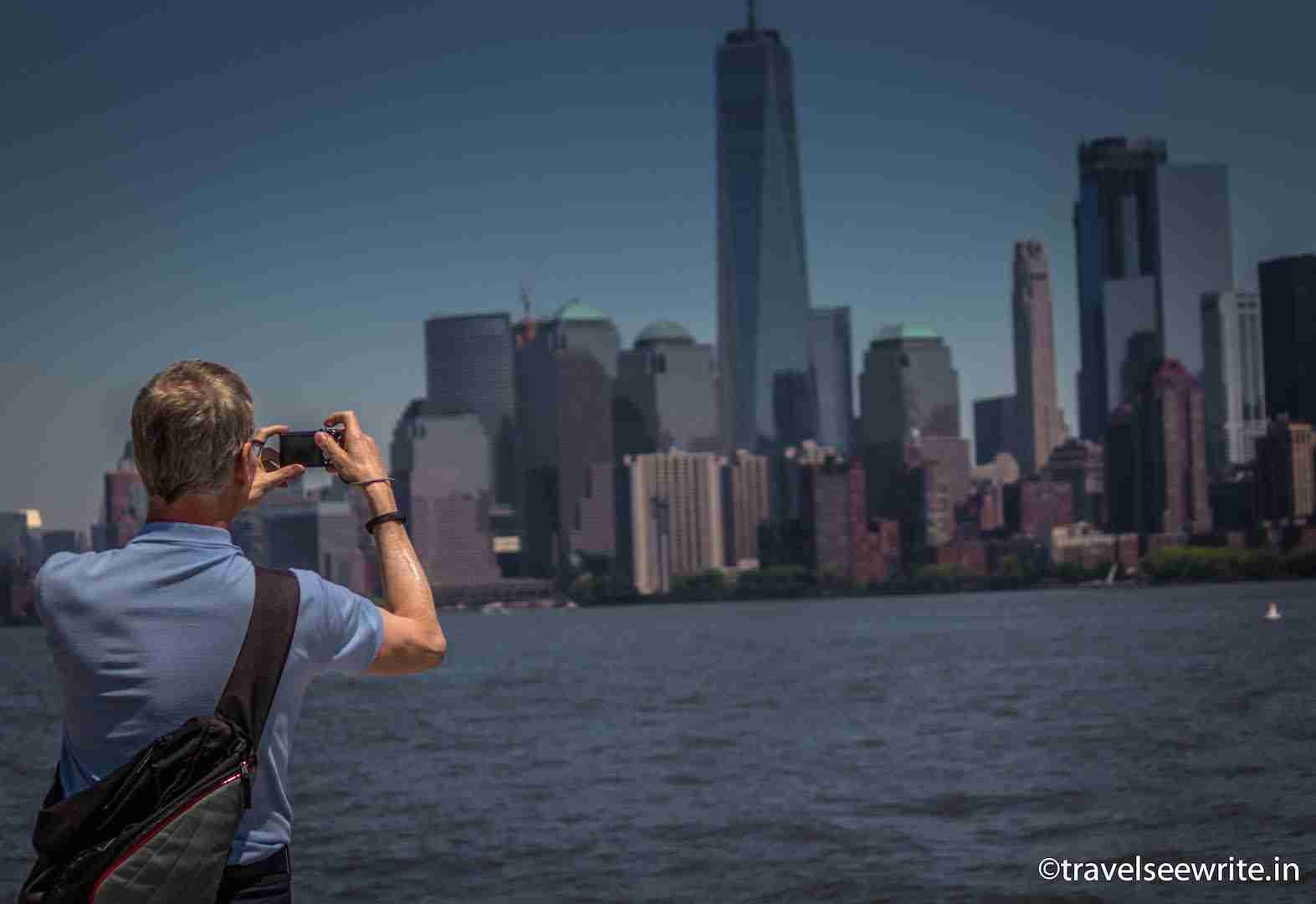
New York is usually the city where most tourists start their US visit. The City has 3 airports – JFK, Laguardia, and Newark Liberty in New Jersey. If your flight arrives into JFK or Newark, you can take commuter trains and/or the subway to get into NYC. And if you arrive at Laguardia, an Uber, Lyft or any other taxi service is the best option. However, in either of the cases, brace yourself for at least an hour ride into Manhattan as the traffic is a nightmare in this area.
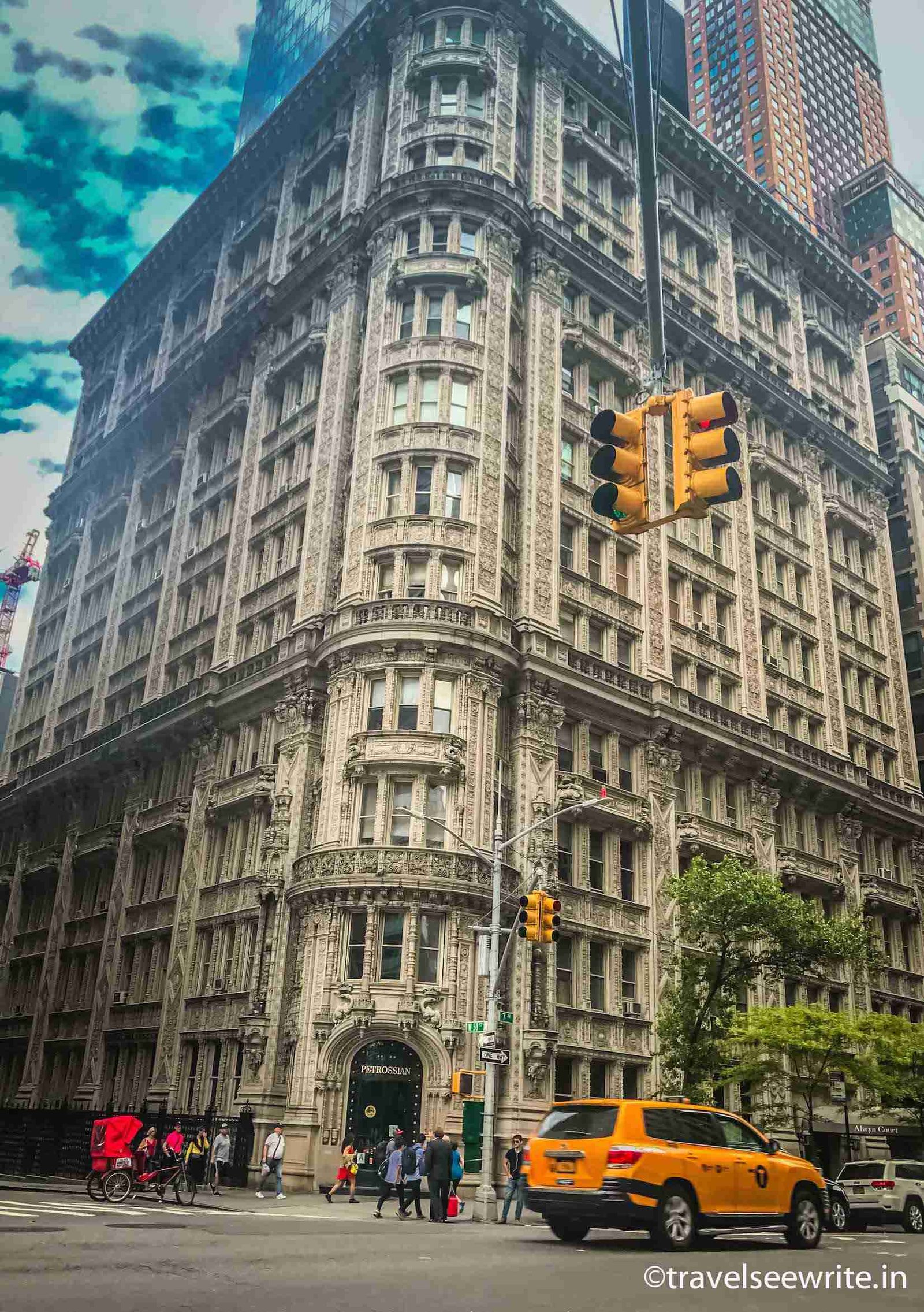
Navigating through NYC is a cakewalk if you understand its grid pattern.
Subway or walking is the best way to get around the NYC. New York and its boroughs are well-connected with the subway. Subway is fast, cheap and easy to navigate. The fare for a subway or local bus ride is $2.75. The fare for an express bus ride is $6. You can also buy a 7-day transit pass for $31. Most cabs around the city will cost around $15. Uber is an alternative and has a base fare of $2.50 and costs about $2 per mile. And on top of that, you are expected to give a tip. I ended up paying $120 from New Jersey to JFK.
Tip:
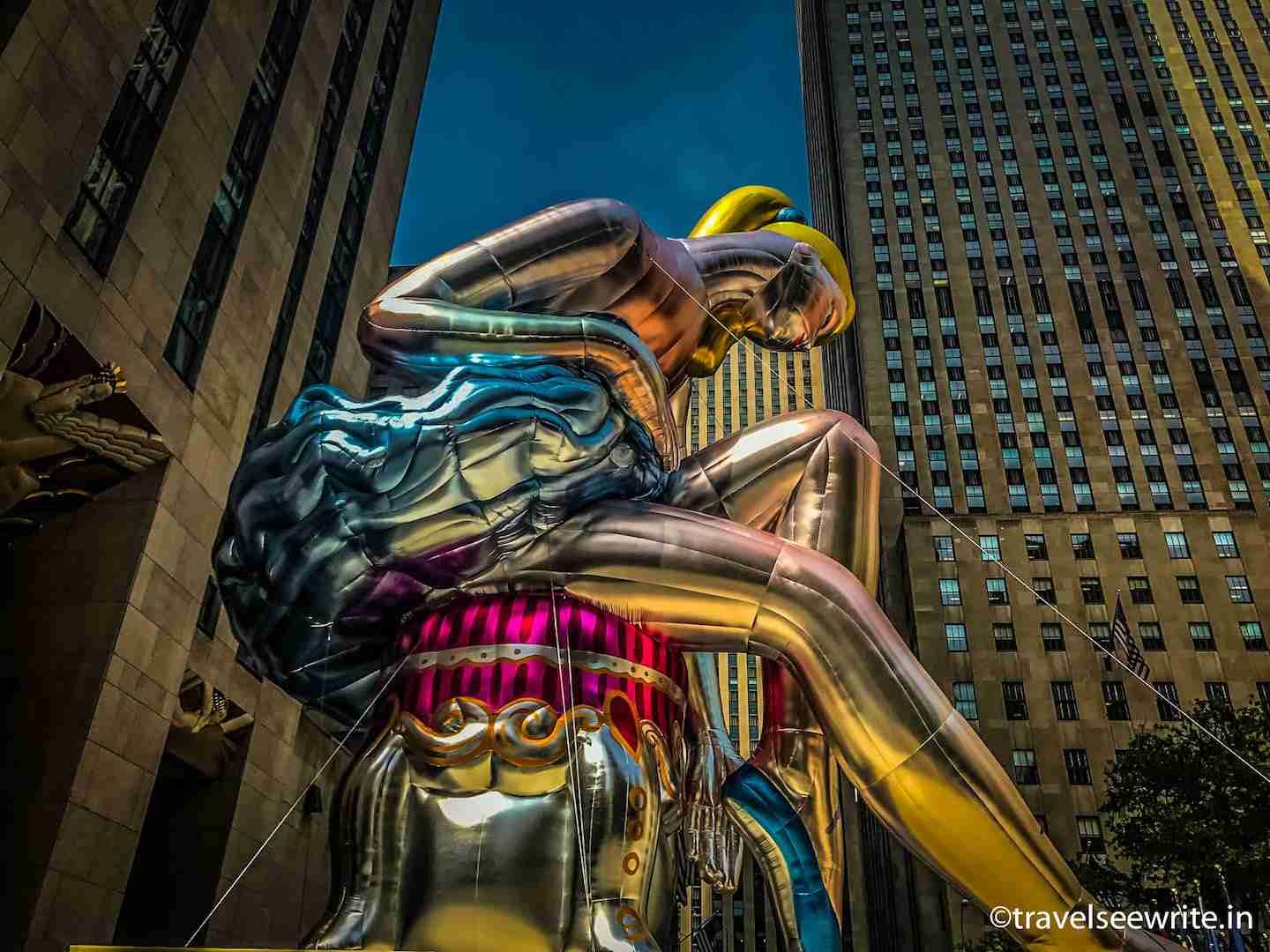
Accommodation costs in New York can be as high as the city’s famous skyscrapers, but if you hunt for deals, you can find some good bargains on an array of properties:
Avoid Manhattan and you can probably get an apartment for $100 a night on Airbnb but, if you are willing to share your room you can get it for $60.
In NYC, even budget hotels seem out of the budget. A two-star hotel in Manhattan starts at $70 but expect to pay between $100-150 per night.
The 4-6 bed dorm starts at $25-35. A private room with twin sharing would cost around $80-100. Manhattan has fewer deal options and is more expensive than Brooklyn and Queens. Some of the good hostels are The Brooklyn Riviera, The Local NYC, The Jazz, American Dream Hostel
Tip: Stay at a place within a comfortable walking distance to a subway station.
I was lucky to stay at my friend Monalisa’s home. Not only did she take good care of me but she and her husband became my de facto guides.
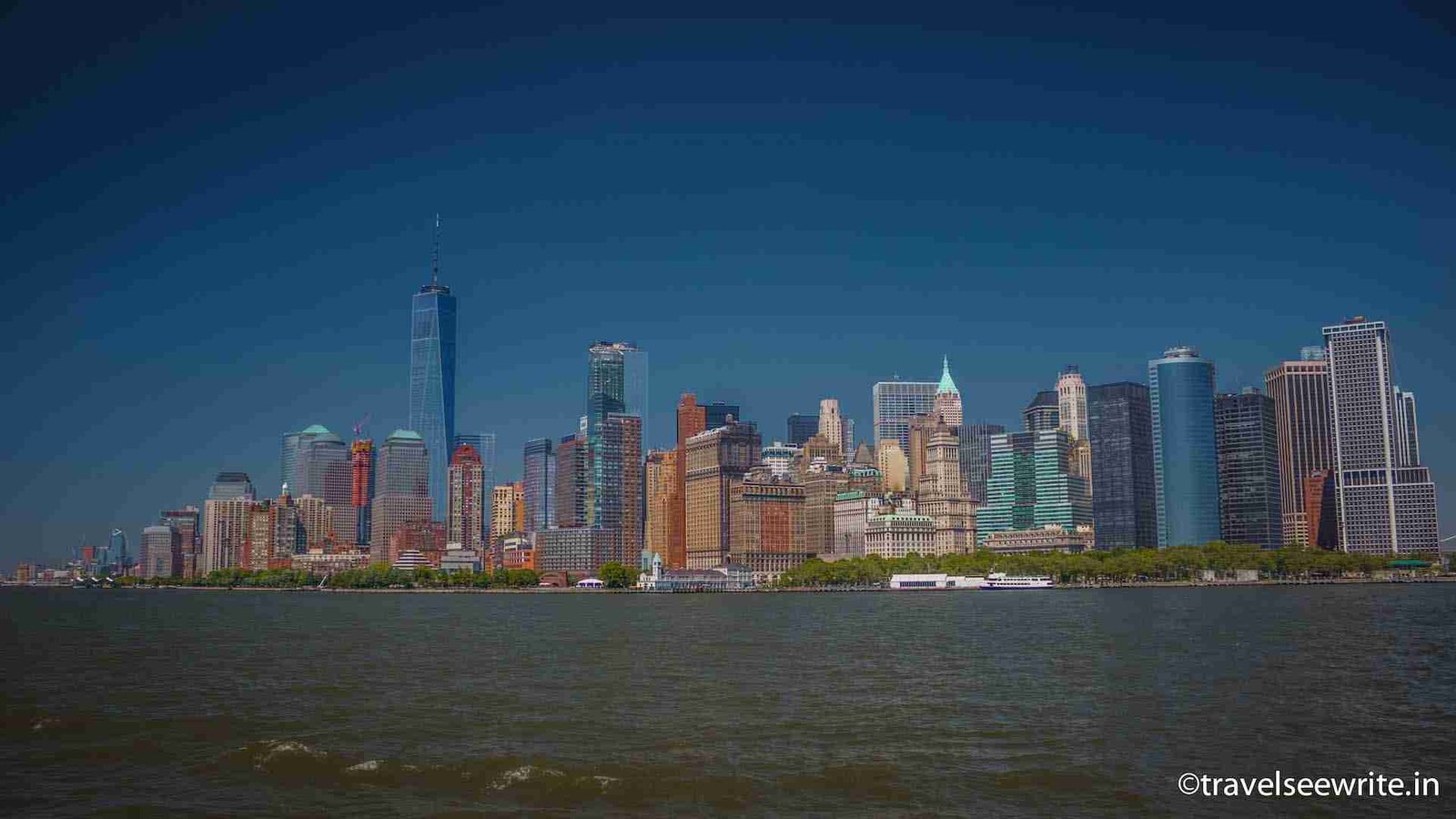
Manhattan is the most expensive area to stay in NYC
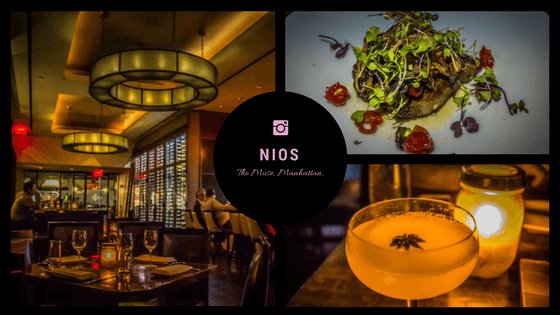
From Michelin star restaurants, renowned cocktail bars to $5 food stalls, NYC won’t let you go hungry or complain about the taste. Moreover, dining on a dime is part of New York’s DNA. You can eat a mid-range sit-down restaurant for $15-25 per main course. Dinner for two with drinks usually averages around $50-70. And after that, the sky is the limit as NYC has some of the world’s fanciest and most expensive restaurants. Sandwich shops, kebabs, salad shops, and cafe meals generally are less than $10. There are plenty of street vendors with meals around $5-8. New York cocktails are a must and there are happy hours to suit your New City on a budget trip.
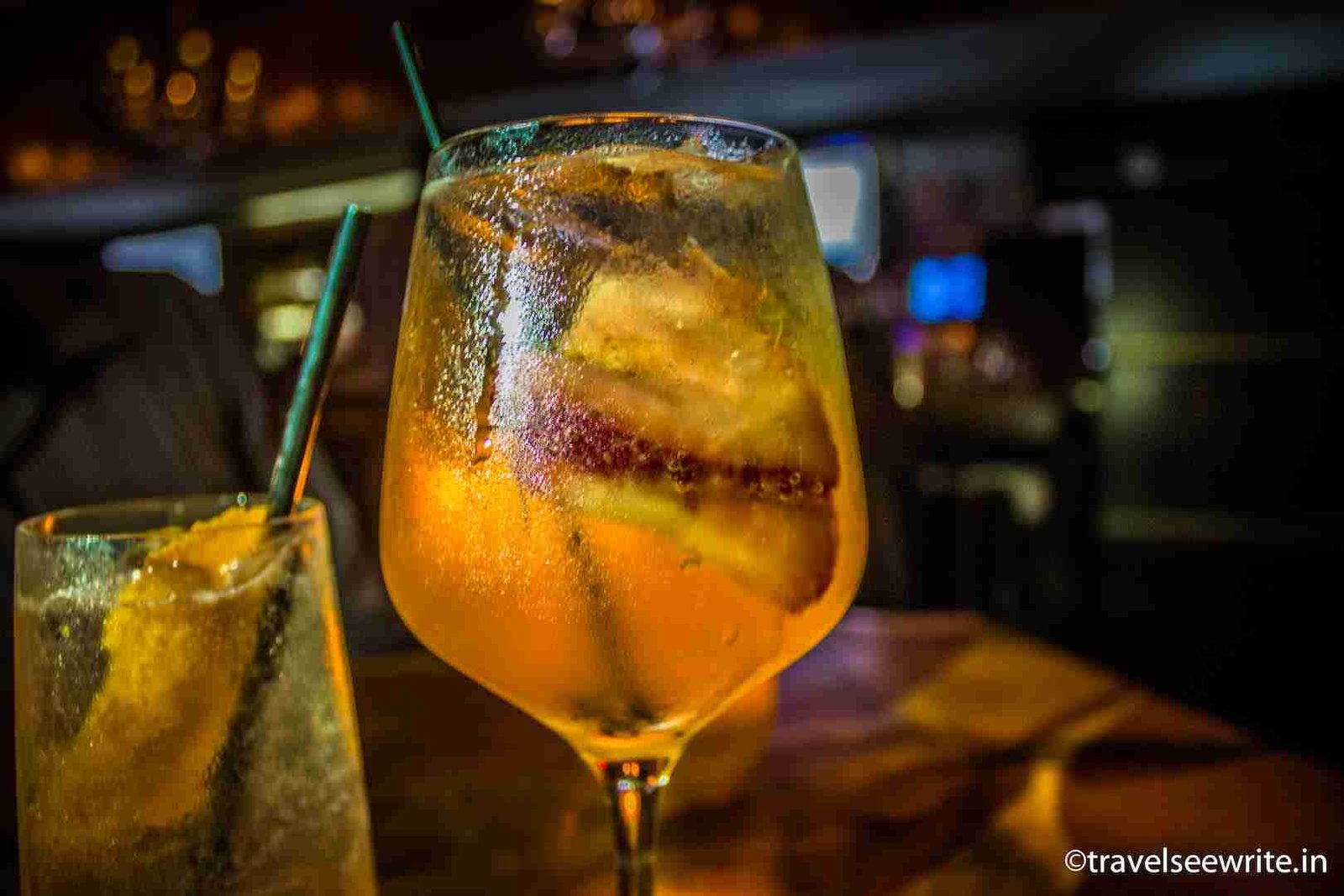
Sprite Amore – the signature cocktail at Nios restaurant, NYC
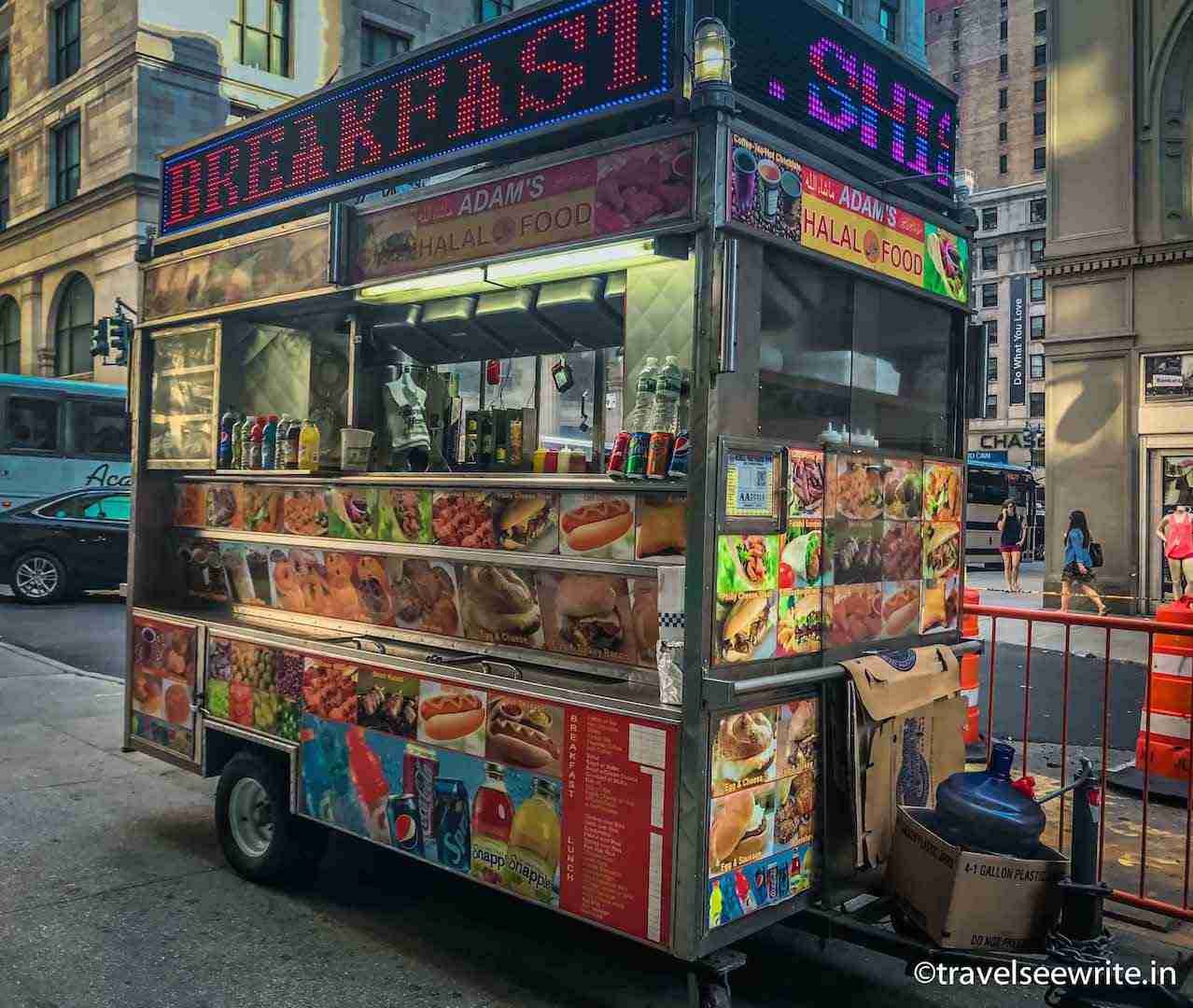
Food Stall at 5th Avenue, Manhattan, NYC
My favourite places are:
One of the sure shot ways to save money and time on sightseeing is by buying the New York Pass. You can choose from over 90 attractions. Travel See Write recommends the following things:
NYC is littered with some of the best museums in the world from the Met to the MoMA to the Guggenheim. Even a four-wall hater like me couldn’t resist visiting NYC museums, which houses some of the world’s best art, history, and exhibitions. Warhol, Van Gogh, Picasso, Monet, Matisse…all the big names are housed in New York City.
Tip: A lot of museums are free to visit at certain hours or have a flexible entry fee. Museum of Arts and Design has free entry on Thursdays from 18:00 to 21:00, Guggenheim on Saturdays from 17.45 to 19.45 and Museum of Modern Art on Fridays from 16.00 to 20.00, The Whitney Museum of American Art on Friday, the Cooper-Hewitt National Museum of Design on Tuesday evenings
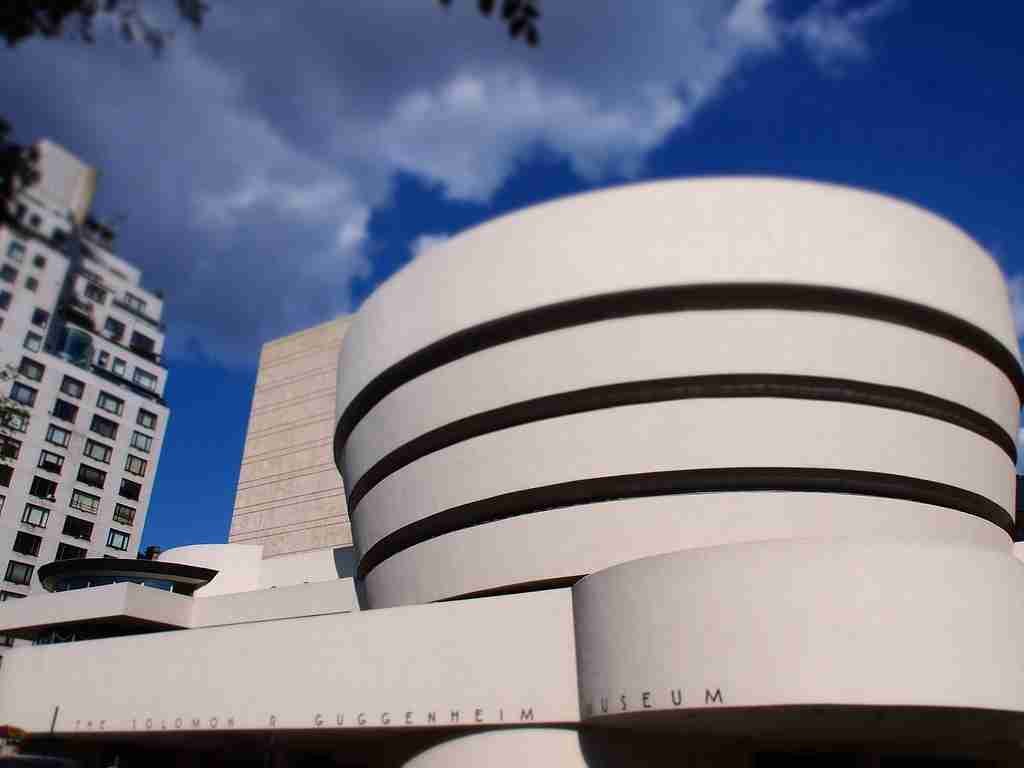
The Guggenheim Museum. Pic cc Paul Arps
A great way to relax in the city and leave behind the crowds is to spend the day in green spaces of NYC. They are free and are best for a picnic, cycling, exercising, people watching or just walking. My favourites are Central Park, Bryant Park, and Brooklyn Bridge Park.
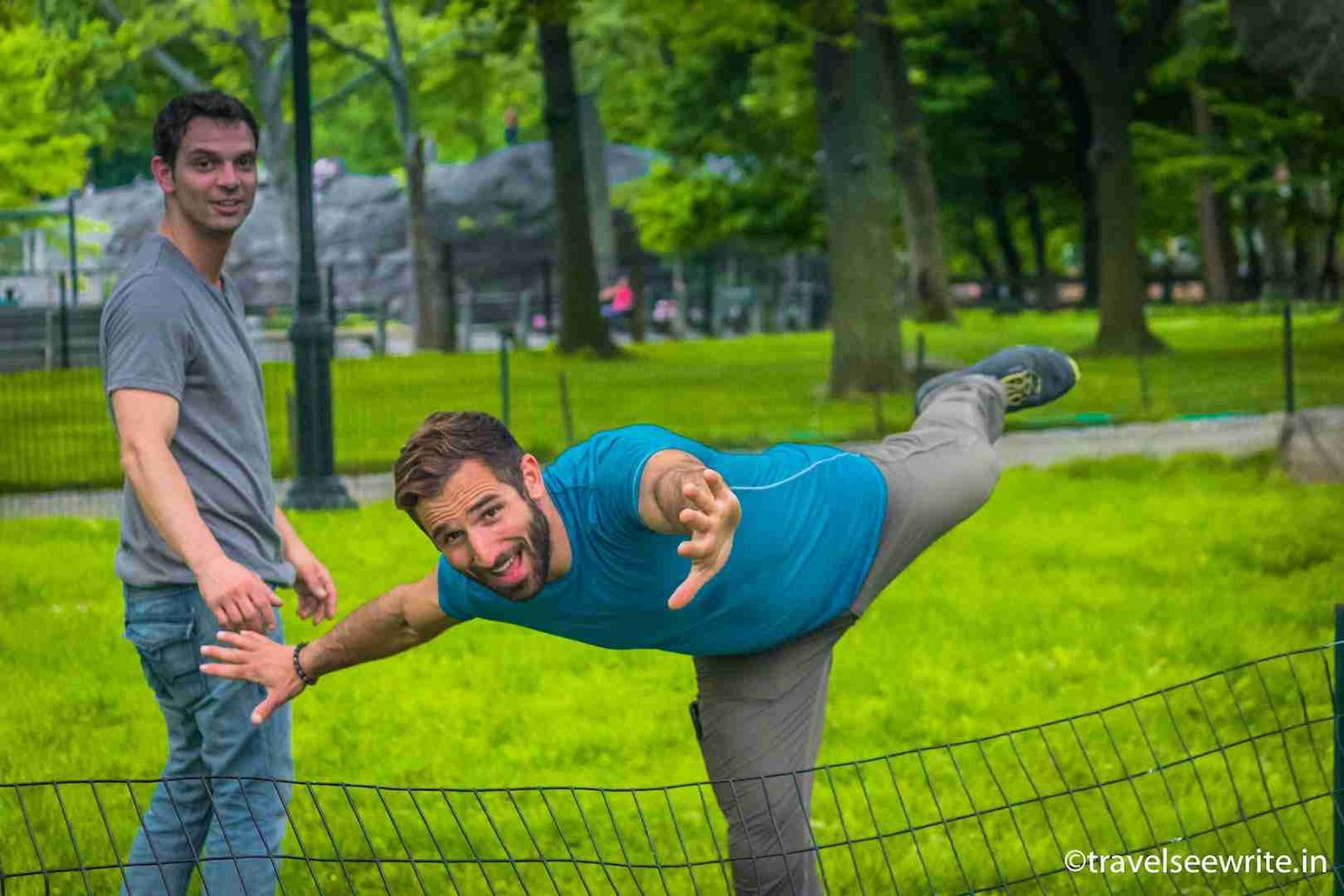
New Yorkers in Central Park, NYC
Tip: Avoid the crowds by heading to the northern sections of the Central Park.
A historic but obsolete 1.45-mile-long railway line transformed into an aerial greenway and rails-to-trails park by Joshua David and Robert Hammond, two Chelsea residents. Strolling above the traffic among the semi-wild meadow plants means you get a peaceful respite from the hustle and bustle of the city below. The walk from Gansevoort Street, through Chelsea, to the northern edge of the West Side Yard on 34th Street is one of the best things to do in NYC.
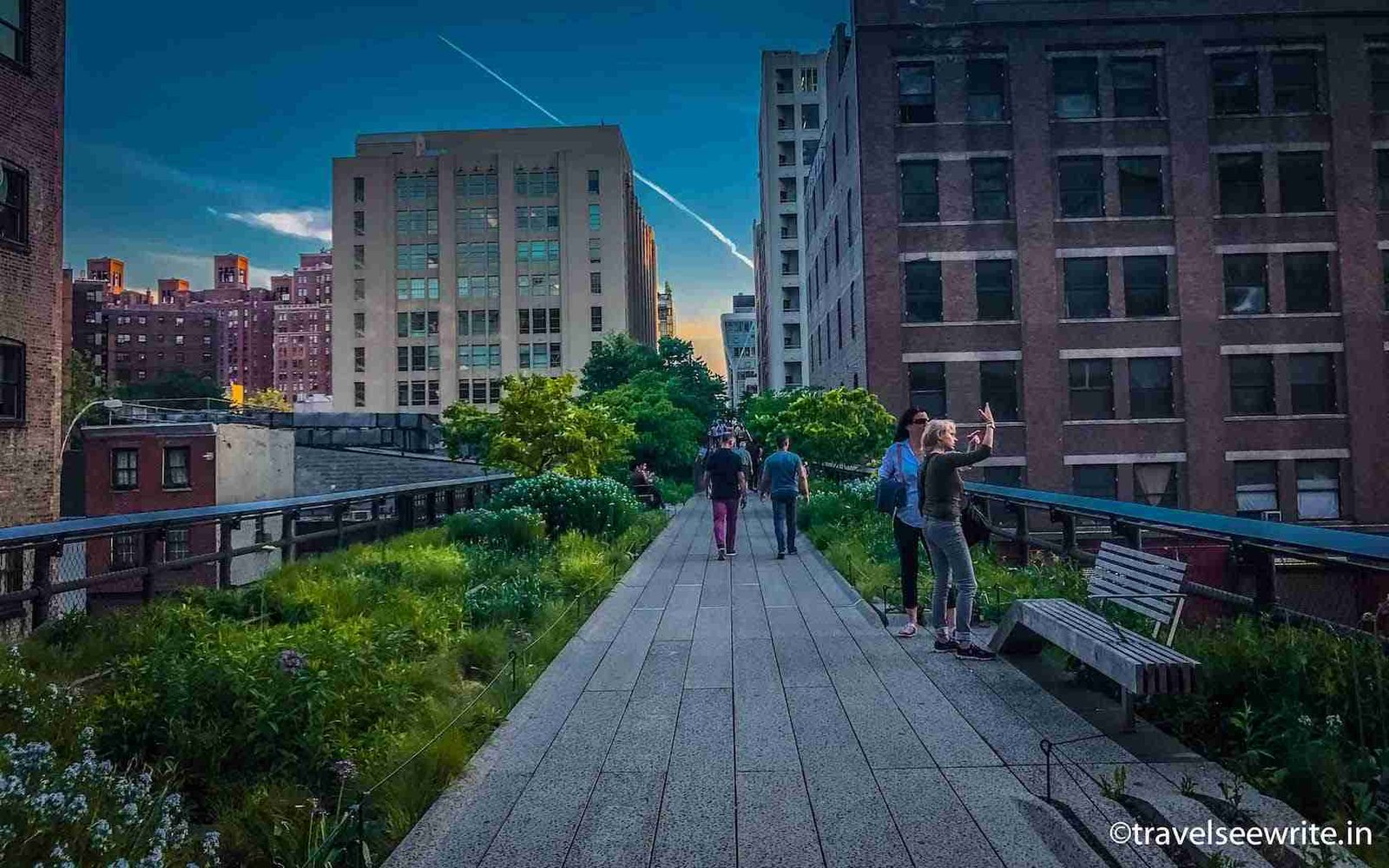
Walking the high line, NYC
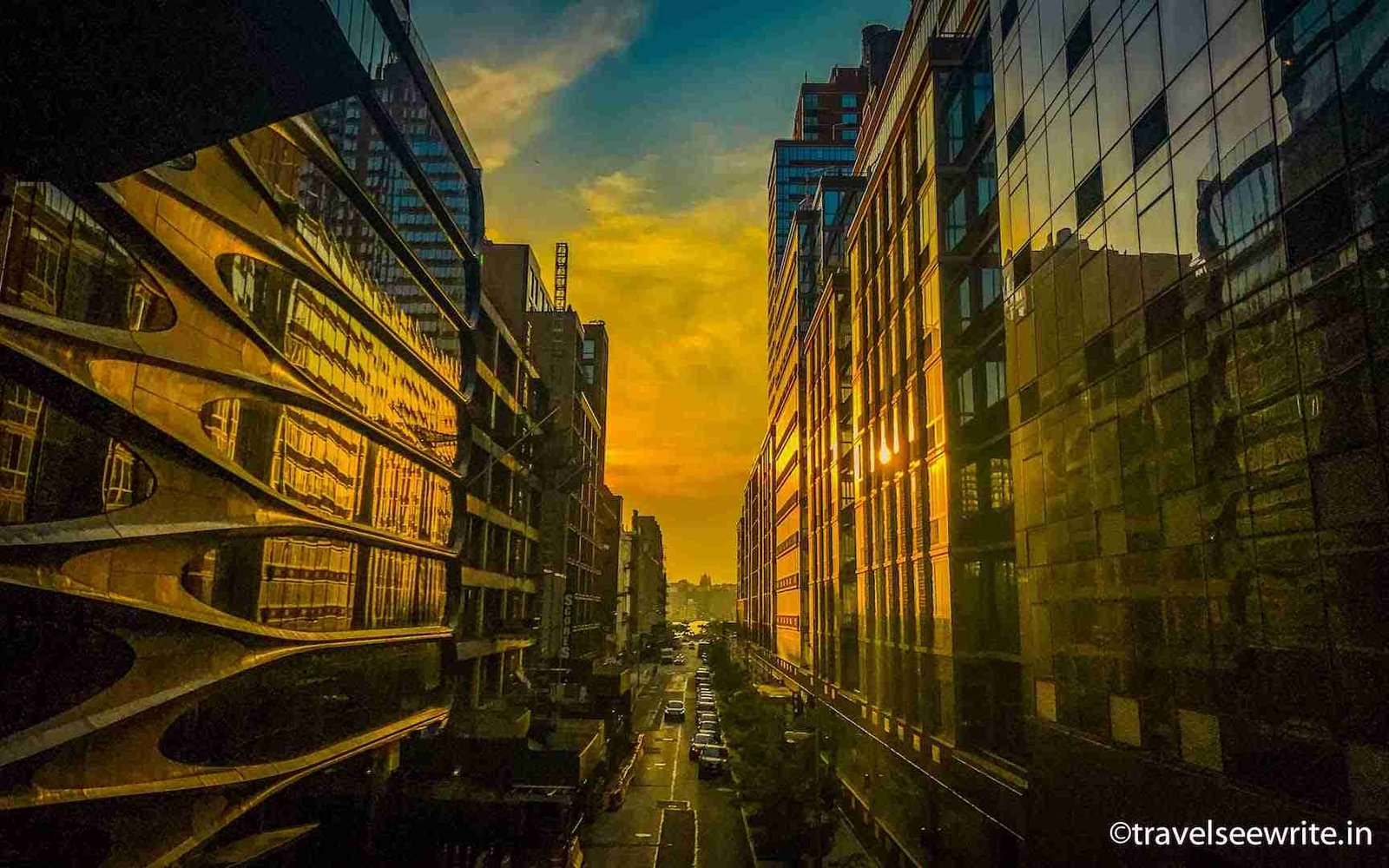
Street view from the Highline, NYC
Tip: Walk down to Chelsea Market to relish food and art.
Being a book lover, New York Public Library was high on my agenda. It is not only gorgeous from the outside but inside as well. Entry is free and you can spend as much time as you want.
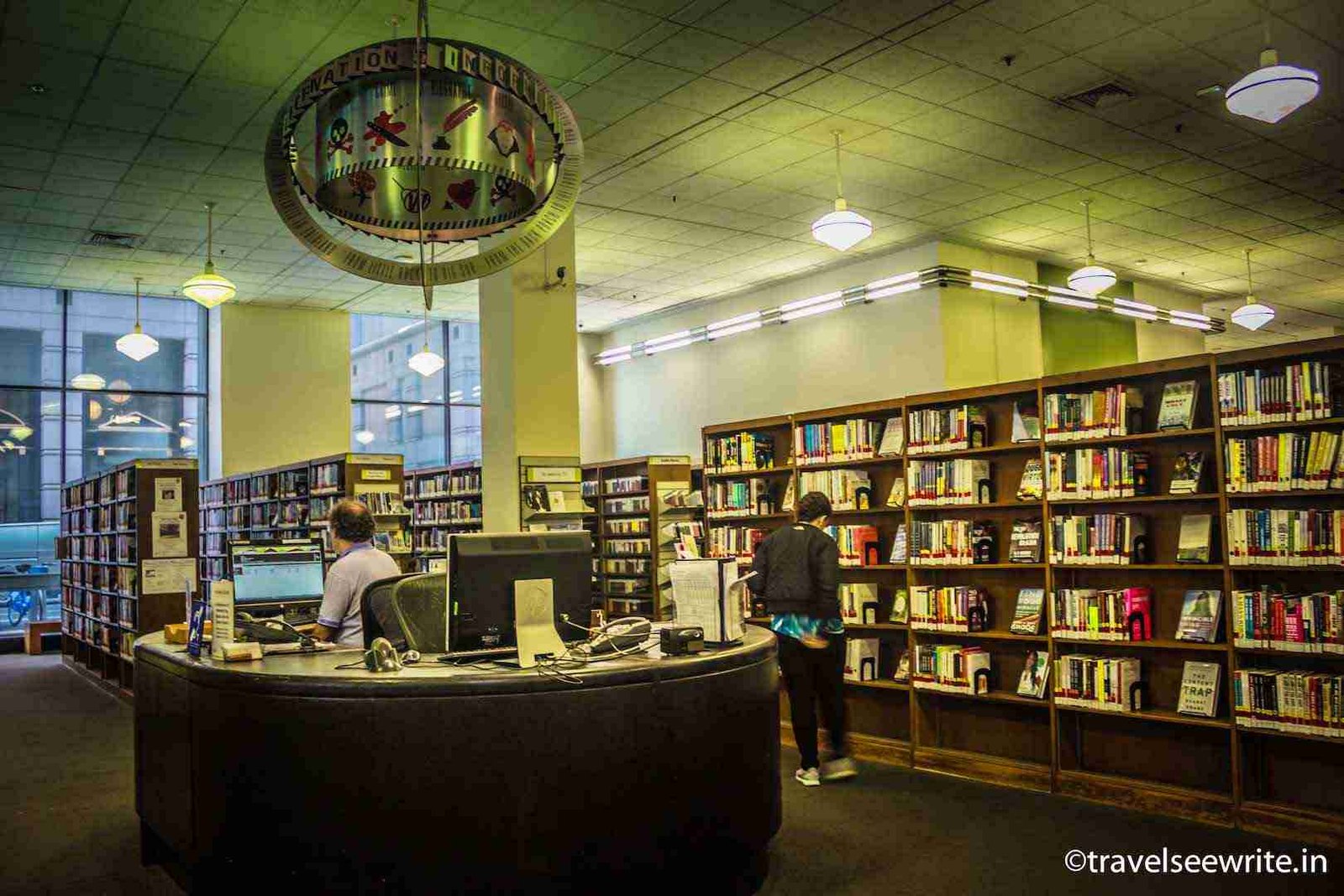
NYC Public Library
Tip: Don’t forget to check out the free exhibitions.
One of the most famous landmarks of the world, the Statue of Liberty is a colossal neoclassical sculpture that shouldn’t be missed. You can either take a ferry from the Liberty State Park in Jersey City or Battery Park in Lower Manhattan.
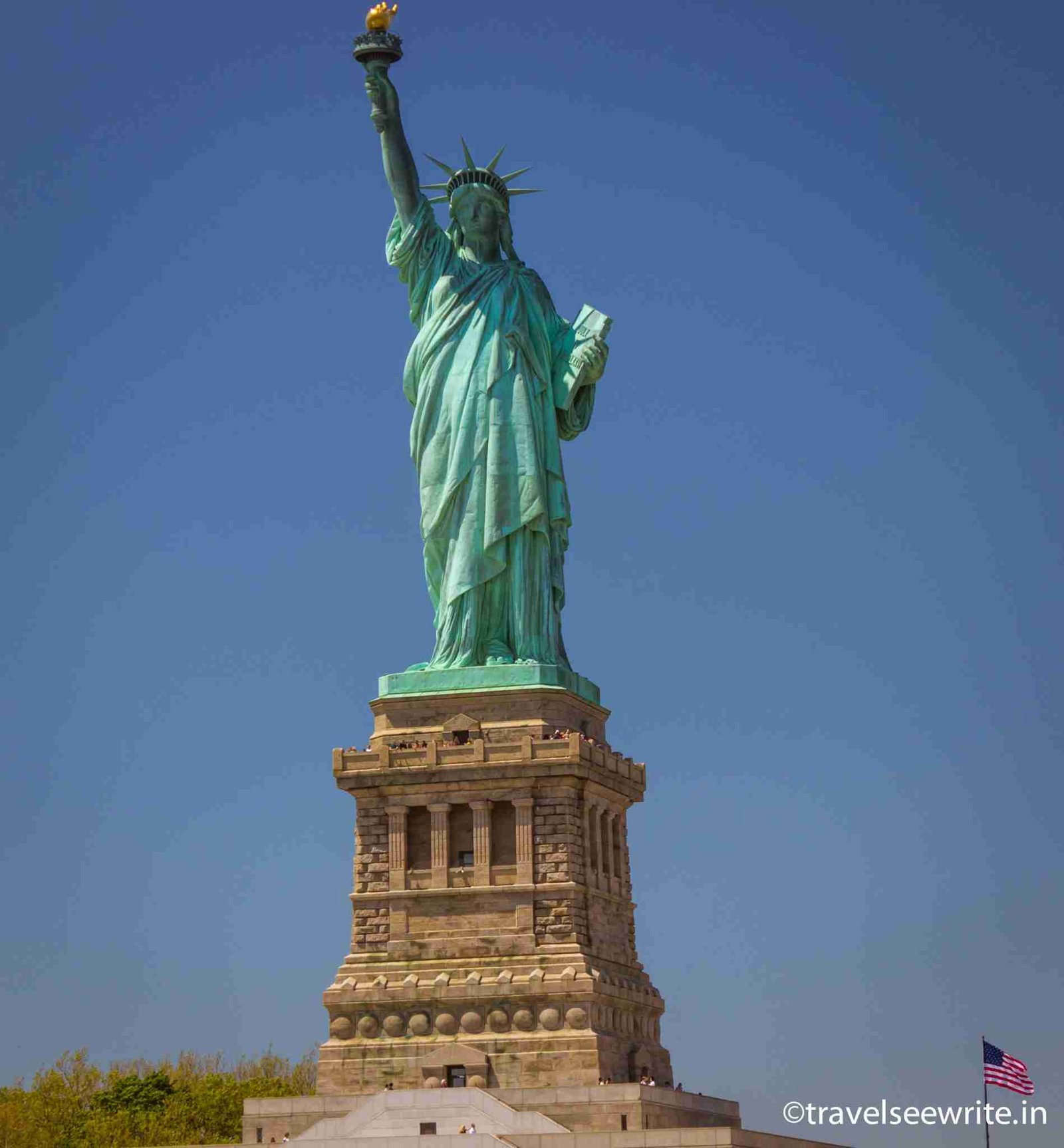
Statue of Liberty, New York City
Tip: Want to save dollars? Take the free ferry service from Manhattan to Staten Island.
Walking across the Brooklyn Bridge is a bucket list item. Strolling along the pedestrian promenade I couldn’t help but wonder how such an impressive structure was built before the days of power tools.
Tip: Check out the NYC skyline from Brooklyn Heights or the Brooklyn Promenade. And if you are staying back for the weekend, don’t forget to check out the weekend food and art market.
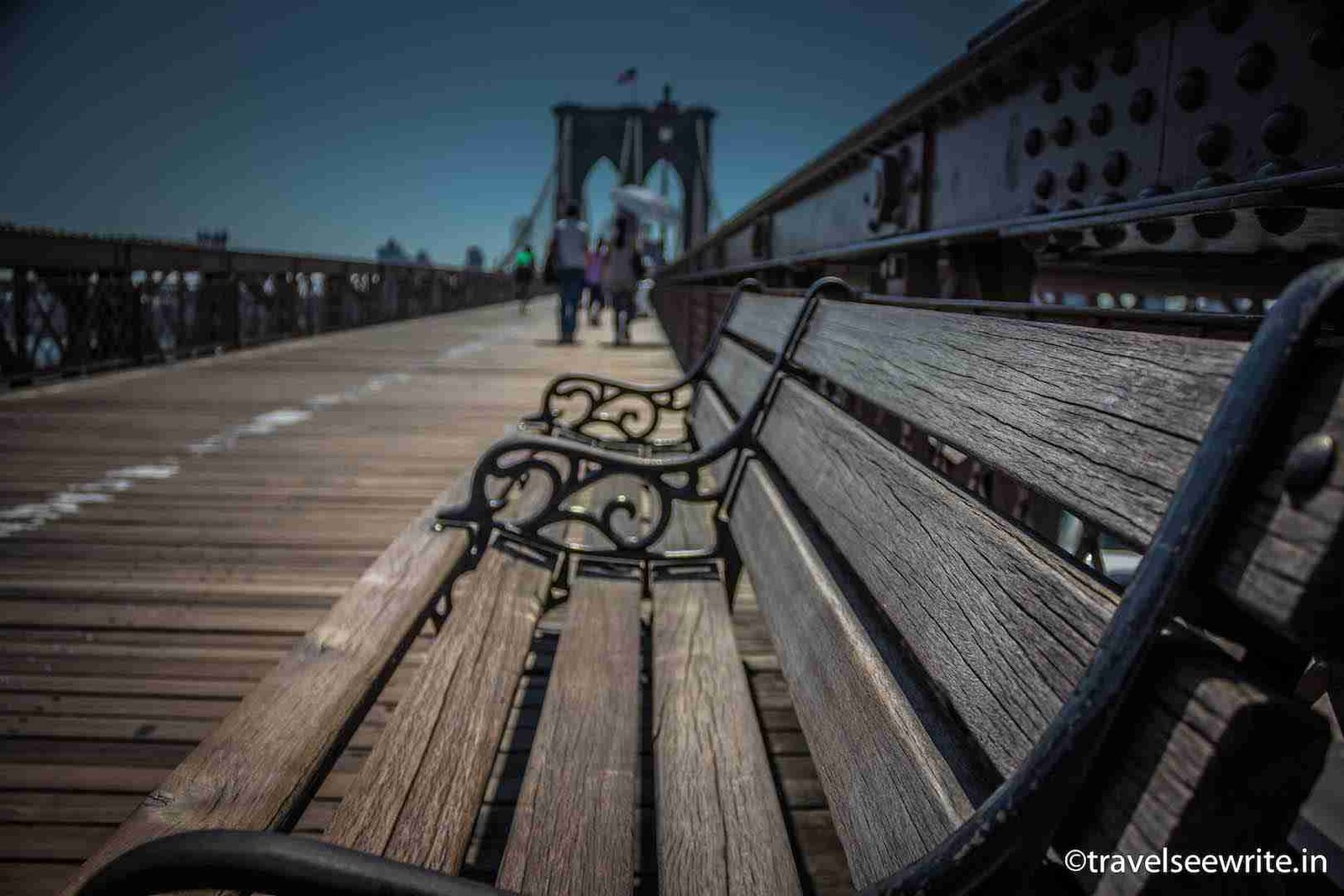
Brooklyn Bridge, NYC
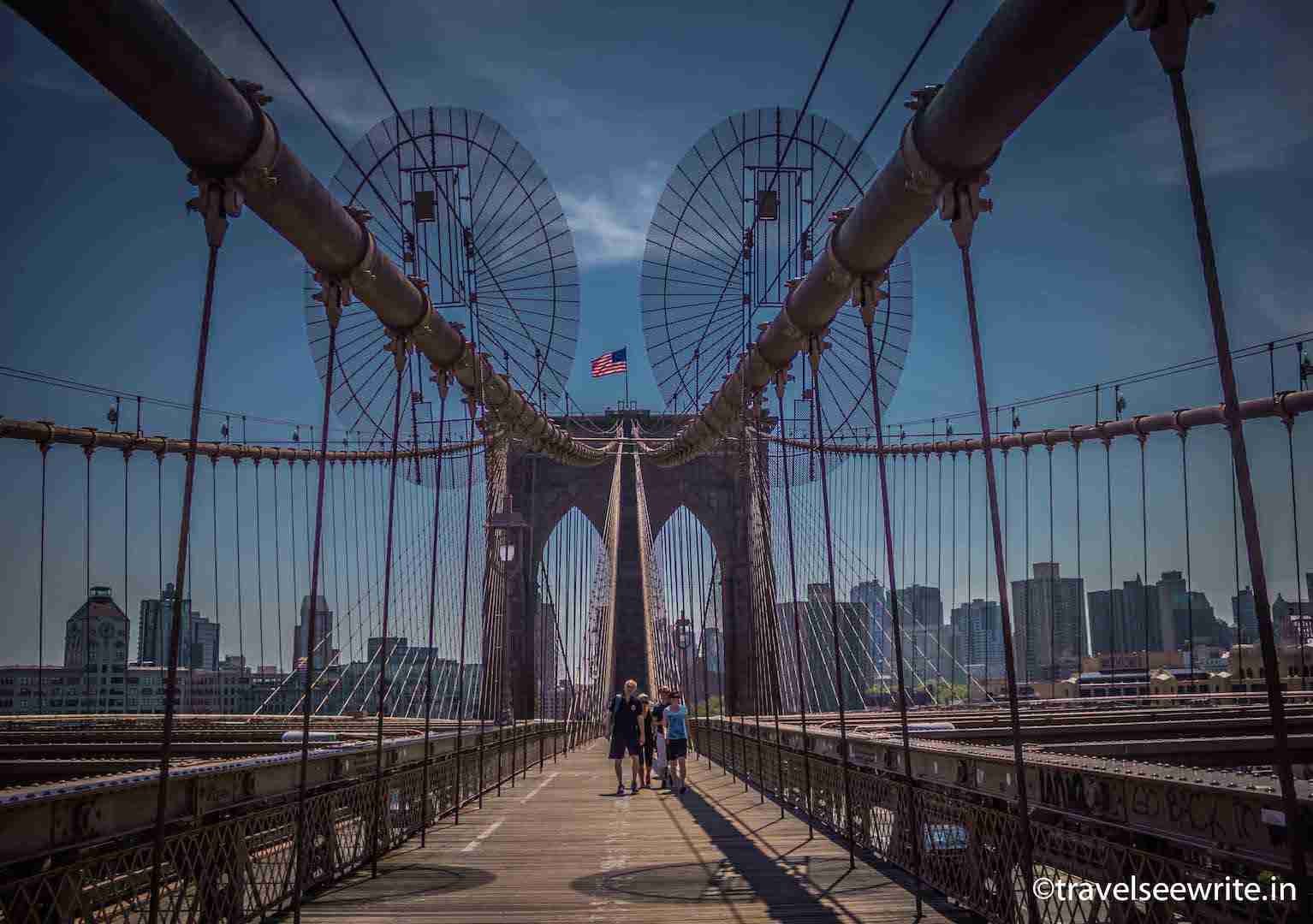
Walking the Brooklyn Bridge, NYC
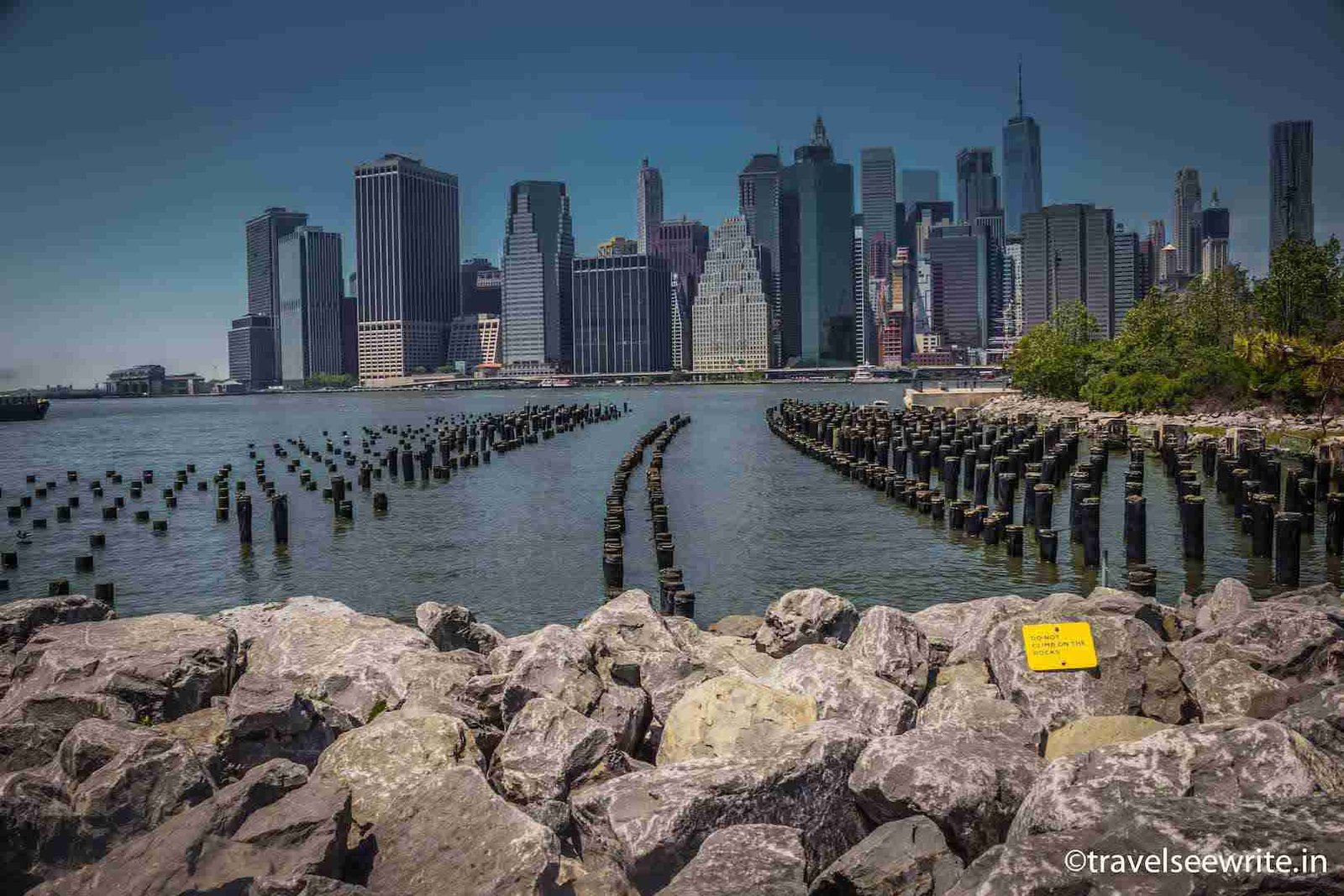
NYC Skyline from Brooklyn Bridge Park
The largest Catholic cathedral in North America is a famous landmark in New York City. Its Neo-Gothic aesthetic contrasts starkly with the Art Deco Rockefeller Center, thereby ensuring that no one walking on Fifth Avenue will miss its grandeur. The Cathedral has 21 altars and 19 bells, each named after a different saint
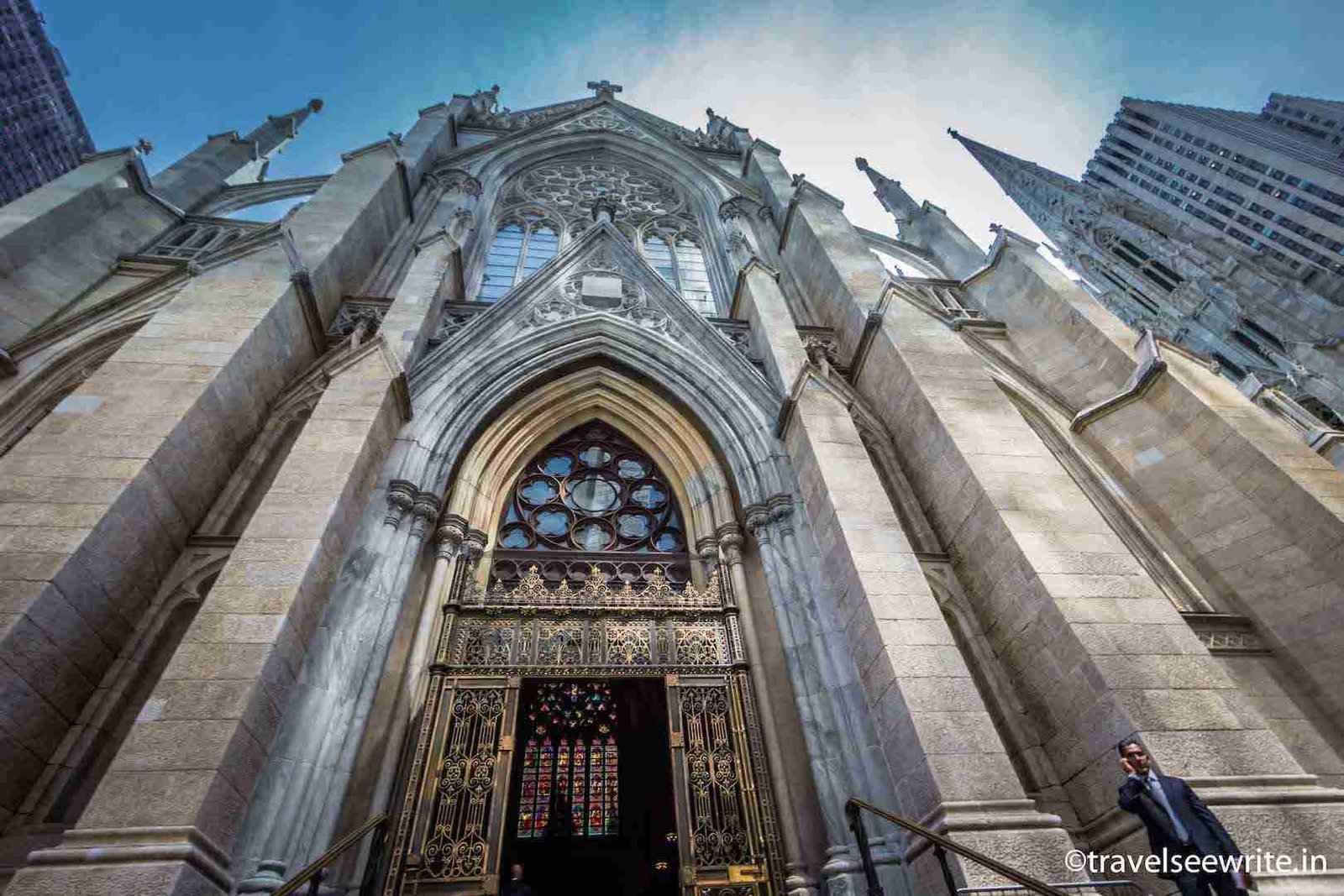
St. Patrick’s Cathedral, NYC
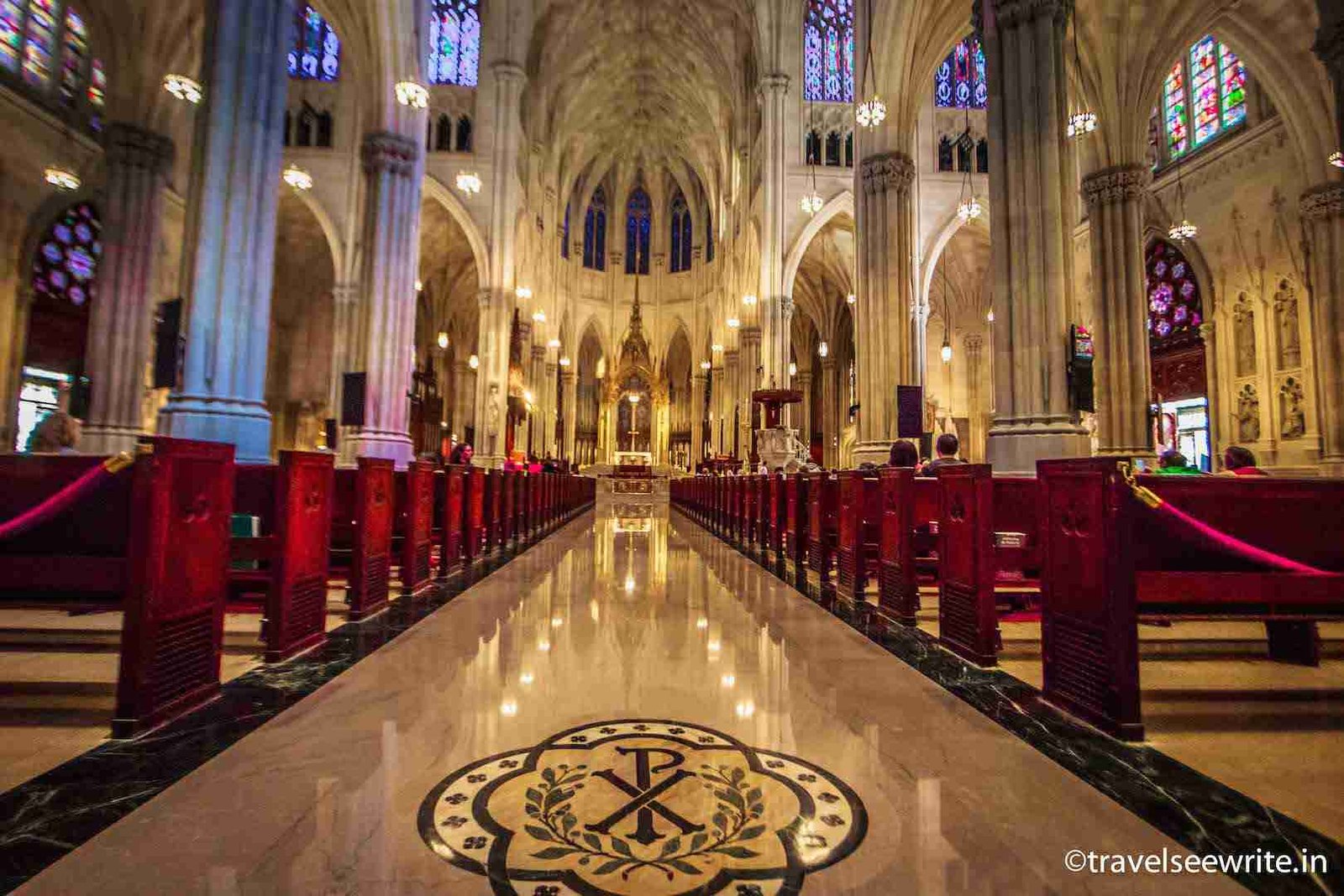
Inside St. Patrick’s Cathedral, NYC
9/11 Memorial and Museum is a very emotional experience, which changes you as a person when you come out. It remembers and reflects on the events and the lives lost during the terrorist attacks. The museum houses things like a damaged fire truck and the personal anecdotal accounts of the day. The memorial consists of two enormous waterfalls pouring into the foundations where the Twin Towers once stood, with the names of the victims cut into a metal rim around them. It communicates a powerful sense of loss and absence.
Tips: The entry to this museum is Free on Tuesdays from 17:00 to closing. Get the free iPhone app and listen to one of the many different tours they have.
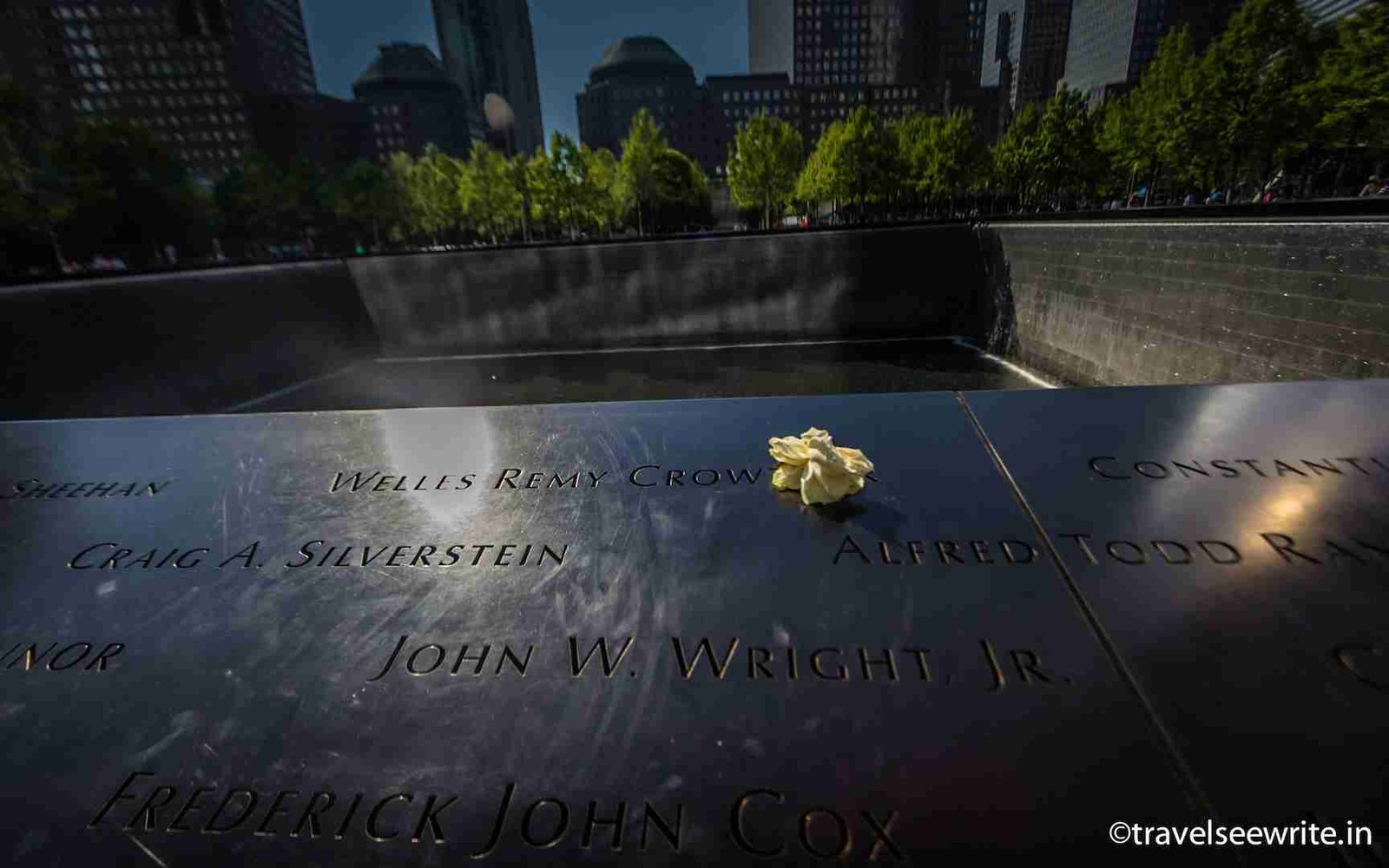
9/11 Memorial with name inscriptions, NYC
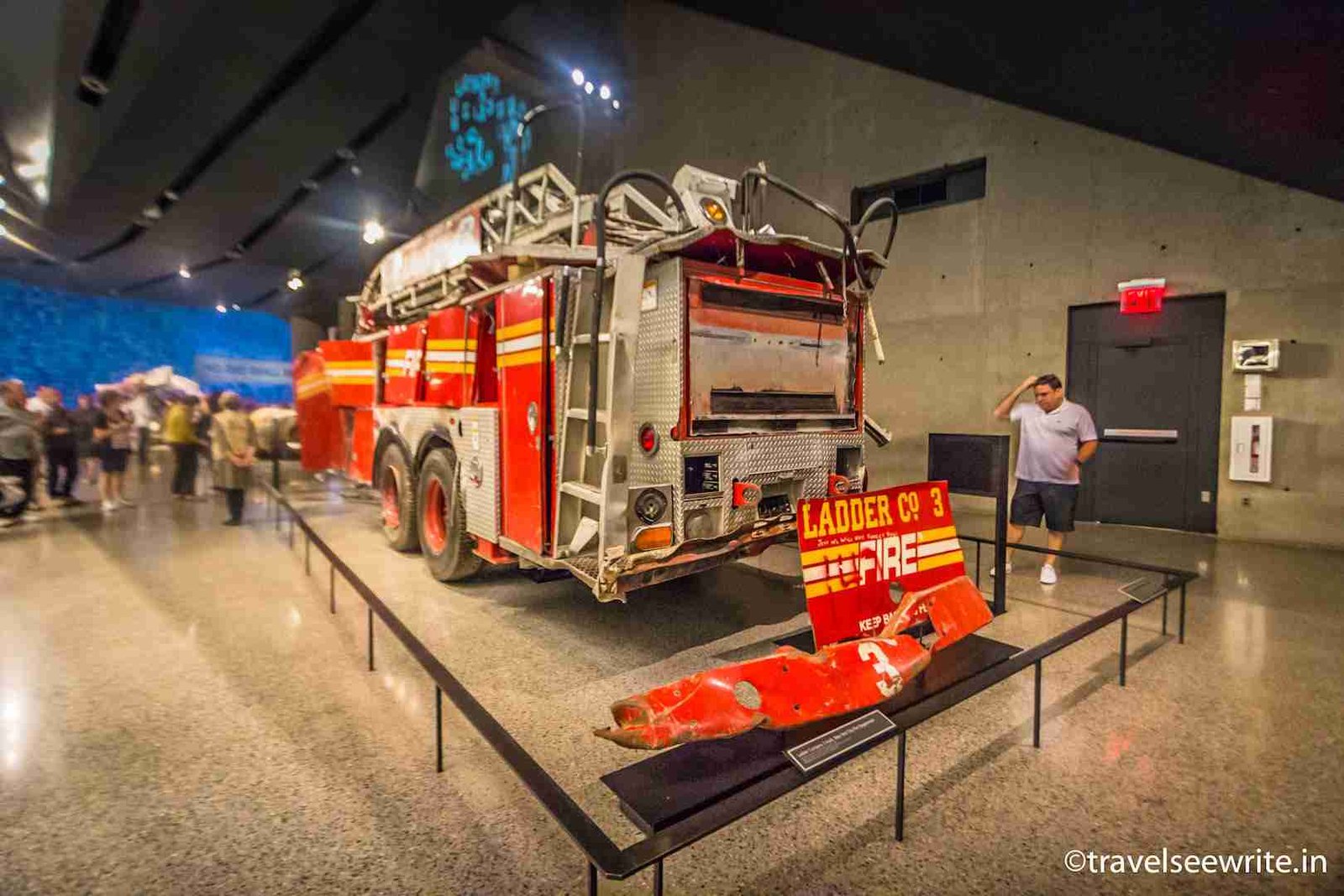
Damaged Firefighting truck at 9/11 Museum, NYC
Does this even need an explanation? Times Square with its neon signs, larger than life bright hoardings, Broadway marquis, elbow-to-elbow crowd, honking horns, and yellow taxis, all combine for a whirlwind introduction to NYC. Visit Times Square when it is dark outside. It is the best way to really see how many bright lights there actually are. On your first visit to New York City, visiting this iconic crossroad is a must.
Tips: Street acts can be engrossing but don’t spend too much time
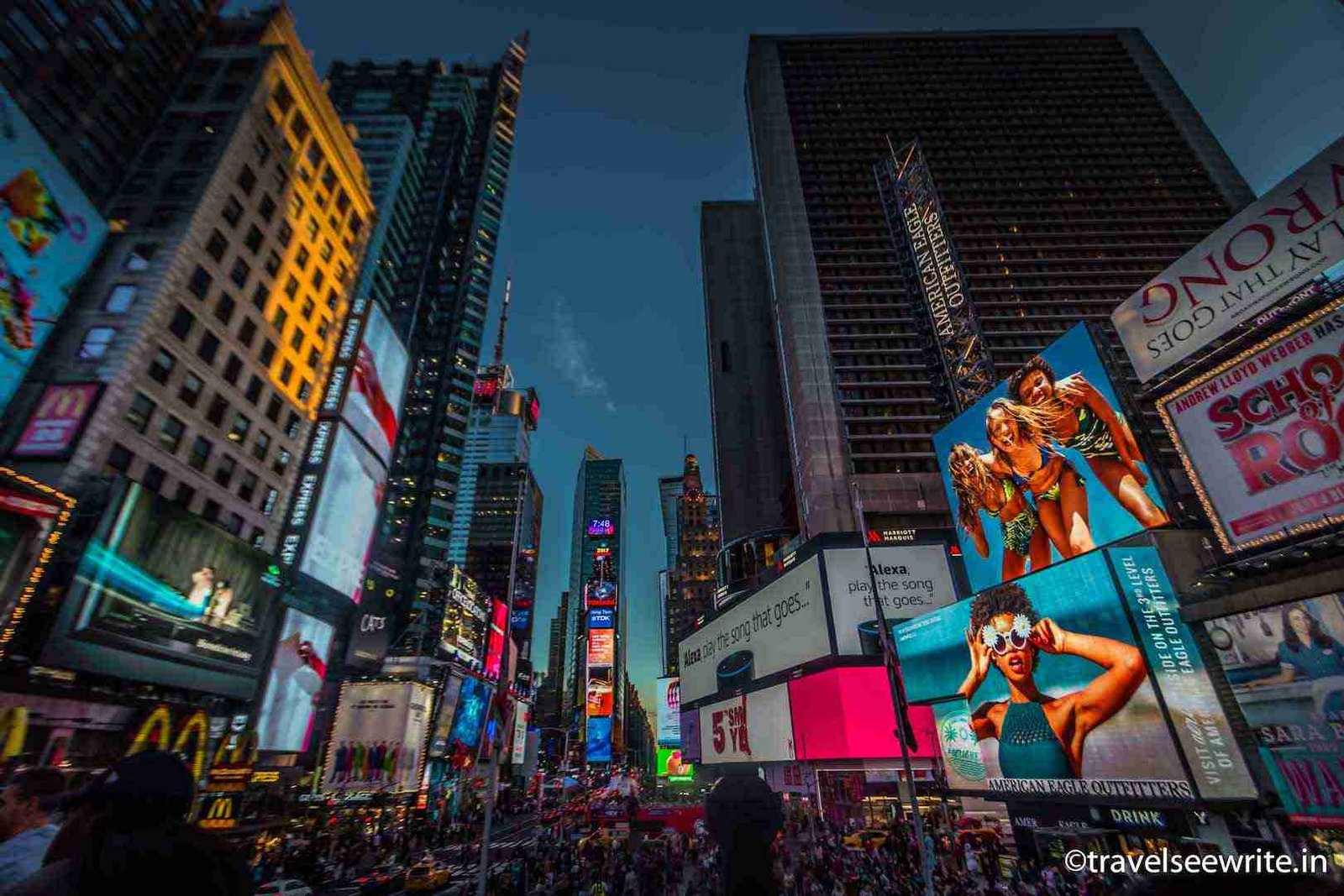
Times Square, NYC
The home of Broadway, New York City shows, is of another level. Grab tickets to any popular running and you’re guaranteed an outstanding entertainment. While the big shows are rarely on offer, it’s worth checking out the TKTS booths and discount websites like BroadwayBox.com for discounted tickets.
Tip: Visit the TKTS booths 30 minutes before show time and collect your discounted tickets with practically no waiting line.
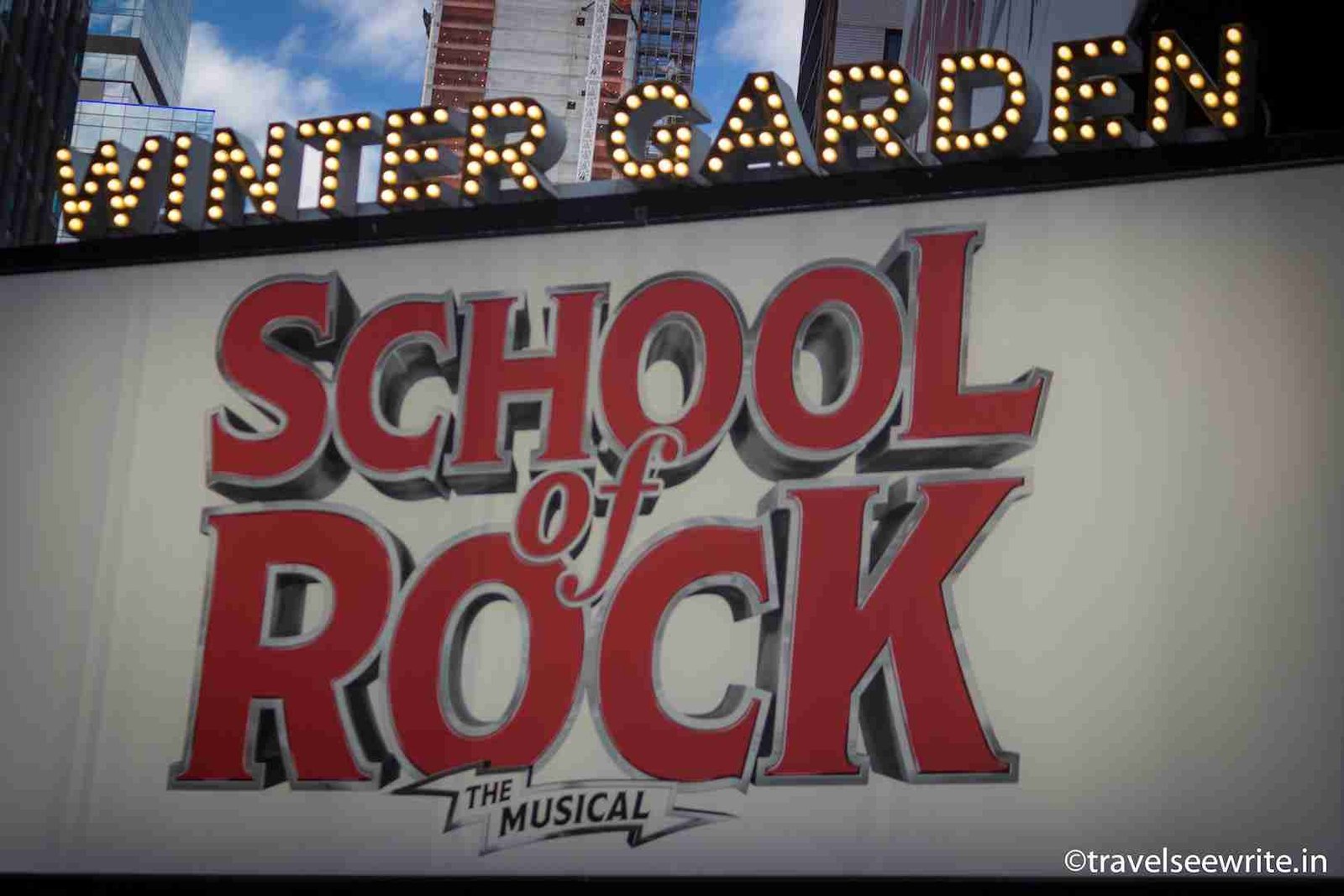
Broadway at Manhattan, NYC
NYC is 24/7 buzzing with people and one of the busiest train stations in the world is an absolute sight to behold. And, not only Grand Central Terminal gets a huge number of footfalls every day but it is one of the most beautiful buildings in the city. Moreover, as there is no entrance fee it fits perfectly in your New York City on a budget trip.
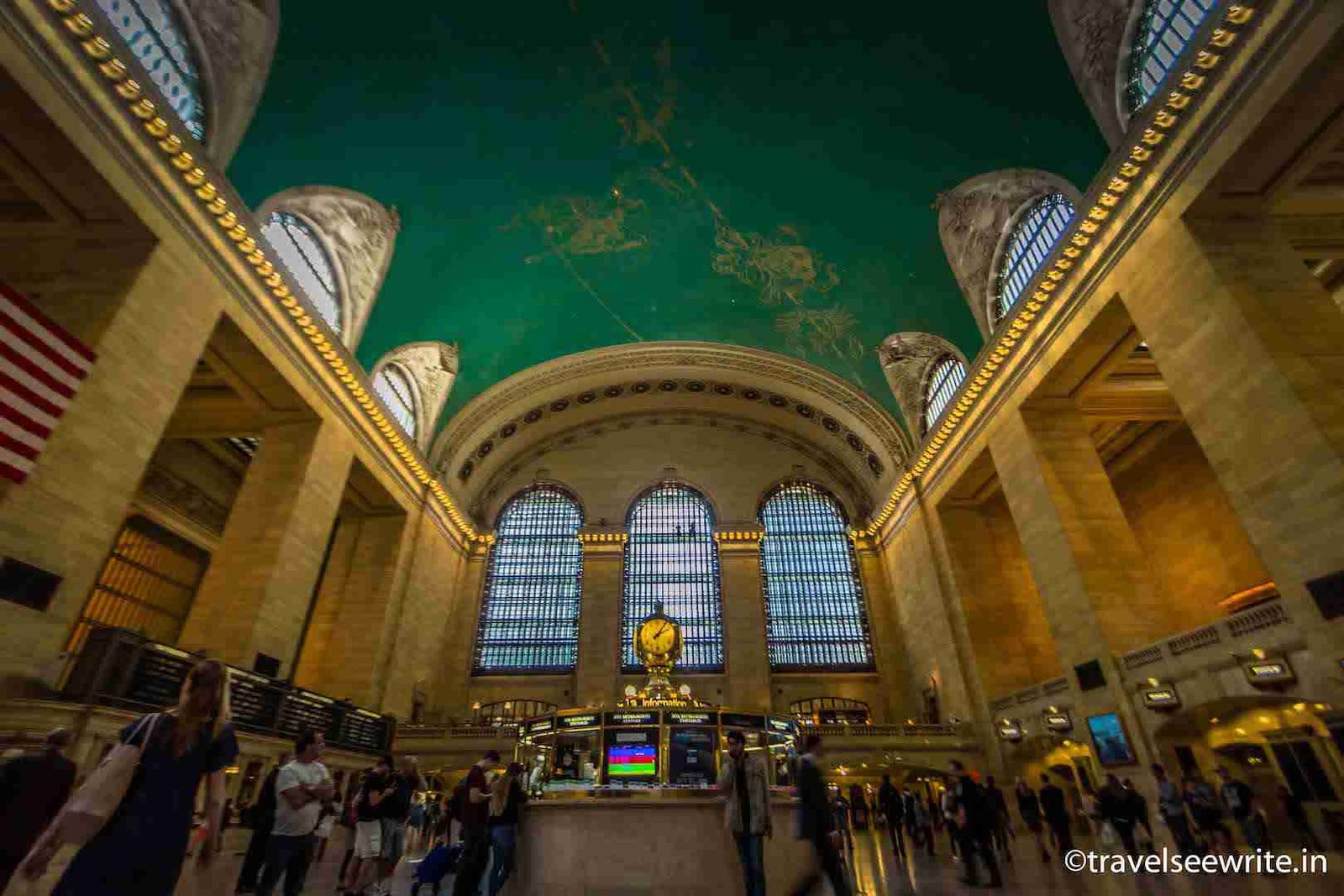
Grand Central Terminal, NYC

Pre-wedding shoot at Grand Central Terminal, NYC
New York was made to be seen from up high. And the best places are the Empire State Building and the Top of the Rock. The Empire State Building is a classic NYC landmark with an observation deck on the 86th and 102nd floors. And, the Top of the Rock’s observation deck is on the 70th floor.
Alternatively, you can go to a rooftop bar and enjoy the view while sipping the legendary NYC cocktails. The best in town is the Standard hotel in the Meatpacking District, which has a beautiful rooftop bar and a roof garden overlooking the Hudson River.
Tip: Go before sunset or mid-morning hours for the best view.
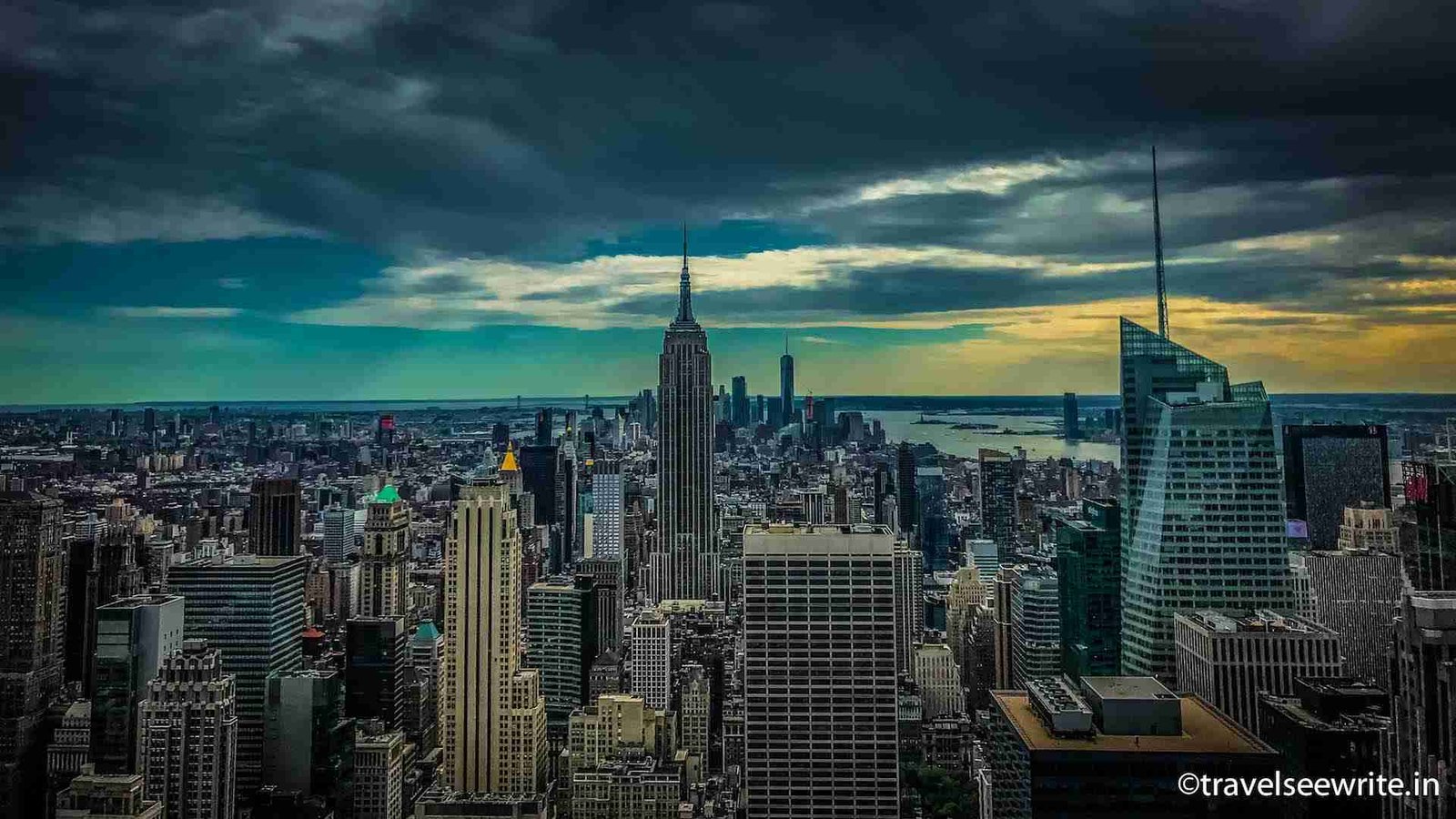
NYC Skyline from The Rock, NYC
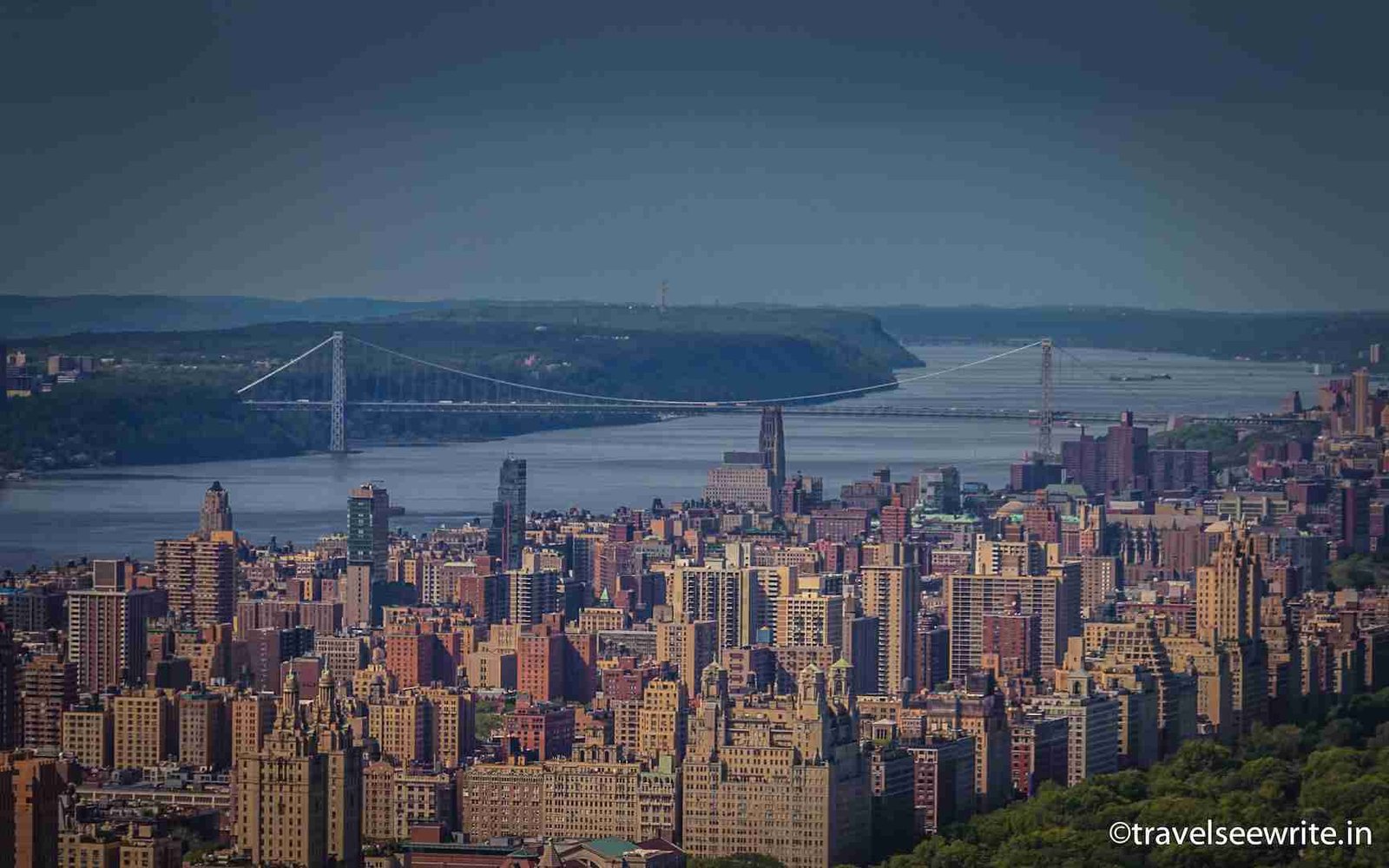
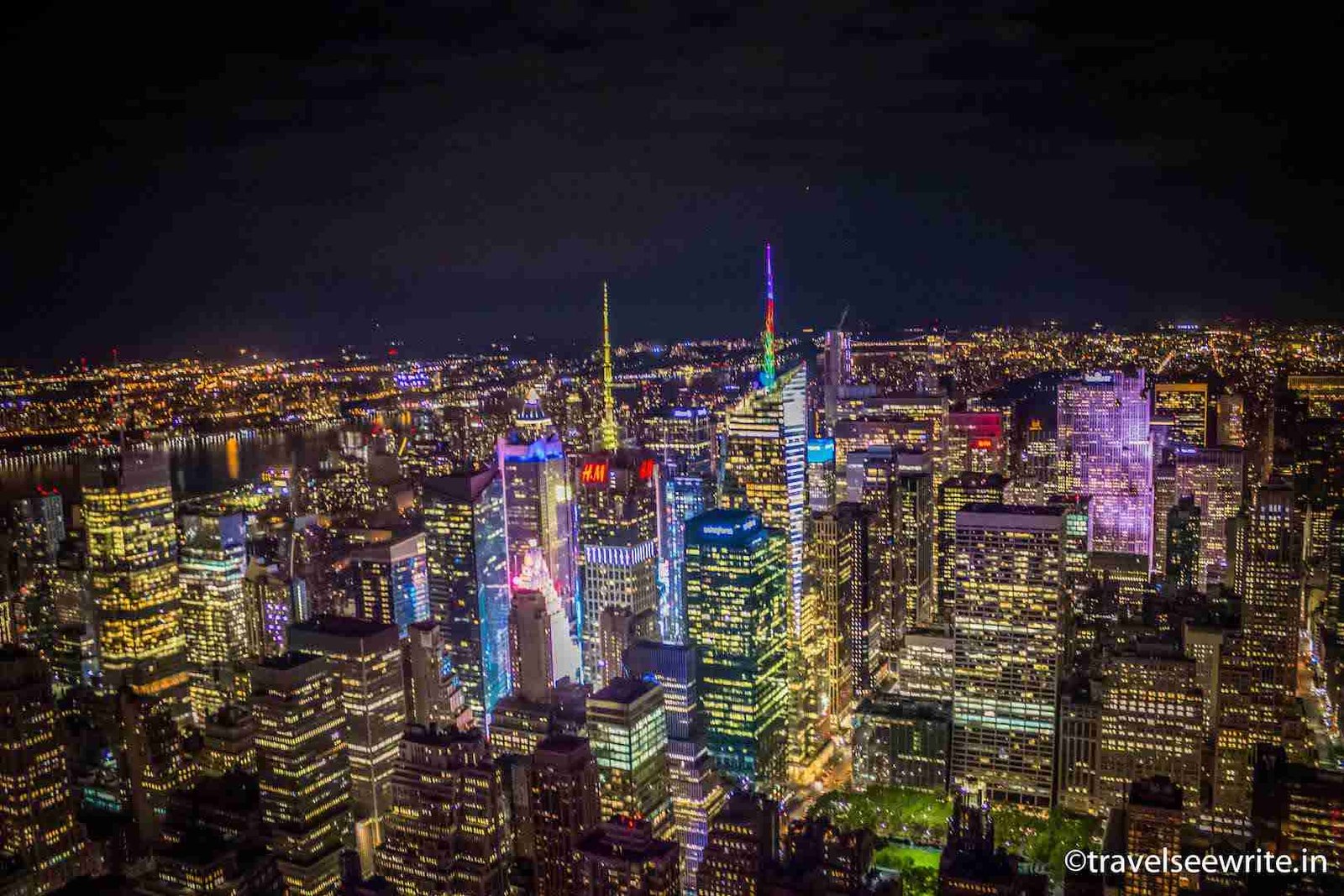
NYC Skyline from Empire State Building
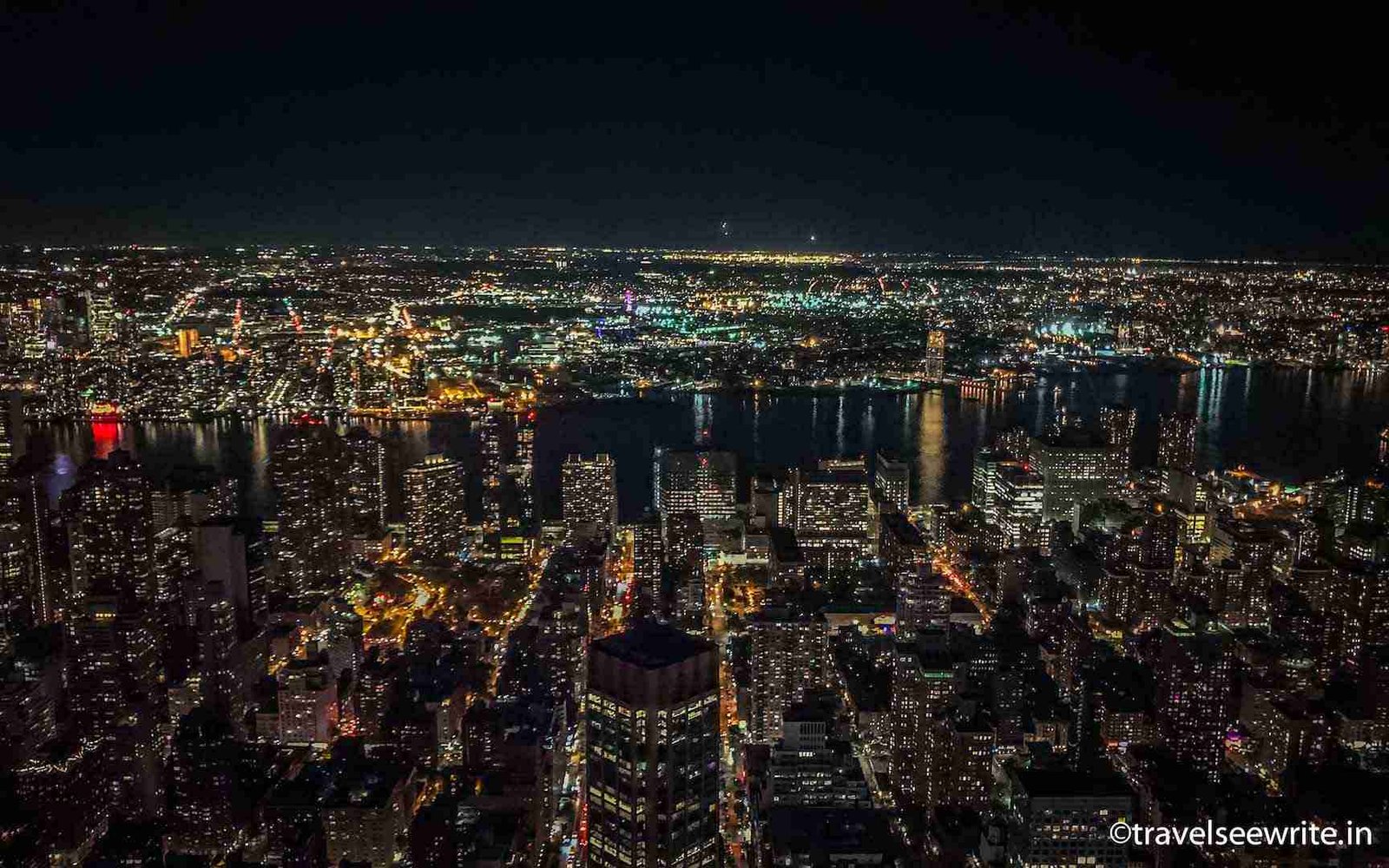
The famous NYC Skyline from The Empire State Building
New York City is an addictive city. It will draw you in and make you fall in love with it. Be sure to make the most of it. I heart New York City!
Still looking for more ideas on what to do in New York City? Check out places to shop in NYC on a budget.
Have you explored New York City on a budget or planning to? I would love to hear about your experiences.
|
||||||
Thanks, I love NY for hosting me. All the experiences shared above, like always, are based on my (Archana Singh’s) personal experiences. And, the pictures posted above were clicked by me during my visit.
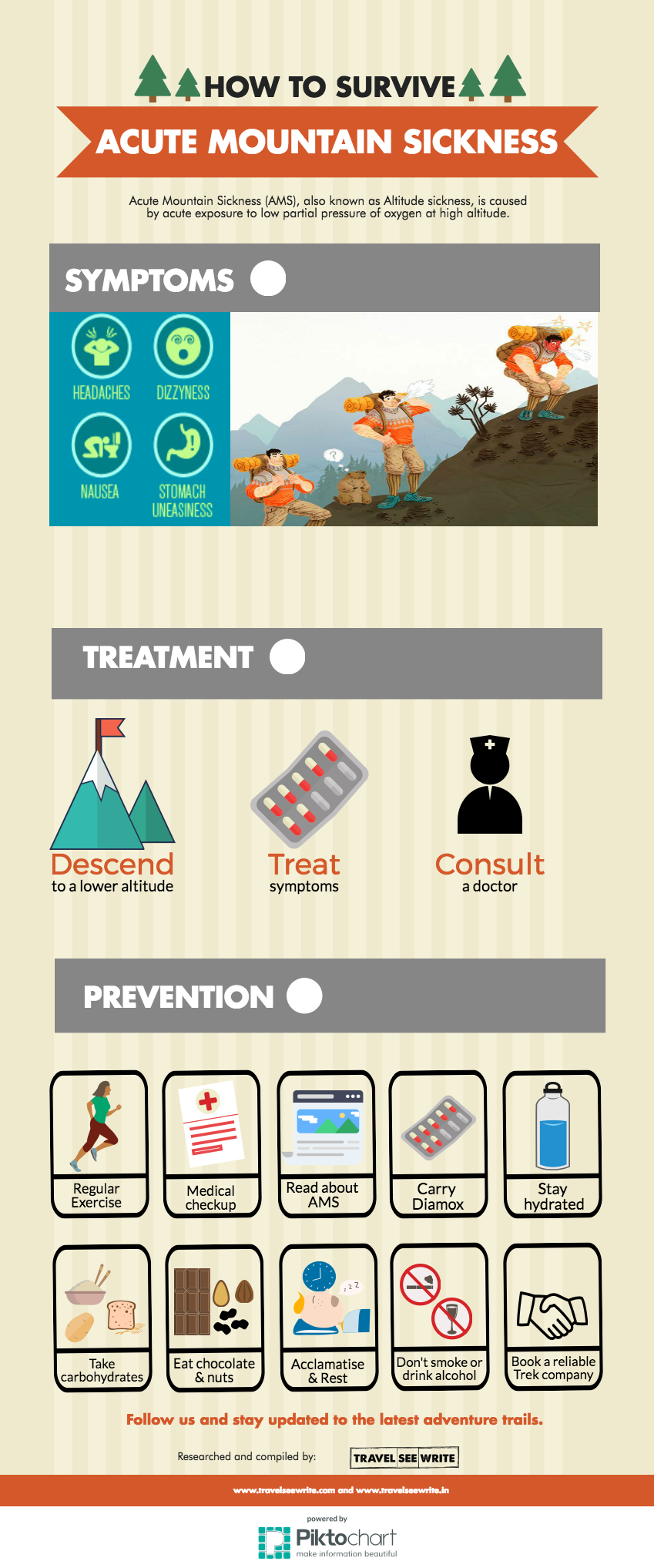
Mountain climbing is an addiction that is hard to resist. The deeper you fall for mountains the higher you rise in life. The best views come after harder climbs. But what if you fall much before reaching the summit? What if you are doing the dream trek of your life and your body gives up midway to Acute Mountain Sickness (AMS)? Would you turn back or continue doing the Everest Base Camp Trek despite the illness? Here’s everything you need to know about Acute Mountain Sickness: Causes, Symptoms, Treatment, and Prevention.
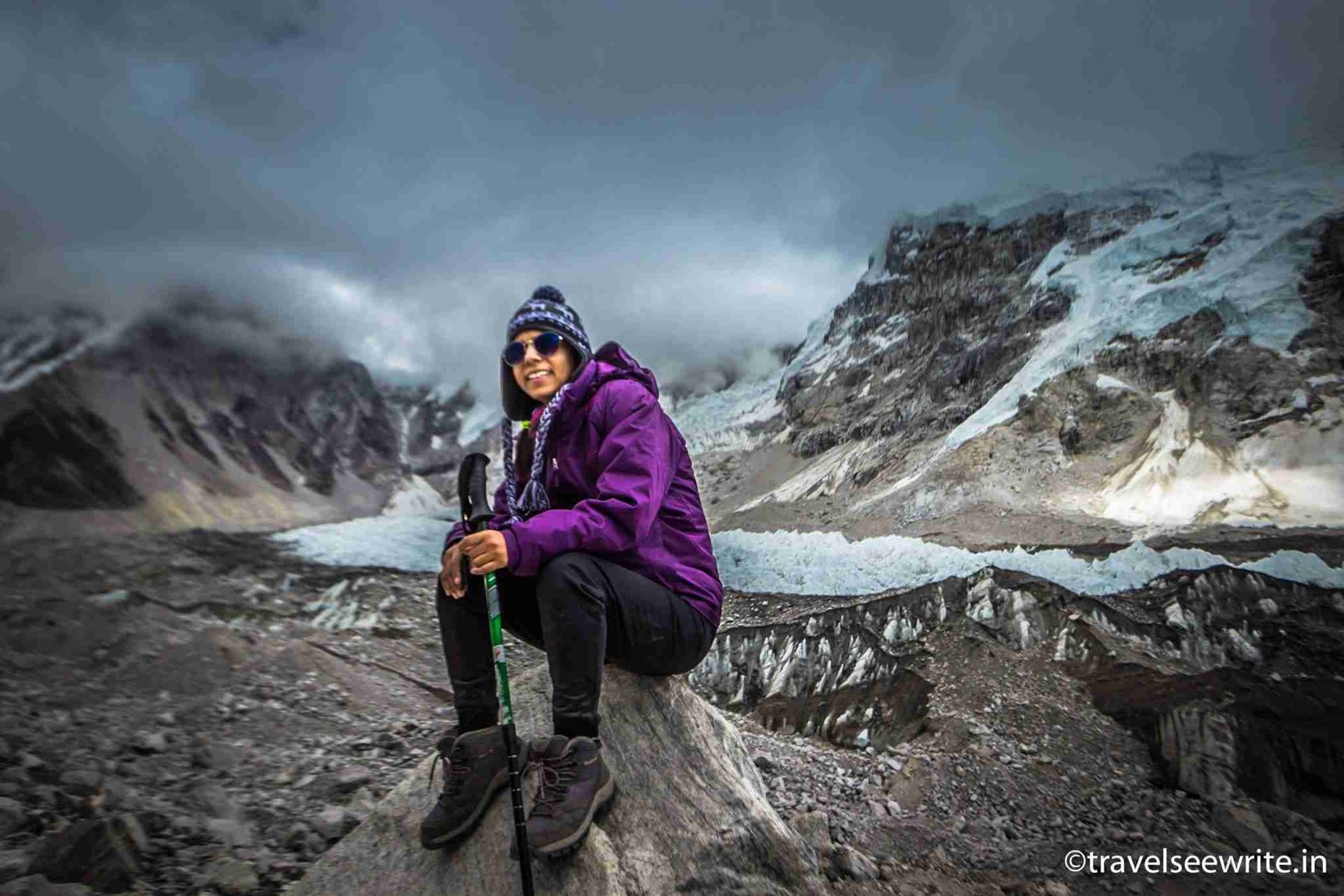
Acute mountain Sickness, also known as altitude sickness or high altitude pulmonary edema, typically occurs at about 8,000 feet, or 2,400 meters, above sea level. The common symptoms are dizziness, nausea, headache, loss of appetite and breathlessness. Most often the altitude sickness cases are mild and heal quickly. In few cases, altitude sickness can become lethal.
As you gain height with higher altitudes, the oxygen levels and air pressure decreases. When you drive or hike up a mountain, or go skiing from a lower altitude to a higher altitude at a fast pace, your body may not have enough time to adjust. This can result in acute mountain sickness. Exertion also adds up to the woes.
The symptoms generally appear within hours of moving to higher altitudes and vary depending on the severity of your condition.
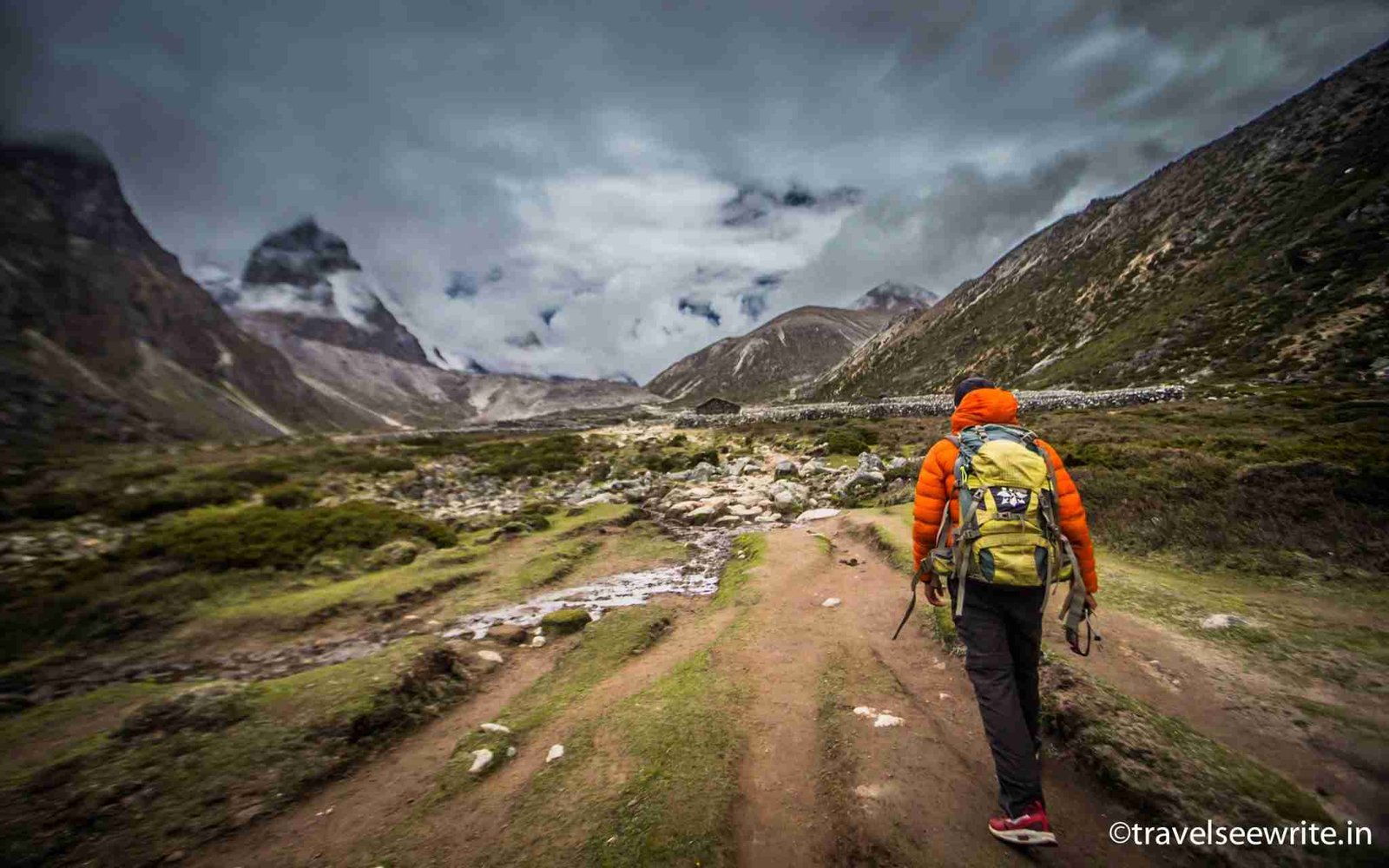

EBC Trek: From Pheriche to Lobuche
Acute Mountain Sickness treatment varies depending on its severity. You might be able to avoid complications by simply returning to a lower altitude. If severe symptoms persist, you might require oxygen or hospitalization. Here is what you should do:
While it is beyond one to predict whether they’ll get AMS or not, you can take some important precautions to reduce your chances of Acute Mountain Sickness.
Build stamina and do lung exercises for months in advance before the trek
Ensure you have no serious health issues
Review the symptoms of mountain sickness so you can recognize and treat them quickly if they occur.
Carry Diamox to adjust your body to high altitudes.
Drink Plenty of water and liquids like green tea/lemon tea
Consume foods high in carbohydrates. Carry dry fruits and nuts
Cocoa relieves altitude sickness
Do not smoke and avoid drinking alcohol
In my 12 days Everest Base Camp trek, I had two days to rest and acclimatize to altitude, but if you are not in a hurry, why not do a 16-day trek and go at a leisurely pace?
A company whose staff is knowledgeable, well-connected and customer service oriented. Explore Himalaya was great in this department because they not only had a professional setup but also own Everest Inn Lodges and Helicopter service. But I am no way recommending them; there are a lot of good companies (of course I think mine is the best), but just try to establish a rapport early to be sure they got your back when you need them. If you are planning to trek soon, do check out this interesting post on TIMS Card.
When doing a high altitude trek, you should ALWAYS take Rescue Insurance, which includes air ambulance as well as helicopter evacuation. If the AMS gets serious then there is no option but to airlift, which costs more than US$ 2500 for a helicopter evacuation from 4000m near Mt. Everest and up to US$ 5000 for a rescue in the far west. My friend did not take rescue insurance and ended up spending USD$ 8000 on his EBC trek. Read the entire story here.
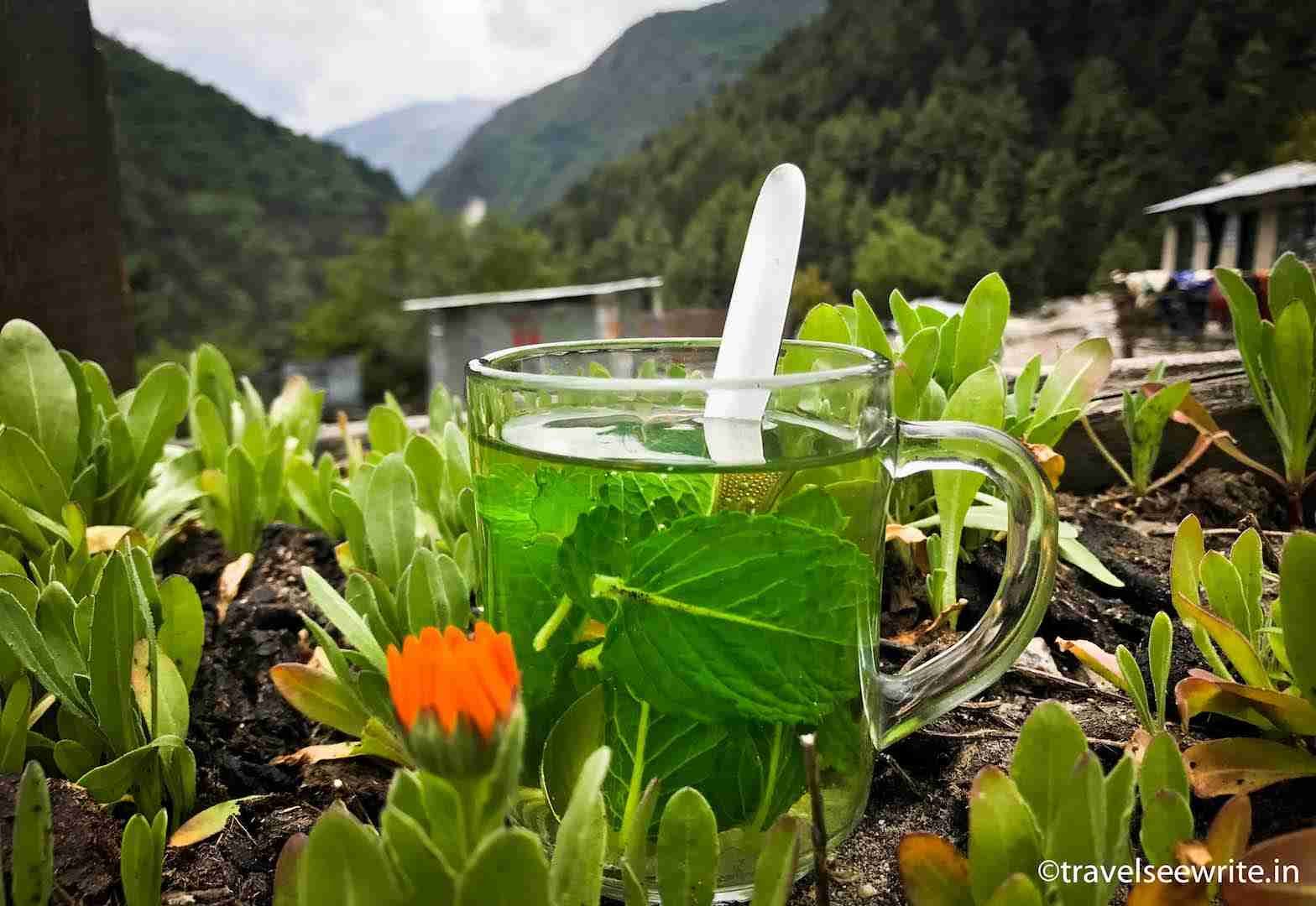
Mint Lemon Green Tea, Everest Base Camp Trek, Nepal
Acute Mountain Sickness is a serious thing. Don’t think twice before turning back. Your life is far more precious than climbing a mountain. You can always trek again but you only get one life. Have you ever faced Acute Mountain Sickness? How did you cope up with it?
Related: Leh Ladakh Road Trip
Everest Base Camp Trek: how to tackle Acute Mountain Sickness (AMS)
|
|||||||||||||||
I was invited by Nepal Tourism Board for the Himalayan Travel Mart in Nepal. The Everest Base Camp Trek was organised by Explore Himalaya. All the experiences shared above, like always, are based on my (Archana Singh’s) personal experiences. Pictures posted above were clicked by me during the trek.
Mount Everest has been the wildest dream for intrepid climbers since the 1920s. Mountaineering legends like George Mallory, Sir Edmund Hillary, and Tenzing Norgay made huge personal sacrifices and spend fortunes to walk this holy grail but today the dream is achievable. The daunting summit soars so high that trekking to its Base Camp (17,590′) is still an adventure of the highest sort. The Everest Base Camp Trek is more than just a trek.
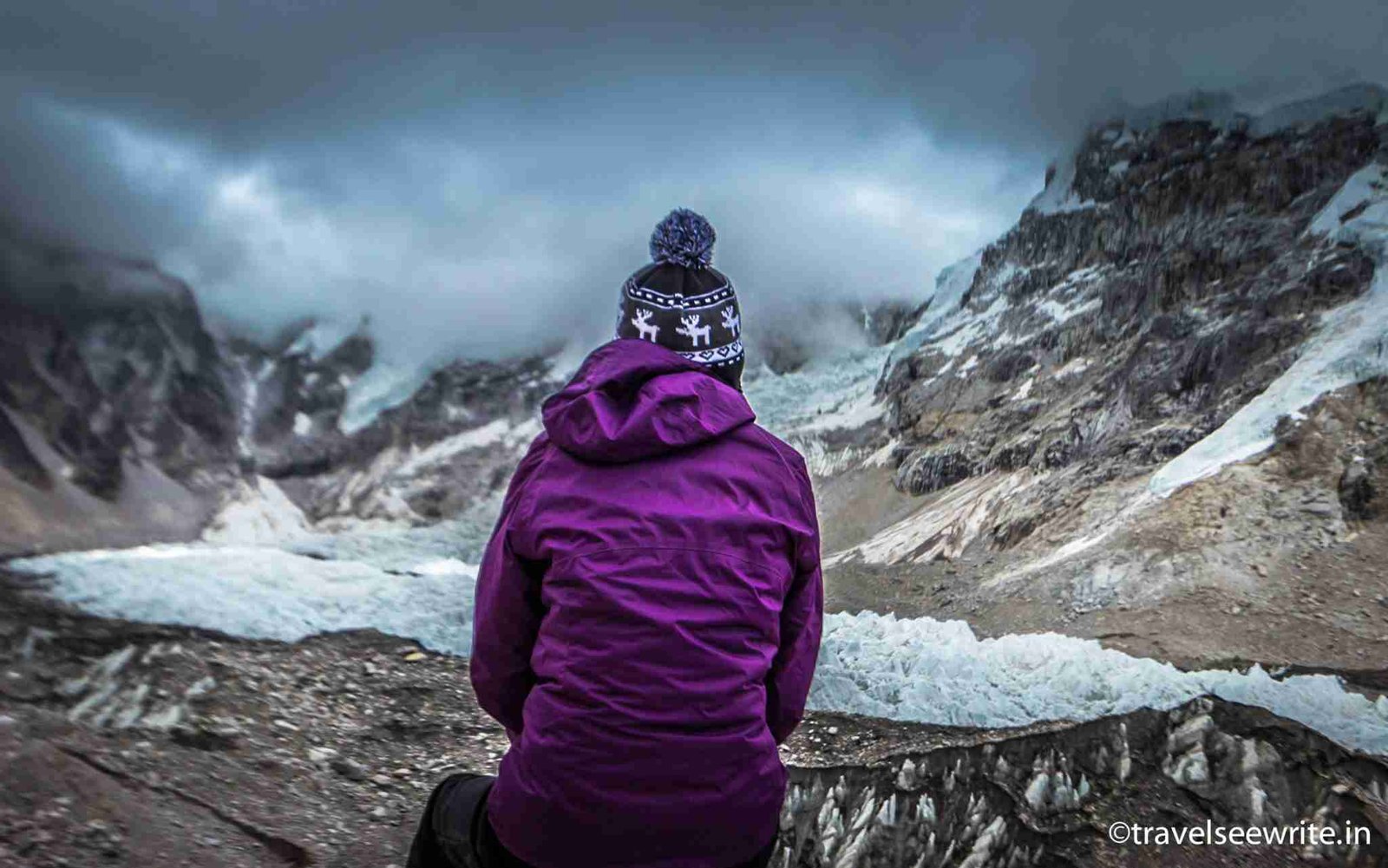
The Everest Base Camp Trek, Nepal
The trek route is dubbed as “the steps to heaven”. Every bend in the trail provides another photo opportunity – lush green forests, Sherpa villages, cascading milky waterfalls, dancing suspension bridges, fluttering colourful prayer flags, huge prayer rocks engraved with Buddhist teachings and sky-piercing glacial valleys.
In January 2017, when I was trekking in Sikkim, India, it wasn’t even in my wildest dreams I could be walking in the footsteps of the mountaineering legends in less than six months. But sometimes reality can be better than dreams. I was gearing up to attend the first Himalayan Travel Mart in Nepal in May 2017, when I got an opportunity to do the EBC trek with Explore Himalaya. Here’s my experience of trekking the most iconic and beautiful trek of the world.

Walking Distance: 8km (3-4 hours)

Everest Base Camp Trek: Sherpa Lodge at Phakding
The Everest Base Camp Trek begins with a mountain flight to Lukla. The thirty-five-minute mountain flight from Kathmandu to the Tenzing Hillary Airport, Lukla perched at 2800 meters was one of the most scenic and thrilling rides I have ever experienced. A quick breakfast and I was off for a 3-hour trek to Phakding with my guide and porter.
Walking Distance: 10-12km (5-6 hours)

Everest Base Camp Trek – Phakding to Namche Bazaar
It was one of the longest days of our trek, as we walked for 6 hours covering 10km with an elevation gain of 800 metres. The arduous hike to Namche Bazaar, the biggest Sherpa village in Nepal, was totally worth the effort for the views. Huge prayer rocks (Mani stones) engraved with Tibetian Buddhist prayers and pretty tea houses dotted the trail.
We crossed the Dudhkoshi River via a long suspension bridge and then walked through a beautiful pine forest to Monju. After lunch, the tough uphill trek began. My fatigue vanished, as soon as I saw the beautiful Namche Bazaar village.
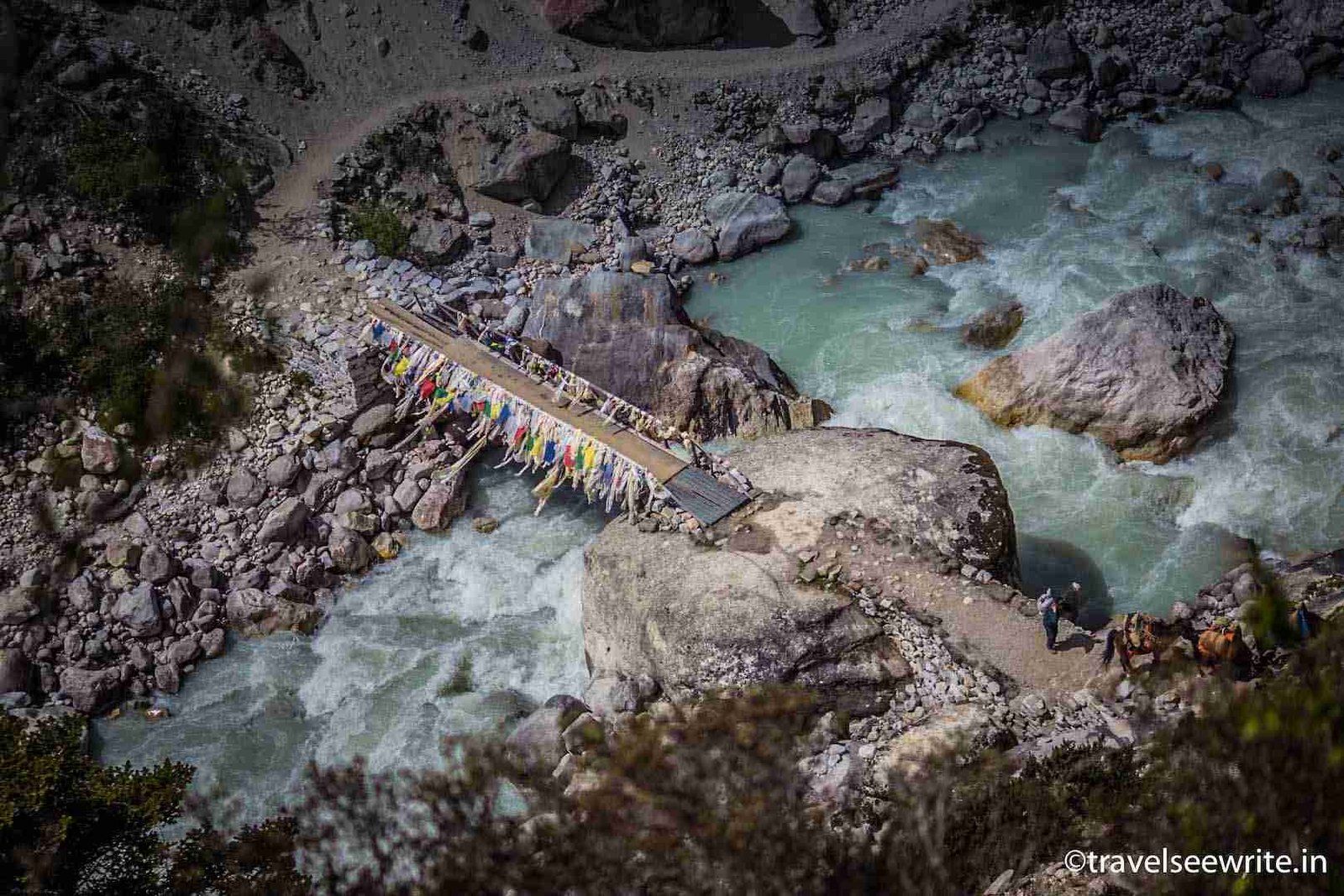
Dudhkoshi River, Everest Base Camp Trek, Nepal
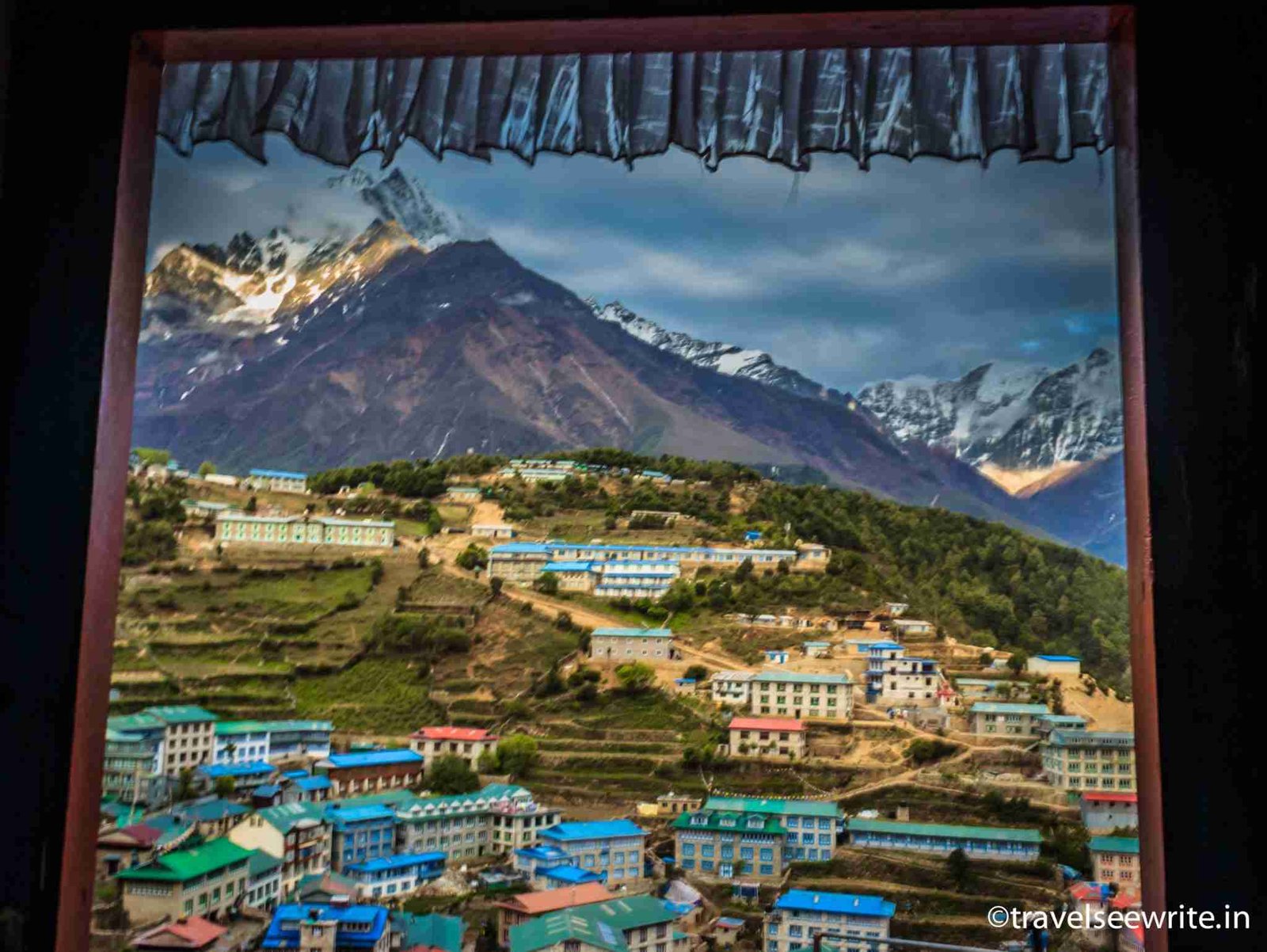
Namche Bazaar View from the Monastery, EBC Trek, Nepal
One day was reserved to recover from the arduous previous day hike and acclimatise to the height gain. Most of the time I lazed around, sipping honey-ginger-lemon tea. In the evening, I went to the town clicking pictures, having apple pie and paying homage to the World’s highest Irish Pub. The highlight of my walk was the Namche Bazaar monastery from where the houses appeared to be in a U shaped bowl. Clouds kept playing hide n seek with the snow-clad high mountain peaks.

The mid point of Everest Base Camp Trek: Namche Bazaar at twilight

EBC Trek: Spiderman spotted at Namche Bazaar, Nepal

EBC Trek: Irish Pub at Namche Bazaar, Nepal
Walking Distance: 10km (6 hours)

EBC Trek: With a glimpse of Everest
Stomach filled with hearty breakfast and restored limbs, I continued my Everest Base Camp adventure. I had barely walked 500 metres when my eyes got the most beautiful gift of the day – the mighty Everest, Nuptse and Lhotse peaks stood majestically in full glory. I wanted to stay longer but we had a long-distance to cover. So, reluctantly I moved on. A short drop took us to the base of the river, and then after crossing the river, we were hiking again through the forest pass.
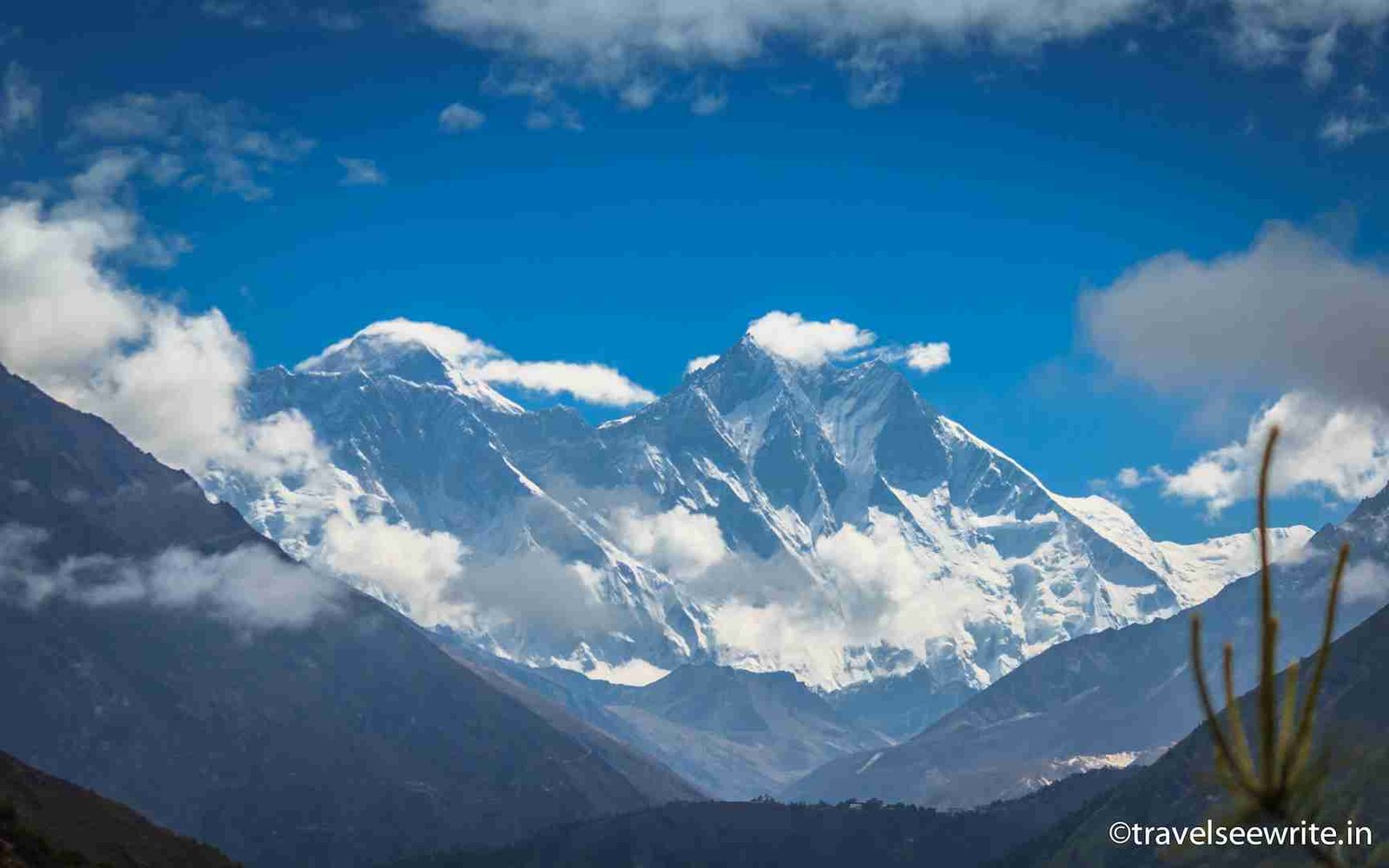
Everest View from Namche to Tengboche, EBC Trek
Finally, the hard work paid off when I reached Tengboche, one of the most beautiful places in the Everest region. There was a veil of mist covering the pretty sleepy village. In the centre, stood the bright red coloured Tengboche monastery.
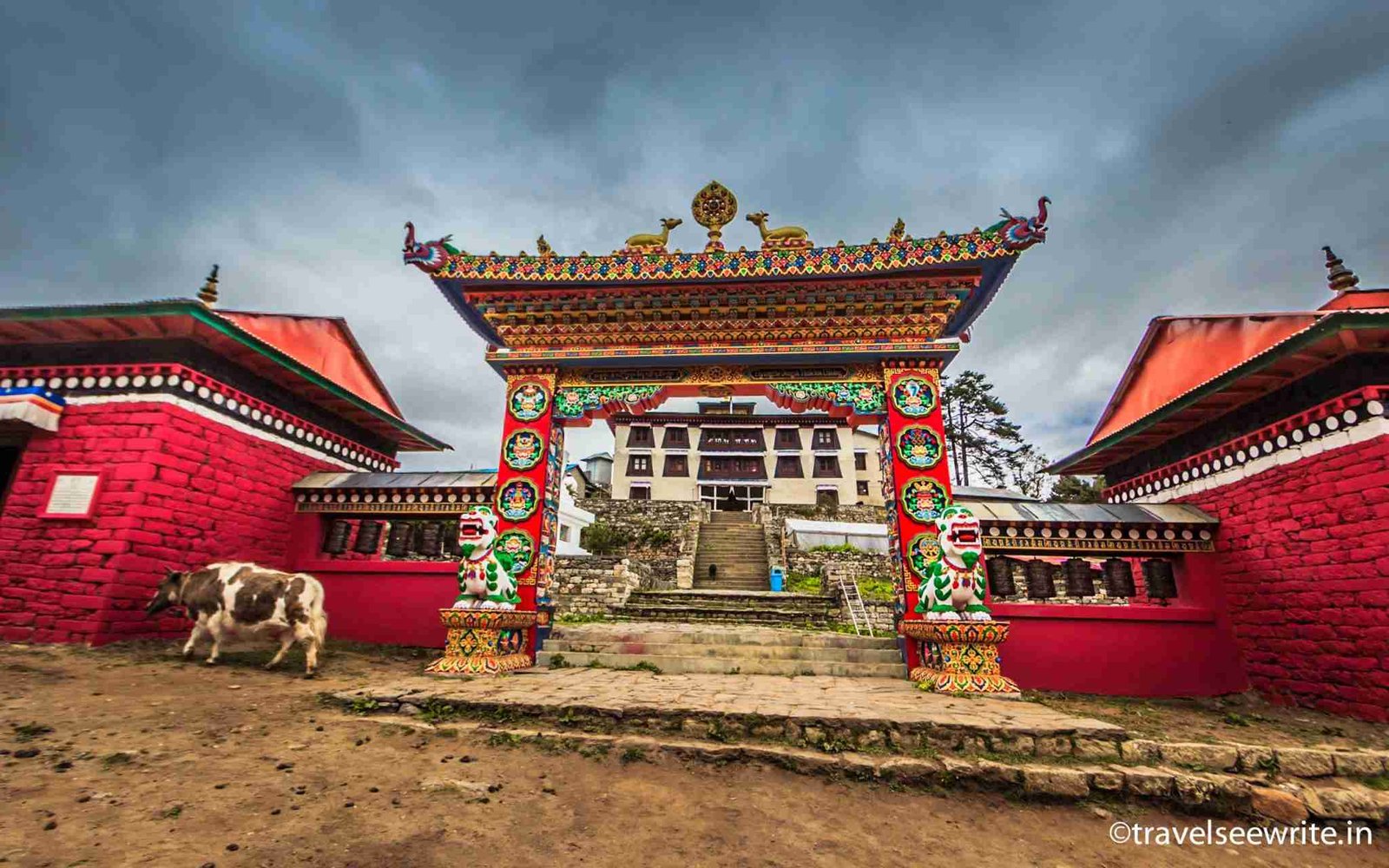
Tangboche Monastary, EBC Trek
Walking Distance: 11km (6 hours)

EBC Trek: Tengboche Village
The day started with the prayer session at the Tengboche Monastery and soon enough I was walking through the rhododendron forest to Debouche followed by a bridge over the raging Imja Khola River. Passing the valley, I traversed through the plains to Pangboche village. The afternoon trek after lunch was a difficult one, the lush green forested landscape gave way to dry; deserted mountains as we hiked towards Pheriche.

EBC Trek: Suspension bridge over the raging Imja Khola River
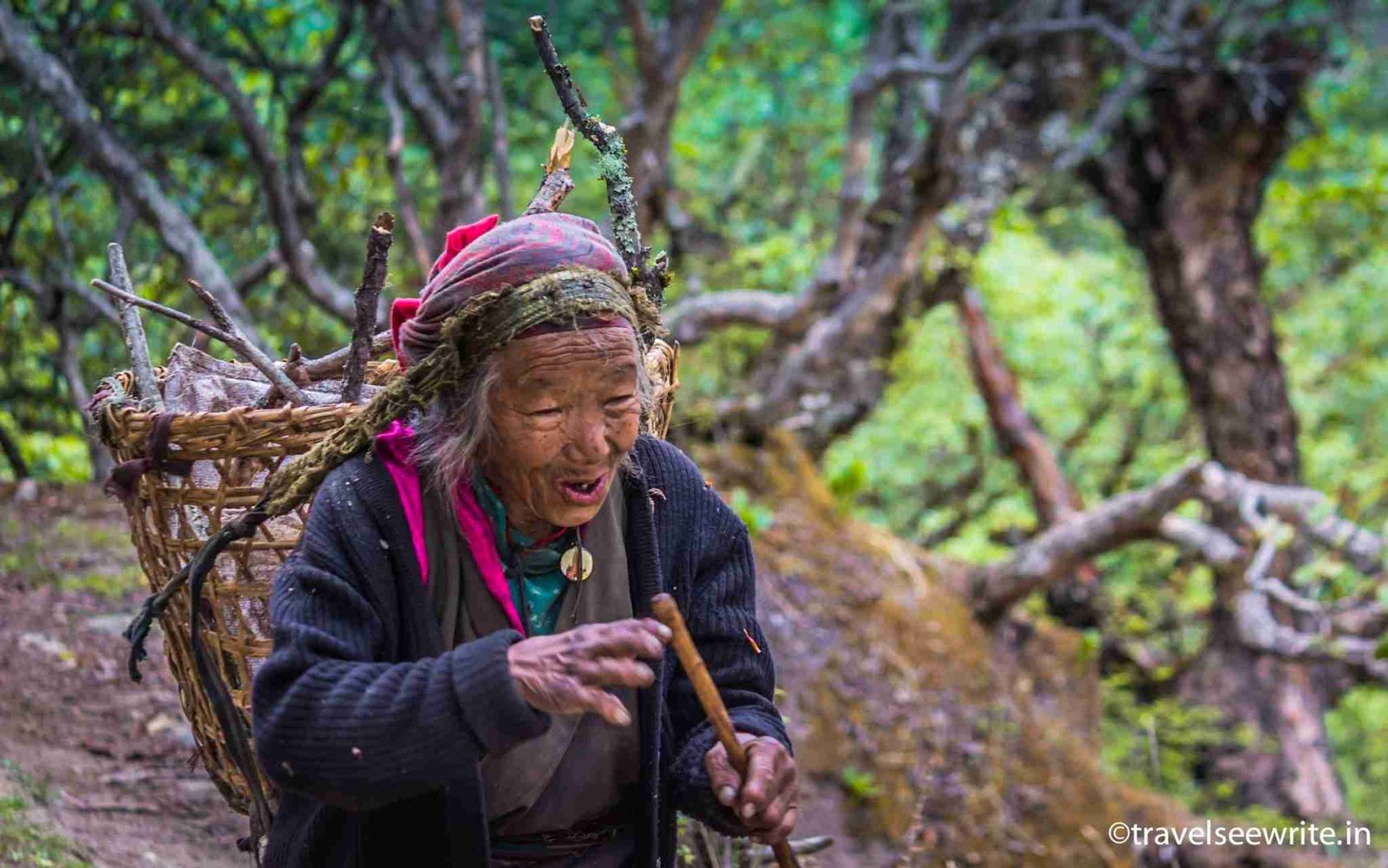
EBC Trek: Locals on my way from Tengboche to Pheriche
The acclimatization came as a great relief to the sore body. Again, like in Namche, I continued my routine – Eat Sleep Repeat. In the evening I went for a walk around the village to spot yaks.

EBC Trek: Yaks in Pheriche Valley
Walking Distance: 11-12 km (6-7 hours)
This was the most daunting stretch of the trek. It became more challenging, due to the higher altitude and my body started showing strong Acute Mountain Sickness (AMS) symptoms. I still kept moving on. After a tough, steep walk to the top of a high hill, I reached Dungla, where the memorial stupas were dedicated to the climbers and trekkers who lost their lives to Everest over the years.
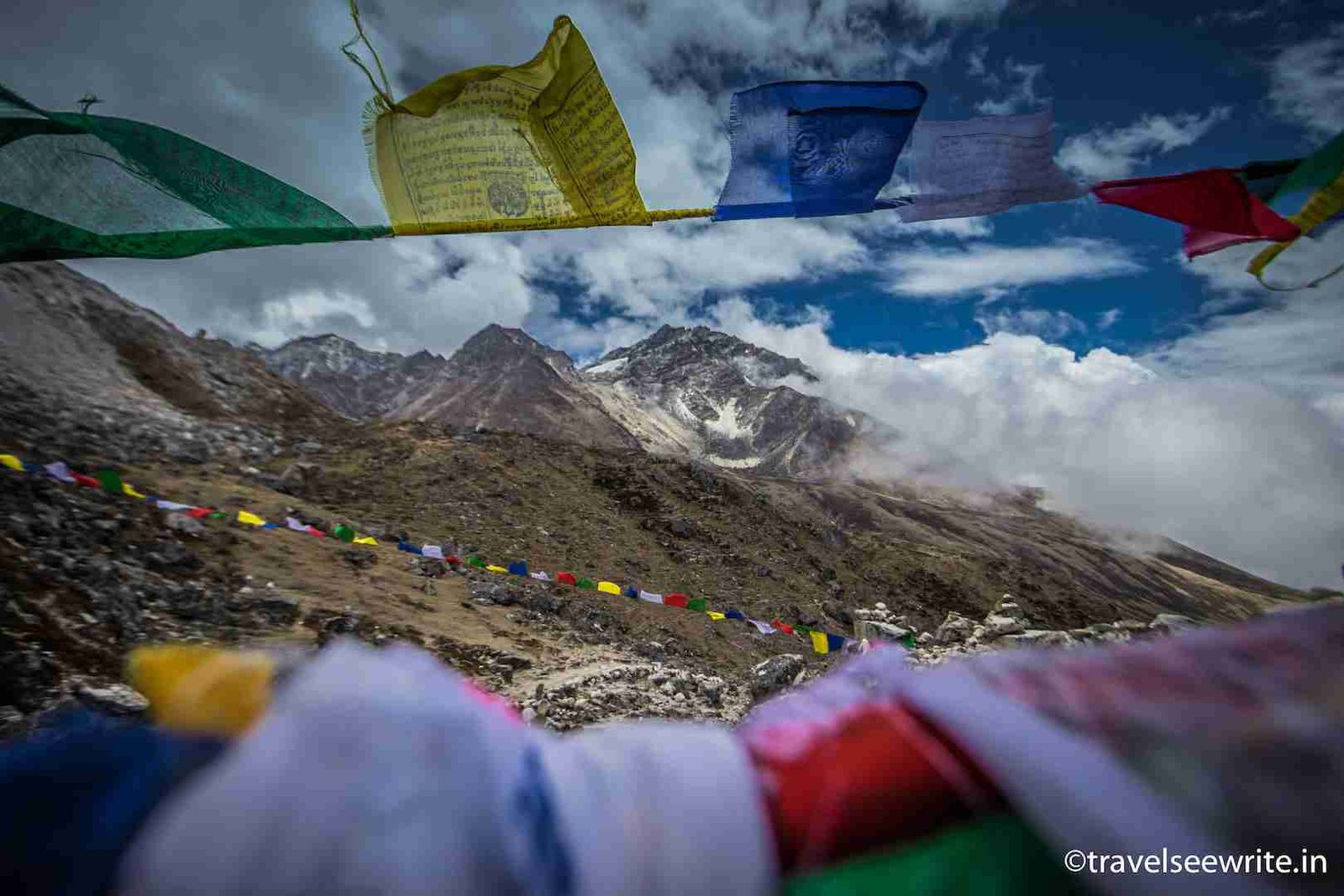
Everest Base Camp Trek: From Pheriche to Lobuche
The next part of my adventure brought over the craggy mountain terrain to Lobuche, a small settlement with amazing views of Mt. Lobuche, Mt. Pumori and the Nuptse. When I reached our lodge, I was exhausted and hungry but my body wasn’t ready to accept any foreign product, not even water. I had already vomited several times and was feeling very weak. So, the best option was to snuggle up under a blanket.
EBC Trek: From Pheriche to Lobuche
Walking Distance: 15km (6-8 hours)
EBC Trek: At the base camp
My guide was worried about my wearing health but I was determined to make it to the EBC. Turning back wasn’t an option. My mental strength pushed my physical strength to not give up. The trek from Lobuche to Gorekshep was gradual but the subsequent trail to Everest Base Camp was harder, involving rocky dunes and moraine, formed by the accumulation of unconsolidated glacial debris. On the way to EBC, I came across the famed Khumbu Glacier and icefall, located on the slopes of Everest. As the afternoon sun started to wane, I decided to head back to Gorekshep for some much-needed rest and relaxation after a gruelling day.
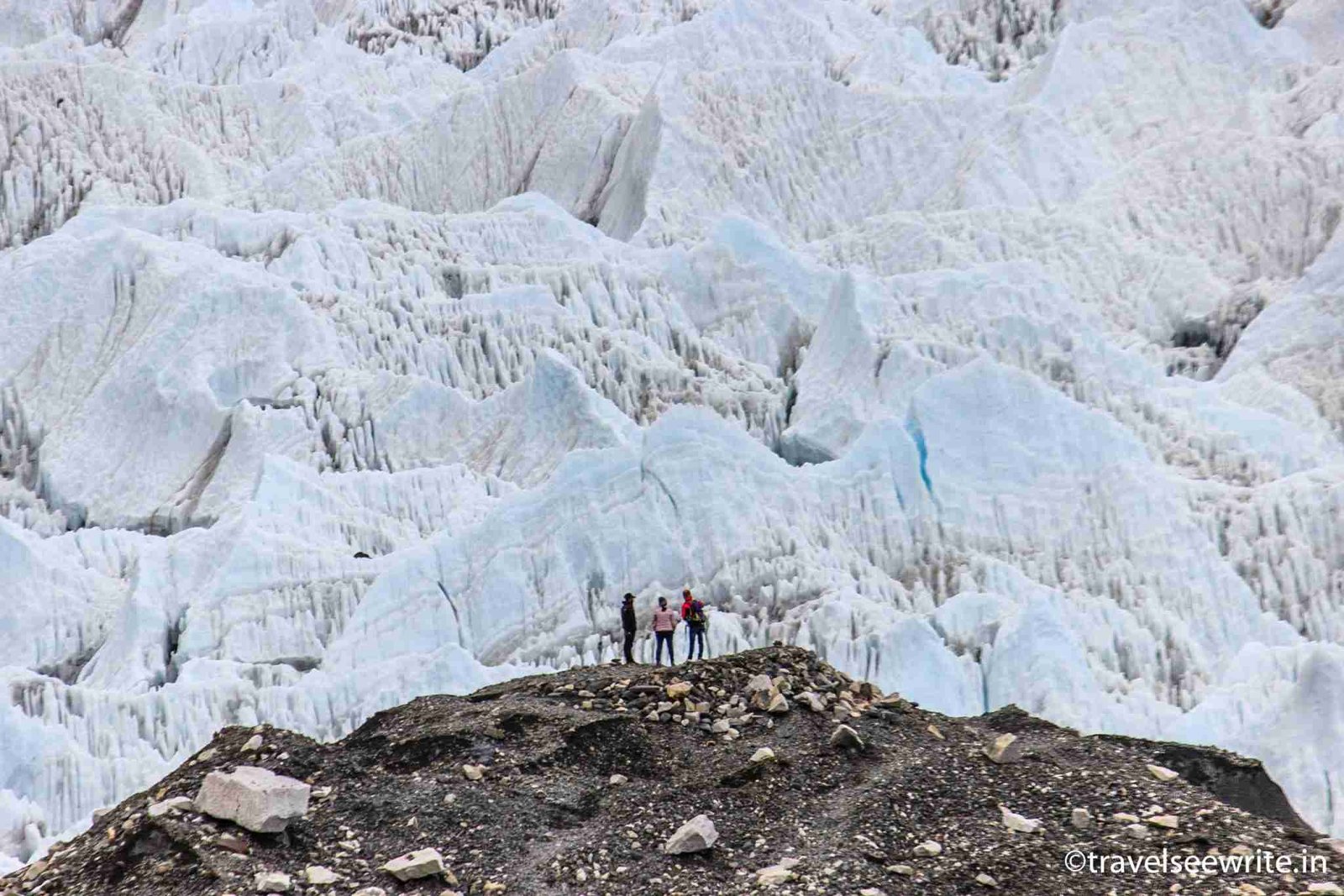
Khumbu Glacier, Everest Base Camp, Nepal

Khumbu Icefall, Everest Base Camp, Nepal. Pic cc Ashish Shrestha
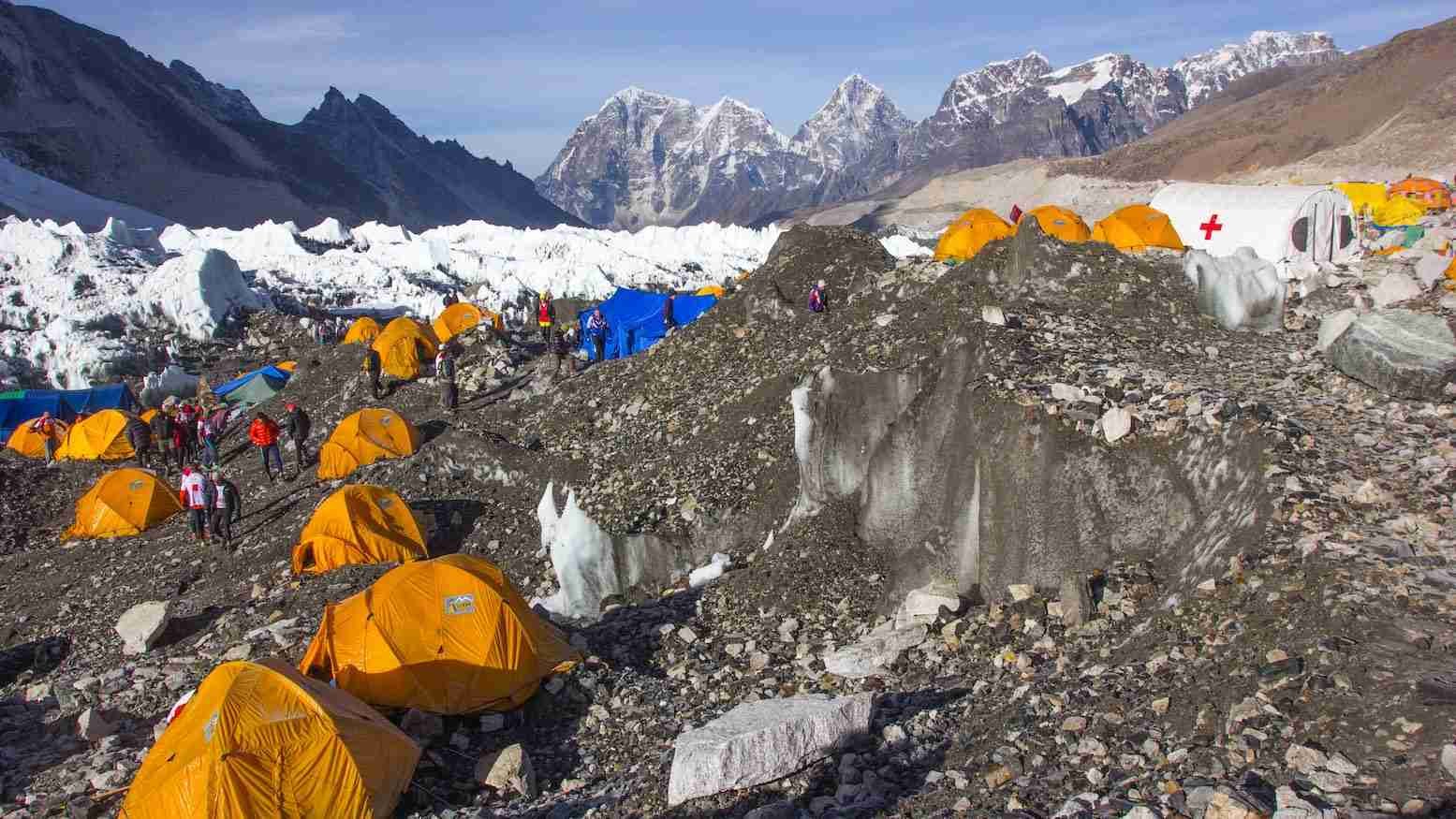
Everest Base Camp, Nepal. Pic cc Ashish Shrestha
Walking distance: 12-13km (5-6 hours)

It has been three days since I had eaten or drank anything. My worst nightmare had turned into a reality. I was in stage IV of AMS and my goal of visiting the EBC was achieved so, I didn’t want to risk my life any further. Hence, I made a decision to let go off visiting the Kalapathar. Before dawn, I started my descend to Pheriche. During the trek, I saw the glorious sunrise over Mt. Everest and the spectacular view of Nuptse Cholatse and Lhotse. As I descended, my pace got a lot brisker and my health improved.

Everest Base Camp Trek: Gorakshep to Pheriche
Distance of walking: 13-15km (7-8 hours)
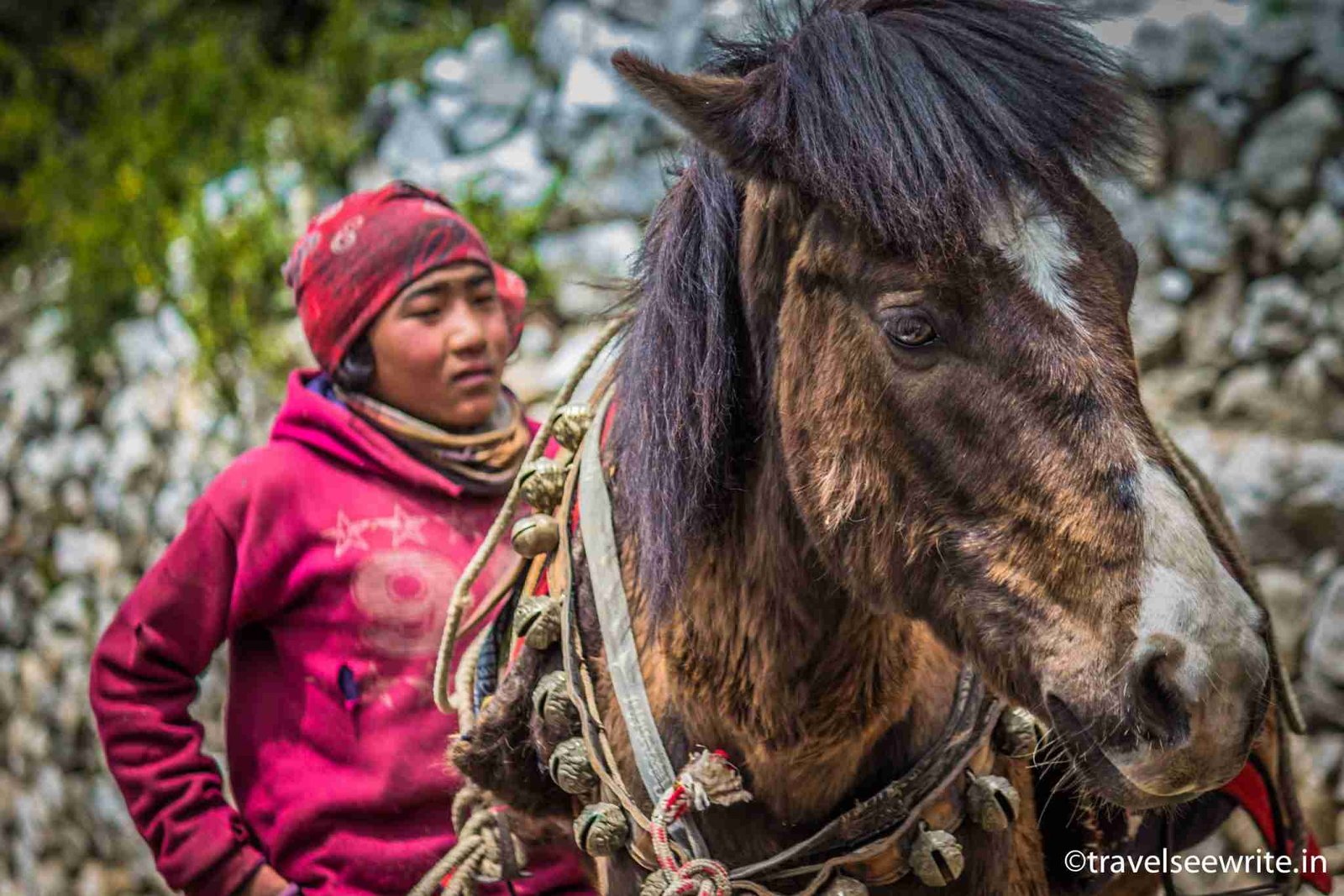
Everest Base Camp Trek: Sherpa boy and his pony
The walk from Pheriche back to Tengboche was mainly downhill, albeit an hour of climbing a hill. I was on and off accompanied by the Sherpa boys and their cattle. By late afternoon I was in the comfort of Everest Inn enjoying my favourite meal made by Ganesh.
Walking Distance: 16km (6-8 hours)

EBC Trek: Sherpa Woman
After breakfast, I began my trek toward the Hillary Suspension Bridge and then passed through Sherpa villages. We stopped over at Phakding for quick lunch. It was an uphill trek to Lukla, made even more challenging when I had to navigate through the herd of cattle and yaks littering everywhere.
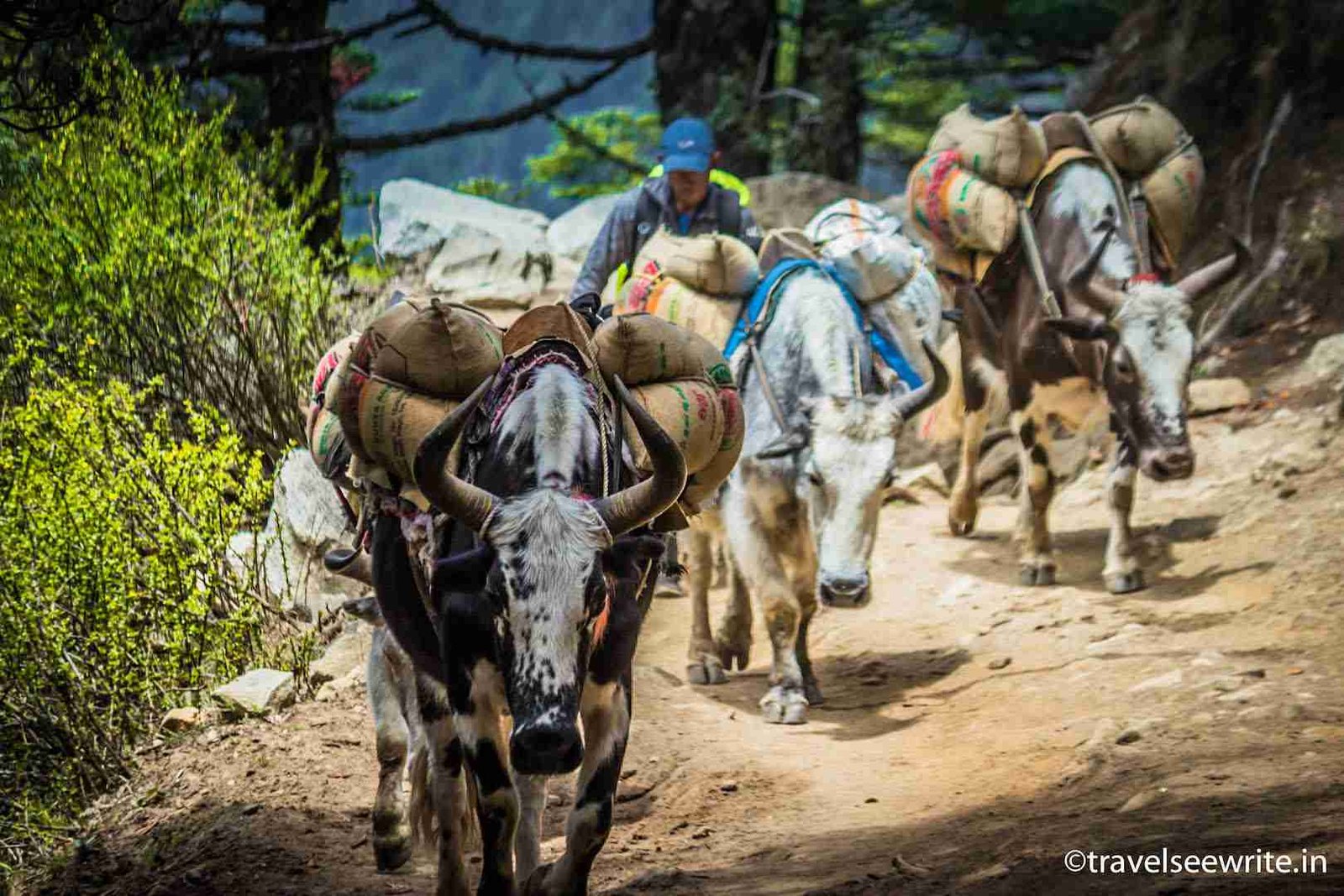
Everest Base Camp Trek – constant companions
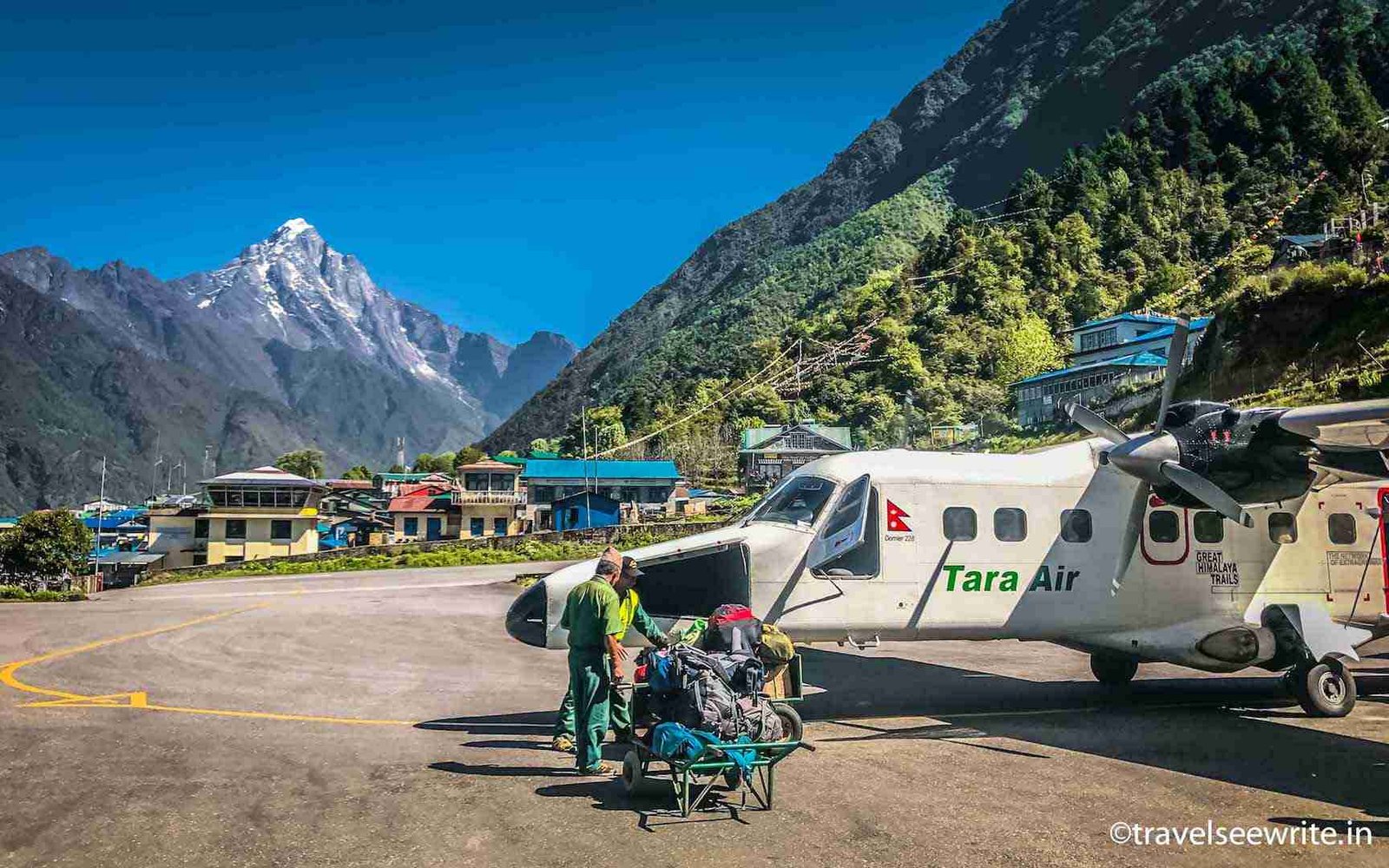
Everest Base Camp Trek – Lukla Airport
Thank god, the monsoon arrived in full swing on our last day. After waiting for six hours, we took off to Kathmandu.
Today as I reflect back on my Everest Base Camp Trek, all I can say is nothing beats the thrill and sense of accomplishment that grips a hiker on seeing the power and grace of the mighty Everest up close. It is a feeling that can only be felt not described in words. If I can do this trek then anyone can do it.
P.S.: I don’t recommend to continue hiking if you see strong Acute Mountain Sickness symptoms. I knew my limits and I acted accordingly. The best solution is to take it easy and go down to a lower altitude as soon as possible.
For a complete guide to the causes, symptoms, treatment, and prevention of AMS, do read my detailed post on How to deal with Acute Mountain Sickness.
Everest Base Camp Trek, Meadows of Pheriche
February – May, and September – October
Locals are the unsung heroes, who can transform your good trip into a great one. I might not have completed my trek if it was not with Explore Himalaya. They were very professional yet empathetic. Throughout the trek, my guide, Sailesh Lopchan and other staff members took good care of me and always motivated me whenever I went low on motivation. All the services like mountain flight, accommodation, food and guide were top notch.
During the Everest Base Camp Trek, I stayed at seven different lodges for ten nights. All lodges were basic and comfortable. However, my favourite was the chain of Everest Inn lodges run by Explore Himalaya – Lukla (Shangri-La), Phakding (E-Sherpa Eco Home), Namche Bazaar (Hotel Everest) and Pheriche (The White Yak). They were spacious, cosy, well insulated and most importantly clean. When I travel, my biggest concern is the toilet. Thankfully toilets and showers were clean and well maintained. Everest Inns were indeed a home away from home.

The Everest Inn Lodge (White Yak) at Pheriche during EBC Trek
The food at the Everest Inn Lodges was to die for. Not only it was healthy (because it was home-cooked) but it was tasty too. At some places, it was better than what you’ll get in Kathmandu. The staff was very warm and gentle. They would never so NO to anything. There was no extra charge for hot water, charging or shower. Because connectivity is an issue at such a height, so in some places, the Wi-Fi was charged, but at, a very nominal price.

EBC Trek: Breakfast at Everest Inn, Namche Bazaar, Nepal
This story was published in DB post in Sep 2017

Everest Base Camp Trek
Inspired? Pin these to your Pinterest boards |
||
 |
 |
 |
I was invited by the Nepal Tourism Board for the Himalayan Travel Mart in Nepal. The Everest Base Camp Trek was organised by Explore Himalaya. All the experiences shared above, like always, are based on my (Archana Singh’s) personal experiences. Pictures posted above were clicked by me during the trek.
During my two months solo trip around the US, I kept New York City for the last. Not because I thought the city didn’t have much to offer. But simply because I love exploring wilderness more than concrete jungle and I thought NYC would have more of the latter. I am happy to admit I was so wrong about the city in motion. New York is an exciting place to be in, and is simply loaded with bucket list attractions like Statue of Liberty, Empire State Building, Brooklyn Bridge, Central Park, Times Square, Wall Street and the list goes on and on.

The city will never run out of options with its always upbeat energy. You can explore either by walking or taking a subway. And once you are done with sightseeing of city attractions, you should explore road-trip destinations that are within an easy driving distance. Tourists and New Yorkers love the city more for those countless short road trips from NYC you can enjoy.

Best Roadtrips from NYC
So, whether you are looking for an easy weekend getaway or a romantic one, there is always a perfect destination nearby. You could be in a mood for a kick-back-and-relax type and raring to go for an outdoor adventure. Those short road trips in NYC will not disappoint you. However, before hit the road this weekend, make sure that your vehicle or transport is in good shape and order. Kiwitaxi is highly popular among the locals and the tourists as it is a reliable service offers best services and professional drivers.
Towards the western boundary of the city lies this beautiful gem, which is just about fifty miles away. The riverside hamlet is filled with nature as well as antique shops and country store. Drive up here and spend the whole day relaxing and unwinding. You could even plan a picnic.

Pic Courtesy: Roban Kramer, under creative common 2.0 license
About two hours away from the city, Hudson is famous for its food and antiques. New Yorkers love coming here for the rustic fine dining experience as well as some rare retro finds. It is fun to explore the gorgeous Hudson River environment lined with quaint historic homes.

Pic Courtesy: Doug Kerr, under creative common 2.0 license
Another popular road trip is the Bear Mountain, about an hour away. Escape from city madness during the early hours and reach the beautiful state located near the west bank of the Hudson River. Spend the day hiking and biking or fishing or swimming.

The unassuming city is less than two hours away from NYC and is filled with indie boutiques, seasonal-focused eateries and different quaint spots for shopping. Once you reach, you can rent a bike to explore the stunning woodlands and meadows.
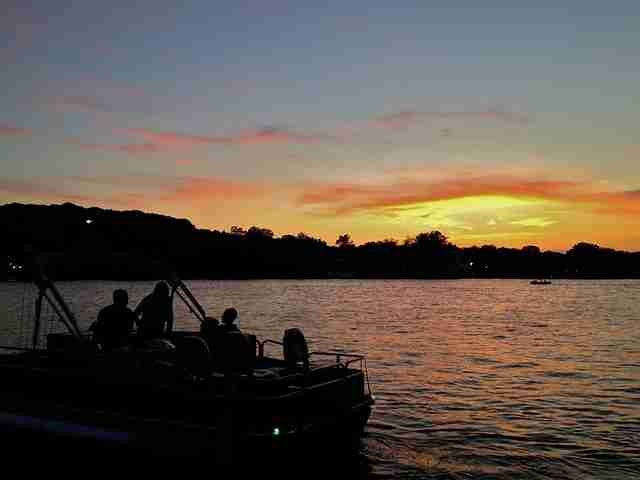
Pic: Courtesy: ScubaBear68 under creative common 2.0 license
Road trip to New Paltz is certainly the most historic one and is about 1hr 45 mins away from NYC. Learn about the history of the place once you reach, about the 17th-century Huguenot settlers, the reconstructed 1717 church or the historic homes.

Pic: Courtesy: Jebb, under creative common 2.0 license
If you love beaches, then head for Sea Girt, NJ, about two hours away from NYC. The small town of Sea Girt boasts of beautiful beaches and is just the right spot for a bit of romance. There are elegant restaurants where you can get a few cocktails.

Pic: Courtesy: Jazz Guy, under creative common 2.0 license
About 150 miles from NYC, this place takes less than two hours to reach. Experience the rural New England charm in its dense, lush forests. You could enjoy a picnic beside Berry Lake or try out exotic whiskeys and niche brews in Moe’s Tavern.

Pic: Courtesy: Kathryn under creative common 2.0 license
Have you ever been on any of these 7 Best Road trips from NYC? Did I miss out on any? Please feel free to share your feedback in comments section.
During my two months solo trip around the US, I kept New York City for the last. Not because I thought the city didn’t have much to offer. But simply because I love exploring wilderness more than concrete jungle and I thought NYC would have more of the latter. I am happy to admit I was so wrong about the city in motion. New York is an exciting place to be in, and is simply loaded with bucket list attractions like Statue of Liberty, Empire State Building, Brooklyn Bridge, Central Park, Times Square, Wall Street and the list goes on and on.
The city will never run out of options with its always upbeat energy. You can explore either by walking or taking a subway. And once you are done with sightseeing of city attractions, you should explore road-trip destinations that are within an easy driving distance. Tourists and New Yorkers love the city more for those countless short Road Trips from NYC you can enjoy.
Best Roadtrips from NYC
So, whether you are looking for an easy weekend getaway or a romantic one, there is always a perfect destination nearby. You could be in a mood for a kick-back-and-relax type and raring to go for an outdoor adventure. Those short road trips in NYC will not disappoint you. However, before hit the road this weekend, make sure that your vehicle or transport is in good shape and order. Kiwitaxi is highly popular among the locals and the tourists as it is a reliable service offers best services and professional drivers.
Towards the western boundary of the city lies this beautiful gem, which is just about fifty miles away. The riverside hamlet is filled with nature as well as antique shops and country store. Drive up here and spend the whole day relaxing and unwinding. You could even plan a picnic.
Pic Courtesy: Roban Kramer, under creative common 2.0 license
About two hours away from the city, Hudson is famous for its food and antiques. New Yorkers love coming here for the rustic fine dining experience as well as some rare retro finds. It is fun to explore the gorgeous Hudson River environment lined with quaint historic homes.
Pic Courtesy: Doug Kerr, under creative common 2.0 license
Another popular road trip is the Bear Mountain, about an hour away. Escape from city madness during the early hours and reach the beautiful state located near the west bank of the Hudson River. Spend the day hiking and biking or fishing or swimming.
The unassuming city is less than two hours away from NYC and is filled with indie boutiques, seasonal-focused eateries and different quaint spots for shopping. Once you reach, you can rent a bike to explore the stunning woodlands and meadows.
Pic: Courtesy: ScubaBear68 under creative common 2.0 license
Road trip to New Paltz is certainly the most historic one and is about 1hr 45 mins away from NYC. Learn about the history of the place once you reach, about the 17th-century Huguenot settlers, the reconstructed 1717 church or the historic homes.
Pic: Courtesy: Jebb, under creative common 2.0 license
If you love beaches, then head for Sea Girt, NJ, about two hours away from NYC. The small town of Sea Girt boasts of beautiful beaches and is just the right spot for a bit of romance. There are elegant restaurants where you can get a few cocktails.
Pic: Courtesy: Jazz Guy, under creative common 2.0 license
About 150 miles from NYC, this place takes less than two hours to reach. Experience the rural New England charm in its dense, lush forests. You could enjoy a picnic beside Berry Lake or try out exotic whiskeys and niche brews in Moe’s Tavern.
Pic: Courtesy: Kathryn under creative common 2.0 license
Have you ever been on any of these 7 Best Road trips from NYC? Did I miss out on any? Please feel free to share your feedback in comments section.
Time changes everything. Some things become beautiful with time. Some lose their sheen. Nothing is left untouched, especially our cities. Some transform into maximum cities from trading towns while others lose the stunning coastline to a concrete jungle. Time preserve some and perish others. On the eve of India’s 72nd Independence Day, I was visiting my grandparents in Gujarat. Like a master storyteller, my grandpa was narrating his Independence era stories with quintessential statements like, “hamare zamane mein toh aisa hota tha” (in our time it used to be like this). He went into his room and fetched his well-preserved black and white photo album to give us a glimpse of India: then and now.

Connaught Place, Delhi. India: then and now
As I was flipping through his photo album, I couldn’t help but compare the “then and now” photos of the cities and famous landmarks I have grown up looking up to. The world today looks so different from my grandpa’s time. There has been a paradigm shift in everything – mindset, lifestyle, economy, and culture to name a few. India’s economy, which was once characterized by Nehruvian socialism, stands vastly ‘Modified’ today. We are one of the fastest growing economies in the world. But with that growth, the makeup of our cities has changed remarkably. This topic requires a great deal of research and analysis. So, I’ll leave it for now and instead share few pictures from India: then and now.

Humayun Tomb, Delhi. India: then and now
My grandpa’s story piqued my interest in knowing more about the past of India. I was surfing the internet when I came across Expedia’s new interactive tool where we can travel back in time and explore some of India’s famous landmarks. The best part about this tool is it shows you how places looked in the past and how they look in the present.

Landmarks of India: then and now
So, put on your monochrome glasses, visit the Expedia website, flip the images one by one, and travel back in time!
If you are interested to visit some offbeat places in India, do check out these articles:
Time changes everything. Some things become beautiful with time. Some lose their sheen. Nothing is left untouched, especially our cities. Some transform into maximum cities from trading towns while others lose the stunning coastline to a concrete jungle. Time preserve some and perish others. On the eve of India’s 70th Independence Day, I was visiting my grandparents. Like a master storyteller, my grandpa was narrating his Independence era stories with quintessential statements like, “hamare zamane mein toh aisa hota tha” (in our time it used to be like this). He went into his room and fetched his well-preserved black and white photo album to give us a glimpse of India: then and now.
Connaught Place, Delhi. India: then and now
As I was flipping through his photo album, I couldn’t help but compare the “then and now” photos of the cities and famous landmarks I have grown up looking up to. The world today looks so different from my grandpa’s time. There has been a paradigm shift in everything – mindset, lifestyle, economy, and culture to name a few. India’s economy, which was once characterized by Nehruvian socialism, stands vastly ‘Modified’ today. We are one of the fastest growing economies in the world. But with that growth, the makeup of our cities has changed remarkably. This topic requires a great deal of research and analysis. So, I’ll leave it for now and instead share few pictures from India: then and now.
Humayun Tomb, Delhi. India: then and now
My grandpa’s story piqued my interest in knowing more about the past of India. I was surfing the internet when I came across Expedia’s new interactive tool where we can travel back in time and explore some of India’s famous landmarks. The best part about this tool is it shows you how places looked in the past and how they look in the present.
Landmarks of India: then and now
So, put on your monochrome glasses, visit the Expedia website, flip the images one by one, and travel back in time!
It is said ‘out of sight out of mind’ but in travel, it’s usually the opposite. Even if a place tick marks all the boxes, we tend to ignore it in favor of more popular destinations. You know why? Because the grass is always greener on the other side. We tend to choose holiday places by the potential of likes and comments it can garner on Facebook. Far away places appear to be more exotic than nearby (less popular but equally good) places. Selangor, Malaysia has everything you would want in a perfect holiday destination but still, you should NEVER visit it. Intrigued?
Here are my 10 reasons why you should NEVER visit Selangor, Malaysia
Selangor is the biggest and the most developed part of Malaysia. It is located on the west coast of Peninsular Malaysia and is bordered by Perak to the north, Pahang to the east, Negeri Sembilan to the south and the Strait of Malacca to the west. Did you know the capital of Malaysia, Kuala Lumpur, and Putrajaya were once under Selangor’s territorial sovereignty until Selangor decided to give them away? You can make it your base and travel anywhere around Malaysia. Or for that matter even Singapore and Thailand. There’s a highway that connects the three countries. I am already dreaming about a multi-country road trip.

Things to do in Malaysia: Visit Selangor, the heart of Malaysia
For an adventure buff, there can’t be a better way to start a trip than jumping off a cliff to get a bird’s eye view of the paradisiacal beauty of Malaysia. Before I paraglided I didn’t know that Kuala Kubu Bharu has received testimonials from some of the top paragliders in the world for having the best view-cum-facilities. Last year alone, three major paragliding competitions were hosted here: Malaysia Accuracy Open, Paragliding Accuracy World Cup and Malaysia Open Cross-Country. I met my paragliding team at the Stadium Millennium, from where we drove for 15 minutes in a 4WD to Bukit Batu Pahat. The take-off point at Bukit Batu Pahat, which is 1400-foot above sea level.
The wind conditions were good and we flew for 20 minutes. The lush green forests tightly hugged the mountains and blue water bodies, while the fluffy clouds added a bit more romance to the setting. It was Zen-like to fly like a bird. The pleasant breeze kept caressing my tresses while I enjoyed listening to my pilot’s tales. He was cool to allow me to navigate the parachute for a while. We even tried some summersaults in the air.

Things to do in Malaysia: Paragliding at Bukit Batu Pahat, Selangor
Besides paragliding, Kuala Kubu Bharu is best known for whitewater rafting, hiking and waterfall chasing. Unfortunately, I was super tired and running low on time to experience those. But there’s always the next time.
Related:
Kota Kinabalu is the best place for unplanned travel in South East Asia
It was a dream come true for a motorsport fan to watch the MotoGP Race at Sepang International Circuit.

Things to do in Malaysia: Rev up your engine at Sepang International Circuit, Selangor
It’s hard to imagine an industrialised state like Selangor can be a haven for nature lovers. But paradoxes do exist. Selangor is a living proof. Hulu Selangor is a very green state with plenty of parks and forest reserves and. Many of the Tin mining excavations have been converted into lakes. Staying at Sticks Resort in the middle of a Jungle was ultimate digital detoxification.

Things to do in Malaysia: Stay at Sticks Resort, Hulu Selangor, Malaysia
A place, where you disconnect from the world to connect with nature and yourself. Where you can enjoy the musical gurgling of the river, chirping of birds, the fragrance of flowers and freshly barbecued food made by our lovely host Rubin and his beautiful wife. It was pure bliss. Albeit a few insects tried to get cozy with my co-traveler friend, Jo.

Things to do in Malaysia: Get close to nature at Hulu Selangor, Malaysia
Another experience that I really loved was the Mangrove River Cruise, where I savored the sights and sounds of monkeys, mudskippers, eagles, exotic birds, and monitor lizards. Fortunately, the weather was clear and the cool sea salt breeze splashed us each time the boat accelerated. Too bad we didn’t get to see ‘Samundar mein naha kar’ performance by Sudipto 😛

Things to do in Malaysia: Experience the Mangrove River Cruise, Selangor
Have you ever dreamt of having a Maldives experience at 1/5th the price? Well, I didn’t but I experienced it first-hand. The first time I saw the picture of the Avani Sepang Goldcoast Resort I wondered if Selangor Tourism Boa the d was tricking us by flying to the Maldives or Bora Bora instead of Selangor. But we were in for a pleasant surprise. With 392 water villas, the scale of the resort was mind-blowing. The huge water villas were so spread out that it took almost 15 minutes to walk from reception to the farthest water villas. Fortunately, there were large golf buggies and free bicycles to take us around.

Things to do in Malaysia: Experience 5 star luxury at Avani Goldcoast Resort, Sepang

Things to do in Malaysia: Experience 5 star luxury at Avani Goldcoast Resort, Sepang
Unlike the Maldives and Bora Bora, the water at Avani Resort wasn’t turquoise blue. But if you are interested in the amazing sunset views and the serene calm environ of a luxury villa over a calm bay at 1/5th the price, this resort is a fantastic option. Also, this is an ideal place for large group MICE conferences and destination weddings.

Things to do in Malaysia: Watch sunset at Avani, Selangor

Avani Sepang Gold Coast Resort, Selangor, Malaysia at Sunset

Sunset at Avani Resort, Selangor, Malaysia
It wasn’t just the Avani Resort which enchanted me with its luxury living. The Palace of the Golden Horses, tagged as “Asia’s Most Extraordinary Hotel”, was a masterpiece in itself. A world-class, award-winning, palatial hotel that has hosted the who’s who of the world and where hit movies like Kabali were shot.

Things to do in Malaysia: Stay at the Palace of the Golden Horses, Selangor
If you are looking for a one-stop destination that is not too far from Kuala Lumpur and has all kinds of fun activities, the 7 million square feet Sunway City is your answer. A multi-award winning township located just 15 minutes from Kuala Lumpur has Sunway Lagoon, Sunway Resorts, and Sunway Pyramid.

Things to do in Malaysia: Invoke the inner kid in you at the Sunway Lagoon Amusement Park, Selangor
In Sunway Lagoon, you’ll find five different theme parks with more than 80 rides and attractions to choose from. “Dil toh bacha hai jee” crossed my mind as I hopped through the Water Park, Amusement Park, Wildlife Park, Extreme Park and Scream Park the whole day. The big daddy of amusement parks houses the world’s largest man-made sandy surf beach, world’s longest pedestrian suspension bridge, Asia’s highest slingshot ride, Malaysia’s first interactive zoo and one of Asia’s longest flying fox trails. There are plenty of activities like paintball war games, mountain biking, bungee jumping, go-karting, ATV rides among others to keep you busy.


After an action-packed day at the Sunway Lagoon, I dropped in at the Sunway Pyramid. With an Egyptian motif, the shopping mall is housed in a large pyramid, with a monumental Sphinx welcoming visitors at its entrance.

Selangor surprised me with its heritage towns of Kuala Kubu Baru (KKB) and Klang. After having Teh Tarik (milk tea with lots of sugar) and Chana Roti (bread with vegetable curry), I walked through the sleepy heritage town of KKB, which is a jump off point for several outdoor activities like rafting, hiking, and paragliding. Walking through the Instagrammable block of four parallel streets lined with well-preserved 1920s shophouses, I felt I had time traveled to the 1920s. An era when match-box sized compact towns were in vogue with tree-lined pathways, cobbled streets, graffiti-adorned walls and mountain views.

Things to do in Malaysia: Walk the heritage lanes of Kuala Kubu Baru Town center, Selangor

Things to do in Malaysia: Relish the local pastry shophouse at Kuala Kubu Baru, Selangor
Baru in Malay language means new. The town you are standing in is not the original town. It was planned in 1925 after the original Kuala Kubu was washed away by disastrous floods in 1883.
Said the owner of a home appliances shop, who fascinatingly believed in equality – equal shop front space to a real and a me-too brand.

Another place that I loved exploring was Klang, established as a seat of power during the height of the tin-mining era. A place where all cultures and religions coexist harmoniously. The royal city of Selangor is home to the eclectic 19th-century Sultan Sulaiman Mosque, named after its reigning sultan when Klang was at its peak. After walking through the old quarters reminiscent of Royal Sultanate era, Colonial era, and Indian immigrant era; I reached the ‘Little India’. An area where I was greeted by the Bollywood music, the smell of South Indian spices and a sea of saris and Punjabi suits, over-the-top jewelry, and traditional knick-knacks. Did I say I missed India? Not really.

Sultan Abdul Aziz Royal Gallery, Klang, Selangor, Malaysia

Things to do in Malaysia: Spend time at the Sultan Abdul Aziz Royal Gallery, Klang, Selangor

Things to do in Malaysia: Visit the Klang Royal Town Mosque, Selangor
I am not a big fan of shopping but it’s impossible to visit Selangor and not shop. Even a reluctant shopper like me surrendered to the retail therapy. Any guesses what I shopped? Of course, shoes. My reason to purchase – good quality at unheard of prices. Though Malaysia is not as cheap as Thailand or Vietnam for shopping you get good quality stuff at great prices and there are malls all around to lure you.
Selangor is the country’s primary port of entry and strategically located in the capital city, Kuala Lumpur. There are regular flights from across the world. I flew in with Malindo Air from Delhi to KL for the first time. The flight was on time and comfortable. Although food and service could be improved. While getting in Selangor is a cake walk, moving in and around Selangor is stress-free too. The public transportation makes it easy to move around from one place to another. You can either take a train, bus or Uber.

Things to do in Malaysia: Visit the Twin Towers
For a solo traveler like me, the most important thing about a place is its people. And I must say Malaysians are very kind, extremely polite, soft-spoken, helpful, assiduous and punctual people. They would go out of their way to accommodate even your last-minute requests. And this I am speaking from my many visits.

Last but not the least. It’s become super easy to travel to Malaysia, especially for Indians. Within five minutes you get e-visa at 20 USD fees. No need to take prints outs, set aside a day off to visit the embassy or employ an agent. Just visit the official Malaysian Visa Website, fill the application, submit the relevant documents, pay the processing fees and your e-visa is done. Yes, it’s as simple as 1…2…3.

So these were my 10 reasons on why you should NEVER visit Selangor, Malaysia. Confused about the title of the post? Hope you get the sarcasm. See you soon in the heart of Malaysia – Selangor!
|
Inspired? Pin these to your Pinterest boards |
||
 |
 |
 |
I was invited by Selangor Tourism Board and Malindo Air for a Media Trip. All the experiences shared above are based on my (Archana Singh’s) experience in Selangor. Most of the pictures posted above were clicked by me during my visit.
When you go to the Rockies, you stay in a Ranch; when you go to the Adirondacks, you stay in a camp. If you can’t camp in the forest, you stay at a place that gives you a unique experience. The best place to stay in the Adirondacks is the Forbes Four Diamond-rated Whiteface Lodge, which mirrors the splendour of the historic Great Camps. The Whiteface Lodge Resort is considered to be the best Adirondacks hotel as it provides luxurious accommodation in a breathtaking woodland setting.
One of the key reasons for me to visit Lake Placid was to see the home of the two Winter Olympics games (1932 and 1980). What I didn’t know was that my resort was actually a dream of a former Olympian himself. It was his vision and decades of building experience that created one of the grandest properties in the Adirondack Mountains. Here is my first-hand experience of staying at this luxurious Adirondacks hotel:
Whiteface Lodge is in the heart of the High Peaks region of the Adirondack Mountains. The resort is just a few blocks from Lake Placid and a short drive from the celebrated ski slopes of Whiteface Mountain.

Lobby of the Whiteface Lodge, Lake Placid, Adirondacks
The extraordinary, one-of-a-kind rustic timber design incorporates the use of traditional Adirondack wood and stone – including local timber milled on-site, coupled with hand-crafted furnishings and details. But having a rustic design and being located in an idyllic setting doesn’t mean the resort cut corners on the facilities. You’ll find abundant avant-garde amenities at “the Northeast’s Best Mountain Resort”.
Created to be one of the region’s grandest properties, the Lodge has garnered numerous awards, including “The 2012 World’s Best Places to Stay” on Condé Nast Traveler’s Gold List. It is rated as #1 in Best Adirondacks Resorts, #1 in Best Adirondacks Hotels and #33 in Best New York Hotels. While searching for accommodation online, I hardly came across any negative reviews.

Living room of a Deluxe Suit at Whiteface Lodge, Lake Placid, Adirondacks, New York
The only all-suite lodge in the Adirondacks region features 96 guest suites with full kitchens, living space with fireplaces, balconies or patios, and full breakfast daily. Depending on your budget and number of guests, you can choose from any of the following:

Whether you are a family or a couple or just friends, the resort offers every imaginable activity – from a 56-seat surround-sound movie theatre, a 10-pin bowling alley, a game room chock-full of foosball and air hockey tables to canoeing and ice skating in the winter. The open kitchen showcases the talents of Executive Chef Adam Bechard’s culinary team at the Kanu restaurant and lounge. Don’t miss their signature traditional dishes and cocktails. The resort spa is an ideal pampering zone with hot tubs, steam rooms, saunas, wellness classes, fitness center and a full-service spa and salon menu. There’s so much to keep you busy within the resort for days but if you want to explore outside then Whiteface Lodge offers outdoor activities and a free shuttle service to local recreational facilities.
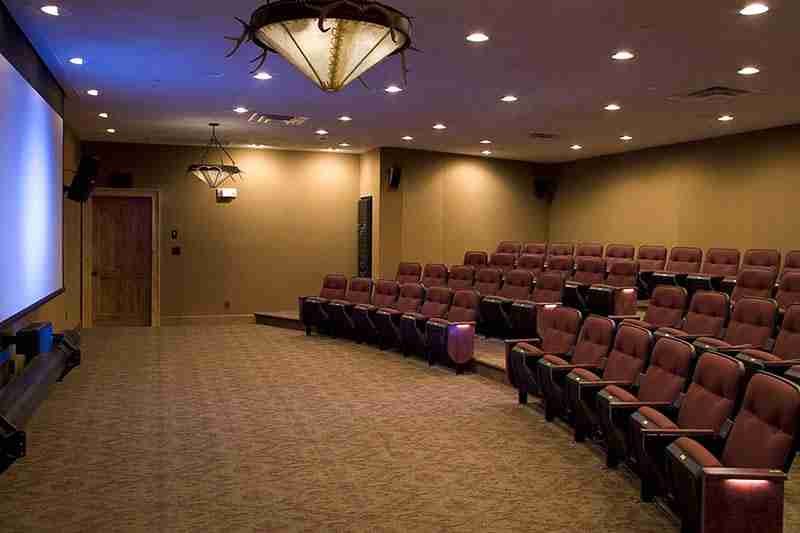
Rights Granted: The Whiteface Lodge is granted unlimited, non-exclusive, worldwide rights to all images. All other rights reserved. Copyright Shayne Lynn.
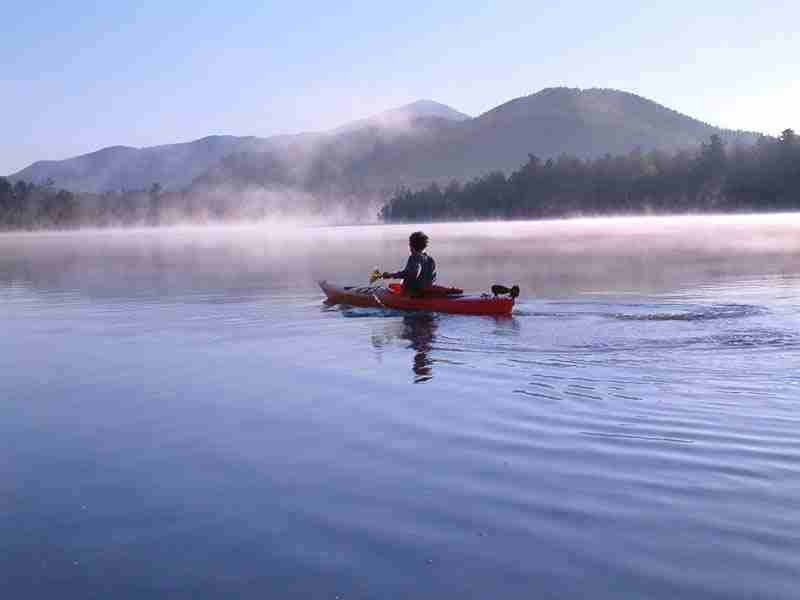
Kayaking at Lake Placid with Whiteface Lodge, Adirondacks
The staff was very courteous and answered all my queries patiently at any given time. I would particularly like to mention the valet service. They tried to know my name and always welcomed me with a big smile, no matter when I arrived.

Entrance of the Whiteface Lodge, Lake Placid, Adirondacks
You can book either book directly by visiting their website https://www.thewhitefacelodge.com/ or through any third-party website like tripadvisor.com or booking.com
My experience of Staying at Whiteface Lodge was wonderful, and I can definitely say it is the best Adirondacks hotel. I would definitely recommend it to anyone who is looking for one-of-its-kind luxurious experience.
Have you ever stayed at such a place? If yes, I would love to hear from you.
If you want to read about my some really cool stories about the USA, don’t forget to read my stories on The USA Travel: Things you should know before you visit, among many others.

Mirror Lake at Golden Hour, Lake Placid, Adirondacks
I was hosted by Adirondacks USA and Whiteface Lodge in May 2017. However, as always, the views are mine and based on my personal experience. The pictures used are either mine or provided by the Resort.
Scottsdale, the lush and plush part of the stirring Sonoran Desert, defies the typical traits of a desert. Find out why this oasis is a must visit and what are the top things to do in Scottsdale, Arizona
In the winters of 1929, the revolutionary 20th-century architect, Frank Lloyd Wright, gets hit by the deadly bout of pneumonia. His doctor gives an ultimatum to Wright’s wife:
In Wisconsin, he may not survive even for two months but he can live for another 20-year, if he listens to me
Wright agreed and went on to outlive promised 20-year. No, his doctor didn’t give him an Aladdin’s lamp. He just advised him to change his winter abode from Wisconsin to Scottsdale – an oasis in the blooming desert of Sonoran in central Arizona. Not only his health improved but the blooming desert inspired him to leave a legacy behind – Taliesin West – a studio, home and a campus for Architecture studies.

Taliesin West, Scottsdale. Pic credit: Experience Scottsdale
Frank Lloyd wasn’t the first or the last man whose life changed after shifting to Scottsdale. Scottsdale is rated as one of the best cities to live and retire in the US. I was completely bowled over by the City of the Spas and Resort. Here are the top 5 things to do in Scottsdale:
When the entire United States is gripped by the cold wave, Scottsdale enjoys a perfect sunny weather. You can always take your convertible out without the fear of a snowstorm. Sunny Scottsdale was such a welcome change from the shivering San Francisco in April. Applying sunscreen is way better than drowning in multiple layers. Every Scottsdale season has its charms. And with 330 days of sunshine every year and plenty of outdoor playtimes, any season is a great time to visit!

Seasons of Scottsdale, Central Arizona
Scottsdale may be in a desert, but stellar restaurants sprout up all the time. World-class restaurants are not restricted to swanky five-star hotels, resorts or chains. Independent restaurants rule Scottsdale food scene. Scottsdale’s thriving food scene encompasses nearly 800 restaurants in a setting of glorious weather and the Sonoran Desert vistas. No wonder even non-foodies become foodies in this Mecca of Dining.
FnB Restaurant, the crowning jewel of Scottsdale food scene, is run by Charleen Badman and Pavle Milic. Badman is a three-time James Beard Award nominee for Best Chef. The James Beard Awards are to food scene what the Oscars are to the movie world. Badman, nicknamed as the “Veggie Whisperer”, is lauded for her globally inspired menu and focus on Arizona-grown ingredients. With her magic touch, she coaxes unimaginable flavors out of veggies that you might discard as bland and boring.
The salad of beets, oranges, strawberries, olives, glacier lettuce, hazelnuts and goat cheese was the best concoctions of flavors one could ever relish. I am not a big fan of Broccoli but the grilled spicy broccoli made with tangerine aioli and pistachios made me its fan. The food, the drinks, the ambiance and the service at FnB were extraordinary.
https://www.instagram.com/p/BTFcMuAAGFI/?hl=en&taken-by=travelseewrite
And it wasn’t just FnB that impressed me. Prado, the signature award-winning restaurant at Omni Scottsdale Resorts was equally amazing. As I entered the picturesque resort, I felt I was transported to the gorgeous Mediterranean world. The wood-fired tapas display kitchen, soothing mood lighting, indoor and outdoor sitting arrangement with the views of Camelback Mountain under full moon night made the whole scene look dreamy. The food and drinks were a soothing riot of flavors and colors.

Dinner at Prado, Scottsdale. Pic credit: Mike Shubic
Other places that I loved eating at were AZ88, Farm & Craft, Gertrude’s at Desert Botanical Garden, Scott’s Grill at the Scott Resort and the Mission.
Scottsdale may be renowned for its culinary and cultural scene but being the beating heart of the Sonoran Desert, it is a desert playground for outdoor fun. The natural beauty of the blooming and diverse desert is jaw dropping.

Lower part of the Salt River, Scottsdale
Expect the unexpected in Scottsdale. In a desert where every drop of water is precious like gold, Scottsdale is truly blessed. Two snowmelt-fed rivers and a ring of turquoise lakes make it an ideal destination for water sports like rafting, SUPing, kayaking, and tubing. I loved Kayaking with Arizona Outback Adventures on the lower Salt River, which has national forest on one side and Native American land on the other side. Floating along the towering sandstone cliffs, lush shoreline embellished with Mesquite trees and inhabited by wild horses, turkey vultures, ducks and other desert wildlife was an experience to remember.

Kayaking on the Salt River, Scottsdale
After marveling the lush desertscape overland, I decided to admire it from 5,000 feet up in the air as the sun wrapped the landscape in molten gold. Winds played a spoilsport on day 1 but on day 2 my flight took off smoothly. From the hot air balloon, I soaked up views of the vast expanse of the Sonoran Desert, rock formations, and the tantalizing blue of Lake Pleasant. Captain John and the crew members of Hot Air Expeditions were both entertaining as well as highly skilled. The icing on the cake was the champagne celebration at the end of the smooth flight.

Balloon ride over the Sonoran Desert, Scottsdale
In Scottsdale, there’s never a shortage of outdoor activities. You can go for a morning hike at 150-acre Pinnacle Peak Park, choose from self-guided hiking, guided hiking, mountain biking, rock climbing, bird watching, horseback riding, and wildflower viewing at Saguaro-studded 30,000-acre McDowell Sonoran Preserve or see the world’s largest collection of desert plants at the Desert Botanical Garden.
Most importantly don’t miss capturing the can’t-believe-the-color sunsets.
He landed in the Sonoran Desert battling against death in 1929 but he infused a new life in the American architecture and went on to create one of the greatest architectural legacies of the 20th century. In the final but remarkable stage of his career, he built Taliesin West – his winter home, studio and school of architecture. It was here, he invented some of the most influential and inspirational pieces of architecture in America — including New York City’s Guggenheim Museum. If you are a fan of Ayn Rand, you cannot miss visiting this landmark as the famous character of Howard Rork in the novel “The Fountainhead” was modeled on Frank Lloyd Wright.

Taliesin West Performance Hall, Scottsdale, Pic credit: Experience Scottsdale
When I saw Taliesin West, my eyes popped out with admiration. The Taliesin West spanning across 600 acres offered a fascinating peek into Wright’s revolutionary thinking. The organic architecture was seamlessly woven into the rugged terrain of the Sonoran Desert. The shapes, structures, and materials used were sourced locally and complimented the geography of the area.
Scottsdale is amongst the top city to live and retire in the US. Despite an expensive cost of living (122 as compared to the American average of 100) it still attracts people from around the world for its upscale desert living. Its lively-meets-laidback character can be seen in its outstanding art galleries and museums, exceptional shopping and dining options, a plethora of golf courses and abundant recreational activities.

HiFi corner, Scottsdale Downtown. Pic credit: Experience Scottsdale
Scottsdale is the Spa Capital of the US with the most resort spas per capita, and six Forbes Four-Star spas. It’s a crime to visit Scottsdale and not experience its legendary pampering spas. Joya Spa at Omni Scottsdale Resort & Spa is the best thing you can ask for after the exhausting activities of the Sonoran Desert.

Joya Spa at Omni Scottsdale Resort, Pic credit: Joya Spa
The high-end spa and resort experience at Omni was balanced by the eclectic vibrancy of the Scottsdale’s Old Town. A fusion of the Native American crafts and Western-themed bars and restaurants can be seen here on every street. A great walking spot, brimming with boutiques, galleries, art installations, restaurants, nightclubs, and other attractions. The best way to enjoy this spot is to grab a glass of wine and roam through the wide array of galleries.

Old Town, Scottsdale

Scottsdale Museum of the West, Central Arizona
My interest in Native American culture took me to the Western Spirit: Scottsdale’s Museum of the West. I got a crash course on Native American Culture by the soft-spoken but extremely knowledgeable Rebecca Heller. I didn’t realize when almost half of the day went past admiring the outstanding permanent and rotating exhibits, rare old west artifacts, and monumental installations. SMOW is unique in many ways – one of them is how the elements of Sonoran Desert are seamlessly integrated into the design of the museum. For example, the walls and flooring had the texture of the Saguaro cactus.
Key ongoing exhibitions:
These were my top five things to do in Scottsdale. There are hundreds of more things that you can do here. Whether you’re a first-time visitor or a seasoned regular, Scottsdale will welcome you with open arms. Hope these things to do in Scottsdale inspire you to plan a trip shortly to green heart of the Sonoran Desert. Here are some insider tips to help you plan better.
If you are visiting Scottsdale, don’t forget to spend some time in Phoenix, Arizona. Here’s a travel guide to things to do in 72 hours
Also, before booking your tickets to the US read this: The USA Travel – Things you should know before your visit
Inspired? Pin these to your Pinterest boards |
||
 Top 5 things to do in Scottsdale, Central Arizona |
Four Seasons and things to do Scottsdale |
 Experience the Desert High living of Scottsdale |
Travel See Write Recommends the following books |
||
I was hosted by Experience Scottsdale but all the views expressed above are solely mine and based on my personal experiences. Many thanks to Experience Scottsdale, The Scott Resort, Western Spirit: Scottsdale’s Museum of the West, Desert Botanical Garden, Hot Air Expeditions, Arizona Outback Adventures, Prado, and FnB Restaurant for the incredible experiences I had. Pictures posted above are either clicked by me or shared by Experience Scottsdale.
This story was published in DB Post: Scottsdale – The Spa Capital of the US

Scottsdale – The Spa Capital of the US

California Road Trips are a must for any traveller
Sophisticated San Francisco captivates you with its soaring Golden Gate Bridge, iconic seven hills, elegant Victorian homes, classic cable cars, dynamic diversity, and forever breezy joie de vivre. But when you look beyond the 49-square mile cityscape and hit the road, you discover where your ‘Windows wallpaper’ comes from. Northern California is bejewelled with miles of vineyards, staggering limestone cliffs, giant redwoods, plunging waterfalls, fairy tale coastal towns and many off-the-beaten treasures.
If you have not done any of the breathtaking Northern California Road trips, you have not seen the soul of the Golden State. But it’s not enough just to jump in your car and drive. You need the right road with just the right amount of planning. Here are my 5 best Northern California road trips to bolster your soul:
MILEAGE: 87 miles from San Francisco
DRIVING TIME: 1.5 hours
WHEN TO GO: Anytime. June is ideal to see the blooming Sunflower fields.
THE JOURNEY: Visiting California without spending a day at a winery is like going to China and missing the Great Wall. Some experiences are bucket list items, which can’t be missed and shouldn’t be missed. Wine tasting at a California Vineyard is one such experience. But being an offbeat traveller, instead of choosing the usual Napa and Sonoma county, I decided to try a less famous but equally good destination – YOLO. Yolo, the shy kid, has been quietly fueling the Bay Area’s food revolution since the 1970s but has never got its share of publicity but now things are changing.
After one and a half-hour of a butter-smooth drive from the Bay Area, I reached the family-owned Berryessa Gap Vineyards outside of Winters. Nicole, the award-winning winemaker, not only made me taste their signature wines but, also gave a tour of the adjoining production facility and the vineyard.
During our conversation, I got to know the important role immigrants have played in California’s wine revolution. The Mecca for wine was shaped by the immigrants. Berryessa Gap is one great example. In 1960, the Martinez family started farming fruits and nuts in Winters, later expanding into root-stock for vineyards and then wine production. I was trying to absorb everything Nicole was saying while enjoying my wine. I am not a wine Connoisseur but the local wines tasted at Berryessa Gap felt different to my palate. And the reason for that was:
23 different soil types, the rolling hills of the Coastal Range, Lake Berryessa fed Putah Creek; makes growing grapes in Winters unique.
Said Nicole Salengo after observing my happy expressions. The conversations and wine were so good I didn’t want to leave but Corrin, the Séka Hills Marketing Manager, had come in on her day off just for me, so I had to move on.

Seka Hills, Yolo County, California
Yolo County is rapidly becoming known for its excellent olive oil and home to several mills and the UC Davis Olive Center. You can enjoy farm tours, beekeeping, tasting rooms, and one of a kind harvest celebrations such as Séka Hills Olio Nuovo Festival each November.
Said Jim Etters, Director of Land Management Yocha Dehe Wintun Nation /Séka Hills and I couldn’t agree more.

MILEAGE: 122 miles from San Francisco
DRIVING TIME: Over two hours
WHEN TO GO: Spring and Fall
THE JOURNEY: Before I arrived in San Francisco, my friend Mike had vehemently sold the Pacific coast drive to me and I am so glad he did. The rugged windswept coast of Monterey and Carmel is something that should be on everyone’s itinerary. My 12-hour long day-tour with Tower Tours started early in the morning. My bus was comfortable and we were provided with complimentary water and shuttle service.
I was hoping for a clear sunny day but the moody California weather was in a bad mood. The scenic highway along the winding roads of the Northern California Coast ensured I stay glued to my window. My eyes were relishing the stunning windswept mile-long sandy beaches, quiet coves, rocky outcroppings, and rugged coastline views.
During the drive, John, our tour guide, provided the right kind of information and entertainment. We first drove through Salinas Valley, the artichoke capital of the world. We stopped for some quick photos at Pigeon Point Light Station before heading to the charming coastal town of Monterey Bay.
The magnificent Monterey Bay has been called the greatest meeting of land, sea, and sky. Besides the splendid natural beauty, its biggest attraction is the world-renowned Monterey Bay Aquarium with 35,000 animals and 5,500 plant species. I was more interested in exploring the Pacific Grove as it was the season of wildflowers and Harbor Seal Pupping. Taking in the gorgeous views and seeing the mom seals nurse their young pups on the Beach, I must have walked miles. I was so lost that I missed my bus by a minute. Yes, by a minute. I had to call the SF office to get me back on the bus.
Continuing down the coast and taking in the Cliffside outlooks of Pacific Grove we headed down to Carmel along the 17 Mile Drive studded with gazillion-dollar homes, Pebble Beach, Golf course, the 300 years old Lone Cypress, and Seal Rock. The very quaint art-loving Carmel resembled an 18th-century European village with narrow streets lined with gallery-lined streets, unique boutiques, cosy gastropubs, and cafes and even cosier fine dining and casual eateries.
The historic town of Carmel established in 1603 is unlike any other town in the US. You won’t find any addresses, house numbers or red lights in Carmel. Every house’s landline is connected to Police station, in case there is any emergency.
Said John, as we bid goodbye to this living piece of history.
It was a long day of exploring the Northern Pacific Coast and it became even longer when I was mistakenly dropped at the other end of Mason Street. An uphill trek in the cold rain-swept night of San Francisco wasn’t part of the deal. But I learned an important lesson – give the full address.
MILEAGE: 211 miles from San Francisco
DRIVING TIME: 4 hours but spend 1-2 days in the park
WHEN TO GO: Spring
THE JOURNEY: One of the reasons why I madly fell in love with the US is its National Parks (Read The USA travel – things you should know before your visit). And the first National Park I visited was California’s showstopper National Park – the Yosemite. A UNESCO World Heritage site attracting 4 million visitors every year for its giant granite Monoliths, plunging waterfalls and alpine meadows.
My Tour bus picked me up early morning from the hotel and our first pit stop was in the agricultural region of the San Joaquin Valley. The rolling green hills adorned with 4930 wind turbines of Altamont Pass Wind Farm (world’s largest wind turbines at a place) gave me my first WOW moment of the trip. My second wow moment came when following the Highway 140 from Merced we passed through the rich Central Valley farmlands and wineries of the Sierra Foothills. Followed by the 19th-century Gold Rush town of Mariposa. Beyond Mariposa, wild and scenic Merced River accompanied us until we reached El Portal, about ten minutes from the entrance of the Yosemite.
Yosemite is a favourite national park for nature lovers, hikers and families alike. The biggest attraction for them is the treasure trove of giant cascading waterfalls. In the list of the worlds’ 20 tallest waterfalls, Yosemite Valley scores three spots – Yosemite Falls, Sentinel Fall, and Ribbon Fall. Being a hiker and a landscape lover, I wanted to hike up to see the Yosemite Falls in its full crowning glory but because I was on a time-bound tour I had to contend with an easy, but scenic 1-mile walk. The 189-meter Bridalveil Falls was another great WOW moment for me. The only drawback of seeing a waterfall from close-by is that it soaks you from top to bottom. And snow carpeted Spring is not an ideal time to experience it.
Our last stop of the trip was the Tuolumne Meadows, one of the most photographed regions of Yosemite. Two miles long lush green wide expanse cradled by high granite domes and peaks on both sides while the Tuolumne River adds the liquid delight. I really wanted to stay here for long but the Rain gods had a different plan.
Now here is a word of caution if you decide to hike in Yosemite – Spring can be a challenge. The snow on the slopes is turning to porridge and your backyard trail system is a mud slick. So, it’s a good season for a road trip but not ideal for hiking. On the flipside, the rivers are high, parks are less crowded, and resorts offer massive deals.
I visit Yosemite at least two to three times per week and still can’t get enough of it. My favorite season is Spring because it’s less crowded and you get to see so many seasonal waterfalls which vanish in summers
Said my guide, while I continuously nodded my head in affirmation.
This is one of the most famous among locals and tourists and there’s a reason for that. Go find yourself.
MILEAGE: 165 miles from San Francisco
DRIVING TIME: 3.5 hours
WHEN TO GO: Spring and Fall
THE JOURNEY
Imagine a tranquil hamlet of Victorian villages stitched together by a rugged coastline and embellished with sprawling vineyards and towering redwood forests. Where art studios, boutiques, and performing arts are not hobbies but full-time passions. Where everywhere you look, there is a picture postcard waiting to be clicked. Where crashing waves and old-fashioned water towers embrace each other. Where picket fences are covered with flowers. Where beaches have glass bottoms and Botanical Gardens have oceanfront. No, this is not a fairytale. This is Mendocino – a photographers’ paradise, lovers’ hideout and artists’ retreat.
If somebody would have said the above to me before I visited Mendocino I would have brushed it off as an exaggeration. But after visiting Mendocino, I can vouch for every single word said above. With fewer than 1,000 year-round residents and this remote location, Mendocino offers tranquillity in a spectacular North Coast setting.
Mendocino was supposed to be my first stop but as I passed through the gorgeous Point Reyes National Seashore, I couldn’t help but put brakes on my accelerator. The jaw-dropping views of the Pacific waves crashing into the rocky coast and the breathtaking vistas at the southern tip of the Point Reyes bluff is something that cannot be expressed in words. The wide array of blooming wildflowers along the trail made the place look like a fantasy land. But be prepared to be blown away – both figuratively and literally – by strong cold winds.
After a quick bite at Bodega Bay, I stopped 45 minutes South of Mendocino at the Point Arena Lighthouse for a quick photo op but the gusty wind forced me to take shelter in my car and move on to Mendocino.
The artsy Mendocino was such a relief from the humdrum of city life. The Victorian architecture and laid-back vibe of the coastal town of fewer than one thousand people were such a delight. The icing on the cake was the scrumptious local delights. I next headed to Fort Bragg, which has an interesting local lore of how it was formed – apparently from 1906 to 1967, everything from cars to batteries to bottles, and appliances were trashed over the cliffs into the ocean. Mother Nature turned this abuse into a great surprise – the tides over time smoothed and polished all the glass into kaleidoscopic sea glass treasure.
Mendocino is wild, remote and a vacation refuge. It offers tranquility in a spectacular North Coast setting with a trickle of tourists. Much of its charm is its undeveloped beauty and solitude. And I don’t want that to change ever.
Said Rob, a local who moved to Mendocino 20 years back from San Diego.
I was headed to Port Orford, so I couldn’t spend much time here. It deserves an extended weekend break.
MILEAGE: 493 miles from San Francisco
DRIVING DAYS: 2 days but keep at least 4 days to enjoy the beauty of this rugged coast
WHEN TO GO: Spring and Fall
THE JOURNEY
In my last post, Why I left my heart in San Francisco, California, I mentioned how the immigration officer was amazed to know about Port Orford. A sleepy coastal town in Oregon, which would have never been a part of my itinerary, if Mike Shubic (the most road tripped man in the world) had not told me about this hidden gem. That’s why I always prefer local friends over guidebooks.
The amazing thing about the West Coast is that it is still mostly wild, open, and astoundingly beautiful, where you can drive for miles and miles and have the scenery all to yourself. Driving from San Francisco to Port Orford nonstop takes approximately twelve hours but I bet nobody does that. This route is a feast for the senses, and frequent stops are practically mandatory.
I took the following route:
San Francisco – Mendocino – Humboldt Redwoods State Park – Eureka – Arcata – Trinidad – Redwood National Park – Crescent city – Brookings – Port Orford
Every mile of the Pacific Coast drive was gorgeous and no wonder it is the best drive in the West. The landscape changed dramatically from lush green winding roads to giant redwoods to jagged cliffs.
After visiting Mendocino, where Art and Culture merge with Mother Nature in a fairytale village by the sea setting, I continued up North.
As I passed the soaring crashing waves, I noticed the surrounding redwood forests get taller and thicker. The 32 miles winding drive on U.S. 101 highway passed through the Avenue of Giants lined with towering redwoods of Humboldt Redwoods State Park.
After enjoying the stunning wildness on the first half of my trip, Eureka was an inviting and lively switch. An art-fueled Victorian seaport, where nature and culture merge with a small-town feel. The blue hour was just the perfect time to click the beauty of this stuck-in-time small town.
It was getting dark and Port Orford was still far, so I reluctantly moved to Arcata. Next day, I left early morning for Trinidad, about 45 min south of the California border. A very cool and quirky place with lots of B&B’s, little supermarket, cosy coffee shops and excellent restaurant like Larrupen. Driving through Crescent City, I reached the California-Oregon border and the one hour drive from the border was arguably the most beautiful stretch of the Pacific Ocean in the U.S.
The bustle of Trinidad dropped quickly as I reached Red Woods National Park, a World Heritage Site protecting nearly half of the world’s tallest trees. It is home to the world’s 2nd, 4th, 6th, and 8th tallest trees. I wish I had more time in hand. I would have loved to camp in this spectacular park of giant trees, lush groves, sheltered bluffs, and wild beaches. I was weaving in and out of forests and then back out in the spectacular coast.
This 12-mile stretch of the coastline consists of some of the most secluded beaches on the Western seaboard, along with impressive stone formations like Arch Rock and Natural Bridges. The Secret Beach near the Brookings and Bold Beach was a lucky find. It doesn’t show up on a lot of maps. The trick is to keep looking for it about one-third mile south of milepost 345 on U.S. 101 in Boardman State Park. One of Oregon’s most spectacular pocket beaches, the secluded stretch of sand is reached by a quarter-mile trail from a small parking area along U.S. 101. The parking area comes up quickly, between Mill Creek to the north and Miner Creek to the south, on the west side of the highway. Blink and you’ll miss it because there is no sign. A waterfall on Miner Creek just above the beach adds to the idyllic scene.
Finally, I reached the funky little town of 1100 people. After a scrumptious brunch at Redfish, I strolled around the Battle Rock Park, Cape Blanco, Dolly dock port, and visited a couple of art galleries – Hawthorne and Triangle.
I just had a day on hand otherwise I would have loved to stop by Bandon Dunes, considered by the golf industry as arguably the finest public golf course in the country.
I hope you are inspired to go on these 5 BEST NORTHERN CALIFORNIA ROAD TRIPS. The drive on any of these trips is so much more than getting from Point A to Point B.
So, what are you waiting for? Hit the road to Travel See and Write about the classic and hidden sites.
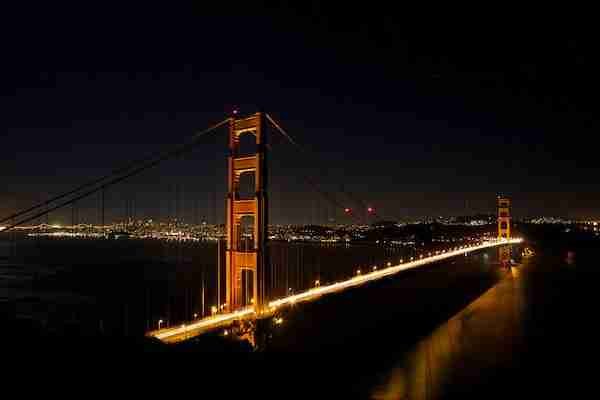
A ribbon of light defines the roadbed of the majestic Golden Gate Bridge; an average of 40.1 million vehicles cross the bridge annually.
It was my first day in San Francisco, California. The blue-grey clouds had come from faraway places to greet me. The occasional showers were actually the tears of happiness of San Fran. The mischievous spring breeze was needling me from everywhere despite the blanket trying hard to keep me warm in the open-air SF Adventure “woody”. Silence has filled the otherwise lively van. Suddenly I heard “I Left My Heart in San Francisco”, the signature song of Tony Bennett.
It was in April I heard that song for the first time but today after being away from the city for a while, I truly understand its meaning. There was something about the city that took my breath away the first time I visited it. Let me try and share why I left my heart in San Francisco. Since the experiences are many and I don’t want to miss out on anything, I am going to share my experience through series of articles.
Related: Do read
The USA Travel: Things you should know before your visit
5 Best Northern California road trips to bolster your soul
5 Cool things to do in Palm Springs, California
Before I landed in the US, I was skeptical about Immigration but all my doubts were put to rest. The Immigration Officer was very kind and genuinely interested where I was headed to.
Welcome to the US. You said your friend has been here for six years. What took you so long? And from San Francisco, you are going to Port Orford? I had never even heard about this place before. Let me Google it. WOW! It looks amazing! I know where I am going next.
The generous welcome started at the Airport continued at Waters Edge Hotel. A complimentary box of Chocolates, wine-n-cheese, cookies and other items awaited my arrival. My hotel was in Tiburon, an alluring upscale quaint town perched on a historic dock overlooking San Francisco Bay and Angel Island. The boutique hotel really pampered me with a luxurious bed, a bountiful continental breakfast delivered daily to my room, a fireplace, and an afternoon wine and cheese reception.

The welcome tray at Waters Edge Hotel, Tiburon

Who doesn’t love handwritten messages? I definitely do.

Even the 25 hours flying couldn’t bring down my excitement. I was so eager to explore the Wilderness and Wildlife that just after dinner I went exploring. And to my surprise, a herd of deer joined me. Lost in my thoughts I must have walked over two miles taking in the moonlit beauty around me and the sound of the waves crashing into the shore.

Golden Gate Bridgre and San Francisco Bay view from Tiburon

Ferry Terminal at Water’s Edge Hotel, Tiburon

The daily Ferry from Tiburon to San Francisco, California
The day started with a four-hour “Fogcutter” tour with SF Adventure Tours. It was like a tailor-made tour, a small group of six people in a 12-passenger “woody”, which took us around the classic landmarks and quirky side of San Francisco. From Golden Gate Bridge, Presidio, Golden Gate Park, Twin Peaks, Painted Ladies to exploring a lot of historical, architectural and great photo op sites, which only Eric knew. The best part of the tour was Eric’s sense of humor and his knowledge about the city.

The Golden Gate Bridge Park, San Francisco, California

SF Adventure Tours customized “Woody”

Painted Ladies, San Francisco, California
During our entire tour, he kept telling us about the interesting trivia associated with each place like which house was used in which TV show. Eric was the one who made me have my first food truck meal in the US. It was super yummy super filing super-size at a very nominal price. And as I mentioned in the opening of the article, it was Eric who introduced me to the magic of, “I left my heart in San Francisco” song. I had so many of “my firsts”, thanks to Eric. If you have only one day to spend in San Francisco this is the tour you should take!
My tour ended at Pier 33 from where the Alcatraz ferry departs for the island and prison tour.

The top view of San Francisco city from the Twin Peaks

Bird’s view of the Golden Gate Bridge and San Francisco city from the Twin Peaks
After that, I spent few hours at the historic Fisherman’s Wharf, a highly touristy area, lined with hotels, seafood restaurants, famous attractions, Pier 39 market, souvenir shops, and a promenade to enjoy the breathtaking scenery.
One thing that I couldn’t have missed and didn’t miss was enjoying the sourdough soup at the historic Bistro Boudin Bakery.

View from Fisherman’s Warf, San Francisco, California


The must visit Boudin Bakery at Fisherman’s Wharf, San Francisco, California
After getting swept by the iconic landmark sites, it was time to satiate the hunger pangs at the culinary wonderland of North Beach or as famously called “Little Italy” of San Francisco. I met my beautiful guide Blandina of San Francisco Food Tour at Columbus Avenue. Dressed in a pink hat, orange bag, long boots, harem pants, leather jacket, loosely tied hair in two plaits; she symbolized the unconventional and artistic 70’s Hippie generation that was born and bred in North Beach. There couldn’t have been a better local guide than her because she has lived in the heart of North Beach with the first, second and third generation of Italian community as well as world-class painters, writers, and craftsmen.
We started our tour by enjoying the delicious coffee at Cafe Roma, where beans are roasted on the premises of the cafe by three generations of the Azzollini family. We were served Espressos, Cappuccinos, Hot Chocolate and whatever we wished for in a large, airy space, perfect for sipping, thinking and conversations.

Blandina explaining coffee roasting at Cafe Roma, North Beach, San Francisco
Next, we savored the focaccia sandwiches at Mario’s Bohemian Cigar Store Cafe, an old North Beach treasure run since 1973. Mario’s is one of the few North Beach hideouts worth keeping secret but its prime location is hard to miss. A grilled eggplant sandwich on delicious green onion focaccia bread was Nirvana for a vegetarian like me. The quantity was huge and the taste was heavenly. Too bad I was not hungry.

Mario’s Cafe, North Beach, San Francisco
We then enjoyed chocolate from Z Cioccolato (named one of the top chocolatiers in the US), Cannoli from Stella Pastry (which has been making cannoli since 1942), deli delights at Molinari Delicatessen (a local deli that has making salami in San Francisco since 1896), 100% organic gourmet popcorns at Cornology and lastly, we enjoyed real Italian pizza with homemade mozzarella at IL Casaro made in in their wood-fired ovens.

Must try: 100% organic gourmet popcorns at Cornology, North Beach, San Francisco

Must try restaurant: at IL Casaro for the real Italian pizza made in the wood-fired ovens.
Our gastronomic tour also introduced us to the vintage and architectural side of the North Beach, which has been a hotbed for creative geniuses and had given birth to many movements. Blandina enthusiastically showed us the places where famous Hollywood movies like Big Eyes, Milk were shot. We even went to Caffè Trieste, a favorite hangout of the Beat Generation writers and where Francis Ford Coppola wrote much of the screenplay for The Godfather.

St. Paul Church in North Beach, where the famous movie ‘Big Eyes’ was shot

Victorian Architecture of San Francisco, California
While I was absorbing all this, she took us to Macchiarini Creative Design & Metalworks Gallery, a San Francisco Legacy business started in 1948 which spans three generations, two centuries and 68 years! I was left awestruck with the metal craftsmanship.
Another place that I completely fell in love was Biordi Art Imports. A place more apt to be called a ceramic museum than a classic Italian Ceramic store. The store had exquisite finely hand-crafted ceramics, dinnerware, and accessories of Italian Renaissance style Maiolica.

We are able to maintain a high quality because we search and pick the best artisans from old traditional Maiolica centers of Italy. Our is a place where our customers would send their friends telling them, “You can buy me anything in that store and I would love it!
Said the store owner. Too bad I had luggage restriction. Else I would have bought the entire store.
The day was far from over for me as I wanted to see the shimmering San Fransico at dusk so I decided to join the two-hour Night Tour with Big Bus Tours. Starting from Fisherman’s Wharf, the Night Tour of San Francisco took me through Union Street to the Presidio for spectacular views of the Golden Gate Bridge, before climbing historic Nob Hill for a magnificent close-up of Grace Cathedral. The tour then made its way across the Bay Bridge to Treasure Island for picturesque views of the city skyline.

San Francisco Skyline as seen from the Treasure Island
With yummy in the tummy and a bag full of memories, I called it a day to grow my love deeper with San Francisco in the coming days.
Hope you enjoyed the first part of me falling in love with the San Francisco as much as I experienced. Stay tuned for more.

The iconic Cable car of San Francisco, California
Many thanks to San Francisco Travel and Waters Edge Hotel for hosting me, SF Adventure Tours, San Francisco Food Tour and Big Bus Tours for making me experience the unique sights, sound and flavors of San Francisco. As always, all views are mine.

Travel becomes easy when you have the right luggage
The thing about travel is you never know what exactly is going to come next. Your urban adventure might not have butter smooth landing and can lead you to cobbled streets, rain-swept alleys, barely-there dusty roads or simply jagged pavements – all of which might not be healthy for the wheels of your expensive luggage. And trust me I had been in these situations before. I tried both kinds of luggage – a stylish trolley and rustic backpack. But none worked.
The solution? A backpack that glides beautifully on the marble floors of an airport but can be slung over one or two shoulders at the merest hint of mud or crazy paving. It was time for me to upgrade to a better backpack — and my new Wildcraft Voyager Trolley Backpack fitted the bill perfectly.
A backpack in which I can keep my laptop, camera, accessories like lenses, extra set of batteries, filters, Go-Pro with Gimbal, Kindle, Power banks, various chargers, toiletries, medicines, water bottle, passport holder, a few set of clothes and some snacks to munch in. But carrying all this in my backpack shouldn’t limit my mobility.
Firstly, because my back would hurt towards the end of a long trip with carrying my backpack, and secondly, I carry much more gadgets in my daypack these days, so I needed a slightly bigger backpack than what I was using.
Before zeroing on Wildcraft Voyager Trolley Backpack I did a bit of research. I checked online, read reviews and spoke to a few friends who are using it. The response I got – sturdy plus stylish. I didn’t come across any major negative review except for some people finding it a bit expensive. But frankly, I find it reasonable. After all, quality comes at a price.
I didn’t want to pass the verdict on my bag in a jiffy, so I decided to wait until I had travelled with it for over a month to give a fair review. My thoughts?
I LOVE THIS BAG.

The exterior of the Wildcraft Voyager Trolley Backpack
The wheels and balance are outstanding. The handle is sturdy and easy to manoeuvre.
This large multifunctional wheeled backpack is so strong that it feels like it was made for the Army. The inner and outside compartments are thoughtfully designed keeping in mind the requirements of Urban travellers like me. The Zippers are of good quality and I didn’t face any snag even while zipping them in a hurry.

Smooth good quality finish
There’s abundant space in the bag with various pockets for accessories, laptop, iPad, clothes etc. Additionally, there are a few compartments close to the top of the bag that is good for small items that you need to access easily. I use mine for chargers, medicines and hand sanitiser. There is also a back panel that can to be used for magazines, newspapers, or anything flat.

The sturdy handle that gives you a good grip
The best thing about the bag is – it’s customizable. You can either push the adjustable carry handle inside the pocket and cover the wheels with the pouch provided, for it to become a full backpack. Or remove the straps for it to become a complete trolley bag.

The detachable straps can go inside to become a full trolley bag
Having a trolley backpack made my travel so much better — it was much easier on my body.
It is heavy for a backpack. But this is the price you pay for having wheels on your pack. And Kudos to the Wildcraft team for telling me honestly not to use it for hiking or long walks. Your lower back will not like the hard base and wheels at the bottom. So, if you’re a traveller who enjoys trips to the wilderness, bring along a lightweight backpack. And if you are looking for one, Wildcraft has many great options.
My only issue with this bag is that due to its short and fat shape, it tends to flip over backwards when I walk a bit fast. I can’t zip around like I can with taller skinnier bags.
Still, that’s a very small qualm in the grand scheme of things.
The 45L bag that I am using is available for Rupees 5,999 (93 USD). As far as pricing is concerned, it’s in the mid-range for backpacks. In my opinion, a backpack is a critical investment in your travels. Getting a less-than-perfect backpack can ruin your body and trip. So, paying a bit extra for a bag this good is absolutely worth it. If you’re looking for a new backpack, this is a good option. I highly recommend it.

Wildcraft Voyager Trolley Backpack is ideal for 2-3 days of travel
If you liked my review, don’t forget to share the post on your social media or just Pin the images below:
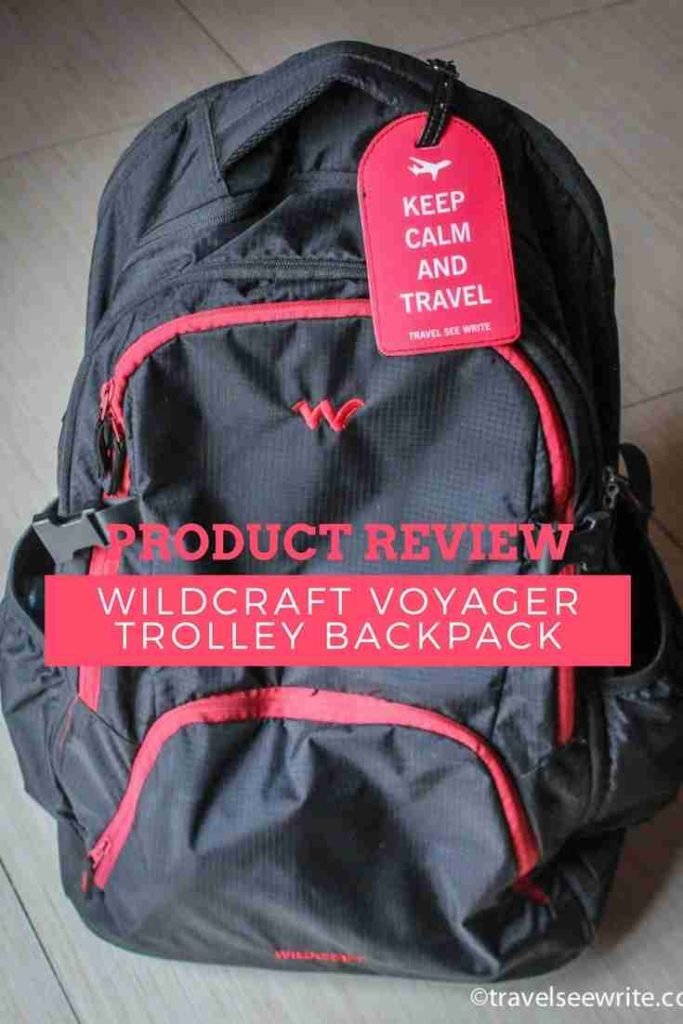 |
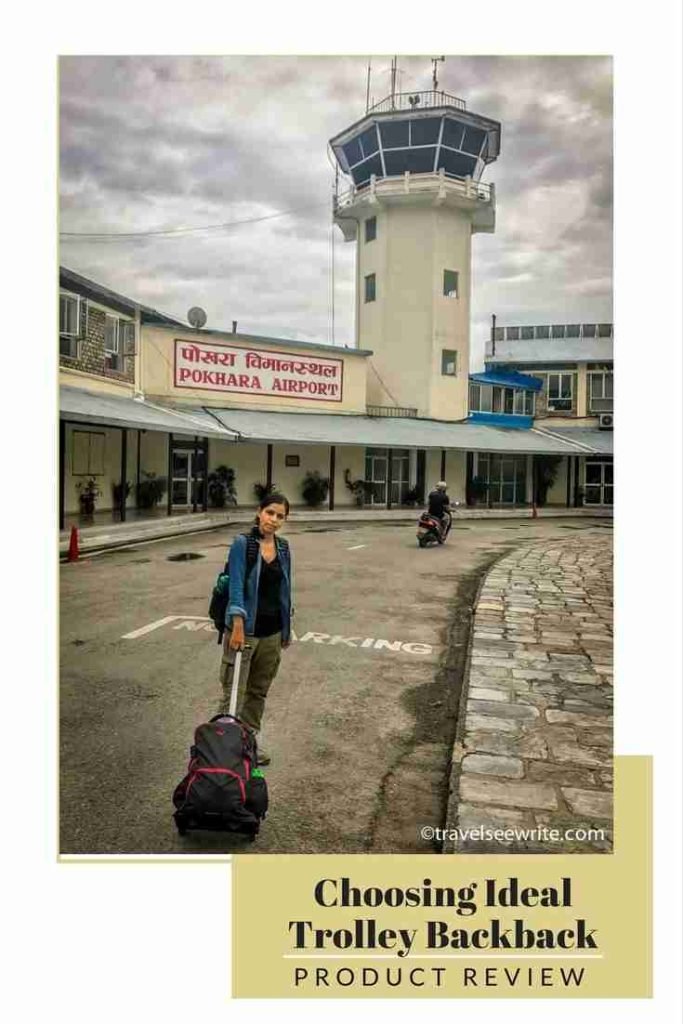 |
 |
If you are looking for more travel gear don’t forget to read the best-reviewed hiking backpacks
Many thanks to Wildcraft for providing Wildcraft 45 L Voyager Trolley Backpack. All opinions, as always, are my own and have been written after using the product.
PS: Since many of my readers have been asking me about the luggage tag I thought I should share the secret: I got them custom-designed from – Perfico Go grab one for yourself!

Santa Fe is a city of superlatives. Sculpted on the foundation of Native American, Spanish and Anglo cultures, it is where the fine arts flourish, New Mexican Cuisine rules the dining table and Adobe are still the preferred building material. At 7,000 feet above sea level, Santa Fe offers visitors a culturally diverse experience served in the most authentic way. It’s over 300 days of the sunshine per year and above-average air quality has been attracting visitors for centuries. With walkable neighborhoods dominated by pueblo-style architecture and the Sangre de Cristo Mountains cradling the city, Santa Fe has preserved its warm, inviting, small-town feel. No matter what interest, season, food, culture and nature buff you are, Santa Fe will give you enough reasons to have a life-long affair with it. Here’s a Perfect Travel Guide for Santa Fe, New Mexico Points of Interest to help you navigate your way through “the City Different”.
Related: My US Trip: Experiencing Santa Fe, “the City Different”
Santa Fe is a destination for every season. Although it is a high mountain desert, its weather has four distinct but hospitable seasons. You can choose your visit depending on your interests. Summer is the peak season when the days are hot and ideal for long outings, but the shoulder seasons of fall and spring are pleasant too with some fantastic festivals. Winters is an ideal time for skiing, thanks to the generous amount of Powdery snow it gets.
Santa Fe has been attracting travelers for long, thanks to 325 days of glorious sunshine a year. December is the coldest month, with an average high temperature of 43°F (6°C), and July is the warmest month, with an average high temperature of 86°F (30°C). The city gets its share of monsoon in late summer, where it rains for about an hour most afternoons.
Fly direct to Santa Fe Municipal Airport from Phoenix and Dallas via American Airlines or from Denver via United Airlines.
Fly to Albuquerque, one hour South of Santa Fe, from 22 major cities of the US. New Mexico Railrunner provides daily comfortable train service to Santa Fe.

The best thing about Santa Fe is how convenient and cheap it is to navigate through the city. There are plenty of options and most are free. While the downtown and Canyon Road are walkable, you’ll need a car or Santa Fe Pickup (a free shuttle) to visit the rest of Santa Fe. The RTD Blue Bus is another very good free option. Uber is a reasonable too.

Santa has great stay options to suit any kind of budget. Either you can stay near downtown or out in the middle of the desert. Near the Santa Fe Plaza, you’ll find several gorgeous hotels—most built in the adobe-pueblo style—with Southwestern décor and contemporary art. Additionally, you can find destination resorts in Ojo Caliente, Ranchos de Albuquerque, and the Sangre de Cristo Mountains, where amenities include horseback trail rides, fields of lavender, and a full Japanese onsen spa.
I stayed at Inn on The Alameda, nestled in the heart of the city, minutes away from the historic Santa Fe Plaza and the Canyon Road. The 72 rooms and suites hotel built in distinctive Pueblo-style architecture is spread across two acres and ten buildings.

I was booked in Santa Fe Suites, which combined the fine amenities of a boutique hotel with the peaceful and welcoming feeling of a private home. My bed was king-size, a separate living area equipped with a sofa, a wet bar with Keurig coffee maker and Newman’s Own organic coffee, a mini-refrigerator, an in-room safe, a Kiva fireplace and a fancy bathroom.
Staying at Inn on the Alameda, was like staying at a friend’s place having a fine taste. From hardwood floors to hand loomed rugs to distinctive regional artwork (which I was told is handpicked by the owners themselves from Mexico); everything reflected Santa Fe’s flair of its artistic heritage.

The daily lavish buffet breakfast and 4-5 pm complimentary wine-and-cheese hour were delightful. The front desk staff, the restaurant staff, and the housekeeping staff were all very friendly and helpful. It was nice being around so many smiling and friendly people. They were so helpful that they became my de facto travel guide, helping me explore places that I could have never explored myself. Their free shuttle was a great touch of customer service. All in all, it is a wonderful property, perfectly positioned to enjoy the downtown plaza and is staffed with great people. I highly recommend it.


With more than 3,000 pieces dating from 1901 to 1984, it’s the largest permanent collection of O’Keeffe’s work in the world. Her collections offer a rare insight into her creative process including the light and landscape of Santa Fe which inspired her. It was the first museum in the United States dedicated to a female artist.

This enormous world-class museum brings America’s West to life through interactive exhibits, photos, and displays. The Palace of the Governors, built in 1609, is the nation’s oldest continuously occupied government building.


This colorful, 22,000-square-foot, immersive multimedia art installation, created by the collective Meow Wolf, is the stuff of childhood imaginations. It is housed in an erstwhile bowling alley owned by Game of Thrones author George R.R. Martin.

The mile-long second most iconic street in America is lined on both sides of the street with cutting-edge, conceptual and contemporary fine art galleries and studios.

The 50-acre neighborhood has a thriving art scene with vibrant art galleries, restaurants, Santa (one of the most widely recognized farmers’ markets in the United States), brewery, music venues and a movie theater.

Must visit for four distinct art institutions – the Museum of Indian Arts & Culture, Museum of Spanish Colonial Art, Museum of International Folk Art and the Wheelwright Museum of the American Indian.

Ten minutes from downtown, nestled on a cliff top in Santa Fe’s mountains, the secluded Japanese-inspired spa is the ideal place to relax and soak away the stress after a long day of exploration. The natural, mineral-rich waters ranging in temperature from 80 to 109 degrees Fahrenheit can do wonders to the body and soul.
Plaza and downtown for Native American jewelry and souvenirs. Canyon road to buy art, fine leather goods, chic home furnishings and avant-garde jewelry. Kowboyz at Railyard-Guadalupe District for fantastic selection of used cowboy hats, boots and western wear.


After you are done exploring Santa Fe (which can take an entire lifetime), you can take day trips to any or all of these places –


Hope this Perfect Travel Guide for Santa Fe, New Mexico helps you discover the timeless and earthy soul of the city.

I would love to hear back from you if you likes these Santa Fe New Mexico points of interest or did I miss out on something?
And if you love my stories and want me to continue writing, please don’t forget to share this story on Pinterest, Facebook, and Twitter. Remember your one small effort can make a hell lot of difference to a writer’s life.

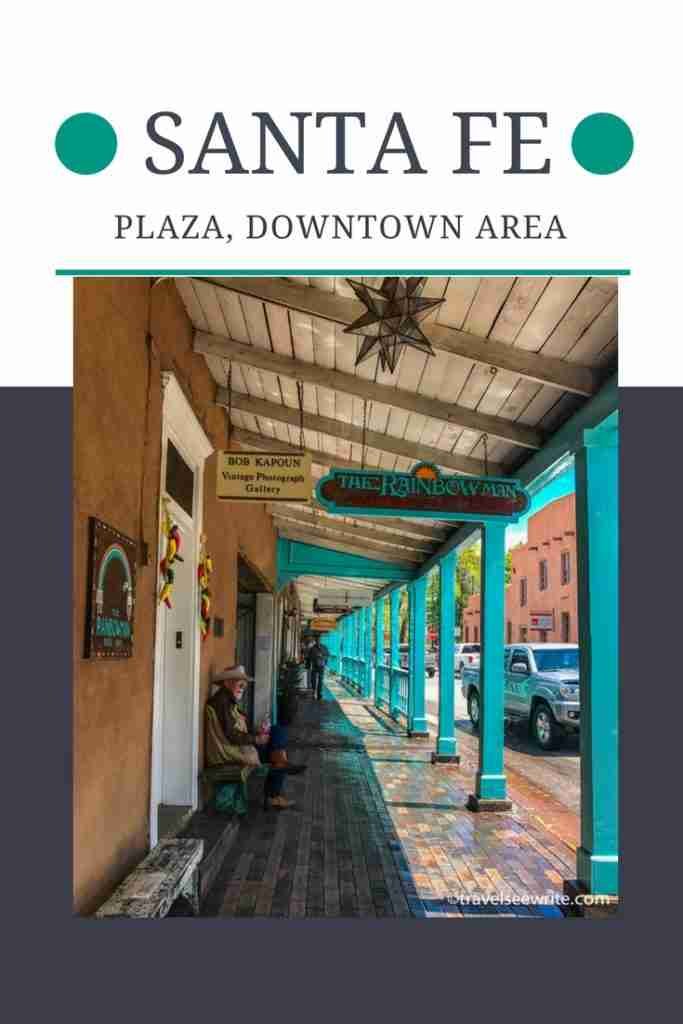

I was in Santa Fe on the invitation of Tourism Santa Fe. All views expressed above are mine and based on my experience and interactions during my stay at Santa Fe. All pictures are either taken by me or provided by Tourism Santa Fe

After visiting Santa Fe recently, I can easily see why renowned American artist, Georgia O’Keeffe, fell madly in love with New Mexico and made it her home. I too fell in love with the land of enchantment.
In late April as I was preparing to land at Santa Fe Airport, the Pilot’s announcement hit me like a ton of bricks—“It is snowing in Santa Fe.” This wasn’t the surprise welcome I was looking for.
Melting hot Arizona to snow swept Santa Fe in a matter of 1 hour 20 minutes? How can weather change 180 degrees?
That was my first “The City Different” moment.
Courtesy of my ignorance, I ended up wearing the most inappropriate clothing—summer-ready for an impromptu winter kiss. It was like not reading the memo and ending up in a fancy dress for a corporate dinner.
Luckily Cynthia, The Marketing Director of Tourism Santa Fe, was there for me. She understood my plight and made me change into winter wear before taking me around the city.
After that awkward moment I didn’t goof up and enjoyed exploring the many facets of Santa Fe, “the City Different”:
While exploring the oldest capital city in the United States (407 years), I realised how seamlessly the tricultural traditions (Native American, Spanish, and Anglo) have blended in Santa Fe to create a history which is so unique.
I traveled to Taos Pueblo tracing the timelessness of Santa Fe, which predates Columbus’s discovery of America by a few thousand years. The arrival of nomadic Paleo-Indians in this region dates to 10,000 BC. The distinctive adobe architecture and Pueblo style for which New Mexico is admired for was their gift.

Taos Pueblo, the oldest Native American houses in the USA
And it’s not just the Native Americans who contributed to Santa Fe’s history, in the 16th-century Spanish explorers arrived in search of gold. The reminiscent of Old West can still be found, especially in the Downtown Plaza’s Palace of the Governors, which was built in 1610, more than 300 years before New Mexico became a state.

Palace of the Governors, Santa Fe, New Mexico
Lastly, the Anglo settlers started arriving in Santa Fe region around 1750, which was followed by the creation of Santa Fe Trail in 1821. In 1846, the United States claimed possession of New Mexico leading to the Mexican-American war, which eventually U.S. Won. In 1912, New Mexico became the 47th state of the United States.

San Miguel Mission Church, Oldest Church in the U.S.
Often history is written by conquerors but in “the City Different” history was written by a mystery man too. The Loretto Chapel’s circular wooden steps were built by an unidentified man who is said to have shown up at the chapel in 1879 with a donkey and a toolbox.

Loretto Chapel’s circular wooden steps, Santa Fe, New Mexico, USA
Another historic moment that triggered a shift in Santa Fe’s national and even international recognition was the 1981 Esquire cover article on Santa Fe. The cover showed a young hip New Yorker heading to Santa Fe in a convertible loaded with skis, backpacks and clothes. After this story, all roads led to Santa Fe.

Santa Fe is a long-established arts haven for all kinds of artists – from eminent makers to upcoming creators. And why wouldn’t creative minds flock to “the City Different “when they are surrounded and inspired by splendid high-desert landscapes, sweeping blue skies, and 325 days of sunshine per year. The result is a thriving culture economy with 250+ art galleries, over 14 unique museums, numerous art markets, a world-class opera house, and more.
Exploring Santa Fe was like walking through a never-ending art gallery. Each neighborhood had its own charm and people were genuinely interested in conversations – more dialogue, less selling.
Come in. Don’t be afraid. You don’t have to buy anything. You can spend as much time as you want and ask us anything. We love to talk.
said the owner of the Globe Gallery, Canyon Road, Santa Fe.

As I walked through the mile-long second most iconic street in America, I couldn’t help but get blown away by the cutting-edge, conceptual and contemporary Art Galleries. The standout feature for me was a seamless integration of the Western, Native American and contemporary art galleries into the historic adobe and territorial-style home architecture.

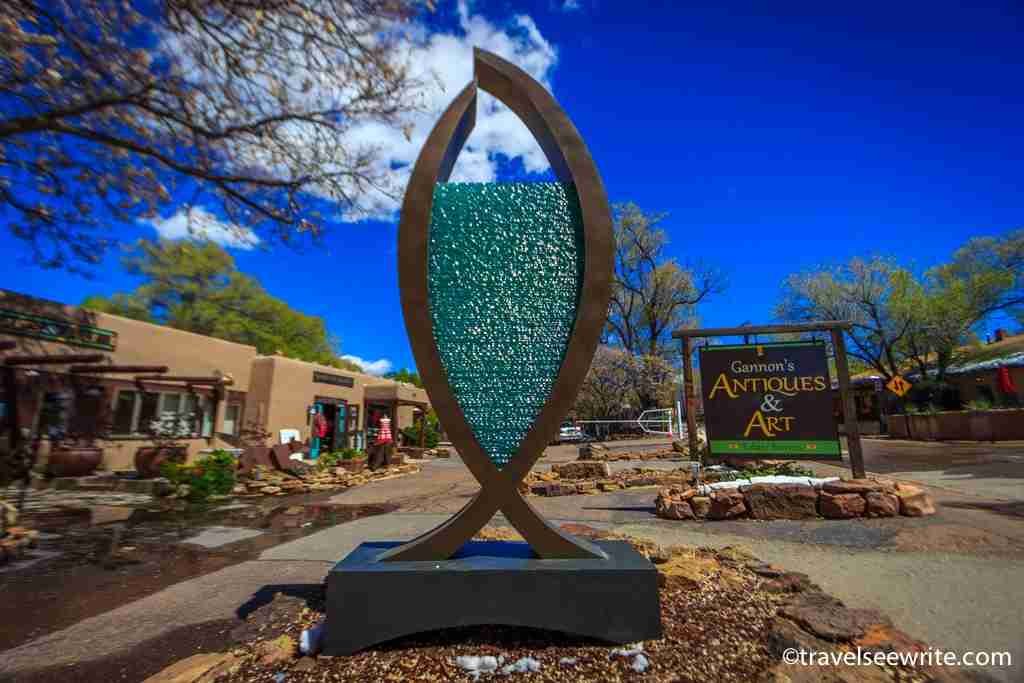
The Epicenter of Santa Fe is a hub of fine-art activity where thought-provoking museums like the New Mexico History Museum, Georgia O’Keeffe Museum and world-class art galleries hypnotize the visitors. You can’t help but be inspired by the legendary collections.

Plaza and Downtown, Santa Fe, New Mexico

Downtown Art Galleries, Santa Fe, New Mexico
The 50-acre neighborhood has a thriving art scene with vibrant art galleries, restaurants, Santa Fe Farmers’ Market (one of the most widely recognized farmers’ markets in the United States), brewery, music venues and a movie theatre.

Railyard and Railrunner, Santa Fe, New Mexico
David Richards Gallery, Railyard, Santa Fe, New Mexico
Further south, the Midtown Innovation District is home to the Meow Wolf, an artist cooperative, and Prescott Studio. The former has partnered with Game of Thrones creator George R. R. Martin to open a multi-use art complex.

Midtown Innovation District – Meow Wolf, Santa Fe, New Mexico

Meow Wolf Exhibits, Santa Fe, New Mexico
South East of downtown lies museum Hill, renowned for four distinct art institutions – the Museum of Indian Arts & Culture, Museum of Spanish Colonial Art, Museum of International Folk Art and the Wheelwright Museum of the American Indian.

The Museum of Indian Arts & Culture, Santa Fe, New Mexico
Even a person like me (who can’t understand the intricacies of fine art) couldn’t stop falling in love with the beauty of artsy Santa Fe. I was so impressed, I immediately rang my Creative friends to make Santa Fe their next travel destination.

Santa Fe is the first designated UNESCO Creative City for Crafts and Folk Art. And it puts in lot of effort to maintain that tag. It organizes three major annual art markets: the Santa Fe International Folk Art Market; the Traditional Spanish Colonial Market and the Indian Market. One percent of Santa Fe’s hotel tax supports local arts organizations, helping to maintain a flourishing arts community, employ artists and attract tourism. Furthermore, two percent of the cost of city buildings and infrastructure support site-specific public artworks.

Santa Fe Annual Indian Market, New Mexico
It would be safe to say the heart and soul of Santa Fe lies in its culture economy, which has made it the number one choice of Culturephiles.
Santa Fe is all about creativity; from museums, art galleries and artists. The love of art is a driver of economic prosperity here in the City! As one of the top markets in the U.S. for art collectors and enthusiasts, Santa Fe’s art covers a wide range of media and genre of art.
Says Cynthia Delgado, the Marketing Director of Tourism Santa Fe.
Santa Fe is different even when it comes to food. I am not a foodie but the city made me one. I felt at home in the Chile capital of the world. The chile—spelled with an e, not an i—is a big deal, found on every menu in town and featured in dishes from breakfast to dinner, and even found in deserts! Chiles are more than just an ingredient, they are a way of life.

I was placing an order at the La Fiesta Lounge, La Fonda when my server asked:
Red, green, or Christmas?
That’s local parlance for “How do you prefer your chile?” The spicy, capsaicin-rich sauce made from the official state vegetable. Whether you prefer spicy green, mellow red, or “Christmas,” a combination of the two, the little-known secret about New Mexico chile is that red and green are one and the same. The difference is how ripe the pepper is when picked.
The authentic New Mexican Cuisine features dozens of varieties of green and red chile, and dishes that creatively use Chile. You can never have a bad meal in Santa Fe, wherever you might eat – from 400+ restaurants to food markets.

Chile Roasting, Santa Fe Farmers Market, New Mexico
I missed on the Farmers Food Market but I really enjoyed my meal at il piatto Farmhouse Kitchen, where everything is freshly sourced from farmers, foragers, and ranchers; breads, pastries, pastas, and pizzas are made from whole wheat flour and only European styled grass-fed butter is used for cooking.

Chile BIG DEAL in Santa Fe

Food of Santa Fe

il piatto farmhouse kitchen

The United States is…
World Power Centre
Innovation Incubator
Cloud piercing Skyscrapers
StarStudded Hollywood
Sparkling city life
Epic Vistas
Art in nature
Wild Wilderness
Spectacular Parks
Iconic wildlife
Idyllic Islands
Vibrant cultures
Supersize food
…and a lot more.
These were some of the responses I got when I asked Americans to describe the United States in one or two words. I admit my initial perception of the United States was myopic and I related only a few of the adjectives listed above with the most powerful nation in the world. However, I knew the States is much more than the glossy unidimensional picture Hollywood, sitcoms or media paints. So, I decided to explore it for myself.
I wanted to see the side of the United States, which most of the foreign tourists often miss. So, instead of doing the usual New York – Los Angeles – San Francisco – Chicago – Miami loop, I consulted my blogger friend Mike Shubic of MikesRoadTrip to suggest places that are unique and can showcase the diversity of this mega nation. He was driving my visit to the popular and offbeat places of California, Oregon, Arizona, New Mexico, Alabama and New York state.
A highway in the USA
From April to May 2017, I covered the four regions of the United States of America – North East Coast, West Coast, South East and South West. To get the pulse of the great nation, I travelled the way locals do – using all modes of transport – Planes, trains, cars, ships and, of course, walking. It was mostly a solo trip, but my friends joined in at a few places.

50 states of United States of America
USA Travel: Regions and States of the United States of America
While one lifetime is not enough to get into the skin of the US, I tried to sample as many things as I could – adventure, nature, wildlife, culture, art, food, history, architecture, technology and shopping, among others.

Balloon ride in Arizona
Also, I was lucky to experience different seasons in one season across different regions – cold and rainy Northern California, white snow-carpeted New Mexico, hot and humid central Arizona, sandstorm-swept North Arizona, melting hot Alabama, spring-infused Niagara Falls, grey clouds enveloped wild Adirondacks and sun-kissed upbeat New York.
My USA travel experience has been one EPIC trip, and I have many stories to share in my upcoming posts. However, I’ll begin by sharing my first impressions about this great nation.
While every state has its unique charm and appeal, three things stood out strongly for me:
The United States personifies the word BIG. The land is big. Cars are big. People are big. Food is big. Buildings are big. Homes are big. It’s just big! And when Americans travel, they travel with entire paraphernalia. I was on a five-day road trip with Mike in Arizona, and I felt that he had carried his entire home in his truck. With the amount of stuff he was carrying for a 5-day trip, I could have very easily opened a grocery store in India. No kidding!
Besides India, if there’s any nation that embodies diversity, it is the US. All fifty States are as different as chalk and cheese. Everything from food to culture to topography to dialect changes as you move from one state to another. I still can’t forget my epic Boots and Boats adventure in the “Forever Wild” Adirondacks in upstate New York
The United States is a land of opportunities where immigrants have arrived for centuries (and are still coming) in search of an American Dream. A land that not only gives you the freedom to clinch opportunities without distinction but is also an idea incubator. Freedom to follow your heart is what has made America great.

Grand Canyon in Arizona, USA
Fact: It is not one state but the United States of America made by fifty states
The US is 3.8 million square miles big and divided into 50 states. There are six time zones in the US, and it takes the same time whether you fly from New York to Los Angeles or London. Regional differences across the US extend to accents, food, drink, architecture, culture, people, laws and politics.

Fact: The heart of the US lies in its spectacular 59 National Parks
A land as diverse as the US is bound to offer diversity; therefore, associating just skyscrapers with the US is a crime. The diversity among its 59 National parks covering 84 million acres across every state is astonishing – on the one hand, you can see the lowest point in the Western Hemisphere (Death Valley, California); on the other hand, you can also trek to the highest point in North America (Mount McKinley in Denali National Park, Alaska); you can traverse through the longest cave system in the world (Mammoth Cave National Park, Kentucky); and also marvel the largest gypsum sand dunes in the world (White Sands National Monument, New Mexico). National parks are the true treasures of the USA, and they should not be missed at any cost.

USA Travel: Your USA trip is incomplete without visiting its epic national parks
Related: Traveling the world alone: 10 tips for Solo Travelers(Opens in a new browser tab)
Fact: Americans are very friendly and helpful
Before arriving in the US, I was afraid of how people would treat me. To my surprise, not only did they treat me well, but they went out of their way to make me feel at home. How often do you see the head of a Tourism Board receive you at an airport? Not too often. But perhaps that’s the reason why Santa Fe is called ‘the city different.’ And it wasn’t just Santa Fe; my experience with other CVBs was equally phenomenal.

The USA Travel: My beautiful Santa Fe host, who is an amazing person
People, in general, are very kind in the US. Yes, even to strangers. I had gone to Priceless Rent-A-Car at Lake Placid to return my car and was waiting for my train shuttle to arrive. I was hungry but didn’t want to leave the place for fear of missing my shuttle. The employee at the station got the whiff of it, and without me even asking, he got food for me. Now, isn’t that a rare kind of generosity seen these days? But that’s how America can surprise you.

USA Travel: An average American is as humane as anyone else in the world
Fact: Americans are relentlessly hard-working
Will Smith showed the hard-working side of Americans in ‘The Pursuit of Happyness’. And not much has changed since then. Most of the people I met were doing multiple jobs at a time – working in a regular 9-5 job during the day and taking up flexible jobs after office hours like driving an Uber/Lyft or serving at restaurants. This is what a young girl from Lake Sarnac had to say,
People outside of the US think we get everything on platter. But we really work very hard. One job is not enough to sustain oneself. During the week I work as a nurse at a hospital and over the weekend I work as a server at a restaurant.
Also, minimum wages in the hospitality industry are too low to sustain life. Therefore, tipping is almost a mandatory custom whether you dine at a hotel or take a tour or get a car valet service.

USA Travel: Behind the beautiful smiles lies a lot of hard work
Fact: Fast food is complemented by gourmet soul food
Although fast food still dominates large tracts of the culinary landscape, the US now excels at wildly innovative, gourmet cuisine. San Francisco and New York regularly show up on the top lists for a number of Michelin stars, and celebrity chefs rival Hollywood royalty, with big names like Mario Batali, Anthony Bourdain and Rachael Ray spawning multimedia empires, with dozens of restaurants, books, TV shows, films and more.
On the one hand, you can get a large size wrap for a five-dollar food truck in New York; on the other hand, you can dine at an Award-winning FnB restaurant in Scottsdale where gourmet cuisine menu changes every week and where the chef-turned-entrepreneur couple handcrafts every dish. I am a vegetarian, and the US spoiled me with food options. I didn’t have a bad meal even once.

USA Travel: FnB restaurant in Scottsdale is a must-visit for any food lover
Fact: Being health conscious is no longer an option but a way of life
My initial image of an average American was a McCheese Burger eating baseball, wearing GOT, and binge-viewing, snap-chatting bloke. While this kind of stereotype does exist, that isn’t how everyone in the US is. Whether walking the streets of New York or driving on Highway 103 on the Pacific coast, you’ll come across people indulging in physical and wellness activities. Being outdoors is an important part of the American lifestyle. City parks are filled with joggers, cyclists and yoga enthusiasts.
The USA travel: Central Park in New York City is an oasis for nature and health lovers.
Healthy living is not limited to physical exercise; even food and lifestyle play an important role. Aisles of shopping malls are filled with healthy and organic foods. Kale is the new queen of food.
For a spa aficionado who is always on the hunt for the unusual, Phoenix was Nirvana for me. The city is becoming the spa capital of the country. You can find the city’s finest spa treatments, from Sonoran Desert-inspired indulgences to Native American healing traditions.

I thoroughly enjoyed my Sonoran-Desert-inspired Spa treatment at Aji Spa, Sheraton Grand, Phoenix
Fact: Diverse ethnicities and cultures are celebrated with aplomb
While America is relatively a toddler when it comes to history, it is very proud of all the ethnicities that made America their home. It is a melting pot where all religions, traditions, and festivals are celebrated with the same fervour. So, while San Francisco celebrates the diversity of the city through the Annual Carnaval San Francisco, Albuquerque celebrates POW WOW – the world’s largest gathering of the nations. It is a festival of one of its kind. You have to see it to believe its magnanimity.
America is the land of wonderful and weird festivals, from the Chainsaw Carving Festival (Pennsylvania) to the Testicle Festival (Montana). The state fairs are even more fun and weird at times.

POW WOW festival, Gathering of Nations in Albuquerque, New Mexico is a must-visit
Fact: Art and culture thrive as much as technology
There’s a reason why so many artists have the US as their address. Art and culture are thriving businesses in the US. Cities like Santa Fe have become a cultural melting pot for artists, where art is not a prop but lies at the heart of the city. With over 240 art galleries and 14 museums, Santa Fe is a visual feast for art lovers of all sorts. A place where pesky salesmen won’t hound you to purchase an art piece just because you entered his gallery.
The city of Adobe Homes is an art city where artists like Georgia O-Keeffe, George R.R. Martin (author of Game of Thrones) and like have moved to find inspiration from nature and pursue their creative side. Art is not restricted to galleries here. Sunsets are a show every evening here, and the night sky is just unbelievable. Santa Fe is a place that can change not only one’s external life but also one’s inner, spiritual life.
And New Mexico isn’t the only one supporting the right brain. The Rocket City of Huntsville is as passionate about art as it is about rocket science. Lowe Mill has studios of some of the best artists in the country.
USA Travel: Walking through Canyon Road in Santa Fe is like walking through an art gallery
Fact: Punctuality and professionalism are the unsaid rules in the United States
In the United States, punctuality is not a courtesy but a norm. Time is money, and nobody squanders it. In American culture, the commitment to spend time with someone is more important than anything else that might happen.
Also, being a marketing haven, professionalism is the core of survival in America. It is not acceptable to over-promise and under-deliver. Therefore, everyone follows the rules and delivers on time. There is no aberration when it comes to following rules. Titles don’t matter. Rules do. I was on a press trip to Monterey & Carmel with Tower Tours. Our pickup time was 2:30 pm. I was two minutes late, and the bus left without me. Although, after a few calls, the driver did come to fetch me. I learned an important lesson that day. Hats off to the company for its professionalism. Their service was top-notch.

Fact: America is a lot of things; racism isn’t one of them.
Before landing in the States, I was warned about an increase in racist attacks. However, statistics paint a different picture. But rather than trusting stats, we believe on “proof by example,” where we take one event as evidence of a trend — a dog attacked my friend, therefore all dogs are vicious and should be put down. Proof, by example, is a logical illusion. But logic is officially an endangered species in today’s hyper-partisan political environment.
The truth is that 99 per cent of the 300-plus million Americans peacefully coexist with members of all races day in and day out. Rotten eggs are found everywhere. It’s up to us what we want to absorb. Here’s what I experienced:
I was on a Press Trip to Birmingham, Alabama, a place where the civil rights movement started. Leaving the past behind, Birmingham has moved on. It doesn’t matter whether you are black or white; everyone is treated equally. During my trip, I experienced something worth sharing – my Afro-American tour guide historian and teacher Barry McNealy complimented my extremely humble white host Pamela McDonald on her charm bracelet and told her how his wife wanted a similar one. Without blinking an eyelid, Pamela gifted her bracelet to Barry as a gift for his wife.
That didn’t look racist to me. That was unadulterated love and care for each other. But the media never picks up on the positive stories as it’s easier to sell negativity than positivity. And that’s where we need to do our job. Spread positivity to make this world a better place to live and grow together.

USA Travel: Happiness is multi races dining together in Birmingham, Alabama
So, these were some of the experiences I had during my US travel. Your experience will be determined greatly by where you go. Just to reiterate: No two people in different locales in the US will have the same — or maybe even similar – experiences. So, before you go anywhere, do yourself a favour and choose more than one spot. It’s the only way to get a better, more accurate, detailed, and genuine experience out of this large, diverse country that has so much to offer.
Have you ever travelled to the US? How was your experience? I would love to hear your thoughts or feedback on this article. Please remember that your one comment could be the reason a writer keeps going.


Here’s a detailed travel guide about the best things to see and do in the state including a 7-10 Days Sikkim itinerary covering Gangtok, North, East, and South Sikkim

Gurudongmar Lake in winters, North Sikkim Travel, India
From the time I read James Hilton describe Shangri-La as a mystical, harmonious valley landlocked by Mountains; I wondered if there exists a real-life match to this fictional place. The pursuit of Shangri La took me to the depths of the Himalayas, drawing me into fascinating corners and cul-de-sacs I never dreamed of visiting. And finally, I found it in Sikkim.

Cavernous valleys, snowcapped mountains, roaring rivers, fluttering prayer flags and green homes dotting the zigzag mountain slopes – no wonder Sikkim is known as the Himalayan Shangri La. A jewel-like mountain state of North East flourished under the benign shadow of colossal Mt. Kanchenjunga. The locals revere the third highest mountain in the world as their guardian deity.
Sikkim metamorphosed from the independent Himalayan Kingdom to the twenty-second state of India in 1975. However, one thing remained untouched – Sikkim’s reverence for nature.
Nature is above everything in Sikkim, where ‘eco-friendly’ and ‘all-organic’ are not loosely thrown around terms but practised by one and all in daily life. During my sojourn, I didn’t see any wafer packets or cola bottles spoiling the gorgeous landscape. Sikkim didn’t become an all-organic state by fluke; the local government and people put in a mammoth effort.
To propagate the idea of ‘all-organic state’ Sikkim Government runs lot of eco-conservation programs and hosts lot of exotic festivals,
explained Chen Yang a travel guide who works closely with the Sikkim Government.
Festivals like International Flower festival, Yakten – Bojeytar Village Tourism Festival, Dentam Rhododendron Festival and Pang Lhabsol among others elucidate the love and respect Sikkimese have for their nature.
Besides the unique festivals, Sikkim is great for adventure, wildlife, culture and spiritual travel.

Golden Hour in Sikkim, India
Here’s my experience of traversing through the alpine landscape, thick luxuriant tropical forests, torrents Rivers, high mountain peaks and unruffled high altitude lakes – everything that makes Sikkim a true Shangri La.
Climbing up the winding roads to Gangtok from Siliguri took me more than five hours. The scenic route was picturesque, though pretty bumpy! The indulgent lunch at a small restaurant facing the Teesta River couldn’t provide any respite from the backbreaking journey. I was staying at an Army Guesthouse in Gangtok so thankfully I could enjoy the modern-day luxuries in the lap of Himalayas. My Army friend helped me secure my inner line permit, taxi and homestays in North and South Sikkim. As the night befell, I went to sleep looking forward to experiencing the ethereal beauty of this jewel-like mountain state.
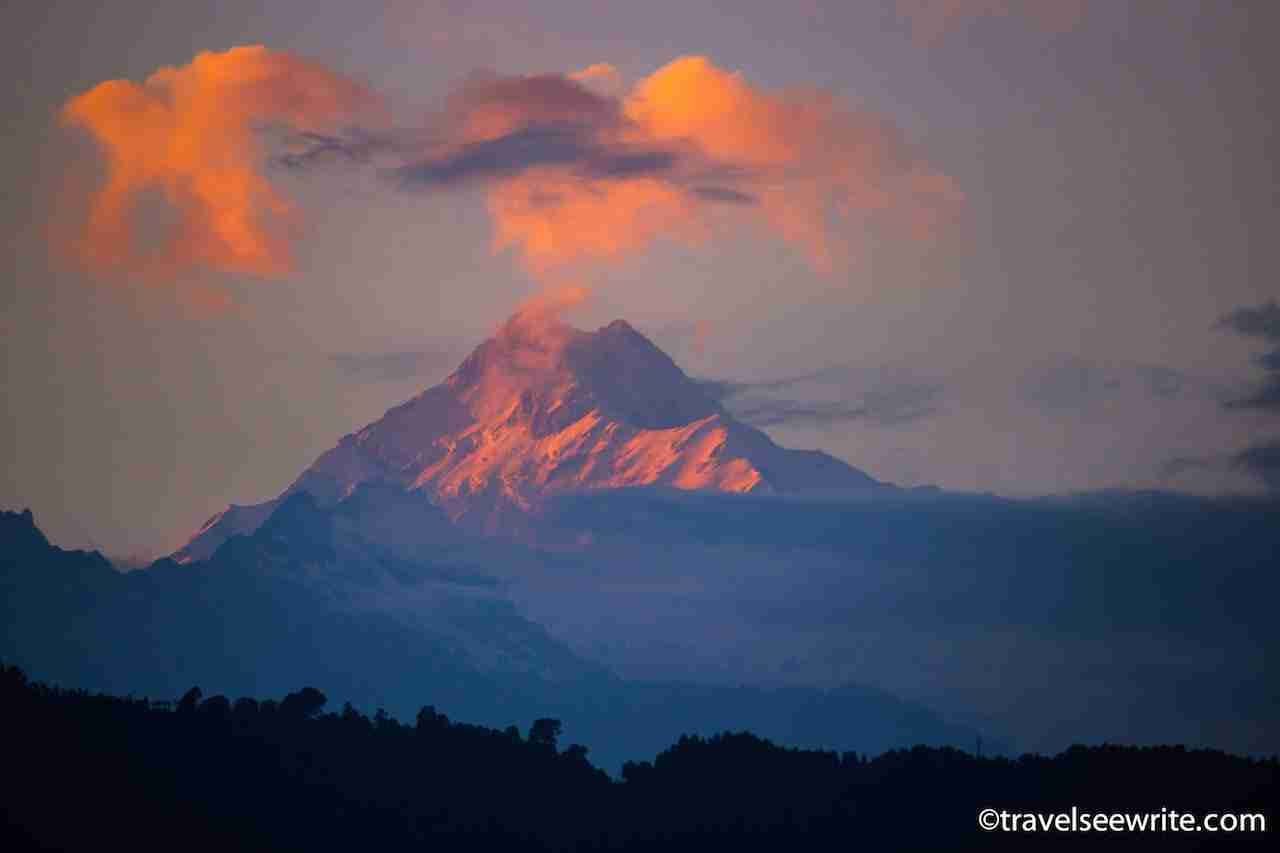
Mt. Kanchenjunga, Sikkim, India
At the break of the day my driver, Ritu Tamang and the magnificent mountains greeted me. After soaking the sweeping view of the snow-capped Mt. Kanchenjunga from the Tashi View Point, I decided to invoke the spiritual side by visiting the Gonjang Monastery, located about 6 km away from Gangtok. A young monk sitting on the edge of the wall watching a WWF fight on his smartphone, a group of monks taking a Coco-Cola break from their studies and teenage monks flirting with the guitar strings behind the closed doors of their room were the sights I couldn’t envisage in a religious place.
Happiness is not guaranteed by giving up the pleasures or desires of life but by not being their slave
explained the senior monk who probably read my mind.

Monk at a Sikkim Monastery, India

Inside the monastery, Gangtok, Sikkim
The rest of the day was spent paragliding over the snowcapped mountains and thickly carpeted forests around Gangtok, enjoying the panoramic views of Gangtok from Ganesh Tok, revisiting the old world charm at the Royal Palace and suicide point infamous for kings throwing their enemies from a drop-dead gorgeous hilltop.

Suicide Valley, Gangtok, Sikkim, India
The day was wrapped up with a passeggiata on the MG Marg, the social-commercial hub. It was packed with restaurants serving toothsome delicacies, export surplus shops staff haggling with customers, travel agents taking last-minute bookings and tourists enjoying the crisp air of Gangtok.
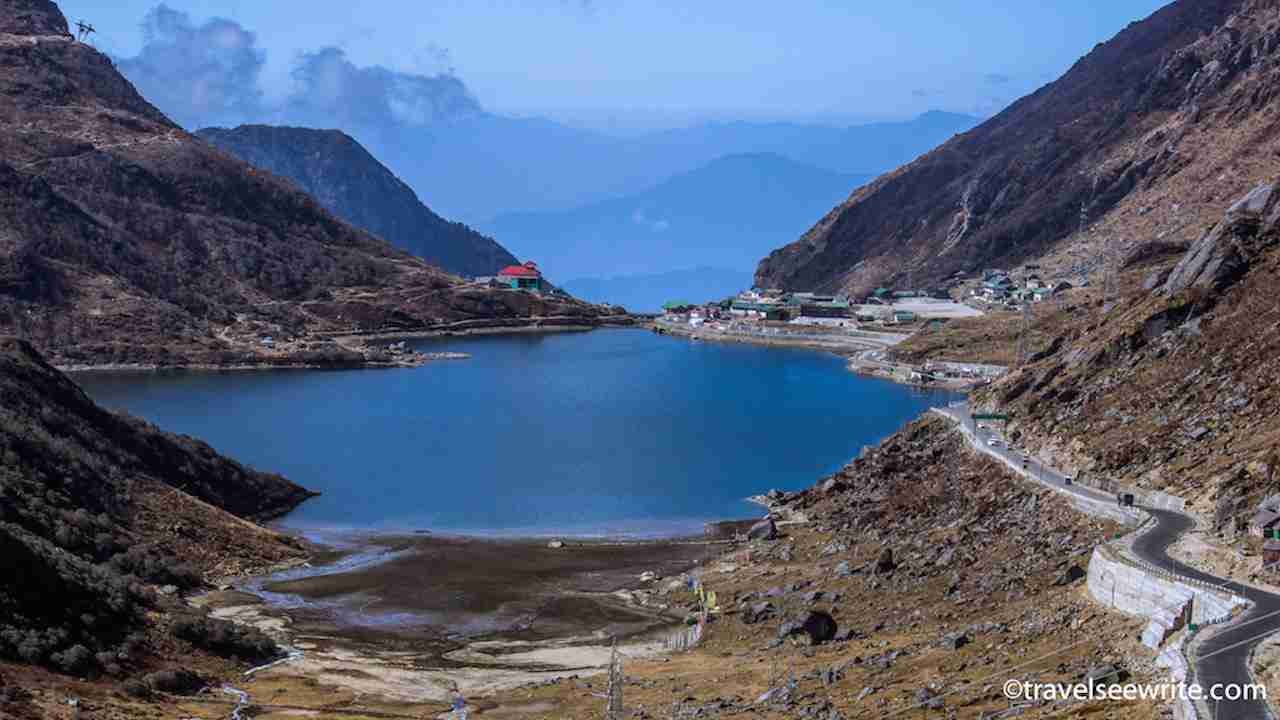
Tsomgo Lake, East Sikkim, India
For most visitors, a trip to Sikkim usually includes a trip to Gangtok, Rumtek and Nathula La via Tsomgo Lake and Harbhajan Baba’s Mandir. However, always curious to discover places beyond the obvious, I chose the road less travelled. Not only I visited the old silk route but even tried my hand at playing golf at Yak golf course in Kupup, the world’s highest golf course (13,025 feet above sea level). Three days were not enough to explore East Sikkim but North Sikkim was already booked so I had to return to Gangtok.

Visit Sikkim to see the world’s highest golf course: Kupup

Visit Sikkim to invoke spirituality: Gangtok, India

Visit Sikkim to revisit the Old Silk Route in India
After an early morning start and backbreaking journey of seven hours from Gangtok, we finally reached Lachen. The arduous journey was made beautiful by – the roaring jade green water of Teesta River rushing through massive boulders, soaring snow-capped peaks embroidered with long ribbons of waterfalls, lush green forests dimpled with alpine pastures and the hot pakodas made to order at Naga Waterfalls.

Visit Sikkim to marvel the beauty of jade green Teesta River
After spending the night at a Bhutia (Tribe of Tibetan origin) homestay, I started my journey at 4 am through stunning frozen mountainscape where the majestic mountain peaks were glowing in the molten golden dust of the sunrise. Sacrificing my sleep was nothing when we saw the staggering snow-blanketed vistas and crag-rimmed Gurudongmar Lake (17,800 feet above sea level). I had not seen anything as phantasmal as Gurudongmar Lake was. Even the -19 degree temperature and AMS inducing thin air couldn’t confine me to my car. I sat near the lake trying to take in the beauty around us. There was nothing but perfect silence. Cautious enough to not get carried away, I took baby steps to enjoy the bounty of nature.

Frozen Gurudongmar Lake, North Sikkim, India
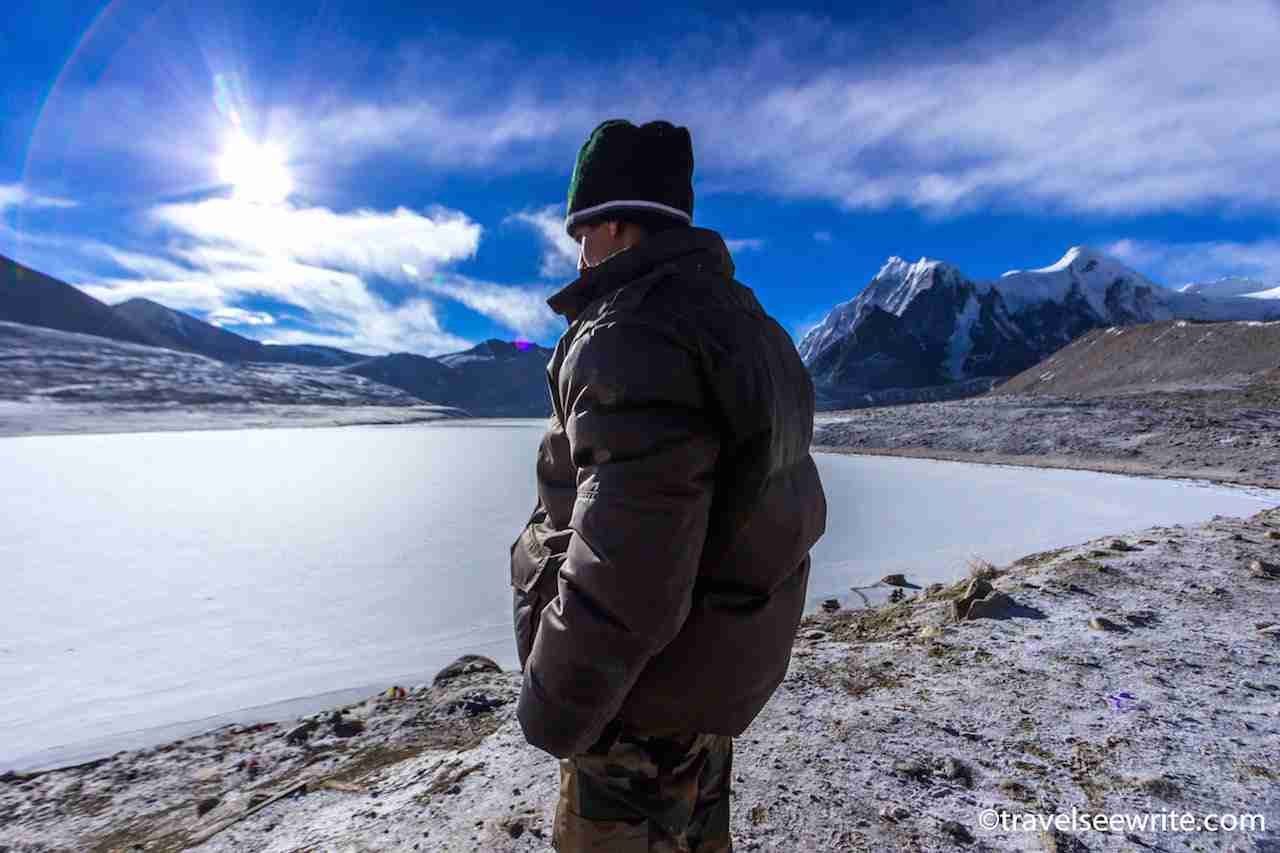
An Army Personnel at his post on Gurudongmar Lake, North Sikkim, India
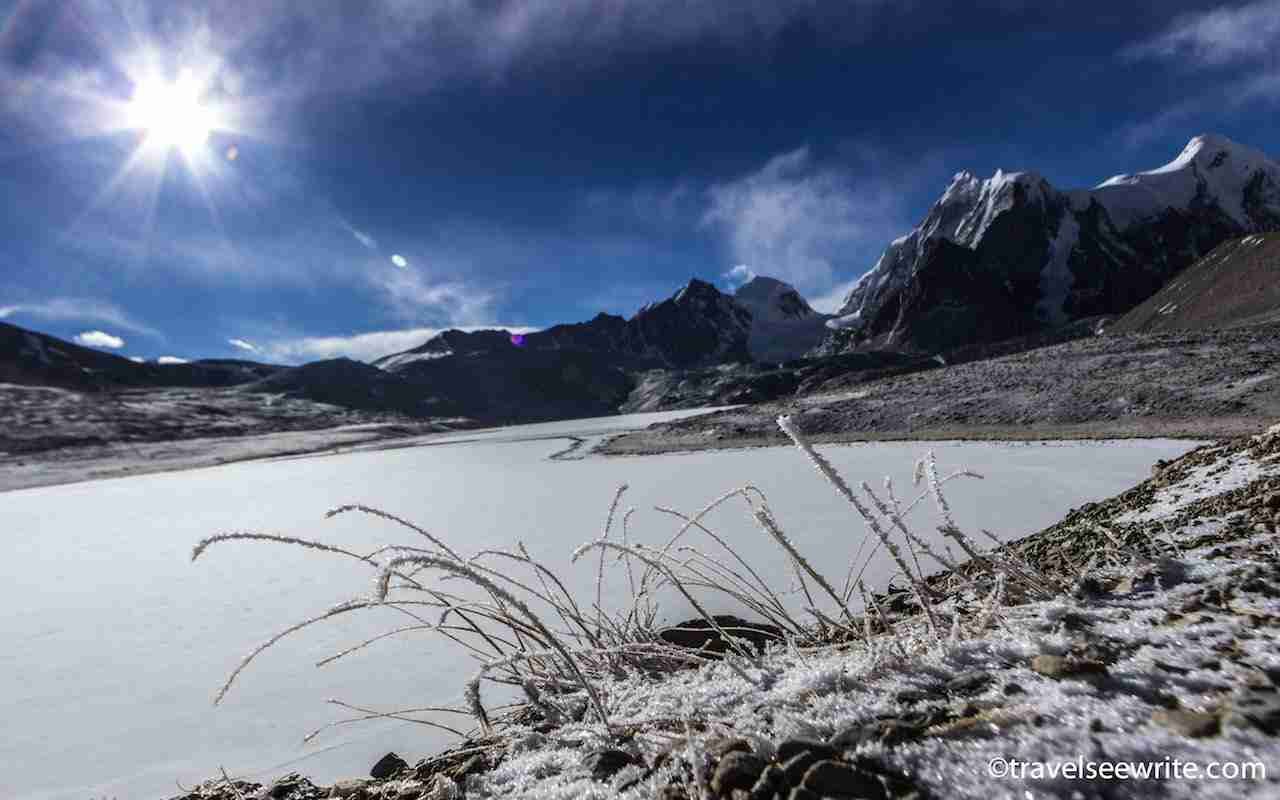
Visit Sikkim to see Frozenscapes: Gurudongmar Lake, India
After visiting Gurudongmar Lake, I reached Lachung to explore the stunning Yumthang Valley and Zero point the next day.
South Sikkim formed the next leg of my trip. The larger-than-life religious statues at Char Dham, Samdruptse Monastery at Namchi and Buddha Park is a must-visit even for a nonreligious person. I really enjoyed the majestic mountain and valley views from Tarey Bhir, Helicopter Point and Temi Tea Garden, the state’s only Tea Estate.

Buddha Park, Near Namchi, South Sikkim

Visit Sikkim for Spirituality: Chaar Dham, Namchi, India

Visit Sikkim for its gorgeous views – Tarey Bhir, Near Ravangla
Besides the indescribable beauty of Sikkim, I was left awestruck by the calm and composed demeanour of the Sikkimese people.
“So is everyone in Sikkim happy like you?” I asked my driver.
No, of course not but we are less complaining than others and that makes us happy in general. I think it’s a combination of our cultural identity, family ties, respect for Mother Nature and Buddhist traditions of letting go. We are happy with what we have.
I learned a life-changing lesson that day.
My trip had come to an end and I had fallen in love with the mythical Himalayan land worthy of being called the Himalayan Shangri La. So are you ready to visit this mystic land this holiday season?

Visit Sikkim for its revered mountain lakes – Tsomgo Lake, India
Well, you don’t need a particular season or a reason to visit the Himalayan Shari-La. But the best time to visit Sikkim is either between March and May or October and mid-December. I highly recommend visiting the state in Spring (March to May) as you can witness the blooming natural beauty of Gangtok during that time. But, if you want a clear view of the Himalayan range then Autumn (October-November) is the best time.
By Air: The nearest airport is Bagdogra in West Bengal
By Rail: The nearest railway stations are New Jalpaiguri (125 km) and Siliguri (144 km) in West Bengal
By Road: Regular bus services run by the Sikkim Nationalized Transport directly connect Gangtok to Darjeeling, Kalimpong and Siliguri. For local transport, Cars and jeeps are available for hire in Gangtok and other big towns of the state

Best time to visit Sikkim for its Narnia like beauty is in Winters

Visit Sikkim for its unique culture, heritage and natural beauty

Visit Sikkim for its monasteries in India.
A section of this story has been published in several publications, namely:
I have explored Spain, Kenya, Sri Lanka, and Switzerland with Travel See Write. Every experience was customised as per my family’s requirements, and each trip was fully customised.
Vaibbhav Sud
Delhi
I travelled with my family to Finland using Travel See Write. The team went above and beyond to make our stay enjoyable. They were even available at 3 am for services beyond their usual duties. ”
Gautam Kriplani
Jakarta, Indonesia
This is not a typical luxury travel agency — this is travel with soul. They take care of the minutest details and customise the tiniest things for us. I have travelled with them to Japan, Finland, Costa Rica, Russia and the Philippines.
Vineet Nanda
Delhi
I have explored Spain, Kenya, Sri Lanka, and Mongolia with Travel See Write. Every experience was customised for my family, and each trip was special
Sunil Sharma
Delhi
This is not a typical luxury travel agency — this is travel with soul. They take care of the minutest details and customise the tiniest things for us. I have travelled with them to Japan, Finland, Costa Rica, Russia and the Philippines.
Aman
Mumbai

Lorem Ipsum is simply dummy text of the printing and typesetting industry. Lorem Ipsum has been the industry's standard dummy text ever since
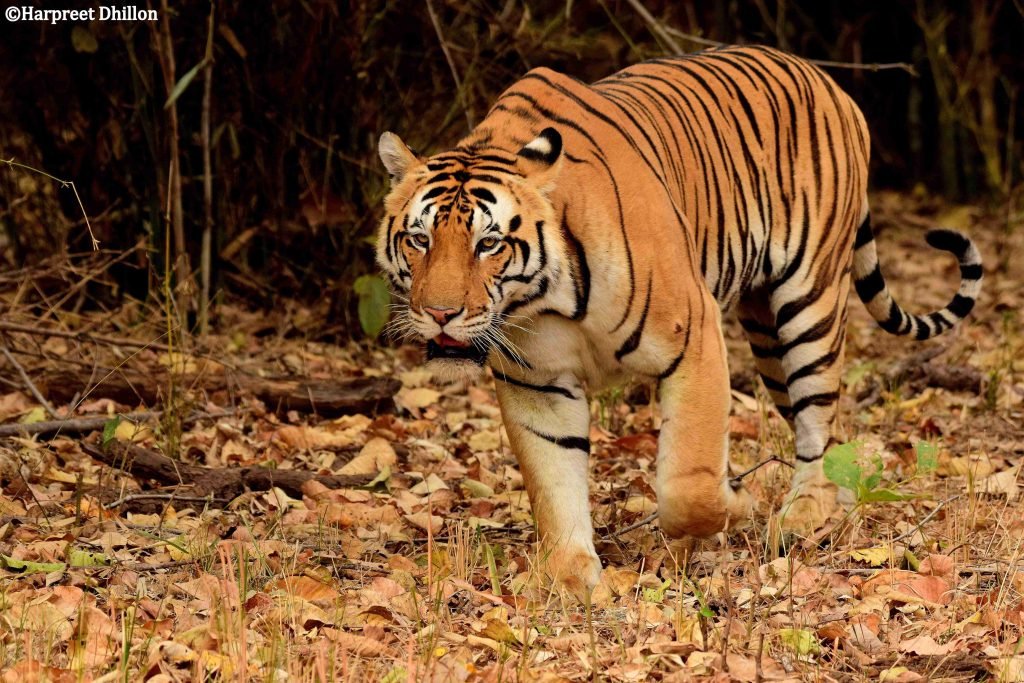
Luxury travel should feel seamless from start to finish.

Begin with our online form. We then connect for a detailed conversation
No booking fees. Ever.
We fine-tune your bespoke itinerary until it feels perfect.
With confidence, care, and 24/7 on-ground support throughout your journey.