
Italy Without the Instagram Rush: 15 Days of Slow Travel Through Umbria, Tuscany & Rome
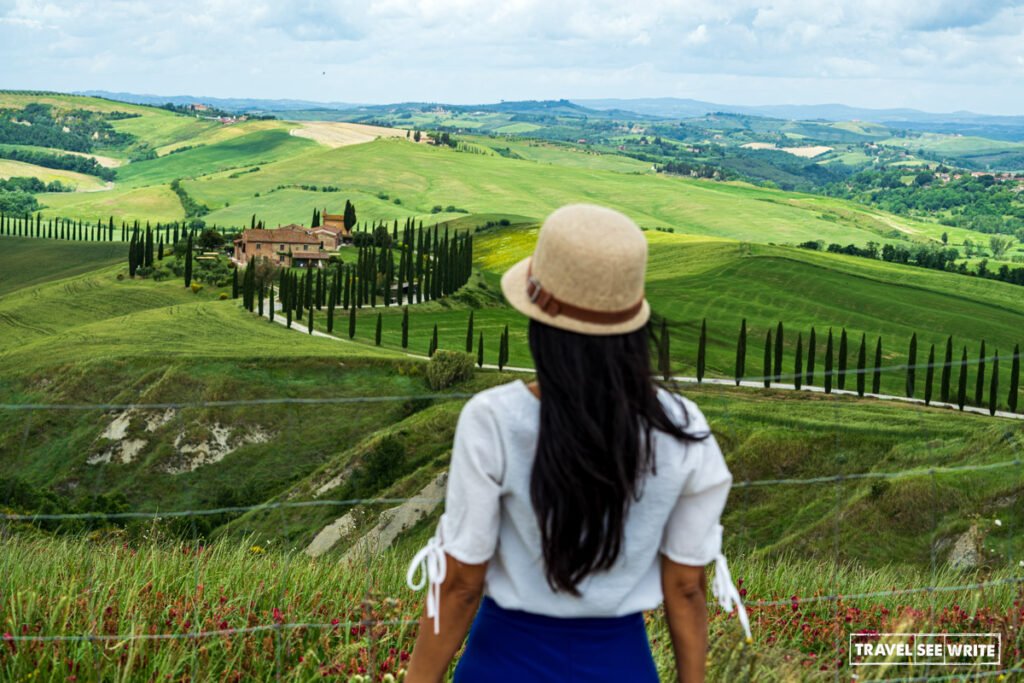
My rental car keys were sitting in my palm before I’d even processed that the main walking part of my trip was over.
Three days earlier, I’d started on foot, on the Via di Francesco, no schedule beyond the next town, no sound but gravel and wind and the occasional church bell from somewhere I couldn’t see. Now I was in my hotel holding the keys to an Audi Q5, and the next nine days of this trip were going to look nothing like the first three. Same country, same general direction toward Rome, completely different relationship with the ground under me.
That contrast turned out to be the whole point of this trip, and I didn’t plan it that way going in.
I’d been to Italy plenty of times before this. The Colosseum at golden hour, pasta in Bologna, gelato in Florence, Aperol Spritz on the Amalfi Coast, I’ve done the version everyone does, and loved it every time. But this May I wanted to know what it felt like to actually move through the country rather than sprint past it, so I built fifteen days around two completely different speeds. Three days walking the Via di Francesco, St. Francis’s ancient pilgrim trail through the heart of Umbria. Nine more on a self-drive through Umbria and Tuscany, the rest settling in and out of Rome on either end.
Walking showed me the grain of the place, the soil, the silence, the way a town reveals itself slowly when you arrive on foot. Driving showed me the scale of it, how quickly a 12th-century winery or a thermal square in the middle of a piazza is reachable if you’re willing to take the unmarked turn. Neither one alone would have given me the full picture. Together, they did.
I was invited by SloWays Travel to walk and document these routes as a content creator. Every experience, every feeling, every opinion in this post is mine. Nobody edited what I actually saw.
Here’s what my second leg of the fifteen-day Slow Travel in Italy actually looked like, day by day.
Day One: Spoleto on Foot, This Time With a Car Waiting
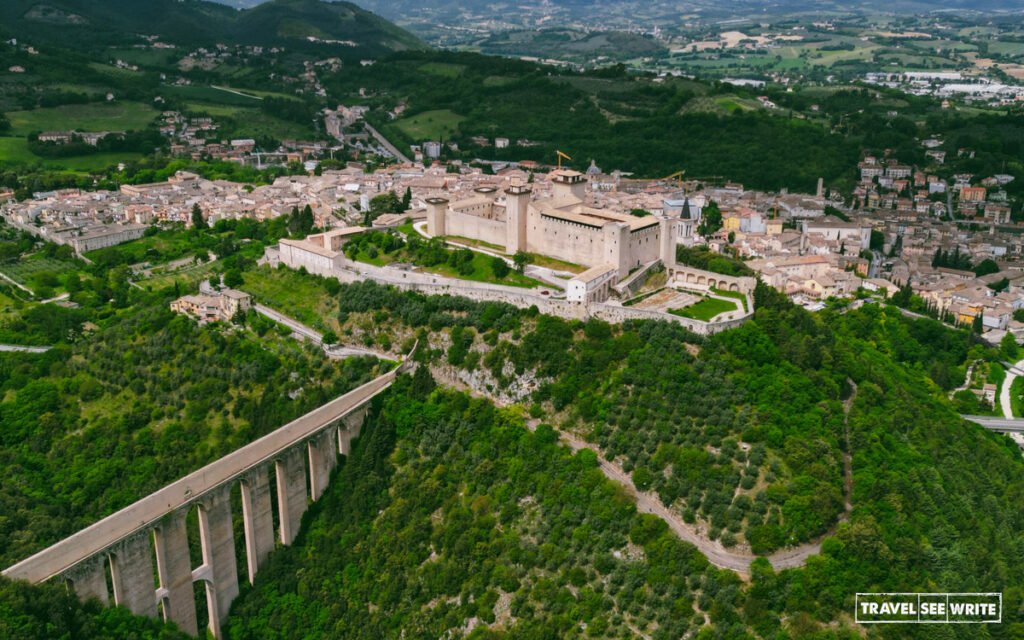
If you want the full story of the walking leg, the caves at Eremo delle Carceri, the 19 kilometres to Spello, the Sacred Forest of Monteluco, I’ve written about it separately here. This post picks up right where that one left off, in Spoleto, car keys in hand.
After my girls’ gang departed, I walked the medieval centre alone at 6 pm, golden light hitting Roman ruins, the Ponte delle Torri visible at the end of a lane. It’s a proper town, the kind where people actually live, eat, and argue in the piazza rather than performing for anyone watching. Dinner that night was at a tiny place with four tables and truffle pasta so good I nearly cried.
I realised almost immediately that the next nine days were going to feel like an entirely different trip, and I was right.
Day Two: Trevi, the Olive Oil Capital Nobody Told Me About
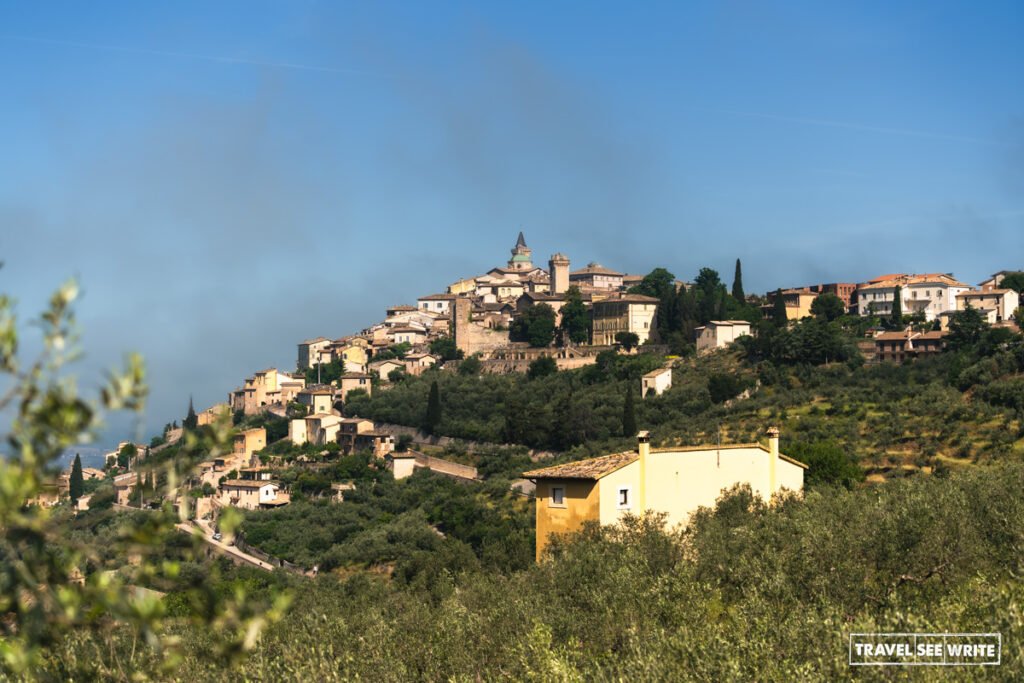
Driving from Spoleto, I reached Trevi, which locals call the Olive Oil Capital of Italy, and the best way to actually see it is on foot, perched as it is on the slopes of Mount Serano. So that’s what I did. Six kilometres through olive groves and quiet medieval villages to reach the hilltop town itself, lunch in a family-run restaurant in a piazza barely bigger than a living room.
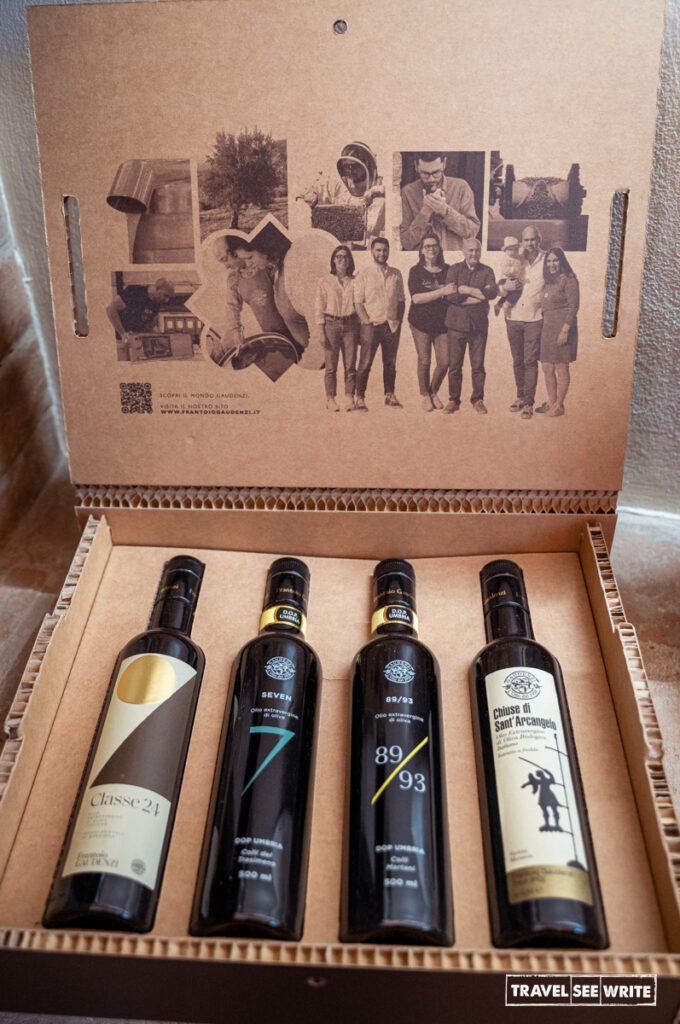
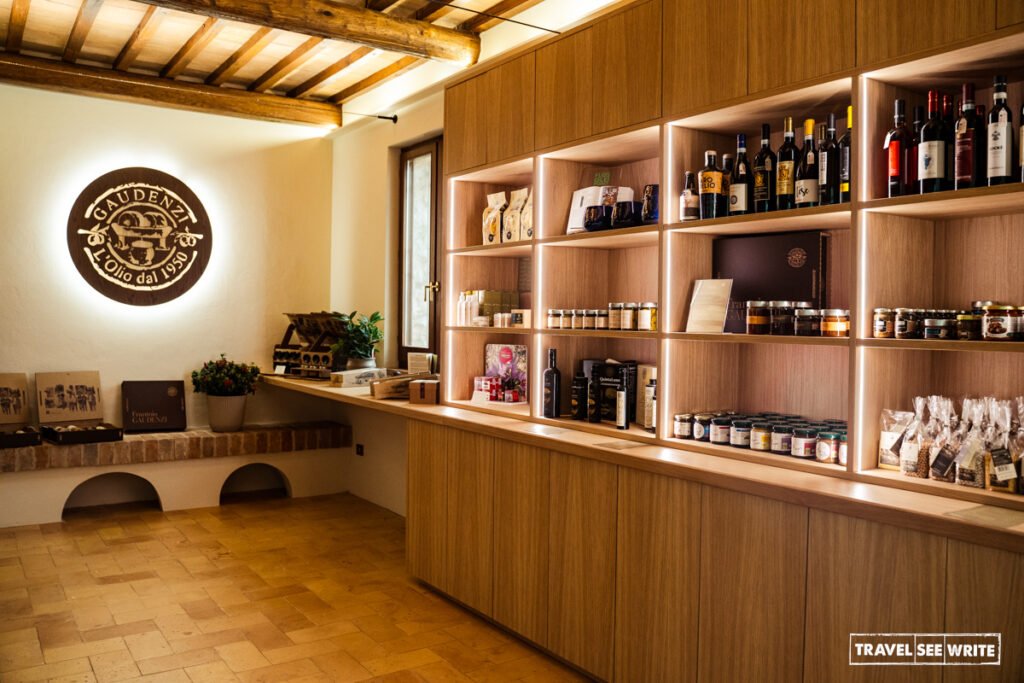
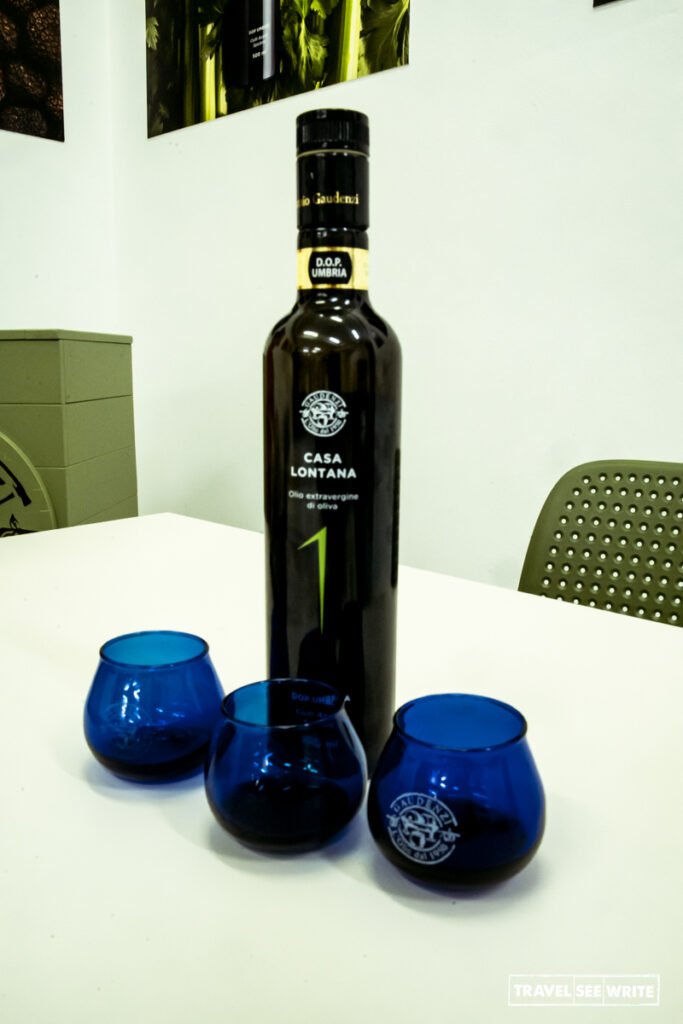
Then an olive oil tasting at Frantoio Gaudenzi, a three-generation Umbrian family producing certified extra virgin olive oil with the kind of obsessive care that makes commercial oil taste like something else entirely. We went through several oils side by side, different varieties, different harvest times, and different filtration levels. I came home with two bottles and zero regret about the excess baggage charges. Not a bad Friday.
Day Three: The Family That Makes 500 Bottles and Sells None of Them to Anyone Else
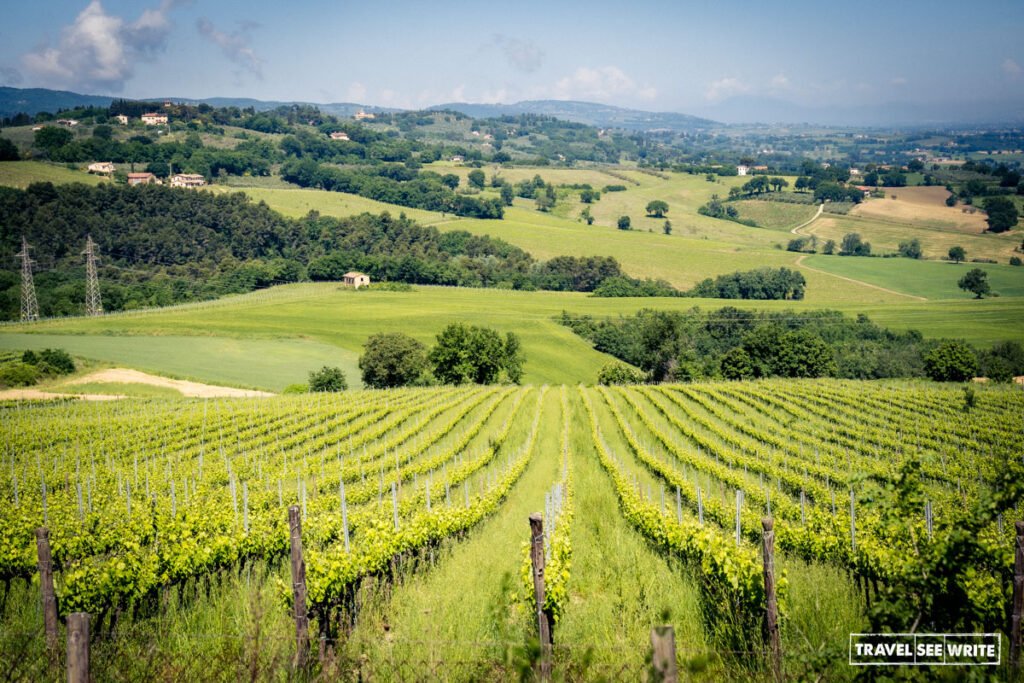
The next morning I drove to Montefalco for a wine tasting that turned into one of the best hours of the entire trip.
Azienda Agricola Borgese is a tiny family estate run by a couple, Massimo and Claudia. They make Sagrantino, one of Italy’s most tannic, age-worthy red wines, the kind that’s almost impossible to find outside this exact stretch of Umbria. Here’s the part that stayed with me: they make exactly 500 bottles a year, and they don’t sell a single one to a restaurant or a retail shop. If you want their wine, you buy it from them, in their cantina, in person. That’s the only way it exists in the world.
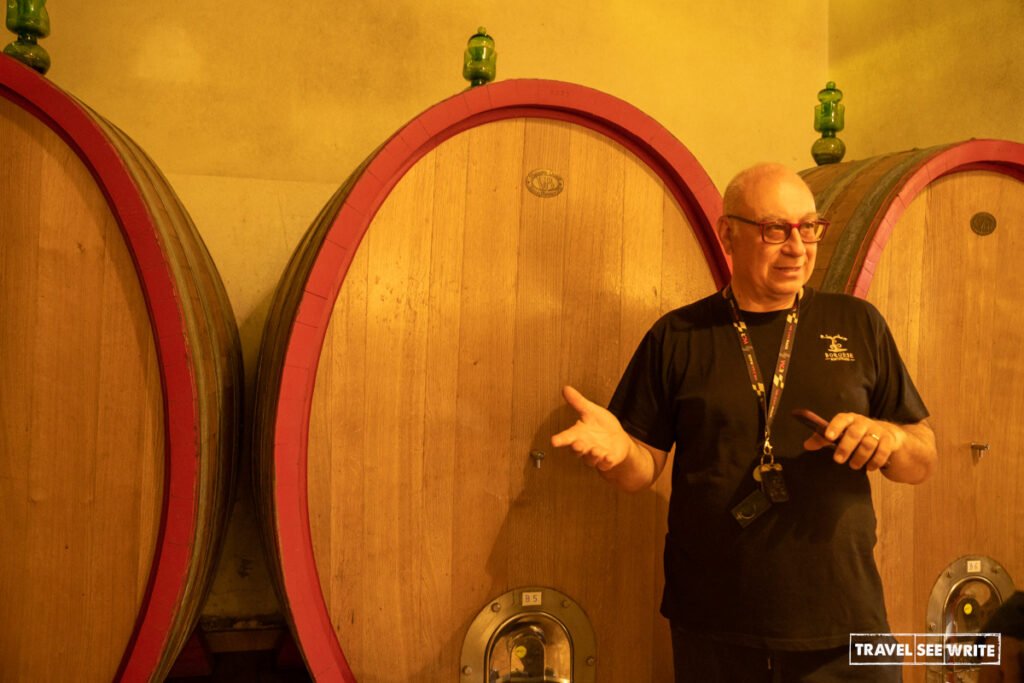
While Claudia prepared the delicious tasting menu from scratch, Massimo walked me through their cellar, sharing their passion and process of making Sagrantino wine, a DOCG wine since 1992, grown only in this small zone around Montefalco. I tasted five wines across different vintages, ate food they’d made by hand that morning, and heard the story behind every bottle, which barrel it came from, which year had given them trouble, which one they were proudest of. It wasn’t a winery tour in the sense I’d experienced elsewhere. It was being let into someone’s actual life for an hour.
From there, it was ten minutes to Bevagna, a medieval village so perfectly preserved it feels like the rest of the world simply forgot to modernise it. Roman mosaic floors are still under the streets. The piazza hasn’t meaningfully changed in 800 years.
And here’s a fact about Umbria I didn’t expect to learn on a wine tasting day: Ed Sheeran reportedly owns a villa and vineyard in this region, said to have chosen it specifically over Tuscany to get away from the expat crowds. Whatever you make of that, it tells you something about which of the two regions is still quietly itself.
I wrapped up the day with a 2.5-hour drive to Florence, the Apennines drifting past in the late light, which is a visual feast in its own right even after a day this good.
Day Four: Cinque Terre Before the Tour Buses Find It
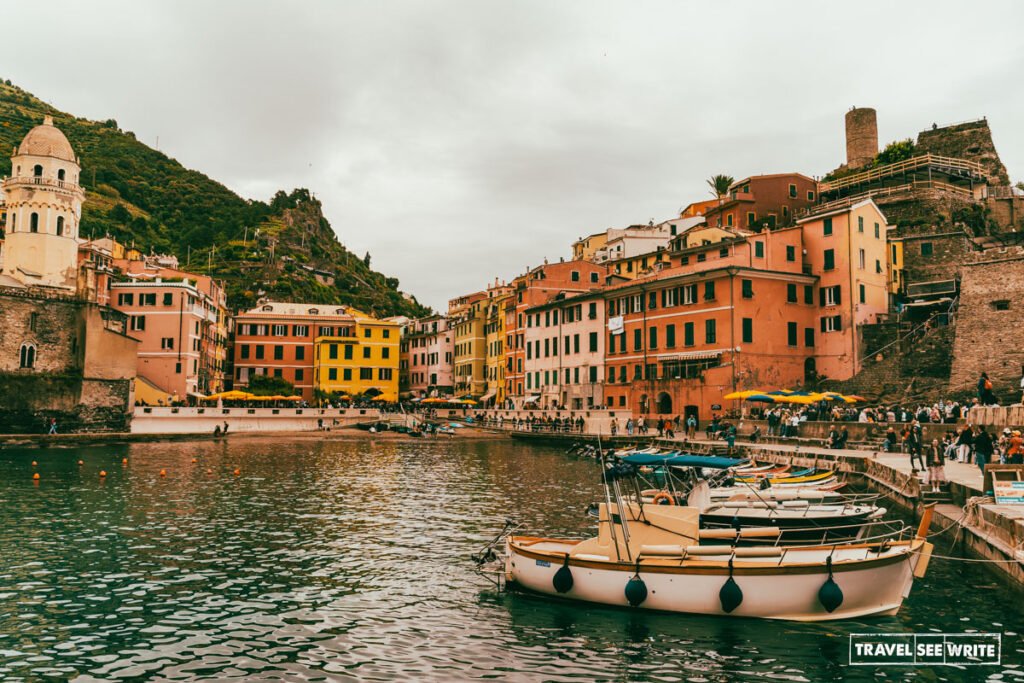
Left Florence at 6 am. Worth every minute of lost sleep.
I drove to La Spezia, about 2.5 hours, parked near the station, and switched to train for the rest of the day using the Cinque Terre Card, which gets you unlimited travel between all five villages, Monterosso, Vernazza, Corniglia, Manarola and Riomaggiore, with no pre-booking and no ticket queues. I reached La Spezia by 9 am and had the first village almost entirely to myself. By 11 a.m., the tour groups had arrived in force. If seeing Cinque Terre without the crowds matters to you even slightly, that four-hour head start is genuinely the only way to get it.
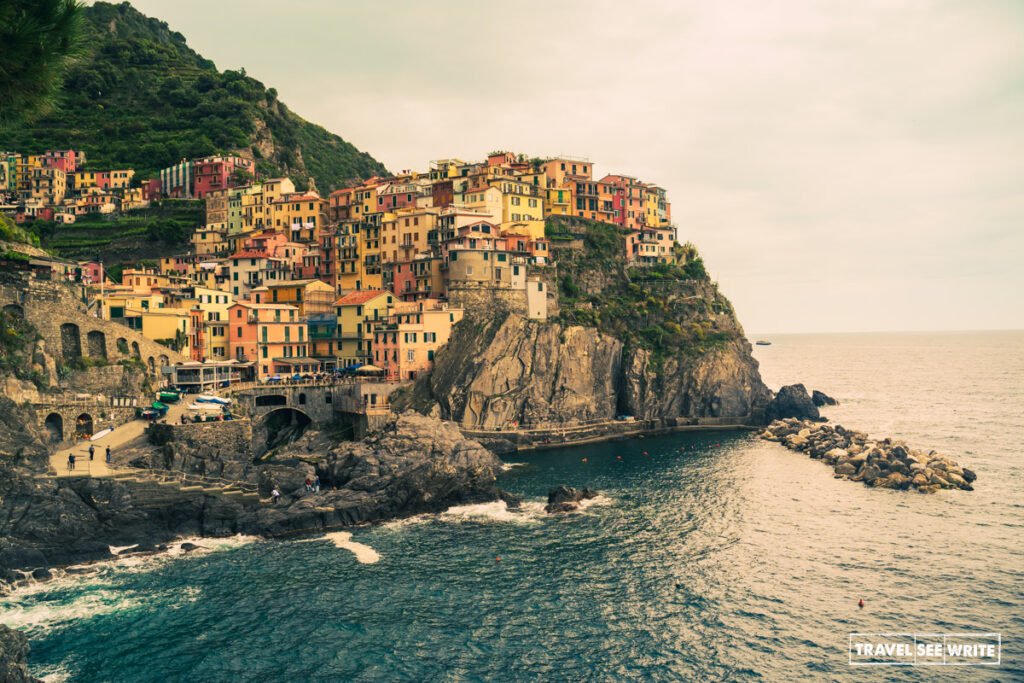
I took the train between all five villages, lingered wherever I felt like it, ate pesto pizza and focaccia by the harbour, the food you’re supposed to eat here since pesto was born in this region. Drove back to Florence in the late afternoon with salt in my hair and the specific, satisfied exhaustion of a perfect day.
One practical note if you’re planning this yourself: unless you’re staying overnight in the villages, don’t bring luggage. The trains are packed and every village has its share of narrow vertical staircases.
Day Five: Florence, the Slow Way
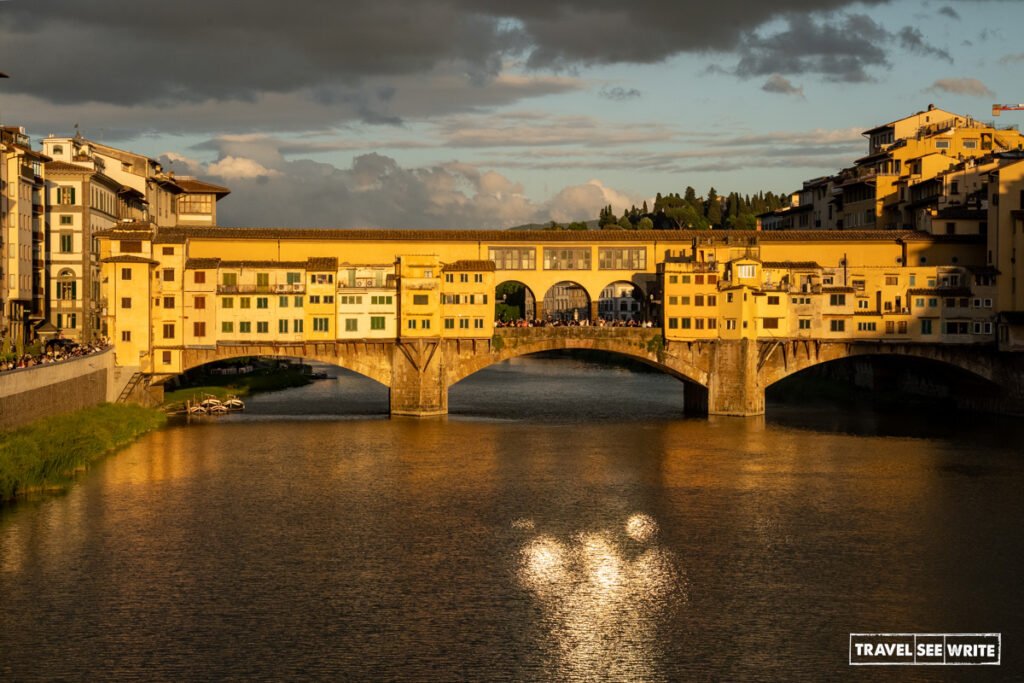
This was the most deliberately unhurried day of the whole trip. A shared food walking tour with Streaty Tours took us through local markets and neighbourhood spots, where residents actually eat it rather than the version created for tourists. It cut through the noise completely. I joined a small group tour with my guide, Alice, leading the way from the Sant’Ambrogio market.
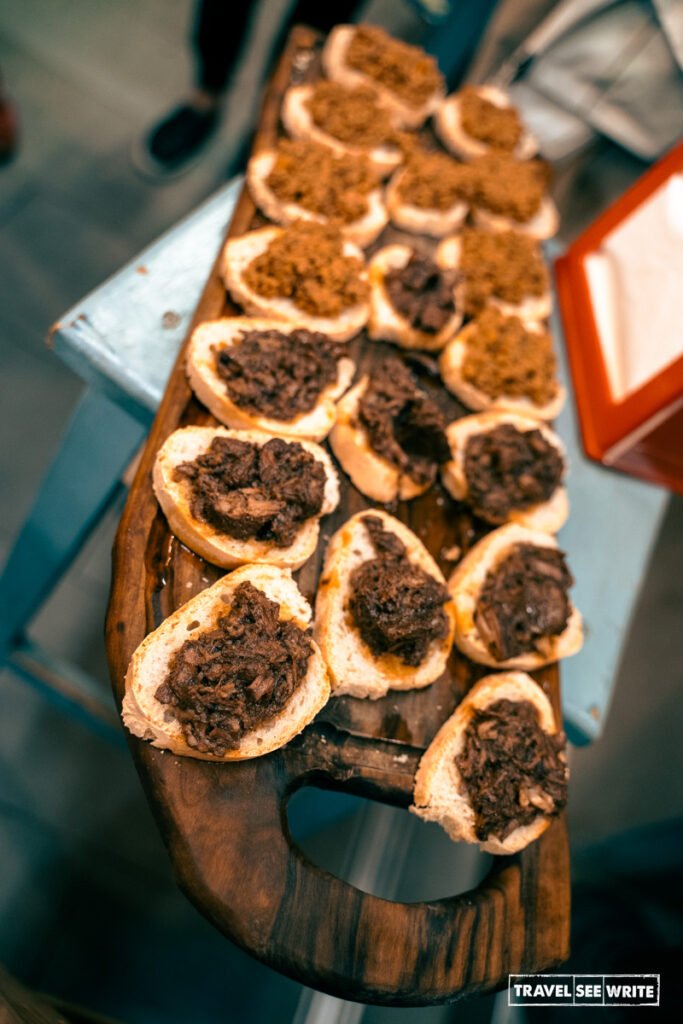
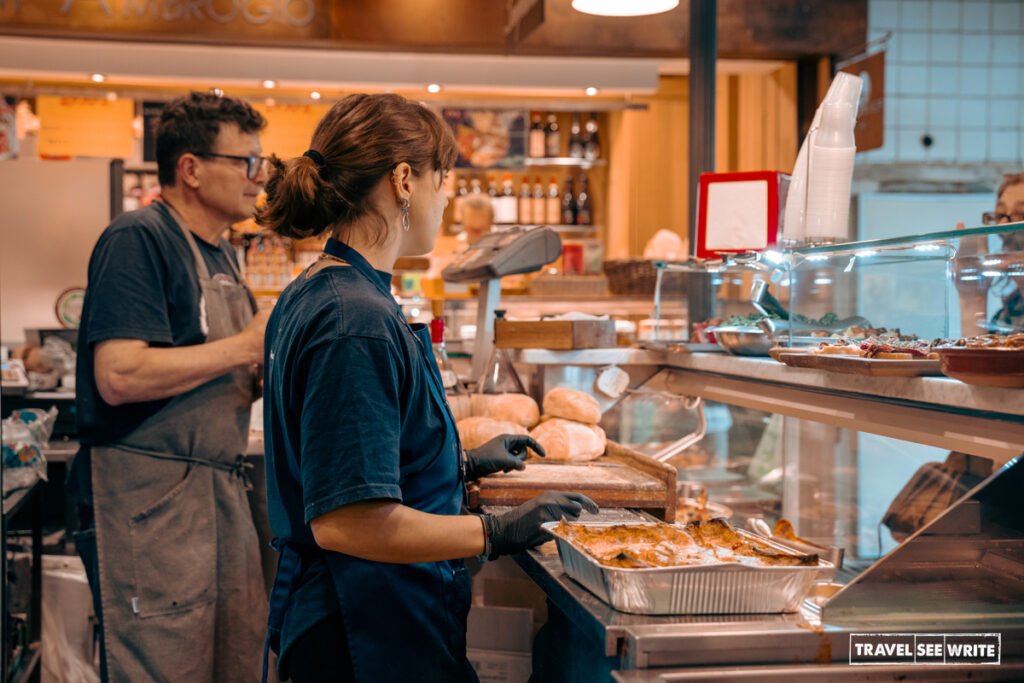
“Italians really are absolute marketing geniuses,” Alice told us as we walked. “We’ve convinced the whole world that pizza is this ancient, deeply native Italian thing, but it’s mostly a myth! Back in the 17th century, people in Sicily and Naples were actually eating something way closer to a panino. When Italians immigrated to Argentina, Brazil, and the US in the 19th century, they discovered canned tomatoes. That whole Americanized food culture didn’t even flood back into Italy until after WWII. In fact, Florence didn’t get its very first pizzeria until 1960! Even Carbonara, which everyone thinks is a classic, ancient staple, was just invented during WWII, and now it’s our most famous dish.”
“This is our real history,” she explained, pointing to our first stop. “We start with the heavy carbs—local bread with different meats, lasagna, pasta, and potatoes.” She poured us a glass, adding, “And of course, we drink local wine with everything.” Later, she led us right into the heart of the bustling Sant’Ambrogio market, pointing out some vibrant, bright yellow blossoms on a stall. “Look at these zucchini flowers! When you fry them, they get incredibly crunchy, though we aren’t eating them today. Instead, we are going to shop for our own fresh, local fruits and vegetables right here.
”After gathering our produce from the market, Alice walked us over to our final stop. “This is our aperitivo place,” she said, introducing us to the family running it. “It is completely off the grid—it’s not even on the map.” We sat down with more local wine as they took our fresh market haul to prepare it. “Here are the best starters,” Alice said proudly as a spectacular platter was brought to the table. “Beautiful black, yellow, and red heirloom tomatoes, local cheeses, marinated artichokes, homemade chutney, olives, and fresh strawberries.”
During the Sant’Ambrogio market tour, Alice highlighted seasonal products, shared traditional recipes, and interacted with vendors about the daily offerings. It was more than a food tour; it provided a rich cultural experience of Florentine history, traditions, and local crafts. We tasted local dishes at six different spots, most of which were quick stops.
The afternoon was free, and I spent most of it walking. Florence isn’t just art and leather bags. It has a real, complicated food culture that most visitors never get close to, and an afternoon with nothing scheduled turned out to be one of the better uses of my time in the city.
Food in Firenze
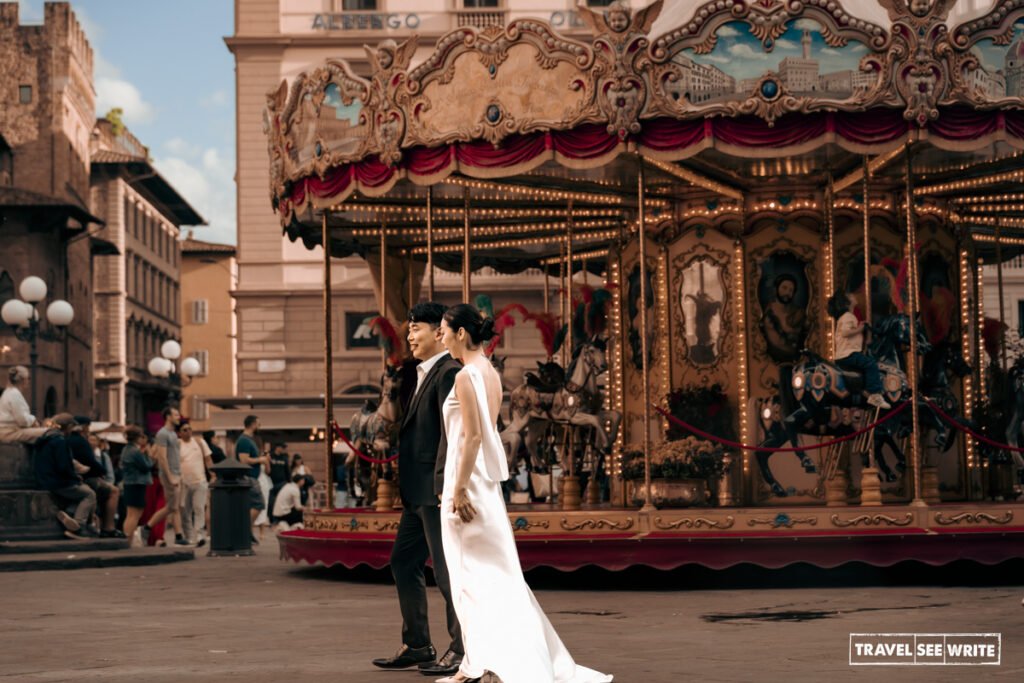
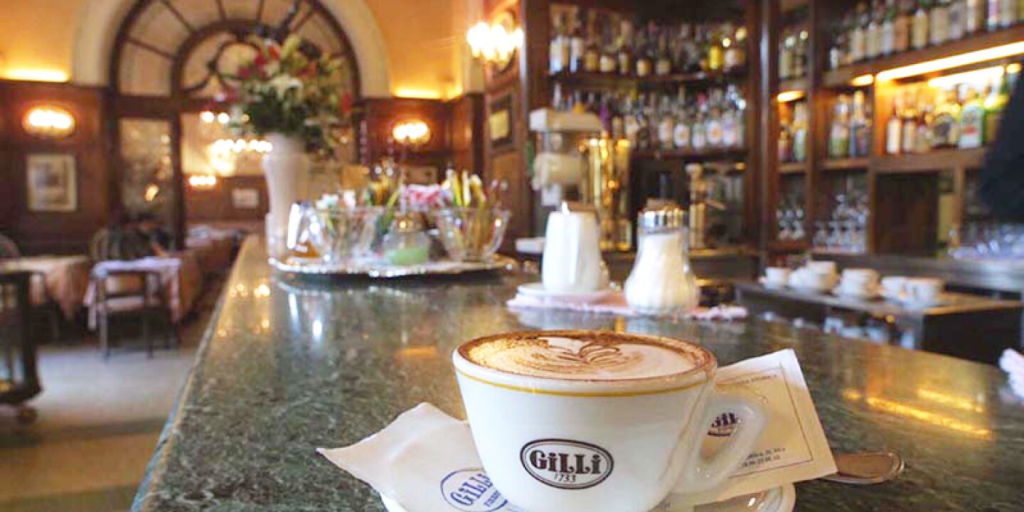
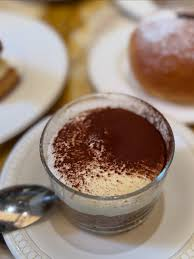
You honestly can’t miss Caffè Gilli for a classic tiramisu or their layered millefoglie pastry under the gorgeous chandeliers, and then you have to hit up Osteria Vecchio Cancello for their wild boar pappardelle or the truffle and mushroom mezzelune ravioli if you want something veggie. For a super authentic, old-school tavern vibe, go to Trattoria Le Mossacce where you can get amazing pork involtini, or a really comforting, classic Tuscan ribollita soup.
If you want to treat yourself to an insane bowl of pasta, you absolutely have to go to Osteria Pastella where they make their fresh truffle tagliatelle flambéed right inside a massive cheese wheel. Then, to top off the night, walk over to Gelateria dei Neri for a scoop of creamy pistachio or their rich chocolate-orange gelato—it is easily one of the best spots in town.
Day Six: Walking the Via Francigena Into San Gimignano
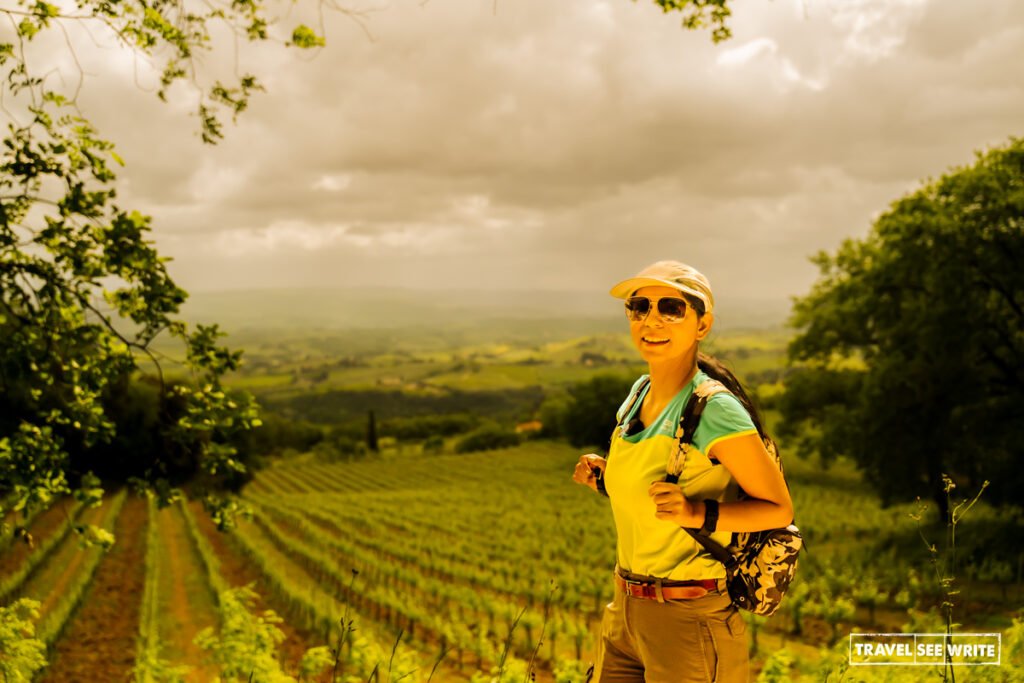
This was my favourite day of the entire self-drive stretch.
I left the car at Monastero di Cellole and walked a short stretch of the Via Francigena, one of Europe’s oldest pilgrim routes, running from Canterbury all the way to Rome. Pilgrims have walked some version of this road since the 10th century. My section wound through vineyards and rolling Tuscan hills from a hamlet called Pancole. Four kilometres sounds short on paper. Walking it, with the vines just starting to leaf out in the May light, time stopped behaving the way it usually does.
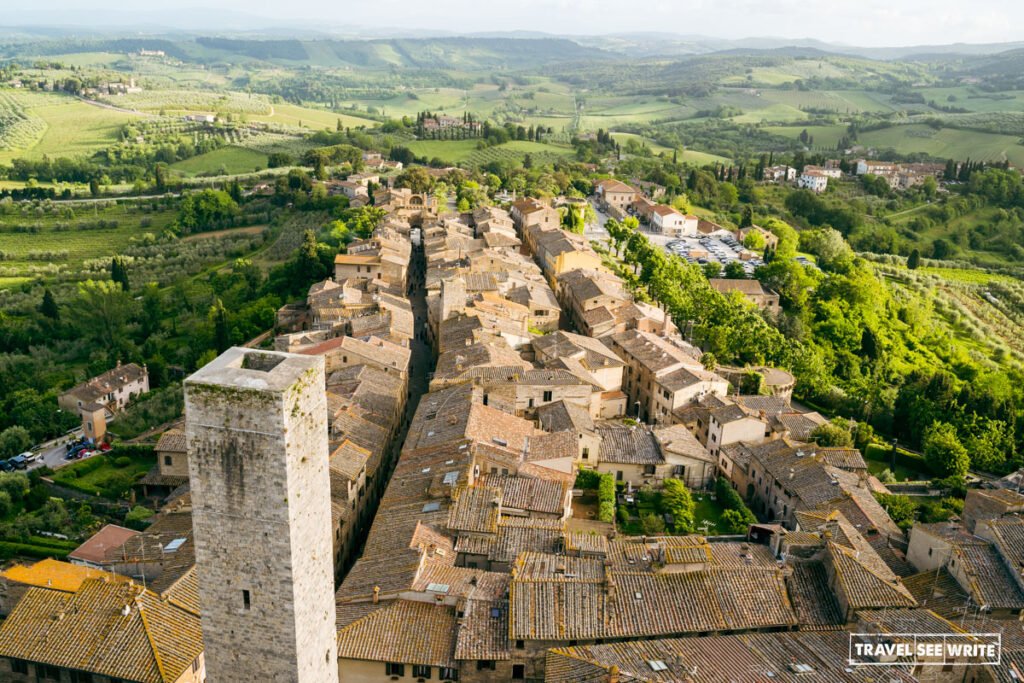
It was incredible stepping back into San Gimignano for my second visit, a place that truly earns its nickname as the “Manhattan of the Middle Ages.” At the height of its medieval power and intense family rivalries, the town boasted 72 original towers piercing the skyline, though today only 14 of those towers remain intact. Walking through the stone streets as it received me in the late afternoon, you can’t help but marvel at these soaring skyscrapers of the past, making the second trip feel just as breathtaking as the first.
I capped off the day with a wine tasting at Rocca di Montestaffoli, where the local Vernaccia—a crisp white wine this town is specifically known for—came with a view over the surrounding countryside that made the wine taste better than it probably needed to. My wine sommelier Andrea shared, “Vernaccia wine is called the white queen amongst red kings. It can only be grown from the Vernaccia grape variety in the San Gimignano area.” I followed it with gelato from Gelateria Dondoli, which has won international awards for good reason—the pistachio is genuinely life-altering—for dinner. No regrets.
Day Seven: Siena, Understood Through Its Rivalries
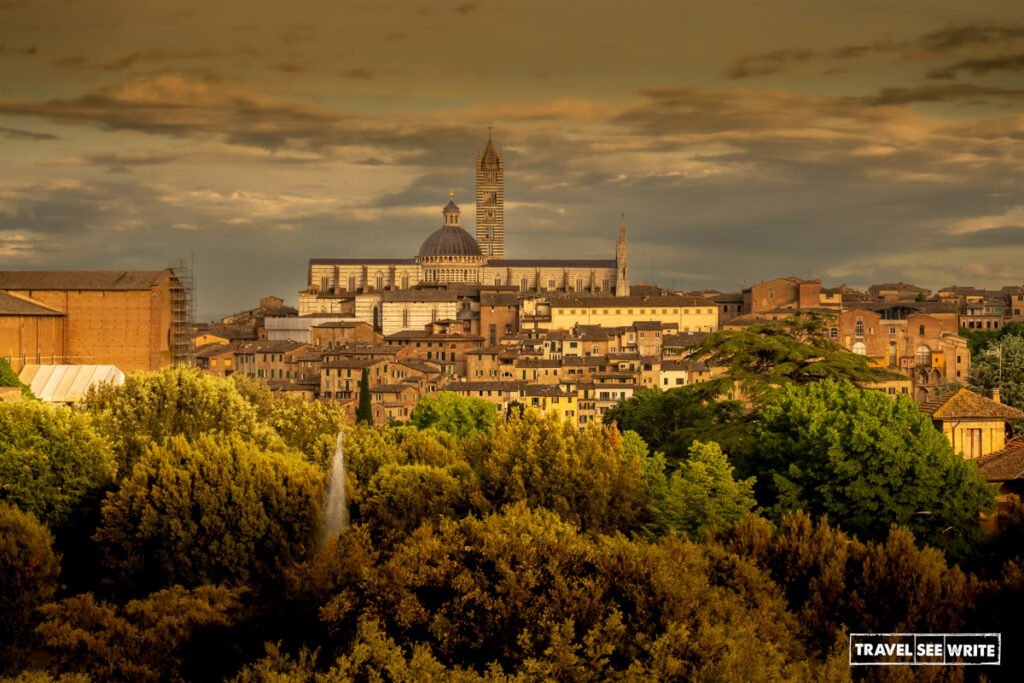
The Contrade walk is what made Siena finally make sense to me, in a way no guidebook ever managed.
The city is split into 17 contrade, neighbourhood districts, each with its own identity, colours, symbols, and centuries of fierce loyalty, all of it centred on the Palio horse race. A local guide walked us through what that actually means day to day, not as folklore but as a living social structure. I went back afterwards and rewatched the Bond film Quantum of Solace just to spot the corners of the city I’d walked that morning.
The rest of the afternoon, wandering Siena alone with all of that freshly in my head, was a completely different city than the one I’d have seen without it. I even found a wonderful crowd-free vantage spot to watch the glorious sunset in Sienna, the Fortezza Medicea (Medici Fortress). Its elevated ramparts and outer walls offer sweeping, unobstructed views of the city’s terracotta rooftops, the Duomo, and the surrounding Tuscan hills, glowing fiery shades of orange and red as the sun goes down. What’s even more fascinating is that it is absolutely free.
Day Eight: Val d’Orcia, and the Driveways Italy Doesn’t Want You Photographing Anymore
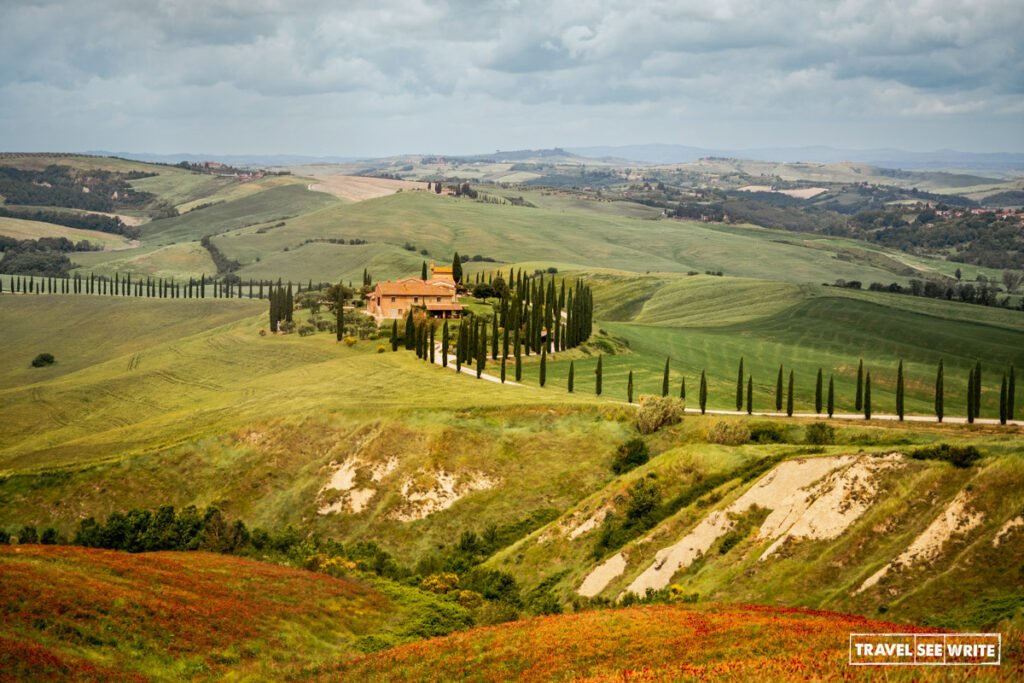
This is the drive you’ve already seen in a hundred Instagram photos. Cypress trees in perfect lines, rolling hills fading into blue, Brunello vines around Montalcino, thermal water sitting in the middle of a medieval piazza at Bagno Vignoni, Pienza’s Renaissance streets and its famous pecorino. Every single turn is a photo opportunity, which is exactly the problem.
I’d read about the cypress-lined driveways that show up endlessly in Italy content, the ones that make Val d’Orcia instantly recognisable even to people who’ve never been. What I hadn’t expected was to actually find one, Agriturismo Baccoleno, guarded by a permanent sign reading No Entry, No Photos, No Drones. Overtourism has pushed local estate owners to this point. People were blocking private roads to get the shot, often without asking, often without realising the driveway belonged to someone’s actual home.
I stood there for a minute, feeling slightly embarrassed on behalf of everyone who’d made that sign necessary. The valley is still completely magical. But the best way to experience Val d’Orcia in 2026 is to skip the cliché photo spots entirely and just let the countryside do what it does without you trying to capture it. I drove on to Rome in the late afternoon, full of the whole day.
Day Nine: Rome, Early and Empty
A private walking tour at 9 am, before the heat and the crowds arrived. The Colosseum without a queue. Basilica of Saint Mary of the Angels and Martyrs,
My 3-hour walking tour in Rome was absolutely unforgettable, starting off at the Basilica di San Pietro in Vincoli to see Michelangelo’s famous Moses. Barbara explained how this project became a 40-year nightmare, shrinking from a massive 40-statue mausoleum into a single wall tomb, forcing Michelangelo to brilliantly re-carve Moses’ neck and leg at the last minute just to fit the layout! From there, I took a very short walk down to the jaw-dropping Colosseum and wandered along the edge of the Roman Ruins, staring at the layers of columns and old stone temples.
“Rome is literally like a lasagna,” my guide Barbara laughed while showing me the Roman Ruins, explaining how the city is just stacked with centuries-old layers of history. It was such a perfect way to put it, thinking about how you’re walking on modern streets, but right beneath your feet are layers of medieval, Renaissance, and ancient Roman history all piled on top of each other. Next, she guided me up to a crowd-free vantage point near Capitol Hill called Terrazza delle Caffarelli, which had a fantastic view of medieval Rome. I then made my way to the Trevi Fountain, which was packed but totally mesmerising, and I threw my coin in over my shoulder. I wrapped up the entire journey at the stunning Basilica of Saint Mary of the Angels and Martyrs, where I got to see how Michelangelo completely transformed ancient Roman baths into a massive, breathtaking church.
Then a long, slow lunch, and a flight home the next day.
The Regions, If You’re Mapping This Yourself
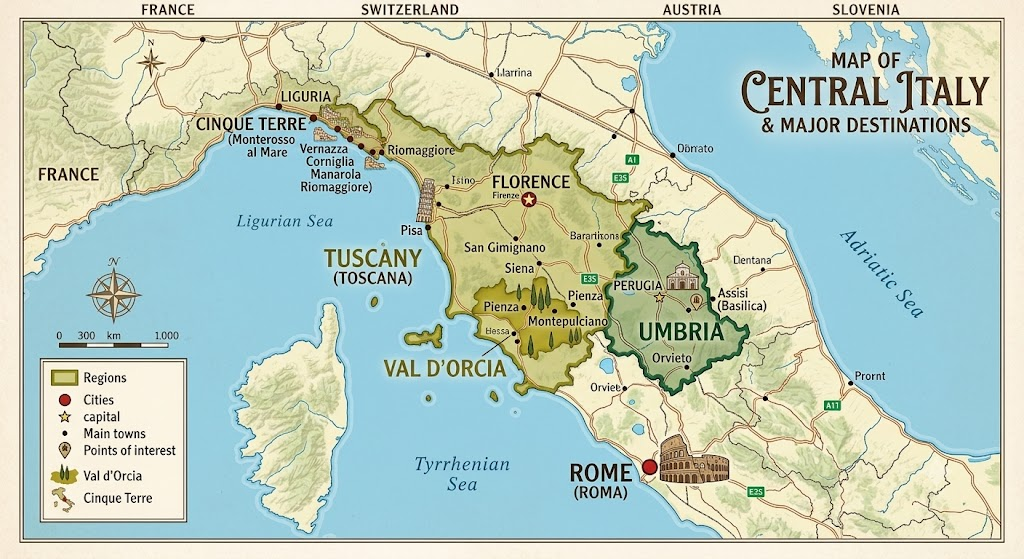
Umbria is where this trip really lived. It’s landlocked, rolling, truffle scented, and doesn’t have Tuscany’s PR machine, which means it also doesn’t have Tuscany’s crowds. I’d heard of maybe one of the towns on this route before I left. By the end I was googling property prices in several of them.
Tuscany is Tuscany, you’ve seen the postcards, but this route stuck to its quieter corners: the Via Francigena near San Gimignano, Siena’s Contrade culture, Val d’Orcia’s cinematic, increasingly protective landscape.
Cinque Terre, a UNESCO World Heritage Site on the Italian Riviera, is five cliffside fishing villages with the kind of ocean views that explain the postcards. It’s also, as I learned over a pizza, the birthplace of pesto.
Rome bookended the whole thing, a stay at the start and a final morning at the end, and genuinely deserves its own separate post.
Walking the Via di Francesco and the Via Francigena
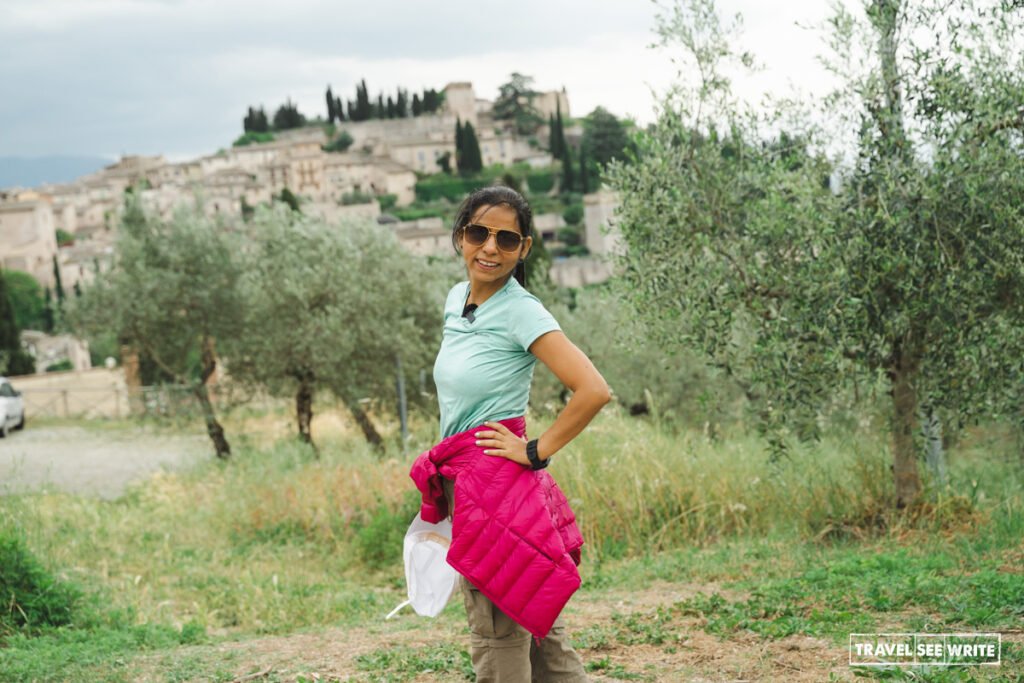
The Via di Francesco, St. Francis’s Way, is a medieval pilgrimage route winding through the hills of Umbria, connecting the towns and sanctuaries tied to the life of St. Francis of Assisi. It’s not a hardcore trekking route. You don’t need to be a serious hiker, just willing to slow down, since the whole trail is designed for walking, not rushing. I covered it from May 5th to May 7th, and the experience of moving through that countryside on foot, stone paths, wildflowers, distant church bells, is something I’m still turning over weeks later. People have walked versions of this trail for 800 years, and there’s a particular kind of quiet that comes with that kind of history.
The Via Francigena is one of Europe’s oldest long distance pilgrim routes, running all the way from Canterbury to Rome, walked in some form since the 10th century. The stretch I covered near San Gimignano, described above on Day Six, runs through vineyards and rolling Tuscan hills.
SloWays arranged private transfers to both trailheads so I could leave the car at the endpoint and just walk, no logistics stress at all. Their app also had a live GPS trail map that worked offline, which mattered more than I expected in a region with patchy signal.
Practical note: both sections I walked were around 4 km each, on largely flat to gentle terrain. Proper walking shoes are sufficient, no hiking boots needed in May. Trekking poles are optional but useful on the cobblestones.
Self Driving Through Umbria and Tuscany: Why It’s Worth It
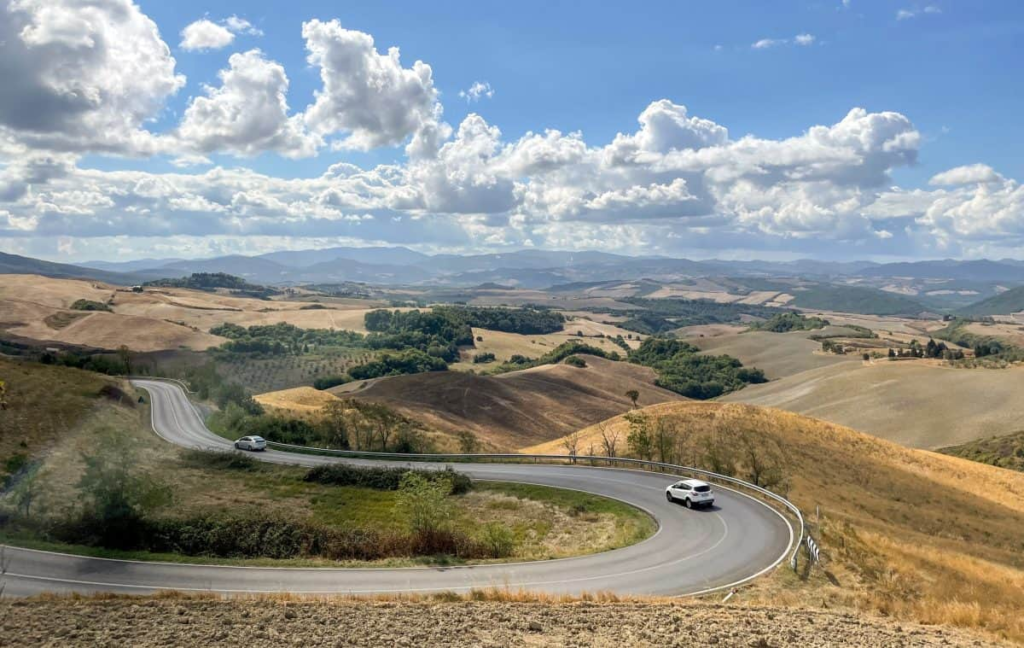
A self drive through Umbria and Tuscany isn’t just transport, it’s access. Access to a 12th century winery down a dirt road. Access to Bagno Vignoni’s thermal square on a quiet afternoon. Access to detours when you spot a sign for something that wasn’t on the itinerary at all.
The SloWays roadbook, a detailed day by day logistics document provided to every traveller, took the anxiety out of it completely. Parking addresses, hotel check in notes, local driver contacts, transfer timings, all laid out clearly enough that I never felt like I was figuring things out on the fly.
That said, I didn’t drive blindly everywhere. Some legs make far more sense by train, Cinque Terre being the obvious example, and the day by day above covers exactly how that worked. Parking is a genuine headache in touristy spots like Rome, Florence, Cinque Terre, Siena, and San Gimignano. SloWays either pre reserved parking for me or arranged a pick up and drop off at each location, which meant I never lost time circling a historic centre looking for a spot.
Practical note: San Gimignano’s hotel sits inside a medieval borgo with no car access. The hotel, La Cisterna, has a private parking spot outside the walls; you call ahead and they come to collect you and your luggage. It’s charming, not inconvenient.
What to Actually Eat: Stop Ordering Pasta Bolognese in Umbria
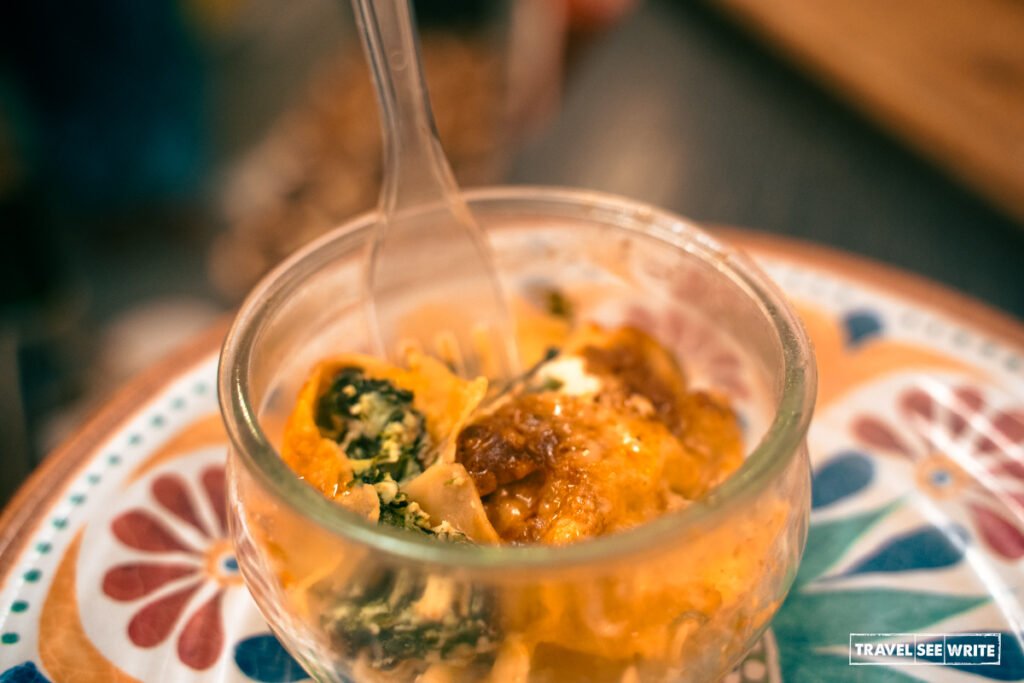
Here’s something that took me embarrassingly long to understand about Italy: every region has its own food, and that food doesn’t always travel. Bolognese is from Bologna. Carbonara is Roman. In Umbria, you’re eating black truffle on everything, cured norcineria meats from Norcia, and strangozzi, a thick, rough-cut pasta that holds sauce beautifully. In Siena, it’s pici and ricciarelli, almond biscuits. In Florence, lampredotto, ribollita, bistecca.
Beyond the olive oil tasting at Frantoio Gaudenzi and the wine afternoon at Azienda Agricola Borgese, both covered above, two more meals are worth flagging on their own. At Nessun Dorma in Cinque Terre, a cliffside spot in Manarola famous for its pesto making workshops, you don’t actually need to book the class. Just get a terrace seat, order a platter of burrata and local charcuterie with a glass of crisp Cinque Terre white, and watch Manarola’s pastel houses tumble into the sea below you. And at Rocca di Montestaffoli in San Gimignano, the Vernaccia tasting comes with a countryside view that genuinely improves the wine.
If you walk into a trattoria and order fettuccine Alfredo, they’ll probably make it for you. But you’ll miss the entire point of eating in this country. Ask what’s local. Point at what someone else is having. Order what you don’t recognise. That’s where the real food is.
Where I Stayed
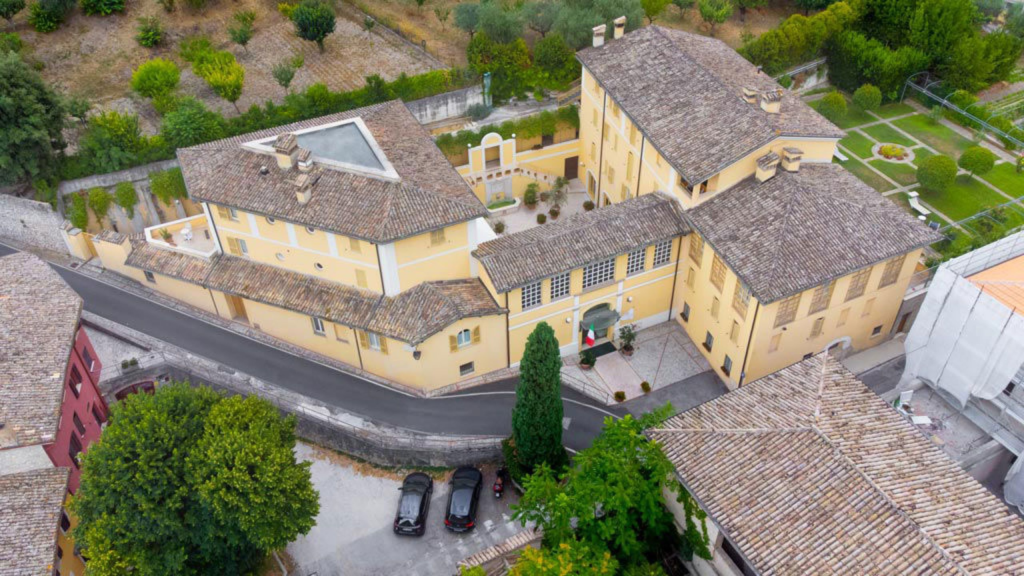
Every property on this route was four star and boutique in character, no soulless chain hotels.
Hotel San Luca, Spoleto — right inside the old town walls, quiet and gracious.
Il Terziere, Trevi — a restored historic building, stone walls, excellent breakfast.
Hotel Cellai, Florence — great neighbourhood, private parking included, which is rare and invaluable in this city.
Hotel La Cisterna, San Gimignano — on Piazza della Cisterna, inside the medieval walls, a proper experience.
Hotel Athena, Siena — clean, comfortable, walkable to everything.
Hotel Duca d’Alba, Rome — central, well run, a reliable base on both ends of the trip.
None of these were flashy. All of them felt like they belonged exactly where they were.
The Practical Bit: What You Actually Need to Know
Best time to go: May is ideal, warm without being hot, everything green, vines just waking up, crowds not yet arrived. Late September and October are a close second, especially for harvest season. Avoid July and August in the hill towns if heat and tour groups aren’t your idea of a good time.
What to pack: layers, even in May, since mornings and evenings in the Umbrian hills can be genuinely cold. One proper pair of walking shoes, not trainers, not heels, for the trails and the cobblestones. A small daypack for trail days. Leave room in your suitcase for wine and olive oil, you will buy both and you will not regret it. A downloaded offline map is worth having too; signal in parts of rural Umbria is patchy even with a working SIM.
The car rental reality nobody mentions: if you’re flying into Rome, don’t book your rental from the airport or the absolute centre. Rates, especially insurance rates, are noticeably higher at Fiumicino pickup points compared to offices just 10 to 15 minutes away, for the exact same vehicle and the same insurance level. Twenty minutes of comparison shopping by location, not just by company, can save real money.
ZTL zones: many historic centres have restricted traffic zones enforced by camera, and the fines are real and often arrive months after the fact. Your roadbook or hotel will tell you exactly where to park. Follow it precisely.
Final Thought
There’s a version of Italy that Instagram sells you, perfect at every angle, crowded at every monument, checked off a list in three days. And then there’s this. The version where you walk into a hilltop town still slightly out of breath from the trail, and sit down to a glass of wine in a piazza where the afternoon light is doing something unreasonable to the stone. Where the people at the next table have lived here their whole lives and aren’t performing anything for anyone, including you.
That Italy takes longer to find. It asks for a slower pace, a willingness to drive down an unmarked road, and a genuine interest in eating and drinking whatever the land actually produces, not what you were expecting to order.
It’s worth the extra effort. I promise.
Disclaimer
I was invited by SloWays Travel and the Italian Pilgrim Routes 2026 project for this experience. All opinions and observations are my own. This isn’t a sponsored post in the conventional sense; they planned the logistics, and I had the experiences.

leave a comment