
Uzbekistan Trip from India 2026: My 6 Days, Cost, Itinerary
Time needed: 23 minutes
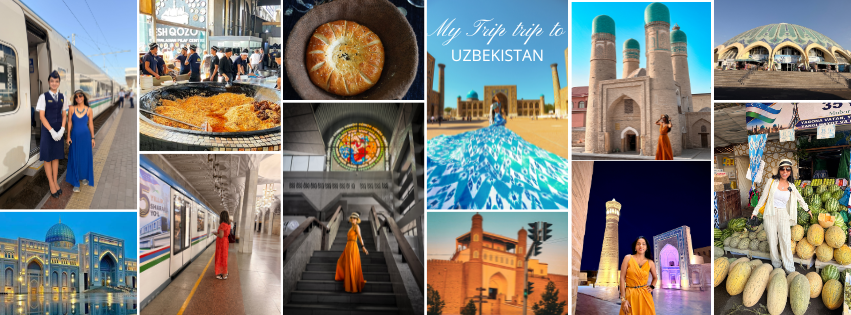
Growing up in India, I always had a soft corner for Tashkent. And, the reason was my father. In 1985, he spent six months in Uzbekistan, then part of USSR, and came home full of stories about the people he met there and how generous they were. Back then everyone from the Soviet Union was Russian to us. Through his stories and pictures, I vicariously travelled there long before I held Uzbekistan visa.
While returning he also brough a Garmon, a Russian button, as a souvenir. It became his most prized possession, and during my birthday parties, he would bring it out and entertain the whole room with his musical notes.
And, then I heard Khul Ja Sim Sim.
A phrase that became an part of my childhood. These three words still open something. For me, they open Alibaba Aur 40 Chor, the 1980 Indo-Soviet film with Dharmendra, Hema Malini and Zeenat Aman, shot partly in Uzbekistan. Long before I could find Central Asia on a map, I knew exactly what it looked like: caravans, bazaars, a cave full of gold. I filed all of it under fairy tales.
Finally, in 2026, I went to Uzbekistan to find out how it looked in reality.
This is the story of my six days there: the cities, the stories behind the tiles, the one thing I splurged on (a flying dress shoot in Samarkand, for about US$80) and the mistake I’d fix first. After that comes everything I’d tell a friend planning an Uzbekistan trip from India today, from the visa and the cost to the best time to go, where to stay, what to eat and an itinerary you can lift straight off the page.
In this post I’ll share how I spent six days in Uzbekistan, and how was my overall experience including the flying dress shoot in Samarkand. Moreover, I’ll try to honestly answer whether Uzbekistan is worth visiting or not. What I missed and would definitely recommend others to include in their Uzbekistan itinerary. I’ll also cover the most commonly asked questions by first time travellers to Uzbekistan like how to get a Uzbekistan visa, when is the best time to visit this Silk Road country. What is the local currency used in Uzbekistan, and what should you carry with you – cards, cash or UPI? How to get to Uzbekistan and how to travel locally, what are the best hotels to stay in Tashkent, Samarkand and Bukhara. What to eat, and can vegetarians survive in Uzbekistan, a primarily meat eating country. I’ll also share what souvenirs to buy, what to wear during your travels, and some practical tips and FAQs.
My Six days in Uzbekistan: Tashkent, Samarkand and Bukhara
Since I was short on time, I could only do a six-day trip to Uzbekistan, spent on the classic triangle of Tashkent, Samarkand and Bukhara. It’s the route most first-timers take, and the one we now plan for Travel See Write travellers who have about a week to ten days. Here’s how they went, day by day.
Day 1: Tashkent, the soft landing
Delhi to Tashkent is a 2hr 50 minutes flight, and Uzbekistan runs only half an hour behind India, so there was no jet lag to blame for anything. Moreover the Uzbekistan Airways flight timing was great too, departure from Delhi was at 12:50 pm and arrival at Tashkent at 3:10 pm.
Frankly, Tashkent wasn’t how I imagined a Silk Road city to be. After the 1966 earthquake, much of the city was rebuilt in Soviet style: wide avenues, parks, fountains and grand public buildings. The older Tashkent survives in pockets, around Chorsu Bazaar and the Hazrati Imam complex, and I saved those for the end of the trip. Day one was for settling in and an early night, because Samarkand starts early. It’s still how I plan the first day for our travellers. My night stay was at Tower Hotel Tashkent, a four star property quite close to the airport as well as the central attractions. There were two restaurants, and one bar. But the best part was an ATM Machine which could exchange my US dollars to Uzbek Som. I didn’t have to go looking for forex exchange. The staff was very courteous and spoke English very well.
Day 2: Samarkand, and the Taj Mahal’s first draft
Next day, after a sumptuous breakfast at the Tower Hotel Tashkent, I left for Samarkand. The Afrosiyob, Uzbekistan’s high-speed train, zipped me from Tashkent to Samarkand in a little over two hours. It was a good idea to take the first train; I got the whole day to explore the ancient city that is older than Rome. The bullet train was very comfortable and had food and drinks available onboard.
Upon arrival in Samarkand, my guide Savlat picked me up from the train station. I started my private sightseeing tour of Samarkand by visiting the statue of the National Hero of Uzbekistan, Amir Temur, located in the roundabout of University Boulevard, few minutes walking distance from Amir Temur Maosoleum. As we walked, he asked me, “You have white Taj Mahal but do you know we have a blue Taj Mahal?”
Bewildered by his statement, I looked at him astonishingly. Instead of explaining, he took me to one of the UNESCO World Heritage Sites of the complex known as “Samarkand – Crossroads of Cultures”. As we entered the colossal gate of royal mausoleum of the Turco-Mongol conqueror Timur, Gur-e-Amir, I soon realized what he meant by blue Taj Mahal. While I was busy marveling this UNESCO world heritage monument, Savlat explained,
Gur-e Amir, is an architectural marvel dating from 1403 which is said to have inspired Humayun’s Tomb (1570) in Delhi and the Taj Mahal (1631) in Agra built by Timur’s descendants, the Mughals, that shaped Indian culture with Central Asian influences.
The monument featured a signature 64-ribbed fluted turquoise-blue double dome, intricate blue-and-gold papier-mâché and mosaic tilework, and three-dimensional muqarnas.
The 15th century Gur-e-Amir pioneered the tall, 64-ribbed fluted turquoise-blue double dome resting on a high cylindrical drum, an engineering technique later replicated and refined in the silhouette of the Taj Mahal. And, this is not a legend but truth that is credited by none other than the Taj Mahal itself on its website.
Timur lies here with his sons and grandsons, Ulugh Beg among them, and guides love to tell you about the curse. In June 1941, Soviet scientists opened Timur’s tomb. Days later, on 22 June, Germany invaded the Soviet Union. Timur was reburied with full Islamic rites in November 1942, and soon after, the tide turned at Stalingrad. Believe what you like, but come back after dark, when the dome is lit. After, spending more than an hour at the monument I relished lunch at a local restaurant called Labi Gor.
We then visited the most famous sites of Samarkand, the Registan Square. Svalat mentioned that the square got its name ‘Registan’ from the Persian language where Registan translates to “sandy place,” reflecting its original role as Samarkand’s bustling central marketplace, trade center, and gathering ground for royal proclamations. No wonder it’s called the historic heart of the Timurid Empire and one of the finest architectural ensembles of Islamic and Silk Road civilization. The square features three monumental Islamic schools (madrasas) built over nearly two and a half centuries:
- Ulugh Beg Madrasa (1417–1420): Built by the astronomer-ruler Ulugh Beg, it was a major center for studying science, mathematics, and astronomy.
- Sher-Dor Madrasa (1612–1636): Famous for its distinct facade featuring roaring lion- or tiger-like creatures chasing deer under rising suns, a rare artistic choice in Islamic religious architecture.
- Tilya-Kori Madrasa (1646–1660): Meaning “gilded,” it features an interior mosque lavishly decorated in gold leaf and intricate blue mosaic tilework.
I spent a lot of time exploring the complex, glancing through souvenir shops and, enjoying the best part of my trip, getting a professional dress shoot done in Samarkand. That deserves its own story. Read more about it below in the article. Registan complex was truly something.
My flying dress shoot in Samarkand, and what it cost
Before visiting Uzbekistan, I had seen countless reels of women in dreamy long silk gowns running through the historic Registan. In Samarkand, I finally became that woman. In case you are interested in getting the similar shoot done for you, here how it works. A local photographer brings the dress, usually in a choice of colours, with a very long train. You hold still, an assistant throws the fabric into the air, and the photographer shoots as it floats down. It takes a few attempts. The Registan is the classic backdrop, and that’s where I did mine.
All in, it cost me about US$80, and that covered everything: my entrance ticket, the permission to shoot, the dress and the photographer. Four years on, that’s still about the going rate. Travellers in 2026 report paying roughly US$45 to US$100 for the photographer and dress, plus about US$15 to 25 for the Registan’s entry ticket and shooting permit when those aren’t included.
Was it worth US$80? For a photograph I’ll keep for the rest of my life, yes.
If you’d like to do it, here’s what I’d tell you:
- Book a photographer a day or two ahead, or find one at the Registan itself; there’s often a booth near the entrance.
- Ask exactly what the price includes: the dress, the permit, how many edited photos, and whether there’s a video.
- Go early. Around 6 or 7 a.m., the light is soft and the square nearly empty. For a shoot that early, collect the dress the day before.
- Check the dress before you put it on, and agree the price before the first click.
- Shah-i-Zinda is a working shrine, so check the rules and dress respectfully if you plan to shoot there.
As the raging sun started cooling, we went to Shah-i-Zinda, a sacred Islamic pilgrimage site and a masterpiece of medieval Timurid architecture. Its name means ‘the Living King’, after Kusam ibn Abbas, a cousin of the Prophet, who is said to be buried here. It’s a narrow lane of mausoleums climbing a hill, each tiled in a different blue. Salvat casually dropped another truth bomb, “the glowing cobalt and turquoise glazes used in the tiles of Shah-i-Zinda was so special and secretive that till date nobody has been able to replicate it.”
I wish I had more time in hand, I would have loved to visit Bibi-Khanym, the colossal mosque considered as a masterpiece of the Timurid Renaissance. Right beside it is Siab Bazaar, the place for dried apricots, nuts and Samarkand’s famous round bread. If you have an hour left, the Ulugh Beg Observatory is where Timur’s grandson, an astronomer-king, measured the stars in the 15th century.
Day 3: Bukhara, where the Silk Road slows down
Another short hop on the Afrosiyob, under two hours, and I was in Bukhara. If Samarkand was about grandeur, Bukhara was about atmosphere. The old town is small enough to walk, and people still live in it.
I spent my first afternoon among its oldest stones. The Samanid Mausoleum, a 10th-century cube of patterned brick, is one of the oldest Islamic monuments in Central Asia. Chashma-Ayub, the ‘Spring of Job’, comes with a legend that the prophet struck the ground here and water rose. The Magoki-Attori Mosque sits half below today’s street level, one of the oldest mosques in Uzbekistan. And the 16th-century trading domes still do what they were built for: under their brick vaults, you can buy suzani, copperware and carpets.
In the afternoon, I went to Poi Kalon. The Kalon Minaret has stood here since 1127. The story goes that Genghis Khan was so struck by it that he spared it while his army destroyed the city around it; for centuries afterwards it was also the ‘Tower of Death’, from which criminals were thrown. Facing it, the Mir-i-Arab madrasa still trains students. Since the day was quite hot, I decided to visit Chor Minor, Zindan bug pit, and the Ark Fortress before returning to the and Poi-Kalon minaret square.
Chor Minor is the four-towered gem, and highly underrated monument hidden in a residential lane. As per the legend, this little gatehouse with four turquoise-capped towers, was built in 1807 by a wealthy merchant called Khalif Niyaz-kul. Some say its decoration nods to the four religions Central Asia knew. I stayed there for the sunset.
Then I visited the nearby Ark Fortress. The Ark of Bukhara has been rebuilt for 1,500 years. Invaders, earthquakes and the 1920 Red Army bombing all left their mark. Every wall here had a comeback story.
As the light dropped, I returned to the Kalon Minaret square that had turned the colour of honey.
Day 4: A slow Bukhara morning
Next day, I slowed down a bit. This morning was without a plan. I walked the lanes behind the big monuments. Watched the blacksmiths hammer out stork-shaped scissors. I sat in a chaikhana over a pot of green tea and did nothing at all. In the afternoon, the Afrosiyob bullet train took me back to Tashkent, a little over four hours away.
Day 5: Tashkent
My last day belonged to old Tashkent. I started with the Lal Bahadur Shastri memorial site, that has been built in honour of India’s beloved Prime Minister who signed the Tashkent Declaration here in January 1966 but unfortunately passed away in the city the same night. After that, it was time to explore the Tashkent Metro where every station looked more like a Royal palace than a metro station.
Fun fact: Until 2016, it was illegal to film in the station as they worked as defacto nuclear bunkers for USSR (now Russia). I went down for one ride and stayed over an hour. Every station was an underground gallery of marble, chandeliers and ceramics. Kosmonavtlar, Alisher Navoi, Mustaqillik Maydoni, Gafur Gulom and Paxtakor are the ones to photograph.
Next up was the Chorsu Bazaar that sit under a huge blue-green UFO like dome, piled with spices, nuts, dried fruit and towers of round bread. Outside there were fruits of all kind. Must buy were melons. I have never tried a sweeter and juicier melon than what I had in Uzbekistan.
For lunch, I went to Besh Qozon (Plov Centre). Plov in Tashkent is a lunch ritual, not dinner. At Besh Qozon, huge copper and iron kazans cook and serve plov from 10 am to 10 pm. But the best batches are gone soon after 1 PM. I got there before noon and watched it being served straight from the cauldron.
Afternoon was dedicated to the Tashkent’s; UNESCO World heritage site: the Hazrati Imam complex, the library keeps the Uthman Quran, one of the oldest surviving Qurans in the world. The Monument of Courage remembers the 1966 earthquake.
Day 6: I took a short flight to Almaty, Kazakhstan.
Next day I took a flight from Tashkent to Almaty to spend the next two weeks exploring the Almaty Region and East Kazakhstan, one of the remotest parts of not just Central Asia but probably whole of Asia, if not world. More about it in next posts.
Read more: Uzbekistan Trip from India 2026: My 6 Days, Cost, ItineraryTop things to do in Almaty: A 3-Day Adventure of Apples, Culture, and Snowy Thrills.
8-Day Adventure and Culture Tour of Kyrgyzstan and Kazakhstan from India
What I missed in my Uzbekistan Trip
Khiva is the one I missed, and the one I’d beg you not to. From every photograph I’ve seen, its walled inner town, Itchan Kala, is the closest Uzbekistan comes to the world of Alibaba Aur 40 Chor: mud-brick ramparts, tiled minarets and lanes made for caravans. Walk the walls at sunset, when the brick turns rose and gold. Find Kalta Minor, a stout, unfinished minaret wrapped head to toe in turquoise tiles, and the Juma Mosque, a forest of more than 200 carved wooden columns. Then climb the Islam Khoja Minaret (separate ticket) for the view over the domes.
Is Uzbekistan worth visiting? My honest feedback
Yes, without a second thought. But if I could do those six days again, I’d change three things.
- First, six days give you the big three, and not much more. The trains make it possible, but you’re always watching the clock. Add two days to breathe and two for Khiva, and you have the trip I’d plan today: eight to ten days.
- Second, think about spring or autumn or off season if you can withstand sub-zero temperature in winters or above 40 degree Celsius in summer. Between December and February the courtyards empty out, hotel rates soften and, on a lucky morning, snow settles on the turquoise domes. Just pack properly; the nights drop below freezing.
- And third, the honest one: I missed Khiva. Don’t. Its walled inner town, Itchan Kala, was Uzbekistan’s first UNESCO World Heritage Site, and since May 2026 a high-speed train runs there from Tashkent, Samarkand and Bukhara. The itinerary below builds it in.
What I wouldn’t change is the feeling of recognition. Babur rode out of the Fergana Valley to found the Mughal Empire. Al-Biruni, born in Khwarazm, the region around Khiva, wrote one of the first great studies of India in the 11th century. Shastri is remembered on a Tashkent street, and Indian films have had fans here since the Soviet years. For an Indian traveller, Uzbekistan is a foreign country that keeps finishing your sentences.
It has also never been easier to get there. The New Delhi to Tashkent flight is short, high-speed trains link the big cities, the e-visa takes a few working days, and in August 2026 Uzbekistan announced 30-day visa-free entry for Indians, along with a UPI tie-up for payments.
Uzbekistan visa for Indians (2026)
Now for the practical part, starting with the question everyone asks first.
If you hold an Indian passport, you still need an e-visa for now. It costs US$20 (about ₹1,900), covers a stay of up to 30 days, and you apply online at e-visa.gov.uz at least three working days before you fly. Print it, because airline staff and immigration officers often want paper rather than a PDF on your phone, and make sure your passport is valid for at least three months beyond your stay.
There’s a shortcut if you already hold a valid multiple-entry visa for the US, UK, Schengen area, Canada, Australia, Japan, South Korea or New Zealand. Since 1 September 2026, that visa lets you into Uzbekistan visa-free for up to 30 days, as long as you carry an onward or return air ticket.
The bigger news came in August 2026, when Uzbekistan announced 30-day visa-free entry for all Indian citizens. As of early October it had not formally started, so until it does, the e-visa is the safe bet. Friends travelling on US, UK, EU, Canadian, Australian, Japanese, Singaporean or Malaysian passports don’t need a visa at all for stays of up to 30 days.
Best time to visit Uzbekistan
For most travellers, the answer is mid-April to May, or September to October. Days are warm, evenings cool, and the late light on the tilework stays golden for hours. These are also the busiest months, so book hotels and Afrosiyob seats early.
Spring brings blossoming orchards and Navruz, the Persian New Year, on 21 March. Autumn is harvest season, when the bazaars are piled high with melons, grapes and pomegranates. Summer is hard work: by afternoon Bukhara and Khiva can top 40°C, so you sightsee at dawn and dusk and hide indoors in between, though hotels are quieter.
Then there’s winter, the season I’d nudge you towards if you don’t mind the cold. From December to February the nights fall below freezing, but you get empty courtyards, lower rates and, now and then, snow on the domes.
Money in Uzbekistan: cards, cash and UPI
Uzbekistan runs on the som, and you’ll feel like a millionaire within minutes of reaching the ATM. On 6 October 2026, the Central Bank set the rate at about 11,780 som to the US dollar, or roughly 124 som to the rupee.
Bring US dollars, not rupees. Clean, recent notes change easily at banks and official counters, while rupees are hard to count on. Visa and Mastercard work at most hotels, restaurants and bigger shops in Tashkent, Samarkand and Bukhara, and ATMs give you som. But the bazaars, taxis, teahouses and many ticket windows still run on cash, so keep a wad of small notes handy.
UPI is on its way. In August 2026, India and Uzbekistan agreed to let UPI apps pay at Uzbek UZQR codes; check that your bank’s app supports it before you rely on it. Two last things: change money only at official counters, since street exchange is illegal, and if an ATM offers to charge you in rupees, say no and let your bank convert.
Getting there and getting around
Getting there is the easy part. Uzbekistan Airways and Centrum Air fly Delhi to Tashkent non-stop in about three hours, Uzbekistan Airways also flies from Mumbai, and since 28 September 2026 Centrum Air has flown twice a week from Hyderabad.
Once you land, let the trains take over. The Afrosiyob, Uzbekistan’s high-speed train, is one of the quiet pleasures of this trip: clean, punctual and quick. On our trips, travellers catch the 8 a.m. Afrosiyob out of Tashkent and are in Samarkand in time for a full day of sightseeing.
| Route | Train | Journey time |
| Tashkent to Samarkand | Afrosiyob, several daily | About 2 hr 15 min |
| Samarkand to Bukhara | Afrosiyob, several daily | About 1 hr 45 min |
| Tashkent to Bukhara | Afrosiyob, several daily | About 4 hr |
| Bukhara to Khiva | Jaloliddin Manguberdi, Tue, Thu, Sat | About 3 hr 15 min |
| Tashkent to Khiva | Jaloliddin Manguberdi, Tue, Thu, Sat | About 7 hr 30 min |
Economy fares since 1 February 2026 are UZS 311,000 (about US$26) from Tashkent to Samarkand and UZS 509,000 (about US$43) to Bukhara. The Jaloliddin Manguberdi, launched in May 2026, costs about UZS 780,000 (US$66) from Tashkent to Khiva and returns on Wednesdays, Fridays and Sundays.
Seats sell out in spring and autumn, so book at eticket.railway.uz the moment your dates are fixed, in your passport name. If the Khiva train days don’t suit you, fly: Urgench airport, about 30 km from Khiva, has flights to Tashkent.
In the cities, download Yandex Go for taxis, and ride the Tashkent Metro at least once, if only for the chandeliers.
Where to stay in Uzbekistan
My one rule: sleep inside the old towns, or as close as you can. The monuments are at their most beautiful at sunrise and after dark, and you want to be a short walk away, not a taxi ride.
In Tashkent, stay central, around Amir Timur Square or Tashkent City, near the metro. On our 6-day trips we use The Tower Hotel, a four-star mid-budget property; for five-star comfort, look at the Hyatt Regency, the InterContinental or the Hilton Tashkent City.
Samarkand gives you a choice. Stay near the Registan and you can walk to most of the big sights; the Mövenpick or Hilton Garden Inn Samarkand are good central picks, and for our 4-star trips I used Samaria Hotel & Spa. Or stay at Silk Road Samarkand, a resort complex about 20 minutes’ drive out, where the Hilton Samarkand Regency and Savitsky Plaza come with pools and spas.
In Bukhara, the old town around Lyabi-Hauz is where you want to be. Our travellers stay at Sahid Zarafshon; for boutique charm inside the old town, look at Komil Bukhara or Minzifa, and the Mercure Bukhara Old Town has a pool and spa.
In Khiva there’s only one answer: inside the walls of Itchan Kala. The Orient Star sits in a restored madrasa, and Khiva Siyovush is a warm, family-run choice.
Hotels register your stay with the authorities automatically, so keep the slip or QR code they hand you until you fly out; the tourist tax is usually in the bill. If you rent an apartment, make sure your host registers you on the E-Mehmon system.
What to eat in Uzbekistan
Uzbek food is generous, bread-first and unapologetically meaty. Come hungry, and if you’re vegetarian, come with a plan.
Start with plov. Rice slow-cooked in giant cauldrons with yellow carrots, onions and lamb, it is so central to life here that UNESCO recognised Uzbekistan’s plov culture in 2016. It’s a lunch dish, and by mid-afternoon the cauldrons are often scraped clean, so don’t save it for dinner. Besh Qozon in Tashkent is the famous one; the food street beside Chorsu Bazaar is where the city eats.
Then there’s the bread. Round naan, stamped with patterns before it goes into the tandor, arrives at every meal, and Samarkand’s is famous across the country. Never place it upside down; it’s considered disrespectful. Samsa, flaky tandor-baked cousins of our samosa, make the best quick lunch, and in autumn and winter you’ll find them stuffed with pumpkin. On cold days there’s lagman, hand-pulled noodles, and shurpa, a clear soup of meat and vegetables. Green tea, kok choy, comes with everything, poured back into the pot three times before anyone drinks. And yes, Uzbekistan makes wine: Samarkand’s Khovrenko winery, founded in 1868, pours tastings beside a small wine museum.
Vegetarians, it takes planning, but you will eat well. Pumpkin manti and samsa, achichuk (a sharp tomato and onion salad), warm non, yoghurt, fruit and nuts are everywhere. Learn one word, go’shtsiz, meaning ‘without meat’, and lean on Tashkent’s Indian restaurants when you’re craving dal.
Uzbekistan trip cost from India
Uzbekistan is still one of the best-value international trips you can take from India. For the classic six days, budget roughly ₹70,000 to ₹90,000 per person if you travel smart, about ₹1 to 1.2 lakh in comfort, and ₹2 lakh and up for luxury, flights and visa included.
| Travel style | Daily spend on the ground, per person | 5 days, classic route | 8 days |
| Smart: family guesthouses, economy trains | US$50 to 65 (₹4,800 to 6,200) | About ₹56,000 to 67,000 | About ₹65,000 to 80,000 |
| Comfortable: boutique and 4-star hotels, business-class trains, guided days | US$120 to 160 (₹11,500 to 15,000) | About ₹96,000 to 1.2 lakh | About ₹1.2 to 1.5 lakh |
| Luxury: top hotels, private guide and car | US$300 to 400 or more (₹28,500 to 38,000) | About ₹2 to 2.6 lakh | About ₹2.5 to 3.3 lakh |
These are estimates per person, two sharing a room, at about ₹95 to the US dollar in October 2026. They include return economy flights from Delhi (about ₹25,000 to 30,000 if you book a few months ahead and avoid peak dates), the US$20 e-visa, trains and entry tickets. Travelling as a couple? Simply double them: about ₹1.1 to 1.35 lakh for six smart-budget days.
For a sense of scale on the ground: the Registan costs 100,000 som (about US$8.50) to enter, Khiva’s Itchan Kala pass about 250,000 som (US$21), and a plate of plov at a local canteen usually less than ₹400.
What to shop in Uzbekistan
Leave space in your suitcase. Uzbekistan is one of the few places left where souvenirs are still made by hand, often by the person selling them to you.
Bukhara and Samarkand are the places for suzani, hand-embroidered hangings and throws stitched with pomegranates, flowers and suns. Margilan, in the Fergana Valley, weaves the shimmering adras and atlas ikat silks you’ll see everywhere, sold as scarves or by the metre. Rishtan’s potters glaze their plates a deep turquoise, while Gijduvan, near Bukhara, works in earthier browns and greens. In Bukhara, look for stork-shaped scissors hand-forged by the old town’s blacksmiths, the perfect small gift. Just outside Samarkand, at the Meros paper mill in Konigil, silk paper is still made from mulberry bark the slow way. And every bazaar sells dried apricots, nuts and spices by weight.
For the best browsing, head to Chorsu Bazaar in Tashkent, Siab Bazaar in Samarkand, the domed trading arcades of Bukhara’s old town and the workshops inside Khiva’s walls. Bargain with a smile in the bazaars; workshops usually quote fixed prices. And if you buy a carpet or anything that looks antique, ask the seller for an export certificate, because customs can check.
Best Uzbekistan itinerary from India, plus Khiva
If you’re planning your own trip, this is the version I’d hand you today. It’s my 10 days with a little more breathing room, and it’s the route we plan for Travel See Write travellers: the Afrosiyob does the long stretches, and a guide waits for you in every city.
| Day 1 | Arrival in Tashkent |
| Day 2 | Amirsoy, Chimgan Mountains & Charwak Lake |
| Day 3 | Tashkent City Tour |
| Day 4 | Tashkent to Samarkand |
| Day 5 | Samarkand — Full Day City Tour |
| Day 6 | Samarkand to Bukhara |
| Day 7 | Bukhara – Full Day City Tour |
| Day 8 | Bukhara to Tashkent |
| Day 9 | Tashkent Shopping Day |
| Day 10 | Departure |
Add two days for Khiva. Take the high-speed train from Bukhara to Khiva that runs every Tuesday, Thursday and Saturday, and takes about 3 hours 15 minutes. On other days, you’ll need to spend six to seven hours by regular train or road across the Kyzylkum Desert. Give Khiva that evening and a full day, then fly back to Tashkent from Urgench, or take the early high-speed train on a Wednesday, Friday or Sunday.
If you have more time
Take a day trip from Samarkand to Shakhrisabz, Timur’s birthplace. Head east to the Fergana Valley for Margilan’s silk workshops and Rishtan’s potters. Fly to Nukus for the Savitsky Museum and its once-banned Soviet avant-garde art. Or spend a night in a yurt camp by Aydarkul Lake, under more stars than you’ve seen in years.
What to wear in Uzbekistan
Uzbekistan is relaxed about clothes in the cities, but its shrines are not. At mosques and active pilgrimage sites such as Shah-i-Zinda and the Hazrati Imam complex, cover your shoulders and knees, and if you’re a woman, keep a light scarf in your bag for your hair.
Think in layers. In spring and autumn, light cottons by day and a jacket or shawl after sunset will see you through, and from April to October you’ll want a hat, sunglasses and sunscreen. In winter, bring a proper coat, thermals and gloves. Wear comfortable shoes you can slip off easily: the old towns are cobbled, and you’ll take them off often.
One tip from behind the camera. Against all that turquoise tilework, solid whites, blacks and soft neutrals photograph beautifully, while busy prints fight with the mosaics. If you want colour, buy an ikat scarf in the bazaar and let it do the talking.
Practical tips before you go
The small things that make a first trip smoother:
- Uzbekistan is 30 minutes behind India, and its two-pin sockets take Indian chargers.
- Buy a local SIM (Ucell, Beeline, Mobiuz or Uzmobile) at the airport with your passport, or set up an eSIM before you fly.
- Download Yandex Go for taxis at fixed fares, and keep Yandex Maps or 2GIS as a backup to Google Maps.
- Uzbek and Russian are spoken everywhere, English in most hotels. Assalomu alaykum (hello) and rahmat (thank you) open a lot of doors.
- Leave the drone at home; bringing one in is largely prohibited.
- Carry prescriptions for your medicines, since some codeine-based ones cause trouble at customs.
- You can’t leave with more foreign currency than you brought in, so declare large amounts on arrival.
- Ask before photographing people, especially women and elders.
Uzbekistan travel FAQs
Is Uzbekistan visa-free for Indians in 2026?
Not yet for most travellers. Uzbekistan announced 30-day visa-free entry for Indians in August 2026, but until it formally starts, most Indian passport holders need the US$20 e-visa from e-visa.gov.uz. If you hold a valid multiple-entry US, UK, Schengen, Canadian, Australian, Japanese, Korean or New Zealand visa, you can already enter visa-free for up to 30 days, as of 1 September 2026.
How many days are enough for Uzbekistan?
Six days covers Tashkent, Samarkand and Bukhara comfortably; eight lets you add Khiva, which I’d strongly recommend. With ten, you can add Shakhrisabz, a desert yurt camp or the Fergana Valley.
What is the best month to visit Uzbekistan?
April, May, September and October bring warm days and cool evenings. Winter is cold but quiet and cheaper, while summer is very hot in Bukhara and Khiva.
Can you see snow in Uzbekistan in winter?
Sometimes. From December to February, nights in Samarkand, Bukhara and Khiva fall below freezing and snow occasionally dusts the domes, though it isn’t guaranteed. What you can count on are quieter sites and lower hotel rates.
How much does an Uzbekistan trip cost from India?
Roughly ₹56,000 to 67,000 per person for six days on a smart budget, about ₹1 to 1.2 lakh in comfort, and from ₹2 lakh in luxury, including flights from Delhi and the visa.
How much does an Uzbekistan trip cost for a couple from India?
For two people sharing a room, six days cost roughly ₹1.1 to 1.35 lakh on a smart budget, ₹1.9 to 2.4 lakh in comfort, and from about ₹4 lakh in luxury, flights and visas included.
How much does a flying dress photoshoot in Samarkand cost?
I paid about US$80 in 2022 for everything: entrance, shooting permit, dress and photographer. In 2026, travellers report paying roughly US$45 to US$100 for the photographer and dress, plus about US$15 to 25 for the Registan ticket and permit if they aren’t included.
How long is the flight from Delhi to Tashkent?
About three hours non-stop on Uzbekistan Airways or Centrum Air. Mumbai and Hyderabad also have direct flights.
How do you get from Tashkent to Khiva?
Take the Jaloliddin Manguberdi high-speed train, about 7 hours 30 minutes on Tuesdays, Thursdays and Saturdays, or the much slower overnight train. Or fly to Urgench, about 30 km from Khiva.
Can I use UPI or Indian cards in Uzbekistan?
Visa and Mastercard work at city hotels, restaurants and ATMs. UPI payments at Uzbek UZQR codes were agreed in August 2026 and are rolling out, so check your app, and carry US dollars and som for bazaars and taxis.
Is Uzbekistan good for vegetarians?
It takes planning, but it works. Pumpkin samsa and manti, salads, fresh bread, fruit and nuts are easy to find, and Tashkent has Indian restaurants.
Is Uzbekistan safe for Indian tourists?
Uzbekistan has low rates of violent crime; the usual nuisances are taxi overcharging and persistent sellers. Use Yandex Go for fixed taxi fares and keep your hotel registration slips.
Plan your Uzbekistan trip with Travel See Write
Uzbekistan rewards the traveller who slows down: the extra night in Khiva, the second look at the Registan after dark, one more pot of green tea at Lyabi-Hauz. If you’d like this journey shaped around your dates and your pace, with the right trains, rooms close to the old towns and guides who know the stories behind the tiles, write to us at Travel See Write and we’ll plan it with you.
Offbeat Places. Untold Human Stories.

leave a comment